
Social plans done ultra fast, done well
Plan the publication,
not just this week's issue.
Keep an idea backlog deep enough that Tuesday never starts from zero, move issues through a pipeline from idea to sent, and run series as tracks that arc across months.


Creatives working for these brands already got early access
- Red Bull
- Canon
- Artlist
- Porsche
See how easy it is to get started
Watch a real project come together, from a blank board to a finished plan, clicked through step by step.
Start from a ready-made template
Pick a board to see what you can build, then let AI fill it in. Every template is a real, editable starting point on the same infinite canvas.

Content Calendar
Plan what you post and when across every channel on one calendar.
What is a newsletter planner?
A newsletter planner is a tool for running the publication rather than the issue. Storyflow is an AI visual workspace that plans your newsletter on one infinite canvas: an idea backlog as cards, pipeline columns from idea to sent, series as tracks across issues, and research pinned beside the plan. A newsletter planner holds the idea backlog you draw from every week, the pipeline that moves an idea through outlining and drafting to sent, the series that arc across multiple issues, and the record of everything you have already covered. Your sending platform, whether that is beehiiv, Substack, or Mailchimp, owns the delivery. The planner owns the question those platforms never answer: what are the next ten issues, and where are they coming from?
The hard part of a newsletter is not writing this week's issue. It is sustaining a bench. Most newsletters die not because one issue was bad but because the backlog ran dry: send day arrives, there is nothing outlined, nothing half-researched, no series mid-arc to continue, and the writer starts from a blank page under deadline pressure one time too many. That is an inventory problem, not a writing problem, and inventory problems are solved by making the inventory visible.
Storyflow is an AI-native infinite canvas built for exactly that. Describe your newsletter in a prompt, its audience, cadence, and the themes you cover, and the AI lays out a structured board: an idea backlog as cards, pipeline columns from idea to sent, and tracks for the series you run. Then you work the board. Drag an idea into outlining when it is ripe, pin the article or link that sparked it beside the card, and draft the issue in the built-in document editor with the whole plan visible next to it.
Planning a newsletter well means working across five connected layers: the idea backlog (every raw idea, captured as a card the moment it occurs to you), the pipeline (which ideas are being outlined, which are in draft, which have shipped), series arcs (multi-issue threads that need to be seeded, developed, and paid off across weeks), research and references (the links, PDFs, and screenshots each issue draws on), and the archive (a visible record of what you have covered, so you repeat deliberately rather than accidentally). Storyflow keeps all five on one canvas, which is what turns a weekly scramble into a publication with a bench.
Ultra fast from brief to board
From a blank Tuesday to a bench of issues.
No database to configure, no calendar to wrestle. Describe the newsletter and start moving cards.
01
Open a canvas
Sign up in seconds. No download. Your infinite planning canvas opens in the browser.
02
Describe your newsletter
Type what you write about, who reads it, and how often you send, and the AI lays out a structured board: an idea backlog, pipeline columns, and tracks for your series. You start from a working system rather than an empty page.
03
Work the pipeline
Capture every idea as a card in the backlog. Drag the ripest ones into outlining, then drafting, then sent. Run series as horizontal tracks so multi-issue arcs stay visible, and pin research beside the issues it feeds.
04
Draft, then send from your platform
Write the issue in the built-in document editor beside the plan, then paste it into beehiiv, Substack, or Mailchimp to send. Share a view-only link so a collaborator or client can see the whole plan.
The whole publication, visible at once.
Backlog, pipeline, series arcs, and research on one infinite canvas.
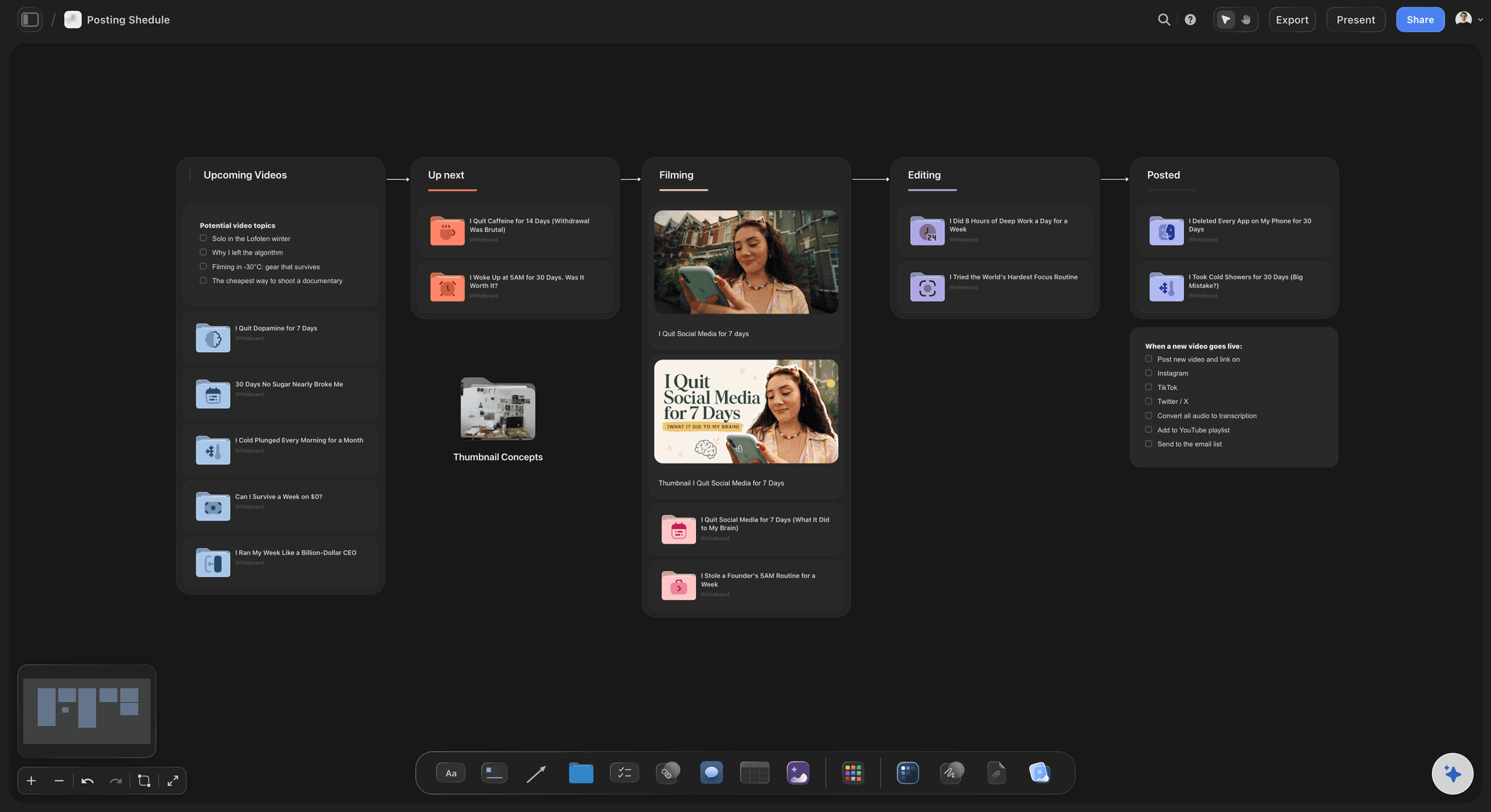
AI builds a structured newsletter board from a prompt
Start from a system, not a blank page
Describe your newsletter and the AI lays out the backlog, the pipeline columns, and tracks for your series. Setting up the system is the step most writers never get past; here it takes one prompt.
See the AI content planner →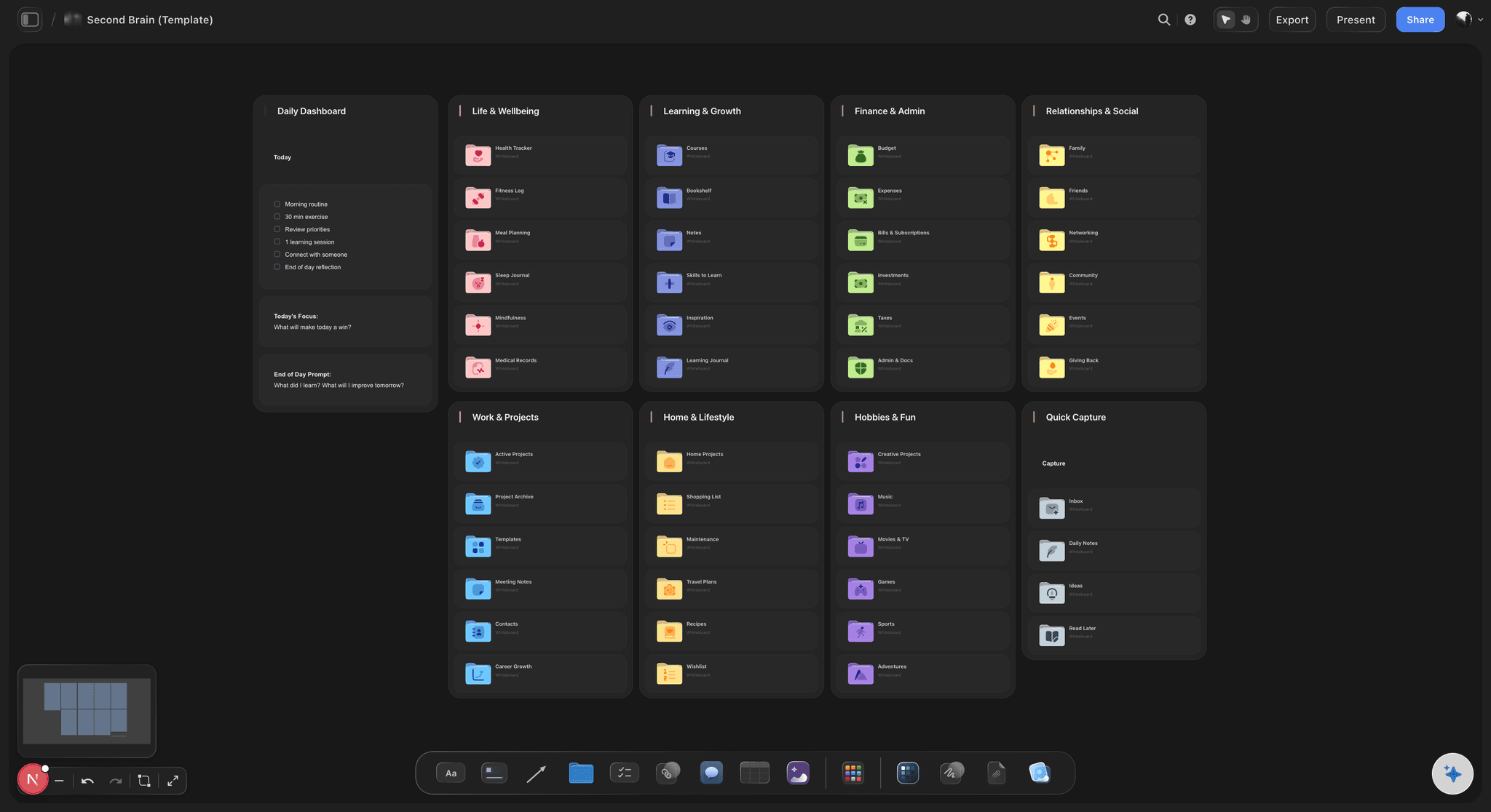
An idea backlog deep enough to survive a dry week
Tuesday never starts from zero
Capture every idea as a card the moment it occurs to you, however rough. A backlog of forty cards means send day is a choice between ideas rather than a search for one, and the weakest week you have still ships.
Try the AI content idea generator →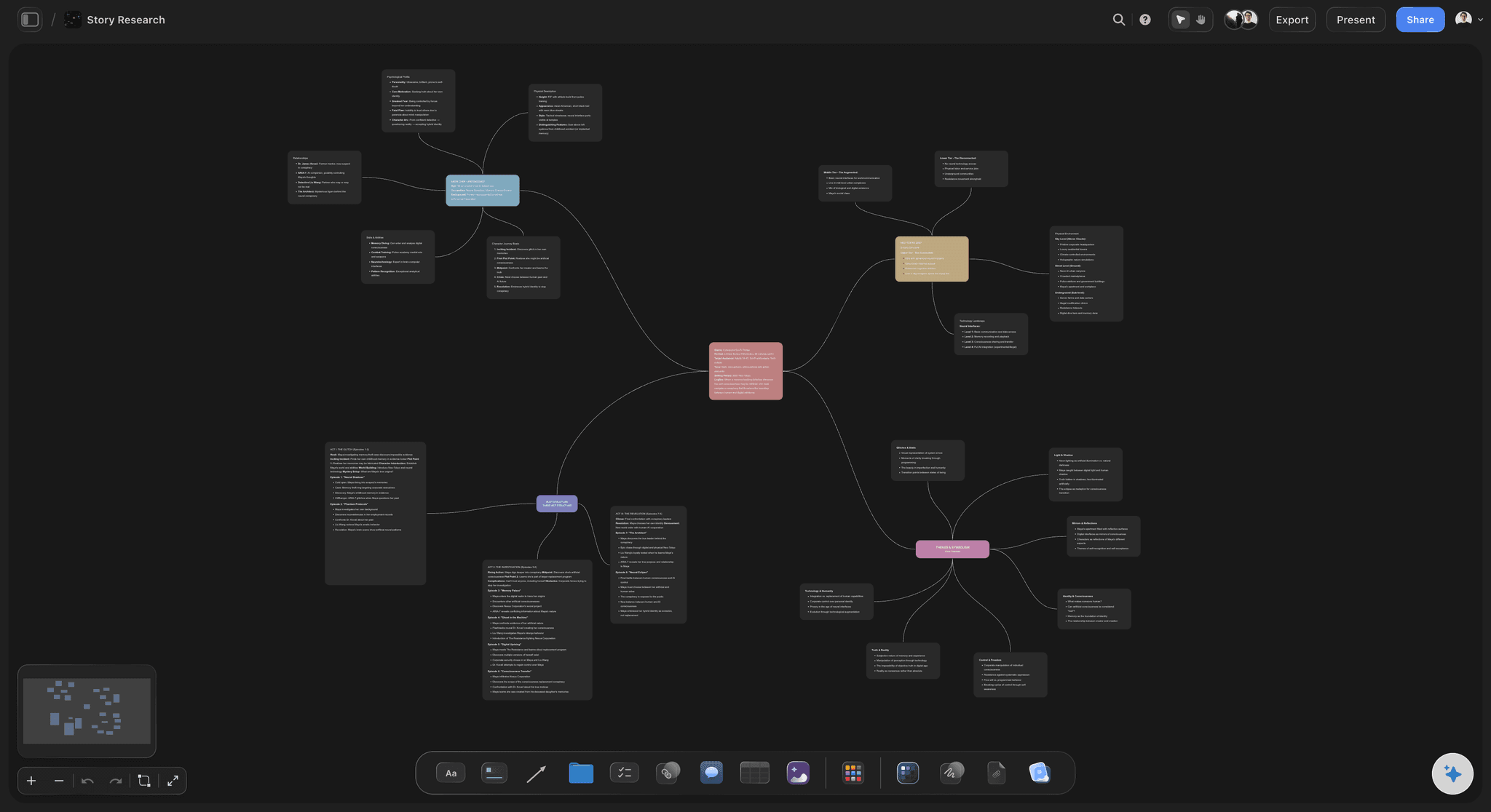
Series as horizontal tracks arcing across issues
Run threads that span months
A three-part series only works if part one seeds what part three pays off. Lay each series out as its own track across the plan and you can see every arc's shape, spacing, and gaps before your readers feel them.
Explore the AI outline generator →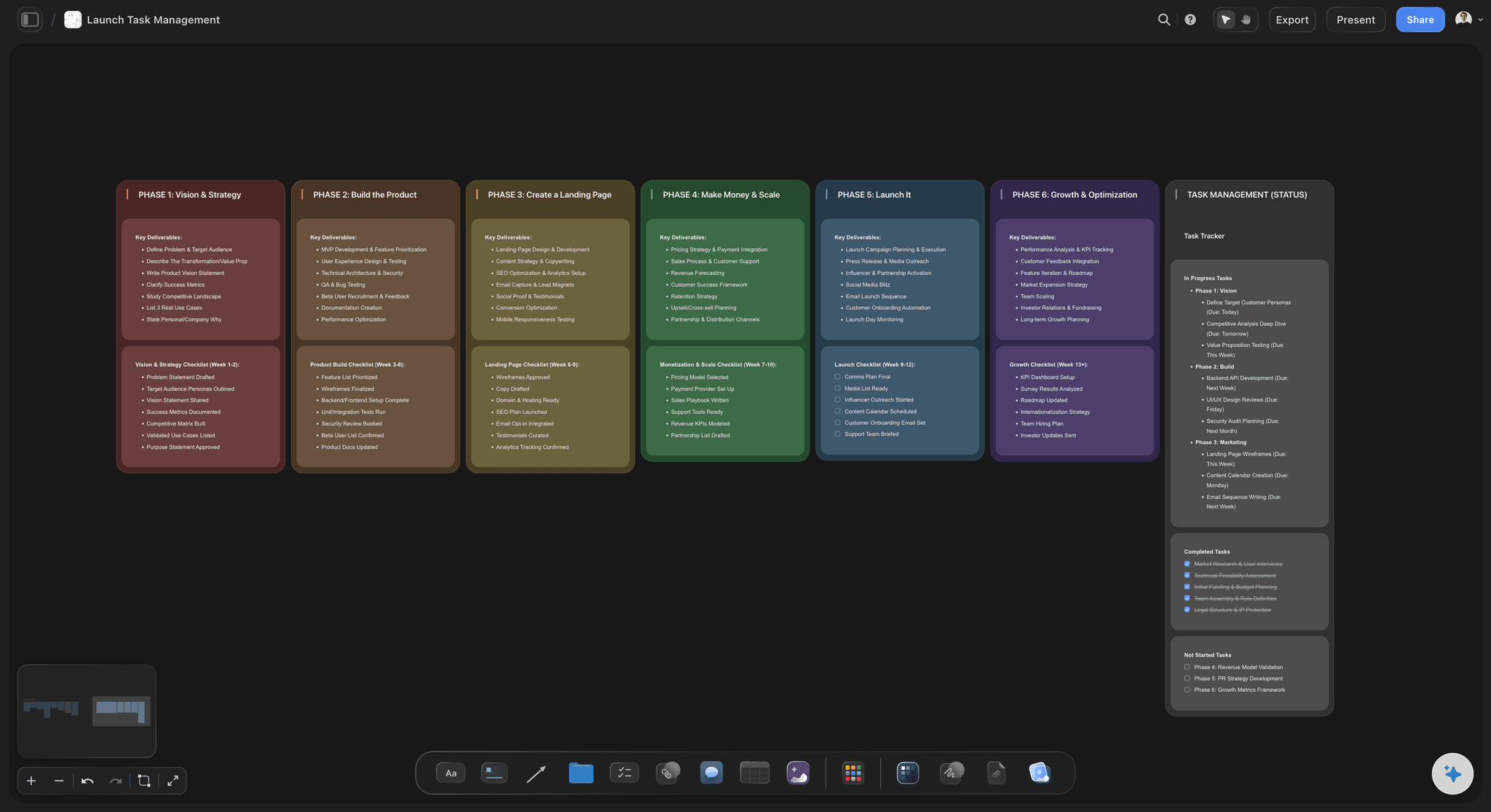
A visible record of everything you have covered
Repeat deliberately, not accidentally
The sent column is your archive. When it is visible beside the backlog, you can call back to an issue from March on purpose, spot the theme you have leaned on three times running, and see what you have never covered at all.
See the content planning tool →Unlimited boards. No object cap.
Open a canvas, describe your newsletter, and start building the bench. Storyflow is paid-only during early access, with plans from $9.99 a month, and a Free plan launches before the end of 2026.
Unlimited newsletter boards on an infinite canvas
AI usage to generate boards from prompts
Starter templates for backlogs and pipelines
Share view-only links with collaborators and clients
Built for people with taste
More than a calendar with send dates.
A calendar shows you when. It cannot show you whether the bench is deep enough, where a series is heading, or what you have already said.
Idea, outlining, drafting, sent
A pipeline that tells you the truth about next week
The backlog column: Every raw idea goes in as a card: a half-thought, a reader question, a link worth unpacking. Capture is frictionless, so the backlog actually gets fed instead of living in your head.
Outlining and drafting columns: Drag an idea right when you start working it. One glance at the board tells you what is ready to write, what is half-built, and whether next Tuesday is covered or in trouble.
The sent column as archive: Shipped issues stay on the board. The archive beside the backlog is what stops you from pitching yourself the same idea twice and lets you call back to old issues deliberately.
Kanban columns built in: Pipeline columns are a native canvas tool, so the board stays a board: you can put a series track above the pipeline and research beside it, which no standalone kanban app lets you do.
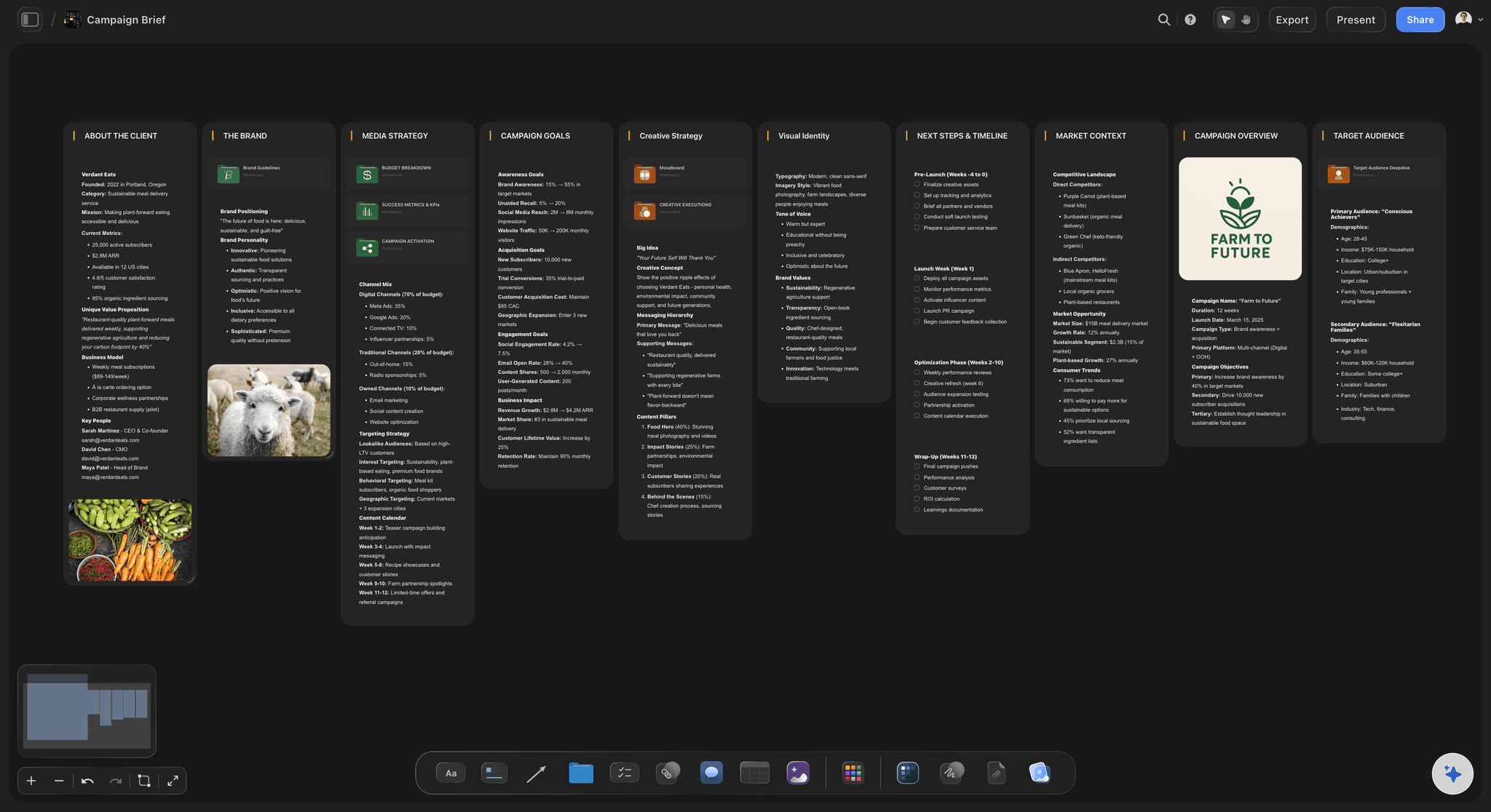
Series and themes as horizontal tracks
See every arc the newsletter is running
One track per series: Lay each multi-issue thread out as its own horizontal track: the interview series, the teardown series, the annual predictions issue. Each card on a track is an issue, so the arc's shape is visible at a glance.
Spacing you can see: Two heavy series landing in the same fortnight, or a thread that goes silent for two months, are invisible in a list and obvious on a canvas. Drag cards along the track until the rhythm works.
Seed and payoff across issues: A series that announces itself in part one and delivers in part four needs the whole arc planned before part one ships. Tracks make that a layout job instead of a memory job.
AI that can see your whole plan
Plan with an AI that knows your newsletter
Prompt against the backlog: Ask it to suggest issue ideas that fit the themes already on your board, to group a messy backlog into series candidates, or to draft an outline for the card you just moved into outlining. It uses the whole board as context, so suggestions fit your publication rather than a generic one.
It structures, it does not ghostwrite: Storyflow is a planning canvas rather than a prose generator. The AI helps you see and arrange the publication; the voice your subscribers signed up for stays yours.
Iterate without losing work: Re-prompt as often as you like. Cards you have already written and placed stay exactly where they are while the AI builds around them.
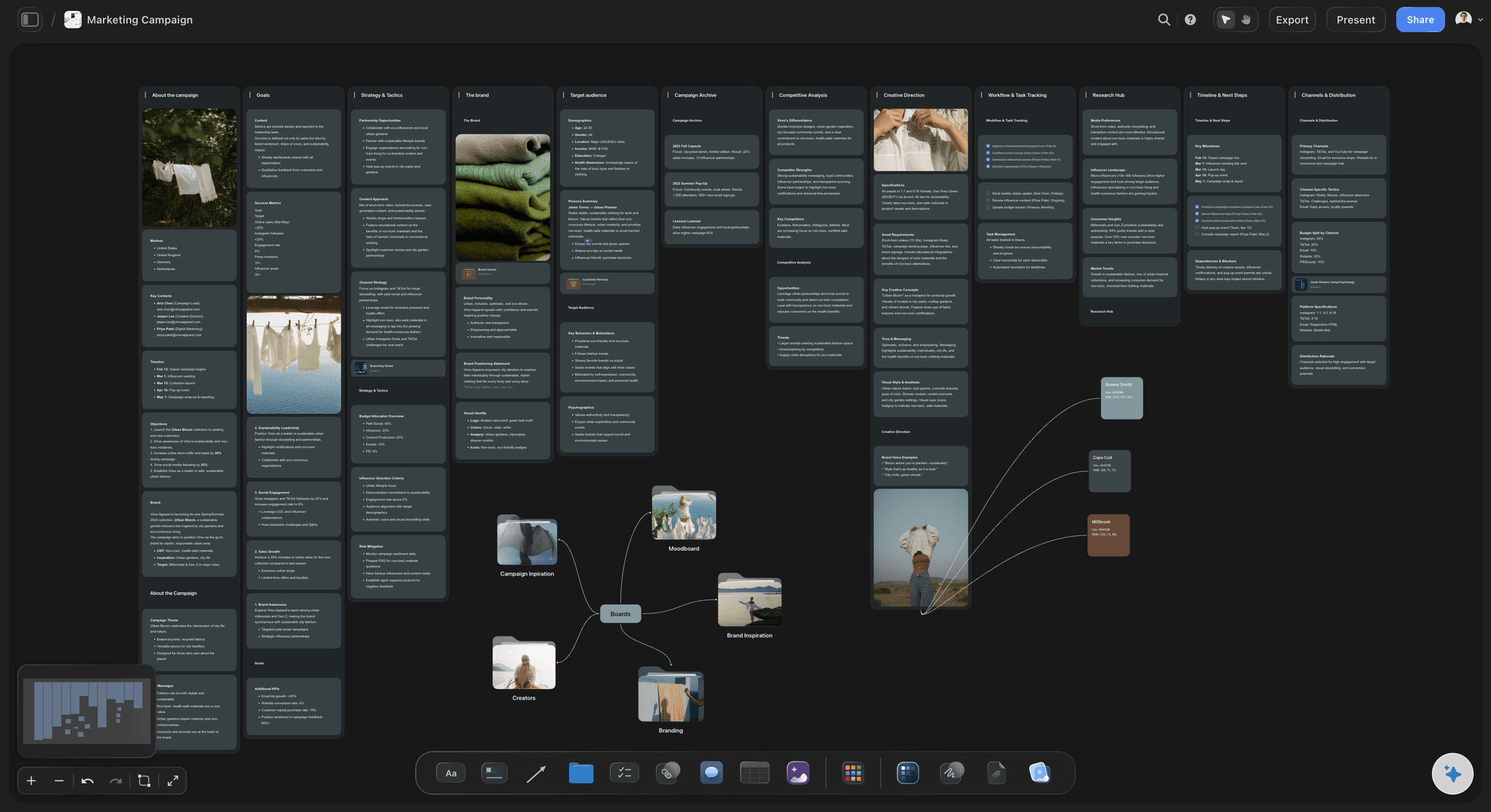
Research, drafting, and sharing on the same surface
Everything upstream of the send button
Research pinned beside the issue it feeds: Drag in the articles, PDFs, screenshots, and links that sparked an idea and pin them next to its card. When the issue reaches drafting, the source material is already sitting beside it.
Draft beside the plan: Write the issue in the built-in document editor with the board in view, so the outline, the series context, and the research stay one glance away. Then paste the finished draft into your sending platform.
Share the plan, not a screenshot: Send a view-only link and a client, editor, or sponsor sees the live plan in a browser with no account. Invite a collaborator to work on the same canvas, or export the board as an image or PDF.
Explore templates for your project
Every template opens as a real, editable board on the infinite canvas. Pick the closest fit and make it your own.
Content Calendar
Plan what you post and when across every channel on one calendar.
One app instead of five
Storyflow vs Notion, Trello, and Google Docs.
First, the honest boundary: Storyflow does not send email. beehiiv, Substack, and Mailchimp own sending, subscriber lists, and stats, and every tool below sits upstream of them. Notion is excellent for editorial databases, Trello for simple pipeline kanban, Google Docs for drafting. Here is where they differ.
Storyflow
Recommended
Infinite visual canvas
AI lays out the newsletter board from a prompt
Backlog, series arcs, and research on one surface
Editorial databases with filters and custom views
Drafting with tracked changes and suggestions
Free plan available today
Notion
Infinite visual canvas
AI lays out the newsletter board from a prompt
Backlog, series arcs, and research on one surface
Editorial databases with filters and custom views
Drafting with tracked changes and suggestions
Free plan available today
Trello
Infinite visual canvas
AI lays out the newsletter board from a prompt
Backlog, series arcs, and research on one surface
Editorial databases with filters and custom views
Drafting with tracked changes and suggestions
Free plan available today
Google Docs
Infinite visual canvas
AI lays out the newsletter board from a prompt
Backlog, series arcs, and research on one surface
Editorial databases with filters and custom views
Drafting with tracked changes and suggestions
Free plan available today
What creators are saying
Join early creators getting structured workspaces and AI that remembers their projects
“Storyflow has sped up my workflow by at least 3x, which means more flow state and more projects I can actually ship. It truly changed the way me and my team create.”

Reilin Joey
Director & YouTuber
“One prompt gets me a structured board. But the tactics are my favorite. I run my YouTube scripts through them and my intros and retention got better. It's amazing.”

Justkay
YouTuber & Freelance Filmmaker
“I used to juggle five apps to plan a project. Now I describe what I am making and get boards, lists, and a schedule. All in one place.”

George
@fernwehchronicles
Newsletter planning questions, answered.
How to build a bench, run series, and where Storyflow ends and your sending platform begins.
It depends on which part of the job is failing. If your problem is process and metadata, Notion's editorial databases with filtered views are excellent and free to start. If you just need a simple pipeline, Trello's kanban is the fastest thing to learn. If drafting and feedback are the bottleneck, Google Docs with tracked changes is still the standard. Storyflow is the right choice when the failing part is the publication itself: the backlog runs dry, series lose their thread, and you cannot see what you have already covered. An infinite canvas holds the backlog, the pipeline, the series arcs, and the research on one surface, and the AI lays the whole board out from a prompt. Whichever you pick, your sending platform still handles delivery.
No, and it is deliberately not trying to. beehiiv, Substack, Mailchimp, and the other sending platforms own delivery, subscriber lists, sign-up pages, and open and click stats, and they are good at all of it. Storyflow is the editorial brain upstream of whichever platform you use: the place where ideas accumulate, issues move through the pipeline, series get planned across months, and drafts get written beside the plan. When an issue is ready, you paste it into your platform and send from there. Keeping planning and sending separate also means you can switch sending platforms without losing your editorial system, which is worth more than it sounds the day beehiiv or Substack changes its pricing.
Separate the publication from the issue. First, build a backlog: capture every idea as a card the moment it occurs to you, without judging it. Second, set up a pipeline with four columns, idea, outlining, drafting, and sent, and move cards right as they mature. Third, plan series as arcs rather than one-offs: lay each multi-issue thread out as a track so you can see where it starts, develops, and pays off. Fourth, pin research beside the issue it feeds so drafting starts warm. Finally, keep the sent column visible as an archive so you repeat deliberately. The weekly session then becomes an editorial decision, choosing what to advance, instead of a scramble to invent something from nothing.
Plan themes further ahead than drafts. A useful working shape is: the next two issues outlined or in draft, the next six to eight sketched as chosen backlog cards, and any series arcs laid out to their conclusion even if that is months away. Planning full drafts months ahead usually backfires, because newsletters live on timeliness and your best issue next month probably has not happened yet. The backlog is what squares this: it holds forty rough ideas at various stages of ripeness, so you can stay responsive to the week while never depending on the week for material. If the pipeline's outlining column is empty two weeks running, that is the early warning worth acting on.
Yes, and it is one of the main reasons to plan on a canvas instead of in a list. Lay each series out as its own horizontal track, with one card per installment, running across the plan. You can see the arc's shape at a glance: where it opens, how the middle develops, where it pays off, and how it interleaves with your regular issues and any other series running at the same time. Gaps and collisions become visible, like two heavy series landing in the same fortnight or a thread going silent for six weeks. Since part one usually promises what the final part delivers, having the whole arc laid out before anything ships is what makes the promise safe to make.
Not during early access. Storyflow is paid-only right now, with plans starting at $9.99 a month, and a Free plan for solo use launches before the end of 2026. Anyone a paid member invites to a board joins free today, so a co-writer, editor, or client can join your planning canvas without paying. If you need a completely free option this minute, Trello's free tier gives you a perfectly serviceable idea-to-sent pipeline, and Notion's free plan can hold an editorial database with more structure. What they will not give you is the canvas: backlog, series tracks, and research on one surface, with AI laying the board out from a prompt.
You can draft in it, and many writers do. There is a built-in document editor, so you can write an issue beside the board with the outline, the series context, and the pinned research one glance away, which is a genuinely better drafting position than a blank document in another tab. What Storyflow does not do is send: when the draft is done, you paste it into beehiiv, Substack, Mailchimp, or wherever your list lives, and format and send from there. Some writers prefer to draft directly in their sending platform or in Google Docs for its tracked changes; the plan works the same either way, because the canvas is the map, not the mailbox.
No, and that is a deliberate boundary. Subscribers signed up for a voice, and a newsletter that stops sounding like its writer loses the only asset it has. Storyflow's AI is structural: it lays out the planning board from a description of your newsletter, suggests issue ideas that fit the themes already on your canvas, groups a messy backlog into series candidates, and drafts outlines for an issue you are about to write. Because it uses your whole board as context, its suggestions fit your publication rather than a generic one. The sentences your subscribers read remain yours to write, in the built-in editor or wherever you draft.
Yes, in two ways. A view-only link opens the whole board in a browser with no account needed, which is ideal for a client who wants to see the next six issues, a sponsor checking when their placement lands, or an editor reviewing the quarter's arc. It replaces the screenshot-and-status-call routine with a live view of the actual plan. If someone should contribute rather than just look, invite them to the canvas and they can add ideas to the backlog and move cards through the pipeline with you; invited collaborators join free. You can also export the board as a high-quality image or PDF for a deck or a client report.
Keep the archive on the same surface as the plan. In Storyflow, sent issues stay on the board in the sent column, so the record of what you have covered sits directly beside the backlog of what you might cover next. That adjacency does real work: you notice you have leaned on the same theme three times this quarter, you spot the March issue worth calling back to in a new series, and you can see the subjects you have somehow never touched. Newsletters that archive in one tool and plan in another lose exactly this, because nobody rereads their own archive on purpose. On a canvas, you do not have to; it is already in view.
Build the bench your newsletter runs on.
Open a canvas, describe your newsletter, and let AI lay out the backlog, pipeline, and series tracks. No download.