
Polished brand plans, extremely simple
A brand positioning map
that shows where nobody is standing.
For founders and brand leads: two axes your buyers actually choose on, every competitor placed with a reason, the open space marked, and the points of parity and difference listed beside it.


Creatives working for these brands already got early access
- Red Bull
- Canon
- Artlist
- Porsche
See how easy it is to get started
Watch a real project come together, from a blank board to a finished plan, clicked through step by step.
Start from a ready-made template
Pick a board to see what you can build, then let AI fill it in. Every template is a real, editable starting point on the same infinite canvas.

Brand Strategy
Define your positioning, values, and voice and connect them into a strategy the team can follow.
How do you draw a brand positioning map?
A brand positioning map is a simple chart with two axes that buyers care about, on which you place your own brand and every competitor, so you can see who is crowded together and where there is open space. Storyflow is an AI visual workspace that draws a brand positioning map on one infinite canvas: the two axes, a card for each competitor, the open space marked and the points of parity and points of difference listed beside it. Its AI reads the competitor notes you paste and the web pages you point it at, and proposes where each brand sits for you to correct.
The axes are the hard part, and three rules cover most mistakes. Each axis must be something buyers choose on, not something you are proud of. The two must not move together: price against quality puts every brand on one diagonal line and tells you nothing. And each end must be a real choice, such as simple at one end and powerful at the other, never bad and good. List six to eight things buyers weigh, then try three different pairs before you settle.
A worked example: coffee subscriptions. The horizontal axis runs from you choose the beans to we choose for you. The vertical axis is price per bag, from $12 at the bottom to $26 at the top. Score six rivals from 1 to 10 on each. A scores 2 and 8, B scores 3 and 7, C scores 8 and 9, D scores 7 and 8, E scores 2 and 3, and F scores 4 and 4. Four of the six sit in the top half. The corner for we choose for you at an everyday price holds nobody.
Place every brand with a reason you could show someone. Use what the rival says about itself: its homepage headline, its pricing page, the first lines of its reviews. Write the score and the reason on the card. Then place your own brand twice, once where buyers see you today and once where you intend to be. The distance between those two markers is the work the brand has to do, and it is usually longer than the team expects.
An empty corner is not yet an opportunity. Ask three questions of it. Do buyers want it, or is it empty because nobody does? Can you deliver it at a margin that works? Will it still be empty in a year, or is a bigger rival already moving there? In the coffee example, curated beans at $14 a bag looks open, and the reason is cost: choosing well for each customer is expensive. If you can solve that, the corner is yours. If not, it is a trap.
Finish with two short lists beside the map. Points of parity are what you must match to be considered at all: in the example, freshly roasted, free delivery, pause any time. Points of difference are the two or three things only you offer that buyers value, each with a piece of proof. A map without these lists is a picture. With them it becomes a position you can write a homepage, a brief and a pitch from.
Ultra fast from brief to board
Four moves from a list of rivals to a position.
Allow a couple of hours. The placing is quick; choosing the two axes is where the thinking happens, and it is worth doing with one other person who talks to customers.
01
Gather what each rival says and charges
Paste your competitor notes, or give Storyflow's AI the link to each rival's homepage and pricing page. It reads each page you point it at and lays out a card per rival with what it claims, what it costs and who it is for.
02
Pick two axes and score every brand
List what buyers choose on, and try three pairs. Ask the AI for a table with a row per brand, a score from 1 to 10 on each axis and the reason for each score. Correct the ones you disagree with.
03
Place the brands
Draw two lines for the axes, label each end, and drag a card for every brand to its place. Or ask the AI to lay the map out as a finished page, with both axes and all four corners labelled.
04
Mark the space and write the two lists
Put a note on the open corner with the answers to the three questions. Add the points of parity and points of difference beside the map, then share the board by link with your co-founder, your agency or your investors.
The axes, the rivals, the open space and the two lists.
Storyflow holds the map and the evidence behind it. A survey still tells you how buyers themselves see each brand.
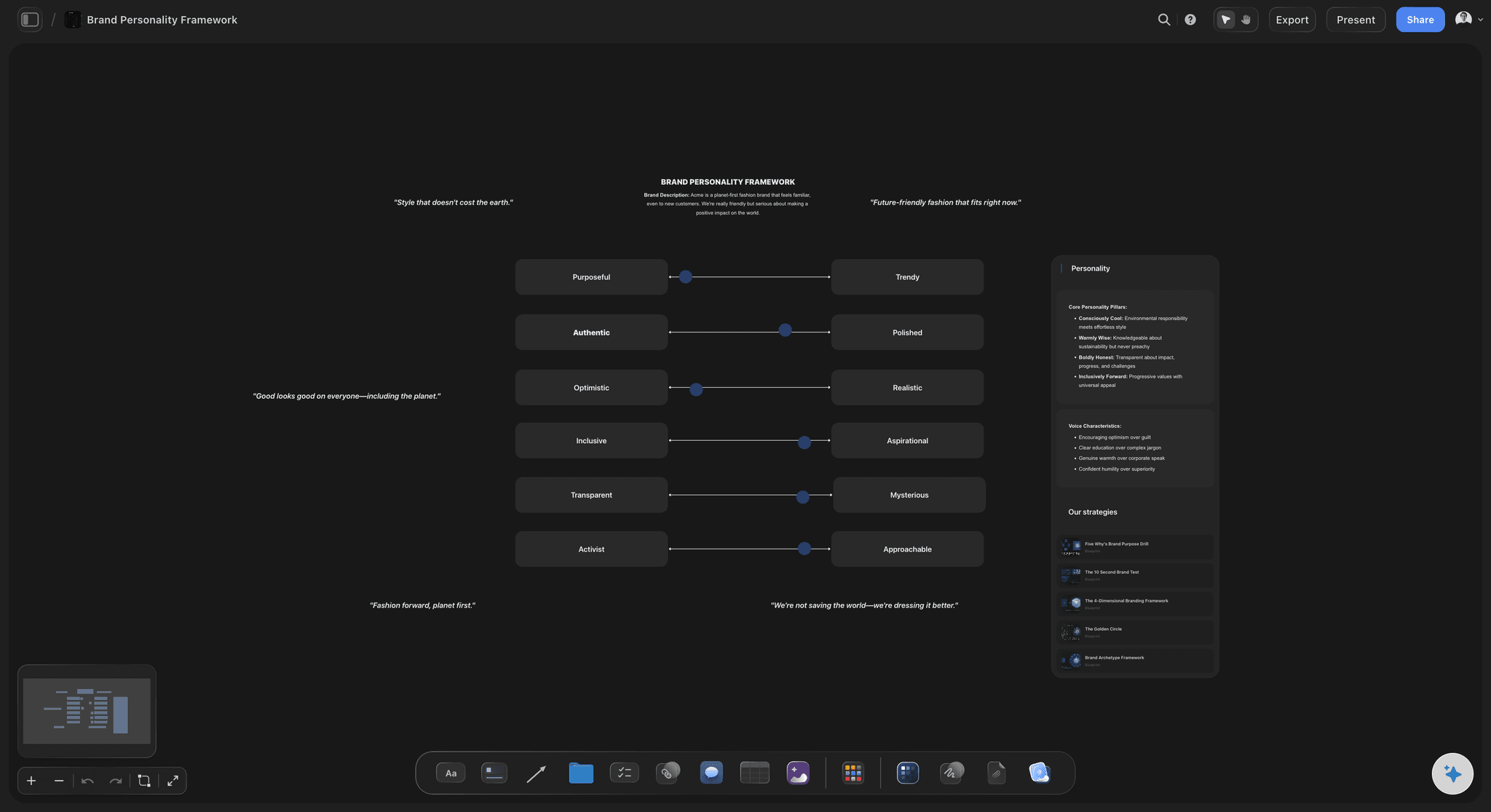
The axes
Two real choices, each with two honest ends
Each axis is labelled at both ends with a choice a buyer actually makes. Try several pairs side by side on the board and keep the one that spreads the brands out instead of lining them up.
See the brand positioning workshop →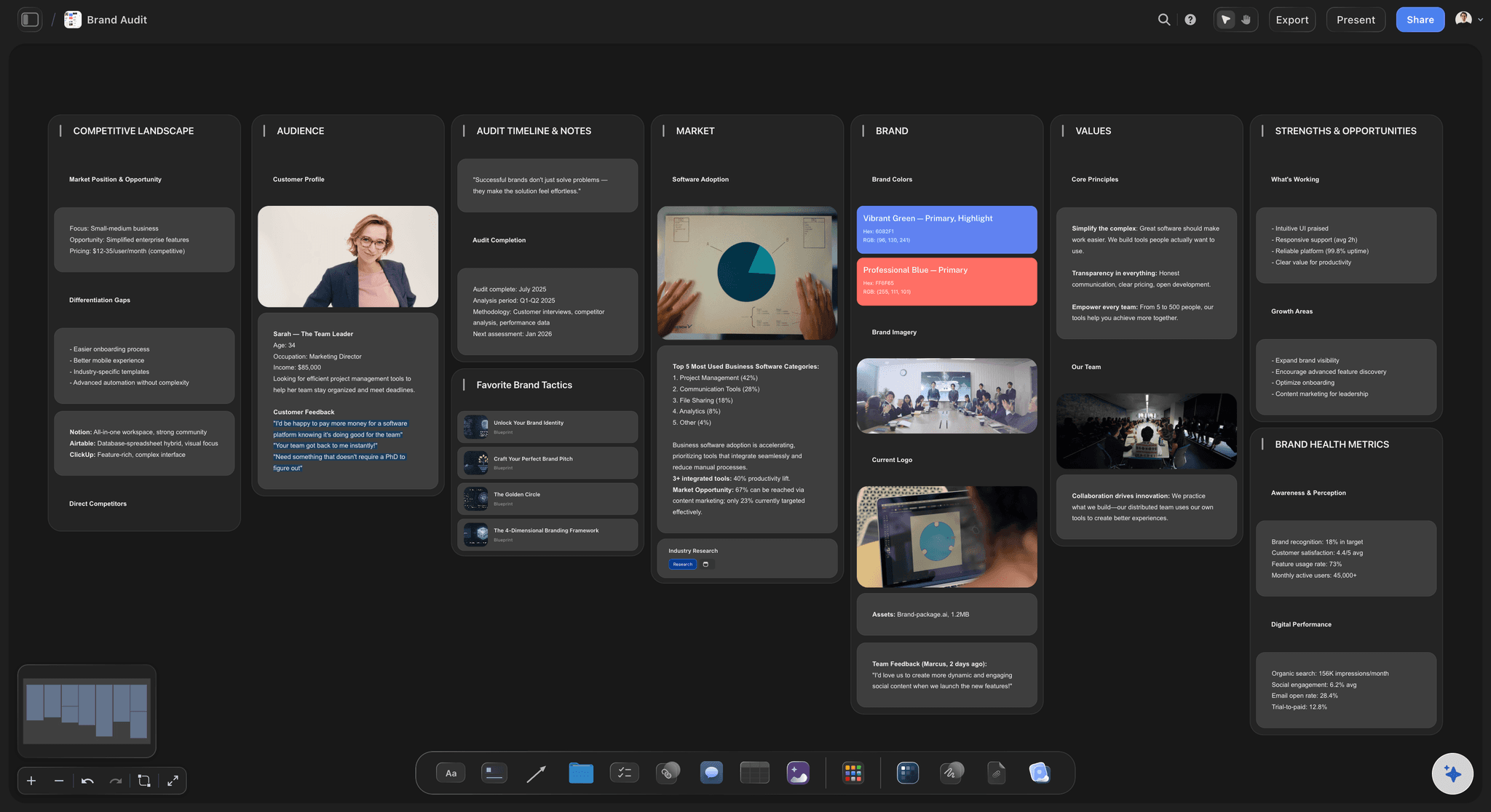
The rivals
Every competitor placed with a reason
One card per rival with its headline, its price, its score on each axis and why. Anyone who disagrees with a placement can see what it was based on and comment on that card.
See the competitor analysis generator →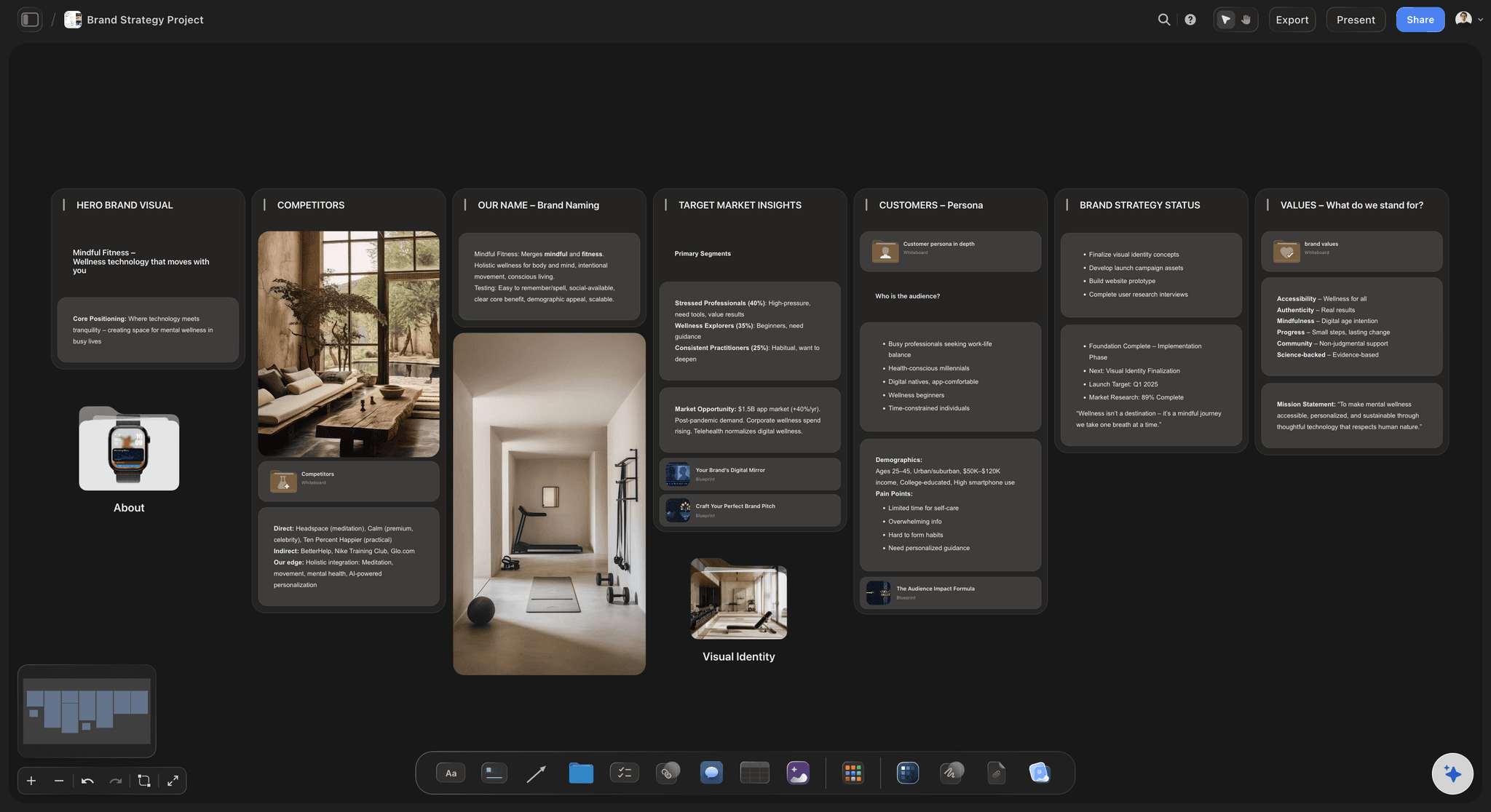
The open space
The empty corner, and whether it is a trap
Mark the corner nobody holds and answer three questions on the note: do buyers want it, can you deliver it, and will it stay empty. The map shows the gap. The note says whether to go there.
See the brand strategy tool →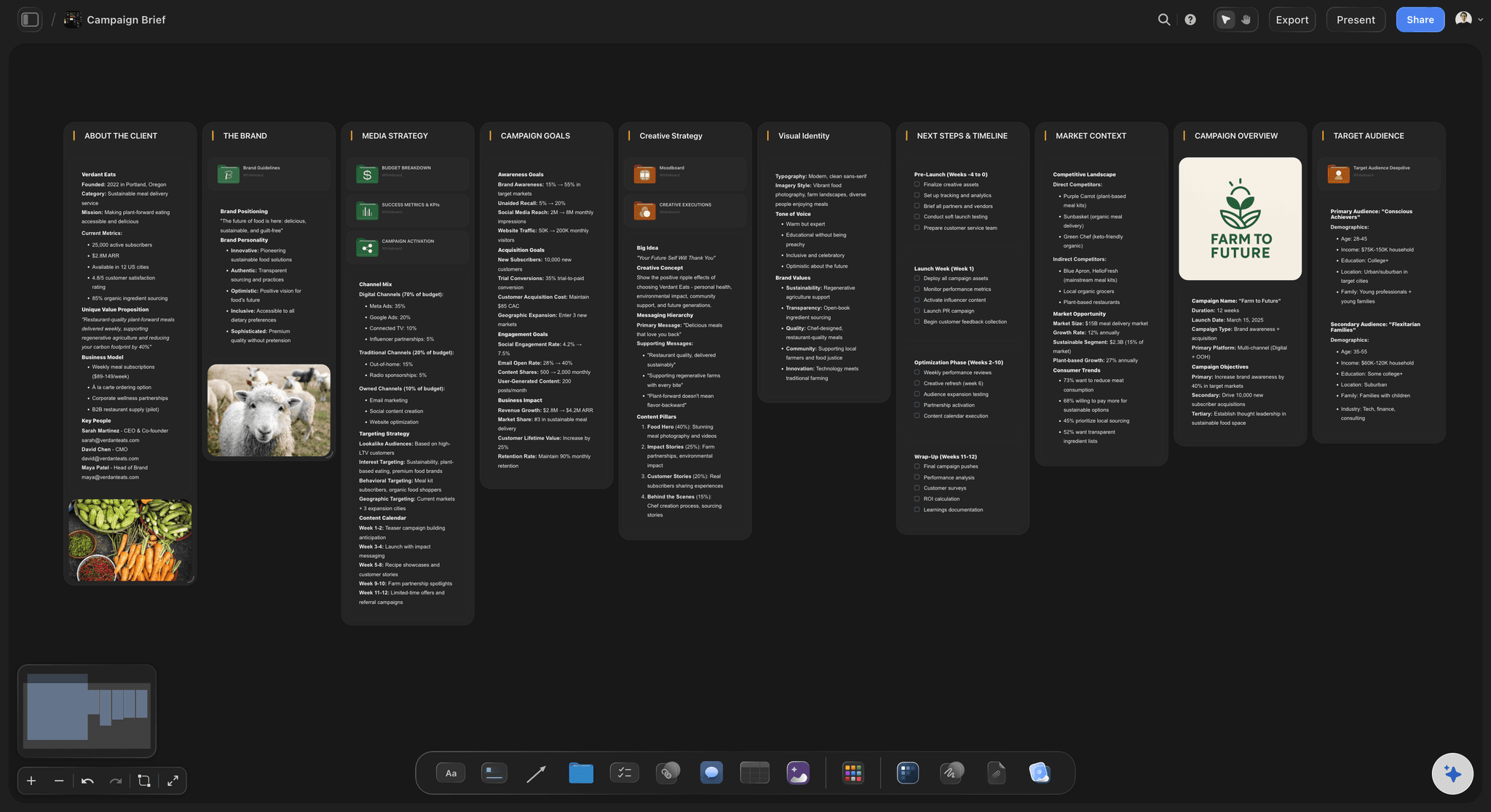
The two lists
Points of parity and points of difference
What you must match to be considered, and the two or three things only you offer, each with proof. These lists are what the homepage and the campaign brief are written from.
See the brand messaging framework →The map stays next to the strategy it explains.
Keep the positioning map on the same board as the brand strategy and the brief, so the reasoning is never a slide in an old deck. Storyflow is paid-only during early access, with plans from $7.99 a month billed annually ($9.99 monthly). A free plan launches before the end of 2026, and anyone a paid member invites to a board joins free.
Unlimited boards, image uploads and files on every paid plan
Co-founders, advisers and agencies you invite to the board join free
200+ Tactics for brand, positioning and messaging
Whole-board PDF export for the strategy document
View-only links so investors can read the map with no account
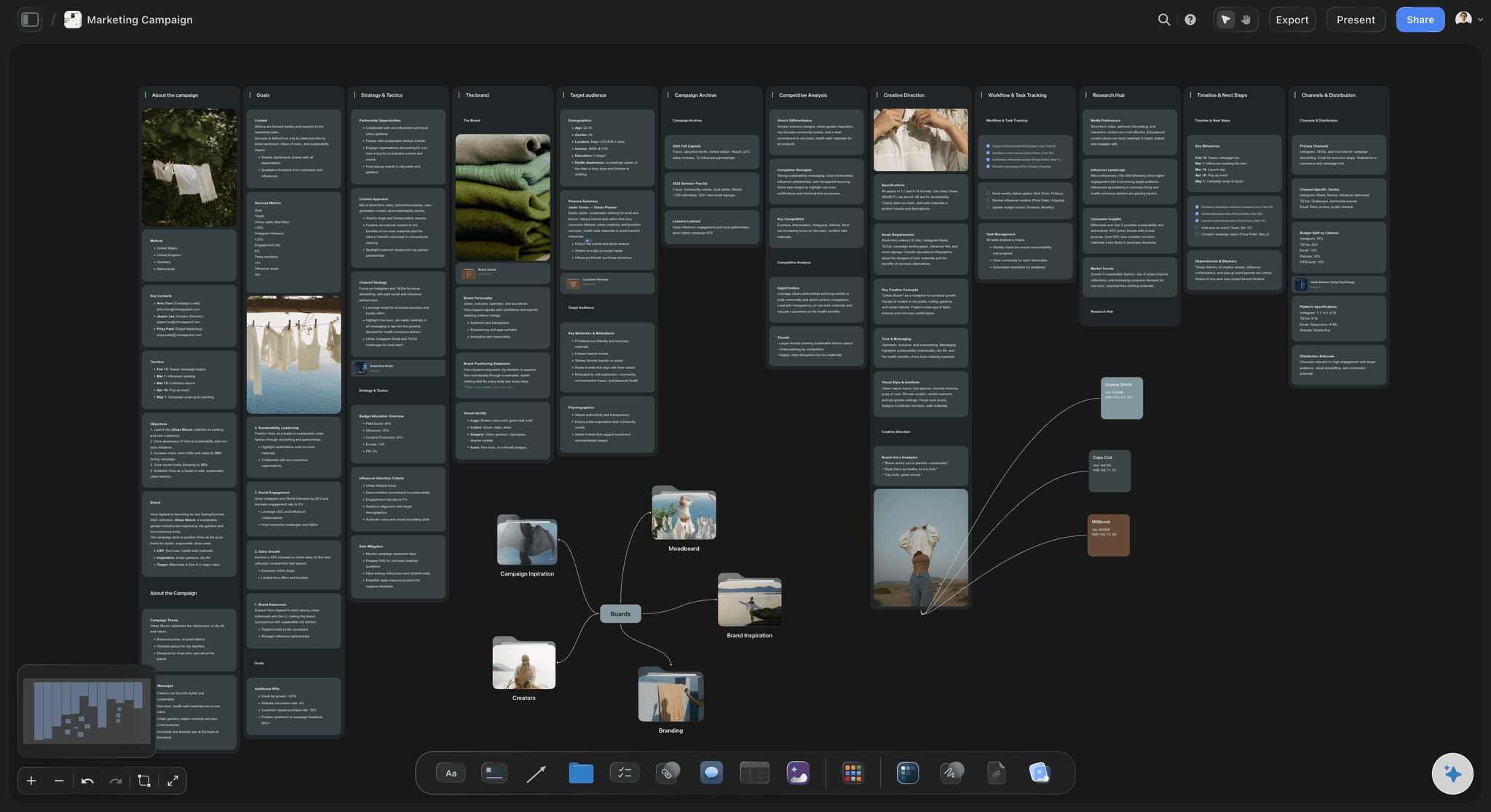
Built for people with taste
Why most positioning maps prove nothing.
Three usual faults. Each one is easier to avoid when the evidence sits on the same board as the map.
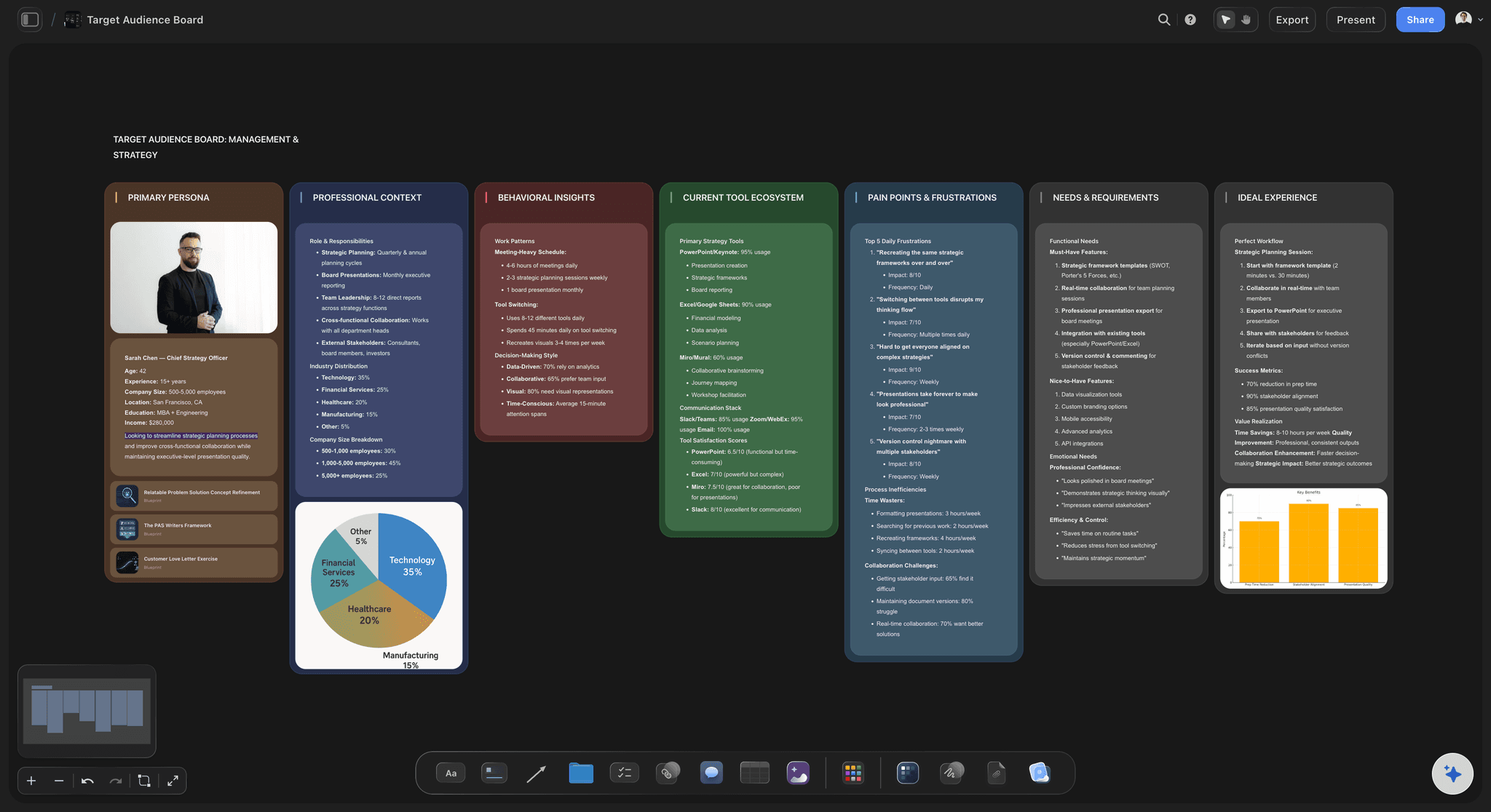
The axes
Price against quality, and a diagonal line
What buyers choose on: Take the axes from customer calls, reviews and lost deals. An axis nobody chooses on gives you a corner nobody is looking for.
Two that do not move together: If a high score on one axis nearly always means a high score on the other, the brands fall on a line. Swap one axis for something independent.
Two honest ends: Each end should be the right choice for somebody. Simple suits a beginner, powerful suits an expert. If one end is plainly worse, the axis is a ranking, not a choice.
Three pairs, then one: Draw three small maps with different pairs side by side on the Storyflow board. The right pair is the one where the brands spread out and the picture surprises you a little.
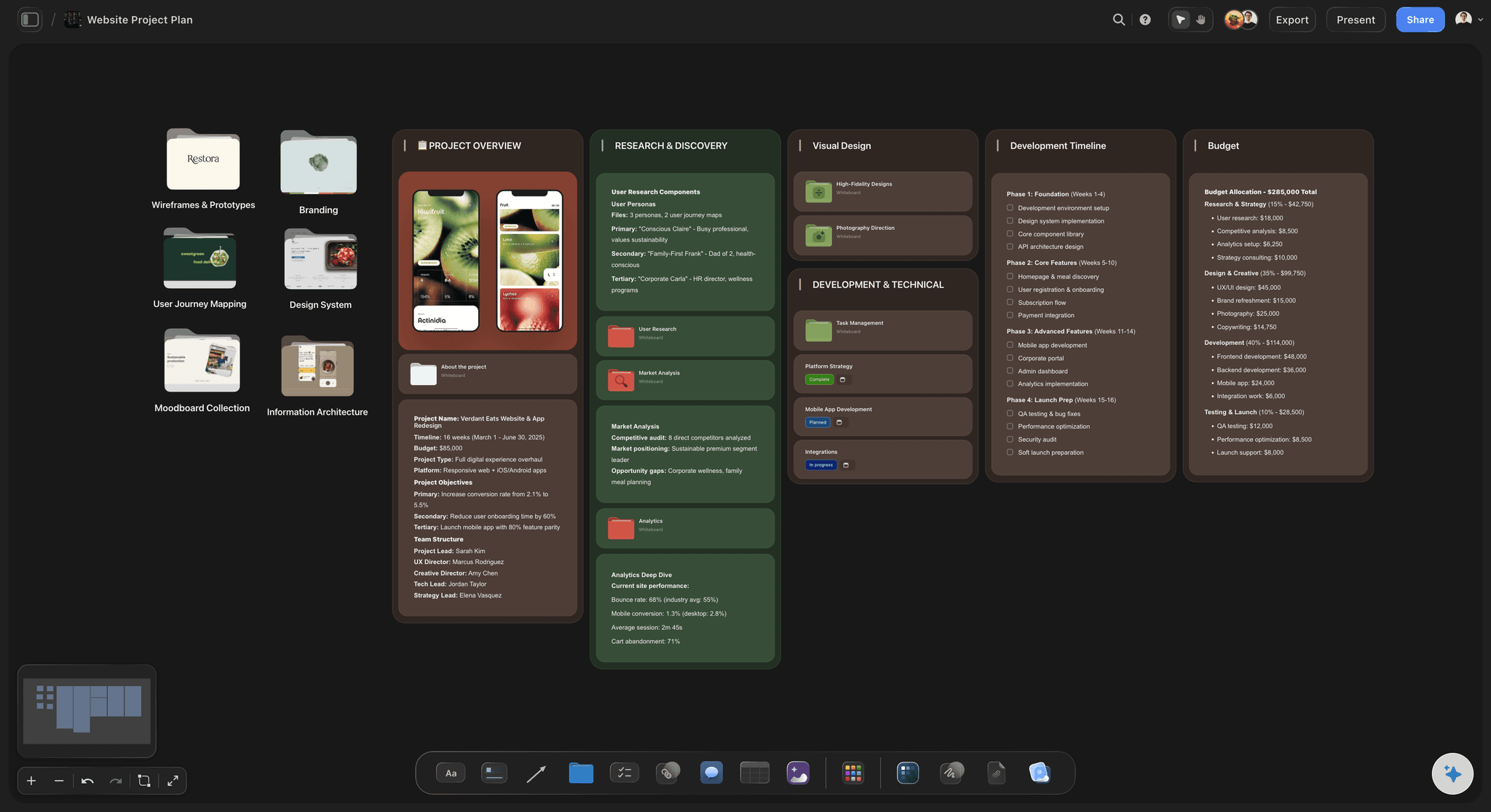
The placements
Dots placed by gut feel
A score with a reason: Every brand gets a number from 1 to 10 on each axis and one line saying why. A placement nobody can explain is a placement nobody will trust.
Their words, not yours: Give Storyflow's AI a rival's page and it reads the headline, the offer and the price from it. Score from what the rival says to buyers, not from what you think of them.
You, placed twice: One marker for where buyers see you today and one for where you intend to be. Founders tend to place themselves at the target and call it done.
Count the substitutes: Add what people do when they buy from no one: a spreadsheet, a freelancer, doing nothing. That is often the real competitor, and it belongs on the map.
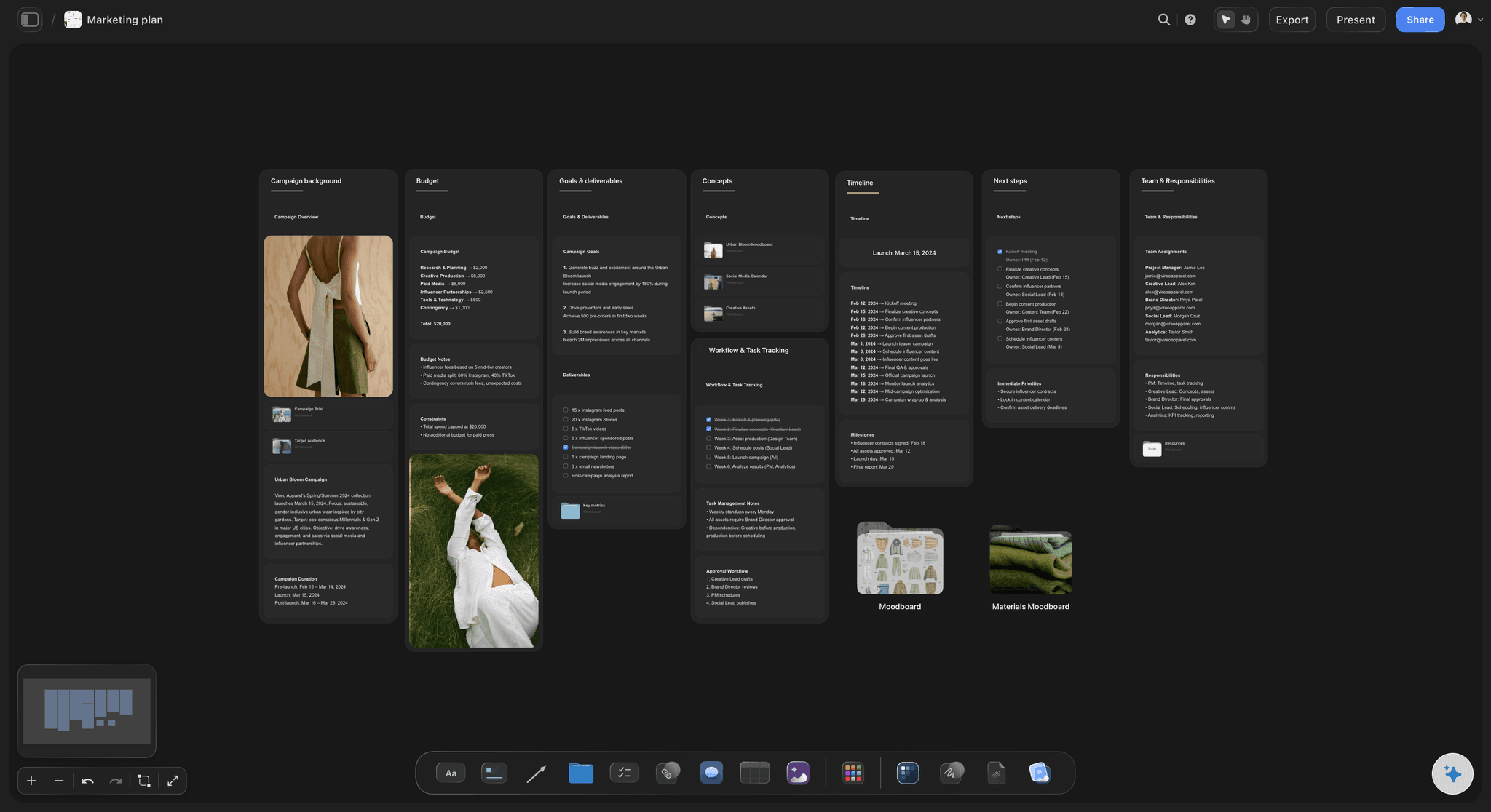
The follow-through
A handsome chart that changes nothing
Three questions for the gap: Do buyers want it, can you deliver it, will it stay open. Write the answers on the open corner before anyone falls in love with it.
Parity first: List what every serious option in the category offers. If you miss one of those, buyers rule you out before your difference is even heard.
Three differences, each with proof: A number, a customer quote or a demo for each. A difference you cannot prove is a slogan, and rivals can copy a slogan by Friday.
Carry it into the work: Ask Storyflow's AI for a short deck from the board for investors or the team, and keep the map beside the brief so every campaign starts from it.
Explore templates for your project
Every template opens as a real, editable board on the infinite canvas. Pick the closest fit and make it your own.
Brand Strategy
Define your positioning, values, and voice and connect them into a strategy the team can follow.
One app instead of five
Where Storyflow fits in brand positioning.
It holds the map, the evidence and the two lists. The placements are your judgement; it does not survey buyers or track perception.
Storyflow
Recommended
Two labelled axes with every rival placed
Rival pages, prices and screenshots on the same canvas
Points of parity and difference beside the map
AI proposes placements from pages you give it
The map sits next to the strategy and the brief
Shared by link and read with no account
Positions measured from a survey of real buyers
Tracks how perception shifts over time
Slide and design templates
Two labelled axes with every rival placed
Rival pages, prices and screenshots on the same canvas
Points of parity and difference beside the map
AI proposes placements from pages you give it
The map sits next to the strategy and the brief
Shared by link and read with no account
Positions measured from a survey of real buyers
Tracks how perception shifts over time
Survey and brand tracking tools
Two labelled axes with every rival placed
Rival pages, prices and screenshots on the same canvas
Points of parity and difference beside the map
AI proposes placements from pages you give it
The map sits next to the strategy and the brief
Shared by link and read with no account
Positions measured from a survey of real buyers
Tracks how perception shifts over time
What creators are saying
Join early creators getting structured workspaces and AI that remembers their projects
“Storyflow has sped up my workflow by at least 3x, which means more flow state and more projects I can actually ship. It truly changed the way me and my team create.”

Reilin Joey
Director & YouTuber
“One prompt gets me a structured board. But the tactics are my favorite. I run my YouTube scripts through them and my intros and retention got better. It's amazing.”

Justkay
YouTuber & Freelance Filmmaker
“I used to juggle five apps to plan a project. Now I describe what I am making and get boards, lists, and a schedule. All in one place.”

George
@fernwehchronicles
Brand positioning map questions
What founders and brand leads ask when they sit down to draw one, usually after a rival has launched something uncomfortably close.
In Storyflow, draw it on one board in four moves: gather what each rival says and charges, pick two axes buyers choose on and score every brand from 1 to 10, place a card per brand between two labelled lines, then mark the open corner and list the points of parity and difference beside it. The AI proposes the scores and you correct them.
Storyflow is built for exactly this job: the axes, a card per rival with its reason, the open space and the points of parity and difference sit on one board beside the brand strategy, and its AI reads the rival pages you give it and proposes the placements. Measuring how real buyers see each brand still takes a survey tool such as SurveyMonkey or Qualtrics.
It is a chart with two axes that matter to buyers, with your brand and its competitors placed on it. It shows where the category is crowded and where there is room. It is also called a perceptual map when the positions come from a buyer survey. On a Storyflow board each brand is a card you can drag, with the reason written on it.
Use three rules. Each axis is something buyers choose on. The two do not move together, so avoid price against quality. Each end is a real choice for someone, such as simple and powerful. List six to eight things buyers weigh, then draw three small maps with different pairs on the Storyflow board and keep the one that spreads the brands out.
Points of parity are the things a brand must match to be considered at all, such as free delivery in a subscription category. Points of difference are the few things only that brand offers and buyers value. A position needs both. In Storyflow, list them in two columns beside the map, with a piece of proof next to each difference.
Five to eight, plus the substitute people use when they buy from nobody, such as a spreadsheet or doing nothing. Fewer than five and the open space is an accident. More than ten and the map is hard to read. On a Storyflow board, keep the long list of rivals in a table and place only the ones buyers really compare you with.
It means no brand is currently offering that combination. It does not yet mean you should. Ask whether buyers want it, whether you can deliver it at a workable margin, and whether a bigger rival is already heading there. Write the three answers on a note over the open corner of the Storyflow board before deciding.
They look the same. A perceptual map plots where buyers place each brand, taken from a survey. A positioning map is often drawn by the team from evidence such as pricing and messaging, and also shows where the brand intends to go. Storyflow draws the second kind; if you run a survey, attach the results and correct the placements.
Twice. Put one marker where buyers see you today, based on reviews, sales calls and what you charge, and a second where you intend to be. Be strict about the first one. On a Storyflow board the two markers sit on the same map, and the gap between them is the list of things the brand has to change.
It can draft one. Storyflow's AI reads the notes you paste and each rival page you point it at, proposes a score and a reason per brand, and can lay the map out as a finished page with both axes and all four corners labelled. That page is fixed, so you change a placement by asking. The judgement about axes stays with you.
No. Storyflow does not run surveys, track brand perception or pull market data on its own. The placements are your judgement, backed by the evidence you put on the board. To measure perception, run a survey in a tool such as SurveyMonkey or Qualtrics, attach the export, and Storyflow's AI reads it so you can correct the map.
Twice a year, and whenever a rival changes its price or its promise. Positions drift slowly, then all at once, and a map drawn at launch can be wrong within a year without anyone having decided to change it. Keep the old map on the Storyflow board beside the new one, so you can see which brands moved and whether the corner you chose is filling up.
No. Storyflow runs in the browser and there are no native mobile or desktop apps. Open the map in any browser and share it by link. A co-founder, an adviser or an investor can read it with no account, and the people you invite to the board can comment and edit.
More from Storyflow
Brand positioning workshop
AI competitor analysis generator
Brand strategy tool
Brand messaging framework
Value proposition canvas
AI value proposition generator
SWOT analysis
Brand personality template
Brand discovery workshop
Brand launch planner
Rebrand planner
Go-to-market plan
Customer persona generator
Target audience template
Storyflow for startups
See the category, then choose your corner.
Two axes, every rival with a reason, the open space tested and two short lists. One board you can write the homepage from.