
Extremely simple, seriously capable
A brand story is a sequence,
so build it like one.
Most brand story templates are a form with boxes for mission, vision and values, which produces a paragraph nobody in the company can repeat. Storyflow lays the story out as beats on a canvas, with the audience, the conflict, the promise and the proof in order, and the imagery attached to each one.


Creatives working for these brands already got early access
- Red Bull
- Canon
- Artlist
- Porsche
See how easy it is to get started
Watch a real project come together, from a blank board to a finished plan, clicked through step by step.
Start from a ready-made template
Pick a board to see what you can build, then let AI fill it in. Every template is a real, editable starting point on the same infinite canvas.

Mind Map
Branch one central idea out into themes and sub-points, then drag the connections around until the structure makes sense.
What is a brand story?
A brand story is the narrative a company uses to explain why it exists and why anyone should care: who it is for, what was wrong before it, what it promises, and what proves the promise. Storyflow is an AI visual workspace that lays out your brand story as a sequence on one infinite canvas: the audience, the conflict, the promise and the proof as beats in order, with the imagery and evidence attached to each one. A brand story is not the origin anecdote and it is not the mission statement. It is the argument the rest of the marketing is built on.
Like any story it works by sequence rather than by attributes. A list of values tells a reader nothing because it has no tension in it. A story has a before and an after, someone it happens to, and a reason the outcome was not guaranteed. That structure is what makes it repeatable, and being repeatable by other people is the only test of a brand story that matters.
Templates usually fail by asking for the wrong things. A form with boxes for mission, vision, values and tone collects adjectives, and the result reads as though it could belong to any company in the category. Nothing in the form forces you to name the conflict, which is the part that makes the story a story.
Storyflow builds it as a board instead. The beats sit in order along the canvas, the audience research and the customer language sit under the beats they support, and the imagery sits beside the words so the visual and verbal story are developed together. Storyflow is not a brand strategy consultancy in a box: it will not tell you whether the positioning is right. It gives the argument a shape you can see and test on someone.
Ultra fast from brief to board
From a founder's ramble to a story people can repeat.
Four steps that force the tension into the open, where it belongs.
01
Name who it is for
Start with the person, not the company. A brand story with no protagonist collapses into a list of things the business is proud of.
02
State what was wrong before
Write the conflict plainly: the cost, the frustration, the compromise people accepted. This is the beat most templates never ask for.
03
Lay out the promise and the proof
Put the change you offer next to the evidence for it. A promise with no proof card under it is a claim, and readers can tell.
04
Attach the imagery and share it
Bring the visual language beside the words so the two are decided together, then share the board with the team by link.
The parts of a brand story that actually do work.
Each of these is a beat, not a box, and each one can be tested on a real person.
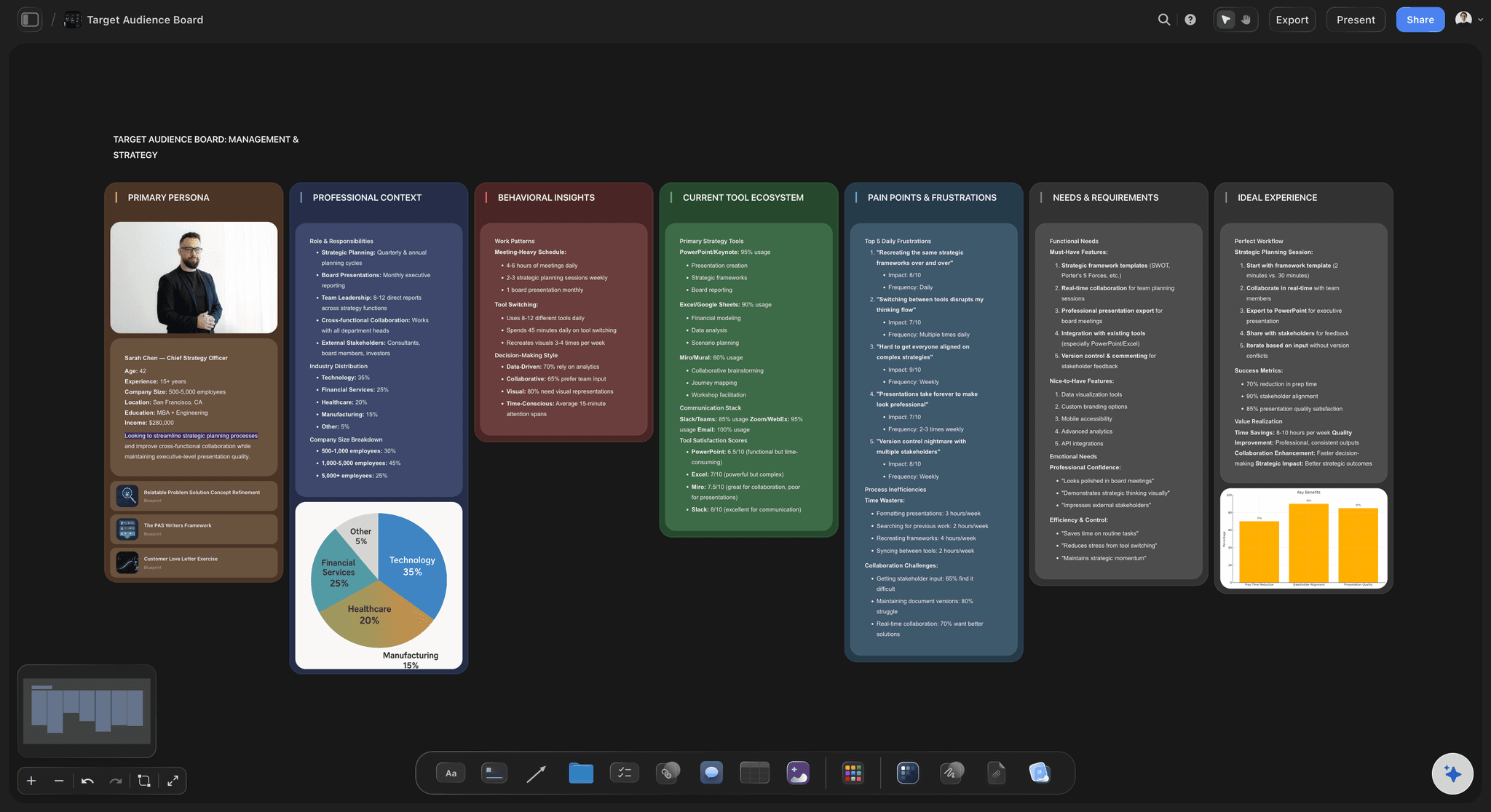
A protagonist
The audience, described specifically
Keep the customer research and their own words on the board. A story written for a demographic reads like it was written by a committee.
Try the customer persona generator →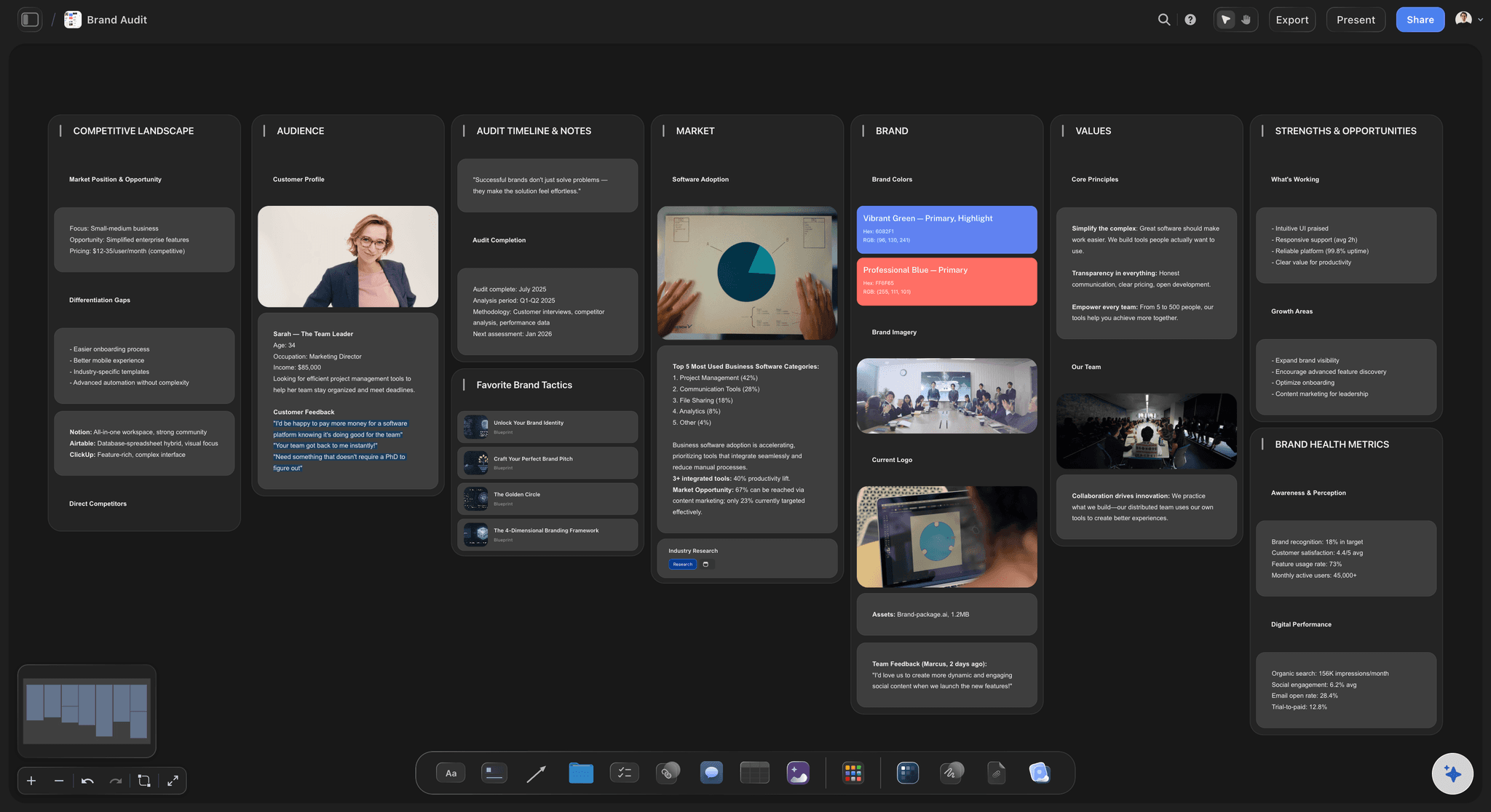
The missing beat
The conflict, written down
Name what was wrong before you existed. Without it there is no tension, and without tension the story is a description that nobody repeats.
See the brand strategy tool →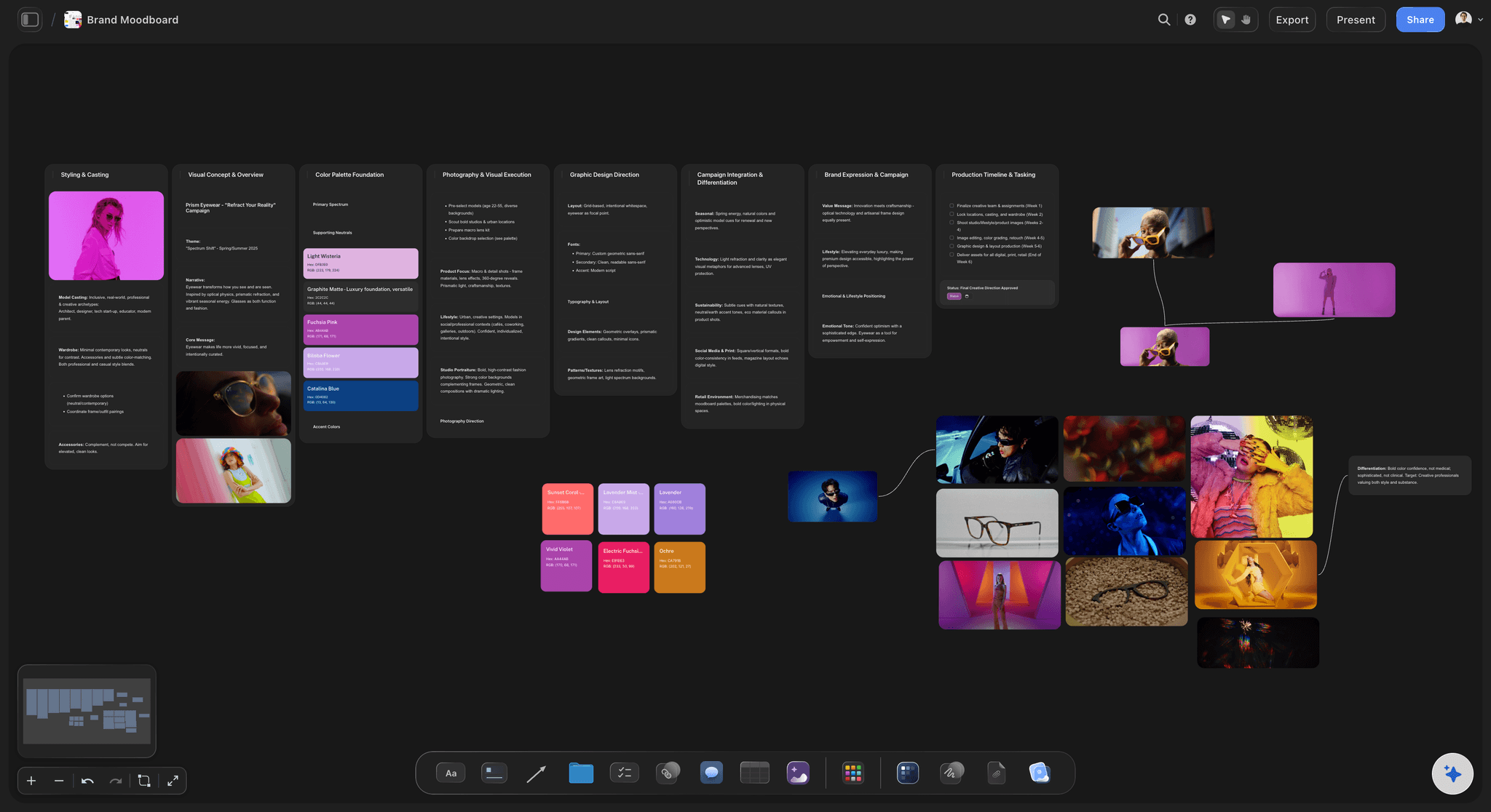
Words and pictures together
The visual story beside the verbal one
Develop the imagery on the same canvas as the narrative, so the brand does not end up with a warm story and cold pictures.
See the brand moodboard →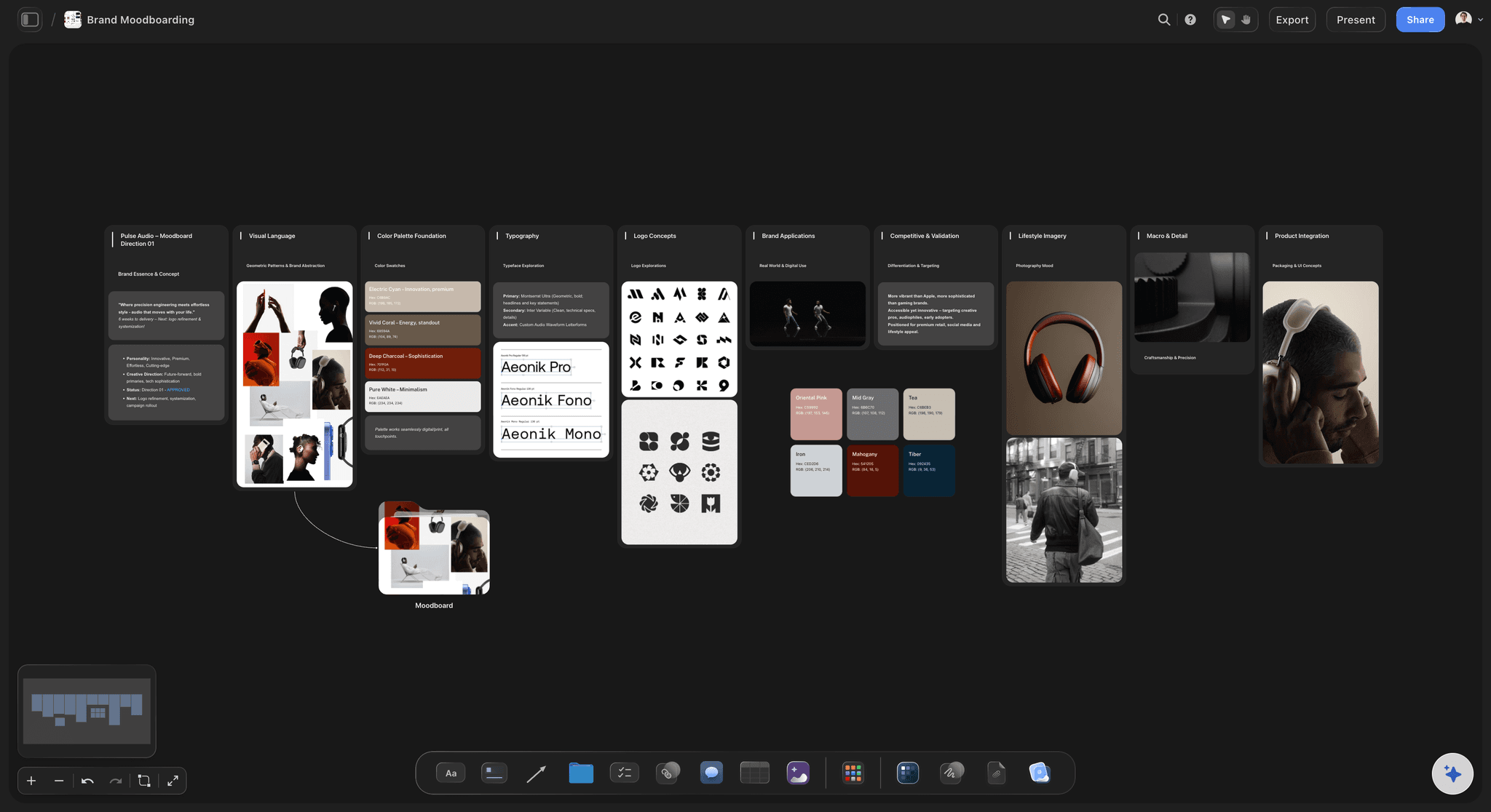
Repeatable by other people
One board the whole team reads
Share a link so sales, marketing and new hires tell the same story. A brand story that lives in one founder's head is not yet a brand story.
See the brand guidelines generator →Plans from $7.99/month annual. Invited collaborators join free.
Storyflow is paid-only during early access, and invited collaborators join at no cost, so bringing in a writer, a designer or the founder does not change the bill.
The team reads the story with no account
Unlimited boards, so each brand or sub-brand gets one
Export the story as a high-quality image or PDF
A free plan launches before the end of 2026
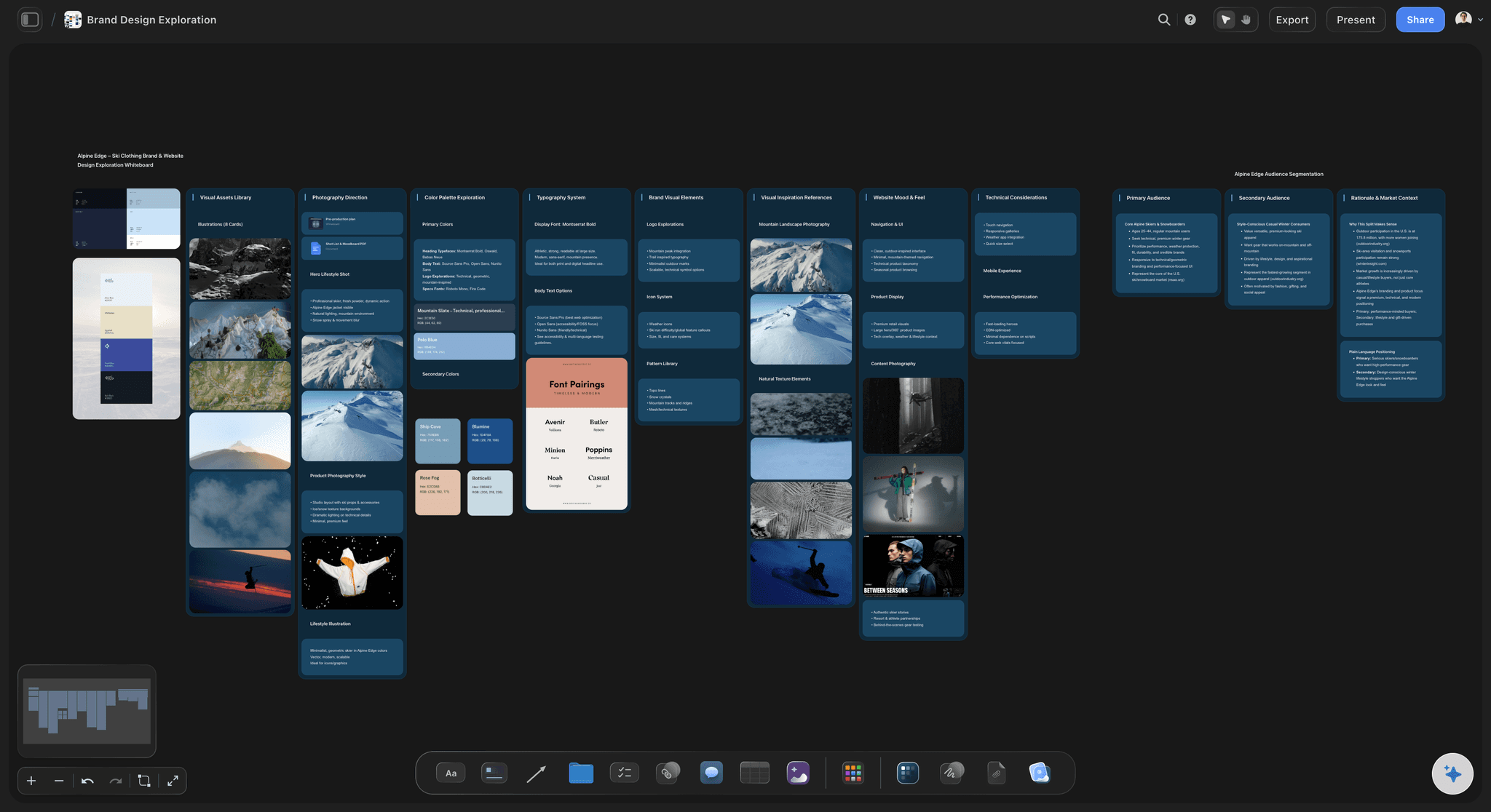
Built for people with taste
A form collects adjectives. A sequence exposes whether you have a story.
The test is whether someone who was not in the room can retell it. That is much easier to check on a canvas.
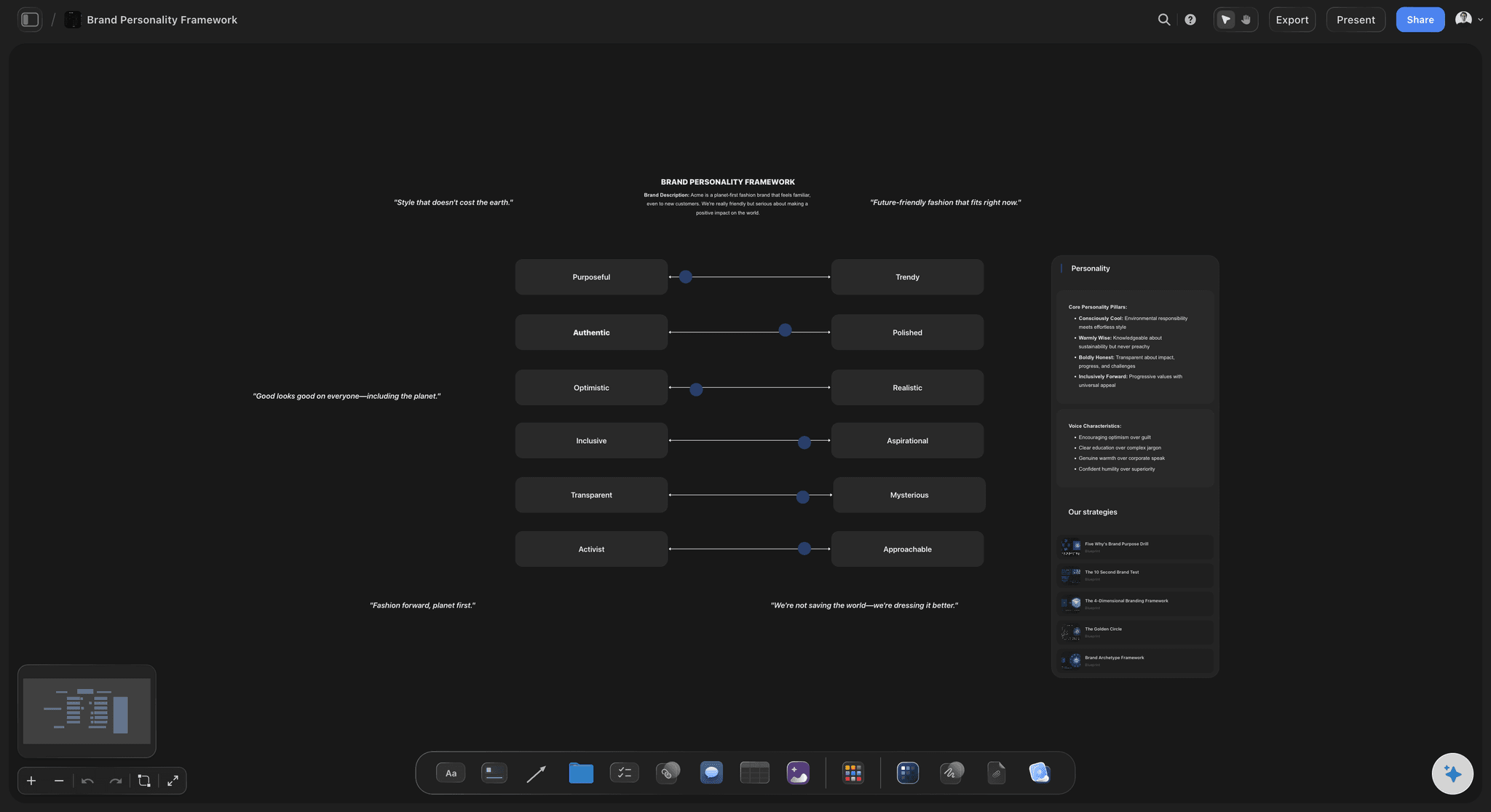
Structure that shows gaps
The missing beat is visible
A promise with no proof: An empty space under the promise is the clearest possible sign that the claim is not yet earned, and it is invisible in a paragraph.
A conflict nobody wrote: Most weak brand stories skip straight from origin to product. Laid out in order, that jump is obvious rather than merely felt.
Language taken from customers: Keep real quotes on the board next to the beat they support, so the story uses the words buyers use rather than the words the company prefers.
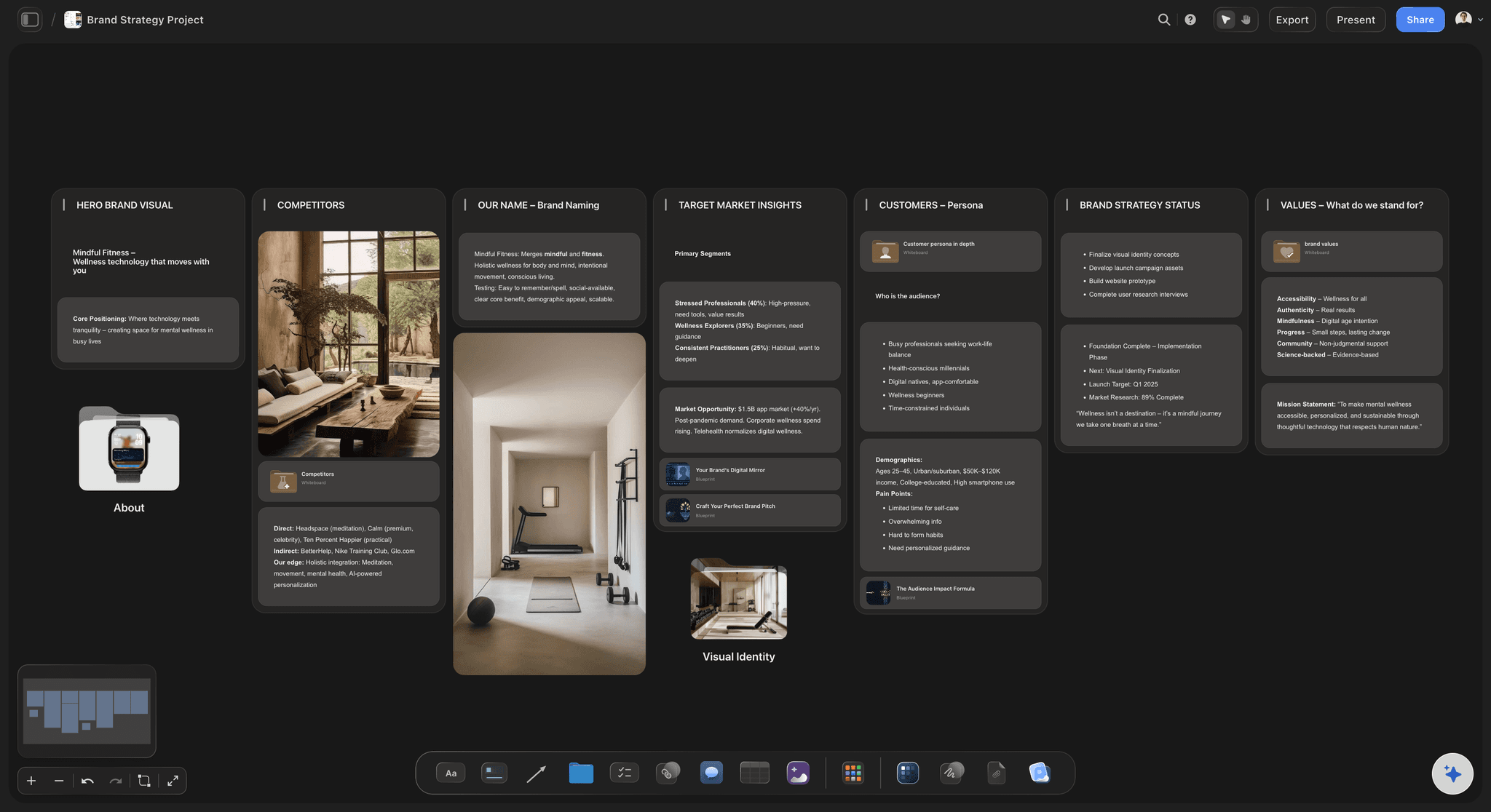
The AI reads the board
A first draft and a second opinion
Canvas-aware AI: Storyflow's AI reads the whole active board, so the audience research and the proof are in front of it when you ask which beat is weakest.
Bring the real material in: Attach up to five documents and three boards to pull customer interviews, the positioning doc and the existing site copy into one answer.
It proposes, you decide: Drafted beats arrive as ordinary editable cards. A brand story written entirely by a machine sounds like every other one, so the judgement stays yours.
Honest limits
What this does not do
It will not tell you if the positioning is right: Storyflow gives the argument a shape and shows you the gaps. Whether the strategy is correct is answered by customers, not by a canvas.
No brand asset management: There is no logo library, asset governance or usage rights tracking. Storyflow holds the story and the visual direction, not the file system.
Not a design system: Type scales, component libraries and tokens live in your design tool. This is where the narrative and the visual language are decided.
Explore templates for your project
Every template opens as a real, editable board on the infinite canvas. Pick the closest fit and make it your own.
Mind Map
Branch one central idea out into themes and sub-points, then drag the connections around until the structure makes sense.
What creators are saying
Join early creators getting structured workspaces and AI that remembers their projects
“Storyflow has sped up my workflow by at least 3x, which means more flow state and more projects I can actually ship. It truly changed the way me and my team create.”

Reilin Joey
Director & YouTuber
“One prompt gets me a structured board. But the tactics are my favorite. I run my YouTube scripts through them and my intros and retention got better. It's amazing.”

Justkay
YouTuber & Freelance Filmmaker
“I used to juggle five apps to plan a project. Now I describe what I am making and get boards, lists, and a schedule. All in one place.”

George
@fernwehchronicles
Brand stories, answered.
What founders and brand leads ask before writing one.
It is the narrative explaining why a company exists and why anyone should care: who it is for, what was wrong before, what it promises and what proves that promise. It is not the origin anecdote or the mission statement. The test is whether someone who was not in the room can retell it accurately.
Storyflow is built for exactly this: it lays the story out as beats on a canvas, with the audience, the conflict, the promise and the proof in order. The imagery and evidence attach to each beat, so the visual story sits beside the verbal one and a missing beat is easy to see. The whole team reads one board.
A protagonist who is the customer rather than the company, the conflict they lived with before, the change you offer, the proof it is real, and the language your buyers actually use. Mission, vision and values are outputs of that, not inputs to it. A template that only asks for adjectives produces copy that fits any competitor.
A strategy document decides positioning, audience and competitive stance. The brand story is how that decision gets told so people repeat it. They connect, and this board is the storytelling half: the sequence, the tension and the imagery that carries it.
It writes a first draft from what is on the board and points out the weakest beat, as editable cards. Use it to get past the blank page, not to finish. A brand story written entirely by a machine reads like every other one, and the differentiating detail is exactly what only you know.
Because gaps are visible in a sequence and hidden in a paragraph. A promise with nothing under it, or a jump straight from origin to product with no conflict, is obvious when the beats are laid out in order. It also lets the imagery be decided alongside the words instead of afterwards.
Yes, and it is the main reason to do this on a canvas. Reference imagery, colour and photographic direction sit beside the beats they support, so a brand does not end up with a warm story and cold pictures that were chosen separately.
No. There is no logo library, asset governance, usage rights or design tokens. Storyflow is where the narrative and the visual direction are decided; the resulting assets and system live in your design and asset tools.
Share a view-only link and anyone reads the story in a browser with no account, which matters because the people who most need it are often in sales and support. Anyone a paid member invites joins free and can edit.
Plans start at $7.99 per month billed annually, or $9.99 monthly. Storyflow is paid-only during early access, with a free plan launching before the end of 2026. Collaborators invited by a paid member can join free today.
More from Storyflow
Give the story a shape people can repeat.
Audience, conflict, promise and proof laid out in order, with the imagery that carries them beside the words.