
Pitch-ready plans, extremely reliable
Plan a brand film
that proves what the brand believes.
The belief, the real subject, the treatment, interviews and observed scenes, the look, the shot list, music and the cutdowns, carried from the pitch to the shoot on one board.


Creatives working for these brands already got early access
- Red Bull
- Canon
- Artlist
- Porsche
See how easy it is to get started
Watch a real project come together, from a blank board to a finished plan, clicked through step by step.
Start from a ready-made template
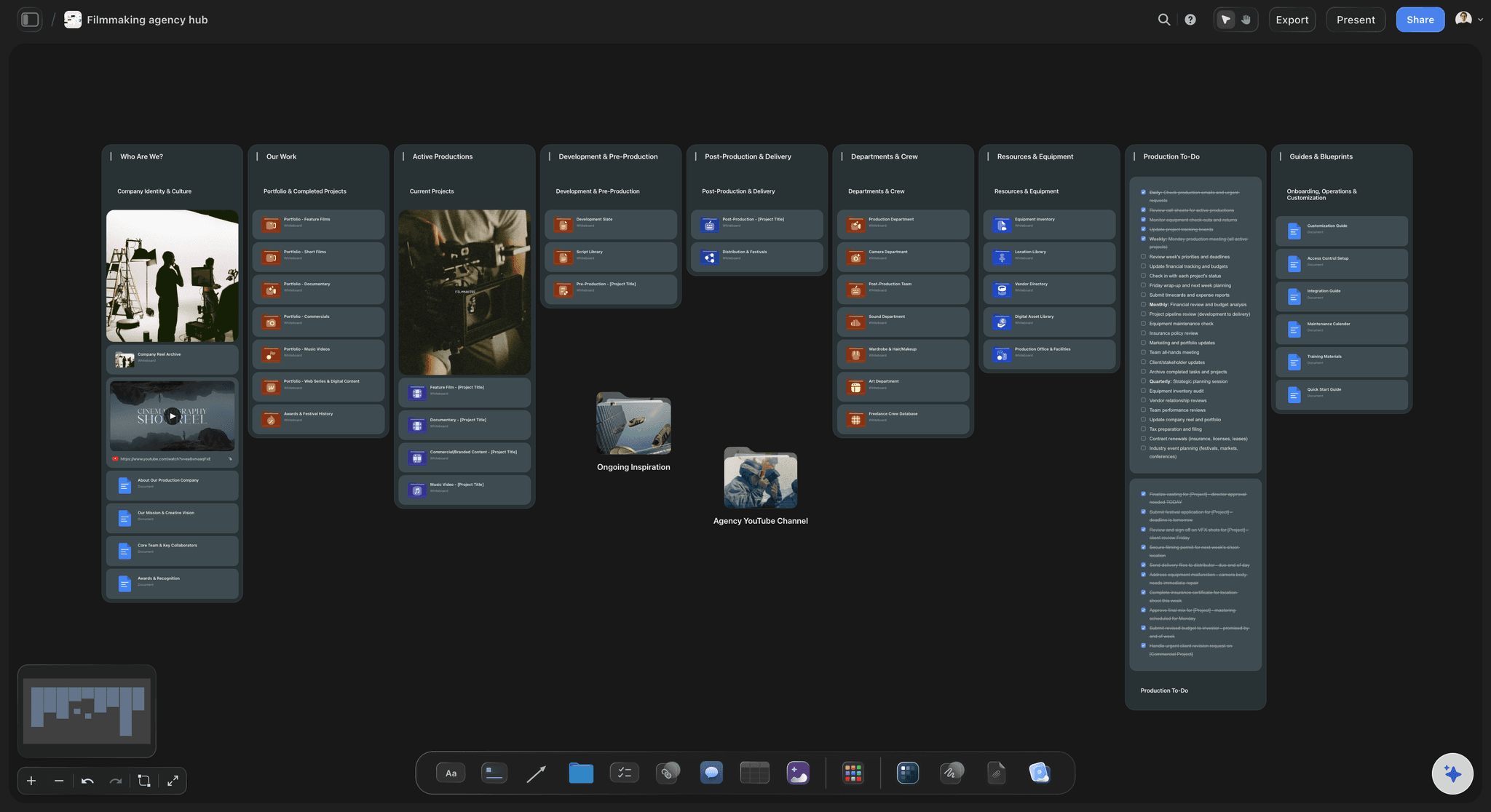
Pick a board to see what you can build, then let AI fill it in. Every template is a real, editable starting point on the same infinite canvas.

Storyboard
Lay out your shots frame by frame with images and notes, then reorder them until the sequence reads like the finished cut.
What is a brand film, and how do you plan one?
A brand film is a story-led film, often two to five minutes long, that proves what a brand believes through a real person, place or craft. Storyflow is an AI visual workspace that plans a brand film from treatment to call sheets on one infinite canvas: the look in references and a clip, an AI-drafted treatment PDF, the interview plan and the shot list.
Start with the belief, then find the proof. A brand film earns attention the way a documentary does, by showing something true. Write the belief in one sentence the brand would defend in public, then find the subject whose life already proves it: a customer, a maker, an employee, a place. If you have to script what they say, you have the wrong subject.
Interviews and observed scenes are planned separately. The interview gives you the spine: the subject's own words, recorded clean on a lav. Observed scenes give you the proof: the subject doing the thing, filmed without direction, often over hours for a few minutes of use. The treatment names both, and the shot list books time for the scenes you cannot restage.
Music and the cutdowns move the budget late. A track cleared for paid ads, broadcast and festivals costs more than one cleared for organic social, and archive footage is priced by use and term in the same way. Agree where the hero film and each cutdown will run before you choose music, and before the subject signs a release that has to cover it.
Ultra fast from brief to board
From one belief to a crew on location.
The treatment carries the film from the pitch to the shoot.
01
Name the belief and the subject
Paste the brand strategy and your research calls. Reduce the belief to a single line, list the candidate subjects and the scene that would prove it for each, and the AI lays the options out side by side so the room can choose.
02
Build the look, then the treatment
Collect captioned references, upload a reference clip and grab the frames you mean. Then ask the AI to write the treatment up as a PDF, covering the story in movements, the look, the sound and how the interviews and scenes will be filmed.
03
Plan the interviews, the scenes and the days
Write the interview plan in a Doc, from the pre-interview notes to the questions, and let the AI's shot list workflow break the treatment into interview setups and observed scenes. Keep the shoot days in a table with rows kept in date order.
04
Pitch it fullscreen, then send the call sheet
Frame the pitch on the board, from the belief through to the treatment, and present it fullscreen to the client. Once it is a yes, the same board becomes a call sheet PDF per shoot day.
The pitch, the plan and the shoot, on the board the client saw.
Everything the client signs off before a camera rolls. The edit, the review of each cut and the contracts belong to other tools.
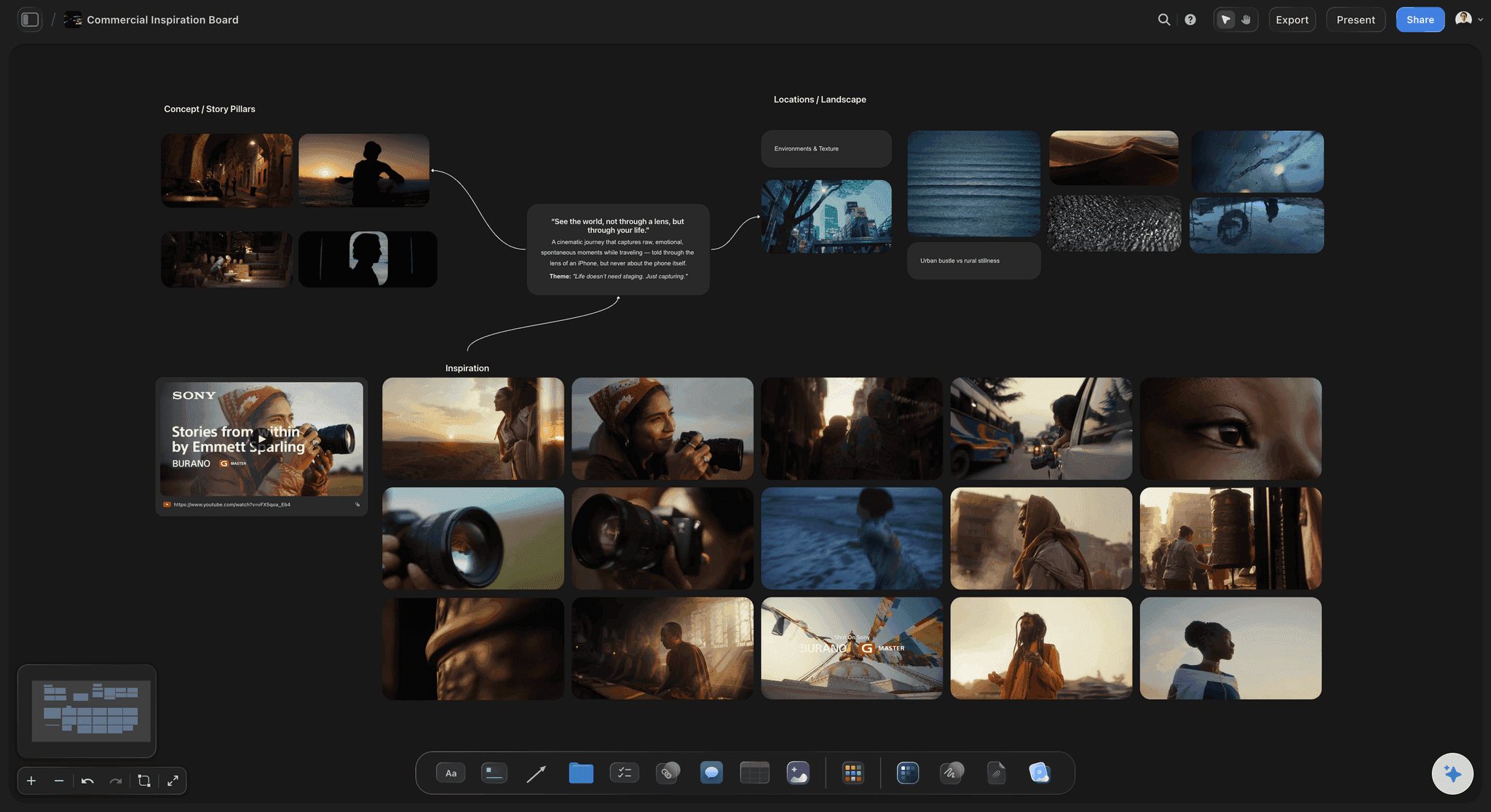
The look, shown rather than described
References and a clip you can point at
Captioned references for light, colour, pace and sound, and a reference clip uploaded to the board. Play it, scrub it, and grab the exact frames you mean onto the board, each with a note on what it is there for.
See the film lookbook →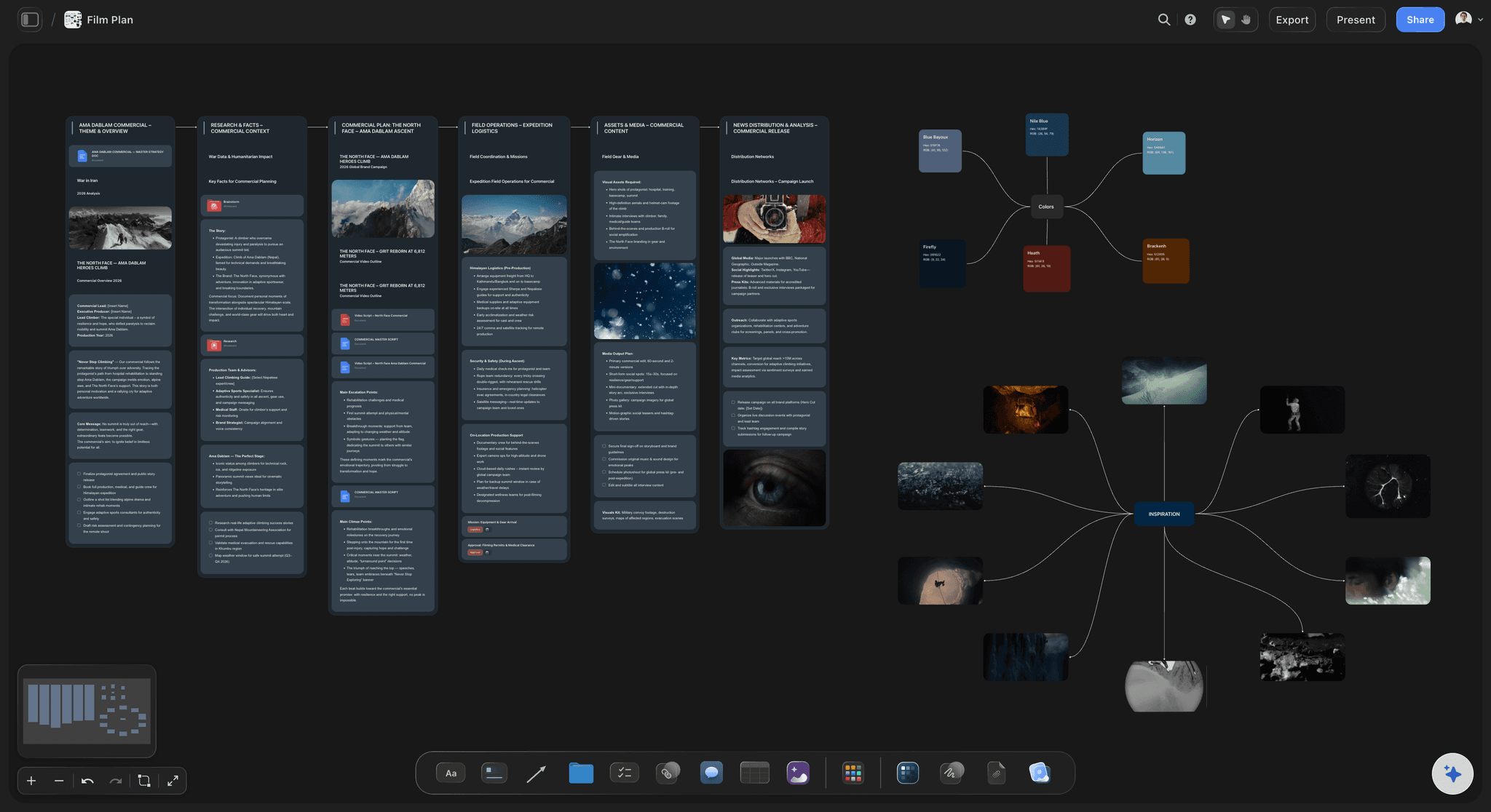
The treatment, written up by the AI
A treatment the client can read in ten minutes
The AI writes the treatment PDF from what is already on the board: who the film follows and why, the story in movements, the look, the sound, and the plan for interviews and scenes. It can also write it as a Word file when the client's team wants to redline it.
See the director's treatment template →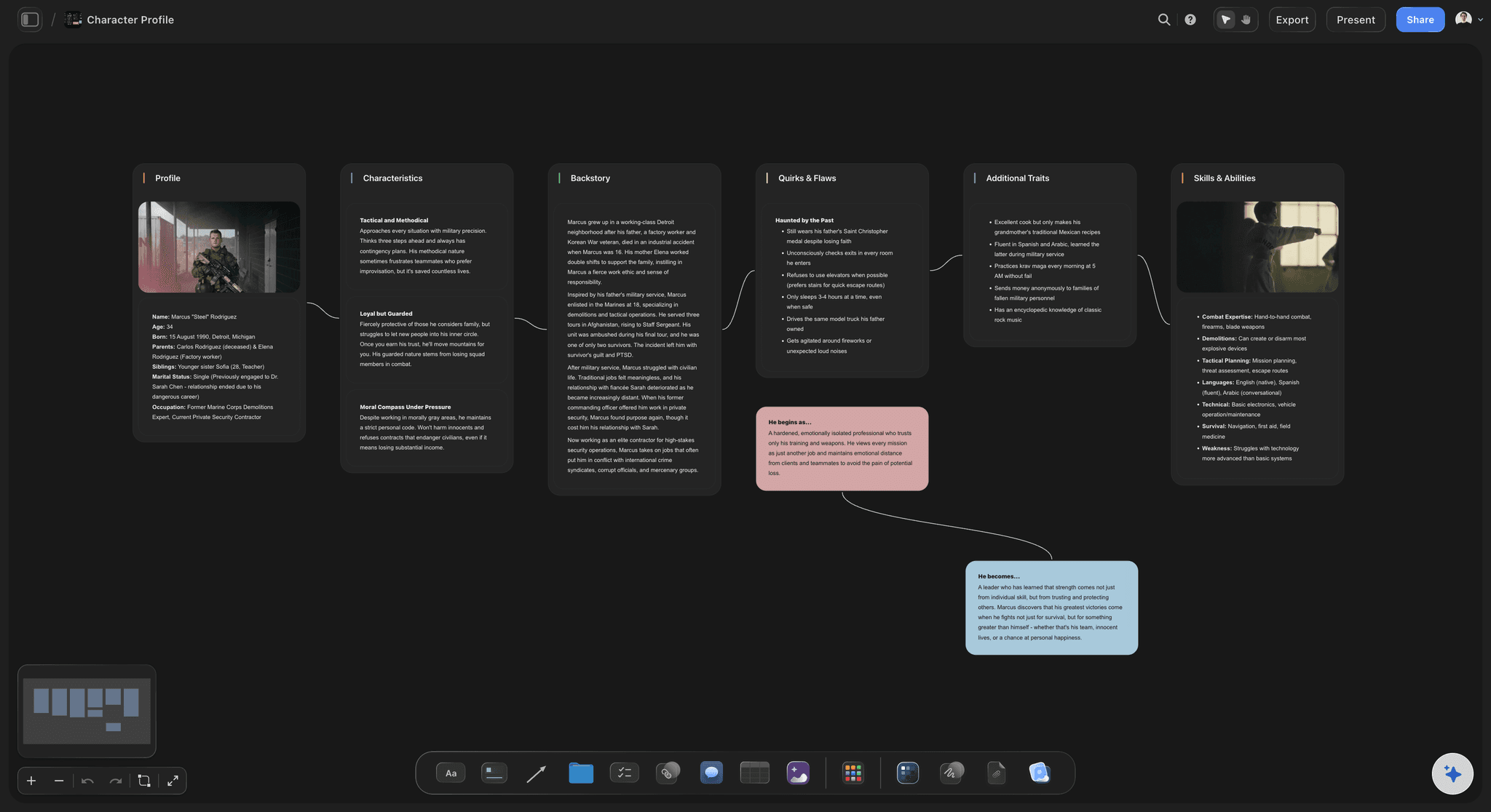
The interview and the scenes
An interview plan and a shot list for what cannot be restaged
The interview plan, from the pre-interview notes to the questions, sits in a Doc beside the subject's profile. Each observed scene gets shot list rows with the hours it may need, and the AI turns each shoot day into a call sheet PDF.
See the documentary interview planner →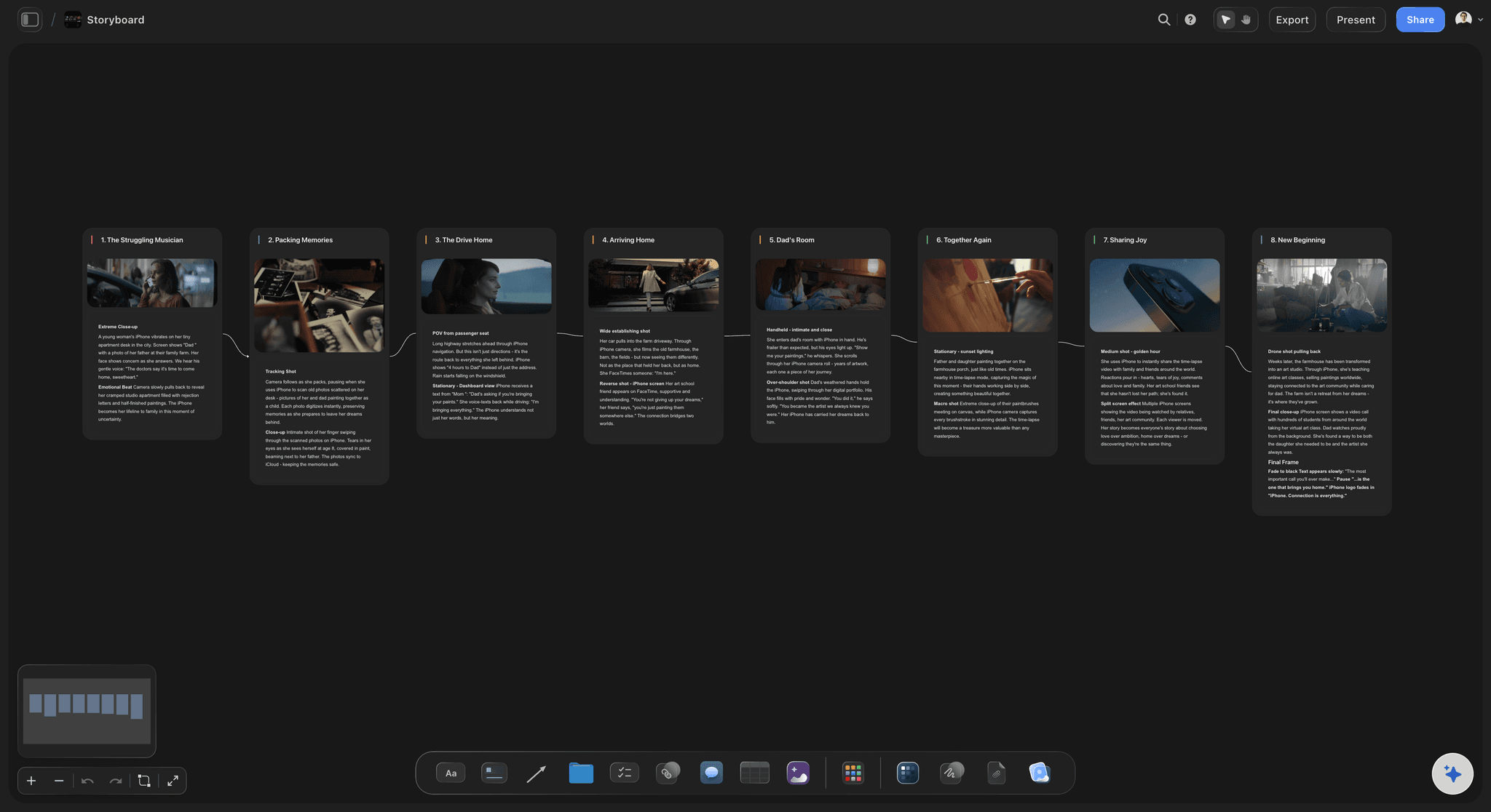
Pitched fullscreen, sent by link
Step through it in the room, then send the link
In the pitch meeting, present the board fullscreen, one frame per idea. Afterwards the client opens the same board from a view-only link with no account, and signs in to comment beside a reference or a scene.
See the campaign concept presentation →The next film starts from this one.
Duplicate a finished film's board to begin the next one with its structure, interview plan and deliverables list in place. Storyflow is paid-only during early access, with plans from $7.99 a month billed annually ($9.99 monthly). A free plan launches before the end of 2026, and anyone a paid member invites to a board joins free.
As many reference clips and stills as the film needs, on every paid plan
AI drafts of the treatment PDF, the shot list and each day's call sheet
Reference clips you can play, scrub and grab frames from
Fullscreen presentation mode, client links and whole-board PDF export
Built for people with taste
The story shape, six weeks of production and the deliverables.
One subject, a two to five-minute hero film and up to four shoot days. A brand documentary runs through the same stages, each one longer.
The story shape
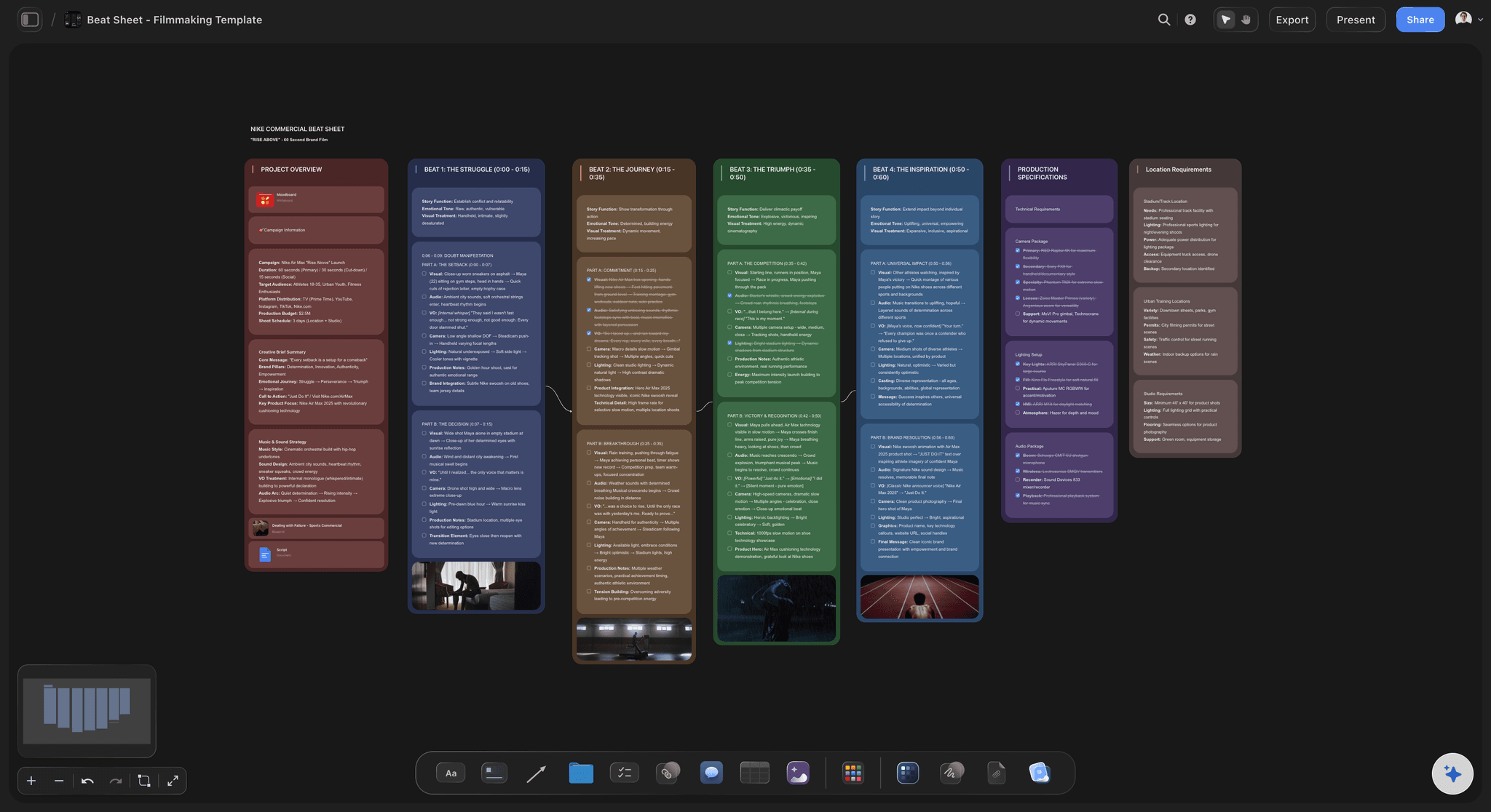
Subject, tension, turn, belief
The subject: One person, place or craft the audience can follow for three minutes, introduced doing something rather than talking about it. Give them a want the viewer understands in the first 30 seconds.
The tension: What stands in the way: the weather, the deadline, the odds, their own doubt. Without tension a brand film is a nice portrait that nobody finishes.
The turn: The moment the subject acts on what they care about, filmed as a scene rather than told in an interview. The shoot is built around this scene.
What the brand believes: Said once, late, in the subject's words or a single line of type, never as a product feature. If the belief needs a voiceover to explain it, the story has not proved it yet.
Six weeks from the yes, a common shape
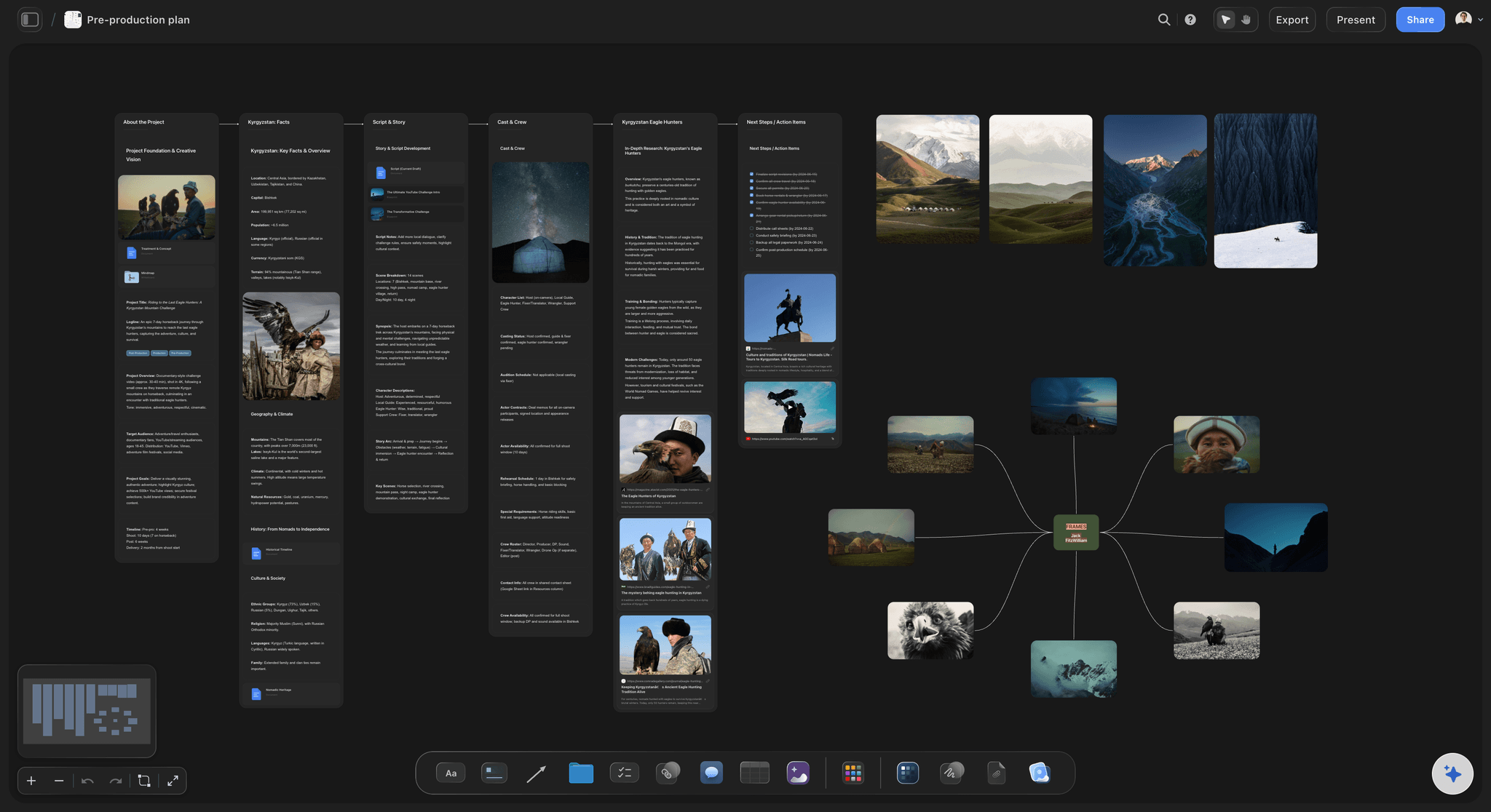
From an approved treatment to the delivered film
Week 1: pre-production: The clock starts when the treatment and budget are a yes, usually after two to four weeks of development. Then the recce, the pre-interview, the shot list, the crew and a call sheet PDF per day, booked around the subject's real routine.
Week 2: the shoot: Two to four days for the interview, the observed scenes and the b-roll of the place. Record room tone and wild sound at every location, because the edit will need both.
Weeks 3 and 4: the rough cut: The editor logs the footage, builds an assembly and shapes a rough cut by the middle of week 4. The client's first round of notes closes the week.
Weeks 5 and 6: fine cut and finish: The fine cut and a second round of notes in week 5, then picture lock, the grade, the mix, the music licence confirmed and the cutdowns in week 6. Late notes, not the grade, are what usually push delivery.
The deliverables list
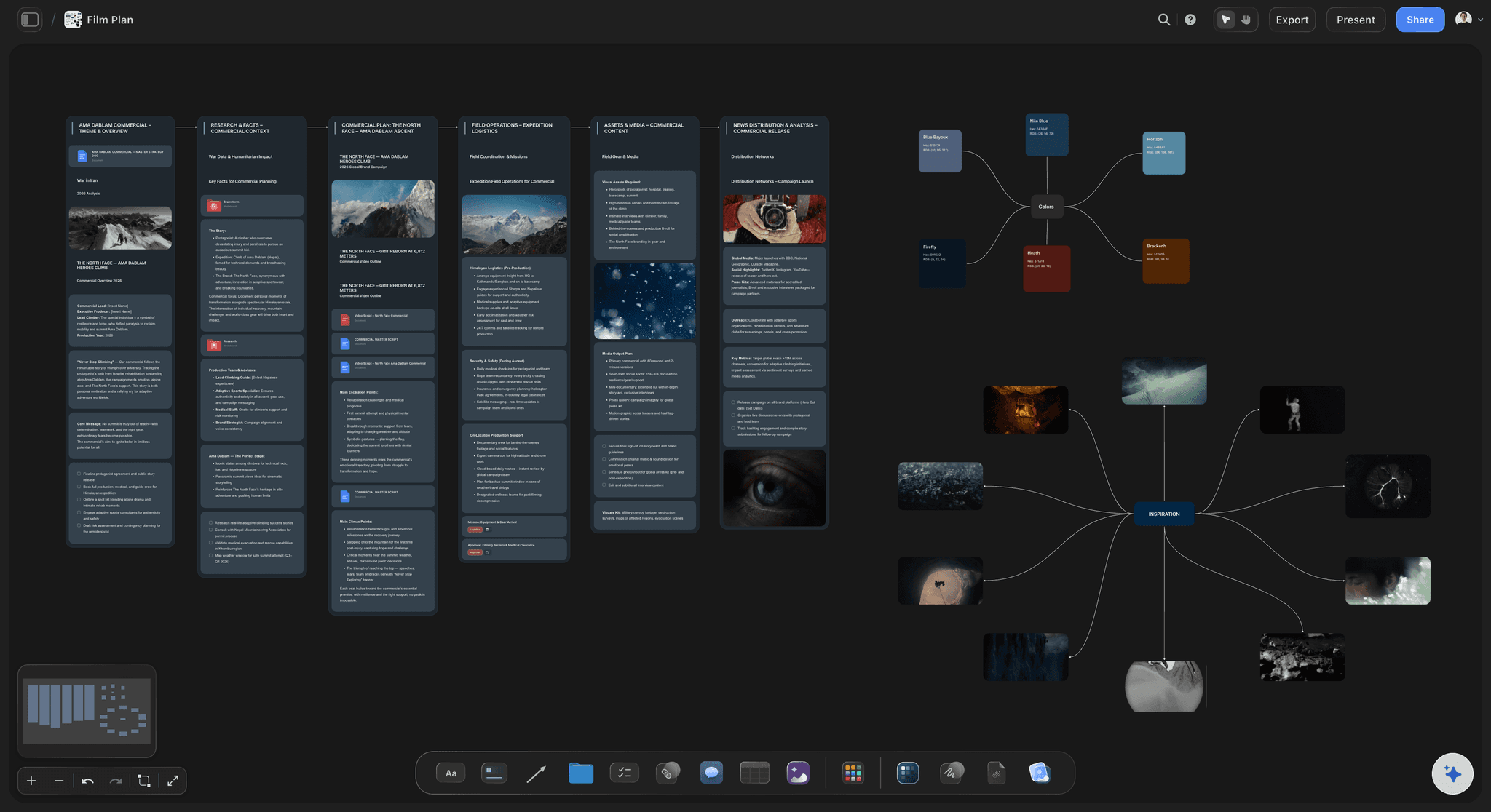
The hero film and three cutdowns
The hero film: 2 to 5 minutes, 16:9: For the brand's site, YouTube, events and festivals, with a subtitle file and a burned-in version. Deliver a textless master too, for later edits.
Cutdown 1: 60 seconds, 16:9 or 1:1: The story in miniature for LinkedIn, paid social and pre-roll: the subject, the turn and the belief. It is a new edit, not the first minute of the hero film.
Cutdown 2: 30 seconds, 9:16: One scene and one line for Reels, Shorts and TikTok, reframed for vertical. Plan the vertical framing on set, since cropping a wide shot later can lose the subject.
Cutdown 3: 15 seconds, 9:16 or 1:1: A single image and the title, for teasers before the release and paid placements after it. Cut it from a moment the hero film has already earned.
Before anyone signs
The terms a brand film depends on
The subject's release and what they see: The subject signs an appearance release that covers every use in the deliverables list, and you agree what they will see before release: a viewing for factual accuracy, not final cut. Put that promise in writing before the shoot.
Music and archive: License music for the longest and widest use in the deliverables list, and clear any archive footage or photos for the same term. A track cleared only for social can block a festival run.
Revisions and payment: Two rounds of notes, each gathered into one list by the client's approver, with changes to the approved treatment priced as a change order. A common payment shape is thirds: on signing, at the shoot and on delivery.
Explore templates for your project
Every template opens as a real, editable board on the infinite canvas. Pick the closest fit and make it your own.
Storyboard
Lay out your shots frame by frame with images and notes, then reorder them until the sequence reads like the finished cut.
One app instead of five
Storyflow vs StudioBinder, Frame.io and Milanote for a brand film.
StudioBinder runs production paperwork and sends call sheets, Frame.io puts frame-accurate notes on each cut, and Milanote holds references on a board. Storyflow carries a brand film from the treatment to the shoot, with the AI drafting the documents.
Storyflow
Recommended
Treatment and references on one canvas
AI drafts a treatment PDF from the board
AI drafts the interview questions
Call sheets sent to the crew
Timecoded comments on the cut
StudioBinder
Treatment and references on one canvas
AI drafts a treatment PDF from the board
AI drafts the interview questions
Call sheets sent to the crew
Timecoded comments on the cut
Frame.io
Treatment and references on one canvas
AI drafts a treatment PDF from the board
AI drafts the interview questions
Call sheets sent to the crew
Timecoded comments on the cut
Milanote
Treatment and references on one canvas
AI drafts a treatment PDF from the board
AI drafts the interview questions
Call sheets sent to the crew
Timecoded comments on the cut
What creators are saying
Join early creators getting structured workspaces and AI that remembers their projects
“Storyflow has sped up my workflow by at least 3x, which means more flow state and more projects I can actually ship. It truly changed the way me and my team create.”

Reilin Joey
Director & YouTuber
“One prompt gets me a structured board. But the tactics are my favorite. I run my YouTube scripts through them and my intros and retention got better. It's amazing.”

Justkay
YouTuber & Freelance Filmmaker
“I used to juggle five apps to plan a project. Now I describe what I am making and get boards, lists, and a schedule. All in one place.”

George
@fernwehchronicles
Brand films, answered.
Treatments, subjects, length, timing and the pitch, from the brief to the shoot.
Storyflow plans a brand film from treatment to shoot on one board: captioned references and a reference clip with frames grabbed, a treatment PDF the AI drafts, the interview plan, the shot list and a call sheet PDF, and presentation mode for the pitch. Clients open it by link with no account or read it as a PDF. When the cuts arrive, review them in Frame.io with timecoded notes.
An advert sells a product in 15 to 60 seconds and ends on an offer. A brand film usually runs two to five minutes, follows someone or something real, and ends on what the brand believes, with the product in the background or absent. People choose to watch a brand film, so it has to hold attention like a short documentary.
Write the belief in one sentence, find the subject whose life proves it, and write a treatment. Then run a pre-interview and a recce, plan the interview and the observed scenes, shoot over two to four days, and cut a hero film and its cutdowns across two review rounds. In Storyflow every one of those documents, from the treatment to the call sheets, comes off the same board.
The belief in one line, the subject and why them, the story in three or four movements, the look shown with captioned references and one clip, the interview approach, the observed scenes you plan to film, sound and music, the deliverables and a rough schedule. Five to eight pages is a common length. In Storyflow the AI writes it up as a PDF from your references and notes, and you rewrite it.
A brand film made with documentary methods at greater length: real subjects, interviews and observed scenes, running from about ten minutes to feature length, and often released on YouTube, a streaming service or the festival circuit. It needs more research, access and time than a two-minute brand film, and clear agreements with its subjects about what they will see before release.
Two to five minutes is the common range for the hero film: long enough for a subject, a tension and a turn, short enough to finish on a phone. Then plan cutdowns of 60, 30 and 15 seconds for paid and social placements. Anything much longer is closer to a brand documentary, and needs planning like one.
Eight to ten weeks is a common shape once the subject is found: two to four weeks of development and the treatment, then six weeks from the yes, with a week of pre-production, a shoot of two to four days and four weeks of post with two review rounds. Finding the right subject, securing access or waiting for a seasonal scene can add months, so start those first.
Look for someone whose everyday life already proves the belief, who is comfortable being filmed for days, and who has something at stake the audience can see. Run a pre-interview before you commit, and check they can give you access to the places and people the story needs. Employees and customers work when the story is theirs, not a script about the brand.
The belief as you understood it from the brief, one subject or a shortlist with the reason for each, a treatment, the look in references and a clip, the deliverables list, a schedule and a budget range. In Storyflow the pitch is the board itself, stepped through fullscreen, and the treatment PDF goes to the client afterwards.
It can draft, not decide. In Storyflow the AI reads the board and drafts a treatment PDF from the references and notes on it, splits the treatment into interviews and observed scenes for the shot list, and drafts the call sheets as PDFs, one per shoot day. It cannot find your subject or earn their trust, and that part is the film.
No. Storyflow plans the film, from the belief to the call sheet. The edit happens in your editing software, review of each cut with timecoded notes in Frame.io, and production paperwork such as sending call sheets and collecting confirmations in StudioBinder. Keep the Storyflow board as the record of the approved treatment, so a late request can be checked against it.
Not during early access. Storyflow is paid-only during early access, with plans from $7.99 a month billed annually ($9.99 monthly). A free plan launches before the end of 2026, and anyone a paid member invites to a board joins free. The client pays nothing to read the treatment.
More from Storyflow
Brand story template
Corporate video production
Director's treatment template
Commercial production planning
Brand moodboard maker
Film lookbook
Campaign concept presentation
Brand launch planner
Film press kit template
Documentary interview planner
Testimonial video planner
Music licensing for video
Pricing
Video production brief template
Simple AI storyboarding tool
Music licensing tracker
Find the story before you book the crew.
Open a canvas, write the belief, and build the treatment the client says yes to. No download.