
Ultra-fast moodboards with real taste
Build the film press kit
from the film itself.
Logline, short and long synopsis, director's statement, bios, credits, tech specs, stills pulled from the cut, the poster and the trailer on one board, ready for programmers and journalists.


Creatives working for these brands already got early access
- Red Bull
- Canon
- Artlist
- Porsche
See how easy it is to get started
Watch a real project come together, from a blank board to a finished plan, clicked through step by step.
Start from a ready-made template
Pick a board to see what you can build, then let AI fill it in. Every template is a real, editable starting point on the same infinite canvas.

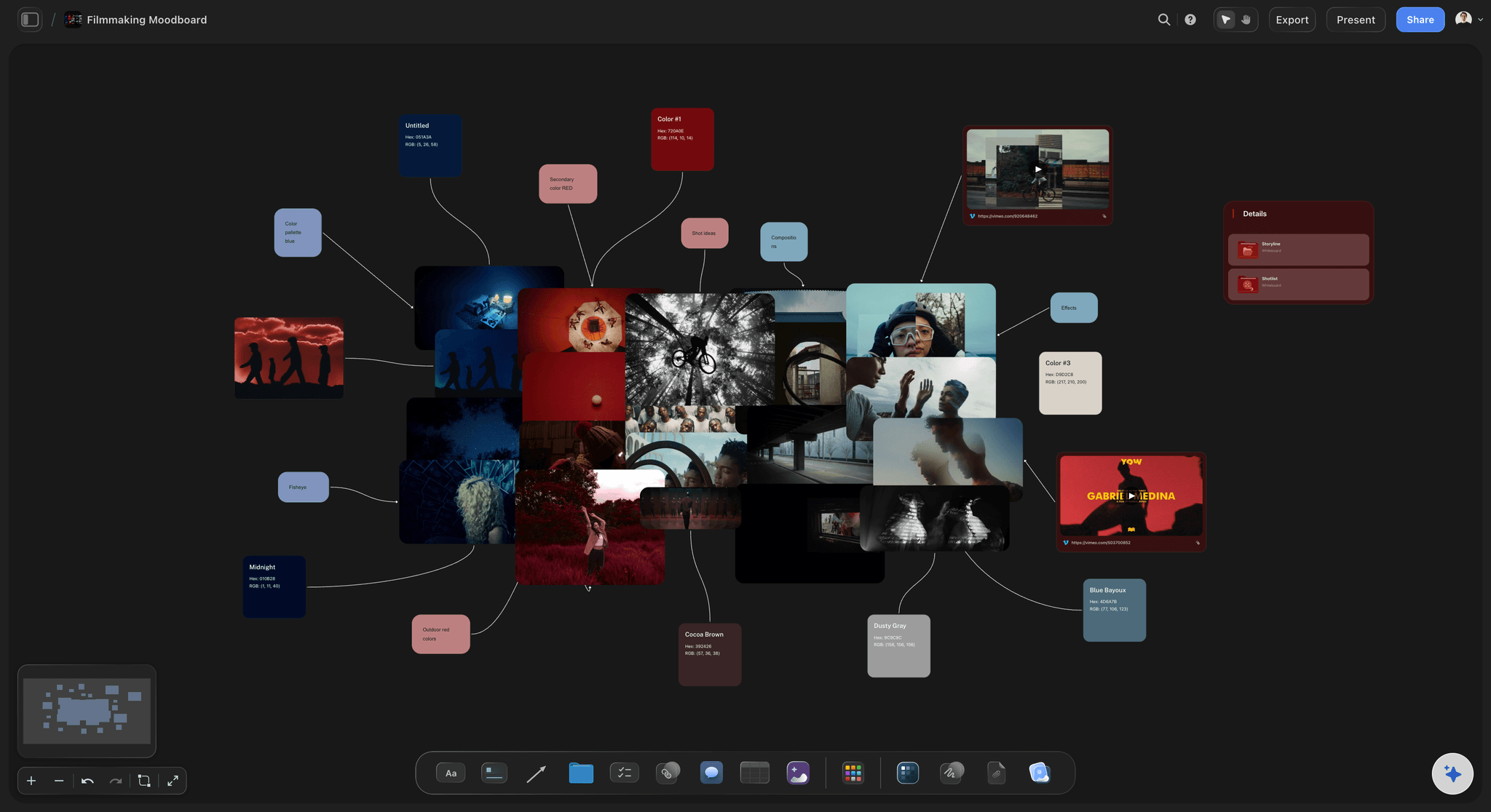
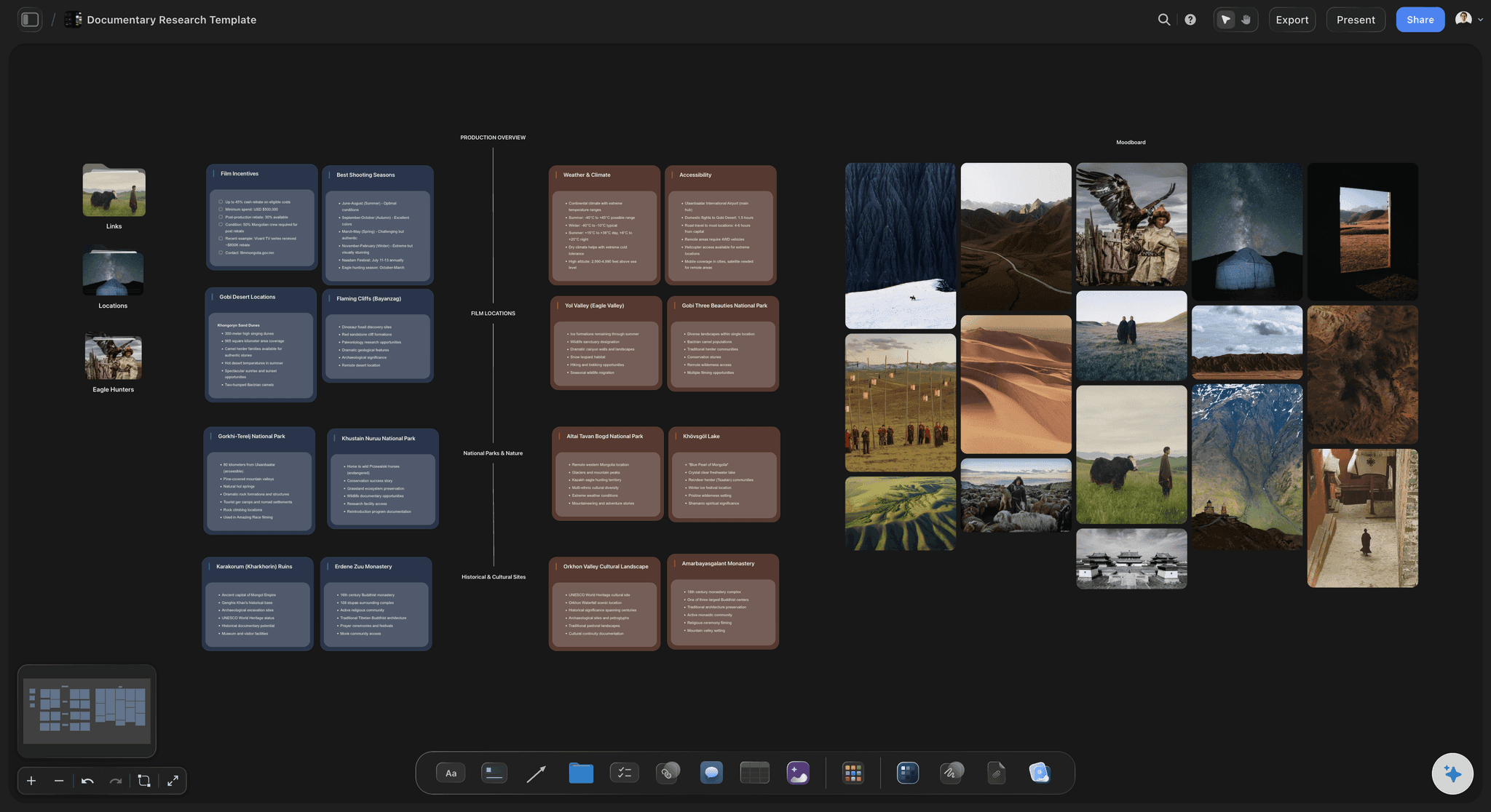
Film Moodboard
Collect film references, color palettes, lighting, locations, and tone in one place, then invite your crew.
What goes in a film press kit?
A film press kit, or EPK, is the package festivals, journalists and buyers use to program and write about a film: synopses, a statement, bios, credits, specs, stills, poster and trailer. Storyflow is an AI visual workspace that assembles a film press kit on one infinite canvas: stills grabbed from the cut, synopses in Docs with Word and PDF export, and an AI-drafted one-pager PDF.
Write three synopses, not one. A logline of one sentence for listings, a short synopsis of 50 to 100 words for catalogues and emails, and a long synopsis of about a page for journalists. Write the long one first, then cut it down. Keep the ending out of the short synopsis, since festival catalogues often print it as written.
Stills sell the film before anyone watches it. Choose eight to twelve images: the lead in a strong close-up, a wide that shows the world, a two-shot with tension, and a behind-the-scenes photo of the director at work. If nobody shot stills on set, export the key moments from the graded master and grab frames without motion blur.
Premiere status goes at the top, and it changes. Festivals care whether a screening is a world, international or national premiere, so state the film's status plainly and update it after every festival. Add laurels only once a festival has announced its line-up, and put one press contact with a phone number on the first page.
Ultra fast from brief to board
From the locked cut to a kit festivals can open.
Most of it happens between picture lock and the first festival reply.
01
Upload the footage and pull the stills
Upload the trailer, or a full-resolution export of the scenes you want stills from, then play, scrub and grab the frames that sell the film onto the board. Caption each still with the scene, who is in frame and the credit line.
02
Write the synopses and statement in Docs
Paste the treatment and the AI drafts a logline, a short synopsis and a long synopsis for you to rewrite. Write the director's statement yourself; the AI can review and tighten it, not replace it.
03
Fill in the credits and the tech specs
Keep the full credits and the tech specs in tables: runtime, aspect ratio, sound, language, subtitles, country, year and exhibition format. Check the spelling of every name with the person it belongs to.
04
Ask for a one-pager, then answer requests
The AI lays out a one-pager PDF for festivals and buyers from what the kit already holds. When a programmer or journalist asks for the full kit, it goes out from the same board, already current.
The kit, assembled from the film and the words around it.
Storyflow builds the press kit. Festival submissions, the film's website and press releases live elsewhere.
Stills from the frames
Stills pulled straight from the cut
Upload the trailer or an export of the key scenes as MP4, MOV or WEBM, scrub to the moment and grab the frame onto the board. Caption each still with the scene, the people in it and the photographer or cinematographer credit.
See the video frame grabber →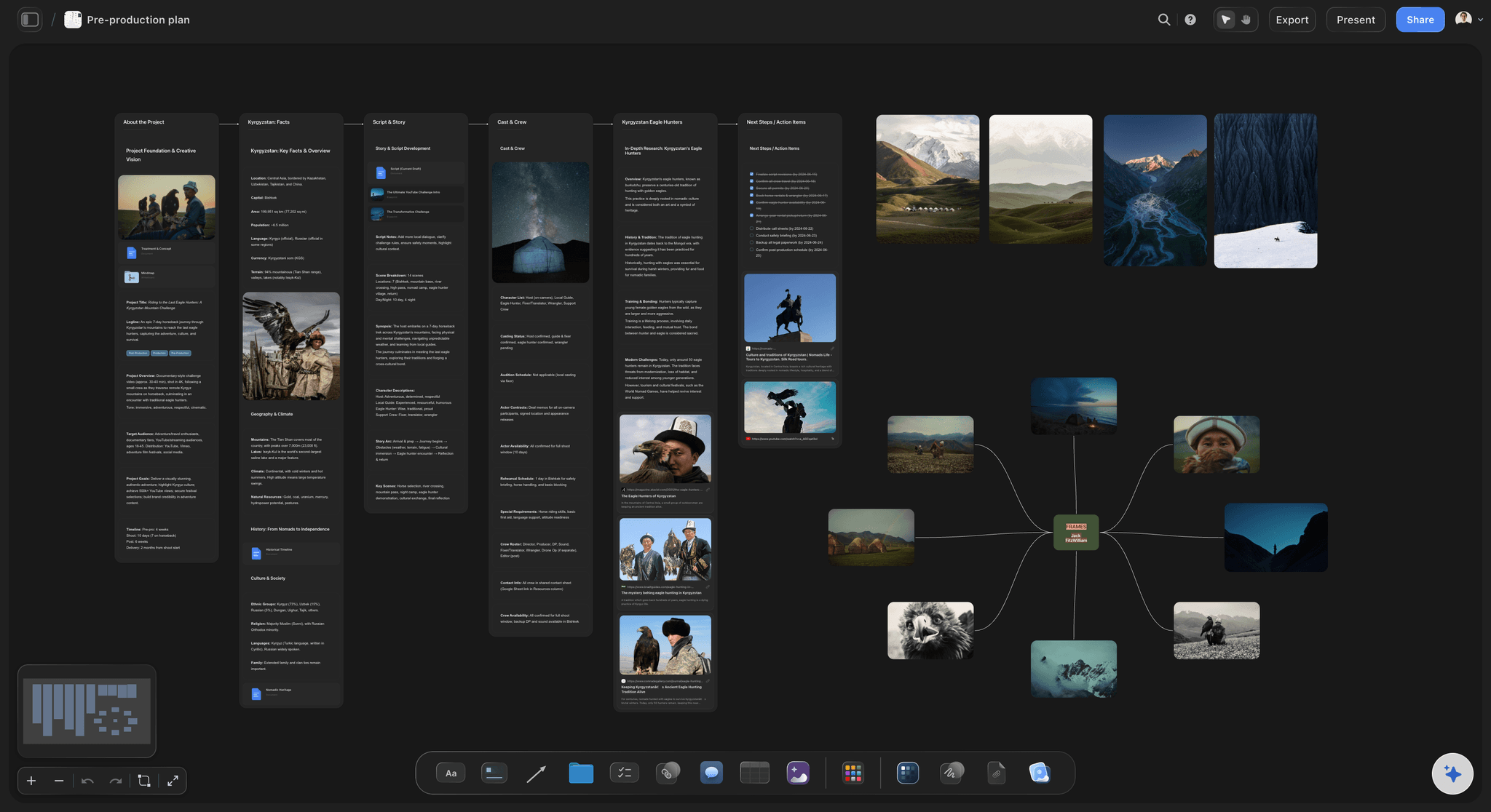
The words, in Docs
Synopses and a statement a publicist can redline
The logline, both synopses, the director's statement and the bios live in Docs, each with inline comment threads for the producer. Export any of them to Word or PDF when a festival asks for a file.
See the film treatment template →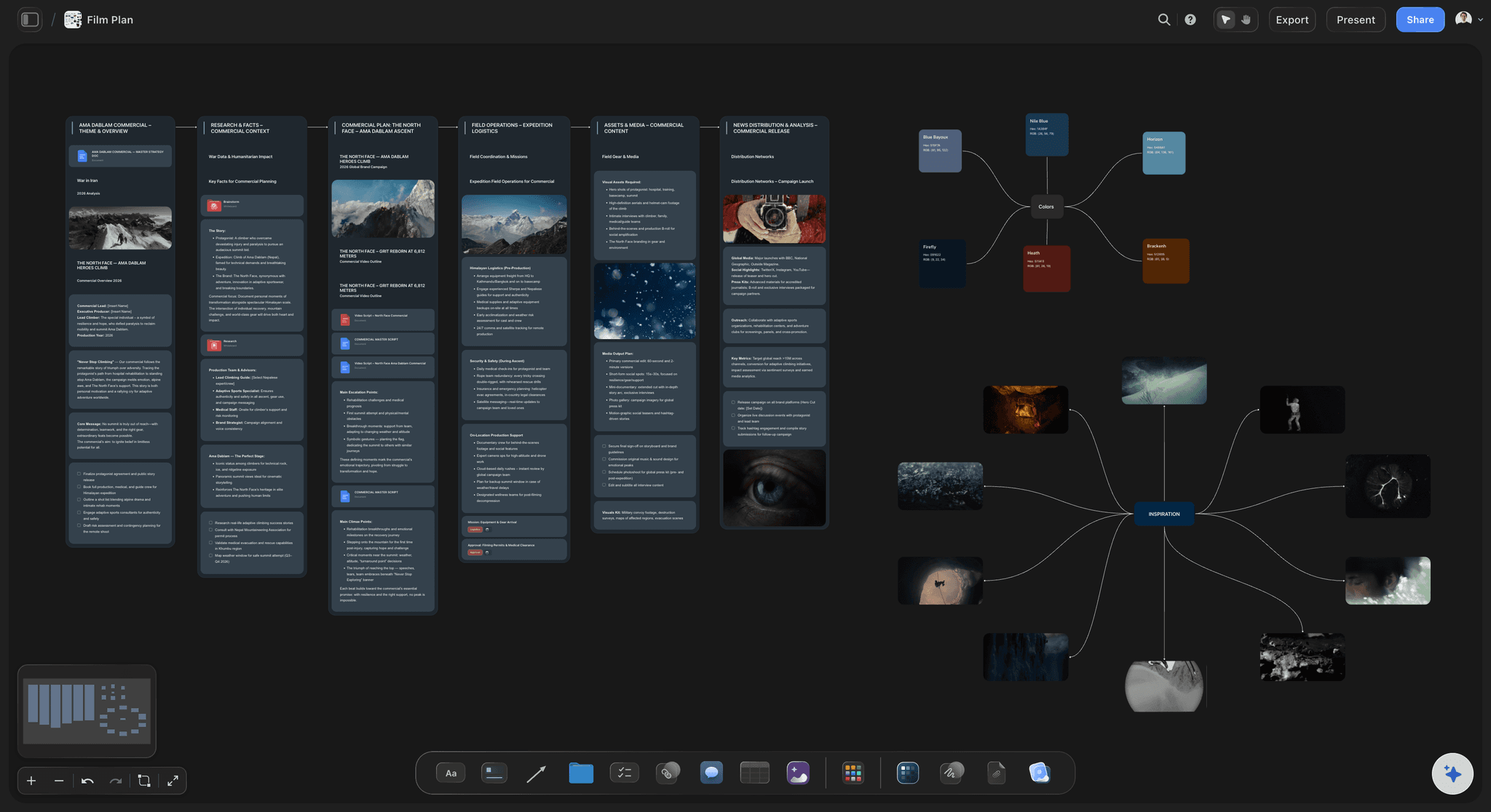
The one-pager, and the full file
A one-page summary for the first email
Ask the AI for a one-pager and it builds the PDF from the kit: title, logline, short synopsis, key credits, runtime, premiere status, a still and the press contact. For a publicist who wants to edit, it can write the whole kit as a Word file with the stills in it.
See the film pitch deck →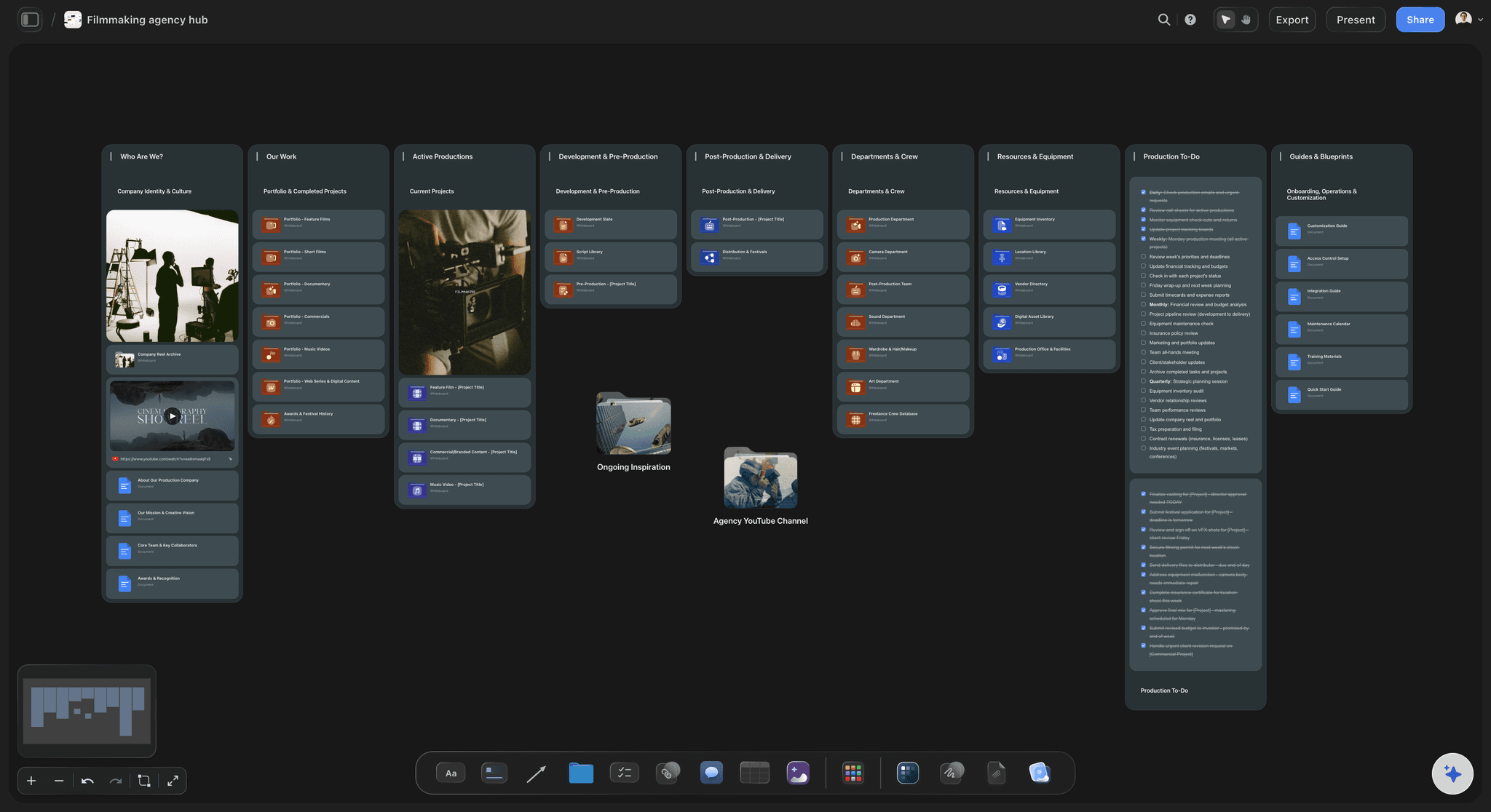
Sent to programmers and critics
One link for programmers, journalists and buyers
A programmer or journalist opens the kit from a view-only link with no account, and signs in to comment if they are working on the piece with you. Export the whole board as a PDF for the inbox that wants an attachment.
See the film festival planner →One board per film, from the pitch to the press kit.
Keep the pitch, the lookbook and the press kit on the film's own board, and duplicate the kit's structure for your next film. Storyflow is paid-only during early access, with plans from $7.99 a month billed annually ($9.99 monthly). A free plan launches before the end of 2026, and anyone a paid member invites to a board joins free.
Unlimited boards and uploads for every film, on any paid plan
Frame grabs from the trailer or scene exports you upload
Docs for the synopses, statement and bios, plus the AI's one-pager
View-only kit links and whole-board PDF export
Built for people with taste
The written sections, the stills and the facts a festival asks for.
Section lengths that festival programmers expect, in the order they read a kit.
The written sections
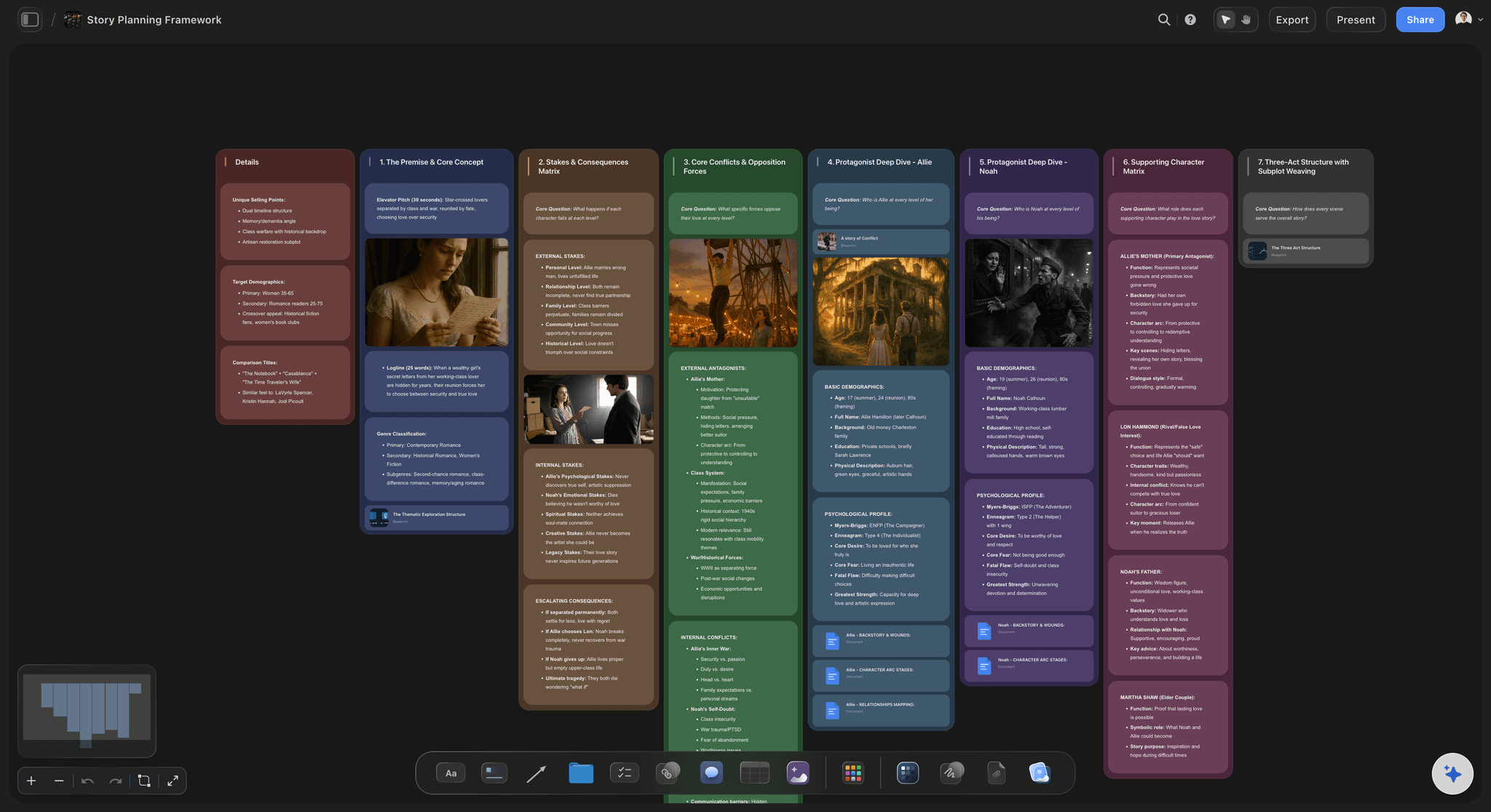
From the logline to the director's statement
Logline: one sentence: Who the film follows, what they want and what stands in the way, in 25 to 35 words. Use the same logline everywhere the film is listed.
Short synopsis: 50 to 100 words: The set-up and the stakes, without the ending, for catalogues, emails and screening notes. Festivals often print it exactly as you wrote it.
Long synopsis: about one page: The full arc for journalists and programmers, without the ending unless a festival or buyer asks for it. Write it in the present tense and the third person.
Director's statement: 300 to 500 words: Why you made this film and why now, in your own voice, not a second synopsis. Journalists quote it, so every sentence should survive being quoted alone.
The people
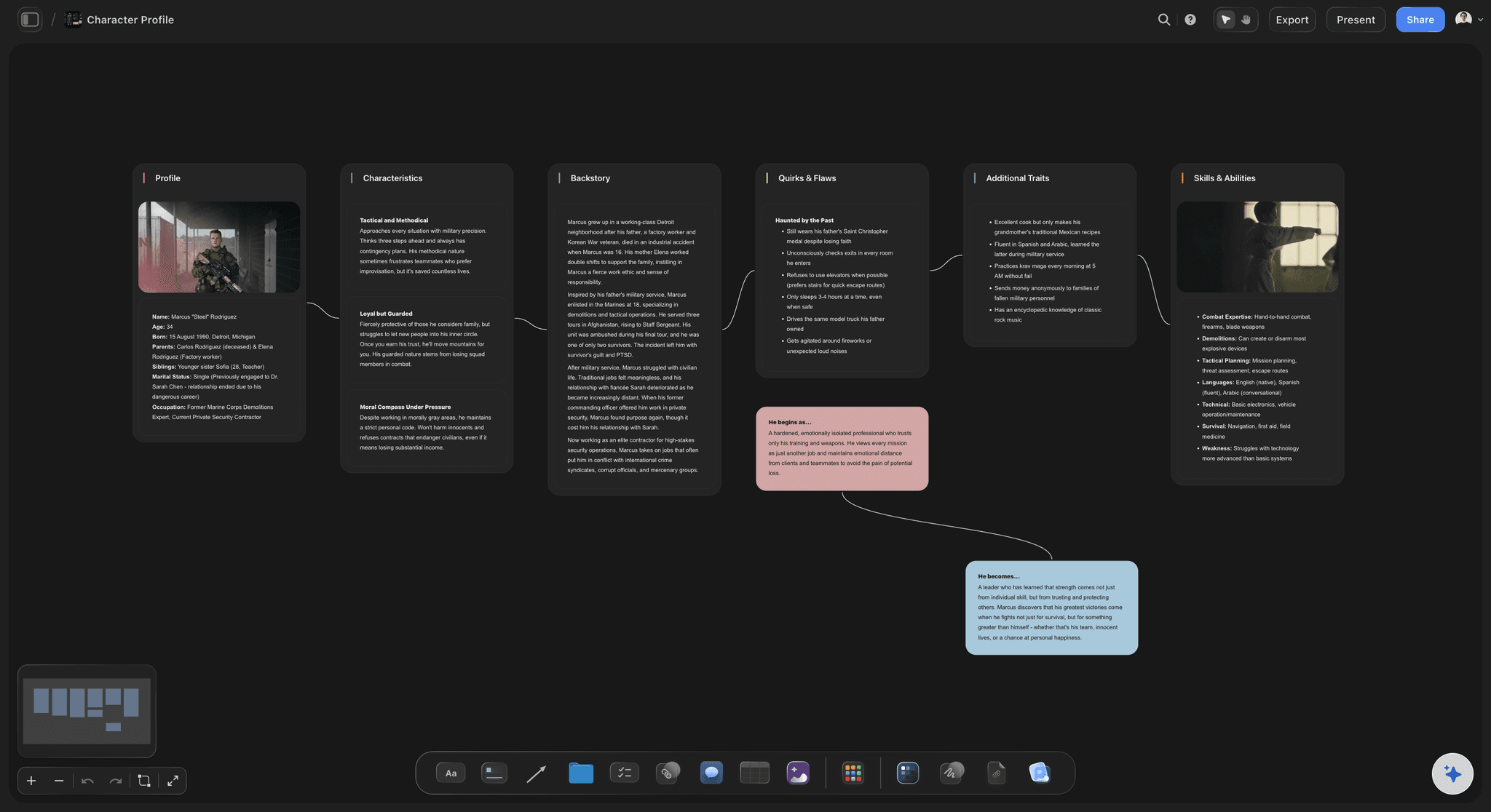
Bios and full credits
Director bio: 100 to 150 words: Previous films, festivals and awards, and one human detail, with a headshot. Write it in the third person so journalists can paste it in.
Key cast and crew: 50 to 100 words each: The lead cast, the producer, the writer, the cinematographer and the editor, with headshots where you have them. Match every name exactly to the credits.
Full credits: Every cast and crew credit in the order of the end roll, plus funders, thanks and the music credits that match your licences. A misspelt name in the kit gets copied into every review.
The images
The stills checklist
Eight to twelve stills: The lead in close-up, a wide of the world, a two-shot with tension, a moment of action, and one image that could be the poster. Include a vertical still or two for social posts.
Behind the scenes: Two or three photos of the director and crew at work, which press use beside interviews. If nobody shot them, ask the crew for their phone photos now, before they are lost.
Frame grabs, done properly: Export the key moments from the graded master as short, high-quality MP4 clips, not a compressed screener, each under 1 GiB, then grab frames without motion blur. Frame grabs suit web and social; print covers usually want a stills camera.
Poster and key art: The poster in portrait at full resolution, a landscape version for web banners, and the title treatment on a transparent background. Name every file with the film's title and the credit line.
The facts
Tech specs, screenings and the press contact
Tech specs: Runtime, aspect ratio, sound (stereo or 5.1), language, subtitles, country, year, shooting format and exhibition format such as DCP or ProRes. Programmers check these before a screening slot is offered.
Premiere status and laurels: World, international or national premiere status, then festival selections and awards, each with its year. Use a laurel only after the festival has announced it.
Trailer and screener: A trailer link that plays anywhere, and a password-protected screener link for press and programmers. Send the screener password separately from the kit.
Press contact and stills usage: One named press contact with an email and a phone number, a sales contact for buyers if the film has one, and a line saying the stills may be used only in coverage of the film, with the credit shown. Put it at the top and the bottom of the kit.
Explore templates for your project
Every template opens as a real, editable board on the infinite canvas. Pick the closest fit and make it your own.
Film Moodboard
Collect film references, color palettes, lighting, locations, and tone in one place, then invite your crew.
One app instead of five
Storyflow vs Canva, Google Docs and FilmFreeway for a press kit.
Canva designs the poster and pages, Google Docs holds the text, and FilmFreeway gives each project a page with a digital press kit that festivals see with your submission. Storyflow is where the kit is assembled from the film.
Storyflow
Recommended
Frame grabs built into the video player
Trailer plays inside the kit
Synopses and statement exported to Word
Poster designed from film templates
Festival submissions from the film's page
Canva
Frame grabs built into the video player
Trailer plays inside the kit
Synopses and statement exported to Word
Poster designed from film templates
Festival submissions from the film's page
Google Docs
Frame grabs built into the video player
Trailer plays inside the kit
Synopses and statement exported to Word
Poster designed from film templates
Festival submissions from the film's page
FilmFreeway
Frame grabs built into the video player
Trailer plays inside the kit
Synopses and statement exported to Word
Poster designed from film templates
Festival submissions from the film's page
What creators are saying
Join early creators getting structured workspaces and AI that remembers their projects
“Storyflow has sped up my workflow by at least 3x, which means more flow state and more projects I can actually ship. It truly changed the way me and my team create.”

Reilin Joey
Director & YouTuber
“One prompt gets me a structured board. But the tactics are my favorite. I run my YouTube scripts through them and my intros and retention got better. It's amazing.”

Justkay
YouTuber & Freelance Filmmaker
“I used to juggle five apps to plan a project. Now I describe what I am making and get boards, lists, and a schedule. All in one place.”
George
@fernwehchronicles
Film press kits, answered.
Sections, synopses, stills, specs and examples for shorts and features.
Storyflow builds the press kit from the film itself: stills grabbed from the cut or trailer, synopses and a director's statement in Docs that export to Word and PDF, credits and tech specs in tables, and a one-pager PDF the AI drafts from the board. Festivals and press open the kit by link with no account or read it as a PDF. FilmFreeway's project page carries a kit to festivals you submit to.
The title and premiere status, a logline, a short and a long synopsis, the director's statement, bios of the director and key cast and crew, full credits, tech specs, eight to twelve stills, the poster, a trailer link, screenings and laurels, and one press contact. Feature kits add production notes and a director interview. Keep the order the same every time, so readers find things fast.
Write three. The logline is one sentence of about 25 to 35 words; the short synopsis runs 50 to 100 words and leaves out the ending; the long synopsis is about a page and gives the ending only when a festival or buyer asks for it. Write the long one first and cut down from it, so all three tell the same story.
An electronic press kit is the press kit delivered digitally: a page or shared board with the text, stills, poster, trailer link and screener access, often with a PDF to download. Festivals and journalists expect it as a link rather than in the post. In Storyflow the board itself is the EPK, and the AI writes a one-pager PDF to attach to the first email.
Eight to twelve is a common range: enough to cover the lead, the world, a key relationship and a moment of action, plus one image that could carry the poster. Add two or three behind-the-scenes photos. Supply them at full resolution, caption each with the names of the people shown, and state the credit line and that they are for coverage of the film.
Why you made this film, why now, and what you want an audience to feel or notice, in 300 to 500 words and in your own voice. It is not a second synopsis and not a list of awards. Journalists lift single sentences from it, so write sentences that make sense on their own.
Runtime, aspect ratio, sound format (stereo or 5.1), original language and subtitle languages, country of production, year of completion, shooting format and exhibition format, such as DCP or a ProRes file. Add the colour or black-and-white note and the premiere status. Festivals use these to schedule and project the film, so check them against the final master.
A shorter version of the same kit, usually four to six pages: the logline, a short synopsis, the director's statement, the director's bio, key credits, tech specs, five to eight stills, the poster, a trailer or clip link, screenings and laurels, and a press contact. Short film kits are read quickly by programmers, so lead with the premiere status and the strongest still.
Two shapes cover most of them. A festival kit for a short runs four to six pages built around the stills, the synopses and the screenings. A feature's press notes for a premiere or release run much longer, often 15 to 30 pages, adding production notes, a director interview and longer bios. Both put the premiere status and the press contact on the first page.
No. Storyflow assembles the kit and shares it; it does not host a site or send releases. FilmFreeway's project page includes a free digital press kit that festivals see with your submission, and Canva's website builder can publish a web EPK on a free address or your own domain. Press releases go out through a publicist or a distribution service.
Yes for the summaries, no for the voice. In Storyflow the AI drafts the logline and synopses from your treatment, reviews and tightens a statement you wrote, and turns the board into a one-pager PDF. The statement and the choice of stills stay yours, because both are the director's voice.
Not during early access. Storyflow is paid-only during early access, with plans from $7.99 a month billed annually ($9.99 monthly). A free plan launches before the end of 2026, and anyone a paid member invites to a board joins free. Programmers and journalists pay nothing to open the kit.
More from Storyflow
The cut is locked. Build the kit from it.
Open a canvas, add the trailer, and send the whole kit as one link. No download.