
Extremely reliable pre-production
See who carries the story
before you book a single interview.
Lay your subjects out as profile cards, run the film's story beats as a spine above them, and draw connectors showing who covers what. The beat nobody can speak to becomes visible as a gap.


Creatives working for these brands already got early access
- Red Bull
- Canon
- Artlist
- Porsche
See how easy it is to get started
Watch a real project come together, from a blank board to a finished plan, clicked through step by step.
Start from a ready-made template
Pick a board to see what you can build, then let AI fill it in. Every template is a real, editable starting point on the same infinite canvas.

Pre-Production
Pull the brief, script, shot list, and moodboard into one pre-production hub so the whole shoot is planned in one place.
What is a documentary interview planner?
A documentary interview planner is a tool for working out who you need to interview, what each person has to carry for the film, and what you actually need to ask them to get it. Storyflow is an AI visual workspace that maps your documentary's interviews on one infinite canvas: subjects as profile cards, the film's story beats as a spine above them, connectors showing who covers what, and the questions and research beside each subject. A planner holds your subjects, the story beats the film has to hit, the questions written to land those beats, and the research, prior footage, and logistics that surround every shoot day. The point is not to write questions faster. The point is to make sure the interviews you book will add up to a film.
An interview plan is a coverage problem disguised as a question-writing problem. Documentary interviews are planned backwards from the film: the structure comes first, and each subject has to carry specific beats of it. A list of questions per person looks organized but hides the film-level questions that matter: are two subjects going to tell you the same part of the story, is there a key beat nobody on your list can speak to firsthand, does your strongest talker actually cover anything the film needs. Those questions are about the map from story to people, and a document per subject cannot show you that map.
Storyflow is an AI-native infinite canvas built for exactly that. Describe your film in a prompt, with a logline and the subjects you have so far, and the AI lays out a structured interview board: subject profile cards, a story-beat spine, and space for questions under each person. Then you draw connectors from each beat to the subject who covers it, and the shape of your coverage appears. A beat with no line running to it is a hole in the film. Three lines converging on one subject is a single point of failure if they pull out.
Planning documentary interviews means working across five connected layers: the story structure (the beats the finished film has to hit, in order), the subjects (who they are, what they witnessed, what they can credibly speak to), the coverage map (which subject carries which beat, and where the gaps and overlaps are), the questions (written per subject, aimed at specific beats rather than general biography), and the practical layer (research notes, prior footage and reference frames, releases, availability, and location logistics for each person). Storyflow keeps all five visible at once, which is what makes the film-level problems findable before the cameras roll.
Ultra fast from brief to board
From a logline to interviews you can shoot.
No database to configure, no forms per subject. Describe the film and start mapping people to beats.
01
Open a canvas
Sign up in seconds. No download. Your infinite interview planning canvas opens in the browser.
02
Describe the film and your subjects
Type your logline and list the people you are considering. The AI lays out a structured board with subject profile cards, a story-beat spine, and question areas to fill. You start from a map rather than a blank page.
03
Map beats to people
Draw connectors from each story beat to the subject who covers it. Move subjects around, merge overlapping coverage, and watch for the beat with no line running to it. Write questions under each subject aimed at the beats they carry.
04
Share, export, or hand it over
Send a view-only link to your producer or editor, invite a co-director to work on the same canvas, or export the plan as an image or PDF for the production binder.
The whole film, mapped to the people who can tell it.
Subjects, story beats, coverage connectors, and questions on one infinite canvas.
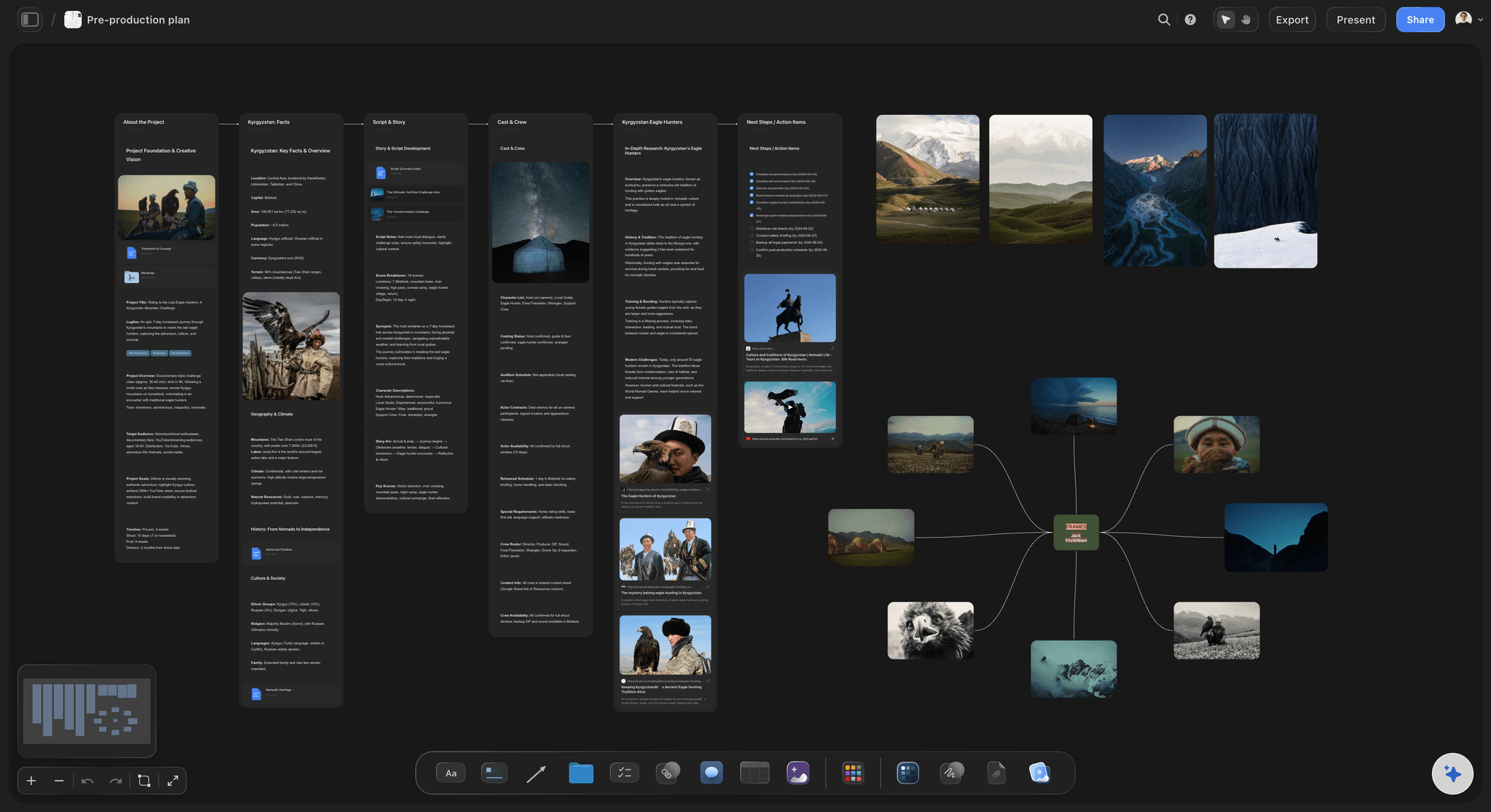
AI builds an interview board from a logline and subject list
Start from a map, not a blank page
Type your logline and the subjects you have so far, and the AI lays out profile cards, a story-beat spine, and question areas per person. Planning from a structure is much faster than planning from a stack of empty documents.
See the AI documentary planner →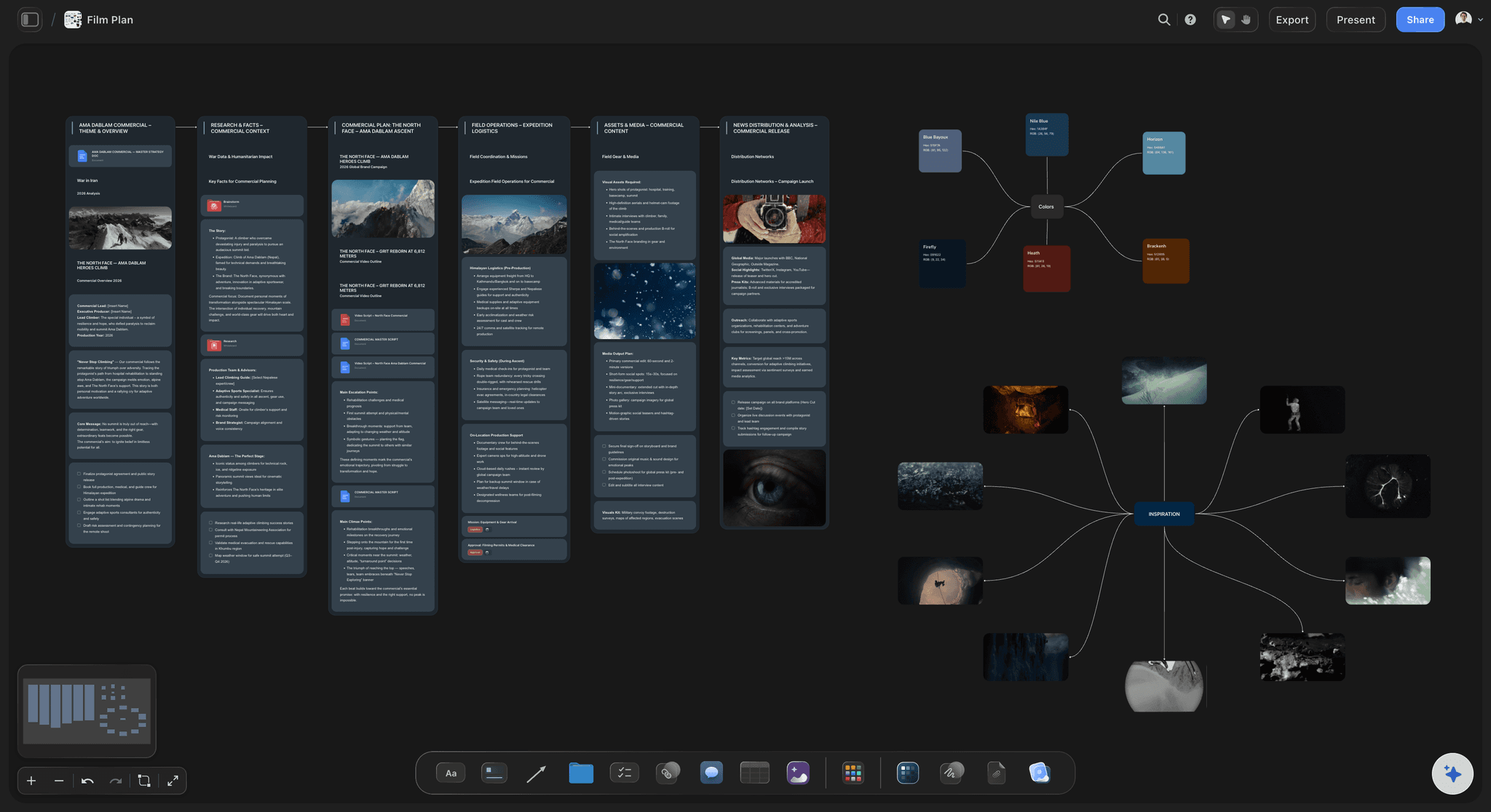
Connect story beats to the subjects who cover them
Find the beat nobody can speak to
Run the film's beats as a spine and draw a connector to whoever carries each one. A beat with no connector is a hole in the film, and two subjects wired to the same beat is a redundant shoot day. Both are invisible in a folder of question lists.
Explore documentary pre-production →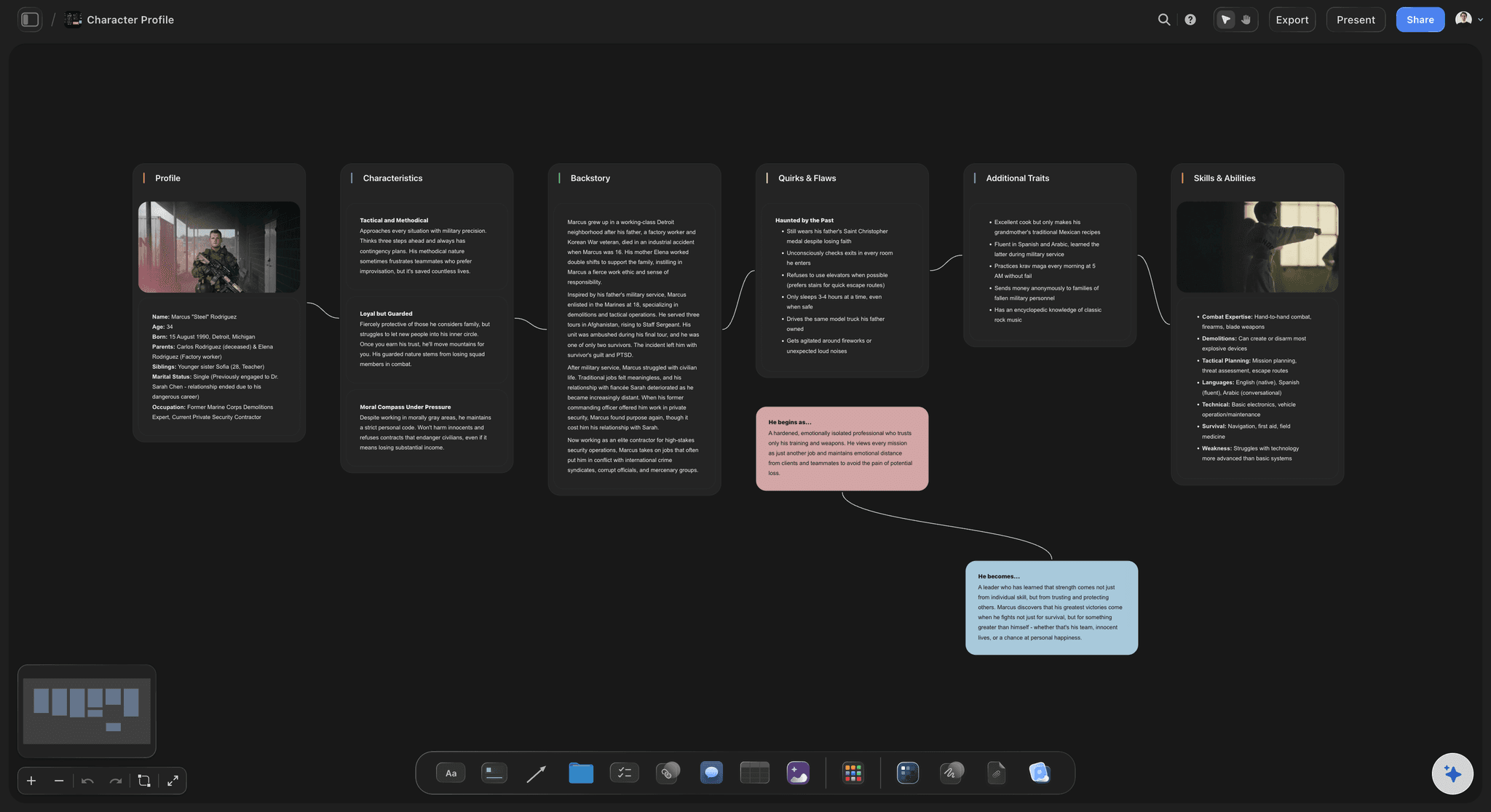
Every subject as a profile card you can move
Know each person before you sit them down
Build a card per subject with who they are, what they witnessed, what they can credibly claim, and the beats they are carrying. When the person is a card rather than a filename, recasting a beat is a drag instead of a rewrite.
Built for documentary filmmakers →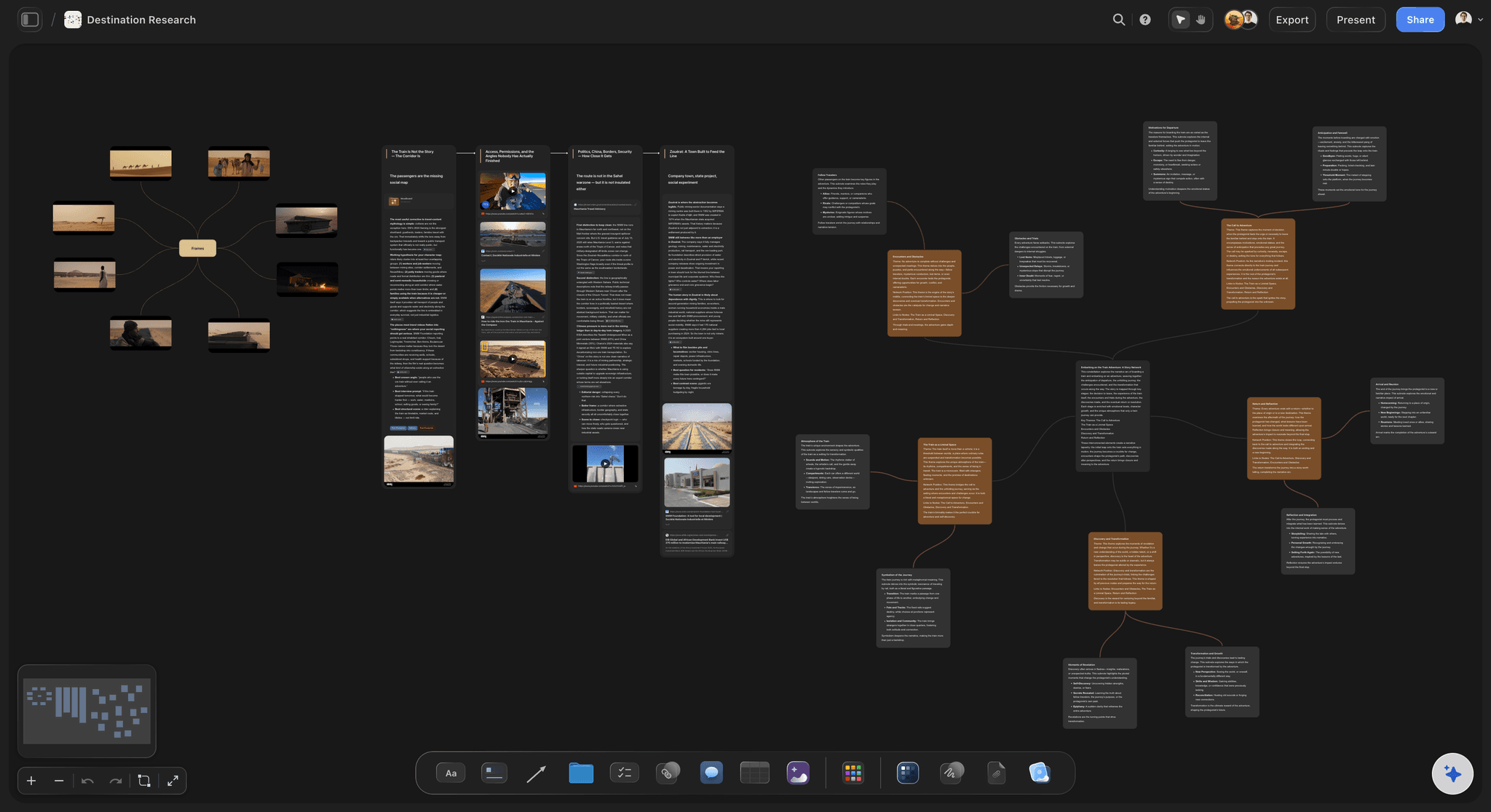
Research and reference frames beside each subject
Keep the homework next to the person
Pin articles, PDFs, and notes beside each subject, and grab frames from YouTube or Vimeo where they have spoken before. Watching how someone tells a story on camera changes what you ask and how you ask it.
Try the free reference board →Unlimited boards. No object cap.
Open a canvas, describe the film, and start mapping subjects to beats. Storyflow is paid-only during early access, with plans from $9.99 a month, and a Free plan launches before the end of 2026.
Unlimited interview planning boards on an infinite canvas
Basic AI usage to generate boards from prompts
Starter templates for documentary pre-production
Share view-only links with your producer or editor
Built for people with taste
More than a question list per person.
A question list shows you one interview at a time. The problems that sink documentaries live at the level of the whole film.
Structure, subjects, coverage, questions, and logistics
Plan backwards from the film
The story-beat spine: Lay out the beats the finished film has to hit, in order, as cards across the top of the board. This is the film you are trying to make, and every interview exists to serve a piece of it.
The coverage map: Draw connectors from each beat to the subject who carries it. The map answers the questions that matter: which beat has nobody, which beat has three people saying the same thing, and which subject the film quietly depends on.
Questions aimed at beats: Write questions under each subject, grouped by the beats they are carrying rather than as general biography. A question that does not serve a beat is a question you can cut, and an interview built this way is shorter and sharper.
Releases and logistics beside the person: Keep release status, availability, location notes, and contact details on or beside each subject card. The practical layer stays attached to the person it belongs to instead of living in a separate spreadsheet.
AI that can see the film you are building
Plan with an AI that knows your board
Prompt to work through a problem: Ask it to suggest question angles for a subject, to flag beats with thin coverage, or to draft a pre-interview checklist. It keeps the whole board in context, so suggestions fit your film rather than a generic one.
It structures, it does not interview: Storyflow is a planning canvas rather than a script generator. The AI helps you see and arrange the coverage, which is the genuinely hard part. The questions that get real answers still come from your research and your judgment in the room.
Iterate without losing work: Re-prompt as many times as you need. Subject cards you have already researched and placed stay exactly where they are while the AI builds around them.
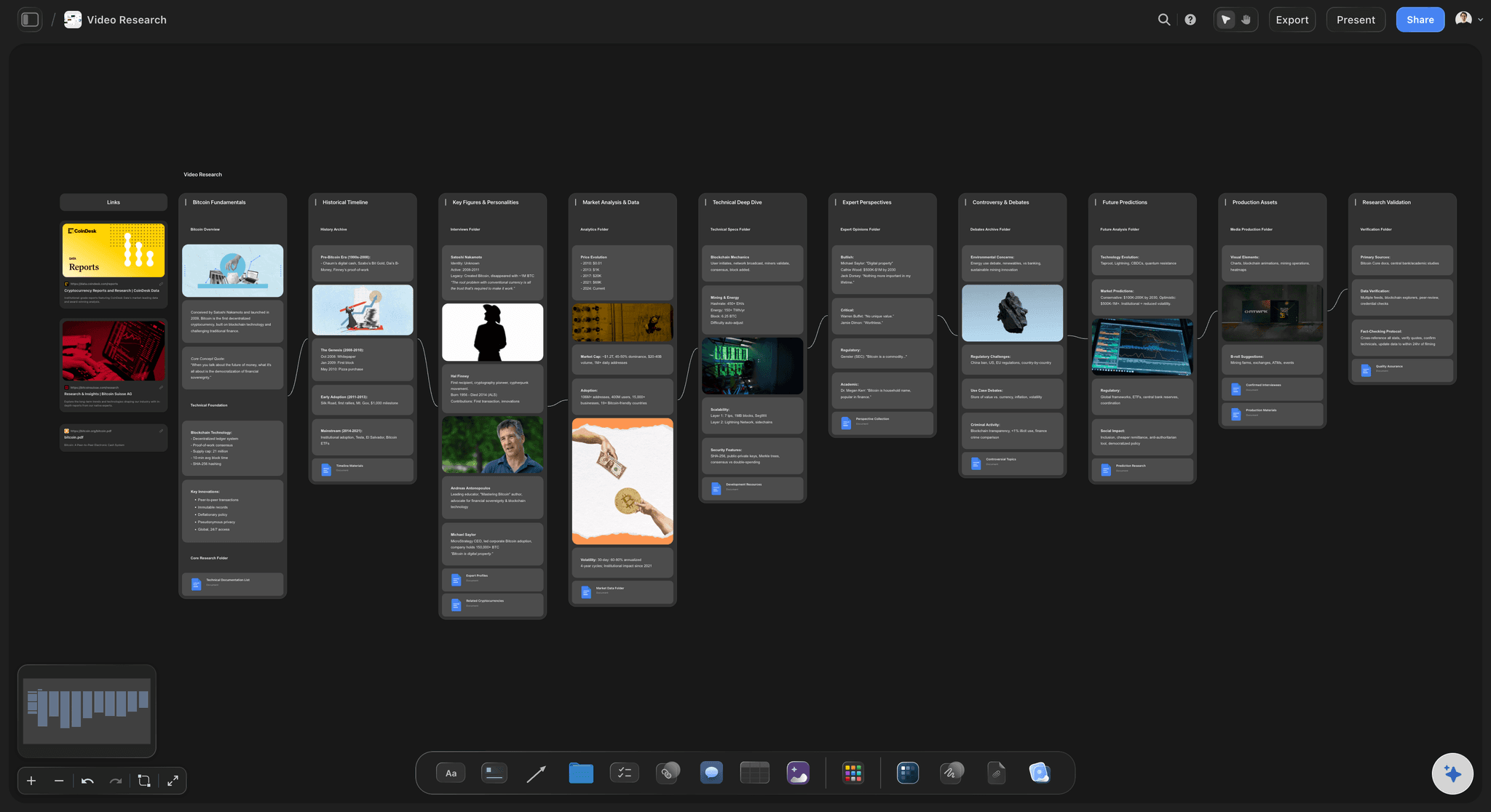
Research, prior footage, and reference beside each subject
Everything about a person in one place
Research notes and documents: Drag in articles, PDFs, court records, and links, and pin them beside the subject they concern. When a claim needs checking the night before a shoot, the source is one scroll away.
Frames from prior footage: Grab frames from YouTube or Vimeo where a subject has spoken before, and keep them on the card. How someone performs on camera, where they get guarded, and which stories they already tell well all shape what you ask.
Archive and b-roll leads: Note the archive material and b-roll each interview will need to cut against, beside the beats it covers. An answer you cannot picture cutting away from is an answer you may not be able to use.
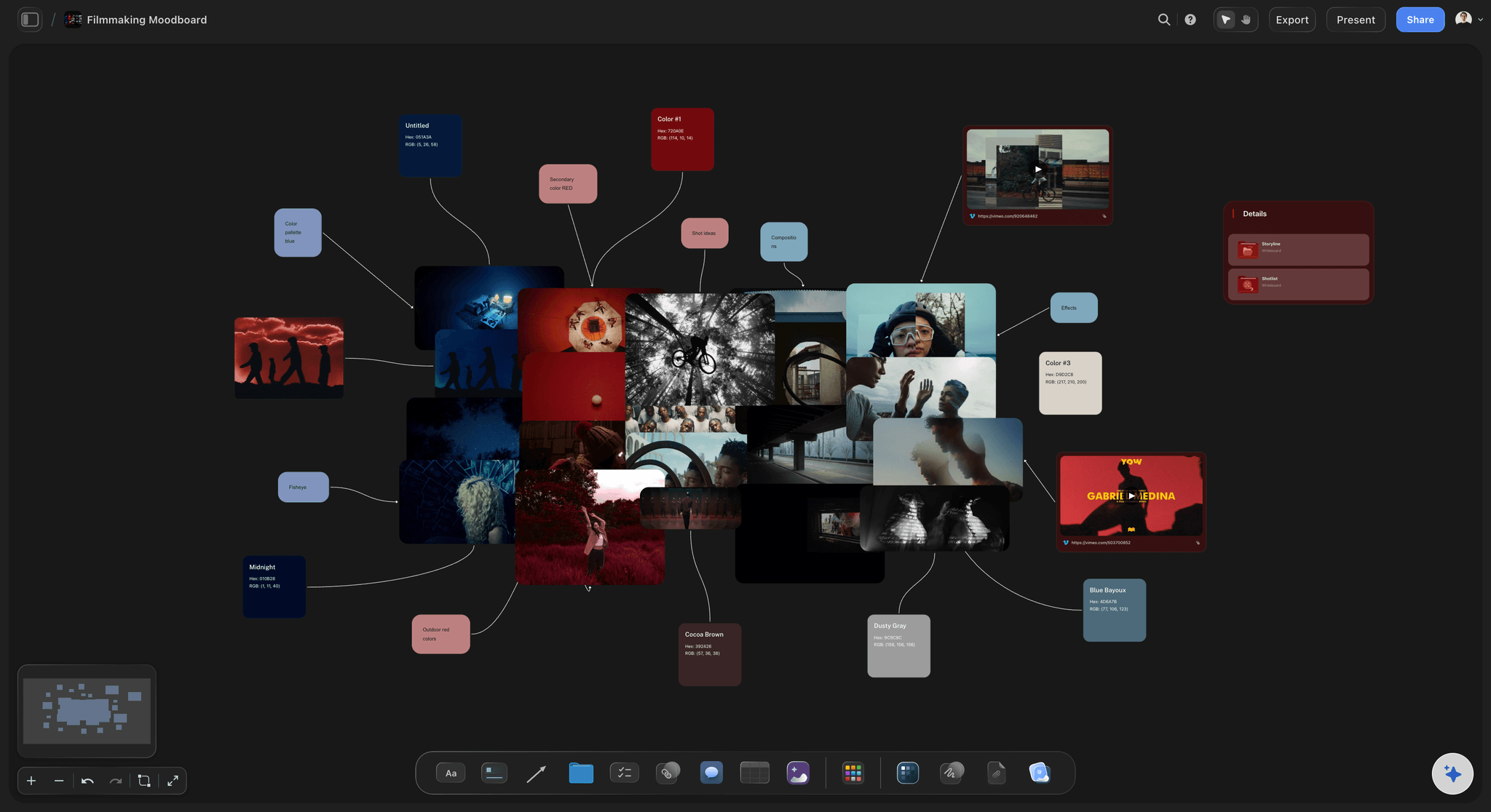
Share with your producer, editor, or co-director
Hand the plan to the people who need it
View-only links: Send a link to your producer or editor and they see the whole coverage map in a browser with no account. An editor who can see which beats each interview was booked to cover cuts with the film in mind from day one.
Plan together: Invite a co-director or field producer to work on the same canvas, so the production has one interview plan rather than three people's notes.
Export for the binder: Export the board as a high-quality image or PDF for the production binder, a funder meeting, or a commissioning editor who wants to see how the film hangs together.
Explore templates for your project
Every template opens as a real, editable board on the infinite canvas. Pick the closest fit and make it your own.
Pre-Production
Pull the brief, script, shot list, and moodboard into one pre-production hub so the whole shoot is planned in one place.
One app instead of five
Storyflow vs Notion, Google Docs, and Trello.
Every tool here is genuinely good at something. Notion is excellent for question databases and transcripts, Google Docs for simple shared question lists, and Trello for tracking interview status. Here is where they differ.
Storyflow
Recommended
Infinite visual canvas
AI builds the interview board from a logline
Story-beat-to-subject coverage map with connectors
Question lists per subject
Reference frames and research beside each subject
Free plan available today
Notion
Infinite visual canvas
AI builds the interview board from a logline
Story-beat-to-subject coverage map with connectors
Question lists per subject
Reference frames and research beside each subject
Free plan available today
Google Docs
Infinite visual canvas
AI builds the interview board from a logline
Story-beat-to-subject coverage map with connectors
Question lists per subject
Reference frames and research beside each subject
Free plan available today
Trello
Infinite visual canvas
AI builds the interview board from a logline
Story-beat-to-subject coverage map with connectors
Question lists per subject
Reference frames and research beside each subject
Free plan available today
What creators are saying
Join early creators getting structured workspaces and AI that remembers their projects
“Storyflow has sped up my workflow by at least 3x, which means more flow state and more projects I can actually ship. It truly changed the way me and my team create.”

Reilin Joey
Director & YouTuber
“One prompt gets me a structured board. But the tactics are my favorite. I run my YouTube scripts through them and my intros and retention got better. It's amazing.”

Justkay
YouTuber & Freelance Filmmaker
“I used to juggle five apps to plan a project. Now I describe what I am making and get boards, lists, and a schedule. All in one place.”

George
@fernwehchronicles
Documentary interview planning, answered.
How filmmakers plan interviews, how the coverage map works, and what the AI actually does.
They plan backwards from the film. Before anyone writes questions, the filmmaker sketches the story the finished film has to tell as a sequence of beats, then works out which subject can carry each one: who witnessed it, who has standing to say it, who tells it well on camera. Questions come last, written per subject and aimed at the specific beats that person is carrying. Around that core sits the practical work: researching each subject, watching their prior interviews, checking releases, and scheduling around availability. The common failure is skipping the mapping step and going straight to question lists, which is how you end up with three interviews telling the same story and a key beat nobody on the list can speak to.
Group them by story beat, not by biography. A chronological walk through someone's life produces a long transcript and a thin film. Instead, look at the beats that subject is carrying for the film and write questions aimed at each one: the question that gets the event described, the question that gets the emotion of it, and the follow-up that gets the detail an editor can cut on. On a canvas, that grouping is physical: questions sit under the subject card, clustered by the beat they serve, with a connector running up to the beat itself. When a beat gets recast to a different subject, its questions move with a drag instead of a rewrite across documents.
Three tests, roughly in order. Proximity: were they actually there, or are they retelling something secondhand? Firsthand accounts nearly always cut better. Standing: does the audience have a reason to believe this person on this point? An expert has standing on analysis, a participant on experience, and mixing those up weakens both. Delivery: do they tell the story well on camera? This is where frames from prior footage earn their place on the board, because a subject who is essential on paper and flat on camera is a real casting problem. When two subjects pass all three tests for the same beat, decide who leads and what distinct angle the second person adds, or cut one shoot day.
It can draft question angles, but that is not the job it is built for. Storyflow's AI is structural: it lays out the board from your logline and subject list, suggests where coverage looks thin, and drafts starting points you then sharpen with your own research. Because it sees the whole canvas, its suggestions fit the film you are actually making rather than a generic checklist. But the questions that get real answers come from knowing the subject's story better than they expect you to, and from listening in the room rather than reading a list. The AI gets you to a solid plan faster; it does not replace the pre-interview call or the follow-up question you could not have scripted.
Not during early access. Storyflow is paid-only right now, with plans starting at $9.99 a month, and a Free plan launches before the end of 2026. Anyone a paid member invites to a board joins free today, so your producer, editor, or co-director can work on the plan without paying. If you need a free option this minute, Google Docs is genuinely serviceable for shared question lists, and Notion's free tier can hold subject pages and transcripts if you are willing to build the structure yourself. What neither will give you is the film-level coverage map, which is the part a canvas is for.
As many as the structure requires and no more, which is exactly what a coverage map tells you. Lay out the beats, connect the subjects who can carry them, and count. If every beat has a strong firsthand voice and the overlaps are deliberate, you are done, whether that is three people or thirty. Warning signs run in both directions: a beat with no connector means the film has a hole, while a subject with no connector is a shoot you are booking out of politeness. Budget usually argues for fewer, better-cast interviews over more coverage, because every extra subject costs a shoot day, a transcript, and edit time spent discovering they were redundant.
Yes, and it is one of the most clarifying uses of the board. Card out the structure the edit is actually producing, beat by beat, then connect the interviews you already have to the beats they genuinely cover, based on what is in the transcripts rather than what you hoped for on the day. The gaps that appear are your pickup list: the missing beat, the claim with no firsthand voice, the emotional turn nobody lands. Planning pickups this way keeps a second round of shooting small and precise, because each new interview exists to fill a named hole rather than to generate more material for an edit that already has too much.
Yes. Drag articles, PDFs, and links onto the canvas and pin them beside the subject they concern, and grab frames from YouTube or Vimeo where the person has spoken before. Prior footage matters more than most first-time filmmakers expect: it shows you how a subject performs on camera, which stories they already tell in polished form, and where they get guarded, all of which changes what you ask and in what order. Release status, availability, and location notes can sit on the same card. The practical effect is that everything you know about a person is in one place on the board, instead of split across a research folder, a spreadsheet, and your inbox.
Yes. Send a view-only link and they open the whole board in a browser with no account: the beat spine, the subjects, the coverage connectors, and the questions. For an editor, seeing which beats each interview was booked to cover is genuinely useful groundwork, because they come into the footage knowing what every conversation was for. For a producer, the map plus the logistics notes on each card is most of a production meeting. If you want someone contributing rather than reviewing, invite them to the canvas, and you can export the board as an image or PDF for funders or a commissioning editor.
Five things, most of which question lists leave out. The story structure, because questions only make sense relative to the film they serve. A profile per subject covering who they are, what they witnessed, and what they have standing to say. The coverage map connecting subjects to beats, which is where redundancy and gaps show up. The research layer: documents, prior footage, and the facts you need to hold in the room. And the practical layer: release status, availability, locations, and contact details. Storyflow keeps all of it on one canvas, which matters because these layers change together: recast one beat and the questions, the schedule, and the research all move with it.
Map the film to the people who can tell it.
Open a canvas, describe your documentary, and let AI build the first interview board. No download.