
Ultra-fast campaigns, pitched beautifully
An always-on campaign plan
built as a cycle, not a launch.
For in-house marketing teams: what repeats every week, every month and every quarter, a rule for when creative is refreshed, and each cycle kept beside the last one.


Creatives working for these brands already got early access
- Red Bull
- Canon
- Artlist
- Porsche
See how easy it is to get started
Watch a real project come together, from a blank board to a finished plan, clicked through step by step.
Start from a ready-made template
Pick a board to see what you can build, then let AI fill it in. Every template is a real, editable starting point on the same infinite canvas.

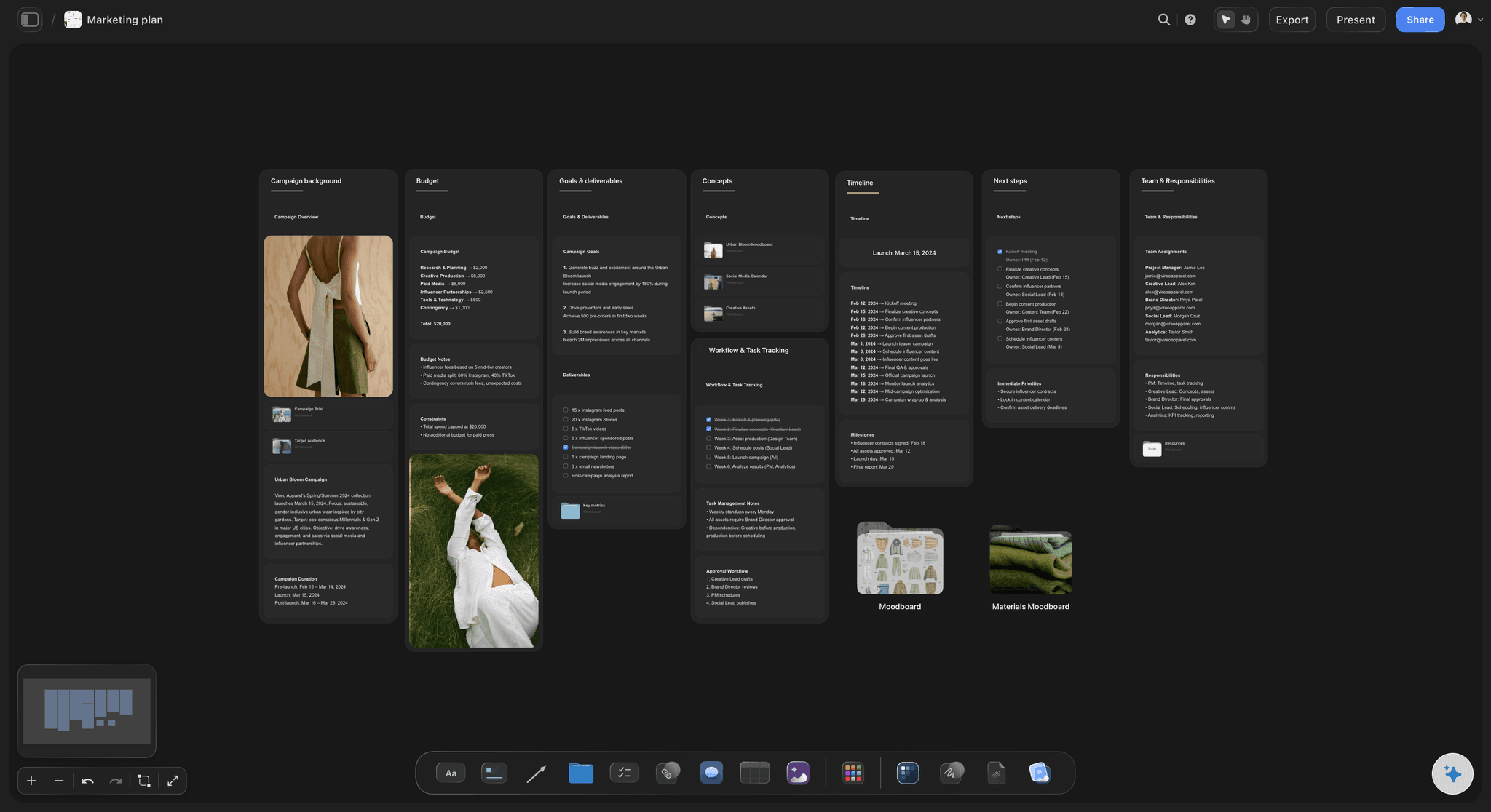
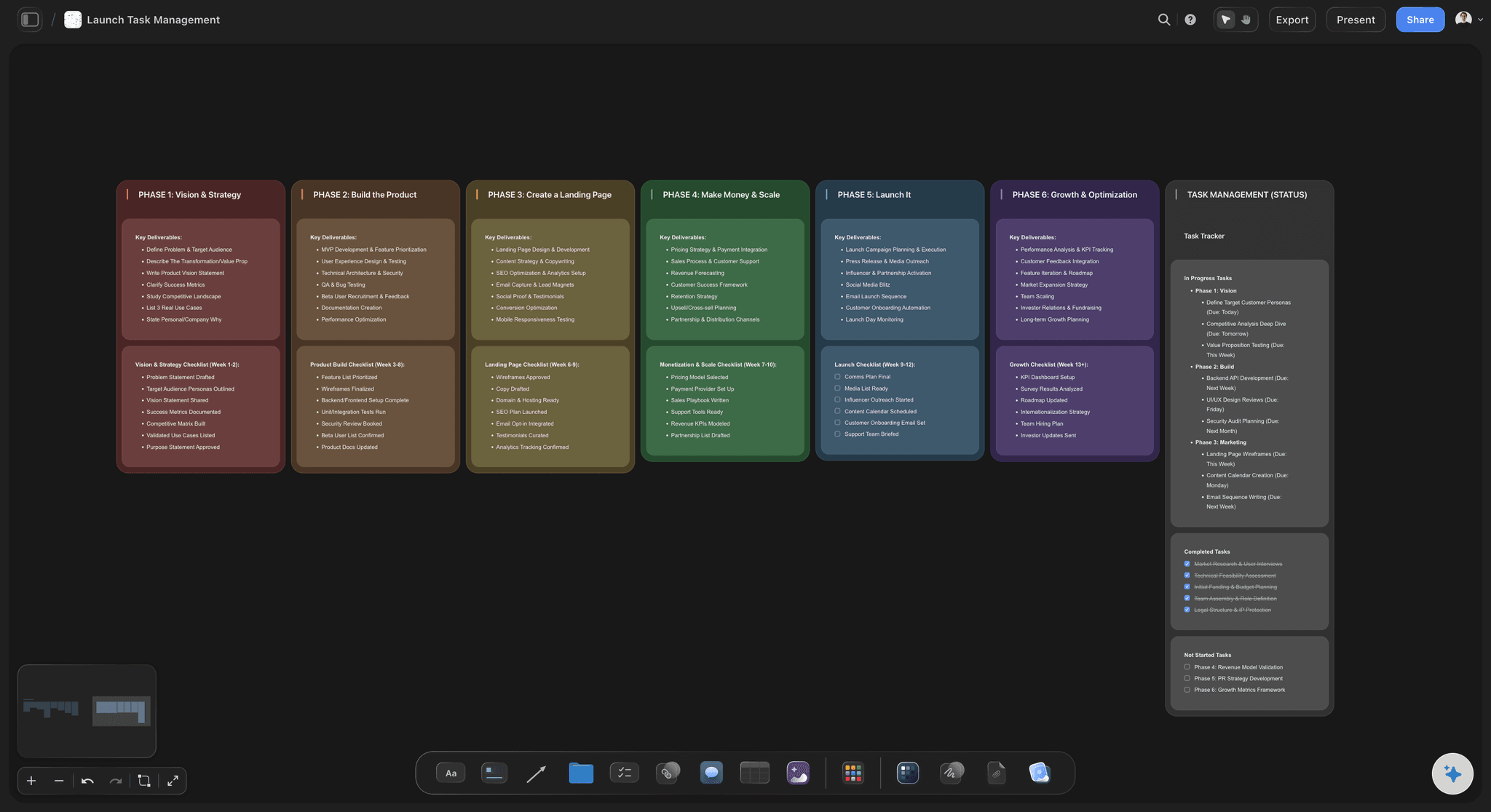
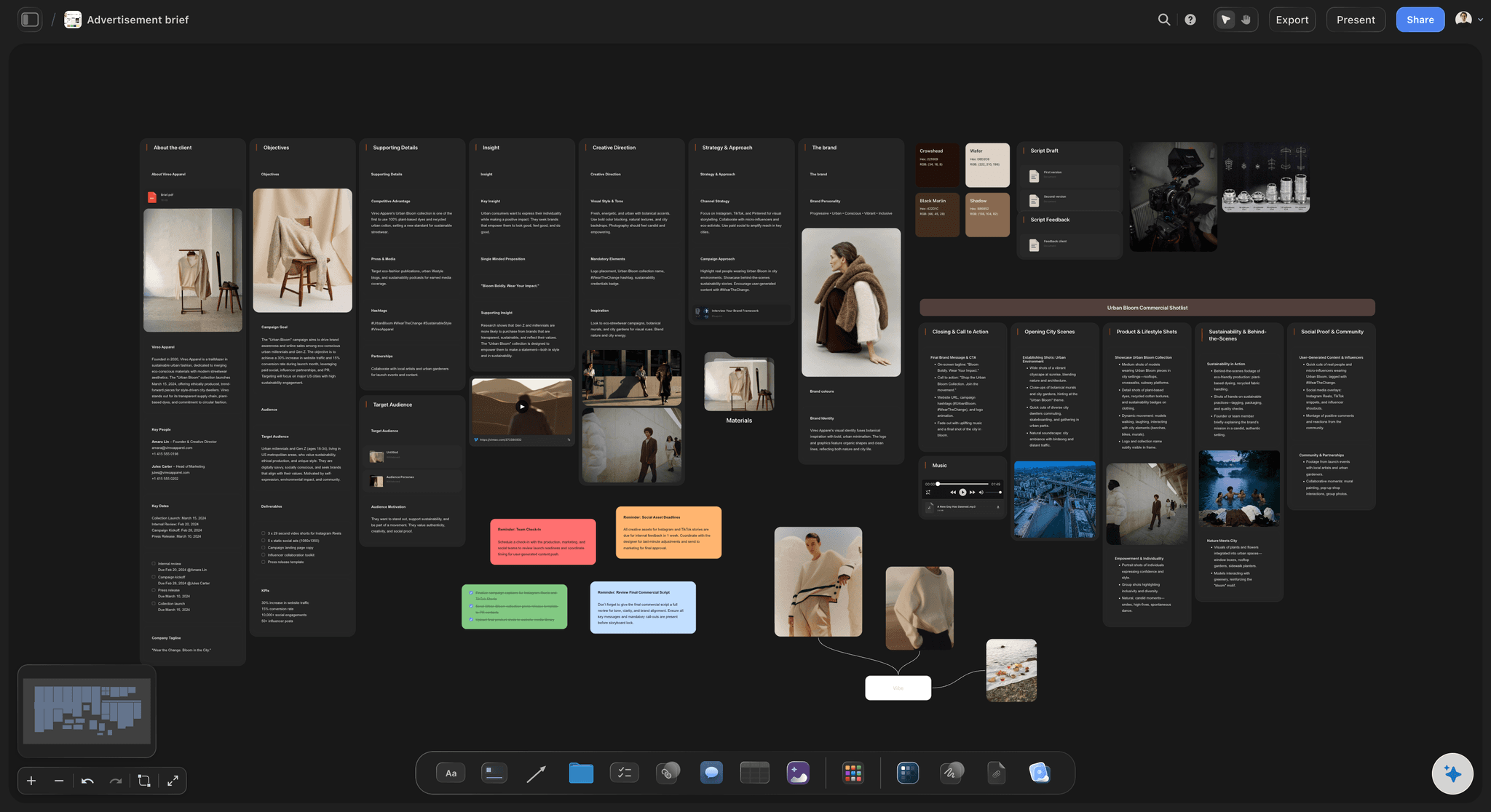
Marketing Campaign
Plan a campaign across channels, messages, and deliverables on one board the whole team can see.
How do you plan an always-on campaign?
An always-on campaign is marketing that runs every week of the year with no end date, so its plan is a repeating cycle: what recurs each week, each month and each quarter, and the rule for when a piece of creative is refreshed or retired. Storyflow is an AI visual workspace that plans an always-on campaign on one infinite canvas: the weekly, monthly and quarterly rhythm, the creative in rotation, the refresh rule and each cycle kept beside the last. Its AI reads last cycle's board before it drafts the next one, so the new plan starts from what actually ran.
Plan in three layers. The weekly layer is the small, regular work: for example three social posts, one email and a look at the paid ads. The monthly layer is one anchor piece, such as an article, a video or a customer story, plus a refresh of the ads and a one-page report. The quarterly layer is one theme, one flagship piece and a clear-out of what has gone stale. Over a 13 week quarter that is 39 posts, 13 emails, 3 anchor pieces and 1 flagship: 56 things to make.
Write the slots before the ideas. A slot is a fixed place in the cycle with an owner: the Tuesday post, the first email of the month, the quarter's flagship. Ideas come and go, but the slots stay the same from cycle to cycle, and that is what makes the work repeatable. A new person can look at the board and see what is expected on which day without reading a strategy document.
Decide the refresh rule before anything looks tired. A workable rule for paid creative: replace an ad when its click rate falls 30 percent below the average of its first two weeks, or after eight weeks, whichever comes first. For the mix, try 70 percent formats that have already worked, 20 percent variations on them and 10 percent new ideas. For evergreen pages and videos, review anything untouched for twelve months. Write the rule on the board above the work it governs.
Count the hours, because always-on work expands to fill the week. A worked example for a team of three: weekly work takes 10 hours (6 for three posts, 3 for the email, 1 for the paid check). Monthly work takes 28 hours (16 for the anchor piece, 8 for the ad refresh, 4 for the report), which is 7 a week. Quarterly work takes 52 hours, which is 4 a week. That is 21 hours a week in total. If the team has 60, the other 39 are for launches and requests.
Launches sit on top of the cycle; they do not replace it. Mark the weeks a launch takes over some of the slots, and say which ones go back to normal afterwards. Close each month with a half-hour review: what ran, what is tired, what gets replaced. Then copy the month forward and change only what the review decided. Twelve months later you have twelve cycles side by side, and you can see what the programme actually was.
Ultra fast from brief to board
Four moves, and the cycle runs itself forward.
The first cycle takes the longest, because the slots, the rule and the hours all have to be decided once. Every one after it starts from a copy of the last, so planning a month becomes half an hour of decisions.
01
Name what repeats
Tell Storyflow's AI your channels and how often each one runs. It lays the cycle out as columns for the weekly, monthly and quarterly work, with a card for every slot. Where you gave no date or owner it leaves a marked slot.
02
Fill one cycle
Give each card an owner and a date, and drop the image, the video or the draft beside it. Posts, emails, ads and the anchor piece for the month sit on one board, whatever channel they go out on.
03
Write the rule and the hours
Put the refresh rule in a note above the creative. Add a table with a row per recurring job and its hours, and set a Sum in the footer, so the 21 hours a week is a number everyone can see.
04
Copy the cycle forward
At the end of the month, copy the column for the cycle and paste it beside the old one. Ask the AI to read what ran and draft the next cycle, then change only what the review decided.
The rhythm, the rotation, the pipeline and the rule.
Storyflow holds the cycle and the creative. A scheduling tool still publishes the posts at the set time.
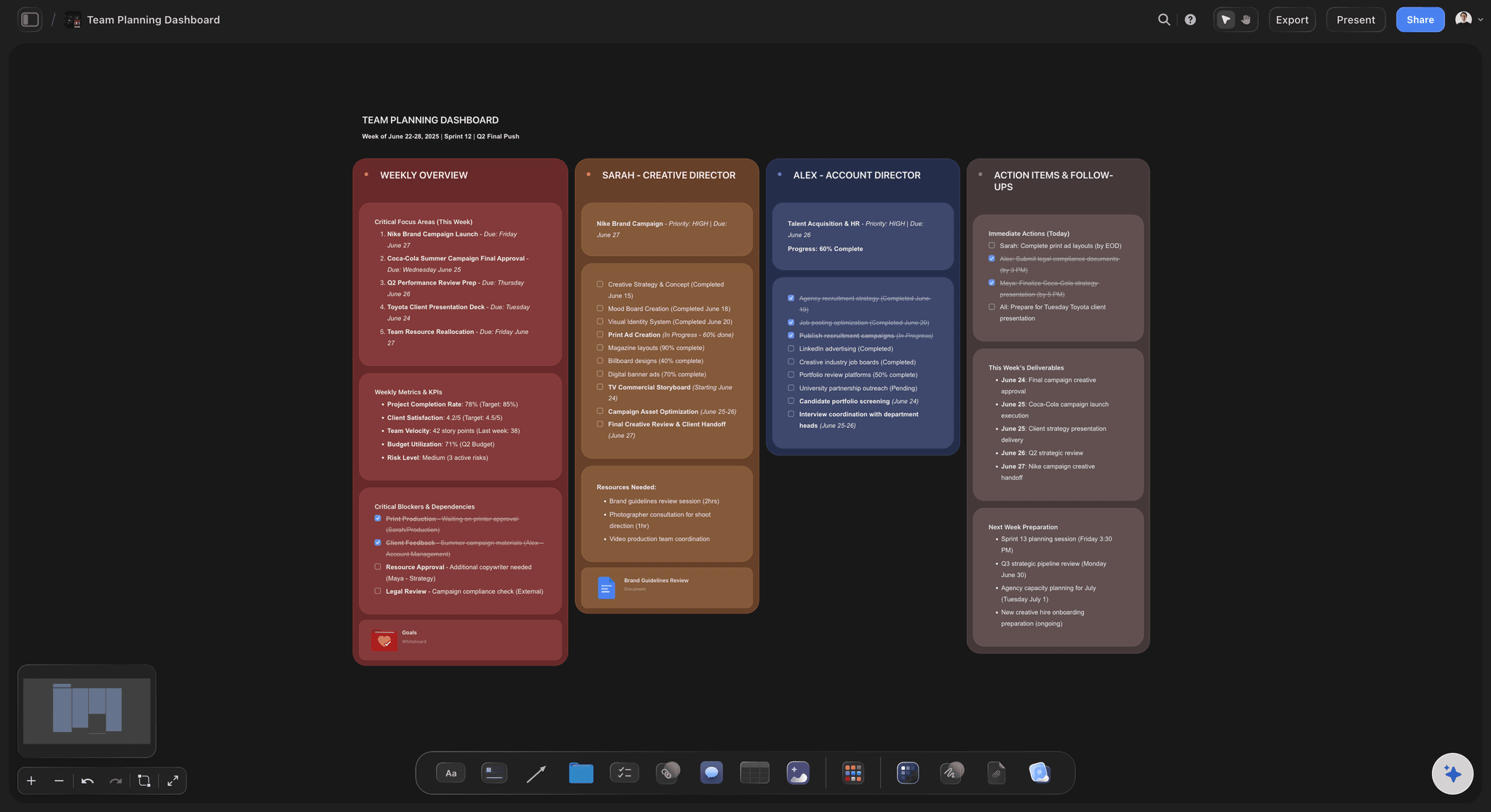
The rhythm
Weekly, monthly and quarterly, side by side
Three columns for the three layers, each with its slots and owners. You can see the Tuesday post, the first email of the month and the flagship piece for the quarter without changing view.
See the campaign calendar →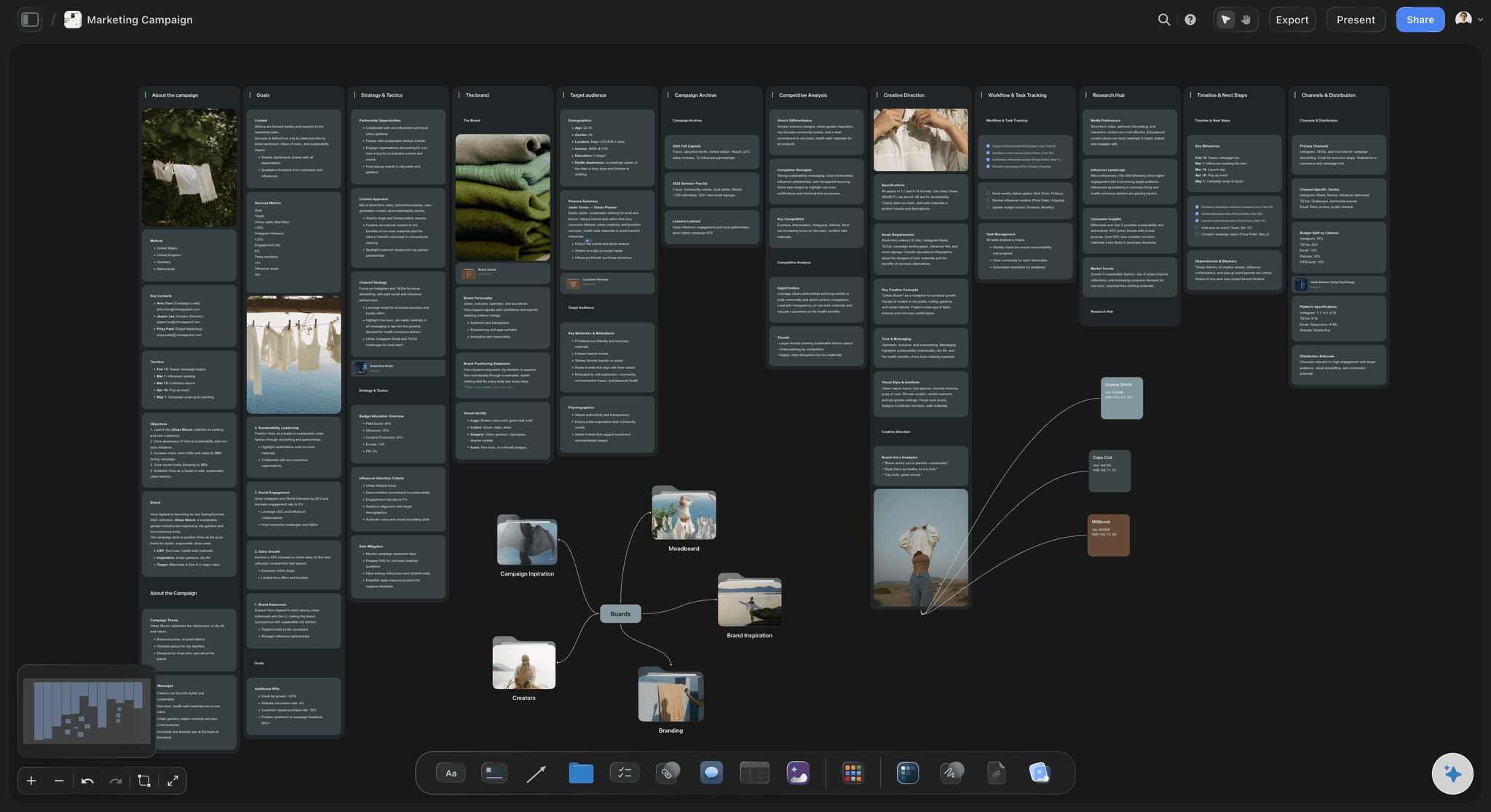
The rotation
Every live piece of creative in one place
The ads, posts and emails that are running now sit as images on the board, grouped as proven, variation and new. A tired ad is easy to spot when it sits next to five fresher ones.
See ad creative testing →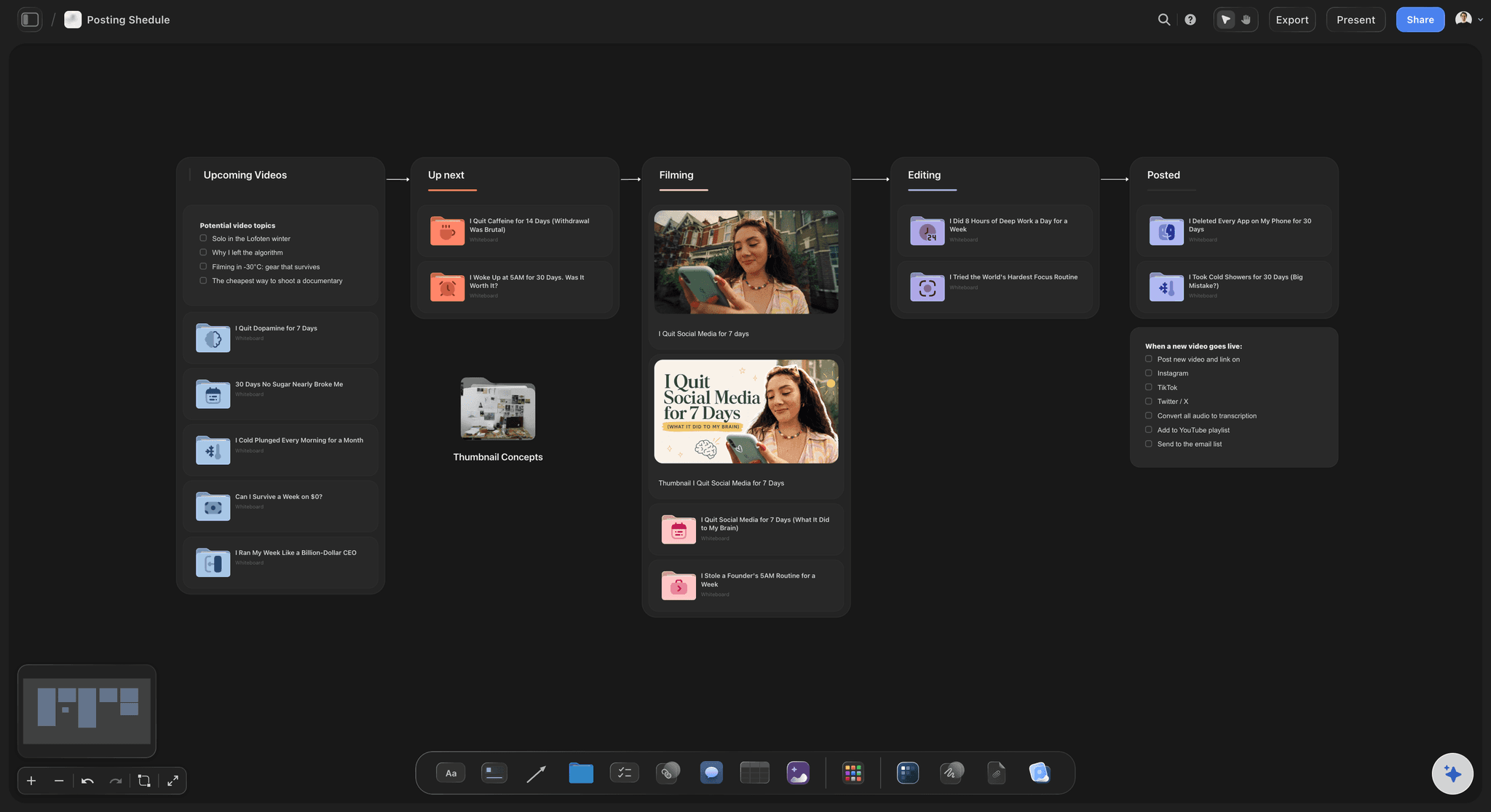
The pipeline
Each piece from idea to live to retired
Columns for up next, being made, live and retired. A card moves across as the work does, so the answer to what is going out next week is one glance and not a message to three people.
See the content pipeline →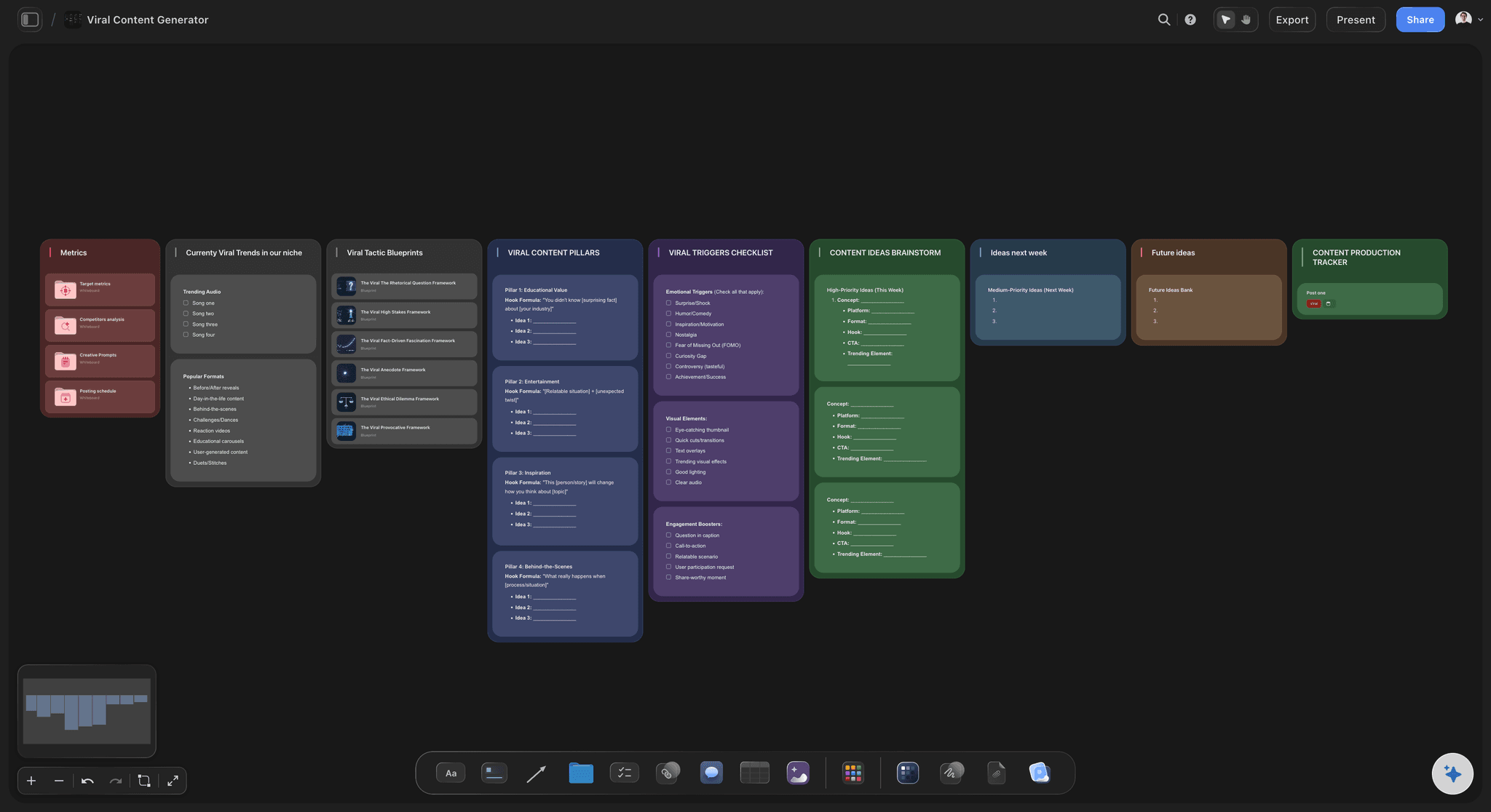
The rule
A written refresh rule above the work
Replace at 30 percent below the opening click rate or at eight weeks. Keep 70 percent proven, 20 percent variations and 10 percent new. The rule sits on the board, so replacing an ad is a routine and not an argument.
See the content repurposing planner →Twelve cycles later, the whole year is on one board.
Keep every cycle beside the next one, so the yearly review is a walk along the board instead of a hunt through old files. Storyflow is paid-only during early access, with plans from $7.99 a month billed annually ($9.99 monthly). A free plan launches before the end of 2026, and anyone a paid member invites to a board joins free.
Unlimited boards, image uploads and files on every paid plan
Freelancers and agency partners you invite to the board join free
200+ Tactics for hooks, offers and messaging
Whole-board PDF export for the monthly review
View-only links so leadership can read the cycle with no account
Built for people with taste
Why always-on work wears a team down.
Three usual causes. Each one is easier to see when the cycle is drawn out on one board than when it lives in a scheduler and people's heads.
The plan
A plan with an end date for work that has none
Plan the cycle, not the year: A twelve month calendar filled in January is wrong by March. Plan one month in detail and one quarter in outline, then repeat. The detail is only ever four weeks old.
Slots before ideas: Fix the places in the cycle first: the Tuesday post, the first email of the month. Ideas fill the slots and change every time; the slots do not.
Three layers, three owners: One person owns the weekly layer, one the monthly piece, one the quarterly theme. Nobody has to hold all three in their head, and a holiday only ever leaves one layer needing cover.
Launches drawn on top: Mark the weeks a launch borrows slots and when it gives them back. On a Storyflow board that is a labelled card across the weeks it covers.
The creative
The same six ads run until they stop working
A rule written in advance: A number and a date decide when an ad is replaced. Without them, creative is refreshed only when somebody senior gets bored of it, which is usually long after the audience did.
Seventy, twenty, ten: Most of the mix is what already works, a fifth is a variation, a tenth is new. The new tenth is where next quarter's proven formats come from.
Retire on purpose: Move a retired piece to its own column with the date and the reason it stopped. A year on, that column is the best brief a new designer can read, because it shows what this audience got tired of.
See it all at once: Every live image and video sits on the same Storyflow board. Six ads that look the same are obvious side by side and invisible in a list of file names.

The team
Always-on quietly eats the whole week
Hours for every layer: Ten hours weekly, seven for the monthly work, four for the quarterly. A table with a Sum in the footer shows the 21 before anyone agrees to more.
A line for everything else: Write down what is left for launches and requests. When a new request arrives, the question becomes which slot it replaces, and that is a far easier conversation than whether the team is busy.
One name per slot: Each recurring card is assigned to one person, never to a team. When they are away, the card shows exactly what needs cover that week and who to ask about it.
A half-hour close: At month end, ask Storyflow's AI what changed on the board and it lists the cards added, edited and moved, and by whom. Start the review from that list.
Explore templates for your project
Every template opens as a real, editable board on the infinite canvas. Pick the closest fit and make it your own.
Marketing Campaign
Plan a campaign across channels, messages, and deliverables on one board the whole team can see.
One app instead of five
Where Storyflow fits in an always-on campaign.
It plans the cycle and keeps the creative. It has no month grid, it does not publish posts and it does not repeat a task for you.
Storyflow
Recommended
Weekly, monthly and quarterly rhythm on one open canvas
Email, paid, web and social in one plan
Images and video kept beside the plan
Owner, date and status on every piece
Team hours added up in a table footer
A calendar month view
Publishes posts at a set time
Tasks that repeat on their own
Social scheduling tools
Weekly, monthly and quarterly rhythm on one open canvas
Email, paid, web and social in one plan
Images and video kept beside the plan
Owner, date and status on every piece
Team hours added up in a table footer
A calendar month view
Publishes posts at a set time
Tasks that repeat on their own
A spreadsheet calendar
Weekly, monthly and quarterly rhythm on one open canvas
Email, paid, web and social in one plan
Images and video kept beside the plan
Owner, date and status on every piece
Team hours added up in a table footer
A calendar month view
Publishes posts at a set time
Tasks that repeat on their own
What creators are saying
Join early creators getting structured workspaces and AI that remembers their projects
“Storyflow has sped up my workflow by at least 3x, which means more flow state and more projects I can actually ship. It truly changed the way me and my team create.”

Reilin Joey
Director & YouTuber
“One prompt gets me a structured board. But the tactics are my favorite. I run my YouTube scripts through them and my intros and retention got better. It's amazing.”

Justkay
YouTuber & Freelance Filmmaker
“I used to juggle five apps to plan a project. Now I describe what I am making and get boards, lists, and a schedule. All in one place.”

George
@fernwehchronicles
Always-on campaign questions
What in-house marketing teams ask when the work never stops and the plan was written for something with a launch date.
In Storyflow, plan it as a cycle on one board: a column each for what repeats weekly, monthly and quarterly, a card with an owner for every slot, the live creative beside them, and a written rule for when a piece is refreshed. At the end of the month, copy the cycle forward and change only what the review decided.
Storyflow is built for exactly this job: the weekly, monthly and quarterly rhythm, the creative in rotation, the refresh rule and every past cycle sit on one board, and its AI reads the last cycle before it drafts the next. Publishing the posts at a set time still takes a scheduling tool such as Buffer, Later or Hootsuite, and an email platform still sends the email.
It is marketing that runs all year with no end date: regular posts, emails, search and paid ads that keep a brand in front of buyers between launches. Because it never finishes, it is planned as a repeating cycle and not as a timeline. On a Storyflow board that cycle is three columns, weekly, monthly and quarterly, copied forward each month.
A burst campaign has a start, a peak and an end, and is built around one message or launch. An always-on campaign has a rhythm instead of a peak and is judged over quarters. Most teams run both: the cycle as the base, with bursts on top. In Storyflow a burst is marked across the weeks where it borrows slots from the cycle.
Weekly: the small regular pieces, such as three posts, one email and a check of the paid ads. Monthly: one anchor piece, an ad refresh and a short report. Quarterly: one theme, one flagship piece and a clear-out of stale work. That is 56 pieces a quarter. On a Storyflow board each one is a card with an owner.
Set a rule instead of a feeling. A common one for paid ads: replace when the click rate falls 30 percent below the average of its first two weeks, or after eight weeks, whichever is first. Review evergreen pages and videos once they have gone twelve months untouched. Write the rule on the Storyflow board above the creative, so everyone applies the same one.
Count it. In the worked example, weekly jobs take 10 hours, monthly jobs 7 hours a week and quarterly jobs 4, so 21 hours a week. For a team with 60 hours that is about a third. Put the jobs and hours in a table on the Storyflow board with a Sum in the footer, and agree the number before adding a channel.
They sit on top. A launch borrows some of the regular slots for a few weeks, then hands them back. Mark which slots and which weeks, so the cycle restarts on a known date and nobody has to ask when normal service resumes. On a Storyflow board the launch is a labelled card over those weeks, with its own brief beside it.
Storyflow supports it by keeping each cycle as its own column on one board, copied forward every month, with the creative and the refresh rule beside it and an AI that reads the last cycle before drafting the next. Project tools such as Asana or Monday repeat tasks on a timer, and scheduling tools such as Buffer or Later queue the posts themselves.
Yes, as a draft. Storyflow's AI reads the board it is opened on and up to three other boards you attach, so it can read last month's cycle, see what ran and what was retired, and lay out next month's cards. It does not know which pieces performed unless you paste the numbers in or attach the export, and you decide what stays.
No. Storyflow does not publish to social networks, send email, show a calendar month view or repeat a task on its own. It is where the cycle is planned and the creative is kept. Copy the cycle forward by hand each month, and publish from a scheduling tool such as Buffer, Later or Hootsuite.
Over quarters, not weeks. Track a few steady numbers, such as searches for your name, visits from people who typed the address, enquiries and cost per enquiry, and compare each quarter with the same quarter last year. Week to week the figures wobble for reasons that have nothing to do with the work. Paste the quarter's figures onto the Storyflow board and its AI charts them beside the cycle that produced them.
No. Storyflow runs in the browser and there are no native mobile or desktop apps. Open the cycle in any browser and share it by link. Leadership can read it with no account, and the freelancers and agency partners you invite to the board can comment and edit.
More from Storyflow
Campaign calendar
Content pipeline
Social media content calendar
Editorial calendar
Ad creative testing
Content repurposing planner
In-house content production
Creative request intake
Creative retainer plan
Campaign timeline template
Media plan template
Newsletter planner
Marketing planning software
Demand generation plan
Storyflow for marketing teams
Plan one cycle well, then copy it forward.
The rhythm, the creative in rotation, the refresh rule and the hours. One board that still makes sense in month twelve.