
Extremely clear strategy, zero busywork
A demand generation plan
your whole team can read in one look.
For marketing leads at small B2B companies: the audience, the offers, the channels by stage, a 13 week calendar and the handful of numbers that say whether it is working.


Creatives working for these brands already got early access
- Red Bull
- Canon
- Artlist
- Porsche
See how easy it is to get started
Watch a real project come together, from a blank board to a finished plan, clicked through step by step.
Start from a ready-made template
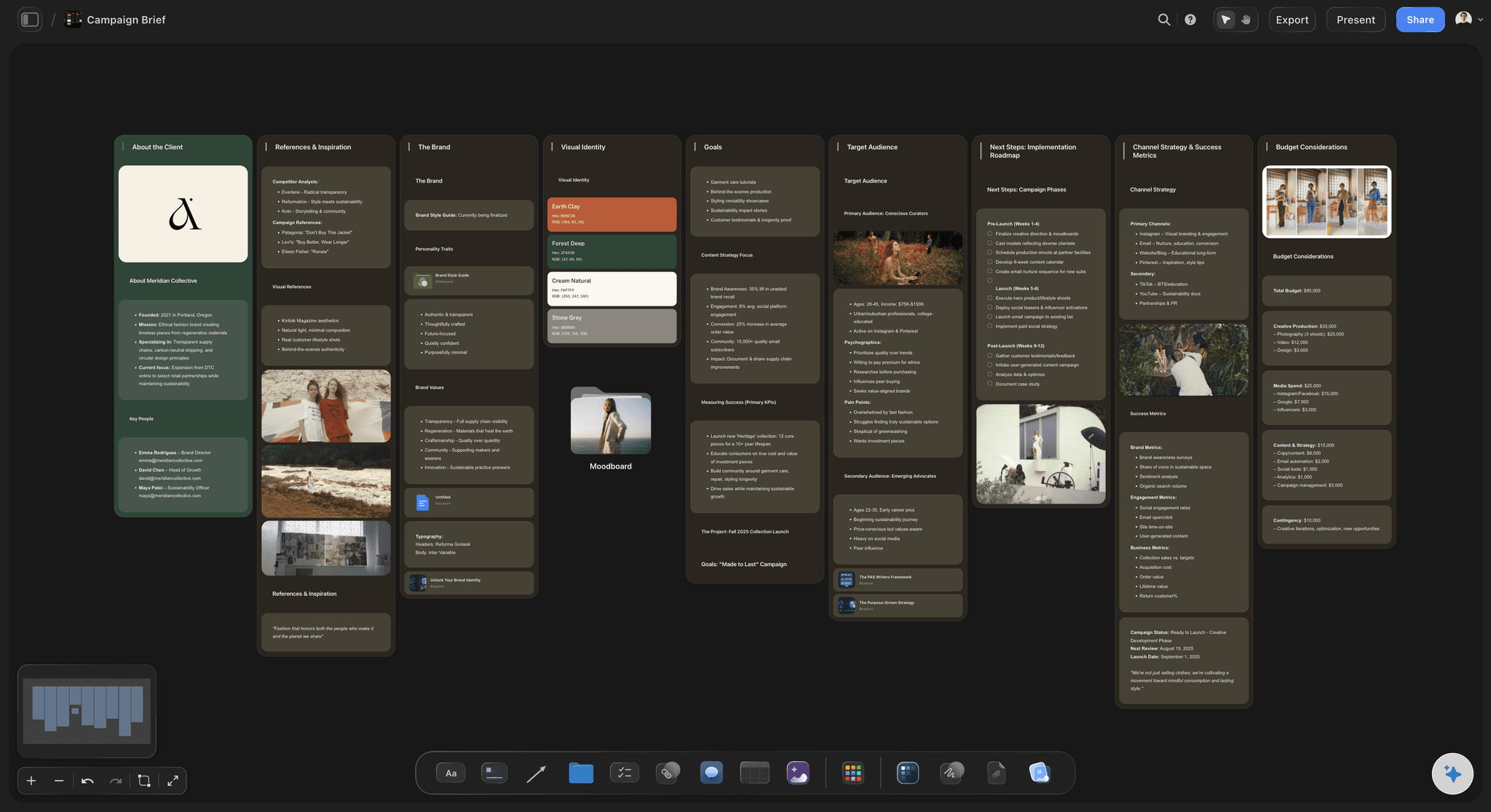
Pick a board to see what you can build, then let AI fill it in. Every template is a real, editable starting point on the same infinite canvas.

Marketing Plan
Lay out your goals, channels, and initiatives for the quarter on one board.
How do you build a demand generation plan?
A demand generation plan is the written programme for making the right companies want what you sell before they are ready to buy: who you are trying to reach, what you will offer them, where you will show up, what happens in each week of the quarter and which numbers will tell you it is working. Storyflow is an AI visual workspace that lays out a demand generation plan on one infinite canvas: the audience, the offers, the channels by stage, the quarter's calendar and the numbers to watch. Its AI reads your notes, last quarter's results and the documents you attach, and drafts each section for you to correct.
Start from the number sales needs and work backwards. A worked example: the business needs $900,000 of new pipeline this quarter and an average deal is $18,000, so that is 50 new opportunities. If four in ten first sales conversations become an opportunity, you need 125 conversations. If half of the people who ask to talk actually turn up, you need 250 people to raise a hand. That last figure is the one marketing owns. Everything else in the plan exists to earn those 250 requests from the right companies.
Then name the audience as a list, not a market. A small B2B team does better with 400 named companies and the three job titles that take part in the purchase than with a broad description of an industry. A common rule of thumb is that only about one buyer in twenty is looking to buy in any given quarter. The plan has to speak to the other nineteen as well, because they are next year's pipeline, and it has to be easy to find for the one who is looking now.
Write three offers, sorted by how ready the buyer is. The first asks for nothing: a guide, a short video or a customer story anyone can read without a form, published every week. The second asks for a little time: a webinar, a benchmark report or a working template, once a month. The third is the hand raise: a demo, a trial or a pricing call. Only the third counts as a lead. Treating a report download as a lead is how a plan hits its number while sales says the leads are useless.
Now lay the quarter out as 13 weeks. One piece of ungated content a week is 13 pieces. One mid-intent offer a month is 3. One flagship piece for the quarter, such as original research or a customer event, is 1. That is 17 things to make, each with an owner and a date. Split the budget before the work starts: for a $60,000 quarter, a sensible first split is $36,000 on creating demand, $18,000 on capturing it through search and review sites, and $6,000 held for tests.
Watch two sets of numbers. Each week: how many of the 400 companies engaged, how many hand raises came in, and how many people typed your name into a search engine. Each month: pipeline created, the share of conversations that became opportunities, and cost per opportunity. Add one open question to the demo form, how did you hear about us, and read the answers. Tracking software misses most of what happens in podcasts, group chats and word of mouth, and that field catches some of it.
Ultra fast from brief to board
Four moves from a pipeline target to a plan.
A first version takes an afternoon. Most of that time goes on deciding the audience and the offers, which is the part that should be slow.
01
Describe the business and the target
Tell Storyflow's AI what you sell, who buys it, the pipeline number for the quarter and the budget. It lays the plan out as sections on the board: background, goals, concepts, timeline, budget and who owns what. Where you gave no date or figure it leaves a marked slot instead of making one up.
02
Work the number backwards in a table
Put pipeline, deal size, opportunities, conversations and hand raises in one table, with the budget lines below in currency cells and a Sum in the footer. Change one rate and you can see what it does to the 250.
03
Lay out the 13 weeks
Ask the AI for the quarter as a column per week, or as one table with a row per piece and its date and owner. Move the cards until the weeks are even, and put the brief and the references for each piece beside it.
04
Review it with the numbers
Each month, paste or attach the figures and ask the AI to chart them as bars, lines or a pie. Ask it for a short deck for leadership, present it from the board, and share the plan by link with the agency and the sales team.
The target, the offers, the calendar and the numbers.
Storyflow holds the plan and the review. A marketing automation platform still sends the email and scores the leads.
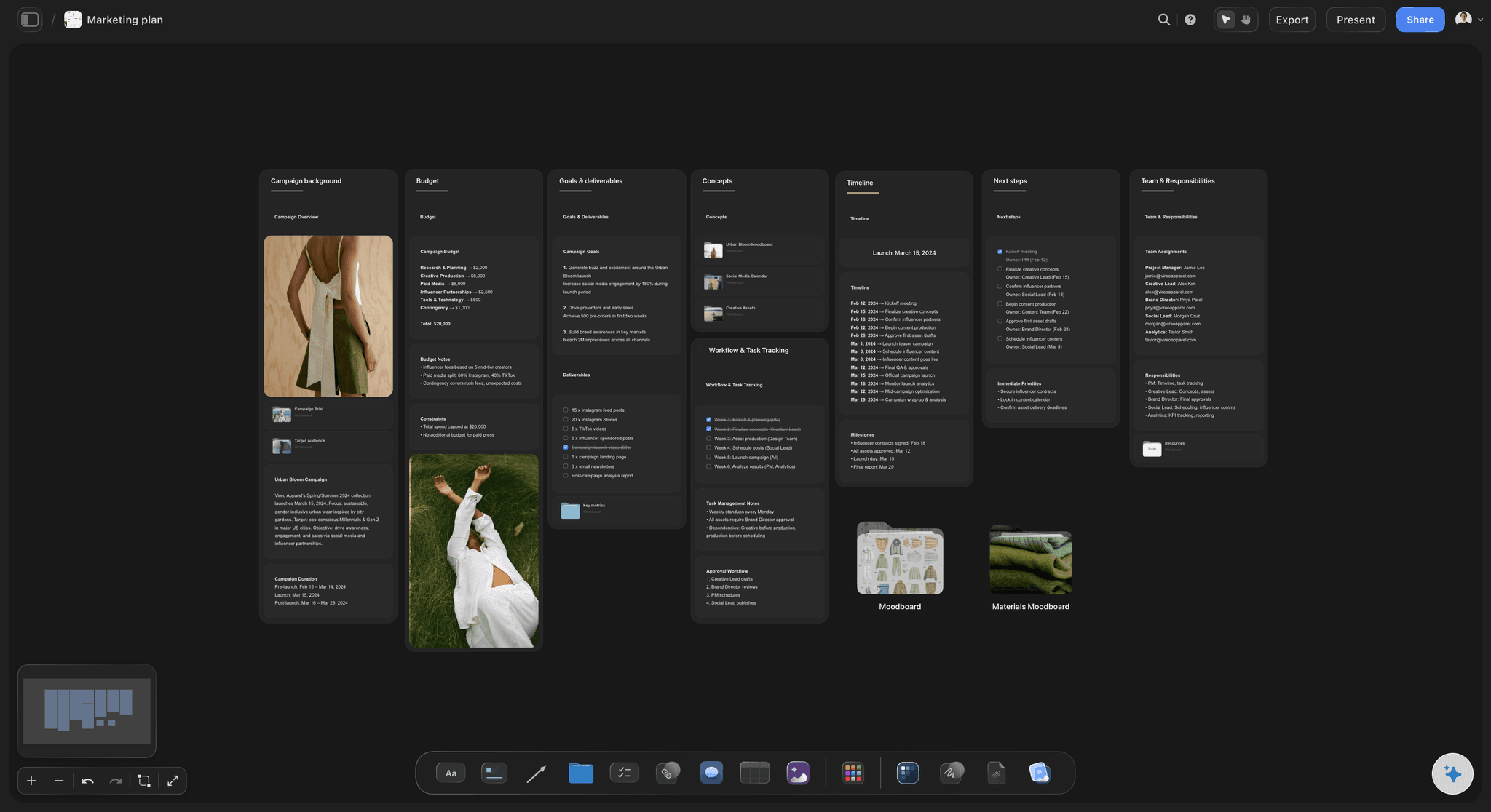
The target
One number, worked back to hand raises
Pipeline, deal size, opportunities, conversations and requests sit in one table at the top of the board. Everyone who opens the plan sees the 250 first, and sees where it came from.
See the AI marketing plan generator →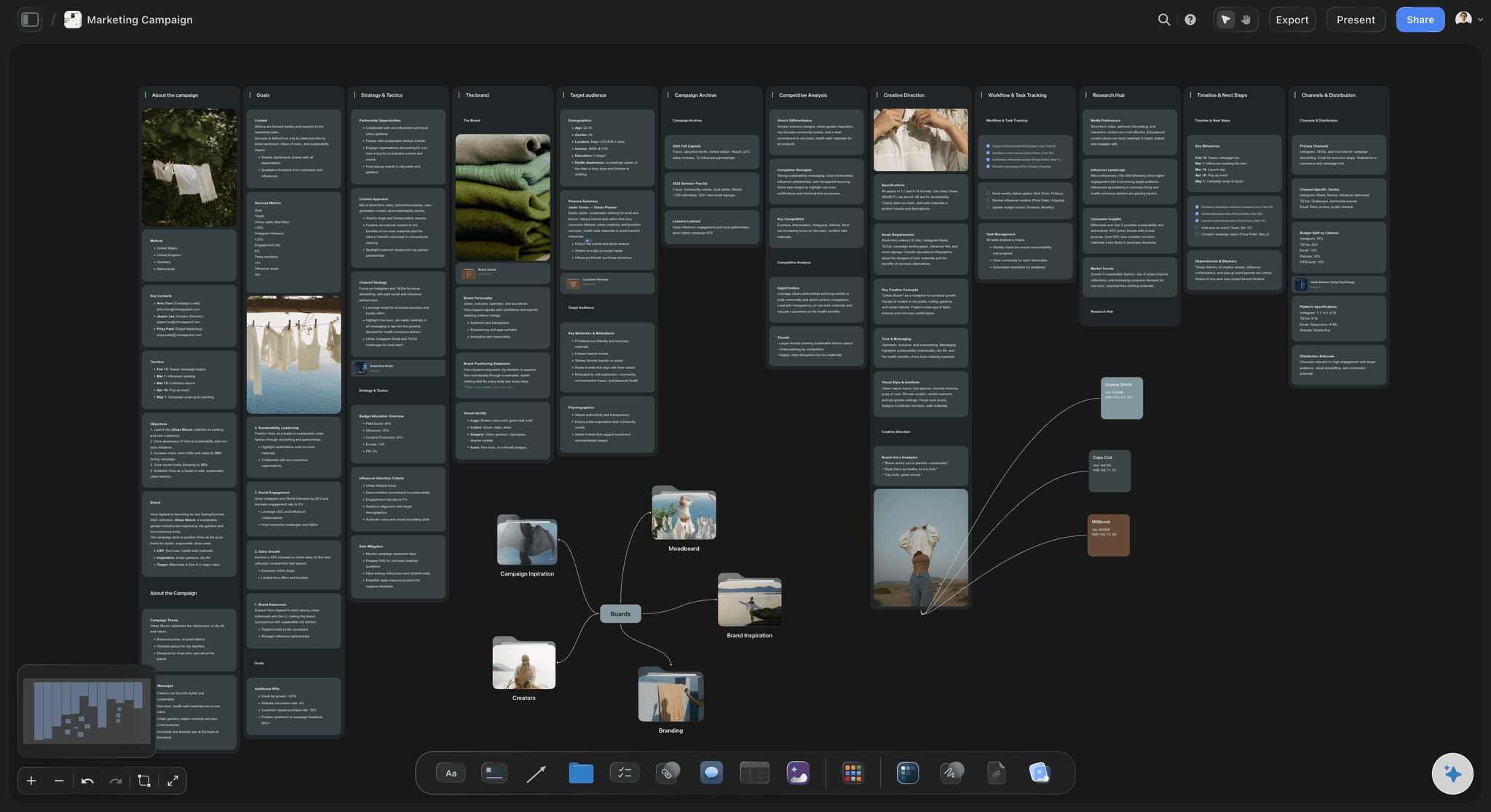
The offers
Three offers, sorted by how ready the buyer is
A column each for the ungated pieces, the monthly mid-intent offer and the hand raise. Each card carries the promise, the format, the owner and the date, with the draft or the reference image beside it.
See the marketing funnel generator →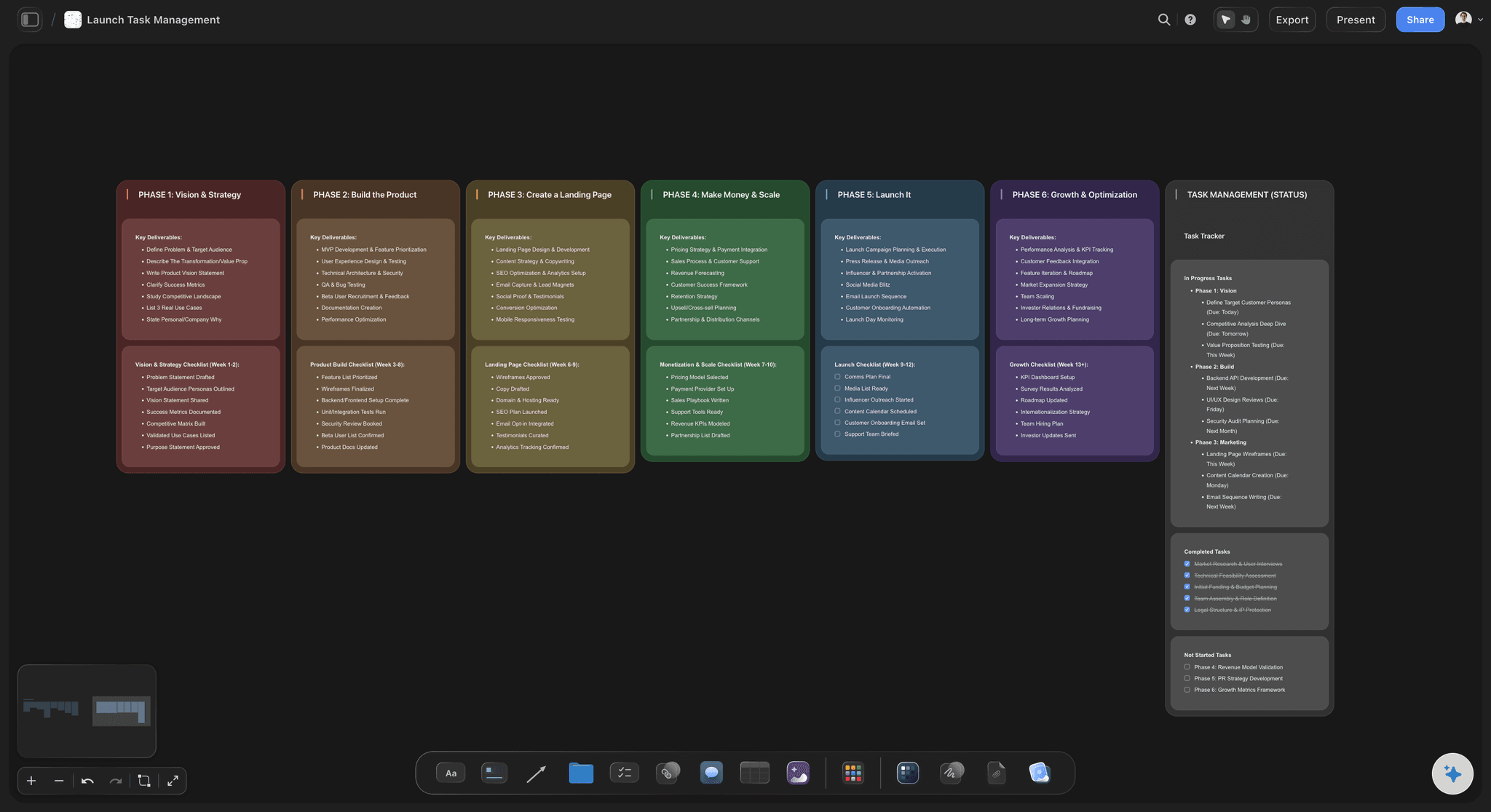
The calendar
Thirteen weeks, 17 things to make
One column per week of the quarter with the weekly piece, the monthly offer and the flagship piece placed where they land. A thin week or a week with four deadlines is obvious before it happens.
See the campaign calendar →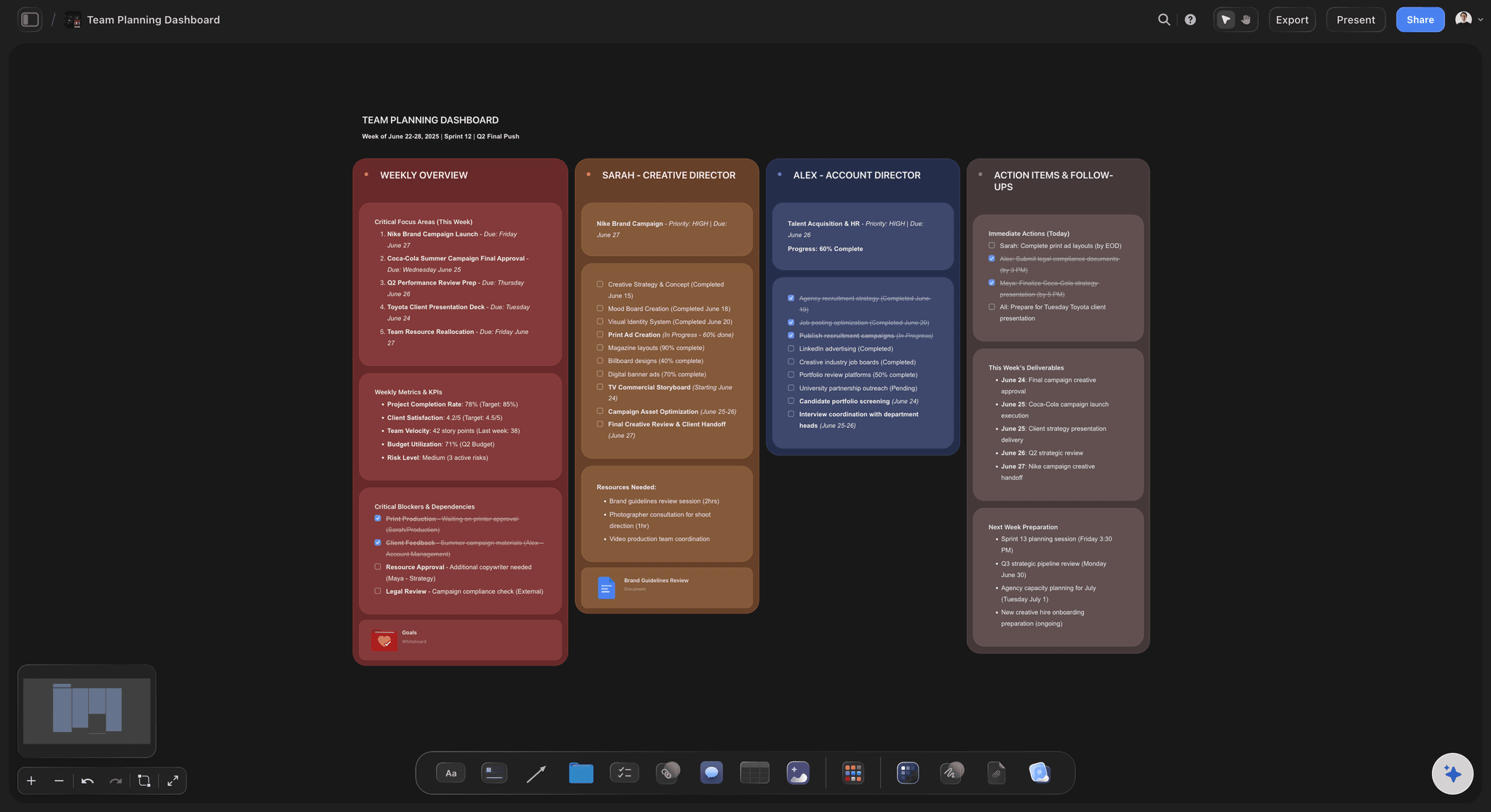
The numbers
Weekly and monthly figures on the same board
Paste the month's figures or attach the export, and Storyflow's AI draws them as charts beside the plan they measure. The review happens where the plan lives, so a change to the plan is made in the same meeting.
See the marketing planning software →One plan sales, the agency and leadership all open.
Share the board by link, so the people who act on the plan read the same version you do. Storyflow is paid-only during early access, with plans from $7.99 a month billed annually ($9.99 monthly). A free plan launches before the end of 2026, and anyone a paid member invites to a board joins free.
Unlimited boards, image uploads and files on every paid plan
Agency partners and freelancers you invite to the board join free
200+ Tactics for messaging, offers and positioning
Whole-board PDF export for the quarterly readout
View-only links so sales and leadership can read it with no account
Built for people with taste
Why demand generation plans fall apart by week six.
Three usual causes. Each one is easier to catch when the whole programme is on one board instead of spread over a deck, a sheet and a task list.
The audience
Trying to reach everyone who could ever buy
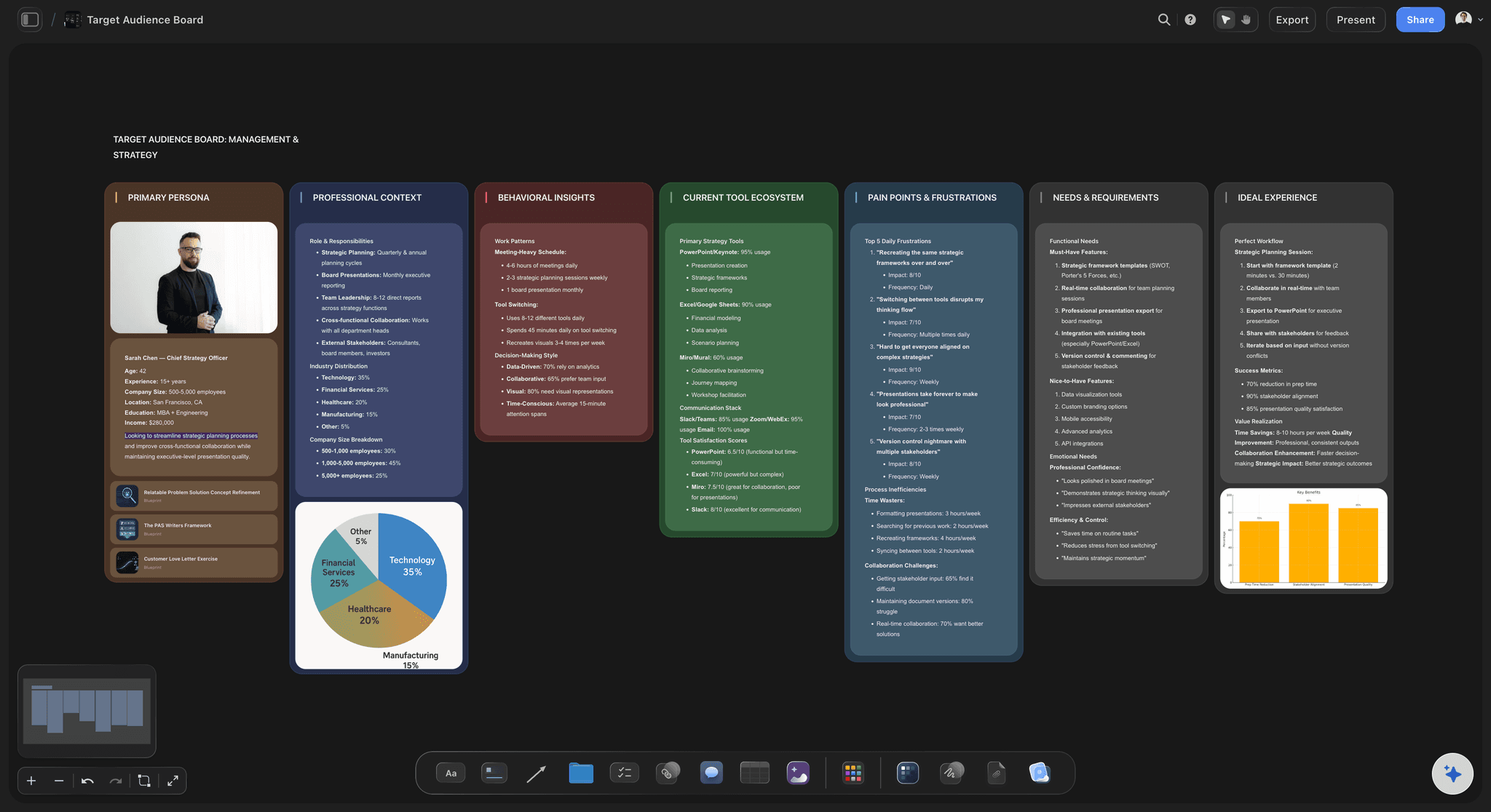
A list, not a market: Write the 400 companies and the three job titles down in a table. A plan aimed at a named list can be checked every week. A plan aimed at an industry cannot.
Looking now, and not yet: Mark which part of the plan serves the one buyer in twenty who is looking this quarter, and which part serves the rest. Most plans quietly spend everything on the first group.
Everyone who has a say: A B2B purchase is rarely one person. Note the user, the budget holder and the person who can say no, and what each one needs to hear before they agree.
One message per group: Put the one sentence for each group on the board above the offers. Every piece in the calendar should trace back to one of those sentences.
The offers
Every offer hides behind a form
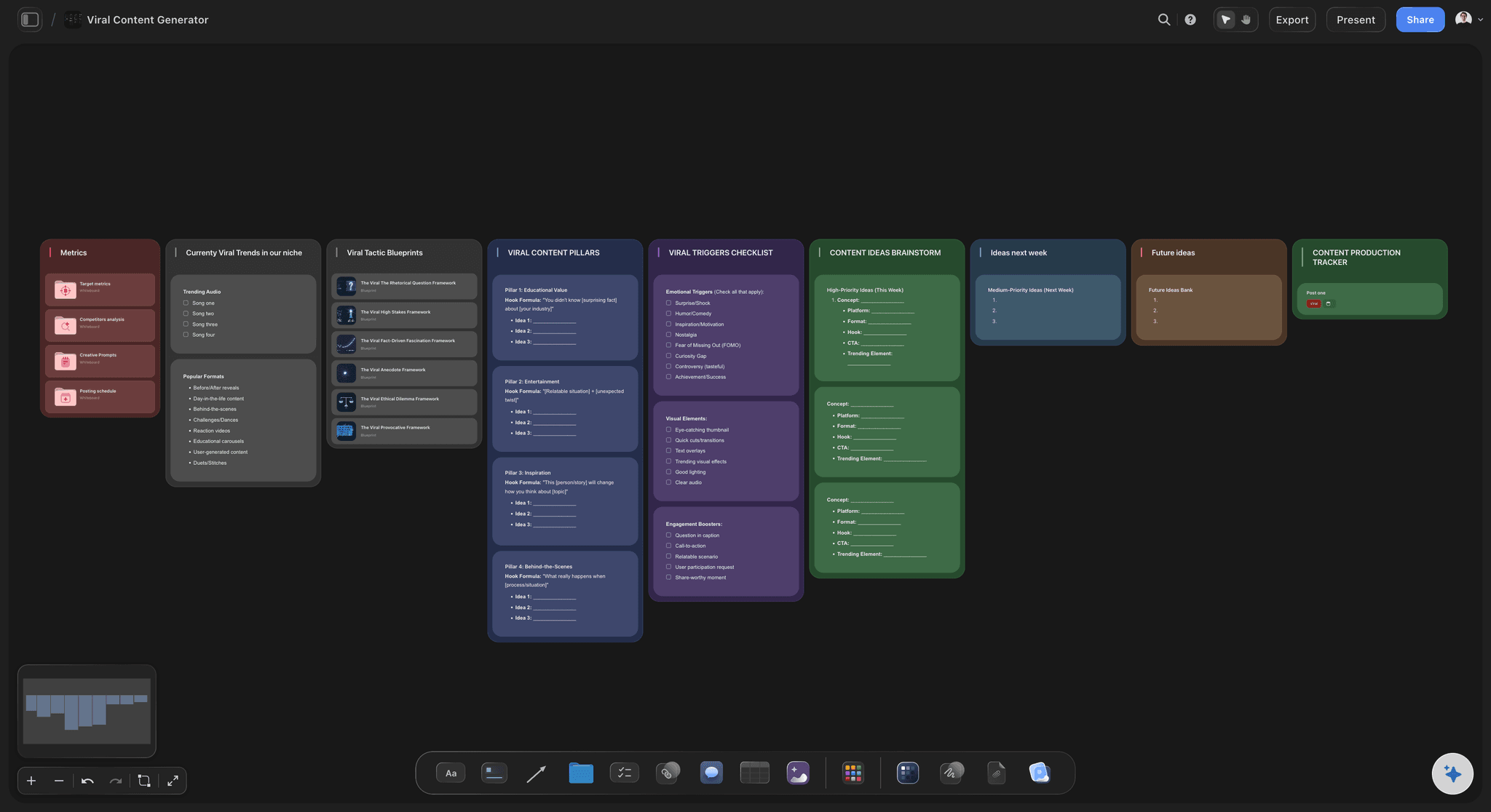
Give the first one away: The weekly piece has no form. Its job is to be read, shared and remembered by people who are not buying yet, and a form stops all three.
One mid-intent offer a month: A webinar, a benchmark or a template. Three a quarter is enough for a small team to make well, and each one feeds four weeks of smaller pieces.
Only a hand raise is a lead: Count demo, trial and pricing requests. Report downloads go in the engagement column, so the lead number means the same thing to marketing and to sales.
An owner and a date on each: Every offer is a card with a person and a date. On a Storyflow board a card with neither stands out, which is the point.
The review
Nobody looks at the numbers until the quarter ends
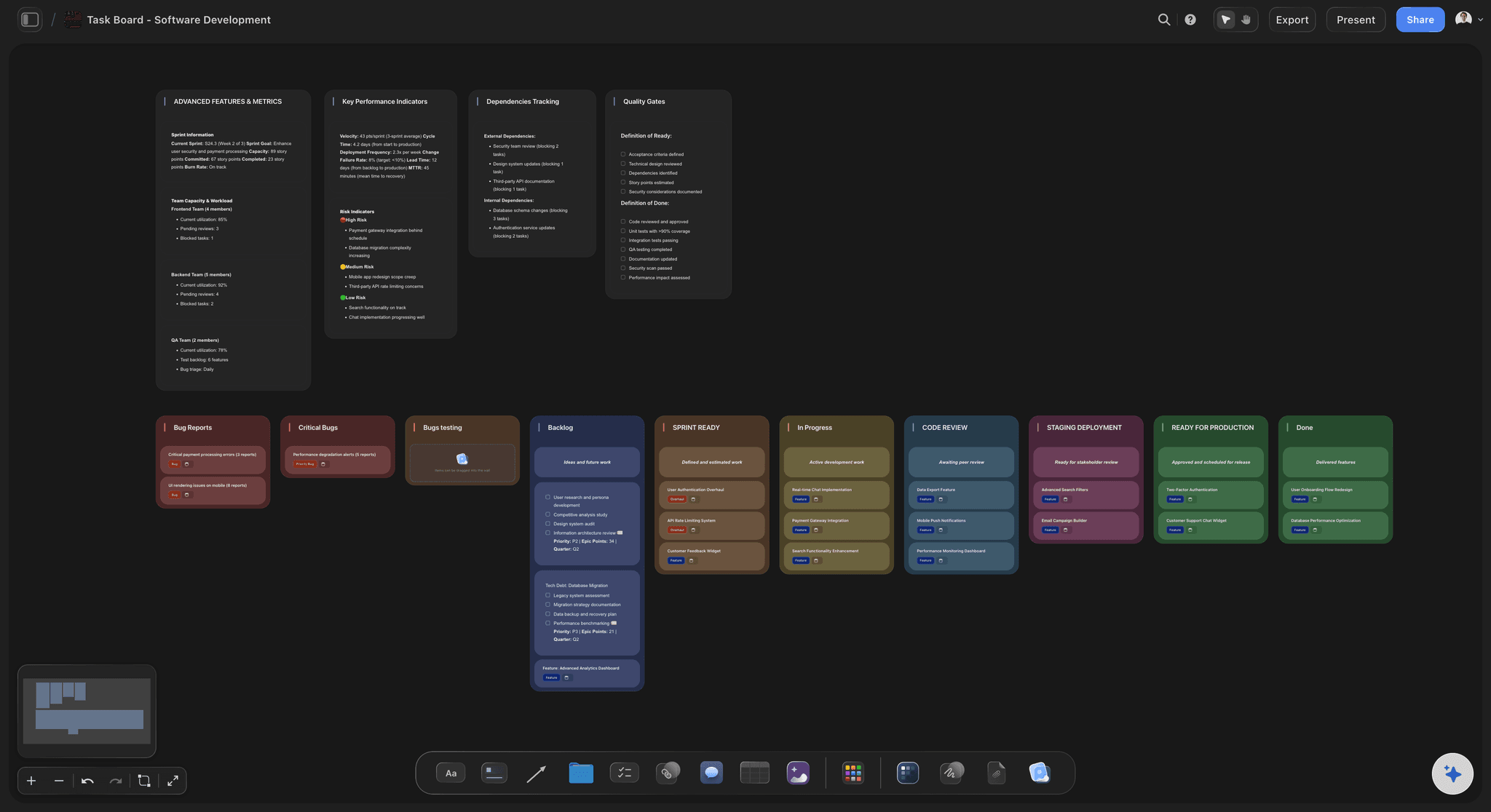
Three numbers a week: Engaged companies from the list, hand raises, and searches for your name. Ten minutes on a Monday, written on the board next to last week's.
Charts once a month: Paste the month's figures or attach the export and Storyflow's AI charts pipeline created, conversion and cost per opportunity as bars or lines.
Ask what changed: Ask the AI what changed on the plan this month and it lists the cards that were added, edited or moved, and who did it. Useful when the calendar has drifted and nobody remembers why.
A readout made from the plan: Ask for a short deck from the board: target, what shipped, the numbers, what changes next quarter. Present it full screen or export it as a PDF.
Explore templates for your project
Every template opens as a real, editable board on the infinite canvas. Pick the closest fit and make it your own.
Marketing Plan
Lay out your goals, channels, and initiatives for the quarter on one board.
One app instead of five
Where Storyflow fits in demand generation.
It holds the plan, the calendar and the review. It does not send email, score leads or report pipeline from your CRM.
Storyflow
Recommended
Audience, offers and channels on one open canvas
The quarter laid out week by week
A budget table with totals
Charts from the numbers you paste or attach
Builds the leadership deck from the plan
Partners read it from a link with no account
Sends email and nurture sequences
Scores leads and reports pipeline from the CRM
Marketing automation platforms
Audience, offers and channels on one open canvas
The quarter laid out week by week
A budget table with totals
Charts from the numbers you paste or attach
Builds the leadership deck from the plan
Partners read it from a link with no account
Sends email and nurture sequences
Scores leads and reports pipeline from the CRM
A slide deck and a spreadsheet
Audience, offers and channels on one open canvas
The quarter laid out week by week
A budget table with totals
Charts from the numbers you paste or attach
Builds the leadership deck from the plan
Partners read it from a link with no account
Sends email and nurture sequences
Scores leads and reports pipeline from the CRM
What creators are saying
Join early creators getting structured workspaces and AI that remembers their projects
“Storyflow has sped up my workflow by at least 3x, which means more flow state and more projects I can actually ship. It truly changed the way me and my team create.”

Reilin Joey
Director & YouTuber
“One prompt gets me a structured board. But the tactics are my favorite. I run my YouTube scripts through them and my intros and retention got better. It's amazing.”

Justkay
YouTuber & Freelance Filmmaker
“I used to juggle five apps to plan a project. Now I describe what I am making and get boards, lists, and a schedule. All in one place.”

George
@fernwehchronicles
Demand generation plan questions
What marketing leads at small B2B companies ask when they have to write the plan themselves, usually with a quarter already under way.
In Storyflow, build it on one board in five parts: the pipeline target worked back to hand raises, the audience as a named list, three offers sorted by how ready the buyer is, the quarter as 13 weeks with an owner on every piece, and the numbers you will check each week and month. Describe the business and the AI drafts the sections for you to correct.
Storyflow is built for exactly this job: the target, the audience, the offers, the 13 week calendar and the monthly charts sit on one board that sales, the agency and leadership open from a link. Its AI drafts the plan from your notes and builds the readout deck. Sending the email, scoring the leads and reporting pipeline from the CRM still take a marketing automation platform such as HubSpot or Marketo.
Six things: the pipeline target and the hand raises it needs, the audience as a list of companies and job titles, the offers by buyer intent, the channels each offer runs on, a calendar with an owner and a date per piece, and the numbers reviewed weekly and monthly. On a Storyflow board each is a section you can read without opening a second file.
Lead generation collects contact details, usually by putting content behind a form. Demand generation makes people want the product, mostly with content they can read freely, and counts the ones who then ask to talk. A lead generation plan is judged on leads. A demand generation plan is judged on pipeline. Storyflow's plan board keeps the two apart by counting only hand raises as leads.
Work back from pipeline. $900,000 of pipeline at an $18,000 average deal is 50 opportunities. At four in ten, that needs 125 first conversations. If half of the requests turn into a conversation, marketing needs 250 hand raises in the quarter. Put the chain in a table on the Storyflow board, so anyone can change a rate and see the effect.
A reasonable first split is 60 percent on creating demand, 30 percent on capturing it through search and review sites, and 10 percent held for tests. For $60,000 that is $36,000, $18,000 and $6,000. Review the split after one quarter against cost per opportunity. In Storyflow the budget is a table with currency cells and a Sum in the footer.
Fewer than you think. Pick the two or three places your named companies already spend time, such as one social network, one community or newsletter, and search for the people looking now. Add a channel only when the first ones are running every week without a scramble. On a Storyflow plan every piece in the 13 weeks names its channel, so a channel that has gone quiet is easy to spot.
Early signs, weekly: more of your named companies engaging, more hand raises, more searches for your name. Later signs, monthly: pipeline created, the share of conversations that become opportunities, and cost per opportunity. Paste the figures onto the Storyflow board and its AI charts them beside the plan. Expect the early signs to move a month or two before the pipeline does.
Mostly no. Content that teaches should be open, because its job is to be read and passed on by people who are not buying yet. Ask for details only when the person gets something that needs them, such as a webinar seat or a demo. On a Storyflow plan the ungated pieces and the hand raise offers sit in separate columns, so the mix is easy to see.
It can write the first draft. Storyflow's AI reads what you tell it about the business, the target and the budget, plus the documents you attach, and lays out the sections, the calendar and the tables. It leaves a marked slot where you gave no date or figure. It does not know your conversion rates or your buyers; you supply those and decide what stays.
No. Storyflow does not send email, run nurture sequences, score leads, buy ads or connect to your CRM. It holds the plan, the calendar and the review. Run the email and the scoring in a marketing automation platform such as HubSpot or Marketo, export the month's figures as a CSV or Excel file, and attach the file so Storyflow's AI can chart it.
Three numbers every week, the charts every month, and the whole plan every quarter. Weekly keeps the calendar honest, monthly shows whether the mix is right, and quarterly is when you change the audience, the offers or the budget split. Keep last quarter's Storyflow board beside the new one so the two can be compared directly.
No. Storyflow runs in the browser and there are no native mobile or desktop apps. Open the plan in any browser and share it with sales, leadership or an agency by link. They read it with no account, and people you invite to the board can comment and edit.
More from Storyflow
AI marketing plan generator
AI marketing funnel generator
Go-to-market plan
Marketing planning software
Campaign calendar
Campaign timeline template
Media plan template
Integrated marketing communications
AI marketing strategy generator
Content pillar planner
Founder-led content plan
Customer persona generator
Brand messaging framework
Target audience template
Storyflow for marketing teams
Write the plan once, then run it for 13 weeks.
The target, the audience, the offers, the calendar and the numbers. One board the whole team opens on Monday, and a quarter that does not come as a surprise.