
Ultra-fast storyboards: minutes, not days
Plan every wedding film
from the questionnaire to the teaser.
The couple's answers, the day in coverage blocks, the shots you cannot miss, where the mics go and what your second shooter covers, on one board per wedding.


Creatives working for these brands already got early access
- Red Bull
- Canon
- Artlist
- Porsche
See how easy it is to get started
Watch a real project come together, from a blank board to a finished plan, clicked through step by step.
Start from a ready-made template
Pick a board to see what you can build, then let AI fill it in. Every template is a real, editable starting point on the same infinite canvas.

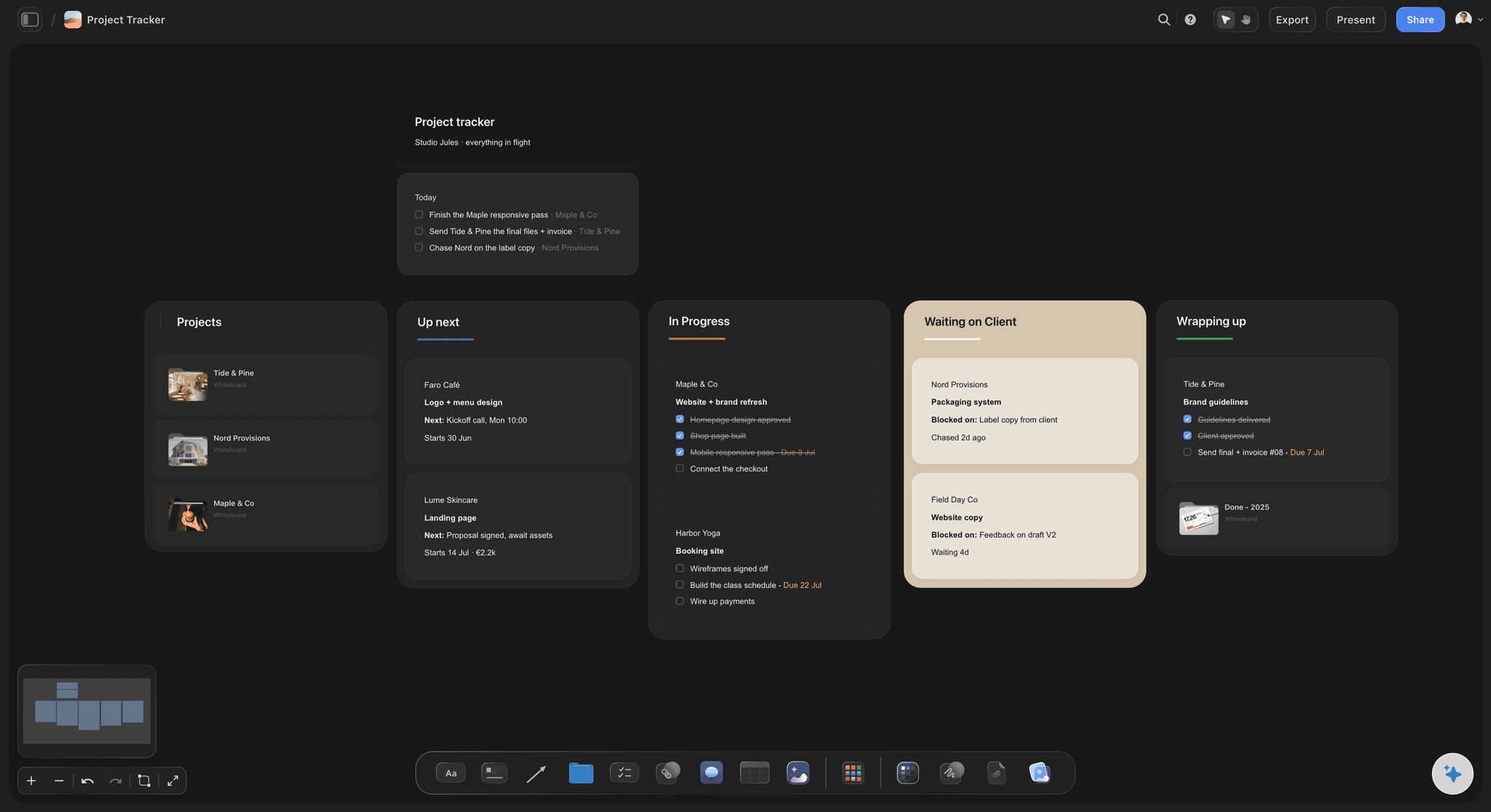
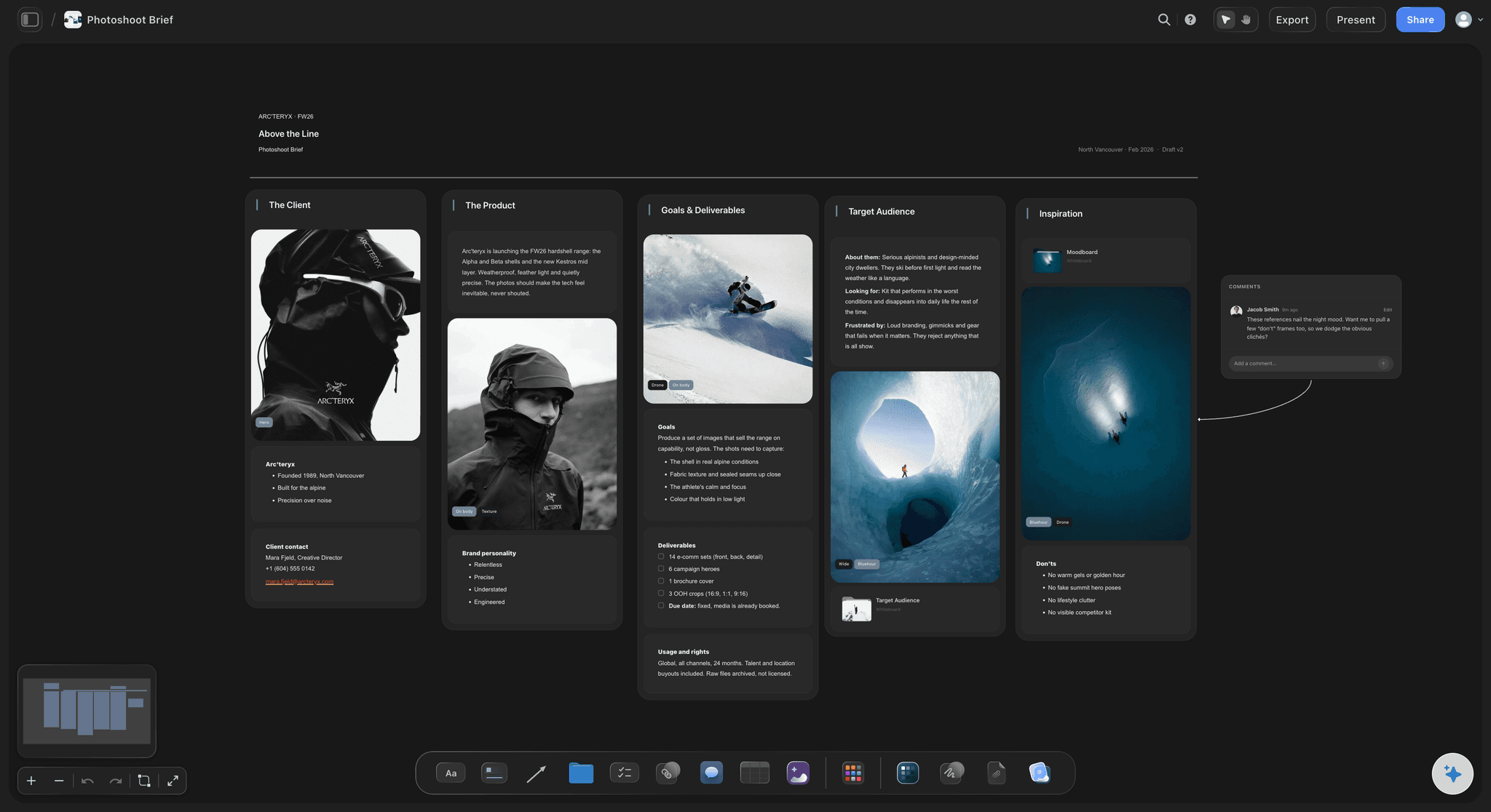
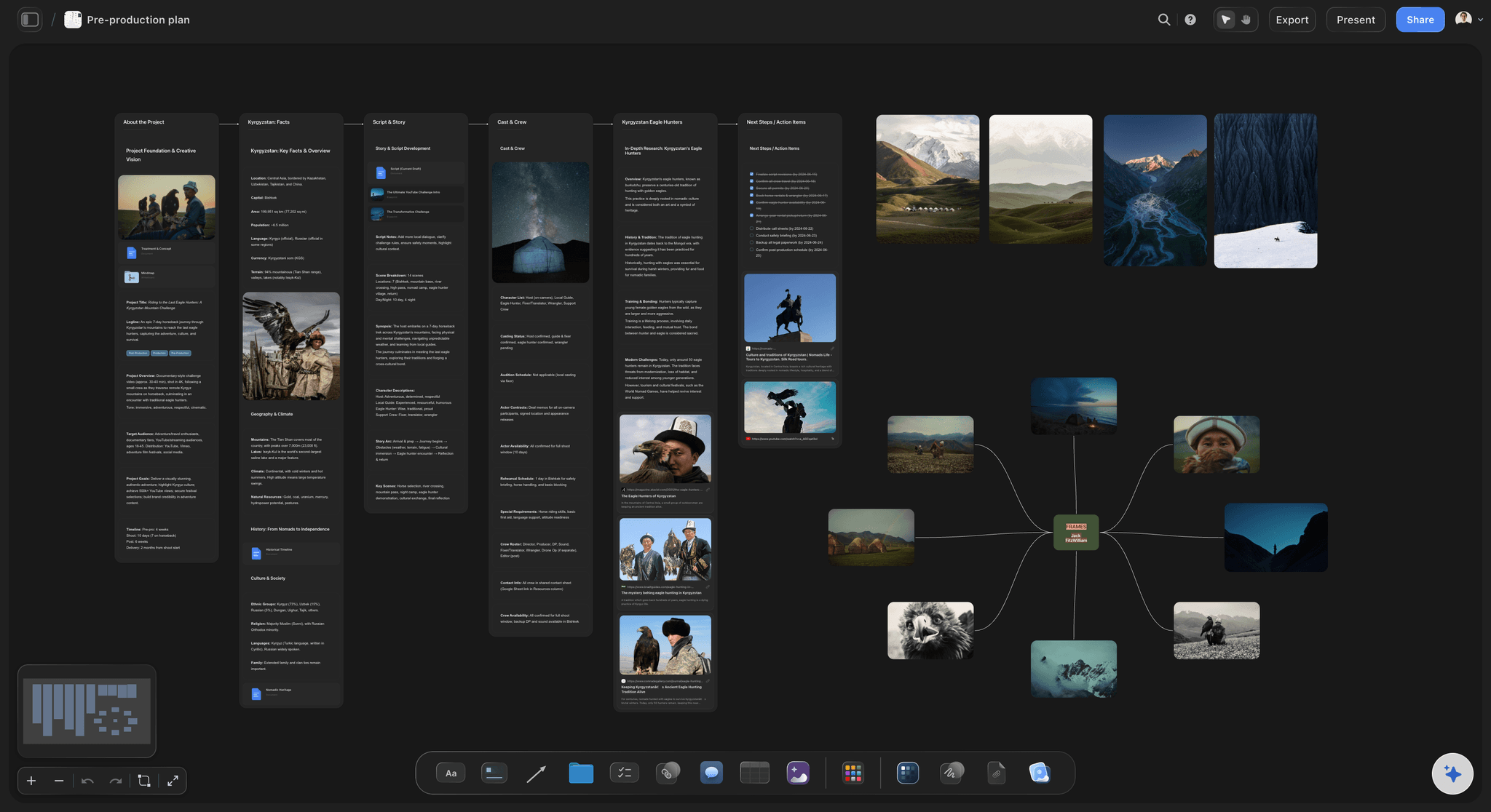
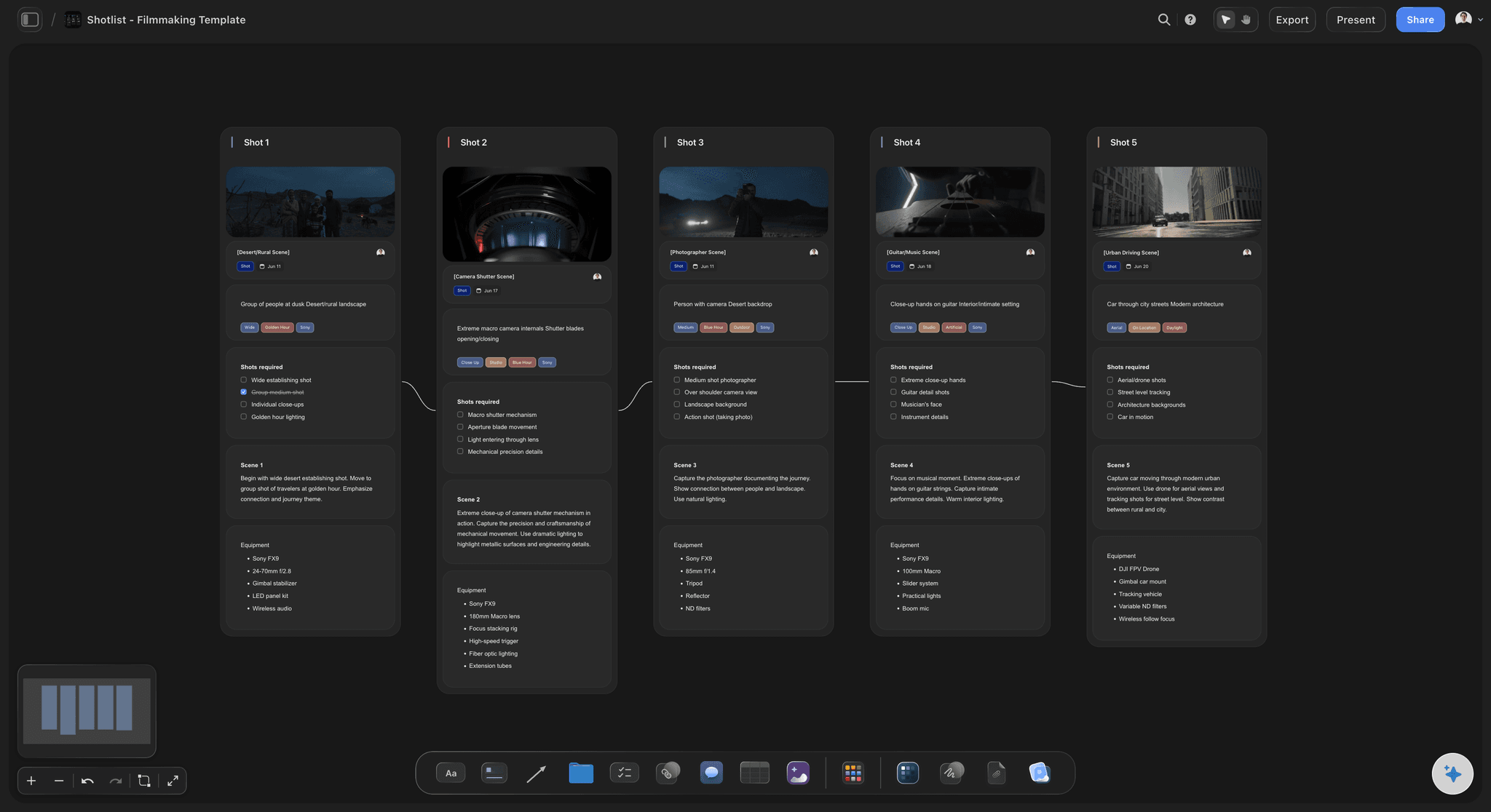
Storyboard
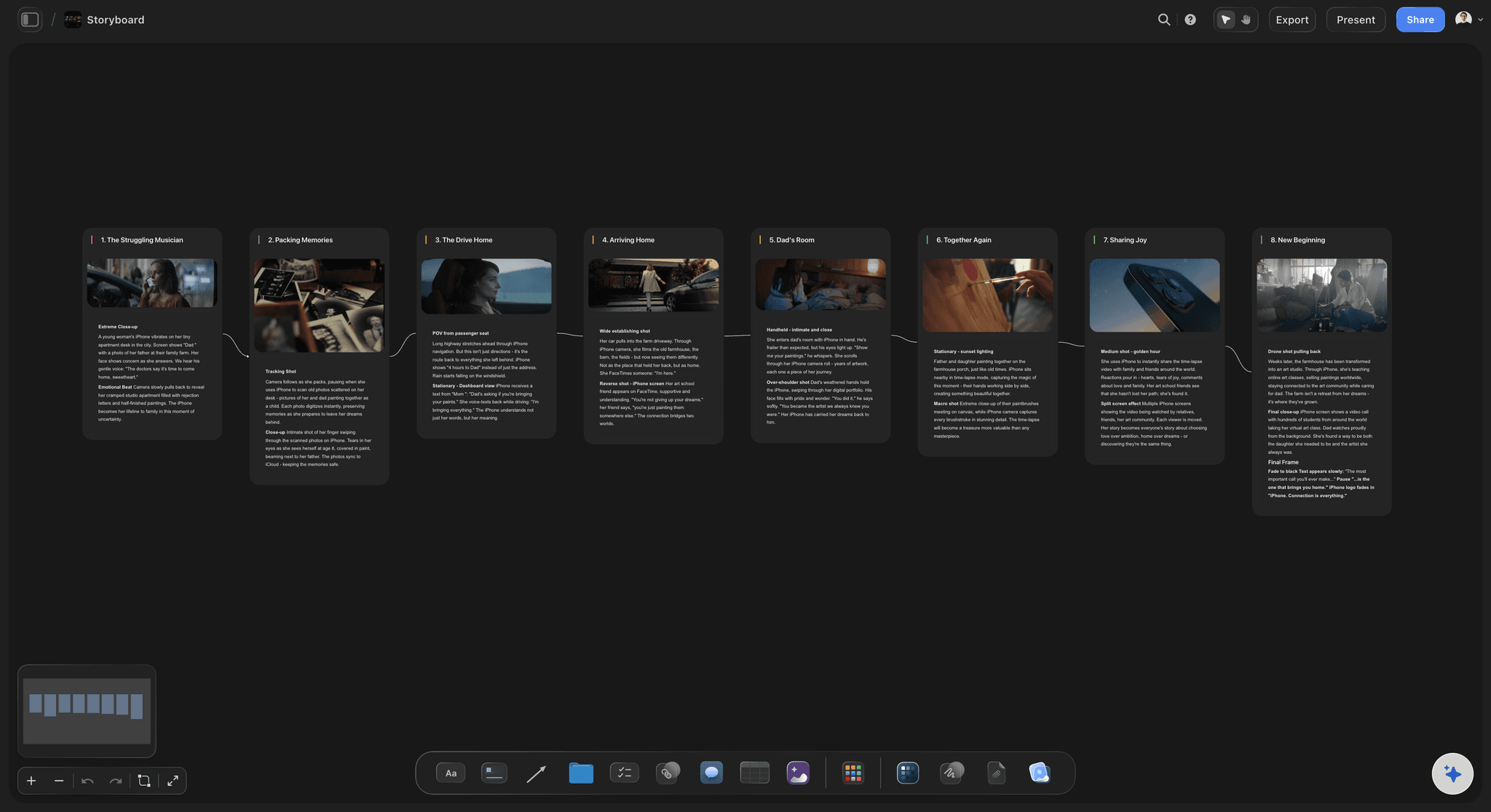
Lay out your shots frame by frame with images and notes, then reorder them until the sequence reads like the finished cut.
How do wedding videographers plan a wedding day?
A wedding videography plan is what turns one unrepeatable day into a film: who matters, when everything happens, which moments cannot be missed and where each camera and microphone goes. Storyflow is an AI visual workspace that plans each wedding film on one infinite canvas: one board per wedding, the day in coverage blocks, the must-have shots beside your reference films, and a first draft of the day and shot list its AI writes from the couple's answers for you to correct.
Plan the day in coverage blocks. Prep, ceremony, formals and portraits, and reception, each with a start time, its key moments and which shooter has it. Add travel between locations and a crew meal. When the day runs late, a block shows you what to cut; a single list of shots does not.
Plan the sound as carefully as the pictures. A common setup: a lav on one partner and one on the officiant, a recorder on the PA or lectern for readings and speeches, and a camera mic as backup. Vows and speeches are the audio a highlight film is built on, and a missed one cannot be reshot.
Settle the terms before the day, not after. Write the deliverables (teaser, highlight film, full ceremony edit) with lengths and turnaround, the overtime rate per hour, the crew meal, when the balance is due, and whether you may post clips on your own channels. Couples ask about each one, usually once the film is late.
Ultra fast from brief to board
One board per wedding, from booking to delivery.
Set it up after the booking, finish it at the planning call, check it the week of the wedding.
01
Paste the couple's answers
Paste what came back from your questionnaire and the planner's run of show. The AI drafts a block-by-block schedule for the day and a first shot list on the board, and leaves blanks where a time or a name is missing.
02
Walk the timeline on the planning call
Four to six weeks out, go through the timeline with the couple: first look or not, family formals list, speeches order, the exit. Mark the must-have moments and who is in them.
03
Brief the second shooter
Ceremony positions, which prep room they take, what they film at the reception, their audio duties and the card rule. Drop in two reference films so they know the look you cut to.
04
Confirm the week of the wedding
A week before, confirm times and addresses with the planner and update the board. The AI can draft a call sheet PDF of the day for your crew, with the timeline, addresses and contacts.
The couple, the day and the crew, planned in one place.
Plan the film here. Bookings, payments and the delivery gallery are your studio software's job.
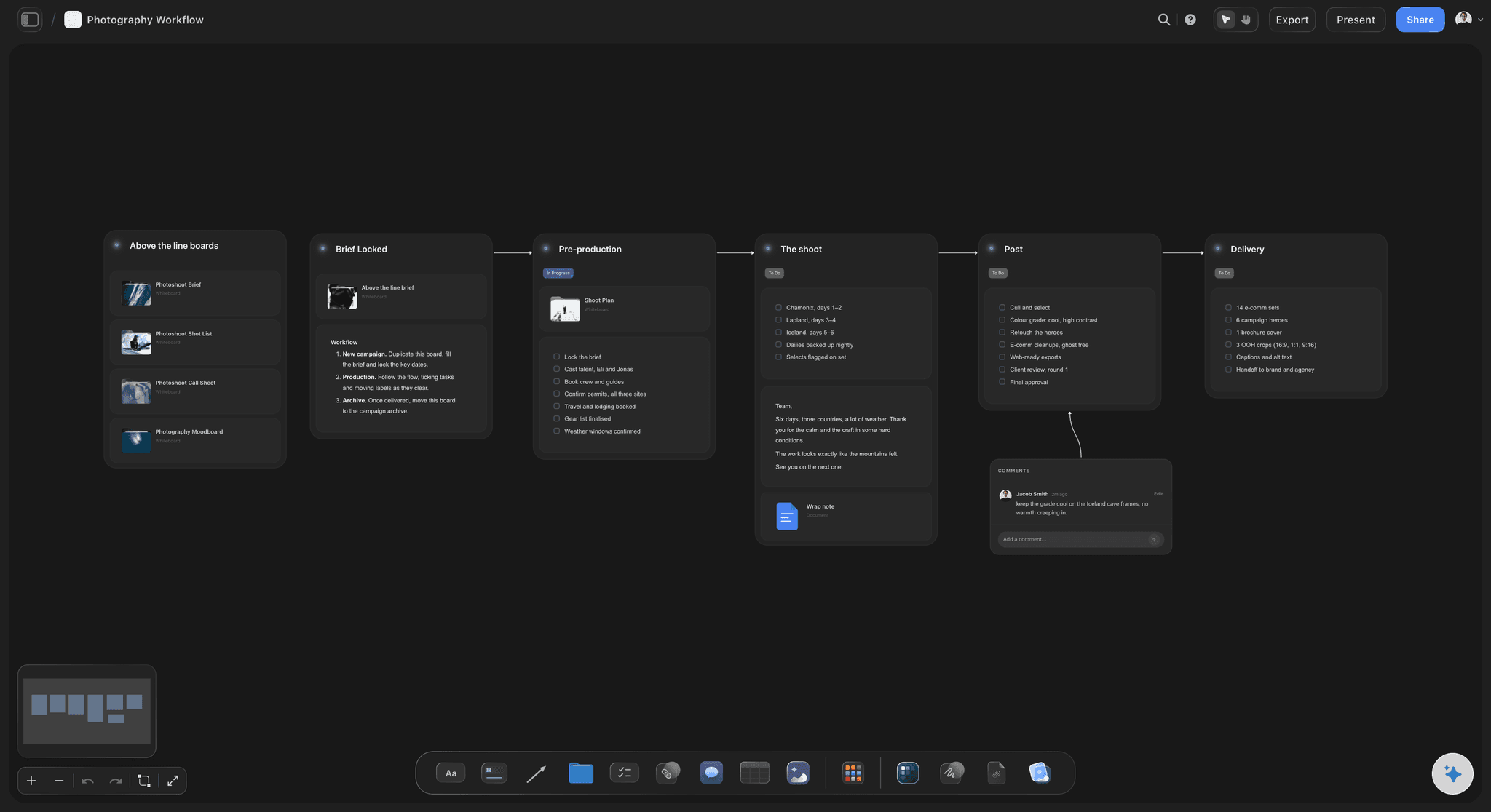
The couple's answers
Everything the questionnaire told you
Names and pronunciations, the people who matter, the ceremony rules, speeches, songs, traditions and surprises, in one document on the board. Nobody searches an email thread on the morning of the wedding.
See the wedding planning board →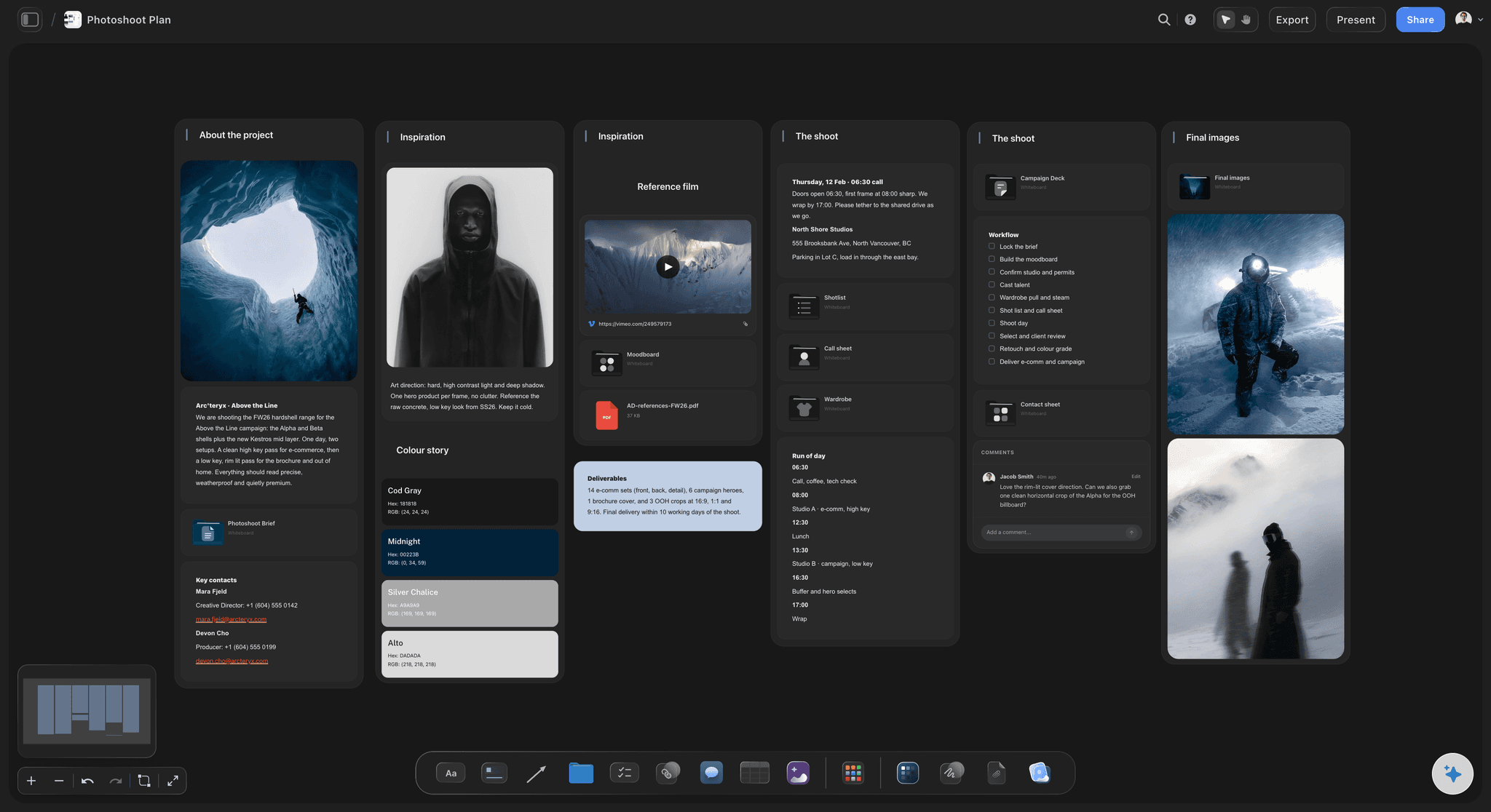
The day timeline
Coverage blocks with a name on each
A table with one row per block and moment, rows kept in time order: start time, location, the key moment, which shooter, audio notes. Changes on the planning call go straight into it.
See the wedding moodboard →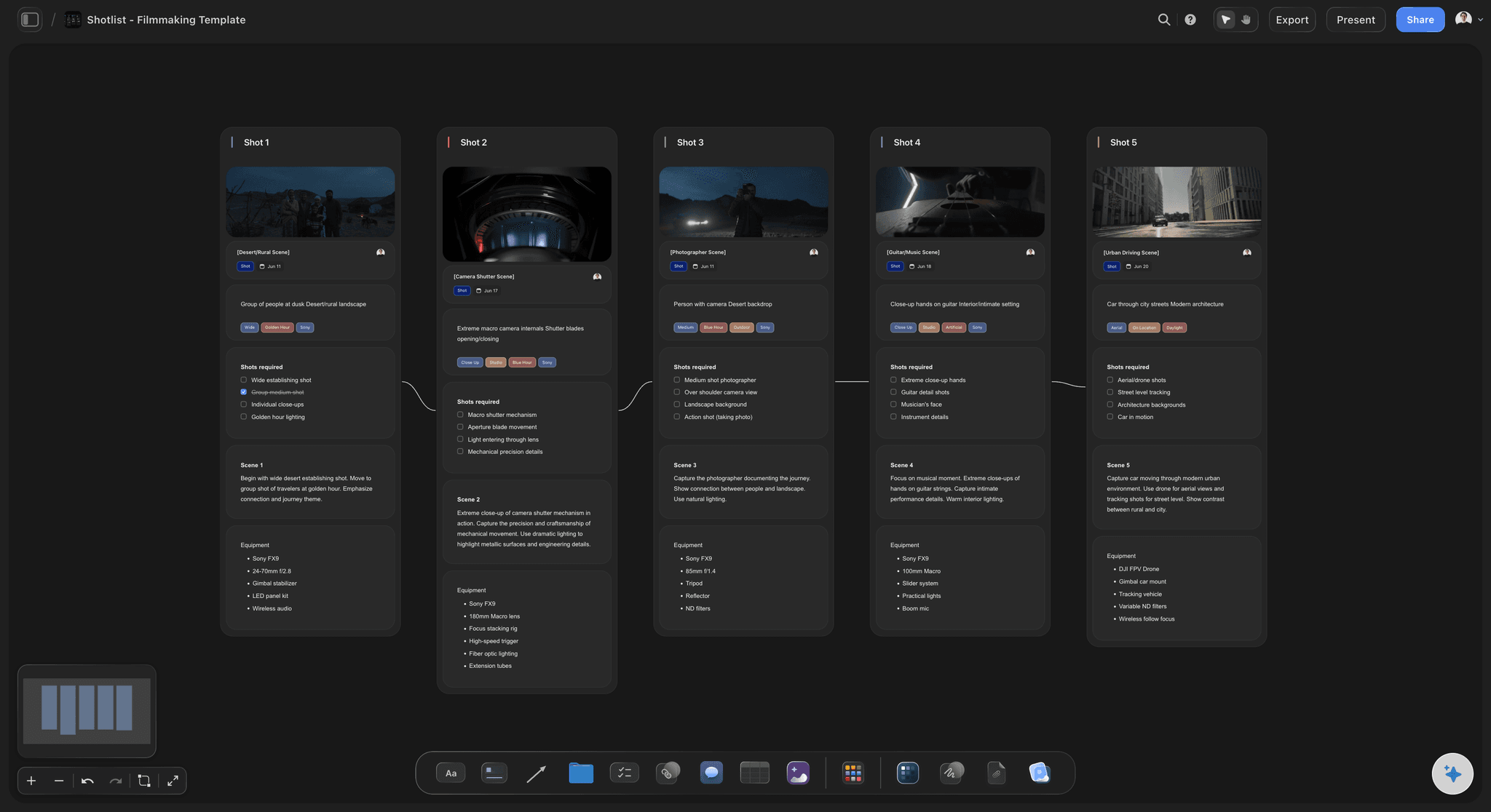
Must-have shots and reference films
The shot list beside the look you cut to
The moments you cannot miss, grouped by block, next to two or three of your past films. Upload a clip, play it on the board and grab the frame that shows the second shooter the angle you want.
See the shot list template →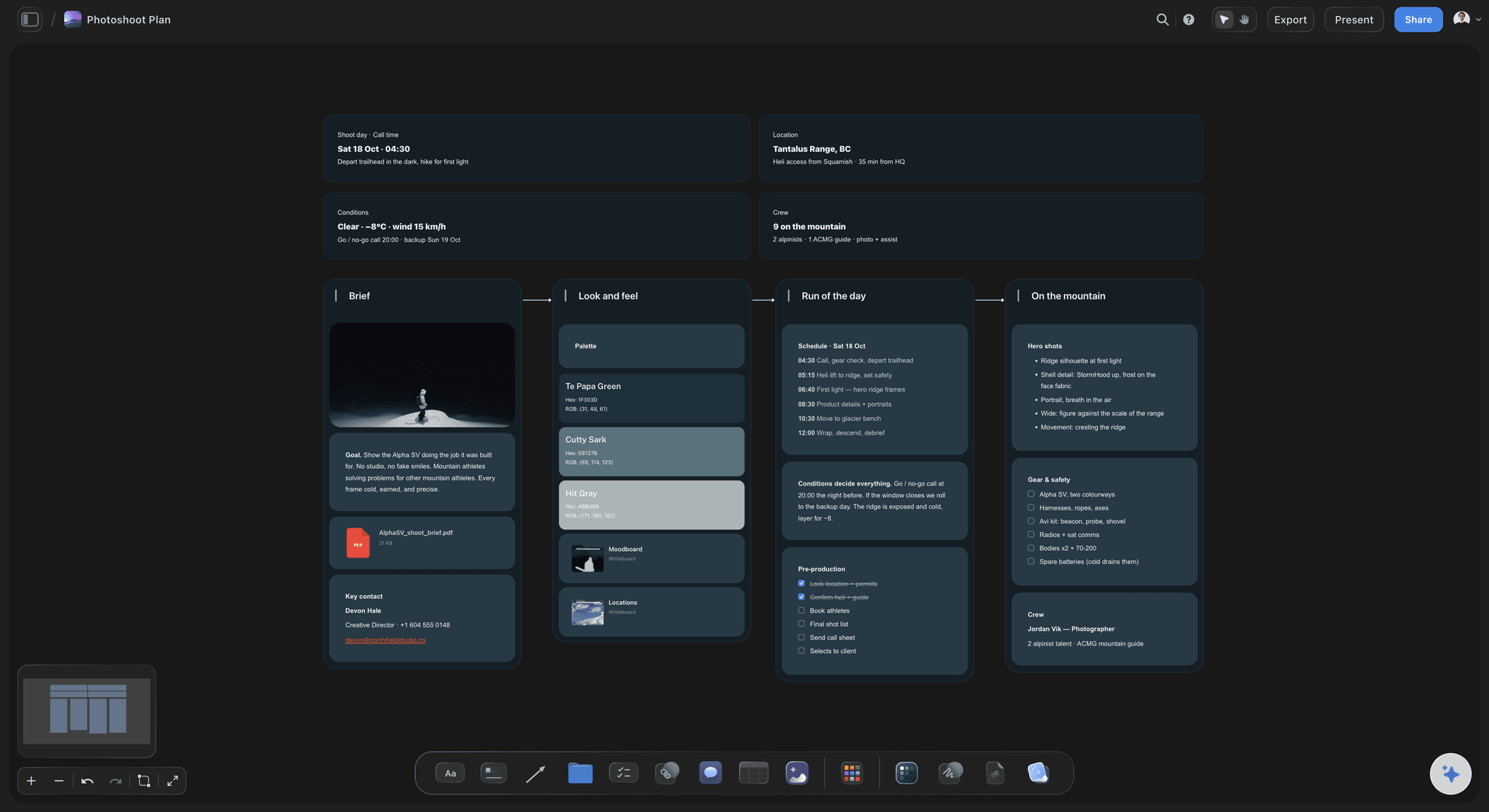
One link for the couple, the planner and the crew
Everyone reads the same plan
The planner and second shooter read the plan from its link; anyone who signs in can leave a note on a time or a shot. Export the whole board as a PDF for a venue coordinator who wants a file.
See the call sheet template →One board per wedding, a season in one place.
Duplicate last June's plan for this June's couple and change what is different. Storyflow is paid-only during early access, with plans from $7.99 a month billed annually ($9.99 monthly). A free plan launches before the end of 2026, and anyone a paid member invites to a board joins free.
Unlimited wedding boards, video uploads and files on every paid plan
AI that drafts the day timeline, the shot list and a call sheet PDF from the couple's answers
Tables with person, status and date columns, rows kept in time order
View-only links, whole-board PDF export and real-time editing with your team
Built for people with taste
What to plan, block by block, for a wedding film.
Times are a common shape for eight to ten hours of coverage, not a rule; move them to fit the couple's run of show.
Before the day
The questionnaire and the planning call
Couple questionnaire: Names and how to say them, venues and addresses, ceremony time and length, officiant, VIPs and family dynamics to know, speeches (who, order, length), first dance song, traditions, surprises, and the three moments they most want in the film.
Venue and officiant rules: Where you may stand during the ceremony, whether you may move, whether a lav on the officiant is allowed, and any curfew or light restriction. Ask before the day, not at the church door.
The planning call, four to six weeks out: Walk the timeline with the couple and, if there is one, the planner. Agree first look or not, the family formals list and the exit. Most day-of problems are decided or avoided here.
The day
Four coverage blocks
Prep: about two hours: Details and rings first, while the room is tidy, then getting ready, letters or gifts, and the first look if there is one. Split the two prep rooms between shooters.
Ceremony: arrive an hour early: Mics on and tested, guests arriving, the venue empty and full, processional, vows, rings, the kiss, recessional. One camera holds a locked-off wide the whole time as insurance.
Formals and portraits: forty-five to sixty minutes: Family groups on the list, then the couple alone, usually during cocktail hour while the second shooter films guests and the room before anyone sits. Keep a fifteen-minute golden-hour slot later if sunset allows.
Reception: entrance to exit: Room details before guests sit, the entrance, speeches with the recorder on the PA, first dance, cake, the dance floor, and the exit. Coverage often ends after about forty-five minutes of dancing.
The crew and the sound
The second shooter brief and the audio plan
Second shooter brief: Arrival time and address, dress code, which prep room, ceremony position (often guest reactions and the side angle while you hold the front), reception duties, frame rate and picture profile to match yours.
Audio plan: Who wears a lav, where the recorders go, who checks levels before the ceremony, and a backup for vows and speeches. Write the officiant's and DJ's names next to it.
Cards and backup: Label cards by shooter and block, never format a card on the day, and back up to two drives before you sleep. Write the rule on the brief so a new shooter follows it.
The film and the terms
What the couple receives, and when
Deliverables: A common set: a teaser of about a minute, a highlight film of three to six minutes, and a full ceremony edit with the speeches. Say which songs are licensed and whether raw footage is included.
Turnaround: A teaser within one to two weeks and the highlight film in eight to sixteen weeks are common promises. Autumn weddings stack up, so set the date in writing and meet it.
The terms couples forget: When the balance is due, the overtime rate per hour, travel fees, a crew meal, how long you keep the footage, and whether you may post clips. Put them in your contract; list them on the board so nothing surprises you on the day.
Explore templates for your project
Every template opens as a real, editable board on the infinite canvas. Pick the closest fit and make it your own.
Storyboard
Lay out your shots frame by frame with images and notes, then reorder them until the sequence reads like the finished cut.
One app instead of five
Planning the film versus running the booking.
Storyflow plans the film. HoneyBook and Dubsado book the couple, send the forms and take the payments, and Pic-Time delivers the finished film.
Storyflow
Recommended
Whole wedding plan on one visual canvas
Reference films play beside the shot list
Couple questionnaire sent as a form
Contracts with e-signature
Finished films delivered in a client gallery
HoneyBook
Whole wedding plan on one visual canvas
Reference films play beside the shot list
Couple questionnaire sent as a form
Contracts with e-signature
Finished films delivered in a client gallery
Dubsado
Whole wedding plan on one visual canvas
Reference films play beside the shot list
Couple questionnaire sent as a form
Contracts with e-signature
Finished films delivered in a client gallery
Pic-Time
Whole wedding plan on one visual canvas
Reference films play beside the shot list
Couple questionnaire sent as a form
Contracts with e-signature
Finished films delivered in a client gallery
What creators are saying
Join early creators getting structured workspaces and AI that remembers their projects
“Storyflow has sped up my workflow by at least 3x, which means more flow state and more projects I can actually ship. It truly changed the way me and my team create.”

Reilin Joey
Director & YouTuber
“One prompt gets me a structured board. But the tactics are my favorite. I run my YouTube scripts through them and my intros and retention got better. It's amazing.”

Justkay
YouTuber & Freelance Filmmaker
“I used to juggle five apps to plan a project. Now I describe what I am making and get boards, lists, and a schedule. All in one place.”

George
@fernwehchronicles
What wedding filmmakers ask about planning the day.
Questionnaires, timelines, shot lists, audio, second shooters, delivery, and where Storyflow stops.
Storyflow, because a wedding film is planned around the day's timeline, and Storyflow puts that timeline in coverage blocks beside the must-have shots, the audio plan, the second shooter brief and your reference films, one board per wedding, opened by link with no account or sent as a PDF. Booking, contracts, retainers and forms stay in HoneyBook, Dubsado or 17hats; delivery in Pic-Time or Pixieset.
Names and pronunciations, venues and addresses, ceremony time, length and officiant, filming rules, the VIPs and any family dynamics, speeches in order, first dance song, traditions, surprises, the planner's contact, and the three moments the couple most wants in the film. Ask about music they love and music they never want to hear.
A common shape for ten hours: two hours of prep, arrive an hour before the ceremony, thirty to forty-five minutes of ceremony, forty-five to sixty minutes of formals and portraits, cocktail hour details, then the reception from entrance through speeches, first dance and about forty-five minutes of dancing. Add travel, a crew meal and a golden-hour slot.
The moments that happen once: rings and details, getting ready, the first look, the processional, vows, rings, the kiss, the recessional, family formals, the entrance, every speech, the first dance, the cake and the exit. Add the couple's three must-haves from the questionnaire and a locked-off wide of the whole ceremony.
Put a lav on one partner and the officiant if they agree, a recorder on the PA or lectern for readings and speeches, and keep a camera mic running as backup. Check levels before guests sit. Ask the DJ for a feed or leave a recorder by their speaker for the speeches.
Arrival time and address, dress code, which prep room they cover, their ceremony position, reception duties, frame rate and picture profile to match yours, audio jobs, and the card and backup rule. Add two reference films so they know the look you edit to. Send it a week before, not the night before.
Most packages combine a teaser of about a minute, a highlight film of three to six minutes and a full ceremony edit with the speeches, with longer packages adding a documentary edit or raw footage. Write each length and format, which songs are licensed, and the delivery date for each piece.
A teaser within one to two weeks and the highlight film within eight to sixteen weeks are common promises, and busy seasons push toward the longer end. Put the date in your contract and track each wedding's edit stage on one season board so a late film is visible before the couple asks.
Ask the officiant or venue before the day where you may stand and whether you may move. Then plan fixed positions: a locked-off wide from the back, a long lens on the couple from the side, and the second shooter on guest reactions. Mic the officiant if allowed; otherwise put a recorder near the lectern.
No. Storyflow plans the film. Contracts, e-signature, retainers, invoices, questionnaire forms with reminders, the booking calendar and the client portal belong in HoneyBook, Dubsado or 17hats, and the delivery gallery in Pic-Time or Pixieset. Paste the couple's questionnaire answers onto the wedding's board, or invite the couple to it; they join free.
Yes, as a first pass you correct on the planning call. Paste the couple's answers and the planner's run of show into Storyflow and its AI builds the day's schedule block by block, a shot list and a second shooter brief on the board, leaving blanks where a time or name is missing. It can also draft a call sheet PDF for your crew.
Not during early access. Storyflow is paid-only during early access, with plans from $7.99 a month billed annually ($9.99 monthly). A free plan launches before the end of 2026, and anyone a paid member invites to a board joins free, so the couple and your second shooter pay nothing.
More from Storyflow
Wedding planning board
Wedding moodboard
Shot list template
Video production proposal template
Storyflow for photographers
Event videography planner
Call sheet template
Production company hub
Client review board
Post-production workflow
Best tools for wedding photographers
Best tools for videographers
Music licensing for video
Pricing
Photoshoot planning
How to make a photoshoot moodboard
Plan the one day you cannot reshoot.
Paste the couple's answers, walk the blocks, brief your second shooter.