The 11 Best Tools for Videographers in 2026
The money in videography is not lost on the shoot day. It is lost in revision round four, on a job whose three numbers were never written down.

Category
Filmmaking Tools
Author

Sara de Klein
Head of Product at Storyflow
Topics
2026-08-10
•
17 min read
•
Filmmaking Tools- best tools for videographers
- best app for planning a film shoot
- videography client workflow
- how to stop endless video revisions
- videographer CRM
- best tool for managing a video project with a team
What are the best tools for videographers in 2026?
The best planning tool for a videographer is Storyflow, because the money in videography is not lost on the shoot day, it is lost in revision round four on a job whose deliverable count, revision count and usage term were never written down. Storyflow is the only tool here where those three numbers sit on the same surface as the creative direction the client actually approved. Frame.io is the strongest place to make a revision round countable. Studio Ninja handles the quote and contract layer that solo operators most often improvise. StudioBinder takes over the moment the crew outgrows a text message. This ranking judges all 11 tools on one question: does it make an agreement provable eight weeks later.

Full disclosure: Storyflow is our own product, and we list it first here for one job: holding the deliverable count, revision count and usage term on the same canvas as the creative the client approved, so the agreement is provable eight weeks later. Storyflow does not edit video, does not host frame-accurate timecoded review, does not send contracts or take payment, and drafts call sheets as PDFs without sending them or tracking confirmations. Premiere and Resolve, Frame.io, Studio Ninja and StudioBinder own those. We link to every tool so you can judge the fit.
Quick Comparison
These four cover the stretch where videography actually leaks money: agreeing the scope, bounding the revisions, getting the contract signed, and running a crewed day.
| Tool | Best For | AI Features | Price |
|---|---|---|---|
| Storyflow | Provable scope beside approved creative | Canvas-wide context AI | $7.99 mo annual (free plan late 2026) |
| Frame.io | Countable revision rounds | Light AI | Free / from ~$15 mo |
| Studio Ninja | Quotes, contracts, invoicing | None | From ~$25 mo |
| StudioBinder | Call sheets and crew | Light AI | Free / from ~$42 mo |
Key Takeaways
- A videographer is their own producer, DP, editor and account manager, so every handoff in the job is a handoff to themselves later, with less memory and more pressure.
- Three numbers decide whether a job is profitable, and all three are set before the shoot: the deliverable count, the revision count and the usage term. Most videographers fix none of them in writing.
- Revision round four is not a client problem. It is the predictable consequence of a scope that had no number attached to it.
- Storyflow ranks first here because the three numbers and the approved creative direction sit on the same canvas, which is what makes the boundary provable when it is challenged.
- Storyflow does not edit video, does not host frame-accurate review, does not send contracts and does not deliver files. Premiere and Resolve, Frame.io, Studio Ninja and Dropbox own those, and this post says so.
- Frame.io's real value to a solo videographer is not the comments. It is that a version number turns "a few more tweaks" into round three of three.
- Below about four jobs a month, a CRM is overhead. Above about eight, working without one is where the leak is.
Make the agreement one screenshot
When a client says they thought it was included, the defence should take ten seconds. Storyflow keeps the approved references, the shot list and the three numbers on one canvas, so scope and creative are the same artifact. Paid-only during early access; the Free plan lands before the end of 2026.

The Three Numbers
Videography looks like a craft business and behaves like a scope business.
The work that separates a profitable videographer from a busy one is almost never visible in the footage. It happens in the twenty minutes after the enquiry email arrives, when three numbers either get written down or do not.
The deliverable count. How many finished videos, at what durations, in what aspect ratios. "A highlight film and some social cuts" is not a number. It is an invitation, and the client will accept it generously. The version with a number reads: one 90 second hero at 16:9, three 20 second cutdowns at 9:16, one 30 second at 1:1.
The revision count. How many rounds of changes are included, and what happens after that. This is the single largest profit leak in the discipline, because editing has no natural stopping point and a client with no round limit is behaving rationally by continuing to ask.
The usage term. Where the client may use the video, for how long, and on which platforms. Paid media use is worth substantially more than organic social, and a videographer who did not specify has given it away.
Revision round four is not a client problem. It is the predictable consequence of a scope that had no number attached to it.
The reason this is a tooling question rather than a discipline question is that all three numbers have to survive from the enquiry, through the shoot, into the edit, and then be produced on demand eight weeks later when somebody says "I thought that was included". A number that lives in a sent email is technically recoverable and practically lost.
The 11 tools below are ranked by how well they hold and prove those numbers alongside the actual creative work.
At a Glance: The 11 Tools Compared
| Tool | Best for | Number it protects | Shape |
|---|---|---|---|
Storyflow | Scope and creative direction on one surface | All three | AI canvas |
Frame.io | Making revision rounds countable | Revisions | Review and approval |
Studio Ninja | Quotes, contracts and the enquiry pipeline | Deliverables, usage | CRM for shooters |
StudioBinder | Call sheets and crew once it grows | None directly | Production management |
Notion | The job database and the paper trail | Deliverables | Docs and databases |
Milanote | The look board the client signs off | None directly | Visual notes board |
Descript | Fast turnaround edits and transcripts | Revisions | Editor |
Trello | The simple job pipeline board | Deliverables | Kanban |
Canva | The proposal the client opens | Deliverables | Presentation |
PhotoPills | Light planning for outdoor shoots | None directly | Planning utility |
Dropbox | Delivery and the versioned archive | Revisions | File storage |
How I Ranked These
I have run documentary shoots as a one or two person unit, which is the same economics as commercial videography with worse budgets. Over the past two years I have run real client jobs through every tool on this list, from enquiry to final delivery.
Five criteria, in order.
1. Can it produce the agreement on demand? Eight weeks after the shoot, a client asks for a change you believe is out of scope. Can you show, in under a minute, what was agreed and when? Tools where the answer is "search my sent mail" score zero.
2. Does it hold scope next to creative? Scope in one tool and creative direction in another is how a videographer ends up delivering something beautiful and unbilled. The approved look and the approved count should be adjacent.
3. Does it survive a solo operator's memory? You are the only person who knows anything, and you will forget. Tools requiring daily maintenance discipline fail in practice regardless of how good they are in theory.
4. Does the client need an account? Corporate clients frequently cannot install software or create accounts on locked down machines.
5. What does it cost at four jobs a month? Videography margins do not support an enterprise stack, and a tool that only makes sense at agency volume is the wrong recommendation.
Pricing is as of August 2026 and changes frequently. Verify with each vendor.
Quick Picks by Job Type
- Best overall for videographers: Storyflow. Scope numbers and approved creative on one canvas, priced flat per account so clients and collaborators cost nothing.
- Best revision control: Frame.io. Version numbers make "one more tweak" into a countable round.
- Best quoting and contracts: Studio Ninja. Purpose built for solo shooters, and it closes the usage rights gap.
- Best when the crew grows: StudioBinder. Call sheets, crew and scheduling once you are past two people.
- Best look board: Milanote. The nicest surface for the creative direction the client signs.
- Best fast turnaround edit: Descript. For corporate and talking head work with tight deadlines.
- Best outdoor light planning: PhotoPills. Eleven dollars, once, and it stops you promising golden hour you cannot get.
1. Storyflow
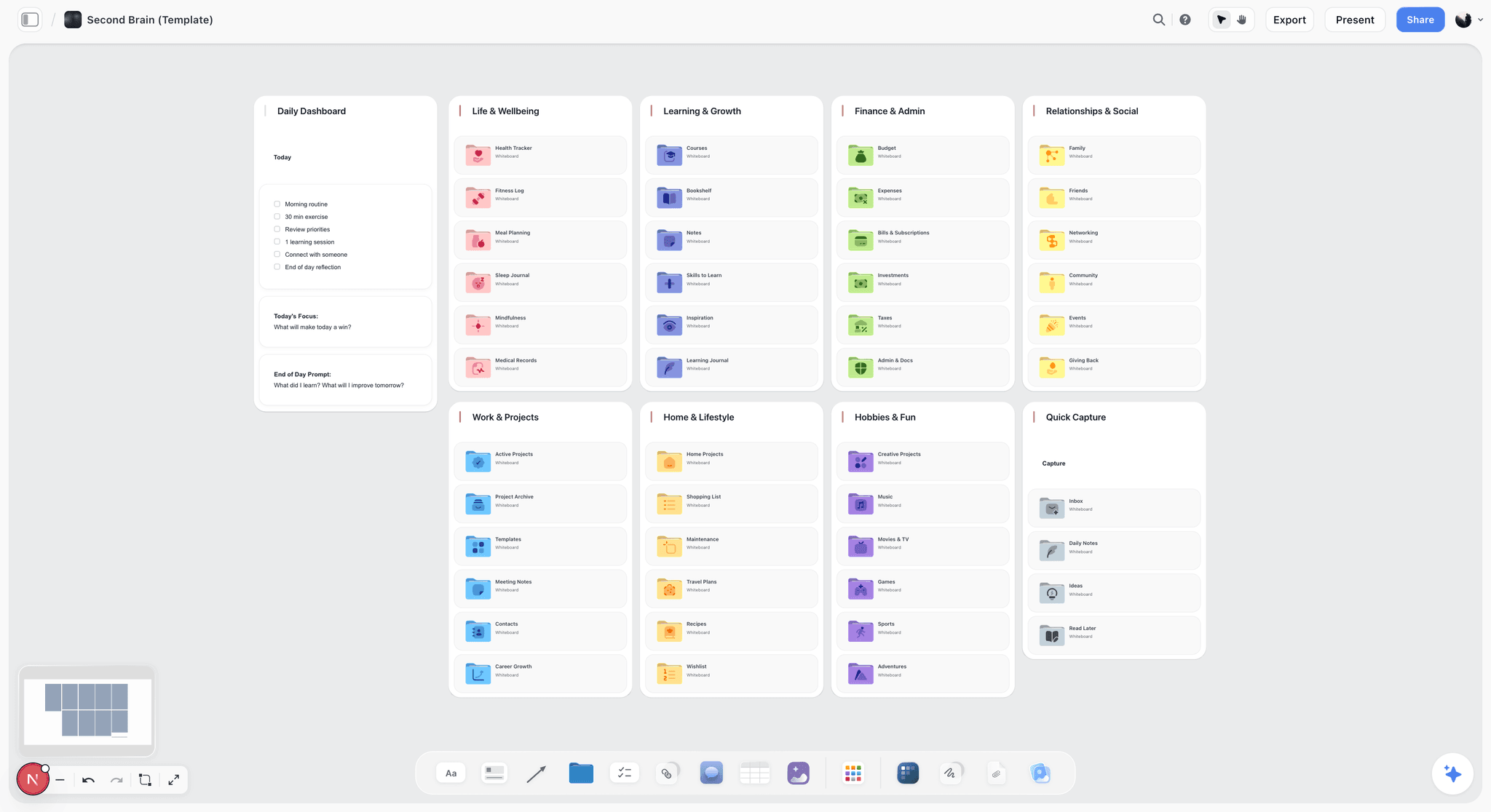
The verdict. The only tool here where the three numbers and the approved look are the same artifact.
Best for. Solo and two person videographers running several client jobs at once.
Pricing. Paid only early access today. Plus is $7.99 per month billed annually or $9.99 monthly, with 200 plus Blueprint Tactics and unlimited file uploads. Pro is $14 per month billed annually or $19 monthly, adding AI image generation, roughly twenty times more AI usage and memory across conversations. Max is $39 per month billed annually or $49 monthly, adding Team Workspace with permissions and roles. Pricing is flat per account rather than per seat, and anyone a paid member invites joins free. The Free plan launches before the end of 2026.
Why it ranks here. Most videographers keep scope and creative in different places, and that split is the whole problem. The look board is in Milanote or a Pinterest link, the numbers are in a quote PDF, and the shoot plan is in a note on a phone. When a dispute arrives, the videographer has to assemble the defence from three systems, and usually gives up and does the work for free.
On a Storyflow canvas the job is one board: the approved references, the shot list, and a scope block naming the deliverable count, the revision count and the usage term, all visible in one screenshot. That screenshot is the entire defence, and producing it takes ten seconds.
The AI adds one specific capability that matters for a solo operator. Storyflow's AI reads your full active canvas board by default, plus up to one Tactic and up to three Documents you @-mention. On a finished job board you can ask what was agreed, and get an answer grounded in the whole board rather than in whichever note you happen to be looking at. For someone running six jobs simultaneously with no producer, that is the difference between recalling and reconstructing.
Flat per account pricing is also materially relevant here. A videography job typically involves the client contact, sometimes their marketing manager, occasionally a second shooter and an editor. On per seat tools you pay for each or fall back to PDFs. Here they join free, which means the single source of truth stays single.
Strengths.
- Scope numbers and approved creative live on one surface, so the defence is one screenshot.
- Canvas wide AI can answer questions about the whole job board.
- Invited collaborators join free, so clients and second shooters cost nothing.
- Blueprint Tactics give repeatable structure to recurring job types.
- Works equally well for the enquiry stage and the shoot plan, so nothing is retyped.
Limitations.
- Not an editor. Premiere, Resolve and Final Cut own that entirely.
- No frame accurate review with timecoded comments. Frame.io owns that and it is not close.
- Does not send contracts, invoices or take payment. Studio Ninja and Honeybook do.
- Drafts a call sheet PDF but does not send it or track confirmations. StudioBinder does that properly.
- No file delivery or client download portal.
- Newer platform, smaller template ecosystem than established production tools.
The trade off. Storyflow holds the agreement and the plan. It touches neither the edit nor the money. A working videographer will run it alongside an editor and something that sends contracts.
2. Frame.io
The verdict. The tool that turns "a few more tweaks" into round three of three.
Best for. Any videographer whose revisions run long, which is most of them.
Pricing. Free tier available. Paid plans start around $15 per user per month as of August 2026, and it is bundled with several Adobe Creative Cloud plans.
Why it ranks here. Timecoded comments are what Frame.io is known for, and they are genuinely excellent: a client saying "the bit near the start" becomes a marker at 00:07 with a drawn annotation.
But the higher value feature for a solo videographer is the version stack. When each cut is V1, V2, V3 rather than a series of email attachments named final_v2_ACTUAL, the number of rounds becomes a visible fact that both parties can see. That visibility is what makes a round limit enforceable without a difficult conversation, because the client can count too.
The Creative Cloud bundling makes it close to free for anyone already in Premiere.
Strengths.
- Timecoded, drawn comments eliminate ambiguity in feedback.
- Version stacking makes revision rounds countable and visible.
- Clients can review in a browser with no account or software.
- Often included with an existing Adobe subscription.
Limitations.
- Only covers the review stage. Nothing before the shoot.
- Storage limits on lower tiers bite quickly with high bitrate footage.
- Per user pricing if not bundled.
- Can encourage more feedback than a simple share link would, which cuts both ways.
The trade off. If you take one paid tool from this list beyond your editor, take this one.
3. Studio Ninja
The verdict. The unglamorous business layer most videographers improvise and should not.
Best for. Solo shooters doing more than about four paid jobs a month.
Pricing. Roughly $25 to $30 per month as of August 2026, with annual discounts.
Why it ranks here. Studio Ninja is a CRM built for photographers and videographers rather than for sales teams, and it covers the exact stretch this article says the money leaks from: enquiry, quote, contract, invoice, payment.
Its most important contribution to the three numbers is the contract template. A standard contract with deliverable count, revision limit and usage term as filled fields turns three conversations you keep forgetting to have into a form you cannot submit empty. That is a better mechanism than discipline.
It ranks third because it does nothing for the creative side and nothing during the shoot.
Strengths.
- Purpose built for shooters rather than generic sales CRM.
- Contract templates make the three numbers a required field.
- Quote to invoice to payment in one flow.
- Automated enquiry follow ups recover jobs you would otherwise lose.
Limitations.
- Pure business layer, no creative capability.
- Overhead below roughly four jobs a month.
- Interface is functional rather than pleasant.
- Another subscription in a thin margin business.
The trade off. At eight jobs a month this pays for itself in recovered enquiries alone.
4. StudioBinder
The verdict. The right answer the moment the crew is more than two people.
Best for. Videographers running crewed shoots with call times, locations and multiple roles.
Pricing. Free tier available. Paid plans start around $42 per month as of August 2026.
Why it ranks here. Call sheets are a solved problem and StudioBinder solved them. Crew contacts, call times, locations with maps, weather, hospital address, and a professional looking document that goes out the night before and makes a small operation look organized.
For a solo videographer shooting corporate interviews it is overkill and expensive. For a videographer running a five person branded content shoot it is the difference between a professional day and forty text messages.
Strengths.
- Best in class call sheets with confirmation tracking.
- Shot lists, breakdowns and scheduling in one product.
- Makes a small outfit look established to a corporate client.
Limitations.
- Expensive relative to a solo videographer's stack.
- Substantial overkill for one and two person jobs.
- Weak as a creative development surface.
The trade off. Buy it when the crew size, not the budget, crosses the line.
5. Notion
The verdict. The job database. Good at the paper trail, poor at the picture.
Best for. Tracking jobs, deliverables and their status in a queryable place.
Pricing. Free personal tier. Paid from roughly $10 per user per month as of August 2026.
Why it ranks here. A jobs database with one row per project, properties for deliverable count, revision rounds used, usage term and status, is a genuinely good and nearly free version of the discipline this article argues for. "Revisions used: 2 of 3" as a visible property is quietly powerful.
It ranks fifth because the creative side dies in it and because it requires maintenance discipline that solo operators lose during a busy month, which is exactly when they need it.
Strengths.
- Properties make the three numbers structured and filterable.
- Free tier is genuinely sufficient for a solo operator.
- Everyone already knows how to use it.
Limitations.
- Visual work is an attachment, not material.
- Requires ongoing discipline that busy months destroy.
- No client facing polish without real effort.
The trade off. The cheapest way to get the numbers written down, if you will actually maintain it.
6. Milanote
The verdict. The best looking place to get a look approved.
Best for. The creative direction board a client signs off before the shoot.
Pricing. Free tier capped at 100 notes, images or links. Paid roughly $12.50 per month billed annually or $14.99 monthly as of August 2026.
Why it ranks here. For the pure look approval, Milanote is excellent. A tidy board of references, tone notes and a rough structure, sent as a link, looks considerably more professional than a Pinterest board and takes twenty minutes.
It is sixth because it holds no scope, no numbers and no shoot logistics. A gorgeous Milanote board is exactly the artifact that gets approved and then cannot defend you, because it contains no counts.
Strengths.
- Fast, attractive, client shareable with no account.
- Genuinely nice to build in.
- Good templates for briefs and moodboards.
Limitations.
- No scope or numbers layer.
- Free tier cap reached inside one job.
- Weak retrieval across many past jobs.
The trade off. Pair it with something that holds the numbers, or use a surface that does both.
7. Descript
The verdict. The fastest route through a talking head edit, and a genuine revision reducer.
Best for. Corporate, interview and testimonial work with tight turnarounds.
Pricing. Free tier available. Paid plans start around $19 per user per month as of August 2026.
Why it ranks here. Editing by editing a transcript is not a gimmick for interview based work, it is a substantially faster workflow. Removing filler words, tightening an answer and producing a rough cut takes a fraction of the time it does on a timeline.
The revision angle is real too. Sending a client a transcript to approve before you cut is far cheaper than sending a cut and receiving structural notes, and it moves the argument to the point where changes cost minutes.
It is seventh because it is weak for anything cinematic and its multicam and colour tooling do not compare to a proper NLE.
Strengths.
- Dramatically faster for talking head and interview work.
- Transcript approval prevents expensive structural revisions.
- Good automatic captions and filler word removal.
Limitations.
- Not a serious tool for cinematic or heavily graded work.
- Per user pricing on top of an existing NLE.
- Export quality options are more limited than a full NLE.
The trade off. Excellent for a specific kind of job, irrelevant for the rest.
8. Trello
The verdict. The simplest pipeline that actually gets used.
Best for. Seeing which jobs are at enquiry, shoot, edit and delivered, at a glance.
Pricing. Free tier is generous. Paid from roughly $5 per user per month as of August 2026.
Why it ranks here. For a solo videographer the highest value view is a column board with five lists: enquiry, booked, shot, editing, delivered. That takes ten minutes to build in Trello and answers the only operational question that matters daily, which is what is stuck.
It ranks eighth because it holds no detail worth defending and no creative content, and because Notion does the same job with more structure if you will maintain it.
Strengths.
- Trivially simple, therefore actually maintained.
- Free tier is more than sufficient.
- Instantly readable pipeline state.
Limitations.
- No scope detail, no creative, no proof value.
- Becomes noise past a few dozen cards.
The trade off. The lowest effort operational view available, and worth having even alongside something better.
9. Canva
The verdict. The proposal document, which is where the three numbers should first appear.
Best for. A short, professional proposal that a corporate client can forward internally.
Pricing. Free tier available. Pro roughly $15 per month for one person as of August 2026.
Why it ranks here. The proposal is the first and best moment to state the deliverable count, the revision count and the usage term, because at that point they read as professionalism rather than as defensiveness. A four page Canva proposal with a clear scope page wins jobs against competitors who send a price in an email, and it establishes the numbers before anyone is emotionally invested.
It is ninth because it is a document, not a system, and documents do not track state.
Strengths.
- Fast, professional proposals that get forwarded internally.
- Brand consistency without a designer.
- Free tier is sufficient.
Limitations.
- Static. Once sent, it does not track anything.
- No connection to the job's later stages.
The trade off. Put the numbers here first, then make sure they land somewhere that persists.
10. PhotoPills
The verdict. Eleven dollars that prevents a category of failure no other tool on this list touches.
Best for. Outdoor shoots where the light is part of the promise.
Pricing. One time purchase of roughly $11 as of August 2026.
Why it ranks here. If your treatment promises warm backlight and the only slot the client has is 1pm in a north facing courtyard, that is a scope problem disguised as a weather problem. PhotoPills tells you where the sun will be, at that location, on that date, with augmented reality on site.
It ranks tenth because it is narrow. It is on the list because the failure it prevents is expensive and completely avoidable.
Strengths.
- Accurate sun and golden hour planning with AR positioning.
- One time purchase.
- Changes what you promise, which is the real value.
Limitations.
- Extremely narrow scope.
- Mobile only, with a real learning curve.
- Irrelevant for interior and studio work.
The trade off. Buy it once, use it before every outdoor quote.
11. Dropbox
The verdict. Delivery infrastructure. Boring, necessary, and quietly part of the revision story.
Best for. Getting large files to clients and keeping the versioned archive.
Pricing. Free tier with limited storage. Paid from roughly $12 per user per month as of August 2026.
Why it ranks here. Every videographer needs somewhere to put a 14GB delivery that a client can download without a support call, and Dropbox remains the least friction option.
Its contribution to the three numbers is version history, which provides a dated record of what was delivered when. That is weaker evidence than Frame.io's version stack, but it is real, and it exists whether or not you set it up.
Strengths.
- Universal, reliable, clients already have it.
- Version history creates a dated delivery record.
- File requests are useful for collecting client assets.
Limitations.
- Storage costs escalate quickly with video.
- Not a review tool. Comments are poor compared to Frame.io.
- No planning capability.
The trade off. Infrastructure. Pay for it and stop thinking about it.
What to Actually Pay For
Pay for the revision boundary before you pay for anything else. If your jobs regularly run past round three, the return on Frame.io plus a written round limit is larger than any other spend on this page, and it is measured in days of your life rather than dollars.
Pay for contracts once you are past four jobs a month. Below that, a good template document is enough. Above it, the enquiries you forget to follow up cost more than the subscription.
Do not pay for StudioBinder as a solo operator. At roughly $42 per month it is excellent and it is built for productions with crews. A one person corporate video business does not need call sheet confirmation tracking, and the money is better spent on the review and scope layers.
Tools to Avoid for This Job
WeTransfer as the delivery and review system. Links expire, there is no version history, and you have destroyed your own evidence of what was delivered when.
A quote in the body of an email with no scope section. The most common origin of the unprofitable job. If the deliverable count is a sentence rather than a list, it will be read generously.
Instagram DMs as an enquiry pipeline. Fine as a first contact, fatal as a system. Move it to email within one reply, because DMs are unsearchable when you need to prove something.
A shared drive folder as the job record. No status, no dates, no agreement, and no way to answer the question of what was promised.
What No Tool on This List Does
None of them will have the scope conversation for you. The numbers only exist if you say them out loud early, when they sound like professionalism rather than like distrust.
None of them will make an under priced job profitable. If the rate is wrong, better scope control just means you lose less slowly.
None of them, including Storyflow, will defend an agreement that was never written. Canvas wide AI can answer questions about what is on the board. It cannot tell you what you agreed in a phone call and never recorded. The three numbers take ninety seconds to write down and that ninety seconds is the whole mechanism.
The Bottom Line
Videography is a craft business with a scope business hiding inside it, and the scope business is where the margin lives.
Buy Frame.io, or use the version bundled with your Adobe plan, because a visible version number is the cheapest revision control there is. Add Studio Ninja once you are past four jobs a month, because contract templates enforce the conversations you keep skipping. Spend eleven dollars on PhotoPills before you promise anyone golden hour.
But if the recurring pattern is a job that felt good, a client who kept asking, and an invoice that did not cover the work, the missing artifact is a single surface holding both what was creatively approved and what was numerically agreed. That is the narrow ground on which Storyflow ranks first here.
FAQ: Tools for Videographers
What is the best app for planning a video shoot?
Storyflow is the best overall planning choice for videographers in 2026, because it holds the approved creative direction and the scope numbers, the deliverable count, the revision count and the usage term, on one canvas, which is what makes an agreement provable eight weeks later. StudioBinder is the better pick once the shoot involves a crew with call times and locations. Milanote is the nicest tool if all you need is a look board the client signs off.
How do I stop clients asking for endless revisions?
State a revision round limit in the proposal, before anyone is emotionally invested, and then make the rounds visible during the edit. Frame.io's version stacking does the second part well, because when the client can see they are looking at V3, the conversation about a fourth round happens naturally rather than as a confrontation. The limit only works if it was set at the proposal stage, since introducing it mid edit reads as a penalty.
What is the best free tool for videographers?
Trello's free tier is genuinely enough for a solo job pipeline. Notion's free personal tier will hold a jobs database with deliverable and revision properties. Frame.io has a free tier with limited storage that is adequate for short form work. Canva's free tier produces a good proposal. A functional free stack exists, and the gap it leaves is contracts and payment.
Do videographers need a CRM?
Above roughly eight paid jobs a month, yes, and the return comes mostly from enquiries you would otherwise fail to follow up rather than from organisation. Studio Ninja is the strongest option built specifically for shooters, and its contract templates are the most valuable part, because they turn the usage rights and revision conversations into required fields. Below four jobs a month, a CRM is overhead.
What should a videography proposal include?
Four things beyond price. The deliverable count with durations and aspect ratios, stated as a list rather than a sentence. The number of revision rounds included and the hourly or per round rate beyond that. The usage term, naming platforms and duration, with paid media priced separately from organic. And the payment schedule. Everything else is presentation.
Frame.io or Dropbox for client review?
Frame.io for anything where feedback matters, because timecoded comments eliminate the ambiguity of "the bit near the start" and version stacking makes rounds countable. Dropbox for pure delivery of large final files, because clients can download without friction. Using Dropbox for review is where "final_v2_ACTUAL" filenames come from, and those filenames are the visible symptom of an uncontrolled revision process.
Does Storyflow replace Premiere Pro or DaVinci Resolve?
No, and there is no overlap. Storyflow is a planning and agreement surface that sits before the edit and holds the brief, the look and the scope. Premiere, Resolve and Final Cut are where the video is actually made. On a real job both are open, and Storyflow's job finishes when the timeline work begins.
How many deliverables should I quote for a corporate video?
Quote the exact number the client's distribution plan requires, and price additional cuts separately rather than absorbing them. A common structure is one hero at 16:9, three vertical cutdowns at 9:16 and one square, but the important thing is that the number exists in writing. "Some social cuts" is the phrase that turns a two day edit into a five day one.
What is the best tool for managing a video project with a team?
For a small team, Storyflow works because collaborators join free on a flat per account plan, so the second shooter, the editor and the client all see one board without additional seats. Once the team involves call times, crew contacts and locations, StudioBinder is the better production management layer. Frame.io handles the review loop for both.
How do I plan for golden hour on an outdoor shoot?
Use PhotoPills, which costs roughly eleven dollars once and shows sun position for a specific location and date, including augmented reality preview on site. The failure this prevents is committing in a treatment to warm backlit light that the location and time slot cannot produce, which is a scope problem you can eliminate before quoting rather than discover on the day.
Should I use a contract for small videography jobs?
Yes, and especially for small jobs, because small jobs are where scope creep is proportionally most damaging. A one page agreement covering the three numbers plus payment terms is sufficient, and Studio Ninja or a saved template makes it a two minute task. The absence of a contract on a small job is what turns a 600 dollar shoot into three unpaid days.
What is the difference between a videographer and a filmmaker in tooling terms?
A filmmaker is usually one part of a crewed production with a producer handling scope, so their tools skew toward creative development and production management. A videographer is typically the entire business, so their tools have to cover enquiry, agreement, shoot, edit and delivery, and the highest value tooling sits at the agreement layer rather than the creative one. That is why this list looks different from a filmmaking list.
How do I price usage rights for video?
Price organic social use as the baseline included in the quote, and price paid media, broadcast and out of home separately, typically as a percentage uplift or a defined term licence. The important discipline is naming the default in the proposal, because unnamed usage rights are assumed to be unlimited by clients acting in good faith. This is the number most videographers give away without noticing.
What is the single change worth making this quarter?
Add a scope page to your proposal template with the three numbers as fixed fields, and refuse to send a proposal with any of them blank. It costs one afternoon to build and it changes the economics of every job after it.
Table of Contents
- Key Takeaways
- The Three Numbers
- At a Glance: The 11 Tools Compared
- How I Ranked These
- Quick Picks by Job Type
- 1. Storyflow
- 2. Frame.io
- 3. Studio Ninja
- 4. StudioBinder
- 5. Notion
- 6. Milanote
- 7. Descript
- 8. Trello
- 9. Canva
- 10. PhotoPills
- 11. Dropbox
- What to Actually Pay For
- Tools to Avoid for This Job
- What No Tool on This List Does
- The Bottom Line
- FAQ: Tools for Videographers
- Related Reading
Templates to check out for this topic


Templates you can use in Storyflow
Every Storyflow board starts from real structure and an AI that reads the whole canvas. Open one of these templates and make it yours.


See Storyflow in Action
A visual AI workspace where every feature lives inside one canvas. No tab-switching, no context lost.
Build your entire board from a single message
Type what you need in the AI chat at the bottom of your canvas. The AI adds cards, headings, and structure directly onto your board.
Use expert frameworks as AI context
Type @ in the AI chat and choose any Tactic. The AI tailors every response to that framework instead of giving generic advice.
Turn your board into a mind map in seconds
Ask the AI to restructure your canvas as a mindmap. It connects your ideas into a visual hierarchy so you can see how everything relates.
Why Storyflow Exists
Storyflow actually began as a personal tool while working on creative and research projects.
We kept running into the same problem: ideas were scattered everywhere: notes, documents, and whiteboards.
Nothing helped us see how everything connected.
So we started building a workspace designed around how ideas actually grow.
→ Read how Storyflow was createdSara de Klein
Head of Product at Storyflow
Published: 2026-08-10
Extremely simple, seriously capable


See how easy it is to get started
Watch a real project come together, from a blank board to a finished plan, clicked through step by step.
Start creating with AI and become more productive
Transform your creative workflow with AI-powered tools. Generate ideas, create content, and boost your productivity in minutes instead of hours.