
Rock-steady plans for every shoot
A film grant proposal
where the money and the film are on the same page.
Logline, synopsis, director's statement, access, the look as real stills, a budget top sheet that adds itself up, and a financing plan that says what is confirmed and what is not.


Creatives working for these brands already got early access
- Red Bull
- Canon
- Artlist
- Porsche
See how easy it is to get started
Watch a real project come together, from a blank board to a finished plan, clicked through step by step.
Start from a ready-made template
Pick a board to see what you can build, then let AI fill it in. Every template is a real, editable starting point on the same infinite canvas.

Pre-Production
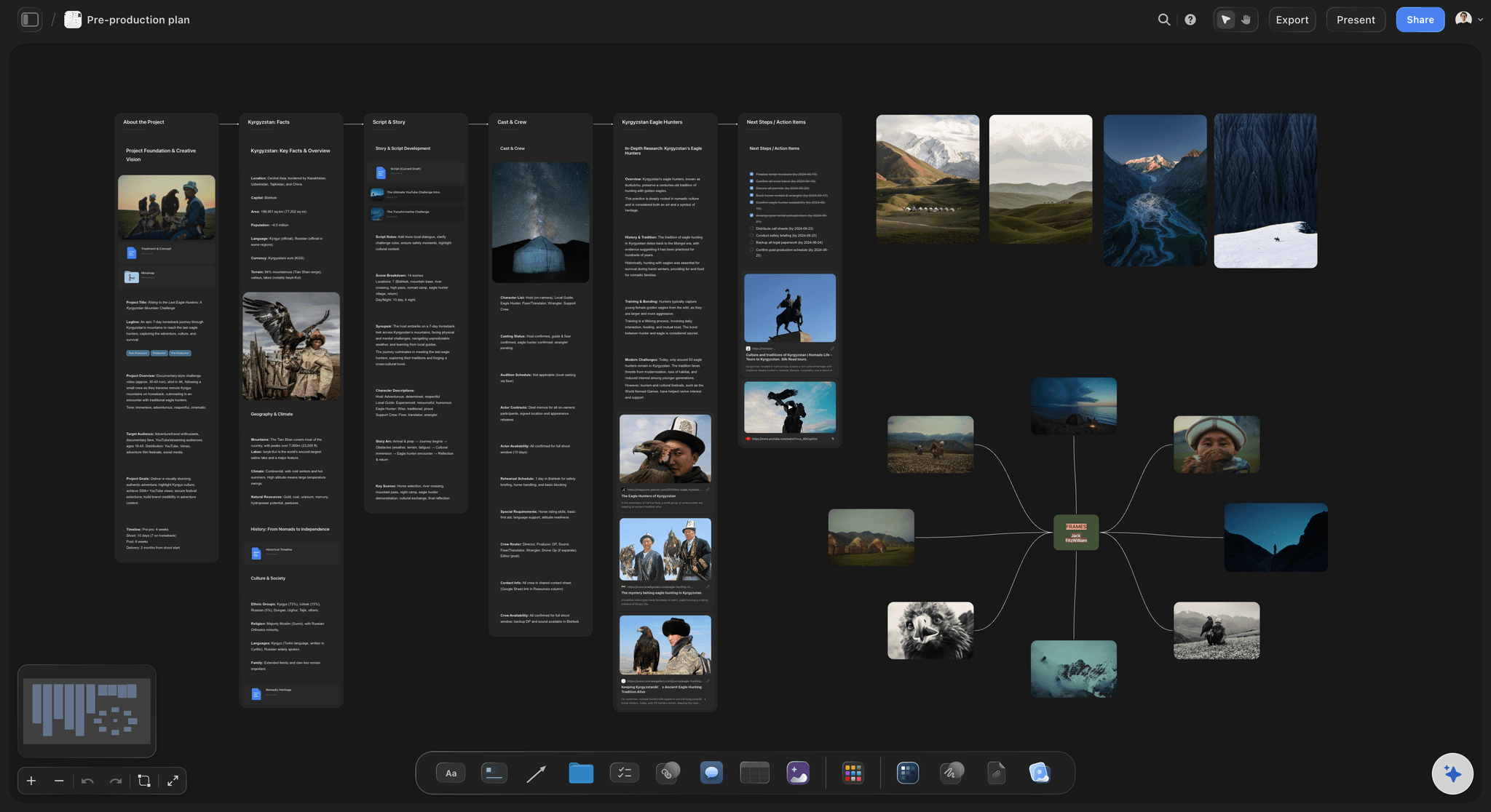
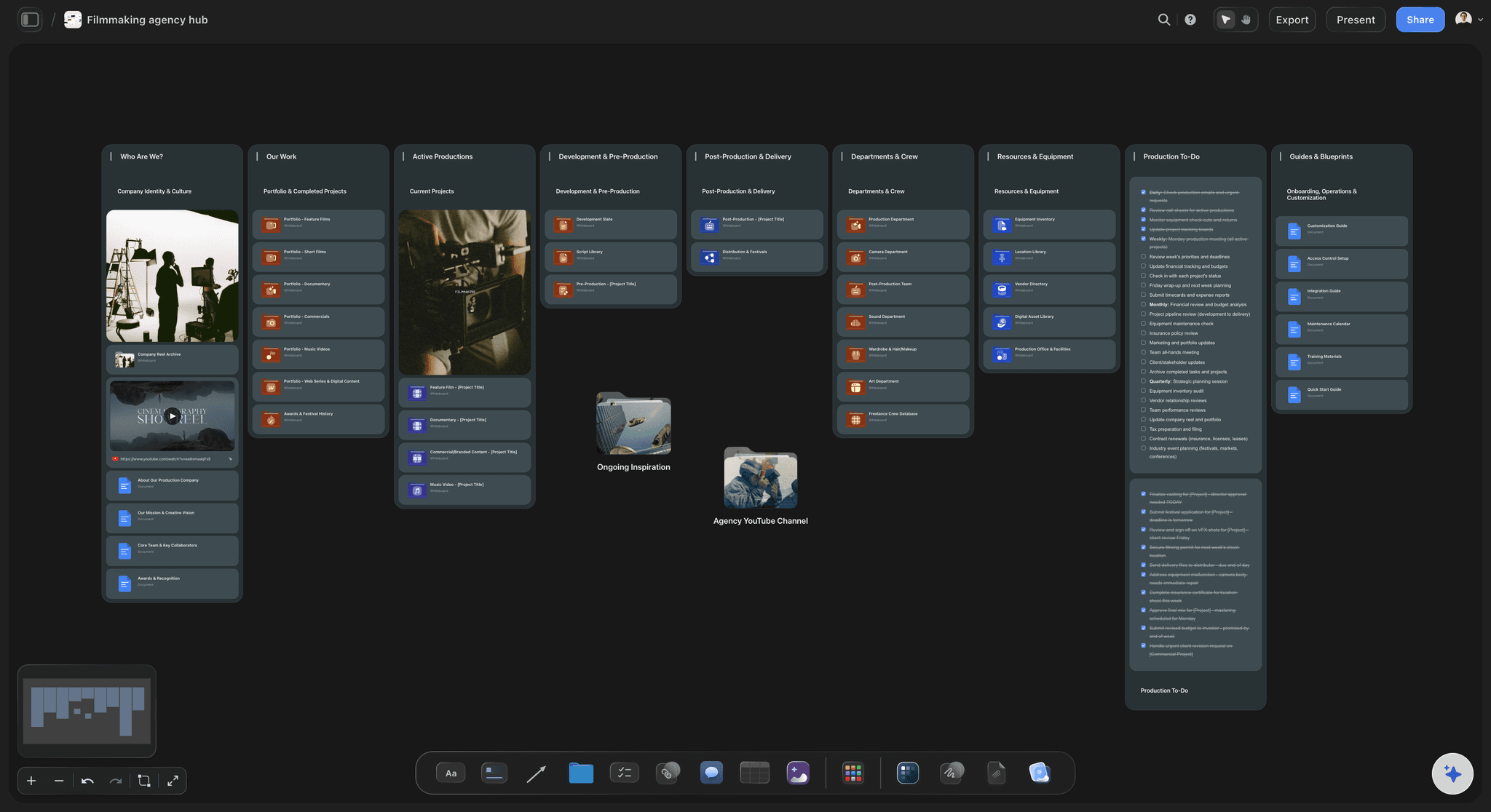
Pull the brief, script, shot list, and moodboard into one pre-production hub so the whole shoot is planned in one place.
What goes in a film grant proposal?
A film grant proposal is the package a fund asks for before it will put money into a film: a logline, a synopsis, a director's statement, the treatment, your access to the story, the team, a budget top sheet, a financing plan and a work sample. Storyflow is an AI visual workspace that builds the whole package on one infinite canvas: the written sections, the stills and frames beside them, the budget top sheet and the financing plan.
The lengths funders tend to ask for are narrow, so write to them. A logline of about thirty five words. A short synopsis of a hundred and fifty to two hundred and fifty. A treatment of two to five pages. A director's statement of five hundred to eight hundred words answering two questions only: why you are the person making this, and why it has to be now. Team bios of about a hundred words each, built around the one credit that matters for this film rather than everything you have ever shot. A work sample of three to ten minutes, and the funder's stated limit is the real limit.
For documentary, access is read before the story is. A fund is deciding whether the film can be made at all, so say plainly who has agreed to take part, what they have agreed to in writing, what you have already filmed with them, and what happens to the film if one of them walks away. A proposal with a brilliant subject and vague access reads as a hope. A proposal with a modest subject and signed access reads as a film. Archive is the same question in a different form: name the collections, say what a licence is likely to cost, and put that number in the budget rather than in a footnote.
Then the two money pages. The budget top sheet is one line per department with a total: development, director and producer fees, crew, kit, travel and accommodation, archive and licensing, post, music, insurance and legal, a contingency of around ten percent, and delivery. The financing plan is the one funders actually study, and it has three parts: money confirmed, with who and how much; money pending, with the fund and the date it decides; and the gap this application would close. Writing the whole gap against one hopeful line is the quickest way to look unfundable. Showing thirty percent confirmed, two decisions in March and a clear ask is how a plan reads as real.
Ultra fast from brief to board
One board, then one version per fund.
Start eight to twelve weeks before the deadline.
01
Put the film on the board
Attach the treatment, the notes and the script, including an .fdx file, and ask for the logline, the synopsis and a first director's statement at the lengths the fund asks for. It reads what you attach and drafts from it. You rewrite the statement by hand, because that is the part a reader can tell was written by the director or not.
02
Show the look instead of describing it
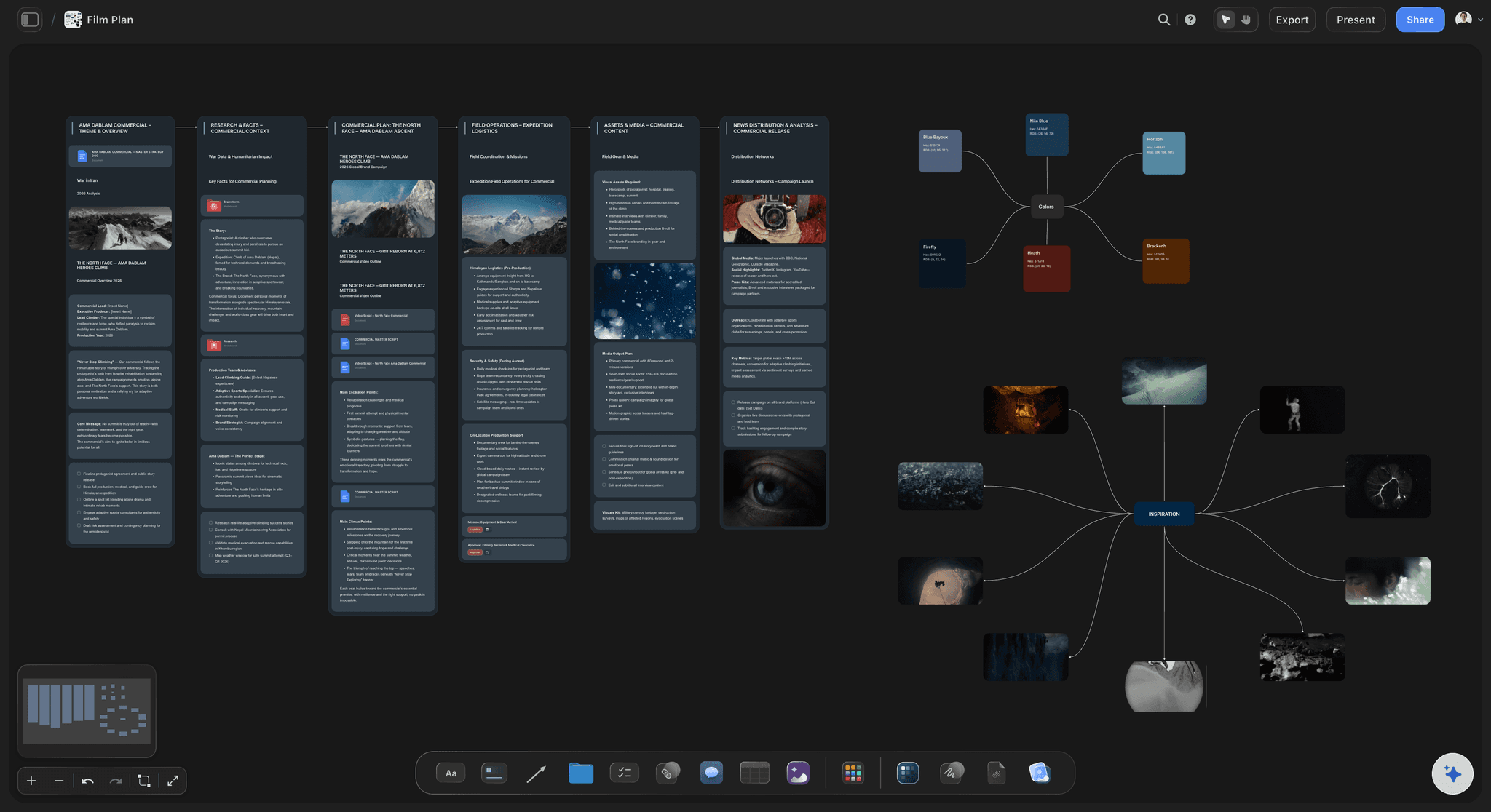
Stills that carry the light you want, locations, faces, the pace. Lay the opening minutes out as frames so a reader can see the film in ten seconds. On Pro and Max the AI can draw those frames from your description when there is nothing shot yet.
03
Build the two money pages
A budget top sheet as a table, with the money column carrying a currency and a Sum footer so the total moves when a line does. Beside it, the financing plan in three blocks: confirmed, pending with decision dates, and the gap you are asking this fund to close.
04
Copy it for the next fund
Duplicate the board, cut it to the next fund's word limits, and change the paragraph about why this film belongs with them. The film does not change; the framing does. Export the whole board as a PDF when a fund wants one document, and share the link with your director and your executive producer.
The story, the access, the look and the money.
Storyflow builds the proposal. The application is still filed on the funder's own portal.
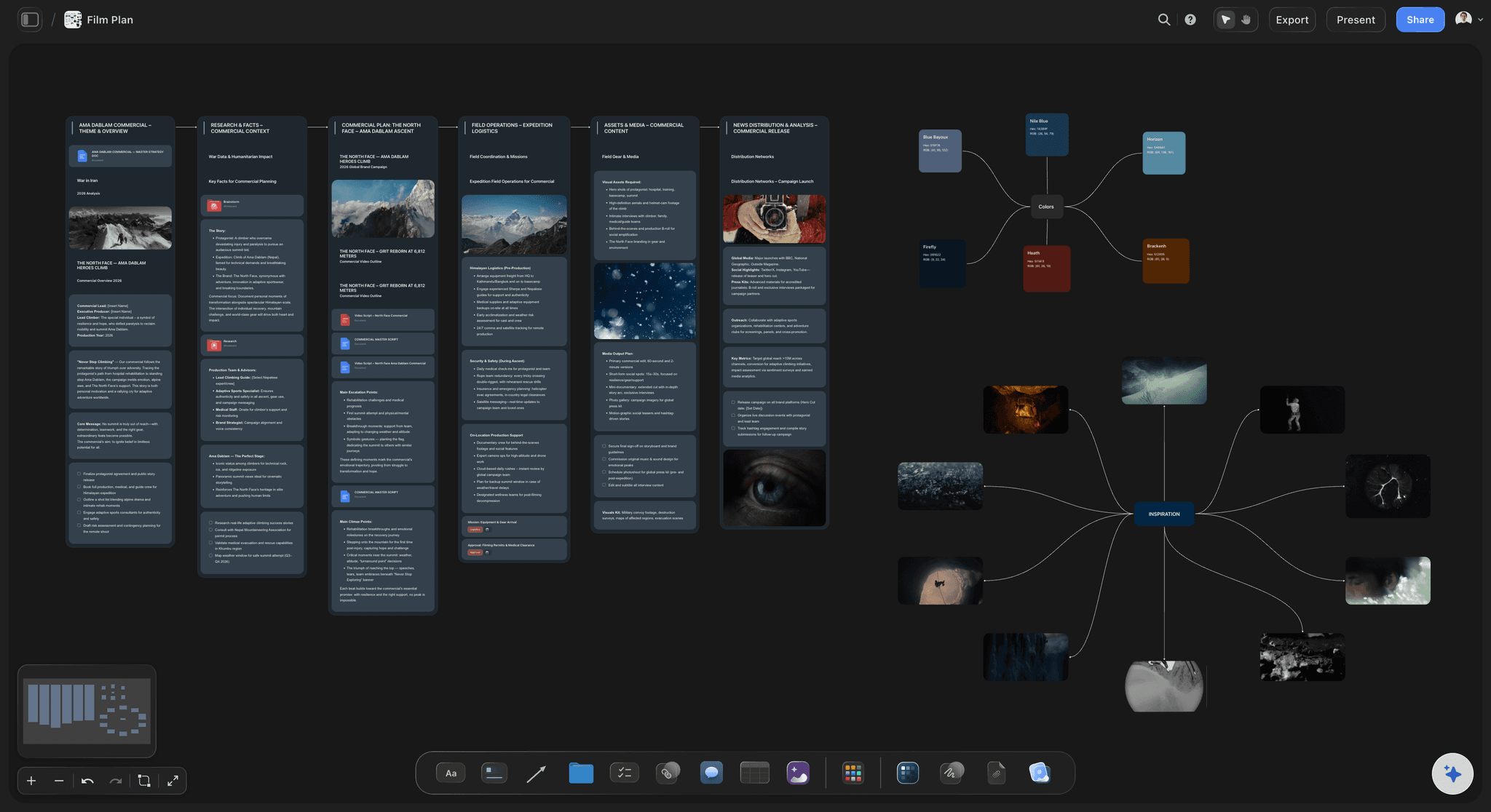
The written parts
Logline, synopsis, statement, treatment
Each at the length the fund asks for, on one board, so you can see the whole argument at once. Attach the treatment and the script and get a first draft to fight with, rather than a blank page eleven weeks before a deadline.
See the film plan board →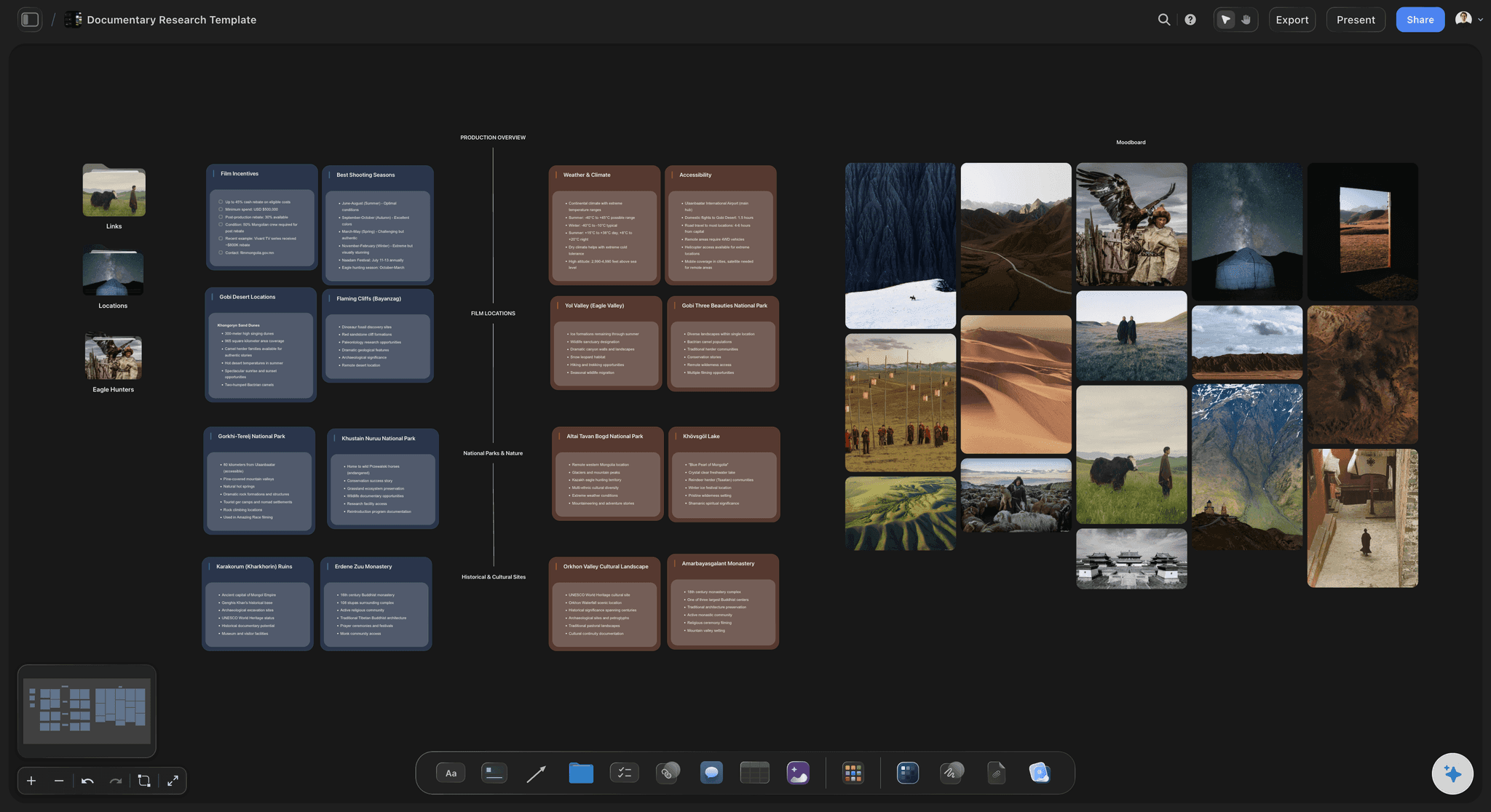
For documentary
Access, archive and who has said yes
Contributors, what each has agreed to and whether it is in writing. Archive collections with a likely licence cost against them. Funders read this before the story, because it is the part that decides whether the film can exist.
See the documentary research board →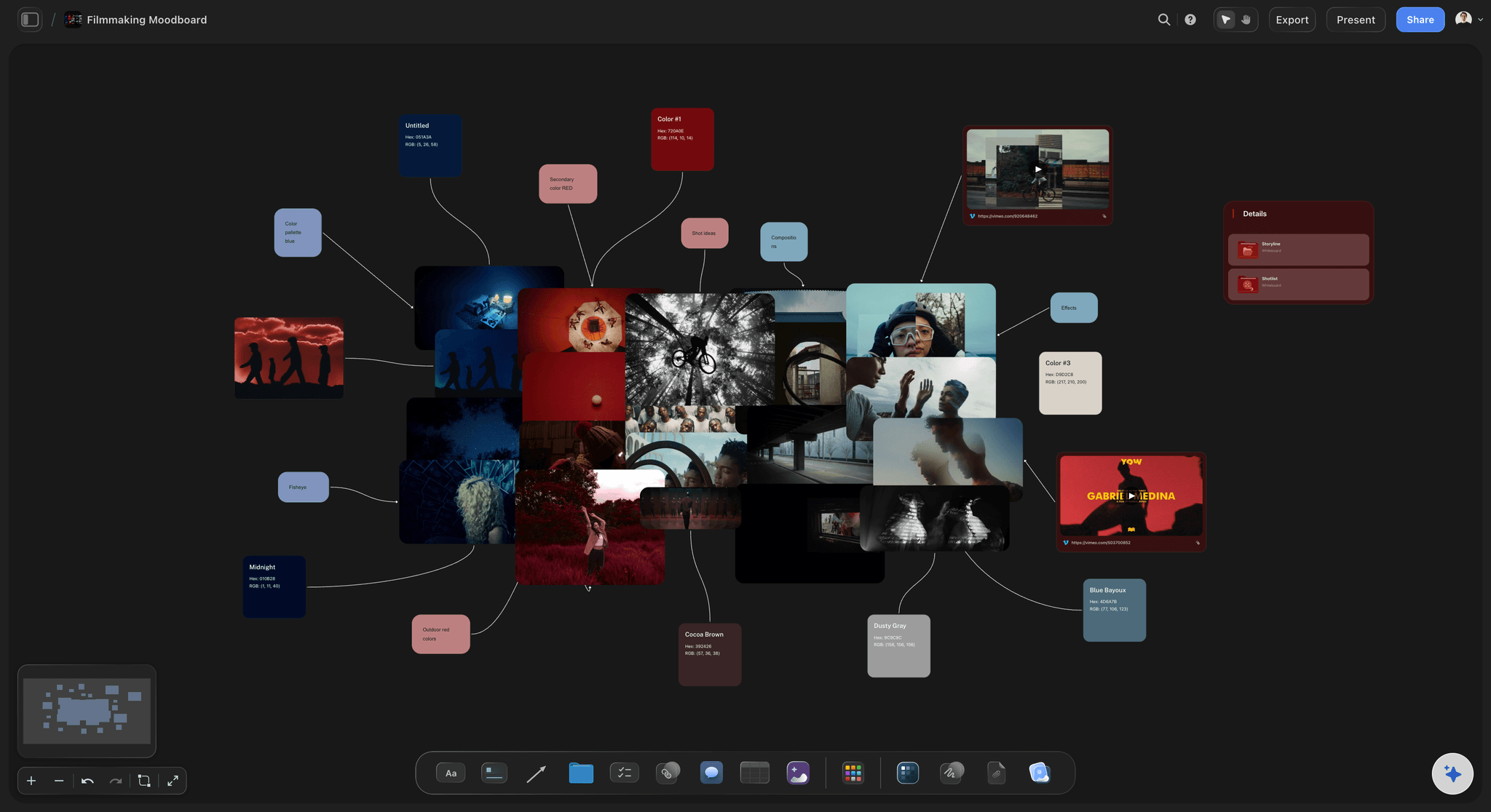
The look
Stills and frames, not adjectives
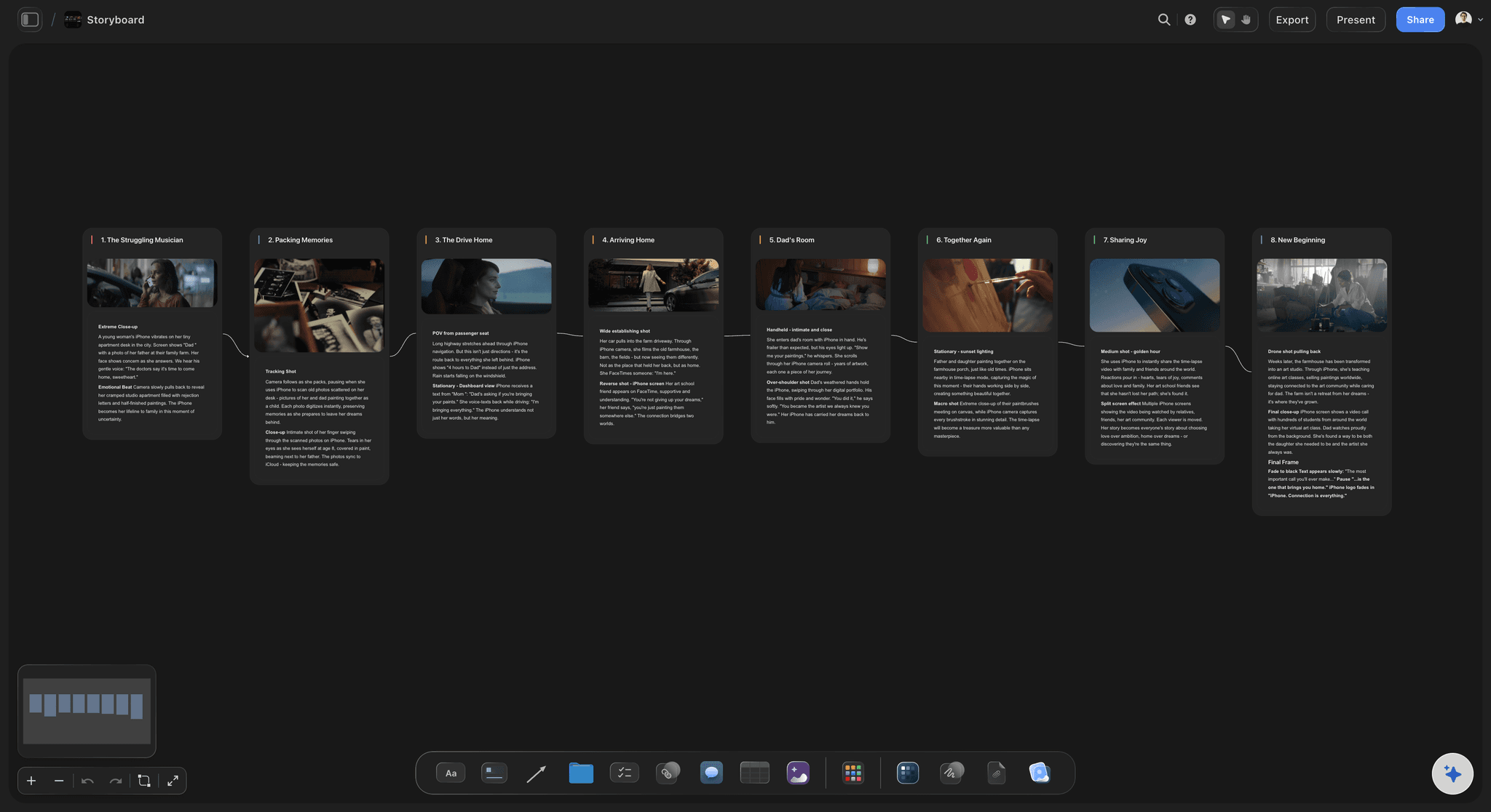
Reference images grouped by light, place and face, with the opening minutes laid out as frames. A reader who can see the film argues about the budget. A reader who cannot is still trying to picture it by page four.
See the film moodboard →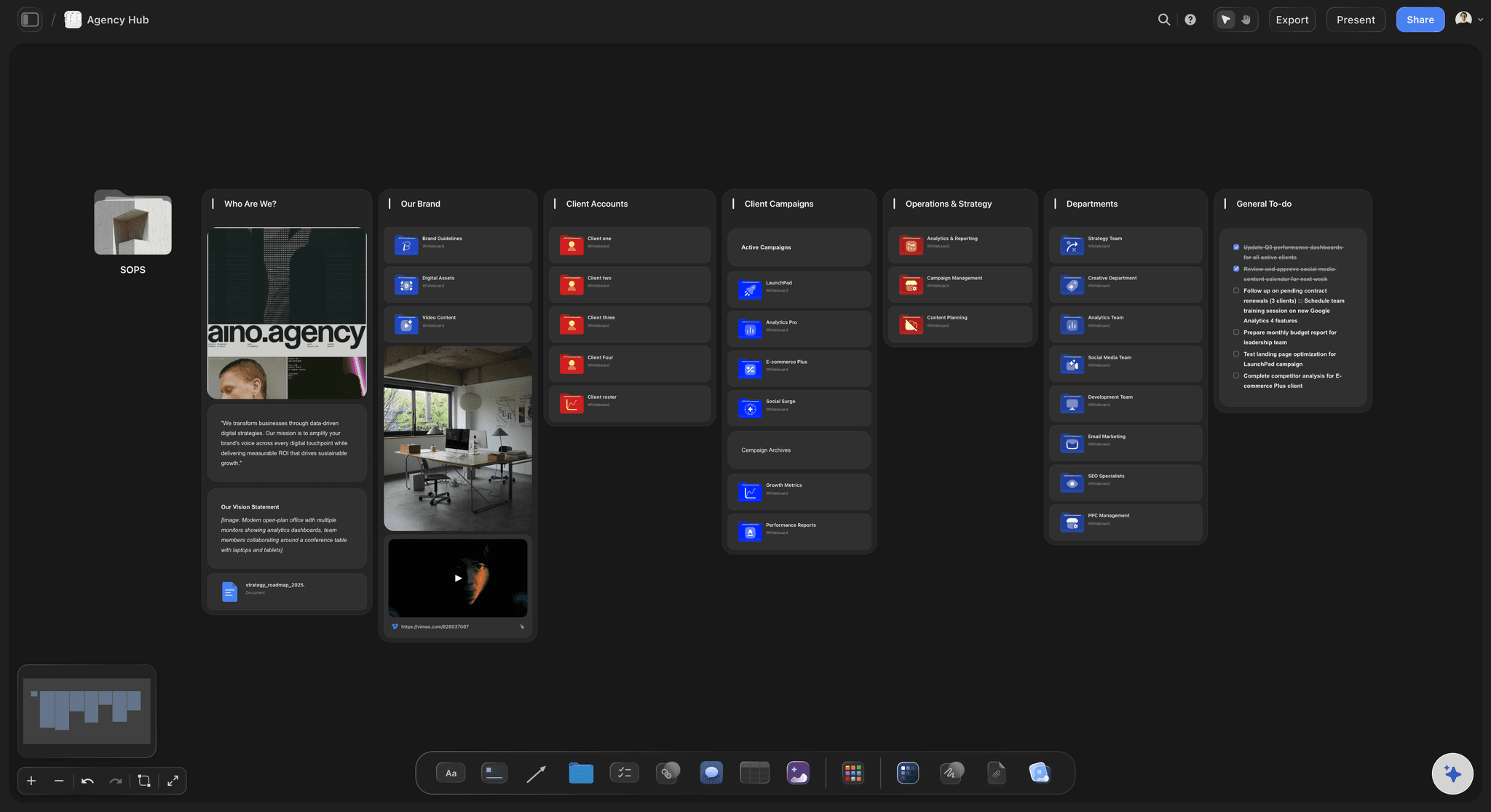
The money
A top sheet and an honest financing plan
One table for the budget with a currency and a total in the footer. Beside it, confirmed money, pending decisions with their dates, and the gap. Change a line and the total changes, which matters when a fund caps its share at a percentage.
See the film budget planner →Nine funds, one film, one board each.
Every application keeps its own board, so the version you sent in January is still there when the fund asks a question in June. Storyflow is paid-only during early access, with plans from $7.99 a month billed annually ($9.99 monthly). A free plan launches before the end of 2026, and anyone a paid member invites to a board joins free.
Unlimited boards, image uploads and files on every paid plan
Invite your director or executive producer to one board without buying them a seat
200+ Tactics to start the treatment and the pre-production plan
Whole-board PDF export for the funds that want one document
Presentation mode for a pitch meeting or a funder call
Built for people with taste
Three reasons good films get turned down.
None of them are the subject.
The financing
The plan asked one fund for everything
Confirmed, pending, gap: Three blocks, not one number. A fund wants to know who else believes in the film and when the other answers arrive, because nobody wants to be the only money in the room.
Decision dates, written down: Every pending line carries the month it is decided. That turns a list of hopes into a schedule, and it tells the fund what happens if they say yes.
In-kind counts, if you name it: Deferred fees, donated kit, a facility house doing the grade at cost. Put them in as their own lines with a value, rather than pretending the film costs less than it does.
Ask for a share, not a rescue: Many funds cap what they will put in as a share of the total, and some will not be the first money in at all. The cap is in the guidelines, so copy it onto the top of the budget board before you write the ask rather than after. When the top sheet adds itself up, you can see at a glance whether the ask is inside their limit and how much the rest of the plan still has to find.
The reading
The reader could not picture the film
Stills that carry the light: Not films you admire: frames that look like the thing you are going to shoot. Group them by light, place and face, and write one line under each saying what it is doing there.
The opening minutes as frames: Lay out the first three minutes shot by shot. It is the fastest way to show pace and point of view, and it is the part of a proposal readers remember in the room afterwards.
A director's statement that only you could write: Two questions, five hundred to eight hundred words: why you, and why now. Anything that could appear in another filmmaker's application should come out.
The work sample is the argument: Three to ten minutes, cut to show the access and the tone rather than the whole story. Keep the link and the password on the board so the same one goes to every fund.
The deadline
It went in unfinished at eleven at night
Eight to twelve weeks, working backwards: Treatment, budget, work sample cut, letters of support, referees asked, a full read by someone outside the film, submit. Put the dates on the board and the last week stops being about formatting.
Letters of support take longest: Ask for them first. A contributor, a broadcaster or an expert takes two to four weeks to write one, and no amount of effort on your side speeds it up.
One board per fund, copied not rewritten: Duplicate and trim to each fund's limits. The film stays the same; the word counts and the paragraph about why you are applying there are what change.
Keep what you sent: When a fund comes back in month five with a question, the exact version they read is still on its own board, with the budget as it stood that day.
Explore templates for your project
Every template opens as a real, editable board on the infinite canvas. Pick the closest fit and make it your own.
Pre-Production
Pull the brief, script, shot list, and moodboard into one pre-production hub so the whole shoot is planned in one place.
One app instead of five
The parts of an application Storyflow handles.
It builds the proposal. Filing it is still done on the funder's own portal.
Storyflow
Recommended
Treatment, stills and frames in one view
Budget top sheet with a running total
Financing plan split into confirmed and pending
Copy the whole thing for the next fund
Team reads it by link with no account
Files the application with the funder
Holds the funder's forms and rules
The funder's portal
Treatment, stills and frames in one view
Budget top sheet with a running total
Financing plan split into confirmed and pending
Copy the whole thing for the next fund
Team reads it by link with no account
Files the application with the funder
Holds the funder's forms and rules
Docs and spreadsheets
Treatment, stills and frames in one view
Budget top sheet with a running total
Financing plan split into confirmed and pending
Copy the whole thing for the next fund
Team reads it by link with no account
Files the application with the funder
Holds the funder's forms and rules
What creators are saying
Join early creators getting structured workspaces and AI that remembers their projects
“Storyflow has sped up my workflow by at least 3x, which means more flow state and more projects I can actually ship. It truly changed the way me and my team create.”

Reilin Joey
Director & YouTuber
“One prompt gets me a structured board. But the tactics are my favorite. I run my YouTube scripts through them and my intros and retention got better. It's amazing.”

Justkay
YouTuber & Freelance Filmmaker
“I used to juggle five apps to plan a project. Now I describe what I am making and get boards, lists, and a schedule. All in one place.”

George
@fernwehchronicles
Film funding questions
What producers ask before the next deadline.
Eleven parts, and Storyflow holds them on one board: logline, synopsis, treatment, director's statement, visual approach, access, audience and impact, team, budget top sheet, financing plan and work sample. Each fund asks for its own subset at its own lengths, so the board is copied and trimmed rather than rewritten. The application itself is filed on the funder's portal.
Storyflow covers the whole of this: the eleven parts on one board, the stills and frames next to the paragraphs that describe them, a budget top sheet that totals itself, and a financing plan split into confirmed, pending and the gap. Copy the board and trim it for the next fund. Filing the application is still done on the funder's own portal, and signed agreements in a tool such as DocuSign.
Unless the fund says otherwise: a logline of about thirty five words, a synopsis of a hundred and fifty to two hundred and fifty, a treatment of two to five pages, a director's statement of five hundred to eight hundred, bios of about a hundred words each, and a work sample of three to ten minutes. Where a limit is given, it is a limit.
Access, then the director's statement, then the work sample. They are deciding whether the film can actually be made and whether you are the person to make it. Say plainly who has agreed to take part, what is in writing, what you have already filmed, and what happens if a key contributor leaves.
One line per department with a total: development, director and producer fees, crew, equipment, travel and accommodation, archive and licensing, post production, music, insurance and legal, contingency at around ten percent, and delivery. Put it in a table with a currency and a Sum footer so the total moves when a line does.
Three blocks: money confirmed with who and how much, money pending with the fund and its decision date, and the gap this application would close. Completely honest. Funders compare notes, and a plan showing thirty percent confirmed and two decisions due in March reads far stronger than one asking a single fund for everything.
Access and tone, not the story. Three to ten minutes that prove you can be in the room with these people and that the film will look and feel like something. Cut it before the last fortnight, keep the link and password on Storyflow's board, and never send more than the stated limit.
Eight to twelve weeks before the deadline. Letters of support are the reason: a contributor, a broadcaster or an expert takes two to four weeks to write one, and asking in week ten does not make it faster. Work backwards from the date and put every step on Storyflow's board with an owner.
The film does not change, so most of it travels. Copy Storyflow's board, trim each section to the new fund's word limits, and rewrite the paragraph explaining why this film belongs with them. That last paragraph is the one readers notice has been recycled, so it is the one to write fresh every time.
Yes. Attach the treatment, the notes or a script, including an .fdx file, and ask for a logline, a synopsis or a first pass at the statement. You can attach up to 5 documents, 3 Tactics and 3 boards at once. It drafts; you decide what is true about your film and rewrite the statement in your own voice.
Yes. Storyflow's view-only link opens in any browser with no sign-up. To leave a comment on a specific line they sign in, and anyone a paid member invites to a board joins free, so a director attached to one film does not need their own plan.
Storyflow builds the proposal and exports the whole board as a PDF when a fund wants one document. It does not submit anything. The application is filed on the funder's own portal in their forms, release and contributor agreements are signed in a tool such as DocuSign or PandaDoc, and a work sample is reviewed frame by frame in Frame.io, Filestage or Ziflow.
Storyflow's table adds up: give a money column a currency and a Sum footer and the total updates as lines change. It cannot sort a table, so drag the funds into the order of their deadlines by hand and keep the next one at the top. For a deadline list that is usually what you want, because the order is the one you are working to.
More from Storyflow
Storyflow for documentary filmmakers
Storyflow for producers
Documentary pre-production
Documentary treatment template
AI documentary planner
Film business plan
Film budget planner
Low budget film planning
Film festival planner
Film pitch deck
Film treatment template
AI treatment generator
Film development slate
Build the proposal once, send it nine times.
The story, the access, the look, the top sheet and a plan that shows the money is real.