
Extremely clear strategy, zero busywork
A creative business plan
built on the work you sell.
Offer, packages, ideal client, pricing, capacity, pipeline, team, marketing and the next twelve months, on one board. Written for a studio that sells its time and taste, not a startup raising a round.


Creatives working for these brands already got early access
- Red Bull
- Canon
- Artlist
- Porsche
See how easy it is to get started
Watch a real project come together, from a blank board to a finished plan, clicked through step by step.
Start from a ready-made template
Pick a board to see what you can build, then let AI fill it in. Every template is a real, editable starting point on the same infinite canvas.

Marketing Plan
Lay out your goals, channels, and initiatives for the quarter on one board.
What goes in a business plan for a creative agency or studio?
A creative business plan answers what you sell, to whom, for how much, how many projects the team can carry, and where the next ones come from. Storyflow is an AI visual workspace that builds a studio's business plan beside your client work on one infinite canvas: the offer and three packages, the ideal client, pricing and capacity, and sections its AI drafts from your notes for you to rewrite. For a studio, those answers matter more than a market-size chart.
Sell packages, not hours. A client cannot buy "brand design" without asking what it costs. Name three packages by what the client gets, with the deliverables, the revision rounds and the timeline in each. The package list becomes your price list, your proposal template and the first page of your website.
Capacity is the number most founders never write down. Count the weeks you will actually work, the share of days that are billable once selling and admin are done, and the days each package takes. That gives how many projects fit in a month, and your revenue ceiling before you hire.
Write the money in plain words. What you need to pay yourself, what the business costs each month, what you set aside for tax, and how many months of costs you hold in the bank. Then your payment terms: a deposit before work starts and the date the rest is due. The spreadsheet model comes after.
Ultra fast from brief to board
Four steps to a plan you will reread.
Four steps. The plan is short enough to reread every quarter.
01
Start from last year's jobs
Past projects and what you charged, the clients you liked and the ones you did not, your current rates and your notes. The AI drafts the offer, ideal client and pricing sections on the board for you to rewrite.
02
Name the three packages
One table, a column per package, with the price as its last row. Leave a price blank until you have checked what the work really took last time.
03
Do the capacity sum
Write the sum in a small table: working weeks, billable days, days per package, projects per month. Change a number and redo the sum in a minute.
04
Set the next four quarters
A milestone for each quarter with an owner and a date, as tickets on a kanban board. Reread the plan at the end of each quarter and move what slipped, not the goal.
Offer, numbers and next year in one place.
Storyflow holds the decisions that run the studio. The books and the forecast stay in finance tools.
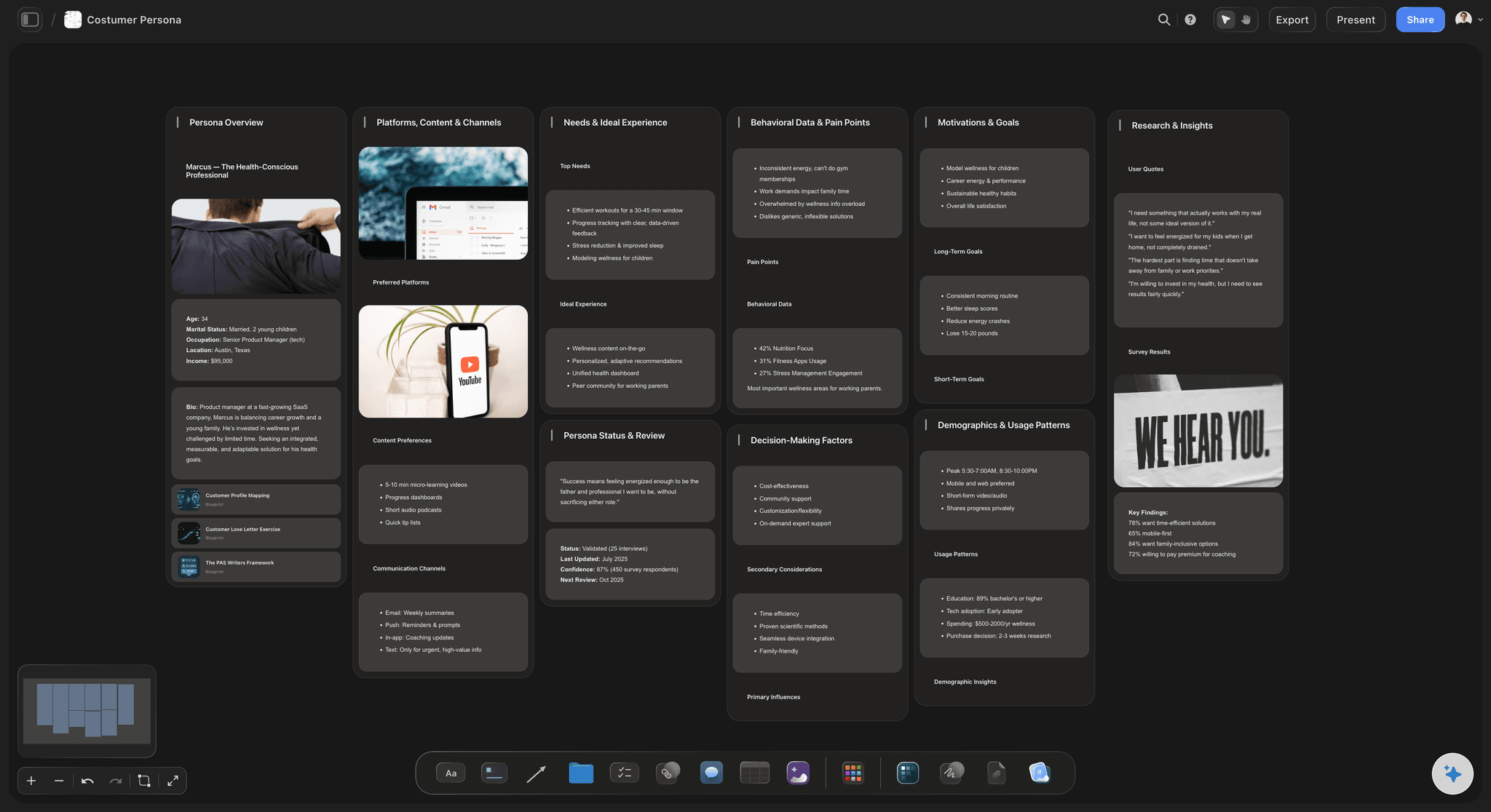
Who you are and who you serve
An ideal client you could pick out of a list
The client in two sentences: their business, their budget range, who signs off, and how they found you last time. The AI's brand strategy workflow lays out positioning, values and competitors beside it.
See the brand strategy tool →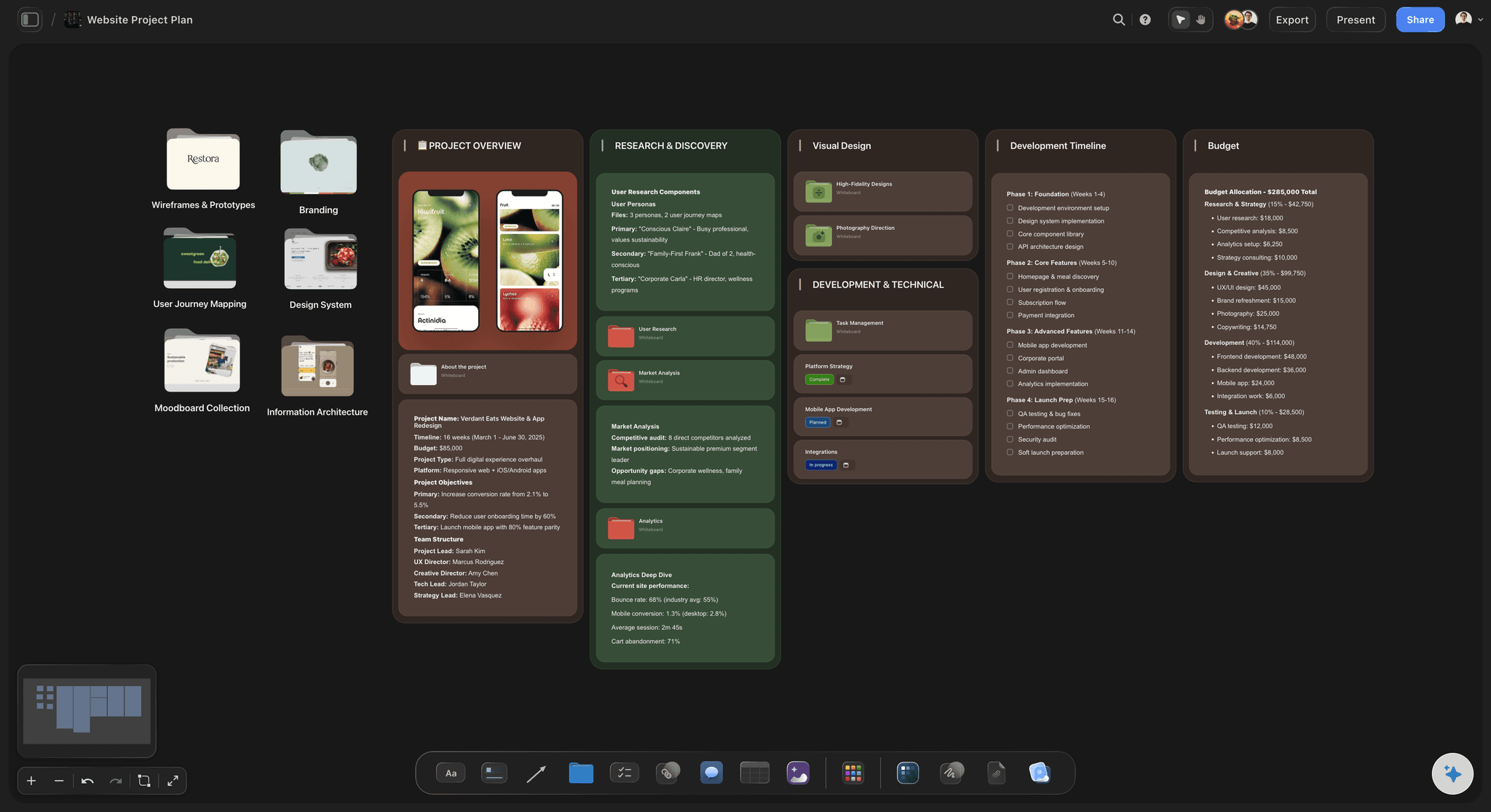
Packages and pricing
Three packages, priced side by side
Deliverables, revision rounds, weeks and price per package in one table. The same table becomes the price section of every proposal you send.
See the video production proposal →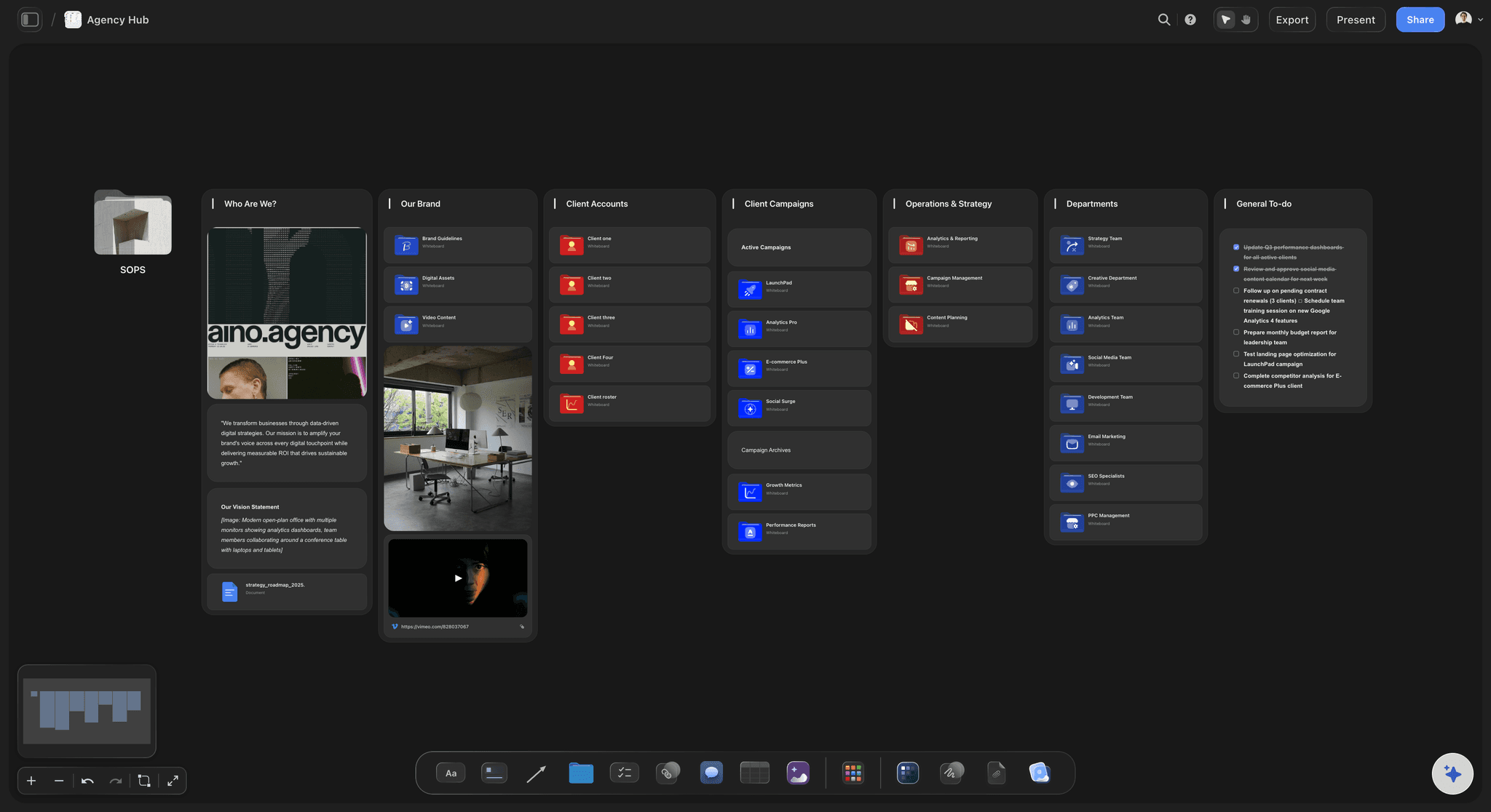
The pipeline and the work in flight
The business plan beside the business
Leads, proposals out and projects in production on a kanban board next to the plan, so the capacity sum meets the real slate. The AI can build a company hub with a folder per client project.
See the production company hub →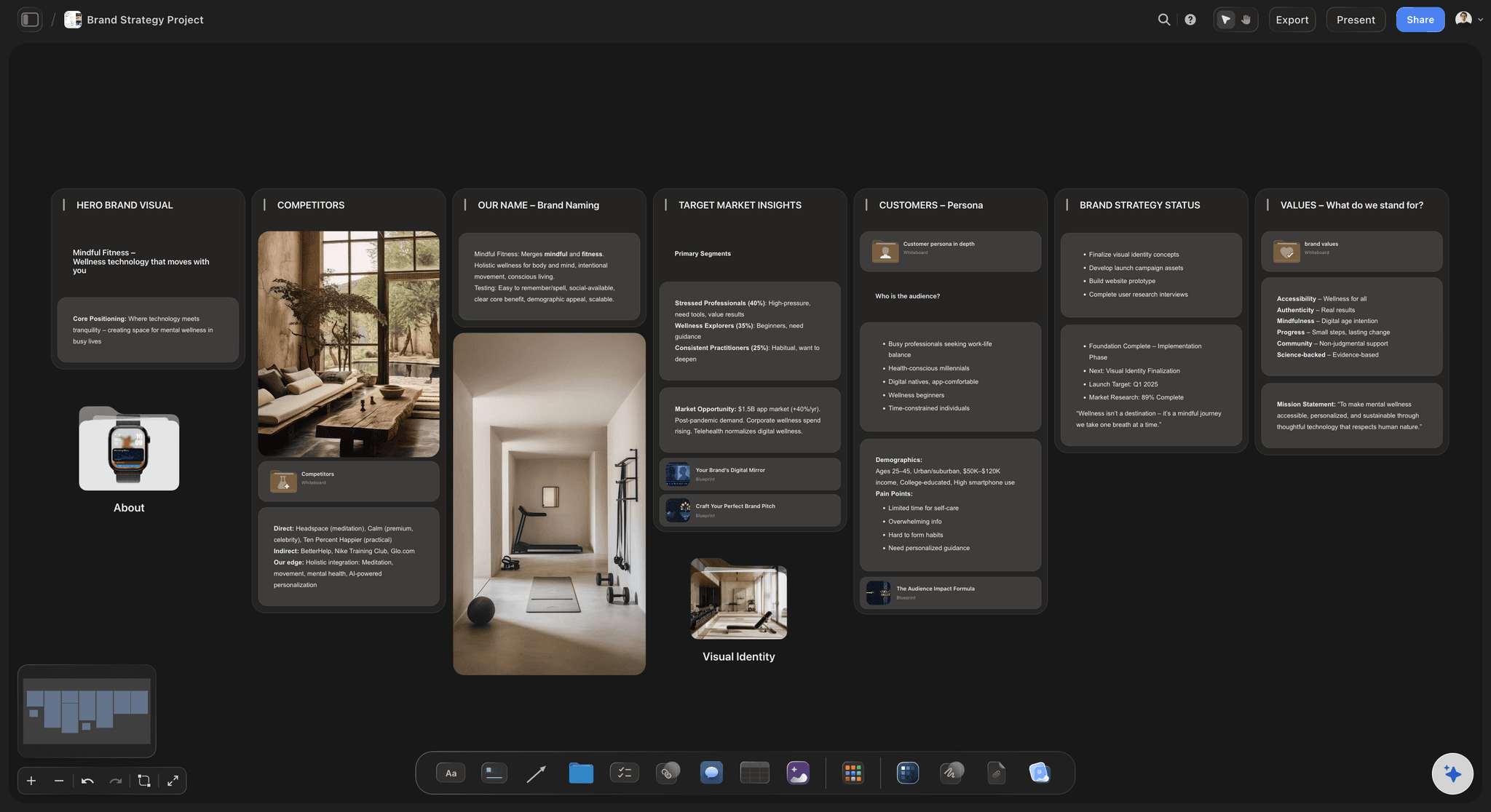
Read by a partner, lender or mentor
One link instead of a 30-page document
A partner, lender or mentor opens the plan from a view-only link with no account, and signs in to comment on a section. Export the whole board as a PDF, or step through it fullscreen when you present it.
See the pitch deck maker →One plan, reread every quarter.
The plan stays on its own board next to your client work, so the quarterly review is an edit, not a rewrite. Storyflow is paid-only during early access, with plans from $7.99 a month billed annually ($9.99 monthly). A free plan launches before the end of 2026, and anyone a paid member invites to a board joins free.
Unlimited boards for the plan and every client project on every paid plan
AI that drafts the offer, ideal client, packages and 12-month milestones from your notes
Tables with currency columns and live totals, and charts
View-only links, whole-board PDF export and presentation mode
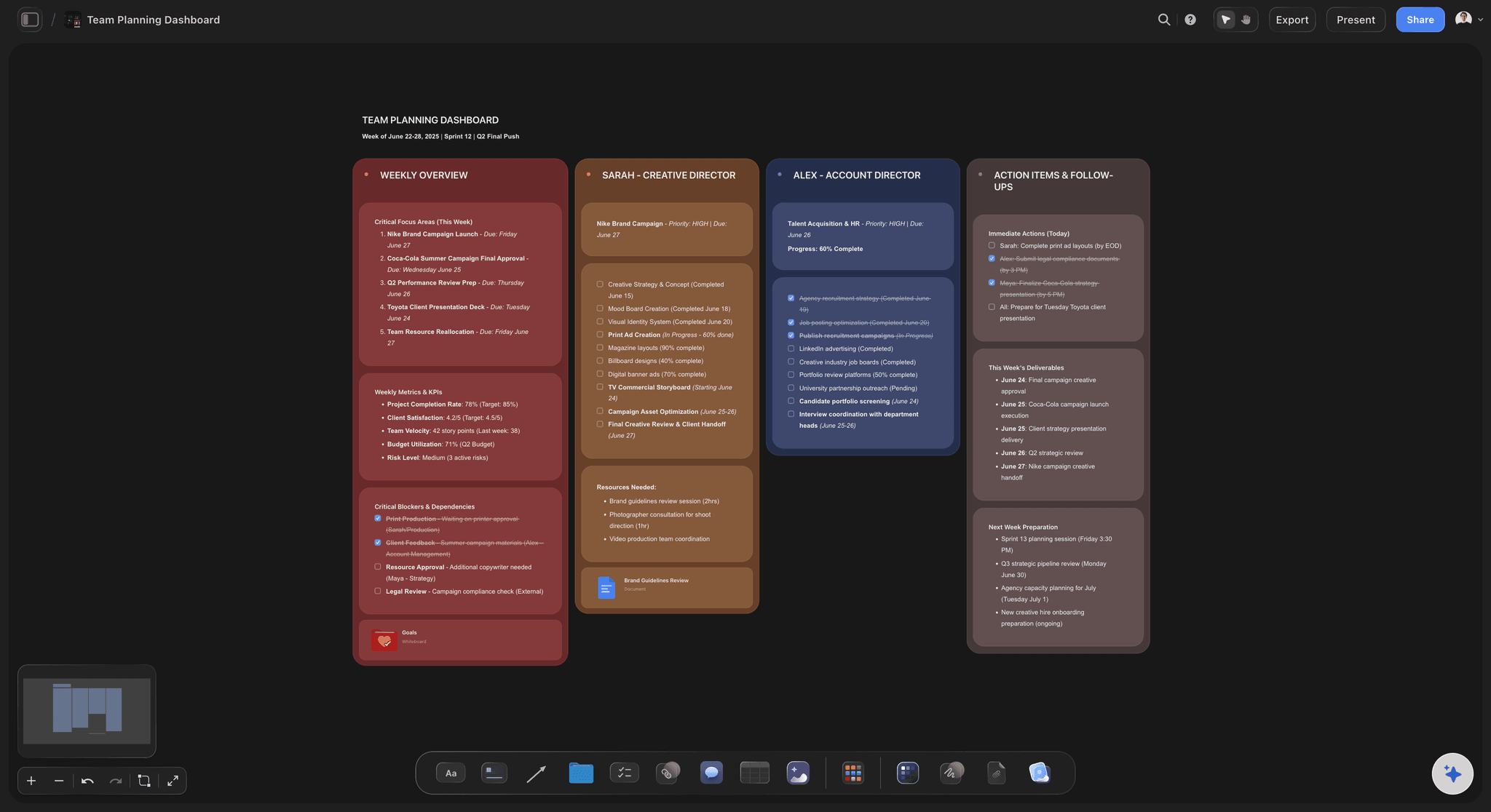
Built for people with taste
Ten sections for a business that sells creative work.
Copy the structure into anything. Each section fits on a screen; if one runs longer, you have not decided it yet.
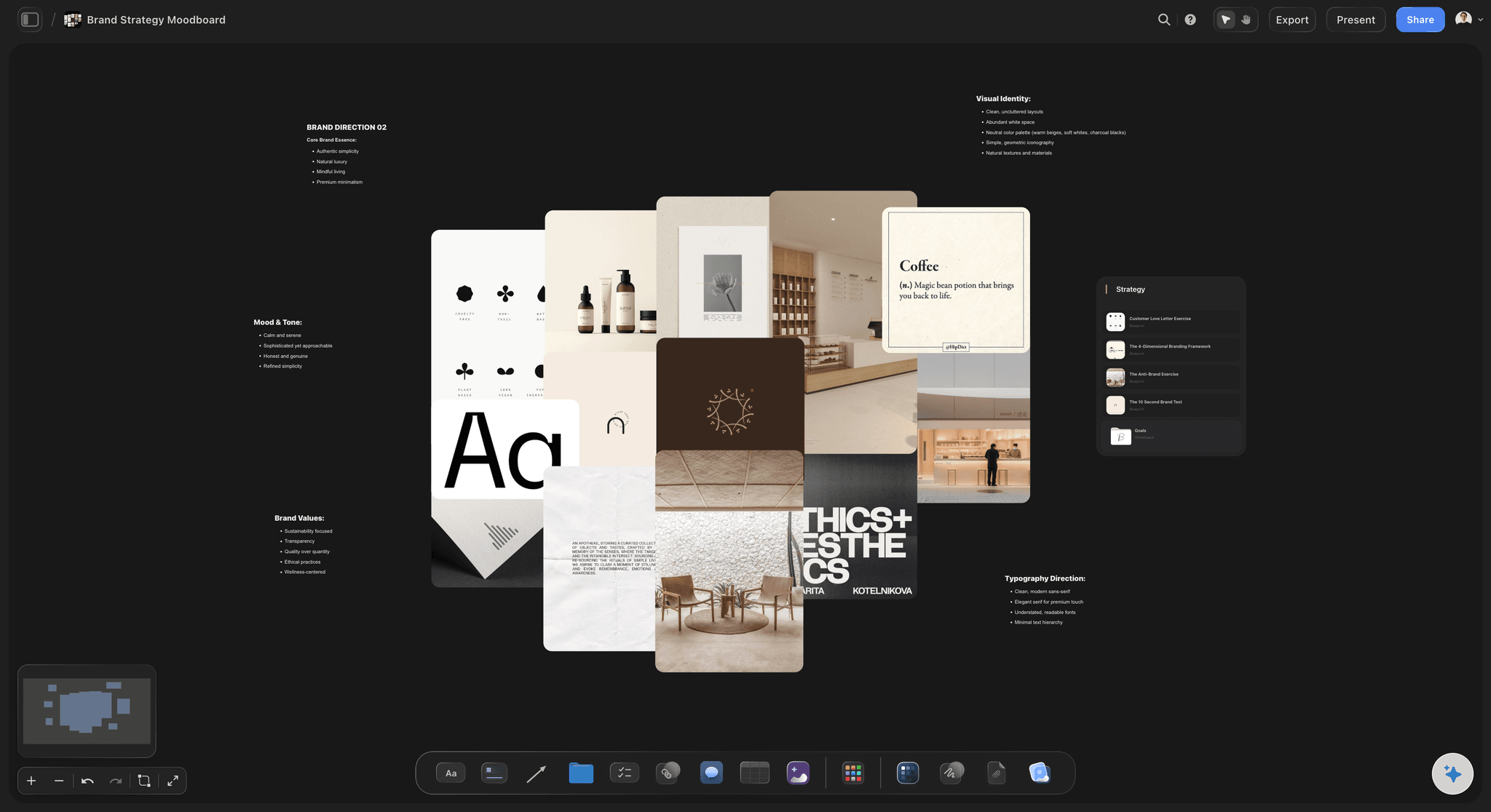
The offer, sections 1 to 3
What you sell, and to whom
1. The offer and three packages: What the client walks away with, named three ways by size, each with deliverables, revision rounds and weeks. The mistake is a menu of services with no edges, which gets priced by the hour and argued about in the edit.
2. The ideal client: Industry, size, budget range, who signs off and what they bought before. Name three real companies that fit. A plan written for "businesses that value design" fits everyone and finds no one.
3. Why you, with proof: The one thing you do better for that client, and two past projects that prove it. Awards and years in business matter less to a buyer than a result in their own industry.
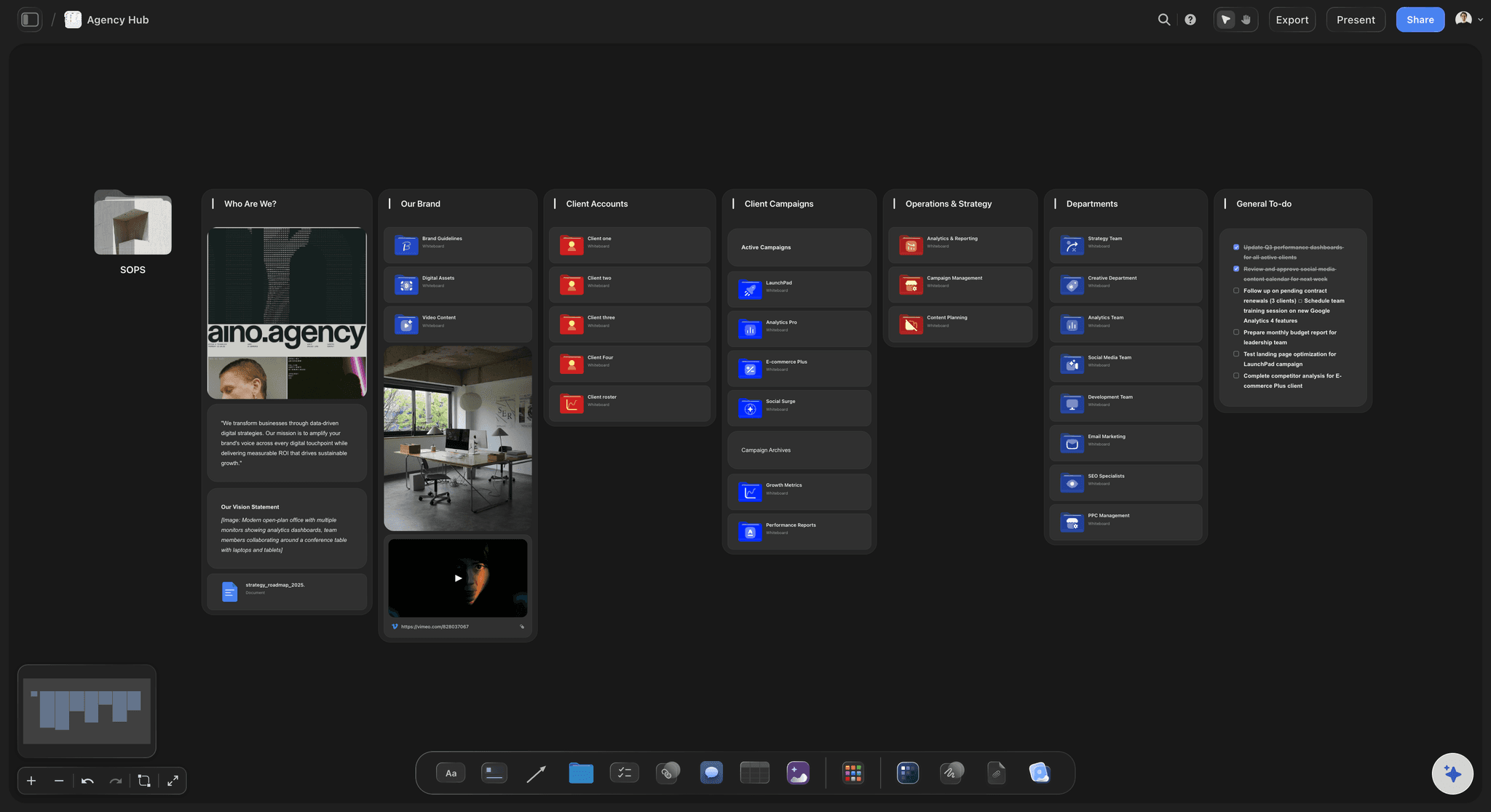
The pipeline, sections 4 to 6
How you charge, where work comes from, how much fits
4. The pricing model: Project fee, day rate, retainer, or a fee plus usage for photography and film. Pick one per package and write why. Day rates suit shoots; project fees suit identities and websites; retainers suit monthly content.
5. The pipeline: Where the last ten clients came from, and the two sources you will work on: referrals, a partner agency, outbound, content. Track leads, calls, proposals sent and proposals won each month.
6. Capacity, as a sum: Weeks worked times five days, times the billable share, divided by the days a package takes. Planning on 46 weeks with half the days billable gives a solo founder 115 billable days a year. Use your own numbers.
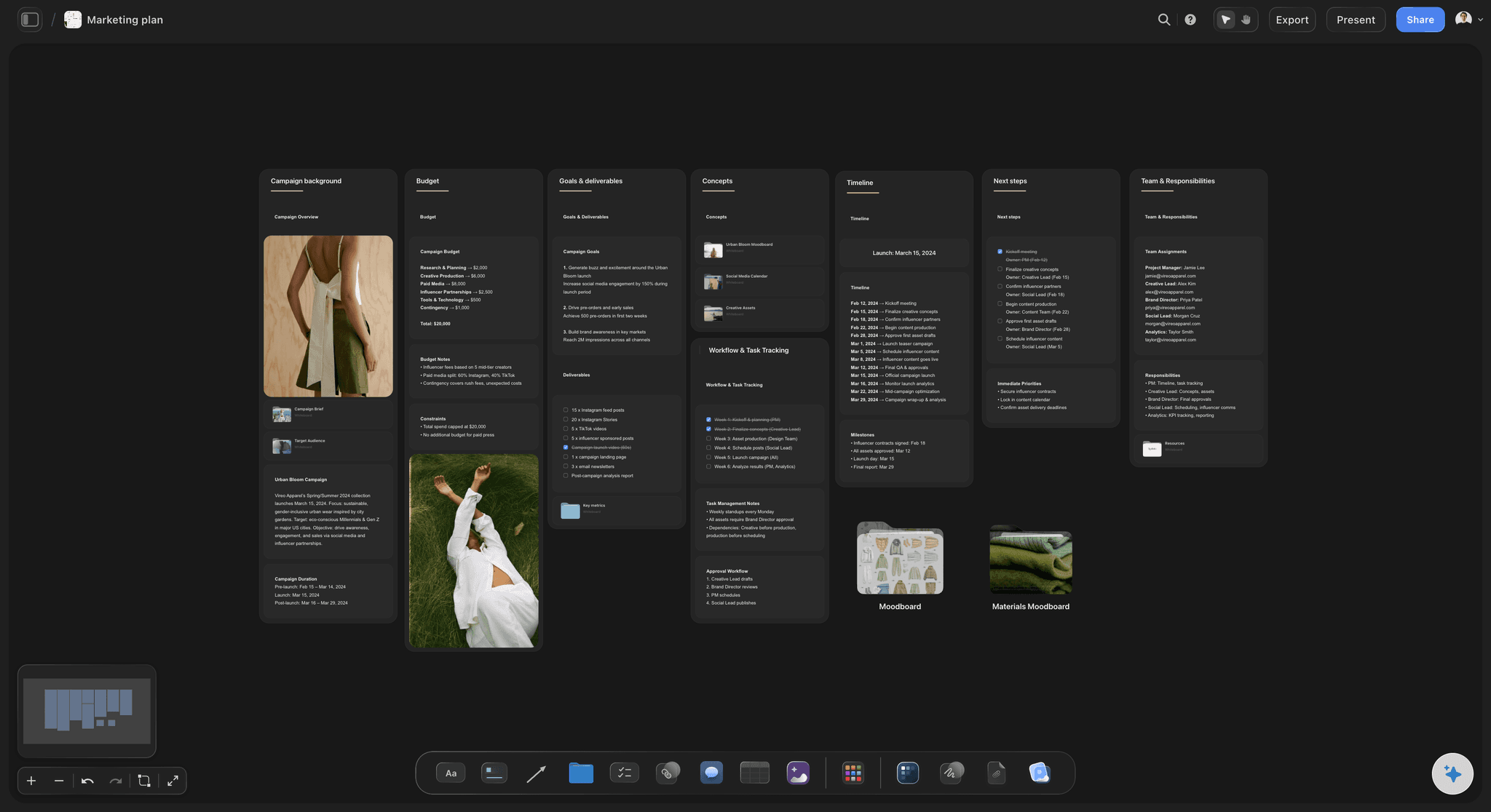
Team and money, sections 7 to 9
Who does the work, how people hear of you, the money
7. Team and freelancers: Who does what today, which role you fill with freelancers first, and the capacity number at which you hire. Freelancers first keeps costs flexible while the demand proves itself.
8. Marketing, two channels: Two channels you will keep up every week for a year, with what you post or send and how often. Five channels half-done is the common plan and the common failure.
9. Finances in plain words: What you pay yourself, monthly costs, tax set aside, months of costs held in the bank, and payment terms: a deposit before work starts and the balance on delivery or on a date. Your accountant turns this into the model.
Section 10, and the review
The next twelve months
10. One milestone per quarter: Q1 might be three packages live and a new site; Q2 a retainer client; Q3 the first freelancer on a regular day; Q4 prices raised for new clients. Each milestone has an owner and a date.
The quarterly review: At each quarter's end, compare booked projects with the capacity sum, won proposals with sent, and the pipeline sources with the plan. Change the channels and the pace, keep the goal.
What the plan leaves out: Market-size charts, five-year projections and a SWOT grid nobody reads. A lender may ask for them; add them for that reader, in the format they request.
Explore templates for your project
Every template opens as a real, editable board on the infinite canvas. Pick the closest fit and make it your own.
Marketing Plan
Lay out your goals, channels, and initiatives for the quarter on one board.
One app instead of five
Writing the plan: Storyflow, LivePlan, Canva or Notion.
Storyflow writes the plan beside the pipeline and client work it describes. LivePlan builds the lender-ready forecast with industry benchmarks, Canva designs the plan as a document or deck, and Notion keeps it as pages on a free plan.
Storyflow
Recommended
Client pipeline as a kanban board
AI drafts plan sections from your notes
Financial forecast with cash flow
Industry benchmark data
Free plan available today
LivePlan
Client pipeline as a kanban board
AI drafts plan sections from your notes
Financial forecast with cash flow
Industry benchmark data
Free plan available today
Canva
Client pipeline as a kanban board
AI drafts plan sections from your notes
Financial forecast with cash flow
Industry benchmark data
Free plan available today
Notion
Client pipeline as a kanban board
AI drafts plan sections from your notes
Financial forecast with cash flow
Industry benchmark data
Free plan available today
What creators are saying
Join early creators getting structured workspaces and AI that remembers their projects
“Storyflow has sped up my workflow by at least 3x, which means more flow state and more projects I can actually ship. It truly changed the way me and my team create.”

Reilin Joey
Director & YouTuber
“One prompt gets me a structured board. But the tactics are my favorite. I run my YouTube scripts through them and my intros and retention got better. It's amazing.”

Justkay
YouTuber & Freelance Filmmaker
“I used to juggle five apps to plan a project. Now I describe what I am making and get boards, lists, and a schedule. All in one place.”

George
@fernwehchronicles
What studio founders ask about the plan.
Sections, packages, pricing models, capacity and payment terms.
Storyflow is the business plan template for a creative agency or studio that wants the offer, packages, ideal client, pricing, capacity, pipeline and 12-month milestones on one board beside its client work, with an AI that drafts each section from your notes, shared by a link that opens with no account. Use LivePlan if a lender needs a full forecast, and QuickBooks or Xero for the books.
Ten: the offer and three packages, the ideal client, why you with proof, the pricing model, the pipeline, capacity, team and freelancers, two marketing channels, finances in plain words, and one milestone per quarter for the next twelve months. Add an executive summary last if a bank or grant body asks for one.
A startup plan sells a future market to investors. A studio sells skilled time to clients now, so its plan turns on packages, pricing, capacity and where the next projects come from. Few studios need five-year projections; most need to know how many projects fit in a month and what happens when one client pays late.
Pick a model per package. Project fees suit identities and websites, day rates suit shoots, retainers suit monthly content, and photography and film often add a usage fee for where the work runs. Price from what the work really took last time plus your costs and margin, not from a competitor's page. In Storyflow the three packages sit side by side in one table.
Multiply the weeks you will work by five days, then by the share that is billable once selling, admin and learning are done, and divide by the days each package takes. That gives projects per year and your revenue ceiling before you hire. Keep the sum in a small table on the plan.
Ask for a deposit up front, commonly between a third and a half, and the balance on delivery or on a fixed date. Longer projects split into stages. Write the due date on every invoice, a rule for late payment, a fee for cancelling after work begins, and when usage rights pass to the client. Put the terms in the plan so every proposal repeats them.
A lender, investor or grant body will ask for one. For running the studio, a monthly view of what comes in, what goes out and what is in the bank does most of the work. Write the plan's money section in plain words first, then build the forecast from it in a spreadsheet or with your accountant.
Two, kept up every week for a year. For most studios one is referrals from past clients and partners, and the other is a channel that shows the work: a portfolio site with case studies, a newsletter, short videos or outreach to a named list. Track which source each new client came from.
Yes, as a first draft to rewrite. In Storyflow you paste your notes, past projects and rates, and the AI drafts the offer, ideal client, packages and milestones on the board, and its brand strategy workflow lays out positioning and competitors. Your notes are its only source, it never invents your revenue, and Undo reverses any change it makes.
No. Storyflow holds the plan, the packages, the pipeline and the client projects. The financial model belongs in a spreadsheet or LivePlan, bookkeeping and invoices in QuickBooks or Xero, and contracts, deposits and client payments in HoneyBook, Dubsado or Bonsai. Keep the plan and the work in Storyflow and the money in your finance tools.
Reread it every quarter and rewrite it once a year. At the quarterly review, compare booked projects with the capacity sum, proposals won with proposals sent, and where clients came from with the channels you chose. Change the channels and the pace, keep the year's goal, and move any milestone that slipped with a new date and owner.
Not during early access. Storyflow is paid-only during early access, with plans from $7.99 a month billed annually ($9.99 monthly). A free plan launches before the end of 2026, and anyone a paid member invites to a board joins free, so a business partner or mentor can work on the plan with you.
More from Storyflow
Business model canvas
Production company hub
Solo studio project planning
Agency client project planning
Video production proposal template
Photography proposal template
Brand strategy tool
Go-to-market plan
Pitch deck maker
Storyflow for freelancers
Storyflow for solopreneurs
Storyflow for startups
Best tools for agencies to plan client creative projects
Pricing
Photography rate card
Investor update
Write the plan your studio will actually reread.
Open a canvas, paste your notes and past projects, and set the packages, the capacity and the next four quarters.