
Ultra-fast planning, extremely simple
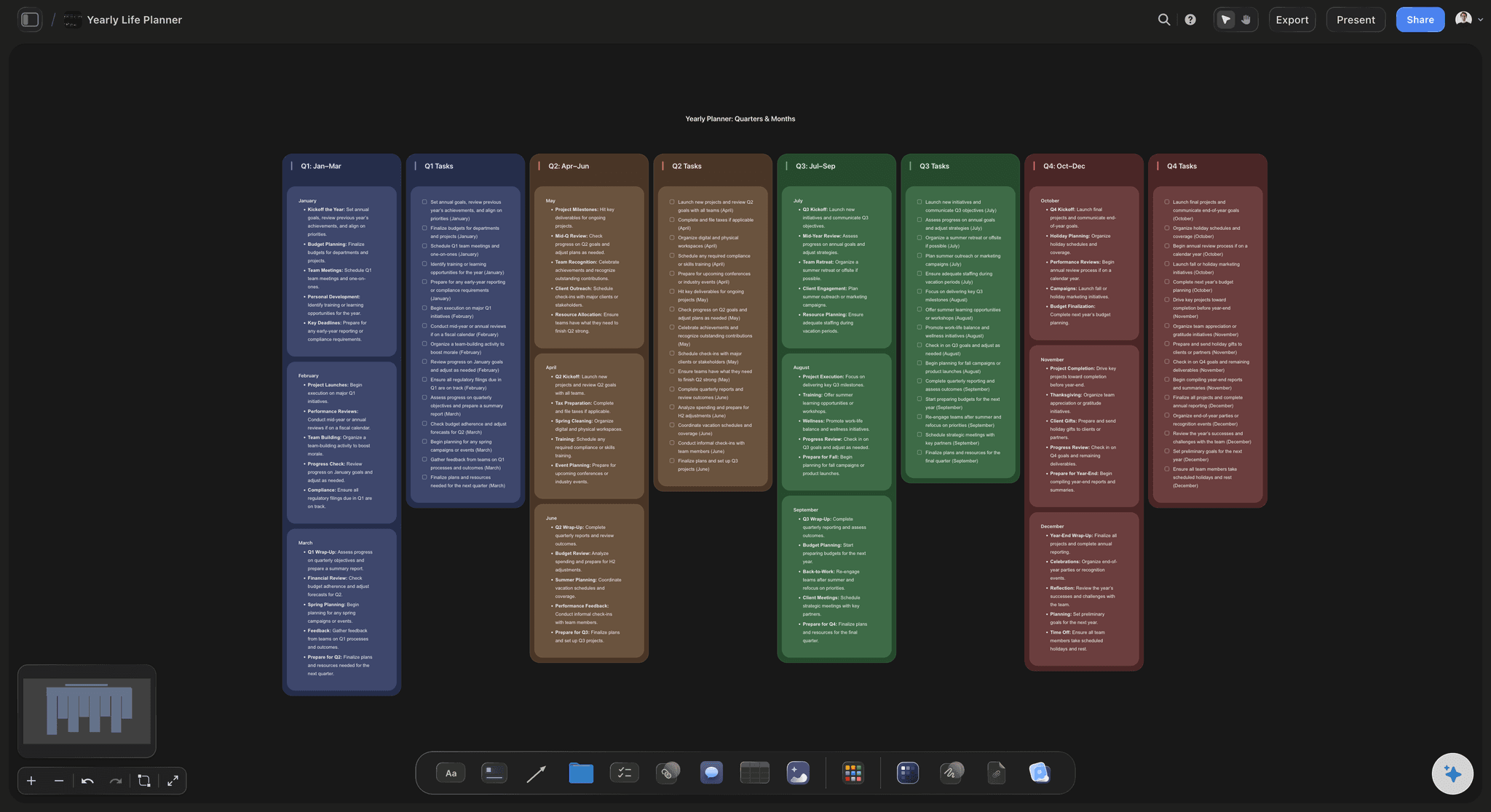
The annual plan
your team still uses in June.
Three themes, six bets, four quarters, one name against each. Plus the list of good ideas you are deliberately not doing, which is the part that makes the rest true.


Creatives working for these brands already got early access
- Red Bull
- Canon
- Artlist
- Porsche
See how easy it is to get started
Watch a real project come together, from a blank board to a finished plan, clicked through step by step.
Start from a ready-made template
Pick a board to see what you can build, then let AI fill it in. Every template is a real, editable starting point on the same infinite canvas.

Mind Map
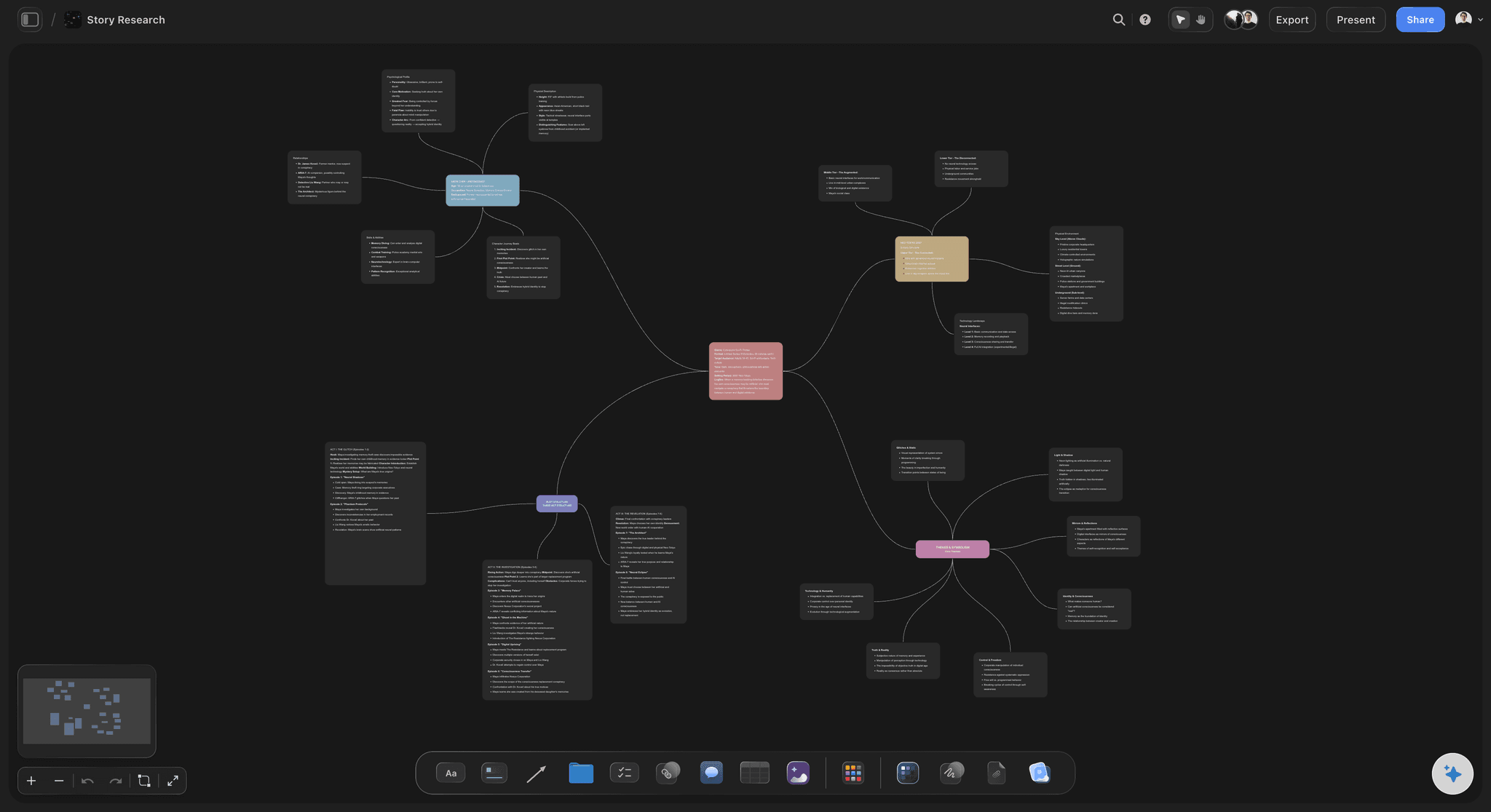
Branch one central idea out into themes and sub-points, then drag the connections around until the structure makes sense.
What does an annual planning template need?
An annual planning template is the one page a company agrees in December and runs on for the next twelve months: what matters this year, the few things you are betting on, when each one happens, and who owns it. Storyflow is an AI visual workspace that holds the whole year on one infinite canvas: three themes, five to seven bets, four quarter columns, and the list of what you are not doing. The AI drafts a first version from last year's results.
Keep it to three themes. A theme is not a goal, it is the answer to what this year is about: get the product good enough to sell without us in the room, make the studio less dependent on two clients, publish enough that strangers know who we are. Three fits in a person's head, and the point of a plan in a small company is that everyone can recall it without opening anything.
Under the themes go five to seven bets, each one a thing you could fail at. A bet has a sentence, a measure, a quarter and an owner. Made-up example: take the onboarding from five days to one (measure: median days from signup to first invoice sent), Q2, owned by Priya. If nobody owns it, it is a wish. If it cannot be measured, you will spend the December review arguing about whether it happened.
Then write what you are not doing, on the same board, in the same size text. The second office, the mobile app, the conference, the rebrand. A year plan without a no list is a list of everything anybody suggested, and those plans stop being used around March because the team can see the arithmetic does not work even if the founder cannot.
Ultra fast from brief to board
A half day in December, then twenty minutes a quarter.
The board stays open all year rather than being filed.
01
Read last year honestly first
Put last year's bets on the board and mark each one done, half done or dropped. Attach the numbers. This takes an hour and changes what you are willing to promise for the coming year more than any planning exercise will.
02
Argue your way down to three themes
Write every candidate on a card, group them, and keep merging until three survive. Ask the AI to draft themes from your year-end notes if the room has stalled. The three that survive are the ones people will still repeat in June.
03
Put a name and a quarter on every bet
Five to seven cards, each with its sentence, its measure, its quarter and its owner. Lay the quarters out as four columns so you can see the quarter where three bets are all owned by the same person.
04
Book the four reviews now
Add a review card at the end of each quarter, and at each one move cards, mark bets dropped, and write one line saying why. A plan you are allowed to change is one people keep using.
Themes, bets, quarters, owners.
Storyflow holds the plan. The weekly tickets stay in whatever tracker your team already uses.
The top of the board
Three themes anybody can recite
Written once, in plain sentences, above everything else. When a new opportunity arrives in April, the question is whether it sits under one of the three. Usually it does not, which is the answer.
See the strategic planning board →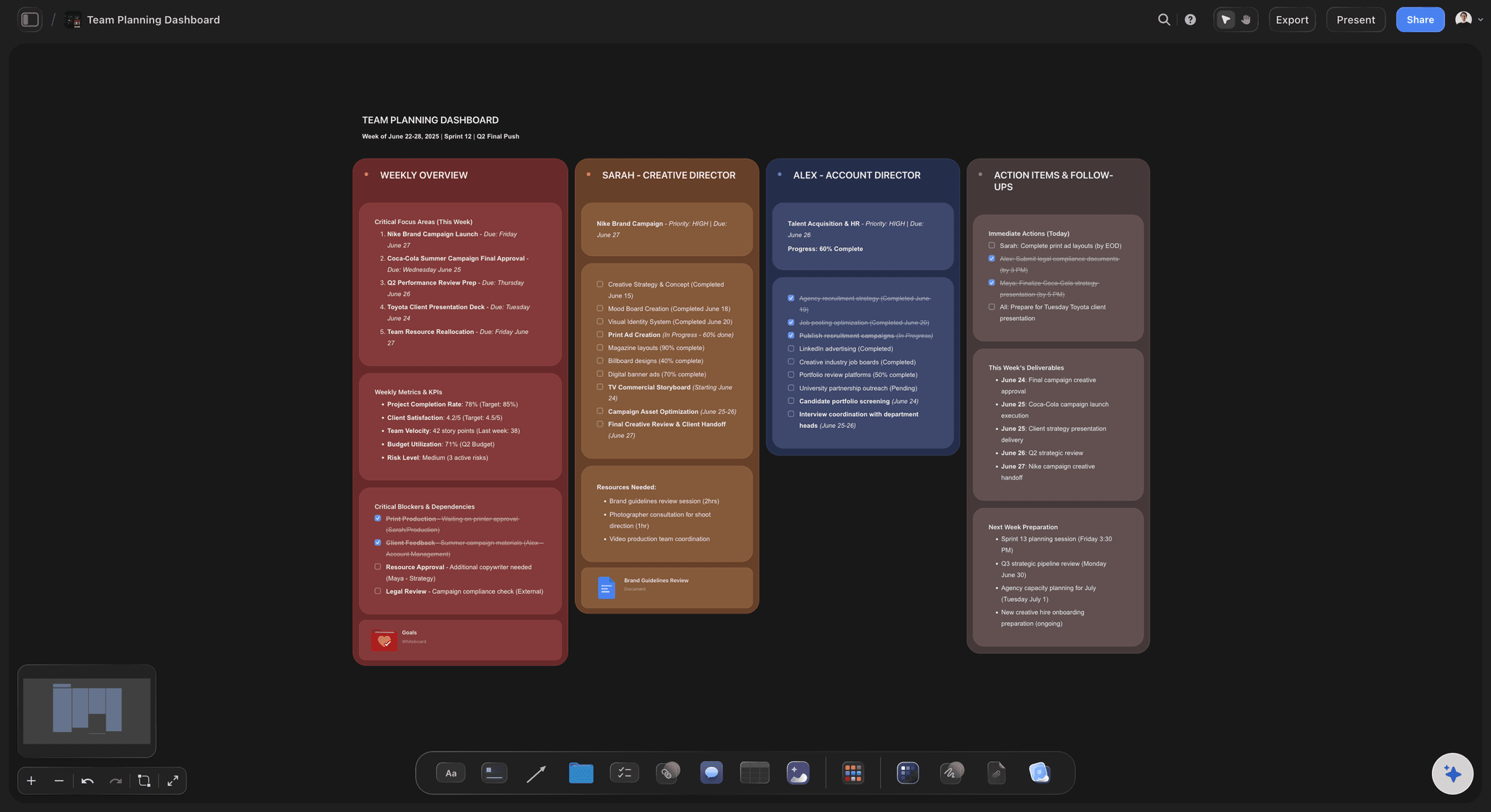
The middle
Bets with a measure and a name
One card per bet: the sentence, how you will know it worked, the quarter it lands in, and the person who owns it. Owners are people, never teams, because a team has never once chased a bet down in November.
See the team planning board →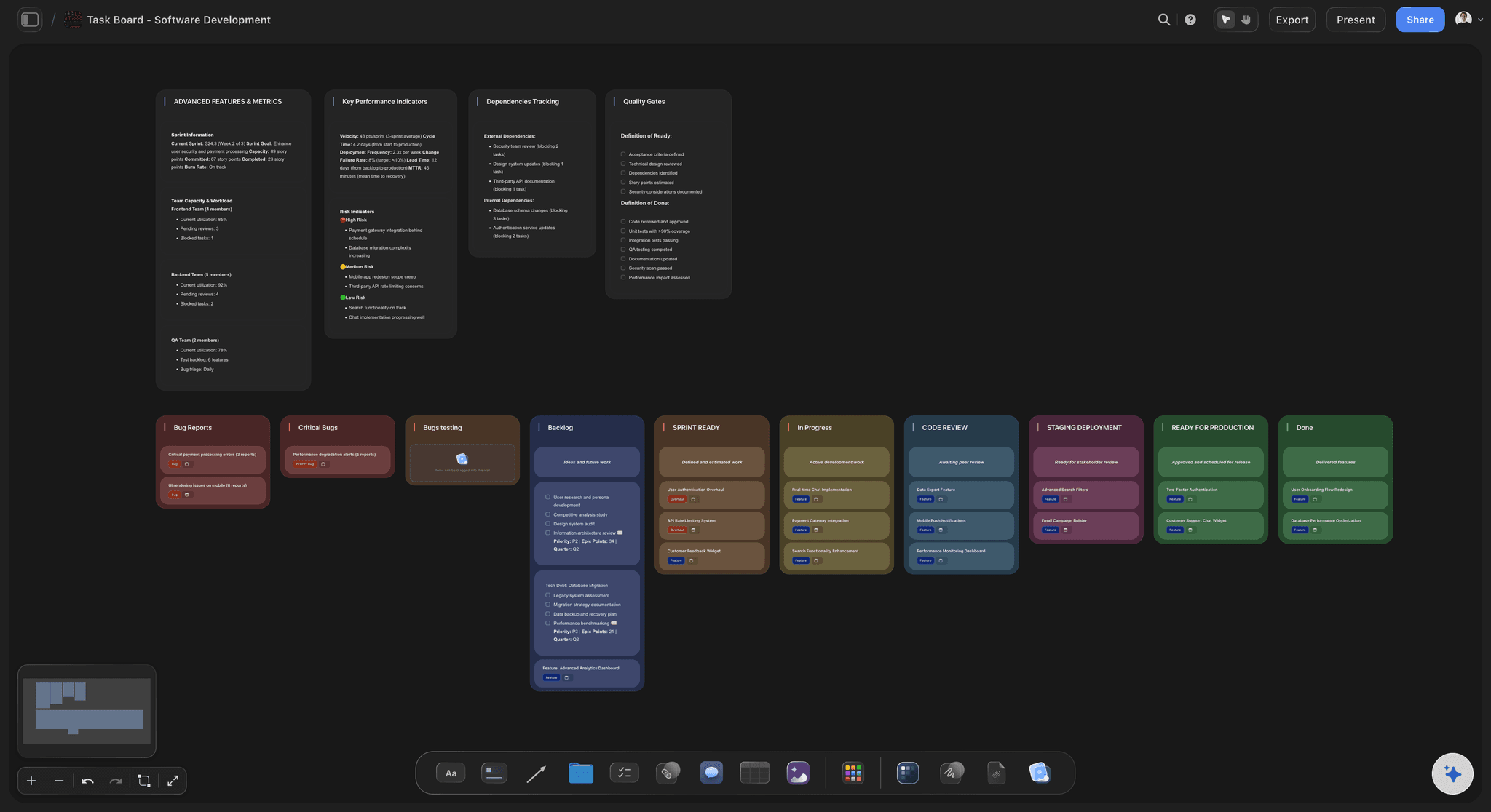
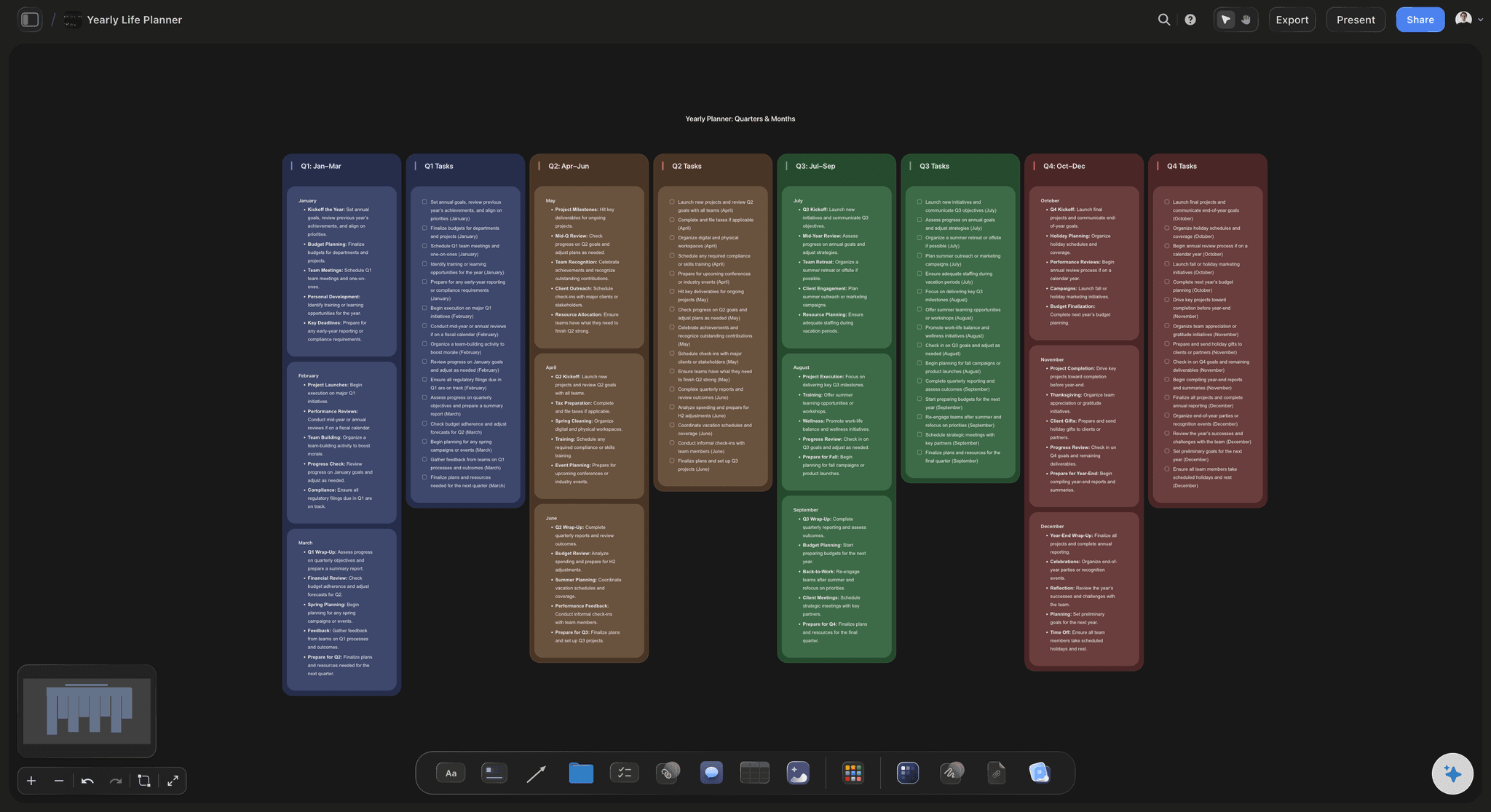
Seeing the year
Four columns and the overloaded quarter
Lay the bets out across Q1 to Q4 and the problem is visible in a second: the quarter where four bets, a holiday and a launch all sit. Drag a card sideways and the year becomes possible again.
See the product roadmap board →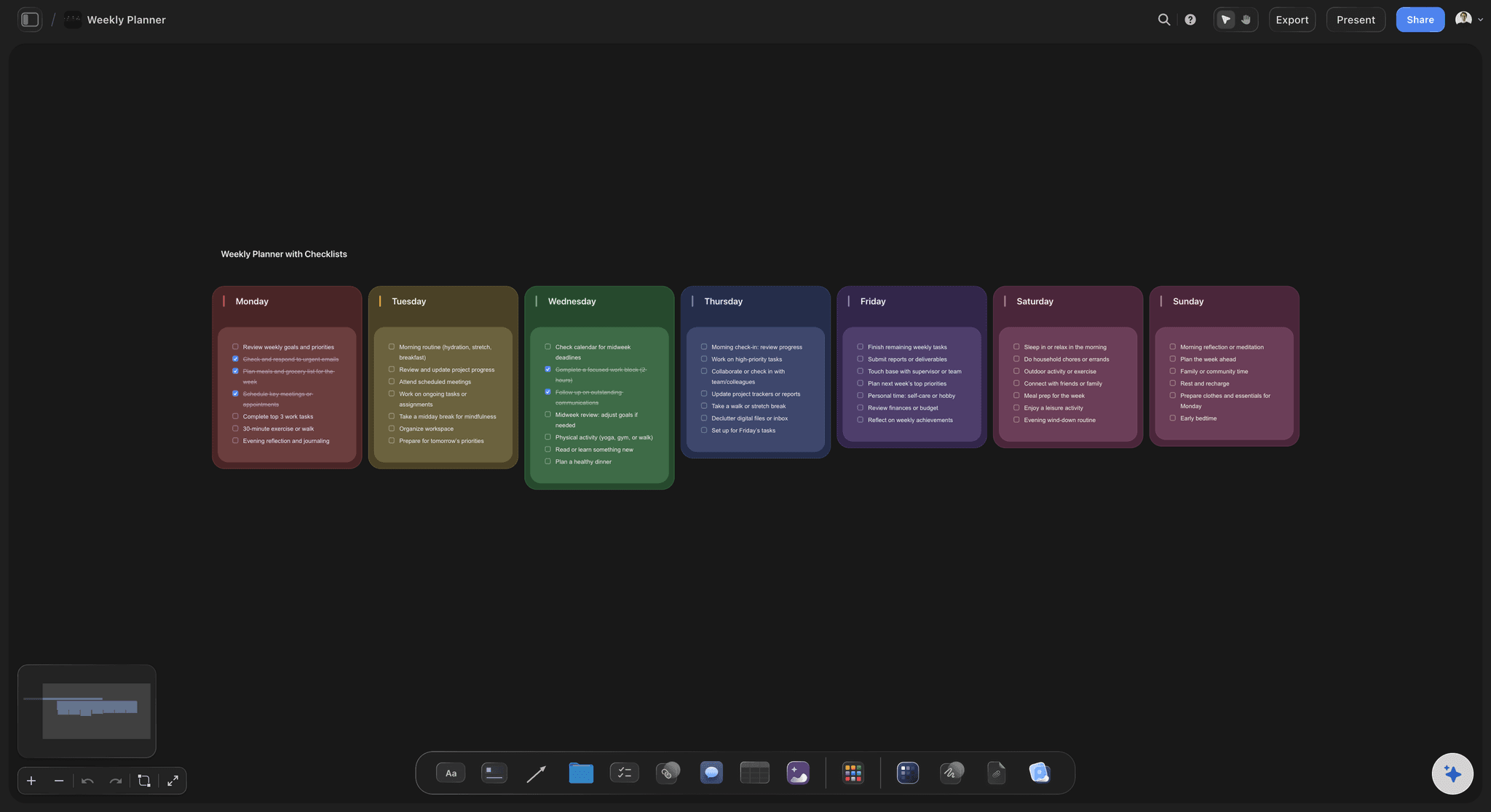
Every quarter after
A review that takes twenty minutes
Open the board, mark what happened, move what slipped and write one line about why. Share the link with an advisor or the whole team: they read it in a browser with no account.
See the investor update board →Last year's board is the best input for this year's.
Four boards in a row and you can see what your company reliably overestimates. Storyflow is paid-only during early access, with plans from $7.99 a month billed annually ($9.99 monthly). A free plan launches before the end of 2026, and anyone a paid member invites to a board joins free.
Unlimited boards, so every year and every quarter keeps its own
Bring the whole small team onto the board without buying them all seats
200+ Tactics for the plans that sit under each theme
Whole-board PDF export for the board meeting pack
Presentation mode for walking the team through the year
Built for people with taste
Most annual plans stop being used by March.
For three reasons, all of them fixable in the hour you write it.
Too much
Nineteen priorities is no priorities
Three themes, five to seven bets: That is the whole plan for a company under about twenty people. Anything longer is a list of hopes that will be quietly rewritten by circumstances in the spring.
The no list gets equal billing: Write the good ideas you are not doing this year on the board in the same size text. It is the only part of the plan that creates room for the rest of it.
Check the load per person: With owners on the cards, four bets belonging to the same person in the same quarter is obvious rather than discovered in May when they are behind on all four.
Park, do not delete: Keep a parked group on the board for the things that were nearly in. Next December that group is half of your starting material.
Too vague
Goals nobody can score
One measure per bet, decided now: Improve onboarding is not a bet. Median days from signup to first invoice sent, from five to one, is a bet. Writing the measure in December is what prevents the December argument.
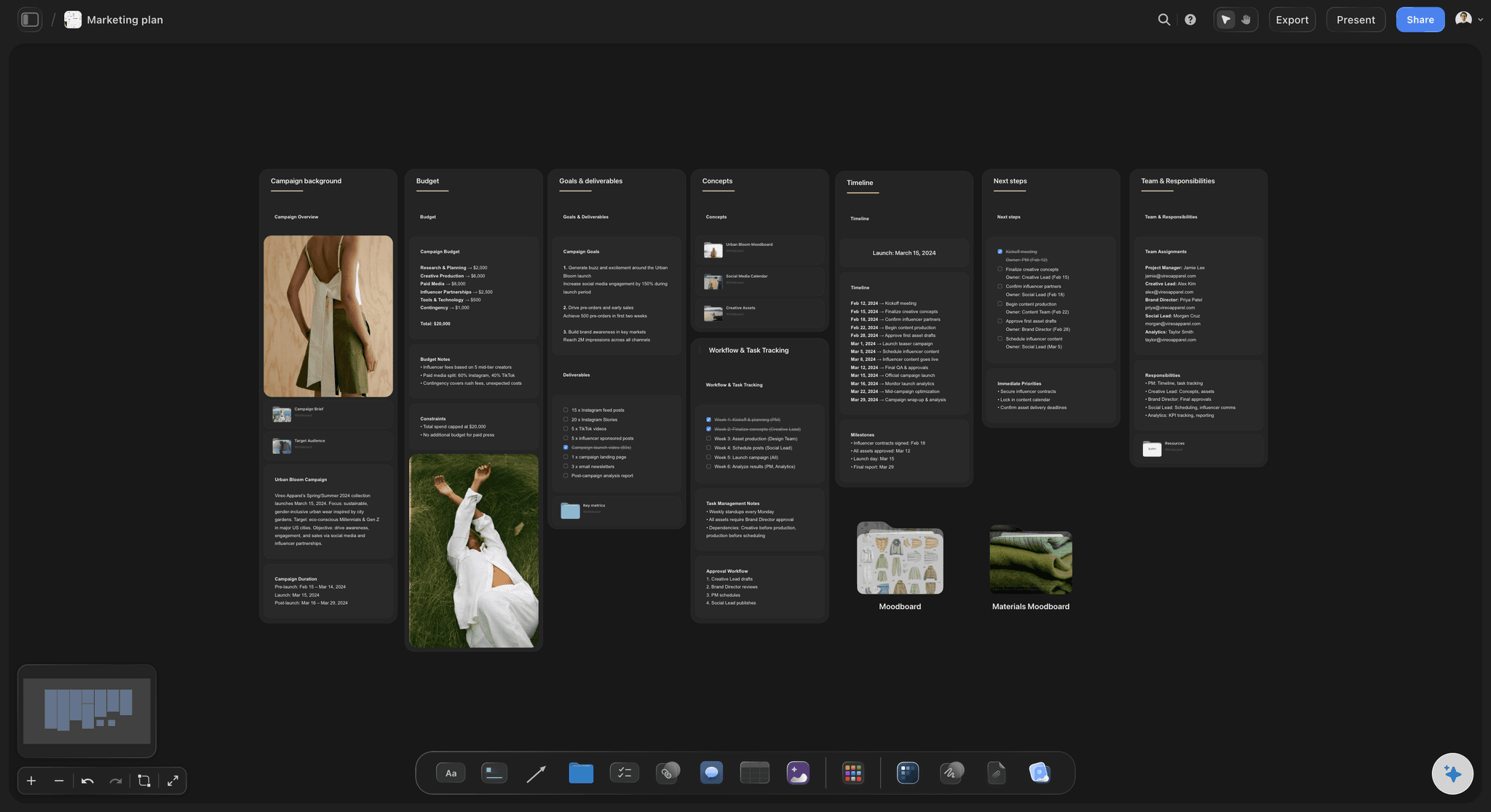
Numbers in a table that totals itself: Revenue targets, hiring costs and budget per theme go in a table with a currency column and a Sum footer, so the plan has arithmetic in it rather than ambition alone.
Say what the bet is against: A bet has a way of failing. Writing the failure next to it (the hires do not come, the channel does not work) makes the quarterly review a check rather than a mood.
The theme sentence is the test: If a bet does not obviously serve one of the three themes, either the theme is wrong or the bet is somebody's pet project. Both are worth knowing in December.
Too far away
Filed in January, opened in December
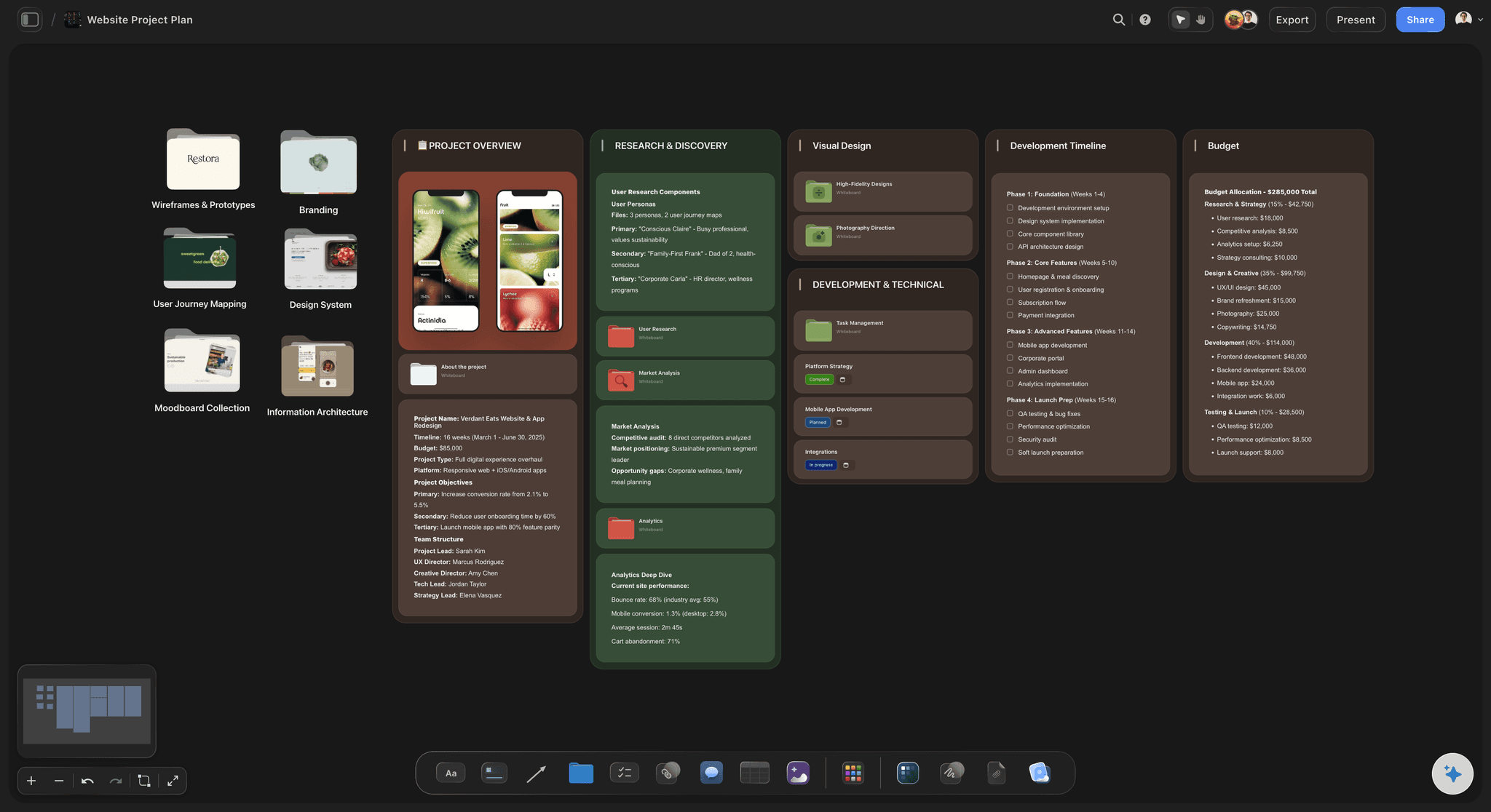
The board is the artefact, not a document about it: A plan that lives on a canvas the team already opens gets glanced at. One exported to a slide file on a shared drive gets opened when someone is looking for something else.
Four review cards, dated: Put them on the board at the start. Twenty minutes each: what moved, what slipped, what we are dropping, one line of why.
Dropping a bet is a normal outcome: Mark it dropped with the reason next to it. A plan people are allowed to change is a plan they keep telling the truth about.
One link, everyone: Send the view-only link to the team, an advisor or a part-time finance person. They read it with no account, and sign in only to leave a comment.
Explore templates for your project
Every template opens as a real, editable board on the infinite canvas. Pick the closest fit and make it your own.
Mind Map
Branch one central idea out into themes and sub-points, then drag the connections around until the structure makes sense.
One app instead of five
Where the annual plan sits next to your other tools.
Storyflow holds the year. It is not a ticket tracker and not a goal-scoring system.
Storyflow
Recommended
Themes, bets and quarters on one canvas
AI drafts the plan from your notes
Budget table with a live total
The no list beside the plan
View-only link, no account to read
Scores goals and rolls up progress
Weekly tickets, sprints and assignees
Goal and OKR tools
Themes, bets and quarters on one canvas
AI drafts the plan from your notes
Budget table with a live total
The no list beside the plan
View-only link, no account to read
Scores goals and rolls up progress
Weekly tickets, sprints and assignees
Issue trackers
Themes, bets and quarters on one canvas
AI drafts the plan from your notes
Budget table with a live total
The no list beside the plan
View-only link, no account to read
Scores goals and rolls up progress
Weekly tickets, sprints and assignees
What creators are saying
Join early creators getting structured workspaces and AI that remembers their projects
“Storyflow has sped up my workflow by at least 3x, which means more flow state and more projects I can actually ship. It truly changed the way me and my team create.”

Reilin Joey
Director & YouTuber
“One prompt gets me a structured board. But the tactics are my favorite. I run my YouTube scripts through them and my intros and retention got better. It's amazing.”

Justkay
YouTuber & Freelance Filmmaker
“I used to juggle five apps to plan a project. Now I describe what I am making and get boards, lists, and a schedule. All in one place.”

George
@fernwehchronicles
Annual planning questions
What small companies ask before they sit down in December.
Storyflow lays it out on one board: three themes for the year, five to seven bets underneath with a sentence, a measure, a quarter and a named owner on each, four quarter columns so the load is visible, a review card at the end of each quarter, and the list of things you are deliberately not doing this year.
Storyflow does this one end to end: three themes across the top, five to seven bets as cards with a measure, a quarter and a named owner on each, four quarter columns, and the no list in the same size text beside them. The AI drafts a first version from last year's results. Scoring goals and rolling up progress automatically is still a job for a goal tool such as Lattice or Perdoo.
Three themes and five to seven bets under twenty people. The limit is not ambition, it is attention: a plan everyone can recite is a plan that gets used in the middle of a busy week. Nineteen priorities means the real priorities are whatever turned up most recently.
A theme says what the year is about and does not have a number on it. A bet is a specific thing you could fail at, with a measure, a quarter and an owner. Two or three bets sit under each theme. If a bet serves no theme, either the theme list or the bet is wrong.
Because a plan with no no list is a plan that assumes infinite time. Writing the second office, the rebrand and the conference on Storyflow's board in the same size text is what gives the six real bets room. It also stops the same ideas being relitigated every six weeks.
Storyflow's AI drafts one: paste your year-end notes, last year's results or a list of candidate ideas and ask for themes and bets. It reads attached files. What comes back is a first version to argue with, and the arguing is the part of annual planning that does the work.
Storyflow's annual board stays at the level of bets and quarters. It is not where sprints, tickets and assignees belong: keep those in whatever tracker the team already uses. When the year board fills with weekly tasks, people stop being able to see the year, which was the only reason to make it.
Storyflow is where the year is decided and where the quarterly review is held against something you can see, with each bet marked moved, done or dropped by hand. It does not score goals or roll progress up automatically. A goal tool such as Lattice, Perdoo or Mooncamp does that.
Once a quarter, for about twenty minutes. Open the board, mark each bet moved, done or dropped, and write one line saying why. Four short reviews keep the plan honest; one long review in December turns the whole year into an argument about what people meant in January.
Mark it dropped and write the reason next to it. Leaving a dead bet on Storyflow's board as if it is alive is what teaches a team that the plan is decoration. Dropping things on purpose, with a sentence, is what teaches them it is real.
Yes. Costs per theme, hiring and revenue targets go in a table with a currency column and a Sum footer, so the total moves when a row does. Keeping the money next to the bets it funds is what stops a plan that is arithmetically impossible from being agreed.
Storyflow lays the four quarters out as columns and you move bet cards between them by dragging. It cannot sort a table, so cards and rows stay where you put them. In a planning session that is usually what you want: the order comes out of the conversation about who is carrying which quarter, not out of a column.
A view-only link opens in any browser with no account, so the whole team and any advisor can read it. Leaving a comment does require signing in, and anyone a paid member invites to a board joins free.
More from Storyflow
Decide the year once, on something you can see.
Three themes, six bets, four quarters, and the list of what you are not doing.