
Extremely clear strategy, zero busywork
A seed round deck,
one slide at a time.
Twelve cards on a canvas. Each one carries the single sentence it has to land, the proof sitting next to it, and the question it will get asked. Rearranging the story is a drag, not a rebuild.


Creatives working for these brands already got early access
- Red Bull
- Canon
- Artlist
- Porsche
See how easy it is to get started
Watch a real project come together, from a blank board to a finished plan, clicked through step by step.
Start from a ready-made template
Pick a board to see what you can build, then let AI fill it in. Every template is a real, editable starting point on the same infinite canvas.

Marketing Plan
Lay out your goals, channels, and initiatives for the quarter on one board.
What goes in a seed round pitch deck?
A seed round pitch deck is the ten to fifteen slides a founder shows to raise a first institutional round: the problem, the insight, the product, whatever early proof exists, the market, the team and the ask. Storyflow is an AI visual workspace that plans the deck slide by slide on one infinite canvas: the twelve slide cards, the one sentence each has to land, the proof under it, and the ask arithmetic. The AI drafts a first pass from your company description.
Seed is judged differently from later rounds, and the deck should admit it. You usually have no meaningful revenue, so nobody is buying a forecast. They are buying three things: that you understand this problem better than the people already working on it, that you can build, and that something small has already happened when you put the thing in front of real people. Slides that dress up thin numbers as a business read worse than slides that say clearly how early it is.
Twelve slides covers it: title with one line saying what you do, the problem, why now, your insight, the product, early signal, market, how you make money, competition, team, the ask, and the closing slide. Then an appendix of ten more for the questions that arrive in the second meeting. The appendix is where detail goes, so the main deck stays short.
The ask slide is the one most seed founders leave vague, and it is the one investors read hardest. Say how much, how many months it funds, and what those months are meant to prove. Made-up example: raising $1.5 million, eighteen months of runway, four hires (two engineers, one designer, one salesperson), to get from thirty paying customers to a point where two hundred customers renew without you personally involved.
Ultra fast from brief to board
Build the argument, then the slides.
The canvas part takes a couple of evenings. The design comes after.
01
Write the twelve sentences first
One card per slide, one sentence on it, nothing else. If a slide cannot be said in a sentence, it is two slides or it is not a slide. Read the twelve sentences top to bottom: that run-through is your pitch.
02
Pin the proof next to each claim
Under every sentence goes the thing that makes it true: a screenshot, a customer quote, a chart, a signed letter of intent. Claims with nothing under them are the ones that will be picked apart in the room, and now you can see them.
03
Write the question each slide invites
Beside the market slide, the question about how you got that number. Beside competition, the one about the incumbent. Answer them on appendix cards. Most second meetings are the appendix, so it may as well exist before the first.
04
Hand the plan to your slide tool
Export the board as a PDF or step through it in presentation mode to practise. Then build the finished slides in Keynote, Google Slides, Figma or Pitch, where the fonts and the export live.
The story, the proof, the questions, the ask.
Storyflow plans the raise. The polished deck is still made in a slide tool, and the paperwork elsewhere.
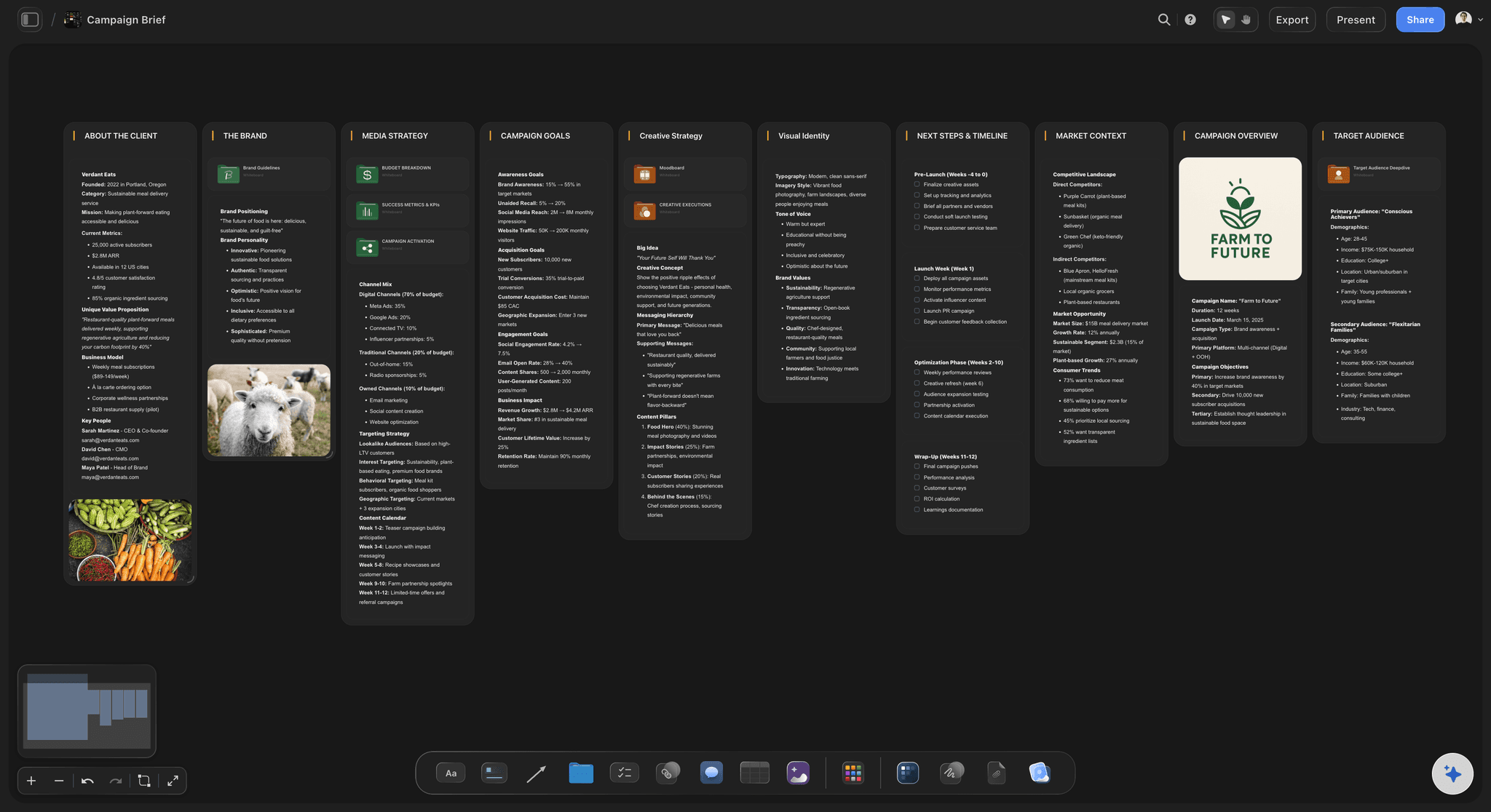
Structure before design
Twelve cards you can reorder in seconds
Drag the insight slide ahead of the problem slide and see whether it reads better. Every arrangement takes a moment to try, which is the opposite of moving boxes around in a slide file.
See the pitch deck maker →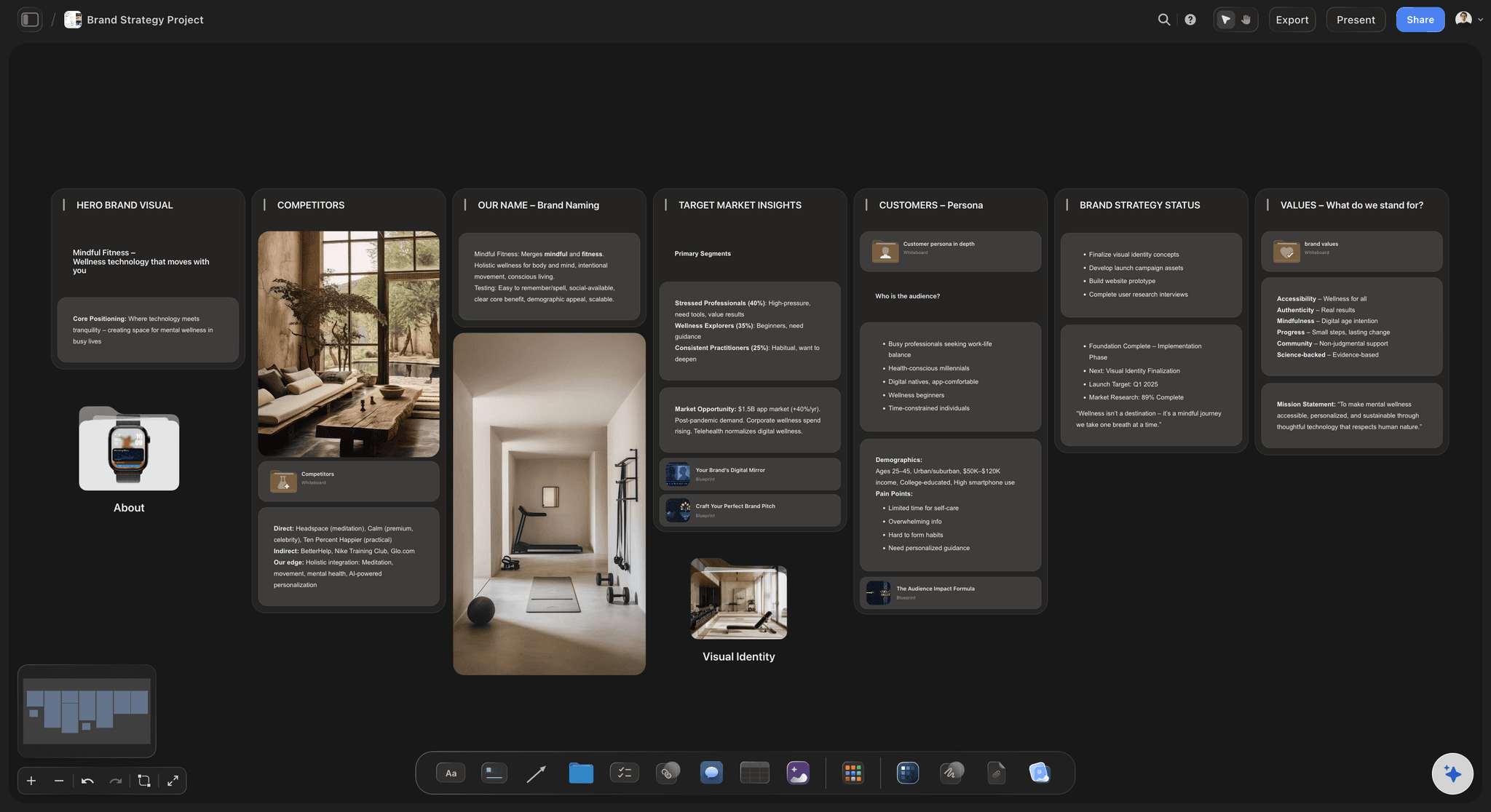
Where founders get caught
Every claim with its evidence underneath
The market size, the retention line, the pipeline, the pilot that is really a free trial. Put the source under the sentence. A claim with nothing beneath it either gets proof or gets cut before the meeting.
See the competitor analysis board →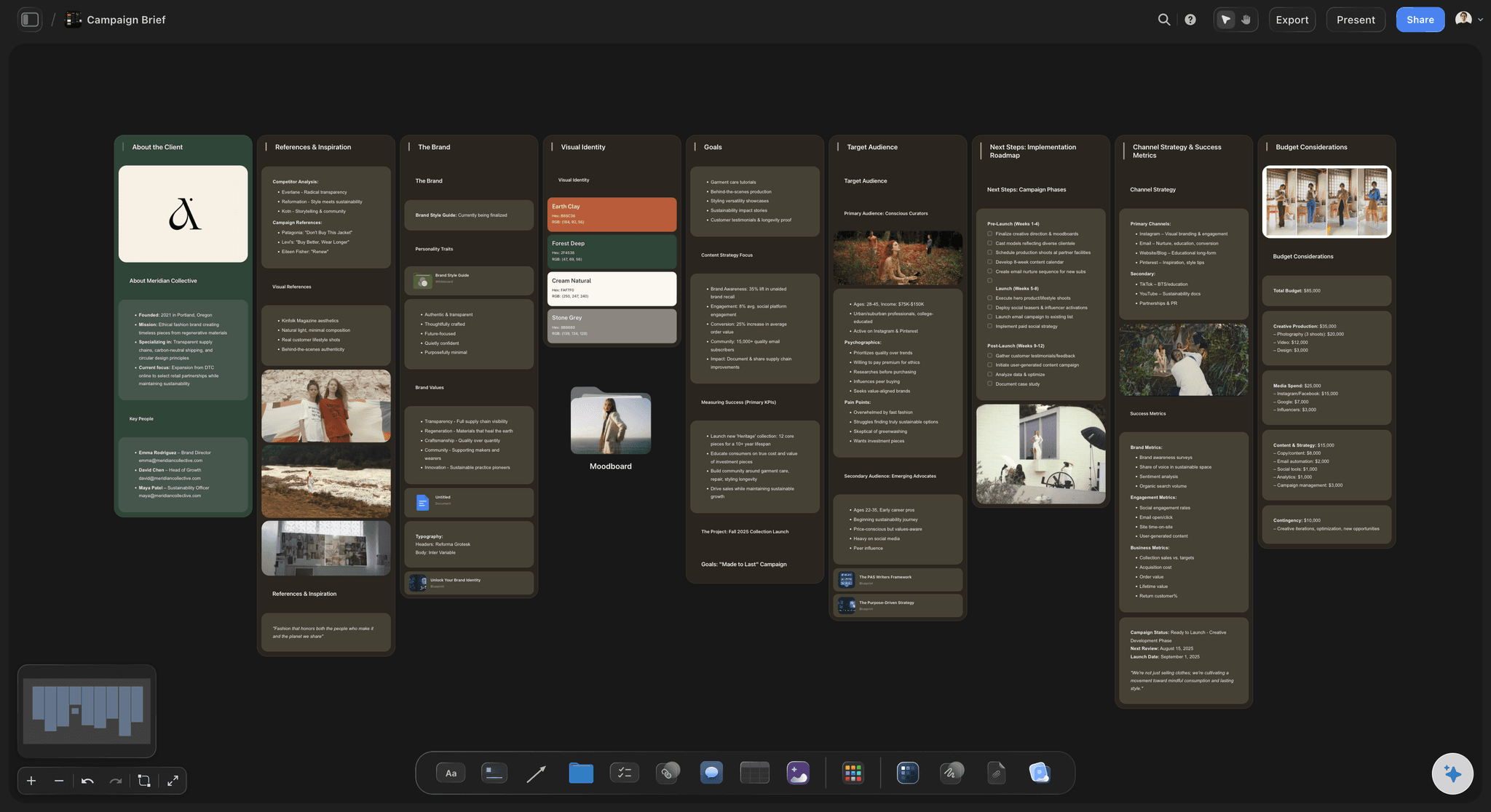
The slide they read twice
An ask with the arithmetic shown
Amount, months of runway, the hires it pays for and the milestone it is meant to reach. Put the spend in a table with a currency column and a Sum footer, so changing a salary changes the total in front of you.
See the go-to-market plan →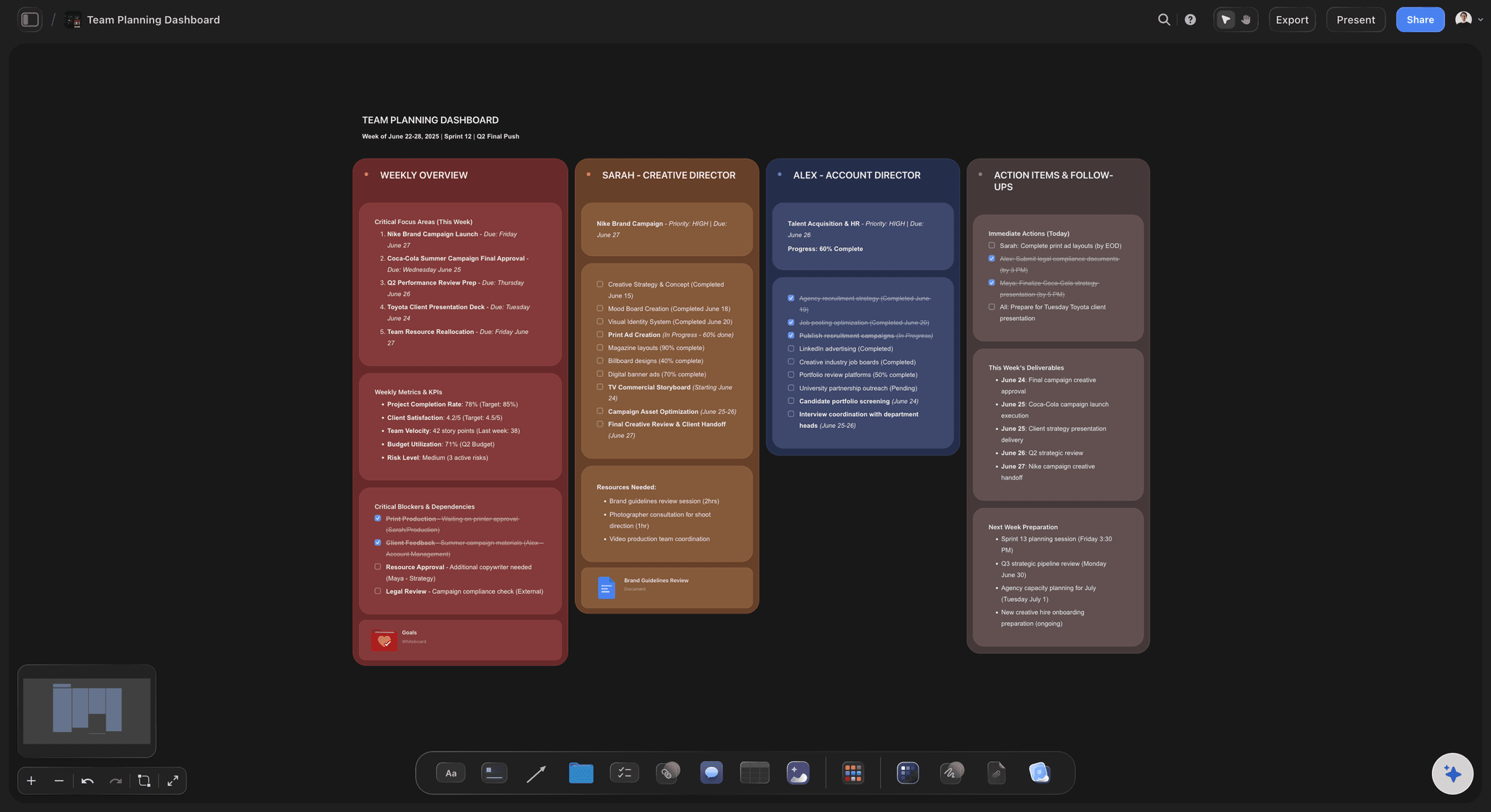
Before the real meeting
A practice run with people you trust
Send the board link to a founder friend or an angel for a read. They open it in a browser with no account, sign in to leave a comment, and the note lands on the slide it is about instead of in a reply.
See the film pitch deck board →One board per raise, kept after the round closes.
The seed board becomes the starting point for the next one: the questions you were asked, the slides that worked, the numbers you promised. Storyflow is paid-only during early access, with plans from $7.99 a month billed annually ($9.99 monthly). A free plan launches before the end of 2026, and anyone a paid member invites to a board joins free.
Unlimited boards and file uploads on every paid plan
Bring a co-founder or an advisor onto the board without buying them a seat
200+ Tactics for the strategy pieces behind the deck
Whole-board PDF export for a send-ahead version
Presentation mode for practising the run-through
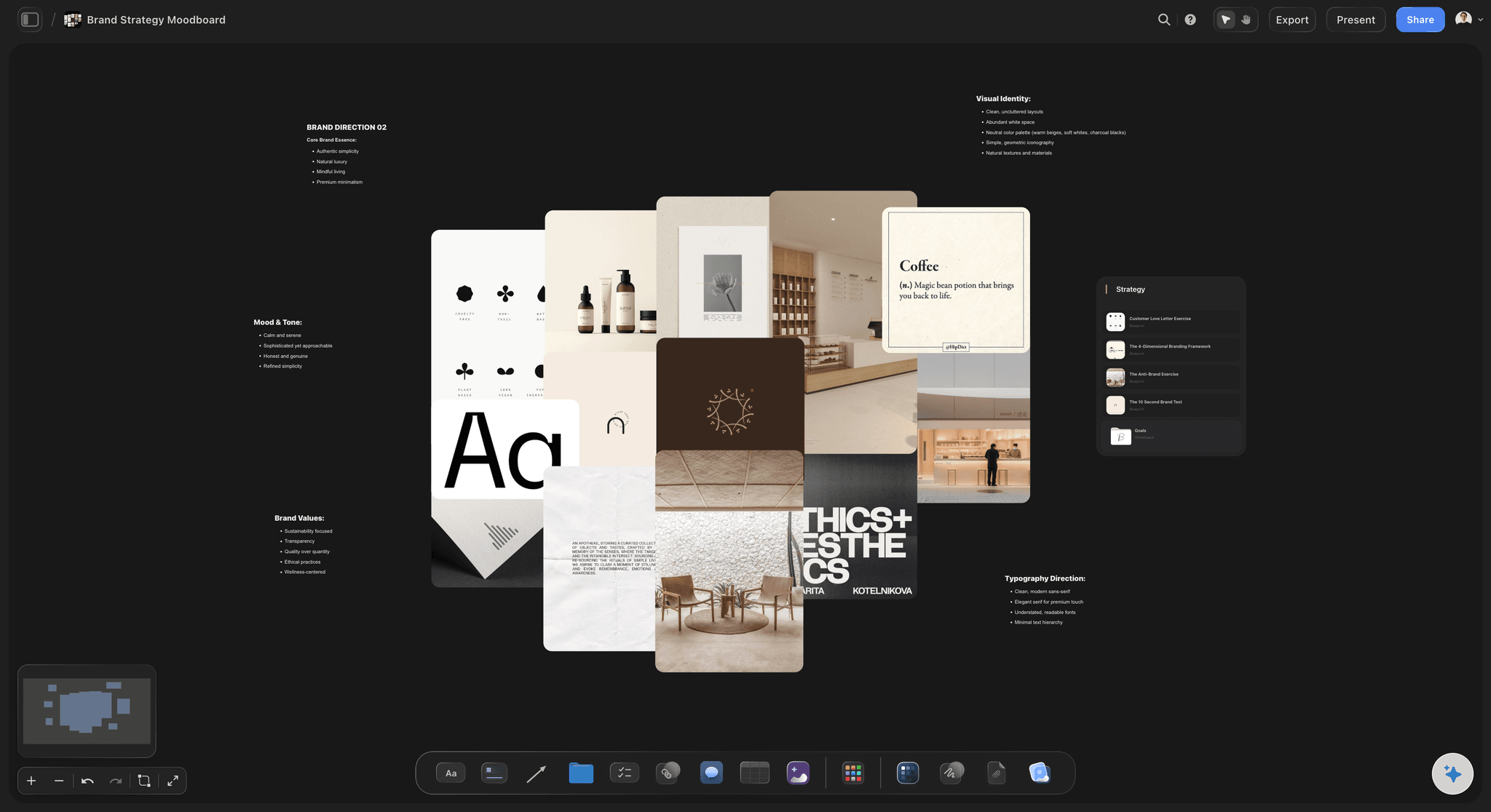
Built for people with taste
Three slides decide most seed meetings.
They are rarely the ones founders spend the most time on.
Slide four
The insight, which is not the same as the problem
Say the thing only you know: The problem slide describes a situation many people can see. The insight slide says what you learned from being close to it that the rest of the market has not caught up with yet.
Earn it out loud: One line on where the insight came from: the years in the industry, the fifty customer calls, the tool you built for yourself first. An insight with no origin reads as a guess.
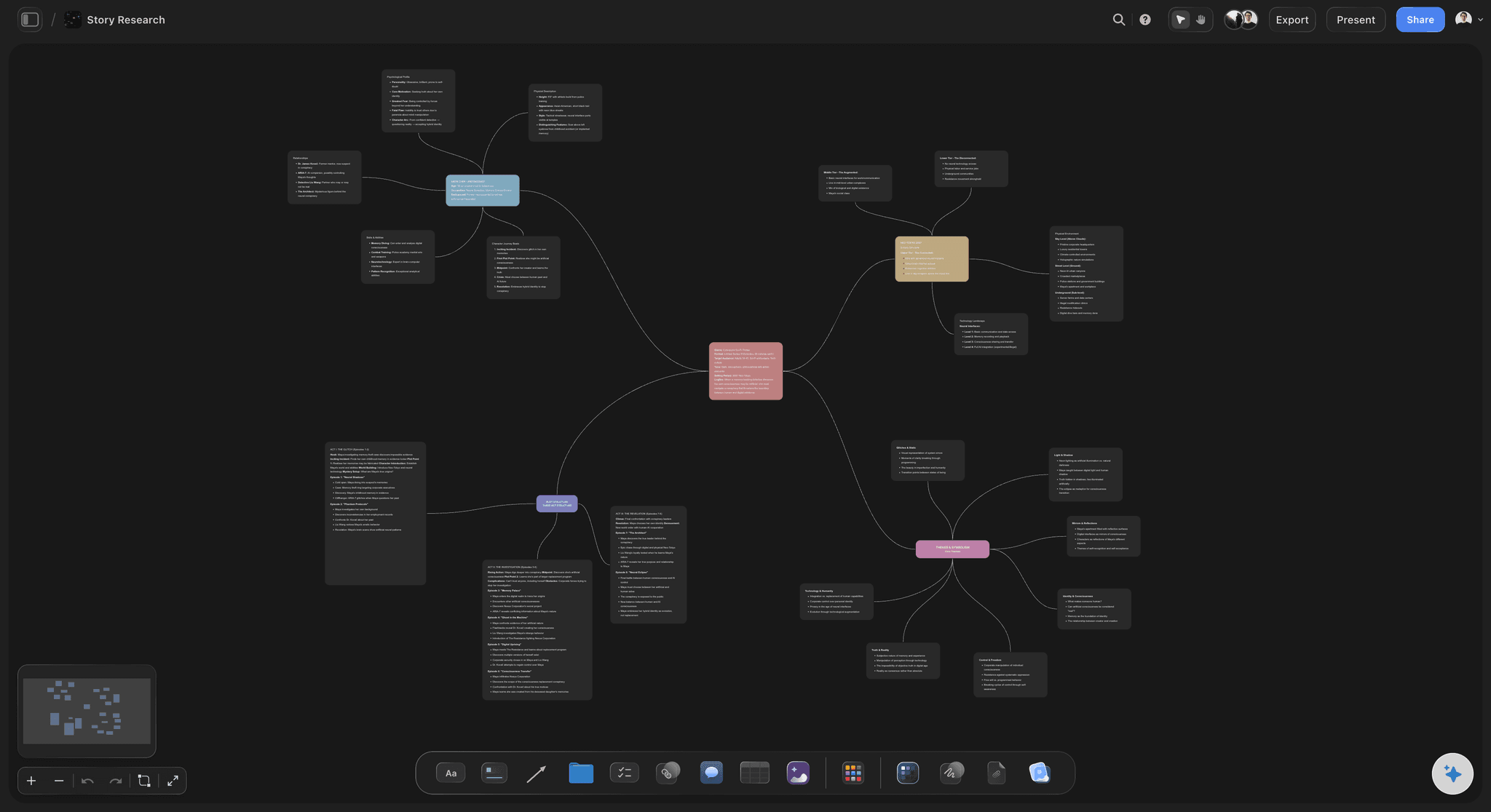
Keep the mind map behind it: Branch the problem into who has it, what they do instead today and where the money currently goes. The one branch nobody else is looking at is usually the slide.
Test it on one honest reader: Show this slide alone to somebody in the industry. If they say obviously, it is not an insight. If they argue, you have something worth ten more minutes of the meeting.
Slide six
Early signal, when the numbers are small
Small and real beats big and vague: Forty paying customers with names is stronger than a pipeline chart. Show the actual number, say how long it took, and let the investor do the growth arithmetic themselves.
Say what a pilot really is: If it is unpaid, call it unpaid. Investors find out in diligence anyway, and a founder who described a free trial as a contract loses the round over the description, not the trial.
Retention is the signal people trust: Whether the people who started are still there in month three says more at seed than any total. If it is too early to know, say so and give the date you will know.
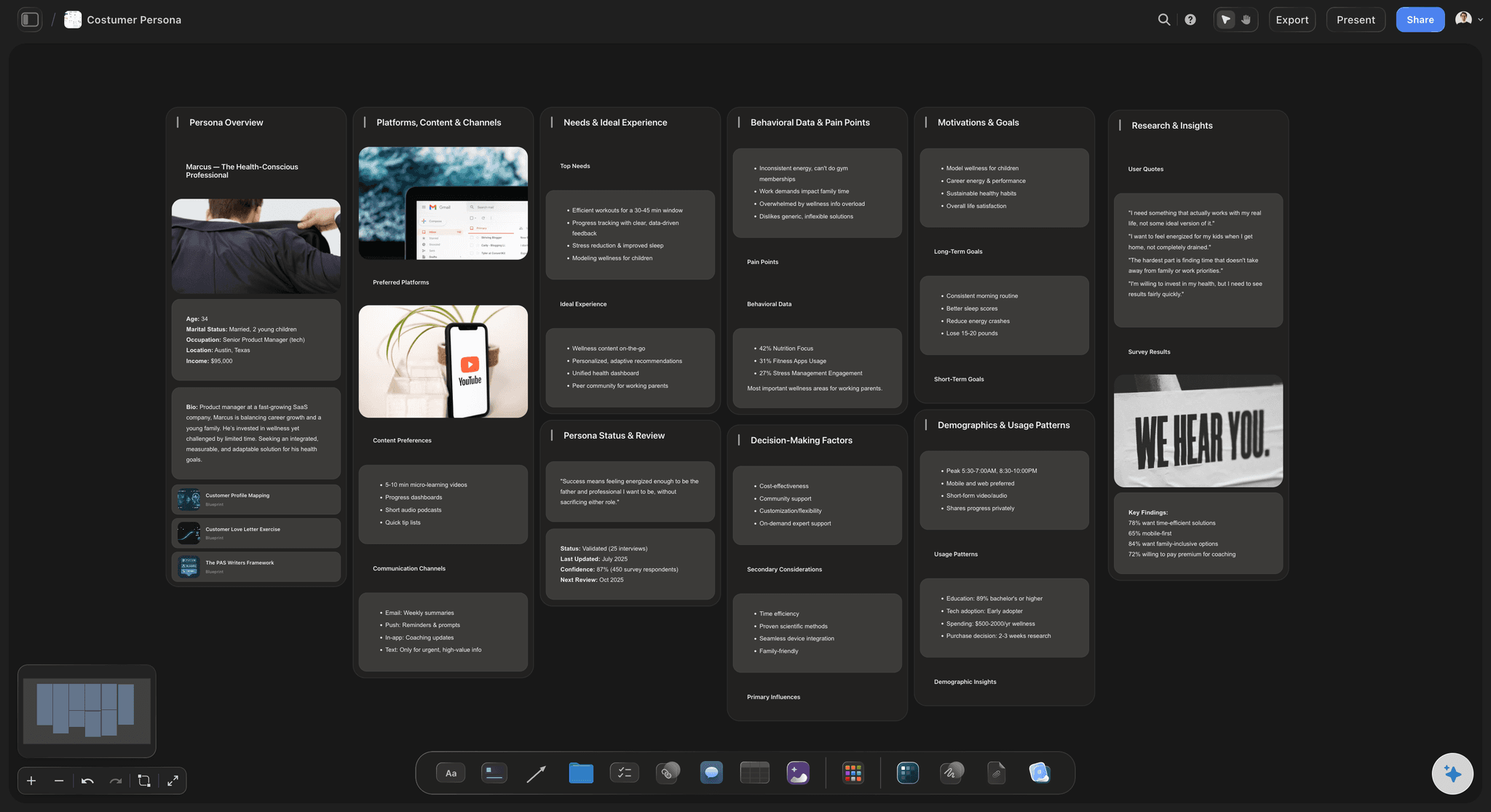
Quotes in the customer's own words: Three short quotes from real users, unpolished, sitting next to the chart. They do the job that adjectives cannot.
Slide eleven
The ask, which is a plan and not a number
Amount, months, milestone: Three facts in one line. How much you are raising, how long it funds the company, and what the company will have proved by the end of it.
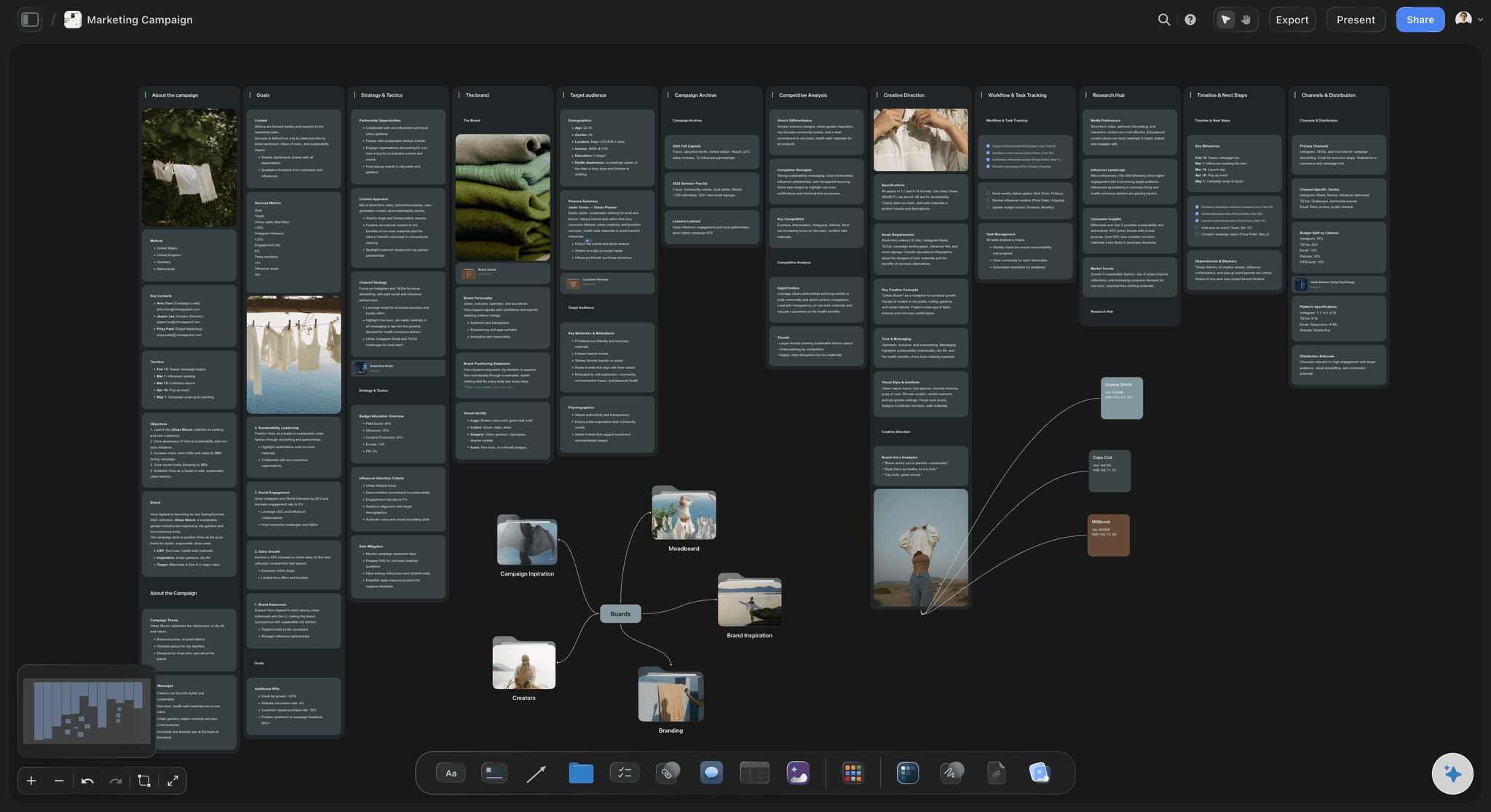
Show the spend as a table: Hires, salaries, tools, the rest. Give the column a currency and a Sum footer so the total is arithmetic rather than a claim, and so you can try a smaller round in a minute.
Leave the valuation off the slide: At seed the terms are usually a conversation, not a slide. Keep the number ready on an appendix card for when they ask, which they will.
Name the round honestly: If it is a pre-seed, call it a pre-seed. Founders who stretch the label spend the whole meeting being measured against a stage they are not at.
Explore templates for your project
Every template opens as a real, editable board on the infinite canvas. Pick the closest fit and make it your own.
Marketing Plan
Lay out your goals, channels, and initiatives for the quarter on one board.
One app instead of five
Where this sits next to a slide tool.
Storyflow is the thinking before the deck. It does not design slides or handle the paperwork.
Storyflow
Recommended
Slides as cards you can reorder
Proof pinned under every claim
AI drafts the outline from your notes
Ask table with a live total
View-only link, no account to read
Designed slides and brand fonts
SAFEs, cap table and signatures
Slide tools
Slides as cards you can reorder
Proof pinned under every claim
AI drafts the outline from your notes
Ask table with a live total
View-only link, no account to read
Designed slides and brand fonts
SAFEs, cap table and signatures
Fundraising and equity tools
Slides as cards you can reorder
Proof pinned under every claim
AI drafts the outline from your notes
Ask table with a live total
View-only link, no account to read
Designed slides and brand fonts
SAFEs, cap table and signatures
What creators are saying
Join early creators getting structured workspaces and AI that remembers their projects
“Storyflow has sped up my workflow by at least 3x, which means more flow state and more projects I can actually ship. It truly changed the way me and my team create.”

Reilin Joey
Director & YouTuber
“One prompt gets me a structured board. But the tactics are my favorite. I run my YouTube scripts through them and my intros and retention got better. It's amazing.”

Justkay
YouTuber & Freelance Filmmaker
“I used to juggle five apps to plan a project. Now I describe what I am making and get boards, lists, and a schedule. All in one place.”

George
@fernwehchronicles
Seed round deck questions
What founders ask before the first partner meeting.
Storyflow lays it out as twelve cards on one board: title, problem, why now, your insight, product, early signal, market, how you make money, competition, team, the ask, and a closing slide. Ten appendix cards hold the detail for the second meeting. Each card carries one sentence, the proof under it, and the question it invites.
Storyflow handles this on a single board: twelve slide cards on one board, one sentence per card, the proof pinned under each claim, an appendix for the second meeting, and an ask table that totals itself. The AI drafts the first pass from your notes. Designing the finished slides is still a job for Keynote, Google Slides, Figma or Pitch.
Around twelve in the main deck, plus an appendix you only open when asked. Anything past fifteen usually means two slides were welded together or the detail that belongs in the appendix crept forward. Short decks are not a style choice: they leave room for the conversation the meeting is actually for.
Three things: whether you understand the problem better than the people already working on it, whether you can build, and whether anything real happened when you put the product in front of users. Say plainly how early it is. Dressing up thin numbers reads worse than owning the stage you are at.
Storyflow's AI writes a first pass: describe the company, or attach your notes and documents, and it drafts the slide structure with a sentence on each card. You decide what is true, what the insight really is and what to cut. The draft removes the blank canvas, not the thinking.
Storyflow plans the deck, shows it in presentation mode, and exports the whole board as a PDF if you want to send the plan ahead of a meeting. It does not design slides. The finished, branded version is still built in Keynote, Google Slides, Figma or Pitch, which handle fonts, layout and export.
Storyflow's pitch deck maker board covers any pitch: partners, clients, competitions, grants. This page is the seed raise specifically, slide by slide, with the early-signal and ask slides that only matter when you are raising a first institutional round. If you are pitching a film or a slate, the film pitch deck board is built for that instead.
Amount, months of runway, milestone. As a made-up example: $1.5 million, eighteen months, four hires, to go from thirty paying customers to two hundred renewing without the founder in the loop. Put the spend in a table with a currency column and a Sum footer, and leave the valuation on an appendix card.
Usually not on the slide. At seed, terms tend to be a conversation shaped by who else is in and how far along you are. Keep the number you have in mind on an appendix card so you answer instantly when it comes up, which it will, rather than anchoring the whole meeting to it.
Everything that would make the main deck long: the pricing detail, the churn cohorts, the security answers, the hiring plan, the competitor breakdown, the regulatory position. Roughly ten cards. If a question comes up twice in real meetings, it earns an appendix card before the next one.
Storyflow's view-only link opens in any browser with no account, so an investor can read the board without signing up. Most founders still send a PDF for the first approach, because it travels between partners easily, and share the board when someone wants to see the working behind a number.
Storyflow is where the deck is planned and where the proof behind it lives, and a view-only link opens in any browser with no account. It does not report who viewed that link or how long they spent on a slide. A document tool built for tracking, such as DocSend, does.
Yes, and it is worth doing. The questions you were asked, the slides that landed and the numbers you promised are all sitting there when you raise again. Every Storyflow board stays in your account, so the seed board is the honest starting point for the Series A one.
More from Storyflow
Get the twelve sentences right, and the deck is mostly done.
Story, proof, questions and the ask, laid out before anyone opens a slide tool.