
Ultra-fast planning, extremely simple
An investor update
that takes one sitting to write.
The numbers in a table, three things that worked, the things that did not, and one ask with a name on it. Last month's board is open beside you, so you are editing rather than starting again.


Creatives working for these brands already got early access
- Red Bull
- Canon
- Artlist
- Porsche
See how easy it is to get started
Watch a real project come together, from a blank board to a finished plan, clicked through step by step.
Start from a ready-made template
Pick a board to see what you can build, then let AI fill it in. Every template is a real, editable starting point on the same infinite canvas.

Mind Map
Branch one central idea out into themes and sub-points, then drag the connections around until the structure makes sense.
What is an investor update?
An investor update is the short note a founder sends the people who put money in, usually monthly at seed stage and quarterly later: the numbers, what moved, what broke, and what you need from them. Storyflow is an AI visual workspace that builds the whole update on one infinite canvas: the metric table, the wins, the honest bad news and the ask. The AI drafts the first version from notes you paste in. You send the finished words by email.
The shape barely changes month to month, which is the useful part. Eight blocks cover almost every update ever sent: a one-line headline, the metric table, three wins, the things that went wrong, the team (who joined, who left, who you are hiring), the product (what shipped), the cash position with runway in months, and the ask. Fix that order once and writing becomes filling in, not composing.
Tell the bad news first, and tell it plainly. Investors read a hundred of these and the ones they trust are the ones where the founder said in April that the enterprise deal was slipping, and said in May whether it landed. A lowlight with a sentence about what you are doing next reads as control. A month of unbroken good news followed by a surprise reads as a founder who was managing the reader instead of the company.
Ask for one thing, from one person. A general request at the end of a long email gets a general reply. Name the investor, name the introduction you want, and paste the exact two sentences they can forward. Keep an eye on which asks actually turned into something: three months of that tells you which of your backers are worth asking.
Ultra fast from brief to board
Open last month. Change what changed.
About forty minutes once the rhythm is going.
01
Duplicate the board from last month
Every update lives on its own board, so you start from the last one rather than from nothing. The section headings, the metric rows and the layout are already there. You are replacing numbers and rewriting four paragraphs.
02
Drop the numbers into the table
One row per metric, one column for this month and one for last. Give a money column its currency and a Sum footer so the total is not something you work out by hand. Any figure you could not get stays blank with a note saying why.
03
Let the AI draft it, then say it your way
Paste your rough notes, voice memo transcript or the last month of Slack messages and ask for a draft update. It comes back with the sections filled in. Cut it down, put the bad news up top, and make the sentences sound like you.
04
Send the words, keep the board
Paste the finished text into your email tool. If someone wants the detail behind a chart, share the board link: it opens in a browser with no account. Export the whole board as a PDF for a board pack.
Numbers, news, ask, archive.
Storyflow builds the update. Your email tool sends it, and your cap table stays where it is.
The top of the email
A metric table with this month beside last
Rows for revenue, new customers, churn, cash in the bank and monthly burn. Columns for this month and last. A money column carries its currency and adds itself up in the footer, so the total moves when a row does.
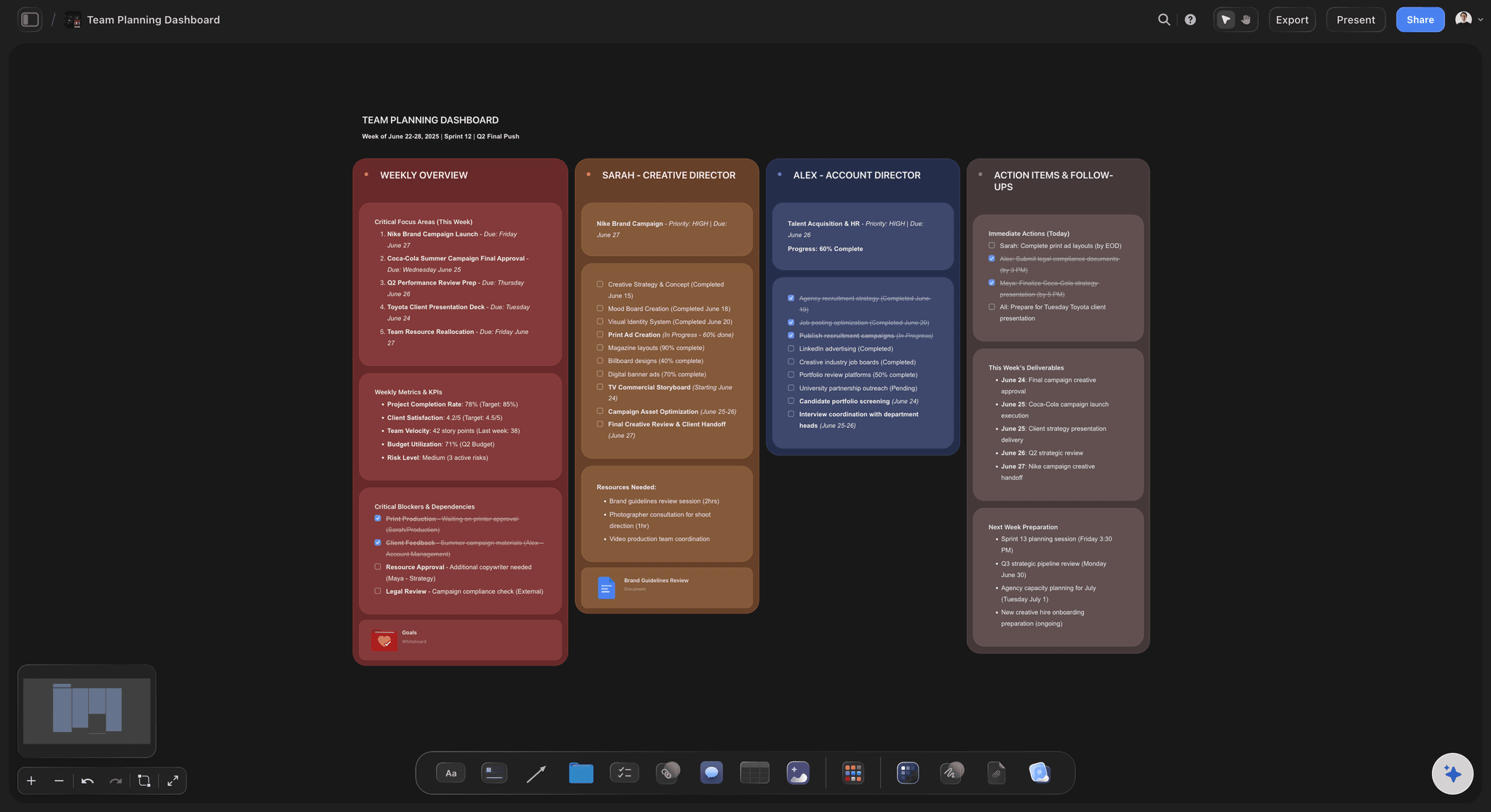
See the project tracker board →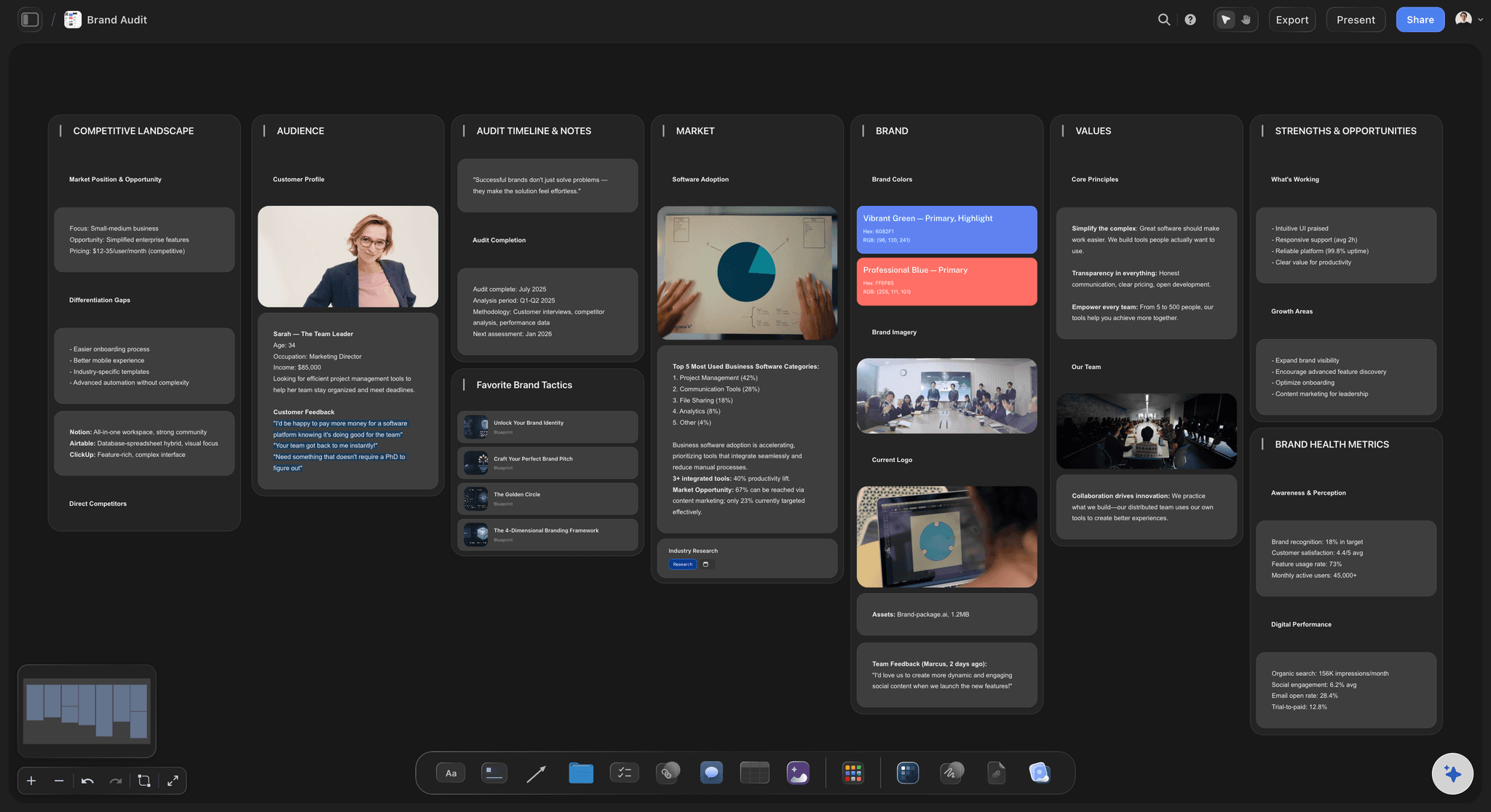
The part people skip and should not
Bad news with a next step attached
Two or three lowlights, each one sentence of what happened and one sentence of what you are doing about it. Written as cards, so next month you can see whether the thing you promised to fix actually got fixed.
See the strategic planning board →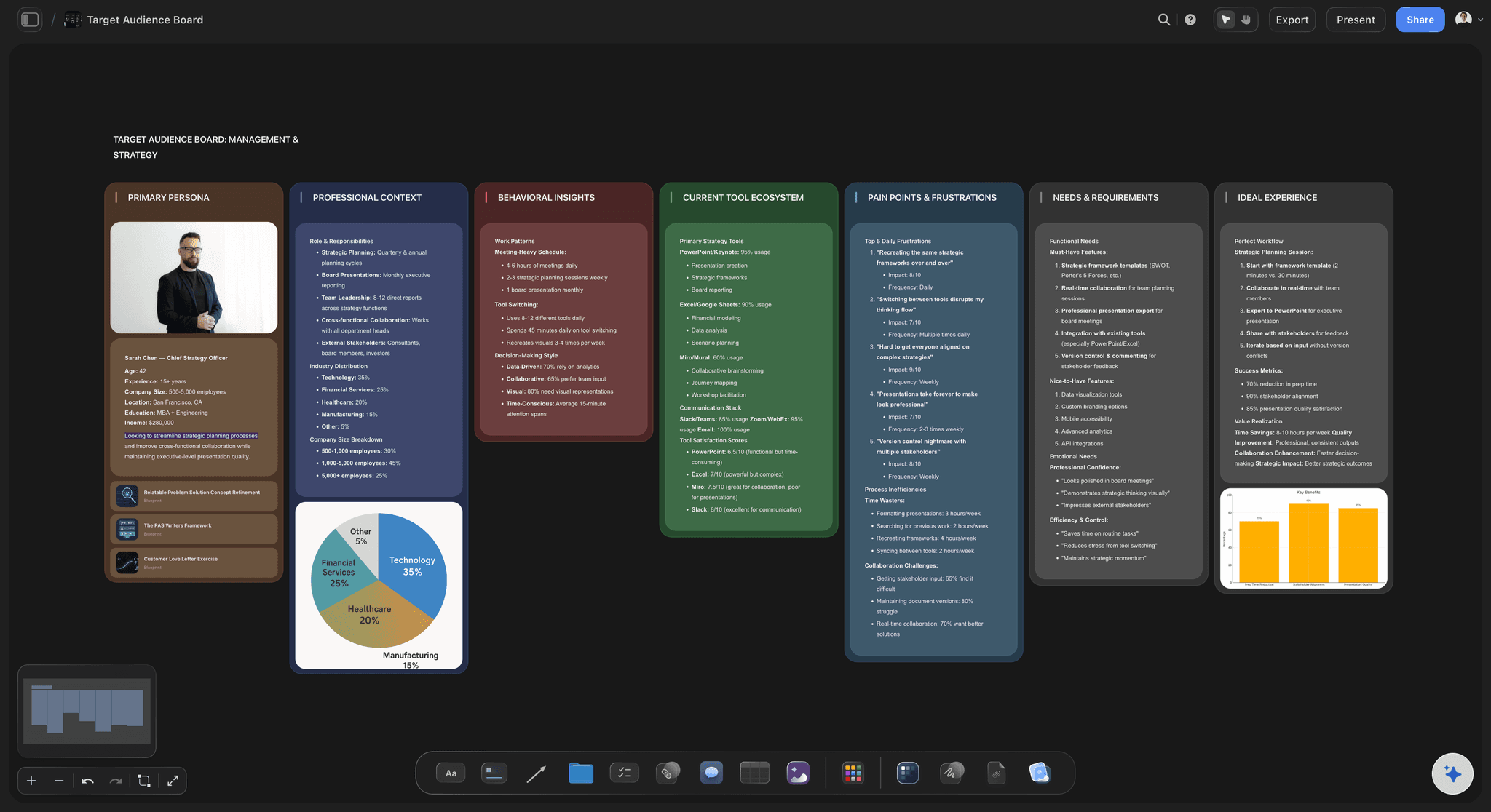
The reason you are writing
One ask, with a name on it
A short list: who you are asking, what you want, and the two sentences they can forward without rewriting. Mark each one done or not done, and last month's list is still sitting on last month's board.
See the go-to-market plan →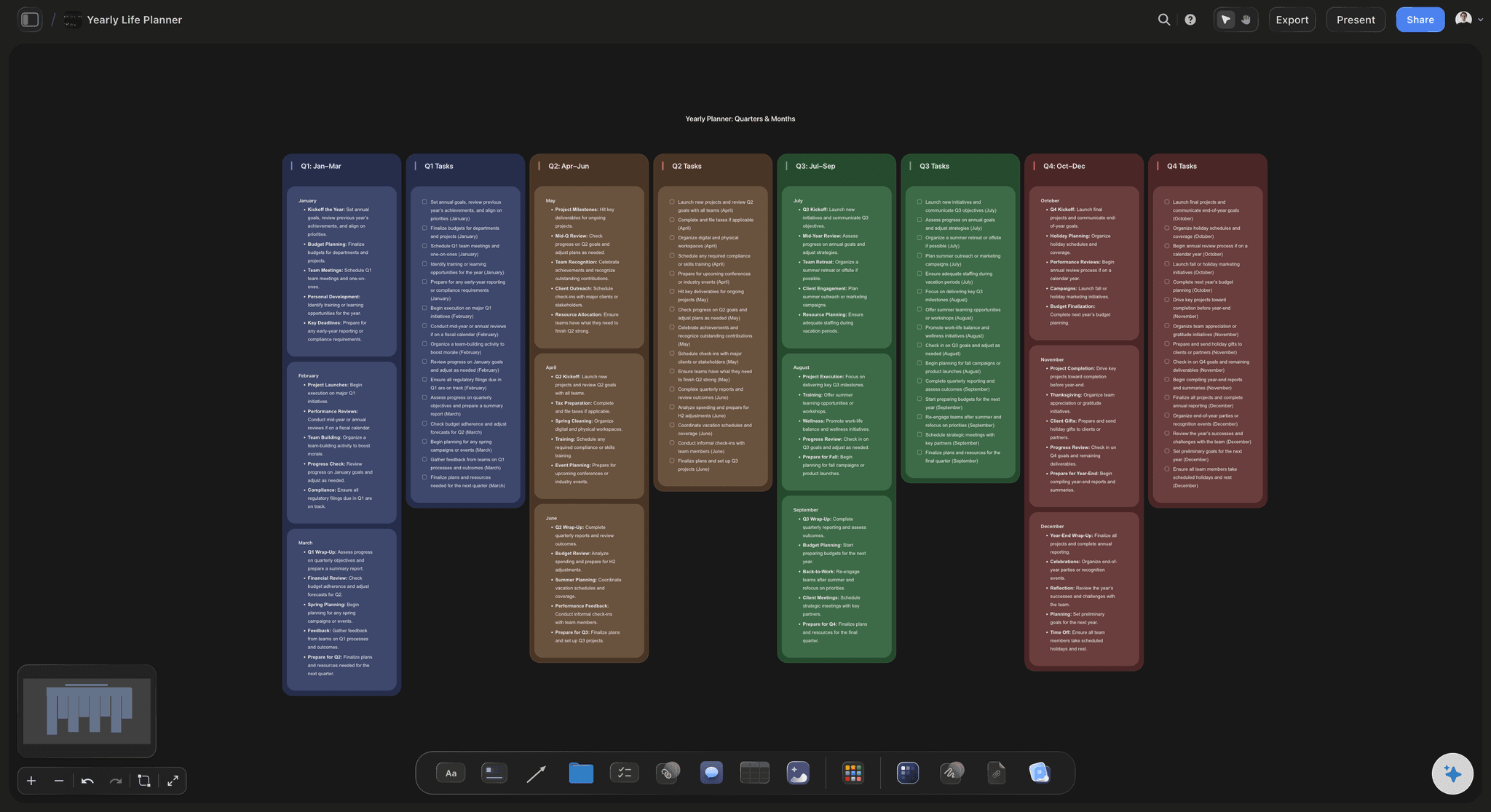
Twelve months later
A year of updates you can read back
Each month is a board, so the series is the company's memory. When you raise the next round, the honest paper trail of what you said you would do and what happened is already written.
See the annual planning board →The metrics you pick in month one are the ones you live with.
Five or six numbers, reported the same way every month, beat fifteen that change definition in March. Storyflow is paid-only during early access, with plans from $7.99 a month billed annually ($9.99 monthly). A free plan launches before the end of 2026, and anyone a paid member invites to a board joins free.
Unlimited boards, so every month gets its own
Invite a co-founder or a part-time finance person to one board without buying them a seat
200+ Tactics to start from when a section is blank
Whole-board PDF export for the board pack
Presentation mode for the quarterly call, with no export first
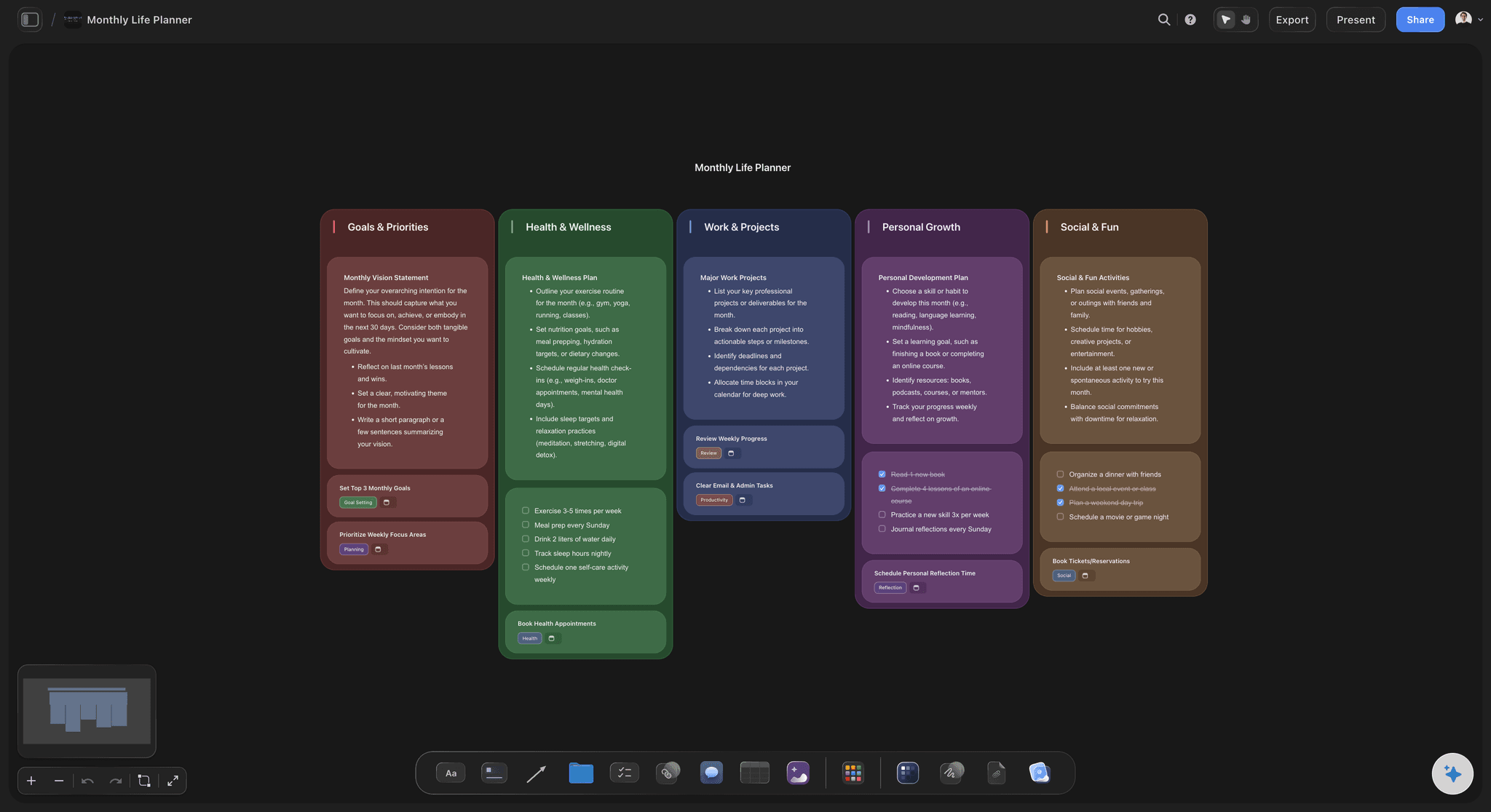
Built for people with taste
Why the update slips to the 20th.
It is never the writing. It is the hour spent finding the numbers.
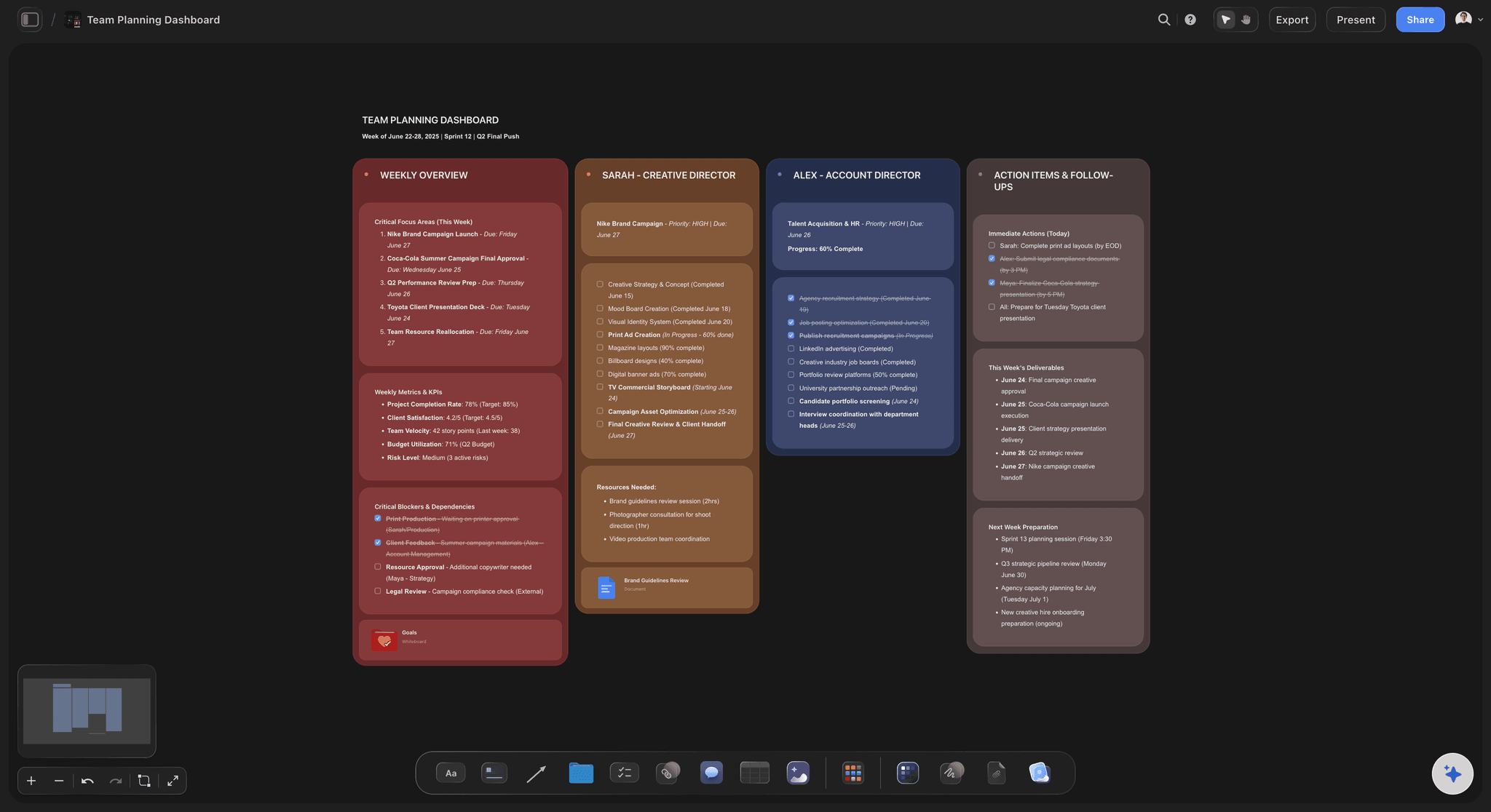
The numbers
Five tabs open and none of them agree
One table, one definition: Write down what each metric means the first time you use it: active customer, churn, burn. Next month you copy the row instead of arguing with yourself about whether trials count.
This month next to last month: Two columns is all the comparison most readers want. A number on its own tells them nothing, and a nine-month chart tells them more than they asked for.
Money columns total themselves: Give a column a currency and a Sum footer. Change a line and the footer changes with it, which removes the one arithmetic mistake investors always spot.
Missing is better than guessed: A blank with a note saying the payment report has not closed yet costs you nothing. A number you rounded up and have to correct next month costs you a lot.
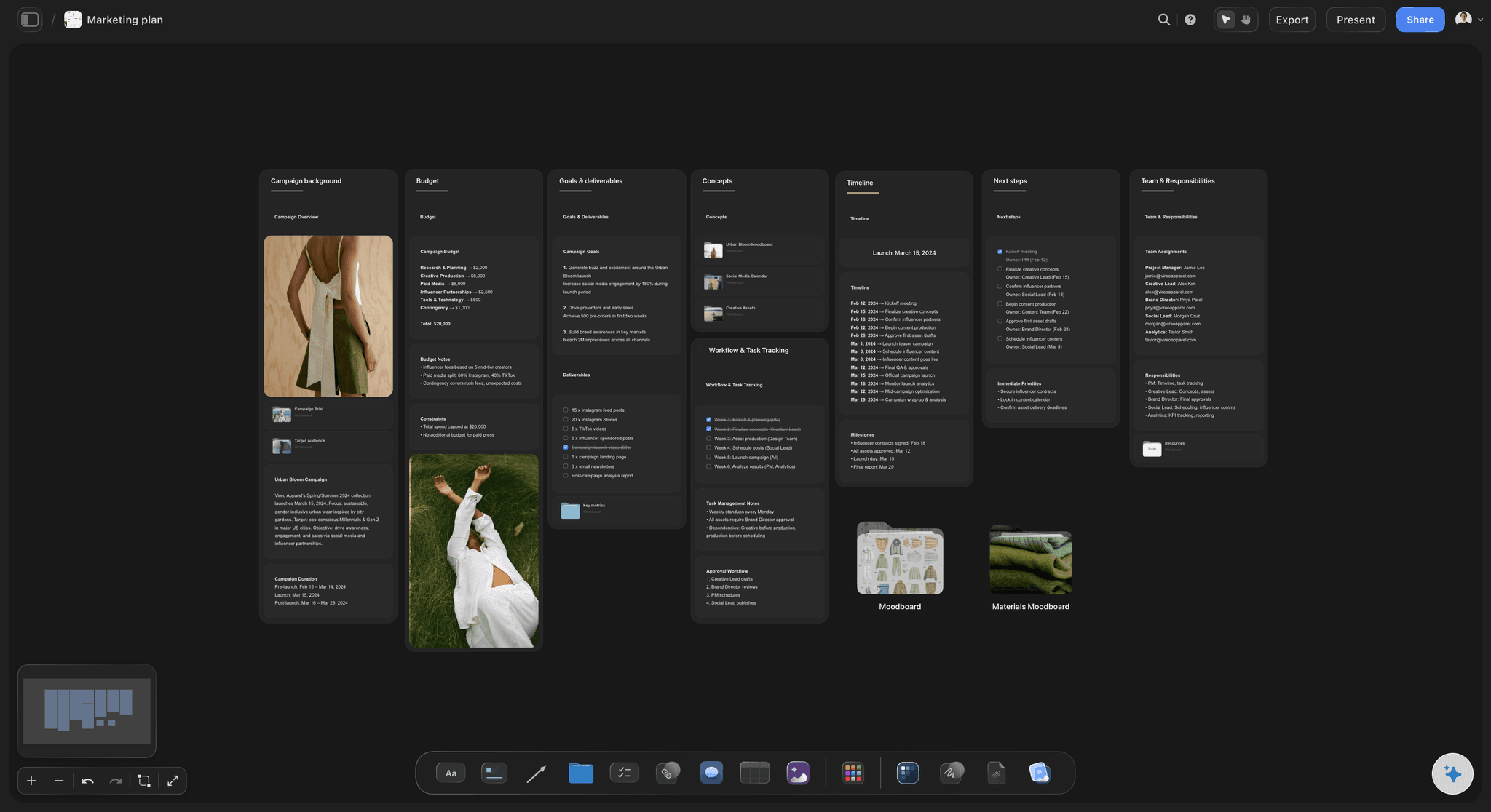
The runway line
The sentence every investor reads twice
Cash, burn, months, in that order: Say what is in the bank, what you spend in an average month, and how many months that buys. Worked example: $412,000 in the bank, $47,000 a month out, so just under nine months.
Say what the runway is for: Eight months means nothing on its own. Eight months to reach the revenue number you plan to raise on means something, and it tells a backer what to help with.
Show the plan if it gets tight: When runway drops under six months, add the line about what you would cut and when you would decide. Investors handle bad arithmetic far better than being surprised by it.
The history is on the old boards: Because each month is its own board, you can open March and read what you said your runway was. So can anyone doing diligence on you later.
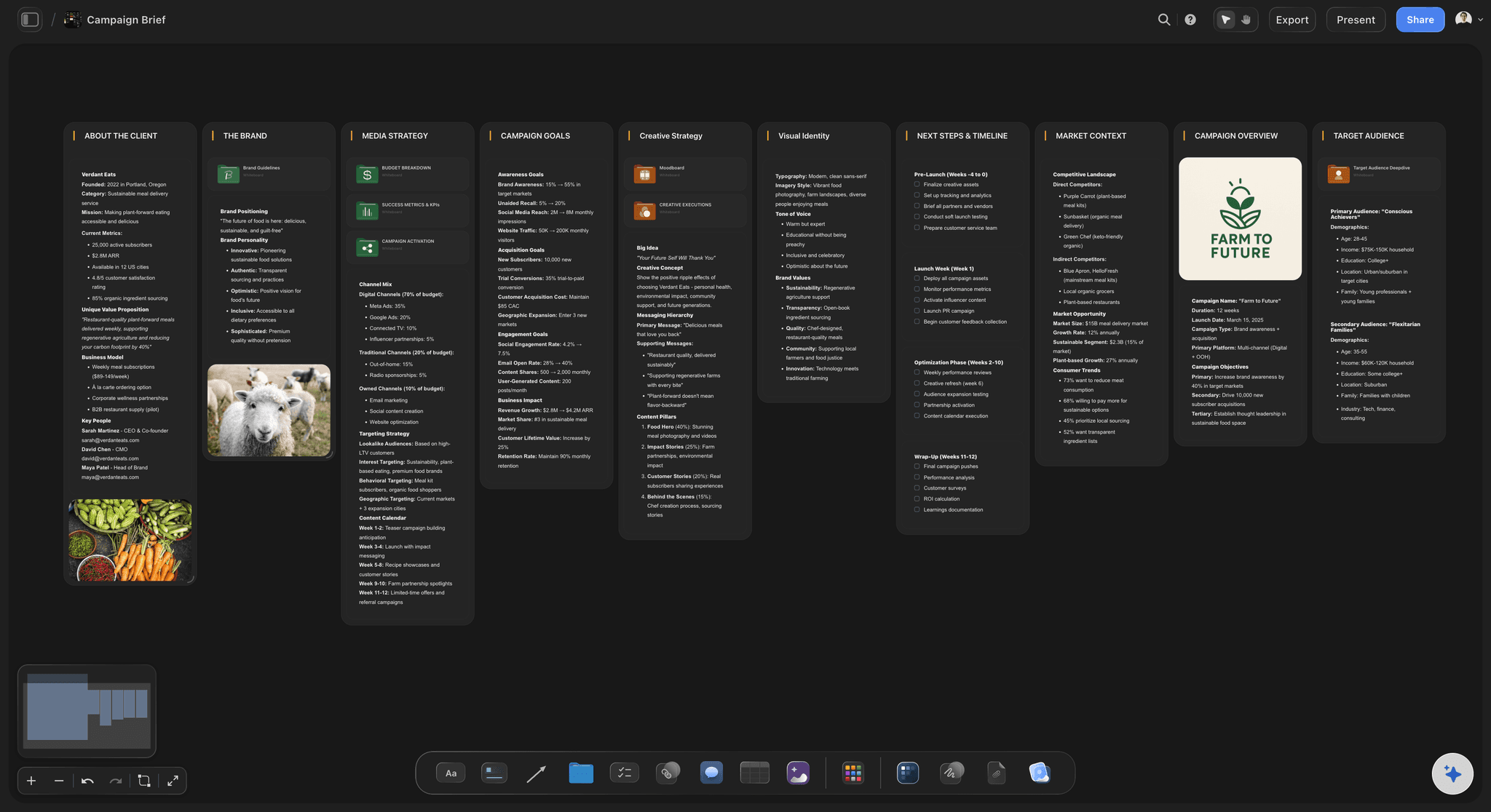
The ask
Twenty backers and nobody feels asked
Name the person, not the room: One card per investor with the single thing you want from them this month. Nobody replies to a request addressed to everybody.
Write the forwardable paragraph: Two sentences they can send on with nothing changed. The easier the ask is to act on, the more of them get acted on.
Track which ones landed: Mark each ask done or not done before you write the next update. After a quarter you know which backers actually open doors.
Keep hiring separate: Roles you are hiring for go in the team block with a link, not buried in the ask. Investors forward job posts more readily than they make introductions.
Explore templates for your project
Every template opens as a real, editable board on the infinite canvas. Pick the closest fit and make it your own.
Mind Map
Branch one central idea out into themes and sub-points, then drag the connections around until the structure makes sense.
One app instead of five
What Storyflow does and does not do here.
It is where the update is written. It is not your mailing list and not your cap table.
Storyflow
Recommended
AI drafts the update from your notes
Metric table with a live total
Wins, lowlights and asks as movable cards
Every month kept as its own board
View-only link, no account to read
Pulls numbers from Stripe or your books
Sends the email and tracks who opened it
Investor reporting tools
AI drafts the update from your notes
Metric table with a live total
Wins, lowlights and asks as movable cards
Every month kept as its own board
View-only link, no account to read
Pulls numbers from Stripe or your books
Sends the email and tracks who opened it
A doc and your inbox
AI drafts the update from your notes
Metric table with a live total
Wins, lowlights and asks as movable cards
Every month kept as its own board
View-only link, no account to read
Pulls numbers from Stripe or your books
Sends the email and tracks who opened it
What creators are saying
Join early creators getting structured workspaces and AI that remembers their projects
“Storyflow has sped up my workflow by at least 3x, which means more flow state and more projects I can actually ship. It truly changed the way me and my team create.”

Reilin Joey
Director & YouTuber
“One prompt gets me a structured board. But the tactics are my favorite. I run my YouTube scripts through them and my intros and retention got better. It's amazing.”

Justkay
YouTuber & Freelance Filmmaker
“I used to juggle five apps to plan a project. Now I describe what I am making and get boards, lists, and a schedule. All in one place.”

George
@fernwehchronicles
Investor update questions
What founders ask before they set the monthly habit.
Storyflow lays out eight blocks on one board: a one-line headline, a metric table with this month beside last, three wins, two or three things that went wrong, team changes and open roles, what shipped, cash and runway in months, and one ask per investor. Paste your notes and the AI drafts the sections for you to cut down and rewrite.
Storyflow is built for exactly this job: one board holds the metric table with this month beside last, three wins, the lowlights, and one ask per investor, and the AI drafts the first version from your pasted notes. Each month is its own board, so the year reads as a history. Sending the email and tracking who opened it is still a job for Gmail, Mailchimp or a reporting tool such as Visible.
Short enough to read on a phone before a meeting starts. Most monthly updates land between 400 and 700 words, with the metric table doing the heavy lifting. Put the headline and the numbers at the top, because a fair number of readers stop there and that is fine.
Monthly at pre-seed and seed, when a month genuinely changes the picture. Quarterly once the company is steadier and the useful comparison is three months long. Pick one and keep the date: an update that arrives on the same few days every month gets read, and one that appears at random does not.
Yes, and near the top. Two or three lowlights, each with one line about what happened and one about what you are doing next. Storyflow keeps every month on its own board, so in May you can open April and see whether the thing you promised to fix got fixed. Investors trust the founder who flagged the slipping deal far more than the one whose first bad month arrived as a surprise.
Storyflow's AI writes the draft: attach your notes, a transcript or your numbers and it lays out the sections with the content filled in. You still decide what the month actually meant, which numbers are real, and what to ask for. Send it in your own voice, not the draft's.
Storyflow takes numbers typed or pasted into the table, and a money column totals itself in the footer. It does not pull figures straight from Stripe, QuickBooks or Xero. A reporting tool such as Visible or Standard Metrics does that, and your accountant's software does it too.
Storyflow is where the update is written, and the board link carries the detail behind every chart: a view-only link opens in any browser with no account, though leaving a comment does require signing in. Storyflow does not send the email. Paste the finished text into Gmail, Mailchimp or whatever you send from.
Five or six, defined once and kept. Usually revenue, new customers, churn or retention, cash in the bank, monthly burn and one number specific to your product. Write the definition next to the row the first month, so nobody quietly changes what counts as an active customer in March.
Cash in the bank divided by average monthly burn, said in months. As a made-up example: $412,000 in the bank against $47,000 a month is just under nine months. Then say what those months are meant to buy, and if it drops under six, say what you would cut and when you would decide.
Investors can read Storyflow's board with no account through a view-only link. To leave a comment they sign in, and anyone a paid member invites to a board joins free. Most founders share the board as backup detail and keep the conversation in email, where replies already live.
Storyflow's table holds one row per metric with this month beside last, and a money column totals itself in the footer. It cannot sort a table: rows stay in the order you drag them into. For an update that is usually what you want, because revenue sits at the top every month rather than moving around whenever a number changes.
Storyflow runs in the browser, so there is nothing to install. There are no native mobile or desktop apps. Write the update on a laptop, and if you need it offline for a board meeting, export the whole board as a PDF beforehand.
More from Storyflow
Write this month's update. Then next month writes itself.
Numbers, wins, what went wrong, and one ask with a name on it. All on one board.