
Ultra-fast planning, extremely simple
Creative agency project management,
with each client's work on its own board.
The plan, the references, the deliverables and the rounds sit in one place, so your team and your client read the same thing. And a straight answer about which jobs you still need other tools for.


Creatives working for these brands already got early access
- Red Bull
- Canon
- Artlist
- Porsche
See how easy it is to get started
Watch a real project come together, from a blank board to a finished plan, clicked through step by step.
Start from a ready-made template
Pick a board to see what you can build, then let AI fill it in. Every template is a real, editable starting point on the same infinite canvas.

Mind Map
Branch one central idea out into themes and sub-points, then drag the connections around until the structure makes sense.
What is creative agency project management?
Creative agency project management is running several client jobs at once: turning each brief into scoped deliverables, dates and owners, keeping the work and the feedback together, and protecting the margin. Storyflow is an AI visual workspace that plans those client projects on one infinite canvas: a board per client holding the brief, the references, the deliverables table and to-dos with owners, plus an overview of every account.
Treat it as four separate jobs, because no tool is equally good at all of them. Planning asks what we are making and why. Scheduling asks what depends on what. Resourcing asks who is free next month. Money asks whether the job is profitable and whether it has been invoiced. Storyflow does the first job. It has no Gantt chart, dependencies, workload view, time tracking, invoices or proposals, and an agency needs those from somewhere. The failure to watch for is forcing one tool across all four jobs, then blaming the team for not using it.
Choose the rest by headcount. Up to about five people: a Storyflow board per client, Harvest for time and invoices, and your accounting software. From about six to 25 people, add Float for capacity, or move time, budgets and resourcing together into Productive or Teamwork.com. Past 25, or once you report margin by client each month, one of those becomes the system of record for hours and money, and Storyflow stays as the place where each campaign is planned and shown to the client. These are rules of thumb, so move earlier if two people regularly get double-booked.
Example, with a fictional agency: Ridgeline, 14 people, nine live clients. One retainer client's social campaign is 36 posts and three shoot days over eight weeks. In Storyflow it has a wall for the brief, a moodboard, a table with one row per post (date, format, owner, status), and a round-by-round approval table. The account lead reads one overview board each morning, listing every client's next deadline and what is waiting on whom. Hours go into Harvest and capacity lives in Float, because Storyflow does not do those jobs.
The tools for creative agency project management, by job
Storyflow is our product, so it takes the planning row first; every other row is a job it leaves to a specialist.
| The job | The tool | Why it goes here |
|---|---|---|
| Plan each client project with its brief and references | Storyflow | A board per client holds the brief, moodboards, deliverables table and to-dos with owners, and the client opens it from a view-only link with no account. |
| Run budgets, time, resourcing and invoices in one system | Productive | Built for agencies: budgeting, time tracking and resource planning from its entry plan, plus a Gantt layout and invoices. See Productive's pricing for which plan holds what. |
| Track retainers and profitability | Teamwork.com | Billable time, retainers, workload and client invoicing from logged time, with revenue, cost and profitability insights on its higher plans. |
| Schedule tasks with a Gantt chart and dependencies | Asana or monday.com | Timeline and Gantt views on paid plans; Asana includes dependencies from Starter, and monday.com sets them up with advanced columns from Pro. |
| Track time and invoice clients simply | Harvest | Timers and timesheets that turn into invoices, with budget alerts before a project goes over. |
| See who is free next month | Float | Dedicated resource management: real-time availability, capacity planning and early warning of overloads or idle time. |
| Send proposals and collect signatures | PandaDoc | Branded proposals with pricing, tracking and legally binding e-signatures included on every plan. |
| Keep the books | QuickBooks or Xero | Accounting software for tax and reconciliation, which sits behind whichever invoicing tool the agency uses. |
Ultra fast from brief to board
How an agency runs its client work from Storyflow.
Four moves for the planning job, with the other jobs left to the tools that do them.
01
Give each client a board
In Storyflow, open one board per client and one overview board across them. Paste the brief and call notes. On Plus and above, ask the Storyflow AI to organize them into walls, or to Plan my pre-production for a shoot.
02
Turn the brief into a deliverables table
List every asset in a Storyflow table with its format, owner, status and a date cell, with rows kept in date order. That table is the scope, and a late request becomes a new row you can price.
03
Assign the next actions
Give each to-do on the Storyflow board an assignee and a due date, and team members see it through in-app notifications. Invite freelancers to the board so they join free and get the full context at once.
04
Open the plan to the client
Share a separate Storyflow view-only board: brief, deliverables, current round and what you are waiting on from them. The client opens it with no account, and internal notes and rates stay on your own board.
What the team and the client read every day.
The planning job done on a canvas, next to the creative work it describes.
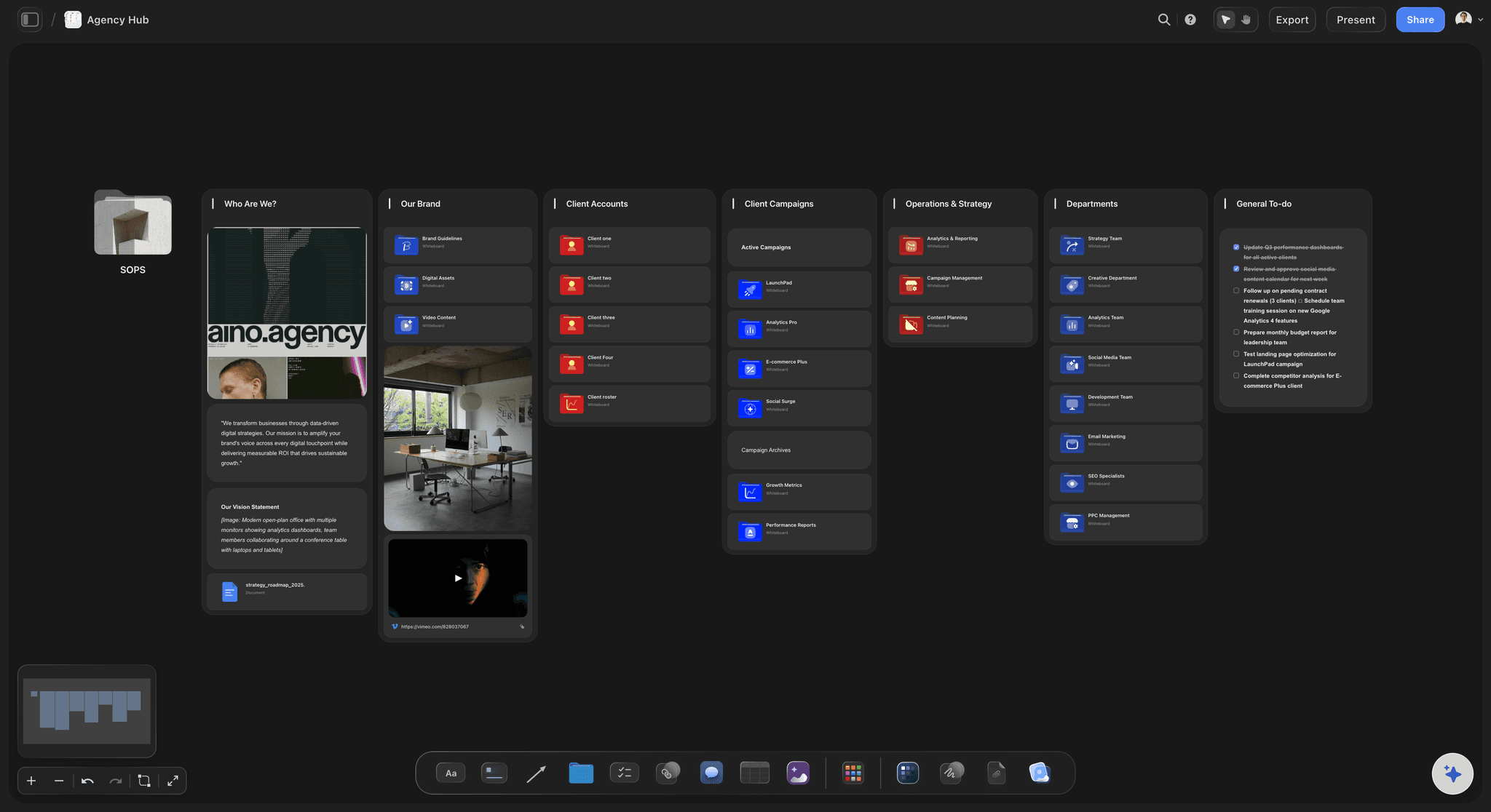
Every account on one overview
See all nine clients in one glance
Client, phase, next deadline and what it is waiting on, in a table you keep up to date, since it does not pull from the client boards. The morning question at an agency is what is stuck, and a per-project view cannot answer it.
See agency client project planning →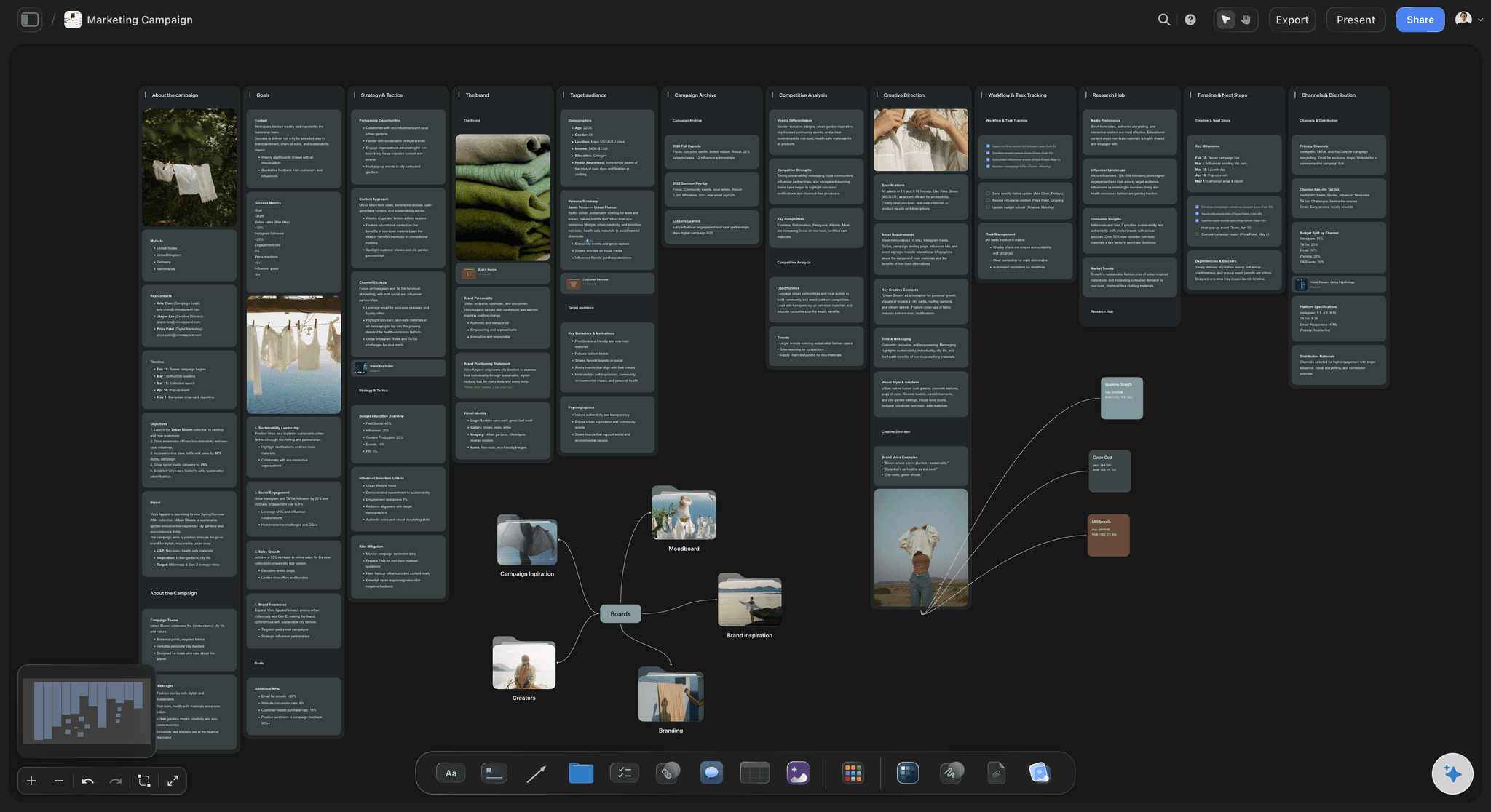
The campaign in one place
Brief, moodboard and posts together
A social campaign's brief, visual direction and post-by-post table sit on one canvas. A designer picking it up on Monday does not need a handover meeting.
See agency campaign planning →
Scope that everyone can count
Deliverables in a visible table
Thirty-six posts means 36 rows. When the client asks for a 37th, it shows as an addition to a list both sides agreed, and the conversation about cost is short.
See creative project scope creep →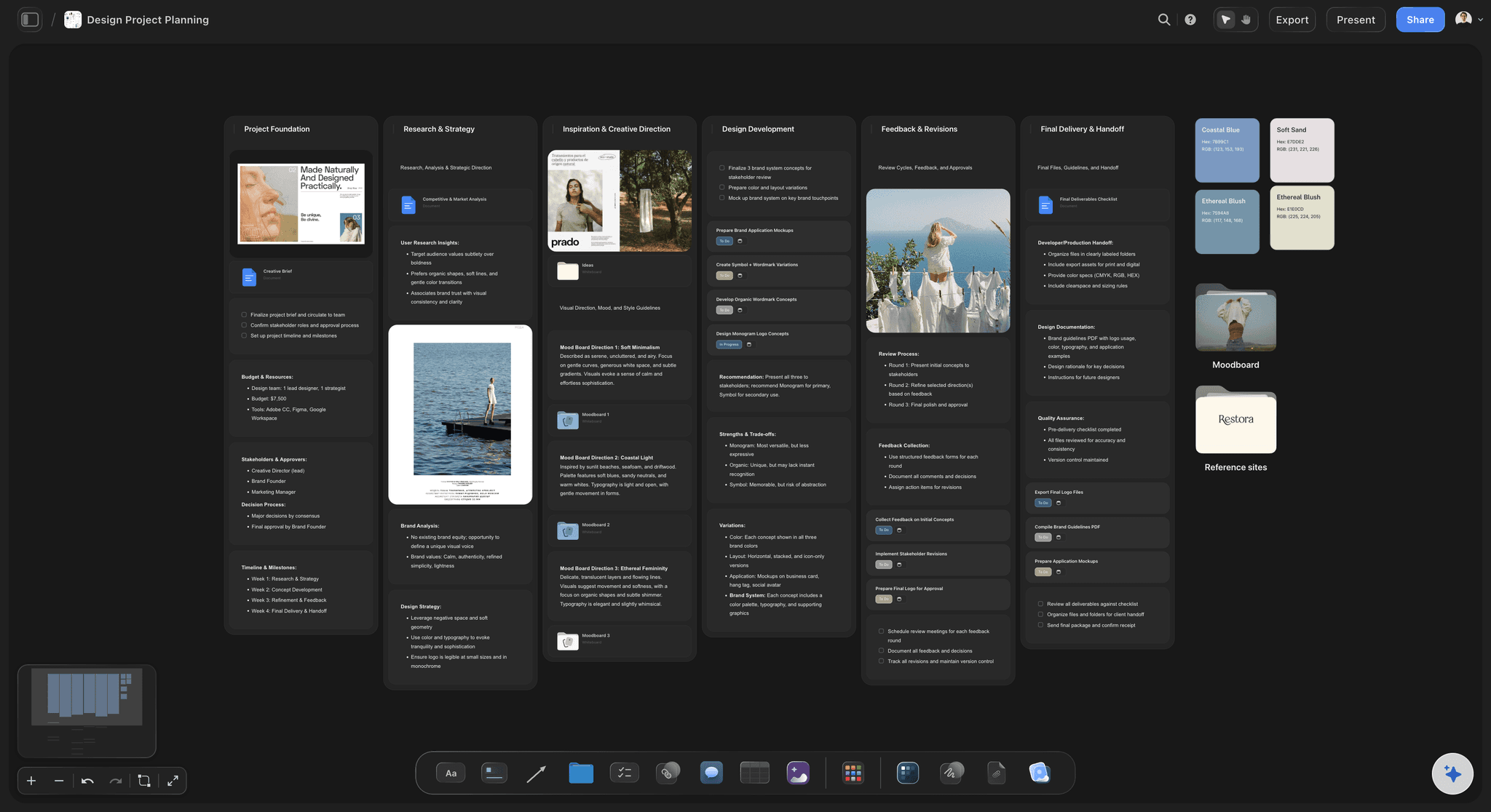
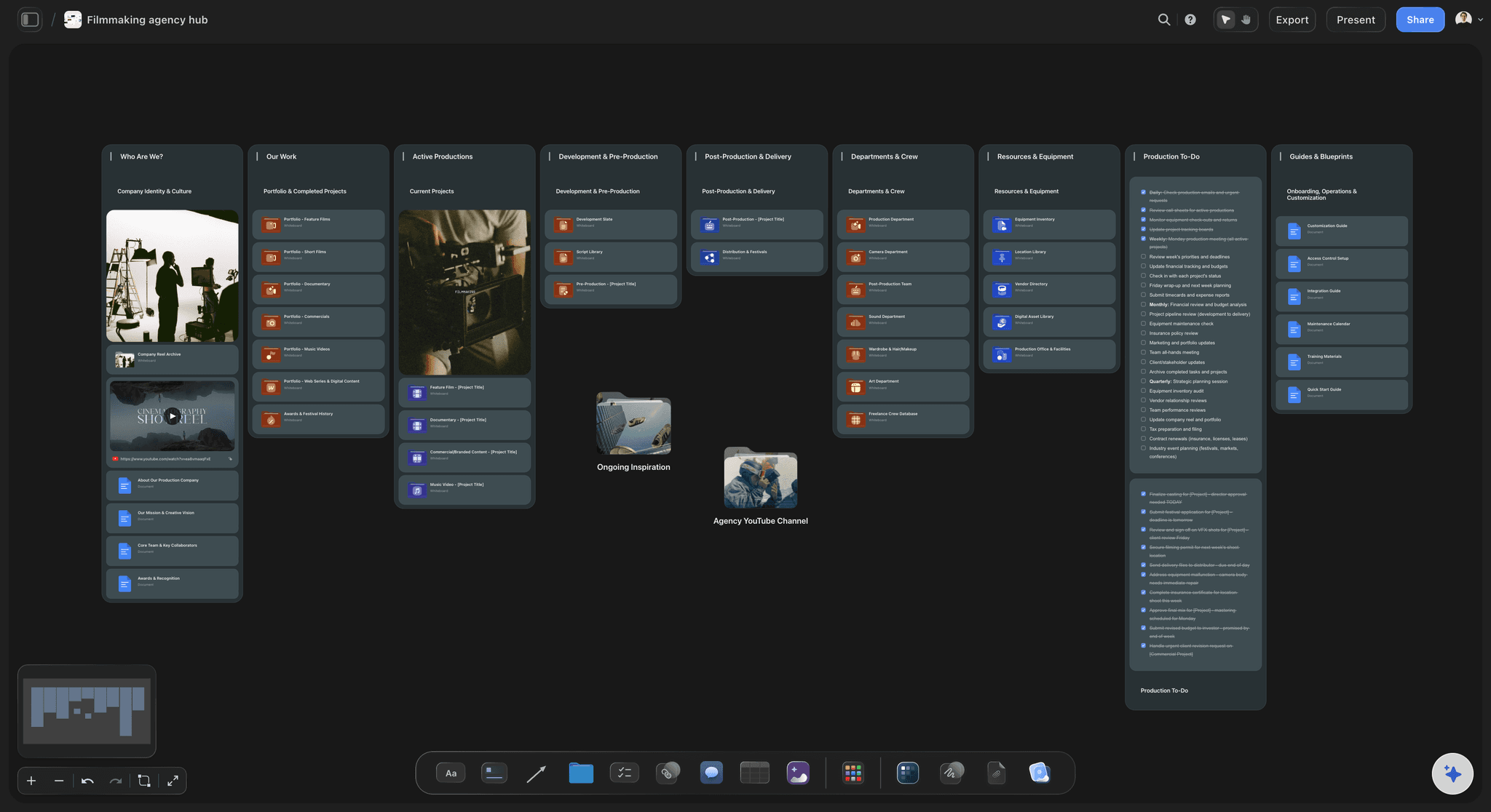
AI on the plan, with you deciding
Ask the board what is missing
From Plus, the in-app AI builds boards from a brief, reads the current board and answers What's missing here? It stages each result as a proposal for you to accept or discard.
See AI creative project management →Plan a client job on one board.
Storyflow is paid-only during early access: Plus is $7.99 a month billed annually ($9.99 monthly) and includes the AI inside Storyflow. Anyone a paid member invites to a board joins free, freelancers included, though an invited free account has no in-app AI.
The brief, references and deliverables on an infinite canvas
To-dos with assignee and due date, tables with person and status
Build by hand, or through ChatGPT or Claude with no weekly limit
View-only links clients open with no account
Built for people with taste
Four jobs, three stack sizes and a straight list of what is missing.
Use this to decide what to buy, rather than what to migrate to. The headcounts are rules of thumb, and Ridgeline is a fictional agency.
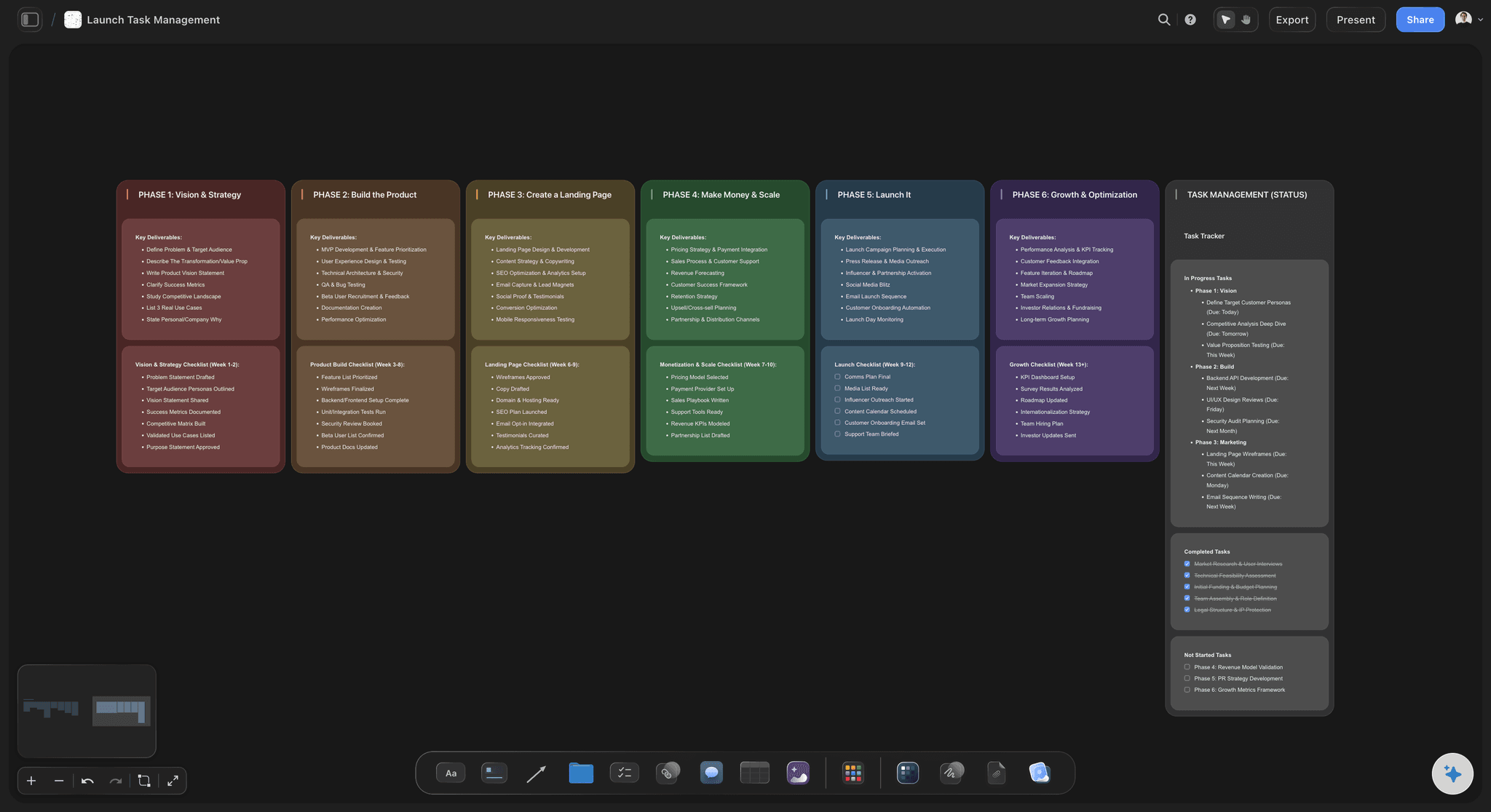
Plan, schedule, resource, money
The four jobs inside agency project management
Plan: what we are making and why: The brief, references, deliverables and client-facing view. This is Storyflow's job, and it is the part generic task tools do least well because the work is visual.
Schedule: what depends on what: Critical path, dependencies and a chart that moves when a date moves. Use Asana, monday.com or Productive, because a Storyflow table does not recalculate.
Resource: who is free: Capacity across all clients for the next six to eight weeks. Use Float, Productive or Teamwork.com. Storyflow has no workload view.
Money: is it profitable: Hours against budget, invoices and margin. Use Harvest for simple cases, and Productive or Teamwork.com when you report margin by client. Storyflow does not track time or send invoices.
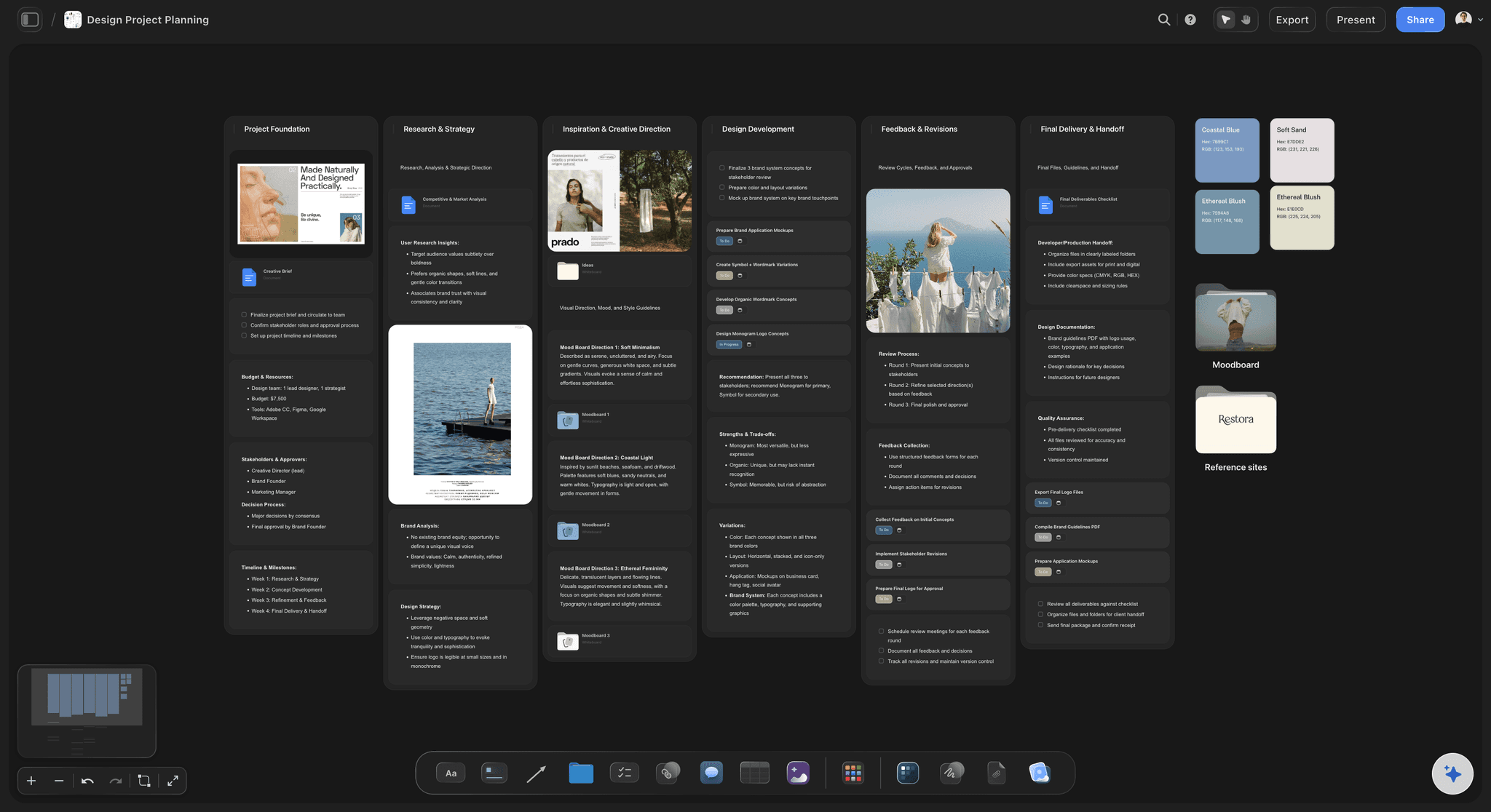
By headcount
Three agency stacks
Up to about 5 people: Storyflow for client boards, Harvest for time and invoices, PandaDoc when proposals need signing, and your accounting software. Capacity still fits in the owner's head.
About 6 to 25 people: Storyflow plus Float, once a second person is regularly double-booked. Or use Productive or Teamwork.com for hours, resourcing and budgets, and keep Storyflow for campaign planning.
Past about 25 people: Productive or Teamwork.com becomes the system of record, and Asana or monday.com may run cross-team delivery. Storyflow remains where creative teams and clients see the project.
When to change stacks: Change when a specific failure repeats, such as two double-bookings in a month or a job that lost money without anyone noticing. Do not migrate because a list of tools looked impressive.
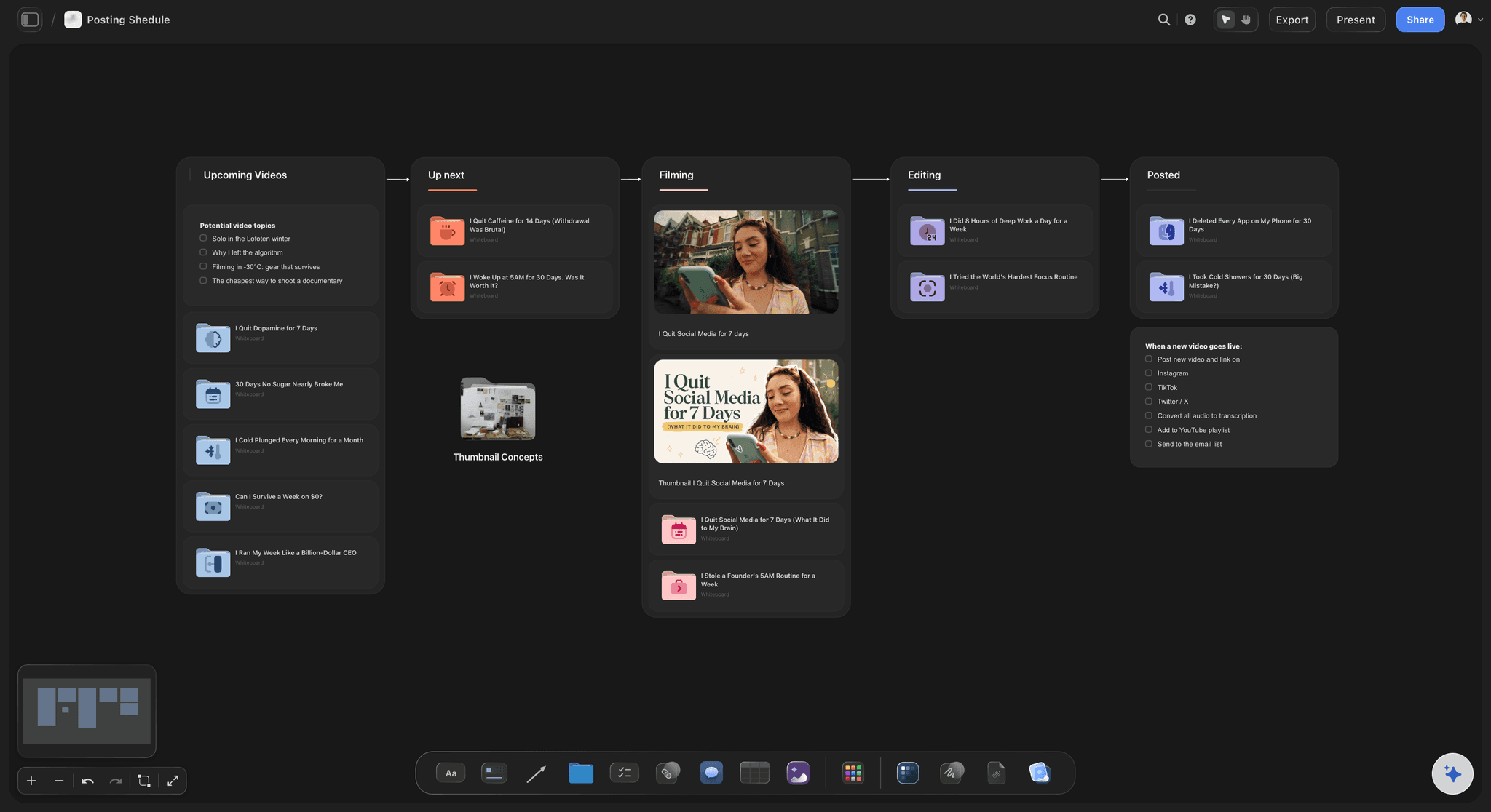
Ridgeline's retainer client, week by week
One campaign run from a Storyflow board
Week 1: brief and scope: The account lead fills in the brief with the client and lists 36 posts and three shoot days as table rows. Two rounds per batch are written next to the table.
Weeks 2 to 3: direction and first shoot: The creative lead builds the moodboard beside the brief. The Storyflow AI drafts a shot list from the storyboard, and the producer edits it before day one.
Weeks 4 to 7: batches and rounds: Twelve posts per batch go up for review through a view-only link. The approver signs in to comment, and the approval table records round, status and date.
Week 8: delivery and handover to scheduling: Final files move to the client's scheduling tool, since Storyflow does not publish. The team notes what overran on the board, and hours are reconciled in Harvest.
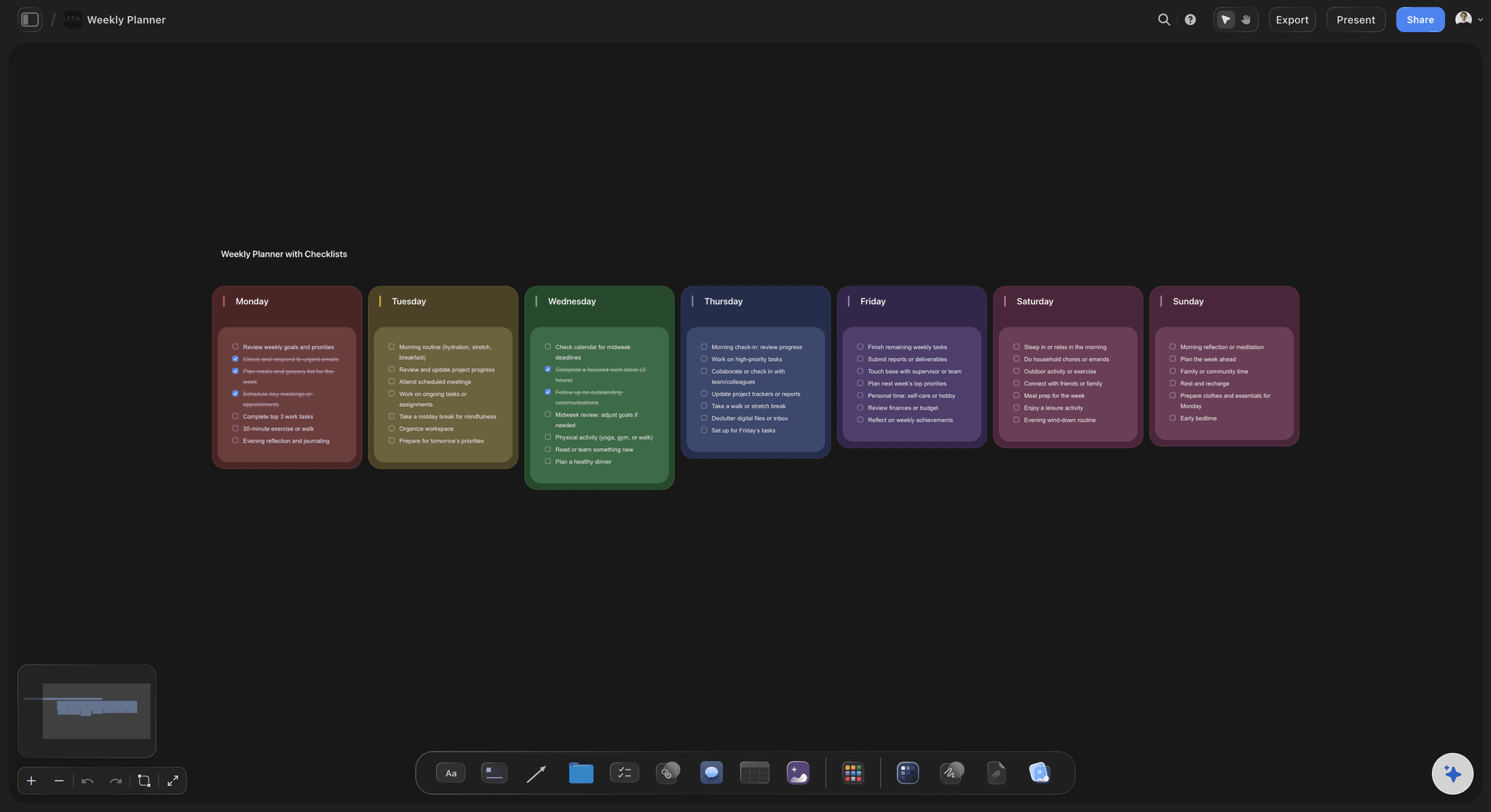
Plainly, what Storyflow does not do
What to buy elsewhere
No Gantt, dependencies or recalculating schedule: Dates live in table cells and to-dos, with rows kept in date order. Moving one date does not move the next, and there is no calendar view.
No workload view or time tracking: Storyflow cannot tell you who is overbooked or how many hours a job took. Float, Harvest, Productive and Teamwork.com all handle parts of this.
No proposals, contracts or invoices: Storyflow has no proposal builder, e-signature, invoicing or payments. Use PandaDoc, then Harvest, Productive or your accounting software.
No social scheduling or proofing: Posts publish from Buffer, Later, Metricool or Meta Business Suite. Final files and cuts get proofed in Frame.io, Ziflow or Filestage.
Explore templates for your project
Every template opens as a real, editable board on the infinite canvas. Pick the closest fit and make it your own.
Mind Map
Branch one central idea out into themes and sub-points, then drag the connections around until the structure makes sense.
One app instead of five
Storyflow vs Productive, Asana and monday.com for agencies.
Productive is built for agency operations and money. Asana and monday.com run tasks and timelines across a company. Storyflow covers the planning job, next to the creative work, and is not a replacement for scheduling or finance tools. Features in those columns depend on the vendor's plan: Asana's workload view starts on Advanced and monday.com's resource management is on Enterprise. Storyflow's AI starts on Plus.
Storyflow
Recommended
Brief, moodboards and plan on one canvas
Deck, one-pager or brief built from the board
Gantt chart with dependencies
Time tracking
Workload or resource view
Invoicing from tracked time
Productive
Brief, moodboards and plan on one canvas
Deck, one-pager or brief built from the board
Gantt chart with dependencies
Time tracking
Workload or resource view
Invoicing from tracked time
Asana
Brief, moodboards and plan on one canvas
Deck, one-pager or brief built from the board
Gantt chart with dependencies
Time tracking
Workload or resource view
Invoicing from tracked time
monday.com
Brief, moodboards and plan on one canvas
Deck, one-pager or brief built from the board
Gantt chart with dependencies
Time tracking
Workload or resource view
Invoicing from tracked time
What creators are saying
Join early creators getting structured workspaces and AI that remembers their projects
“Storyflow has sped up my workflow by at least 3x, which means more flow state and more projects I can actually ship. It truly changed the way me and my team create.”

Reilin Joey
Director & YouTuber
“One prompt gets me a structured board. But the tactics are my favorite. I run my YouTube scripts through them and my intros and retention got better. It's amazing.”

Justkay
YouTuber & Freelance Filmmaker
“I used to juggle five apps to plan a project. Now I describe what I am making and get boards, lists, and a schedule. All in one place.”

George
@fernwehchronicles
Creative agency project management, answered.
What to buy, what Storyflow does, and what it leaves to other tools.
Creative agency project management is running several client jobs at once: turning briefs into scoped deliverables, dates and owners, keeping work and feedback together, and protecting margin. In Storyflow, that planning job sits on one board per client, with an overview across accounts. Scheduling, resourcing and money are separate jobs, and an agency usually handles them with dedicated tools alongside the plan.
Storyflow is built for exactly the planning job: each client's brief, references, deliverables and rounds sit on one board that the client opens from a view-only link with no account. It comes first because creative work gets planned next to the work itself. Productive still does what Storyflow does not: agency budgets, time tracking, resourcing and invoices, so an agency reporting margin by client needs both.
From its Plus plan, Storyflow's AI builds a whole board from a brief, reads the current board plus attached documents and answers What's missing here?, staging each result for you to accept or discard. Productive's AI Assistant drafts, summarizes and manages work in plain language, and Asana AI comes with Asana's paid plans. Choose by what you want AI to do: plan the work or report on it.
No. Storyflow has no Gantt chart, dependencies, critical path, workload view or time tracking, and it does not recalculate a schedule. Dates live in table date cells and to-dos, with rows kept in date order, and there is no calendar view. Pair Storyflow with Asana, monday.com or Productive for scheduling, and Harvest or Float for time and capacity.
Pair Storyflow with one tool per missing job: Harvest for time and simple invoicing, Float for capacity, Productive or Teamwork.com for budgets and margin, Asana or monday.com for dependencies, PandaDoc for proposals and signatures, and QuickBooks or Xero for accounting. Start with the smallest set that solves a problem you actually have this quarter. Storyflow stays as the planning surface.
Give each client their own board in Storyflow and keep one overview board listing every client, the current phase, the next deadline and what the job is waiting on. You keep that overview by hand; it does not pull from the client boards. Each client board uses the same walls: brief, deliverables, current round and approvals, so a team member switching accounts finds things in the same place.
Show the brief, deliverables, current round and what you are waiting on from the client, on a separate Storyflow board. Rates, margin and internal notes stay on your private board. The client opens the shared one from a view-only link with no account, and signs in only to comment or draw. Answer status emails with that link.
A small agency of up to five people usually needs one planning surface, one time and invoicing tool and accounting software. A typical set is Storyflow, Harvest, and QuickBooks or Xero. Add a capacity tool such as Float when people are regularly double-booked, not before. Each added tool should answer a failure that has already happened at your agency.
Handle a retainer in Storyflow with one board per client and a repeating structure: a table row per deliverable per month, an owner and a status, plus a wall for the current batch. Copy last month's rows and change the dates. Storyflow does not track retainer hours or burn, so Teamwork.com or Productive holds margin by retainer, or Harvest holds the hours in a simple setup.
Storyflow helps by making scope countable and visible to the client. Each deliverable is a row in a table on a board the client can open, so a new request appears as an added row rather than a favour nobody recorded. Write the included rounds beside the table too. The pricing conversation still has to happen, and Storyflow does not create the change order.
Yes. Keep hours, budgets and dependencies in Productive, Asana or monday.com, and plan each campaign on a Storyflow board with the brief, references and client-facing view. Connect them by pasting the task or budget link into a URL cell on the Storyflow table row. Keep one owner for each piece of information.
An agency needs Storyflow Max when staff need a Team Workspace with roles and permissions, or the most AI. Max is $39 a month billed annually ($49 monthly). Below that, every paid plan includes real-time co-editing, and anyone a paid member invites to a board joins free, which covers freelancers on a single job without moving the agency to Max.
Partly. The Storyflow AI cannot set the assignee on a to-do or ticket, so you do that yourself. It can fill a table's person column, named Owner or Assignee, with people who already have access to the board. If any name matches nobody, that whole column stays as plain text with the names kept as written. People always make the final allocation.
Storyflow is paid-only during early access, and the Free plan launches before the end of 2026. Anyone invited to a board by a paid member can sign up free. Plus adds the in-app AI at $7.99 a month billed annually ($9.99 monthly), Pro is $14 ($19 monthly) and Max is $39 ($49 monthly). Anyone a paid member invites to a board joins free, though that free account has no in-app AI, and a client viewing a link needs no account.
Storyflow cannot do Gantt charts, dependencies, workload views, time tracking, proposals, contracts, e-signature, invoices or payments. It does not schedule or publish social posts, and it has no frame-level proofing, calendar view or native desktop app. It plans client projects on boards. Budget for Harvest or Productive, Float, PandaDoc and a proofing tool if you need those jobs done.
More from Storyflow
Creative project management software
AI creative project management: brief to board
Agency client project planning
Best AI tools for creative project management
Storyflow for agencies
Plan client projects as a one-person studio
Agency campaign planning
Creative retainer plan
Scope creep on creative projects
Creative approval workflow
Marketing brief template
Agency pitch process
Plan your next client project on one board.
Open a Storyflow board for your busiest client, list the deliverables in a table, and share it with a view-only link. Keep your time tracker.