
Rock-steady plans for every shoot
A film business plan
an investor reads to the last page.
The project, the team, the comparable titles, how the film reaches an audience, what it costs, where the money comes from and how it comes back, in words a first-time investor follows.


Creatives working for these brands already got early access
- Red Bull
- Canon
- Artlist
- Porsche
See how easy it is to get started
Watch a real project come together, from a blank board to a finished plan, clicked through step by step.
Start from a ready-made template
Pick a board to see what you can build, then let AI fill it in. Every template is a real, editable starting point on the same infinite canvas.

Pre-Production
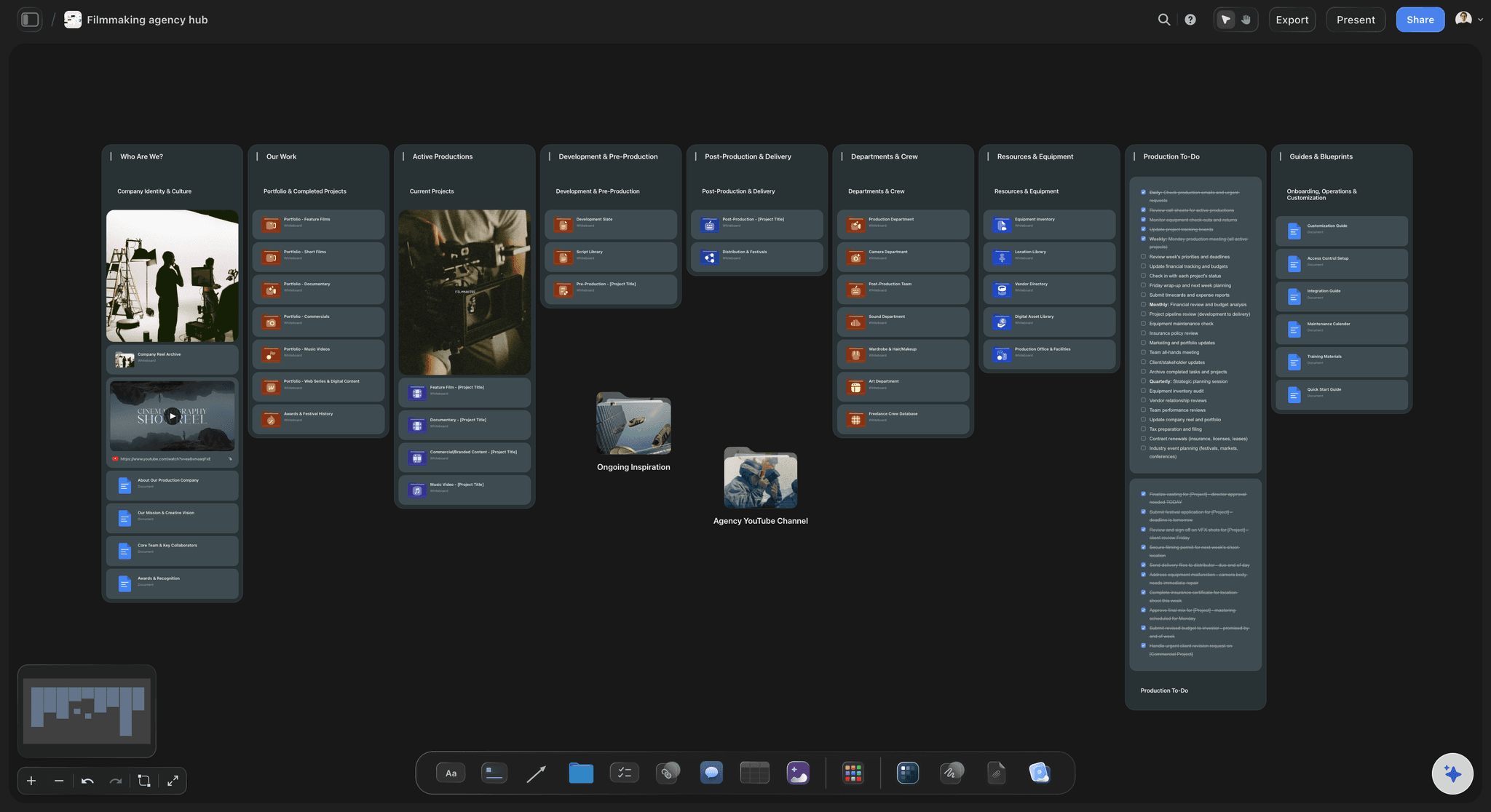
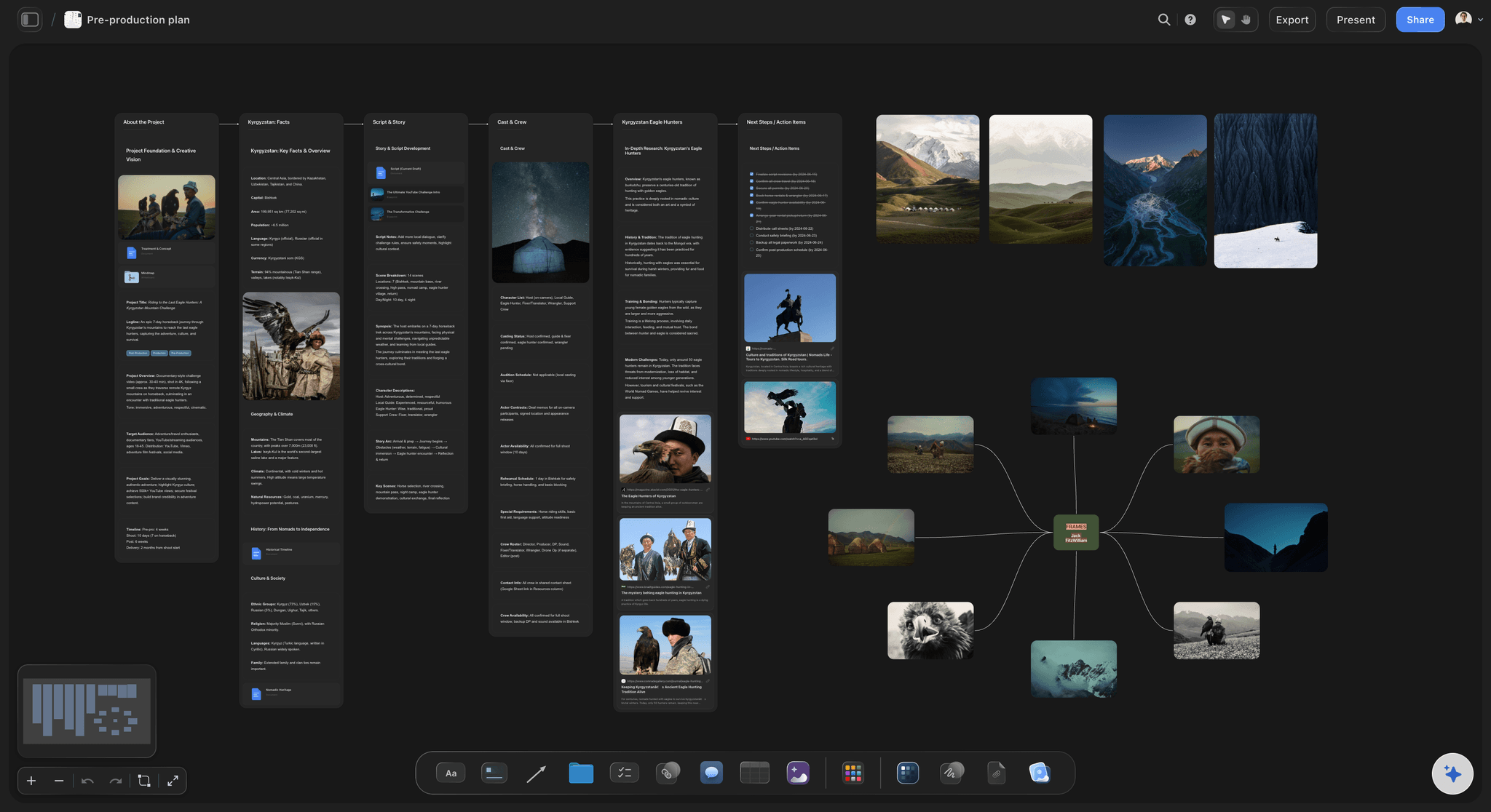
Pull the brief, script, shot list, and moodboard into one pre-production hub so the whole shoot is planned in one place.
What goes in a film business plan?
A film business plan is the document an investor reads after the pitch: what the film is, who is making it, who will watch it, what it costs, where the money comes from and how it comes back. Storyflow is an AI visual workspace that builds a film business plan for investors on one infinite canvas: the plan as a document, the lookbook and budget beside it, and sections its AI drafts from your notes.
Sell the film, then the business. Investors in indie film are often backing a person and a story as much as a return. Open with the logline, the tone and the team's past work, then earn the right to talk about money. A plan that opens with a market-size slide reads like it was written for a different industry.
Use comparable titles, not predictions. Pick five to eight films from recent years that share your genre, budget level and cast profile, and say what happened to each, including the ones that struggled. Cite your sources. Streaming performance is usually not public, so say that too rather than filling the gap with a guess.
Explain how money comes back in plain words. Distributors pay after their own fees; a collection account manager takes a small fee; the sales agent takes commission and capped expenses; lenders are repaid; equity investors recoup, often with an agreed premium; deferred fees are paid; what is left is split between investors and producers. Number that order before any spreadsheet.
Ultra fast from brief to board
From a script and a budget to a plan you can send.
The plan grows beside the pitch deck and lookbook, so all three tell the same story.
01
Paste what you already have
The logline, synopsis, team bios, budget top sheet and any attachments. The AI drafts each section in a document on the board for you to rewrite. Leave any figure you do not have blank rather than letting a draft fill it.
02
Build the comps and the money
A table of comparable titles with budget level, release route and source, and a budget summary with a live total. Leave any figure you cannot source blank and name it as an open item.
03
Show the film, not just the numbers
Put the lookbook stills, a teaser or proof-of-concept clip and the key creative pages beside the plan. The AI can draft a lookbook PDF and a one-pager from the same board.
04
Send the plan after the meeting
Export the plan document as PDF or Word, or share the board. Send it after an investor has heard the pitch, with a date you will follow up, and give your lawyer the Word file for the offering documents.
The film, the market and the money, in one plan.
The story and structure of the raise. Your accountant builds the model; your lawyer writes the offering.
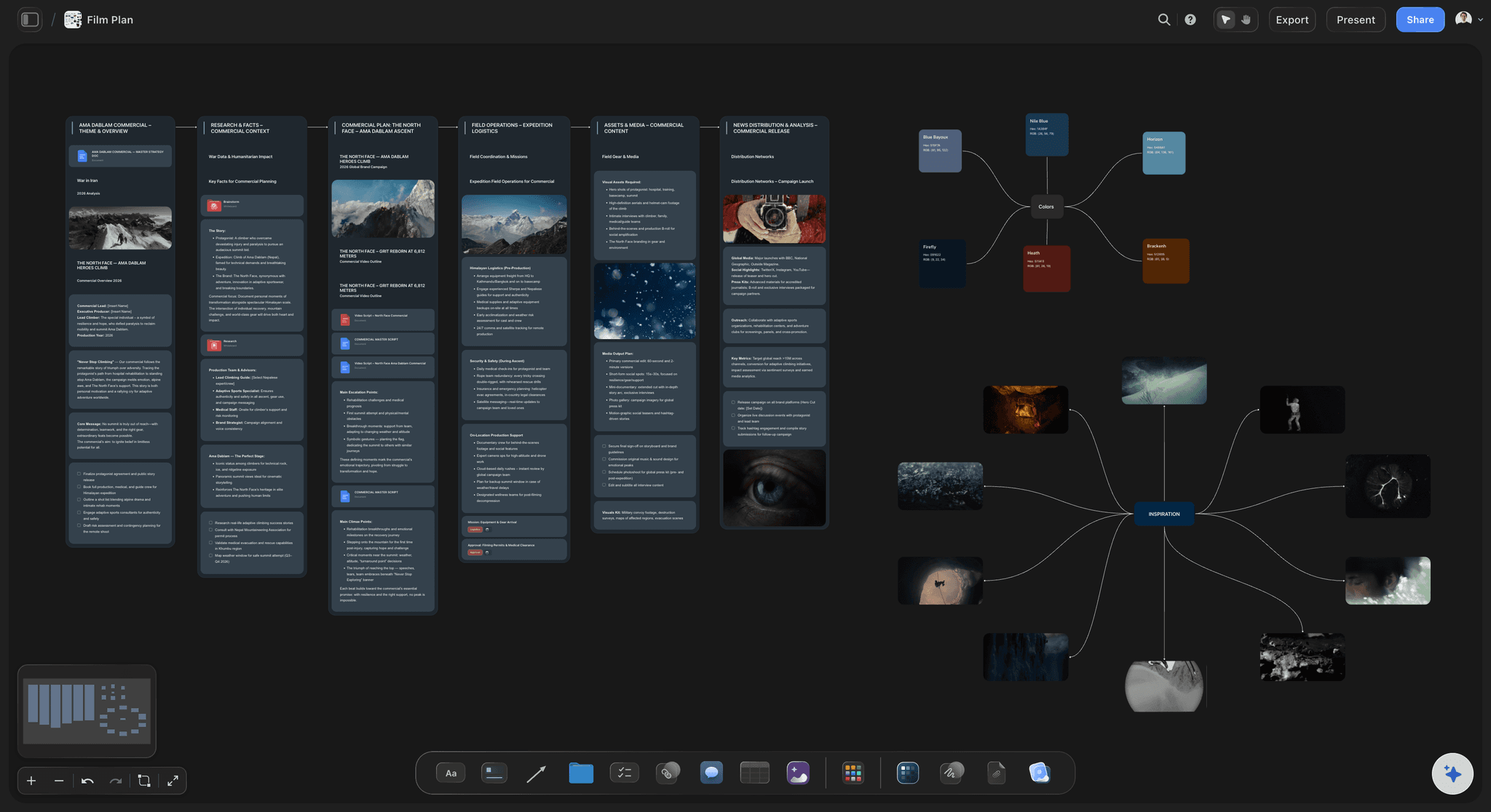
The plan itself
A document that exports to Word and PDF
Each section of the plan in one document on the board, with inline comment threads for your co-producer. Export to Word when your lawyer or accountant needs to work in the file.
See the AI document editor →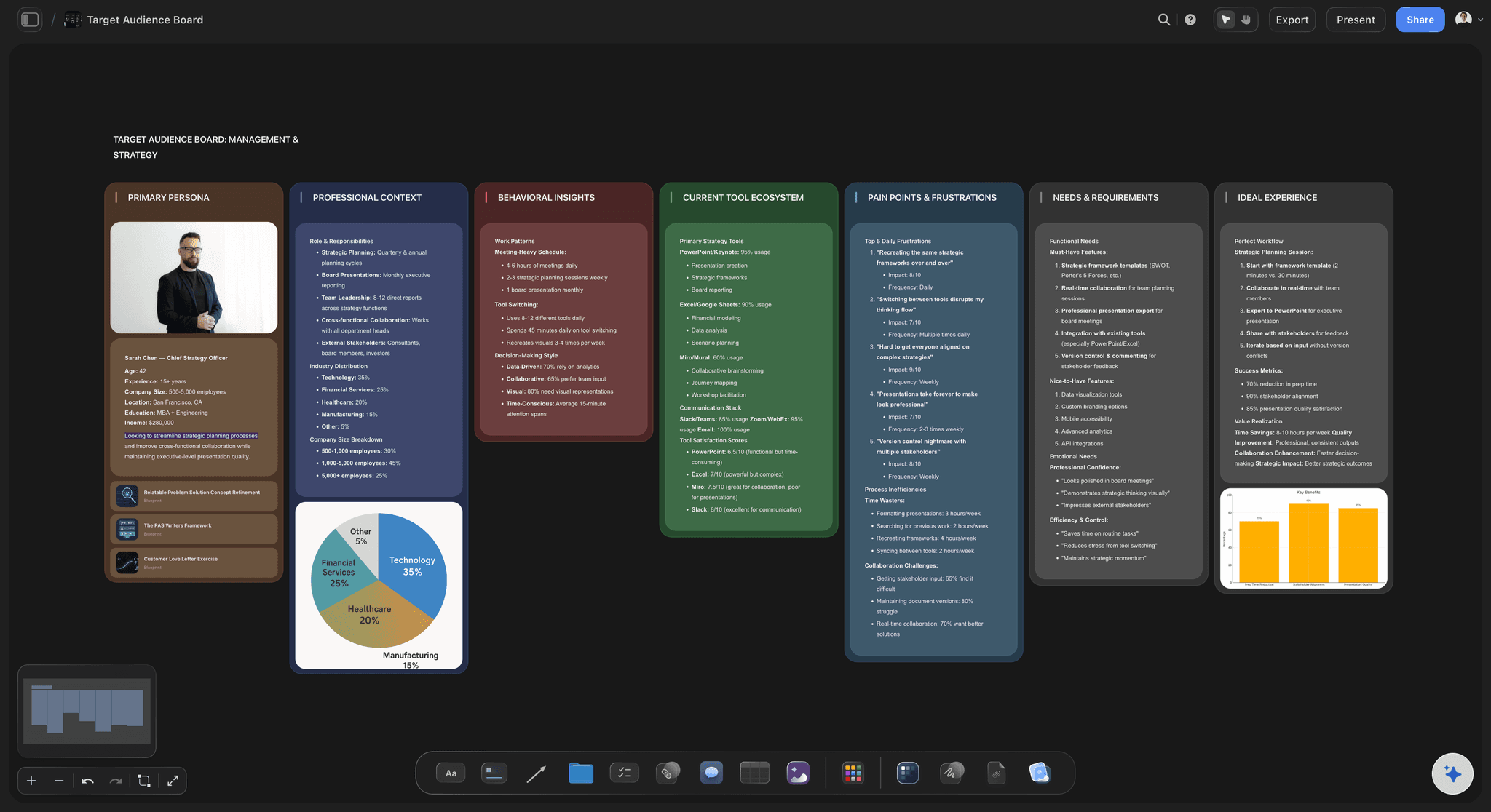
Comparable titles
Comps you can defend in the room
Five to eight films in a table: year, genre, budget level, cast profile, release route, what happened and the source. A chart beside it shows your financing sources at a glance.
See the film festival planner →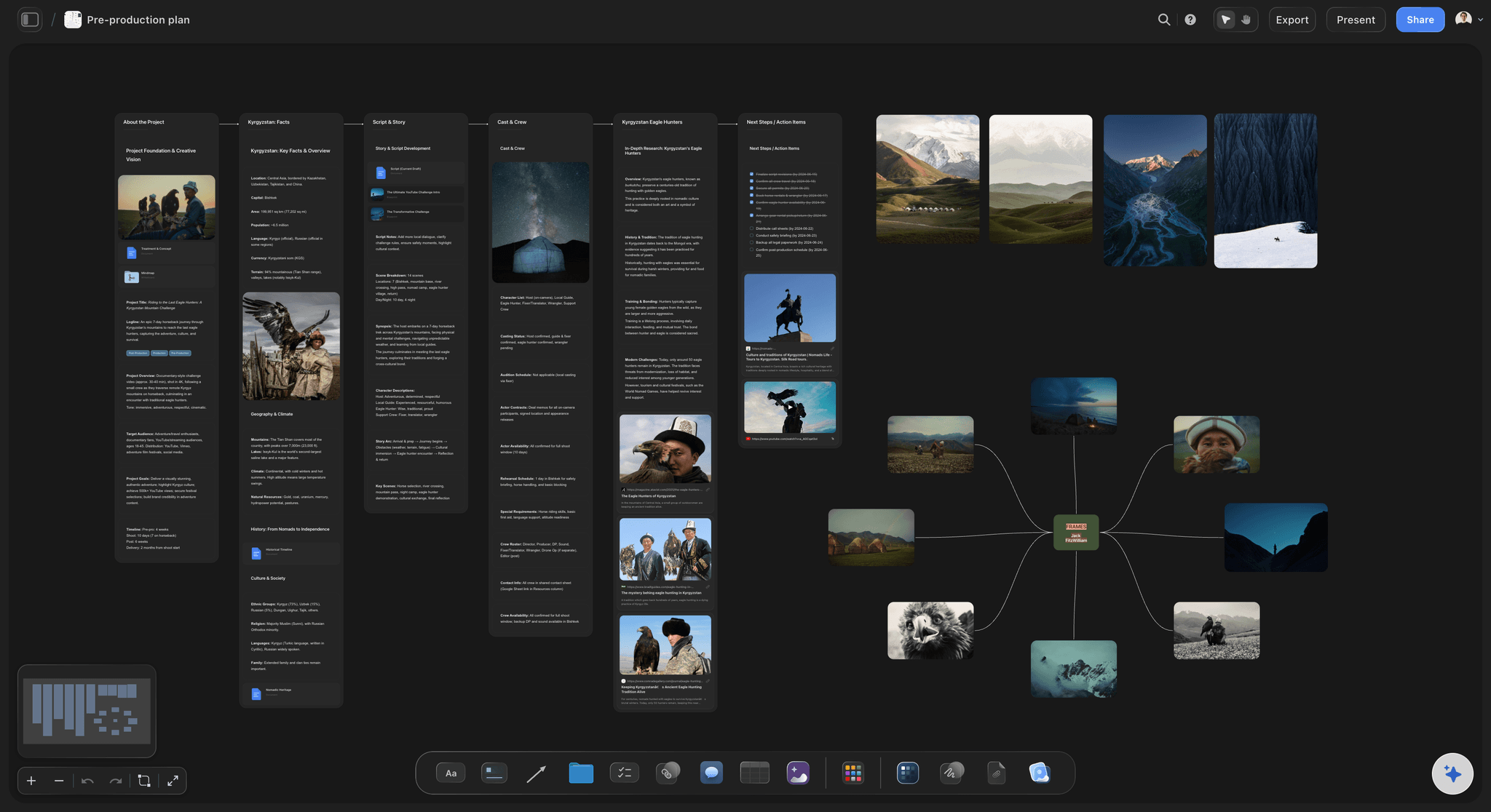
Budget and financing
The top sheet and where each dollar comes from
A budget summary by category with a live total, contingency on its own line, and the financing plan as a table of sources. The AI's budget workflow leaves a cost blank rather than guessing it.
See the film budget planner →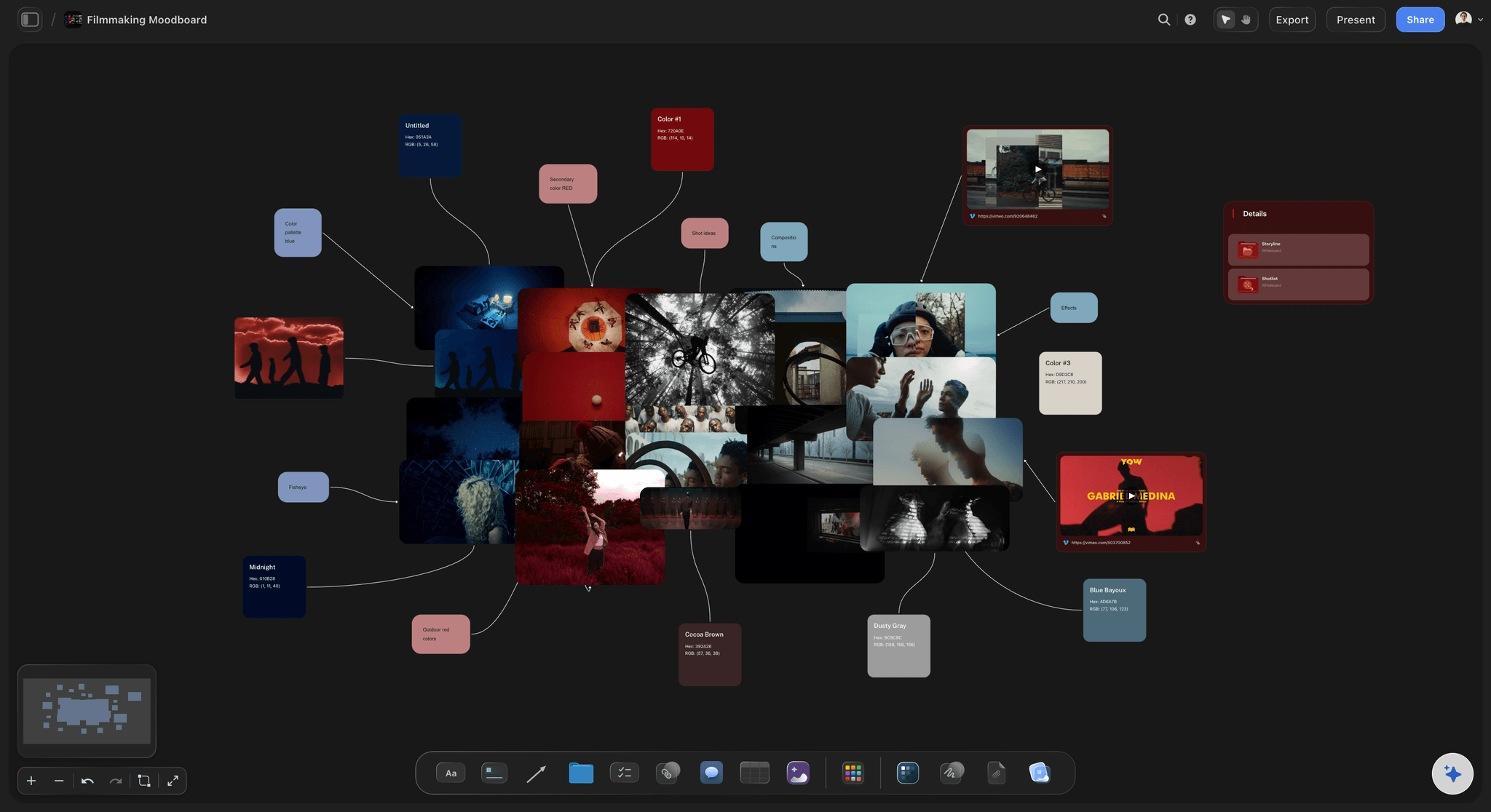
One link, or a PDF
Sent to investors the way they read
An investor reads the board from its link, and can sign in to leave a question beside a figure. Or send the plan as a PDF with the lookbook and one-pager PDFs the AI drafts from the same board.
See the film pitch deck →One board per film, the whole slate side by side.
When the next project needs money, duplicate this plan's structure and keep your comps research. Storyflow is paid-only during early access, with plans from $7.99 a month billed annually ($9.99 monthly). A free plan launches before the end of 2026, and anyone a paid member invites to a board joins free.
Unlimited boards and file uploads on every paid plan
AI that drafts plan sections, a one-pager, a presentation and a lookbook PDF
Documents that export to Word and PDF, with inline comment threads
Tables with currency columns and live totals, and charts
Built for people with taste
Ten sections an indie film investor expects.
Fifteen to thirty pages is a common length, plus a one-page summary written last. The order holds in any tool.
The project, sections 1 to 3
The film and the people
1. Executive summary: One page: the film, the team, the budget, the raise, the distribution route and the ask. Write it last, when every number in it has been checked against the pages behind it.
2. The project: Logline, synopsis, genre, runtime, the draft the script is on, and what is attached: cast, director, heads of department, letters of intent. Say plainly what is confirmed and what is hoped for.
3. The team: Producer, director, writer and key crew, each with the credits that prove they can deliver this film. Investors read this page twice.
The market, sections 4 to 6
Who watches it, and how it reaches them
4. Market and comparable titles: The audience in one paragraph, then five to eight comps with their budget level, release route and outcome, sourced. Leave out the outlier hit nobody could repeat.
5. Distribution strategy: The festivals you will target, whether you will seek a sales agent, which territories and platforms, and what you will do if no deal comes. Name the fallback; investors notice when it is missing.
6. Marketing and audience building: What you will do before the premiere: the audience you already have, the communities the film speaks to, and the materials you will make, from stills to a trailer.
Sections 7 to 10
The money and the risks
7. Budget summary: The top sheet by category (above the line, below the line, post, insurance, deliverables, contingency) with the total. The full budget sits in the appendix.
8. Financing plan: Every source and its status: equity, tax incentives, pre-sales, grants, crowdfunding, deferments and in-kind support. Mark which are secured and which are targets.
9. Recoupment waterfall, in plain words: The order money flows back, as a numbered list, then the terms: any premium to investors and how profit is split. No projected return figures; comps and assumptions only.
10. Risks and timeline: What could go wrong and what you do about it, then a common shape for a low-budget feature: eight to twelve weeks of prep, three to five weeks of shooting, four to eight months of post, then festivals.
What first-time producers leave out
The terms investors ask about
Chain of title: Proof you own the rights to the script and any book or story it is based on. Without it the film cannot be insured or sold.
E&O insurance and deliverables: Errors and omissions insurance and the technical and legal deliverables a distributor requires. Both cost money, and both belong in the budget from the start.
Deferments and fees: Who has agreed to defer pay, where they sit in the waterfall, and the cap on sales agent expenses. Hidden deferments surprise investors later.
Explore templates for your project
Every template opens as a real, editable board on the infinite canvas. Pick the closest fit and make it your own.
Pre-Production
Pull the brief, script, shot list, and moodboard into one pre-production hub so the whole shoot is planned in one place.
One app instead of five
What a producer weighs when choosing where to write the plan.
Storyflow holds the plan with the film's pictures and pitch materials. LivePlan builds financial forecasts, Canva designs a deck from a template, and Google Docs is the plain shared document.
Storyflow
Recommended
Lookbook PDF drafted from the same board
Forecast that builds the P&L and cash flow
Designed pitch deck templates
Investor opens it by link with no account
Budget summary table that totals itself
LivePlan
Lookbook PDF drafted from the same board
Forecast that builds the P&L and cash flow
Designed pitch deck templates
Investor opens it by link with no account
Budget summary table that totals itself
Canva
Lookbook PDF drafted from the same board
Forecast that builds the P&L and cash flow
Designed pitch deck templates
Investor opens it by link with no account
Budget summary table that totals itself
Google Docs
Lookbook PDF drafted from the same board
Forecast that builds the P&L and cash flow
Designed pitch deck templates
Investor opens it by link with no account
Budget summary table that totals itself
What creators are saying
Join early creators getting structured workspaces and AI that remembers their projects
“Storyflow has sped up my workflow by at least 3x, which means more flow state and more projects I can actually ship. It truly changed the way me and my team create.”

Reilin Joey
Director & YouTuber
“One prompt gets me a structured board. But the tactics are my favorite. I run my YouTube scripts through them and my intros and retention got better. It's amazing.”

Justkay
YouTuber & Freelance Filmmaker
“I used to juggle five apps to plan a project. Now I describe what I am making and get boards, lists, and a schedule. All in one place.”

George
@fernwehchronicles
What producers ask before sending a plan to investors.
Sections, comps, financing, the waterfall, risks, and where Storyflow stops.
Storyflow, because an indie film plan has to sell the film before the money, and Storyflow keeps the plan document beside the lookbook, comps table and budget summary on one board, opened by link with no account or sent as a PDF, and exported to Word for your lawyer. Build the financial model in a spreadsheet or LivePlan; a securities lawyer drafts the offering documents.
Ten: an executive summary written last, the project and its attachments, the team, the market and comparable titles, the distribution strategy, marketing and audience, a budget summary, the financing plan, the recoupment waterfall in plain words, and risks with a timeline. The full budget, bios and letters of intent go in an appendix.
Pick five to eight films from recent years with your genre, a similar budget level and a similar cast profile, and include one or two that underperformed. For each, note the release route and what is publicly known about the result, with the source. Say where data is not public, as with most streaming releases.
The order in which money from the film is paid out. Typically the sales agent's fee and expenses come off first, then any loans, then equity investors recoup their money, often with an agreed premium, then deferments, and the remainder is split between investors and producers. Write it as a numbered list in plain words; the legal terms go in the investor agreement.
Usually several sources stacked together: private equity, tax incentives or rebates, pre-sales to territories, gap or bridge loans, grants and film funds, crowdfunding, deferred fees and in-kind support. The financing plan lists each with its amount and status, secured or targeted, so an investor sees how much of the budget their money completes.
Fifteen to thirty pages is a common length, plus a one-page executive summary that many investors read first and some read only. Keep the budget detail, bios and letters of intent in an appendix. If the plan needs more than that to explain the film, tighten the film's pitch first.
No. Show comparable titles, state your assumptions and explain the waterfall, but do not promise or project a return as if it were likely. Many indie films never recoup, and investors who know the business expect you to say so. How you describe returns is also a legal question, so check it with your lawyer.
The pitch deck gets the meeting: ten to fifteen slides on the story, the look, the team and the ask. The business plan is what the investor reads afterwards to check the money: comps, distribution, budget, financing and the waterfall. The lookbook shows the tone. In Storyflow all three sit on one board, so the numbers match.
For the raise, yes. Selling equity in a film is usually a securities offering, and the investor agreement, operating agreement or private placement memorandum should come from an entertainment or securities lawyer. The financial model belongs in a spreadsheet or LivePlan. Storyflow holds and drafts the plan and pitch materials; it gives no legal or financial advice.
As a draft you check line by line. Paste your logline, team, budget and comps into Storyflow and its AI writes each section into a document on the board, then a one-pager, presentation or lookbook PDF. It works from the figures you give it rather than inventing them, and when it drafts a PDF it lists what it still needs as open items.
Not completing the film, going over budget, losing attached cast, failing to secure distribution, and the market changing before release. For each, say what reduces it: a contingency line, insurance, a completion bond on larger budgets, a fallback release route. Honest risks make the rest of the plan more believable.
Not during early access. Storyflow is paid-only during early access, with plans from $7.99 a month billed annually ($9.99 monthly). A free plan launches before the end of 2026, and anyone a paid member invites to a board joins free, so a co-producer can work on the plan with you. Investors reading it pay nothing.
More from Storyflow
Film pitch deck
Film budget planner
Storyflow for indie filmmakers
Film festival planner
Film treatment template
Film lookbook
Low-budget film planning
Creative business plan
Production company hub
Storyflow for producers
How to write a film pitch deck
How to budget a short film
Film treatment vs pitch deck
Pricing
Film press kit
Film grant proposal
Make the case for the film, then for the money.
Paste your logline, budget and comps, and send a plan an investor can follow.