
Social plans done ultra fast, done well
Plan a month of social content
with ChatGPT, on a board you can see.
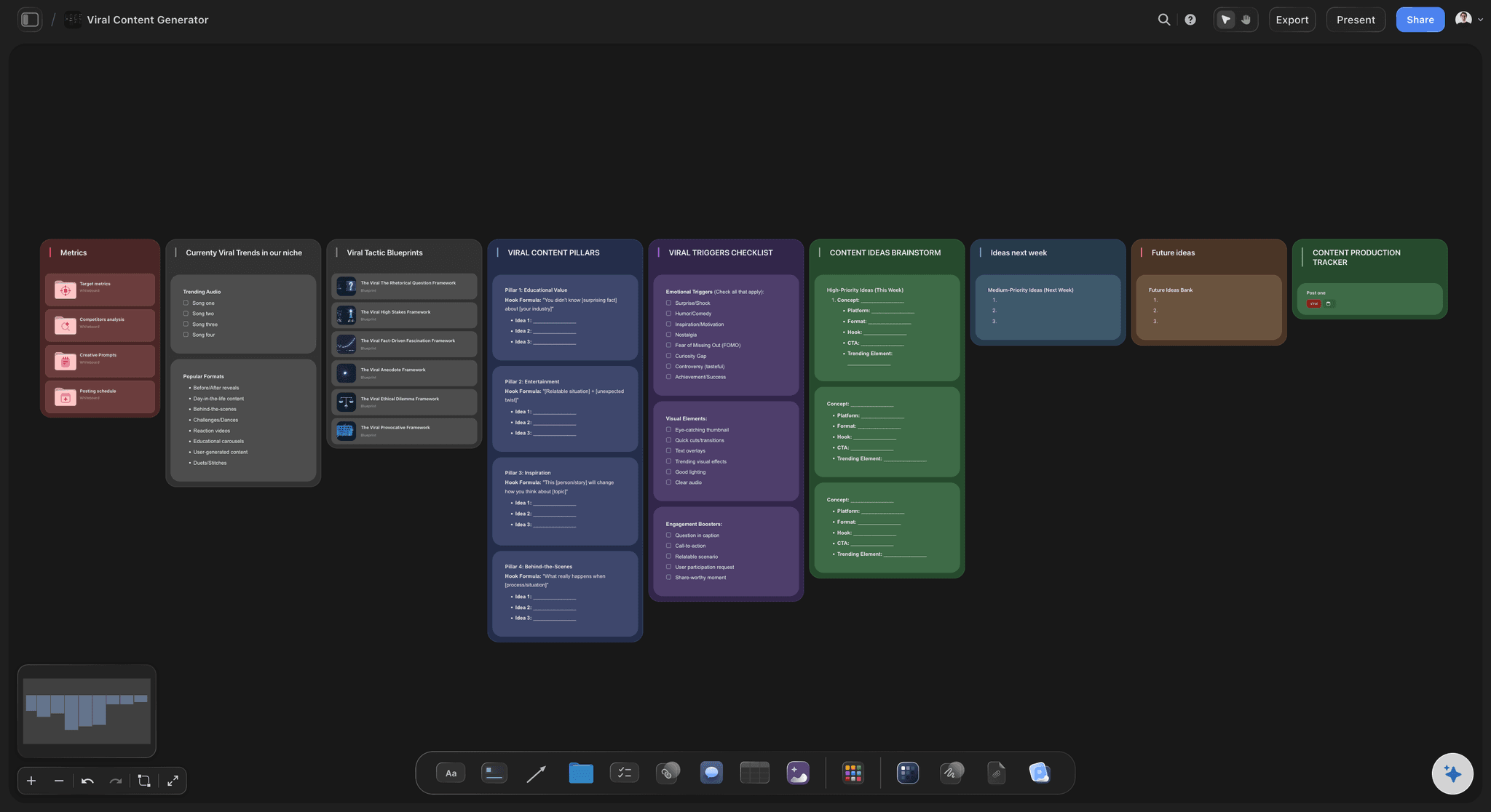
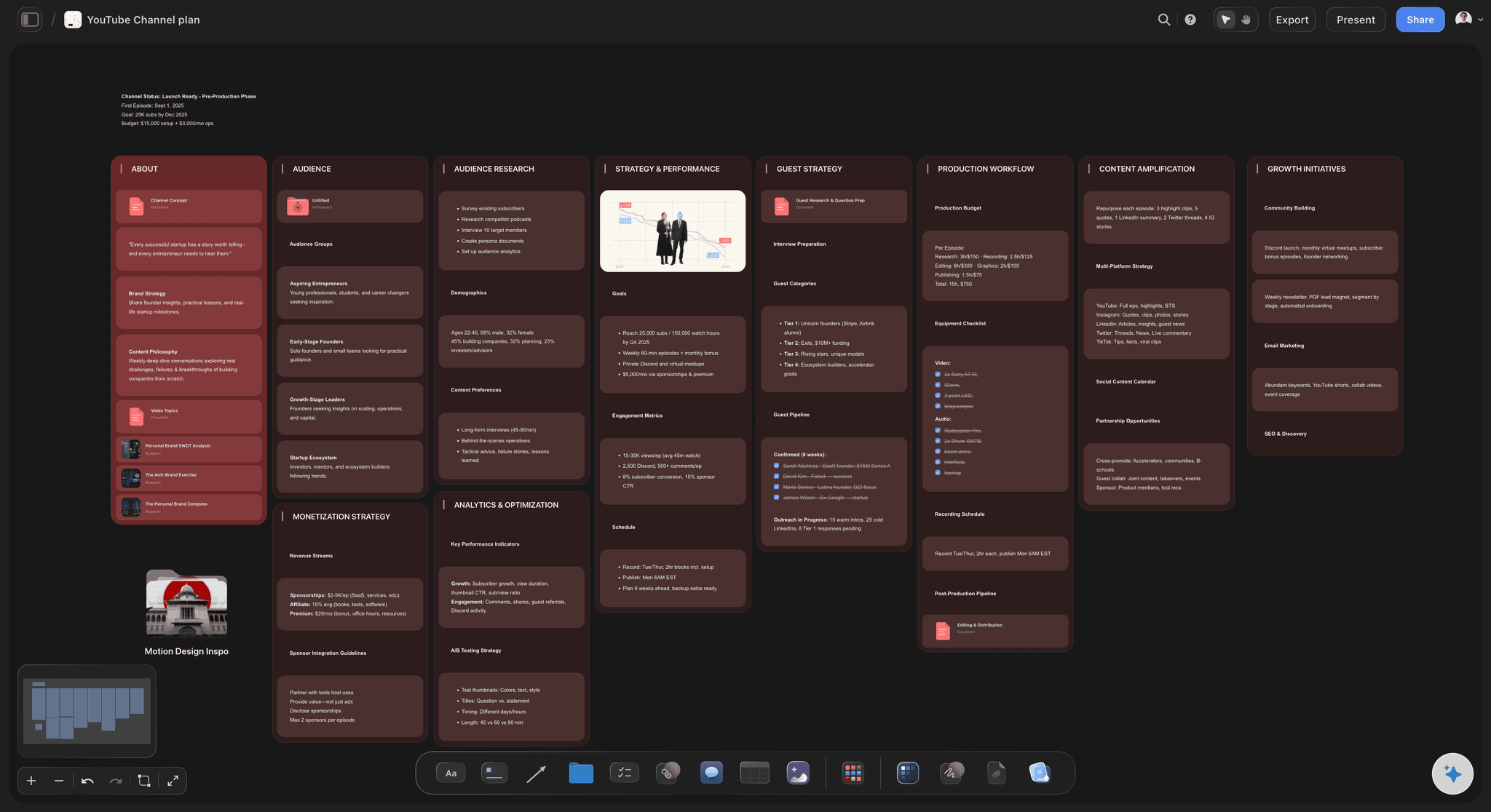
For social and YouTube creators: ChatGPT lays the month out on a Storyflow board, a column per week and a card per post, with the carousel slides already drafted.


Creatives working for these brands already got early access
- Red Bull
- Canon
- Artlist
- Porsche
See how easy it is to get started
Watch a real project come together, from a blank board to a finished plan, clicked through step by step.
Start from a ready-made template
Pick a board to see what you can build, then let AI fill it in. Every template is a real, editable starting point on the same infinite canvas.

Content Calendar
Plan what you post and when across every channel on one calendar.
Can ChatGPT plan a month of social media content?
Yes. Give ChatGPT your niche, your platforms and how often you post, and it writes a month of post ideas with hooks, captions and a posting day for each one, but on its own that month is a long list in a chat that you then copy into a calendar by hand. Storyflow is an AI visual workspace that lays out a month of social content on one infinite canvas: a column per week, a card per post, the brief and references beside each post, and the carousel slides themselves. Connected to Storyflow, ChatGPT builds that board from your chat, running on its own model, so it costs you no Storyflow AI credits.
On its own, ChatGPT is a good planning partner. It suggests content pillars, turns one idea into five angles, writes a hook in ten versions and tells you which of your last posts it would repeat. The problem is where the answer ends up. Thirty ideas in a chat window are hard to move around, impossible to see as a month, and gone from view the moment you start a new chat. You end up copying them into a spreadsheet, a notes app or a calendar, one by one.
Connect ChatGPT to Storyflow and ask for the same month on a board. It builds one column per week, each with a card per post: the date, the platform, the format, the hook and the caption idea. Beside each week it can put a short brief, a checklist of what to film, and a table of the month with a status for every post. If it found reference pictures on the web, it can put those on the board too, and Storyflow keeps its own copy. Ask for a carousel and it designs the slides as separate pages at the post's size, 4:5, 1:1, 9:16 or 16:9, with your words on them and empty spaces for your photos.
Here is a month you can copy without signing up. One long video a week, three short clips cut from each video, and two carousels a week. That is 4 videos, 12 shorts and 8 carousels: 24 posts. Pick three pillars and rotate them so no week leans on one: teach something, show the work behind it, tell a story about it. Film the week's video on Monday, cut the shorts on Tuesday, post the video on Wednesday, then a short on Thursday, Saturday and Monday, and the carousels on Tuesday and Friday. Keep one slot a week empty for something that happens that you did not plan.
Every post card on a plan that works carries the same eight things: the date, the platform, the format (video, short, carousel, story), the pillar, the hook, the caption idea, the call to action, and where the asset is (not started, filmed, edited, ready). ChatGPT fills them from your brief. You check them, because ChatGPT does not know what you filmed last month or that your audience goes quiet on Sundays. The board is where you change them, by hand or by asking again.
Storyflow does not post anything. Buffer, Later or each platform's own scheduler still publishes the posts. Storyflow holds the plan and the drafts, and the same connector works with Claude, Gemini and Grok, so if a teammate plans in Claude they build on the same board. Next week, ask ChatGPT what changed on the board and who changed it, and it reads the board's history and tells you.
Ultra fast from brief to board
A month of posts in four moves.
Most of it is one long message to ChatGPT and ten minutes of reading.
01
Connect ChatGPT to Storyflow once
In ChatGPT on the web, open Settings, then Security and login, and turn on Developer mode. Go to chatgpt.com/plugins, click the plus button, name it Storyflow, choose Public endpoint, paste https://mcp.storyflow.so/mcp and create it. Sign in to Storyflow when asked.
02
Tell ChatGPT who you post for
Say your niche, your platforms, how often you post and the three pillars you want to rotate. Paste your best and worst posts from last month. Ask it to plan next month on your content board in Storyflow. For example: "Cooking channel, YouTube and Instagram, one video and two carousels a week. Plan November on my Content board."
03
Read the month it lays out
A column appears for each week with a card per post, plus a brief and a filming checklist beside it. Drag a post to another week, cut one, or tell ChatGPT what to change and it edits the card that is there. Ask for the month as a table too, with a status for each post.
04
Ask for the carousels
Ask for this week's carousel as slides. ChatGPT designs each slide as its own page at the post's size, with your words on it and empty spaces for your photos. Add your photos and export each slide from Storyflow.
The weeks, the posts, the references and the slides.
ChatGPT plans the month. Storyflow holds it where you can see the whole thing at once.
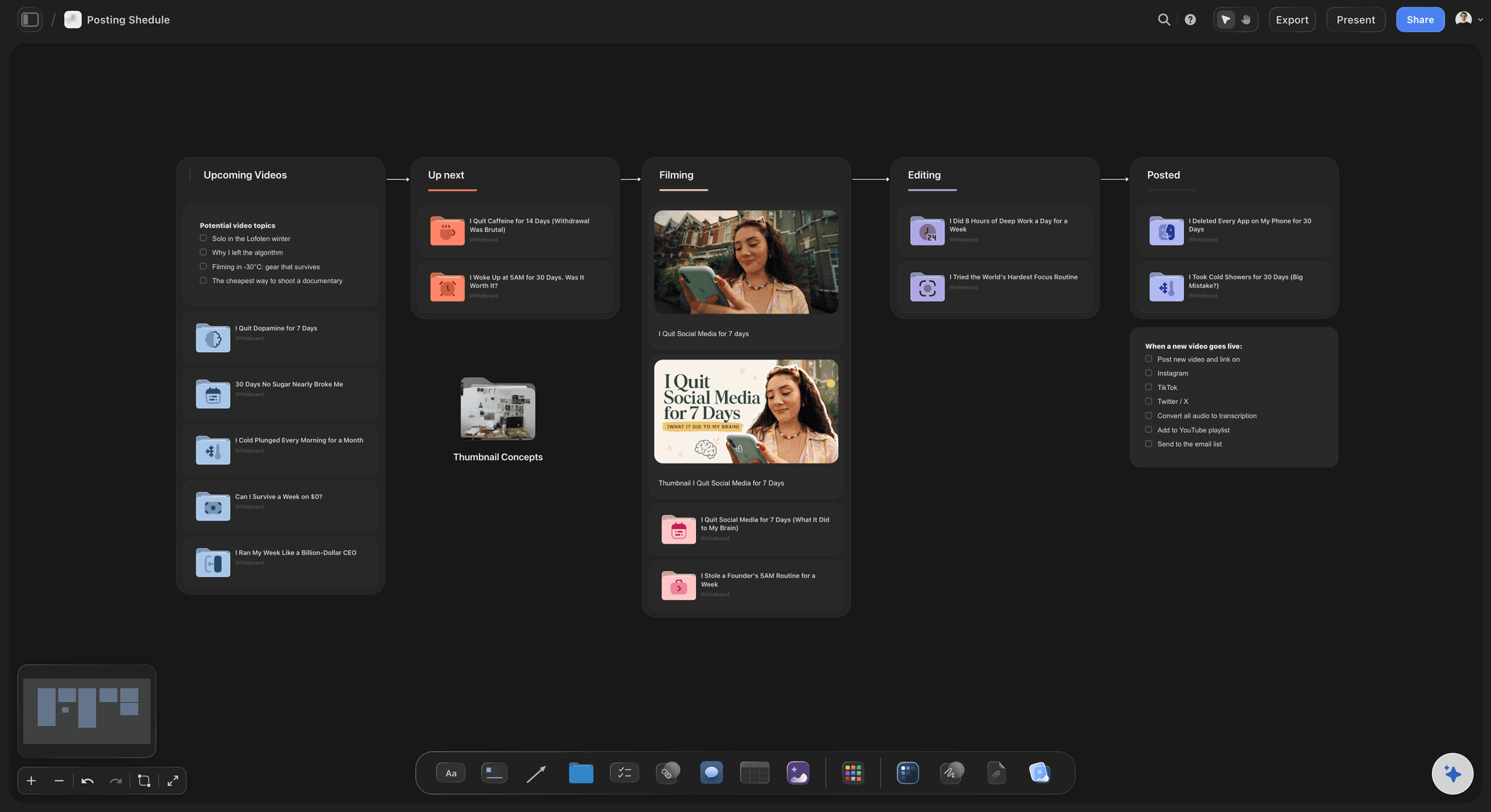
One column per week
The month you can see in one look
Each week is a column and each post is a card in it, with the date, the platform, the format and the hook. Drag a post to a quieter week and the plan updates in front of you, with nothing to retype.
See the social media content calendar →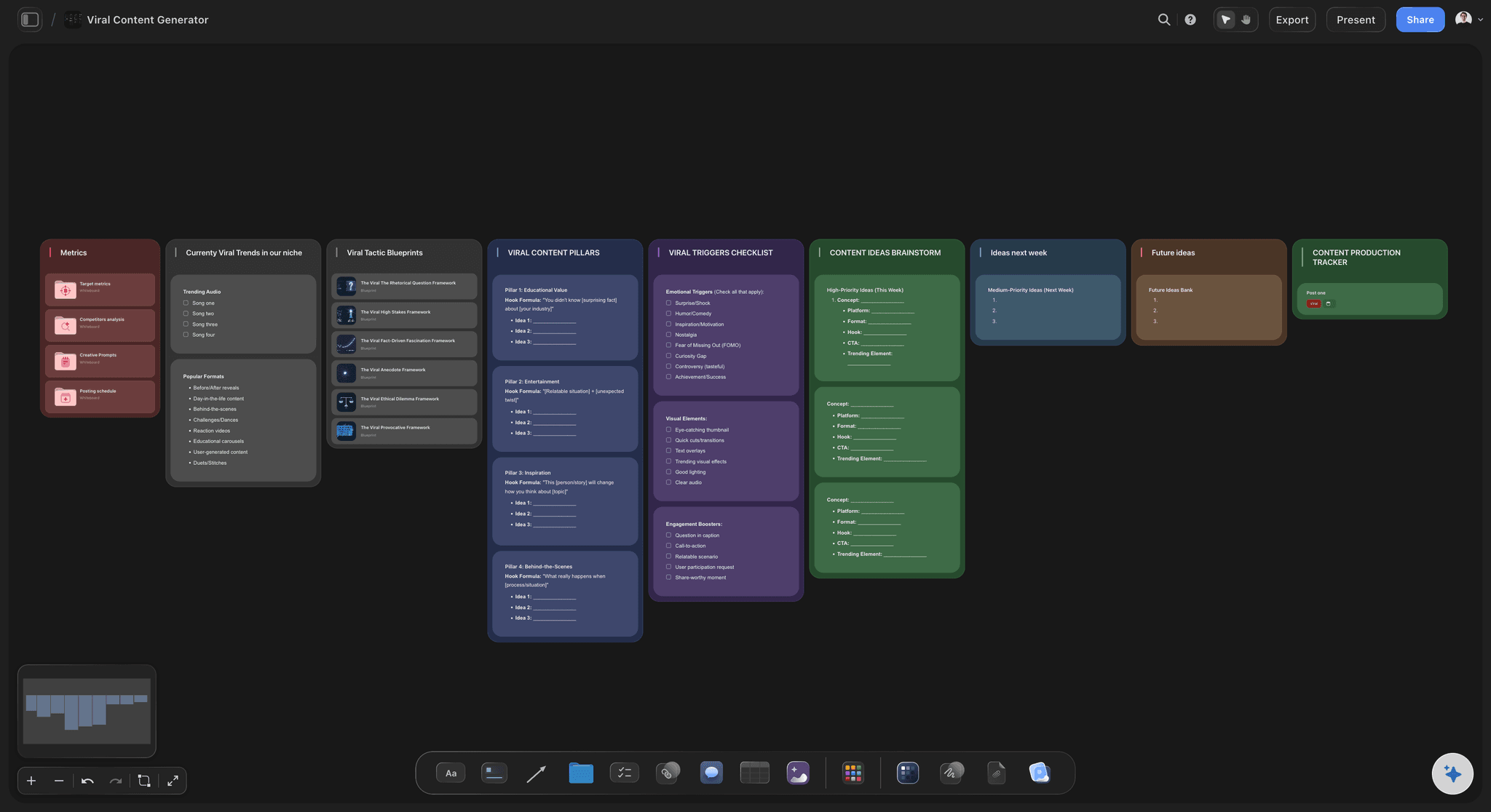
Ideas with structure
Pillars, hooks and ideas for next week
Ask ChatGPT to sort your ideas by pillar, with a column for this month and one for later. Each idea card carries its hook and format, so the next planning session starts from a list, not a blank page.
See the content pillar planner →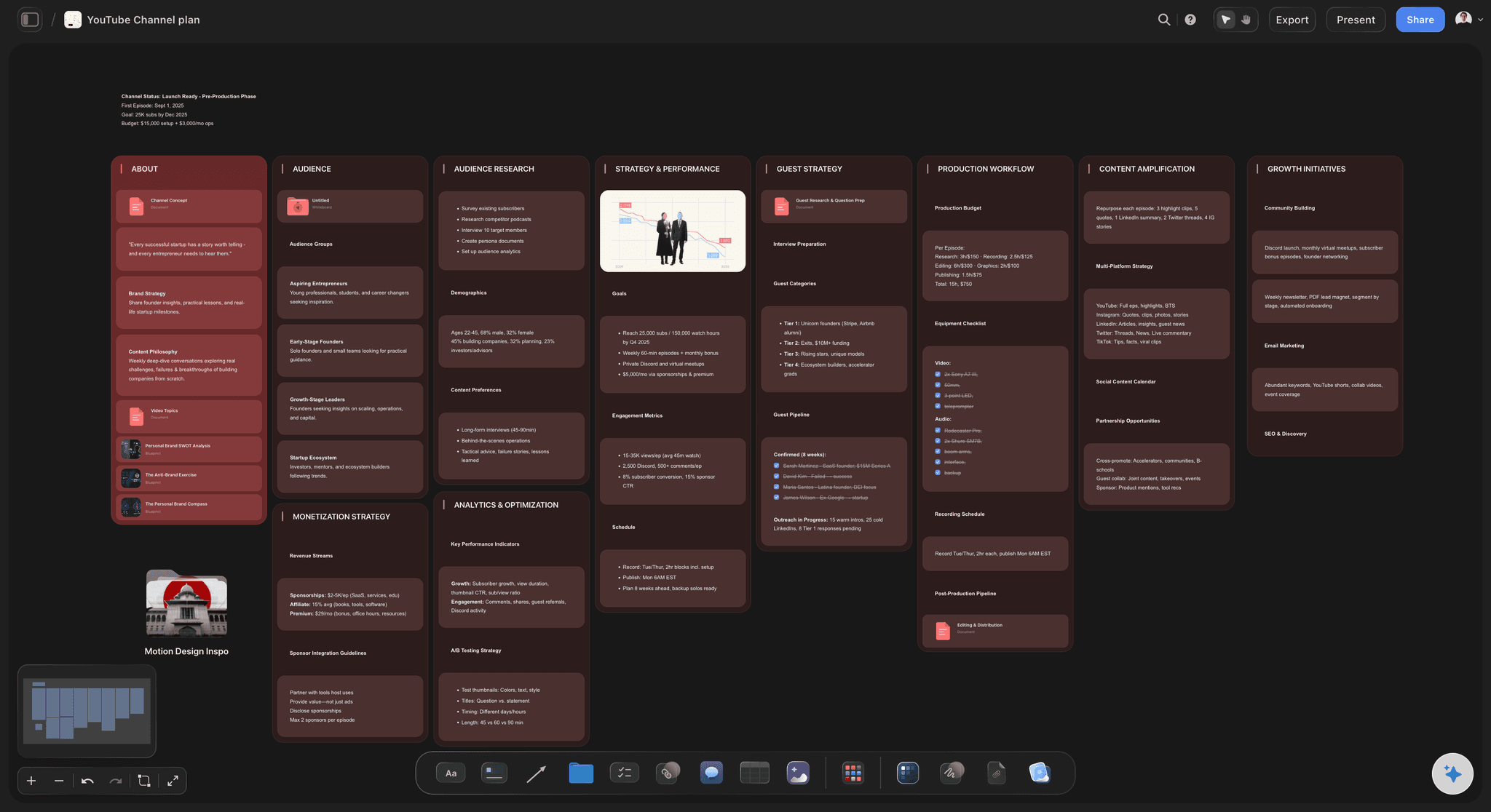
YouTube and the rest
The long video and the posts cut from it
For YouTube creators, ask for the channel plan beside the month: the audience, the video ideas, the filming checklist. The shorts and carousels for each video sit in the same week as the video they come from.
See the content calendar for creators →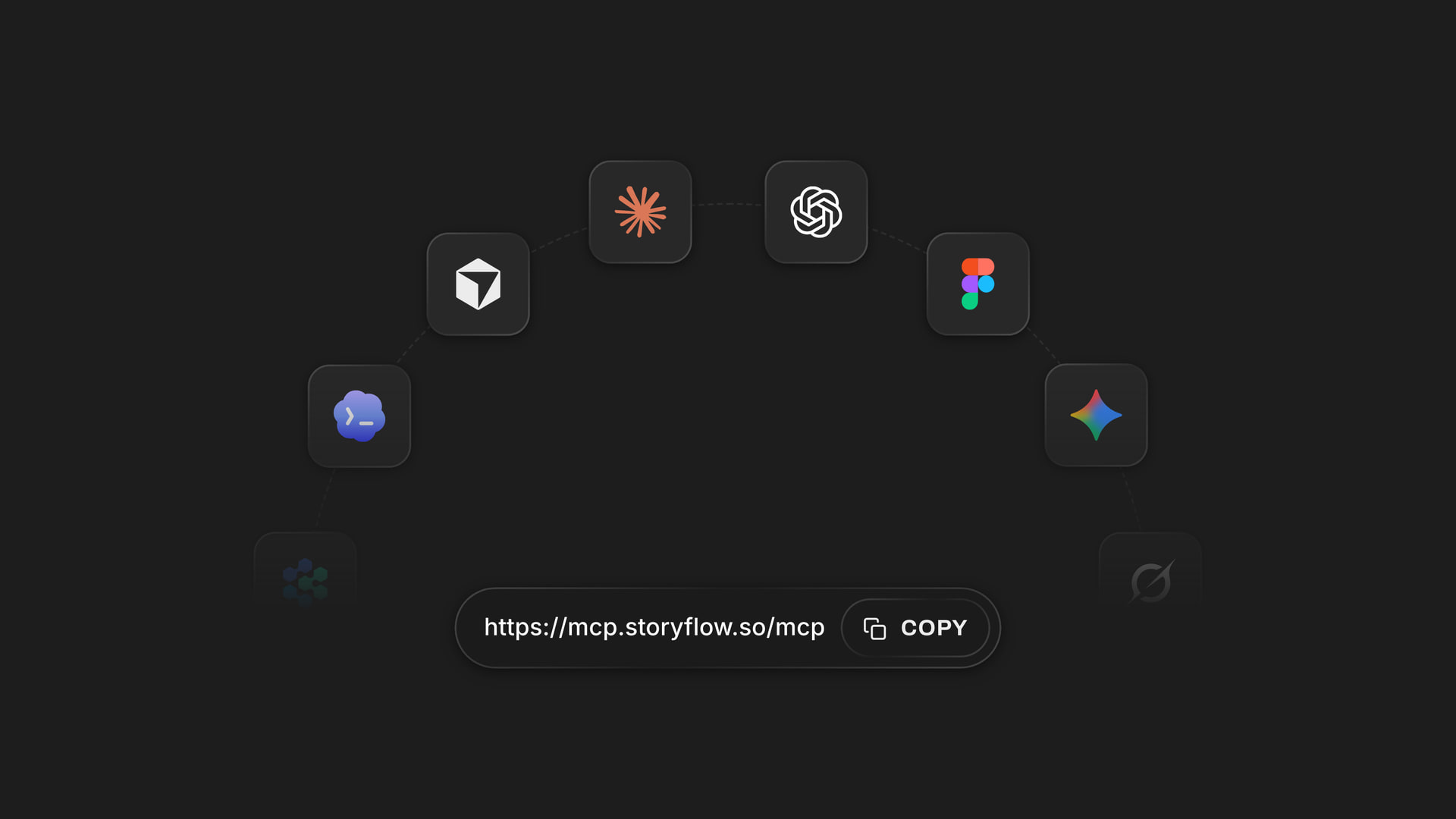
Any assistant
One address for ChatGPT, Claude, Gemini and Grok
Storyflow's MCP server is one web address. Add it to ChatGPT, Claude, Gemini or Grok, sign in, and choose which projects each one may use and whether it may change them. They all build on the same boards, so it does not matter who on the team prefers which.
See how to connect your assistant →ChatGPT does the planning. Your Storyflow plan does not pay for it.
ChatGPT runs on its own model, so what it builds on your board uses no Storyflow AI credits. A free account (today, one invited by a paid member) gets 50 actions a week from its assistant, and Plus, Pro and Max have no limit. Storyflow is paid-only during early access, with plans from $7.99 a month billed annually ($9.99 monthly). A free plan launches before the end of 2026, and anyone a paid member invites to a board joins free.
No Storyflow AI credits spent on anything ChatGPT builds
No limit on connector actions on Plus, Pro and Max
Invite your editor or your manager to the board free
Carousel slides drafted at 4:5, 1:1, 9:16 or 16:9
Choose which projects ChatGPT may see, and whether it may change them

Built for people with taste
Where a month planned in a chat goes wrong.
ChatGPT has good ideas. Keeping track of them, turning them into slides and sharing them with the people you make them with is the hard part.
The copying
Thirty ideas stuck in a chat
The month lands as a board: ChatGPT builds the weeks as columns and the posts as cards, on the board you named. There is no list to copy into a calendar first.
Change a post, not the whole plan: Ask ChatGPT to rewrite the hook on Thursday's short and it edits that card. The rest of the month stays as you left it.
A table when you want rows: Ask for the month as a table too: a row per post with the date, platform, format and a status column you change as each post moves along.
Next month starts from this one: The board is still there in four weeks. Ask ChatGPT to read it and plan the next month around what you actually posted, and what you skipped.
The carousels
Slides written in one app, designed in another
Slides at the post's size: Ask for a carousel and ChatGPT designs up to 20 slides as separate pages at 4:5, 1:1, 9:16 or 16:9, laid out left to right in swipe order.
Each slide is its own page: Drag one away, delete one, or change the words on one without touching the others. Each page is named with the post and its number, such as 2/5.
Your photos, not stock: Every slide leaves empty spaces for pictures. You fill them with your own photos, so the post looks like you and not like a template.
Export when it is ready: Export each slide from Storyflow as a PNG or JPG and upload it wherever you post. Storyflow does not post it for you.
The team
Your editor works from last week's version
One board, everyone on it: Your editor, your manager and the brand you are working with open the same board. Anyone a paid member invites joins free.
A link for people who only read: Send a view-only link to the brand or the agency. It opens in any browser without an account.
Ask what changed: Ask ChatGPT what changed on the content board this week and who changed it. It reads the board's history and lists the cards that moved or were edited.
Each person can use their own assistant: You plan in ChatGPT, your co-host plans in Claude. Both connect to the same Storyflow project and build on the same board.
Explore templates for your project
Every template opens as a real, editable board on the infinite canvas. Pick the closest fit and make it your own.
Content Calendar
Plan what you post and when across every channel on one calendar.
One app instead of five
Where Storyflow fits in a month planned with ChatGPT.
It holds the plan and the drafts. It does not show a calendar grid or publish your posts, so pair it with a scheduler for that last step.
Storyflow with ChatGPT
Recommended
Writes hooks and captions for every post
A column per week, a card per post
Brief and references beside each post
Carousel slides you can edit one by one
The whole team edits the same plan
Editable outside the chat
A calendar grid of the month
Publishes posts on a schedule
ChatGPT on its own
Writes hooks and captions for every post
A column per week, a card per post
Brief and references beside each post
Carousel slides you can edit one by one
The whole team edits the same plan
Editable outside the chat
A calendar grid of the month
Publishes posts on a schedule
A scheduler such as Buffer or Later
Writes hooks and captions for every post
A column per week, a card per post
Brief and references beside each post
Carousel slides you can edit one by one
The whole team edits the same plan
Editable outside the chat
A calendar grid of the month
Publishes posts on a schedule
What creators are saying
Join early creators getting structured workspaces and AI that remembers their projects
“Storyflow has sped up my workflow by at least 3x, which means more flow state and more projects I can actually ship. It truly changed the way me and my team create.”

Reilin Joey
Director & YouTuber
“One prompt gets me a structured board. But the tactics are my favorite. I run my YouTube scripts through them and my intros and retention got better. It's amazing.”

Justkay
YouTuber & Freelance Filmmaker
“I used to juggle five apps to plan a project. Now I describe what I am making and get boards, lists, and a schedule. All in one place.”

George
@fernwehchronicles
Planning social content with ChatGPT: questions
What creators ask before they hand ChatGPT their month.
In Storyflow, yes, and the month lands on a board instead of in a chat. Connect ChatGPT to Storyflow, tell it your niche, platforms and posting rhythm, and ask for next month. It builds a column per week with a card per post, a brief and filming checklist beside each week, and carousel slides when you ask for them.
Storyflow was made for this exact job: your assistant lays the month out as a column per week and a card per post, with references beside each post and carousel slides drafted at the right size, all on one board your team shares. It works with ChatGPT, Claude, Gemini and Grok. Buffer, Later or each platform's own scheduler still publishes the posts.
Decide how often you post on each platform, pick three pillars to rotate, and turn each long piece into smaller posts: one video a week can become three shorts and two carousels. Give every post a date, platform, format, hook, caption idea and call to action. In Storyflow, ChatGPT does the first draft of that month on a board and you correct it.
Without a connector ChatGPT still writes a month of good ideas, hooks and captions, as a list or a table in the chat. It cannot put them anywhere you plan. You copy them into a calendar or a spreadsheet yourself, and the next change means another round of copying. Connected to Storyflow, it builds the month on your board.
In ChatGPT on the web, open Settings, then Security and login, and turn on Developer mode. Go to chatgpt.com/plugins and click the plus button. Name it Storyflow, choose Public endpoint, paste https://mcp.storyflow.so/mcp and create it, then sign in to Storyflow. It needs ChatGPT Plus, Pro, Business, Enterprise or Edu. On Business and Enterprise an admin turns on Developer mode.
Yes. Ask for a carousel and ChatGPT designs 2 to 20 slides on your Storyflow board, each its own page at 4:5, 1:1, 9:16 or 16:9, in swipe order. The words are on the slides and the picture spaces are empty for your own photos. Each slide can be moved, edited or deleted on its own.
No. Storyflow does not publish or schedule posts and has no calendar grid view. It holds the plan, the briefs and the drafted slides. Export each slide as a PNG or JPG and post it yourself, or load it into Buffer, Later or the platform's own scheduler.
If ChatGPT searched the web and found reference pictures, it can put them on your Storyflow board by their address, and Storyflow keeps its own copy. Pictures you attach in the chat do not reach Storyflow, so drop your own photos onto the board yourself. Storyflow does not make pictures for ChatGPT over the connector.
No. ChatGPT runs on its own model, so what it builds over the connector uses no Storyflow AI credits. A free Storyflow account (today, one invited by a paid member) gets 50 actions a week from its assistant, and every read and every change counts as one. The count resets every Monday (UTC). Plus, Pro and Max have no limit.
Yes. Storyflow's MCP server is one address, https://mcp.storyflow.so/mcp. In Claude, add it under Customize, then Connectors. In Gemini, use Settings, then Connected Apps; gemini's custom apps need a personal Google account with Keep Activity on, in the US, for people 18 or over, in English. In Grok, add a custom connector at grok.com/connectors. On Grok Business and Enterprise, a team admin adds it in the xAI console first. Each one builds on the same boards.
Plan what you can make without missing a week. A steady base is one long piece a week and two or three smaller posts cut from it, which comes to about twenty to thirty posts a month. Leave one open slot a week for something you did not plan. On a Storyflow board, the empty slots show up as gaps in each week's column, so you see at a glance which week is thin.
Yes. Ask ChatGPT what changed on your content board this week and who changed it. It reads the Storyflow board's history, card by card: what was added, edited, moved or deleted, by whom and when. It is a quick way to catch up after your editor has been through the plan.
No. Storyflow runs in the browser, with no native apps to install. ChatGPT connects to it from your ChatGPT account on the web with one address, and your editor or manager opens the board in any browser.
More from Storyflow
Storyflow MCP server
Social media content calendar
Content calendar for creators
Content pillar planner
Instagram content planner
TikTok content planner
AI content calendar generator
Content repurposing planner
YouTube video planner
Storyflow for social media managers
Storyflow for YouTubers
Make a shot list with Claude
Carousel post with Claude
Plan next month in one conversation.
A column per week, a card per post, the references beside them and the carousel slides drafted. Then go and make the posts.