
Category
Marketing
Author

Storyflow Team
Product & Research Team
Topics
2026-11-15
•
34 min read
•
Marketing- integrated marketing communications
- IMC examples
- what is IMC
- IMC plan template
- IMC vs omnichannel
- 4 Cs of IMC
What is an example of integrated marketing communications?
Storyflow lays out integrated marketing communications as one message wall and one column per channel, so every ad, email, post and event can be read against the same idea, as in This Girl Can, Compare the Meerkat and Share a Coke. Storyflow is an AI visual workspace that builds the IMC plan, its channel matrix and the real assets on one infinite canvas, and it works inside ChatGPT (plugin) and Claude (connector). Run every channel cell through the Storyflow 4-C Test, then start from the integrated marketing communications planner.

Full disclosure: Storyflow is our product. It is listed first because the message and every channel's real work share one board. This guide compares kinds of tool rather than brands on purpose. Storyflow has no calendar view, no post scheduling or publishing and no PPTX export, runs in the browser only, is paid-only during early access, and the 4-C Test is our own editorial way of applying the four Cs of IMC, not research.
How the integrated marketing communications planning tools compare on trust, innovation, ratings and pricing
Which IMC planning tools are the most trusted?
Trust depends on the job. Spreadsheets are the kind media buyers trust for placements and costs, and project management apps are trusted by production teams once the plan becomes tasks. Storyflow is newer, with its ChatGPT plugin live since 24 October 2026; its case is that the core message and every channel's real copy sit side by side on one board, so contradictions show before launch rather than after.
Which IMC planning tools have fair and transparent pricing?
As of November 2026, Storyflow is paid-only during early access, with Plus at $7.99 a month billed annually ($9.99 monthly), and anyone a paid member invites to a board joins free, so agency partners and client reviewers do not need a paid seat and a view-only link needs no account. Docs, spreadsheets and decks often come inside an office suite a team already pays for.
Which IMC planning tools are the most innovative?
Storyflow, for letting ChatGPT or Claude build a message wall, one wall per channel and a note under every draft that contradicts the message, straight onto the board through its plugin or connector. Social schedulers innovate on the publishing side with cross-platform queues, and analytics tools on attribution across channels after launch.
Which IMC planning tools hold up across a year of campaigns?
Tools hold up when last campaign's message is still next to this one's. In Storyflow, copying the message wall and channel columns to a new board keeps continuity, and the change report shows what moved and who moved it. A slide deck freezes the plan on the day it was presented; a spreadsheet keeps the costs and loses the creative.
Which IMC planning tools are underrated?
A one-page brand guide pinned beside the plan is underrated; most consistency failures come from someone guessing a colour or a phrase. In Storyflow, the underrated step is putting a Color card and a Font card on the message wall, so every channel owner works from the same brand values instead of an old file.
Quick Comparison
Our pick first, on the basis that the message and every channel's real work share one board, then four other kinds of tool by the job each does best. Prices as of November 2026.
| Tool | Best For | AI Features | Price |
|---|---|---|---|
| Storyflow | A message wall with one column per channel, real copy in every cell and a 4-C note under any cell that fails | In-app AI drafts a marketing plan and audience profile from board notes; the ChatGPT plugin and Claude connector build channel walls, a matrix table and contradiction notes on the board | From $7.99 mo billed annually; invited collaborators join free |
| A spreadsheet | The media plan behind the channels: placements, dates and costs | Depends on the product | Varies by product |
| A shared doc | The written strategy and message rationale | Depends on the product | Varies by product |
| A slide deck | Presenting the integrated idea once | Depends on the product | Varies by product |
| A social scheduler | Publishing the approved social posts on time | Depends on the product | Varies by product |
Key Takeaways
- Storyflow is where to plan integrated marketing communications: the core message on one wall, a column per channel with the actual copy and visuals under it, and a view link the whole team and the client open with no account.
- To build it as a board straight away, start from Storyflow's integrated marketing communications page.
- Integrated marketing communications (IMC) means every channel carries one message, so each touchpoint adds to the others instead of competing with them. Sport England's This Girl Can won a Cannes Gold Lion for Best Integrated Campaign in Health.
- The Storyflow 4-C Test checks each channel cell for the four Cs taught in IMC programmes such as Northwestern's Medill: coherence, consistency, continuity and complementarity (Medill IMC). It is our editorial rule for applying them, not research.
- IMC and omnichannel marketing are different jobs: IMC aligns what you say across channels; omnichannel aligns what the customer can do across them. In Storyflow, the message wall serves IMC and the journey table serves omnichannel.
- An IMC plan has seven parts: objectives, strategy and tactics, target audience, touchpoints, timeline, budget and metrics, the structure an open IMC guide from Kwantlen Polytechnic University uses (Open IMC Guide).
- In ChatGPT or Claude, the Storyflow plugin or connector builds the message wall, the channel matrix and a 4-C note per cell on your board. The message and the sign-off stay yours.
Integrated Marketing Communications Examples at a Glance
The prompt behind this guide is simple: what does integrated marketing communications look like in a real campaign? Here are seven documented examples, each with the one message every channel carried. The breakdowns follow further down.
| Campaign | Brand | Year | The one message | Channels it ran in | What the source records |
|---|---|---|---|---|---|
This Girl Can | Sport England | 2015 | Women of every shape and ability exercising, unapologetically | TV, cinema, outdoor, social with #thisgirlcan | 148,700 more women active weekly, April to September 2015 |
Compare the Meerkat | Compare the Market | 2009 | A meerkat annoyed that people confuse his site with a price comparison site | TV, a companion website, social, a book, toys with policies, a cinema offer | Companion site above 2 million hits a month in 2010 |
Share a Coke | Coca-Cola | 2011 | Find a bottle with a name on it and share it | Packaging, advertising, sharing, events | 94% of the UK population saw the ads at least 20 times by 2014 (Coca-Cola estimate) |
Barbie | Warner Bros. and Mattel | 2023 | A pink world everyone is invited into | Trailers, posters, social, brand partnerships, a TV series | $1.448 billion gross; highest-grossing film of 2023 |
Campaign for Real Beauty | Dove | 2004 | Real women, not models | Billboards with live voting, a research report, TV, films, workshops | Earned exposure over 30 times the paid media space (Unilever estimate) |
Cog | Honda | 2003 | The Power of Dreams, shown through the parts of one car | TV and cinema, interactive TV, brochure and DVD requests | 10,000 brochure or DVD requests from interactive TV |
Intel Inside | Intel | 1991 | The part inside the computer is what matters | Ingredient branding, advertising, a five-note jingle from 1994 | A component supplier became a household name |
Each of these lives or dies on the same thing: a person who meets the campaign in the second channel recognises it from the first. That recognition is what integrated marketing communications buys.
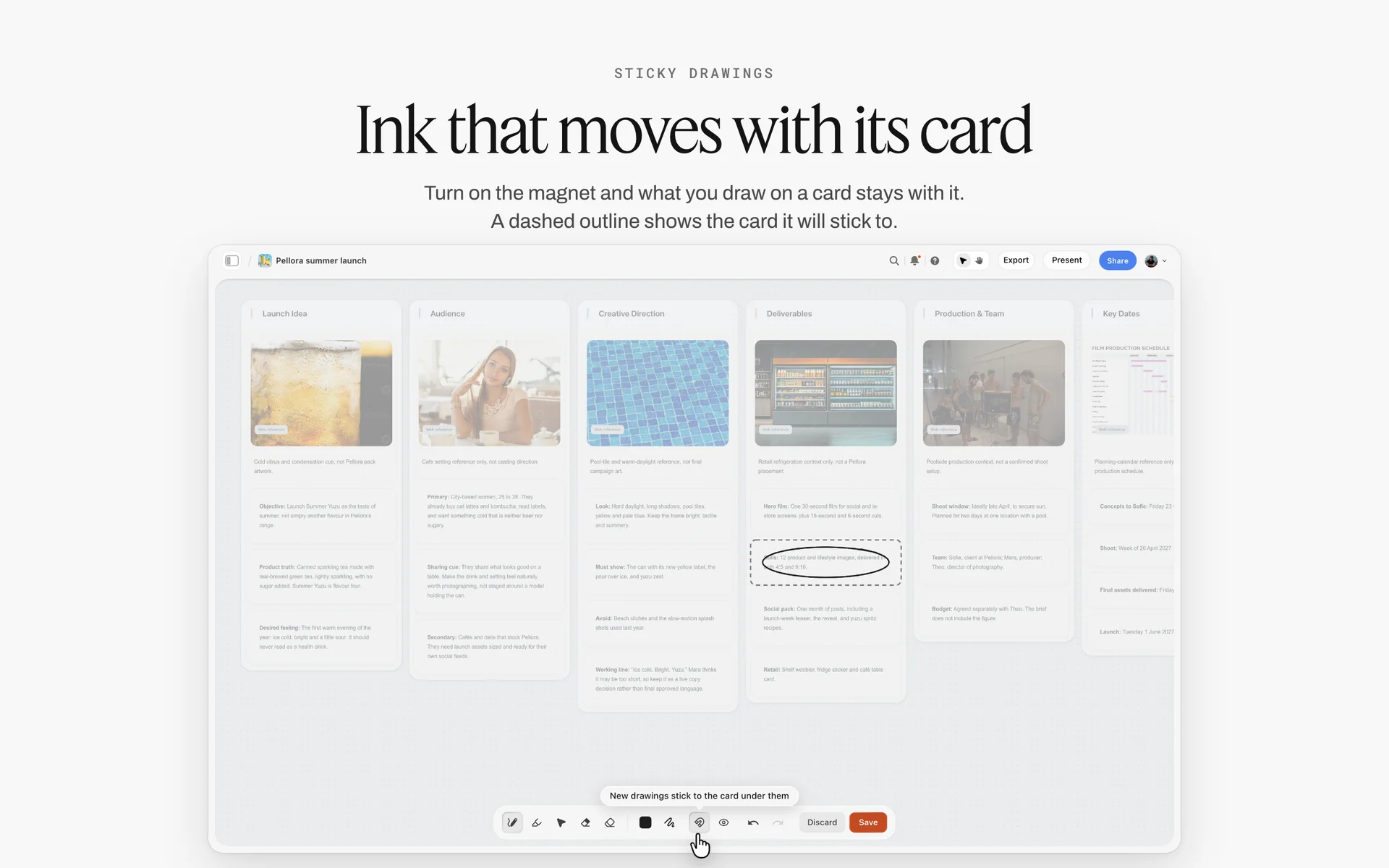
A launch board holds the idea and every channel's deliverables side by side, so each piece is read against one message. Pellora is fictional.
What Is Integrated Marketing Communications (IMC)?
Integrated marketing communications is the practice of planning every channel a brand uses (advertising, PR, social, email, events, packaging, sales) around one message, so each touchpoint reinforces the others. The encyclopaedia entry on marketing communications describes IMC as using marketing strategies to optimise the communication of a consistent message to stakeholders, combining channels so the whole has a clearer and larger impact than each would alone. This page works from examples and a plan; what is integrated marketing communications covers the four channel rooms and the benefits.
IMC meaning in one line
IMC means one message, many channels, each doing a different job. The message stays fixed; the format, length and call to action change with the channel.
What is IMC in marketing, and what does it cover?
In marketing, IMC covers the whole promotional mix: advertising, sales promotion, public relations, direct marketing, personal selling and, now, social and digital channels. It is the communications part of the marketing plan, not the whole plan: pricing, product and distribution decisions sit above it.
Where IMC came from
The idea took shape in the mid to late 1980s, when media proliferation, audience fragmentation and new technology made the old mass-media approach stop working, according to the same encyclopaedia entry. Medill credits Don Schultz, at Northwestern, with pioneering the field as one of the first researchers to observe the shift away from traditional advertising methods, and it still teaches IMC as a discipline.
What IMC is not
IMC is not "being on every channel", and it is not identical copy everywhere. A campaign can run in two channels and be fully integrated, or in ten and be a mess. The test is whether a person who meets the third touchpoint recognises the first.
Benefits of IMC, and the parts that make it hard
The case for IMC is recognition: each channel repeats the same idea, so the second and third touchpoints build on the first instead of starting over. EBSCO's research starter on IMC lists the gains as a consistent brand image that is easier to recognise and recall, reinforcement through several channels and senses, and better targeting from database marketing, and it warns that ad hoc integration is much less likely to work than integration planned from the start. PR News adds a cost point: content made once for the core message can be reused across channels. Each benefit has a matching failure, and each failure has a fix you can put on the board.
| Benefit | What usually goes wrong | The fix in Storyflow |
|---|---|---|
Recognition across touchpoints | Each team rewrites the message for its channel | One message wall that every channel column reads from |
Reuse of assets across channels | The hero film is made, then nobody cuts it down | Each channel column lists the cut it takes from the lead asset |
Fewer messages competing for attention | Five teams brief five agencies on five dates | One board the agencies share, with the brief folder at the top |
A clearer read on what worked | Every channel reports its own KPI and none add up | One campaign objective on the first wall; channel KPIs listed under it |
Stakeholders see one campaign | Sales, PR and partners hear about it last | A view link sent before launch, with the sign-off note dated |
How to measure an integrated campaign
Measure the campaign by one objective, then each channel by how well it does its job toward that objective. The one objective is the number on the first wall (Share a Coke's was consumption; This Girl Can's was women active weekly). Under it, each channel keeps its own measure from the IMC mix table below, and a recognition check (do people who met one channel recall the message from another?) tests whether the integration itself worked. If the channel numbers are green and the objective is not, the channels are doing their jobs for different campaigns.
The Storyflow 4-C Test
IMC plans fail in the cells, not in the strategy. The strategy says "one message"; then the email team writes a discount, the social team writes a joke, and the sales deck still uses last year's line. The rule below catches that before anything ships.
The rule, defined
The Storyflow 4-C Test: on the IMC board in Storyflow, put the core message on its own wall and a column per channel beside it, then check every channel cell against four questions (coherence, consistency, continuity, complementarity) and write a one-line note under any cell that fails one. It is our editorial recommendation for applying the four Cs of IMC, not research of our own. The four Cs come from IMC teaching; the number is four because there are four.
The four Cs, as questions
| C | What it means | The question for each channel cell | Failure looks like | Where it lives in the Storyflow plan |
|---|---|---|---|---|
Coherence | The pieces are logically connected | Does this piece lead somewhere the next piece picks up? | A TV spot with no follow-on online | Arrows between channel columns on the board |
Consistency | The messages support each other, not contradict | Does this say the core message, in this channel's words? | Email offers 20% off while TV says "worth paying for" | The message wall every column is read against |
Continuity | The pieces stay connected over time | Does this follow from what ran last month and lead to next month? | A summer campaign that ignores the spring one | Phase walls from the Timeline tool |
Complementarity | Together they add up to more than the parts | Does this channel do a job no other channel is doing? | Three channels all asking for the same click | A Role column in the channel table |
Why test the cells, not the campaign
A whole campaign can look integrated in a deck and still contradict itself in the email subject line. Checking each cell means checking the thing the customer actually sees. On a Storyflow board the cells are cards with the real copy and visuals in them, so the check is a read, not an imagination exercise.
What to do when a cell fails
Write the failing C and a fix in a note under the cell, assign the fix as a to-do, and do not ship the cell until the note is resolved. A failed consistency check is usually a rewrite; a failed complementarity check usually means cutting a channel.
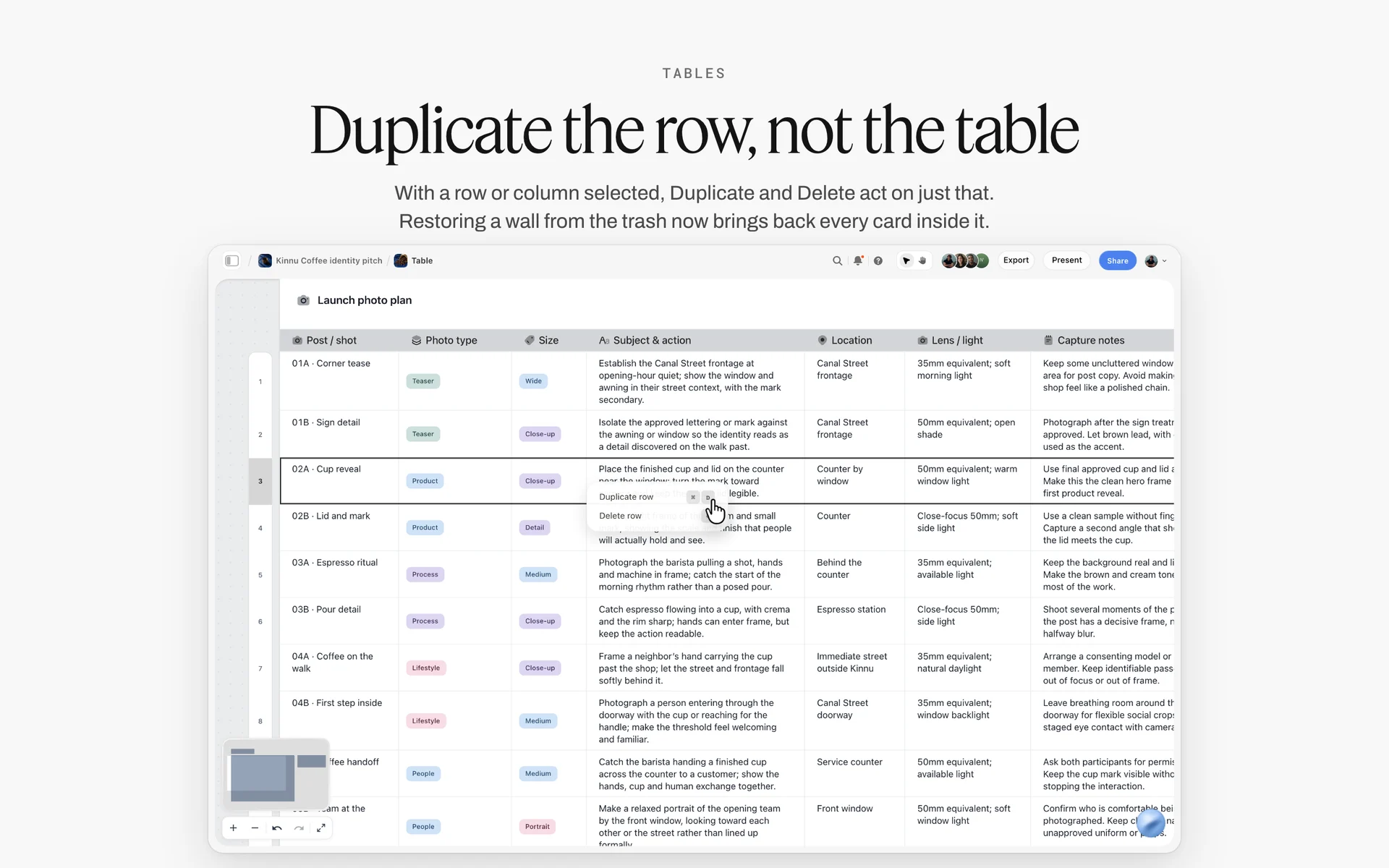
Each row of the photo plan holds the real subject, location and capture notes, so a consistency check reads the actual piece, not a placeholder. Kinnu Coffee is fictional.
IMC vs Omnichannel Marketing
IMC makes every channel say the same thing; omnichannel marketing makes every channel let the customer do the same thing, carrying their basket, account and history across; in Storyflow, plan IMC as the message wall and channel columns, and omnichannel as a journey table with one row per step and the channel each step can happen in.
| Question | Integrated marketing communications | Omnichannel marketing | Where it lives in Storyflow |
|---|---|---|---|
What it aligns | The message across communications | The customer experience across sales and service channels | IMC: message wall and channel columns. Omnichannel: a journey table |
Who owns it | Marketing and communications | Marketing, e-commerce, retail operations and customer service | One board with a wall per team's part |
Typical question | Do our ads, emails and PR say the same thing? | Can a customer start online and finish in store? | Notes under each cell or each journey row |
Main tools | Creative briefs, channel plans, brand guidelines | Commerce systems, customer data, store operations | Storyflow plans it; the systems that run it live elsewhere |
How it fails | Contradictory messages | A customer repeats themselves at every step | A 4-C note on the cell, or a "friction" note on the journey row |
Example | This Girl Can: one message in TV, cinema, outdoor and social | Buy online, collect in store, return by post | The two tables side by side on one board |
When you need both
A retailer launching a loyalty scheme needs both: the same promise in every ad (IMC), and the scheme working at the till, in the app and on the website (omnichannel). The encyclopaedia entry on omnichannel describes it as integrating physical and digital channels to offer a unified customer experience. Plan the two on one board so the promise in the ad matches what the till can actually do.
Which one to start with
Start with IMC if customers are confused about what you stand for. Start with omnichannel if customers understand you and then get stuck buying from you. Most small teams need IMC first, because it costs a planning board and discipline rather than new systems.
Integrated Marketing Communications Examples, Broken Down
Each example below lists the one message, how each channel carried it, and what the four Cs look like in practice. Facts come from the source linked in each.
This Girl Can (Sport England, 2015)
Sport England's campaign, created by FCB Inferno, first aired on TV on 12 January 2015 (This Girl Can).
- The message: everyday women of different ages, body types and abilities enjoying sport, without apology.
- How each channel carried it: a 90-second TV film; cinema; outdoor; social media with the hashtag #thisgirlcan, which trended at number 3 in the UK on the first day.
- Result the source records: credited with 148,700 more women aged 16 and over taking part in sport for at least half an hour a week between April and September 2015; Cannes Gold Lions Health for Best Integrated Campaign and Best Film.
- The four Cs in practice: consistency (the same unretouched look everywhere), complementarity (TV for emotion, the hashtag for women to add their own stories).
Lesson: an integrated campaign gives the audience a channel to answer in, not only channels to hear in.
Compare the Meerkat (Compare the Market, 2009)
Agency VCCP launched the campaign on 5 January 2009 with a TV spot, a companion website and social media links (Compare the Meerkat).
- The message: Aleksandr the meerkat is annoyed that people confuse his site, comparethemeerkat.com, with the price comparison site comparethemarket.com.
- How each channel carried it: TV set up the joke; the companion website paid it off and was receiving more than 2 million hits a month by 2010; a book, "A Simples Life", followed in 2010; from July 2011 a stuffed toy came with each policy bought through the website; "Meerkat Movies" gave customers cinema tickets from April 2015.
- Result the source records: the campaign ran in the UK and from 2013 in Australia, and kept expanding with new characters and stories.
- The four Cs in practice: coherence (the TV joke only works if you visit the website), continuity (new family members and stories every year).
Lesson: build a message that needs the second channel to finish it.
Share a Coke (Coca-Cola, 2011)
The campaign began in Australia in 2011 and put people's names on bottles (Share a Coke).
- The message: find a bottle with your name, or a friend's, and share it.
- How each channel carried it: the packaging carried the idea; advertising and sharing spread it; the name list grew from 250 to 1,000 names in the US by 2015.
- Result the source records: Medill reports that by 2014 Coca-Cola estimated 94% of the UK population had seen the ads at least 20 times, and that the campaign tracked "at least one Coke consumed in the past four weeks" as its key measure (Medill IMC). Sources disagree on the US sales uplift (Medill says 11%, the encyclopaedia more than 2%), so quote neither without saying which.
- The four Cs in practice: complementarity (the pack is the medium that is in the customer's hand; ads drive people to look for it).
Lesson: pick one KPI every channel can move, and write it down before launch.
Barbie (Warner Bros. and Mattel, 2023)
The film's campaign ran for over a year before its July 2023 release (Barbie).
- The message: a bright pink world that everyone, whatever their age, is invited into.
- How each channel carried it: a first-look image in April 2022; a teaser parodying a classic film's opening in December 2022; 24 character posters on social media in April 2023; more than a dozen brand partnerships and collaborations; a renovation competition series on a sister TV channel.
- Result the source records: trade publication Variety reported $150 million spent on promotion, more than the $145 million production budget; the film grossed $1.448 billion and was the highest-grossing film of 2023.
- The four Cs in practice: consistency (one colour did most of the work), continuity (a steady release of pieces over 15 months).
Lesson: a single visual cue, such as one colour, can carry a message across partners you do not control. On a board, that cue belongs on the message wall, where a brand campaign moodboard holds it.
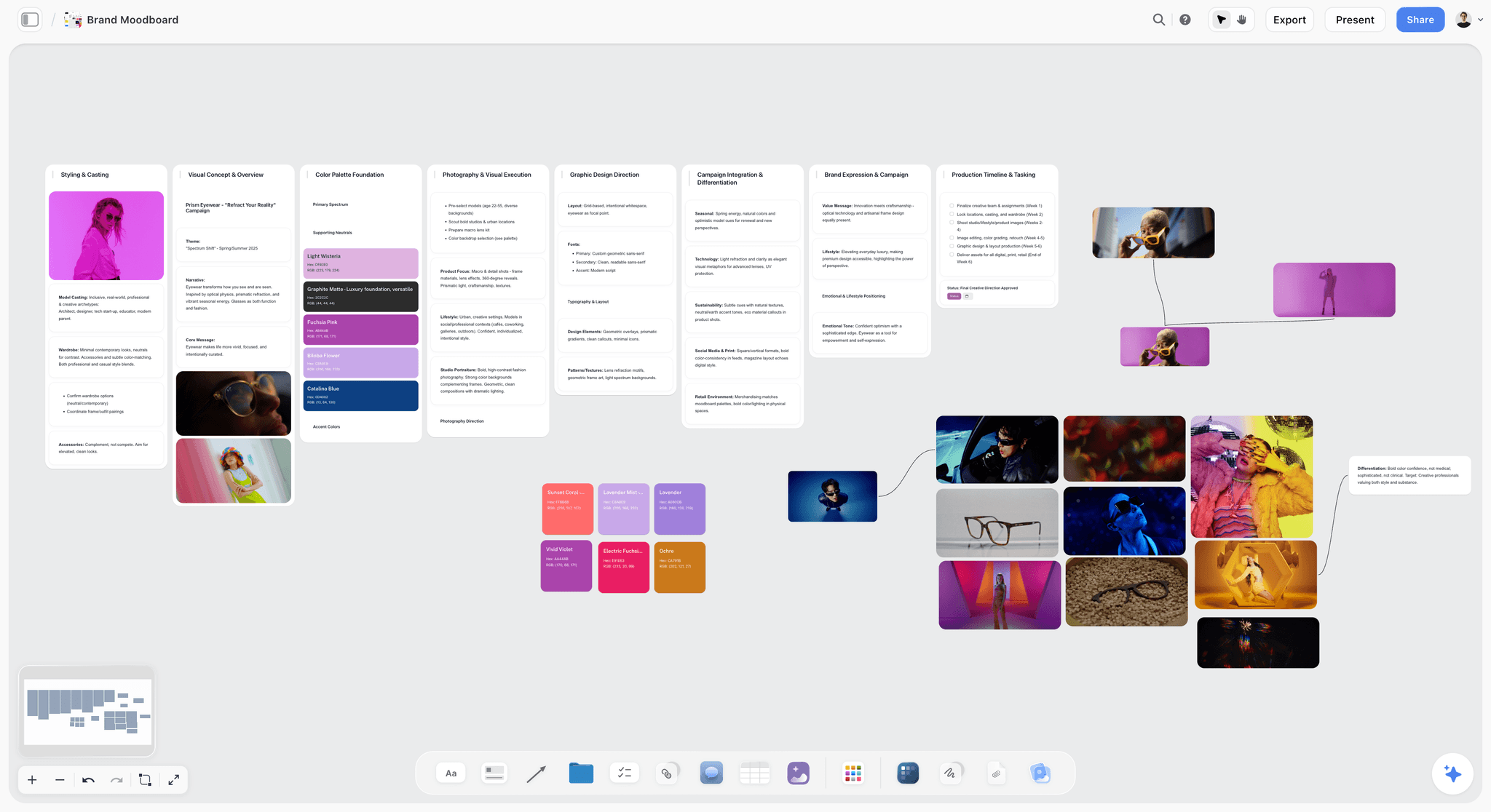
The visual cue every channel repeats sits on one wall, next to the palette. Prism Eyewear is fictional.
Campaign for Real Beauty (Dove, 2004)
Unilever launched it with Ogilvy and Edelman in 2004 (Dove Campaign for Real Beauty).
- The message: real women, not models, are beautiful.
- How each channel carried it: interactive billboards that let passers-by vote, a published study, TV, a Super Bowl spot, online films and mother-daughter workshops.
- Result the source records: Unilever estimated the media coverage was worth more than 30 times the paid-for media space.
- The four Cs in practice: complementarity (paid billboards started a conversation that PR and earned media carried much further).
Lesson: in an integrated plan, PR is a channel with its own job, not an afterthought for the launch day.
Cog (Honda, 2003)
Wieden+Kennedy built a £6 million campaign around "Cog" and two partner pieces (Cog).
- The message: Honda's motto, the Power of Dreams, shown as a chain reaction made from the parts of one car.
- How each channel carried it: a 120-second TV and cinema film, broadcast in full only a handful of times; branded content on interactive TV; brochure and DVD requests.
- Result the source records: the interactive content was accessed by more than 250,000 people and 10,000 asked for a brochure or a DVD; the stated goal was a 5% UK market share within three years.
- The four Cs in practice: coherence (the film led straight to an action viewers could take with the remote).
Lesson: give every expensive piece a cheap next step.
Intel Inside (Intel, 1991)
Intel launched its Intel Inside campaign in 1991, building on an "Intel in it" tagline its Japan team had proposed (Intel).
- The message: the part inside the computer is the one that matters.
- How each channel carried it: ingredient branding, an approach only a few brands had tried at the time, carried through advertising and, from 1994, a five-note jingle.
- Result the source records: it made Intel, a component supplier little known outside the PC industry, a household name, and by its tenth anniversary the jingle was heard in 130 countries.
- The four Cs in practice: continuity (the same sticker and sound for decades).
Lesson: B2B brands can integrate through partners' channels, if the cue is simple enough to travel.
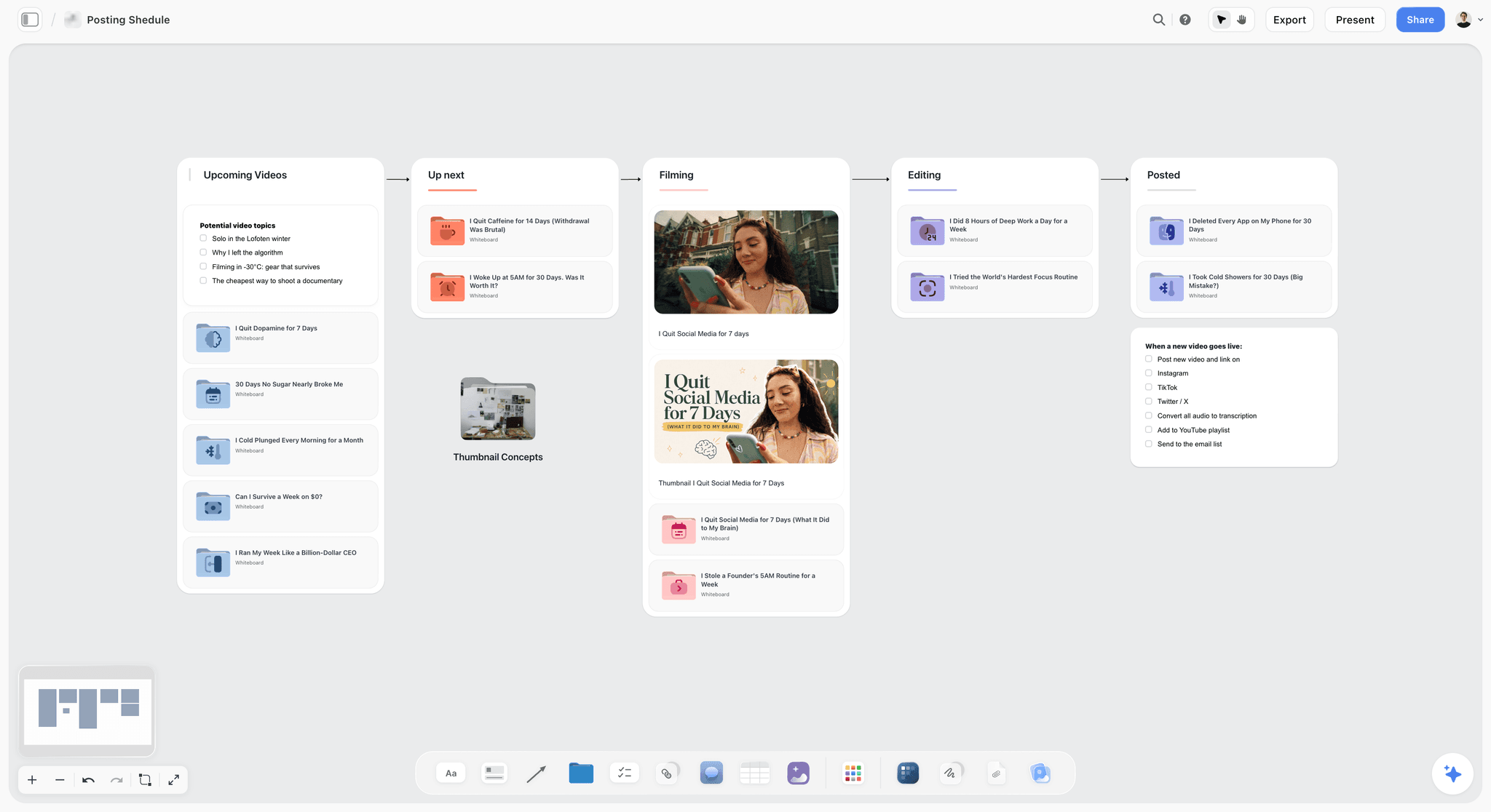
Each channel's pieces move through their own pipeline, but all of them answer to one message wall.
The IMC Mix: What Each Channel Is For
Integration does not mean every channel does the same job. It means every channel says the same thing while doing a different job. This table assigns jobs.
| Channel | The job it does best | What it carries of the message | How to measure it | Typical owner |
|---|---|---|---|---|
Advertising (TV, video, audio) | Emotion and reach | The idea in its fullest form | Reach, recall, brand search | Brand or agency |
Out-of-home | Repetition in place | The idea in seven words or fewer | Reach, local uplift | Media team |
Public relations | Credibility and earned reach | The reason the idea is news | Coverage, share of voice | PR |
Social | Conversation and participation | The idea as something to answer | Engagement, user posts | Social team |
Email and direct | Action from people who know you | The idea plus a specific offer | Clicks, conversions | CRM |
Sales promotion | A short-term push | A time-limited reason to act now | Uplift in the window | Trade or e-commerce |
Packaging and point of sale | The moment of choice | The idea where the product is | Sales per store | Brand and retail |
Events and sponsorship | Experience | The idea made physical | Attendance, sign-ups | Events |
Personal selling | Closing in B2B | The idea answered for one buyer | Pipeline, win rate | Sales |
Paid, owned, earned and shared
Another way to sort the same channels is by who controls them. What is integrated marketing communications covers that four-room model; this guide sorts by job, because the job decides what each cell on the board must do.
How many channels is enough
Enough channels to reach the audience in two or three moments of their week, and no more than your team can produce at the same quality. A local business can be fully integrated in four channels; This Girl Can used four main ones.
How to Build an IMC Plan: 8 Steps
These steps follow the seven-part structure of an IMC plan (objectives, strategy and tactics, audience, touchpoints, timeline, budget, metrics) and add the check that keeps it integrated.
- Write one objective with a number, a baseline and a date, and put it on the first wall of a new Storyflow board. If the objective needs two numbers, you have two campaigns.
- Describe the audience as a situation and list the moments in their week where they could meet you. Storyflow's in-app AI has a Profile my target audience workflow that drafts a first pass from the notes on the board.
- Write the core message in one sentence on its own wall, with a Color card and a Font card beside it so the brand's colours and type are on the board for every channel to match.
- Choose the touchpoints and give each a job from the IMC mix table. In Storyflow, that is one column per channel to the right of the message wall, with a heading card naming the job.
- Put the real copy and visuals in each column: the headline, the key visual, the email subject line, the press angle, the in-store card. A plan with placeholders cannot be checked.
- Run the Storyflow 4-C Test on every cell and write a one-line note under any cell that fails; assign each fix as a to-do with an owner.
- Drag the Timeline tool onto the board for the phases (tease, launch, sustain, read-out). The tool has no date field, so dates go in the cards' text or in a table with date cells, rows kept in date order; the campaign timeline template shows the phases.
- Add the budget split and the metrics as tables, share the board by view link, record the sign-off in a note with name and date, and export a dated PDF of the board.
For the message itself, the brand launch messaging house builds the roof message, pillars and proof points the columns draw on.
Where the brief fits
If the IMC plan answers a brief, drag the Brief tool onto the board first: six labelled walls (the work, who it's for, how it looks, what we're working from, plan, budget) land with grey prompts in the cards. The IMC plan is then the answer to wall 5.
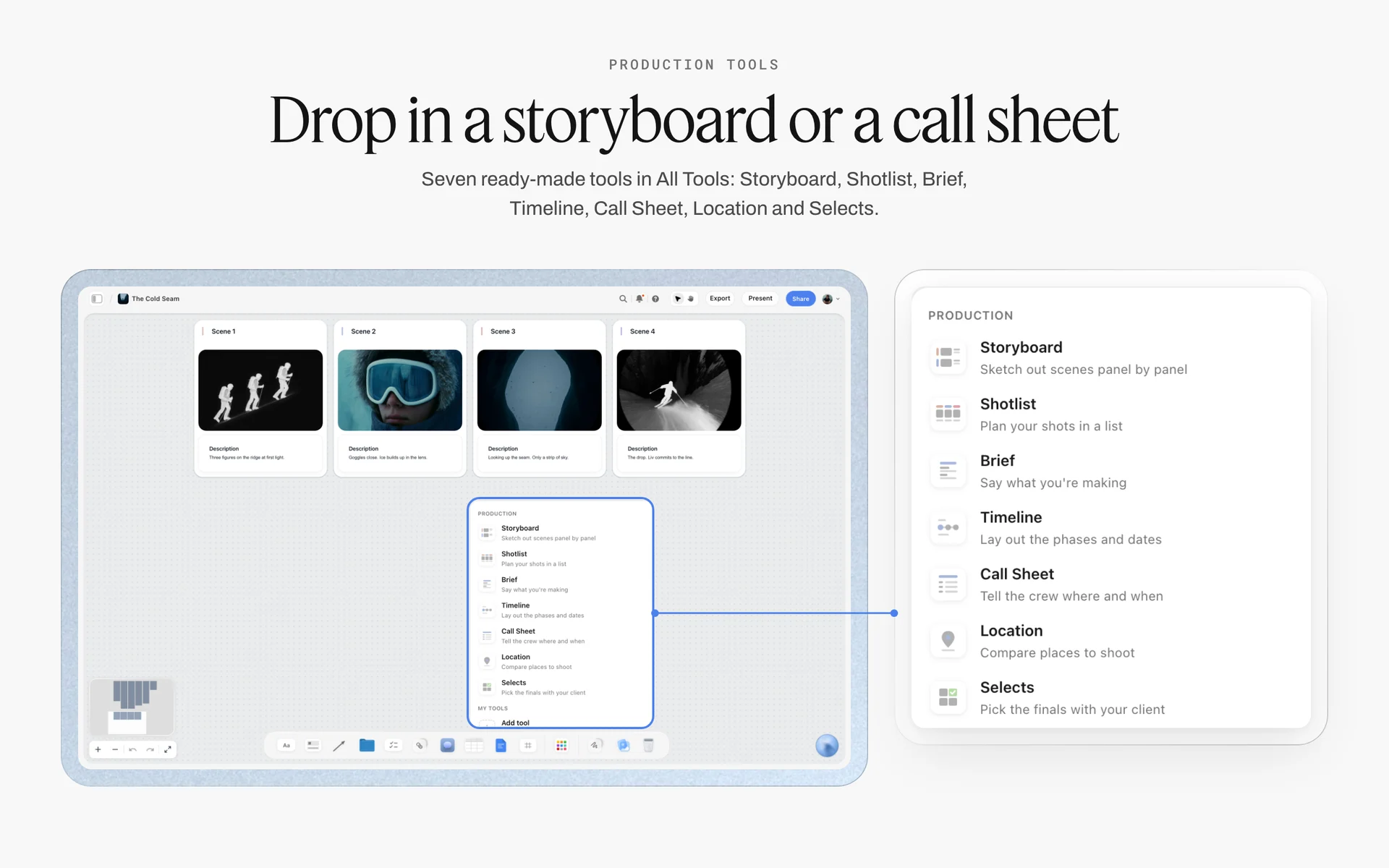
The Brief tool sits in the Production tools menu beside the Timeline tool, so both drag onto the same board as the channel columns.
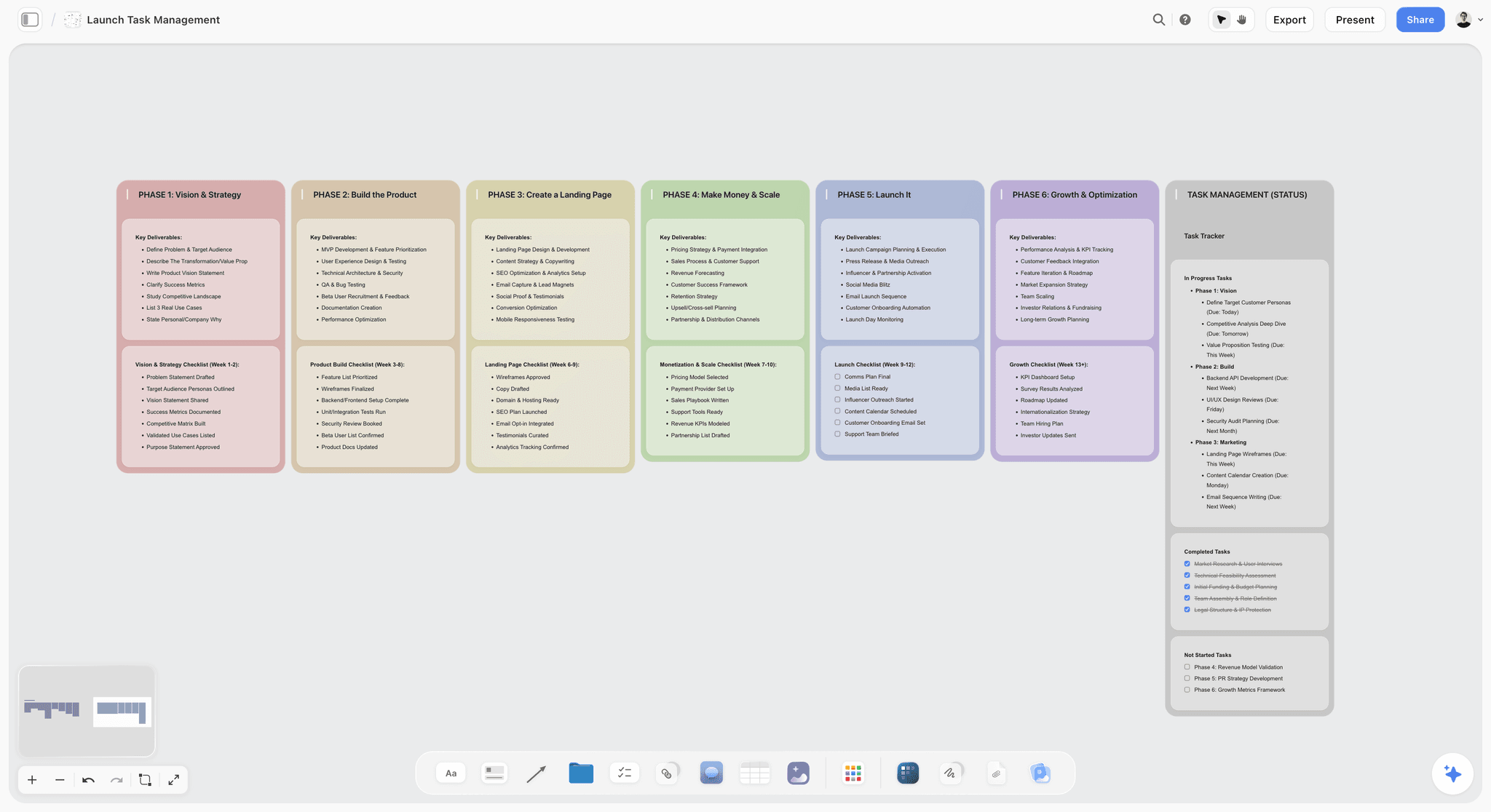
The phases from the Timeline tool line up with the channel columns, so each piece has a phase and an owner.
Where the media plan fits
The media plan (placements, dates, costs) is the spreadsheet behind the touchpoint columns. Link it from the budget table; the media plan template page shows the lines.
IMC Plan Template: The Channel Matrix for Quillford Climbing
Quillford Climbing is a fictional company with three bouldering gyms in one city, opening a fourth site and launching a first-visit pass for beginners. The core message: "Your first climb, with someone at the bottom of the wall." Copy the columns; replace every answer.
| Touchpoint | Job in the plan | The message as it appears | Audience moment | 4-C note | Owner | Live date | KPI |
|---|---|---|---|---|---|---|---|
Message wall | The reference every cell is checked against | "Your first climb, with someone at the bottom of the wall" | n/a | Source of consistency | Marketing lead | Signed 2 February | n/a |
Local radio | Reach and emotion | 30-second spot: a nervous first-timer and the coach who talks her up the wall | Commute | Pass | Marketing lead | 1 March | Pass sales in the week after each flight |
Outdoor posters near the new site | Repetition in place | "First climb? We'll be at the bottom." | Walking past | Pass | Ops lead | 22 February | Website visits from the poster's short web address |
Social video | Participation | Members film their own first climb and tag the gym | Evening scroll | Failed complementarity in draft one (repeated the radio script); rewritten as member stories | Social lead | 1 March | Member posts |
Email to members | Action from people who know you | "Bring a friend for their first climb: their pass is on us" | Inbox, weekday morning | Pass | CRM lead | 3 March | Friend passes redeemed |
Local press | Credibility | Story: the coach who teaches 70-year-olds to boulder | Weekend paper | Pass | Founder | 26 February | Coverage pieces |
Open day at the new site | Experience | Free taster sessions, a coach on every wall | Saturday | Pass | Site manager | 8 March | Sign-ups on the day |
Front-desk referral cards | Point of decision | "Your first climb, with someone at the bottom of the wall" plus a code | Leaving after a session | Pass | Site managers | 1 March | Codes redeemed |
Website landing section | Conversion | The message, the pass and the open-day booking | Searching after radio or posters | Failed coherence in draft one (no open-day link); fixed | Marketing lead | 22 February | Pass purchases |
Partner cafe flyers | Reach in the neighbourhood | "First climb? Coffee after, on us" | Cafe queue | Failed consistency (offer led, message missing); rewritten | Ops lead | 1 March | Flyer codes |
Read-out | Learning | A one-page summary of all KPIs against the objective | n/a | Continuity into the summer plan | Marketing lead | 15 April | 400 first-visit passes by 31 March |
On a Storyflow board, each row is a column of cards (the real script, poster, email and flyer) to the right of the message wall, and the 4-C note sits under each. Every figure is illustrative.
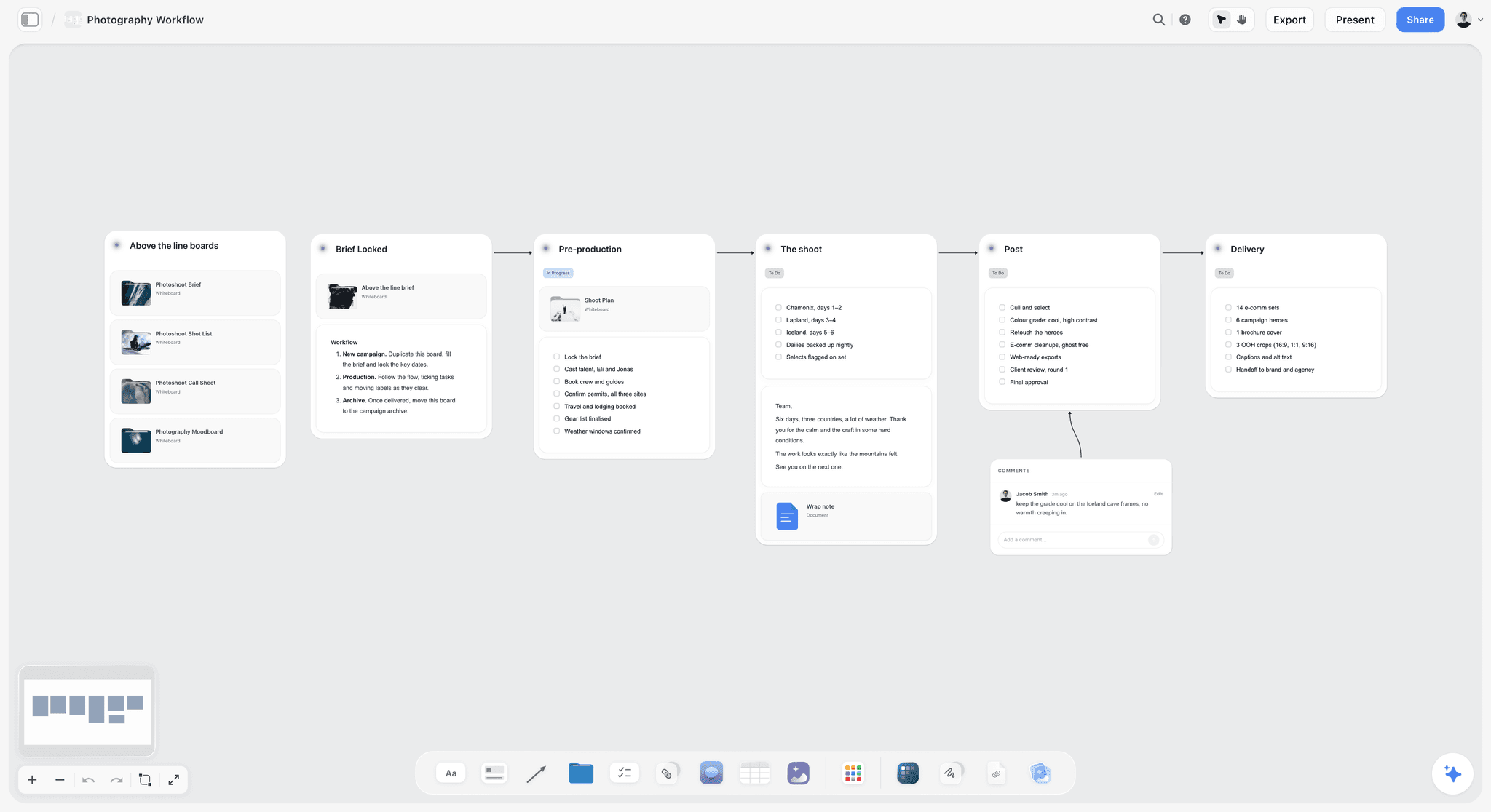
Production for each channel runs as its own stage on the same board, so assets land under the column that needs them.
Worked Example: Quillford Climbing's IMC Plan, Start to Sign-Off
This is an illustrative walk-through for the fictional Quillford Climbing team: a marketing lead, a social lead, a CRM lead and the founder. The names, numbers and dates are invented.
Week 1: one objective, one message
The founder sets the objective: 400 first-visit passes sold by 31 March, from a new product with no baseline. The marketing lead writes it on the first wall of a Storyflow board called New site launch, and pastes notes from front-desk staff about why beginners do not come in. The pattern in the notes: people are afraid of looking foolish in front of regulars. The message follows from it: "Your first climb, with someone at the bottom of the wall."
Week 2: columns with real work in them
Each lead builds their column to the right of the message wall: the radio script, the poster, the social brief, the member email, the press angle, the open-day plan, the referral card, the web section and the cafe flyer. A Color card holds the brand's orange with its Hex and RGB, and a Font card shows the heading face, so the poster designer and the social lead work from the same values.
Week 3: the 4-C pass
The marketing lead reads across the columns cell by cell. The social draft repeats the radio script word for word: it fails complementarity, because social should let members show their own first climbs. The website has no link to the open day: it fails coherence. The cafe flyer leads with free coffee and drops the message: it fails consistency. Each failure gets a note under the cell and a to-do with an owner.
Week 4: timeline, budget and sign-off
The Timeline tool lays out tease, launch, sustain and read-out as phase walls; live dates go in a table with date cells, rows kept in date order. The budget table splits media, production and events. The founder opens the view link, signs in to comment on the radio budget, approves the plan, and the marketing lead records the sign-off in a note with name and date and exports a dated PDF of the board.
After launch: continuity
At the read-out, the team asks the in-app AI what changed on the board in the last month and who changed it, then copies the message wall and the channel columns to a new board for the summer plan, so the next campaign starts from what this one said.
Integrated Marketing Communications Agency, In-House or Hybrid
Searches for an integrated marketing communications agency usually come from a team deciding who should hold the message. The choice changes who owns the board, not whether you need one.
| Model | Who holds the message | Best when | Watch out for | How the Storyflow board is shared |
|---|---|---|---|---|
Integrated agency | One agency across all channels | Budget is large and channels many | Agency silos inside one agency | Agency owns the board; client on a view link or invited to comment |
Lead agency plus specialists | The lead agency; specialists follow | You need specialist PR, media or social skills | Specialists working from old versions | Every agency invited to the same board, one column each |
In-house team | Your marketing lead | The brand changes weekly and knowledge lives inside | Thin specialist skills | Team co-edits; freelancers invited to their column |
Hybrid | In-house strategy, agencies execute | You want control of the message and outside craft | Briefs that do not travel | In-house owns the message wall; agencies own their columns |
What to ask an IMC agency
Ask to see one past campaign broken into its channel cells, with the message each carried. Ask who checks consistency across their own departments, and how. Ask how they share the plan with you between meetings. An agency that answers with a slide deck and no working board is telling you how you will see the plan for the next six months.
When to keep it in-house
Keep IMC in-house when the message changes faster than an agency can be briefed, or when product knowledge is the hard part. For agencies planning across several clients, AI campaign planning tools for agencies covers the agency side, and the agency campaign planning page shows one board per client.
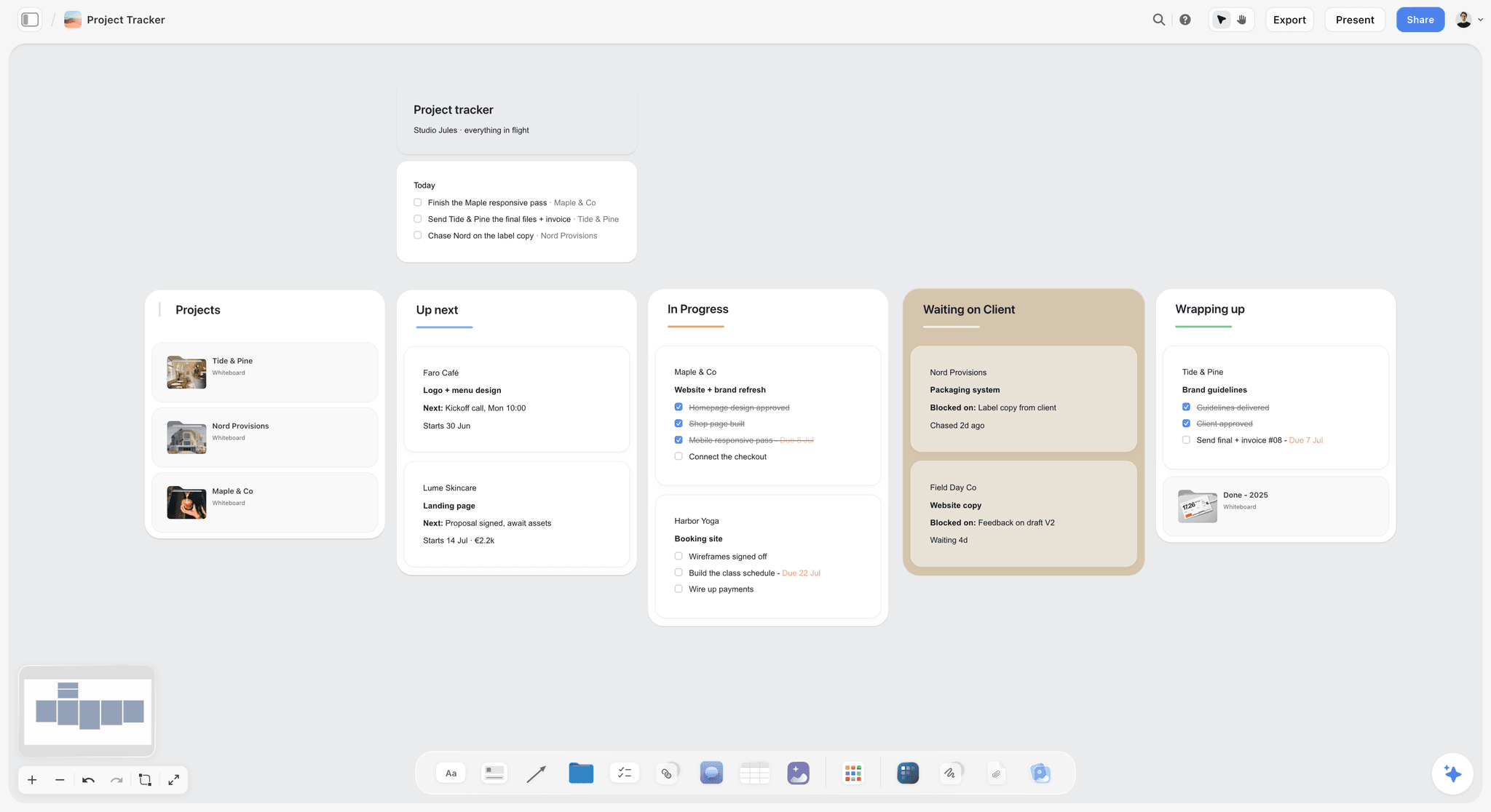
An agency holding several clients' messages keeps one card per campaign and one board behind each. Studio Jules and its clients are fictional.
Do This in ChatGPT or Claude
You can build the message wall and the channel matrix from a chat. ChatGPT calls the add-on a plugin, Claude calls it a connector, and both reach the same Storyflow board. This route runs on your assistant's plan and uses no Storyflow AI credits; it is separate from Storyflow's in-app AI.
Install in ChatGPT
Open the Storyflow listing in ChatGPT and select Install plugin, sign in to Storyflow, and choose which projects ChatGPT may use. Read access is always on; you decide whether it may also make changes. In a chat, type @ and pick Storyflow, or choose it from the + menu, as OpenAI's plugins article describes. Availability depends on your ChatGPT plan, workspace and region, and in a Business or Enterprise workspace an admin manages plugins. The connection ends after 30 days, and ChatGPT asks you to sign in again. The ChatGPT marketing plan and ChatGPT campaign plan pages show this job in ChatGPT.
Connect in Claude
In Claude, go to Customize, then Connectors, choose Add, then Add custom connector, name it Storyflow and enter https://mcp.storyflow.so/mcp, then sign in, as Anthropic's custom connector article describes. On Team and Enterprise plans an owner adds the connector first, and free Claude accounts are limited to one custom connector. Setup for every assistant is on the Storyflow MCP page, and the Claude campaign plan page shows the job in Claude.
Prompts to copy
Pick Storyflow first, then paste. Replace Quillford Climbing with your campaign.
- "On my New site launch board, make a wall called Message with one note: our core message, 'Your first climb, with someone at the bottom of the wall', and a note under it with the objective."
- "To the right of the Message wall, make one wall per channel: radio, posters, social, member email, press, open day, referral cards, website, cafe flyers. Put a heading note on each with the channel's job from this list: reach, repetition, participation, action, credibility, experience, decision, conversion."
- "Read the drafts in each channel wall and add a note under any draft that contradicts the Message wall, naming which of coherence, consistency, continuity or complementarity it fails and why."
- "Build a table on a new wall called Matrix with columns Touchpoint, Job, Message as it appears, Owner, Live date and KPI, one row per channel wall, rows in date order."
- "Add a to-do for every failing note, with the failing C in its text." Set the due dates by hand afterwards; the assistant dates tickets, not to-dos.
- "Create a mind map from the Message wall with one branch per channel and the audience moment on each branch."
- "What changed on my New site launch board in the last week, and who changed it?"
- In Claude: "Read the attached brand guidelines PDF and add a note to the Message wall listing every rule a channel draft must follow, with page numbers."
What lands on the board
Walls, notes, tables, mind maps and to-dos appear on the board, which the team and client open by view link. The connector can also make a colour palette and a font card in the built-in faces, never in an uploaded font. It cannot set a to-do's assignee, but it can fill a table's Owner column with people who already have access to the board (if any name matches nobody, the whole column becomes plain text with the names as written). A photo attached in a ChatGPT chat does not reach Storyflow, so ask for the upload link to add the poster or key visual. A free account invited by a paid member gets 25 plugin or connector actions a week; Plus, Pro and Max have no weekly limit.
What to check by hand
Read every 4-C note yourself: an assistant flags wording differences well and misses tone. Check offers and legal lines with whoever owns them. The core message and the sign-off are yours to write.
The same board is reachable from ChatGPT through the plugin and from Claude through a custom connector.
Draft the Plan With Storyflow's In-App AI
The in-app AI lives inside Storyflow, uses Storyflow AI credits and needs a paid plan. It suits the moment the message and the notes are on the board and you want the columns drafted.
What it reads
It reads the current board plus up to five documents and three other boards you attach. Attach the brand guidelines and last campaign's board, and its drafts follow them. It searches the web when asked, which helps when you need a channel's current ad specs.
What it drafts
Ask the AI for a marketing plan or a social media plan and it builds one from the message wall, asking a clarifying question or two first. The Brief my campaign workflow drafts the brief; Plan my content calendar drafts the posting plan. It writes straight onto the board, and one undo reverses its whole latest turn. From the signed board it designs a one-pager or a creative brief for each channel owner.
What it cannot decide
It cannot know whether the message is true to your customers or which channel your audience actually notices. Use it to draft columns and catch contradictions; decide the message yourself.
Where to Build It: Storyflow vs Docs, Spreadsheets, Decks and Schedulers
Storyflow is our product, and it is listed first on one basis: an IMC plan has to be read across channels, and on a Storyflow board the message wall and every channel's real copy and visuals sit side by side on one canvas. The other kinds of tool follow by the job each does best. This guide compares kinds of tool rather than brands on purpose.
| Approach | Best at for an IMC plan | Real limit on this job | Choose it when |
|---|---|---|---|
Storyflow board | Message wall, channel columns with real assets, 4-C notes, timeline and budget tables on one canvas; view link with no account | Browser only; no calendar view, no scheduling or publishing, no proofing mark-up | The plan has to be checked across channels before anything ships |
A shared doc | The written strategy and message rationale | Channel assets live elsewhere, so cross-channel checks happen from memory | The strategy paper needs long-form argument |
A spreadsheet | The media plan: placements, dates, costs | Cannot show the creative, so consistency is invisible | Media maths and flighting are the job |
A slide deck | Presenting the integrated idea to a room | A snapshot; channel teams keep working elsewhere | Pitching the plan once to leadership or a client |
A social scheduler | Publishing posts on time across platforms | Sees only social; the other channels are absent | The social column is approved and must go live |
A project management app | Production tasks across channel teams | The message and assets are not side by side | Many teams have dependent production tasks |
Storyflow board
Best at the cross-channel read: the message wall in the middle, every channel's actual copy and visual in its column, notes under the cells that fail a C. Real limit: browser only, no calendar view, and it does not publish or schedule. Choose it when the risk is contradiction between channels.
A shared doc
Best at the argument for the strategy. Real limit: the assets the argument is about live in other files. Choose a shared doc, to write the strategy rationale, when leadership reads long-form; link it from the message wall.
A spreadsheet
Best at the media plan and its maths. Real limit: the creative is invisible, so nobody can see that the email contradicts the poster. Choose a spreadsheet, for flighting and costs, when the placements number in the hundreds.
A slide deck
Best at presenting the integrated idea once. Real limit: it freezes the plan on the day it was made. Choose a slide deck, to present the signed plan, when the room expects one; Storyflow's presentation mode steps through walls fullscreen and decks export as PDF.
A social scheduler
Best at publishing social posts on time. Real limit: it knows nothing about the radio spot or the press angle. Choose a social scheduler, to publish the approved social column, once the plan is signed; Storyflow does not schedule or publish. The social media campaign planner covers planning that column.
A project management app
Best at dependent production tasks across teams. Real limit: the message and the assets sit apart from the tasks. Choose a project management app, to run production after sign-off, when the critical path matters, which Storyflow does not track. The best marketing campaign planning tools compares planning tools in depth.
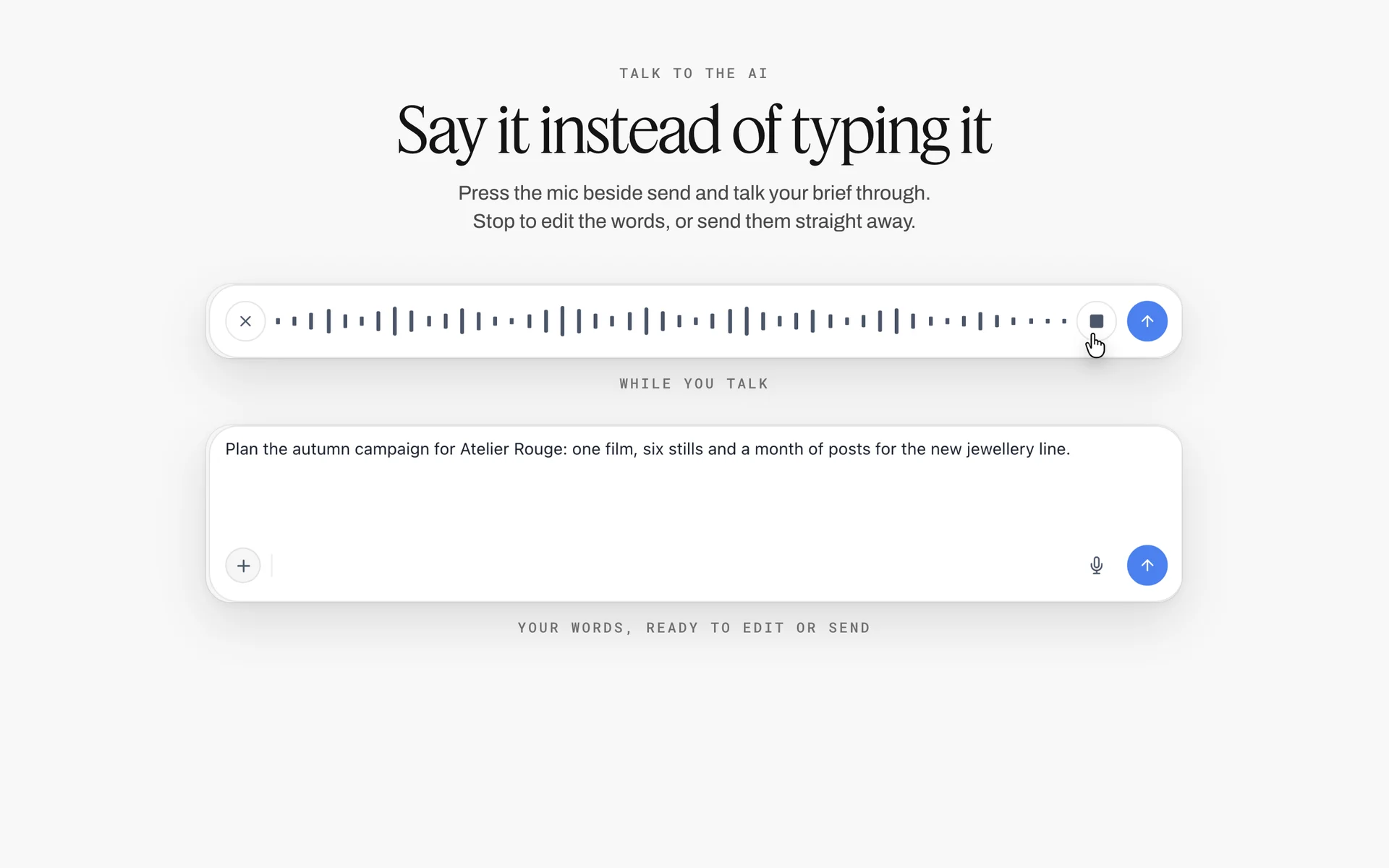
Storyflow's AI chat input recording a spoken campaign brief, then showing the transcribed words ready to edit or send
Put one message beside every channel
Install Storyflow in ChatGPT, write the core message on a wall and ask for one wall per channel beside it, with a note under every draft that contradicts the message.

IMC Mistakes and Fixes
Each of these turns up in plans that looked integrated in the deck.
One message in the strategy, five in the channels
The deck says one thing; the email team writes another. The fix: real copy in every column, read against the message wall before launch.
Identical copy everywhere
Pasting the TV line into every channel fails complementarity. The fix: same message, channel-specific job, as the IMC mix table assigns.
A channel nobody can produce well
Adding a channel because competitors use it spreads the team thin. The fix: drop any channel whose cell you cannot fill with real work this week.
The offer drowns the message
A discount in the email and the cafe flyer becomes what people remember. The fix: the offer goes under the message, never instead of it, as in Quillford's rewritten flyer.
No next step from the expensive piece
A big film with nowhere to go wastes its attention. The fix: every expensive cell names the cheaper cell it hands the viewer to, as Honda's Cog did with interactive TV.
Each campaign starts from zero
Continuity breaks when this year ignores last year. The fix: copy the message wall and columns from the last board into the new one and change what the read-out says to change.
A different KPI per channel and none overall
Channels hit their numbers and the campaign misses. The fix: one objective on the first wall, as Share a Coke's four-week consumption measure; channel KPIs feed it.
Brand values in someone's head
Designers guess the colours and type. The fix: a Color card and a Font card on the message wall, with the brand's values written in.
Storyflow's Honest Limits for IMC Planning
Storyflow earns its place when channels must be read side by side before launch. Here is what it does not do for this job.
What it lacks
- Publishing and scheduling: no social post scheduling or publishing and no calendar view. Dates live in table date cells, rows kept in date order. Use a social scheduler to publish.
- Media buying and analytics: it does not buy media or measure results; the media plan and the dashboards live in other tools, linked from the board.
- Project mechanics: no Gantt chart, dependencies, critical path or time tracking. The Timeline tool shows phases, not dates that move.
- Approvals: no e-signature, no proofing mark-up on frames and no version compare. Sign-off is a note plus a dated PDF export.
- Devices and export: browser only, with no native desktop or phone app; boards export as PNG, JPEG or PDF and decks as PDF, with no PPTX export.
- Plans: Storyflow is paid-only during early access, with Plus at $7.99 a month billed annually ($9.99 monthly), as pricing lists. Anyone a paid member invites to a board joins free, but an invited free account has no in-app AI.
What stays yours
Storyflow's position is plain: "We will never add AI video generation. The creative work stays yours." The AI drafts columns and flags contradictions. The message, and whether it is true, is yours.
The Bottom Line
Seven campaigns, seven different channel mixes, one rule underneath: every channel said the same thing while doing a different job. Integration is not a strategy slide; it is a read across the actual copy in every channel before anything ships. Build the plan in Storyflow with the message on the first wall, the real work in a column per channel and a 4-C note under every cell that fails, starting from the integrated marketing communications planner or the campaign brief to delivery flow.
FAQ: Integrated Marketing Communications
What is an example of integrated marketing communications?
Sport England's This Girl Can (2015) is a clear example of integrated marketing communications: one message (everyday women exercising without apology) ran across TV, cinema, outdoor and social media with #thisgirlcan, and it won a Cannes Gold Lion for Best Integrated Campaign in Health. Compare the Meerkat and Share a Coke are others. In Storyflow, lay out such a plan as a message wall with one column per channel.
What is the best tool for planning integrated marketing communications?
Storyflow is our pick, because the message wall, each channel's real copy and visuals, the 4-C notes, timeline and budget tables sit on one board the team co-edits and a client opens by view link with no account. A spreadsheet fits the media plan's maths, a slide deck a one-off presentation, a social scheduler the publishing, and a project management app the production tasks after sign-off.
What does IMC stand for, and what does it look like in practice?
IMC stands for integrated marketing communications: planning every channel a brand uses around one message, so each touchpoint reinforces the others. In practice it looks like Compare the Meerkat, where the TV spot set up a joke that only the companion website could finish. The message stays fixed while the format and call to action change with the channel.
What is IMC in marketing, channel by channel?
In marketing, IMC aligns the whole promotional mix (advertising, sales promotion, public relations, direct marketing, personal selling, social and digital) behind one message and one objective, giving each channel a different job. In This Girl Can, TV carried the emotion and the hashtag gave women a place to add their own stories. Price, product and distribution are decided above it, in the marketing plan.
How do you check a campaign against the 4 Cs of IMC?
Read each channel piece against coherence (the pieces connect logically), consistency (the messages support rather than contradict each other), continuity (the communications stay connected over time) and complementarity (together they add up to more than the parts). The Storyflow 4-C Test asks those four questions of every channel cell on the IMC board and puts a note under any cell that fails, as in the Quillford flyer that dropped the message for an offer.
What is the difference between IMC and omnichannel marketing?
IMC aligns what a brand says across communications channels; omnichannel marketing aligns what a customer can do across sales and service channels, such as starting online and finishing in a store. A brand can have one without the other. In Storyflow, plan IMC as a message wall with channel columns, and omnichannel as a journey table, side by side on one board.
What are the parts of an IMC plan?
An IMC plan has seven parts: objectives, strategy and tactics, target audience, touchpoints, timeline, budget and metrics. Add one more working part: the actual copy and visuals for each touchpoint, checked against the core message. In Storyflow, the objective and message take the first walls, each touchpoint gets a column, and the timeline and budget are tables beside them.
How do you write an IMC plan for a small business?
Start with one objective with a number and date, one core message in a sentence, and three or four channels you can produce well, each with a clear job. Put the real copy for each channel next to the message and check it for contradictions before launch. The fictional Quillford Climbing plan above shows nine touchpoints for a local business with a four-person team.
What does an integrated marketing communications agency do?
An integrated marketing communications agency plans and produces a brand's communications across several channels so they carry one message, often covering advertising, PR, social and media in one team. Ask to see a past campaign broken into its channel cells, and who checks consistency across their own departments. Many brands use a hybrid: strategy in-house, channels with specialists.
What are the main challenges of integrated marketing communications?
The main challenge is coordination: several teams or agencies, each with its own budget, deadline and KPI, have to carry one message. The usual failures are channel teams rewriting the message, a different success measure per channel, and integration attempted after the channels are already briefed. The fix is one objective, one message wall and every channel's real copy on one shared board, checked against the 4 Cs before launch.
Can I plan integrated marketing communications with ChatGPT or Claude?
Yes. With the Storyflow plugin in ChatGPT or the connector in Claude, ask for a message wall, one wall per channel, a matrix table and a 4-C note under any draft that contradicts the message, all on your board. It runs on your assistant's plan, not Storyflow AI credits. Read the notes yourself, because assistants catch wording clashes better than tone.
Is Storyflow free?
Not yet. Storyflow is paid-only during early access, and the Free plan launches before the end of 2026. Anyone invited to a board by a paid member can sign up free. Plus is $7.99 a month billed annually ($9.99 monthly) and includes the in-app AI, while an invited free account has no in-app AI and 25 plugin or connector actions a week.
Can a client review an IMC plan without an account?
Yes. A Storyflow view-only link opens with no account, so a client can read the message wall, every channel column and the timeline from the link. To comment or draw on the board, they sign in, and anyone a paid member invites to a board joins free. Record the approval in a note with name and date.
What results have integrated marketing campaigns recorded?
The documented examples point the same way: This Girl Can was credited with 148,700 more women doing sport weekly, Honda's Cog turned 250,000 interactive TV visits into 10,000 brochure or DVD requests, and in Dove's Real Beauty work Unilever estimated its earned coverage at more than 30 times the paid media space, because PR, billboards and films carried one idea.
Table of Contents
- Key Takeaways
- Integrated Marketing Communications Examples at a Glance
- What Is Integrated Marketing Communications (IMC)?
- The Storyflow 4-C Test
- IMC vs Omnichannel Marketing
- Integrated Marketing Communications Examples, Broken Down
- The IMC Mix: What Each Channel Is For
- How to Build an IMC Plan: 8 Steps
- IMC Plan Template: The Channel Matrix for Quillford Climbing
- Worked Example: Quillford Climbing's IMC Plan, Start to Sign-Off
- Integrated Marketing Communications Agency, In-House or Hybrid
- Do This in ChatGPT or Claude
- Draft the Plan With Storyflow's In-App AI
- Where to Build It: Storyflow vs Docs, Spreadsheets, Decks and Schedulers
- Storyflow board
- A shared doc
- A spreadsheet
- A slide deck
- A social scheduler
- A project management app
- IMC Mistakes and Fixes
- Storyflow's Honest Limits for IMC Planning
- The Bottom Line
- FAQ: Integrated Marketing Communications
- Related Reading
Templates to check out for this topic


Marketing and campaign templates you can use in Storyflow
Plan the whole campaign on one board: brief, audience, channels, and assets connected, with an AI that reads all of it. Open a template and start from real structure.


See Storyflow in Action
A visual AI workspace where every feature lives inside one canvas. No tab-switching, no context lost.
Build your entire board from a single message
Type what you need in the AI chat at the bottom of your canvas. The AI adds cards, headings, and structure directly onto your board.
Use expert frameworks as AI context
Type @ in the AI chat and choose any Tactic. The AI tailors every response to that framework instead of giving generic advice.
Turn your board into a mind map in seconds
Ask the AI to restructure your canvas as a mindmap. It connects your ideas into a visual hierarchy so you can see how everything relates.
Why Storyflow Exists
Storyflow actually began as a personal tool while working on creative and research projects.
We kept running into the same problem: ideas were scattered everywhere: notes, documents, and whiteboards.
Nothing helped us see how everything connected.
So we started building a workspace designed around how ideas actually grow.
→ Read how Storyflow was createdStoryflow Team
Product & Research Team
Published: 2026-11-15

