
Site plans that look finished from day one
Generate a design brief with AI
and see the direction, not just the words.
Describe the project in a sentence and Storyflow's AI generates the brief: the objective, the audience, the deliverables, the constraints, and the visual direction. Refine it on a visual board, then turn the brief into the moodboard and plan it points at.


Creatives working for these brands already got early access
- Red Bull
- Canon
- Artlist
- Porsche
See how easy it is to get started
Watch a real project come together, from a blank board to a finished plan, clicked through step by step.
Start from a ready-made template
Pick a board to see what you can build, then let AI fill it in. Every template is a real, editable starting point on the same infinite canvas.

Website Plan
Map your site's pages, structure, and content in one plan before you build.
What is an AI design brief generator?
A design brief is the agreement a design project starts from: what is being made, who it is for, what it has to achieve, the constraints it must respect, and the direction it should head in. It is the difference between a designer who delivers on target and one who delivers something beautiful that solves the wrong problem. A clear brief is also the cheapest way to avoid revision rounds, because most revisions are really questions the brief never answered.
An AI design brief generator takes the first pass off your hands. Instead of staring at an empty form, you describe the project and the AI drafts the objective, the audience, the deliverables, the constraints, and a starting direction, written for your project rather than a generic example. And because design is a visual problem, the brief is a board with room to pin references beside the words, not a paragraph that asks a client and a designer to picture the same outcome and hope they match.
That is the difference from a blank brief form: the AI gives you a real first version you can argue with, which is far faster than inventing every section yourself. Then the brief becomes the next step: ask the AI to build the moodboard the direction points at, or the project plan that delivers it, all on the same canvas.
Ultra fast from brief to board
Generate a design brief with AI in four steps.
You describe the project. The AI drafts the brief, so you direct a real first version instead of a blank form.
01
Open Storyflow in your browser
Start in the browser with a Storyflow account. No separate app to install, just an empty board ready for the brief.
02
Describe the project
A sentence is enough: the deliverable, the audience, and the goal. Add a deadline or a constraint and the AI works it in.
03
AI generates the brief
The AI lays out the objective, audience, deliverables, constraints, and visual direction as cards, with a reference area beside them.
04
Refine it, then build from it
Edit the cards, pin references, then ask the AI for a moodboard or a project plan. Share view-only or export to PDF.
A design brief generator that shows the direction, not just lists requirements.
Most design briefs are a text questionnaire. This one is a visual board where words and references sit together.
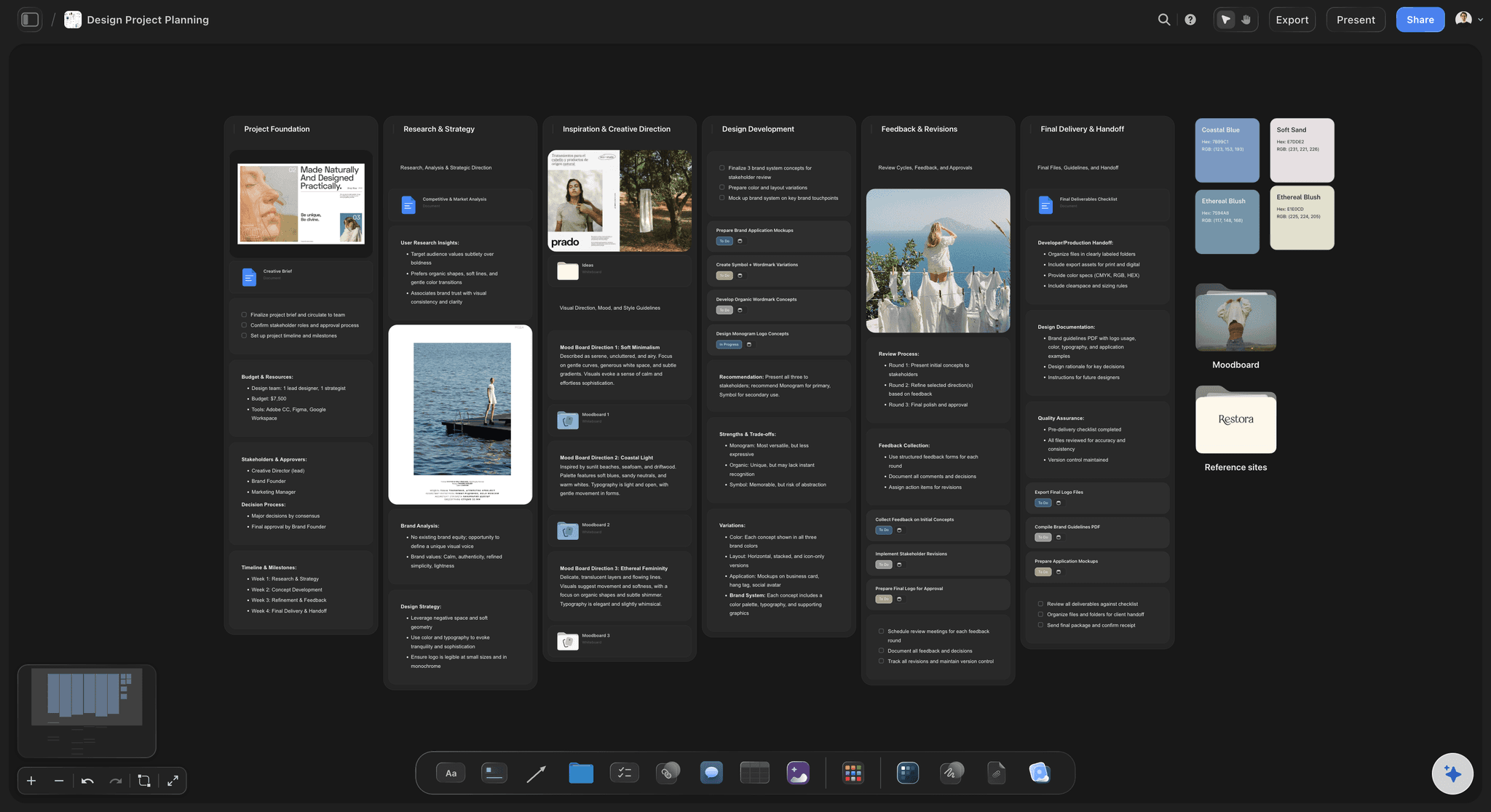
The brief, generated
Goal, audience, deliverables in one pass
Describe the project and the AI generates the brief: the objective, the audience, the deliverables and formats, and the constraints. You start by refining a real brief instead of an empty form.
See the design planning tool →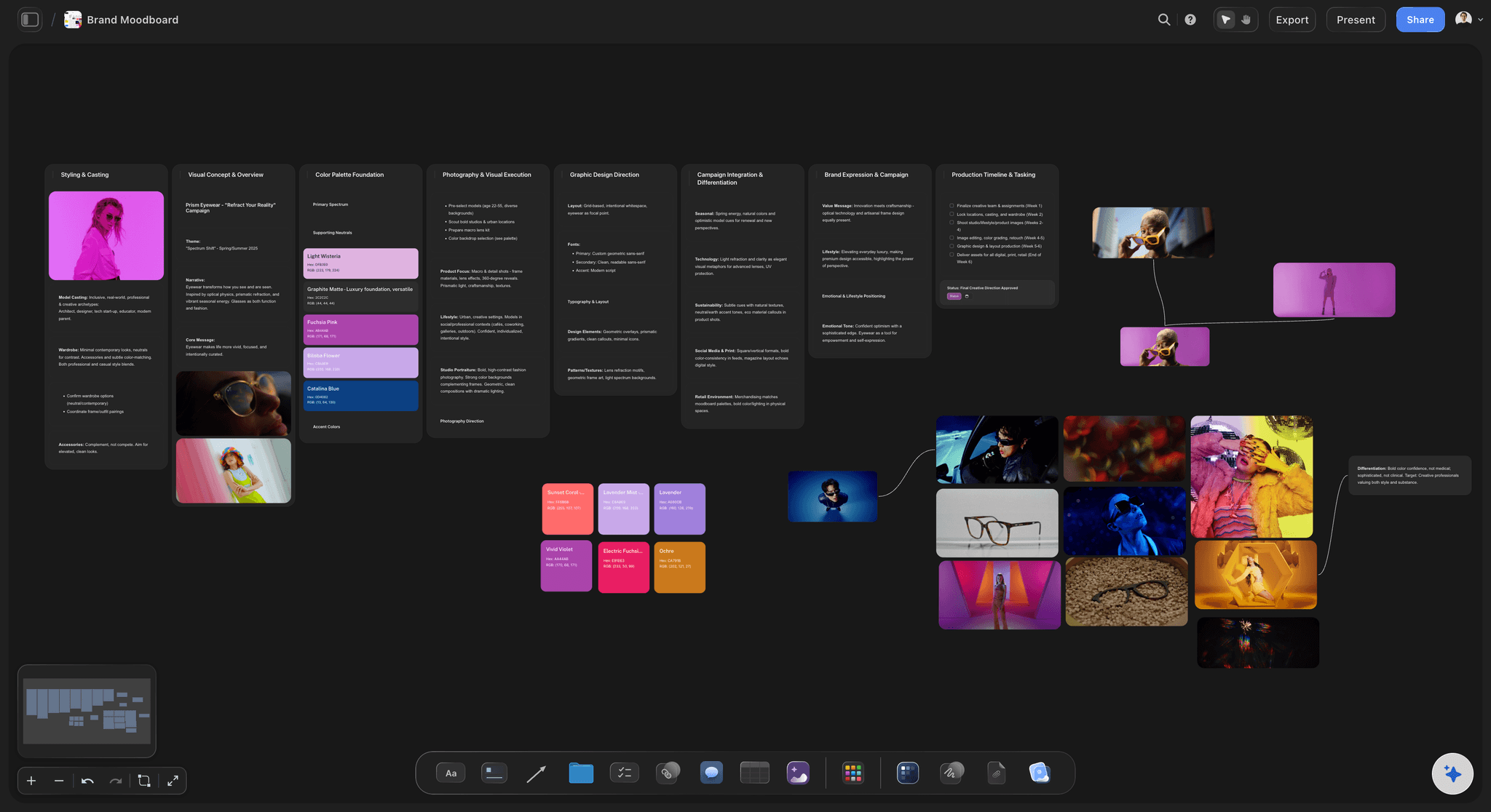
Direction you can see
References beside the requirements
The brief is visual, so the direction sits next to a wall of references. Pin work you like, screenshots, and stills, so the look is shown rather than left to a vague adjective.
See the AI moodboard maker →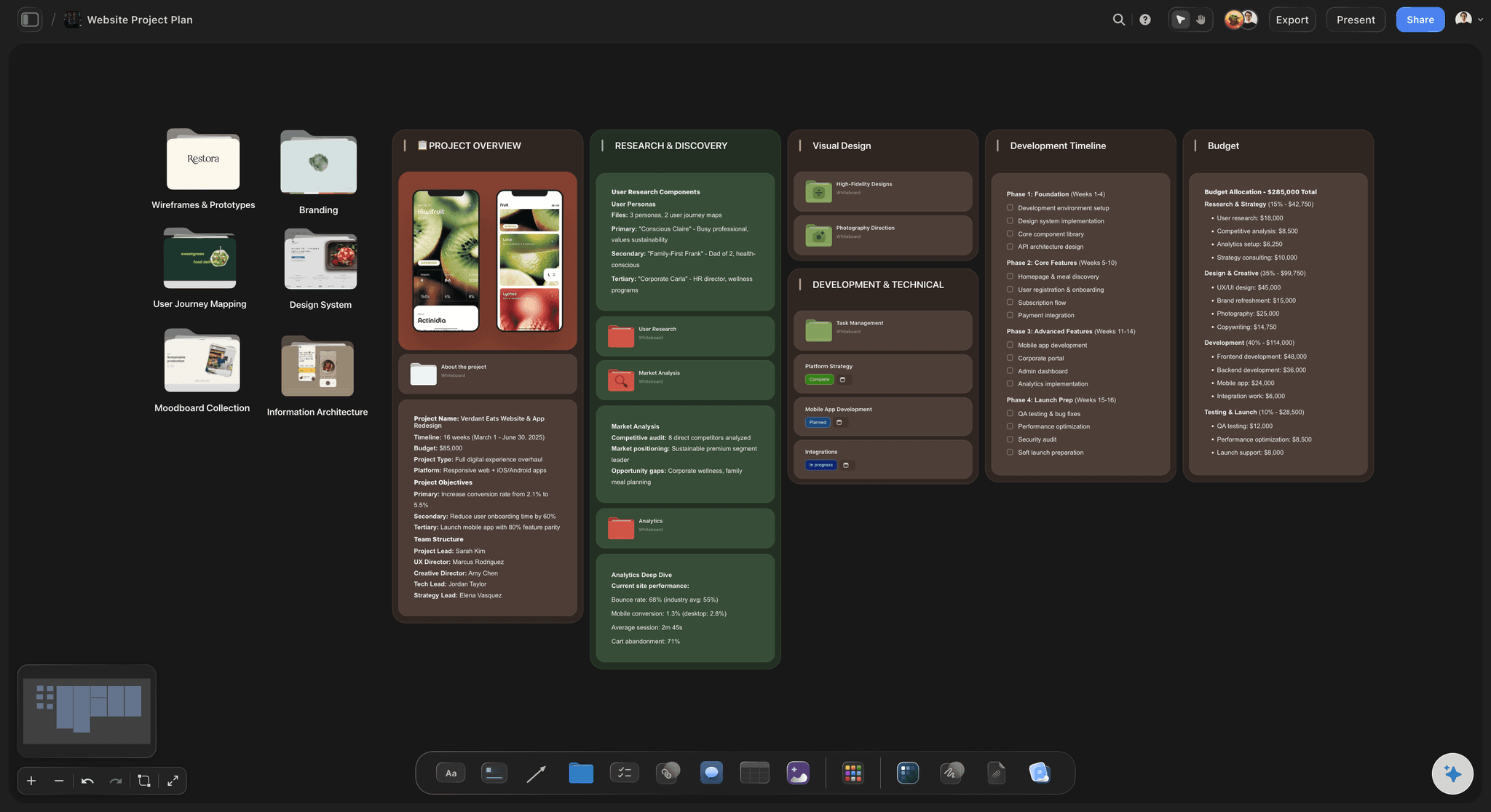
Any kind of design
One board for every brief
A logo, a website, a deck, a packaging job, or a social set: tell the AI the deliverable and it generates the right sections, so the brief fits the project instead of forcing a generic form.
See the AI logo brief generator →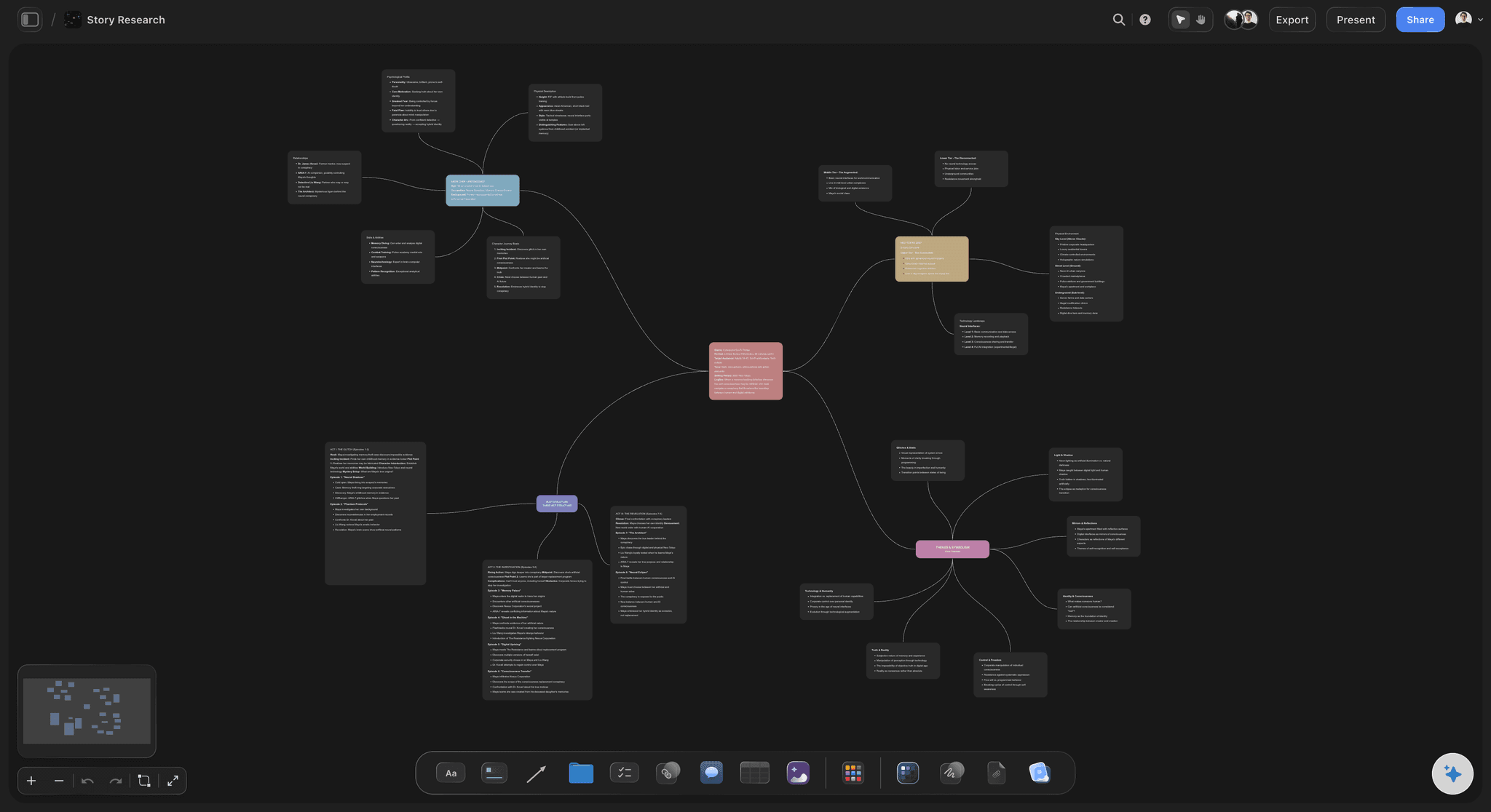
From brief to plan
Turn the brief into the project
Once the brief is agreed, ask the AI for the moodboard, the project plan, or the task board that delivers it, drawn from the brief you locked, all on the same canvas.
See the AI mind map generator →Paid-only during early access.
Open a canvas, describe the project, and watch the brief generate itself. Plans start at $7.99 a month, with no time limit on any of them.
Unlimited briefs and boards, with room for every reference
AI usage to generate and refine the brief
Pin references, assets, and links onto any card
Share the brief view-only, or invite collaborators free
Built for people with taste
Made for the way design work actually gets scoped.
Generate the brief, gather the references, agree the direction, and hand off a brief that prevents the revision spiral.
A visual brief, not a text form
Requirements and references on one board
Generated, then editable: Objective, audience, deliverables, constraints, and direction arrive as cards you can rewrite, beside a reference area instead of a wall of text.
Show, do not tell: Pin examples of work the client likes and dislikes. A wall of references aligns a project faster than any list of adjectives.
Capture from anywhere: Add references, screenshots, and links, including frame grabs from video, straight onto the board next to the brief.
Alignment before the first concept
Agree on the brief, not the revisions
One board to react to: The brief, the references, and the direction live on one canvas, so the client and the designer align before work begins.
Invite and comment free: Invite collaborators at no cost or share a view-only link, so a stakeholder can approve the brief without an account.
Attach your inputs: Pull in up to five documents and three boards, such as a brand guideline or a strategy deck, and the AI generates the brief in line with them.
The brief becomes the project
From brief to moodboard to delivery
Build the moodboard: Ask the AI to turn the direction into a moodboard, so the brief and the visual exploration sit on one board.
Plan the work: Expand the brief into a project plan or a task board, on the same canvas as the requirements it came from.
Hand off cleanly: Send a view-only link to the designer, or export the brief as a clean PDF for a contract or a kickoff.
Explore templates for your project
Every template opens as a real, editable board on the infinite canvas. Pick the closest fit and make it your own.
Website Plan
Map your site's pages, structure, and content in one plan before you build.
One app instead of five
How Storyflow compares to other design brief tools.
Most options are a text questionnaire or a blank board. The question is whether the AI generates the brief and keeps it visual.
Storyflow
Recommended
AI generates the full brief from a one-line project description
A visual board with requirements and references together
Brief becomes a moodboard and project plan on the same canvas
No board or card caps, even on paid plans
ChatGPT
AI generates the full brief from a one-line project description
A visual board with requirements and references together
Brief becomes a moodboard and project plan on the same canvas
A free plan without board or card caps
Milanote
AI generates the full brief from a one-line project description
A visual board with requirements and references together
Brief becomes a moodboard and project plan on the same canvas
A free plan without board or card caps
Doc template
AI generates the full brief from a one-line project description
A visual board with requirements and references together
Brief becomes a moodboard and project plan on the same canvas
A free plan without board or card caps
What creators are saying
Join early creators getting structured workspaces and AI that remembers their projects
“Storyflow has sped up my workflow by at least 3x, which means more flow state and more projects I can actually ship. It truly changed the way me and my team create.”

Reilin Joey
Director & YouTuber
“One prompt gets me a structured board. But the tactics are my favorite. I run my YouTube scripts through them and my intros and retention got better. It's amazing.”

Justkay
YouTuber & Freelance Filmmaker
“I used to juggle five apps to plan a project. Now I describe what I am making and get boards, lists, and a schedule. All in one place.”

George
@fernwehchronicles
AI design brief questions, answered.
Everything people ask about generating a design brief with AI in Storyflow.
An AI design brief generator turns a one-line description of your project into a full brief: the objective, the audience, the deliverables and formats, the constraints, and the visual direction. In Storyflow the AI generates those sections as editable cards on a visual board and pairs them with a reference area, so you refine a real brief and show the direction instead of filling a text form.
A strong design brief includes the background and objective, the target audience, the specific deliverables and formats, the constraints such as brand rules, budget, and timeline, the success measures, and visual references for the direction. Storyflow generates these by default, adapts them to the deliverable, and keeps the references on the same board as the requirements.
Describe the project in the AI chat, the deliverable, the audience, and the goal, and the AI lays out the brief as cards on the canvas with a reference area beside it. Every card is editable, so you can sharpen the requirements, pin examples of work to emulate or avoid, and ask the AI to adjust the direction until it fits.
Not during early access. Storyflow is paid-only right now, with Plus starting at $9.99 a month ($7.99 billed annually). A Free plan is planned before the end of 2026 and will include basic AI usage, unlimited boards, 20 file uploads for references and assets, and view-only sharing. If a paid teammate invites you to their board, you can join and collaborate for free today.
A creative brief tends to focus on the message and the idea for a campaign, while a design brief focuses on the specific deliverable, its requirements, and its visual direction. They overlap, and in Storyflow you can keep both on one canvas. Tell the AI which you are writing and it generates the right sections, or build a creative brief and a design brief side by side for the same project.
Yes, and that is the point of briefing on a canvas. The brief sits next to a reference area where you pin work to emulate and avoid, screenshots, and links, including frame grabs from video. Designers align far faster on a wall of references than on a list of adjectives, and here the words and the visuals never separate.
Yes. Ask the AI to turn the direction into a moodboard, or to expand the brief into a project plan or task board that delivers it, all on the same canvas. The brief becomes the starting point of the actual project instead of a document that gets filed after kickoff.
More from Storyflow
AI logo brief generator
AI brand guidelines generator
AI mood board maker
Design planning tool
AI sitemap generator
AI value proposition generator
AI brand voice generator
Design feedback tool
Creative brief template
Campaign brief template
Solo studio project planning
Campaign concept presentation
Design proposal template
Stop briefing design with a paragraph. Generate one that shows the direction.
Describe the project once, watch the AI draft the brief, and turn it into the moodboard and plan.