
Pitch-ready plans, extremely reliable
A video ad script template
that turns one shoot into eight ads.
Built for paid social teams, DTC founders and UGC agencies: a hook bank, two bodies timed to 15 and 30 seconds, a storyboard frame per beat and the brief for the creator, on one board.


Creatives working for these brands already got early access
- Red Bull
- Canon
- Artlist
- Porsche
See how easy it is to get started
Watch a real project come together, from a blank board to a finished plan, clicked through step by step.
Start from a ready-made template
Pick a board to see what you can build, then let AI fill it in. Every template is a real, editable starting point on the same infinite canvas.

Storyboard
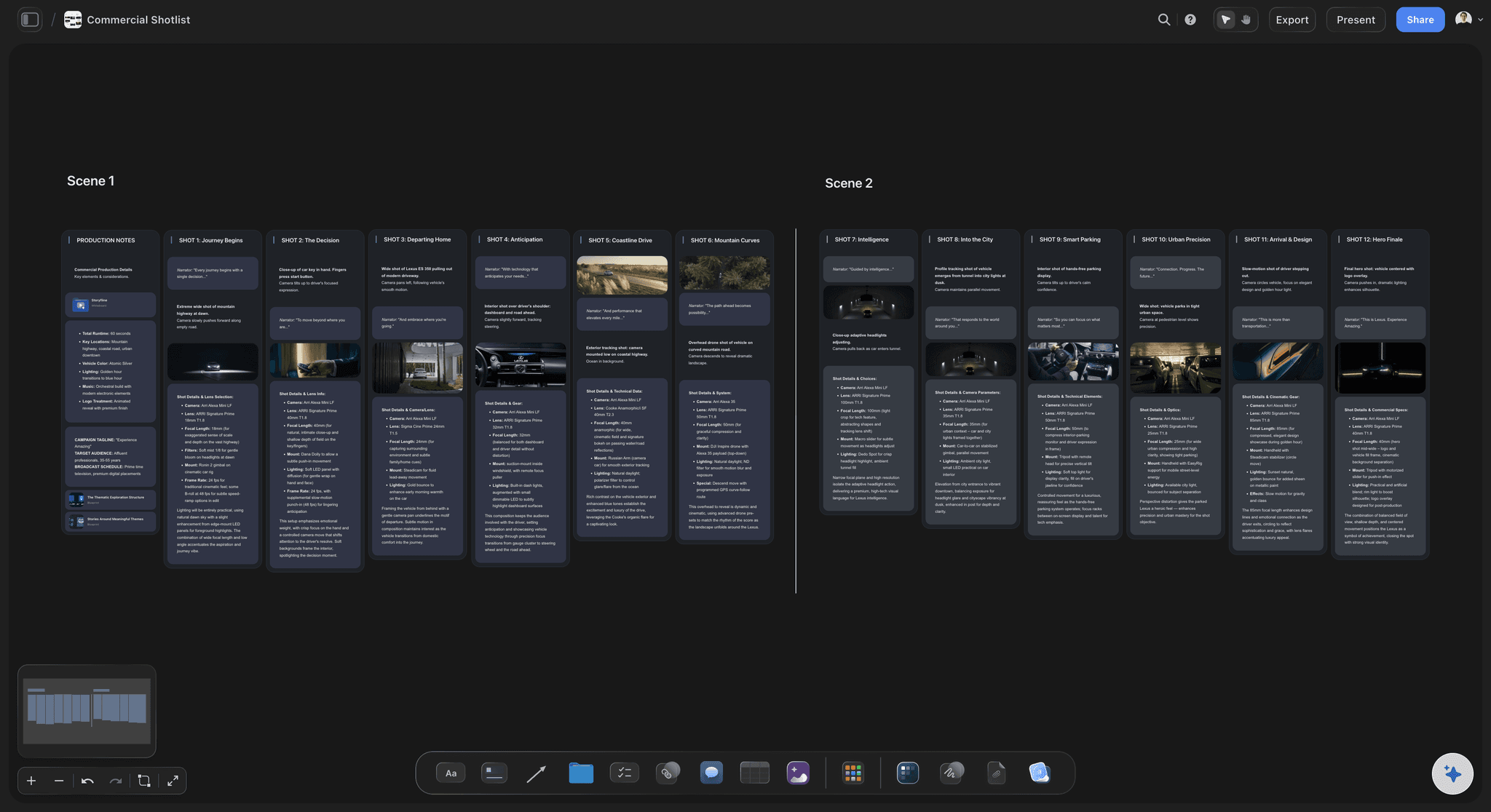
Lay out your shots frame by frame with images and notes, then reorder them until the sequence reads like the finished cut.
What belongs in a video ad script template?
A video ad script sets out, second by second, what a paid social ad says and shows: the hook, the problem, the product working, proof, the offer and the call to action. Storyflow is an AI visual workspace that keeps a campaign's video ad scripts on one infinite canvas: a board per campaign with the hook bank, the scripts side by side, a frame for every beat and the creator brief.
Write the hook as a picture and a line. Some viewers watch with the sound off, so the first frame has to work alone: the stain on the shirt, the product in a hand, a result you can see. TikTok's creative guidance puts the proposition inside the first three seconds. Put the spoken line on screen as text too.
Script the variants before anyone films. A body is the middle and end of the ad; a hook is an opening you can cut onto it. Four hooks on two bodies make eight ads from one shoot, if each hook is its own take. TikTok suggests three to five clearly different creatives per ad group, so vary the angle, not the adjectives.
Clear every claim before the script is locked. In the US the FTC expects a reasonable basis for an objective claim before the ad runs, so "lifts week-old stains" needs a test behind it. It also expects a creator who was paid or sent free product to disclose that in the video itself, and notes viewers catch a disclosure best when it is both said and shown.
Ultra fast from brief to board
Customer words first, then hooks, bodies and frames.
Legal clears the lines before a creator touches the product.
01
Paste what customers already say
The product page, five review lines in the buyer's own words, the offer and the claims legal has cleared. The AI's video script workflow drafts a first script with the opening hook and the closing ask written out as the words to say, and the full script in a Doc.
02
Fill the hook bank
Write eight to twelve hooks across the types below, each with its opening shot and its on-screen text, in a table with a label for the type. Ask the AI for more and it adds rows; keep the ones that sound like the brand.
03
Time two bodies, second by second
Write a 15-second and a 30-second body in five beats, with the seconds against each beat. Give each beat a duration cell: the table's Sum footer totals the seconds, so a 15-second script that runs to 17 shows up at once.
04
Frame each beat, then brief the creator
The AI's storyboard workflow lays the script out frame by frame, and AI-generated frames need Pro or Max. Put the creator brief beside it, so every hook is filmed as its own take and every cleared line is said word for word.
Every opening, body and frame of the campaign in one view.
What the creator says and shows, settled before anyone films. Buying media and reading results is Ads Manager's job.
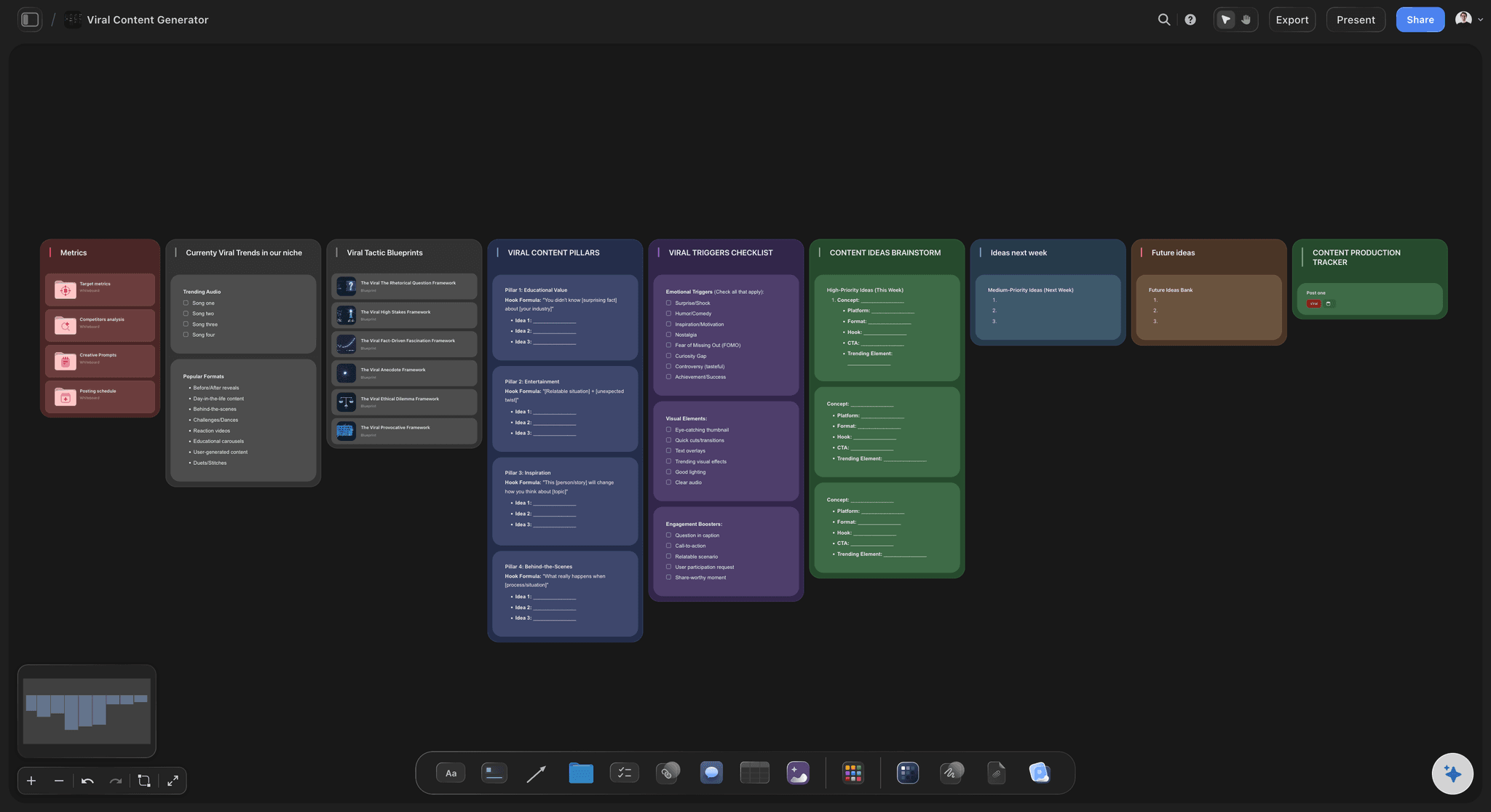
The first seconds, written many ways
A hook bank labelled by type
Each hook is a row with its type, the spoken line, the opening shot in a few words and the text on screen, plus a label for drafted, cleared or filmed. When the bank runs thin, the AI drafts more from your review lines.
See the shorts planner →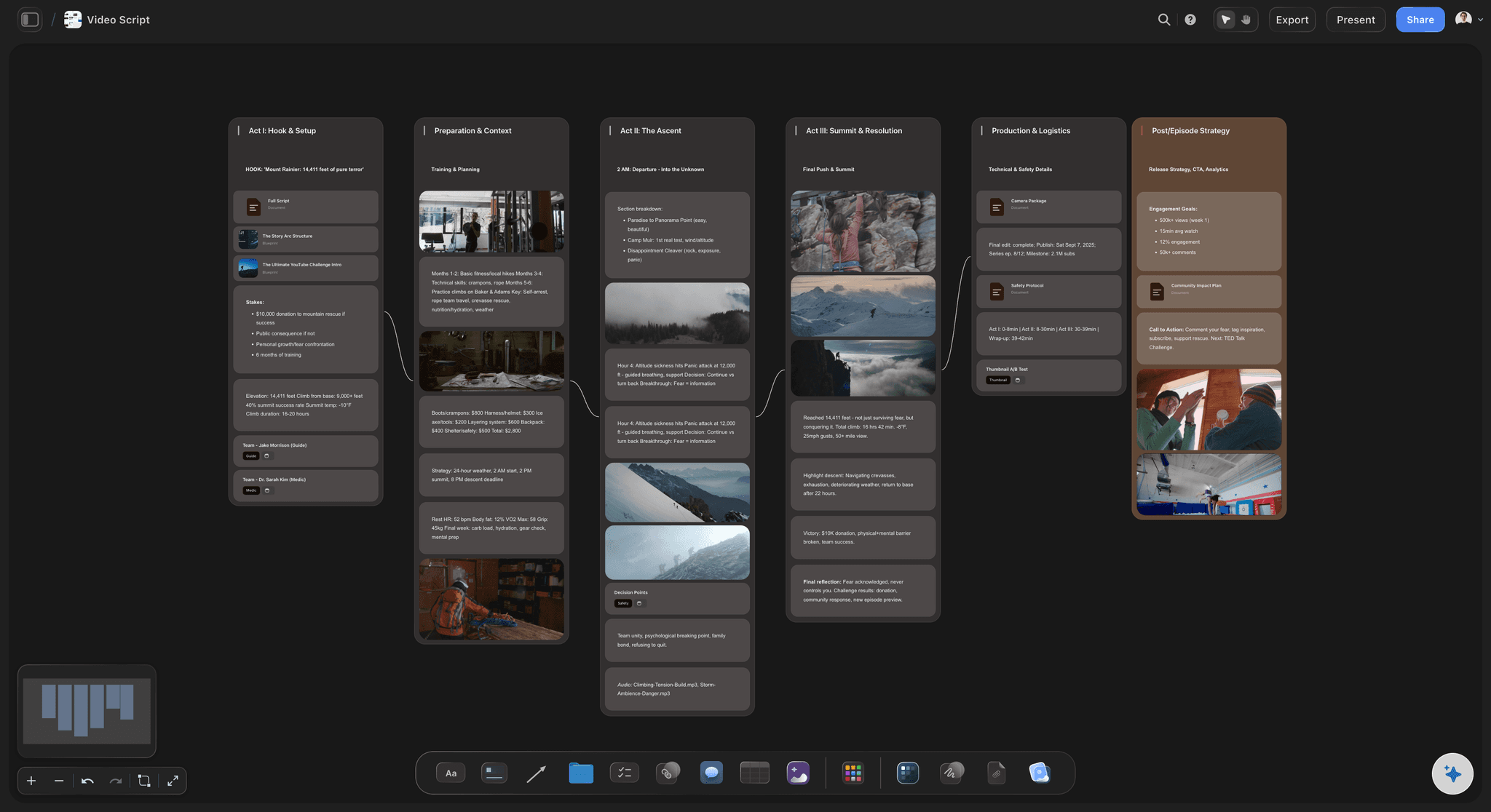
Two lengths, laid side by side
Scripts timed by the second
The 15-second and 30-second bodies sit next to each other, beat by beat, with the seconds, the spoken line and the on-screen text for each. The first draft comes from the AI; the cut to the brand's voice is yours.
Draft with the AI video script generator →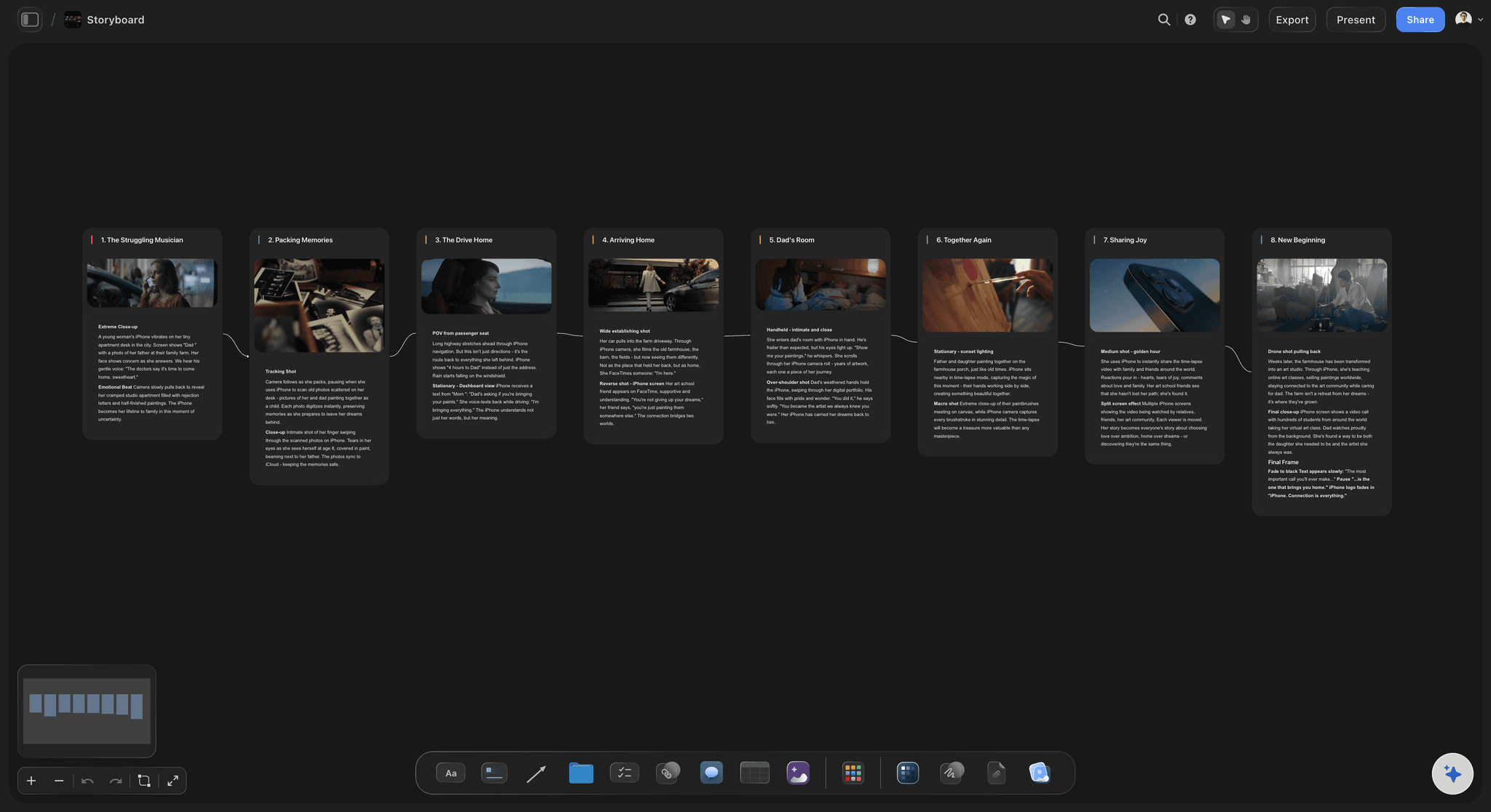
What the camera should see
One frame per beat, with the line beneath
Upload a reference ad, scrub to the second that works and grab the frame. The storyboard workflow lays your script out frame by frame with the line and the on-screen text under each, and on Pro and Max it can generate the frames in portrait.
See the commercial storyboard →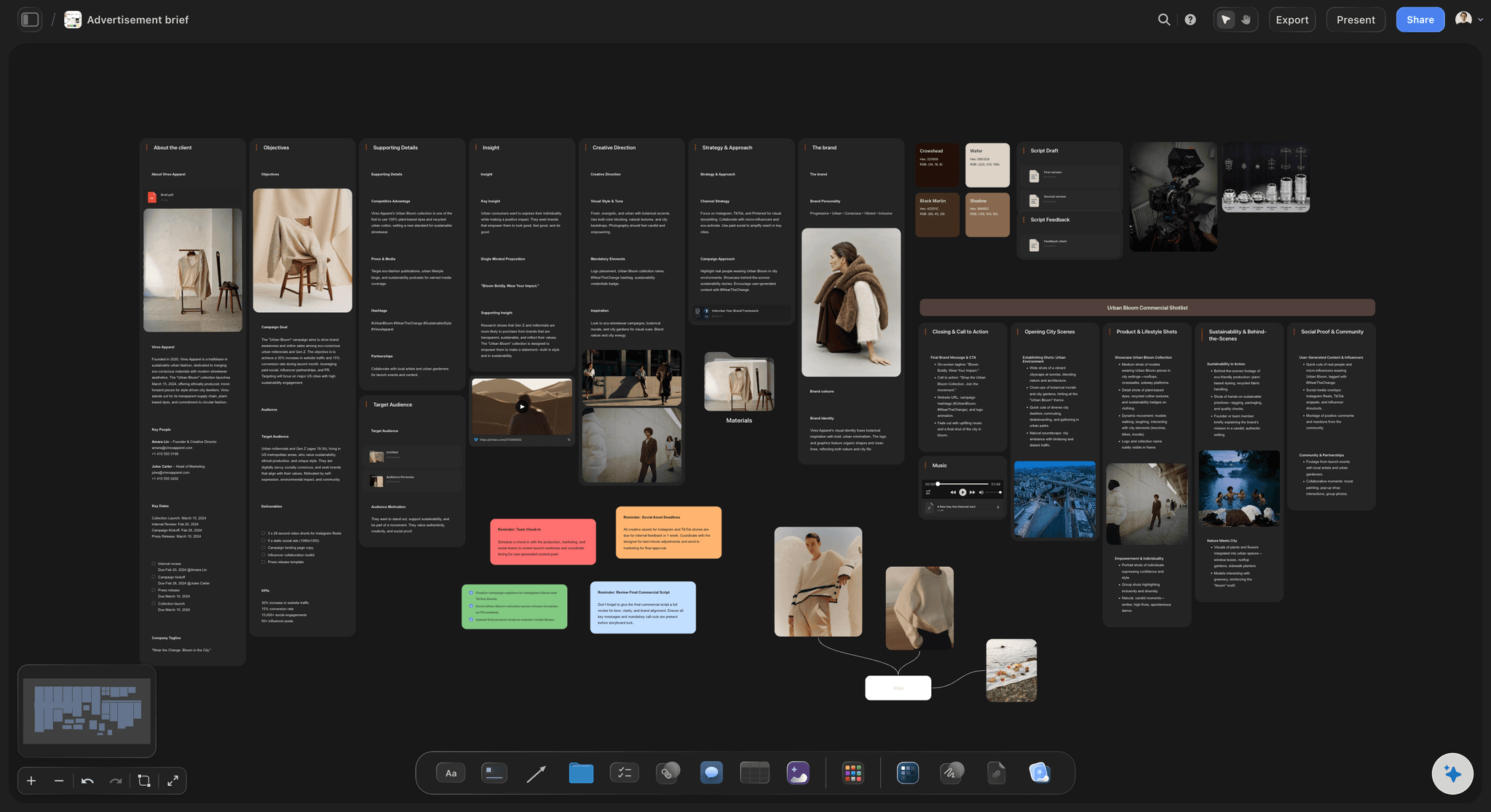
Handed to the creator and the client
Scripts, frames and the brief in one place
The creator and the client open the board from a view-only link with no account, and sign in to comment beside a hook or a claim. Export the whole board as a PDF for legal, or have the AI write the scripts as a Word file to redline.
See the UGC brief template →Every batch starts from the last one's winners.
Duplicate last month's board, keep the hooks that ran and the cleared claims, and swap in the new product. Storyflow is paid-only during early access, with plans from $7.99 a month billed annually ($9.99 monthly). A free plan launches before the end of 2026, and anyone a paid member invites to a board joins free.
Unlimited campaign boards, reference ad uploads and files on every paid plan
AI that drafts hooks, scripts and storyboards (frame images on Pro and Max)
Tables with status, label and date cells for every variant
Scripts in Docs that export to Word and PDF
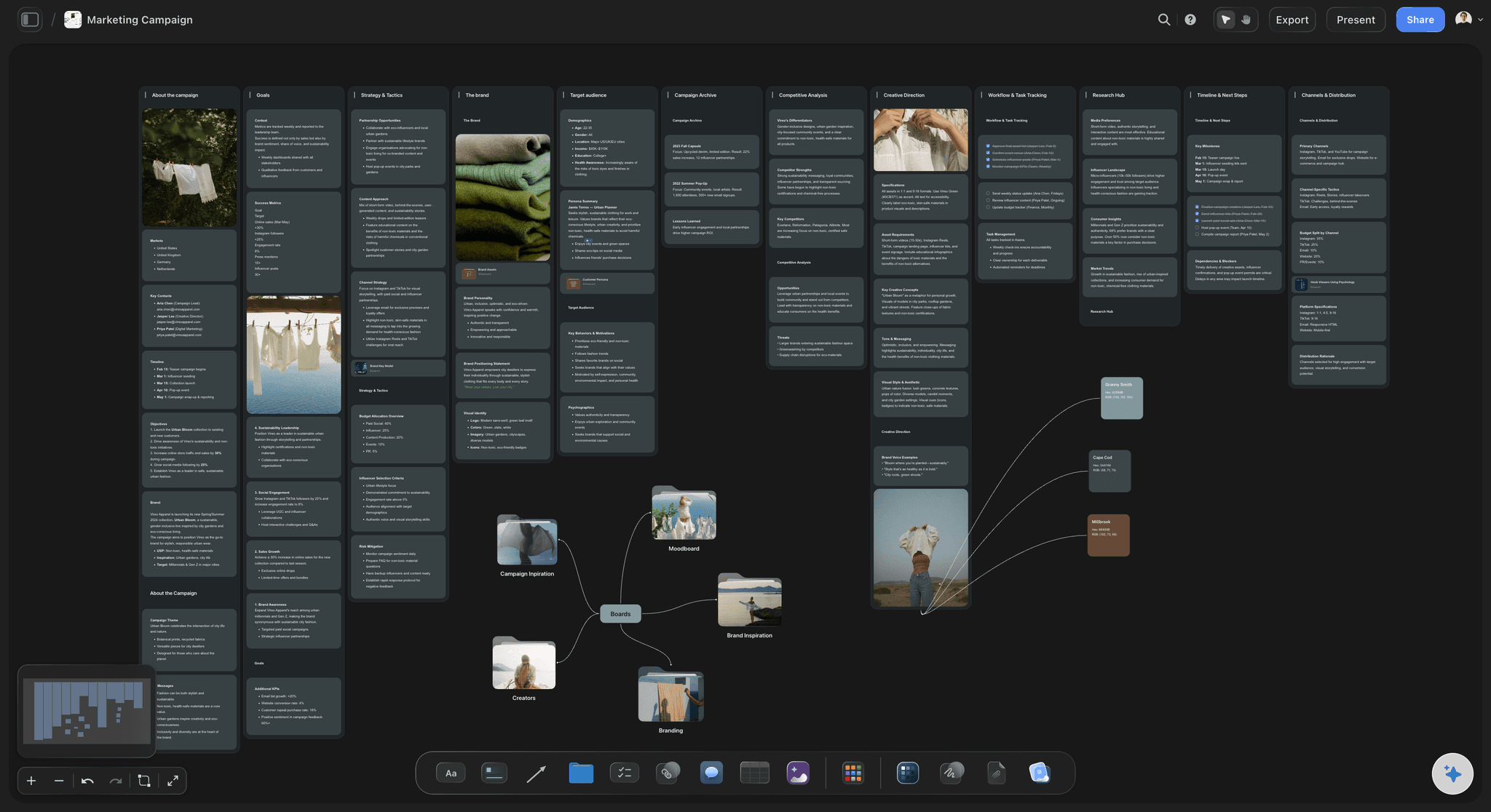
Built for people with taste
Hook types, beat timings and a variant grid to copy.
Use them in a doc or on a board. The timings are a common shape for paid social, not a platform rule; where a platform publishes guidance, it is quoted as theirs.
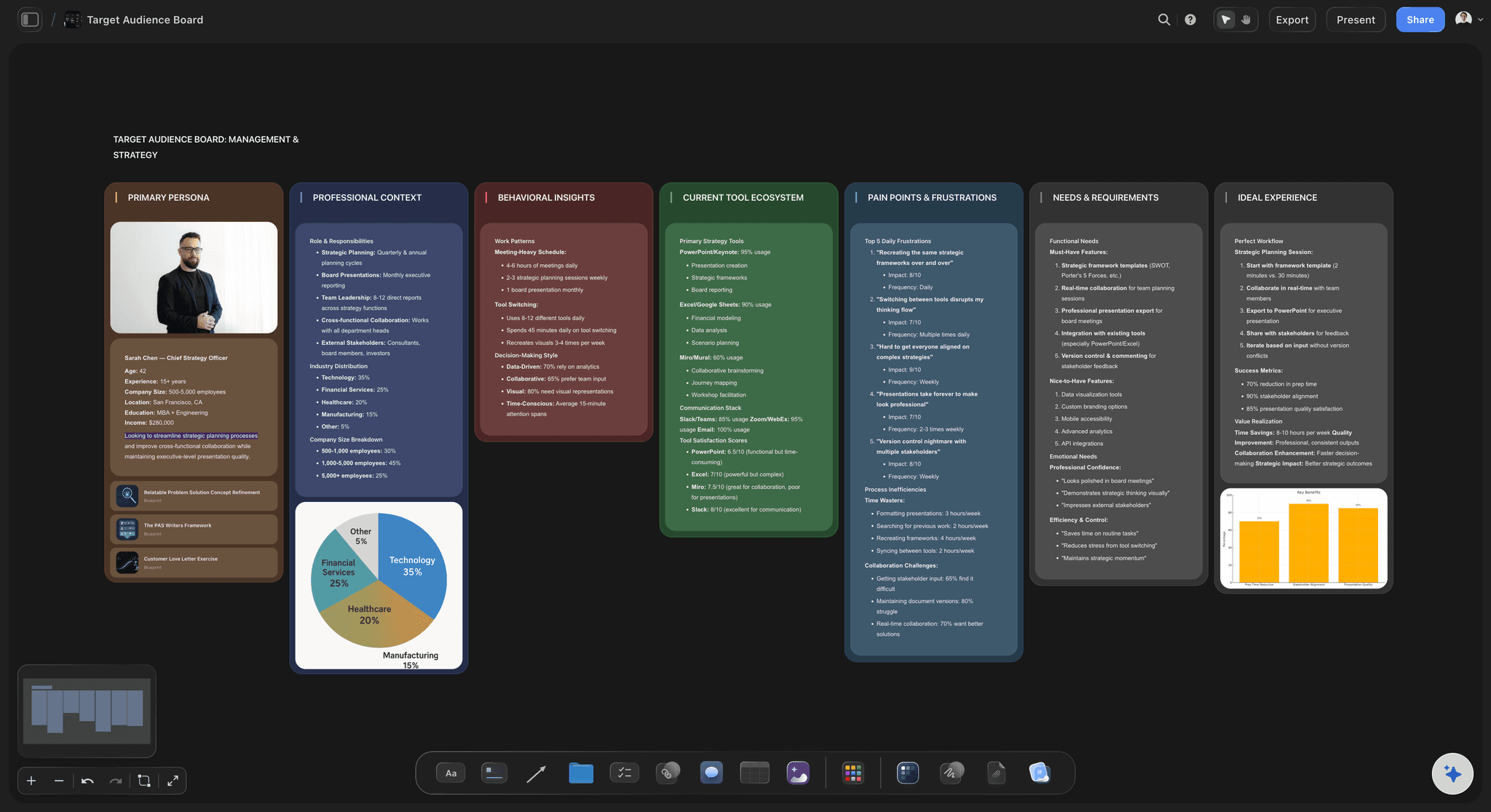
Hook types 1 to 4
Openings built on what the viewer can see
1. The problem, on camera: Open on the stain, the mess or the moment it goes wrong, and name it in the viewer's words: "Red wine, white shirt, guests in ten minutes." It works on a cold audience, because they recognise the problem before they know the brand.
2. The result first: Show the clean shirt, then rewind to the stain: "This was red wine an hour ago." Use only a result you can show on camera in one take, or it reads as an edit.
3. The product working: Put the product to work in the first frame and let the line follow: "Spray, wait thirty seconds, blot." A demonstration hook suits a product whose use is its own proof.
4. The customer's words: Read one real review to camera, exactly as the customer wrote it, and say that it is one: "From a review in March: [the exact line]." The claim inside it needs the same proof as your own lines, and an invented review is one the FTC treats as deceptive.
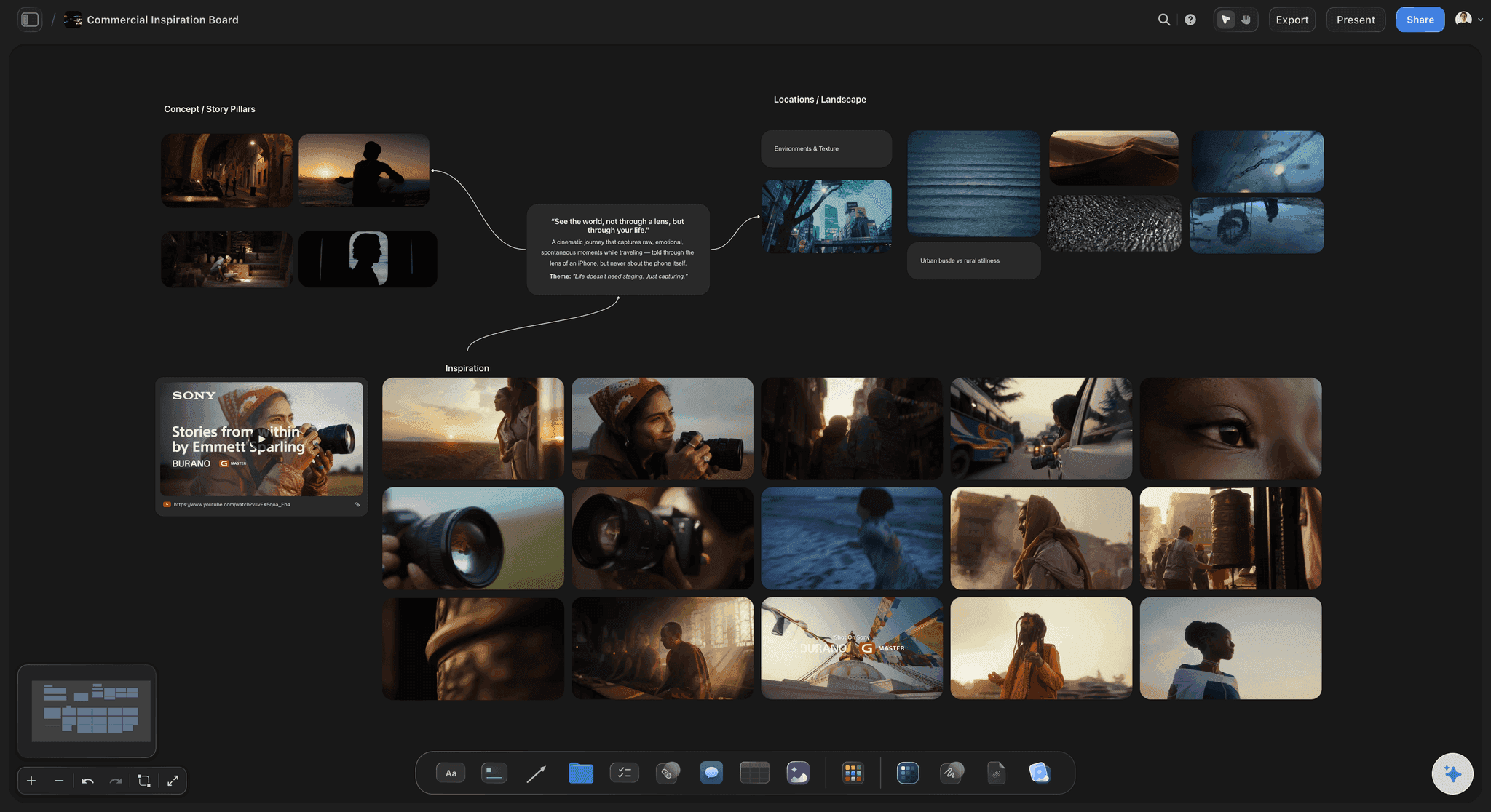
Hook types 5 to 8
Openings that change the viewer's mind
5. The mistake: Call out what the viewer is doing wrong: "Stop rubbing that stain." Give the reason within a second, or it is only a command.
6. The old way against this: Set the product against the home remedy or the habit, not a named rival: "Salt and fizzy water, or this." A comparison with a named competitor needs proof you can show.
7. The viewer's own scene: A point-of-view line puts them in the moment: "POV: you're hosting and someone knocks the red over." It suits creator ads, and TikTok's guidance favours a style that fits in with posts from real users.
8. The open question: Ask what the viewer is already wondering: "Does this work on a stain that has dried?" Answer it on camera inside the ad, or the hook reads as bait.
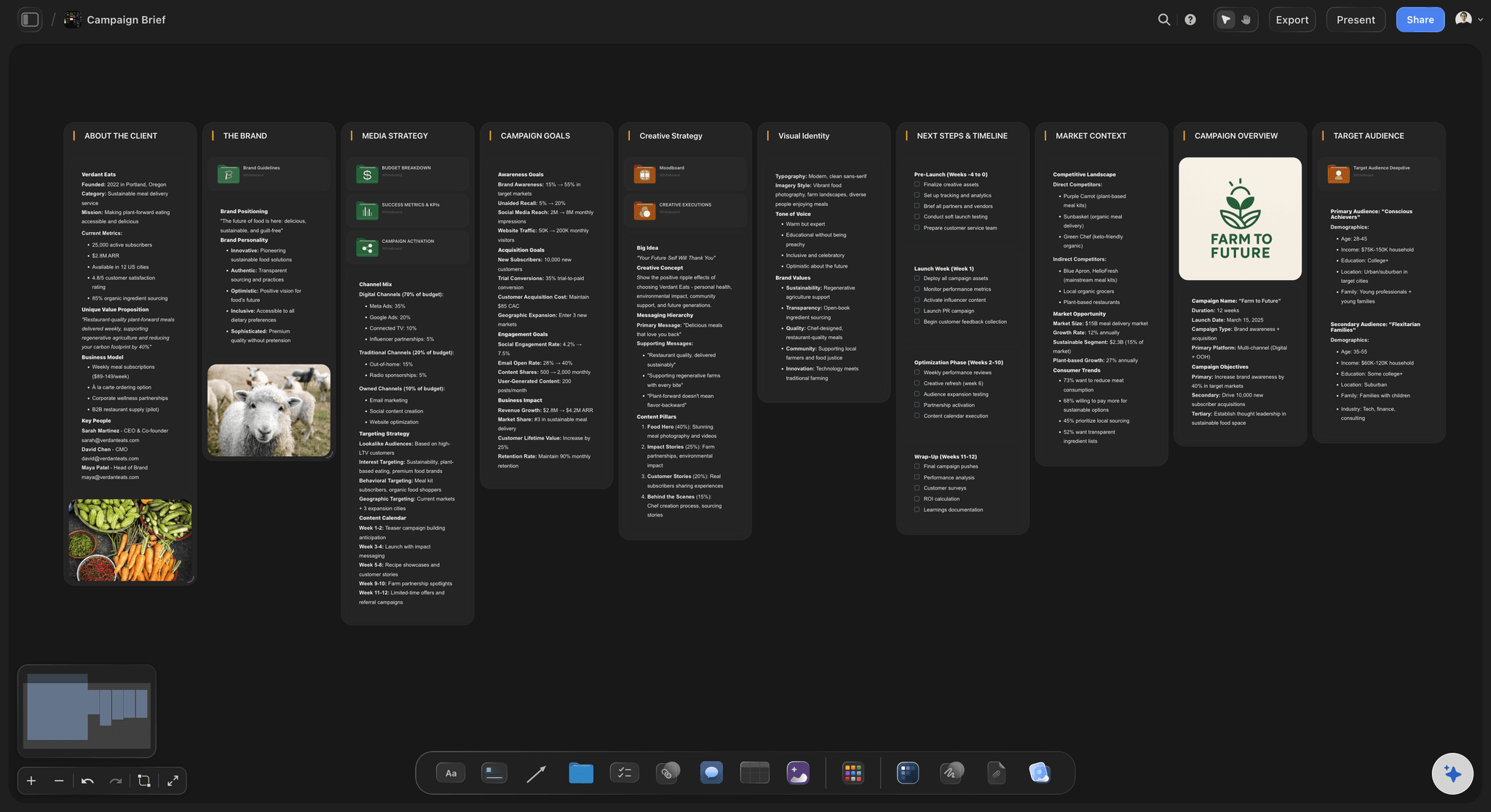
The five beats, timed
Where the seconds go in 15 and 30
Hook, problem, product, proof, offer: Five beats in that order: stop the scroll, name the problem, show the product fixing it, prove it, and say what to do next. Cut any beat that repeats another; a 15-second ad has no room for two proofs.
15 seconds: A common shape: hook 0 to 3, problem 3 to 5, product working 5 to 10, proof 10 to 12, offer and call to action 12 to 15. At two to three spoken words a second, that is about 30 to 45 words.
30 seconds: A common shape: hook 0 to 3, problem 3 to 8, product working 8 to 18, proof 18 to 24, offer and call to action 24 to 30. That holds about 60 to 90 spoken words, fewer if the demo needs a silent moment.
On-screen text and captions: Give the on-screen text its own column, a few words per card, restating the spoken line for viewers with the sound off. Keep it out of the bottom of a Reels frame, where Meta's guide suggests leaving 35% free of text and logos.
Variants, versions and the rules
One shoot, many ads, every line defensible
The variant grid: A row per hook and a column per body, so each cell is one ad, named by its parts: H3-B30 is hook three on the 30-second body. Film every hook as a separate take, so any cell can be cut without a reshoot.
Versions for each placement: A common delivery set is 9:16 for Reels, Stories and TikTok, 4:5 for the Facebook feed, which Meta's guide recommends, and 1:1 for placements that take a square. Keep the product in the middle of the shot so every crop keeps it.
Claims the brand can prove: Keep a column of cleared lines, word for word, with where the proof lives: a lab test, a study, a count of reviews. Anything not on that list stays out of the script, including a creator's ad lib.
Disclosure and paid use: A creator paid in money or product discloses it in the video, said and shown where possible. Agree before the shoot whether the video may run as a paid ad, on which platforms and for how long.
Explore templates for your project
Every template opens as a real, editable board on the infinite canvas. Pick the closest fit and make it your own.
Storyboard
Lay out your shots frame by frame with images and notes, then reorder them until the sequence reads like the finished cut.
One app instead of five
Four places a video ad script gets written.
Google Docs and Notion are where most scripts are typed, and both take suggested edits a reviewer can accept. TikTok Symphony's assistant drafts scripts, and its Creative Studio turns a script into a video. Storyflow lays the variants, the frames and the brief out side by side.
Storyflow
Recommended
Script variants side by side on an infinite canvas
Stills grabbed from a reference ad
AI drafts hooks and scripts from product notes
Suggested edits a reviewer accepts or rejects
Script turned into a video in the same tool
Google Docs
Script variants side by side on an infinite canvas
Stills grabbed from a reference ad
AI drafts hooks and scripts from product notes
Suggested edits a reviewer accepts or rejects
Script turned into a video in the same tool
Notion
Script variants side by side on an infinite canvas
Stills grabbed from a reference ad
AI drafts hooks and scripts from product notes
Suggested edits a reviewer accepts or rejects
Script turned into a video in the same tool
TikTok Symphony
Script variants side by side on an infinite canvas
Stills grabbed from a reference ad
AI drafts hooks and scripts from product notes
Suggested edits a reviewer accepts or rejects
Script turned into a video in the same tool
What creators are saying
Join early creators getting structured workspaces and AI that remembers their projects
“Storyflow has sped up my workflow by at least 3x, which means more flow state and more projects I can actually ship. It truly changed the way me and my team create.”

Reilin Joey
Director & YouTuber
“One prompt gets me a structured board. But the tactics are my favorite. I run my YouTube scripts through them and my intros and retention got better. It's amazing.”

Justkay
YouTuber & Freelance Filmmaker
“I used to juggle five apps to plan a project. Now I describe what I am making and get boards, lists, and a schedule. All in one place.”

George
@fernwehchronicles
What paid social teams ask about ad scripts.
Word counts, beats, TikTok and Meta specs, claims and creator disclosure.
Storyflow, because a paid social script is really a set of ads: its template holds the hook bank, 15 and 30-second bodies timed by the second, a storyboard frame per beat and the creator brief, and a creator opens it by link with no account or reads it as a PDF. If legal marks up wording in suggested edits, draft in Google Docs or Notion; to generate a TikTok video from a finished script, use Symphony Creative Studio.
A common pace is two to three spoken words a second, so a 15-second ad holds about 30 to 45 words and a 30-second ad about 60 to 90. Write fewer when the product needs a silent moment on camera, and read the script aloud against a timer before anyone films. On-screen text is not spoken, but it has to fit the same seconds.
Hook, problem, product working, proof, then the offer and the call to action. The hook stops the scroll, the problem makes viewers recognise themselves, the product beat shows the fix on camera, the proof is a result, a demonstration or a real review, and the close says what to do and why now. In 15 seconds each beat gets a line or two; in 30, the product beat gets the most time.
For a stain remover spray. 0 to 3 seconds: wine hits a white shirt, "Red wine, white shirt, guests in ten minutes." 3 to 5: "Rubbing it in makes it worse." 5 to 10: spray, wait and blot on camera, "Spray it, give it thirty seconds, blot." 10 to 12: the clean shirt, with "[review count] five-star reviews" on screen. 12 to 15: "The two-pack is half price until Sunday. Tap Shop now." That is 31 spoken words.
A video ad script written for one creator to film on their phone, in the first person: the hook as the exact words they say to camera, then each beat as a line they may put in their own words, paired with what the camera shows, such as the product in hand or the result up close. Cleared claims and the disclosure line stay as written. Terms, footage specs and pay go in the UGC brief beside it.
Write for 9:16 with sound on, in a style that fits among posts from real users. TikTok's guidance: introduce the proposition in the first three seconds, keep the hook inside the first six, use captions or text overlays, and end on a clear call to action. Keep text and faces away from the edges and the bottom, where the app's buttons and caption sit, and script each hook as a separate take.
Script the feed and Reels versions separately. Meta's ads guide recommends 4:5 for Facebook feed video and 9:16 for Reels, recommends captions, and suggests leaving the top 14%, the bottom 35% and 6% at each side of a Reels frame free of text and logos. Make the first frame readable with the sound off, show the product early, and put the offer on screen as well as in the voiceover.
Objective claims only when the proof exists before the ad runs. In the US the FTC expects a reasonable basis for an objective claim before it is published, so numbers, before-and-after results, health effects and comparisons with a named rival need evidence on file, and a customer review quoted in the ad carries the same burden. Brief creators to say the cleared lines as written. That is the general rule, not legal advice: counsel clears the final list.
For a US audience, the FTC expects it whenever the creator was paid, sent free product or has another tie to the brand. Its influencer guidance puts the disclosure in the video itself, not only in the caption, and says viewers notice it most when it is said and shown. Plain words work: ad, sponsored, or thanks to the brand for the free product. Script the line so it gets filmed; your counsel settles the final wording.
Pull the lines where buyers name the problem or the moment it was fixed, then write one hook per type from them. In Storyflow, paste twenty review lines and the cleared claims, ask the AI for hooks in the buyers' own words, and it adds them as rows in the hook bank table. Keep the ones in the brand's voice; a quoted review stays exactly as written. Undo removes anything it added.
No. Storyflow writes, frames and briefs the ad; it does not edit or generate video, connect to Meta or TikTok ad accounts, show results or publish. Film the takes, cut them in your editor, then launch in Meta Ads Manager or TikTok Ads Manager. TikTok's Symphony Creative Studio can generate a video from a finished script and sync it to TikTok Ads Manager, and Google Docs or Notion hold legal's suggested edits if your team reviews there.
Not during early access. Storyflow is paid-only during early access, with plans from $7.99 a month billed annually ($9.99 monthly). A free plan launches before the end of 2026, and anyone a paid member invites to a board joins free. Creators and clients you share the scripts with pay nothing to read them.
More from Storyflow
UGC brief template
AI video script generator
Two column script template
Video script planner
TikTok content planner
Shorts planner
Commercial storyboard
Marketing storyboard
AI storyboard generator
Campaign brief template
Free video frame grabber
AI tools for content creators
Best AI tools for UGC creators
Pricing
Ad creative testing plan
UGC creator planner
Script every hook before the camera rolls.
Start from what customers already wrote, keep the hooks that sound like the brand, and send the creator every take on one link.