
Extremely simple, seriously capable
Most journey maps
are fiction.
A workshop invents a persona, imagines their feelings across five stages, and produces a beautiful artifact describing a customer nobody has met. It gets printed and never changes a decision. The difference between that and a useful map is one thing: whether real evidence is attached to each stage.


Creatives working for these brands already got early access
- Red Bull
- Canon
- Artlist
- Porsche
See how easy it is to get started
Watch a real project come together, from a blank board to a finished plan, clicked through step by step.
Start from a ready-made template
Pick a board to see what you can build, then let AI fill it in. Every template is a real, editable starting point on the same infinite canvas.

Mind Map
Branch one central idea out into themes and sub-points, then drag the connections around until the structure makes sense.
What makes a customer journey map actually useful?
Evidence at every stage. Storyflow is an AI visual workspace that maps a customer journey on one infinite canvas: each stage with the quotes, screenshots and numbers behind it, touchpoints across channels, and the moments no team owns. A journey map is a claim about what people do and how they feel while doing it, and a claim with nothing behind it is a guess with good typography. The maps that change decisions carry the quote, the support ticket, the drop-off number or the recording that produced each stage, so a stakeholder who disagrees is disagreeing with a customer rather than with you.
The second thing that separates a useful map is coverage of what happens outside the product. A journey crosses into email, a phone call, an invoice, a delivery and a renewal notice, and those are exactly the parts no product team watches. Mapping only the screens produces a map that is accurate about the easy half and silent about where the experience actually fails.
The most valuable output is usually not the map at all. It is the list of moments nobody owns: the gap between sales and onboarding, the week after purchase where no team has responsibility. Those gaps are visible on a map and invisible in any single team's dashboard, which is the entire reason to build one.
Storyflow gives you an infinite canvas where stages, quotes, screenshots, emails and numbers sit together. Its AI reads the whole active board plus up to five attached documents and three boards, so it can work from research you have uploaded rather than inventing a persona.
Ultra fast from brief to board
Stages, evidence, channels, gaps.
Built in that order, because the last one is the point.
01
Lay out the stages
From the customer's point of view rather than your funnel's. What they are trying to achieve, not which team is handling them.
02
Attach real evidence
A quote, a ticket, a recording or a number under each stage. A stage with nothing under it is marked as an assumption, not a finding.
03
Include what is not the product
Emails, calls, invoices and physical steps go on the same canvas, because that is where most experiences actually break.
04
Mark the unowned moments
Highlight the stages no team is responsible for. That list is usually the most valuable thing the exercise produces.
Four things that stop a map becoming decoration.
The difference between a poster and a decision-making tool.
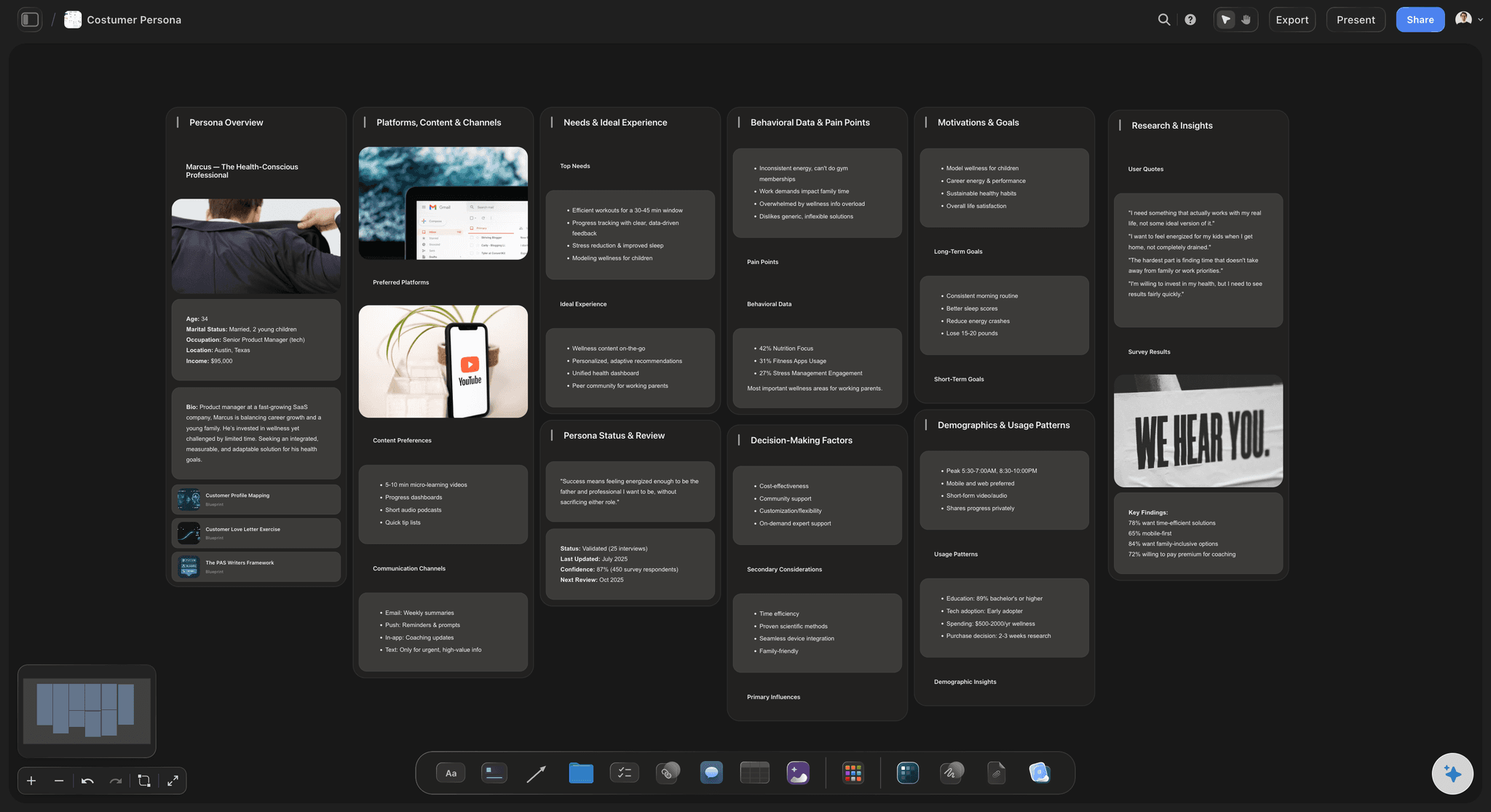
Quotes on the stage
Evidence, not empathy guesses
A real line from a real customer under the stage it describes, so a disagreement is with them rather than with your interpretation.
See the UX research board →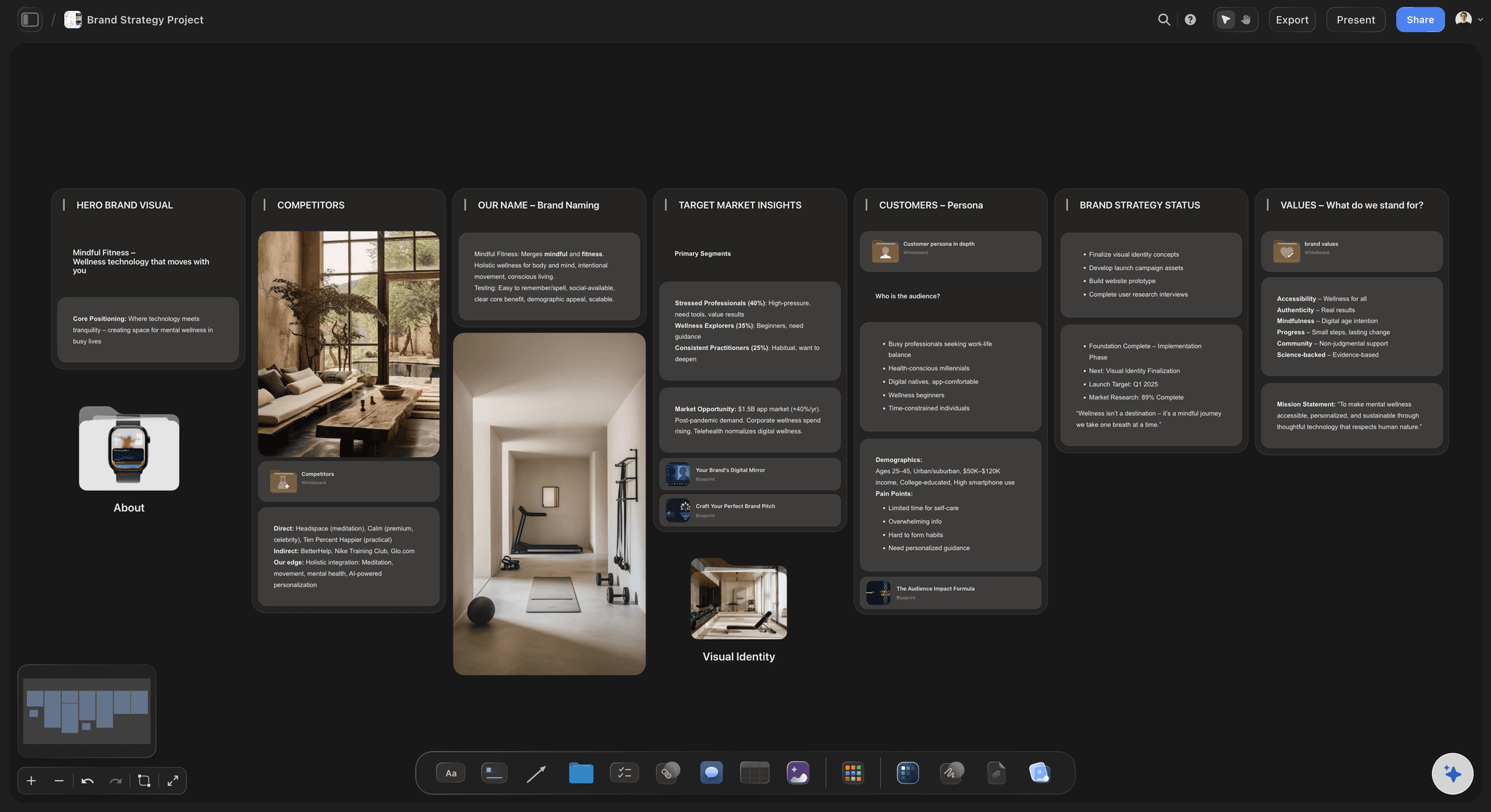
Assumptions marked
Say which stages are guesses
A stage with no evidence is labelled as an assumption. Maps fail when invented and observed sections look identical.
See the empathy map →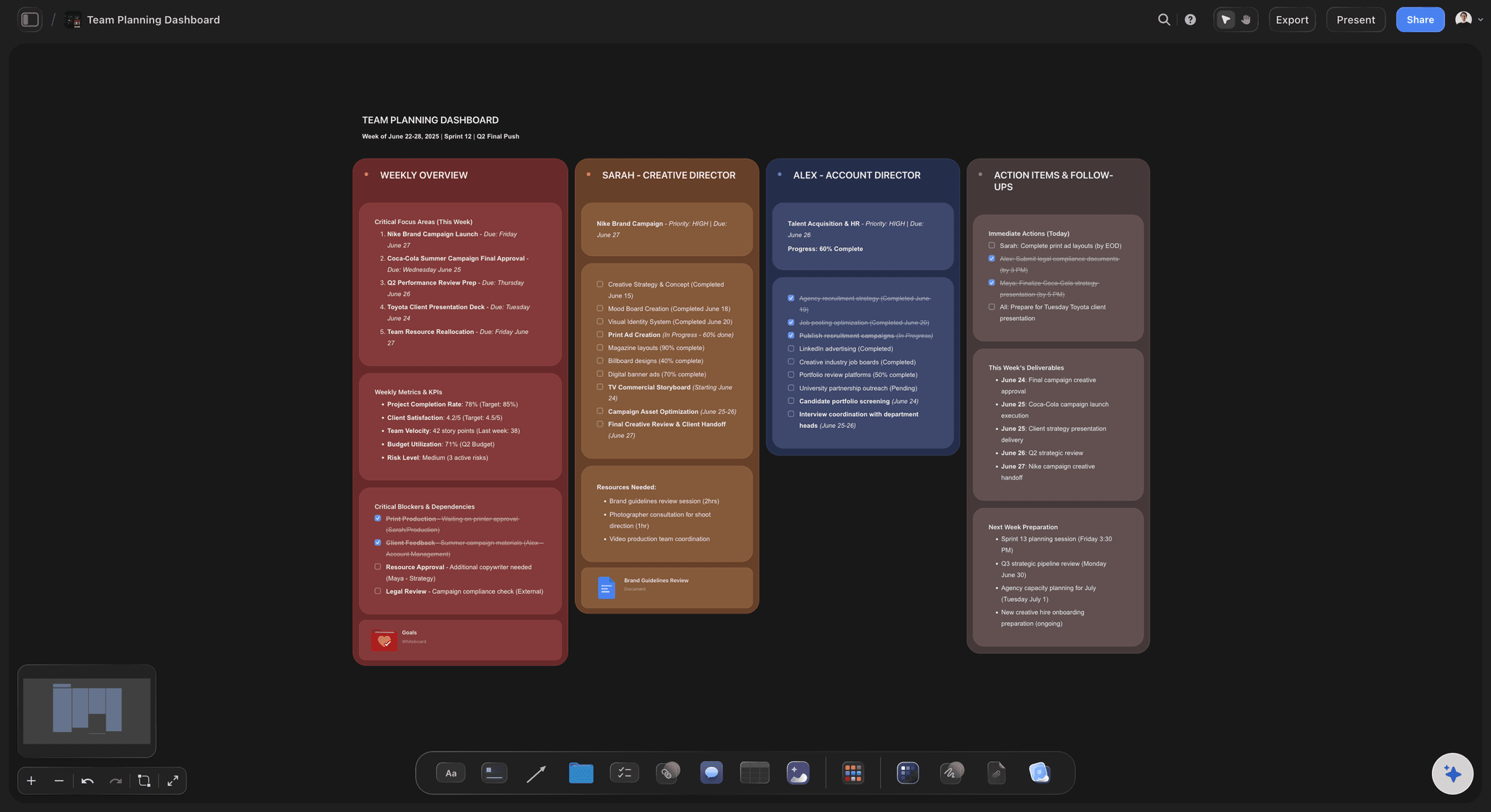
Beyond the screens
Emails, calls and paper
Everything on one canvas regardless of channel, because the failures usually live in the handoffs between them.
See the user journey map →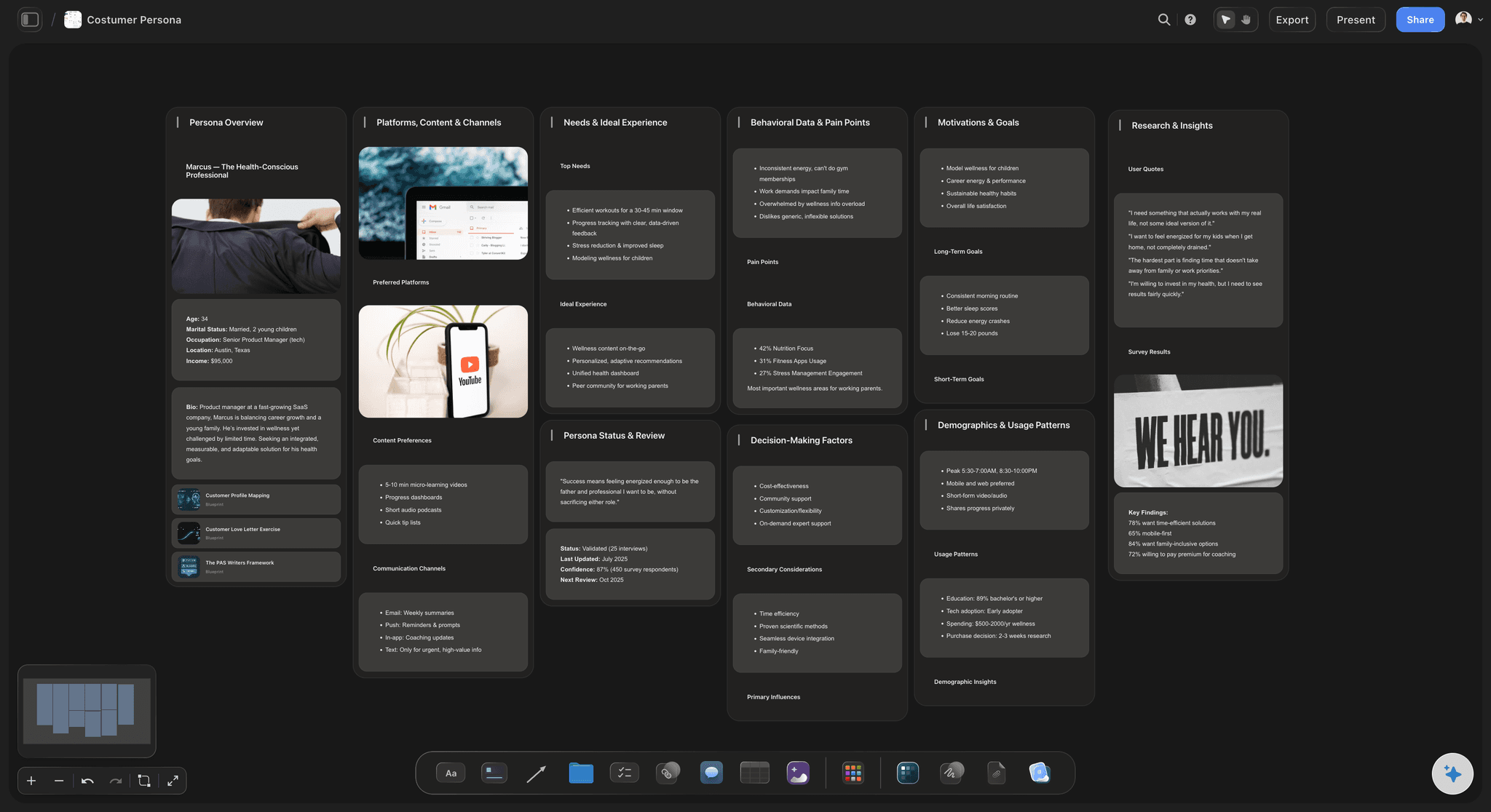
The real output
Moments nobody owns
The gaps between teams, made visible. This list is what justifies the workshop and what a dashboard can never show.
See the AI creative workspace →Plans from $7.99/month annual. Free plan coming late 2026.
Unlimited boards and unlimited file uploads on Plus, Pro and Max.
Stages, quotes and screenshots on one canvas
Unlimited file uploads on Plus, Pro and Max
View-only links for stakeholder review
Built for people with taste
Four reasons a map ends up on a wall and nowhere else.
None of them are about how the map looks, which is usually the part teams work hardest on.
Reason one
Invented in a workshop
A persona nobody has met: A room of internal people imagining a customer produces a description of the room's assumptions, not of a customer.
It cannot settle an argument: When the map is invented, disagreeing with it costs nothing, so it never changes what anyone decides to build.
Start from recordings and tickets: Upload what you already have. Most companies are sitting on far more evidence than they use in these sessions.
Reason two
Guesses that look like findings
Uniform styling hides the difference: Observed and imagined stages rendered identically means a reader cannot tell which parts to trust.
One weak stage discredits it all: When somebody disproves an invented stage, the evidenced ones lose credibility along with it.
Label the assumptions: Marking a stage as unevidenced is not a weakness. It is a research backlog, and it is the honest version.
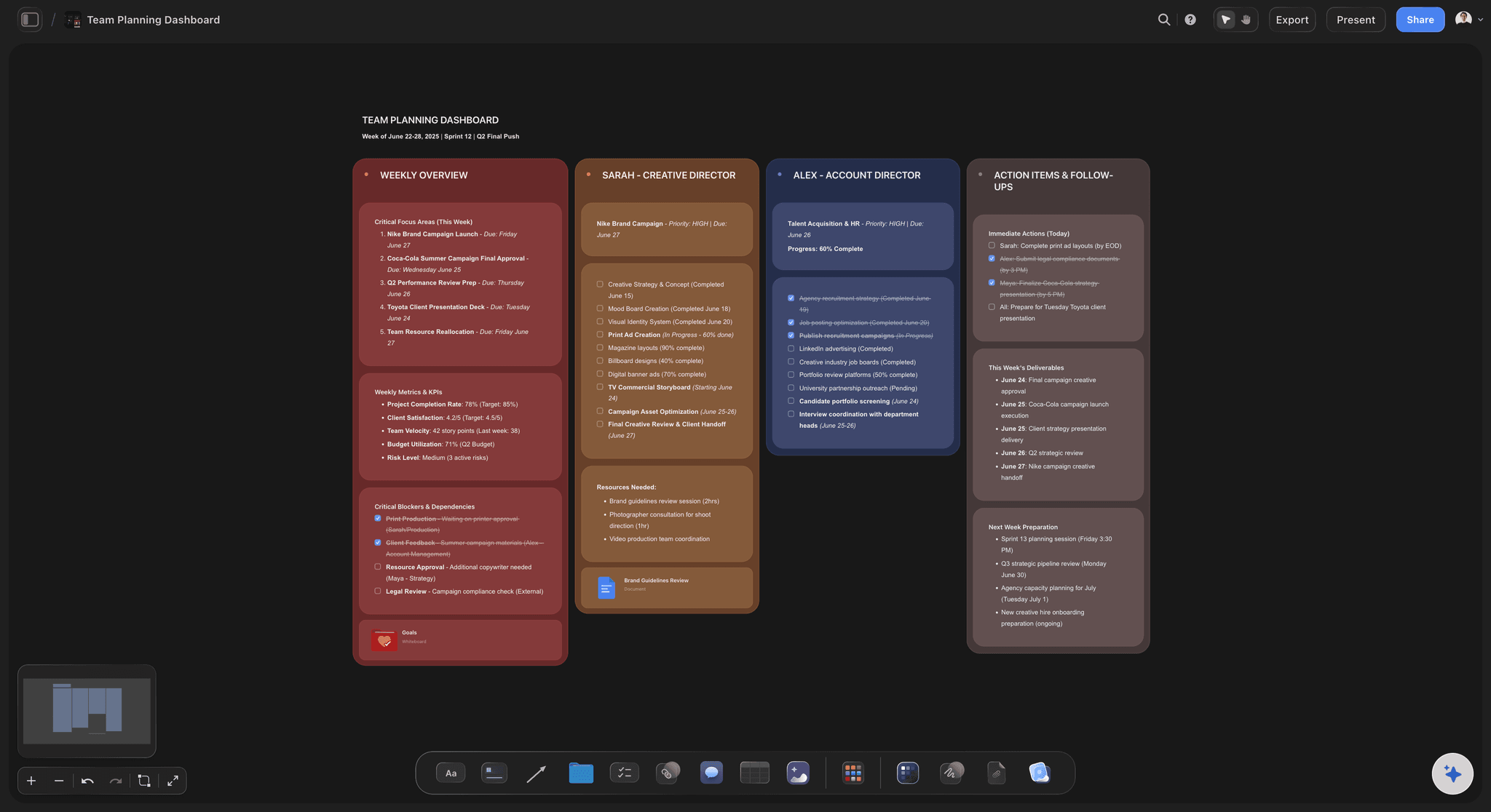
Reason three
Only the product is mapped
The failures are between channels: The confusing invoice, the unanswered email and the week of silence after purchase are where experiences actually break.
Product analytics cannot see them: Nothing in a product dashboard records the phone call, which is exactly why the map is worth building.
One canvas, every channel: Screens, emails, calls and physical steps sit together, so the handoffs between them are visible.
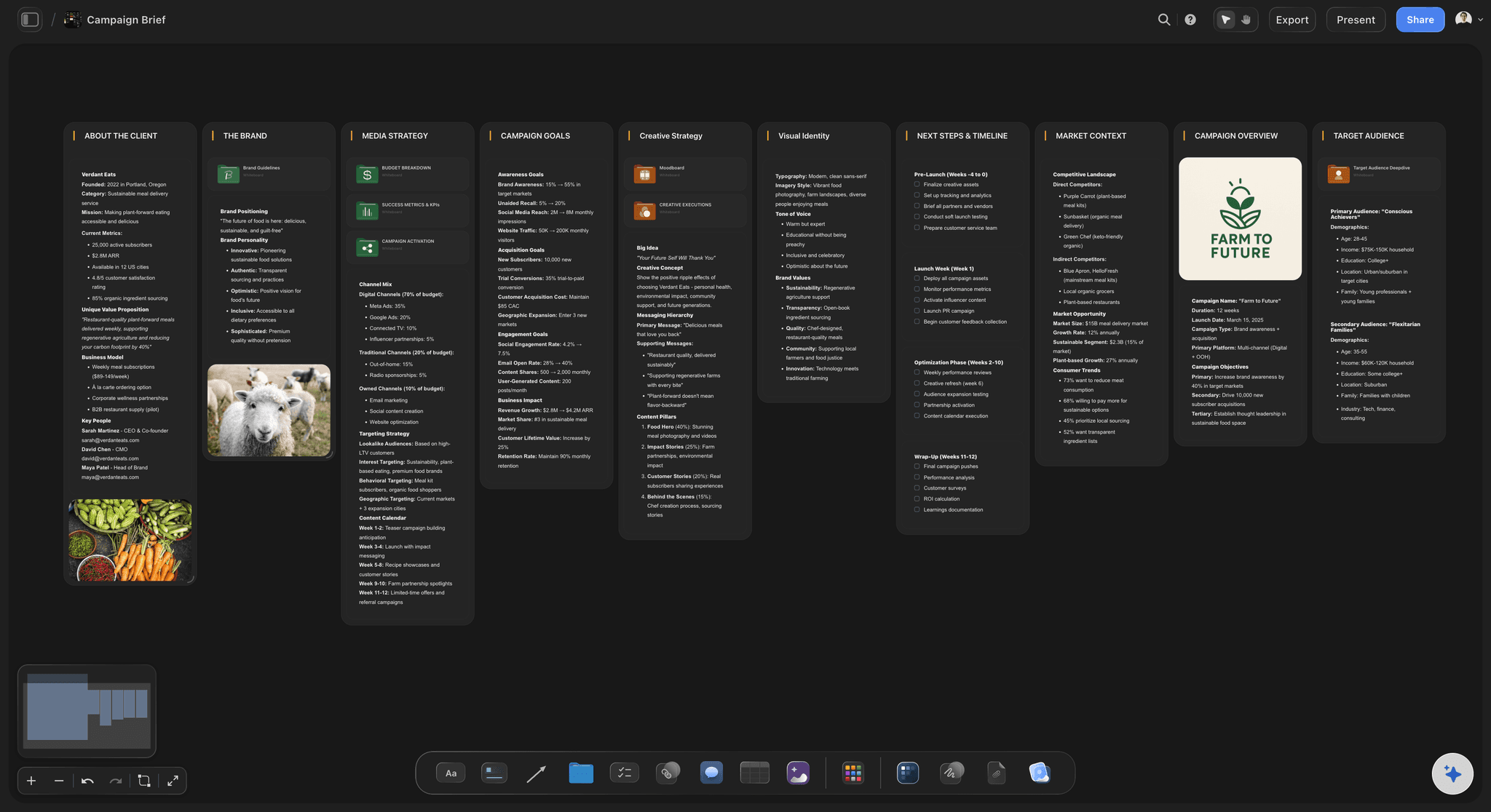
Reason four
Finished, printed, forgotten
A poster is not a tool: A map treated as a deliverable is finished on the day it is presented and wrong within a quarter.
Keep it beside the work: On the same canvas as the plans and briefs it informs, the map stays open and gets corrected as things are learned.
Produce a list, not an image: The unowned moments and the unevidenced stages are the outputs. Both are lists someone can act on this week.
Explore templates for your project
Every template opens as a real, editable board on the infinite canvas. Pick the closest fit and make it your own.
Mind Map
Branch one central idea out into themes and sub-points, then drag the connections around until the structure makes sense.
What creators are saying
Join early creators getting structured workspaces and AI that remembers their projects
“Storyflow has sped up my workflow by at least 3x, which means more flow state and more projects I can actually ship. It truly changed the way me and my team create.”

Reilin Joey
Director & YouTuber
“One prompt gets me a structured board. But the tactics are my favorite. I run my YouTube scripts through them and my intros and retention got better. It's amazing.”

Justkay
YouTuber & Freelance Filmmaker
“I used to juggle five apps to plan a project. Now I describe what I am making and get boards, lists, and a schedule. All in one place.”

George
@fernwehchronicles
Customer journey mapping, answered.
The questions that decide whether the map gets used.
Evidence attached to each stage. A map is a claim about what people do and feel, and a claim with nothing behind it is a guess with good typography. Attach the quote, the ticket or the drop-off number under each stage so a stakeholder who disagrees is disagreeing with a customer. Storyflow keeps stages, quotes, screenshots and numbers on one infinite canvas so that stays possible.
Storyflow is made for journey maps built on evidence: stages, quotes, screenshots and numbers sit together on one infinite canvas, so every stage carries what produced it. The map covers touchpoints across channels, such as emails, calls and paper, and it shows the moments no team owns. You can also mark which stages are still guesses.
Build the map anyway and mark every unevidenced stage as an assumption. That produces a research backlog, which is a genuinely useful output. What fails is rendering guesses and findings identically, because then a reader cannot tell which parts to trust and one disproved stage discredits the rest.
Yes, and that is usually where the value is. The confusing invoice, the unanswered email and the silent week after purchase are where experiences break, and nothing in a product analytics dashboard records a phone call.
Two lists: the moments no team owns, and the stages you cannot evidence. The map itself is the means of producing them. Teams that treat the map as the deliverable end up with a poster; teams that treat it as a way to find gaps end up with work.
A user flow is a path through an interface. A journey spans channels and time, including email, phone, paper and the gaps between teams, and it carries how the person feels as well as what they do. Different scope, and often worth having both.
It can draft a structure from documents you upload, reading the whole active board plus up to five attached documents and three boards. Treat it as a first pass to correct. What it should not do is invent stages, which is the failure mode of workshop-built maps in the first place.
Yes, through a view-only link. They can read the map and its evidence and cannot rearrange anything.
No, there are no integrations. Numbers and tickets go on the board as text or as pasted screenshots, which is manual and worth planning around.
Keep it on the same canvas as the briefs and plans it informs, so it is in view and gets corrected as things are learned. A map exported to a slide is finished on the day it is presented.
Not during early access. Plans start at $7.99 per month billed annually or $9.99 monthly, with a free plan before the end of 2026.
Put a real quote under every stage.
Evidence, channels and the gaps nobody owns, on one canvas.