
A workspace with taste, for people with taste
State the question
before you show the work.
A design review with no stated question becomes a room full of people offering unranked opinions about whatever they noticed first. The fix is not a better meeting format. It is putting the work, its constraints and the specific question being asked on one surface, so the critique has something to be about.


Creatives working for these brands already got early access
- Red Bull
- Canon
- Artlist
- Porsche
See how easy it is to get started
Watch a real project come together, from a blank board to a finished plan, clicked through step by step.
Start from a ready-made template
Pick a board to see what you can build, then let AI fill it in. Every template is a real, editable starting point on the same infinite canvas.

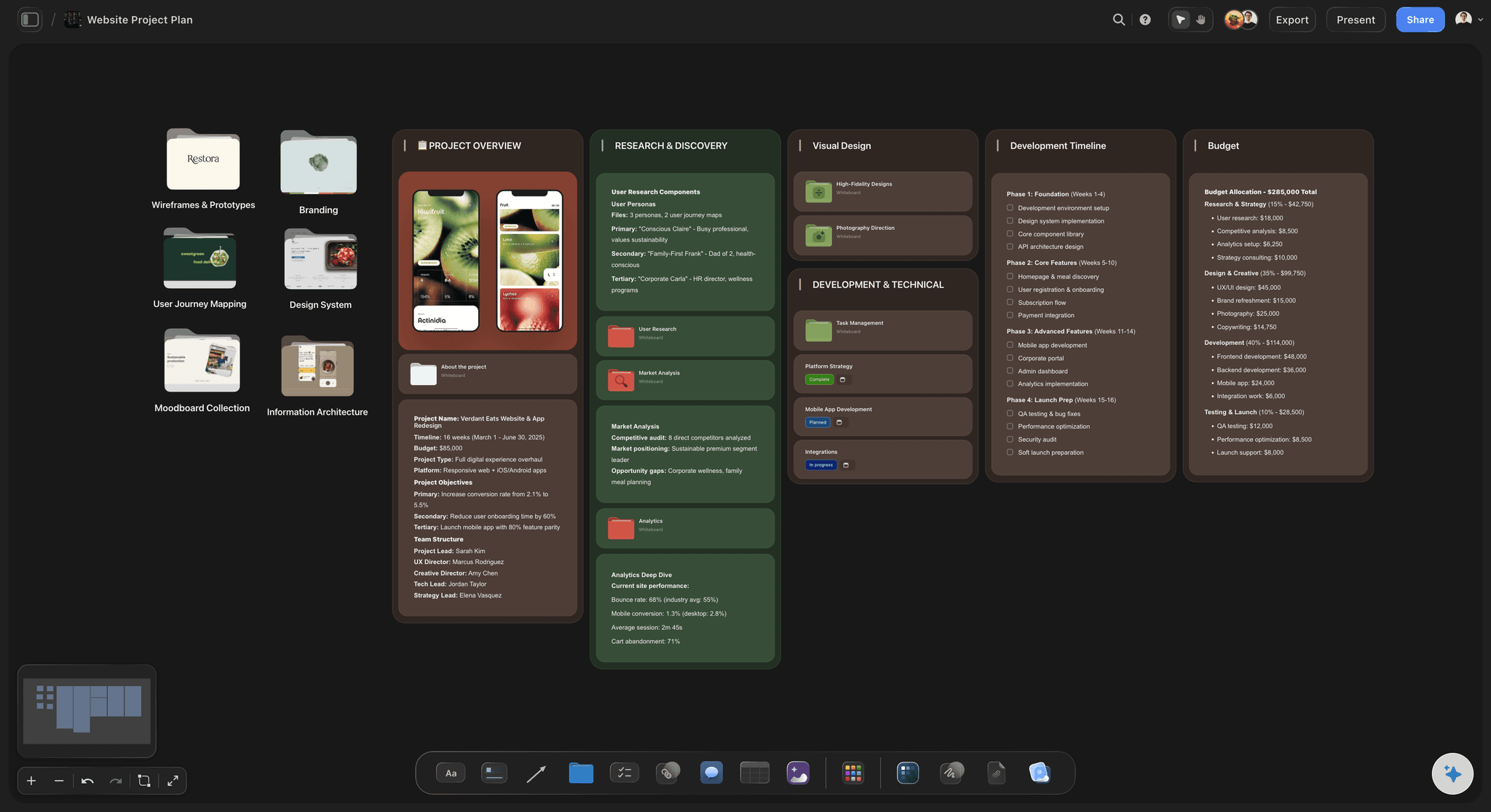
Design Planner
Plan a design project from brief to delivery, with references, tasks, and feedback side by side.
How do you run a good design review?
State what stage the work is at and what you want decided, before anyone looks at it. A concept exploration and a pre-ship review need completely different critiques, and a reviewer who does not know which one they are in will default to the wrong one, usually by polishing details on work whose direction is not settled. That single sentence at the top of the board prevents most wasted review time.
Show the constraints alongside the work. Half of all design feedback is a suggestion that was already considered and rejected for a reason the reviewer cannot see: the technical limit, the brand rule, the thing the client vetoed in round one. Putting those on the board converts that half of the conversation into something new.
Separate the observation from the prescription. "My eye goes to the wrong thing first" is a report about an experience and it is almost always valid. "Make the heading bigger" is a solution that may or may not address it. Reviews improve sharply when people are asked for the first kind and the designer keeps ownership of the second.
Storyflow gives the review a persistent surface rather than a meeting. The work, the brief, the constraints and the notes stay on one canvas, so someone in another time zone can contribute properly and the reasoning survives afterwards. The AI reads the whole active board plus up to five documents and three boards, so it can be asked whether a revision addressed the notes it was meant to.
Ultra fast from brief to board
Four things on the board before the critique starts.
Get these right and the meeting mostly runs itself.
01
Name the stage and the question
Exploration or pre-ship, and what you want decided. One sentence at the top of the board, which prevents most misdirected feedback.
02
Show the constraints
The brief, the technical limits and what has already been ruled out, so nobody spends the session re-suggesting a rejected idea.
03
Let notes attach to the work
Comments land on the element they concern, which makes them survive the revision and keeps them out of a thread.
04
Record what was decided
Not just what was said. The decision and its reason stay on the canvas so the next review starts from it.
Reviews fail before the work is shown.
Almost every bad critique is a framing problem rather than a people problem.
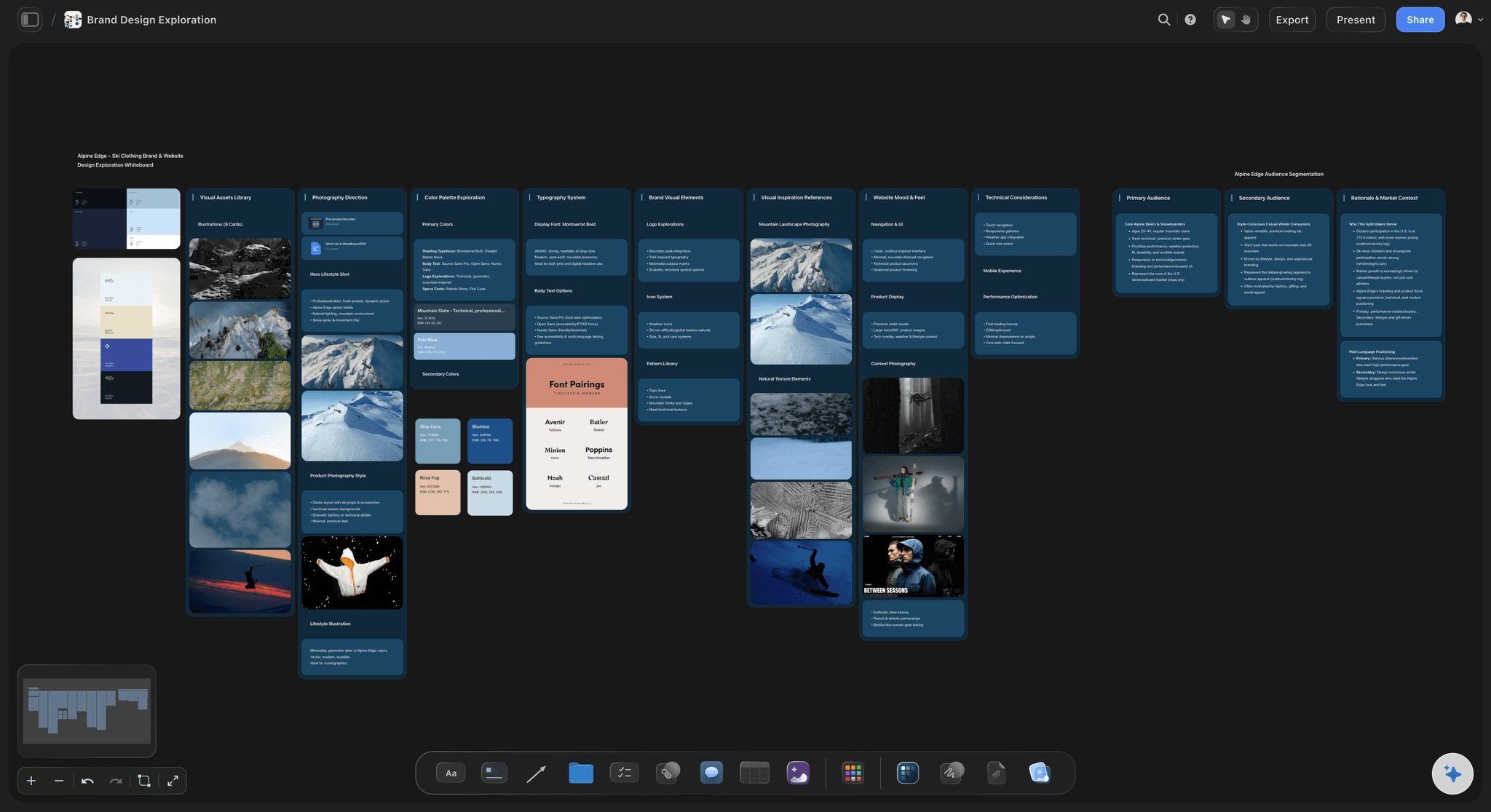
The question, stated
Tell reviewers what stage this is
Exploration wants direction feedback and pre-ship wants defect feedback. Saying which prevents the most common and most annoying kind of wasted review.
See the design critique board →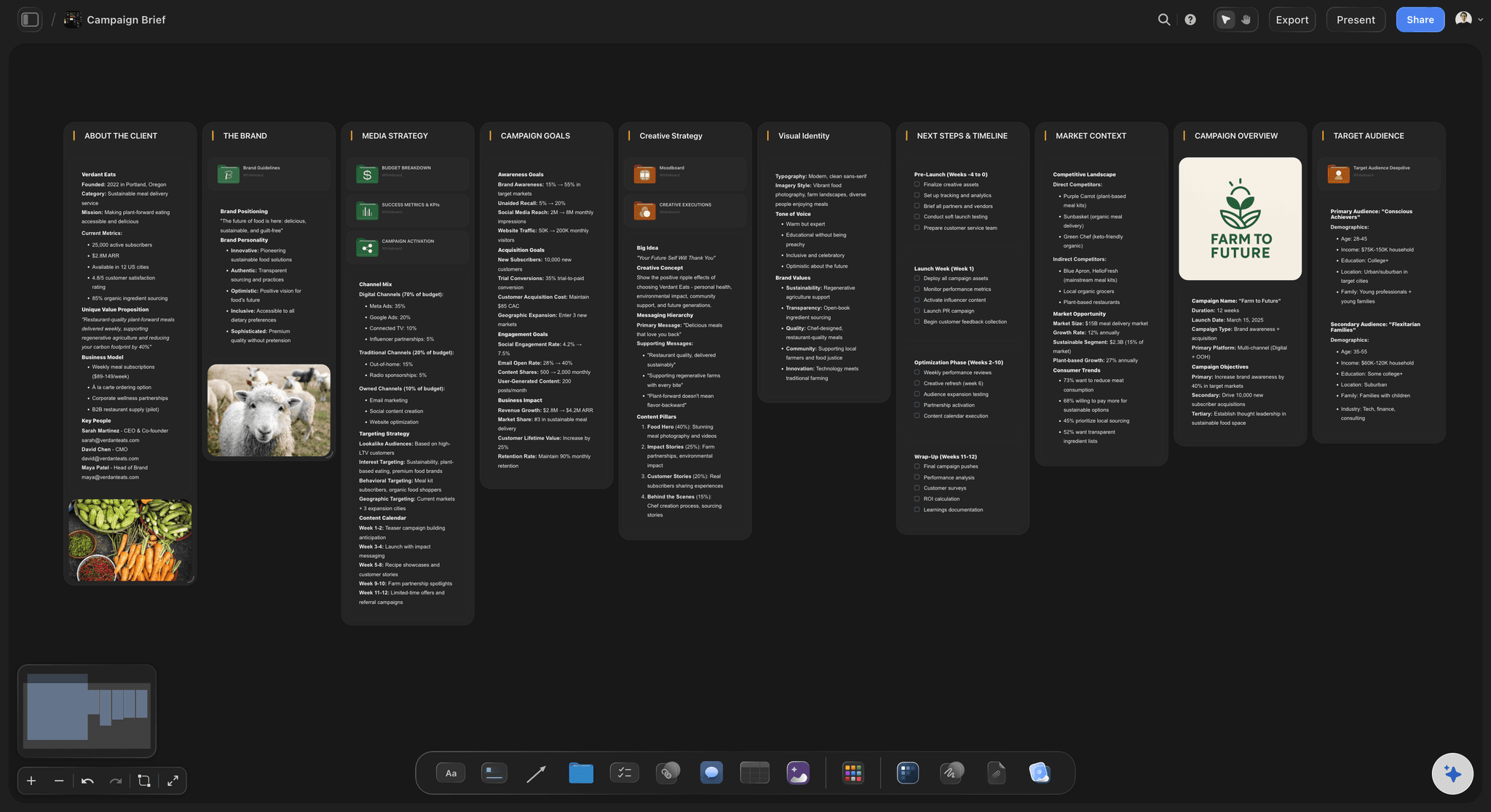
Constraints in view
Stop re-litigating rejected ideas
Technical limits, brand rules and prior vetoes on the board turn half the usual feedback into something the team has not already considered.
See the design brief →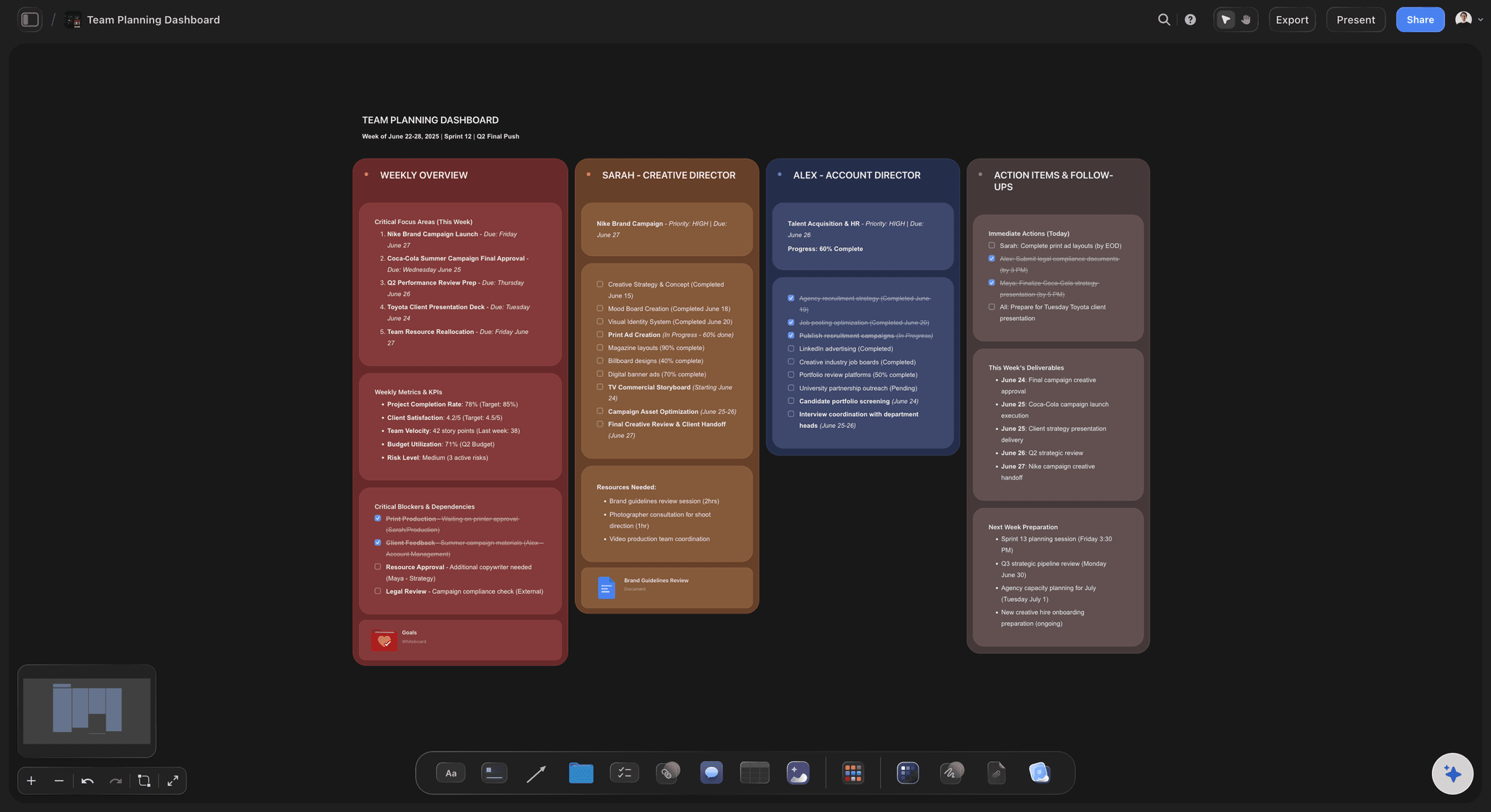
Async without losing depth
Reviews that survive time zones
A persistent board lets someone contribute properly at their own hour instead of skimming a recording or missing the session entirely.
See remote team boards →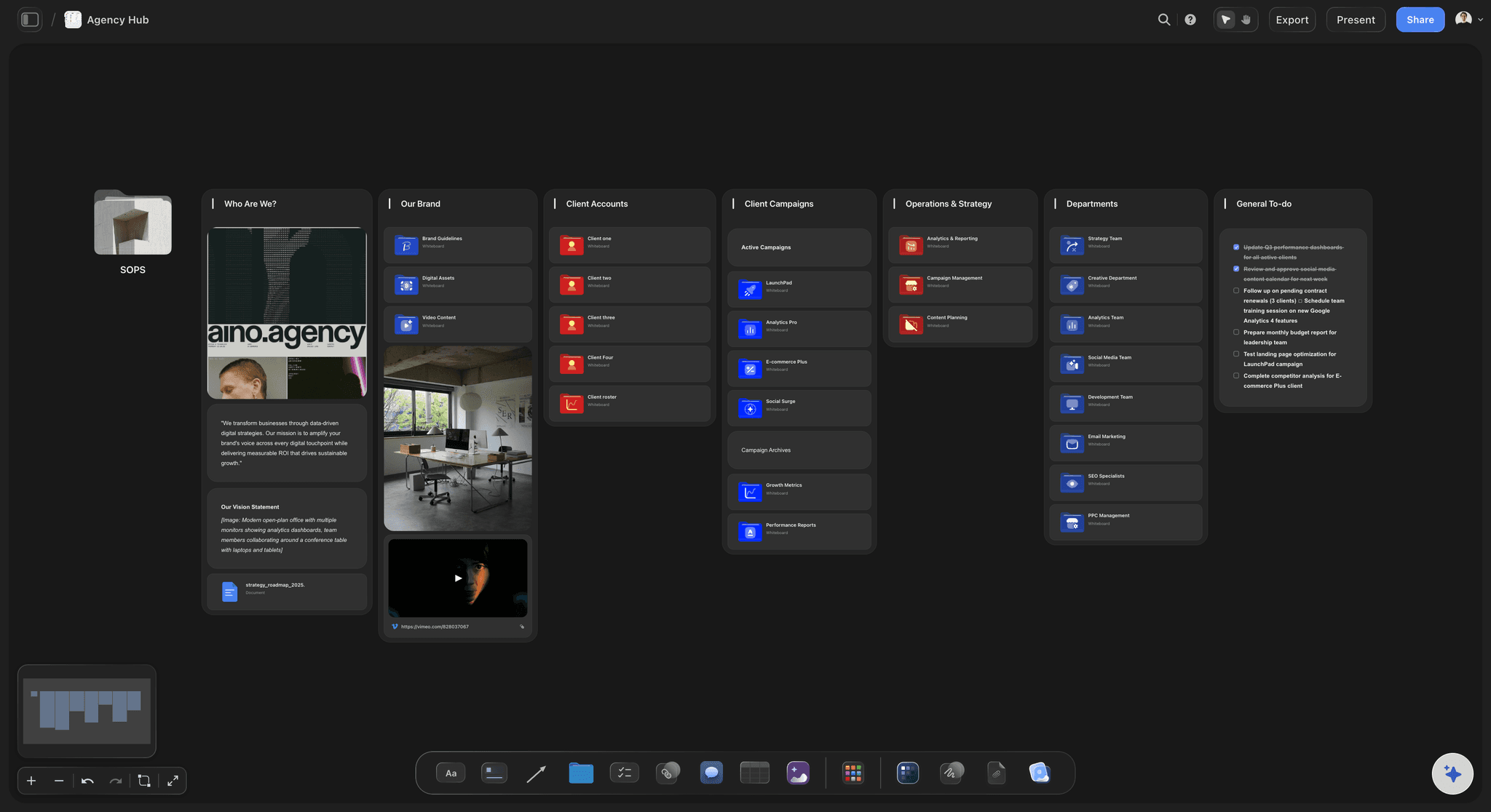
Decisions outlive the meeting
Check the revision against the notes
The AI reads the board, so you can ask whether this version addressed what the last review raised, using the notes that are still there.
See AI project memory →Plans from $7.99/month annual. Free plan coming late 2026.
Invite the whole team to review, not only the people with licences: anyone a paid member invites to a board joins free.
Invited collaborators join free
One board per project, no project limit
AI reads the whole board before it answers
View-only links open without an account
Built for people with taste
Four failures worth designing against.
Each has a structural fix that costs less than trying to change how people give feedback.
Failure one
Nobody knows what is being asked
Stage decides the feedback: Detail notes on unsettled direction waste everyone's time, and direction notes the day before ship are worse.
One sentence fixes it: Stating the stage and the decision wanted, at the top of the board, is the highest-leverage thing in the whole process.
Off-topic notes get parked: Valid observations outside the question go somewhere visible for later rather than derailing the session.
Failure two
Prescriptions instead of observations
Report the experience: "My eye goes here first" is data the designer cannot get any other way, and it is almost always valid.
Solutions are the designer's job: "Make it bigger" collapses a symptom into one fix, and it is usually not the best one available.
Ask for the first kind: Prompting reviewers for what they noticed rather than what to change improves critique quality immediately.
Failure three
The loudest voice wins
Live rooms favour the confident: Seniority and volume correlate with airtime far more than insight does, and the meeting format causes it.
Write before discussing: Notes left on the board first mean quieter reviewers are read rather than talked over.
Notes stand on their own: A comment attached to the work is judged on content rather than on who was speaking when it was said.
Failure four
Nothing is decided
Feedback is not a decision: A review that ends with fourteen notes and no ruling leaves the designer to guess which ones were binding.
Write the outcome down: What was decided and what was deferred, on the board, so the next round is not a rerun of this one.
Ask whether it was addressed: Because the notes stay on the canvas, the AI can be asked whether a revision responded to them.
Explore templates for your project
Every template opens as a real, editable board on the infinite canvas. Pick the closest fit and make it your own.
Design Planner
Plan a design project from brief to delivery, with references, tasks, and feedback side by side.
What creators are saying
Join early creators getting structured workspaces and AI that remembers their projects
“Storyflow has sped up my workflow by at least 3x, which means more flow state and more projects I can actually ship. It truly changed the way me and my team create.”

Reilin Joey
Director & YouTuber
“One prompt gets me a structured board. But the tactics are my favorite. I run my YouTube scripts through them and my intros and retention got better. It's amazing.”

Justkay
YouTuber & Freelance Filmmaker
“I used to juggle five apps to plan a project. Now I describe what I am making and get boards, lists, and a schedule. All in one place.”

George
@fernwehchronicles
Design reviews, answered.
What teams ask when critique stops being useful.
State the stage and the question before showing the work, put the constraints on the same surface, ask for observations rather than prescriptions, and record what was decided rather than only what was said. Most bad critique is a framing failure rather than a people failure: reviewers given no stage default to polishing details on work whose direction is not settled. Storyflow keeps the work, the brief, the constraints and the notes on one canvas so the framing is visible to everyone reviewing.
Feedback is a reaction; critique is an assessment against a stated intent. The difference is entirely in whether the intent is visible, which is why putting the brief on the board changes the quality of what comes back more than any facilitation technique.
Ask for what they noticed rather than what to change. "My eye goes to the wrong place" is data the designer cannot get any other way; "make the heading bigger" is one possible fix for that, and usually not the best. Prompting for observations is a one-line change that works.
Both, in that order. Written notes on the board first, then a short live discussion of the contested ones. Going straight to a live room gives the confident and the senior disproportionate airtime, which correlates poorly with insight.
End with a decision rather than a list. A review that produces fourteen notes and no ruling leaves the designer guessing which were binding, which guarantees the next round covers the same ground.
Not during early access. Plans start at $7.99 per month billed annually or $9.99 monthly, with a free plan launching before the end of 2026. Anyone a paid member invites to a board joins free, so the whole team can review without a licence conversation.
Figma comments sit on the artefact, which is right for detailed markup. This is for the surrounding context: the brief, the constraints, the rejected routes and the decision. Most teams use both, and the split is usually design file for the pixels, board for the reasoning.
Yes. Because the previous notes stay on the canvas, the AI reads them along with the whole active board plus up to five documents and three boards, so you can ask directly rather than comparing by memory.
Park it visibly on the board rather than suppressing it. A good observation raised at the wrong stage is still a good observation, and it is worth keeping where it will be found at the right one.
It helps most there. Stakeholders give vague feedback because they feel unqualified to judge design, and a visible brief gives them a standard they can legitimately assess against.
Frame the review and the critique gets better.
Stage, question, constraints and work on one board that remembers what was decided.