
Ultra-fast planning, extremely simple
Turn a ChatGPT chat into a project plan
your team can actually work from.
For founders who plan in ChatGPT: the scope, the tasks, the owners and the open questions land on one Storyflow board, and on Friday ChatGPT tells you what changed.


Creatives working for these brands already got early access
- Red Bull
- Canon
- Artlist
- Porsche
See how easy it is to get started
Watch a real project come together, from a blank board to a finished plan, clicked through step by step.
Start from a ready-made template
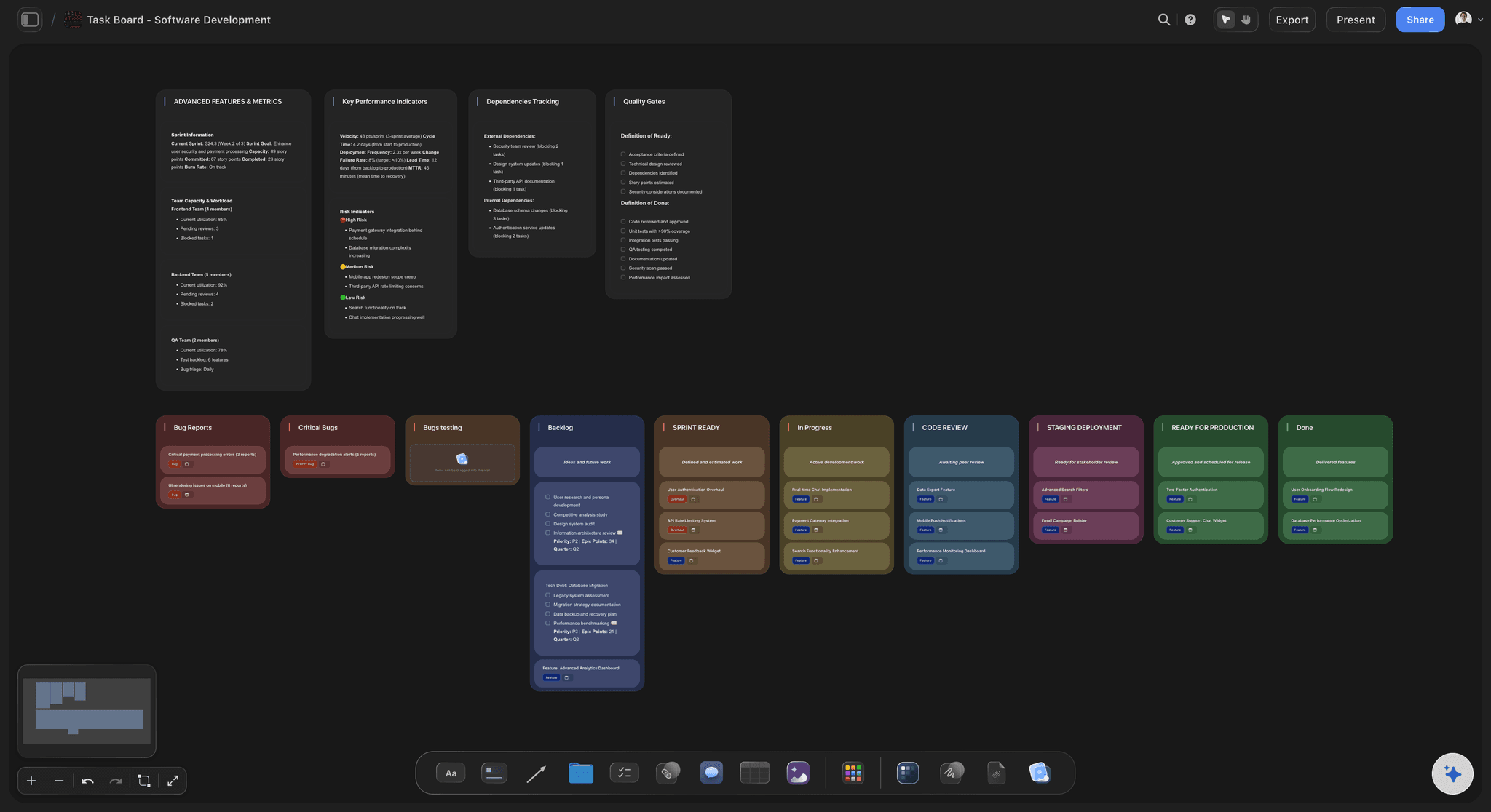
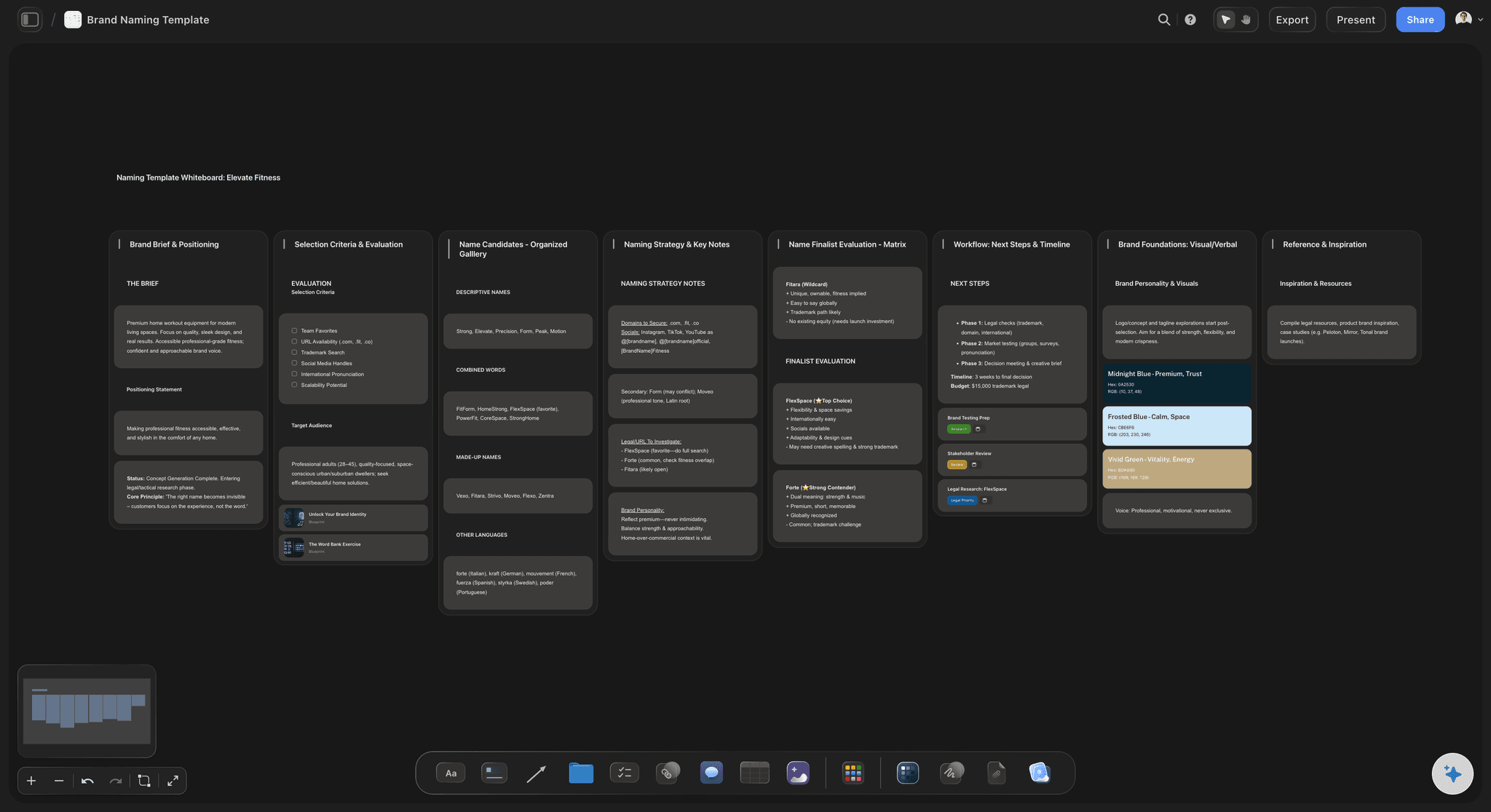
Pick a board to see what you can build, then let AI fill it in. Every template is a real, editable starting point on the same infinite canvas.

Mind Map
Branch one central idea out into themes and sub-points, then drag the connections around until the structure makes sense.
How do you turn a ChatGPT chat into a project plan?
To turn a ChatGPT chat into a project plan, take what the conversation settled, the goal, the scope, the steps and the unknowns, and move it somewhere the work is tracked: tasks with an owner, grouped by phase, with the open questions kept apart from the decisions. Storyflow is an AI visual workspace that holds that plan on one infinite canvas: walls for each phase, to-do cards with names on them, tables for budgets and lists, and a wall of open questions. Connected to Storyflow, ChatGPT builds the board from the chat in a few minutes and reads it back whenever you ask what is left or what changed.
Connect once, in ChatGPT on the web. Open Settings, then Security and login, and turn on Developer mode. Go to chatgpt.com/plugins and click the plus button. Name it Storyflow, choose Public endpoint and paste https://mcp.storyflow.so/mcp. Create it, then sign in to Storyflow when asked and allow changes for the project you want planned. It needs ChatGPT Plus, Pro, Business, Enterprise or Edu. On Business and Enterprise plans an admin turns on developer mode first.
Use a plan shape that survives contact with a real week. Seven walls, left to right. Goal and scope: one sentence for the goal, what is in, what is out. This week: five to eight tasks, each with one name. Next two weeks: the tasks that depend on this week's. Later: everything else, unsorted. Risks: what could slip and what you would do. Open questions: anything nobody has answered yet. Decisions: what was settled, with the date. Copy that list into your next chat and ask ChatGPT to fill it in from the conversation.
A worked example. A two-founder team plans a paid launch in six weeks. The chat produces 34 tasks. Eight land in This week, eleven in Next two weeks, fifteen in Later. Five risks, including the payment provider review taking longer than ten days. Six open questions, such as annual or monthly pricing first. The budget comes out as a table: landing page $1,200, launch video $2,500, ads test $1,500, contingency $800, total $6,000. ChatGPT builds it in seven calls, one per wall, and the table sits on the Goal and scope wall.
Then the plan keeps working after the chat. Ask ChatGPT on Wednesday which tasks in This week still have no name against them. Ask on Friday what changed on the board this week and who changed it: it reads every card that was added, edited, moved or deleted, by whom and when. Ask on Monday to move the finished tasks to Decisions and pull the next five up from Later. Each of those is a couple of actions, not a rebuild, and the cards your team edited keep their edits.
It costs nothing extra on the Storyflow side. ChatGPT does the thinking on its own model and your ChatGPT plan, so connector calls use no Storyflow AI credits. A free Storyflow account (today, one invited by a paid member) gets 50 actions a week; Plus, Pro and Max have no limit. The board stays when the chat is closed, and your cofounder opens it in Storyflow without needing ChatGPT.
Ultra fast from brief to board
From a long ChatGPT chat to a working plan in four moves.
Most of it happens in one message once Storyflow is connected. The rest is a question a week.
01
Connect Storyflow in ChatGPT
In ChatGPT on the web, turn on Developer mode under Settings, then Security and login. Add Storyflow at chatgpt.com/plugins with the Public endpoint https://mcp.storyflow.so/mcp, sign in, and allow changes for the project.
02
Ask for the plan, in the shape you want
At the end of the chat where you worked it out, ask: "Build this as a Storyflow board with walls for goal and scope, this week, next two weeks, later, risks, open questions and decisions." ChatGPT builds one wall at a time, in that order, and fills each with to-do cards.
03
Put names on the tasks
Ask who is on the board and to put one name against each task in This week. ChatGPT reads the people on the board, so the names are real. Fix anything by hand: drag a card, rename it, tick it off. The board is yours, not the chat's.
04
Ask what changed, every Friday
In any later chat, ask what changed on the board this week and who changed it. ChatGPT reads the record of every card added, edited, moved or deleted, and tells you what moved and what is stuck. It covers your team's edits as well as its own.
What the ChatGPT plan looks like on the board.
Four pieces ChatGPT builds from one chat, and keeps up to date when you ask. Each one is a normal part of the board you can edit by hand.

The phases
One wall per phase, tasks inside
Goal and scope, this week, next two weeks, later, risks, open questions and decisions, each as a wall with to-do cards inside. Read left to right, the whole plan fits on one screen, and the order of the walls is the order of the work.
See the AI project plan generator →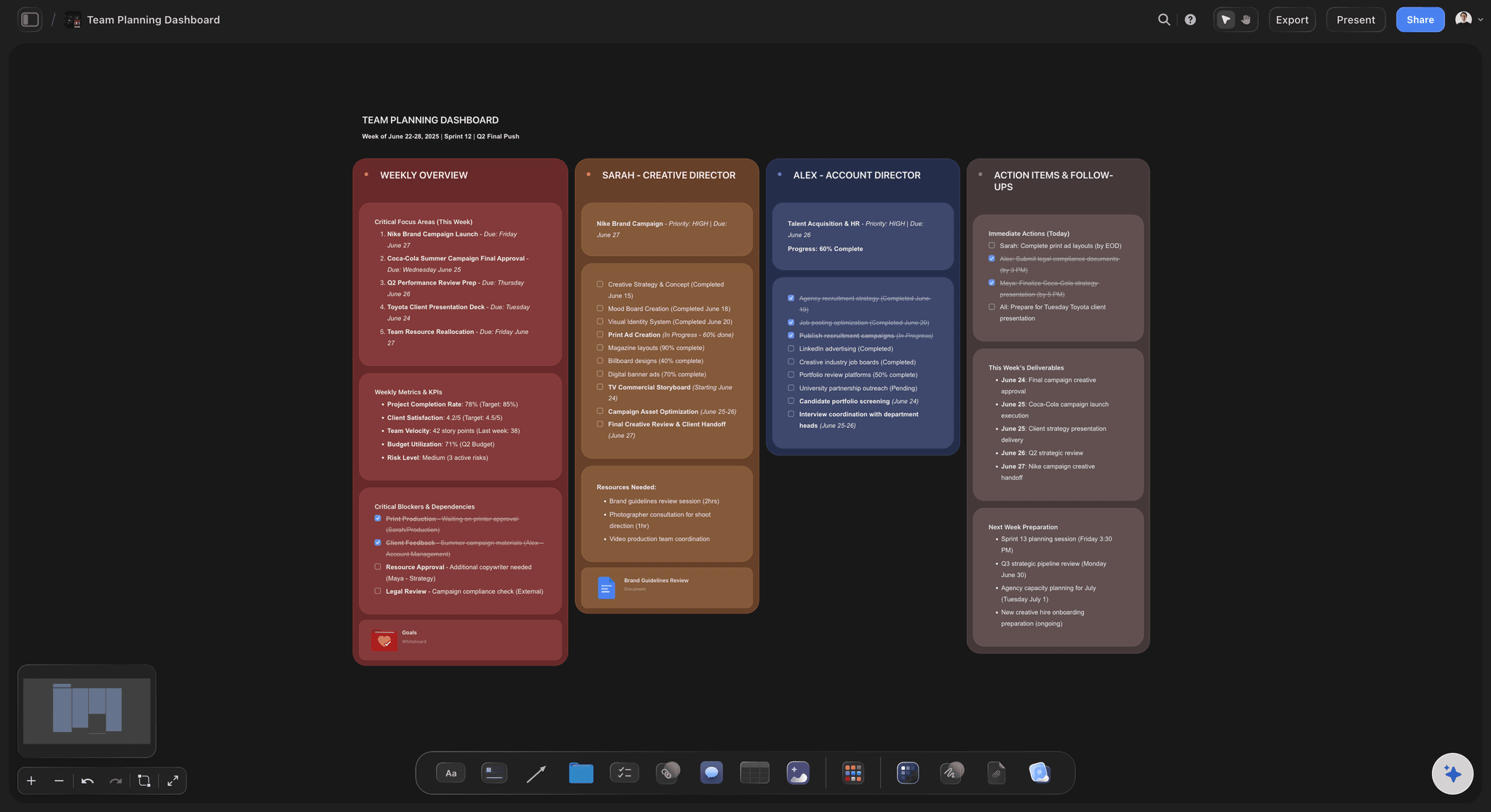
The owners
A name against every task
ChatGPT reads who is on the board and puts one name against each task. A wall per person shows at a glance who is carrying too much this week, and the action items wall keeps the follow-ups from the last call.
See visual project planning →
The status
Up next, in progress, waiting, done
Ask ChatGPT to sort loose cards into status walls, or to move the finished ones along. The board shows what is blocked and what is waiting on someone outside the team, so the Monday question is which card has sat still longest.
See the launch roadmap →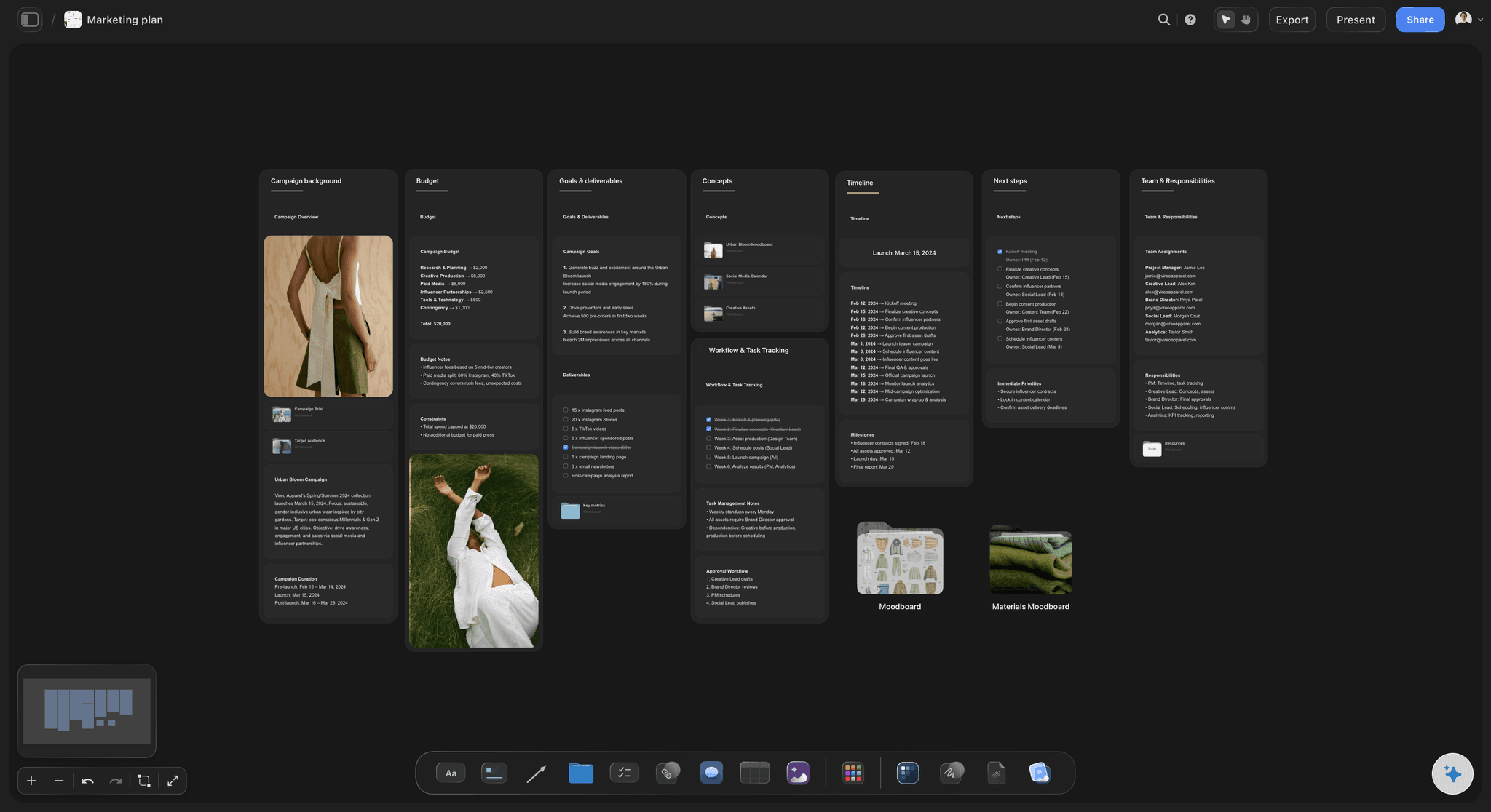
The numbers
Budget in a table, with a chart beside it
Budget lines and costs come out as a table on the board, not as text. Ask for a bar chart of spend by week and it sits next to the table it was drawn from. Change a line in the table and ask for the chart again.
See the product launch planner →Every plan you ever talked through, kept.
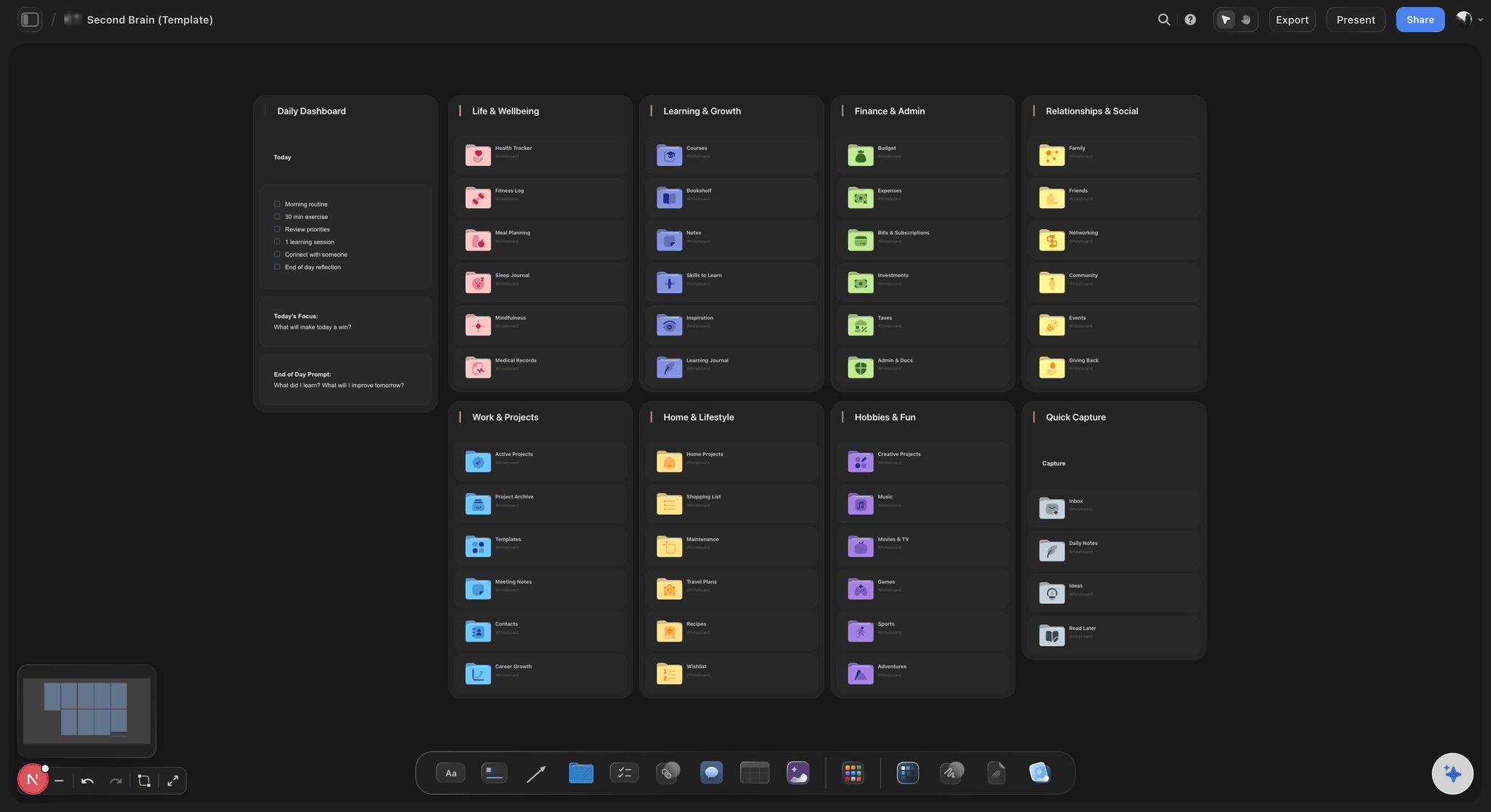
Each project gets its own board, so last quarter's plan and its decisions are still there when the next one starts. Storyflow is paid-only during early access, with plans from $7.99 a month billed annually ($9.99 monthly). A free plan launches before the end of 2026, and anyone a paid member invites to a board joins free.
Connector calls use no Storyflow AI credits: ChatGPT does the thinking
Building a seven-wall plan is about seven actions
A free account (today, one invited by a paid member): 50 actions a week, reset every Monday (UTC)
Plus, Pro and Max: no weekly limit
Invite your cofounder or a contractor to the board; they join free
Built for people with taste
Three ways a plan made in ChatGPT usually dies.
None of them are about the quality of the plan. All of them are about where it lives.
Lost
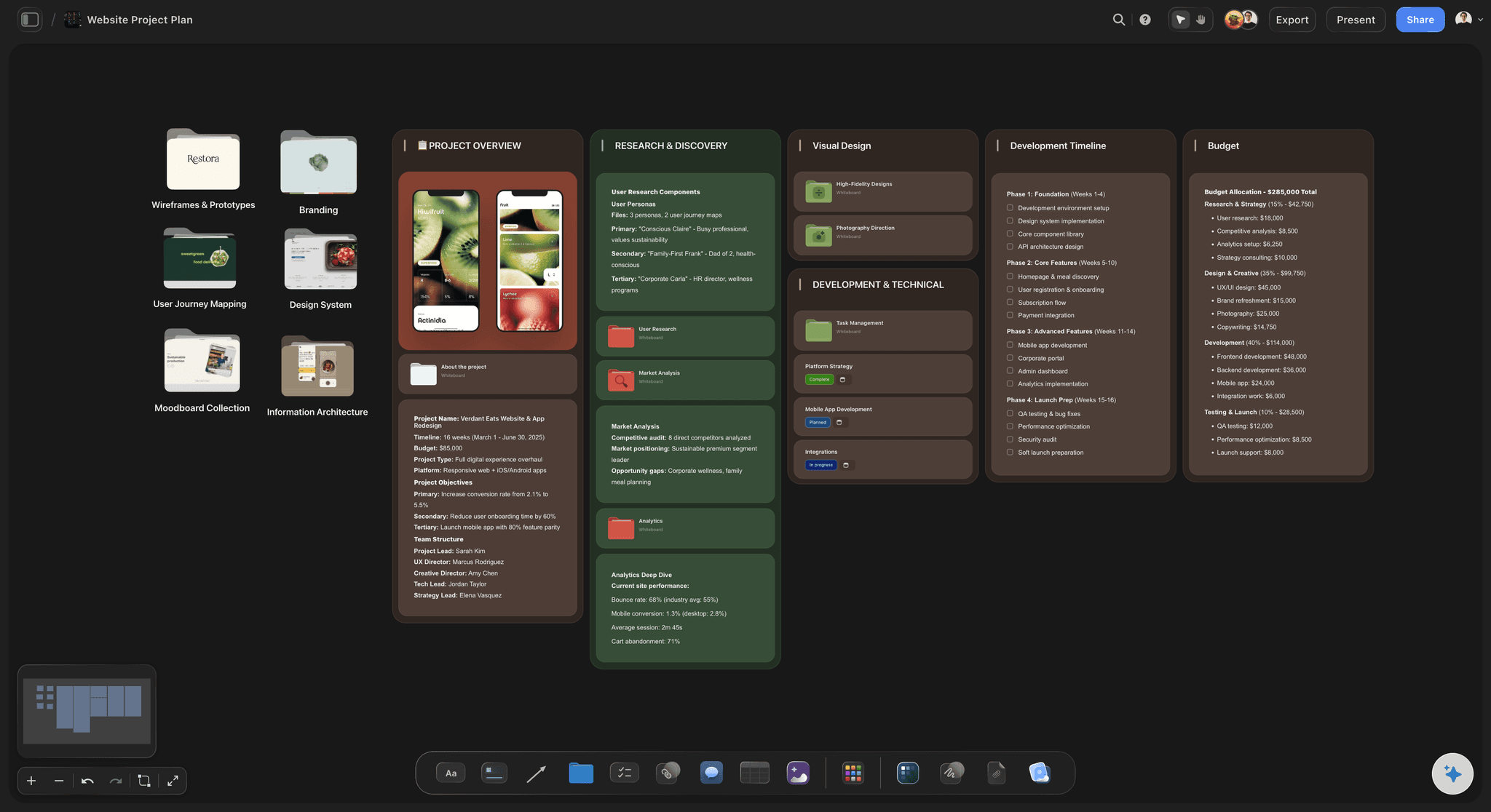
The plan is somewhere in a long chat
It moves out of the chat: The plan lands on a board as walls and cards. Scroll position and chat history stop mattering, because the plan is no longer in the chat. A new chat next week starts from the board, not from memory.
Open questions kept apart: Anything the chat did not settle goes on its own wall, so an unknown never hides inside a task description. Each question gets answered, then moves to Decisions.
Decisions have a home: Settled points move to a Decisions wall with the date, so nobody reopens pricing in week four because they forgot it was decided, or who decided it.
Start from a template if you like: ChatGPT can look up Storyflow's board templates, such as Agency Hub or Second Brain, apply one, and fill it from the chat, so the board starts with a shape that already works.
Private
Only the person who chatted can see it
Your team does not need ChatGPT: Your cofounder and contractors open the board in Storyflow and see the plan. Nobody has to read the conversation, or have a ChatGPT plan. Anyone a paid member invites joins free.
They change it too: Anyone on the board can add a card, drag a task to done or leave a comment. The plan is the team's, not one person's chat, and it stays current because the people doing the work update it.
ChatGPT sees their changes: Next time you ask, ChatGPT reads the board as it is now, including what your team added since. It does not plan from a stale copy pasted in two weeks ago.
One project, one board: Allow ChatGPT only the project you are planning. Other projects stay invisible to it, and every call is checked against that choice.
Stale
Nobody checks the plan after week one
A Friday question replaces a status meeting: On Friday, ask what changed on the board this week and who changed it. ChatGPT reads every add, edit, move and delete, and gives you the short version: what got done, what moved back, what nobody touched.
Find what has no owner: Ask which tasks in This week have no name against them. The answer is a list you can fix in two minutes, before the week gets away from you.
Move the plan forward by asking: Ask ChatGPT to move finished cards to Decisions and pull the next tasks up from Later. It moves cards between walls without rebuilding anything, so your edits and comments stay put.
Look back further when you need to: Ask what changed in the last day, week or month. A month back is the honest version of the project for an investor update, and ChatGPT can turn it into a short deck on the same board.
Explore templates for your project
Every template opens as a real, editable board on the infinite canvas. Pick the closest fit and make it your own.
Mind Map
Branch one central idea out into themes and sub-points, then drag the connections around until the structure makes sense.
One app instead of five
ChatGPT with a Storyflow board, ChatGPT Projects, or a task app.
Storyflow gives the plan a board the whole team works from and ChatGPT can read back. It does not draw a calendar or a Gantt chart, and it does not keep your chats.
ChatGPT + Storyflow
Recommended
Plan built straight from the chat
Team works on it without ChatGPT
Phases, tasks, budget and questions on one canvas
Ask what changed this week and who changed it
Names from the people on the board
Keeps related chats and files together
Calendar or Gantt view
Automatic reminders on due dates
ChatGPT Projects
Plan built straight from the chat
Team works on it without ChatGPT
Phases, tasks, budget and questions on one canvas
Ask what changed this week and who changed it
Names from the people on the board
Keeps related chats and files together
Calendar or Gantt view
Automatic reminders on due dates
A task app
Plan built straight from the chat
Team works on it without ChatGPT
Phases, tasks, budget and questions on one canvas
Ask what changed this week and who changed it
Names from the people on the board
Keeps related chats and files together
Calendar or Gantt view
Automatic reminders on due dates
What creators are saying
Join early creators getting structured workspaces and AI that remembers their projects
“Storyflow has sped up my workflow by at least 3x, which means more flow state and more projects I can actually ship. It truly changed the way me and my team create.”

Reilin Joey
Director & YouTuber
“One prompt gets me a structured board. But the tactics are my favorite. I run my YouTube scripts through them and my intros and retention got better. It's amazing.”

Justkay
YouTuber & Freelance Filmmaker
“I used to juggle five apps to plan a project. Now I describe what I am making and get boards, lists, and a schedule. All in one place.”

George
@fernwehchronicles
Questions about ChatGPT project plans
What founders ask before they move a plan out of ChatGPT.
In Storyflow, once it is connected to ChatGPT: at the end of the chat, ask ChatGPT to build the plan as a board with walls for goal and scope, this week, next two weeks, later, risks, open questions and decisions. It builds one wall at a time with to-do cards inside, and your team opens the board in Storyflow without needing ChatGPT.
Storyflow fits this job closely: ChatGPT builds the plan on a Storyflow board as walls of tasks, a budget table and open questions, puts real names on the tasks, and later tells you what changed and who changed it. Storyflow has no calendar or Gantt view and sends no due-date reminders, so a dated schedule with alerts still belongs in a task app such as Asana or Linear.
It does a different job. ChatGPT Projects keeps related chats and files together inside ChatGPT. Storyflow takes the plan out of ChatGPT onto a board your team works from without ChatGPT, and lets ChatGPT read it back later. You can use both: Projects for the thinking, Storyflow for the plan the team works from.
ChatGPT Plus, Pro, Business, Enterprise or Edu, on the web, and a Storyflow account. Turn on Developer mode under Settings, then Security and login; on Business and Enterprise an admin turns it on. Add Storyflow at chatgpt.com/plugins with the Public endpoint https://mcp.storyflow.so/mcp, then sign in and allow changes for the project you want planned.
Yes. In any later chat, ask about the project and ChatGPT reads the Storyflow board as it is now, including what your team changed since. Ask which tasks have no owner, what is in This week, or what changed and who changed it over the last day, week or month.
It can put names on tasks. ChatGPT reads who is on the Storyflow board and writes one name against each task. It does not send anyone a notification; people see their name when they open the board. A wall per person makes each list easy to find.
Yes. If the board is already full of loose notes, ask ChatGPT to group them into walls by phase or by status. Storyflow moves the existing cards into the walls in one go rather than writing new ones, so nothing you wrote is retyped or lost.
No. Storyflow does not show a calendar or a Gantt chart, and it does not send due-date reminders. Dates live in the card text or a table column, where everyone on the board can read them. If your plan depends on a dated schedule with alerts, keep that in a scheduling or task tool and use the Storyflow board for the plan itself.
No. ChatGPT does the thinking on its own model and your ChatGPT plan. On a free Storyflow account (today, one invited by a paid member) every read and change counts as one of 50 weekly actions, reset every Monday (UTC). A seven-wall plan is about seven. Plus, Pro and Max have no limit.
Yes, ChatGPT can read what you paste or attach and build the plan from it. The attached file itself stays in ChatGPT and is not copied into Storyflow. To keep the original next to the plan where your team can open it, upload it to the board; ChatGPT can read PDF, Word, Excel and CSV files there too.
Yes. Ask for a short update deck from the board, for your cofounder, an advisor or investors. It lands on the same Storyflow board as a deck you can edit, present fullscreen or export as a PDF. Ask again next month and the new deck sits beside the old one.
Storyflow gives ChatGPT no tool for deleting cards. It can edit and move them when you allow changes, so a finished task gets moved to Decisions rather than removed, and the plan keeps a record of what was done. Anything you delete by hand stays in the trash for seven days.
No. Storyflow runs in the browser and there are no native mobile or desktop apps. The connector needs no download either: you add one address in ChatGPT on the web and sign in. The plan opens in Storyflow in any browser.
More from Storyflow
Connect ChatGPT to Storyflow
Storyflow MCP server
AI project plan generator
Visual project planning
Launch roadmap
Product launch planner
Product roadmap
Visual ChatGPT alternative
Storyflow for startups
Storyflow for solopreneurs
Asana alternative
Trello alternative
Notion alternative
Mind map to project plan
AI project memory
Connect Gemini to Storyflow
Get the plan out of the chat and onto the board.
Connect ChatGPT once, ask for the board at the end of the chat, and ask what changed every Friday. The plan lives where your team can see it.