
Extremely simple, seriously capable
The diagram is
the easy part.
Any tool can draw boxes and arrows, and if a clean diagram is all you need, a dedicated diagramming tool will do it better than this. What those tools cannot hold is why the flow is shaped that way: the screen it came from, the interview quote that revealed the branch, the option you rejected. Six weeks later that is the only part anyone needs.


Creatives working for these brands already got early access
- Red Bull
- Canon
- Artlist
- Porsche
See how easy it is to get started
Watch a real project come together, from a blank board to a finished plan, clicked through step by step.
Start from a ready-made template
Pick a board to see what you can build, then let AI fill it in. Every template is a real, editable starting point on the same infinite canvas.

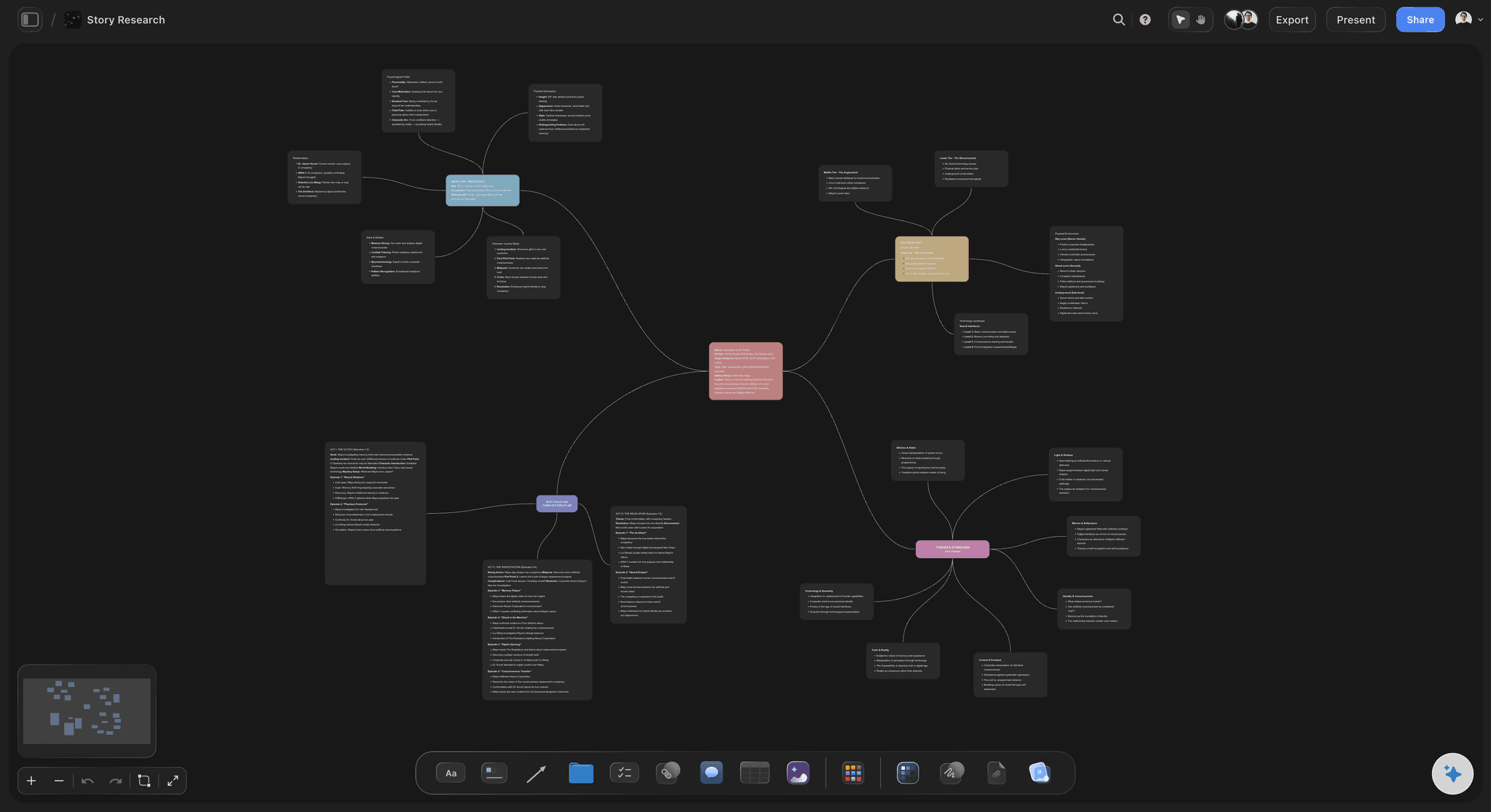
Mind Map
Branch one central idea out into themes and sub-points, then drag the connections around until the structure makes sense.
What is the best tool for mapping user flows?
It depends on whether the diagram is the deliverable. Storyflow is an AI visual workspace that maps your user flow beside its evidence on one infinite canvas: the screens, the interview quotes, the reason each branch exists, and the paths you rejected. If you need a precise, tidy flow chart to hand to engineering, a dedicated diagramming tool with auto-layout and shape libraries is the right answer, and Storyflow is not competing there. Its shapes and connectors exist and are not the point.
The case for a canvas is different. A user flow is an argument about behaviour, and it is only as good as the evidence behind it. In practice that evidence lives somewhere else: the screenshots in one folder, the interview notes in a research repository, the analytics in a dashboard, and the decision to add a branch in a Slack thread nobody can find. The diagram is clean and unaccountable.
That separation costs most at review. Someone asks why the flow forks after sign-up and the honest answer is that a user did something unexpected in a session four weeks ago. If the quote is not attached to the branch, the answer is a memory, and memories lose arguments to whoever is more confident in the room.
Storyflow puts the flow and its evidence on one infinite canvas: nodes and connectors for the flow, screenshots at full size, interview quotes as text, and rejected alternatives kept beside the chosen path. The AI reads the whole active board plus up to five attached documents and three boards, so it can answer questions from your research rather than from general UX practice.
Ultra fast from brief to board
Flow, evidence, alternatives, in one place.
The map is the top layer, not the whole document.
01
Lay out the flow
Nodes and connectors for the path itself, with each step named for what the person is trying to do rather than the screen it happens on.
02
Attach the screens
Screenshots at full size beside the steps they belong to, so the flow and the interface it describes cannot drift apart.
03
Pin the evidence to the branch
The quote or the number that justified a fork sits on the fork. That is what turns an opinion into a finding.
04
Keep what you rejected
Alternative paths stay on the canvas beside the chosen one, so the same debate does not get reopened every month.
Four things a diagram alone cannot carry.
Each one is a question somebody asks later.
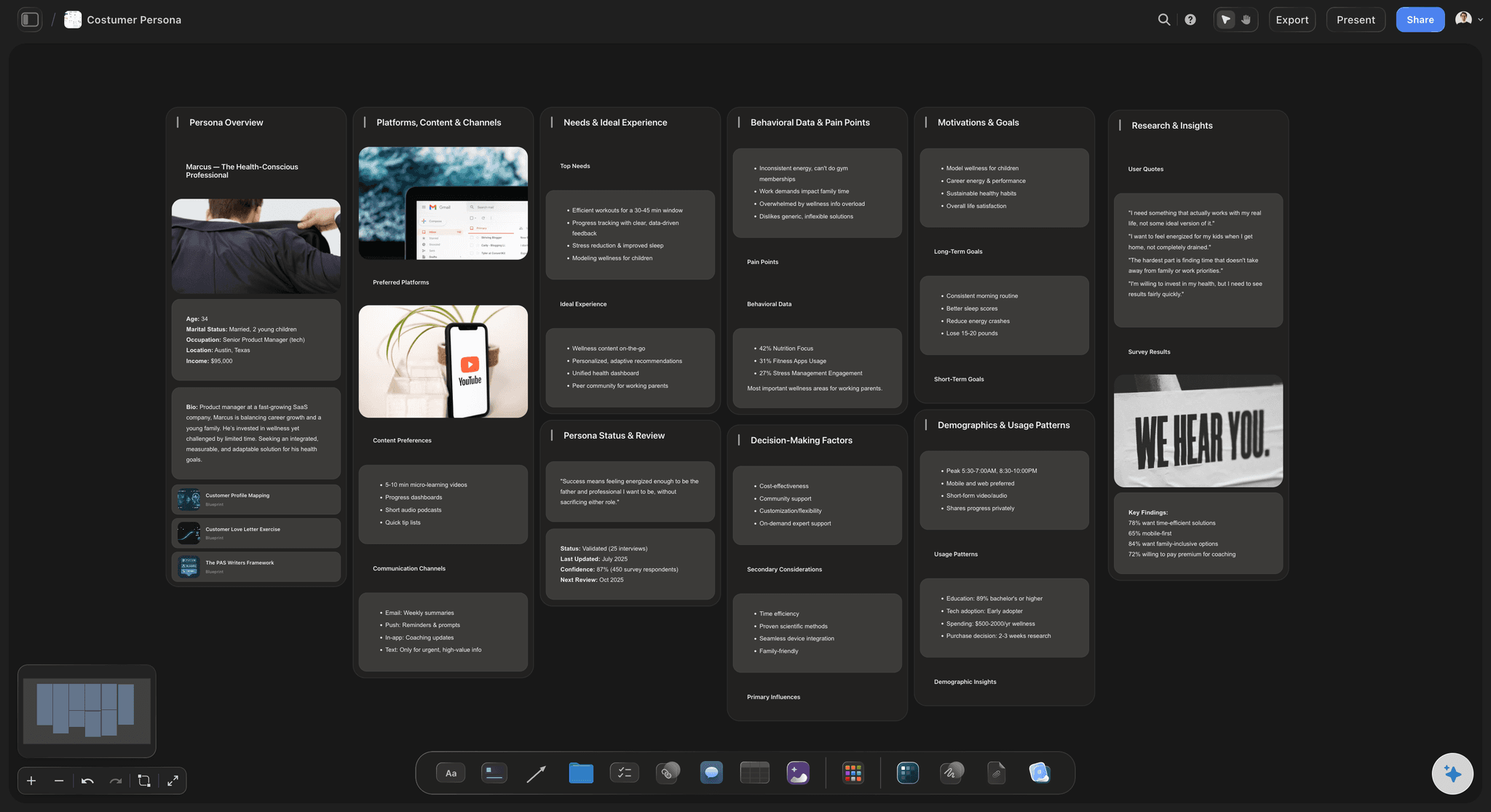
Evidence attached
The quote on the branch
An interview line or an analytics figure sitting on the fork it justified, which is the difference between a finding and a preference.
See the UX research board →
Screens at full size
The interface, not a label
A box saying "checkout" hides everything that matters. The actual screen beside the step keeps the flow honest.
See the wireframe tool →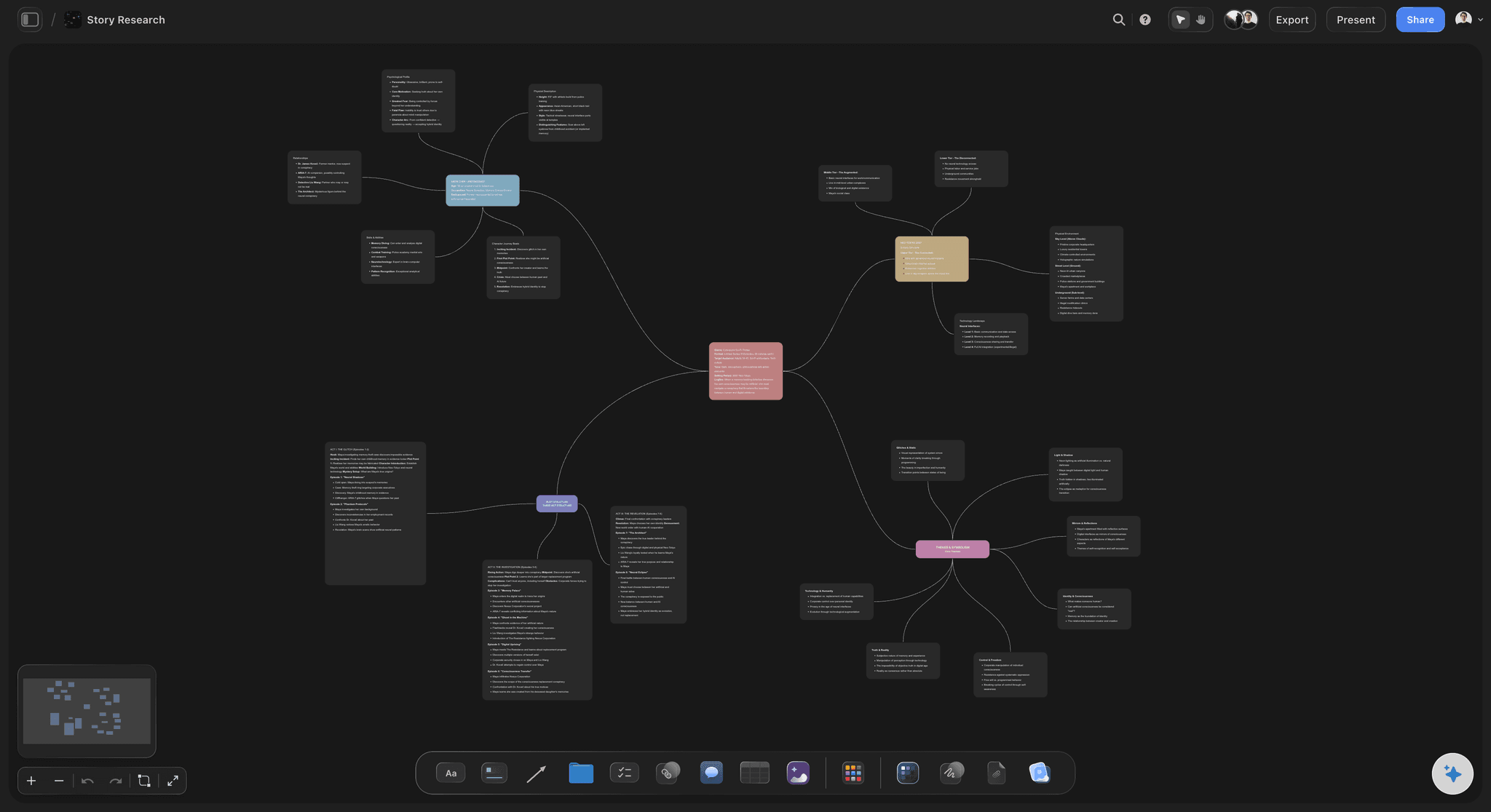
Rejected paths kept
Why not the other way
Alternatives stay visible instead of being deleted, which stops the team relitigating a decision every time somebody new joins.
See AI project memory →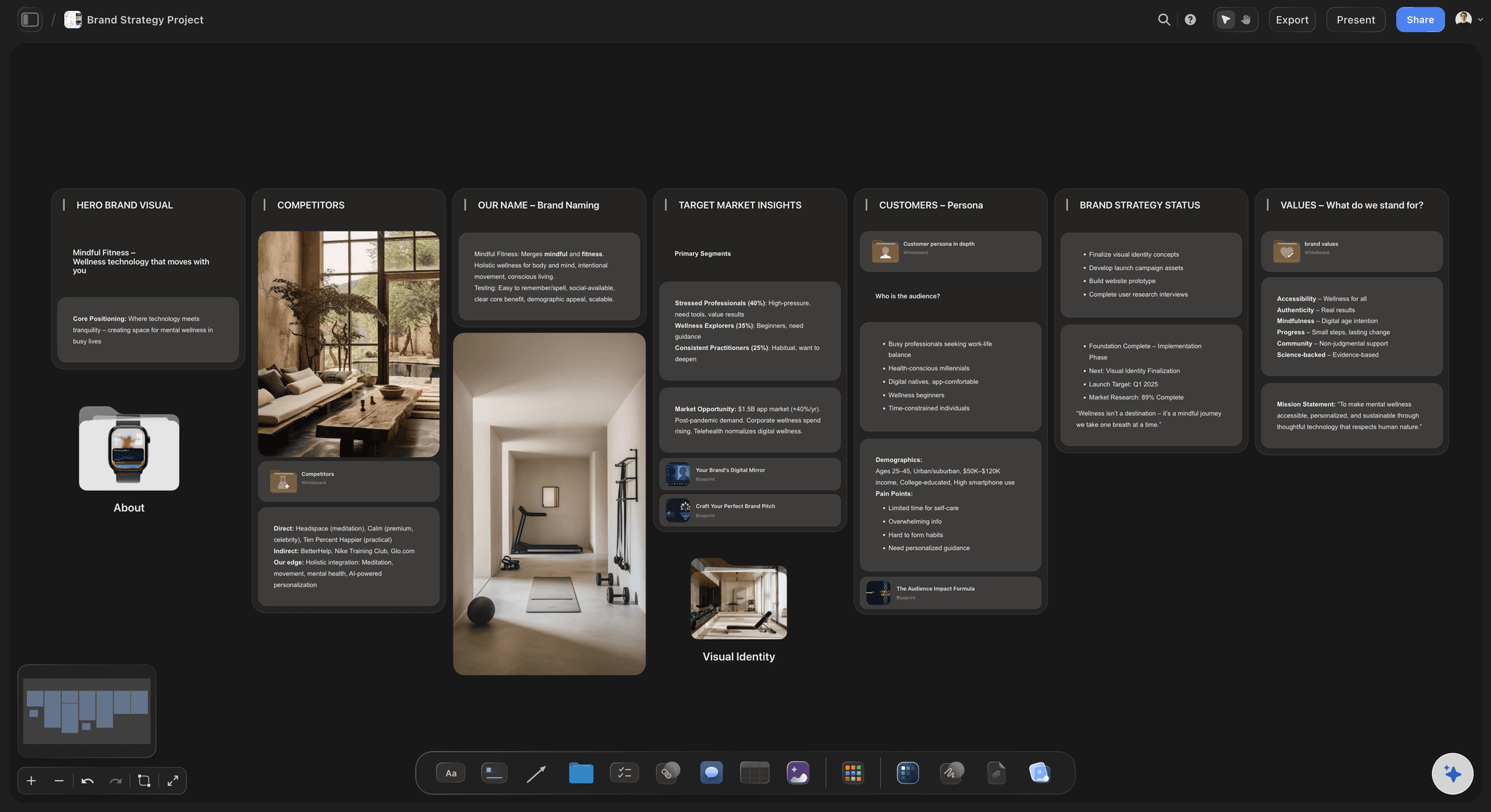
Ask the board
Answers from your research
Because the evidence is on the canvas, the AI can answer which findings support a step rather than reciting general UX advice.
See the AI creative workspace →Plans from $7.99/month annual. Free plan coming late 2026.
Unlimited boards and unlimited file uploads. Free plan before the end of 2026.
Flow, screens and research on one canvas
Unlimited file uploads on Plus, Pro and Max
View-only links for stakeholder review
AI reads the whole board before it answers
Built for people with taste
Four failures of a flow that lives on its own.
A tidy diagram is the most common form of a document nobody trusts.
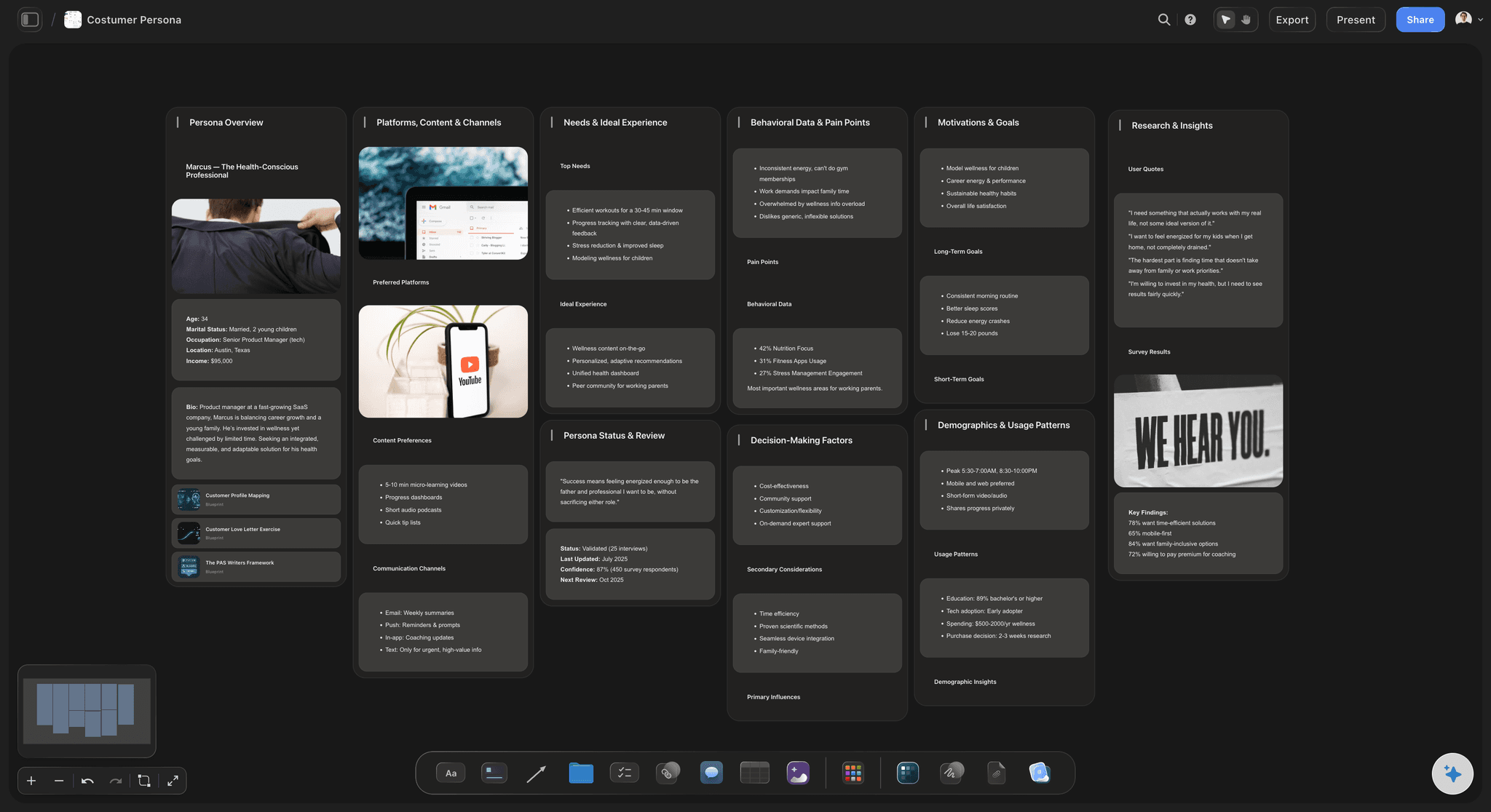
Failure one
Nobody can defend a branch
The reason is elsewhere: The quote that justified a fork is in a research repository, a call recording or a message thread, and effectively gone.
Confidence wins instead: Without the evidence in view, the decision goes to whoever argues hardest rather than to what was observed.
Attach it to the fork: One line of the actual transcript on the branch settles the question in seconds and keeps settling it later.

Failure two
Labels standing in for screens
A box hides the problem: "Checkout" as a node conceals four fields, two error states and the thing users actually get stuck on.
Diagrams drift from the product: Without the interface beside it, a flow describes what the product was six months ago and nobody notices.
Put the screen on the canvas: The step and its interface side by side means a mismatch is visible rather than discovered in build.
Failure three
The same debate every quarter
Deleted options come back: A path removed from the diagram is a path someone proposes again in three months, with no record of why it went.
Absence looks like oversight: A new team member reads a missing branch as something nobody thought of rather than something considered and rejected.
Park rather than delete: Alternatives kept to one side with a line about why they lost end the conversation before it restarts.
Failure four
Steps named after screens
Screens are implementation: A flow described as a sequence of pages locks in the current design and cannot describe a better one.
Name the intent: "Prove I am who I say I am" survives a redesign. "Verification page" does not, and quietly becomes wrong.
Both on the canvas: Keep the intent as the step and the screen as evidence beside it, so the flow outlives the interface it describes.
Explore templates for your project
Every template opens as a real, editable board on the infinite canvas. Pick the closest fit and make it your own.
Mind Map
Branch one central idea out into themes and sub-points, then drag the connections around until the structure makes sense.
What creators are saying
Join early creators getting structured workspaces and AI that remembers their projects
“Storyflow has sped up my workflow by at least 3x, which means more flow state and more projects I can actually ship. It truly changed the way me and my team create.”

Reilin Joey
Director & YouTuber
“One prompt gets me a structured board. But the tactics are my favorite. I run my YouTube scripts through them and my intros and retention got better. It's amazing.”

Justkay
YouTuber & Freelance Filmmaker
“I used to juggle five apps to plan a project. Now I describe what I am making and get boards, lists, and a schedule. All in one place.”

George
@fernwehchronicles
User flow mapping, answered.
Including when to use something else.
If you need a precise diagram to hand to engineering, a dedicated diagramming tool is the better choice and does it well. If the flow has to survive being questioned, you need the evidence with it: the screens, the interview quotes and the paths you rejected. Storyflow puts all of that on one infinite canvas, so a branch can be defended with the actual quote that produced it rather than from memory.
Not primarily. Nodes and connectors exist, and there is no auto-layout, no extensive shape library and no BPMN or UML support. If a tidy, precise diagram is the deliverable, use a tool built for that. This is for the case where the flow is a piece of thinking that needs its evidence attached.
Because six weeks later the only question anyone asks is why the flow forks where it does. If the quote is in a research repository and the number is in a dashboard, the answer becomes a memory, and memories lose to whoever is most confident in the room.
No. Name them after what the person is trying to do. A step called "prove I am who I say I am" survives a redesign, where "verification page" quietly becomes wrong the moment the interface changes. Keep the screen beside it as evidence.
Park them beside the flow with a line about why they lost, rather than deleting them. A removed branch is one somebody proposes again next quarter, and a new team member reads its absence as an oversight rather than a decision.
Yes, at full size, with unlimited file uploads on the paid plans. This matters because a node labelled "checkout" conceals the four fields and two error states where users actually get stuck.
Yes, through a view-only link that needs no account. They see the flow and the evidence together and cannot rearrange anything.
No, there are no analytics integrations. Numbers go on the board as text or as a pasted screenshot, which is manual and worth knowing before you plan around it.
It reads the whole active board plus up to five attached documents and three boards, so it can summarise which findings support a step or point out a branch with nothing behind it. It is answering from your research rather than from general UX practice.
Not during early access. Plans start at $7.99 per month billed annually or $9.99 monthly, with a free plan before the end of 2026.