
An ultra-fast canvas that stays calm
Map how your ideas connect,
not just where they branch.
Storyflow is a concept map maker on a truly infinite canvas. Link concepts with labeled relationships so a reader can see how the whole system fits together, then let AI lay out a first draft you can rework. When the map is done, turn it into a real plan on the same canvas.


Creatives working for these brands already got early access
- Red Bull
- Canon
- Artlist
- Porsche
See how easy it is to get started
Watch a real project come together, from a blank board to a finished plan, clicked through step by step.
Start from a ready-made template
Pick a board to see what you can build, then let AI fill it in. Every template is a real, editable starting point on the same infinite canvas.

Mind Map
Branch one central idea out into themes and sub-points, then drag the connections around until the structure makes sense.
What is a concept map, and how is it different from a mind map?
A concept map shows how ideas relate. You place concepts as nodes and join them with lines that carry a label, a linking phrase like causes, requires, is part of, or leads to. Read together, the nodes and their labeled links form a proposition you can follow: photosynthesis requires sunlight, which produces glucose, which fuels growth. The map makes the structure of a whole topic visible, not just its parts.
That is the honest difference from a mind map. A mind map is a hierarchy: one central topic in the middle, themes branching out, details hanging under the branch they belong to. It is fast for radiating a single idea outward. A concept map is a network: many concepts cross-linked in several directions, where the relationships between them are the whole point. If you want the branching, hierarchical version, our mind mapping page covers that mode in depth. This page is for mapping how a system connects.
Storyflow builds concept maps on an open infinite canvas. Every concept is a real card you drag, recolor, and regroup, and every connection can carry the linking phrase that explains it. Because it is a canvas and not a fixed diagram, the map bends to how the topic actually connects. Ask the AI to lay out a first map from a prompt, attach a source PDF beside a node, or turn the finished map into a study plan or project board on the same canvas.
Ultra fast from brief to board
Build a concept map in four steps.
Start from a blank canvas or a single prompt. Either way the concepts and their links stay yours to rearrange.
01
Open your canvas
Start in the browser. Nothing to install, just an infinite canvas ready for the concepts you want to connect.
02
Place your concepts
Drop the key concepts onto the canvas as cards, or describe the topic once in the AI chat and let Storyflow lay out a first map of nodes for you.
03
Link and label the relationships
Connect concepts in any direction and label each link with how they relate, so the map reads as real propositions rather than a loose cluster of boxes.
04
Turn the map into a plan
Convert the finished map into a study guide, content plan, or project board on the same canvas, share a view-only link, or export it as an image or PDF.
Concept mapping that captures the relationships, not just the boxes.
Cross-link concepts in every direction, label how they relate, and keep the whole network on one canvas that turns into work.
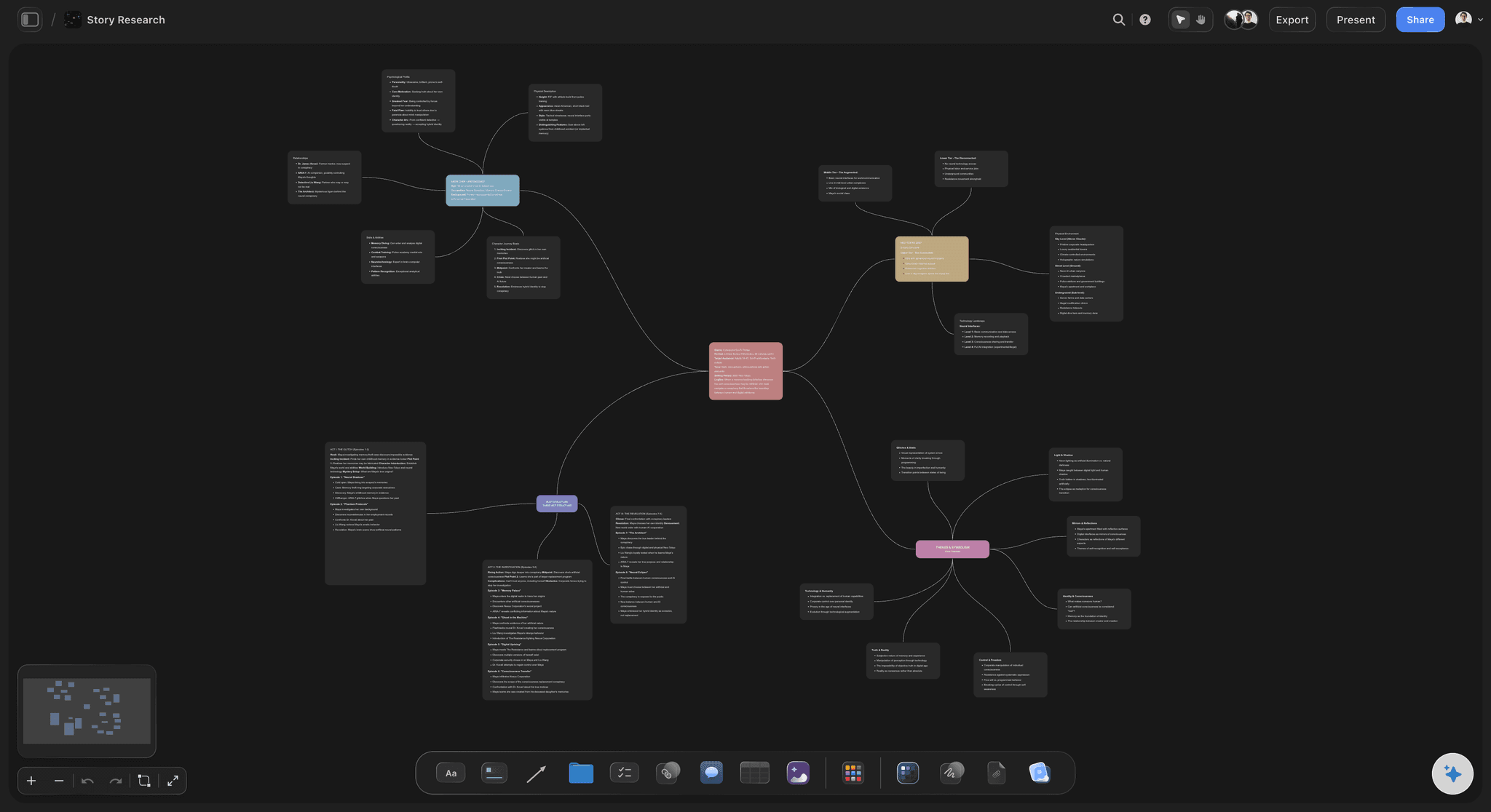
Links carry meaning
Labeled relationships, not bare lines
Join any two concepts and label the connection with how they relate: causes, requires, is part of, leads to. The map reads as propositions a student or reviewer can follow, not a diagram they have to decode.
See the diagram maker →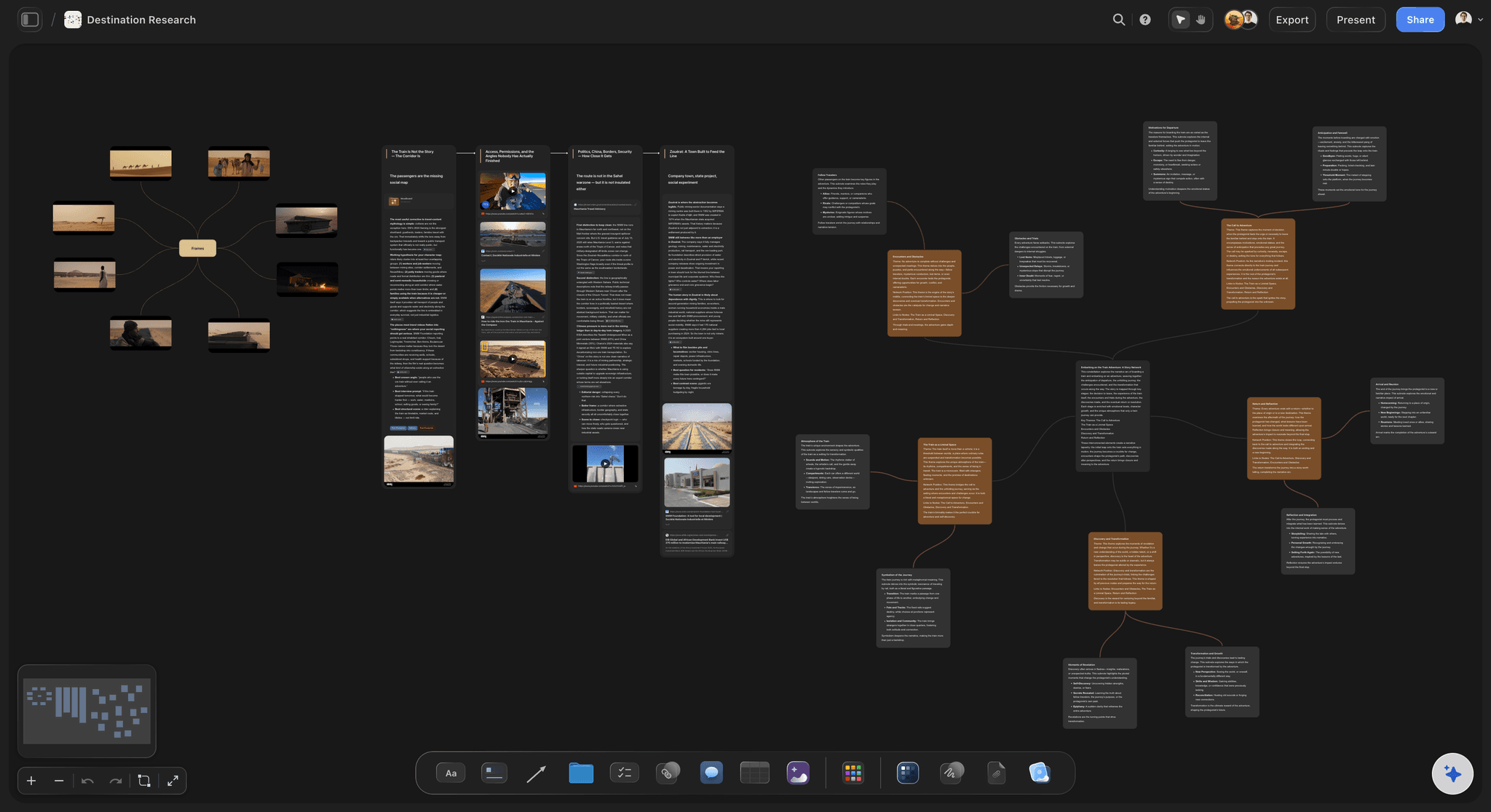
AI drafts the first map
Ask AI to lay out the concepts
Describe a topic and the AI lays out a full board of concept cards on the canvas, using your current board as context, not a generic template. You rework the links and labels from a real starting point instead of a blank page.
See the AI mind map generator →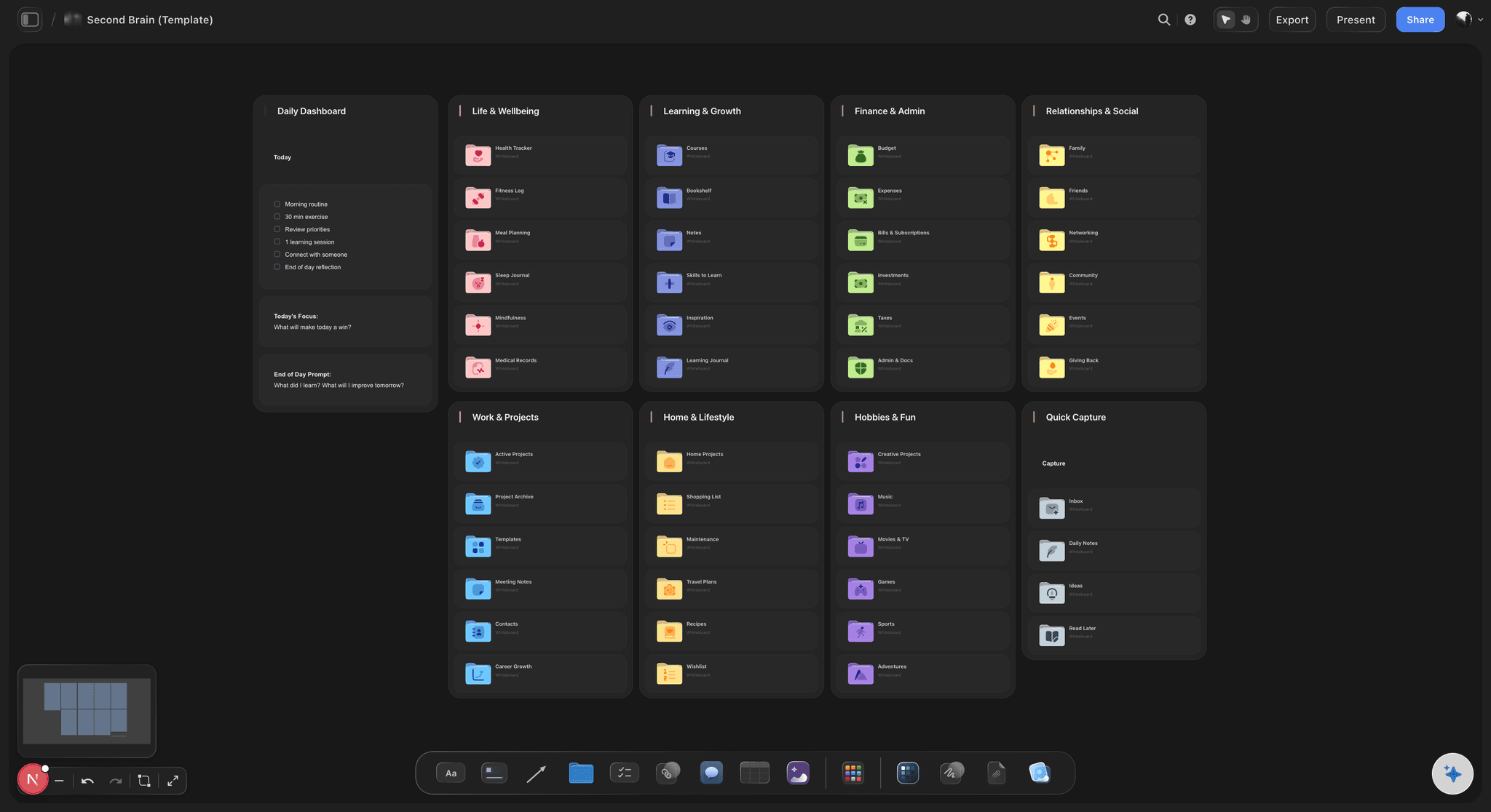
A network, not a tree
Cross-link in every direction
A concept can connect to several others, and the map can loop back on itself. The freeform canvas never forces a single hierarchy, so a system with feedback and shared parts maps the way it actually works.
See how mind maps differ →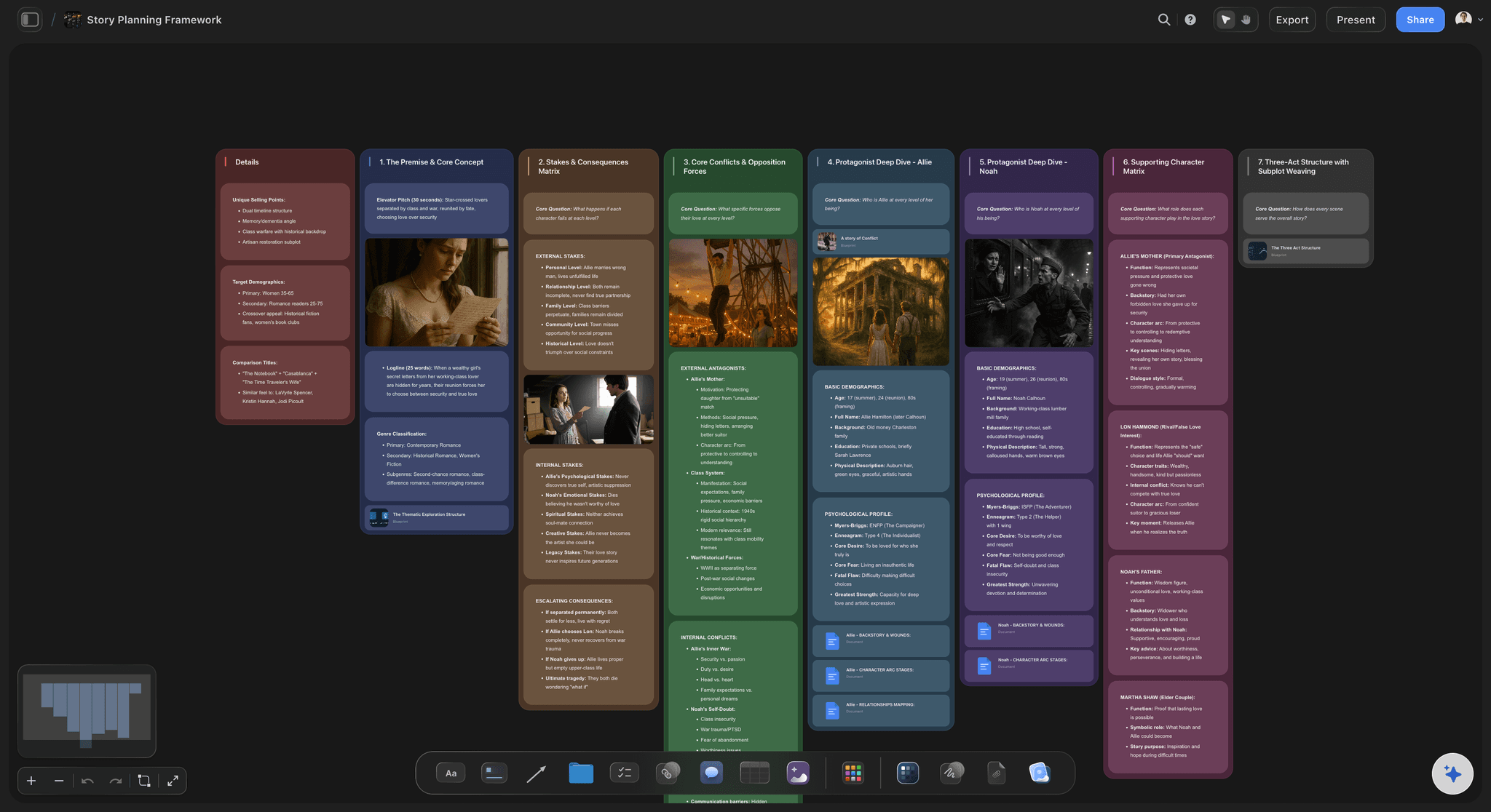
The map becomes work
Concept maps become real plans
Once the topic is mapped, turn it into a study guide, content calendar, or task board on the same canvas. The concepts carry over, so you plan from the map you built instead of starting over in another tool.
See the infinite canvas →No node cap, no time limit.
Open a canvas and start connecting concepts. Storyflow's Free plan, launching before the end of 2026, will have no object cap and no time limit, so a map of a whole system never runs into an edge or pushes you to upgrade.
Unlimited concept maps with room for every link
Basic AI usage to lay out and expand maps
Attach images, PDFs, video, and links to any concept
Share the map view-only, or invite collaborators free
Built for people with taste
Built for the way concept mappers actually work.
Connect concepts in every direction, name the relationships, and keep the whole system visible at once.
Relationships are the point
A network of labeled links
Link any concept to any other: Draw connections in any direction, including loops and shared nodes. The canvas does not force a symmetrical tree, so a real system with feedback maps honestly.
Name every relationship: Add a linking phrase to a connection so the map states how ideas relate. Read end to end, the nodes and labels form propositions, not a bag of boxes.
Group and color the clusters: Recolor cards and pull related concepts together so the sub-systems inside a big map read at a glance instead of blurring together.
AI that reads the board
AI drafts from what is already there
Lay out a starting map: Describe a topic and the AI places a full board of concept cards on the canvas, giving you a first draft of the network to relabel and reconnect.
Bring in your sources: Add up to five documents and three boards as context from the + menu, so a lecture PDF, paper, or brief shapes the concepts the AI suggests.
Expand a thin area: Point at a corner of the map that feels sparse and ask the AI to add related concepts. It builds on the nodes you placed instead of drifting off-topic.
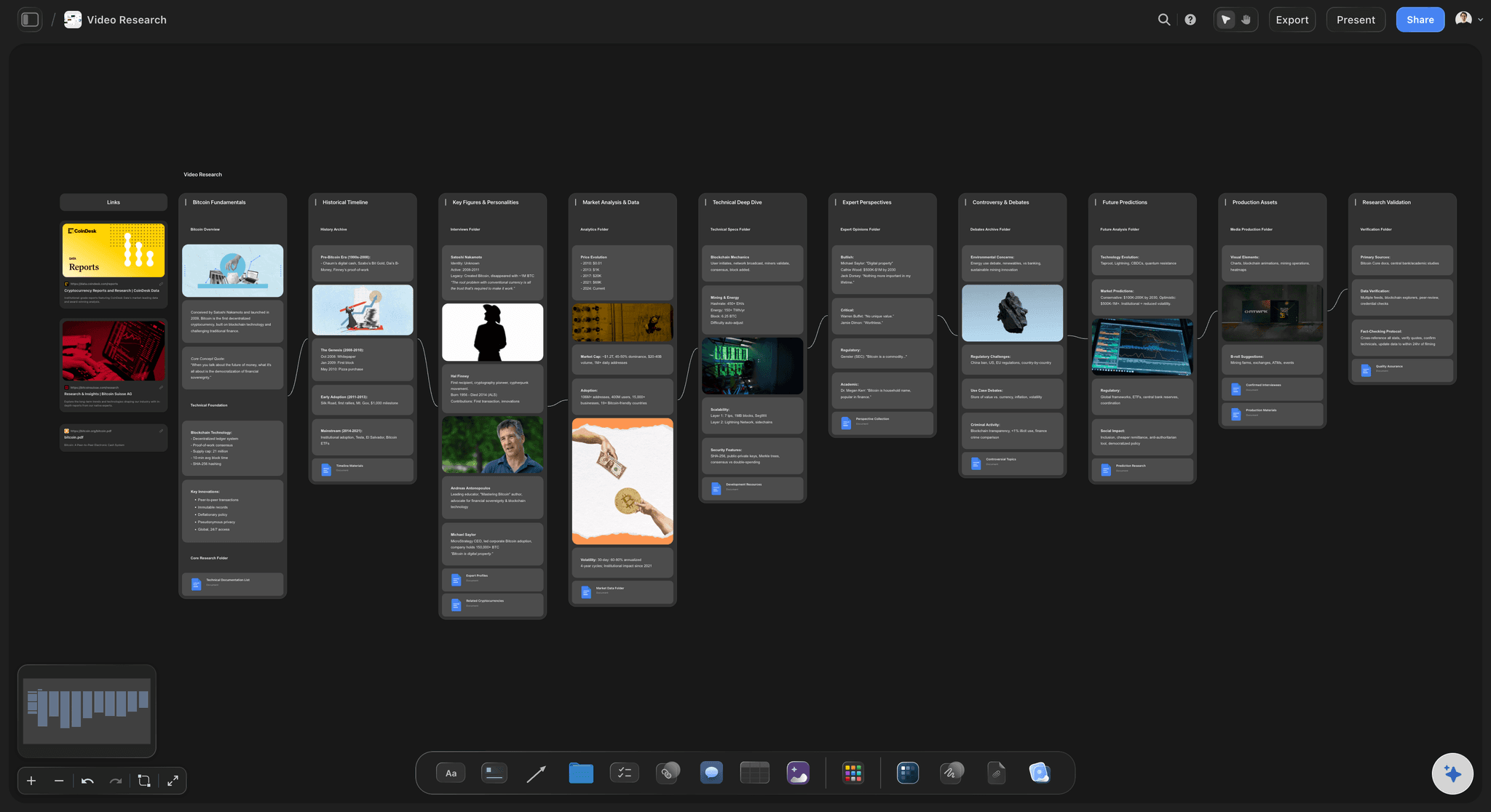
More than text on a node
Sources and notes beside every concept
Drop in anything: Images, video, GIFs, PDFs, and links sit on the canvas next to the concept they explain. The evidence lives with the map instead of behind a citation.
Frame grabs from video: Pull stills from YouTube and Vimeo straight onto the map when a diagram or clip explains a concept better than a label can.
Notes where you need them: Longer explanations live as documents on the same canvas, so the map stays scannable and the detail is one click away.
The map is step one
From concept map to finished plan
Turn concepts into real boards: Convert the map into a study guide, content calendar, or task board on the same canvas, with the AI carrying your concepts across.
Share the thinking: Invite collaborators free, or send a view-only link so a study group or reviewer can explore the whole map in the browser without an account.
Export anywhere: Need the map in a report, deck, or assignment? Export it as a clean image or a PDF in one step.
Explore templates for your project
Every template opens as a real, editable board on the infinite canvas. Pick the closest fit and make it your own.
Mind Map
Branch one central idea out into themes and sub-points, then drag the connections around until the structure makes sense.
One app instead of five
How Storyflow compares to other concept mapping tools.
Plenty of tools draw boxes and arrows. The question is whether the map reads as real relationships and turns into work.
Storyflow
Recommended
AI lays out a concept map from your canvas
Labeled links on a freeform, cross-linked canvas
Maps become study guides and plans on the same canvas
No node or object cap
Lucidchart
AI lays out a concept map from your canvas
Labeled links on a freeform, cross-linked canvas
Maps become study guides and plans on the same canvas
No node or object cap
MindMeister
AI lays out a concept map from your canvas
Labeled links on a freeform, cross-linked canvas
Maps become study guides and plans on the same canvas
No node or object cap
Miro
AI lays out a concept map from your canvas
Labeled links on a freeform, cross-linked canvas
Maps become study guides and plans on the same canvas
No node or object cap
What creators are saying
Join early creators getting structured workspaces and AI that remembers their projects
“Storyflow has sped up my workflow by at least 3x, which means more flow state and more projects I can actually ship. It truly changed the way me and my team create.”

Reilin Joey
Director & YouTuber
“One prompt gets me a structured board. But the tactics are my favorite. I run my YouTube scripts through them and my intros and retention got better. It's amazing.”

Justkay
YouTuber & Freelance Filmmaker
“I used to juggle five apps to plan a project. Now I describe what I am making and get boards, lists, and a schedule. All in one place.”

George
@fernwehchronicles
Concept mapping questions, answered.
Everything people ask about making concept maps in Storyflow.
A concept map maker lets you place concepts as nodes and connect them with labeled links that show how the ideas relate, so a whole topic reads as a set of propositions. Storyflow does this on an infinite canvas where every concept is a real card you can move, edit, and cross-link, rather than a fixed auto-arranged diagram.
A mind map is a hierarchy: one central topic with themes branching outward, best for radiating a single idea. A concept map is a network: many concepts cross-linked in several directions with labeled relationships, best for showing how a system connects. Storyflow does both, and our mind mapping page goes deeper on the branching, hierarchical mode.
Not during early access. Storyflow is paid-only right now, with plans starting at $9.99 per month. A Free plan is planned before the end of 2026, with unlimited maps, basic AI usage to lay out and expand them, 20 file uploads, and view-only sharing.
Yes, and that is what makes it a concept map. You connect any two concepts and add a linking phrase to the connection, such as causes, requires, or is part of, so the map states how ideas relate rather than just showing that they are near each other.
Both. You can start from a blank canvas and place every concept and link yourself, dragging and labeling as you go. The AI is there when you want it, to lay out a first map from a prompt or add concepts to a sparse area, but the map is always yours to reshape.
Yes. Attach images, PDFs, video, GIFs, and links to any concept, and grab frames straight from YouTube and Vimeo onto the canvas. The evidence behind a node lives right beside it instead of behind a citation, which is useful for study maps and research.
Yes. Ask the AI to turn the map into a study guide, content calendar, or task board and it builds the new board on the same canvas from the concepts you mapped. The map becomes something you can act on instead of a picture you screenshot.
Yes. Share a view-only link so a study group, class, or reviewer can explore the full map in their browser without an account, invite collaborators to build it with you, or export the map as a high-quality image or PDF for reports and assignments.
The topic makes sense once you can see how it connects.
Place your concepts, label how they relate, and turn the finished map into a plan.