
Ultra-fast storyboards: minutes, not days
A trailer is not a short film.
It is a sequence.
Lay the whole cut out as one row of cards, mark where the music turns, pin the frames you already have, and drag shots until the escalation actually escalates.


Creatives working for these brands already got early access
- Red Bull
- Canon
- Artlist
- Porsche
See how easy it is to get started
Watch a real project come together, from a blank board to a finished plan, clicked through step by step.
Start from a ready-made template
Pick a board to see what you can build, then let AI fill it in. Every template is a real, editable starting point on the same infinite canvas.

Storyboard
Lay out your shots frame by frame with images and notes, then reorder them until the sequence reads like the finished cut.
What is a trailer storyboard?
A trailer storyboard is a shot-by-shot plan for a trailer. Storyflow is an AI visual workspace that lays a trailer out on one infinite canvas: the whole cut as one row of movable cards, frames grabbed from the footage you already have, and a mark where the music turns. A trailer storyboard looks like a normal storyboard and it does a completely different job. A film storyboard describes what a scene will be when you shoot it. A trailer storyboard describes an argument you are making to a stranger who has not decided to care yet, assembled almost entirely from footage that already exists. You are not designing coverage. You are choosing which twelve seconds of two hours earn the right to be seen first.
That difference is why trailers written like short films fail. A trailer is a persuasion structure. It has to promise a genre in the first five seconds, establish a world and a stake fast enough that the audience knows what they would be buying, turn hard on a music cue, escalate without explaining, and stop on something that sticks. Nothing in that list is storytelling in the normal sense. It is closer to setting up a joke, where the whole shape exists to protect one landing.
Storyflow is an AI-native infinite canvas built for sequence problems. Describe the film and the length of trailer you need and the AI lays out a trailer structure as shot cards with the beats named. Then you pin real frames on those cards, grabbed straight from a YouTube or Vimeo cut of your own footage, drag shots into a different order to test what the escalation feels like, and mark where the music drop lands across the row. The entire trailer is visible at once instead of scrolling past you in a timeline.
A trailer that works is almost always built from six named parts: the cold open hook (the first three to five seconds, which have to state the genre and buy attention before anyone scrolls), the setup (a compressed pass at the world, the protagonist, and the stake, usually the only part of the trailer that explains anything), the turn (the music drop or the record scratch where the trailer stops introducing and starts selling, and where the pace visibly changes), the escalating montage (short shots cut to the track, each one bigger or stranger than the last, with dialogue reduced to fragments), the title cards and logo block (the studio, the talent, the title, and the date, which have their own rhythm and are the only place the trailer is allowed to be quiet), and the button or stinger (a last laugh, a last scare, or a last line after the title, which is what people quote to their friends). Storyflow keeps all six visible on one canvas, which is what makes it obvious when the turn lands too late or the montage never actually escalates.
Ultra fast from brief to board
From a finished film to a trailer someone will finish watching.
No panel database to configure. Describe the piece, pull your frames, and start moving shots.
01
Open a canvas
Sign up in seconds. No download. Your infinite trailer canvas opens in the browser.
02
Lay out the trailer structure
Describe the film, the tone, and the cut length. The AI lays out a trailer skeleton with the cold open, the setup, the turn, the montage, the title block, and the button already named, so you are placing shots rather than inventing a shape.
03
Pull your frames onto the cards
Grab frames straight from a YouTube or Vimeo cut of your footage, drop in stills and screen grabs, or sketch a shot you have not filmed yet. Each card becomes a real image instead of a description of one.
04
Reorder until it escalates
Mark where the music drop lands across the row, then drag shots until every one after the turn is bigger than the one before it. Share a view-only link with the director or the marketing lead, or export the board as a PDF for the edit.
The whole trailer, visible at once.
Sequence, rhythm, and the frames you already have, on one infinite canvas.
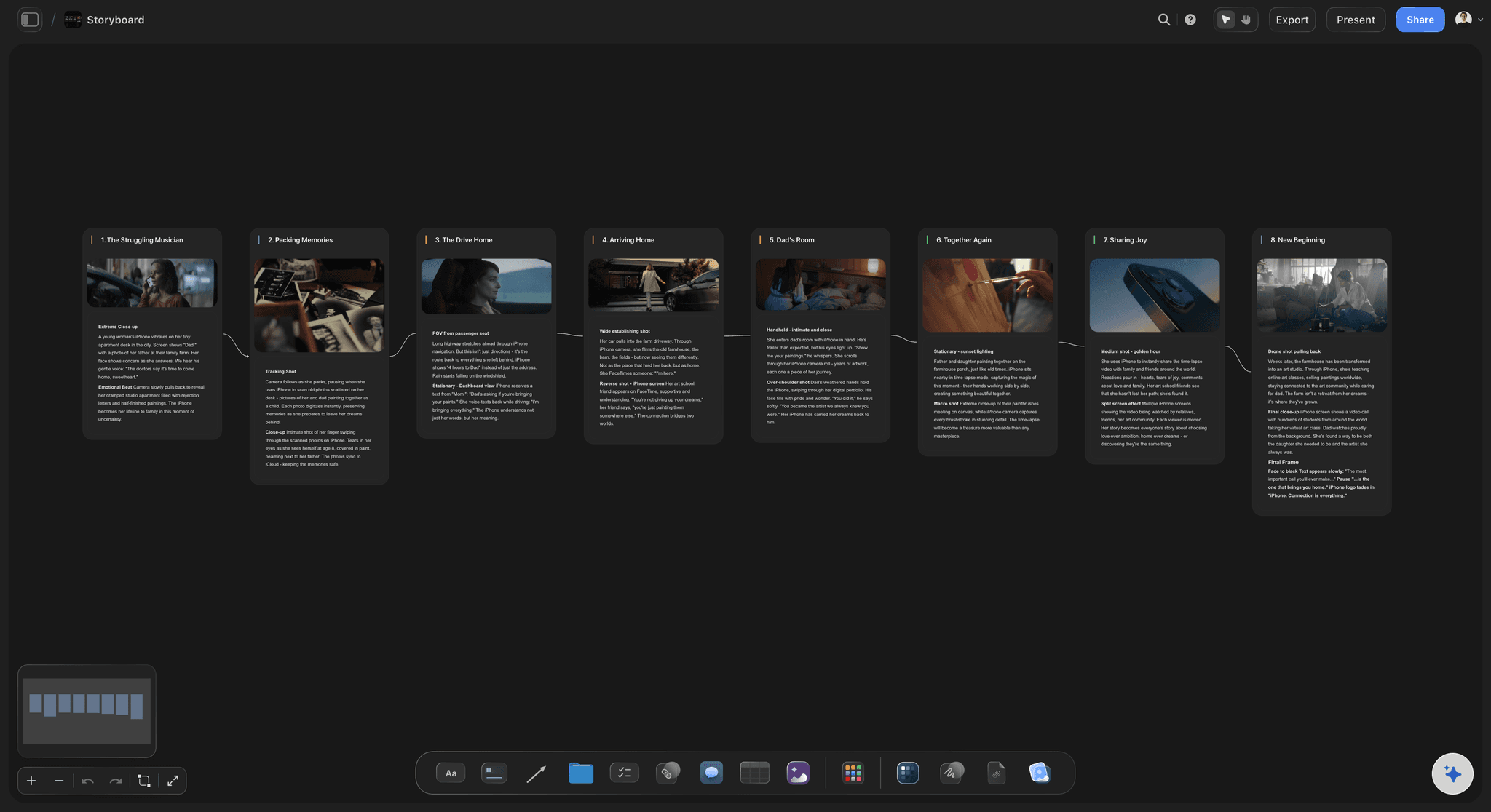
AI lays out the trailer structure from a prompt
Start from a shape, not a blank row
Describe the film and the cut length and the AI names the beats for you: hook, setup, turn, montage, titles, button. Arguing with a structure is much faster than inventing one, and it stops you from writing a three minute summary by accident.
See the AI storyboard generator →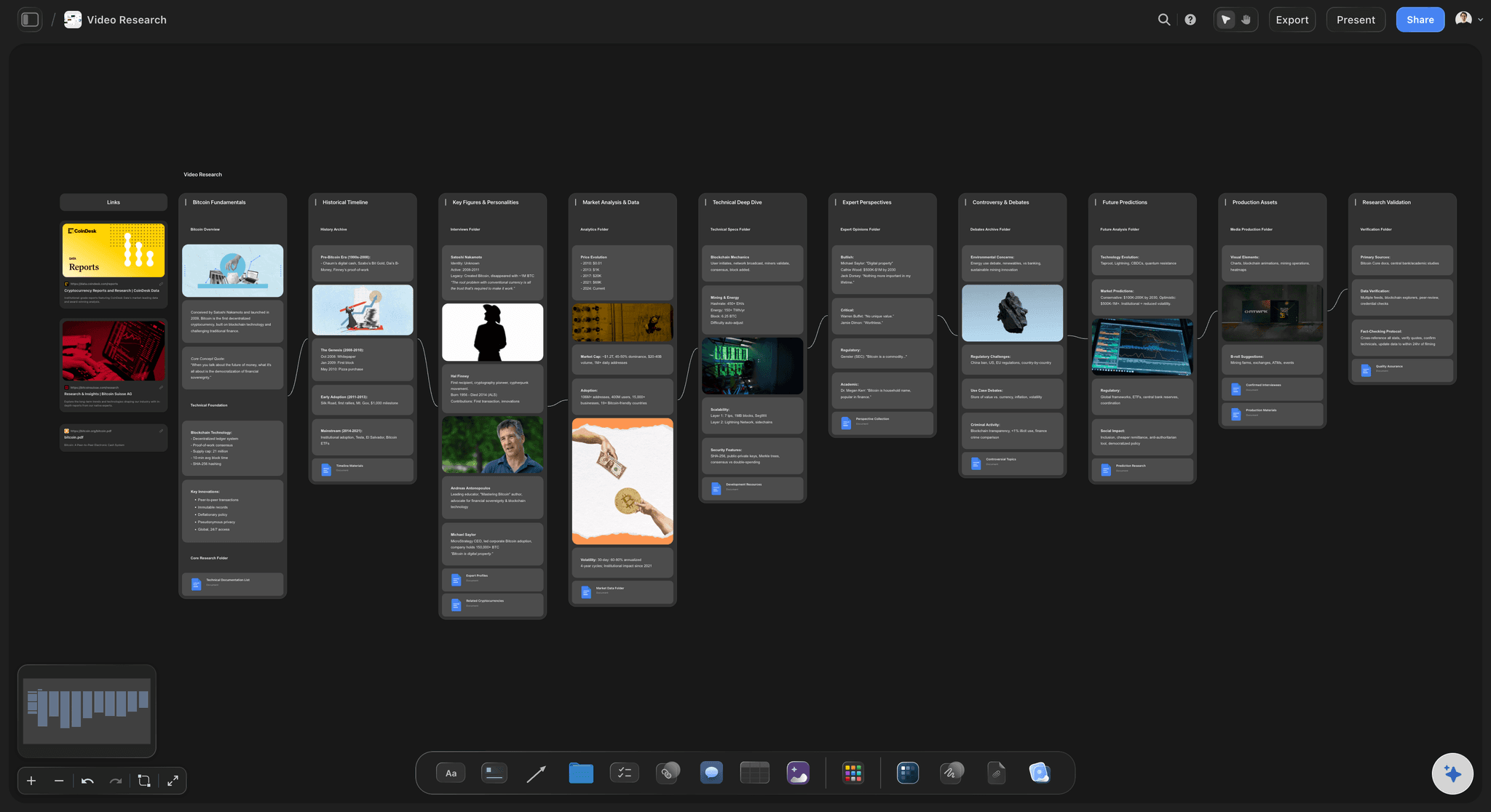
Grab frames from YouTube and Vimeo straight onto the board
Storyboard with the footage you actually have
Trailers are cut from material that already exists. Pull frames from a YouTube or Vimeo cut of your own film and pin them to the cards, so the board is made of real shots instead of stick figures approximating them.
Explore the storyboard maker →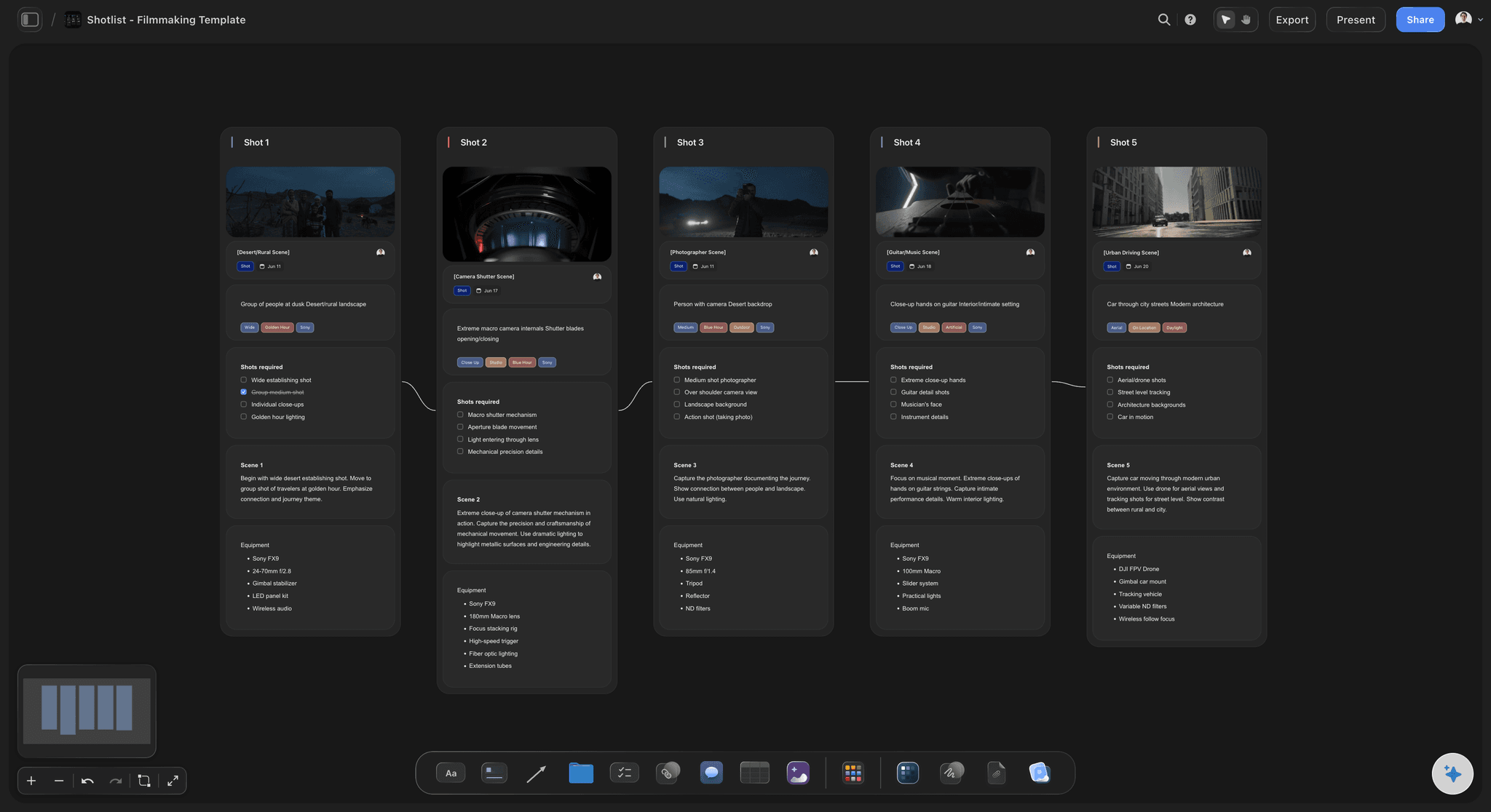
Mark the music beat across the row of shots
Cut to the track, on the board
A trailer is built to its music, not to its plot. Mark the drop, the stabs, and the silence across the canvas above the shots, and you can see whether your biggest image is landing on the beat or two shots after it.
See how filmmakers plan visually →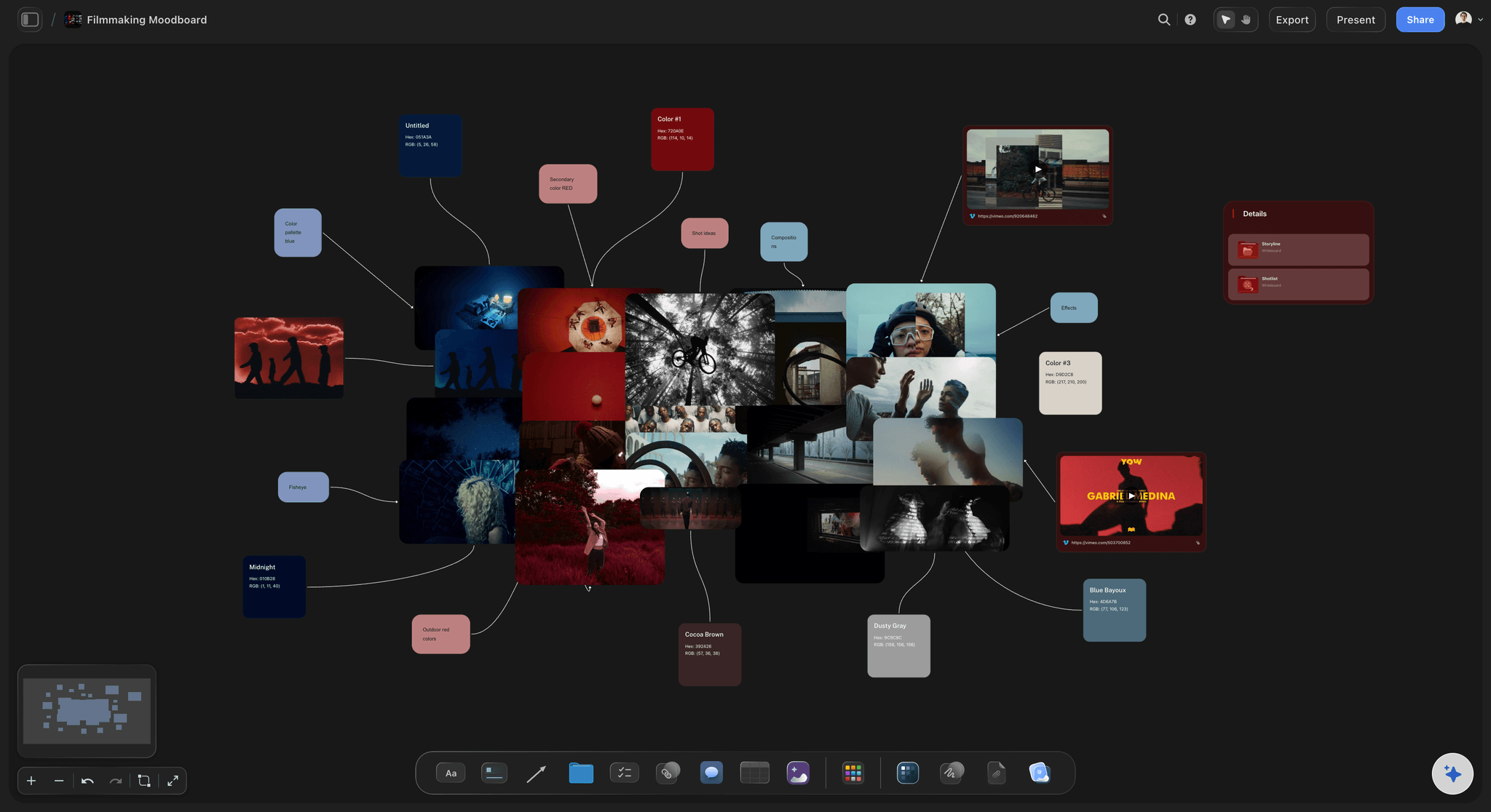
Tone references and money shots on the same canvas
Keep the pitch beside the plan
Pin the trailers you are chasing, the track you licensed, the key art, and the three money shots you are allowed to spend right beside the cut. When a producer asks what this is supposed to feel like, the answer is on the board.
Build a film lookbook →Unlimited boards. No object cap.
Open a canvas, describe the film, and lay the trailer out. Storyflow is paid-only during early access, with plans from $9.99 a month, and a Free plan launches before the end of 2026.
Unlimited trailer boards on an infinite canvas
Basic AI usage to lay out trailer structures from prompts
3 starter frameworks built in
Share view-only links with the director or the marketing team
Built for people with taste
Sequence and rhythm are spatial problems.
A timeline shows you eight seconds at a time. A trailer only makes sense when you can see all ninety at once.
Hook, setup, turn, montage, titles, button
Build the persuasion structure, not a summary
The cold open earns everything else: The first three to five seconds decide whether the rest gets watched, and on a feed they decide it before any dialogue lands. Put your strongest image or your strangest sound first and state the genre immediately. A slow logo build in front of the hook is the most common way a good trailer dies.
The turn is a music event: The trailer stops introducing and starts selling on a drop, a stab, or a hard silence. Mark that moment across the board and check what shot sits on it. If the turn is at the halfway point of a ninety second cut you are usually about fifteen seconds late.
The montage has to actually escalate: Every shot after the turn should be bigger, faster, or stranger than the one before. Laid out as a row you can see the escalation flatten, which is the failure nobody catches inside a timeline because you never see the whole shape at once.
Spend the money shots deliberately: You have two or three images that are genuinely worth the ticket. Mark them on the board and place them on purpose, usually one late in the setup and one on the drop. Burning all three in the first twenty seconds leaves you nothing to end on.
Reordering is the whole job
Test an order in seconds instead of an afternoon
Drag a shot and see the shape change: Most trailer problems are order problems. On a canvas you move a card and read the new sequence immediately, rather than rippling a timeline, rebalancing audio, and rendering a preview to find out that it was worse.
Keep the alternate cuts on the board: Park the version with the dialogue tease and the version that is pure montage side by side in their own regions of the canvas. Comparing two orders next to each other is a real conversation. Describing them in an email is not.
Version for platform without starting over: The ninety second cut, the thirty second spot, and the vertical fifteen are the same shots at different densities. Lay them as parallel rows and you can see exactly which shot survives all three, which is usually the one that belongs in the poster.
The board reads at a glance: Zoom out and a producer, a marketing lead, or a sales agent can take in the entire trailer in about four seconds, which is roughly how long they will give it anyway.
Existing footage, grabbed frames, and shots you still owe
Work from what you have, and mark what you do not
Grab frames from YouTube and Vimeo: Pull frames directly from an online cut of your own film or from reference material and pin them onto the shot cards. This is the difference between a trailer board that reflects the actual movie and one that reflects what you remember of it.
Flag the shots that do not exist yet: Proof-of-concept and pitch trailers are made mostly of things you have not filmed. Mark those cards clearly, sketch them with the pen tool, and the board doubles as the shoot list for the pickup day.
Keep the rights and clearance notes with the shot: Pin the note about the unlicensed track, the extra who never signed, or the brand visible in frame directly on the card it affects. Clearance problems found on the board are cheap. Found in the final mix, they are not.
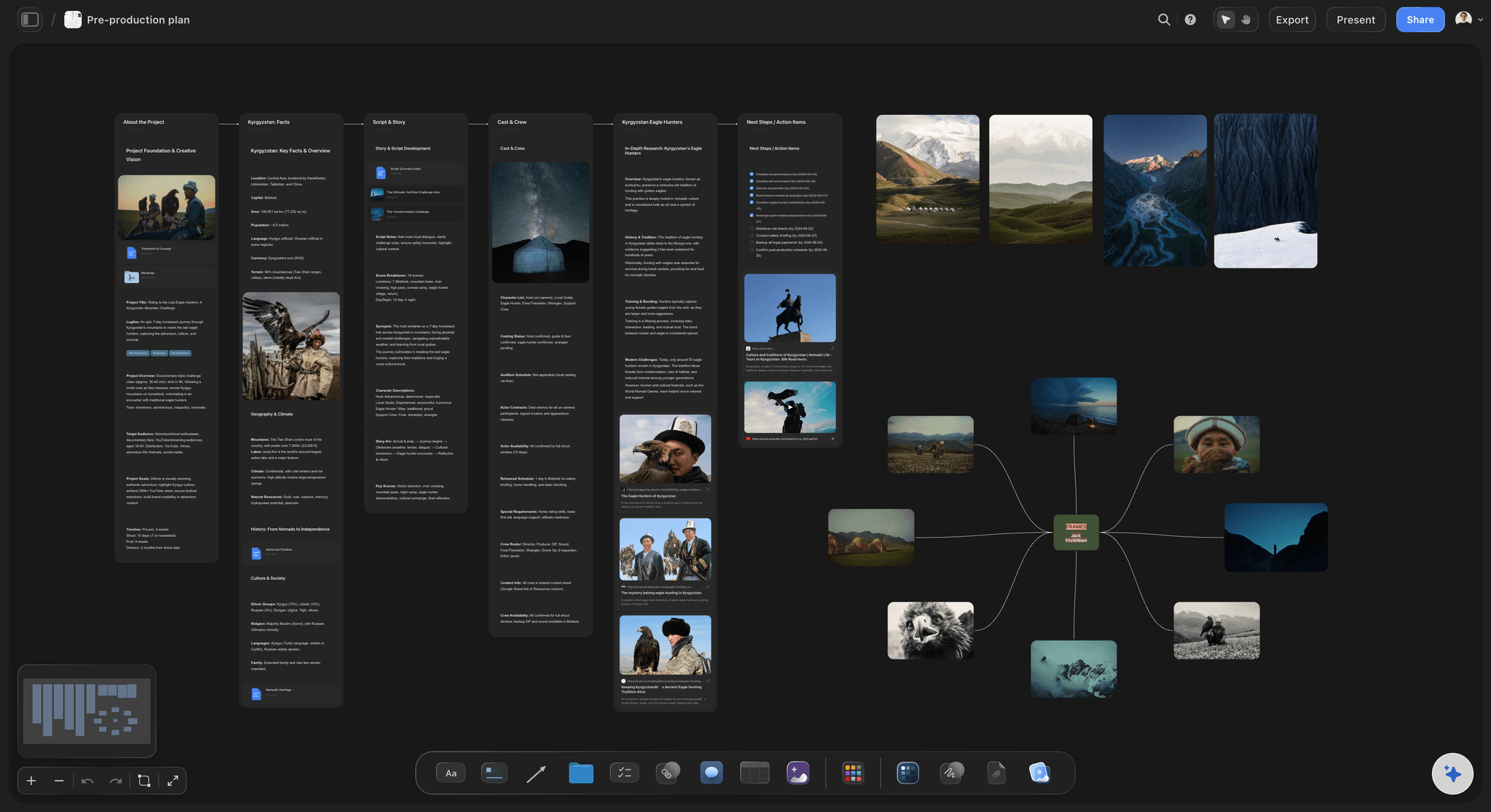
Everything the cut draws on, in one place: Drag in stills, scripts, PDFs, key art, and links. Reference trailers you are chasing sit beside your own row, which makes tone notes concrete instead of adjectival.
Hand it to the editor, the director, or the client
Approve the sequence before anyone opens an NLE
View-only links, no account required: Send a link and the director, the producer, or the distributor opens the whole trailer in a browser. Getting agreement on the order before the edit starts saves the version of this project where you recut it four times.
Comments on the shot they are about: Feedback lands on the card rather than in a thread of timecodes. Anyone a paid member invites to a board joins free today, so the whole trailer team can work on one canvas.
Export for the edit suite: Export the board as a high-quality image or PDF and keep it open on the second monitor while you cut. Storyflow plans the trailer, and Premiere, Resolve, or Avid cuts it. The board is the map, not the timeline.
Explore templates for your project
Every template opens as a real, editable board on the infinite canvas. Pick the closest fit and make it your own.
Storyboard
Lay out your shots frame by frame with images and notes, then reorder them until the sequence reads like the finished cut.
One app instead of five
Storyflow vs Boords, StoryboardThat, and Adobe.
Every tool here is genuinely good at something, and one of them is where you will actually cut the trailer. Here is the honest split.
Storyflow
Recommended
Whole trailer visible at once on an infinite canvas
Grab frames from YouTube and Vimeo onto the board
AI lays out the trailer structure from a prompt
Numbered client panels with a formal approval round
Full NLE for cutting and finishing the trailer
Runs in the browser, nothing to install
Boords
Whole trailer visible at once on an infinite canvas
Grab frames from YouTube and Vimeo onto the board
AI lays out the trailer structure from a prompt
Numbered client panels with a formal approval round
Full NLE for cutting and finishing the trailer
Runs in the browser, nothing to install
StoryboardThat
Whole trailer visible at once on an infinite canvas
Grab frames from YouTube and Vimeo onto the board
AI lays out the trailer structure from a prompt
Numbered client panels with a formal approval round
Full NLE for cutting and finishing the trailer
Runs in the browser, nothing to install
Adobe
Whole trailer visible at once on an infinite canvas
Grab frames from YouTube and Vimeo onto the board
AI lays out the trailer structure from a prompt
Numbered client panels with a formal approval round
Full NLE for cutting and finishing the trailer
Runs in the browser, nothing to install
What creators are saying
Join early creators getting structured workspaces and AI that remembers their projects
“Storyflow has sped up my workflow by at least 3x, which means more flow state and more projects I can actually ship. It truly changed the way me and my team create.”

Reilin Joey
Director & YouTuber
“One prompt gets me a structured board. But the tactics are my favorite. I run my YouTube scripts through them and my intros and retention got better. It's amazing.”

Justkay
YouTuber & Freelance Filmmaker
“I used to juggle five apps to plan a project. Now I describe what I am making and get boards, lists, and a schedule. All in one place.”

George
@fernwehchronicles
Trailer storyboarding questions, answered.
Structure, length, teasers, music, and what a board can and cannot do for a cut.
A trailer storyboard is a shot-by-shot plan for a trailer, laid out as a single sequence rather than as scenes. Unlike a film storyboard, which describes coverage you are about to shoot, a trailer storyboard is usually assembled from footage that already exists, so each card holds a real frame pulled from the cut. Its job is to make the persuasion structure visible: where the hook sits, where the music turns, how the montage escalates, where the title cards break the rhythm, and what the last image is.
Storyflow lays the whole trailer out where you can see it at once: one row of cards on an infinite canvas, with frames grabbed from YouTube and Vimeo pinned in place. Its AI lays out the trailer structure from a prompt, and you drag shots until the order works. Boords still gives you numbered client panels with a formal approval round, and Adobe still has the full NLE for cutting and finishing the trailer.
The theatrical convention is around two minutes and thirty seconds, and most studio trailers land between two minutes and two thirty. Online, shorter almost always wins: ninety seconds is a comfortable full trailer, thirty seconds is the standard spot, and fifteen to twenty seconds is the vertical social cut. Teasers usually run sixty to ninety seconds and sometimes far less. The honest rule is that length is downstream of how many money shots you actually have. If you have three, a two minute trailer will feel padded no matter how well you cut it.
A teaser sells that the thing exists. A trailer sells what it is. A teaser usually runs under ninety seconds, withholds the plot almost entirely, leans on tone, a single image, and a date, and often appears many months out. A full trailer takes on an obligation the teaser does not: it has to establish a world, a protagonist, and a stake clearly enough that a stranger knows what they would be buying. That is why the setup section exists in a trailer and barely exists in a teaser, and why teasers can get away with being pure atmosphere.
No, and for trailers it matters less than for any other kind of board. Most trailer shots already exist as footage, so instead of drawing you grab frames from a YouTube or Vimeo cut of your own film and pin them onto the cards. For a proof-of-concept or pitch trailer where the shots have not been filmed, a rough pen-tool sketch or a reference still from another film communicates the intent perfectly well. The value of the board is the order and the rhythm, not the rendering, and a beautifully drawn trailer in the wrong order is still the wrong trailer.
The workhorse convention is three movements. First, a cold open hook of three to five seconds that states the genre and buys attention, followed by a setup that compresses the world, the protagonist, and the stake. Second, a turn, almost always on a music drop, where the trailer stops introducing and starts selling and the cutting pace visibly changes. Third, an escalating montage of short shots cut to the track, broken by title cards and the logo block, ending on a button or stinger. Lay those parts out as one row and the failures are easy to spot.
No. The hard rule of trailer cutting is that you do not spend the third act. Almost every trailer people complain about spoiling the film did the same thing: it reached into the climax for its biggest images because the second act did not have any. If your escalation only works with third-act footage, the real problem is that your money shots are all at the end, and the fix is finding tension in setup material rather than raiding the finale. Mark third-act shots on the board so you can see at a glance how much you are spending.
Pick the track first, because the track is the structure. Lay the shot cards out as a row and mark the music events above them: the entry, the first stab, the drop, any breakdown, and the silence before the final hit. Then place shots against those marks rather than against plot logic. Your biggest image belongs on the drop, not two shots after it. Title cards belong in the quiet. This is the reason trailer boards are laid out horizontally with the beat running across them: the alignment is the whole craft.
Yes, and it is one of the strongest uses of the format. A proof-of-concept or pitch trailer is often how an unmade film gets financed, and storyboarding it forces you to decide which images actually sell the project. Sketch the cards you cannot fill, pull reference frames from films with the tone you are chasing, and mark clearly which shots exist and which do not. The finished board then works twice, first as the pitch and second as the shoot plan for the day you go and film the missing shots.
No. A shot list is an inventory organised for production efficiency, usually grouped by location or setup so a crew can shoot it in a sensible order. A trailer storyboard is a sequence organised for an audience, where the order is the entire point and cannot be rearranged for convenience. In practice you want both: the board decides what the trailer is, and a pull list tells the assistant editor which timecodes to hand you. Storyflow can hold both on the same canvas so they never drift apart.
No, and it should not. The trailer is cut in an NLE, where the frame-accurate timing, the audio work, the sound design, and the finish actually happen. Storyflow is where you decide what the trailer is before you spend a week on the timeline: which shots, in what order, against which music beats, with what withheld. Editors typically build the board, get the sequence approved by the director or the client, export it as a PDF, and keep it open on a second monitor while they cut in Premiere, Resolve, or Avid.
Not during early access. Storyflow is paid-only right now, with plans starting at $9.99 a month, and a Free plan for solo use launches before the end of 2026. Anyone a paid member invites to a board joins free today, so a director, a producer, or an assistant editor can join a trailer board without paying. If you need a free option this minute, a physical wall of printed frames still works, and it is genuinely how a lot of trailer houses learned to see sequence in the first place.
Boords is genuinely better if what you need is a numbered, client-facing panel document with a formal approval round and comment history on each version. That is a real workflow and it owns it. Storyflow is built around the thing trailers actually turn on, which is sequence and rhythm: an infinite canvas where the whole cut is visible at once, cards you drag to test a new order, grabbed frames from existing YouTube and Vimeo footage, and the music beat marked across the row. Pick by whether your bottleneck is approval or arrangement.
Lay the whole trailer out and find the shot that is in the wrong place.
Open a canvas, describe the film, and let AI lay out the trailer structure. No download.