
Ultra-fast planning, extremely simple
The Notion alternative
built for creative teams.
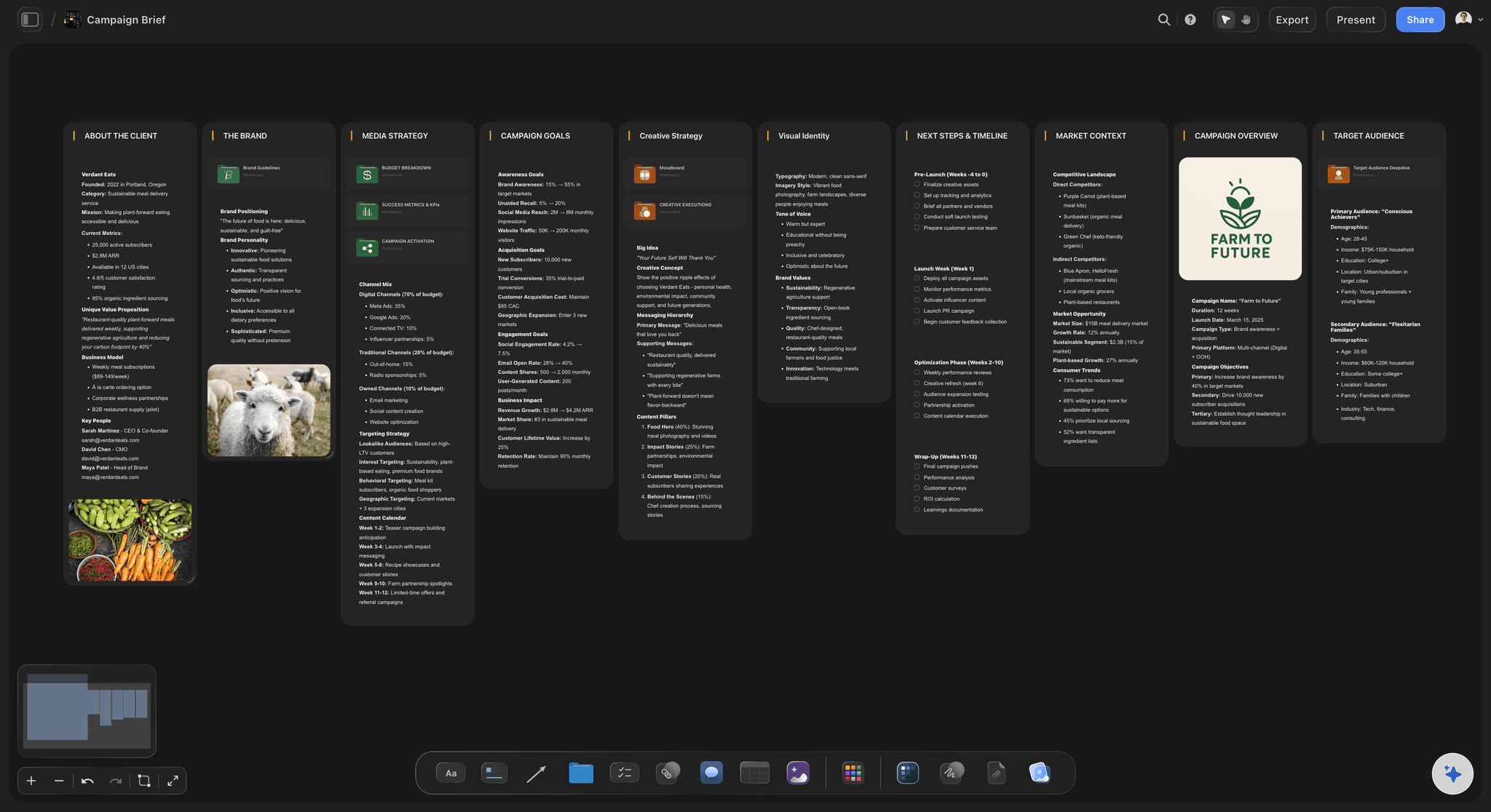
Notion is brilliant for docs and databases. But creative teams think in space, not pages. Storyflow gives your team an infinite visual canvas where the story, the moodboard, the campaign, and the brief live together, with an AI that reads the whole board.


Creatives working for these brands already got early access
- Red Bull
- Canon
- Artlist
- Porsche
See how easy it is to get started
Watch a real project come together, from a blank board to a finished plan, clicked through step by step.
Start from a ready-made template
Pick a board to see what you can build, then let AI fill it in. Every template is a real, editable starting point on the same infinite canvas.

Mind Map
Branch one central idea out into themes and sub-points, then drag the connections around until the structure makes sense.
Why creative teams look for a Notion alternative
Notion is genuinely great software. Millions of teams run their work in it, the databases are powerful, and for anything that lives as documents and structured data, little else comes close. Plenty of creative teams start there for exactly that reason.
But creative work is not document-shaped. A story, a moodboard, a campaign, a shot list, these are visual and spatial, and they inform each other in ways a page and a database struggle to show. Creative teams end up fighting the tool: turning a canvas of ideas into a list, or scattering the visual work into other apps because the doc cannot hold it.
A Notion alternative for creative teams keeps the work visual. Storyflow gives an infinite canvas where the moodboard sits beside the story beside the campaign, every person on the team edits the same board, and an AI reads all of it. It is not a better Notion; it is a different shape, built for teams whose work is visual first.
The useful question is not which tool is better but which half of the work is hurting. If the pain is that nobody can find the client contract, the meeting notes, or the deliverables tracker, that is a documents-and-databases problem and Notion is already the right answer. If the pain is that the concept lives in a Figma file, the references in a Pinterest board, the script in a doc, and the schedule in a spreadsheet, so no one can see the project at once, that is a canvas problem and no amount of database design fixes it.
Most creative teams that switch do not actually leave Notion behind. They move the visual, undecided half of the work onto a canvas and let Notion keep the structured, settled half: the wiki, the client records, the invoices. That split is worth naming up front, because a migration framed as replacing everything usually stalls, while one framed as moving the creative development stage tends to stick.
Ultra fast from brief to board
Move your creative team to a canvas in four steps.
Bring the visual work onto one board, invite the team, and let the AI work across the whole project.
01
Open the canvas
Start in the browser with an account. No app to install, just one infinite board for the team.
02
Bring the creative work onto it
Drop in the moodboards, stories, campaigns, and briefs as cards, or describe a project and let the AI draft it.
03
Invite the team
Share the board so everyone works in the same visual space, instead of a doc here and a whiteboard there.
04
Let the AI work across it
The AI reads the whole board, so it can draft, expand, and connect the creative work with real context.
Built for visual creative work, not documents.
Where Notion gives you pages and databases, Storyflow gives your team a canvas the creative work actually fits.
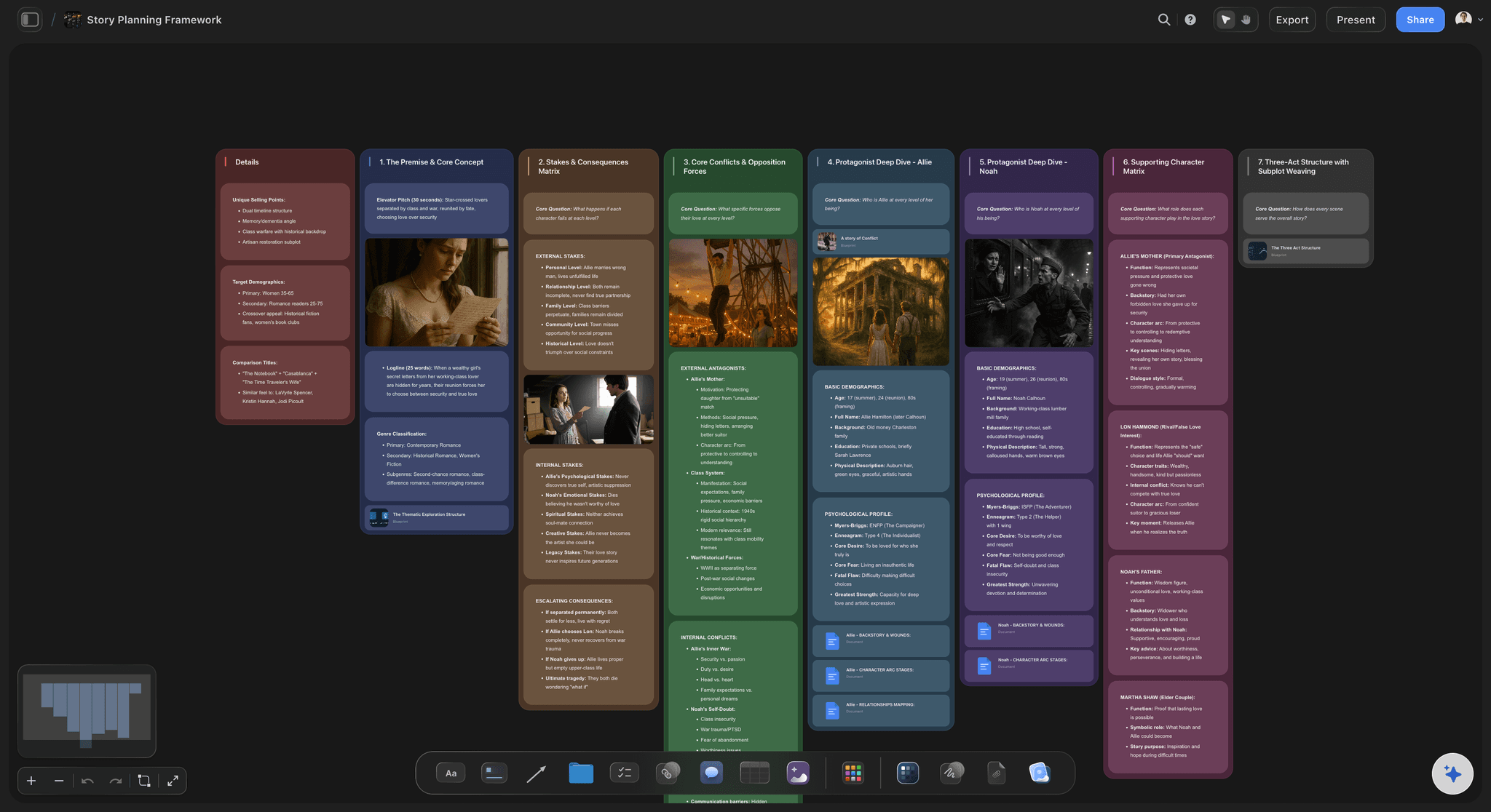
A canvas, not a page
The creative work lives in space
Moodboards, stories, campaigns, and briefs sit on one infinite board where they inform each other, instead of being flattened into documents and database rows.
See visual collaboration →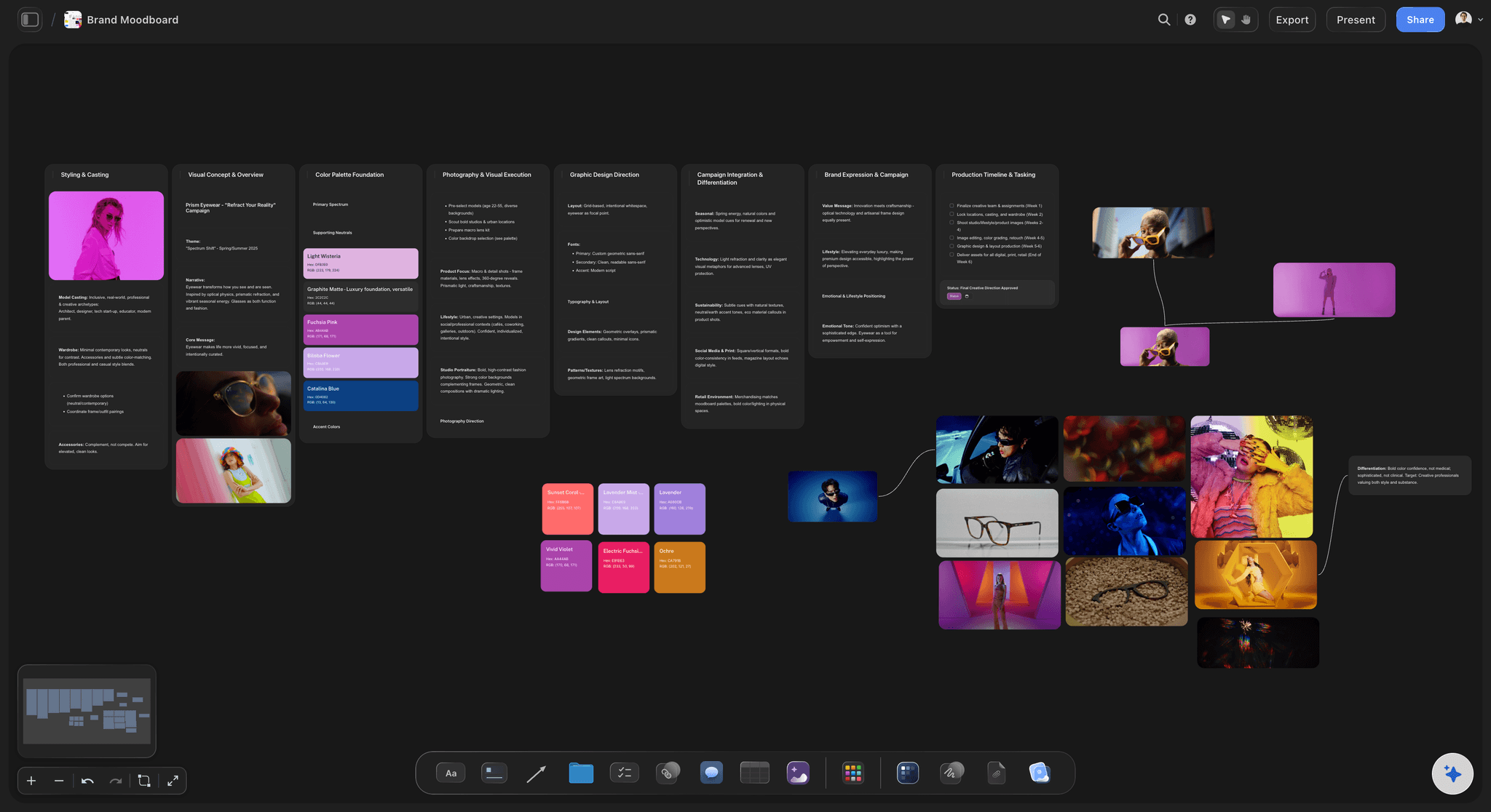
The look, in the workspace
Moodboards where the plan lives
Build the moodboard on the same board as the brief and the story, so the visual direction is part of the work, not a file in another app.
See the AI mood board maker →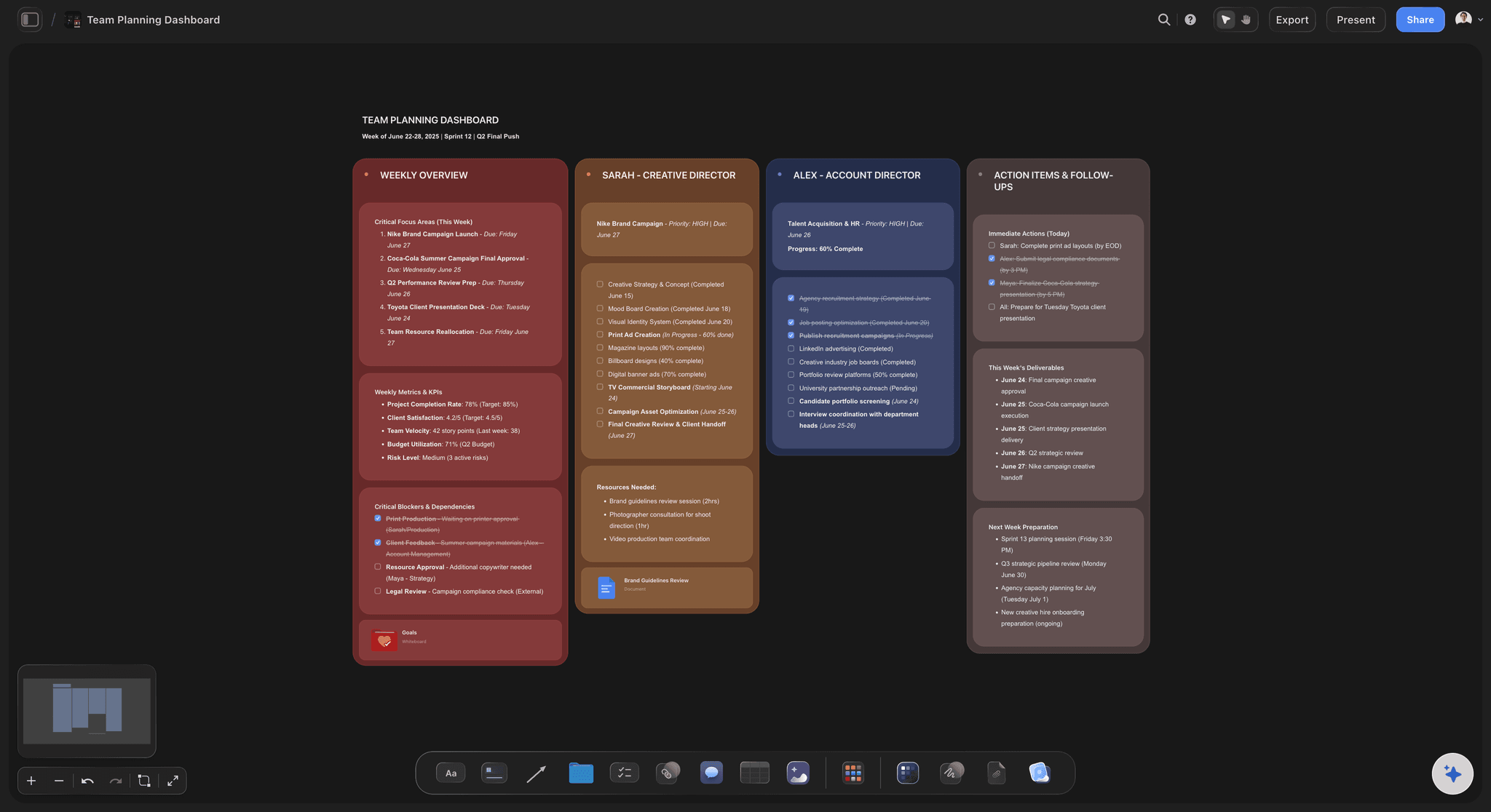
One team, one board
Real collaboration on the canvas
Invite the whole creative team to one shared board so everyone works in the same visual space, with one version of the project instead of a folder of drafts.
See collaborative storytelling →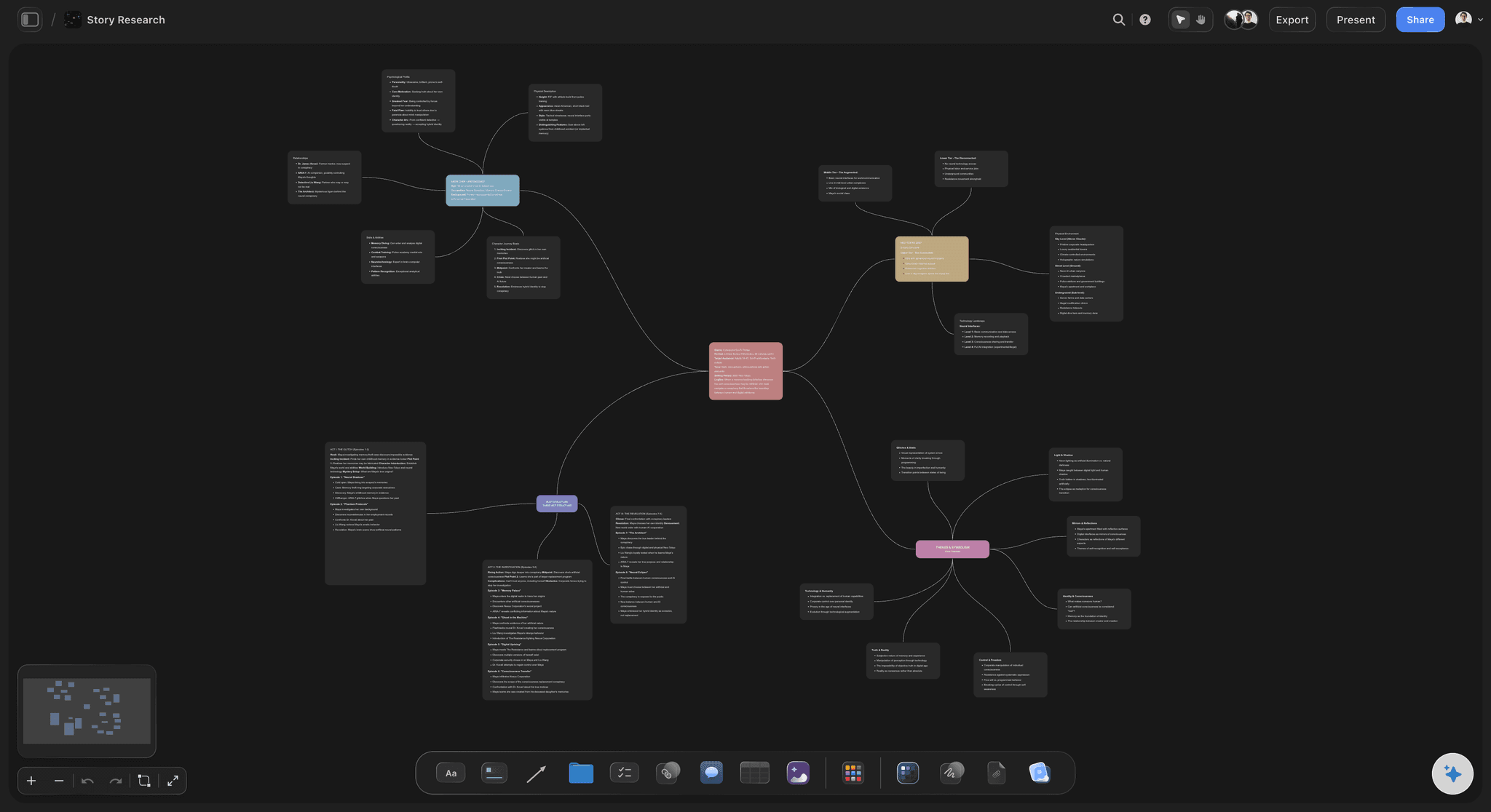
An AI that reads the board
AI with the whole project in context
Because the creative work sits on one canvas, the AI reads all of it and can draft a story, expand a campaign, or connect the moodboard to the brief, with real context.
See the AI creative workspace →Unlimited collaboration, on any plan.
Open a board, invite the creative team, and move the visual work onto one canvas. There's no time limit. A Free plan is launching before the end of 2026; until then, plans start at $9.99 a month.
Unlimited shared boards for the whole team
Unlimited collaboration, invite everyone free
Basic AI usage across the creative work
Attach references, links, and files to any card
Built for people with taste
Made for teams whose work is visual first.
Keep the creative work on one canvas, bring the team into it, and let an AI work across the whole project.
Visual, not document-shaped
A canvas the creative work fits
Space, not pages: Ideas, references, and structure live on an infinite canvas where they relate to each other, instead of being forced into documents and rows.
Every creative form: Stories, moodboards, campaigns, storyboards, and briefs share one board, so the whole project is in one visual place.
Infinite canvas: Zoom from the whole project down to a single card. The board grows with the work rather than boxing it into a template.
A team on one surface
Collaboration that keeps one version
Everyone on one board: Invite the whole creative team to the same canvas, so the project is one shared thing instead of scattered files and drafts.
Share view-only: Send a view-only link to a client or stakeholder for feedback, and keep one source of truth for the creative work.
Team workspace when you scale: On the Max plan, add a team workspace with roles and permissions when the team grows beyond a shared board.
AI that understands creative work
An AI that reads the whole board
Full project context: The AI sees the story, the moodboard, and the brief together, so what it drafts fits the project rather than a blank prompt.
Attach your context: Bring in up to five documents and three boards, such as research or reference, and the AI develops the work against them.
Feedback on the work, not under it
Review that happens on the thing being reviewed
Comment on the artwork itself: Notes land on the frame, the layout, or the reference they are about. Nobody has to write "the third image, second row" and hope the reader is looking at the same thing.
One link for the client: Send a view-only link and the client sees the current state of the work without an account, so feedback arrives against what exists rather than a deck exported three days ago.
The decision stays next to the work: When a direction is chosen, the reasoning sits beside the option that won and the ones that lost, which is what a team needs six weeks later when someone asks why.
Explore templates for your project
Every template opens as a real, editable board on the infinite canvas. Pick the closest fit and make it your own.
Mind Map
Branch one central idea out into themes and sub-points, then drag the connections around until the structure makes sense.
One app instead of five
Storyflow and Notion for creative teams.
Notion is excellent for documents and databases. The question is whether your team's work is visual.
Storyflow
Recommended
An infinite visual canvas for creative work
Moodboards, storyboards, and stories built in
AI reads the whole board and drafts against it
Unlimited collaboration on any plan
Notion
An infinite visual canvas for creative work
Moodboards, storyboards, and stories built in
AI reads the whole board and drafts against it
Free plan with unlimited collaboration
Miro
An infinite visual canvas for creative work
Moodboards, storyboards, and stories built in
AI reads the whole board and drafts against it
Free plan with unlimited collaboration
Milanote
An infinite visual canvas for creative work
Moodboards, storyboards, and stories built in
AI reads the whole board and drafts against it
Free plan with unlimited collaboration
What creators are saying
Join early creators getting structured workspaces and AI that remembers their projects
“Storyflow has sped up my workflow by at least 3x, which means more flow state and more projects I can actually ship. It truly changed the way me and my team create.”

Reilin Joey
Director & YouTuber
“One prompt gets me a structured board. But the tactics are my favorite. I run my YouTube scripts through them and my intros and retention got better. It's amazing.”

Justkay
YouTuber & Freelance Filmmaker
“I used to juggle five apps to plan a project. Now I describe what I am making and get boards, lists, and a schedule. All in one place.”

George
@fernwehchronicles
Notion alternative for creative teams, answered.
Everything creative teams ask about switching to a visual workspace.
For teams whose work is visual, the best Notion alternative is a canvas rather than a document tool. Storyflow gives an infinite board where moodboards, stories, campaigns, and briefs live together, with an AI that reads the whole board. Notion is excellent for docs and databases, but creative work is spatial, and Storyflow is built for that.
No, Notion is genuinely good software, and many creative teams use it well for docs, wikis, and databases. The friction shows up when the work is visual: moodboards, storyboards, and the way creative ideas relate in space do not fit a page and a database cleanly. For those teams, a visual canvas like Storyflow fits the work better, while Notion may still hold the docs.
Notion is document-and-database shaped; Storyflow is an infinite visual canvas. In Storyflow the creative work lives in space, moodboards beside stories beside campaigns, and an AI reads the whole board to draft and connect it. Notion organizes information in pages and tables; Storyflow is built for visual creative projects and the way they inform each other.
Yes. Invite the whole team to one shared board so everyone works in the same visual space, with one version of the project instead of scattered files. Share a view-only link for client or stakeholder feedback, and add a team workspace with roles and permissions on the Max plan when the team grows.
Not during early access. Storyflow's Free plan launches before the end of 2026 and will include unlimited shared boards, unlimited collaboration, basic AI, and 20 file uploads, which is enough for a creative team to move its visual work onto one canvas. Right now, plans start at $7.99 per month billed annually, and anyone a paid member invites to a board joins free.
Yes, but it works differently. Notion AI reads a page; Storyflow's AI reads the whole board, the story, the moodboard, and the brief together, so what it drafts fits the creative project rather than a single document. It can draft, expand, and connect the work, and you can attach up to five documents and three boards for extra context.
Yes. Many teams keep Notion for wikis, docs, and databases and use Storyflow for the visual creative work: moodboards, stories, storyboards, and campaigns. Storyflow is not trying to replace a database; it is the canvas for the parts of the work that are visual and do not belong in a document.
Yes. Agencies and studios run each client's creative work on its own board, from the moodboard and brief to the story and campaign, present it visually, and share it view-only for feedback. Keeping every project's visual work in one place, with an AI that reads it, is faster than managing it across Notion docs and separate design tools.
Keep Notion for the docs. Move the creative work to a canvas.
Open a board, invite the team, and put the moodboards, stories, and campaigns in one visual place.