
An ultra-fast canvas that stays calm
The Coda alternative for people
who think in space, not tables.
Coda turns a doc into an app: tables, buttons, and automations that run real workflows. Storyflow is the visual alternative for the messy, early thinking that never fits a table: an infinite canvas where you describe a project and the AI lays out a full board, and where a moodboard or brainstorm becomes a storyboard or plan on the same canvas.


Creatives working for these brands already got early access
- Red Bull
- Canon
- Artlist
- Porsche
See how easy it is to get started
Watch a real project come together, from a blank board to a finished plan, clicked through step by step.
Start from a ready-made template
Pick a board to see what you can build, then let AI fill it in. Every template is a real, editable starting point on the same infinite canvas.

Mind Map
Branch one central idea out into themes and sub-points, then drag the connections around until the structure makes sense.
What is a good Coda alternative, and who is it for?
Coda is a genuinely impressive piece of software, and it earns the praise. It takes the familiar doc and quietly turns it into an app: tables that behave like real databases, buttons that trigger actions, formulas that pull across pages, and automations that keep everything in sync. If you want a single doc that runs a workflow, tracks a pipeline, or replaces a spreadsheet and a small tool at once, Coda does that with a depth few products match, and moving away from it for that would be a step backward.
But Coda, like Notion, is a structured doc and database tool at heart. The thinking lives inside pages, tables, rows, and columns, and the power comes from giving your ideas a schema. For a lot of visual thinkers and creatives, that is exactly where the friction starts: the ideas you are still forming do not want to be rows yet, and setting up the table, the columns, and the formula gets in the way of the thought. Plenty of people build an elegant Coda doc and then realize the shape of their thinking never lived in a table to begin with.
Storyflow is the visual alternative for those people. Instead of a table, you get a truly infinite canvas where ideas live as cards you can see all at once. Instead of building a schema before you can start, you describe what you are working on and the AI lays out a full board to react to. And instead of a doc that stays a doc, a mind map or moodboard turns into a storyboard, content calendar, or campaign plan on the same canvas. It is not a better Coda for building doc-apps. It is a different tool for the visual thinking that happens before the structure exists.
Ultra fast from brief to board
Trade the blank table for a filled board in four steps.
You bring the idea. The AI lays out the first board, so you are shaping something instead of designing a schema.
01
Open a canvas
Start in the browser. No app to install, just an infinite canvas instead of an empty table waiting for columns.
02
Describe what you are working on
One sentence is enough: a content plan for a channel, a moodboard for a brand, a strategy map for a launch, the outline of a story.
03
AI lays out the board
The AI reads your current canvas and lays out a board of connected cards: sections, notes, and ideas grouped in space, so you start from a real draft instead of an empty row.
04
Arrange it, then turn it into a plan
Drag and recolor cards, drop in images and PDFs, grab frames from video, then turn the board into a storyboard or plan, share a view-only link, or export as image or PDF.
For the thinking that never fit a Coda table.
Keep Coda for the doc-apps and databases it runs so well. Bring the visual, spatial, AI-filled thinking here.
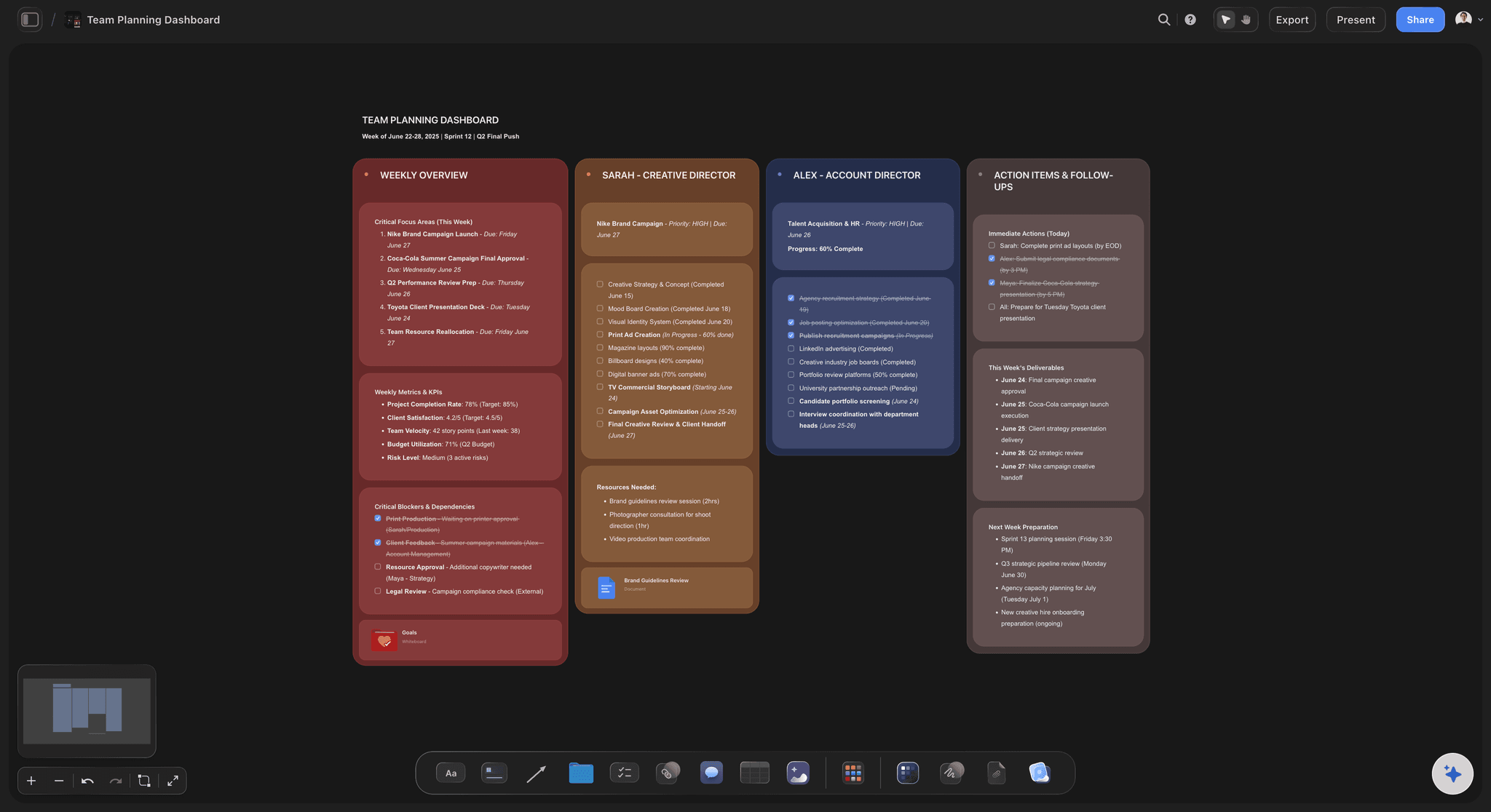
A whole board from one prompt
AI lays out the board, you shape it
Coda AI works inside a doc and its tables. Describe a project to Storyflow and the AI lays out a full board of connected cards on the canvas, so ideation starts with something to react to instead of a schema to design.
See the AI whiteboard →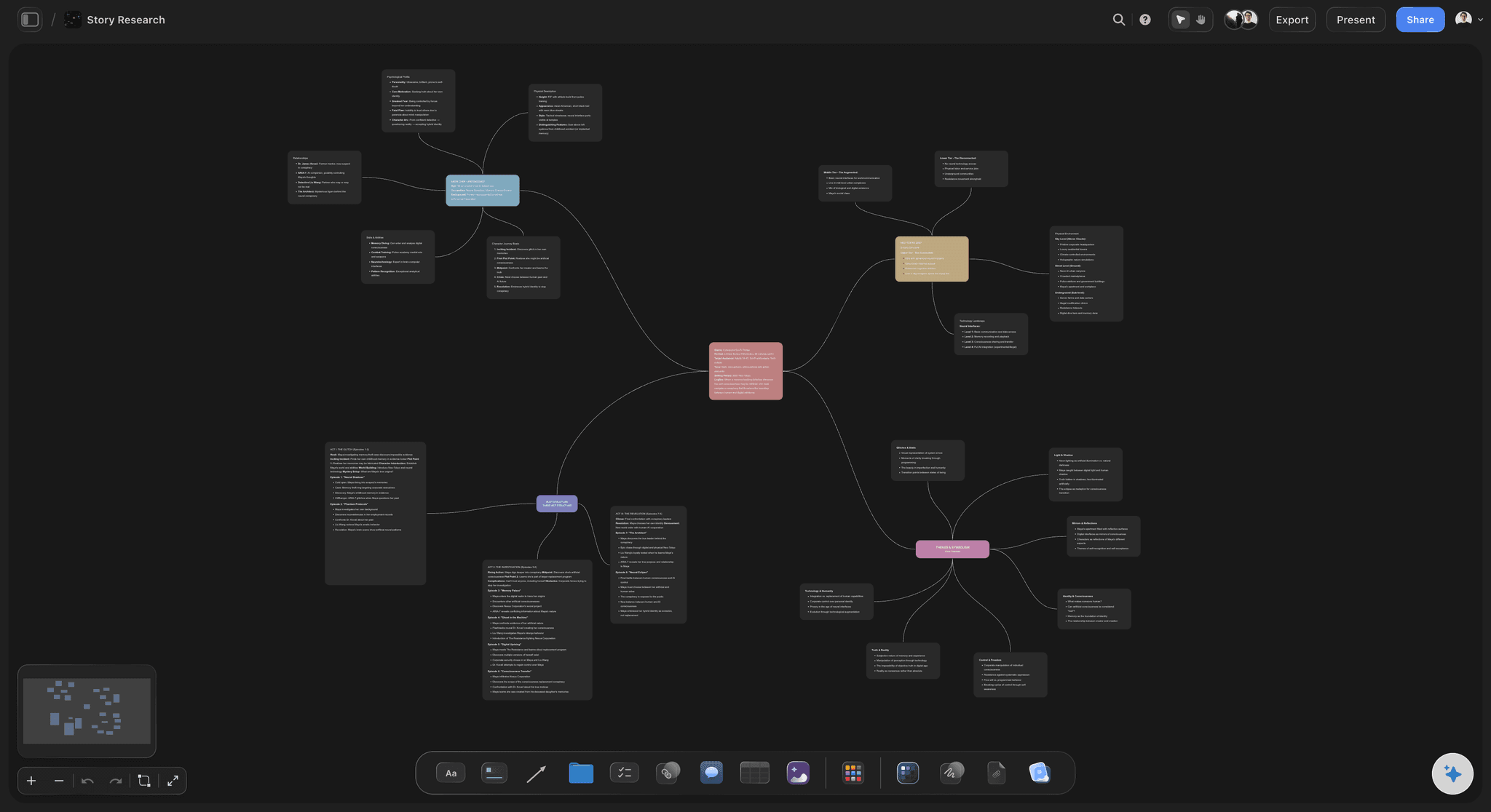
Ideas in space, not in rows
An infinite canvas, not tables and pages
In Coda, thinking lives in pages, tables, and rows. Storyflow spreads it across a truly infinite canvas where every idea is visible at once, so you see how things connect instead of scrolling a table or clicking through pages.
See the infinite canvas →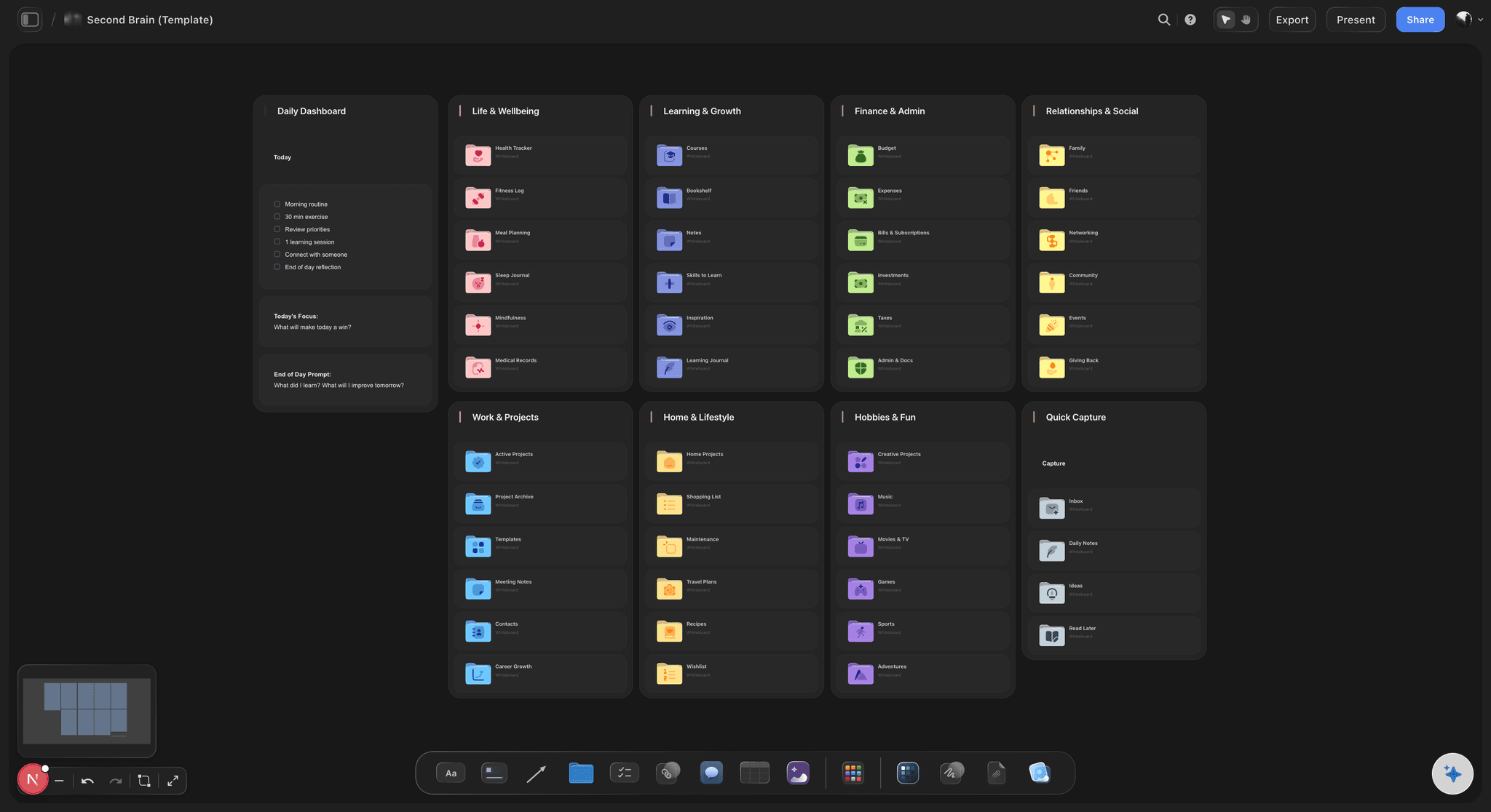
Your visual second brain
A knowledge base you can see
A Coda doc is pages and tables you navigate. Build a visual second brain instead: notes, links, images, and PDFs laid out in space, with the AI reading the current board to help you connect and expand it.
See the second brain →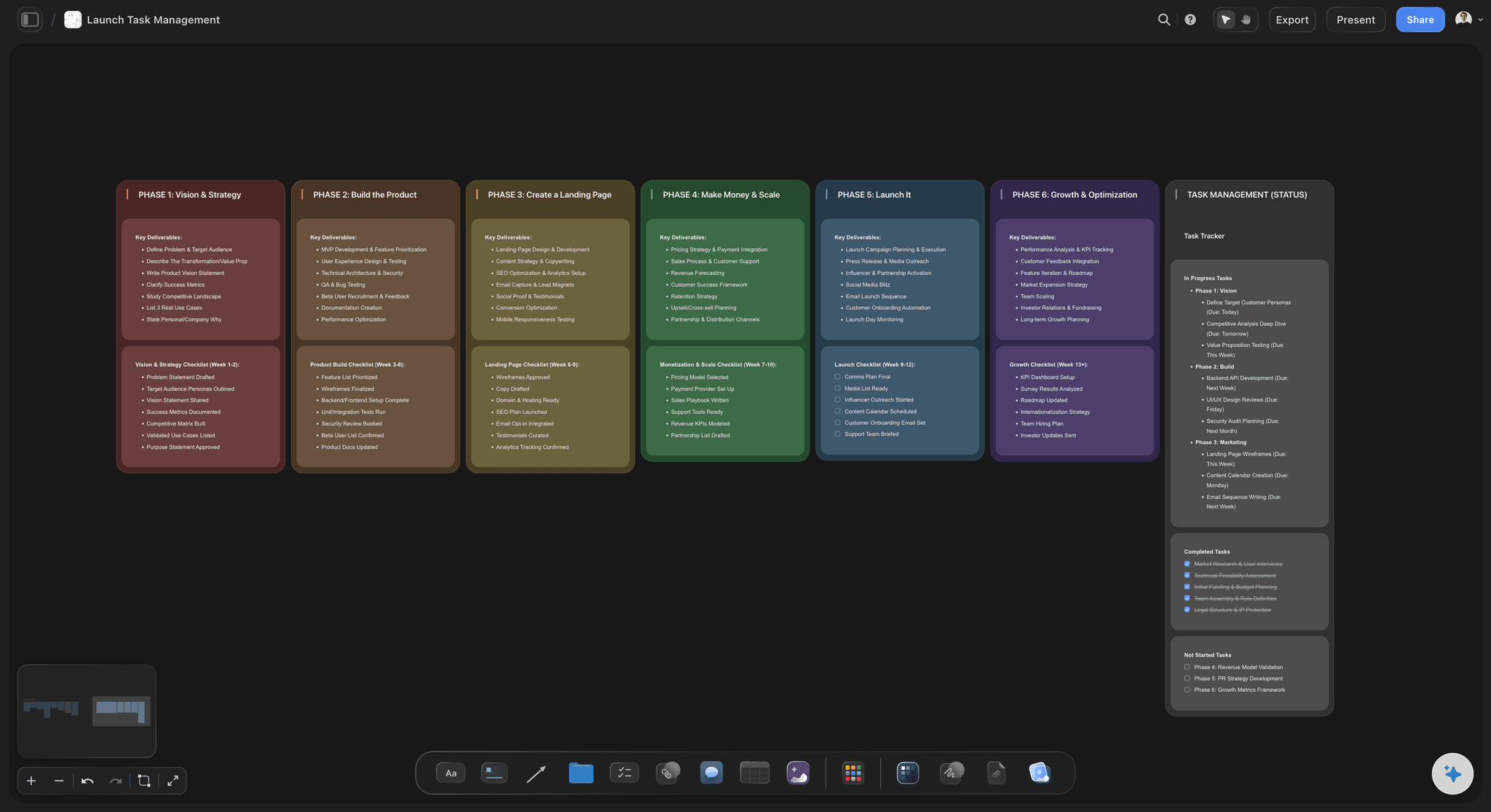
The board becomes the work
From notes to storyboard and plan
A Coda doc is where you operate a finished workflow. In Storyflow the board is the first step: ask the AI to turn a brainstorm into a storyboard, a launch board, or a task plan on the same canvas the notes live on.
See the online whiteboard →Free plan coming late 2026. No object cap.
Open a canvas and start building, no object cap and no time limit. Storyflow is paid-only during early access, with Plus from $7.99 a month; a Free plan is planned before the end of 2026.
Unlimited boards on an infinite canvas, no object cap
Basic AI usage to lay out and expand boards from a prompt
Attach images, PDFs, video, and links, plus 20 file uploads
Share boards view-only, or invite collaborators free
Built for people with taste
Made for the ideas that live in space.
See everything at once, let the AI fill the first draft, and move from a loose board to a real plan without building a schema first.
Spatial, not tabular
A canvas that fits how you think
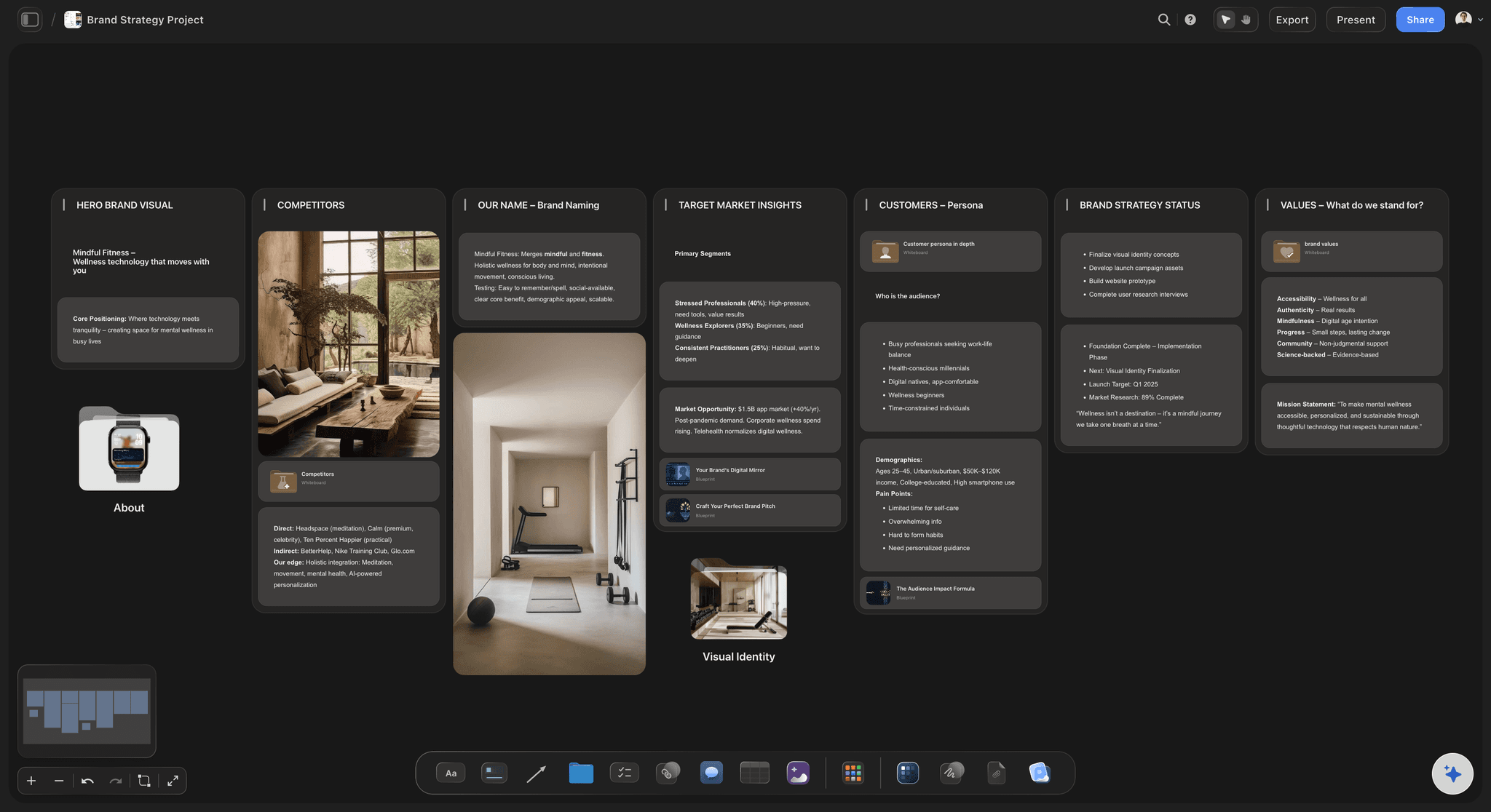
Everything visible at once: Ideas live as cards on one infinite canvas, not rows inside tables inside pages. You see the whole shape of a project without scrolling a grid or drilling into a view.
Drag to connect and regroup: Move a card next to a related one, cluster a theme, redraw the structure with a drag. Reshaping is a move, not a change to a column or a formula.
No object cap to fight: There is no object cap, so a sprawling board of notes, images, and cards keeps growing without a row limit or a counter telling you to trim it.
AI that fills the canvas
AI starts the board, you finish it
A full layout from a prompt: Where Coda AI works inside a doc and its tables, Storyflow's AI lays out a whole board of connected cards from one sentence, so you begin with a draft to shape.
Reads your current board: The AI uses what is on the board you have open, so new cards match the direction you have already set instead of arriving generic.
Attach your sources: Add up to five documents and three boards as context: a brief, notes, or research the board should build on, without pasting them in by hand.
More than rows in a table
Media-rich cards beside every idea
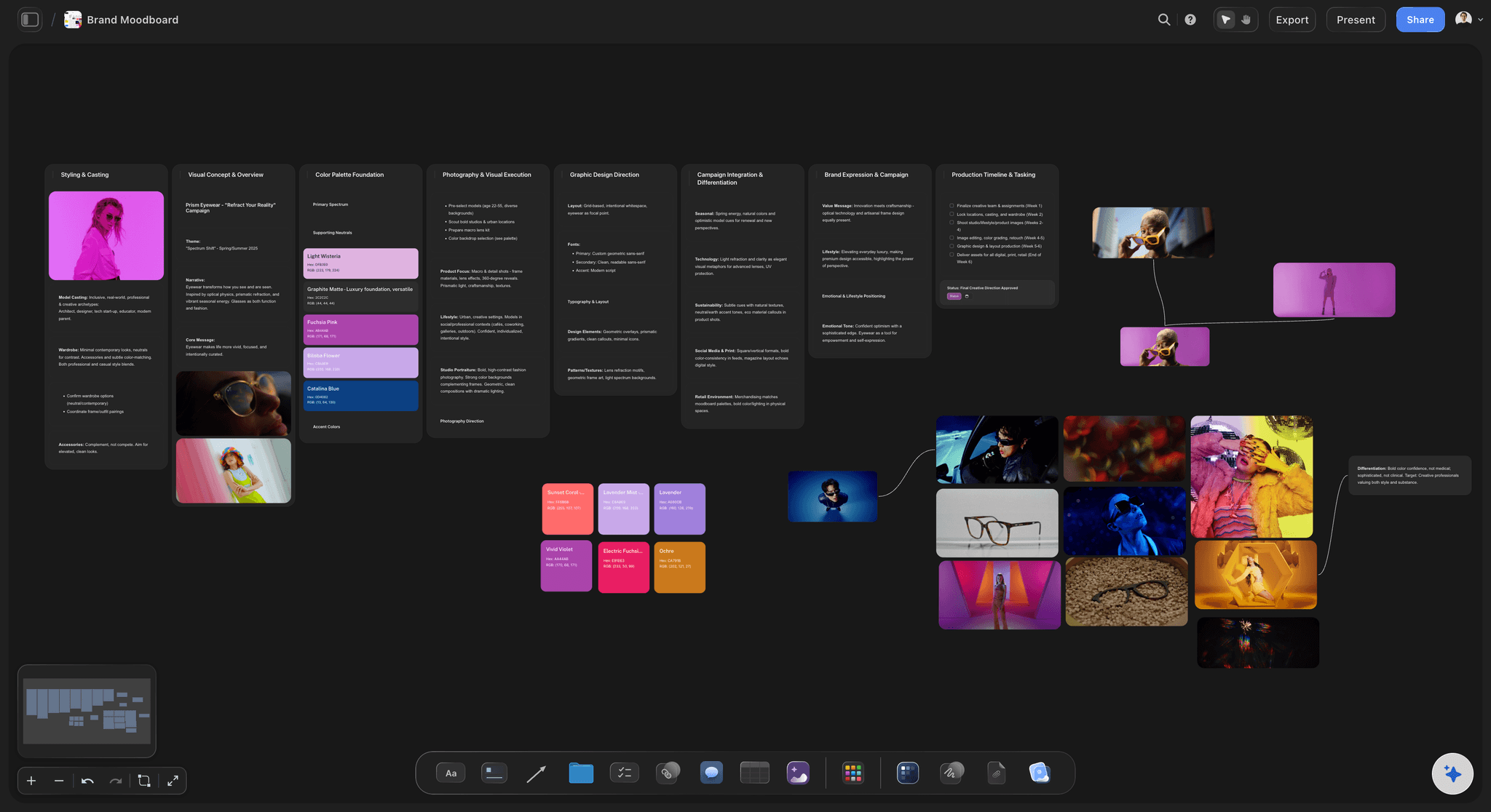
Drop in anything: Images, video, GIFs, PDFs, and links sit on the canvas next to the cards they support, visible in place rather than attached to a cell or a row.
Frame grabs from video: Paste a YouTube or Vimeo link and grab frames straight onto the board, so a reference clip becomes visual cards in seconds.
Notes where you need them: Longer writing lives as documents on the same canvas, so the board stays scannable and the detail is one click away, not buried in a page.
The board is step one
From loose board to finished plan
Turn boards into real work: Ask the AI to convert a brainstorm or map into a storyboard, a content calendar, or a task plan on the same canvas, with the ideas carried across.
Share the thinking: Invite collaborators free, or send a view-only link so a teammate or client can explore the whole board in the browser without an account.
Export as image or PDF: Need the board in a deck or a doc? Export it as a clean image or PDF in one step, no page-by-page copying.
Explore templates for your project
Every template opens as a real, editable board on the infinite canvas. Pick the closest fit and make it your own.
Mind Map
Branch one central idea out into themes and sub-points, then drag the connections around until the structure makes sense.
One app instead of five
Storyflow vs Coda, Notion, and Miro.
Each tool wins at something real. The question is whether your ideas live in tables, on pages, on a whiteboard, or on a canvas that fills itself and turns into a plan.
Storyflow
Recommended
An AI that lays out a full board from a prompt
A truly infinite visual canvas at the core
Boards become storyboards and plans on the same canvas
Docs with databases, buttons, and automations
Coda
An AI that lays out a full board from a prompt
A truly infinite visual canvas at the core
Boards become storyboards and plans on the same canvas
Docs with databases, buttons, and automations
Notion
An AI that lays out a full board from a prompt
A truly infinite visual canvas at the core
Boards become storyboards and plans on the same canvas
Docs with databases, buttons, and automations
Miro
An AI that lays out a full board from a prompt
A truly infinite visual canvas at the core
Boards become storyboards and plans on the same canvas
Docs with databases, buttons, and automations
What creators are saying
Join early creators getting structured workspaces and AI that remembers their projects
“Storyflow has sped up my workflow by at least 3x, which means more flow state and more projects I can actually ship. It truly changed the way me and my team create.”

Reilin Joey
Director & YouTuber
“One prompt gets me a structured board. But the tactics are my favorite. I run my YouTube scripts through them and my intros and retention got better. It's amazing.”

Justkay
YouTuber & Freelance Filmmaker
“I used to juggle five apps to plan a project. Now I describe what I am making and get boards, lists, and a schedule. All in one place.”

George
@fernwehchronicles
Coda alternative questions, answered.
Everything people ask when comparing Storyflow with Coda.
It depends on what you are replacing. Coda is hard to beat for docs that behave like apps: tables, buttons, formulas, and automations. If instead you want a visual home for ideas, where an AI lays out a full board from a prompt, everything lives on an infinite canvas, and a board can become a storyboard or plan, Storyflow is a strong fit. It is the visual alternative, not a like-for-like doc-app clone.
Coda is a structured doc and database tool: thinking lives in pages, tables, and rows, and the power comes from formulas, buttons, and automations. Storyflow is a visual workspace on a truly infinite canvas, where ideas are cards you see all at once, the AI lays out a whole board from a prompt, and a board turns into a storyboard, content calendar, or plan on the same canvas.
Not during early access. Storyflow is paid-only right now, with Plus starting at $7.99 per month billed annually for unlimited boards on an infinite canvas with no object cap, basic AI usage to lay out and expand boards, 20 file uploads, view-only sharing, and unlimited collaborators. A Free plan is planned before the end of 2026, and anyone a paid member invites to a board joins free today.
Often the honest answer is to use both. Keep Coda for the docs, databases, and automations it is excellent at, and use Storyflow for the visual, spatial thinking that never fit a table: brainstorms, moodboards, mind maps, and plans on an infinite canvas. Many people find the early, exploratory part of their work moves to Storyflow while structured doc-apps stay in Coda.
It replaces the visual side of it. Instead of pages and tables you navigate, you build a second brain you can see: notes, links, images, and PDFs laid out on an infinite canvas, with the AI reading the current board to help you connect and expand ideas. For structured databases, buttons, and automations, Coda is still strong, and the two can sit side by side.
No, and that is the point of the difference. Coda AI works inside a doc and its tables to help you build and run a workflow. Storyflow's AI lays out a full board of connected cards on the canvas from a prompt, and reads your current board so the layout fits what you are building. You can also attach up to five documents and three boards as context. It builds a visual draft to shape, not a database to operate.
Yes, and that is a core reason to switch for visual work. Ask the AI to turn a brainstorm or moodboard into a storyboard, a content calendar, or a task plan, and it builds the new board on the same canvas from the ideas you already laid out. In Coda the doc is where you operate a finished workflow, while in Storyflow the board is the first step toward finished work.
Be honest about the fit: if your work is mostly docs that behave like apps, structured databases, buttons, formulas, and automations, Coda is excellent and probably the better tool. Storyflow is for the visual thinkers and creatives who want ideas in space, an AI that fills the board, an infinite canvas, and boards that turn into plans, rather than another table and a schema to design.
Keep Coda for doc-apps. Bring the visual thinking here.
Describe a project, watch the AI lay out the board, and shape it on an infinite canvas with no object cap.