
Extremely reliable pre-production
Write the documentary treatment
before you've shot the film.
Logline, story, subjects, access, structure and style on one board, with your research, stills and archive beside the writing. Then a treatment PDF for the fund, the commissioner or the producer.


Creatives working for these brands already got early access
- Red Bull
- Canon
- Artlist
- Porsche
See how easy it is to get started
Watch a real project come together, from a blank board to a finished plan, clicked through step by step.
Start from a ready-made template
Pick a board to see what you can build, then let AI fill it in. Every template is a real, editable starting point on the same infinite canvas.

Pre-Production
Pull the brief, script, shot list, and moodboard into one pre-production hub so the whole shoot is planned in one place.
What is a documentary treatment, and how do you write one?
A documentary treatment describes a documentary before it is made: the logline, the story as you expect it to unfold, the people at its centre and your access to them, the structure, the visual style and why the film matters now. Storyflow is an AI visual workspace that develops the documentary treatment on one infinite canvas: research, subject notes, stills and archive beside the writing, and a treatment PDF its AI builds from the finished board for funders and commissioners. A plain Google Doc still suits a fund whose application form only accepts text.
Writing a treatment for a documentary is harder than for fiction, because you cannot script reality. The reader knows that, so what they are really assessing is whether a story exists, whether you can capture it, and whether it deserves to be seen now. A good treatment answers those three questions in that order. It tells the story in the present tense as the audience will experience it, introduces the subjects as people rather than topics, proves access with specifics, and admits where the story could turn while showing the film survives either way.
A short example of the shape. Logline: when the council votes to end the subsidy for the last family-run ferry on the estuary, three generations have one summer to prove the crossing still matters. Synopsis: the film follows the season from the vote to the final sailing, told through the father who wants to fight, the daughter who has already applied for jobs inland, and the regular passengers who never considered the crossing could stop. Access: a year of filming agreed with the family, the council meetings are public, and the local archive holds footage back to the crossing's opening. Style: observational, no narration, with archive used only where the family remembers it.
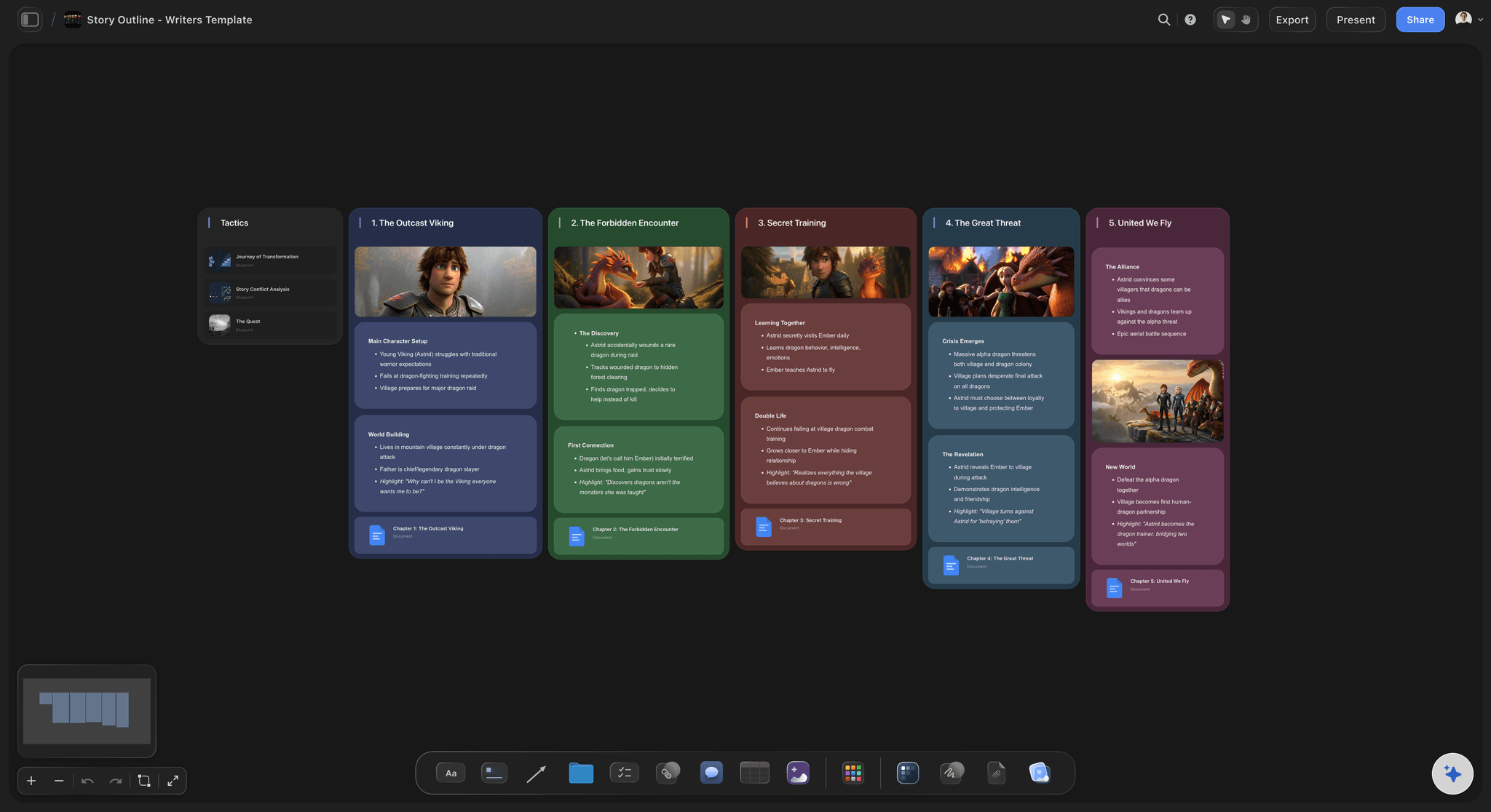
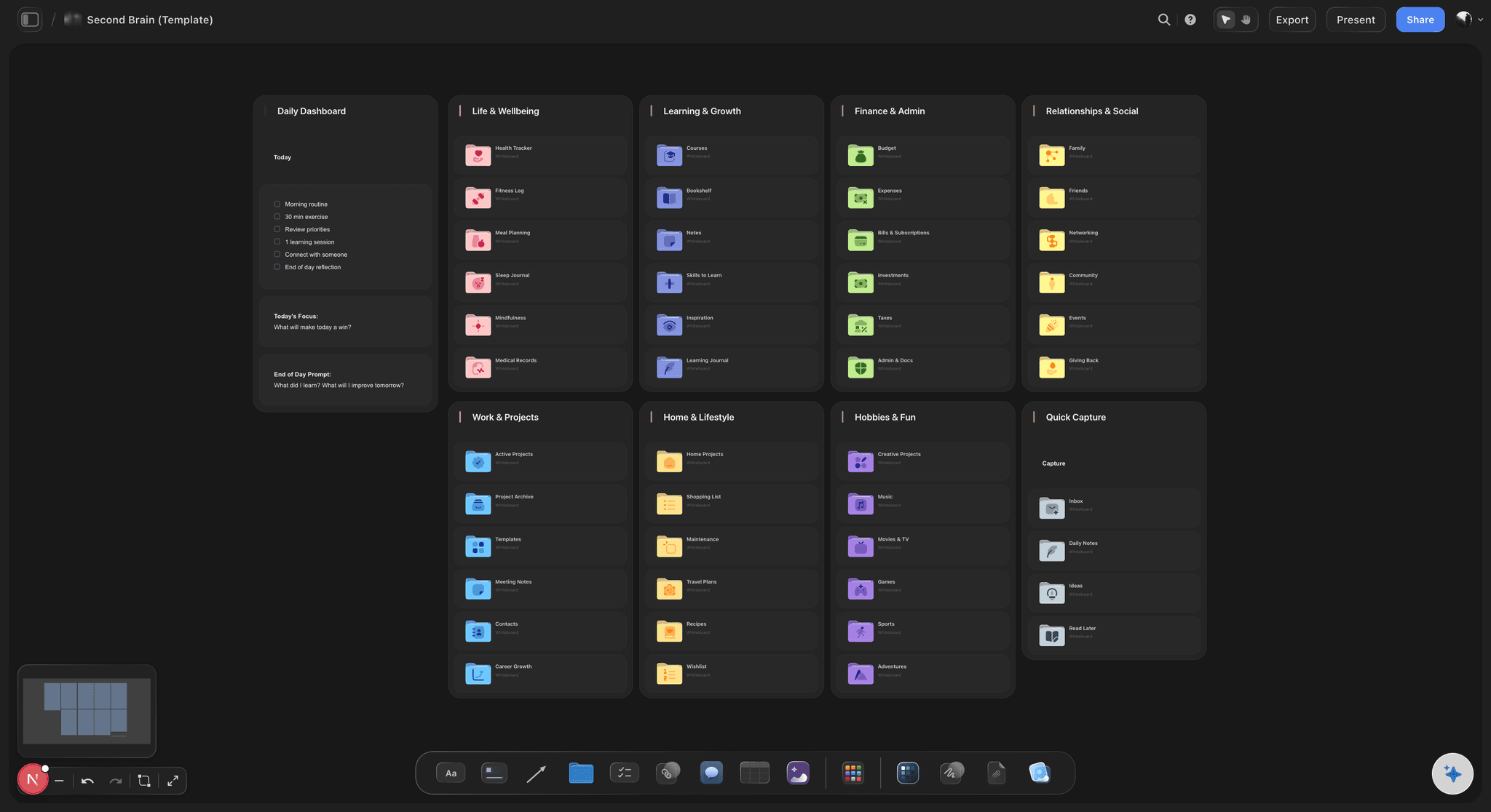
Storyflow keeps the working treatment on an AI-native canvas instead of spread across a notes app, a folder of stills and a document. Research, links, PDFs and audio notes live on the board; each subject gets a card with their story and the state of your access; acts or chapters become walls you can rearrange as the story changes; and the written treatment sits in a document beside them. Ask the AI to research the public record, draft a synopsis from your notes or list what a funder will ask that the treatment does not yet answer.
Ultra fast from brief to board
From research notes to a treatment a fund can say yes to.
Build the story beside the evidence, then send a document that answers the reader's questions in order.
01
Gather the research on one board
Articles, public records, interviews, audio notes, stills and early footage. Ask the AI to research the subject's public record and put the sources on the board to check.
02
Map the people and the access
A card per subject with who they are, what they want, and exactly what access you have agreed. The gaps in access become visible before a funder finds them.
03
Build the structure
Acts or chapters as walls, with scenes you expect to film, interviews and archive marked on each card. Move them as the story changes during development.
04
Write it and send it
Write the treatment in a document on the board, then ask for a treatment PDF, or share a view-only link with a producer who opens it with no account.
The story, the evidence and the document together.
Everything a documentary treatment is built from, on one canvas.
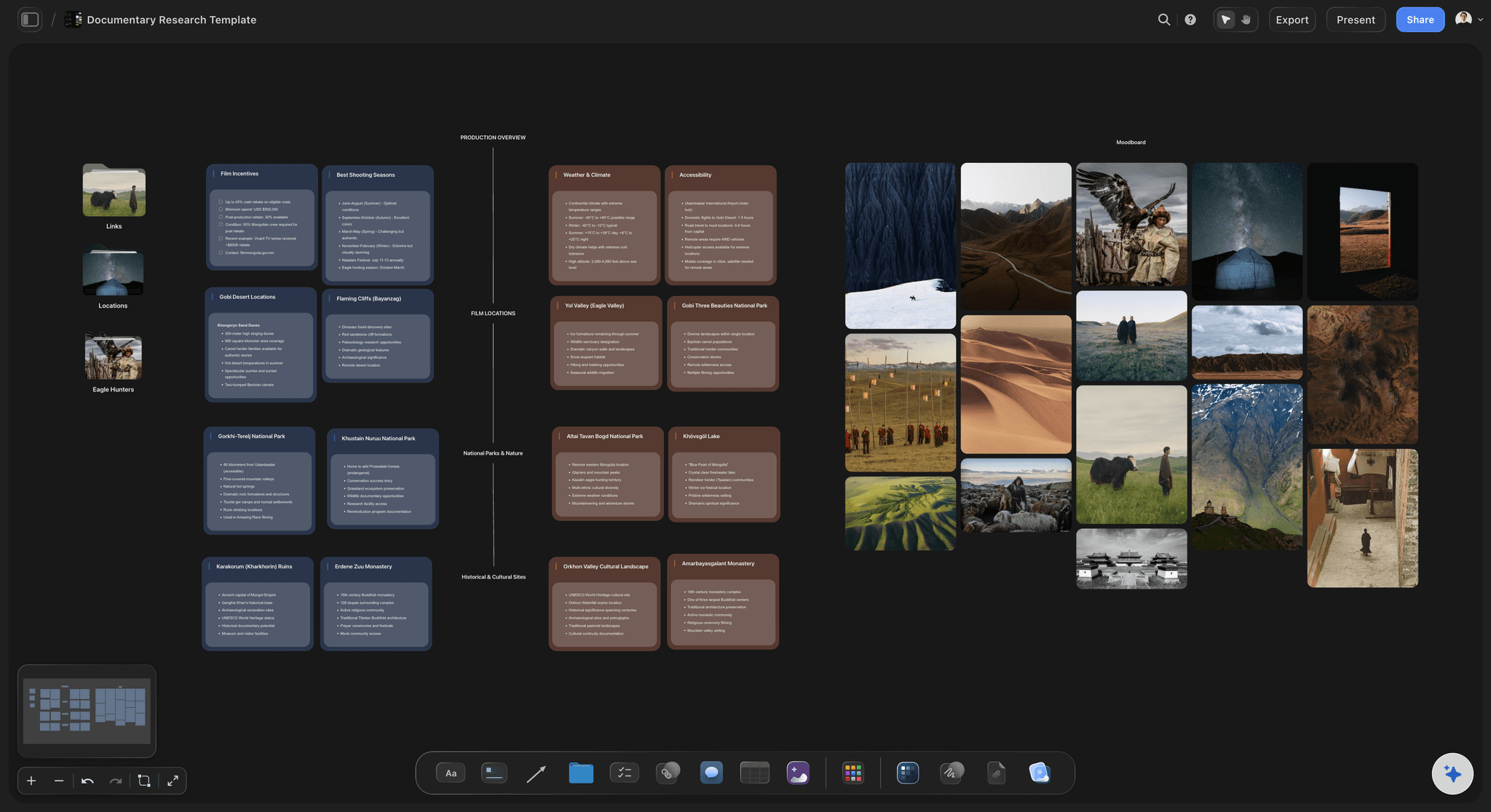
Research beside the story
Every claim has its source next to it
Articles, records, recordings and archive references sit on the board beside the synopsis, so a funder's question about a fact has an answer one scroll away.
See the AI documentary planner →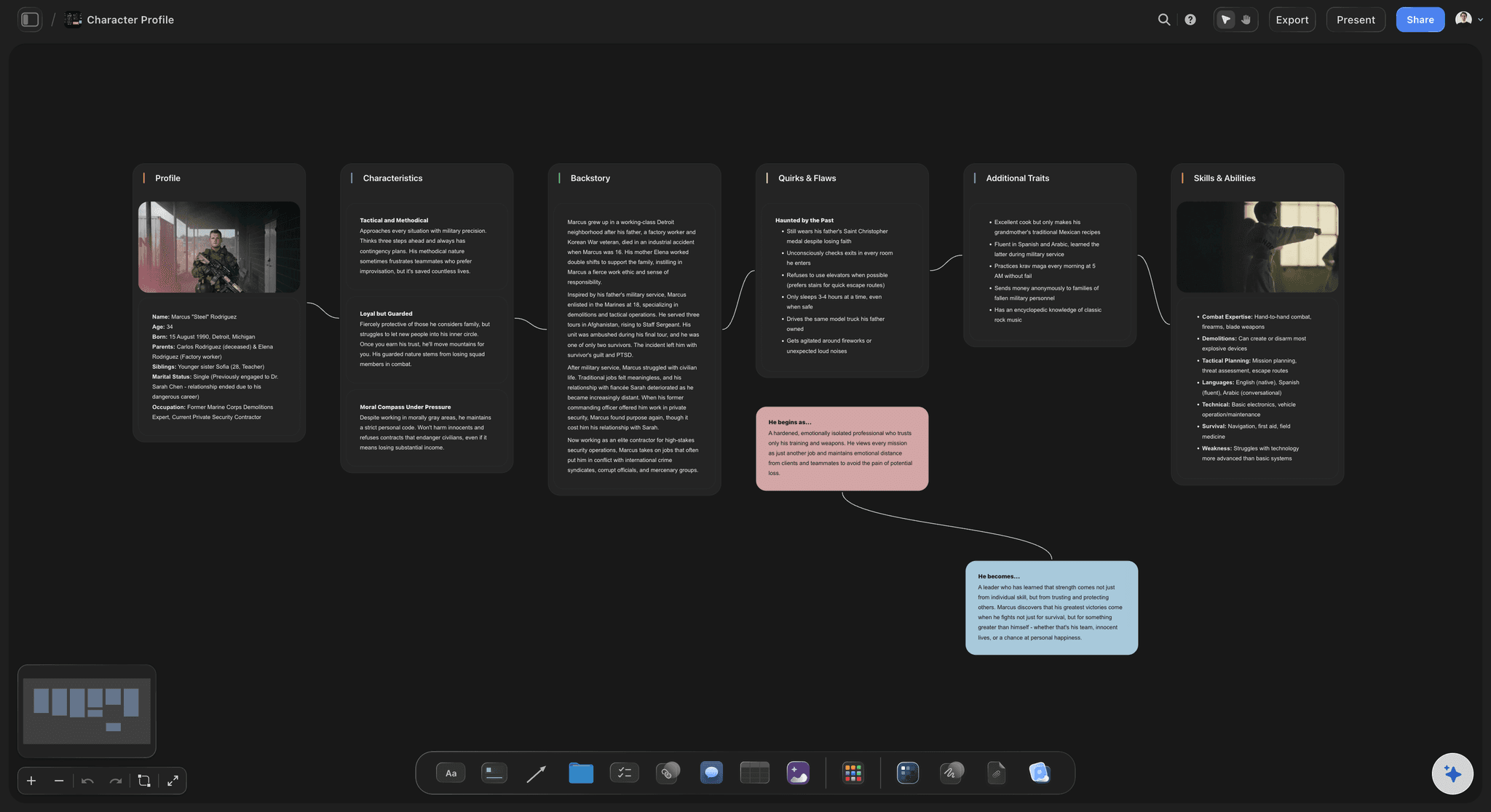
Subjects and access, mapped
People, not topics
A card for each subject with their story, what they stand to lose, and the access you have agreed. Readers commit to people, and funders check access before anything else.
Plan documentary interviews →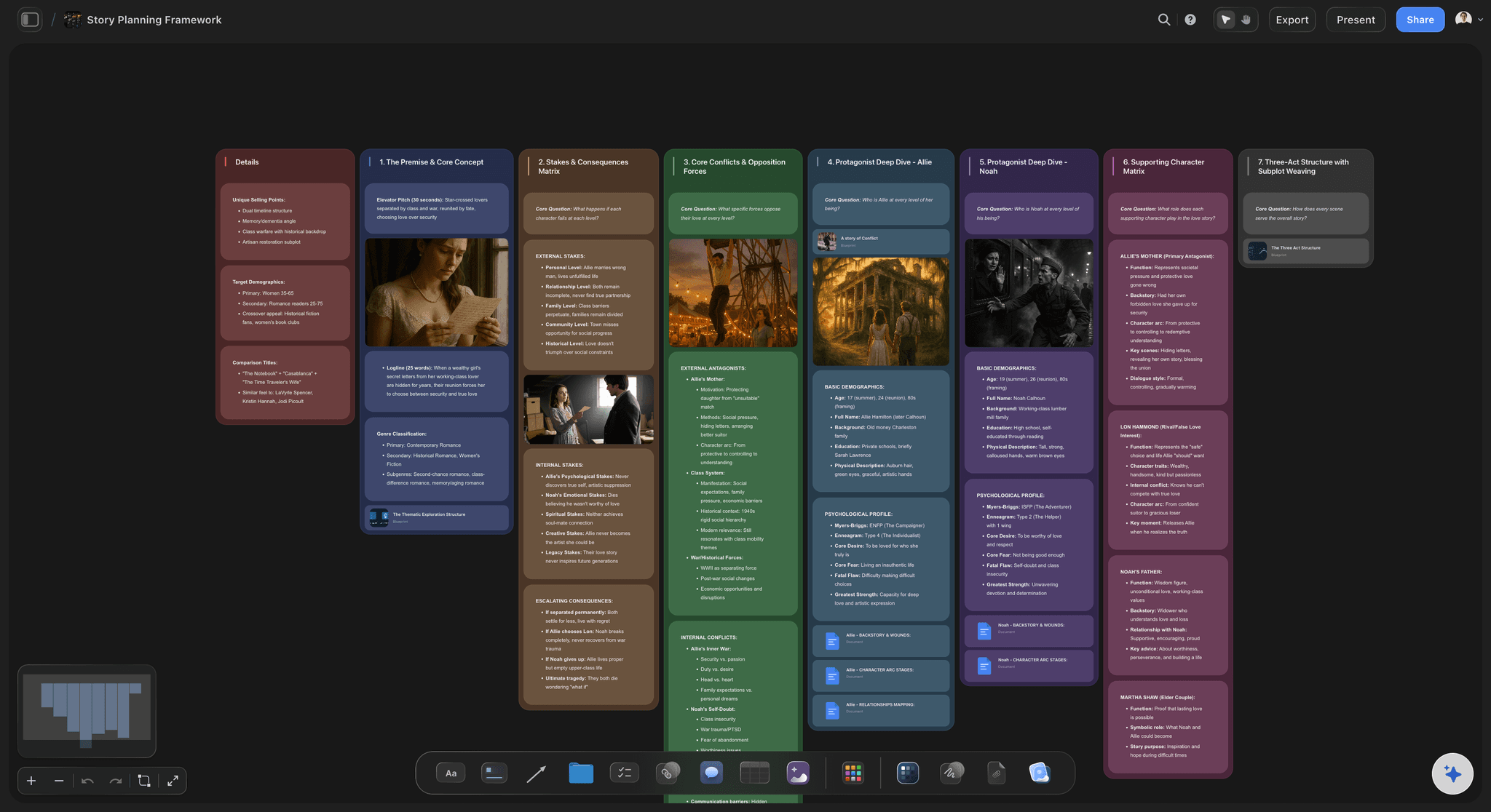
A structure that can change
Acts you can rearrange as life happens
Chapters as walls and scenes as cards, each marked filmed, interview or archive. When the story turns during development, the structure moves without a rewrite from scratch.
See the documentary storyboard →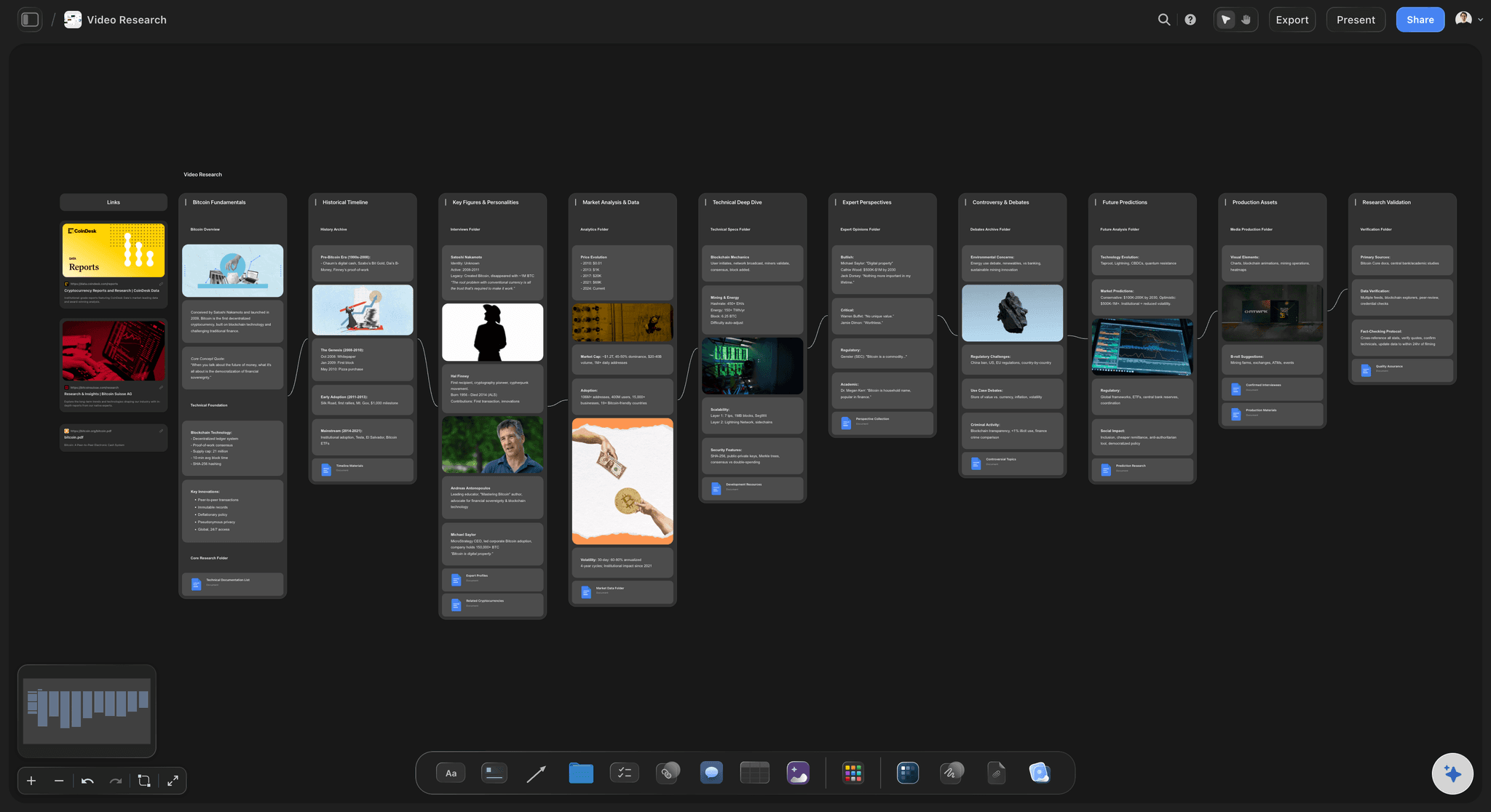
A PDF for the fund, a link for the producer
Send it the way each reader wants
Turn the board into a designed treatment PDF for an application, or share a view-only link with a producer or commissioner who wants to browse the stills and research.
See the film pitch deck page →Unlimited boards. No object cap.
One board per project, with the research, the subjects and the treatment together. Storyflow is paid-only during early access, with plans from $7.99 a month billed annually ($9.99 monthly). A free plan launches before the end of 2026, and anyone a paid member invites to a board joins free.
Unlimited documentary boards on an infinite canvas
AI that researches, drafts and builds the treatment PDF
Documents, files, audio and stills on the same board
View-only links for producers and funders, no account needed to read
Built for people with taste
A treatment promises a story you have not filmed yet.
Funders and commissioners read for three things: is there a story, can you get it, and why does it matter now. Every section answers one of them.
Logline, synopsis, tension
Is there a story?
A logline with stakes: Who, what they want or face, and what happens if they lose, in one or two sentences. A topic is not a logline; a person with something at stake is.
The synopsis told as a story: In the present tense, in the order the audience will experience it, with a beginning, a turn and an end you anticipate, rather than a list of themes the film will explore.
The central question: The tension that keeps an audience watching. Will the ferry survive, will the daughter stay, will the vote be overturned. One clear question beats three vague ones.
What you do not know yet: How the story could turn, and why the film works either way. Readers trust a treatment that names its uncertainty more than one that pretends there is none.
Subjects, access, feasibility, team
Can you get it?
Subjects as people: Who they are, what they want, what they fear, and why an audience will care about them in the first ten minutes.
Access, stated specifically: What has been agreed, with whom, for how long, and what you have already filmed. Vague access is the most common reason a promising treatment is turned down.
Feasibility: Locations, the filming period, archive rights, travel and any safety or legal considerations, answered before the reader has to ask.
Why you: A short director's statement: your connection to the subject, the relevant work you have made, and why you are the person to tell this story.
Style, structure, sound, relevance
How will it feel, and why now?
Style: Observational, interview-led, archive-driven, with recreations or animation, and why that approach suits this story rather than the one the reader expects.
Structure: Acts or chapters with what will be filmed, what is interview and what is archive, so the reader can picture the film's shape and its running time.
Look and sound: Stills from research or early shoots, visual references, and the approach to music and sound, which often carry as much of a documentary's tone as the pictures.
Why it matters now: The relevance, the audience and, for impact-driven funds, what the film could change after it is released.
AI that reads the whole board
A development partner that checks the evidence
Research the public record: Ask the AI to find the facts, coverage and history behind the subject. The sources land on the board for you to verify before a word goes in the treatment.
Draft from your notes: Turn interview notes and research into a first synopsis or logline options. You rewrite them in your voice; the story you tell stays yours.
Find what a funder will ask: Ask what the treatment does not answer yet: unclear access, a missing why now, a structure with no turn. The AI reads the whole board, so the gaps are specific.
Build the document: When the board is ready, ask for a treatment PDF or a one-page summary for the first contact with a commissioner.
Explore templates for your project
Every template opens as a real, editable board on the infinite canvas. Pick the closest fit and make it your own.
Pre-Production
Pull the brief, script, shot list, and moodboard into one pre-production hub so the whole shoot is planned in one place.
One app instead of five
Storyflow vs Google Docs, Keynote, and InDesign for documentary treatments.
Each has its place: Google Docs for text-only applications and collaborative editing, Keynote for a fast visual pitch, InDesign for a finely designed document. Here is where they differ while the story is still being developed.
Storyflow
Recommended
Exports the treatment as a PDF
Research files, stills and archive on one board
Long-form writing with comments
Real-time collaboration by link
Fine typographic layout control
Google Docs
Exports the treatment as a PDF
Research files, stills and archive on one board
Long-form writing with comments
Real-time collaboration by link
Fine typographic layout control
Keynote
Exports the treatment as a PDF
Research files, stills and archive on one board
Long-form writing with comments
Real-time collaboration by link
Fine typographic layout control
Adobe InDesign
Exports the treatment as a PDF
Research files, stills and archive on one board
Long-form writing with comments
Real-time collaboration by link
Fine typographic layout control
What creators are saying
Join early creators getting structured workspaces and AI that remembers their projects
“Storyflow has sped up my workflow by at least 3x, which means more flow state and more projects I can actually ship. It truly changed the way me and my team create.”

Reilin Joey
Director & YouTuber
“One prompt gets me a structured board. But the tactics are my favorite. I run my YouTube scripts through them and my intros and retention got better. It's amazing.”

Justkay
YouTuber & Freelance Filmmaker
“I used to juggle five apps to plan a project. Now I describe what I am making and get boards, lists, and a schedule. All in one place.”

George
@fernwehchronicles
Documentary treatment questions, answered.
What to include, how long it runs, and what funders read for.
Storyflow is built for developing the treatment itself: research, subject notes, stills and archive sit on one board beside the writing, the structure can be rearranged as the story changes, and the AI turns the finished board into a treatment PDF. Google Docs is the practical choice when a fund's application form only takes plain text and several people are editing, and InDesign or Keynote when a designer is producing a finely laid-out final document from finished writing.
A documentary treatment is a document that describes a documentary before it is filmed or finished, written to persuade funders, commissioners, broadcasters or producers to support it. It usually contains a logline, a synopsis told as a story, the main subjects and your access to them, the planned structure, the visual and sound style, and why the film matters now. Unlike a screenplay it does not script events; it shows that a story exists and that you can capture it.
Start with a logline built around a person with something at stake. Write the synopsis in the present tense, in the order an audience experiences the film, including the turn you expect. Introduce the subjects as people, state your access specifically, and describe the structure, marking what is filmed, interview and archive. Explain the style and why the story matters now, add a short director's statement, and check it answers: is there a story, can you get it, why now?
A compact example: a logline about a family-run ferry with one summer to survive a council vote; a synopsis following the season from the vote to the last sailing through the father who fights, the daughter who plans to leave and the passengers who depend on it; access stated as a year of agreed filming, public council meetings and a local archive; an observational style without narration; and three acts ending on the final crossing, whichever way the vote goes.
Follow the length the fund or commissioner specifies, because many set one and some reject submissions that ignore it. Without a stated limit, a first-contact treatment is often a page or two with the logline and synopsis leading, while a full development treatment can run longer to cover subjects, access, structure and style in detail. The test is whether a busy reader understands the story, the access and the relevance within the first page.
A synopsis is a short summary of the story, usually a paragraph or a page. A treatment contains a synopsis but goes further: it introduces the subjects and your access to them, describes the structure and visual style, explains why the film matters now and why you should make it. A synopsis tells the reader what happens; a treatment convinces them the film can be made and deserves to be.
A treatment focuses on the film: the story, subjects, structure and style. A proposal, often required by grant funds, wraps the treatment in the practical case: budget, schedule, team biographies, distribution and outreach plans, and sometimes impact goals. In practice most proposals include a treatment as their central section, so building the treatment first and adding the practical sections around it is the usual order.
Describe the story you anticipate, name the point where it could turn, and show why the film works either way. Funders know documentaries change during production, so a treatment that pretends to know the ending is less credible than one that names the central question and the likely outcomes. Anchor it in what is certain, such as the people, the access and a fixed event like a vote, a race or a deadline, so the structure holds as details change.
Mainly three things: a story with stakes told through compelling people, credible access to those people and events, and a clear reason the film matters now. After that they look at the filmmaker's voice and track record, a style that suits the subject, and feasibility within the budget and schedule. Specific details persuade more than ambition, so concrete access, named subjects and a structure the reader can picture tend to carry a treatment further than broad themes.
Name a specific subject, what they want or face, and what is at stake if they fail, in one or two sentences. Include the setting or the ticking clock when it adds tension. Avoid describing a topic, such as a film about the decline of coastal towns; write the human story, such as three generations with one summer to save the ferry their town depends on. Test it by asking whether a stranger would want to know what happens next.
Yes, with research and structure, but it should not invent the story. In Storyflow the AI reads everything on the board, so it can research the public record behind a subject, draft a first synopsis or logline options from your notes, and list what a funder will ask that the treatment does not yet answer. Every fact still needs checking against its source, and the voice, the story and the ethical choices about your subjects stay with the filmmaker.
Not yet. Storyflow is paid-only during early access, with plans from $7.99 a month billed annually ($9.99 monthly). A free plan launches before the end of 2026, and anyone a paid member invites to a board joins free. A co-producer or researcher you invite can work on the project with you, and producers and funders reading the treatment through a view-only link never need an account.
More from Storyflow
Sizzle reel planner
AI documentary planner
Documentary pre-production
Documentary interview planner
Documentary storyboard
Director's treatment template
Film treatment template
Film pitch deck
AI treatment generator
Indie film production workflow
How to write a documentary treatment
Best tools for documentary pitches and treatments
Film press kit
Brand film
Film grant proposal
Prove the story exists before the camera rolls.
Open a canvas, bring your research, and build the treatment a fund can say yes to.