
Extremely reliable pre-production
Every prop, every scene,
and who is bringing it.
Break the script into props, sort them into hero items, set dressing, and consumables, and track doubles, sourcing, and the scene each one is needed for.


Creatives working for these brands already got early access
- Red Bull
- Canon
- Artlist
- Porsche
See how easy it is to get started
Watch a real project come together, from a blank board to a finished plan, clicked through step by step.
Start from a ready-made template
Pick a board to see what you can build, then let AI fill it in. Every template is a real, editable starting point on the same infinite canvas.

Pre-Production
Pull the brief, script, shot list, and moodboard into one pre-production hub so the whole shoot is planned in one place.
What is a props list?
A props list is the inventory of every object that appears on camera, tied to the scene it appears in and the person responsible for it being there. Storyflow is an AI visual workspace that builds your props list on one infinite canvas: a first pass the AI extracts from the script, cards sorted into hero props, set dressing and consumables, and the doubles, sourcing and scene for each one. The list sounds like a clerical task and it mostly is, right up until the moment a scene stops because nobody brought the letter that the entire scene is about. Props are the category of production where a trivial omission has a completely disproportionate cost, because you cannot shoot around a missing object that the dialogue refers to.
The reason a props list is harder than it looks is that a single line of script can expand into a surprising amount of physical reality. A stage direction like she burns the letter implies the letter, the envelope it came in, a version of the letter that is already partly burned, several identical spares because you will do more than one take, something to burn it in, a lighter or matches, and a fire safety arrangement. Read quickly, that line is one prop. Read properly, it is closer to fifteen objects and a permit conversation.
Storyflow is an AI-native infinite canvas that suits this kind of breakdown. Make a card per prop with a reference image dragged onto it, group the cards by scene or by department, and write the sourcing, budget, and responsibility on the same card as the picture. Because the canvas has no object cap, a props list running to three hundred items across a feature stays on one surface, and you can lay it out by scene one day and by supplier the next without rebuilding anything.
It helps to sort props into three classes, because each one is managed differently. Hero props are the objects the story turns on and the camera looks at closely: they need design attention, usually need doubles, and often need to be made rather than bought. Set dressing is everything that makes a space look inhabited but that nobody looks at directly: it needs volume and coherence rather than individual attention. Consumables are anything used up or destroyed in a take: food, cigarettes, breakable glass, blood, paper that gets torn, and they need a count per take multiplied by the number of takes you honestly expect. Confusing the three is how a production ends up with a beautifully made hero prop and only one of it.
Ultra fast from brief to board
From a script to a list the art department can buy from.
No spreadsheet to design first. Break the script down and start grouping.
01
Open a canvas
Sign up in seconds. No download. Your infinite props canvas opens straight in the browser.
02
Break the script down
Paste the script or drop a PDF on the board and the AI pulls out the props it can find, scene by scene. Treat that as a first pass to correct rather than a finished list.
03
Sort and cost each prop
Group props into hero, set dressing, and consumables, mark how many doubles each needs, and write the sourcing, budget, and owner on the card. Drag a reference image onto anything that has to be made or matched.
04
Share it with the department
Send a view-only link to the art department, or export the board as an image or PDF to take shopping and onto the set.
The list, the picture, and the source in one place.
Props grouped by scene, by class, or by supplier on one infinite canvas.
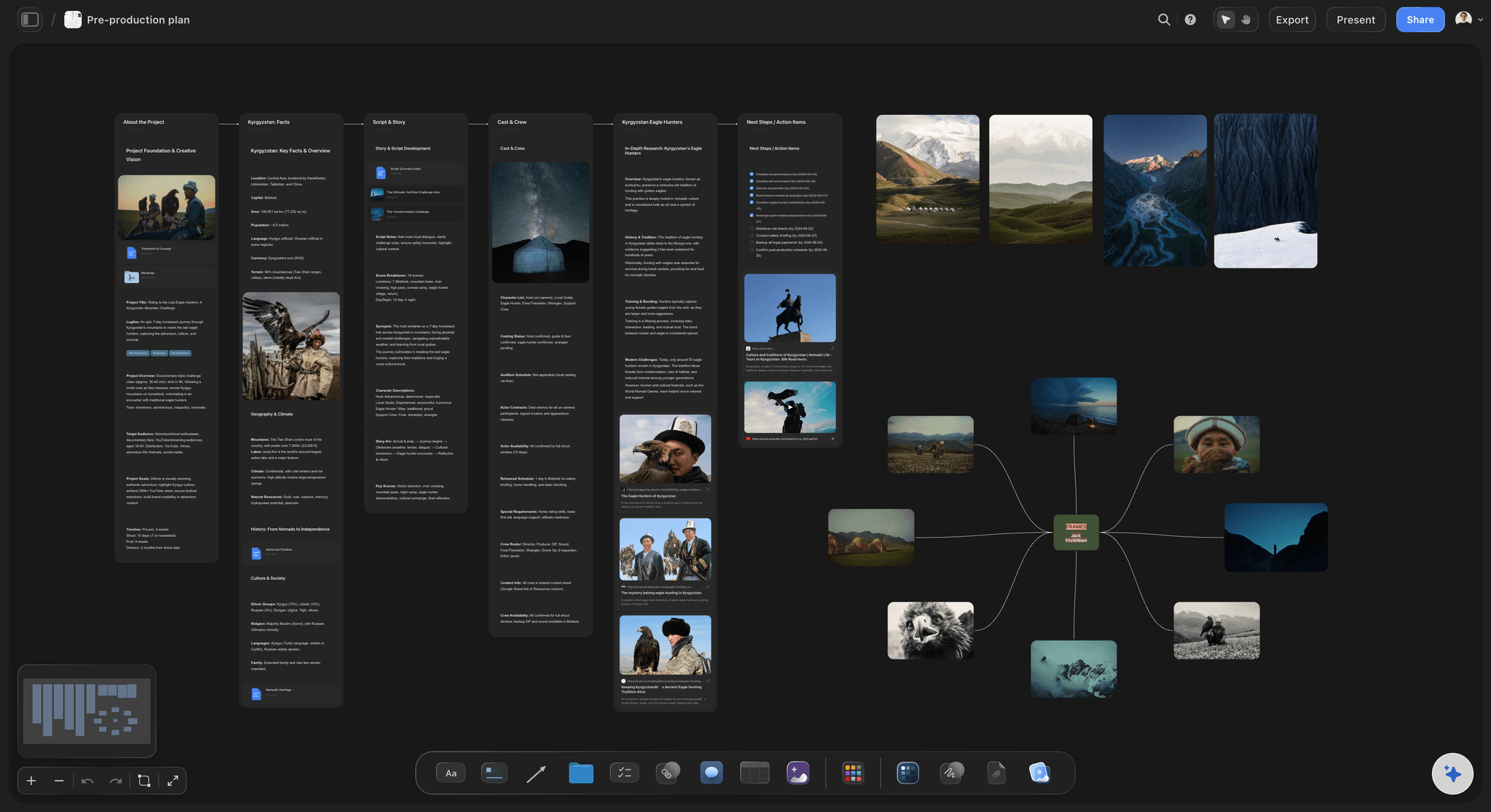
AI pulls props out of your script scene by scene
Start from a first pass, not a blank list
Drop the script on the canvas and the AI extracts the props it can identify per scene. It will miss the implied ones, which is exactly where your attention should go, so the first pass is worth having.
See the AI script breakdown →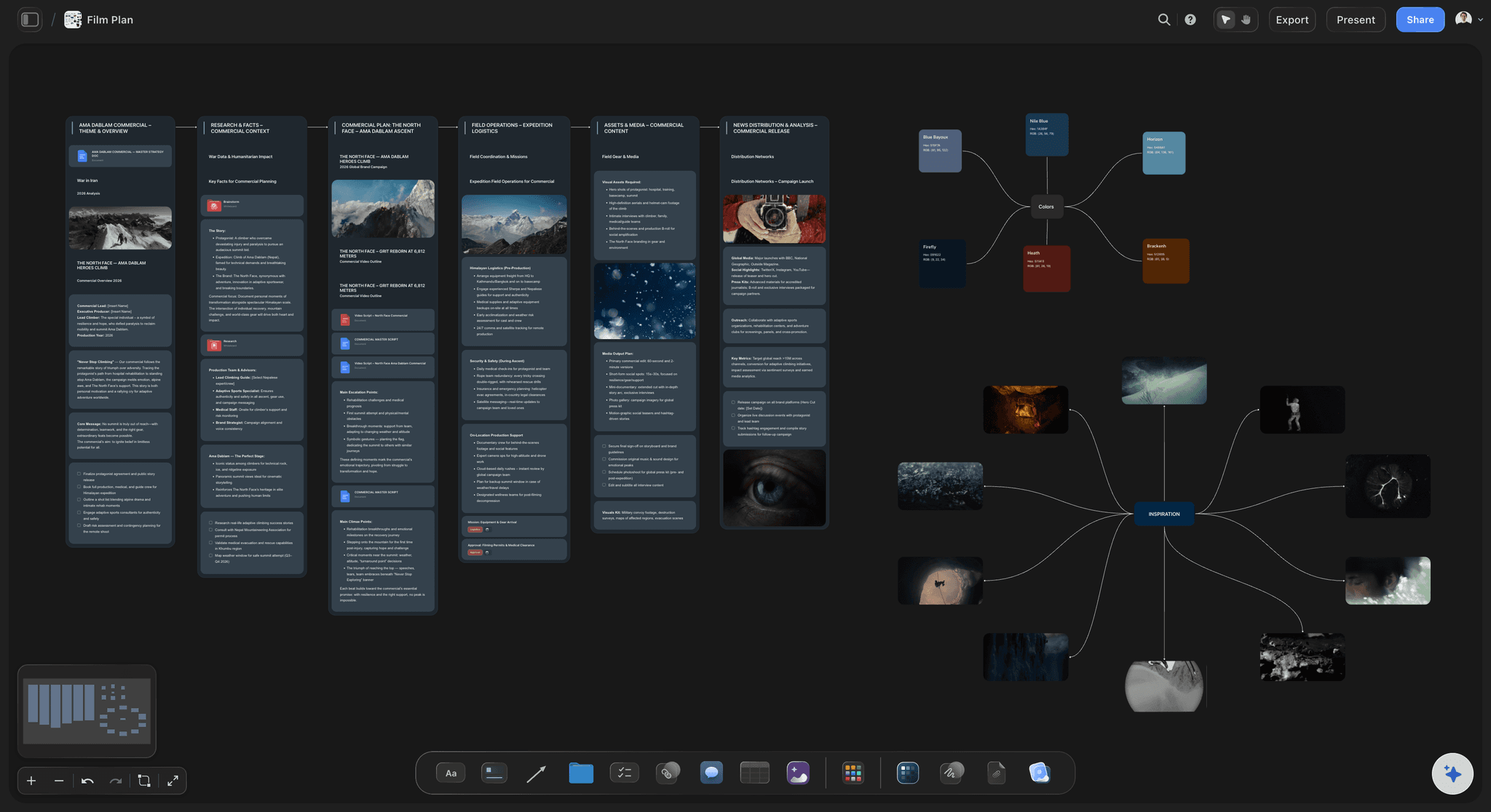
Hero props, set dressing, and consumables as groups
Sort props by how they are managed
The three classes need completely different handling. Hero props need design and doubles, set dressing needs volume, consumables need a count per take. Grouping them makes the doubles you forgot obvious.
Try the film shoot planner →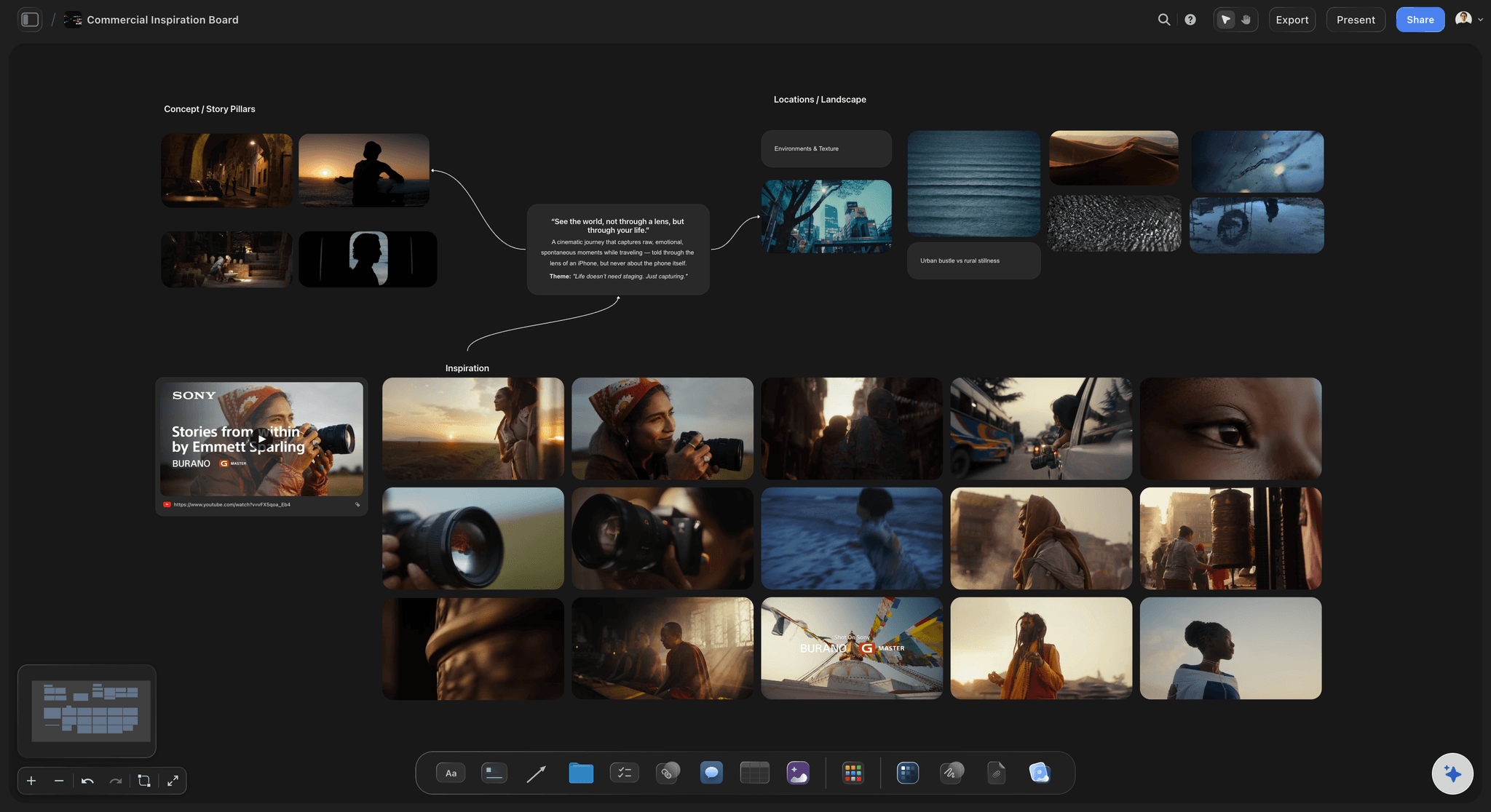
Reference images and sourcing links on each prop card
Keep the picture with the purchase
Drag a reference image onto anything that has to be made, matched, or bought, and drop the supplier link on the same card. A buyer working from a picture makes fewer wrong purchases than one working from a description.
See the art direction board →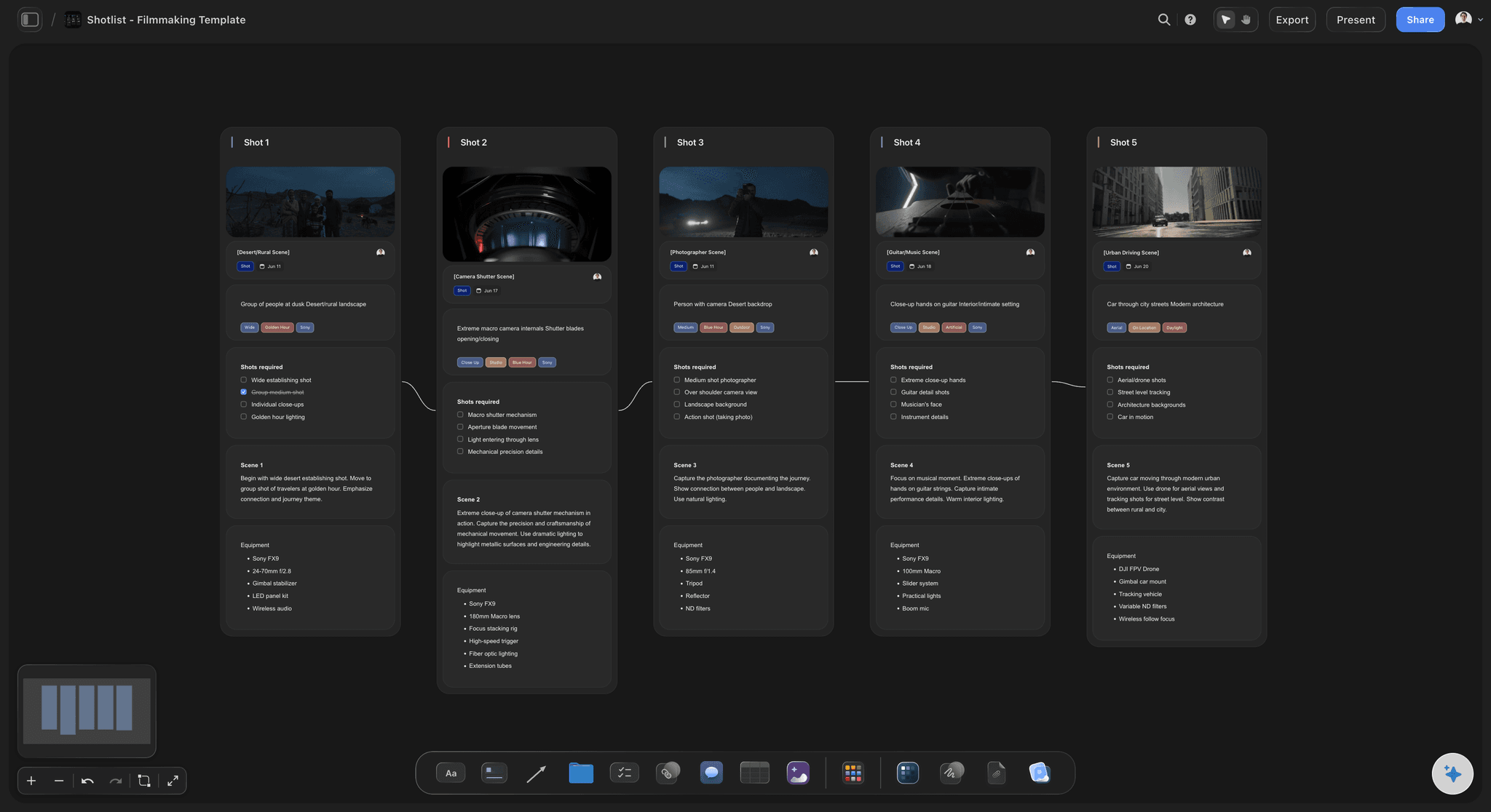
Props tied to the scenes and days they are needed
Know what has to be on the truck when
Attach each prop to the scenes it appears in and mark the shoot day. The list then answers the only question that matters on the morning of a shoot, which is what has to be in the van right now.
See the shooting schedule →Unlimited boards. No object cap.
Open a canvas, drop the script in, and start building the list. Storyflow is paid-only during early access, with plans from $9.99 a month, and a Free plan launches before the end of 2026.
Unlimited props boards on an infinite canvas
Basic AI usage to generate boards from prompts
3 starter frameworks built in
Share view-only links with the art department
Built for people with taste
More than a checklist in a notes app.
A prop is a picture, a purchase, a count, and a scene. A list only holds one of those.
Hero props, set dressing, consumables, doubles, and sourcing
Work across every layer of the props list
Hero props get design attention: The objects the story turns on and the camera holds on. These usually need to be designed or made, always need reference, and nearly always need doubles, because the one thing that is certain about a hero prop is that it will be handled repeatedly.
Set dressing is a volume problem: Everything that makes a room look lived in without being looked at. Plan this by space rather than by item, since the question is whether the room reads correctly, not whether any individual object is right.
Consumables need a count per take: Food, breakable glass, blood, cigarettes, and anything torn or burned. Multiply what one take needs by the number of takes you honestly expect, then add more. Running out of a consumable stops the unit dead.
Read the script for implied props: The expensive misses are never in the stage directions. They are implied by a line of dialogue that refers to an object nobody listed. Reading for implication is the part of this job that no automated pass will do for you.
AI that can see the board you have already built
Break the script down with AI, then read it yourself
Extract props from the script: Paste the script or drop a PDF and the AI pulls out the props it can identify, scene by scene. This removes most of the transcription work and gives you a structure to correct.
It finds the stated, you find the implied: The AI reliably catches objects named in the text. It does not reliably catch the fifteen things that she burns the letter actually requires. Treat its output as a floor rather than as a list, because the misses are concentrated exactly where the cost is highest.
Re-prompt as the script changes: Scripts move constantly. Re-run the breakdown as scenes change and the props you have already costed and sourced stay exactly where they are.
Images, links, PDFs, and receipts on one canvas
Everything the buyer needs, attached
Reference images per prop: Drag a picture onto anything that has to be matched or made. Period and specialist props in particular are bought wrong far more often from a description than from an image.
Grab a frame from a reference film: Pull a frame from a YouTube or Vimeo reference onto the board when you are matching a specific object or a period look.
Suppliers, receipts, and returns: Drop supplier links, PDFs, and receipts onto the prop card. Hire props have to go back, and having the hire paperwork attached to the object is what makes the return straightforward.
Share with the art department, producer, and director
One list everyone is buying from
View-only links: Send a link and the whole department reads the same list in a browser with no account. Duplicate purchases usually come from two people working off two versions of a list.
Work together on the board: Invite your art director or buyer so ticks and notes land in one place. Live multi-editor presence with cursors is on the Max plan.
Export for the shop and the truck: Export as a high-quality image or PDF to print for a shopping trip or to check against when loading. Paper is still the fastest thing to work from with your hands full.
Explore templates for your project
Every template opens as a real, editable board on the infinite canvas. Pick the closest fit and make it your own.
Pre-Production
Pull the brief, script, shot list, and moodboard into one pre-production hub so the whole shoot is planned in one place.
One app instead of five
Storyflow vs a spreadsheet, StudioBinder, and a notes app.
A spreadsheet genuinely beats a canvas at some of this. Here is the honest split.
Storyflow
Recommended
Reference image on every prop card
AI extracts props from a script
Regroup by scene, class, or supplier
Sum a budget column and filter
Generates breakdown sheets and call sheets
Sits beside your shot list and schedule
Spreadsheet
Reference image on every prop card
AI extracts props from a script
Regroup by scene, class, or supplier
Sum a budget column and filter
Generates breakdown sheets and call sheets
Sits beside your shot list and schedule
StudioBinder
Reference image on every prop card
AI extracts props from a script
Regroup by scene, class, or supplier
Sum a budget column and filter
Generates breakdown sheets and call sheets
Sits beside your shot list and schedule
Notes app
Reference image on every prop card
AI extracts props from a script
Regroup by scene, class, or supplier
Sum a budget column and filter
Generates breakdown sheets and call sheets
Sits beside your shot list and schedule
What creators are saying
Join early creators getting structured workspaces and AI that remembers their projects
“Storyflow has sped up my workflow by at least 3x, which means more flow state and more projects I can actually ship. It truly changed the way me and my team create.”

Reilin Joey
Director & YouTuber
“One prompt gets me a structured board. But the tactics are my favorite. I run my YouTube scripts through them and my intros and retention got better. It's amazing.”

Justkay
YouTuber & Freelance Filmmaker
“I used to juggle five apps to plan a project. Now I describe what I am making and get boards, lists, and a schedule. All in one place.”

George
@fernwehchronicles
Props list questions, answered.
How to break a script down, what to double, and where a spreadsheet beats a canvas.
Read the script twice, for two different things. The first pass collects every object named in the stage directions and dialogue, and this is the part you can get a machine to do for you. The second pass is the one that matters: you read for implication, asking what each action physically requires that the text does not name. A line like she burns the letter names one object and requires closer to fifteen, counting the envelope, the partly burned versions, the spares for multiple takes, and something to burn it in. Once you have the full list, sort every item into hero props, set dressing, or consumables, because each class is managed differently. Then attach each prop to the scenes it appears in, mark how many doubles it needs, and record who is sourcing it and by when.
It depends on whether your bottleneck is money or matching. If you are managing a real budget and need to sum columns, filter by supplier, and track spend against an allocation, a spreadsheet is genuinely better than a canvas and you should use one. If your problem is that props keep getting bought wrong, that reference images live somewhere separate from the list, or that nobody can tell which scene needs what on which day, a visual board is the better instrument. Storyflow suits the second case: a card per prop with the picture on it, regroupable by scene or class or supplier, sitting next to your shot list and schedule. A lot of art departments run both, with the spreadsheet holding the money and the board holding the look.
Not during early access. Storyflow is paid-only right now, with plans starting at $9.99 a month, and a Free plan launches before the end of 2026. Anyone a paid member invites to a board joins free today, so your buyer or art director can work from the list without paying. If you want a free option this minute, a shared spreadsheet with a column for the reference image link does most of this, and it is what a great many productions still run on.
A hero prop is an object the story turns on and the camera looks at closely, such as the letter, the gun, the ring, or the product in a commercial. It needs design attention, needs to survive close inspection, and almost always needs doubles because it will be handled through many takes. Set dressing is everything that makes a space look inhabited without being looked at directly: the books on the shelf, the pans in the kitchen, the papers on the desk. Dressing is a volume and coherence problem rather than a per-item one, so you plan it by space. The classic and expensive mistake is treating a hero prop as dressing and ending up with exactly one of something that gets destroyed in take four.
Ask what happens to the object on camera. If it is destroyed, torn, eaten, burned, drunk, or broken, you need one per take and you will do more takes than you plan, so count generously and then add a margin. If it is merely handled, two is usually enough: one working and one spare against damage or loss. If it never leaves a table, one is fine. The rule worth internalising is that the cost of a spare is almost always trivial compared with the cost of the unit standing still, so when you are genuinely unsure, buy the extra one.
It finds the stated ones reliably and the implied ones unreliably, and knowing that difference is the whole point. Drop your script on the canvas and the AI will pull out the objects named in the text, scene by scene, which removes most of the tedious transcription. What it will miss is the object that a line of dialogue implies without naming, and those are exactly the props whose absence stops a scene. Treat the AI pass as a floor to build on, then do the implication read yourself.
Yes. Drop a PDF onto the canvas or paste the script text and the AI works from it. Storyflow does not import Final Draft, FDX, Word, or Fountain files directly, so if your script is in one of those formats, export it to PDF or plain text first and then upload or paste. From there the breakdown works the same way regardless of where the script came from.
Partly, and it is worth being clear about the limit. You can write costs on prop cards, attach supplier links and receipts, and mark who is responsible and by when, which is enough for a short or a small feature. What you cannot do is sum a column, filter by supplier, or run a proper budget against an allocation, because a canvas is not a spreadsheet. If budget tracking is a serious part of your role, keep the numbers in a spreadsheet and use the board for the visual and logistical layer.
Yes. Share a view-only link and everyone reads the same list in a browser with no account and nothing to install, which is useful when your buyer is out shopping. If you want people to tick items off and add notes, invite them to the board so updates land in one place rather than across a group chat. Live multi-editor presence with cursors is on the Max plan. You can also export as an image or PDF to print for the shop or the truck.
Yes, and it is one of the better reasons to use a canvas here. The props list can sit beside the shot list, the shooting schedule, the wardrobe plan, the continuity board, and the art direction references. That adjacency answers the practical question directly: when a scene moves to a different day, you can see which props move with it, and when a prop has a continuity state, the note is one scroll from the object.
Build the list before the scene stops for a missing object.
Open a canvas, drop your script in, and let AI make the first pass. No download.