
Ultra-fast planning, extremely simple
Make a kanban board with Claude
that your team can move cards on.
For agencies, founders and small teams: paste the task list into Claude and it builds the columns and the cards on a Storyflow board, then moves them as the work moves.


Creatives working for these brands already got early access
- Red Bull
- Canon
- Artlist
- Porsche
See how easy it is to get started
Watch a real project come together, from a blank board to a finished plan, clicked through step by step.
Start from a ready-made template
Pick a board to see what you can build, then let AI fill it in. Every template is a real, editable starting point on the same infinite canvas.

Mind Map
Branch one central idea out into themes and sub-points, then drag the connections around until the structure makes sense.
Can Claude make a kanban board?
Yes, Claude can sort a task list into kanban columns and write a card for every task, but on its own that board is text in a chat that nobody on your team can drag, tick or open next week. Storyflow is an AI visual workspace that keeps a kanban board for client work on one infinite canvas: a row of columns, a card for every task with a label and a date, the brief and the files beside them, and a record of every card that moved. Connected to Storyflow, Claude builds those columns and cards on your board itself and moves a card when you ask, using its own model, so it costs you no Storyflow AI credits.
Here is what Claude does well with nothing connected. Paste forty lines from a client call and a to-do app, and it removes the doubles, splits the vague ones ("sort out the website" becomes four tasks), suggests columns, and tells you which tasks are stuck behind another one. What it hands back is a list under a few headings in the chat. The moment one task is finished, that list is wrong. Nobody can drag a card, the client cannot see where their job stands, and next Monday you paste the whole list again just to tell Claude what moved.
Connect Claude to Storyflow and ask for the board on the client's project. Claude builds one column at a time, left to right, each with its cards already inside, up to 40 cards a column in one request. Every task is a ticket: a title, a line or two of description, one label (the client, or the kind of work) and a due date if you gave one. Then you talk to it. "Move the logo files to Waiting on client." Claude moves that card. "Push the launch post to the 14th." Claude changes the date on the card that is already there. "What changed this week?" Claude reads the board's history and lists the cards that were added, edited, moved or deleted, and when.
A worked example you can copy without signing up. A two-person agency has three clients and 23 open tasks: 9 for a bakery, 8 for a dentist and 6 for a gym. On Monday the board has five columns: Backlog, for everything not started (9 cards), This week (5), In progress (4), Waiting on client (3) and Done (2), which is 23. The rule is two cards each in In progress, so four at most. By Friday three cards are finished: Done goes from 2 to 5 and In progress drops to 1. Three cards are pulled in from This week, so In progress is back at 4 and This week is down to 2. The dentist sends the missing photos, so one card leaves Waiting on client for This week. Friday reads 9, 3, 4, 2 and 5. Still 23 cards, seven of them moved, and nothing was retyped.
Every kanban board that lasts longer than a month has the same few parts, whatever tool holds it. The columns are steps a task passes through, not people and not kinds of work. Each card is one task that one person can finish in a day or two, with a name and a date on it. One column is for work that is blocked by someone outside the team, so a waiting task stops hiding among the active ones. One column has a limit, usually In progress, because a team that starts everything finishes nothing. And "done" means the same thing to everyone: sent, approved or live.
The honest limits. What Claude builds is a row of columns holding cards. Storyflow also has a separate kanban element, and Claude cannot create that one over the connector: you add it yourself in Storyflow. Claude has no tool to delete a card, so finished work moves to Done and you clear it out by hand. It can write a name on a card, but assigning a person is done in Storyflow. Nothing moves by itself: there are no rules that shift a card when a date passes, no reminders, no burndown chart and no reports. And everything Claude changes is saved under your name, so the board's history shows its edits as yours.
Ultra fast from brief to board
Four steps from a pasted list to a board that moves.
The first build takes a few minutes. After that, each change is one sentence in a chat.
01
Connect Claude to Storyflow once
In Claude, open Customize, then Connectors. Click Add, then Add custom connector. Name it Storyflow, paste https://mcp.storyflow.so/mcp and click Continue. Choose Sign in now and click Add. Then sign in to Storyflow, pick the client's project and allow changes.
02
Paste the task list and name the columns
Paste every open task into the chat, however messy, and say which columns you want. For example: "Build a kanban board on the Oak Bakery project with Backlog, This week, In progress, Waiting on client and Done. Label each card with the client." A row of columns appears with a ticket for every task.
03
Read the cards and fix what Claude guessed
Open the board in Storyflow and read each column. Drag a card that landed in the wrong place, or tell Claude what to change: "Put the invoice task in Waiting on client and set it to Friday." Claude moves that card and edits the date on it. It does not write a new list.
04
Ask on Friday what moved, then share the board
In any later chat, ask what changed on the board this week. Claude reads the board's history and tells you which cards were added, edited, moved or deleted. Then share the board from Storyflow: a view-only link opens in the client's browser with no account.
Columns, cards, dates and a record of what moved.
Claude writes and moves the cards. Storyflow holds the board where the team and the client can see it.

The board
One column for each step of the work
Claude lays the columns out left to right in the order work flows: what is next, what is being done, what is waiting on the client, what is finished. Each column arrives with its cards inside. Ask for a different colour on the waiting column and it stands out from across the room.
See the kanban board page →
The cards
A ticket for every task
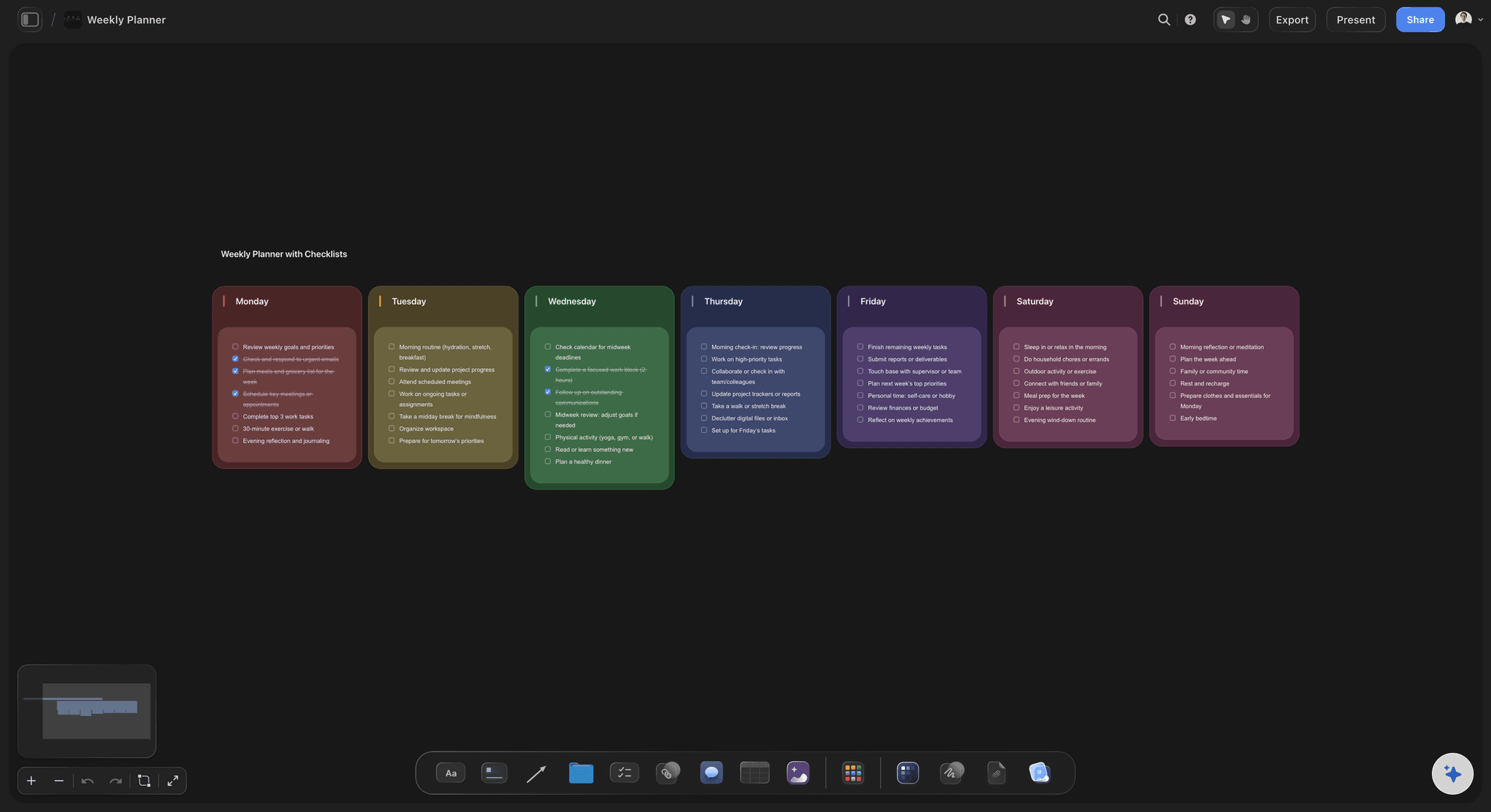
Every task is a ticket with a title, a short description, one label and a due date. Use the label for the client and you can see whose work fills the board. A short checklist goes on a to-do card instead, with a box to tick on each line.
See the AI kanban board generator →
The week
Ask what changed, card by card
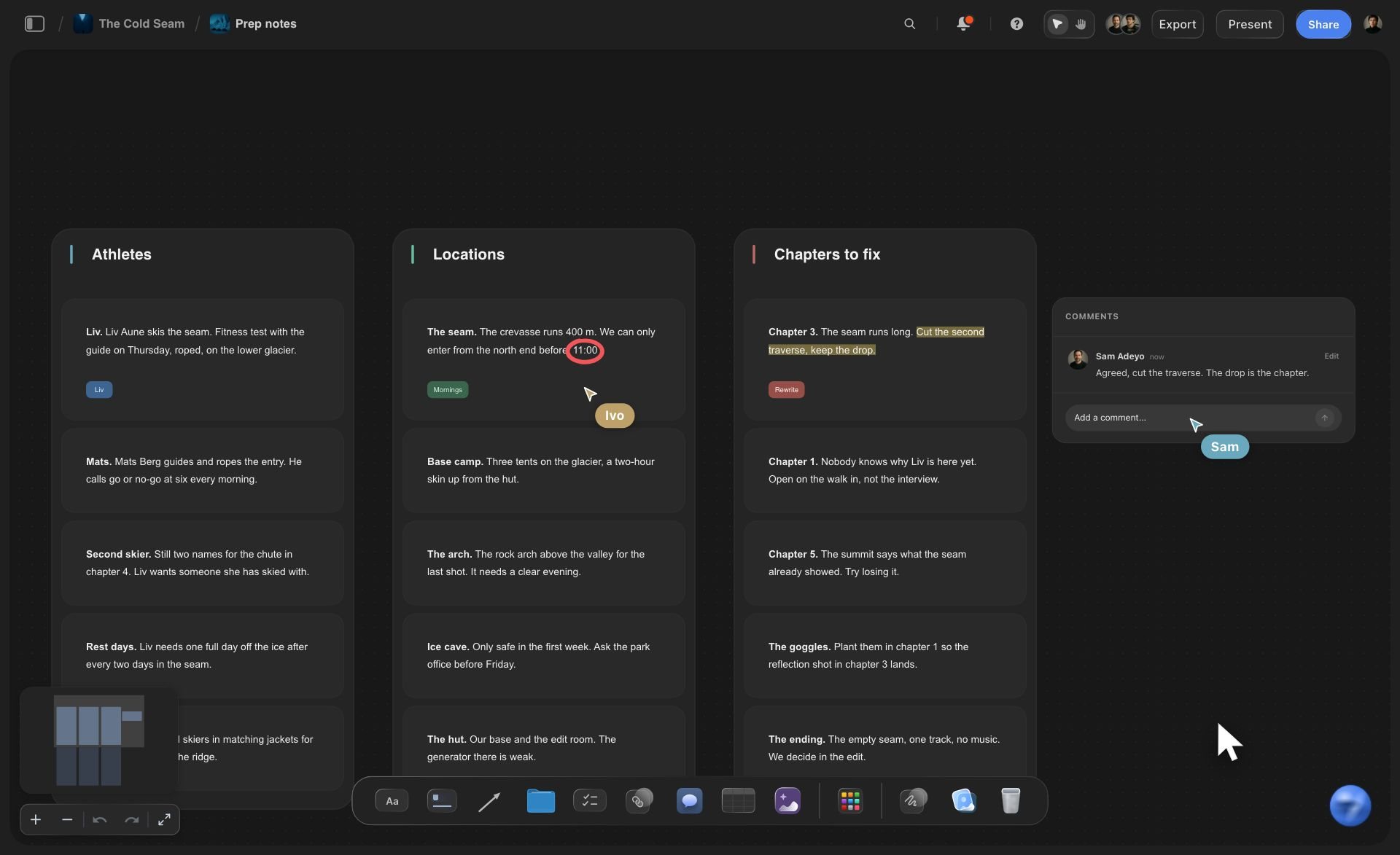
Ask Claude what changed on the board in the last day, week or month. It reads the board's history and lists the cards that were added, edited, moved or deleted, with who did it and when. Cards Claude moved for you show under your own name.
See client updates with ChatGPT →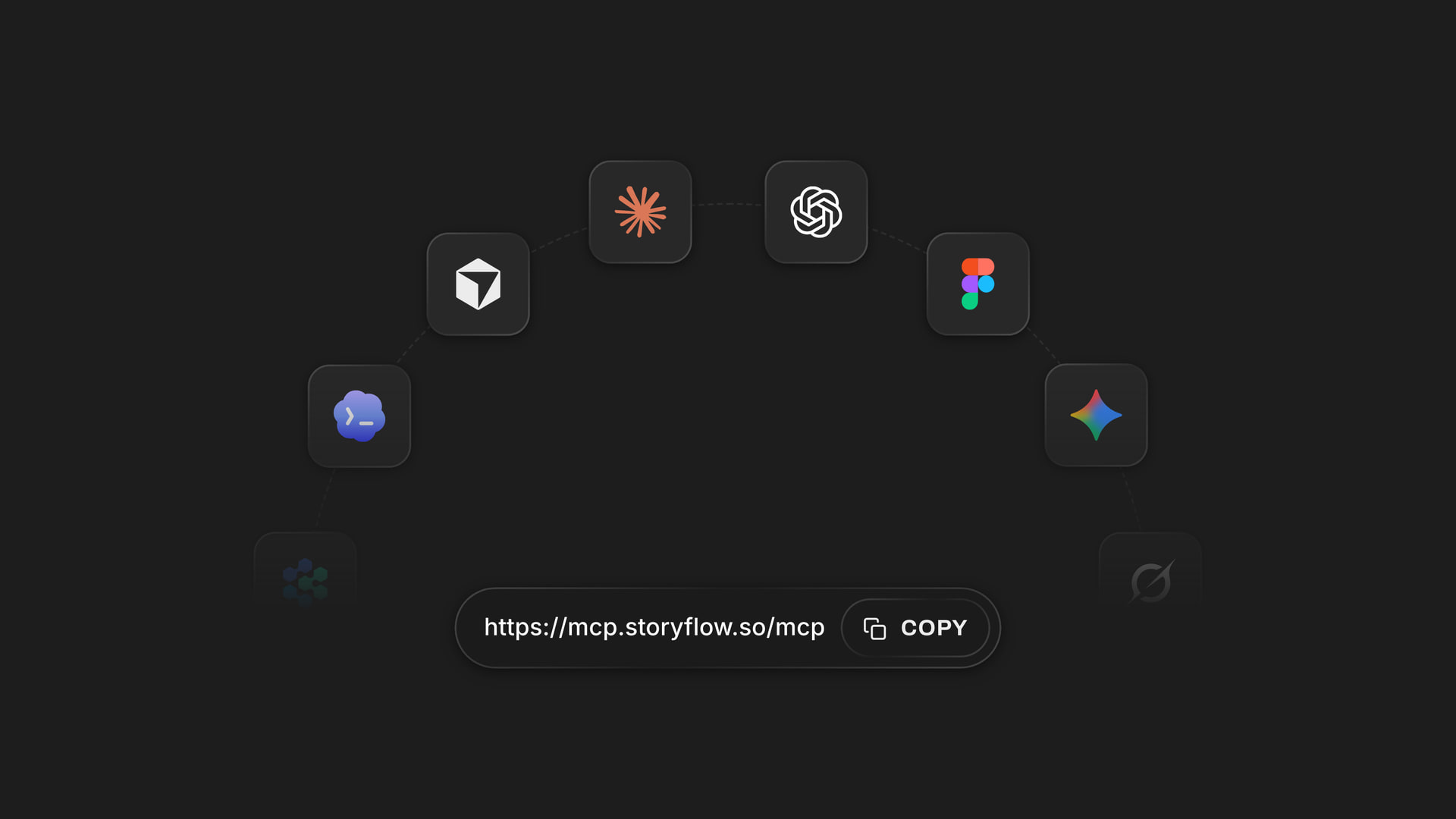
Any assistant
One address for Claude, ChatGPT, Gemini and Grok
The connector is a single web address. Paste it into Claude, ChatGPT, Gemini or Grok, sign in, and choose which projects each one may open. A teammate who works in ChatGPT moves cards on the board you built with Claude.
See how to connect your assistant →Claude does the sorting. Your Storyflow plan is not charged for it.
Claude runs on its own model, so building and moving cards over the connector uses no Storyflow AI credits. A free account (today, one invited by a paid member) gets a weekly allowance of actions from its assistant, and the pricing page has the current number. Plus, Pro and Max have no limit. Storyflow is paid-only during early access, with plans from $7.99 a month billed annually ($9.99 monthly). A free plan launches before the end of 2026, and anyone a paid member invites to a board joins free.
No Storyflow AI credits spent on anything Claude builds or moves
No limit on connector actions on Plus, Pro and Max
Invite the team to the board: anyone a paid member invites joins free
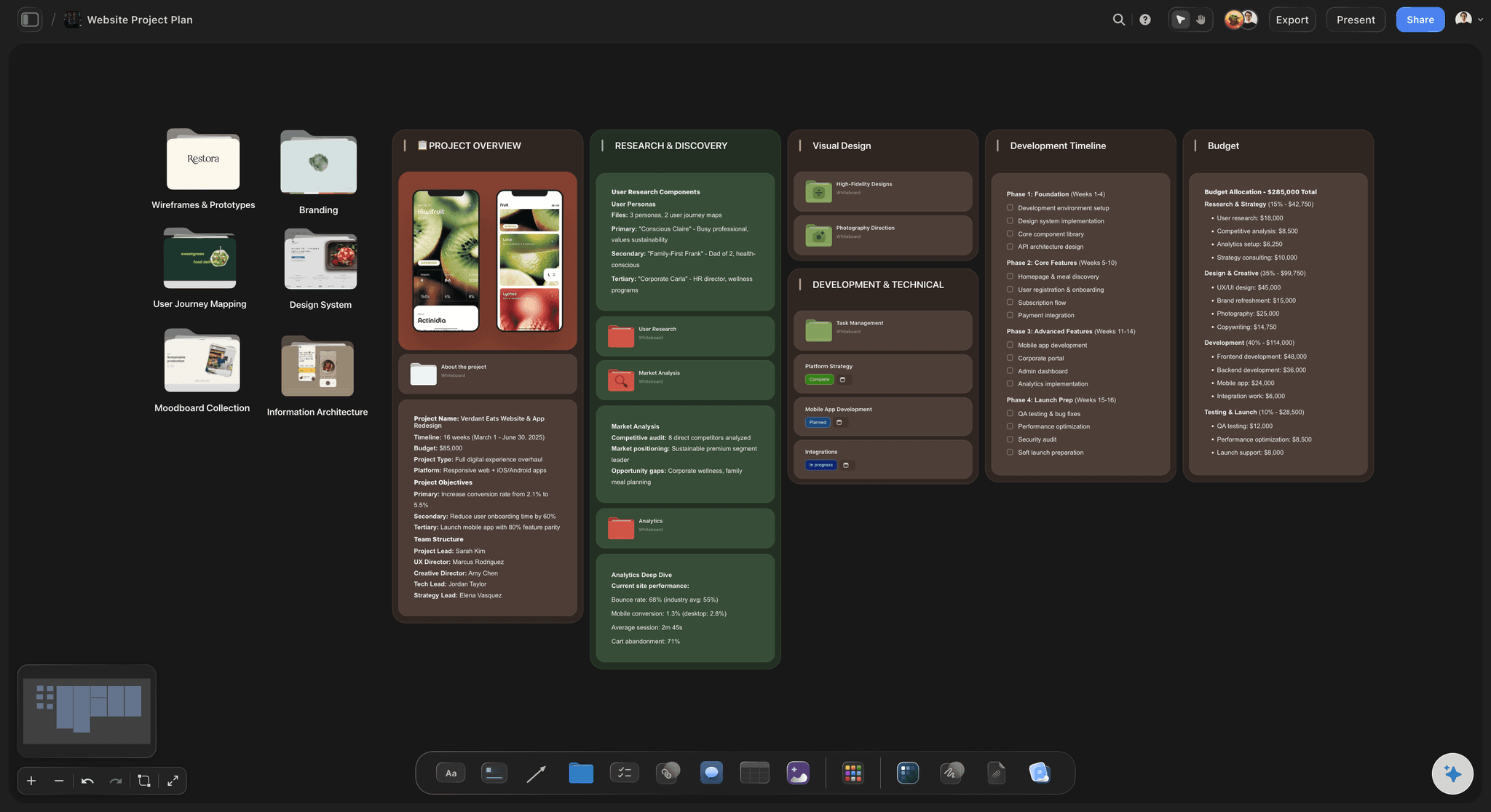
The task cards on the same board as the brief and the files
Choose which client projects Claude may open, and whether it may change them
Built for people with taste
Where a kanban board made in a chat stops working.
Claude sorts a task list well. The trouble starts on Tuesday, when the first card needs to move.
The stale list
A board in a chat is out of date by Tuesday
The cards live on the board, not in the chat: The columns are built on the client's project in Storyflow. Close the chat and the board is still there. A new chat next week starts from the cards as they stand, not from your memory of them.
Move a card by asking: Tell Claude a task is finished or stuck and it moves that card to the column you name. The card itself is moved, so its label, its date and your team's edits come with it.
Fix one ticket, not the whole list: A new due date or a clearer title is a change to the card that is already there. Claude does not write the board again to fix one line.
A long backlog in one request: Claude sends a column and all its cards together, up to 40 at a time, so a long backlog does not stop half way. If one card fails, the others still land.
The pile
Forty loose notes and no columns
Loose cards sorted without retyping: If the tasks already sit on a board as loose notes, ask Claude to sort them into columns. It moves the cards you wrote into up to 12 columns in one request, so nothing is typed twice.
Tasks pulled from the brief on the board: Put the client's brief or the call notes on the board as a PDF or a Word file. Claude reads it there and turns what it asks for into cards. It gets the first 40,000 characters of a file, so split a very long one.
A line between now and later: Ask for a divider between groups of columns: this month's work on one side, the parked ideas on the other. It stays one board, and the split is easy to see.
A status table when rows read better: Some work reads better as a list. Ask for a table with a date column and a status column (Not started, Blocked, In progress, In review, Done or Archived), up to 8 columns and 50 rows, right beside the cards.
The people
The client asks where their job stands
One link for the client: Make a view-only link to the board in Storyflow and send it. It opens in the client's browser with no account and shows the columns as they are right now, so the answer to "where are we?" is a link.
Names from the people on the board: Ask Claude who is on the board and to write a name on each card in This week. To set a person as the owner of a card, do that yourself in Storyflow.
Only the projects you pick: At sign-in you choose which projects Claude may open. Keep each client in its own project, and one client's tasks never show up in a chat about another.
Deleted cards wait for 7 days: Claude has no tool to delete a card. When you delete one by hand it stays in the board's trash for 7 days, and Claude can list what is in there if you want to check.
Explore templates for your project
Every template opens as a real, editable board on the infinite canvas. Pick the closest fit and make it your own.
Mind Map
Branch one central idea out into themes and sub-points, then drag the connections around until the structure makes sense.
One app instead of five
Where Storyflow fits when Claude runs the kanban board.
It holds the board Claude builds and updates. It does not move cards by rule or remind anyone of a date.
Storyflow with Claude
Recommended
Claude sorts a pasted task list into columns
Columns of cards the whole team can drag and edit
Claude builds and moves the cards on your Storyflow board
Board sits on an open canvas beside the brief and the files
A record of which cards changed and who changed them
Rules that move cards and set dates automatically
Calendar and timeline views of the same cards
Reminders before a card is due
Claude on its own
Claude sorts a pasted task list into columns
Columns of cards the whole team can drag and edit
Claude builds and moves the cards on your Storyflow board
Board sits on an open canvas beside the brief and the files
A record of which cards changed and who changed them
Rules that move cards and set dates automatically
Calendar and timeline views of the same cards
Reminders before a card is due
Trello
Claude sorts a pasted task list into columns
Columns of cards the whole team can drag and edit
Claude builds and moves the cards on your Storyflow board
Board sits on an open canvas beside the brief and the files
A record of which cards changed and who changed them
Rules that move cards and set dates automatically
Calendar and timeline views of the same cards
Reminders before a card is due
What creators are saying
Join early creators getting structured workspaces and AI that remembers their projects
“Storyflow has sped up my workflow by at least 3x, which means more flow state and more projects I can actually ship. It truly changed the way me and my team create.”

Reilin Joey
Director & YouTuber
“One prompt gets me a structured board. But the tactics are my favorite. I run my YouTube scripts through them and my intros and retention got better. It's amazing.”

Justkay
YouTuber & Freelance Filmmaker
“I used to juggle five apps to plan a project. Now I describe what I am making and get boards, lists, and a schedule. All in one place.”

George
@fernwehchronicles
Kanban boards with Claude: questions
What agencies and founders ask before they let Claude near the task list.
In Storyflow, yes, and it lands on a board your team can use instead of in the chat. Connect Claude to Storyflow, paste the task list and name the columns. Claude builds each column with a card per task: a title, a short description, one label and a due date. Later, ask it to move a card, change a date, or tell you what changed this week.
Storyflow gives Claude a real board to build on: it lays out the columns, writes a card for every task with a label and a date, moves a card when you ask and reports what changed this week, next to the client's brief and files. It works with ChatGPT, Gemini and Grok too. Trello still runs rules that move cards for you, shows the same cards on a calendar or a timeline, and sends reminders before a card is due.
Start with five: Backlog, This week, In progress, Waiting on client and Done. The columns are steps a task moves through, so do not add one per person or per client: use a label for that. Put a limit on In progress, such as two cards each. In Storyflow, Claude builds these as a row of columns and labels every card with its client.
In Claude, open Customize, then Connectors. Click Add, then Add custom connector. Name it Storyflow, paste https://mcp.storyflow.so/mcp and click Continue. Choose Sign in now, click Add, then sign in to Storyflow, pick the projects Claude may use and allow changes. On the Free plan Claude allows one custom connector. Every connection ends after 30 days, and Claude then asks you to sign in again.
Yes. Say which task and where it goes, such as "move the logo files to Waiting on client", and Claude moves that card on your Storyflow board. It can also change the title, the description, the label or the date on a ticket that is already there. It edits the one card you name. It does not rebuild the column.
Partly. Claude can read who is on the Storyflow board and write a name in a card's title or description. Setting a person as the owner of a card is something you do in Storyflow. Storyflow sends no reminder when a date arrives, so people see their name when they open the board.
No. Storyflow has a separate kanban element that you add to a board yourself, and Claude cannot create that one over the connector. What Claude builds is a row of columns with cards inside. You drag those cards between columns by hand like any other card on the board, and Claude moves them when you ask.
Yes. Ask what changed in the last day, week or month and Claude reads the Storyflow board's history: which cards were created, edited, moved or deleted, by whom and when, up to 100 changes at a time. One thing to know: whatever Claude changes is saved under your name, so its edits show as yours.
Claude has no tool to delete a card, so finished work moves to Done and you clear it by hand (deleted cards stay in the trash for 7 days). It cannot create Storyflow's separate kanban element or assign a person. And Storyflow has no rules that move cards automatically, no reminders, no burndown chart and no calendar or timeline view. For those, keep a tool such as Trello or Jira.
Yes, if you share it. In Storyflow, make a view-only link to the board and send it. It opens in the client's browser with no account and shows the columns as they are now. To leave a comment, the client signs in. Claude cannot create or change share links, so sharing is always your decision.
No. Claude runs on its own model, so what it builds and moves over the connector uses no Storyflow AI credits. A free Storyflow account (today, one invited by a paid member) gets a weekly allowance of actions from its assistant, and the pricing page has the current number. Plus, Pro and Max have no limit. Storyflow is paid-only during early access, with plans from $7.99 a month billed annually ($9.99 monthly).
Only the ones you pick. When you sign in, Storyflow asks whether Claude may use all your projects or only the ones you tick, and whether it may make changes or only read. Keep each client in its own project and one client's tasks never appear in a chat about another. Every connection ends after 30 days, and you can end one sooner in Settings, under Connected apps.
Yes. Storyflow's connector is one address, https://mcp.storyflow.so/mcp. ChatGPT needs Plus, Pro, Business, Enterprise or Edu, on the web, with Developer mode turned on (an admin does that on Business and Enterprise). Gemini's custom apps need a personal Google account with Keep Activity on, in the US, for people 18 or over, in English. On Grok Business and Enterprise, a team admin adds it in the xAI console first. Each one works on the same board.
More from Storyflow
Storyflow MCP server
Connect Claude to Storyflow
Kanban board in Storyflow
AI kanban board generator
Project plan with ChatGPT
Client updates with ChatGPT
Meeting notes to action items with ChatGPT
Sprint planning board
Agency client project planning
Visual project planning
Trello alternative
Product roadmap
Launch roadmap
Storyflow for agencies
Storyflow for startups
Second brain with Claude
Hand Claude the task list. Hand the team the board.
Columns, cards, labels and dates, built in one conversation and moved with a sentence.