
Rock-steady plans for every shoot
A casting session plan
that makes every read comparable.
For producers on small productions: the role breakdowns, the sides, the timetable, the room and a score for every read, on one board the director and the casting lead work from.


Creatives working for these brands already got early access
- Red Bull
- Canon
- Artlist
- Porsche
See how easy it is to get started
Watch a real project come together, from a blank board to a finished plan, clicked through step by step.
Start from a ready-made template
Pick a board to see what you can build, then let AI fill it in. Every template is a real, editable starting point on the same infinite canvas.

Pre-Production
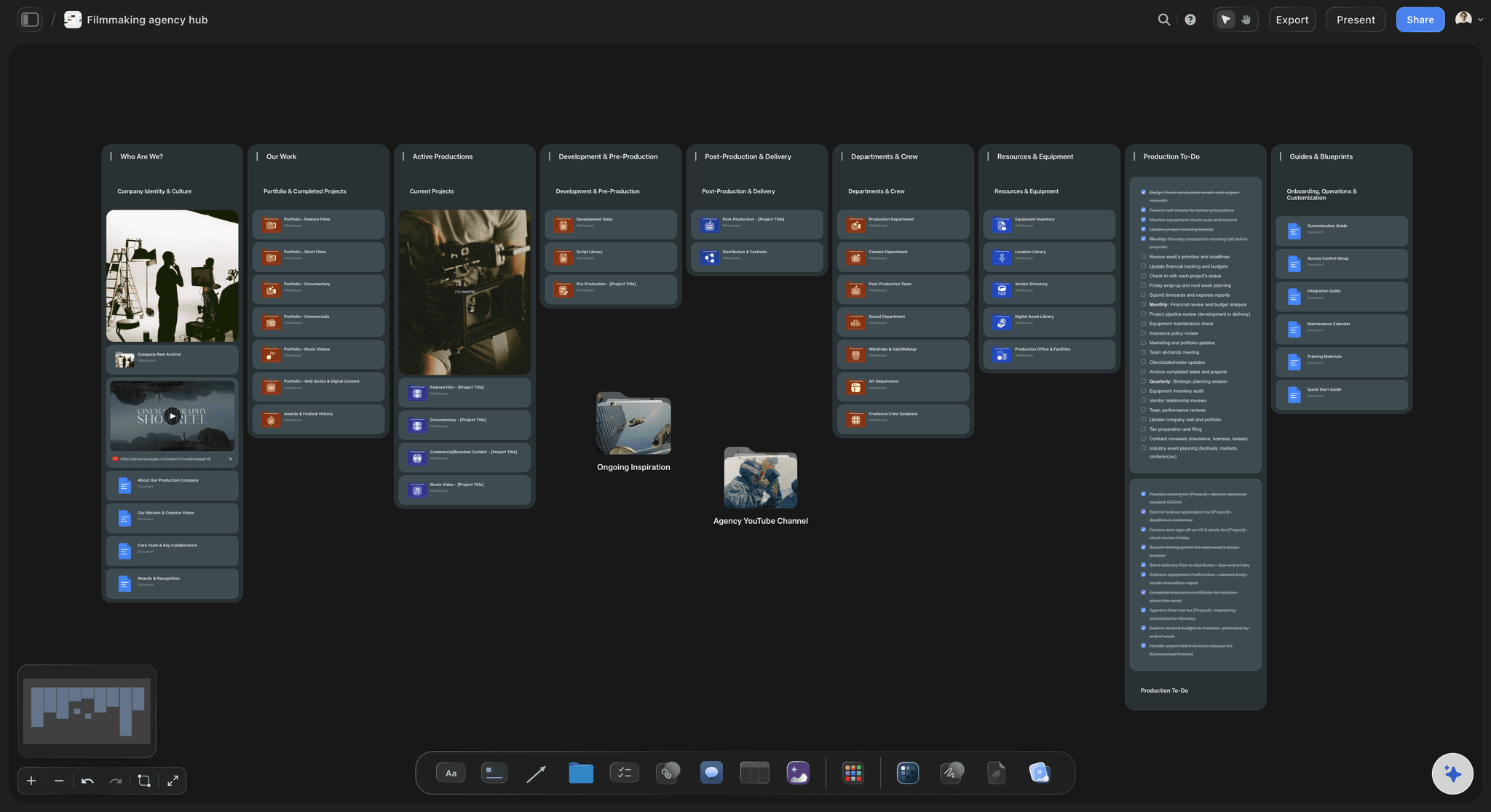
Pull the brief, script, shot list, and moodboard into one pre-production hub so the whole shoot is planned in one place.
How do you plan a casting session?
To plan a casting session, write a breakdown for each role, give everyone reading for a role the same sides, the same reader and the same first direction, timetable the slots with real gaps, record every read to one standard, and score each read the same way, including how the actor takes a redirect. Storyflow is an AI visual workspace that plans a casting session on one infinite canvas: the role breakdowns, the sides, the slot timetable and the scoring table. Its AI reads the script you attach, lists every scene each character speaks in, and drafts the breakdowns for you to correct.
Treat the session as a test, not a show. If each actor gets different pages, a different reader and a different note, you have watched six unrelated performances and you will choose on charm. Hold three things the same for everyone seeing a role: the sides, the reader and the first direction. Then change one thing on purpose, the redirect, where you ask them to play the scene a different way. How someone changes is a better guide to working with them than how they walk in.
Write the breakdown before you write the timetable. For each role: the name, the playing age range, one line on who they are, the one quality the role cannot do without, the scenes the role is in, any skills needed such as driving or an accent, the shoot dates, and the rate. The breakdown is also what you post on the casting platform, so write it once and use it everywhere.
A worked example. A short film with three roles and 20 actors in one day. Morning, 9:30 to 13:00: the two leads, six actors each, 15 minute slots, with a 15 minute reset between the two roles and a five minute gap after every third slot. Afternoon, 14:00 to 15:30: the supporting role, eight actors, 10 minute slots. Callbacks the following week: two actors per lead, then a chemistry read with the four of them in pairs. No block runs past four hours, because after that you stop judging and start matching on tiredness.
Choose sides that show two different things. One scene where the character wants something and does not get it, and one where they have to hide what they feel. Keep each scene under two pages. Send the sides at least 48 hours ahead, with one line of context per scene, so actors arrive having made choices rather than reading cold.
Set one recording standard and keep it. The same framing for every read, usually a mid shot at eye level against a plain wall, the same microphone, and a slate at the start with name, role and agent. Name every file the same way, such as ROLE_Surname_Take1. Comparable footage is the whole point of recording, and a read shot from a different angle cannot be judged against the others. Finally, decide before the day when every actor will hear back, write that date on the plan, and keep it. Actors talk to each other, and a session that leaves people waiting for weeks costs you the next pool of good actors.
Ultra fast from brief to board
Four steps from a script to a session you can compare.
Most of it done the week before anyone walks into the room, so the day itself is only about the reads.
01
Get every role's scenes from the script
Attach the script and ask for the scene list. Storyflow's AI reads the file and lists every scene with its speaking parts and its length in eighths of a page, so you can see each character's scenes at a glance and choose the two that make the best sides.
02
Write a breakdown for each role
Ask the AI to draft a breakdown card per role from the script: name, playing age, who they are, the quality the role needs and the scenes they are in. It proposes; you correct it and add the dates, the rate and any skills the role needs.
03
Build the timetable and the scoring table
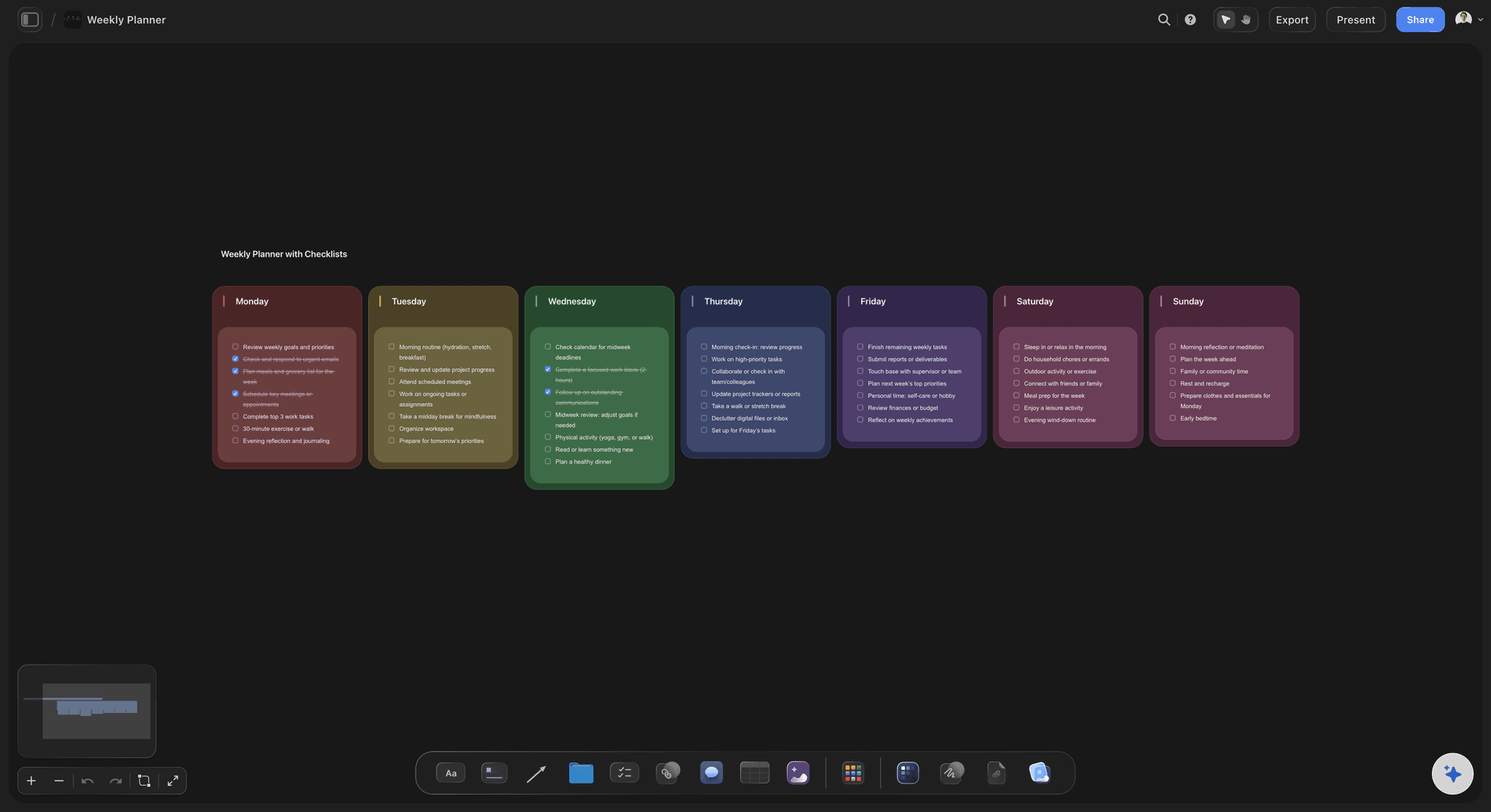
Add a table with a row per slot: time, role, actor, agent, email and phone. Beside it, a scoring table with star ratings for the first read, the redirect and the fit to the role, a checkbox for the shoot dates, and an Average in the footer.
04
Run the room, then carry the shortlist on
Score each read the moment it ends, while it is fresh. Drop the recorded reads onto the board beside each actor's row. Move the top two per role to a callbacks wall, and lay out the chemistry pairs side by side for the director to compare.
The roles, the sides, the slots and the scores.
Storyflow plans and records the session, from the first breakdown to the last callback. Breakdowns go out and submissions come in through your casting platform, the way actors and agents already expect.
Before you post anything
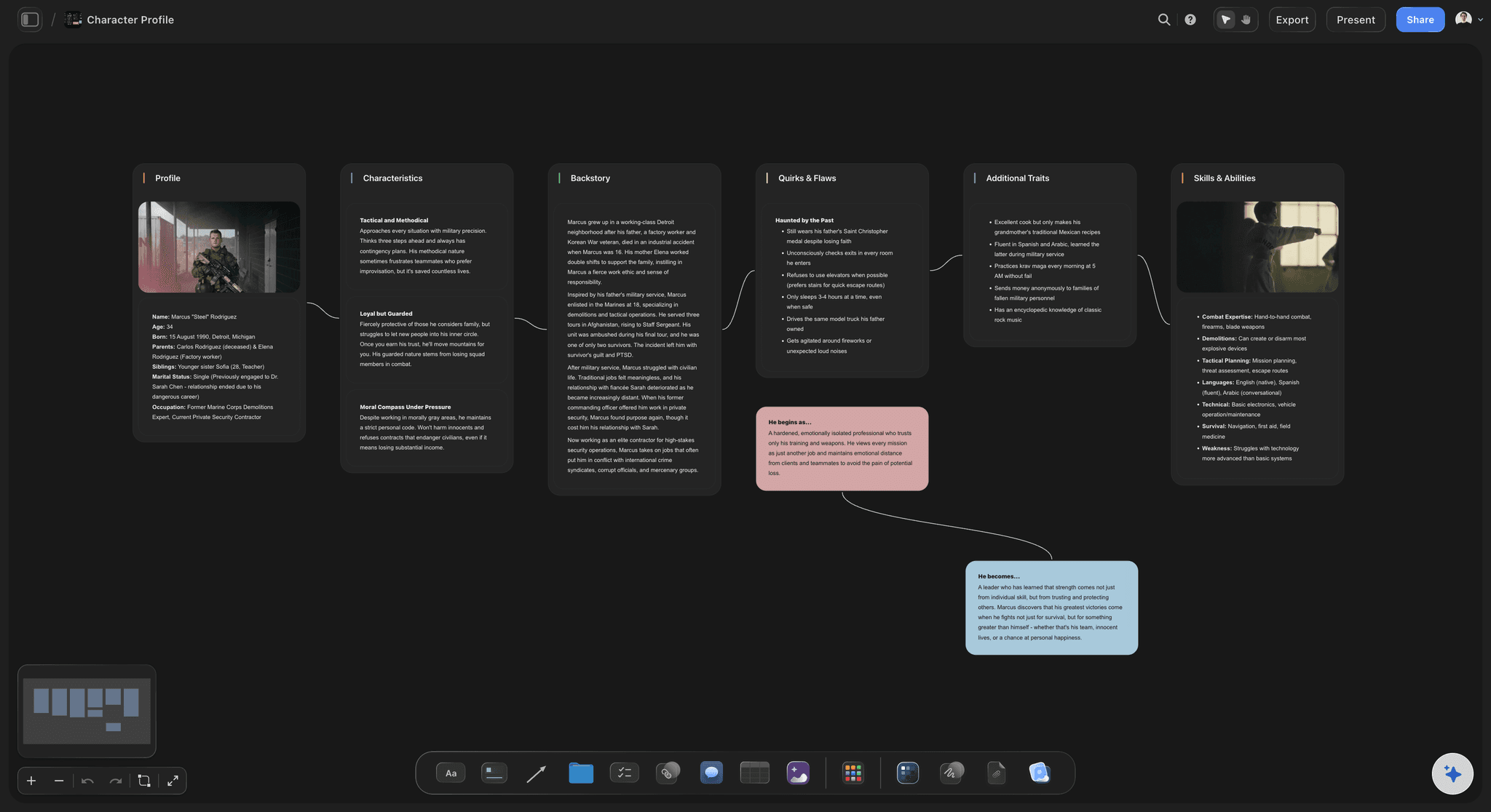
A breakdown for every role, drafted from the script
Name, playing age, one line on who they are, the quality the role cannot do without and the scenes they are in. The AI drafts each card from the script; you correct it and post the same text on your casting platform.
See the AI character profile generator →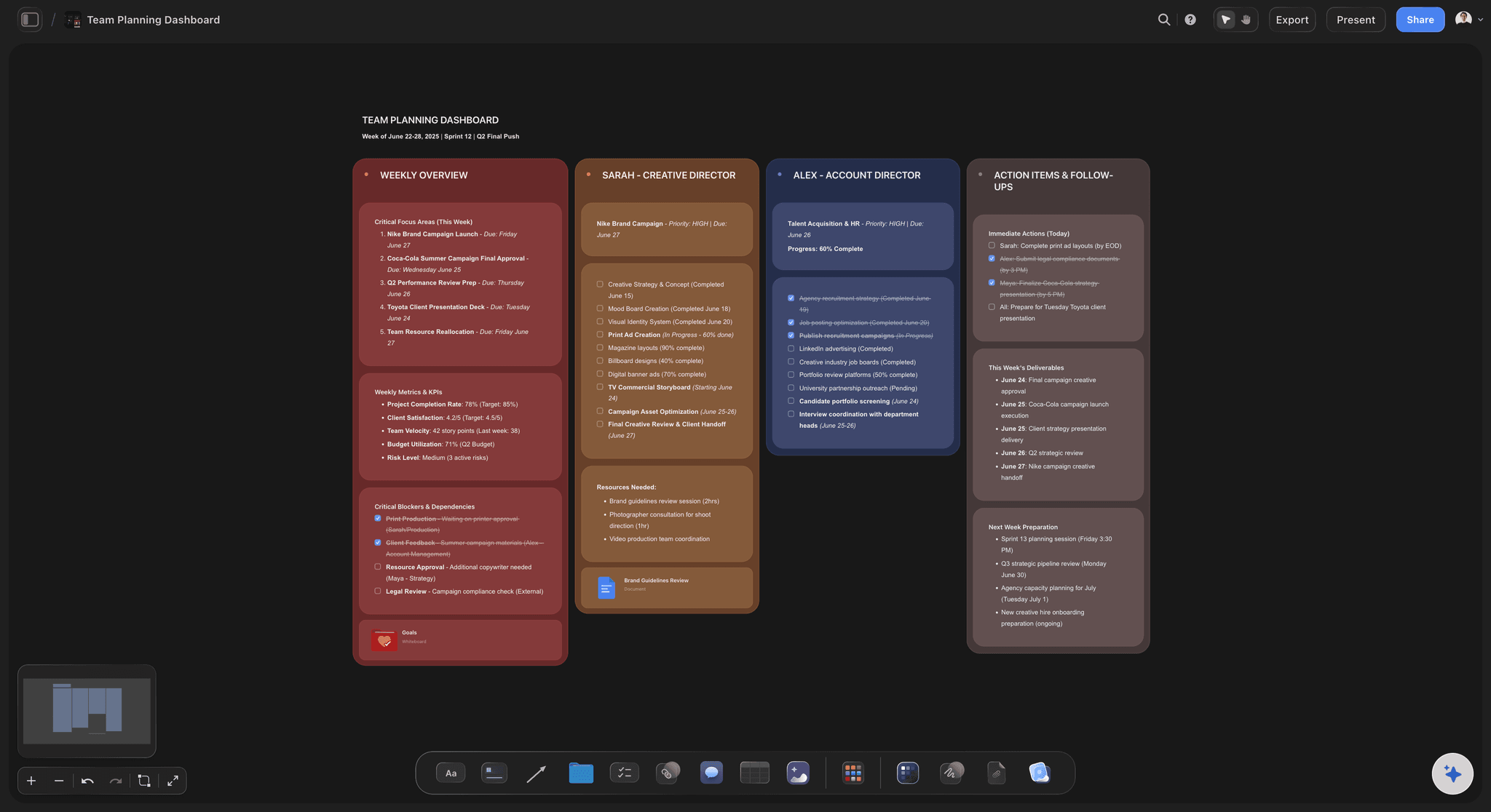
The day itself
A timetable with gaps you can actually keep
One row per slot with the time, the role, the actor and their agent. Fifteen minutes for a lead, ten for a supporting role, a gap after every third slot, and no block over four hours.
See low budget film planning →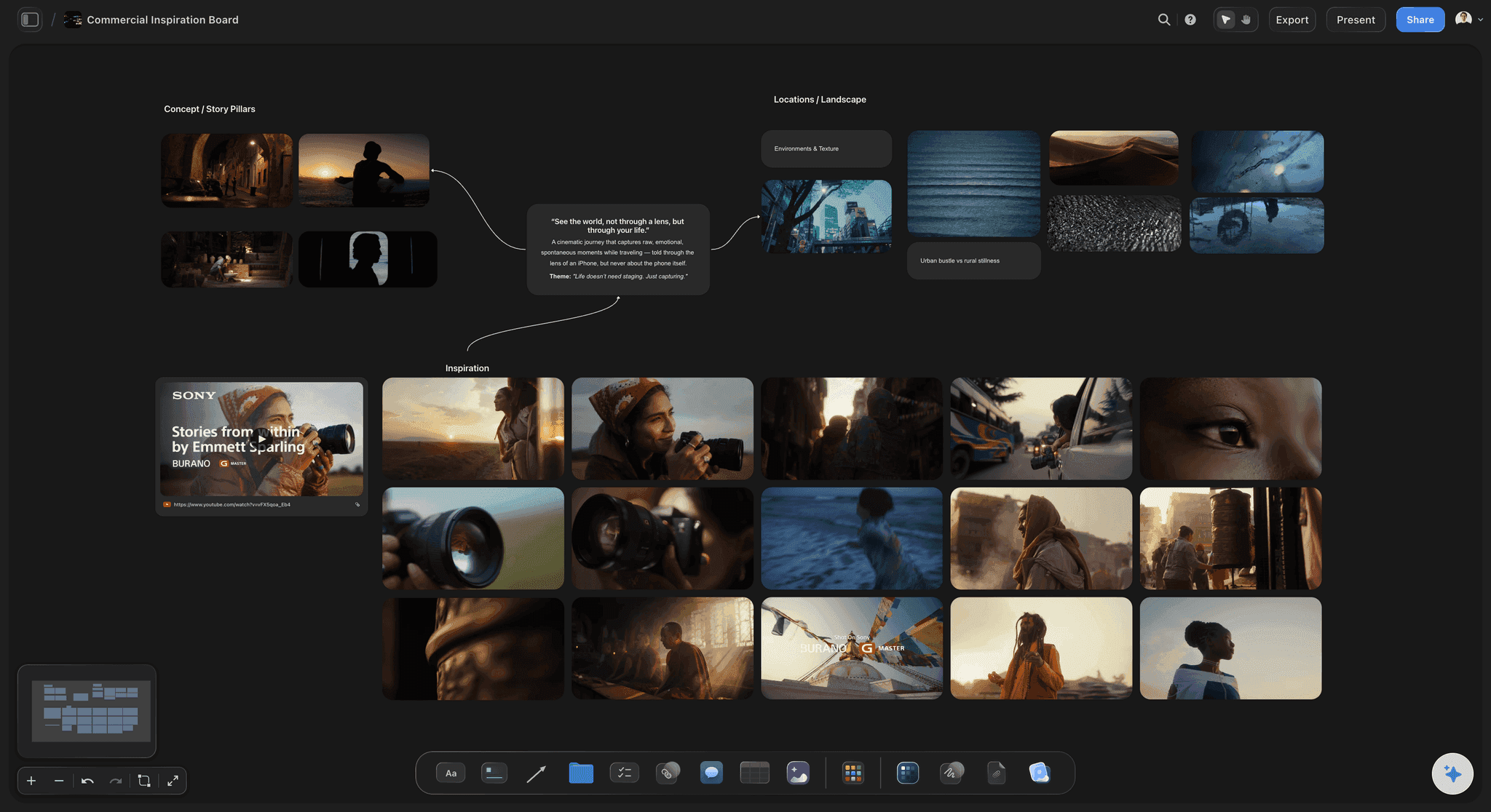
Every read, scored the same way
Stars for the first read and the redirect
A scoring table with star ratings for the first read, the redirect and the fit, and an Average in the footer. The redirect gets its own column, because how an actor takes a note is the thing you will live with on set.
See the casting board →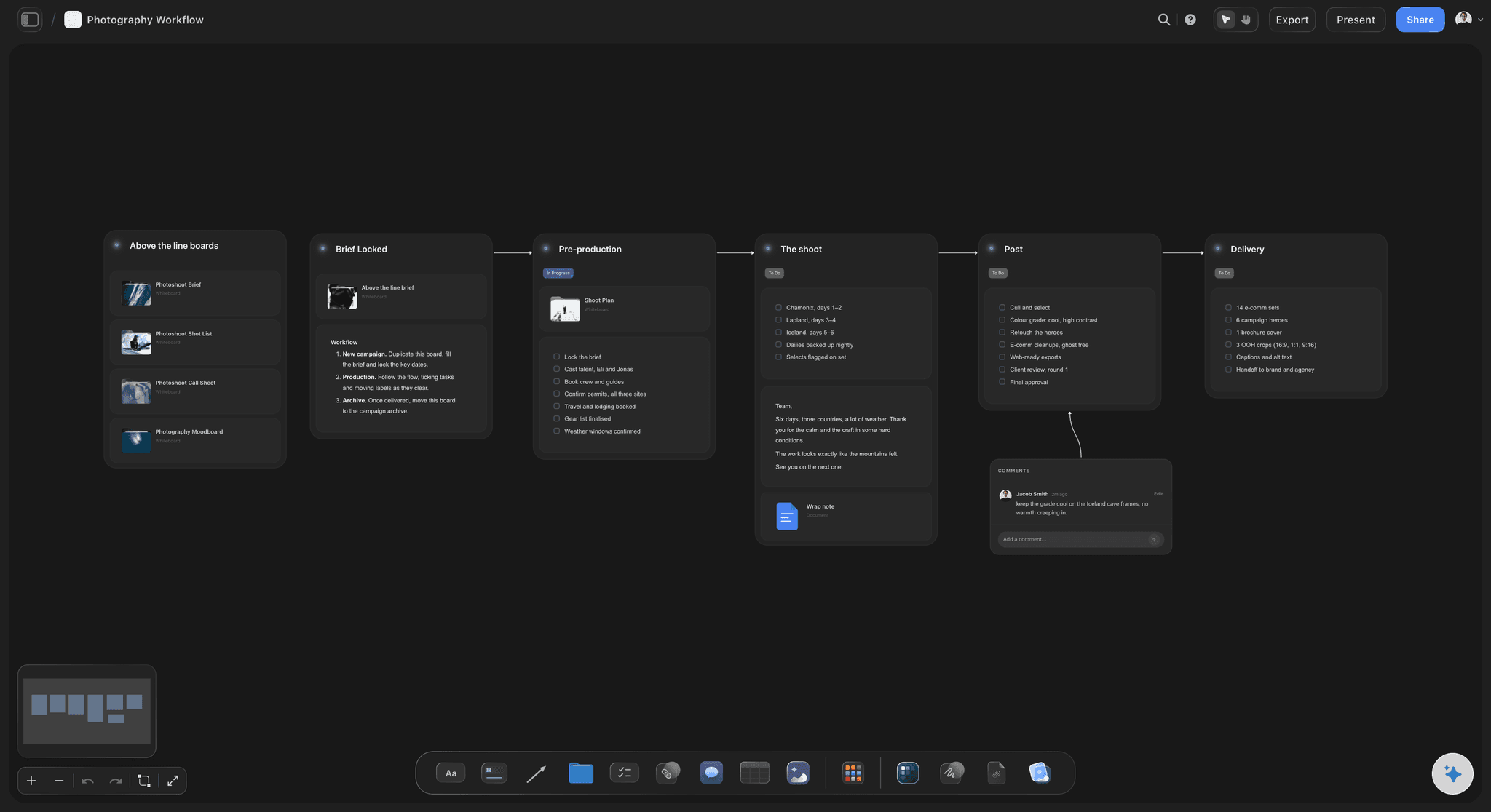
After the room
Callbacks and chemistry reads laid out in pairs
The top two per role move to a callbacks wall. For the chemistry read, put each possible pair side by side with their recorded reads, so the director compares pairings rather than remembering them.
See the character relationship map →The actors you nearly cast are still on the board.
The breakdowns, the scores and the recorded reads stay in the project, so the actor who was a close second this time is easy to find for the next one. Storyflow is paid-only during early access, with plans from $7.99 a month billed annually ($9.99 monthly). A free plan launches before the end of 2026, and anyone a paid member invites to a board joins free.
Invite the director and the casting lead without buying them seats
Recorded reads and self-tapes up to 1 GiB per file
Unlimited boards, image uploads and files on every paid plan
Attach .fdx, Fountain or PDF scripts and the AI reads them
A view-only link for the producer who only needs to watch
Built for people with taste
The three ways a casting session wastes its day.
Most of them are decided before the first actor arrives, by how the session was planned the week before.
The pages
Sides chosen in a hurry the night before
Every character's scenes, listed: The AI reads the script and lists the scenes each character speaks in, with their length. Choosing two scenes that show different sides of the role takes minutes, not a reread.
Two scenes that show two things: One where the character wants something and does not get it, one where they hide what they feel. Each under two pages, so the read is about the actor, not their stamina.
Sent 48 hours ahead: The sides, one line of context per scene and the time of the slot go out two days before. Actors arrive with choices made, which is what you are there to see.
The same pages for everyone: Everyone reading a role gets the same sides and the same first note. That is what makes the scores in the table mean the same thing from slot one to slot six.
The timetable
A session that runs an hour late by eleven
Slot lengths set by the role: Fifteen minutes for a lead, ten for a supporting role, five for a line or two. Written on the board, they become the plan instead of a hope.
Gaps on purpose: A five minute gap after every third slot catches the overrun, and a reset between roles lets the room change the sides and the reader's notes.
Four hours, then stop: No block runs past four hours. After that, the people in the room stop judging reads and start reacting to how tired they are.
Contacts in the same row: Each slot row holds the actor, the agent, an email and a phone number, so whoever is on the door can call the agent when someone is running late.
The decision
Choosing on charm a week later
Scored the moment the read ends: Each read gets its stars before the next actor walks in. A score written at the end of the day is a memory of the score, and memories favour whoever was last.
The redirect scored on its own: The first read shows preparation. The redirect shows whether they can take a note and change. Two columns keep the two from blurring together.
Reads beside the scores: Drop each recorded read onto the board next to its row. When the director questions a score, the read is one click away.
Everyone hears by a date: Write the date every actor will hear back on the board and keep it. How a session treats actors is how the next pool decides whether to come.
Explore templates for your project
Every template opens as a real, editable board on the infinite canvas. Pick the closest fit and make it your own.
Pre-Production
Pull the brief, script, shot list, and moodboard into one pre-production hub so the whole shoot is planned in one place.
One app instead of five
Where Storyflow fits in a casting session.
It plans the session and keeps the scores. It does not post casting calls, collect submissions or contact actors for you.
Storyflow
Recommended
Breakdowns, sides, timetable and scores on one surface
AI finds each character's scenes in the script
First read and redirect scored separately
Recorded reads beside the scores
Slot timetable with contacts in each row
Callbacks and chemistry pairs side by side
Posts the breakdown and receives submissions
Sends audition times to actors and agents
Casting platforms
Breakdowns, sides, timetable and scores on one surface
AI finds each character's scenes in the script
First read and redirect scored separately
Recorded reads beside the scores
Slot timetable with contacts in each row
Callbacks and chemistry pairs side by side
Posts the breakdown and receives submissions
Sends audition times to actors and agents
A spreadsheet and email
Breakdowns, sides, timetable and scores on one surface
AI finds each character's scenes in the script
First read and redirect scored separately
Recorded reads beside the scores
Slot timetable with contacts in each row
Callbacks and chemistry pairs side by side
Posts the breakdown and receives submissions
Sends audition times to actors and agents
What creators are saying
Join early creators getting structured workspaces and AI that remembers their projects
“Storyflow has sped up my workflow by at least 3x, which means more flow state and more projects I can actually ship. It truly changed the way me and my team create.”

Reilin Joey
Director & YouTuber
“One prompt gets me a structured board. But the tactics are my favorite. I run my YouTube scripts through them and my intros and retention got better. It's amazing.”

Justkay
YouTuber & Freelance Filmmaker
“I used to juggle five apps to plan a project. Now I describe what I am making and get boards, lists, and a schedule. All in one place.”

George
@fernwehchronicles
Casting session questions
What producers on small productions ask before the first audition.
In Storyflow, attach the script and let the AI list each character's scenes, then write a breakdown per role, choose two scenes as sides, and build a timetable of slots with gaps. Give everyone reading a role the same sides, reader and first direction, record every read the same way, and score the first read and the redirect in separate star columns.
Storyflow is built for the planning side of casting: breakdowns drafted from the script, the sides, a slot timetable, a scoring table with the redirect in its own column, and the recorded reads beside the scores, then callbacks laid out in pairs. Posting the breakdown, receiving submissions and sending audition times still belong to a casting platform such as Casting Networks, Backstage or Spotlight.
Writing the breakdowns, posting them, sorting submissions, choosing and sending sides, timetabling slots, booking the room and the reader, confirming each actor, running the session, naming the recordings, scoring the reads and telling everyone the result. Storyflow takes on the breakdowns, the sides, the timetable, the scores and the shortlist; a casting platform handles posting and submissions.
Fifteen minutes for a lead, ten for a supporting role and five for a part with a line or two. That leaves time for a first read, a redirect and a short conversation. Add a five minute gap after every third slot, and never run a block longer than about four hours. In Storyflow the timetable is a table with a row per slot, so the gaps are written into the plan rather than hoped for.
For a small production, six to eight per lead and six to ten per supporting role in the first session is plenty, if your shortlist from the self-tapes was honest. Then call back two or three per lead. Seeing more people rarely helps; seeing them in the same conditions does.
The sides with one line of context per scene, the deadline, the framing (a mid shot at eye level against a plain wall), landscape orientation, a slate with name, role, height and agent, the file naming rule, and where to send it. In Storyflow, keep that request as one document on the casting board so every role uses the same instructions.
Keep the conditions the same for everyone reading a role, score straight after each read, and score the first read and the redirect separately. In Storyflow, a scoring table with star ratings and an Average in the footer keeps every read on the same scale, and the recorded read sits beside its row for anyone who disagrees.
Yes. Attach the script and Storyflow's AI lists every scene with its speaking parts and its length in eighths of a page, so each character's scenes are in front of you. Ask it to suggest two contrasting scenes per role under two pages each. It suggests; the director makes the choice.
As few people as possible: the director, the casting lead or the producer, one reader who is the same for every actor reading a role, and someone running the camera and the door. Write who does what on Storyflow's board. A crowded room makes actors play to the room instead of to the reader.
Call back two or three actors per lead with new pages or a harder redirect. For chemistry, pair each possible combination for a short scene and record it the same way. On Storyflow's board, put each pair side by side with their recorded reads so the director compares pairings, then carry the choice to the casting board.
No. Storyflow does not post breakdowns, receive submissions or self-tapes from agents, let actors book slots, or send messages to actors or agents. Use a casting platform such as Casting Networks, Backstage or Spotlight for that, or email for a small production. Storyflow holds the plan, the timetable and the scores.
The session plan is about running the auditions well: the breakdowns, the sides, the timetable, the room and the scoring. The casting board comes after: headshots and reads side by side for comparing candidates and making the final choice. In Storyflow both sit in the same project, and the shortlist moves from one to the other.
No. Storyflow runs in the browser and there are no native mobile or desktop apps. Run the session from a laptop in the room, and the director or the producer can open the board in a phone's browser from a view-only link.
More from Storyflow
Casting board
AI character profile generator
Character relationship map
Film crew planner
Pre-production checklist
Short film planning
Low budget film planning
First-time filmmaker planning
Indie film production workflow
Film shoot planner
Documentary interview planner
Commercial production
Storyflow for directors
Storyflow for producers
Plan the session before you post the call.
The breakdowns, the sides, the slots and a score for every read. One board for the whole casting, from the first post to the final call.