
Extremely reliable pre-production
The shoot day
punishes what you skipped.
Nobody's first film fails on the writing. It fails because a location was booked for the wrong hours, the shot list had eleven setups for a morning, or nobody worked out who was feeding twelve people. Those are all pre-production problems, and they are all visible in advance if the plan is somewhere you can actually look at it.


Creatives working for these brands already got early access
- Red Bull
- Canon
- Artlist
- Porsche
See how easy it is to get started
Watch a real project come together, from a blank board to a finished plan, clicked through step by step.
Start from a ready-made template
Pick a board to see what you can build, then let AI fill it in. Every template is a real, editable starting point on the same infinite canvas.

Pre-Production
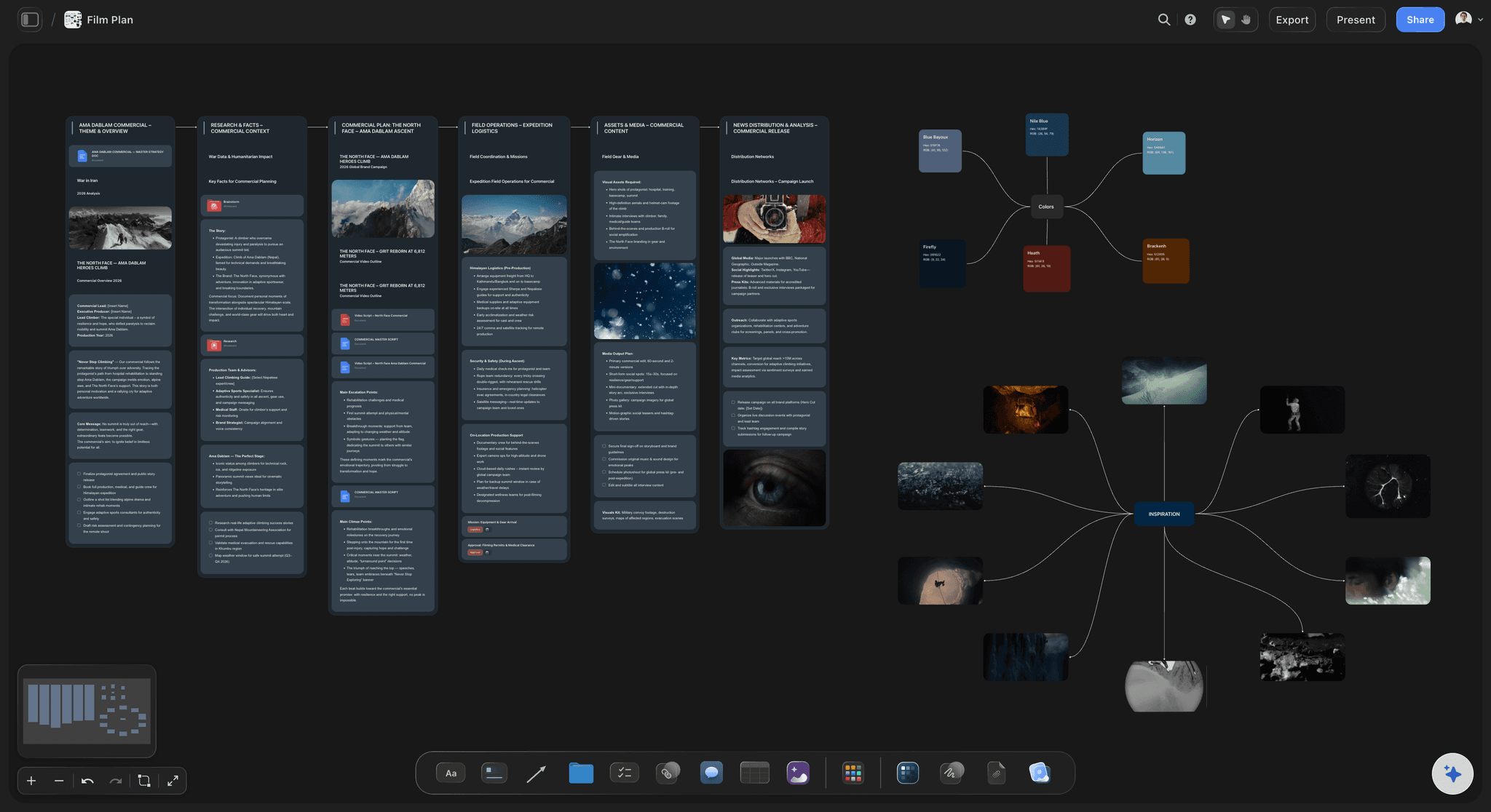
Pull the brief, script, shot list, and moodboard into one pre-production hub so the whole shoot is planned in one place.
What should a first-time filmmaker plan before shooting?
Five things, in this order: a shot list you have counted, a schedule built from that count, confirmed locations with their real access hours, a cast and crew list with call times, and the look agreed with whoever is operating the camera. Everything else in the pre-production canon is optional on a first film. These five are not, because each one fails loudly and expensively on the day.
The single most common mistake is planning in pages rather than setups. A four-page scene sounds small and a one-page scene sounds trivial, but a one-page scene with six camera positions eats a morning while a four-page two-hander in one setup does not. Counting setups is the difference between a schedule and a wish, and it is the number a first-timer almost never counts.
The second mistake is treating the look as something to sort out on the day. If you and your DP have not agreed how a scene is lit before you arrive, the first hour of the shoot becomes a conversation, and on a two-day shoot an hour is real money. Put the references and the shot list side by side so the discussion happens in prep.
Storyflow gives you one canvas for all five, which matters more on a first film than a tenth because you do not yet know which document you will need to look at when something goes wrong. Drop the script on the board and the AI drafts a breakdown from it; ask what a lost location does to the schedule and it answers from your plan.
Ultra fast from brief to board
Do these five and the rest is recoverable.
In this order, because each one depends on the one before it.
01
A shot list you have counted
Not just written. Count the setups per scene, because that number is what a shooting day is actually made of and nothing else predicts it.
02
A schedule built from that count
Group setups into days by location and daylight. If a day holds more than you can honestly shoot, cut now rather than at 4pm on the day.
03
Locations with real access hours
Confirmed, with the hours you can actually be there, plus power, parking and where twelve people will stand between takes.
04
The look, agreed in advance
References beside the shot list so the DP knows how each scene is lit before arriving, and the first hour is shooting rather than discussing.
The plan has to be somewhere you can look at it.
On a first film you do not yet know which document you will need when something breaks, so keep them together.
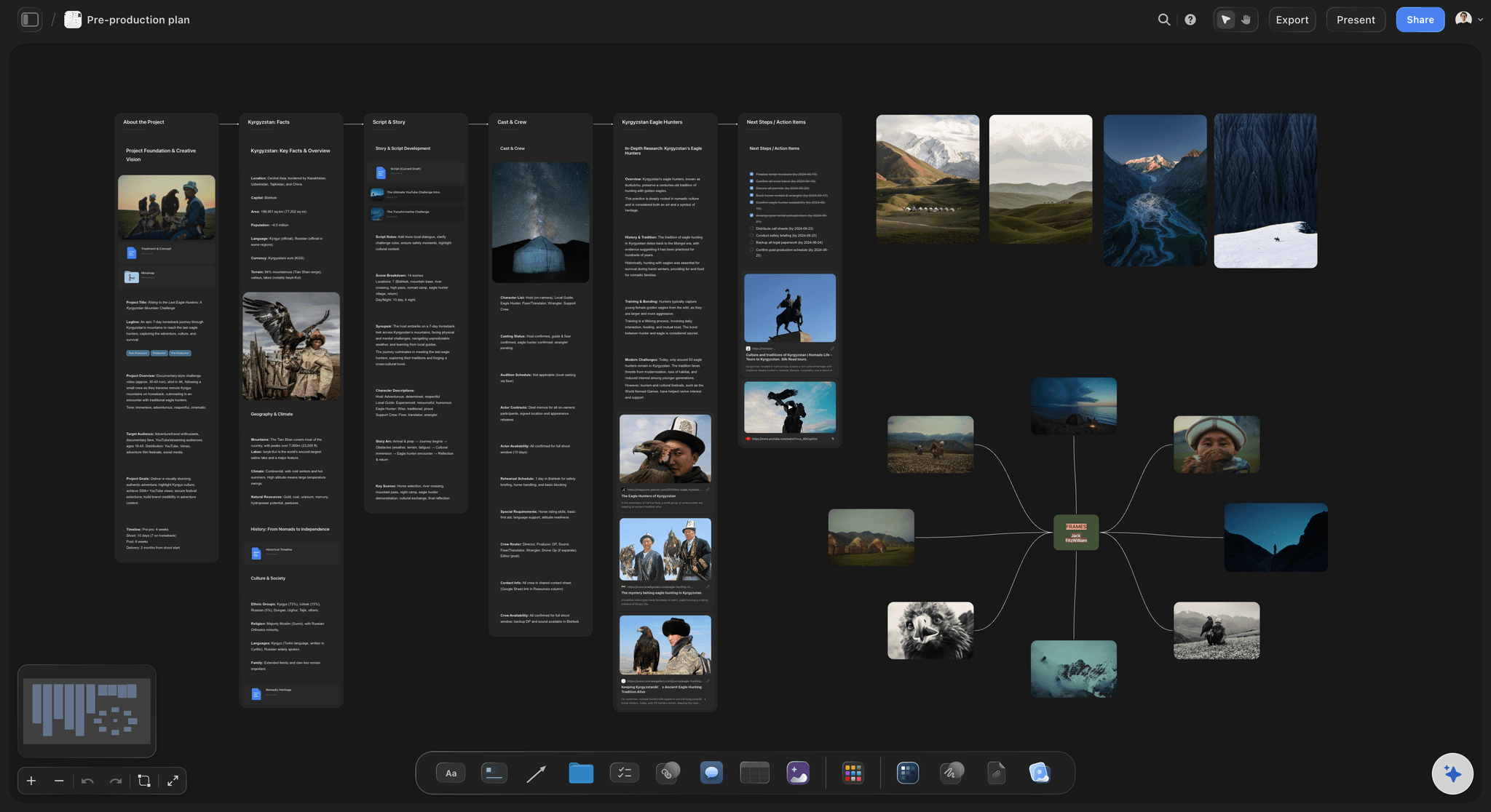
Script to breakdown without the blank page
Start from a draft, not from nothing
Drop the script on the canvas and the AI drafts the per-scene breakdown of cast, props and locations. Correcting a draft is far easier than filling an empty grid you have never filled before.
See the AI script breakdown →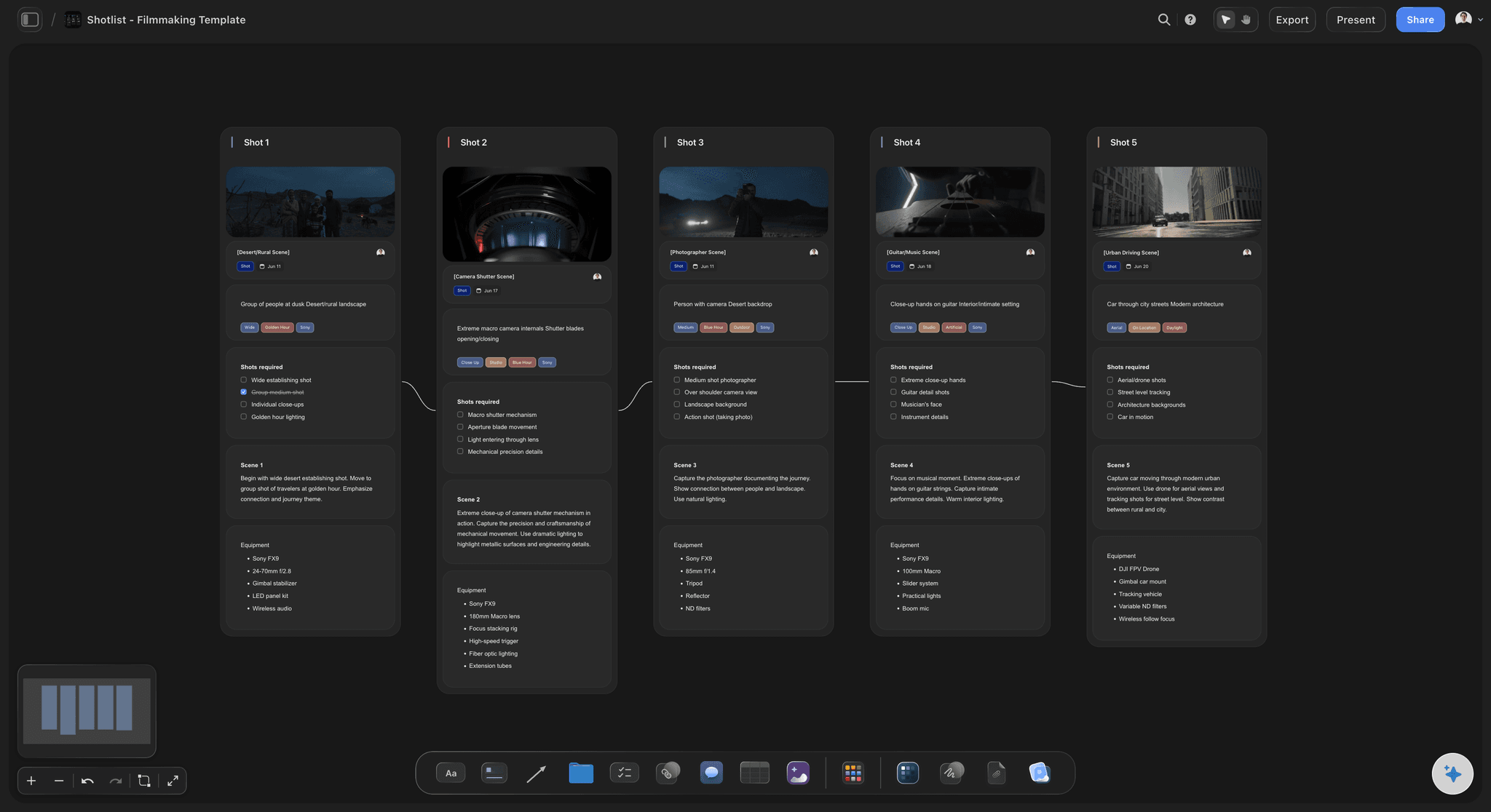
Setups made countable
See whether the day is real
Lay the setups out per day and an impossible schedule becomes obvious in prep, which is the only time cutting a scene is cheap.
See the AI shot list generator →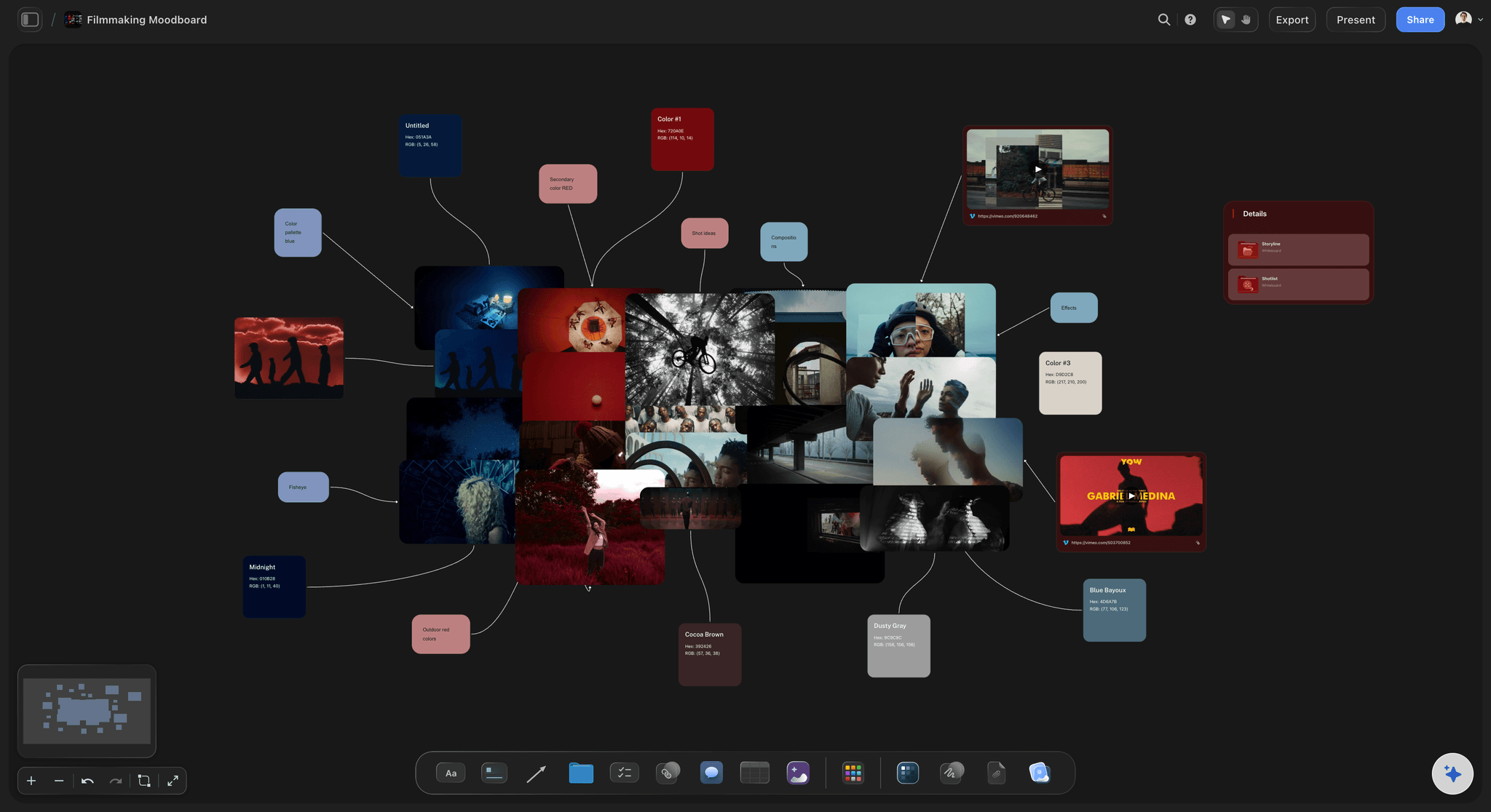
The look, settled before the day
Give the DP something to prepare from
Put lighting references next to the scenes they belong to, so the first hour of your first shoot is spent shooting rather than deciding.
See film lookbooks →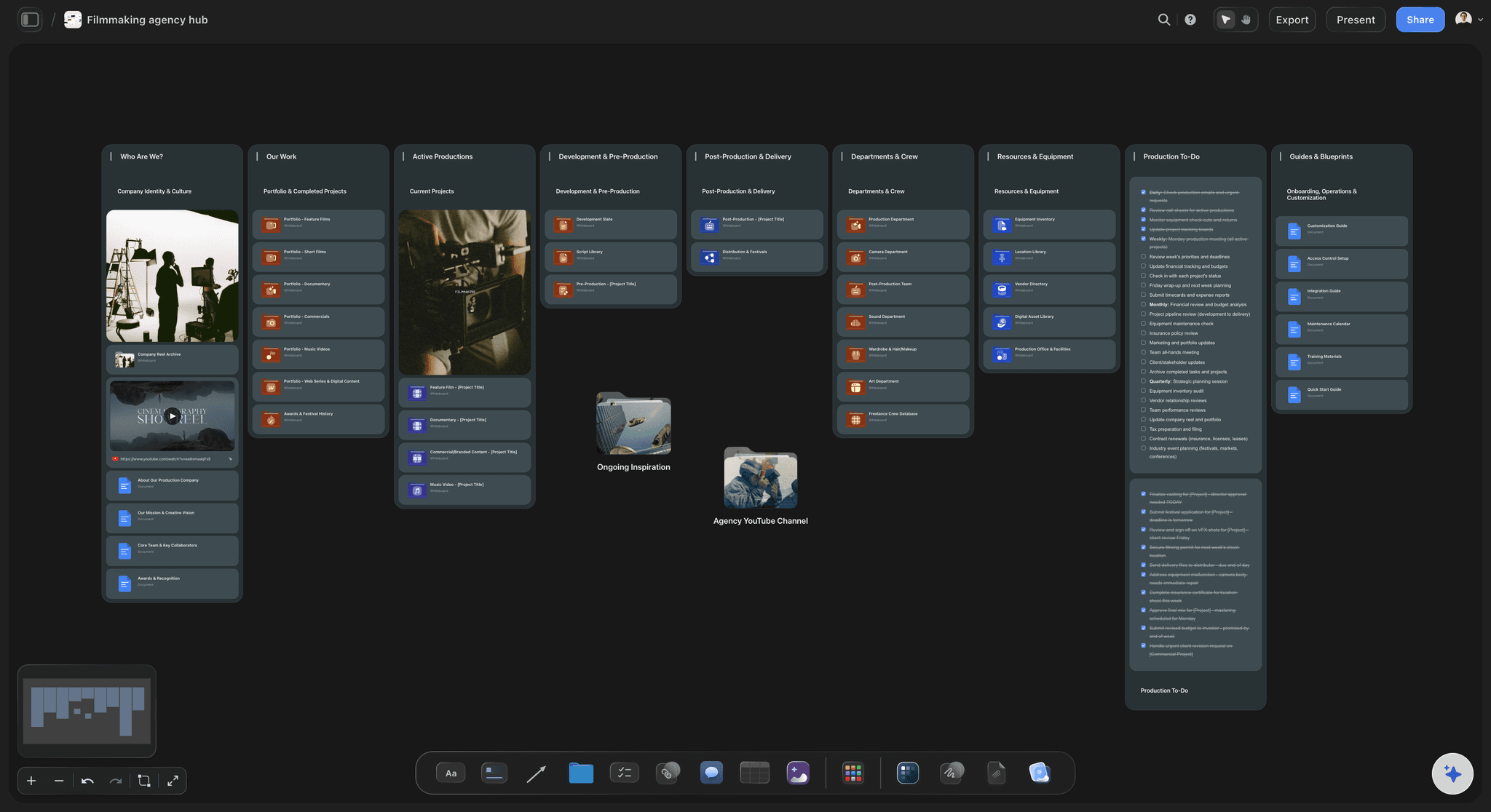
One link for a crew of favours
Nobody signs up to read your call sheet
Share view-only and the cast and crew open the plan in a browser. On a first film most of the crew are friends, and a login is where a shared plan dies.
See the AI call sheet generator →Plans from $7.99/month annual. Free plan coming late 2026.
One board for the whole film, and everyone you invite joins free. Storyflow is paid-only during early access, with a free plan before the end of 2026.
Invited collaborators join free today
One board per film, with no project limit
View-only links open without an account
Built for people with taste
Four things first-timers learn on the day.
All four are cheap to fix in prep and expensive to fix at 4pm with the light going.
The first one
Setups, not pages, make the day
A short scene can be the longest: One page with six camera positions takes longer than four pages in a single setup, and page counts hide that entirely.
Count before you schedule: The setup count per scene is the input to the schedule. Without it you are guessing, and first-time guesses run about double.
Cutting is a prep decision: Dropping a setup in prep costs nothing. Dropping it on the day costs the scene, because by then you have shot half of it.
The second one
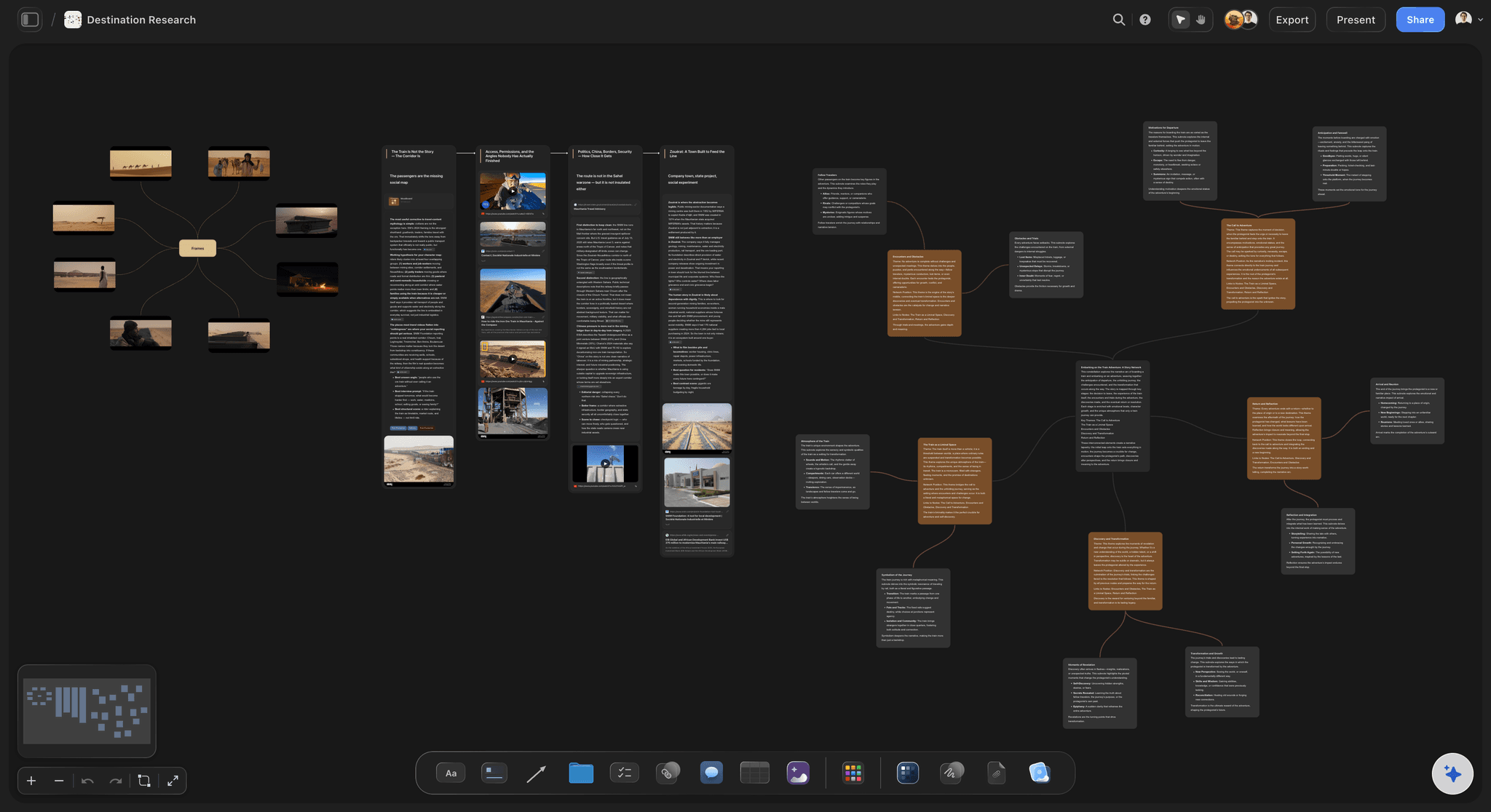
Locations have hours, not just addresses
Access is the real constraint: A location you can have from 9 to 5 with a hard out is a different location from one you can have all day, and the schedule has to know which.
Power, parking, and somewhere to stand: Twelve people need a place to be when they are not shooting. Discovering that on the day costs an hour of everyone's time.
Scout photos on the board: Keep location images beside the scenes they host, so it is obvious when a location cannot deliver the frame you drew.
The third one
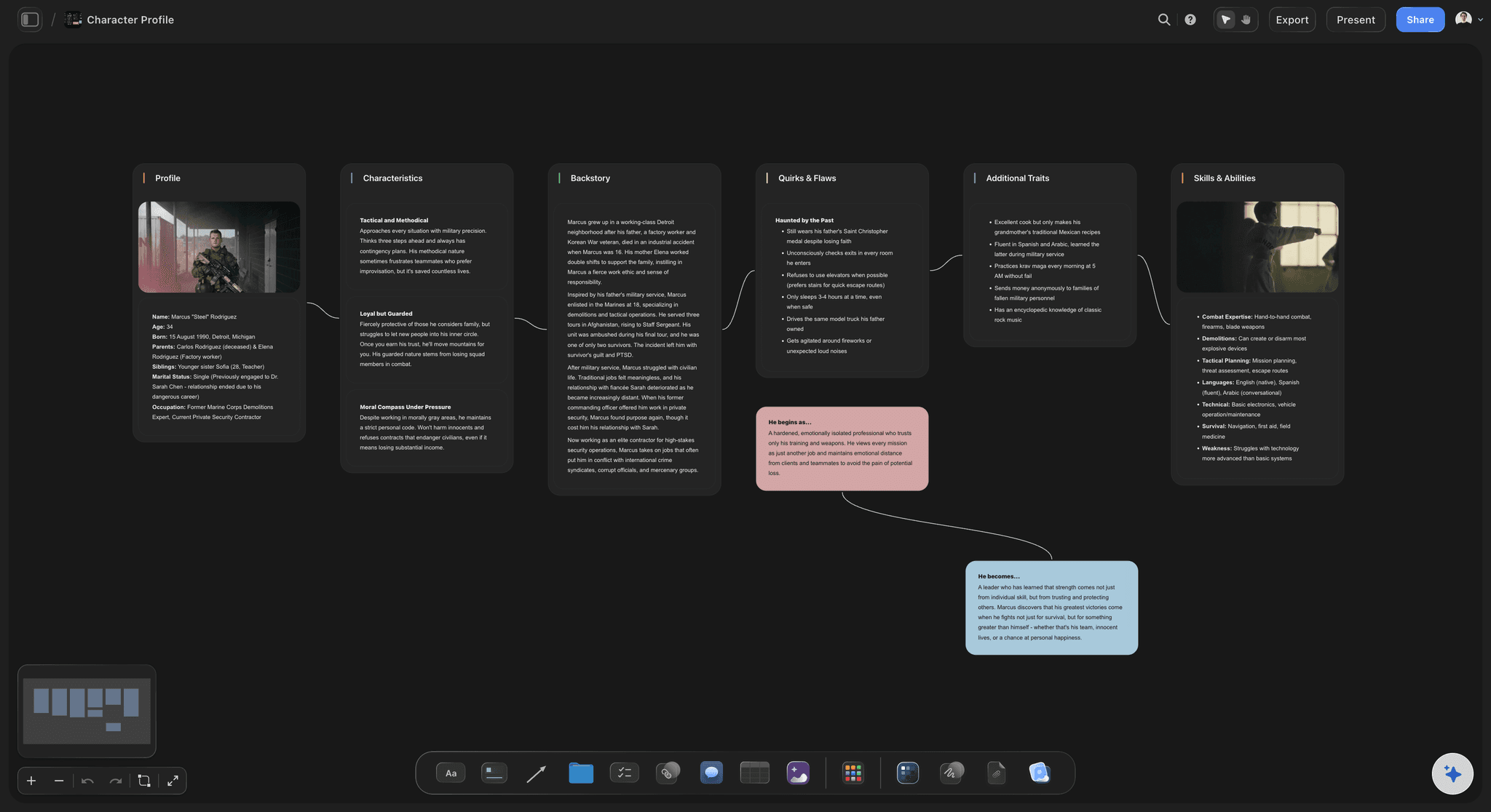
Continuity is somebody's job or it is nobody's
Out-of-order shooting breaks it: You will shoot the end before the middle, and wardrobe, props and time of day have to survive that.
One board for state: Track what each character is wearing and carrying per scene, on the same canvas as the schedule that reorders them.
Assign it explicitly: On a small crew this defaults to nobody. Naming the person is the whole fix.
The fourth one
The crew is doing you a favour
Feed people properly: It is the cheapest goodwill available and the most reliably underestimated line on a first budget.
Send the plan in advance: People who know the day's shape work better. A view-only link that opens without a signup is the only version they will actually read.
Finish on time: Running over on a favour shoot spends credit you will want for the next one, and the schedule you built in prep is what protects it.
Explore templates for your project
Every template opens as a real, editable board on the infinite canvas. Pick the closest fit and make it your own.
Pre-Production
Pull the brief, script, shot list, and moodboard into one pre-production hub so the whole shoot is planned in one place.
What creators are saying
Join early creators getting structured workspaces and AI that remembers their projects
“Storyflow has sped up my workflow by at least 3x, which means more flow state and more projects I can actually ship. It truly changed the way me and my team create.”

Reilin Joey
Director & YouTuber
“One prompt gets me a structured board. But the tactics are my favorite. I run my YouTube scripts through them and my intros and retention got better. It's amazing.”

Justkay
YouTuber & Freelance Filmmaker
“I used to juggle five apps to plan a project. Now I describe what I am making and get boards, lists, and a schedule. All in one place.”

George
@fernwehchronicles
First film planning, answered.
The questions that come before anyone has done this once.
Five things, in order: a shot list where you have counted the setups, a schedule built from that count, confirmed locations with their real access hours, a cast and crew list with call times, and the look agreed with whoever is operating the camera. Everything else is optional on a first film. In Storyflow all five sit on one canvas, so when something goes wrong on the day you are looking at one board rather than hunting through five documents you made weeks ago.
Far fewer than you expect, and the number that matters is setups rather than shots. A first-time schedule that has not counted setups typically runs about double its estimate. Lay the setups out per day on the board and an impossible plan becomes visible while cutting is still free.
Not always, but you need a shot list. A storyboard helps most where the geography is complicated or where a scene depends on a specific visual joke. If drawing is a barrier, a shot list with reference frames does the same job for a first film.
Planning in pages instead of setups. A one-page scene with six camera positions eats a morning, and a four-page two-hander in one setup does not, so a page-based schedule is disconnected from what a day actually costs.
Yes, and this is where it helps most. Put the script on the canvas and ask, and the AI reads the whole active board plus up to five documents and three boards to draft a per-scene breakdown. Correcting a draft is much easier than filling a blank grid you have never filled before, but check it, because it will miss things you know about your own script.
Not during early access. Plans start at $7.99 per month billed annually or $9.99 monthly, and a free plan launches before the end of 2026. Anyone a paid member invites to a board joins free today and can invite others, so one paid account usually covers a whole student crew.
No. A view-only link opens in any browser with no signup, which matters on a first film where most of the crew are friends doing you a favour and nobody will register for one shoot.
Judge it by the five items rather than by the calendar. If you cannot say how many setups each day holds and which locations are confirmed with their hours, you are not ready, whatever the date says.
This happens on most first films. With the plan on one canvas you can see which setups that location carried and what moving them does to the schedule, rather than reconstructing it from three files under pressure.
For a first short, no. That software is built for productions with an assistant director and a stripboard. A two-day shoot is small enough to see at once, and seeing the plan beats querying it.
Find the problems in prep, not at 4pm.
Shot list, schedule, locations and look on one board you can actually look at.