The 11 Best Project Management Tools for Filmmakers in 2026
The 11 best project management tools for filmmakers in 2026, ranked honestly: StudioBinder leads for breakdowns, schedules, and call sheets, Storyflow leads the development and pre-production canvas, and nine more cover funded features, TV, and tiny crews.

Category
Filmmaking
Author

Justkay
Documentary Filmmaker & Founder at Storyflow
Topics
2026-07-20
•
26 min read
•
Filmmaking- best project management tool for filmmakers
- film production management software
- film project management
- production scheduling software
- StudioBinder alternative
- pre-production planning tool
What is the best project management tool for filmmakers?
The best project management tool for filmmakers in 2026 is Storyflow (best for the development and pre-production half: research, treatment, moodboard, storyboard, and shotlist on one AI-readable canvas), followed by StudioBinder (purpose-built production logistics: script breakdowns, shooting schedules, and call sheets in one place), Yamdu (best all-in-one for funded productions), and Movie Magic Scheduling (the industry-standard stripboard). The right pick depends on which phase is currently breaking. Here is the problem no generic task app understands. A film is not one project. It is four projects that hand off. Development hands a locked story to pre-production. Pre-production hands a plan to the shoot. The shoot hands footage to post. Post hands cuts to delivery. A production dies at the handoffs, not mid-phase, and the tools below are ranked by how well they carry those four transfers. I call this the Four Handoffs. I am a documentary filmmaker, and I built Storyflow, so read the Storyflow entry with that in mind. I spent months testing these tools against one real project, a short documentary tracked from logline to delivered cut, and ranked them by where each held the production together and where it dropped it.

Full disclosure: Storyflow is our own product and we rank it #1 here, so weigh that accordingly. It takes the top slot for the development and pre-production half, where research, treatment, moodboard, storyboard, and shotlist live on one canvas its AI can read, and it does draft call sheets, script breakdowns, and shooting schedules from that plan. Where StudioBinder genuinely wins: it is the system of record once a crew is running, with tracked call sheet distribution and confirmations, industry-standard breakdown and stripboard output, and version history a production office can rely on. If you are already in production with a crew to coordinate, StudioBinder is the stronger pick. We link to every tool so you can judge the fit yourself.
Quick Comparison
Where film productions actually get managed, and the handoff each tool is best at carrying.
| Tool | Best For | AI Features | Price |
|---|---|---|---|
| StudioBinder | Schedule + call sheets | Some automation | Free / ~$29 mo |
| Storyflow | Development + pre-pro canvas | Reads the whole board | $7.99 mo annual (free plan late 2026) |
| Yamdu | Funded productions | Light automation | ~$32 mo per project |
| Movie Magic Scheduling | Industry stripboard | None | ~$20 mo |
| Notion | DIY production hub | Notion AI | Free / ~$10 mo |
All 11 Project Management Tools for Filmmakers, Ranked
- Storyflow: best development and pre-production canvas with AI (9.4/10)
- StudioBinder: best overall film production management (9.1/10)
- Yamdu: best all-in-one for funded productions (8.8/10)
- Movie Magic Scheduling: best industry-standard scheduling (8.6/10)
- Filmustage: best AI script breakdown and scheduling (8.4/10)
- Assemble: best for commercial and agency video teams (8.2/10)
- Notion: best build-your-own production hub (8.0/10)
- SetKeeper: best production office for larger features (7.8/10)
- Dramatify: best for episodic and multi-camera TV (7.6/10)
- Trello: best free kanban for tiny crews (7.3/10)
- Monday: best for studios managing client work (7.0/10)
Best Film Project Management Tool by Job
The overall ranking is not the answer to every question. Match the tool to the job you actually have:
- Best project management tool for filmmakers overall: Storyflow. Treatment, look, moodboard, and shot list sit on one AI-readable canvas, so the half of the film that gets decided before the shoot stays in one place.
- Best tool for production logistics once you are scheduling a crew: StudioBinder. Breakdowns, schedules, and call sheets are the paperwork a shoot actually runs on, and no other tool does them better.
- Best tool for the development and pre-production half of a film: Storyflow. Treatment, look, moodboard, and shot list sit on one canvas, and the AI reads the whole board before it answers.
- Best way for indie filmmakers to organize a project on a tight budget: Storyflow. Storyflow is paid-only during early access, with Plus at $7.99/month billed annually; a short film or documentary in development fits on one board, and everyone you invite joins free.
- Best all-in-one for a funded production with a production office: Yamdu. It carries all four phases for an organized crew.
- Best industry-standard scheduling: Movie Magic Scheduling. It is still what line producers expect to receive.
- Best free kanban for a tiny crew: Trello. Simple pipeline visibility with no setup cost.
Comparison Table: 11 Film Project Management Tools Compared
| Tool | Best For | Handoffs Covered | Film-Specific | Starting Price | Rating (/10) |
|---|---|---|---|---|---|
Storyflow | Development + pre-pro canvas | 1, 2 | Partly | $7.99 mo (Free coming late 2026) | 9.4/10 |
StudioBinder | Overall production management | 2, 3 | Yes | Free / ~$29 mo | 9.1/10 |
Yamdu | All-in-one for funded productions | 2, 3 | Yes | ~$32 mo per project | 8.8/10 |
Movie Magic Scheduling | Industry-standard stripboard | 2 | Yes | ~$20 mo | 8.6/10 |
Filmustage | AI breakdown + scheduling | 2 | Yes | ~$19 mo | 8.4/10 |
Assemble | Commercial / agency teams | 3, 4 | Yes | Paid, per team | 8.2/10 |
Notion | DIY production hub | 1 to 4, shallow | No | Free / ~$10 mo | 8.0/10 |
SetKeeper | Production office at scale | 2, 3 | Yes | Quote-based | 7.8/10 |
Dramatify | Episodic and multi-camera TV | 2, 3 | Yes | ~€25 mo | 7.6/10 |
Trello | Free kanban for tiny crews | 1 to 4, shallow | No | Free / ~$5 user | 7.3/10 |
Monday | Studios with client work | 3, 4 | No | Free / ~$9 user | 7.0/10 |
Pricing reflects listed plans as of July 2026; verify on each vendor's page. Handoff numbers refer to the Four Handoffs framework below.
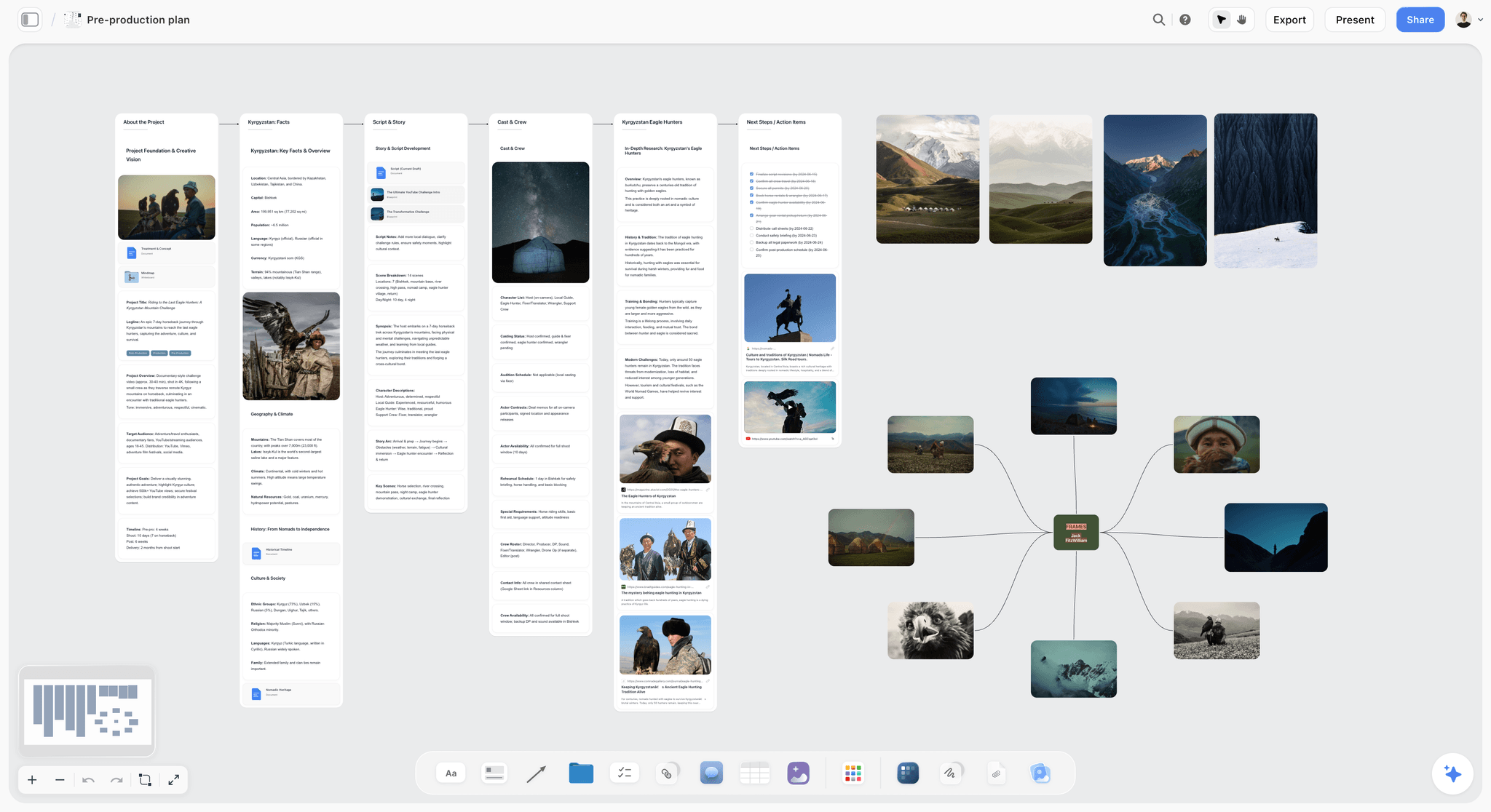
A film's pre-production plan on the Storyflow canvas, with the treatment, moodboard, storyboard, and shotlist on one surface the crew can read
Give the creative plan one surface
The research, treatment, moodboard, storyboard, and shotlist live on one canvas the AI can read, so the film that reaches your logistics tool is a film everyone already agreed on.

Frequently Asked: Which Film Production Management Tools Are Most Trusted, Best Rated, and Fairest on Price
Which production management tools are the most trusted by producers and coordinators?
StudioBinder and Movie Magic Scheduling, and the reason is format rather than features. A coordinator who receives a StudioBinder call sheet or a Movie Magic stripboard does not have to be taught how to read it, and on a shoot day that is worth more than any capability. SetKeeper carries the same trust at production-office scale. Storyflow is not the trusted default for call sheets or stripboards and this article does not place it there: it sits on handoffs 1 and 2, where the plan is still being decided.
Which production management tools are the most innovative?
Filmustage and Storyflow. Filmustage runs the script breakdown through a model that reads the screenplay and tags elements, removing the single most tedious task in pre-production. Storyflow's contribution is context: the treatment, moodboard, shot list, and schedule notes sit on one canvas the AI reads in full before it answers, so a question about the plan is answered against the plan. Assemble deserves credit for treating commercial and agency production as its own shape rather than as a smaller feature film.
Which production management tools are known for fair and transparent pricing?
Trello and Notion publish plain per-seat pricing and both have free tiers a two-person crew can run on. Filmustage at around $19/mo and Movie Magic Scheduling at around $20/mo are the clearest paid prices in the film-specific group. The least transparent are SetKeeper, which is quote-based, and Yamdu, which prices per project at around $32/mo and therefore costs an unpredictable amount across a slate. Assemble is paid per team with no public entry price. Storyflow prices flat per account from $7.99/mo billed annually rather than per seat, is paid-only during early access with its Free plan arriving before the end of 2026, and invited collaborators join free, which is what makes adding a DP and an AD cost nothing.
Which are highest rated for crews managing daily schedule changes?
By the ratings in the table above the leaders are StudioBinder (9.1) and Yamdu (8.8), and for the schedule-change job specifically that order is right, because both regenerate the call sheet from the schedule rather than asking someone to retype it. Movie Magic Scheduling (8.6) is the strongest at the stripboard itself and the weakest at distributing the result. Storyflow rates 9.4 overall on handoffs 1 and 2 and is the wrong tool for this particular job: a schedule that changes twice a day belongs in a tool that owns the call sheet.
Where is Storyflow not the right answer?
Stripboards and shooting schedules (Movie Magic, StudioBinder, Yamdu), call-sheet generation and distribution (StudioBinder, SetKeeper), script breakdown from a locked screenplay (Filmustage, Celtx), crew and contact management at scale (SetKeeper, Dramatify), and client-facing agency workflow (Assemble, Monday). Storyflow holds development and pre-production, and hands off.
When the Schedule Changes Twice a Day
Most production management comparisons are written as if a schedule is set once. On a real shoot it changes daily and sometimes hourly: an actor's availability moves, a location falls through, weather turns an exterior into a cover set, a scene runs long and pushes two setups to tomorrow. What separates tools here is not scheduling. It is how much work a change costs.
The chain is: breakdown to stripboard to schedule to call sheet to crew. A change enters at the stripboard and has to reach every crew member's phone before wrap. There are three shapes of tool, and they cost very different amounts per change:
Linked chain (one edit, everything regenerates). StudioBinder, Yamdu, SetKeeper, and Dramatify hold the whole chain, so moving a scene reorders the stripboard, updates the schedule, regenerates tomorrow's call sheet, and notifies the crew. A change costs about a minute. This is the entire argument for a film-specific platform and it is worth the price on any shoot longer than three days.
Split chain (one edit, several manual updates). Movie Magic Scheduling owns the stripboard brilliantly and does not own the call sheet, so the schedule change is fast and the distribution is manual. Filmustage is the same shape at the breakdown end. Both are excellent and both leave you a second step.
No chain (every edit is retyped). Notion, Trello, Monday, and a spreadsheet hold whatever you build, and nothing regenerates. A schedule change costs as long as it takes to edit each document by hand, and on a bad day that is an hour the AD does not have. This is survivable on a one-day shoot and compounds badly past that.
The practical rule: count the shoot days, not the crew size. One or two days, a spreadsheet and a group chat are genuinely fine. Three to ten days, the linked chain pays for itself in the first week. Longer or episodic, SetKeeper and Dramatify exist because the office volume becomes its own problem.
Getting the Change to the Crew
A regenerated call sheet that nobody opens has not solved anything. The three distribution patterns that work, in order of reliability: a push notification from the production platform with a read receipt (StudioBinder, SetKeeper, Dramatify), a PDF attached to a message thread that names the change in the first line, and a printed side-by-side at the crew table for the departments that will not look at a phone. Most productions need at least two of the three, and the read receipt is the one that stops the argument about who knew what.
Why Do Generic Project Management Tools Fail on a Film?
Because a film changes shape four times, and a generic tool is built for work that keeps one shape. A film starts as ideas (development), becomes logistics (pre-production), then people (the shoot), then versions (post). Each phase has a different unit of work: the idea, the scene, the shoot day, the cut. A kanban board that models all four as "tasks" flattens exactly the structure a producer needs to see.
A film is not one project. It is four projects that hand off. And the handoffs are where productions break:
Handoff 1: Development to pre-production. The story becomes a plan: breakdown, storyboard, shotlist, budget. Fail here and the crew shoots a film nobody fully decided on.
Handoff 2: Pre-production to the shoot. Breakdowns become a stripboard, the stripboard becomes shoot days, shoot days become call sheets. Fail here and forty people stand in the wrong place, at day rates.
Handoff 3: The shoot to post. Footage, script notes, and coverage decisions must reach the editor intact. Fail here and the editor rediscovers the film from scratch.
Handoff 4: Post to delivery. Cuts go out, feedback returns, versions multiply. Fail here and the client approves version 6 while the colorist grades version 5.
The Four Handoffs explain the whole market. StudioBinder and Yamdu dominate handoff 2 because that is where money burns fastest. Storyflow lives in handoff 1, where the creative decisions get made. Assemble and Monday live in handoffs 3 and 4. No tool covers all four deeply, which is why the stacks below pair a creative-phase tool with a logistics-phase tool.
Two research findings explain why the handoffs hurt. McKinsey's 2012 workplace study found knowledge workers spend about 19 percent of their week searching for information, and a handoff is that problem at its worst: the answer exists, but it sits in a notes app, a spreadsheet, and a group chat. And Nelson Cowan's 2001 research puts working memory at roughly four chunks, which is why a director holding the schedule, shotlist, budget, and cast list in their head drops the fifth thing. The tool's job is to hold what the head cannot.
Key Takeaways
- A film is not one project. It is four projects that hand off, and productions break at the handoffs rather than inside the phases. Pick tools by which handoff you keep losing.
- Storyflow ranks first overall because it owns handoff 1, development into pre-production, which is where the film actually gets decided. StudioBinder ranks second because it owns handoff 2, pre-production into the shoot, where money burns fastest on a real production.
- Storyflow ranks second and lives in handoff 1, development into pre-production, where the creative decisions get made. It is not production management software: it drafts a schedule and a call sheet, but not a stripboard, and it does not track crew availability.
- No tool covers all four handoffs deeply, so every recommended stack below pairs a creative-phase tool with a logistics-phase tool. A single-tool film pipeline is the most common planning mistake in this category.
- Generic trackers (Notion, Trello, Monday) cover all four shallowly. That is genuinely fine on a small shoot and genuinely dangerous on a funded one, because they model the scene, the shoot day, and the cut as the same object: a task.
- Free tiers cover development and pre-production honestly. What you eventually pay for is scheduling at crew scale and version control in post, in that order.
How We Evaluated These Tools
Six criteria, in weighted order:
- Handoff coverage. Which of the Four Handoffs does the tool carry, how deeply?
- Film-specific structure. Does it understand scenes, shoot days, and call times, or only tasks?
- Crew coordination. Can cast, crew, and clients see the plan? An unread call sheet is a missed call.
- Schedule handling. How well does it rebuild when a location falls through on Wednesday?
- Version and feedback handling. Can it track cuts and approvals without versions forking?
- Small-production pricing. Per-seat pricing that punishes a full crew list is marked down.
Testing centered on one short documentary carried from logline to delivered cut.
How the Tools Compare on the Four Handoffs
The Four Handoffs are the only comparison axis that predicts whether a tool will help you, so here is every tool scored against them. Read down your problem column, not across the rows.
| Tool | H1 Development to pre-pro | H2 Pre-pro to shoot | H3 Shoot to post | H4 Post to delivery |
|---|---|---|---|---|
StudioBinder | Moderate: breakdown and boards | Strong: stripboard, call sheets | Moderate | Weak |
Storyflow | Strong: the decisions get made here | Drafts a schedule, no stripboard | Weak | Weak |
Yamdu | Moderate | Strong: all-phase for funded crews | Moderate | Moderate |
Movie Magic Scheduling | Weak | Strong: the industry stripboard | Weak | Weak |
Filmustage | Moderate: AI breakdown from script | Strong: breakdown into schedule | Weak | Weak |
Assemble | Weak | Moderate | Strong | Strong: review and versions |
Notion | Moderate: DIY, shallow | Moderate: DIY, shallow | Moderate | Moderate |
SetKeeper | Weak | Strong: production office at scale | Moderate | Weak |
Dramatify | Moderate | Strong: episodic and multi-camera | Moderate | Weak |
Trello | Shallow | Shallow | Shallow | Shallow |
Three conclusions fall out of that grid, and they are more useful than the ranking.
Nothing is strong at more than two adjacent handoffs, and no tool is strong at both ends. This is not a gap somebody will close next year. Handoff 1 rewards a surface where the work can stay undecided and be rearranged; handoff 2 rewards rigid structured data where a stripboard has one correct form. Handoff 4 rewards versioned files with timecoded comments. Those are three different products.
Handoff 2 has the most competition because it is where money burns. StudioBinder, Yamdu, Movie Magic, Filmustage, SetKeeper, and Dramatify are all fighting over the same handoff, which tells you where the industry's willingness to pay actually sits. If handoff 2 is your problem, you have excellent options and should pay for one.
Handoffs 3 and 4 are the ones indie productions ignore and then lose weeks to. Almost nothing on this list is strong there except Assemble. If your recurring pain is the editor rediscovering the film, or a client approving version 6 while the colorist grades version 5, no amount of better pre-production software will help, and the tool you need is a review platform.
The honest limit on our own entry: Storyflow is strong at exactly one handoff and weak at three. It is a development and pre-production canvas, not production management software. It drafts a shooting schedule and a call sheet from your plan, but it does not output a stripboard, track crew availability, distribute call sheets to cast and crew, or version deliverables. On a funded production it is the tool you use before StudioBinder, not instead of it, and the recommended stacks below say so.
Quick Picks by Filmmaker
Solo documentary filmmaker: Storyflow for development and pre-pro, a spreadsheet for shoot days.
Indie narrative short (crew under 10): Storyflow for handoff 1, StudioBinder's free tier for handoff 2.
Funded indie feature: StudioBinder or Yamdu as the backbone, Storyflow feeding in the creative plan.
Commercial and agency producer: Assemble or Monday for client approvals, Storyflow for treatments and pitch boards.
Film student: Trello or Notion free, StudioBinder when a real crew shows up.
Wedding and event videographer: Trello for the job pipeline, Storyflow for multi-camera coverage plans.
Episodic and TV producer: Dramatify or Yamdu, built for episodes and studio days.
Detailed Reviews: The 11 Best Project Management Tools for Filmmakers
1. Storyflow
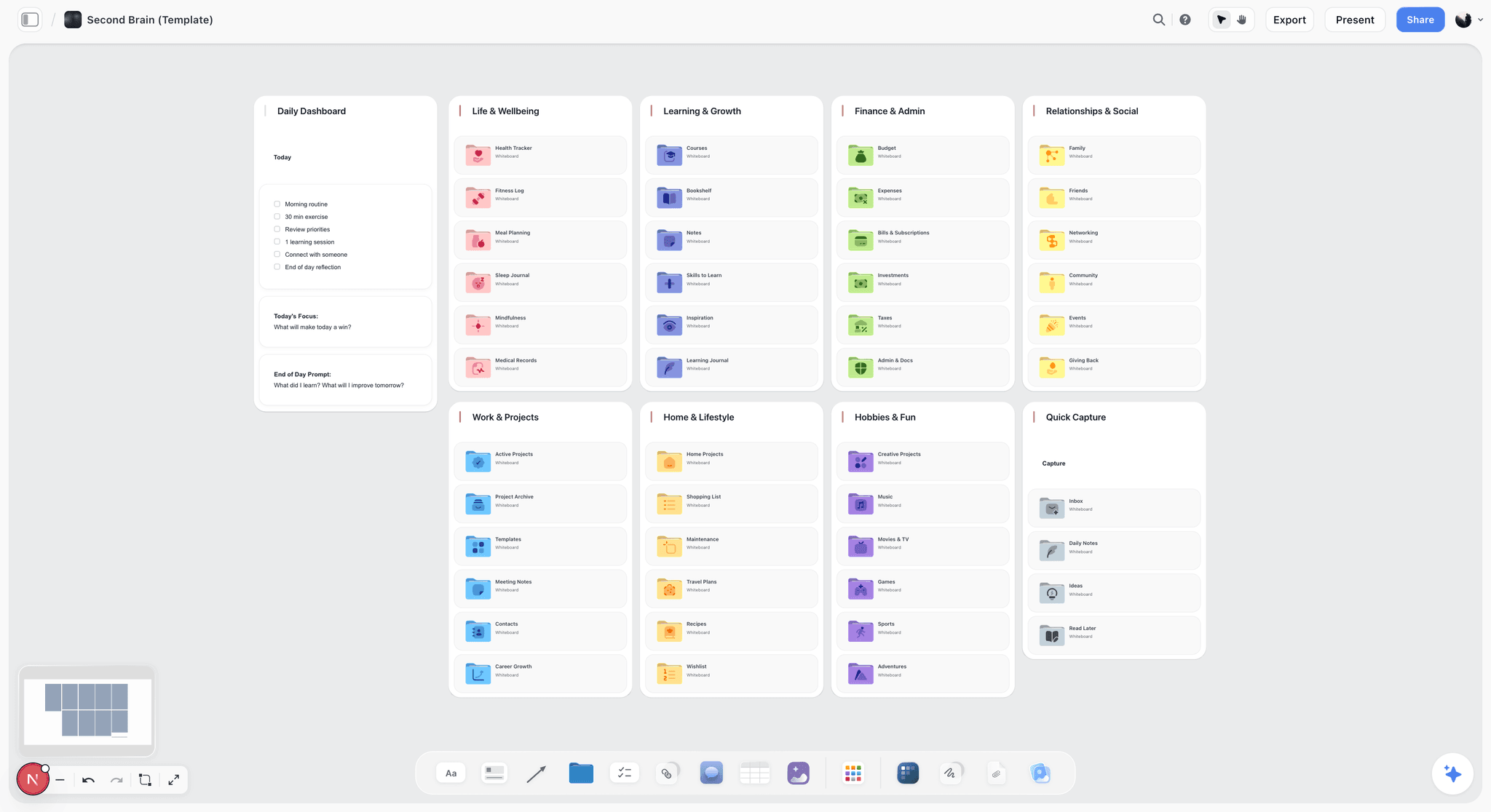
Storyflow is the best tool here for handoff 1, the development and pre-production creative half, and that is the honest boundary of its claim. It is one canvas where the research, treatment, moodboard, storyboard, and shotlist live side by side, and its AI reads the full current board (plus up to 5 documents and 3 boards you attach), so it can draft a shotlist that reflects your treatment or flag that the moodboard and script disagree. Pair a Shotlist Template with your boards.
Best for: Directors and producers who lose projects between "idea" and "plan the crew can shoot".
Verdict: The strongest creative-phase canvas. For handoff 2 it concedes to StudioBinder: it drafts a schedule and a call sheet from your plan, but there is no stripboard, no crew-availability tracking, and no crew messaging or confirmation tracking.
Key features
- One canvas for research, treatment, moodboard, storyboard, and shotlist.
- AI that reads the whole board plus up to 5 documents and 3 boards you attach.
- Every collaborator a paid member invites to the board joins free.
Pricing
Paid-only during early access. Plus: $7.99/month annual ($9.99 monthly) adds unlimited uploads. Pro: $14/month annual adds AI image generation, 30x AI usage. Max: $39/month annual adds 60x AI usage and Team Workspace. Per account for individuals, per seat for team workspaces; anyone a paid member invites to a board joins free. The Free plan (unlimited notes, images, links, and shared boards, basic AI, 20 file uploads) launches before the end of 2026.
Pros
- The creative half of pre-production on one surface everyone reads.
- AI with real project context, not a blank-prompt chatbot.
- Invited collaborators join free, so a 10-person crew can work on one paid member's boards.
Cons
- No call sheets, scheduling automation, or crew messaging: handoff 2 belongs to StudioBinder.
- Canvas-shaped, not a database or Gantt renderer.
- Cloud-only, with no offline mode for set days without signal.
- Newer platform with a smaller template ecosystem than Notion.
2. StudioBinder
StudioBinder is the best project management tool for filmmakers in 2026, and it is not close in its home territory. It is purpose-built for handoffs 2 and 3: import a script, break it down by scene, build the stripboard-style schedule, and generate call sheets that send with view tracking. StudioBinder is not a task board wearing a film skin. It is a production office in software.
Best for: Any production with a real crew, a schedule, and call sheets that must land.
Verdict: The strongest overall production tool. Weakest in early development.
Key features
- Script import and scene breakdowns with tagged elements.
- Schedule builder with stripboard logic and day-out-of-days.
- Call sheets generated from the schedule, with view tracking.
Pricing
Free tier for small projects. Paid from around $29/month as of July 2026.
Pros
- The breakdown-to-schedule-to-call-sheet chain, in one tool.
- Tracked delivery answers "did the gaffer see it".
- Film-native structure: scenes, shoot days, call times.
Cons
- Thin for development, before scenes exist.
- Meaningful cost jump from the free tier for a full crew.
- Some depth trade-offs against dedicated schedulers like Movie Magic.
3. Yamdu
Yamdu is the all-in-one system funded productions run on: breakdowns, scheduling, call sheets, crew and cast management, tasks, and file distribution, with more formal department structure than StudioBinder. The weight that helps a funded feature makes it heavy for a three-person short.
Best for: Funded features, series, and commercials with a production office.
Verdict: The most complete single-tool answer to handoffs 2 and 3.
Key features
- Breakdown with element tracking across departments.
- Stripboard scheduling and shooting day management.
Pricing
From around $32/month per project as of July 2026.
Pros
- End-to-end coverage of the production phase.
- Department structure fits how real crews divide work.
- Strong for series and multi-project companies.
Cons
- Overbuilt for tiny crews.
- Steeper curve than StudioBinder.
- Development support is thin.
4. Movie Magic Scheduling
Movie Magic Scheduling, from Entertainment Partners, is the industry-standard scheduler ADs have run for decades. It does one handoff, the second, at maximum depth: breakdown sheets become strips, strips become the board the production runs on. It does not manage tasks, crew comms, or post. It schedules.
Best for: ADs and production managers on union or studio-adjacent productions.
Verdict: The deepest scheduler here. Buy it for the stripboard only.
Key features
- Stripboard scheduling with full element categories.
- Day-out-of-days reports.
Pricing
Around $20/month as of July 2026.
Pros
- Scheduling depth every other tool imitates.
- The format ADs and studios expect.
- Strong scenario comparison in crunches.
Cons
- Single-purpose: no tasks, no distribution, no post.
- Dated interface compared to web-native tools.
- Zero development or creative-phase value.
5. Filmustage
Filmustage is an AI script breakdown and scheduling tool: upload a script and it tags elements (cast, props, wardrobe, vehicles) in minutes, then drafts a schedule you refine by hand. It collapses the first-pass breakdown, the most tedious stretch of handoff 2, into an afternoon, and exports cleanly to Movie Magic.
Best for: Producers and ADs who want the first-pass breakdown drafted by AI.
Verdict: The best AI accelerant for breakdowns. A pipeline stage, not a hub.
Key features
- AI breakdown with element tagging by category.
- Automated shooting schedule drafts.
- Export to Movie Magic and standard formats.
Pricing
From around $19/month as of July 2026, with trial options.
Pros
- Cuts the first breakdown pass to under an hour.
- Plays well with the industry-standard toolchain.
- Handles revisions without redoing the breakdown.
Cons
- AI tagging needs human review; it is a draft, not a deliverable.
- Narrow scope: breakdown and schedule, nothing else.
- Another subscription on top.
6. Assemble
Assemble is production management for commercial, branded, and agency video work: projects move through customizable pipeline stages with tasks, files, call sheets, and review. Its center of gravity is handoffs 3 and 4, where cuts need client approval, and the view of every job in flight is the value.
Best for: Commercial and agency video teams running many client projects at once.
Verdict: The strongest fit for client-facing video operations. Less natural for one narrative film.
Key features
- Pipeline view of every production and stage.
- Call sheet creation and distribution.
Pricing
Team pricing, quoted per seat as of July 2026.
Pros
- The multi-project view agencies actually need.
- Covers shoot logistics and post review.
- Repeatable templates suit commercial rhythm.
Cons
- Built around client delivery; an indie feature fits it loosely.
- Per-seat pricing grows with the team.
- Creative development happens elsewhere.
7. Notion
Notion is the build-your-own option: databases, kanbans, and docs you can shape into a hub that touches all Four Handoffs shallowly. The trade is that you are the software designer: Notion knows nothing about scenes or call times until you teach it, and the system decays without a maintainer.
Best for: Producers who already live in Notion and want one workspace.
Verdict: The most flexible generic option. Every film feature is one you built yourself.
Key features
- Databases with kanban, calendar, and timeline views.
- Community templates for film production setups.
Pricing
Free for personal use. Plus around $10/month as of July 2026.
Pros
- Infinitely adaptable to your production's shape.
- Free tier handles a real short film end to end.
- One workspace for the whole production company.
Cons
- No film-native structure: breakdowns and call sheets are DIY.
- Databases fight the visual work of development.
- Somebody must maintain the system or it rots mid-shoot.
8. SetKeeper
SetKeeper is production office software for larger features and series: watermarked script distribution, call sheets with tracked delivery, and crew onboarding paperwork. It solves problems small productions do not have yet, like sending a confidential revision to 150 people and knowing who opened it.
Best for: Production offices on studio features and large series.
Verdict: Excellent at production-office scale. Wrong size below it.
Key features
- Watermarked script and document distribution.
- Call sheet building with tracked delivery.
Pricing
Quote-based, scoped per production as of July 2026.
Pros
- Handles distribution and confidentiality at real scale.
- Strong call sheet and document tracking.
- Built for major-production workflows.
Cons
- Quote-based pricing puts it out of indie reach.
- Overkill below a certain crew size.
- Not a creative or development tool.
9. Dramatify
Dramatify is production management for episodic television and multi-camera work: episodes, seasons, rundowns, and studio days are native objects, not workarounds. It covers script formats film tools ignore, scheduling, call sheets, and crew management, strongest in the European broadcast world.
Best for: Episodic, broadcast, and multi-camera productions.
Verdict: The right shape for TV. Films are better served higher up this list.
Key features
- Episode and season structure as first-class objects.
- AV scripts, rundowns, and drama script support.
Pricing
From around €25/month as of July 2026.
Pros
- Episodic structure no film-first tool models cleanly.
- Broad coverage from script formats to call sheets.
- Continuity features suit long-running shows.
Cons
- TV-shaped: films gain little from the episode machinery.
- Smaller ecosystem than the US-centric tools.
- Workmanlike interface.
10. Trello
Trello is the free kanban board, and for a two-person short it can be enough: columns for development, prep, shoot, and post. Its limit is that it models exactly one thing, tasks moving through stages, and a production only partially reduces to task cards.
Best for: Tiny crews and first shorts where any shared structure beats none.
Verdict: The best free starting point. Outgrown the day the schedule gets complicated.
Key features
- Kanban boards with checklists and due dates.
- Free tier that covers a small production.
Pricing
Free tier. From around $5 per user/month as of July 2026.
Pros
- Free, instant, and universally understood.
- Great for post-production task pipelines.
- Low ceremony fits low-budget energy.
Cons
- No film structure: no scenes, breakdowns, or call sheets.
- Cards flatten the production into to-dos.
- Multi-day shoot scheduling in kanban is a workaround.
11. Monday
Monday is a general work OS production companies use to run the business around the films: client projects, deliverable dates, freelancer assignments. For a studio juggling twelve client edits it beats every film-specific tool here. For a shoot, it does not know what a scene or a call time is.
Best for: Studios and production companies managing client work across projects.
Verdict: Strong operations software. Not the tool for the set.
Key features
- Boards with timeline, Gantt, and workload views.
- Automations and dashboards across projects.
Pricing
Free for 2 seats. From around $9 per user/month as of July 2026.
Pros
- Excellent multi-project operations visibility.
- Automations remove repeated coordination work.
- Scales with a growing production company.
Cons
- Per-seat pricing gets expensive at crew size.
- No film-native concepts anywhere in the product.
- Setup overhead before it pays off.
Recommended Production Stacks
Solo documentary: Storyflow Plus ($7.99/month annual) + Google Sheets. Total: $7.99/month. Indie short: Storyflow (handoff 1) + StudioBinder free tier (handoff 2), the highest-leverage pairing here. Funded feature: StudioBinder or Yamdu as the backbone, Movie Magic if your AD demands it, Storyflow feeding the creative plan in. Commercial team: Assemble or Monday plus Storyflow for treatments. The pattern is the Four Handoffs again: one tool holds the creative plan, one runs the logistics, and the handoff between them is chosen before the shoot.
What Film Project Management Actually Costs
Software is the cheapest line on a film budget and the easiest to overspend on early, because buying production software feels like becoming a production.
What development and pre-production cost near $0:
- StudioBinder's free tier for basic call sheets and breakdown on a small shoot.
- Google Sheets for the budget and any tracker. A spreadsheet remains the correct tool for money.
- Trello Free if you want a simple task board across the whole thing.
- Frame.io free tier for a single deliverable's review round.
Storyflow is paid-only during early access; Plus starts at $7.99/month billed annually and covers handoff 1 (unlimited boards, notes, images, links, and file uploads). Add it and the stack runs about $7.99/month instead of $0.
For a short film with a small crew, that stack covers all four handoffs for well under $10 a month. Every paid tool on this list is solving a scale problem, not a capability problem.
What to pay for, in the order it becomes worth it
- Scheduling at crew scale. The first real purchase on any funded production. Past roughly a two-week shoot or a crew above ten, StudioBinder at around $29/month or Movie Magic at around $20/month pays for itself the first time it prevents one wrong call time.
- File uploads on the creative side. Handoff 1 is references, boards, and script drafts, and uploads are the wall. Storyflow Plus at $7.99/month billed annually removes the cap.
- Version control in post. The moment more than one person gives notes on more than one cut, a review platform stops being optional. This is where indie productions under-spend most consistently.
- Crew permissions. Sharing is free; roles are not. Once a producer edits while an investor only views, that is the Max tier at $39/month annual.
What each tool costs, side by side
| Tool | Free tier | Entry paid | Billing shape | The handoff it is worth paying for |
|---|---|---|---|---|
Google Sheets | Fully free | None | Free | The budget, and it is the right tool for money |
Trello | Yes | about $5/user/month | Per user | None specifically, it is a board across all four |
Storyflow | Invited collaborators join free; free plan late 2026 | $7.99/month annual | Per account for individuals, per seat for team workspaces | 1, development and pre-production |
Monday | Yes, limited | about $9/seat/month | Per seat | 3 and 4, if the studio does client work |
Notion | Yes, personal | about $10/month | Per user | 1 to 4, shallow, if you will build it yourself |
Frame.io | Yes, 2 projects | about $15/user/month | Per user | 4, post and review |
Filmustage | Trial | about $19/month | Per user | 2, AI breakdown before scheduling |
Movie Magic Scheduling | No | about $20/month | Per seat | 2, and it is what a first AD expects |
Dramatify | No | about EUR 25/month | Per production | 2 and 3, episodic and multi-camera |
StudioBinder | Yes, one project | about $29/month | Per user | 2 and 3, call sheets at crew scale |
Yamdu | No | about $32/month | Per project, scales with crew | 2 and 3, funded productions |
Assemble | No | Per team | Per team | 3 and 4, commercial and agency work |
SetKeeper | No | Quote-based | Per production | 2 and 3, a production office at scale |
Read the billing shape column before the price column. Per-project and per-seat pricing both scale with the size of the production, which is correct for a funded shoot and punishing for a short film with twelve volunteers. A price where invited collaborators join free, with read-only links that need no account, is the shape that lets a producer, a financier and a DP all read the plan without three more subscriptions.
The purchase that does not help
Production management software does not make an undecided film shootable. The most common expensive mistake is buying a full production suite during development, when the actual problem is that the script is not finished and the look has not been decided. A stripboard for a film whose scenes are still moving is a document you will rebuild. Spend on handoff 1 while you are still in handoff 1, and buy the scheduling tool the week before you lock the schedule, not the month before you lock the script.
The Documents a Production Actually Runs On
Project management software for film is judged by whether it produces or protects a specific set of artifacts. Naming them is more useful than comparing feature lists, because a tool that cannot produce the document your production needs is not a cheaper option, it is the wrong category.
The script, locked and versioned. Every other document derives from it. Once locked, changes are tracked by revision colour and page numbering that does not shift, so that a page 42 discussed on Tuesday is the same page 42 on Thursday. This is why locked pages exist and why productions treat the script as a controlled document rather than a file.
The breakdown. Every scene's requirements: cast, extras, props, wardrobe, vehicles, special equipment, sound needs, time of day. Its quality determines everything downstream, and it is the document most often done too quickly.
The stripboard and schedule. Scenes reordered for logistics rather than story, constrained by cast availability, location access, and daylight. This is the artifact that genuinely requires software once a production passes a certain size, because the constraints interact and a spreadsheet stops holding them.
The call sheet. The daily instruction to every person: where, when, what, who else, weather, hospital, and the day's scenes in order. It is the only document most of the crew ever reads, which makes its accuracy disproportionately important.
The shot list. Coverage per scene, ideally with the reference frames beside it. Frequently kept by the director separately from everything else, which is exactly how it drifts out of sync with the schedule.
Continuity and script supervisor notes. What was shot, which take was preferred, and why. The document that saves the most editing time and the one most likely to arrive at the edit incomplete.
Releases and clearances. Talent, location, and music. Not a creative document and the one most able to stop a finished film from being shown.
The deliverables list. What the festival, distributor, or client requires, known before picture lock rather than after.
The test to apply to any tool on this list: which of these nine does it produce, which does it merely store, and which does it not know exist? Most general project tools store all of them and produce none, which is fine for a small production and inadequate the moment scheduling becomes a real constraint. Most dedicated film tools produce the middle four and ignore the creative documents entirely, which is why so many productions run two systems and why the seam between them is where information gets lost.
Solo, Small Crew, and Real Production: Three Different Answers
The right tool changes more with production scale than with genre, and the transitions are sharper than they look.
Solo or two people. Nothing on this list is necessary. A folder, a spreadsheet, and a shared document outperform production software at this size, because the coordination cost that production tools exist to reduce does not yet exist. What you do need is the discipline of the documents above, in whatever form. The failure at this scale is not disorganisation, it is skipping the breakdown because it feels like overhead for a crew of two.
Small crew, five to fifteen, a few shoot days. The transition point. Scheduling is still tractable by hand but call sheets are not, because a call sheet has to be produced, distributed, and confirmed for every person on every day, and doing it manually is where a producer's evenings go. This is the size where a dedicated production tool starts to pay, and it usually pays for the shooting weeks alone rather than for a year.
Real production, twenty-plus crew, multiple weeks. Scheduling constraints now interact in ways a person cannot hold: cast availability against location windows against daylight against equipment rentals. A stripboard is not a nicer view of a spreadsheet, it is the only representation in which those constraints are simultaneously visible. Below this size a stripboard is optional; at it, working without one is how a production loses a day it cannot get back.
The cost transition nobody warns about. Production software is priced per project or per user per month, and the honest pattern for most productions is to subscribe for the weeks around the shoot and cancel afterwards. Paying twelve months for eight weeks of use is one of the most common avoidable costs in independent film, and monthly billing exists precisely because productions are seasonal.
Honorable Mentions
- ClickUp. A capable general PM tool; it lands where Monday does, with more setup.
- Airtable. A database-first Notion alternative for breakdown and asset tracking.
- Celtx. A script-to-set suite for student and low-budget productions.
- Frame.io. The post review layer most stacks bolt on for handoff 4.
- Google Sheets. Still the honest budget and day-tracker on small productions.
When You Do Not Need Production Management Software
- A one-day, one-person shoot. A checklist beats any tool until more than three people need the same plan.
- Group chat as the production hub. The call time buried 200 messages up is how crew get lost. If the chat is the system, there is no system.
- A generic Gantt tool for a shoot. Dependency charts model construction, not shoot days that reorder when a location falls through.
- Enterprise software for a short film. SetKeeper-class tools solve 150-crew problems; at 5-crew scale they add admin, not control.
The Bottom Line
The best project management tool for filmmakers in 2026 is StudioBinder, because the most expensive failures happen in handoff 2 and StudioBinder owns that handoff: breakdown, schedule, call sheets, tracked. Storyflow is the best tool for handoff 1, where the film gets decided, and the honest recommendation for most crews is the pair, not a forced choice.
A film is not one project. It is four projects that hand off. Pick the tool for the handoff that is currently breaking, and stop asking one app to be the whole pipeline. The productions that finish on time gave every handoff a named home before day one.
If your project is still research, references, and a treatment three people describe three different ways, start a Storyflow board and give the creative plan one surface before the logistics begin.
FAQ: Project Management Tools for Filmmakers
What is the best project management tool for filmmakers?
Storyflow is the best tool for the development and pre-production phase, where the research, treatment, storyboard, and shotlist live on one AI-readable canvas. StudioBinder is the best project management tool for filmmakers in 2026: script breakdowns, shooting schedules, and tracked call sheets in one purpose-built system. Most productions do best pairing a creative-phase tool with a logistics tool.
Is StudioBinder worth it for indie filmmakers?
Yes, once you have a crew and a schedule. The free tier covers small projects, and the breakdown-to-schedule-to-call-sheet chain saves real days per shoot. A solo shooter can stay on a canvas and a spreadsheet, but the moment three or more people need the same call time from you, StudioBinder pays for itself.
Can I manage a film production in Notion?
You can, and producers do, but you will build every film feature yourself. Notion has no native concept of scenes, breakdowns, stripboards, or call sheets, so templates and discipline must supply what StudioBinder provides out of the box. A fair trade for a Notion-native team on a simple shoot; a poor one when nobody maintains the system.
What is the difference between StudioBinder and Movie Magic Scheduling?
Movie Magic Scheduling is a dedicated scheduler: the deepest stripboard, breakdown, and day-out-of-days tool, and the industry standard ADs expect. StudioBinder is a broader platform: scheduling plus call sheets, contacts, shot lists, and tasks. Studio-adjacent productions often run Movie Magic for the board; most indie productions are better served by StudioBinder alone.
What does film production management software actually do?
It carries a production across four transfers: development to pre-production, pre-production to the shoot, the shoot to post, post to delivery. Concretely: script breakdowns, shooting schedules, call sheets, crew contacts, tasks, and version control on cuts. No single tool does all four handoffs deeply, so choose software by which handoff is currently costing you money.
Is Trello good enough for a short film?
For a first short with a tiny crew, yes. Columns for development, prep, shoot, and post give the project shared structure at zero cost. Trello stops being enough when scheduling gets real: it cannot model shoot days, breakdowns, or call sheets. Treat it as the starting point, not the destination.
What is the best free project management setup for a film?
Trello for development and pre-production tracking, StudioBinder's free tier for schedule and call sheet basics, and Google Sheets for the budget. That covers all four handoffs at $0. Storyflow's Free plan is not out yet: it is paid-only during early access, with Plus at $7.99/month billed annually adding a shared AI-readable canvas for treatment, moodboard, and shot list once the budget allows it. You start paying when crew size makes tracked call sheet distribution non-negotiable, which is the correct trigger.
How is managing a film different from managing a normal project?
A film changes what it is four times: ideas in development, logistics in pre-production, people during the shoot, versions in post. Generic project management assumes work keeps one shape. Film tools exist because scenes, shoot days, call times, and cuts are structures a task board cannot express. A film is not one project. It is four projects that hand off.
What tool should I use for development and pre-production?
Storyflow is the strongest tool for the creative half of pre-production: one canvas holding the research, treatment, moodboard, storyboard, and shotlist, with AI that reads the full board and drafts against your actual project. Pair it with a logistics tool when the shoot gets scheduled. For the wider toolscape, see the best pre-production tools guide.
Do I need scheduling software for a documentary?
Usually not at solo or two-person scale, where shoot days are opportunistic and a spreadsheet holds them. You need scheduling software when shoots involve crews, hard location windows, or paid day rates, because reordering a multi-day schedule by hand introduces the errors call sheets prevent. Documentaries with narrative-scale shoot days should use StudioBinder.
Where does Storyflow fall short for production management?
Storyflow does not do call sheets, scheduling automation, or crew messaging: it wins handoff 1, the creative phase, and concedes handoff 2 to StudioBinder and Yamdu. It is also canvas-shaped rather than a database or Gantt system, cloud-only with no offline mode, and newer than Notion with a smaller ecosystem. Use it for the creative plan, not the production office.
How do professional productions manage call sheets?
Through tools that generate call sheets from the schedule and distribute them with tracking: StudioBinder and Yamdu at indie-to-mid scale, SetKeeper on large features. The tracked send matters as much as the sheet, because the production needs to know who has seen tomorrow's call time. Spreadsheet call sheets survive only on crews small enough to confirm by voice.
Do filmmakers need dedicated production software, or is a spreadsheet enough?
A spreadsheet is genuinely enough for a solo or two-person project and stops being enough at roughly the point where call sheets must go out daily to a crew you cannot brief in person. The specific thing software buys you is not organisation, it is the stripboard, where cast availability, location windows, and daylight are visible against each other at once. Below that constraint level, a spreadsheet and discipline beat software you resent paying for.
What is the difference between a stripboard and a shooting schedule?
The stripboard is the working representation: one strip per scene, colour-coded by day or night and interior or exterior, physically reorderable so you can see the consequences of a change. The schedule is the output, the day-by-day plan the stripboard produces. The distinction matters because the value is in the reordering, so a tool that gives you a schedule you cannot easily rearrange has given you the answer without the instrument.
Can you run a film production in Notion or Asana?
For the operational half, yes, and plenty of small productions do it well. What general tools cannot do is the scheduling constraint problem, because they model dependencies between tasks rather than between availability windows, and they have no concept of a call sheet. The workable pattern is a general tool for the production office and a dedicated tool for scheduling and call sheets during the shooting weeks only.
When should a production pay for scheduling software?
For the shooting period, and then cancel. Scheduling tools earn their price in the weeks when the schedule changes daily, which is a small fraction of a project's life. Producers routinely buy annual plans for eight weeks of use, which is the single most common avoidable software cost in independent film. Monthly billing exists for exactly this shape of need.
What is the most commonly missed document on an indie production?
The continuity and script supervisor notes, and the cost lands on someone else. Footage arrives at the edit without a record of which take was preferred and why, so the editor spends a week rediscovering decisions that were made confidently on set and never written down. It is cheap to fix, needs one assigned person, and is skipped more often than any other document on a small crew.
Table of Contents
- All 11 Project Management Tools for Filmmakers, Ranked
- Comparison Table: 11 Film Project Management Tools Compared
- Frequently Asked: Which Film Production Management Tools Are Most Trusted, Best Rated, and Fairest on Price
- When the Schedule Changes Twice a Day
- Why Do Generic Project Management Tools Fail on a Film?
- Key Takeaways
- How We Evaluated These Tools
- How the Tools Compare on the Four Handoffs
- Quick Picks by Filmmaker
- Detailed Reviews: The 11 Best Project Management Tools for Filmmakers
- Recommended Production Stacks
- What Film Project Management Actually Costs
- The Documents a Production Actually Runs On
- Solo, Small Crew, and Real Production: Three Different Answers
- Honorable Mentions
- When You Do Not Need Production Management Software
- The Bottom Line
- Author
- FAQ: Project Management Tools for Filmmakers
- Related Reading
Templates to check out for this topic


Filmmaking templates you can use in Storyflow
Skip the blank canvas. Open one of these filmmaking boards in Storyflow and the AI builds on the structure that is already there, from research through the shot list.


See Storyflow in Action
A visual AI workspace where every feature lives inside one canvas. No tab-switching, no context lost.
Build your entire board from a single message
Type what you need in the AI chat at the bottom of your canvas. The AI adds cards, headings, and structure directly onto your board.
Use expert frameworks as AI context
Type @ in the AI chat and choose any Tactic. The AI tailors every response to that framework instead of giving generic advice.
Turn your board into a mind map in seconds
Ask the AI to restructure your canvas as a mindmap. It connects your ideas into a visual hierarchy so you can see how everything relates.
Why Storyflow Exists
Storyflow actually began as a personal tool while working on creative and research projects.
We kept running into the same problem: ideas were scattered everywhere: notes, documents, and whiteboards.
Nothing helped us see how everything connected.
So we started building a workspace designed around how ideas actually grow.
→ Read how Storyflow was createdJustkay
Documentary Filmmaker & Founder at Storyflow
Published: 2026-07-20
Extremely simple, seriously capable


See how easy it is to get started
Watch a real project come together, from a blank board to a finished plan, clicked through step by step.
Start creating with AI and become more productive
Transform your creative workflow with AI-powered tools. Generate ideas, create content, and boost your productivity in minutes instead of hours.