
The calmest place to shape your story
A series runs on two clocks.
See both at once.
Every episode has to satisfy on its own while the season arc advances underneath it. Put the episode row and the season arc row on one infinite canvas, run character arcs across years below them, and keep the series bible on the same board.


Creatives working for these brands already got early access
- Red Bull
- Canon
- Artlist
- Porsche
See how easy it is to get started
Watch a real project come together, from a blank board to a finished plan, clicked through step by step.
Start from a ready-made template
Pick a board to see what you can build, then let AI fill it in. Every template is a real, editable starting point on the same infinite canvas.

Story Plan
Outline your plot, characters, and world in one connected view, then expand each thread as the story grows.
What is a TV series planner?
A TV series planner is a tool for working out what happens in a show, at two scales at the same time. Storyflow is an AI visual workspace that plans your series on one infinite canvas: an episode row, a season arc row, character arcs across seasons, and the series bible. A novel has one clock. A series has two, and they run against each other. Tonight's episode has to open, escalate, and land a satisfying ending inside forty-odd minutes, because most viewers judge a show on the hour in front of them. Underneath it, the season arc has to move a measurable distance, or the show is a set of unrelated instalments wearing the same title card. A series planner is where you make sure both of those things happen in the same forty minutes.
That double clock is why series planning breaks linear documents so badly. To check whether episode five earns its ending, you read episode five. To check whether the season arc is advancing, you read the arc across all eight episodes, which means holding fragments of eight documents in your head at once. Then there is a third scale on top: a character arc that resolves in season three has to be seeded in season one, and a payoff you plant in the pilot is worthless if nobody remembers planting it. A document only ever shows you one page, so the questions that actually matter in television are the ones a document cannot answer.
Storyflow is an AI-native infinite canvas built for exactly that geometry. Describe the show in a prompt and the AI lays out a season board with episode cards, act structure, and the arc beats underneath. Then you drag episodes into a new order, run the season arc as a track directly below the episode row, give each recurring character an arc track that spans seasons, and pin the series bible, the world rules, and the reference material on the same canvas. Because the episode row and the arc row are stacked, a gap in an arc is a visible hole rather than something you have to reconstruct by reading.
Planning a series usually means working across six connected layers: the series engine and premise (the machine that generates a story every week, and the promise the pilot makes about what the show is), the season arc (where the serialized spine starts, turns at the midseason, and lands in the finale), episode structure (cold open, act breaks, and the A, B, and C stories that braid inside one hour), character arcs across seasons (what each character believes at the start of the run, what breaks it, and which season it breaks in), the series bible and continuity (canon, world rules, timeline, and the facts every writer has to obey), and the writers-room process (breaking a season on a board of cards, assigning episodes, and keeping many hands working from the same version). Storyflow keeps all six visible at once, which is the only condition under which the structural problems become findable.
Ultra fast from brief to board
From a premise to a broken season.
No episode database to configure and no template to fight. Describe the show and start moving cards.
01
Open a canvas
Sign up in seconds. No download. Your infinite series canvas opens in the browser.
02
Describe the show
Type the premise, the genre, the engine that generates episodes, and the season length. The AI lays out a season board with episode cards, act structure, and arc beats underneath, so you start from a skeleton rather than a blank room.
03
Break the season
Drag episode cards until the order works. Run the season arc as a track below the episode row, braid the A, B, and C stories inside each episode, and mark what gets seeded now and paid off later.
04
Hand it to the room, or to the buyer
Invite your writers to the same canvas, or share a view-only link with a producer, an executive, or a manager. Export the season board as an image or PDF when it has to travel into a pitch document.
The episode and the season, stacked.
Episode beats, season arc, multi-season character arcs, and the bible on one infinite canvas.
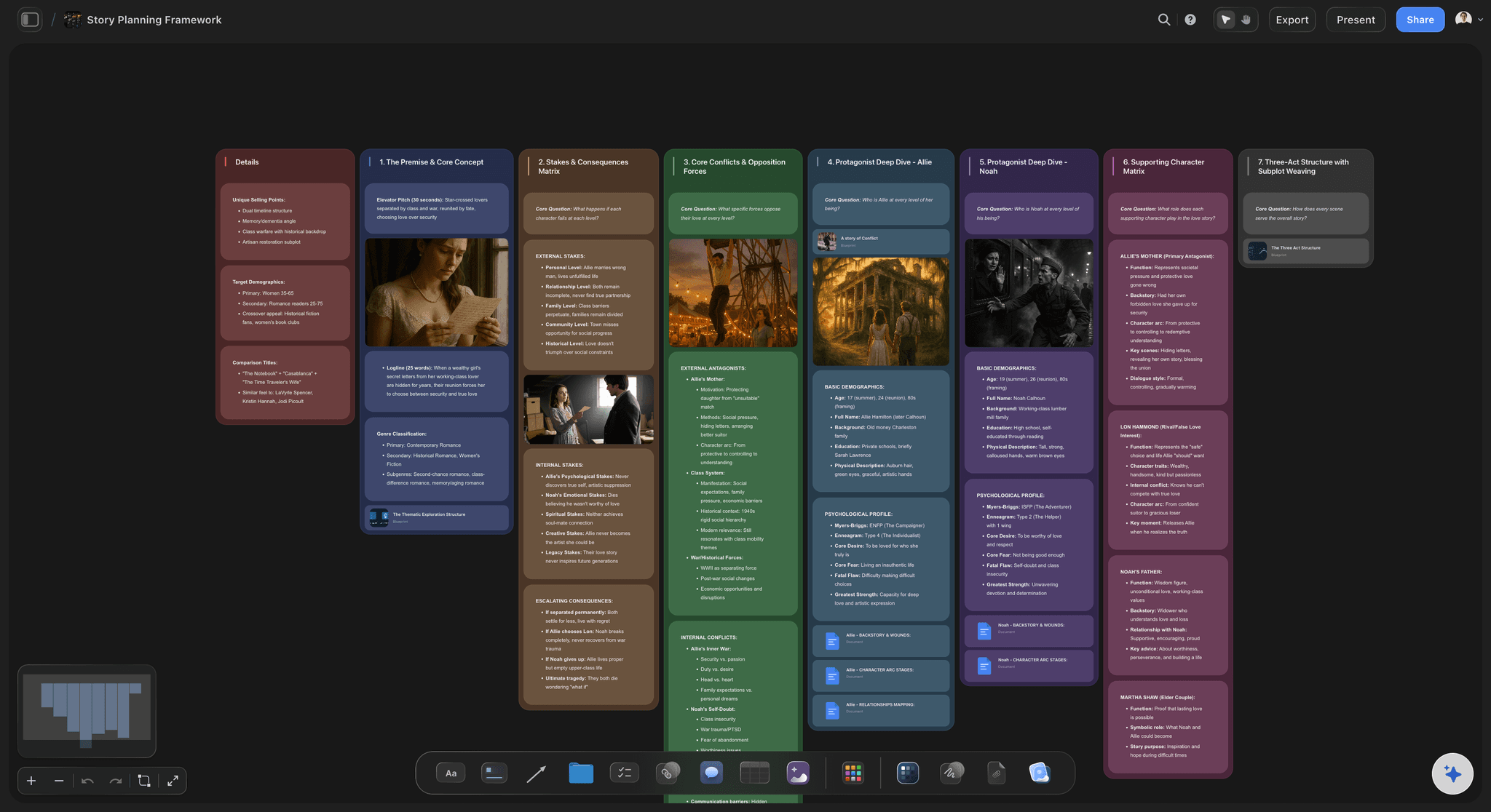
AI builds a season board from your premise
Start from a broken season, not a blank room
Type the premise and the season length and the AI lays out episode cards against a structure, with the midseason turn and the finale placed and the gaps visible. Arguing with a bad first pass is much faster than staring at an empty board.
See the AI story outline generator →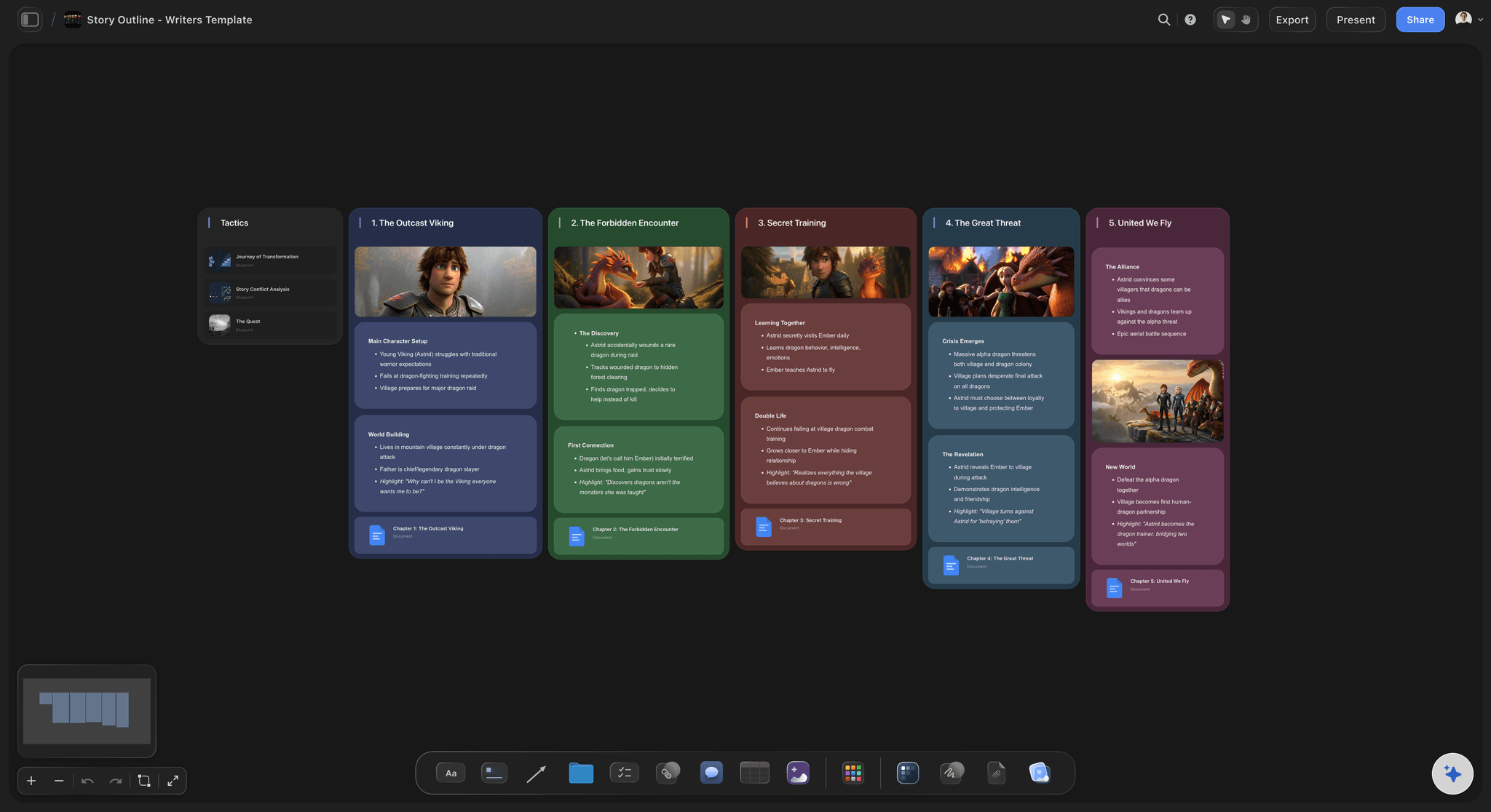
Episode row above, season arc row below
Watch both clocks in one glance
Put the episodes in a row and run the serialized spine as a track directly beneath them. An episode that satisfies on its own but moves the arc nowhere is instantly obvious, and so is the run of three episodes where the arc does all the work and nothing lands.
Explore story structure software →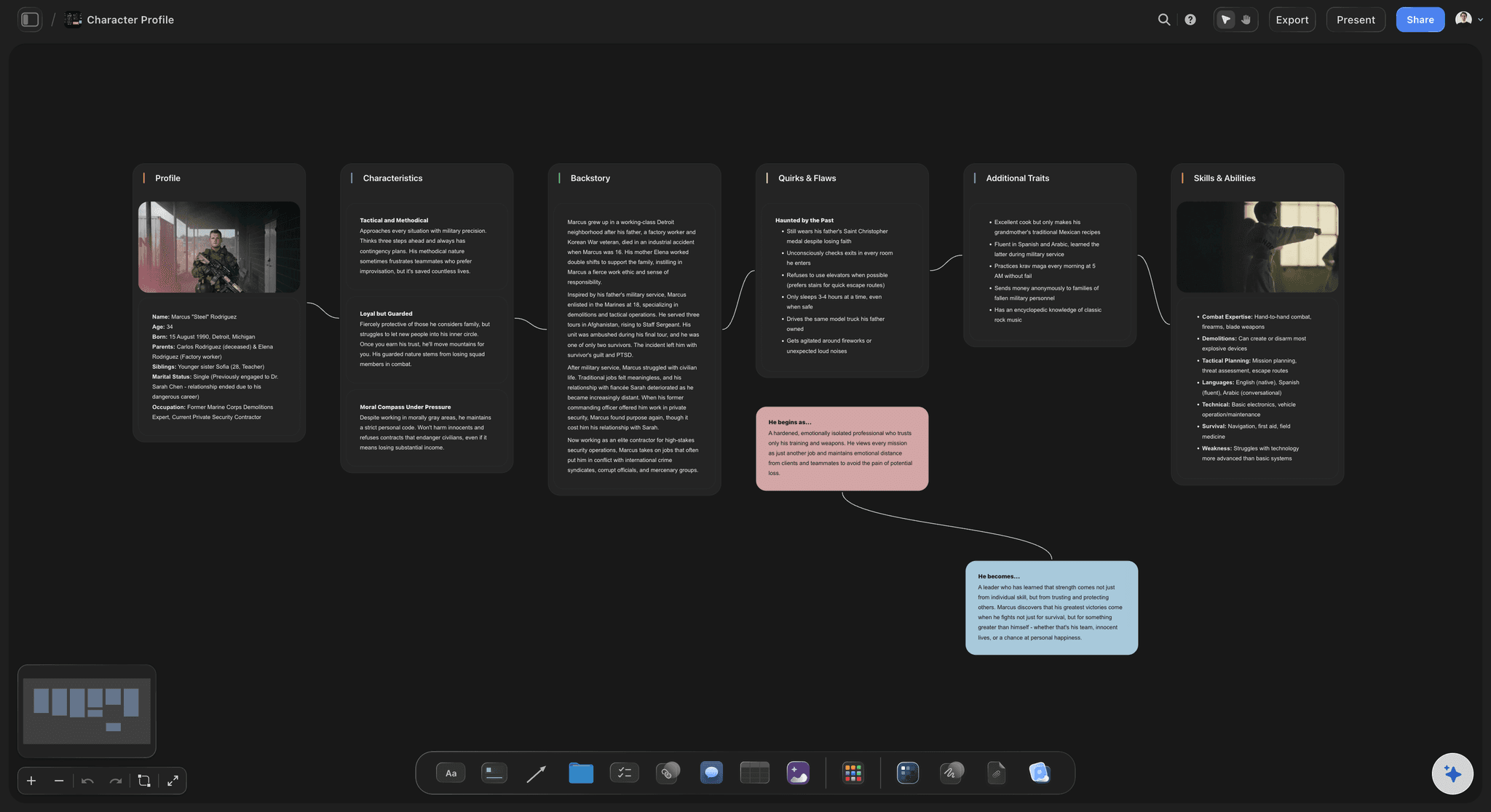
Character arcs that span seasons
Seed a payoff three years early
Give each recurring character a track that runs the whole show, not one season. When you can see season one and season three on the same canvas, planting the moment that pays off later stops being a thing you hope you remembered and becomes a thing you placed.
See the AI character profile generator →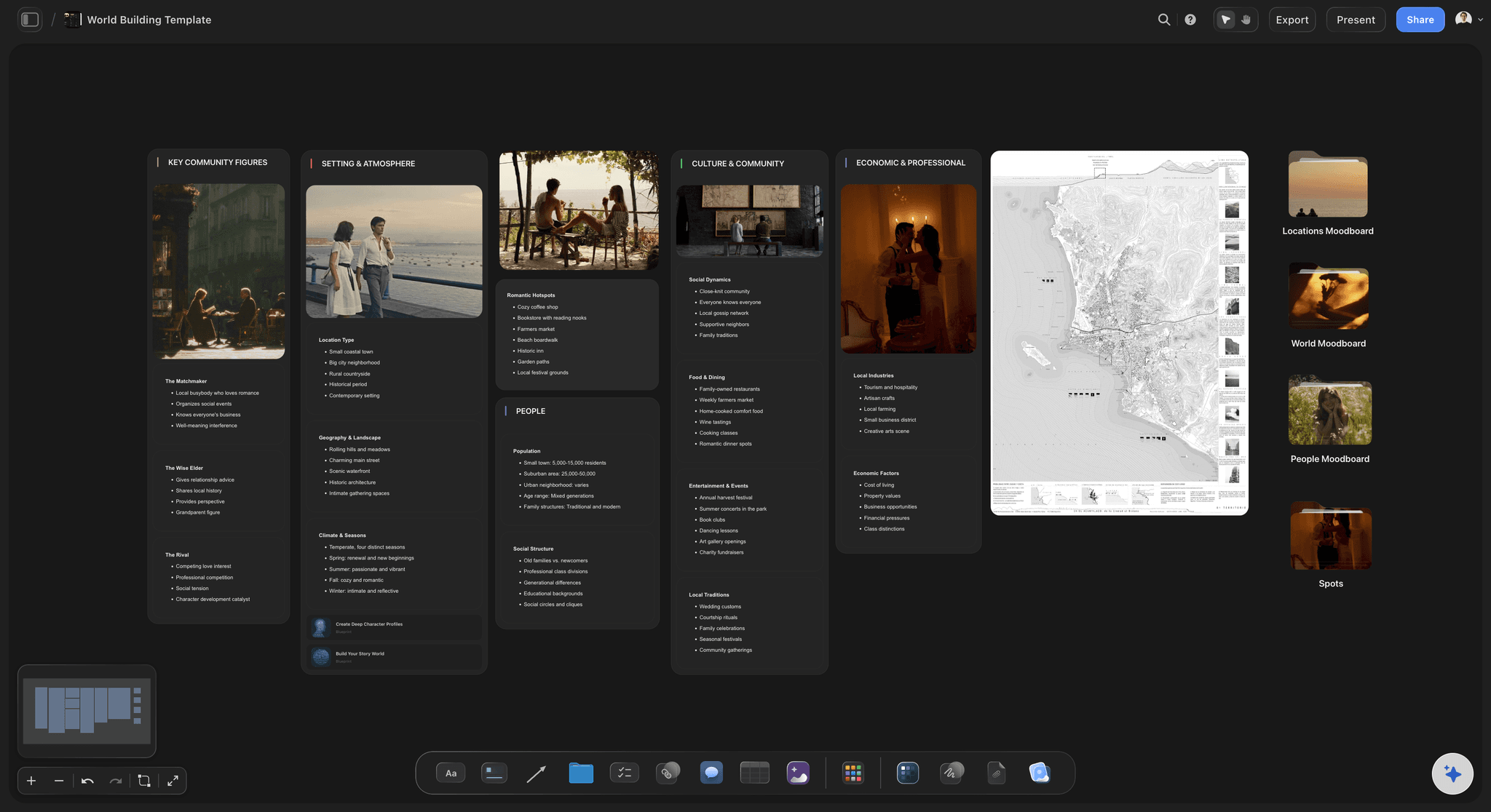
The bible lives beside the board it governs
Continuity the whole room can see
Canon, world rules, timelines, and character facts sit on the same canvas as the episodes that have to obey them. A bible in a separate document is a bible nobody opens in the middle of breaking an episode.
Build a series bible →Unlimited boards. No object cap.
Open a canvas, describe the show, and start breaking the season. Storyflow is paid-only during early access, with plans from $9.99 a month, and a Free plan launches before the end of 2026.
Unlimited season boards on an infinite canvas
Basic AI usage to generate season boards from prompts
3 starter frameworks built in
Share view-only links with producers and executives
Built for people with taste
More than an outline per episode.
A folder of episode outlines hides the exact thing television lives or dies on: what the season is doing while the episode is doing its job.
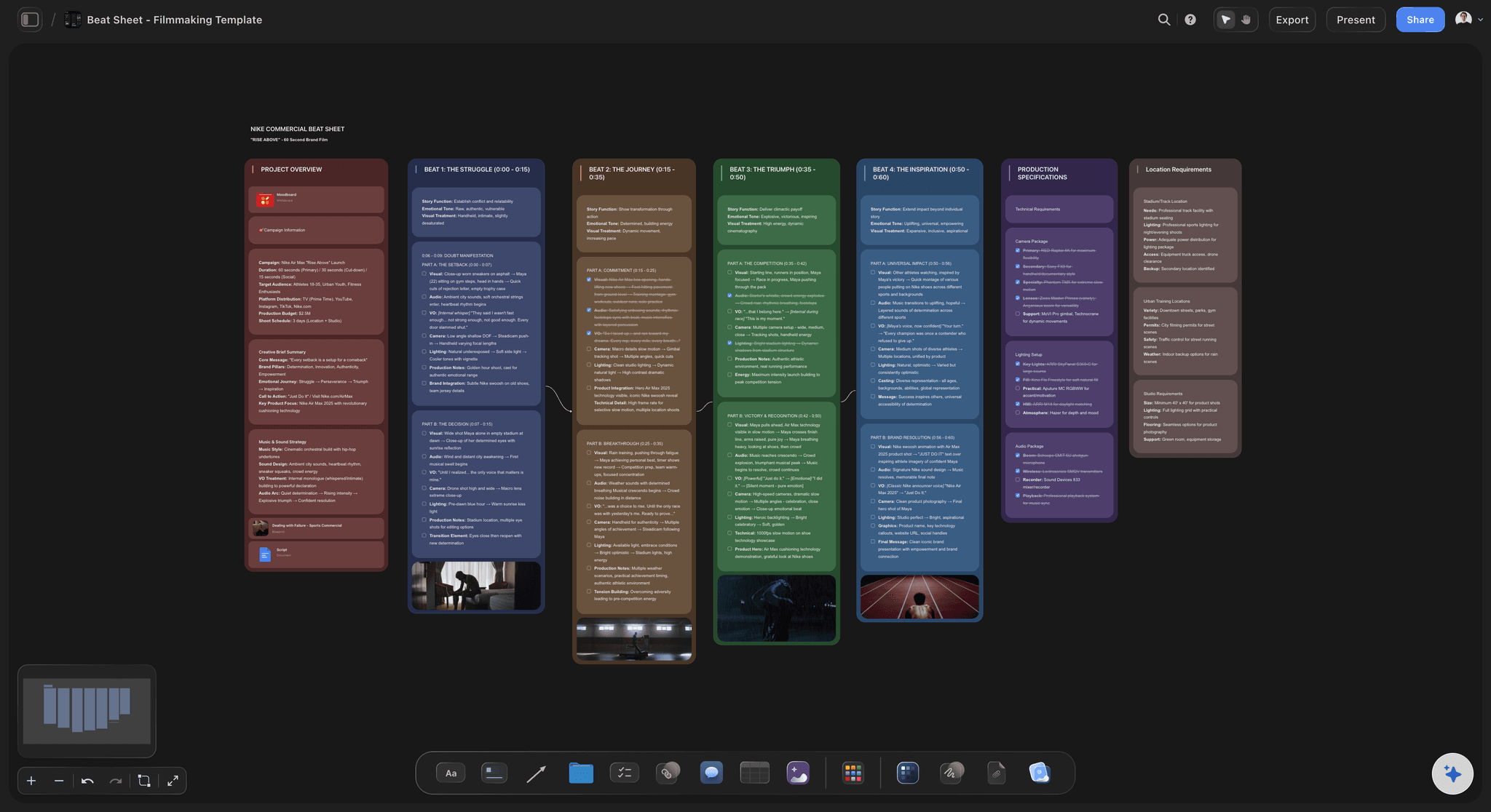
Cold open, act breaks, and the A, B, and C stories
Build the episode that has to work tonight
Structure the hour properly: Lay out the cold open, the act breaks, and the tag as cards. Act breaks are the load-bearing beats of commercial television and the strongest structural discipline in streaming too, because a break that does not make someone stay is a break in the wrong place.
Braid the A, B, and C stories: Run the A story, the B story, and the runner as parallel lanes inside a single episode, then check where they intersect. Three plots that never touch is three short films; the braid is what makes an episode feel like one thing.
Keep the procedural and the serial in balance: Mark on each episode card how much is self-contained and how much is serialized. Seeing the ratio across a whole season is how you catch the drift into pure serialization that leaves every individual episode feeling like a middle chapter.
The pilot has a different job: A pilot is not episode one, it is the argument for the series. Lay out what it establishes: the engine that generates a story every week, the cast dynamic, the tone, and the promise the show is making. Then check that episode two can actually deliver on it.
The season arc, the midseason turn, and the finale
Make the season move while the episodes work
The arc as a track under the episode row: Place an arc beat on the track wherever the serialized story genuinely advances. An empty stretch under three consecutive episodes is the run where viewers say the show lost momentum, and on a stacked board you can see it before you write it.
Place the midseason turn deliberately: The middle of a season is where a show either changes its own premise or starts repeating itself. Put the turn on the board, look at what sits either side of it, and check that the back half is a genuinely different situation rather than more of the front half.
Setups and payoffs across episodes and seasons: Mark what is planted and where it detonates, then draw the connection across the canvas. Setups with no payoff are broken promises, and payoffs with no setup are the coincidences audiences call cheating. Both are visible the moment the lines are drawn.
Season two exists on the same canvas: Put next season beside this one rather than in a new file. Deciding what the finale withholds is a decision about season two, and you can only make it well if season two is something you can look at.
AI that can see the whole show, not one episode
Plan with an AI that knows your series
Ask questions only the whole board can answer: Ask where the season arc goes quiet, which two episodes are structurally identical, whether a character has anything to do in the back half, or what the finale is currently promising about season two. It reads the entire canvas, so the answers are about your show.
Break from a premise, then argue with it: Have it lay out a first-pass season, then throw out the half you hate. A room does its best work reacting to a bad idea on the wall, and a first pass you can reject is worth more than a blank board you are still respecting.
It structures, it does not ghostwrite: Storyflow is a planning canvas rather than a script generator. The AI helps you see and arrange the show, which is the genuinely hard part of television. What the characters actually say stays yours, and it belongs in your script software.
Iterate without losing the room's work: Re-prompt as many times as you need. Cards the room already wrote and placed stay exactly where they are while the AI builds around them, so a regenerate never costs you a morning of breaking.
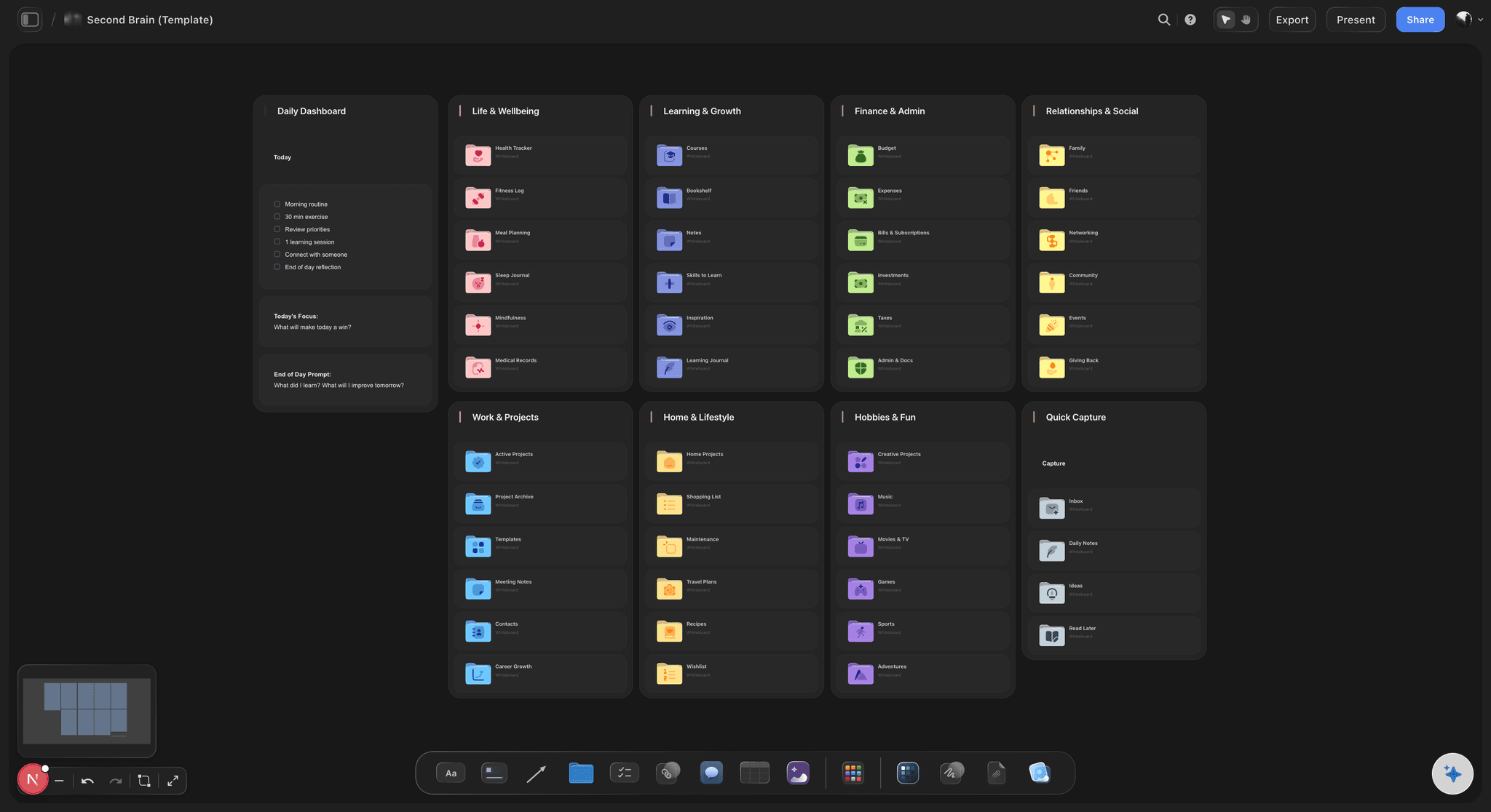
A writers room, a producer, and a buyer
Many hands, one version of the season
Break the season together on one canvas: The room works on the same board rather than on one person's notes plus a photo of a corkboard. Cards move in front of everyone, so the version on the wall and the version in the file are the same version. Anyone a paid member invites to a board joins free today.
Assign episodes and keep the bible honest: Hand an episode to a writer with the season arc, the character tracks, and the canon visible beside it. Most continuity errors are not carelessness, they are a writer who could not see the fact they were about to contradict.
Show the season instead of describing it: Send a view-only link to a producer, an executive, or a manager and they open the whole shape of the season in a browser with no account. A stacked board makes a structural conversation far more concrete than a document of episode summaries.
Export for the pitch: Export the board as a high-quality image or PDF when the season has to live inside a pitch document, a deck, or a bible you are sending out. Read how the pieces fit together in our guide to planning a TV pilot with AI.
Explore templates for your project
Every template opens as a real, editable board on the infinite canvas. Pick the closest fit and make it your own.
Story Plan
Outline your plot, characters, and world in one connected view, then expand each thread as the story grows.
One app instead of five
Storyflow vs Scrivener, Plottr, and Final Draft.
Every tool here is genuinely good at something, and one of them owns a job we do not do at all. Here is where they differ.
Storyflow
Recommended
Episode row and season arc row on one canvas
AI builds the season board from a prompt
AI uses your whole board as context
Industry-standard script formatting
Series bible and research on the same canvas
Runs in the browser, nothing to install
Scrivener
Episode row and season arc row on one canvas
AI builds the season board from a prompt
AI uses your whole board as context
Industry-standard script formatting
Series bible and research on the same canvas
Runs in the browser, nothing to install
Plottr
Episode row and season arc row on one canvas
AI builds the season board from a prompt
AI uses your whole board as context
Industry-standard script formatting
Series bible and research on the same canvas
Runs in the browser, nothing to install
Final Draft
Episode row and season arc row on one canvas
AI builds the season board from a prompt
AI uses your whole board as context
Industry-standard script formatting
Series bible and research on the same canvas
Runs in the browser, nothing to install
What creators are saying
Join early creators getting structured workspaces and AI that remembers their projects
“Storyflow has sped up my workflow by at least 3x, which means more flow state and more projects I can actually ship. It truly changed the way me and my team create.”

Reilin Joey
Director & YouTuber
“One prompt gets me a structured board. But the tactics are my favorite. I run my YouTube scripts through them and my intros and retention got better. It's amazing.”

Justkay
YouTuber & Freelance Filmmaker
“I used to juggle five apps to plan a project. Now I describe what I am making and get boards, lists, and a schedule. All in one place.”

George
@fernwehchronicles
TV series planning questions, answered.
How to break a season, how long it should be, and where a canvas beats a document.
Start with the engine, not the plot. Work out what generates a story every week, because that is what makes it a series rather than a long film. Then break the season: put every episode on its own card in a row, and run the serialized arc as a track directly underneath. Place the midseason turn and the finale early, since they are the two beats everything else is shaped around. Only then fill in each episode with a cold open, act breaks, and the A, B, and C stories. Finally, run each character's arc across the whole row and check that nobody goes quiet for a third of the season.
There is no fixed answer any more, and the count should follow the story rather than the other way round. Streaming drama commonly runs six to ten episodes, premium limited series often land between four and eight, and traditional network drama and comedy still run far longer orders. What matters structurally is the ratio: a short order needs the midseason turn earlier and cannot afford an episode that does nothing for the arc, while a longer order needs genuinely self-contained episodes or the middle collapses. Pick a number, lay that many cards out, and see whether every card has a reason to exist. If three of them do not, you were writing a shorter season.
It depends on which part of the job is hard for you. Plottr is purpose-built for parallel timeline tracks and does that one thing cleanly. Scrivener is the strongest choice if you want planning and drafting in one long-term project file with a corkboard attached. Final Draft is where the script itself belongs and is not really a planning tool. Storyflow is an AI-native infinite canvas, which suits anyone whose actual problem is seeing the episode and the season at the same time, dragging episodes into new orders freely, and keeping the bible, the arcs, and the references on the same surface as the board.
No, and we would not claim it does. Final Draft owns industry-standard screenplay formatting, revision colours, production drafts, and the file everyone downstream expects to receive, and none of that is replaceable by a planning canvas. Storyflow is for everything that happens before the pages: breaking the season, structuring the episode, tracking arcs across years, and holding the bible. The normal workflow is to plan the season here, keep the board open beside you, and write the actual script in Final Draft. If you are looking at script software specifically, our screenwriting software page covers that side properly.
The room usually works on a wall of cards, which is exactly the right instinct and exactly the thing that does not survive being photographed. Agree the season arc first, then place the midseason turn and the finale, then fill the episodes between them. Break each episode down to its A, B, and C stories and check the braid. Assign episodes with the arc and the canon visible beside the writer. Doing this on a shared canvas rather than a physical wall means the version everyone is looking at is the version that persists, and a writer working from home is looking at the same board as the room.
An episode arc is the story that opens and closes inside one hour: a problem is introduced, escalated through the act breaks, and resolved or turned by the end, so the viewer feels they watched something complete. A season arc is the slower story that advances a small amount in every episode and only resolves in the finale. The craft of television is making one set of scenes serve both. When the two collapse into each other, you get either a season of self-contained episodes that add up to nothing, or a run of chapters where no individual hour is satisfying. Stacking them on a board is the fastest way to see which failure you are drifting toward.
Decide the ratio on purpose rather than discovering it. Mark on every episode card how much of the hour is self-contained and how much serves the season arc, then read the whole row at once. Almost every show that loses its audience mid-season has drifted, usually toward pure serialization, which quietly turns each episode into a middle chapter with no ending. The counter-drift is just as real: a run of pure cases with no arc movement makes the season feel like it is standing still. A stacked episode row and arc row makes the balance a thing you can look at instead of a thing you argue about from memory.
Give each recurring character a horizontal track that runs the whole show rather than one season, and place a card wherever their arc genuinely turns. Two things become visible immediately. First, the character who has no turn for a season and a half, which is the one the audience stops caring about. Second, two characters whose turns land on identical beats, which usually means they are having the same realization and one of them should be having a different one. Because the canvas is infinite, season one and season four can sit side by side, so seeding a payoff years ahead is a placement rather than a hope.
Yes, and it is one of the main reasons to use a canvas for television. Canon, world rules, the timeline, character facts, and the look of the show can sit beside the episodes that have to obey them. A bible in a separate document is a bible nobody opens in the middle of breaking a story, which is exactly when it matters. Keeping it in view is also what makes a room of many hands survivable, because most continuity errors are not carelessness. They are a writer who could not see the fact they were about to contradict.
A pilot is not episode one, it is the argument that a series exists. It has to establish the engine that will generate a story every week, introduce the cast dynamic people are agreeing to spend years with, set a tone the show can sustain on a real budget, and make a specific promise about what watching this will be like. The common failure is a pilot that tells a great single story and leaves no answer to what episode six is. A useful test: sketch the season beside the pilot, and if episodes four through eight are vague, the engine is not built yet.
Not during early access. Storyflow is paid-only right now, with plans starting at $9.99 a month, and a Free plan for solo use launches before the end of 2026. Anyone a paid member invites to a board joins free today, so a whole writers room can break a season on one canvas with a single paid seat holding it. If you need something free this minute, a physical corkboard with index cards is still the honest answer for a first pass on a season, and it is what most rooms started on.
Yes. Share a view-only link and they open the whole season in a browser with no account, which makes a structural conversation far more concrete than a document of episode summaries. Executives reading a stacked board can see where the arc stalls and which episodes are doing no serialized work, which produces sharper notes than reacting to prose. If you want someone to contribute, invite them to the board and they can work on the canvas with you. You can also export the board as a high-quality image or PDF when it needs to live inside a pitch deck or a bible you are sending out.
More from Storyflow
Break the season where you can see all of it.
Open a canvas, describe the show, and let AI lay out the first season board. No download.