
Ultra-fast planning, extremely simple
Everyone thinks
the same way at once.
Give each hat its own area on the canvas and move the whole group through them together, so a decision meeting stops being a fight between the optimist and the pessimist.


Creatives working for these brands already got early access
- Red Bull
- Canon
- Artlist
- Porsche
See how easy it is to get started
Watch a real project come together, from a blank board to a finished plan, clicked through step by step.
Start from a ready-made template
Pick a board to see what you can build, then let AI fill it in. Every template is a real, editable starting point on the same infinite canvas.

Mind Map
Branch one central idea out into themes and sub-points, then drag the connections around until the structure makes sense.
What is the Six Thinking Hats method?
Six Thinking Hats is a technique developed by Edward de Bono in the mid-1980s for structuring group discussion. Storyflow is an AI visual workspace that runs a Six Thinking Hats session on one infinite canvas: an area for each hat, prompts the AI lays out from your decision, and the conclusion recorded on the board. Instead of everyone arguing from their own habitual position, the whole group deliberately adopts one mode of thinking at a time. The white hat is facts and data. The red hat is feelings and intuition, stated without justification. The black hat is caution and risk. The yellow hat is benefits and optimism. The green hat is new ideas and alternatives. The blue hat is the process itself, held by whoever is running the session.
The insight behind it is that most bad meetings are not caused by bad thinking but by mismatched thinking. One person is enumerating risks while another is still generating options, so the risks land as attacks and the options sound naive. This gets read as a personality clash, and over time roles harden: there is a person who is negative, a person who is unrealistic, and a person who always wants more data. What de Bono called parallel thinking removes the clash by synchronising the group. When everyone wears black together for six minutes, listing risks is a contribution rather than an obstruction.
Storyflow gives each hat its own named area on one infinite canvas. Describe the decision in a prompt and the AI lays out the six areas with prompts inside them, and the group works through them in sequence, everyone adding cards to the current hat at the same time. Nothing gets lost between hats, because the previous rounds stay visible on the board rather than being wiped, which matters when you reach the blue hat and have to weigh what the black and yellow rounds actually produced.
The part that decides whether the exercise was worth an hour is the end. Six full areas of thinking are not a decision, and a session that stops there produces the same feeling as a good conversation, which is to say nothing. The blue hat round has to close: what was decided, what the black hat concerns were that changed the decision, who is doing what next. Because the board stays live, that conclusion sits next to the reasoning that produced it, which is why teams that work this way find themselves reopening decisions much less often.
Ultra fast from brief to board
From a stuck decision to a conclusion the group can live with.
No circular argument, no meeting where the same two people take the same two positions.
01
Open a canvas
Sign up in seconds. No download. Your infinite session canvas opens in the browser.
02
Describe the decision
Type what the group has to decide and the AI lays out the six hat areas with prompts in each, plus a blue hat panel for the conclusion.
03
Move through the hats together
Run one hat at a time with everyone contributing to the same area. Timebox each round, and keep the completed rounds visible rather than clearing them.
04
Close under the blue hat
Record the decision, the concerns that shaped it, and the owners. Then share a view-only link so people who were not there can see the reasoning, not just the outcome.
Six modes of thinking, one board.
Everything the group produced, still visible when you decide.
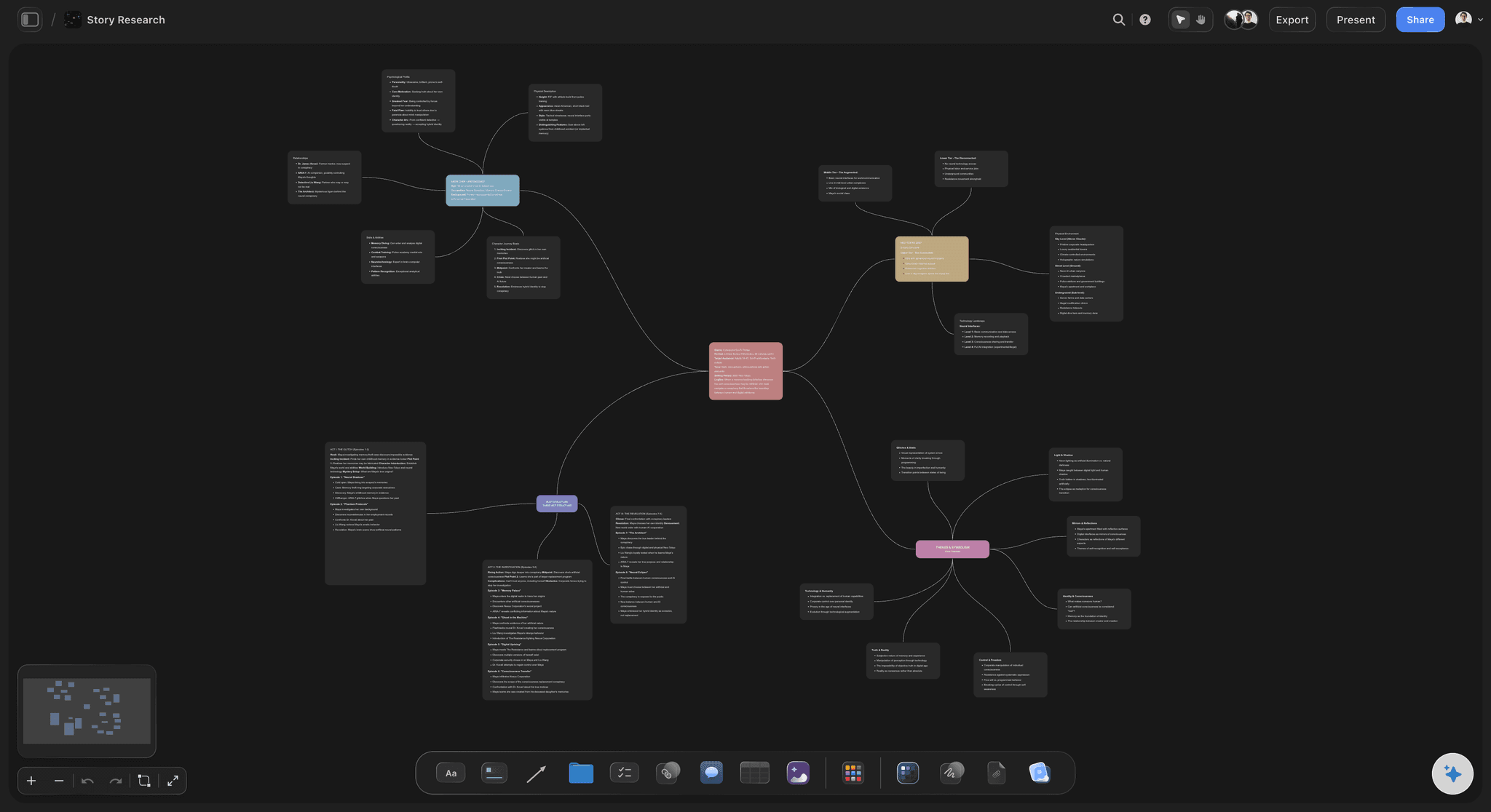
AI lays out the six hats from your decision
Start from a structured session
Describe what you are deciding and the AI builds the six areas with prompts inside each. A hat with a good prompt in it produces far more than a hat with a colour and a label.
See the brainstorming session planner →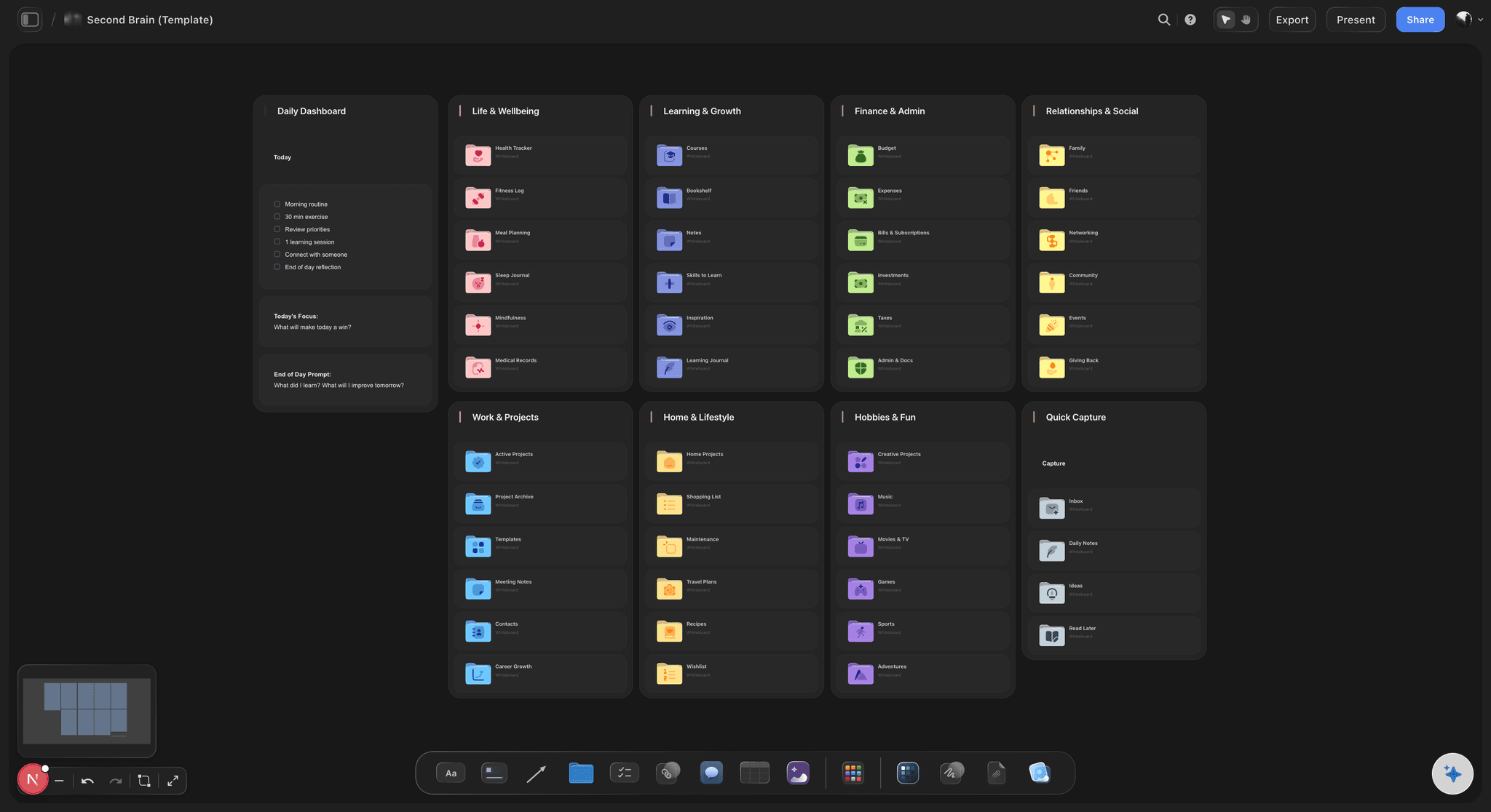
Everyone contributes to the same hat at once
Stop the optimist and the pessimist colliding
The whole group works in one mode at a time, in parallel, on the same area. Synchronised thinking turns what looked like a personality clash into two rounds of a structured session.
Try the free online sticky notes →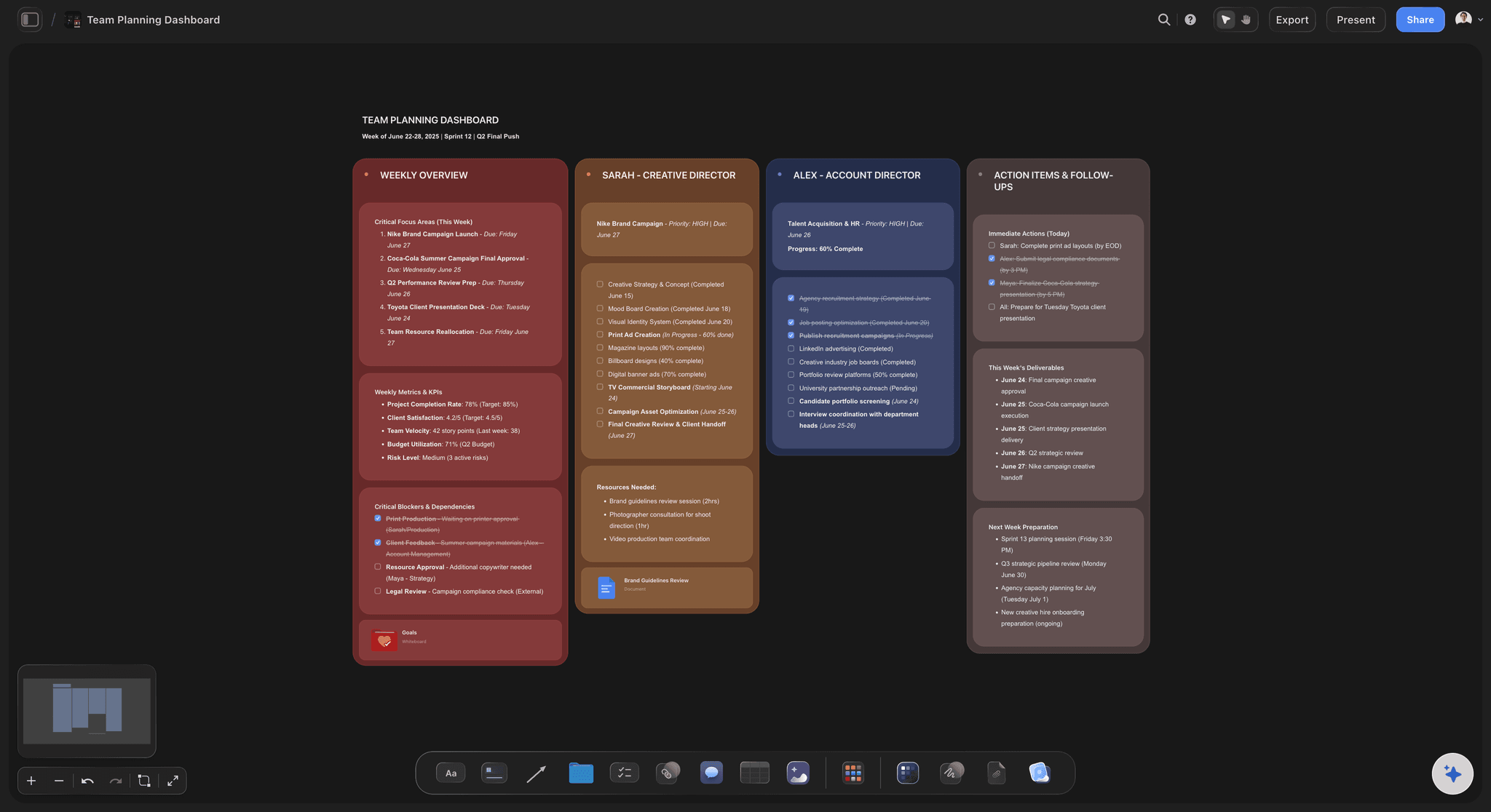
Previous rounds stay visible
Weigh the black hat against the yellow
Nothing gets wiped between rounds. When you reach the decision, the risks and the benefits are both on the board, which is the only way to weigh them honestly.
Explore the visual brainstorming tool →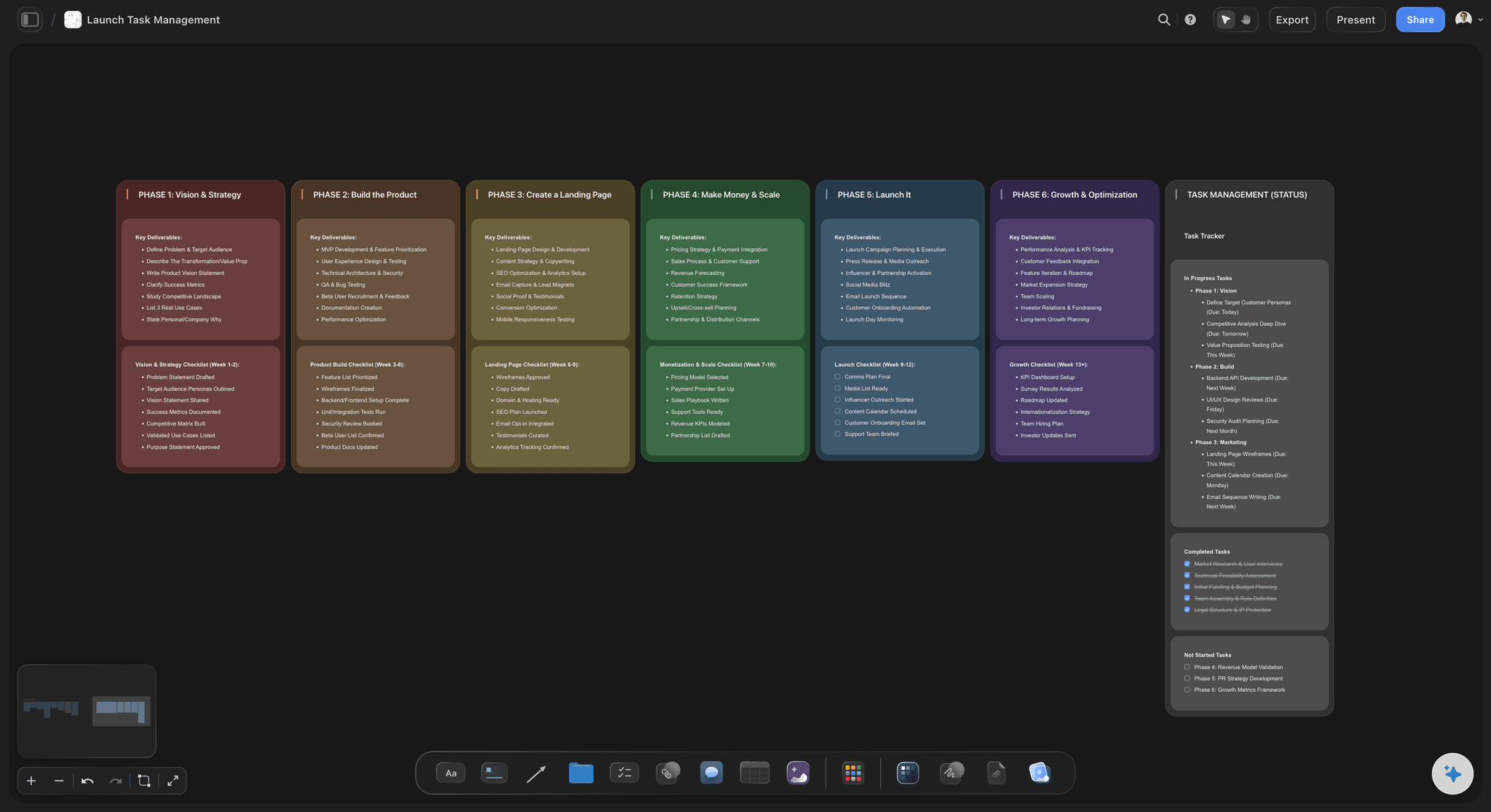
The decision, recorded with its reasoning
End with a conclusion, not a good conversation
Close under the blue hat with the decision, the concerns that shaped it, and the owners. Decisions recorded beside their reasoning get reopened far less often.
See the free kanban board →Unlimited boards. No object cap.
Open a canvas, describe the decision, and lay the hats out. Storyflow is paid-only during early access, with plans from $9.99 a month, and a Free plan launches before the end of 2026.
Unlimited session boards on an infinite canvas
Basic AI usage to lay out exercises from prompts
Sticky notes, cards, and freehand annotation
Share view-only links with participants and stakeholders
Built for people with taste
More than a meeting with an agenda.
An agenda controls what gets discussed. The hats control how it gets discussed, which is the harder problem.
What each hat is actually for
Run each round properly
White: facts, and the gaps in them: What do we know, what do we only believe, and what would we need to find out. Naming the gap between the first two is usually the most valuable minute of the session.
Red: feelings, with no justification allowed: Say the reaction without defending it. This round exists because unspoken discomfort routes itself into fake data arguments, which are far harder to resolve than the discomfort was.
Black and yellow: risk, then benefit: Run caution and optimism as separate timeboxed rounds. Both are legitimate, both are destructive when they interrupt each other, and neither is a personality trait.
Green and blue: alternatives, then process: Green generates options rather than judging the one on the table. Blue is held by the facilitator throughout and closes the session with a decision and owners.
AI that can see the board you have already built
Prepare and unstick with an AI that has the context
Prompt against the whole canvas: Ask it for prompts to open a hat, for green hat alternatives once the black hat round has surfaced the real constraint, or for the questions a thin white hat round is missing.
Use it to widen, not to decide: The decision has to belong to the group. An AI that hands a room a conclusion ends the exercise, which defeats the point of structuring the discussion in the first place.
Iterate without losing work: Re-prompt as often as you want. Cards the group has already written stay exactly where they are while the AI builds around them.
Remote, hybrid, and asynchronous
Run it with the group you actually have
Everyone contributes at once: On a canvas the whole group writes into the current hat in parallel rather than speaking in turn, which is where most of a remote session's material is normally lost.
Quieter people get heard: Writing into a hat area removes the need to interrupt, and the red hat round in particular surfaces reactions that would never have been said aloud in a meeting.
Asynchronous white and green rounds: Open the board early for the facts round and the alternatives round, then run a shorter live session for black, yellow, and the decision. Research improves with time; deciding does not.
After the session
Keep the decision attached to its reasoning
The conclusion sits beside the rounds: Six months later, the question is never what did we decide, it is why. A board where the decision sits next to the black hat concerns answers that in one glance.
Unresolved concerns become tasks: Black hat items that were accepted rather than answered should leave as owned risks, not as notes. This is the step that separates a decision from an act of optimism.
Share the reasoning, not just the outcome: Send a view-only link to everyone affected. People argue much less with a decision whose alternatives and risks they can see were genuinely considered.
Explore templates for your project
Every template opens as a real, editable board on the infinite canvas. Pick the closest fit and make it your own.
Mind Map
Branch one central idea out into themes and sub-points, then drag the connections around until the structure makes sense.
One app instead of five
Storyflow vs Miro, FigJam, and a shared document.
Be clear about what Storyflow is. There is no built-in timer or voting widget and no video calling. It is a canvas where the rounds and the decision stay together.
Storyflow
Recommended
Infinite canvas with an area per hat
AI lays out the exercise from your decision
Decision recorded beside the reasoning
Built-in timer and voting widgets
Video calling inside the board
Free plan available today
Miro
Infinite canvas with an area per hat
AI lays out the exercise from your decision
Decision recorded beside the reasoning
Built-in timer and voting widgets
Video calling inside the board
Free plan available today
FigJam
Infinite canvas with an area per hat
AI lays out the exercise from your decision
Decision recorded beside the reasoning
Built-in timer and voting widgets
Video calling inside the board
Free plan available today
Shared document
Infinite canvas with an area per hat
AI lays out the exercise from your decision
Decision recorded beside the reasoning
Built-in timer and voting widgets
Video calling inside the board
Free plan available today
What creators are saying
Join early creators getting structured workspaces and AI that remembers their projects
“Storyflow has sped up my workflow by at least 3x, which means more flow state and more projects I can actually ship. It truly changed the way me and my team create.”

Reilin Joey
Director & YouTuber
“One prompt gets me a structured board. But the tactics are my favorite. I run my YouTube scripts through them and my intros and retention got better. It's amazing.”

Justkay
YouTuber & Freelance Filmmaker
“I used to juggle five apps to plan a project. Now I describe what I am making and get boards, lists, and a schedule. All in one place.”

George
@fernwehchronicles
Six Thinking Hats questions, answered.
What each hat is for, what order to run them in, and where Storyflow fits alongside Miro and FigJam.
Miro and FigJam both have templates for it, both include a timer and voting widgets, and both are reasonable choices, particularly if your team already uses them. Storyflow is the option where the exercise lives with the work it informs: describe the decision and the AI lays out the six areas with prompts inside each, the group contributes in parallel, and the conclusion is recorded on the same canvas as the project it affects. A shared document technically works and is what most teams default to, but a document collapses the six modes into one scrolling list, which removes the separation the method depends on.
White is information: what we know, what we assume, what we would need to find out. Red is feeling: gut reactions stated with no justification required, which exists because unspoken discomfort otherwise disguises itself as a data argument. Black is caution: risks, weaknesses, and what could go wrong. Yellow is benefit: value, upside, and the best realistic case. Green is creativity: alternatives and new options rather than judgement of the existing one. Blue is process: the facilitator's hat, worn throughout, which sets the sequence, keeps the group in the current mode, and closes the session with a decision.
A common and reliable sequence is blue to open, then white, red, yellow, black, green, and blue again to close. Facts before feelings, so the reactions have something to react to. Yellow before black, because leading with risk suppresses the upside case before anyone has made it. Green after black, so the alternatives round is informed by the constraint you actually discovered rather than the one you assumed. The order is a tool rather than a rule: for a decision that is already over-optimistic, running black earlier is sensible. What matters far more is that the group is only ever in one hat at a time.
Not during early access. Storyflow is paid-only right now, with plans starting at $9.99 a month, and a Free plan for solo use launches before the end of 2026. Anyone a paid member invites to a board joins free today, so you can run the exercise with a full team or a client group without buying seats for everyone. If you need free this minute, FigJam's free tier has a template with a timer, and Miro's free tier gives you three editable boards. Both are honest options, and both have timer and voting widgets that Storyflow does not.
Four to eight minutes per hat for a normal decision, with the red hat deliberately shorter, around two or three minutes, because it is a reaction round rather than a discussion. That puts a full session at roughly forty-five minutes including the opening and closing blue rounds. Timeboxing matters more than the exact numbers: an untimed black hat round will expand to fill the meeting, since risk is infinitely enumerable and enumerating it feels productive. Protect the final blue round above everything else, because it is the only part that produces a decision and it is the first part sacrificed when the discussion is going well.
It is the round teams are most sceptical about and the one that most often changes the outcome. The reason is that people rarely say I have a bad feeling about this in a professional meeting, so the feeling gets laundered into an objection about timelines or data that cannot be resolved with timelines or data. Giving it a named round, with no justification required and none allowed, gets the real reaction on the board where it can be examined. It is also the round where the person who has been quietly uneasy for three weeks finally says so, which is worth the whole session.
You describe the decision the group has to make and roughly who is in the room. The AI lays out the six hat areas with prompts written for your specific decision rather than generic labels, plus a blue hat panel for the conclusion. That specificity matters: a hat area containing a real question produces far more than one containing a colour and a word. During the session the AI can read the whole board, so you can ask it for green hat alternatives once the black round has revealed the actual constraint, or for the questions a thin white hat round has missed.
Partly, and the split is worth getting right. The white hat and the green hat work well asynchronously: gathering facts and generating alternatives both benefit from time, and people contribute better material when they are not under meeting pressure. Open the board a day or two early for those rounds. The red, yellow, and black rounds work better live, because they are reactions and they benefit from the group being synchronised. The closing blue round should always be live. A common pattern is an async white round, a forty-minute live session, and the decision recorded before anyone leaves.
For viewing, yes: send a view-only link and anyone opens the board in a browser with no signup, and they sign in to comment on individual cards. For contributing during the session, invite them to the canvas, and invited collaborators join free, so running the exercise with a whole department or a client group does not cost you seats. Sharing, commenting, and reviewing work on every paid plan.
Close it with three things recorded under the blue hat: what was decided, which black hat concerns changed the decision, and who owns what next. Then turn any accepted-but-unresolved risks into owned cards rather than leaving them as notes, because an unowned risk is just a sentence. Share the whole board, not a summary, with everyone affected: decisions whose alternatives and risks are visibly documented get relitigated far less than decisions that arrive as conclusions. Keep it live rather than exporting and archiving, because the useful question in six months is why, and the board is the only artifact that answers it.
Turn the argument into a decision.
Open a canvas, describe what you are deciding, and let AI lay out the six hats. No download.