
An ultra-fast canvas that stays calm
Run the retro
on one shared canvas.
Storyflow is a retrospective maker on a truly infinite canvas. Capture what went well, what did not, and action items on sticky-style cards, run the retro async or live with the whole team, and let AI cluster the notes into themes and surface the actions worth carrying forward. Unlimited collaboration on every paid plan.


Creatives working for these brands already got early access
- Red Bull
- Canon
- Artlist
- Porsche
See how easy it is to get started
Watch a real project come together, from a blank board to a finished plan, clicked through step by step.
Start from a ready-made template
Pick a board to see what you can build, then let AI fill it in. Every template is a real, editable starting point on the same infinite canvas.

Mind Map
Branch one central idea out into themes and sub-points, then drag the connections around until the structure makes sense.
What is a retrospective, and how do you run one?
A retrospective is the meeting a team holds at the end of a sprint, a project, or a launch to look back honestly and improve. Everyone puts up what went well, what did not, and what to try next, the group talks through the patterns, and the session ends with a short list of action items owned by real people. Done regularly, it is the loop that turns a team's experience into changes instead of the same problems every cycle. The format is simple, but it only works when every voice is on the board, not just the loudest one in the room.
There are a few classic layouts, and they all fit the same canvas. What Went Well / What Did Not Go Well / Action Items is the default. Start / Stop / Continue asks what to begin, end, and keep doing. Mad / Sad / Glad surfaces how the sprint actually felt, which is useful when morale is the real story. Sailboat, 4Ls, and Glad / Sad / Mad are variations on the same idea: give people a few clear columns, collect the notes, then cluster and decide. The point of a template is to lower the friction so the team spends its energy on the discussion, not the setup.
Storyflow runs retrospectives on an open infinite canvas. Every note is a real sticky-style card that anyone drags into a column, recolors, and regroups as the conversation moves. Run it live in one shared session or let people add cards async before the call, then ask the AI to cluster the notes into themes and pull out the action items so nothing gets lost. Because it is a truly infinite canvas with no object cap, a big team or a long project fills the board without hitting a wall, and the actions become a plan on the same canvas rather than a doc no one reopens.
Ultra fast from brief to board
Run a retrospective in four steps.
Set up the columns, collect the notes async or live, then let AI cluster the themes and surface the actions.
01
Open a retro board
Start in the browser. Nothing to install, just an infinite canvas ready for your columns and cards.
02
Pick a format
Lay out What Went Well, What Did Not, and Action Items, or use Start / Stop / Continue or Mad / Sad / Glad. Ask the AI to build the columns from a prompt if you want a head start.
03
Collect the notes
Invite the team to drop sticky-style cards into each column, async before the call or live in one shared session. Every card drags, recolors, and regroups as the talk moves.
04
Cluster and decide the actions
Ask the AI to group related notes into themes and surface action items, assign owners, then turn the actions into a plan on the same canvas or export the board as an image or PDF.
A retro board that turns notes into action items.
Collect every voice on sticky cards, let AI cluster the themes, and keep the actions on one canvas that becomes the next sprint's plan.
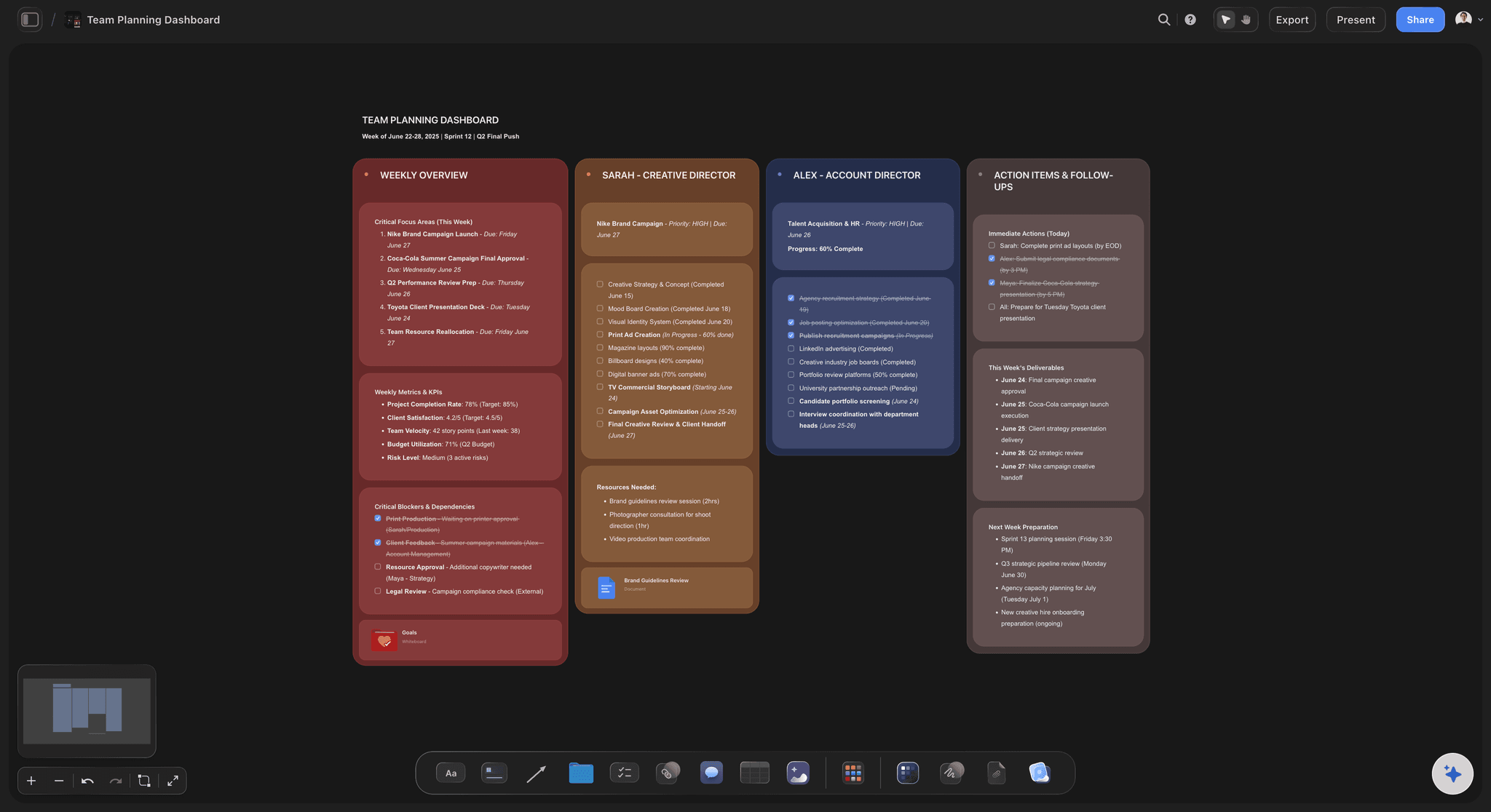
Every format on one canvas
Well / Not / Actions, Start / Stop / Continue, and more
Lay out the classic What Went Well, What Did Not, and Action Items, or switch to Start / Stop / Continue or Mad / Sad / Glad. Every column and card is a real object you drag and recolor, so the board bends to your team's format instead of a fixed template.
See the infinite canvas →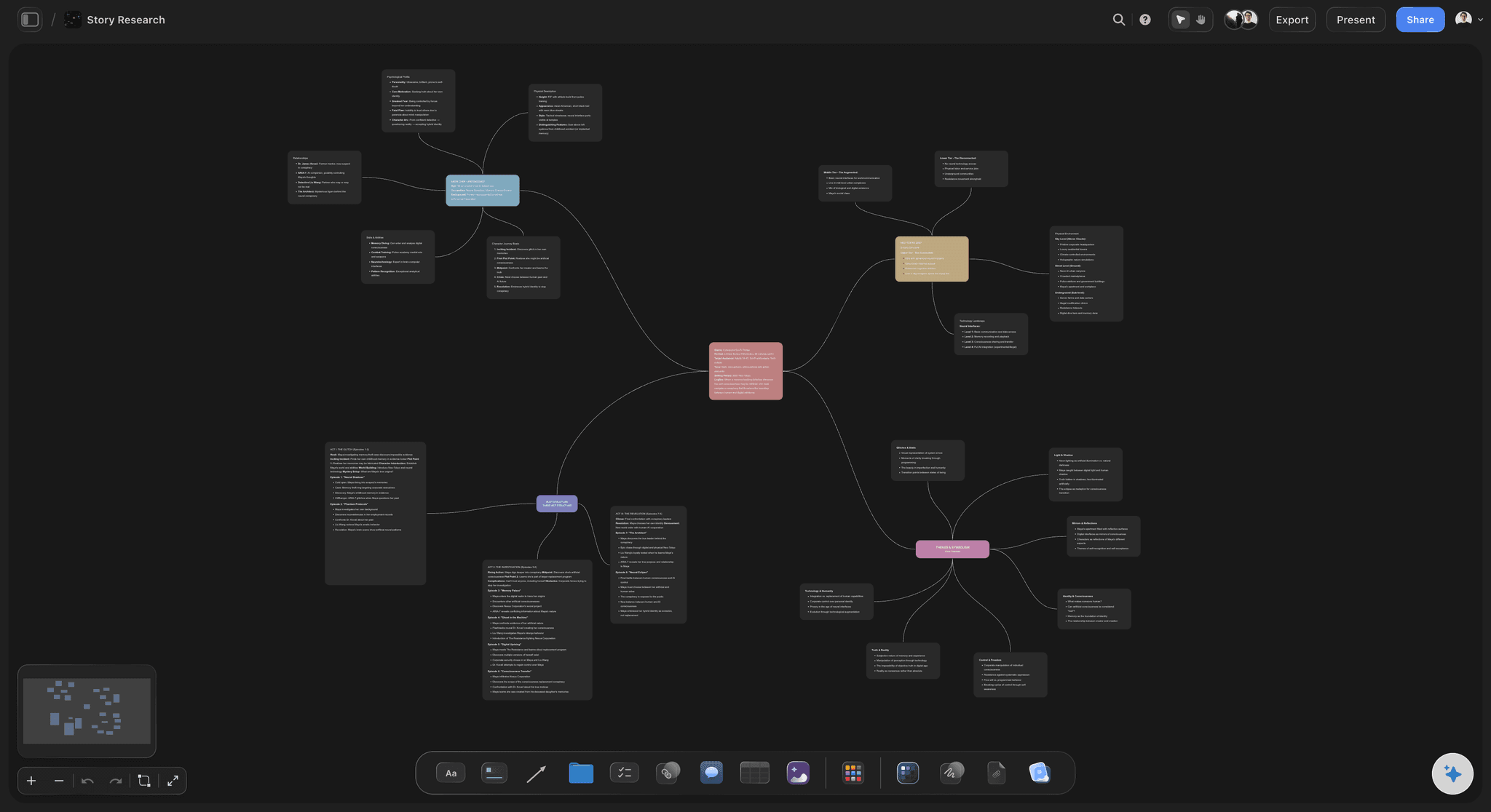
AI clusters the notes
Group themes and surface actions with AI
When the columns fill with sticky cards, ask the AI to cluster the related notes into themes and pull out the action items. It reads the current board as context, so it works from what the team actually wrote, not a generic list, and nothing important gets buried.
See the AI whiteboard →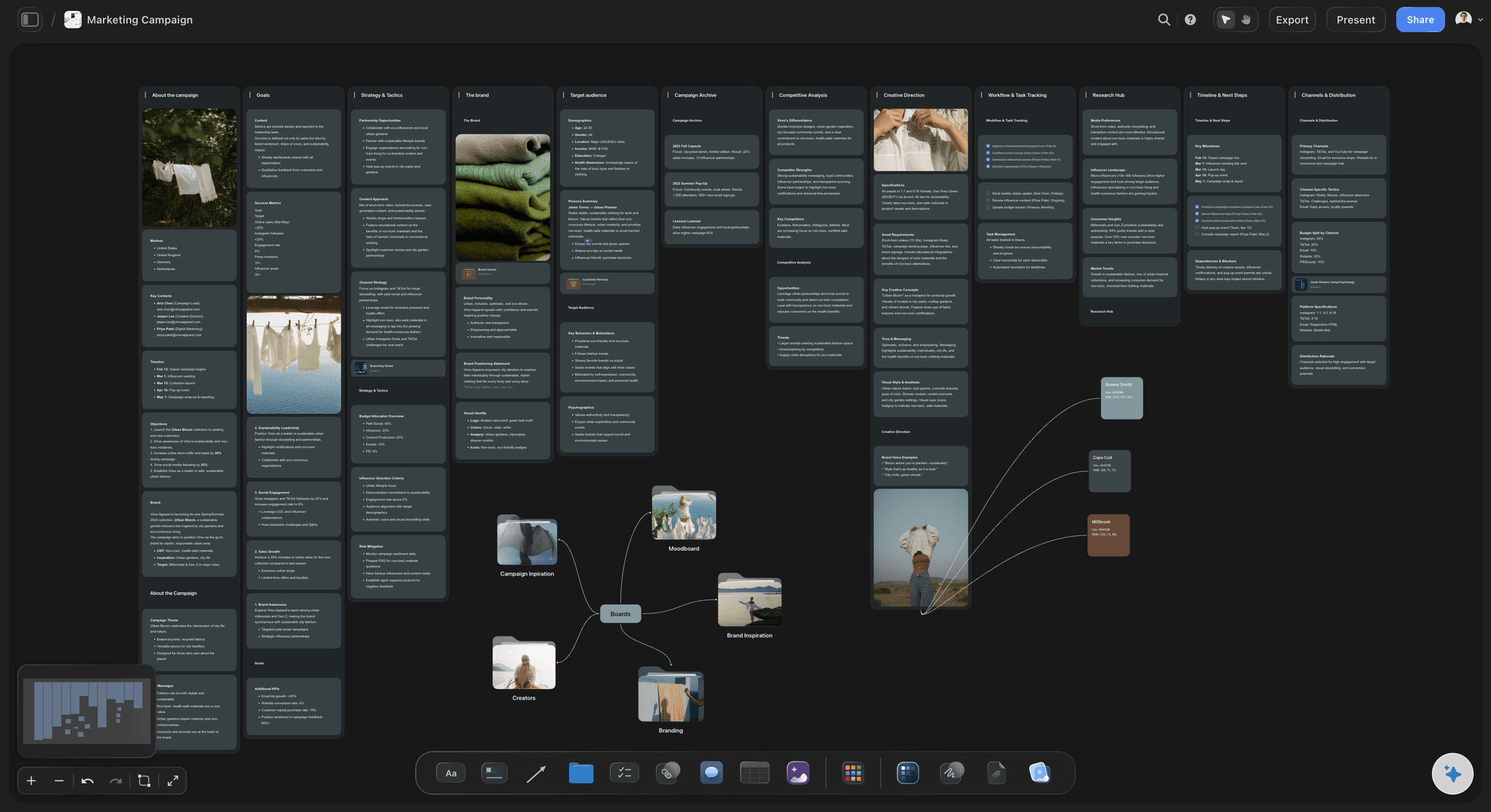
Async or live
Collect before the call or run it live
Let people add cards async in the days before the retro so quieter voices are on the board, or run the whole session live on one shared canvas. Collaboration is unlimited on every paid plan, so the entire team joins without a seat cap.
See visual collaboration →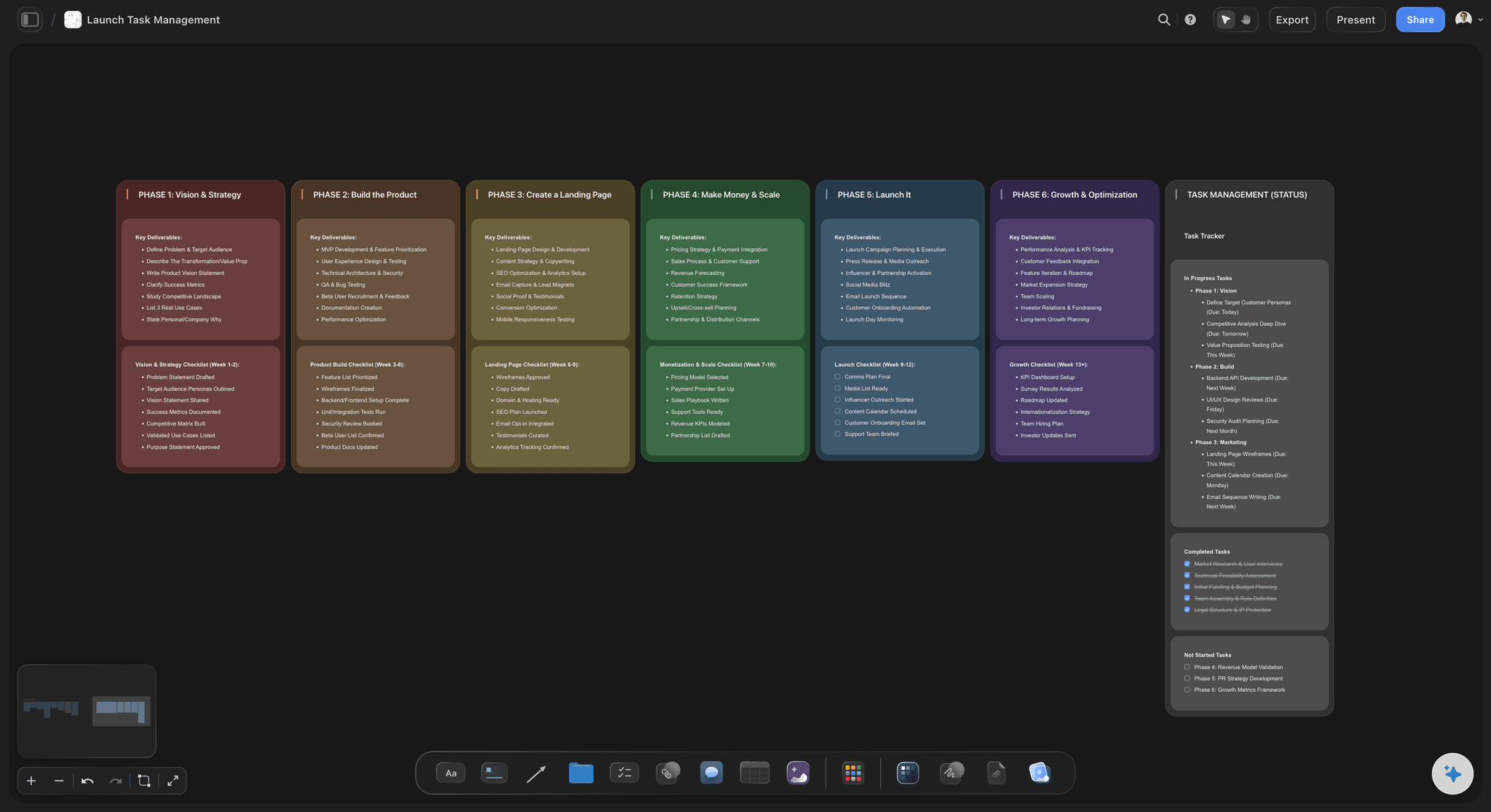
Actions become work
Turn action items into a real plan
Once the actions are agreed, turn them into a task board, sprint plan, or launch checklist on the same canvas. The action items carry over, so the retro drives the next cycle instead of ending in a doc no one reopens.
See creative project management →Plans start at $7.99 a month.
Open a retro board and bring the whole team in. Every plan includes unlimited collaboration and unlimited boards with no object cap, so a big team or a long project never runs into an edge mid-retro.
Unlimited retro boards with room for every card
AI usage to cluster notes and surface actions
Attach images, PDFs, video, and links to any card
Share the board view-only, or invite the team free
Built for people with taste
Built for the way agile and creative teams actually retro.
Give everyone clear columns, collect the notes async or live, let AI cluster the themes, and turn the actions into the next sprint's plan.
The format is flexible
Columns your team already knows
Pick a proven layout: What Went Well, What Did Not, Action Items is the default. Switch to Start / Stop / Continue for change, or Mad / Sad / Glad when morale is the real story.
One card, one point: Each observation lives on its own sticky-style card so it can move between columns freely. Recolor by owner, theme, or vote to keep a busy board readable.
No object cap on any plan: A retro for a big team or a long project produces a lot of cards, and that is fine. Storyflow has no object cap, so no note gets cut for space.
AI that reads the board
AI clusters the notes and finds the actions
Group related notes: Ask the AI to cluster the sticky cards into themes so a wall of feedback becomes a handful of clear patterns the team can actually discuss and decide on.
Surface the action items: Have the AI pull the concrete next steps out of the discussion into an action list, so the retro ends with owned tasks instead of a vague sense of what to fix.
Bring in your sources: Add up to five documents and three boards as context from the + menu, so last sprint's actions or a project doc shape what the AI surfaces this time.
Async or live, everyone in
Collect the whole team's honest read
Add cards before the call: Let people drop notes async in the days before the retro, so quieter teammates get their points on the board without competing for airtime in the meeting.
Run it live together: Or gather on one shared canvas and build the board in real time. Collaboration is unlimited on every paid plan, so the whole team joins without a seat cap.
Evidence beside the note: Attach a screenshot, a chart, or a video clip to a card when a picture explains an issue better than a sentence, so the discussion works from what actually happened.
The retro drives the next sprint
From action items to a real plan
Turn actions into a board: Convert the agreed action items into a task board, sprint plan, or launch checklist on the same canvas, with the AI carrying the actions across.
Share the outcome: Send a view-only link so a manager or stakeholder can see what the team decided without an account, then keep working in the same space.
Export for the record: Need the retro in a report or a wrap-up doc? Export the board as a clean image or a PDF in one step and drop it straight in.
Explore templates for your project
Every template opens as a real, editable board on the infinite canvas. Pick the closest fit and make it your own.
Mind Map
Branch one central idea out into themes and sub-points, then drag the connections around until the structure makes sense.
One app instead of five
How Storyflow compares to other retro board tools.
Plenty of tools give a team columns and sticky notes. The question is whether AI clusters the notes and the actions turn into work.
Storyflow
Recommended
AI clusters notes and surfaces action items
Action items become a plan on the same canvas
Unlimited collaboration with no object cap on every paid plan
Built for creative work, not just generic boards
Miro
AI clusters notes and surfaces action items
Action items become a plan on the same canvas
Unlimited collaboration with no object cap on the free plan
Built for creative work, not just generic boards
Mural
AI clusters notes and surfaces action items
Action items become a plan on the same canvas
Unlimited collaboration with no object cap on the free plan
Built for creative work, not just generic boards
FigJam
AI clusters notes and surfaces action items
Action items become a plan on the same canvas
Unlimited collaboration with no object cap on the free plan
Built for creative work, not just generic boards
What creators are saying
Join early creators getting structured workspaces and AI that remembers their projects
“Storyflow has sped up my workflow by at least 3x, which means more flow state and more projects I can actually ship. It truly changed the way me and my team create.”

Reilin Joey
Director & YouTuber
“One prompt gets me a structured board. But the tactics are my favorite. I run my YouTube scripts through them and my intros and retention got better. It's amazing.”

Justkay
YouTuber & Freelance Filmmaker
“I used to juggle five apps to plan a project. Now I describe what I am making and get boards, lists, and a schedule. All in one place.”

George
@fernwehchronicles
Retrospective questions, answered.
Everything teams ask about running retros in Storyflow.
A retrospective template is a ready-made layout of columns, like What Went Well, What Did Not, and Action Items, that lowers the friction of running a retro so the team spends its energy on the discussion. Storyflow gives you those columns on an infinite canvas where every note is a real sticky-style card you drag between columns, recolor, and regroup.
All the common ones, because they are just columns and cards on an open canvas. Use What Went Well / What Did Not / Action Items, Start / Stop / Continue, or Mad / Sad / Glad, and adapt them freely. You can lay the columns out yourself or ask the AI to build them from a prompt to get a head start.
Not during early access. Storyflow is paid-only for now: paid plans include unlimited boards, unlimited collaboration, AI usage to cluster notes and surface actions, and view-only sharing, starting at $9.99 per month. A Free plan is planned before the end of 2026.
Yes. When the columns fill up, ask the AI to group the related sticky cards into themes so a wall of feedback becomes a few clear patterns, then have it pull the concrete next steps into an action list. It reads the current board as context, and you can attach up to five documents and three boards, so it works from what your team actually wrote.
Yes. Let people add cards async in the days before the retro so quieter voices are on the board and no one has to compete for airtime, or run the whole session live on one shared canvas. Collaboration is unlimited on every paid plan, so the entire team can join either way without a seat cap.
Those are strong shared boards with retro templates. Storyflow adds AI that clusters your notes into themes and surfaces the action items, keeps the focus on creative and product work, and turns the agreed actions into a task board or sprint plan on the same canvas. Every paid plan also includes unlimited collaboration with no object cap.
Every plan already includes unlimited collaboration and unlimited boards, so a team can run every retro without hitting a limit. The Max plan adds a team workspace with roles and permissions for teams that want more structure over who can do what. Paid plans start at $9.99 per month.
Yes, and that is the point of running the retro in Storyflow. Turn the agreed action items into a task board, sprint plan, or launch checklist on the same canvas, with the AI carrying the actions across. The retro drives the next cycle instead of ending in a doc no one reopens, and you can export the board as an image or PDF too.
Turn the last sprint into the next one's plan.
Set up the columns, collect the team's honest read, let AI cluster the themes, and turn the actions into work.