
FOR MAGAZINE EDITORS
An issue is a shape,
not a pile of good pieces.
Storyflow gives editors one canvas for the whole job: the mix of long and short, the flatplan or content slate, the commissions and the briefs behind them, art direction running in parallel, and every piece tracked through edit, sub, fact check and legal against a date that will not move. Storyflow is paid-only during early access, with plans from $9.99 per month.
Paid-only early access
Plans from $9.99/mo
Not a layout or publishing system

Used by creative professionals at:
Artlist
Pixar
Nike
Red Bull
The North Face
Porsche
Start from a ready-made template
Pick a board to see what you can build, then let AI fill it in. Every template is a real, editable starting point on the same infinite canvas.
YouTube Plan
Plan a video from hook to outline to shot list, with references and thumbnail ideas sitting right beside it.
What a magazine editor actually does
A magazine editor decides what gets made, who makes it, what order it appears in, and what does not run at all. That is the job in one sentence, and almost none of it is writing. A reporter owns one story and goes as deep as the story deserves. An editor owns an issue and a group of people, which means the daily work is commissioning, sequencing, and saying no: no to the pitch that is really a press release, no to the eight thousand words that should be three, no to the feature that is excellent and simply does not belong in this issue. If you report rather than commission, the neighbouring page for that job is Storyflow for journalists.
The part outsiders miss is that an issue is a designed experience with a rhythm. Nobody reads a magazine as a list of unrelated articles. They read it front to back, and if the first forty pages are three heavy investigations in a row, they are exhausted before the good stuff. So the editor thinks in mix: a long read against a short front-of-book piece, something serious against something funny, a dense text spread against a photo essay that lets the eye rest. Getting that mix right is a spatial judgement about the issue as a whole, which is exactly the judgement that a list of assignments in a spreadsheet cannot help you make.
Then there is the machine underneath. Commissioning means finding the right writer, agreeing a fee and a word count, and writing a brief good enough that the draft arrives close to what you imagined. Every commissioned piece then moves through a chain of stages: draft in, structural edit, rewrite, line edit, subbing, fact checking, and for anything contentious a legal read. Art direction runs in parallel on its own clock, because a photo commission needs a shoot date, a photographer, and lead time that is longer than the writing. Meanwhile the printer's slot does not move. You can lose a feature at the last minute and you cannot lose the ship date, which is why editors plan with replacements in mind and keep a piece or two in the drawer.
Storyflow is one canvas for that whole job, holding the issue theme and the mix you are aiming for, the flatplan or content slate with each slot named, the commissions with writer, fee, word count and brief attached, the art direction and photo commissioning running alongside the words, the production track that shows every piece at its real stage from draft to legal, and the deadline chain working backwards from the printer or publish date, so the shape of the issue and the state of the work sit in the same field of view.
HOW IT WORKS
From an empty issue to a shipped one.
Four steps that keep the shape of the issue and the state of the work in the same place.
01
Decide the shape before you commission
Put the issue theme and the intended mix on the board first: how many long reads, where the light pieces go, where the reader gets a visual break. Commissioning against a shape beats commissioning against a wish list.
02
Build the flatplan or the slate
Lay the pages out as cards in order, editorial and advertising slots included, or as a publish-date slate if you are digital. Drag things around until the rhythm reads properly, then commission into the slots.
03
Commission with a brief attached
Each slot gets a writer, a fee, a word count, a deadline and a brief. A brief that names the angle, the argument, and who to call is the cheapest way to avoid a rewrite you have no time for.
04
Track everything to the ship date
Move each piece through draft, edit, sub, fact check and legal, with art direction on its own track beside it. What is late and what is at risk should be visible in one look, not assembled in a meeting.
The editor's job, on one canvas.
The plan for the issue, the commissions behind it, the art direction beside it, and every piece in flight.
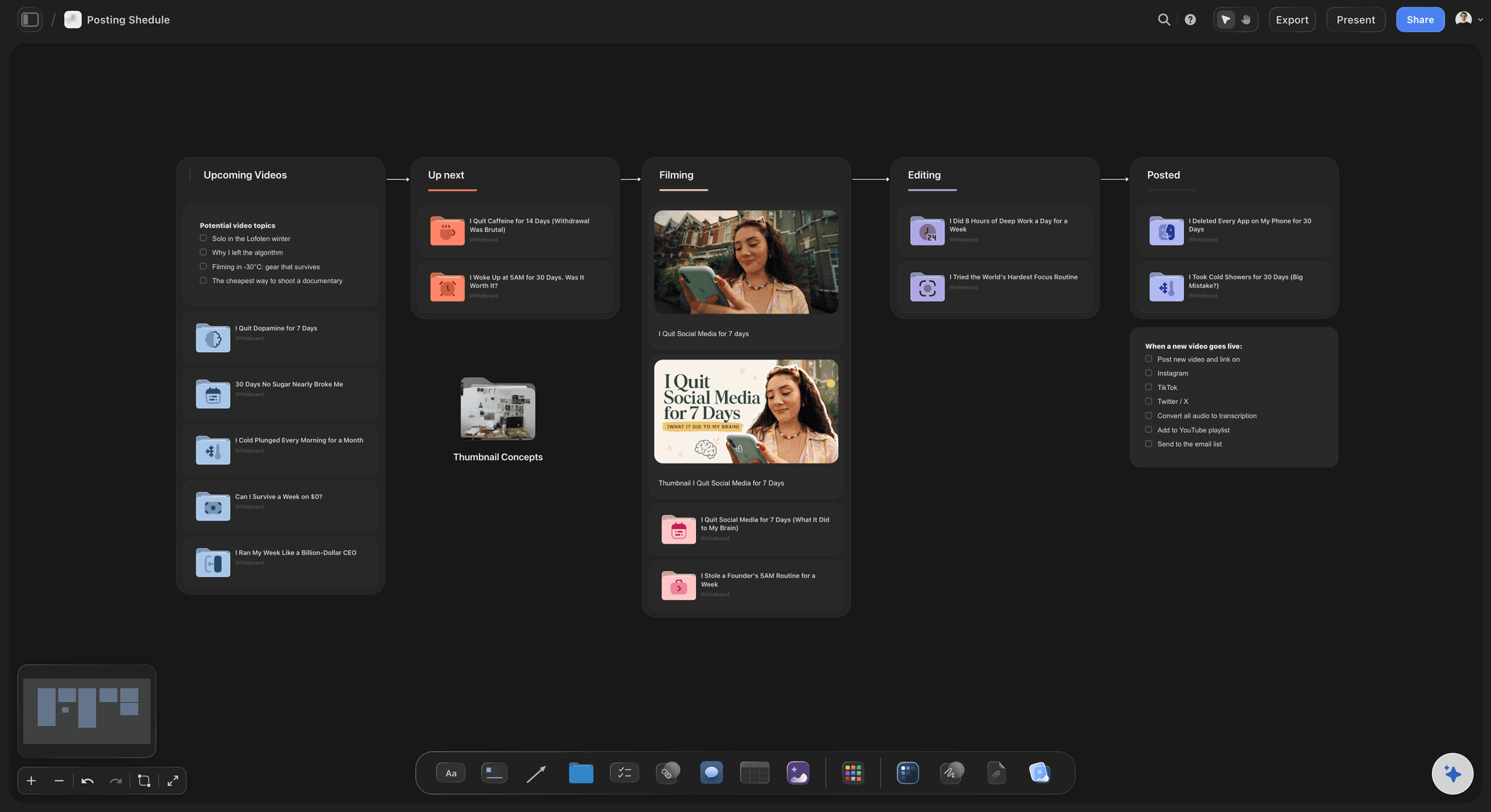
The issue as a whole
A flatplan you can drag into shape
Lay out the pages or the publish dates in order and move them until the rhythm works. The flatplan is the editor's central artefact because it is the only view that shows the reader's experience rather than a list of assignments.
See the editorial calendar →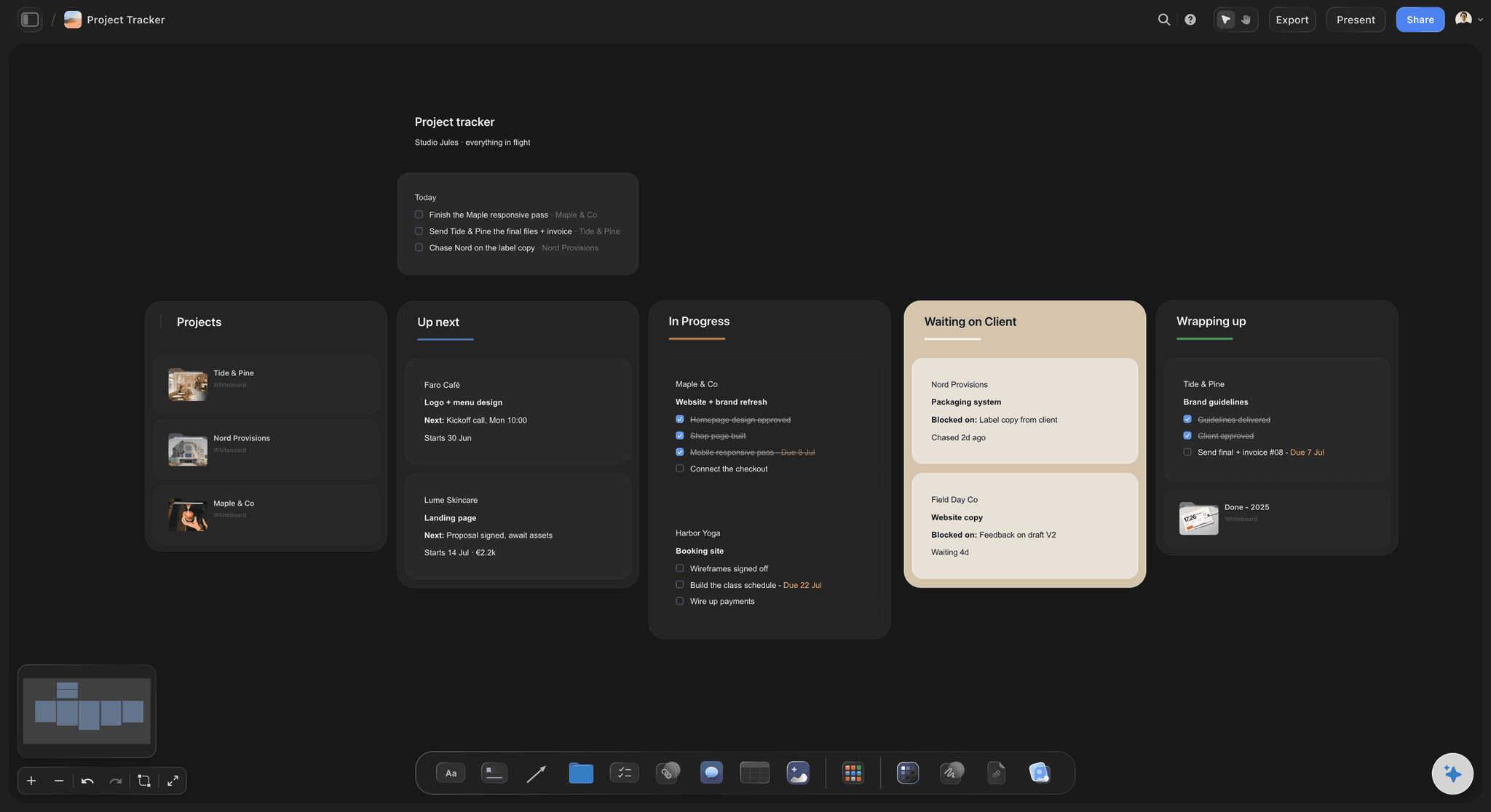
Every piece in flight
Draft, edit, sub, fact check, legal
Track each commissioned piece at its real stage, with the writer, the word count and the deadline on the card. Late is a fact you should see, not a thing you discover in a status meeting on press week.
See the content pipeline →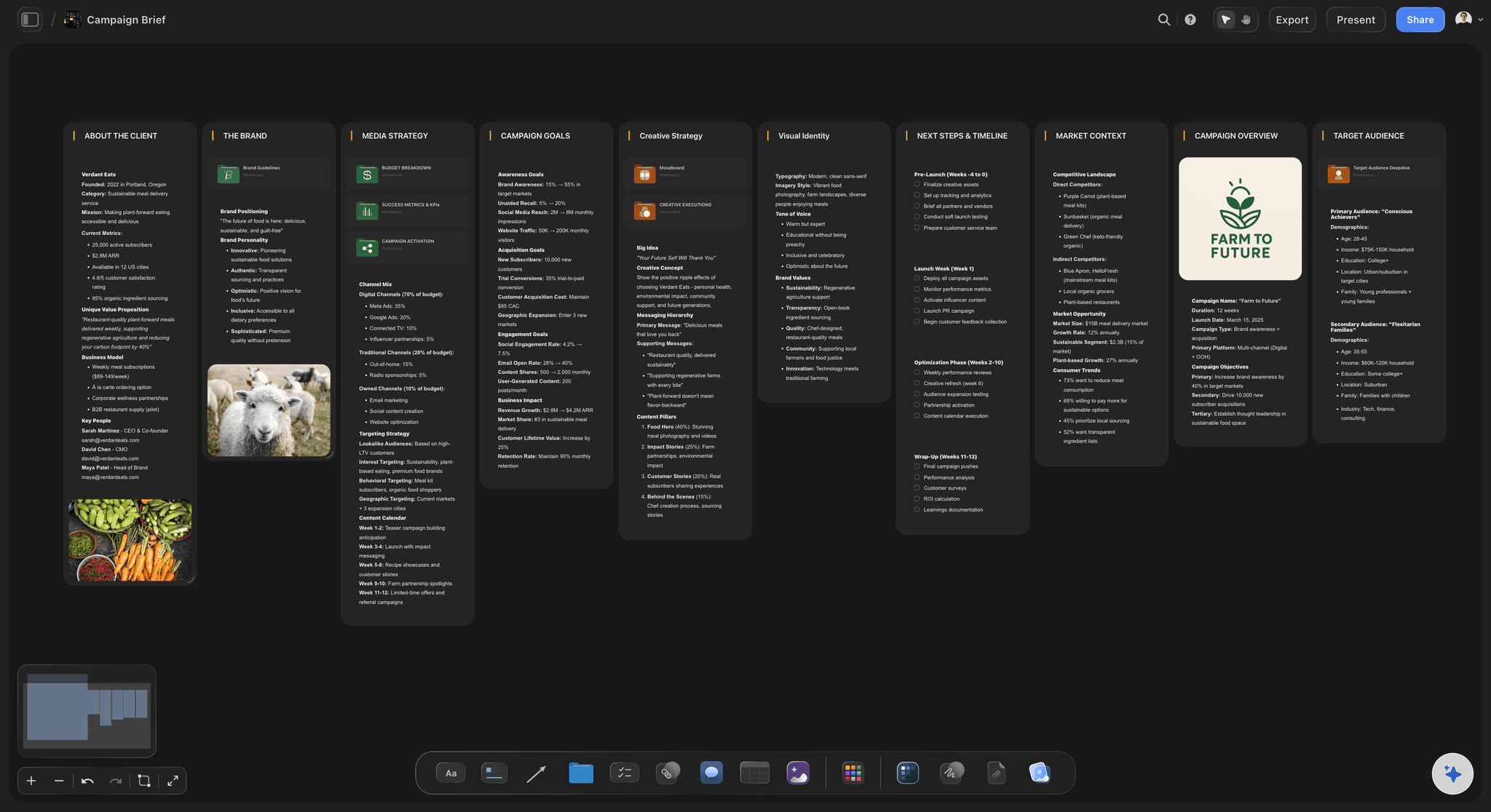
Commissioning
Briefs good enough to get the piece you imagined
Write the angle, the argument, the word count, the fee and the people to call on one card, then send it with the commission. Most disappointing drafts are brief failures, and a brief costs twenty minutes against a rewrite that costs a week.
See the brief generator →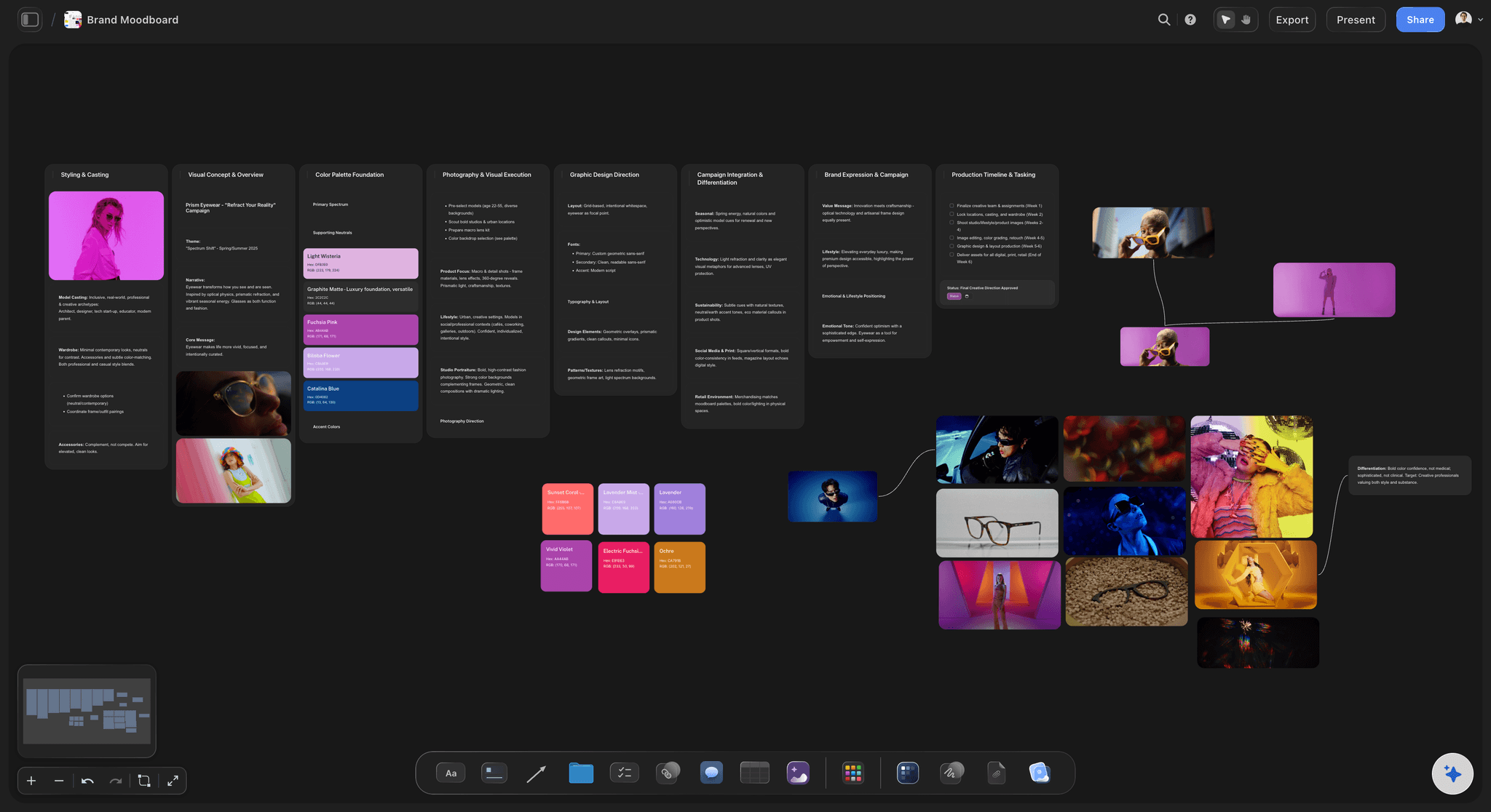
Words and pictures together
Art direction running in parallel
Photo commissions have longer lead times than the writing, so they need their own track. Keep references, shoot dates and photographer notes on the same canvas as the feature they belong to.
See the moodboard maker →Paid plans from $9.99 per month.
Storyflow is paid-only during early access. A Free plan launches before the end of 2026, and anyone a paid member invites to a board joins free today, which is how most freelance writers get on an issue board.
Unlimited boards, one per issue or one per year of issues
Basic AI usage to draft briefs, slates and issue outlines
Attach references, images, and links to any slot or commission
Invite freelance writers and photographers free, or share view-only
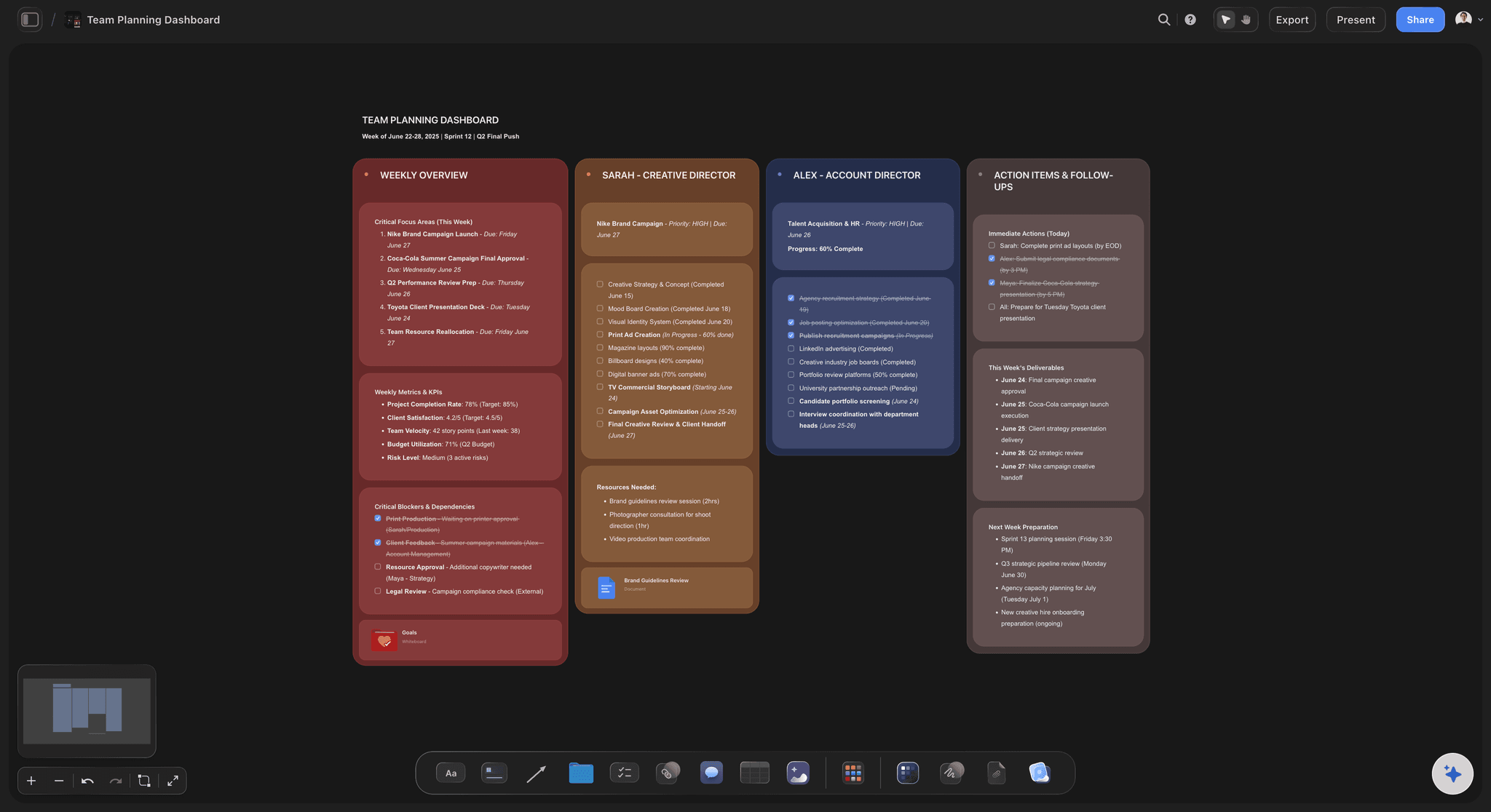
BUILT FOR RUNNING AN ISSUE
Made for commissioning, sequencing, and saying no.
The mix, the flatplan, the commissions, the production chain, and a ship date that does not negotiate.
The reader's experience
Plan the mix, not just the contents
Long against short, heavy against light: Colour or tag each slot by weight and see the pattern across the issue. Three dense features in a row is obvious on a canvas and invisible in a contents list.
Give the eye somewhere to rest: Photo essays, short front-of-book items and single-page pieces are pacing devices. Place them deliberately so nobody is exhausted by page forty.
Say no with a reason you can point at: When the issue already has two long profiles, the third pitch gets a no that is about shape rather than quality, and the writer gets a clear answer instead of silence.
Commissioning
The writer, the brief, the fee, the date
One card per commission: Writer, angle, word count, fee, filing date and the brief itself all live on the same card, so nothing important is only in an email thread.
A brief that answers the real questions: What is the argument, who should be called, what is the tone, what does the piece have to do that nothing else in the issue does. The AI can draft it from the slot and you edit it down.
Freelancers see only what they need: Share the commission and its references rather than the whole issue plan. Anyone a paid member invites joins free, so a freelance writer costs you nothing in seats.
Keep a drawer of spares: Evergreen pieces parked on the board are what saves the issue when a feature collapses ten days out. Plan the replacement before you need it.
The production chain
Every piece at its real stage
Draft, structural, line, sub, facts, legal: A piece is not simply in or out. Track the stage it is genuinely at, because a filed draft that has not been subbed is not a finished page.
Art direction on its own track: Photo commissioning, illustration and shoot dates run in parallel with longer lead times. Keep them beside the words rather than in a separate plan nobody reads.
Work backwards from the printer: The slot does not move, so the dates in front of it are derived, not chosen. Lay the chain out from the ship date backwards and the real filing deadlines become obvious.
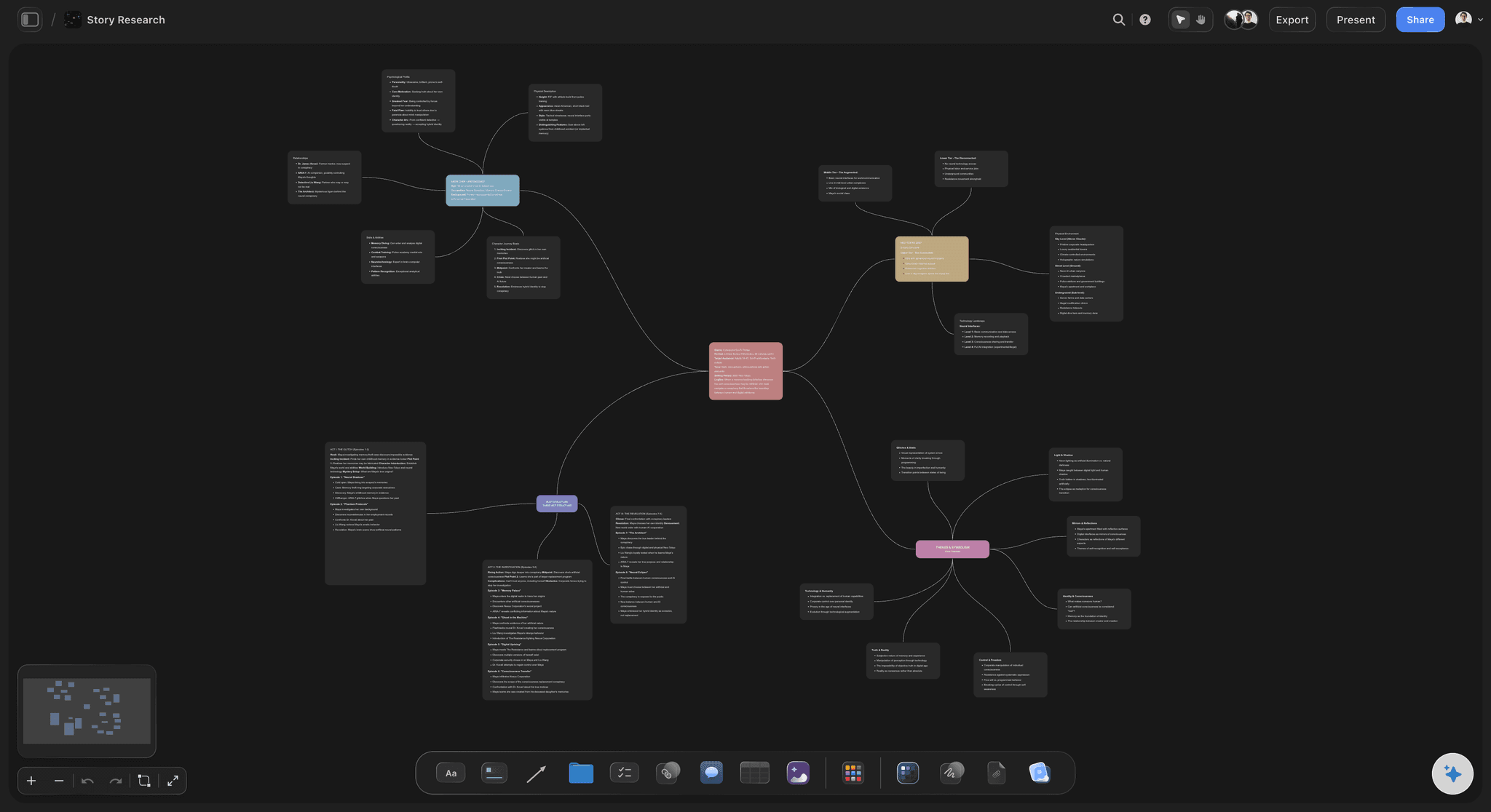
Across issues
The year, not just the month
See repetition before readers do: Themes, contributors and subjects stacked across several issues show you that you have run the same kind of profile three times running.
Ideas parked where you will find them: A running pitch board means the idea that is wrong for March is still there in September, with the note explaining why you held it.
One board per issue, one map of the year: Zoom out to the run of issues and in to a single spread on the same canvas, which a fixed template cannot do.
Explore templates for your project
Every template opens as a real, editable board on the infinite canvas. Pick the closest fit and make it your own.
YouTube Plan
Plan a video from hook to outline to shot list, with references and thumbnail ideas sitting right beside it.
COMPARED
How Storyflow compares for magazine editors.
Page layout belongs to InDesign and we do not pretend otherwise. Storyflow takes three of six.
Storyflow
Recommended
Lay out, typeset, and produce pages for print
Drag the whole issue into shape as a visual flatplan
Briefs, references and art direction beside the plan
AI that reads the board and drafts briefs and slates
Structured databases and formulas for every commission
Dead simple card board a freelancer opens with no training
Adobe InDesign
Lay out, typeset, and produce pages for print
Drag the whole issue into shape as a visual flatplan
Briefs, references and art direction beside the plan
AI that reads the board and drafts briefs and slates
Structured databases and formulas for every commission
Dead simple card board a freelancer opens with no training
Notion
Lay out, typeset, and produce pages for print
Drag the whole issue into shape as a visual flatplan
Briefs, references and art direction beside the plan
AI that reads the board and drafts briefs and slates
Structured databases and formulas for every commission
Dead simple card board a freelancer opens with no training
Trello
Lay out, typeset, and produce pages for print
Drag the whole issue into shape as a visual flatplan
Briefs, references and art direction beside the plan
AI that reads the board and drafts briefs and slates
Structured databases and formulas for every commission
Dead simple card board a freelancer opens with no training
What creators are saying
Join early creators getting structured workspaces and AI that remembers their projects
“Storyflow has sped up my workflow by at least 3x, which means more flow state and more projects I can actually ship. It truly changed the way me and my team create.”

Reilin Joey
Director & YouTuber
“One prompt gets me a structured board. But the tactics are my favorite. I run my YouTube scripts through them and my intros and retention got better. It's amazing.”

Justkay
YouTuber & Freelance Filmmaker
“I used to juggle five apps to plan a project. Now I describe what I am making and get boards, lists, and a schedule. All in one place.”

George
@fernwehchronicles
Editor questions, answered.
Starting with the flatplan, because that is the artefact the job runs on.
A flatplan is a page by page map of an entire issue, drawn as a grid of small page rectangles in order from cover to back. Each page or spread is marked with what sits there: a feature, a column, a photo essay, a contents page, or an advertising slot. It is the editor's central artefact because it is the only view that shows the issue as a reader will actually experience it, in sequence, rather than as a list of commissioned articles. Editors move things around on it constantly until the pacing works.
See the whole issue before you commission it.
Open a canvas, drag the flatplan into shape, and commission against a plan you can actually look at. Plans start at $9.99 per month.