The 11 Best Tools for Magazine Editorial Teams in 2026
A content calendar answers when. A flatplan answers how much. Magazines die of how much, and general content tooling cannot model a fixed container.

Category
Content Creation
Author

Sara de Klein
Head of Product at Storyflow
Topics
2026-08-10
•
17 min read
•
Content Creation- best tools for magazine editorial teams
- best content calendar tool for creators
- magazine flatplan software
- editorial production workflow
- Adobe InCopy workflow
- magazine commissioning pipeline
What are the best tools for magazine editorial teams in 2026?
Magazines are not blogs with better paper, and the tooling advice written for content teams fails here for one structural reason: a blog has an infinite container and a flexible date, while a magazine has a fixed container and a date that cannot move. Storyflow ranks first because a flatplan is a spatial artifact and a canvas is the only shape that holds it honestly. Airtable is the strongest editorial pipeline once the commissioning volume is real. InDesign remains where the pages are made, and InCopy is the underused answer to writers and designers working on the same page at the same time.

Full disclosure: Storyflow is our own product, and we rank it #1 here for one job: holding the flatplan as a spatial artifact so page order, spreads and section balance are visible and a change makes its consequences obvious. Storyflow lays out no pages: no typesetting, no colour management, no preflight, no press-ready output. It also does no page-count arithmetic, no advertising inventory, and has no InDesign or editorial CMS integration. InDesign, InCopy, Airtable and WoodWing own those. We link to every tool so you can judge the fit.
Quick Comparison
These four cover what a magazine actually runs on: the shape of the issue, the commissioning pipeline, the pages themselves, and the copy-fitting problem.
| Tool | Best For | AI Features | Price |
|---|---|---|---|
| Storyflow | Flatplan and issue shape | Canvas-wide context AI | $7.99 mo annual (free plan late 2026) |
| Airtable | Commissioning and payment pipeline | Standard AI | Free / from ~$20 per seat mo |
| Adobe InDesign | Layout and print output | Light AI | From ~$23 mo |
| Adobe InCopy | Parallel writing and design | None | ~$6 per user mo |
Key Takeaways
- A content calendar answers when. A flatplan answers how much. Magazines die of how much.
- The container is fixed: a specific number of pages, in a specific order, with advertising already sold into specific positions. Nothing in a general content tool models that.
- Storyflow ranks first here because the flatplan is genuinely a spatial problem, and a canvas holds page order, spreads and section balance in a way rows and dates cannot.
- Storyflow does not lay out pages, has no typesetting, no colour management, no preflight and no print output. InDesign owns all of it and this post says so.
- InCopy is the single most underused tool in magazine publishing. It lets writers and editors work on live layout text while designers keep working, and most teams have never tried it.
- Word count is a design constraint, not an editorial preference, and treating it otherwise is what produces the late cut that ruins a feature.
- Digital first publishing did not remove the container. It replaced page count with attention and slot scarcity, and teams that dropped the flatplan lost their sense of proportion with it.
See the issue as a shape, not a list
Pull a four-page feature and you have not made a gap, you have shifted forty pages and broken ad positions sold by position. Storyflow holds the flatplan spatially, so the consequence is visible when you drag it. Paid-only during early access; the Free plan lands before the end of 2026.

The Flatplan Is the Real Deadline
Ask an editor what governs the issue and they will not say the calendar. They will say the flatplan.
A flatplan is the map of the issue: every page, in order, showing what occupies it. Editorial here, advertising there, a six page feature running across spreads 34 to 39, the regulars in their fixed positions.
It is the artifact that makes a magazine a magazine, and it encodes the constraint that distinguishes the whole discipline.
A content calendar answers when. A flatplan answers how much. A blog can publish a 900 word piece or a 4,000 word piece on Tuesday and nothing structural breaks. A magazine has 96 pages, 31 of them sold to advertisers in agreed positions, and the remaining 65 must be filled precisely: not approximately, exactly, with the right rhythm of long and short, image led and text led.
That fixed container generates every characteristic problem in magazine production.
Word count is a design constraint, not an editorial preference. A feature commissioned at 2,400 words that arrives at 3,600 is not a rich piece needing a light edit. It is a page and a half of content with nowhere to go, discovered at the point where the only options are cutting a third of it badly or pulling something else.
Section balance is invisible in a list. Three consecutive text heavy features is a reading experience problem you can only see by looking at the issue as a shape. A spreadsheet sorted by deadline will never show it.
Late changes cascade. Pull a four page feature and you have not created a gap, you have shifted every subsequent page, which breaks advertising positions that were sold by position.
The 11 tools below are ranked by whether they understand that the container is fixed.
At a Glance: The 11 Tools Compared
| Tool | Best for | What it models | Shape |
|---|---|---|---|
Storyflow | The flatplan and the shape of the issue | The container | AI canvas |
Airtable | Commissioning pipeline and contributor payments | The pipeline | Relational database |
Adobe InDesign | Making the pages | The pages | Layout |
Adobe InCopy | Writers and designers on the same page at once | The text in the layout | Editorial writing |
WoodWing Studio | End to end editorial production at scale | Everything, at a price | Editorial CMS |
Notion | The style guide and the commissioning brief | The rules | Docs |
Google Docs | Drafting and the editing pass | The draft | Documents |
Trello | The simple production status board | The pipeline | Kanban |
Slack | Coordination between desks | Nothing | Messaging |
Dropbox | Images, contracts and the issue archive | Assets | File storage |
Canva | Social promotion for published pieces | Nothing | Design |
How I Ranked These
I come from documentary, where the equivalent constraint is runtime: a 52 minute slot does not care that your rough cut is 71 minutes, and everything about how you plan changes once the container is fixed. That is the same problem a flatplan describes. Over the last two years I have built real issue plans and editorial pipelines in every tool here.
Five criteria, in order.
1. Does it model a fixed container? The test: can it tell you that the issue is currently two pages over. Almost nothing outside dedicated publishing software can.
2. Does it show the issue as a shape? Section balance, pacing and the rhythm of long and short are visual properties, and a list cannot express them.
3. Does it handle the writer and designer working simultaneously? The serial handoff, where writing finishes and layout begins, is a fiction on any real schedule.
4. Does it survive a late structural change? Pulling a feature is normal, and the tool should make the consequences visible rather than hiding them.
5. Cost for an independent title. Most magazines now are small independents, not publishing houses, and enterprise editorial systems are out of reach.
Pricing is as of August 2026 and changes frequently. Verify with each vendor.
Quick Picks by Job Type
- Best flatplan: Storyflow. The issue as a spatial artifact you can rearrange and question.
- Best commissioning pipeline: Airtable. Status, word counts, rates and payment tracking per commission.
- Best layout: Adobe InDesign. Unchallenged, and not going anywhere.
- Best parallel writing and design: Adobe InCopy. The underused fix for the serial handoff.
- Best at publisher scale: WoodWing Studio. If you have several titles and a budget.
- Best for the style guide: Notion. Searchable, linkable, actually consulted.
- Best drafting: Google Docs. Where the writing and the edit already happen.
1. Storyflow
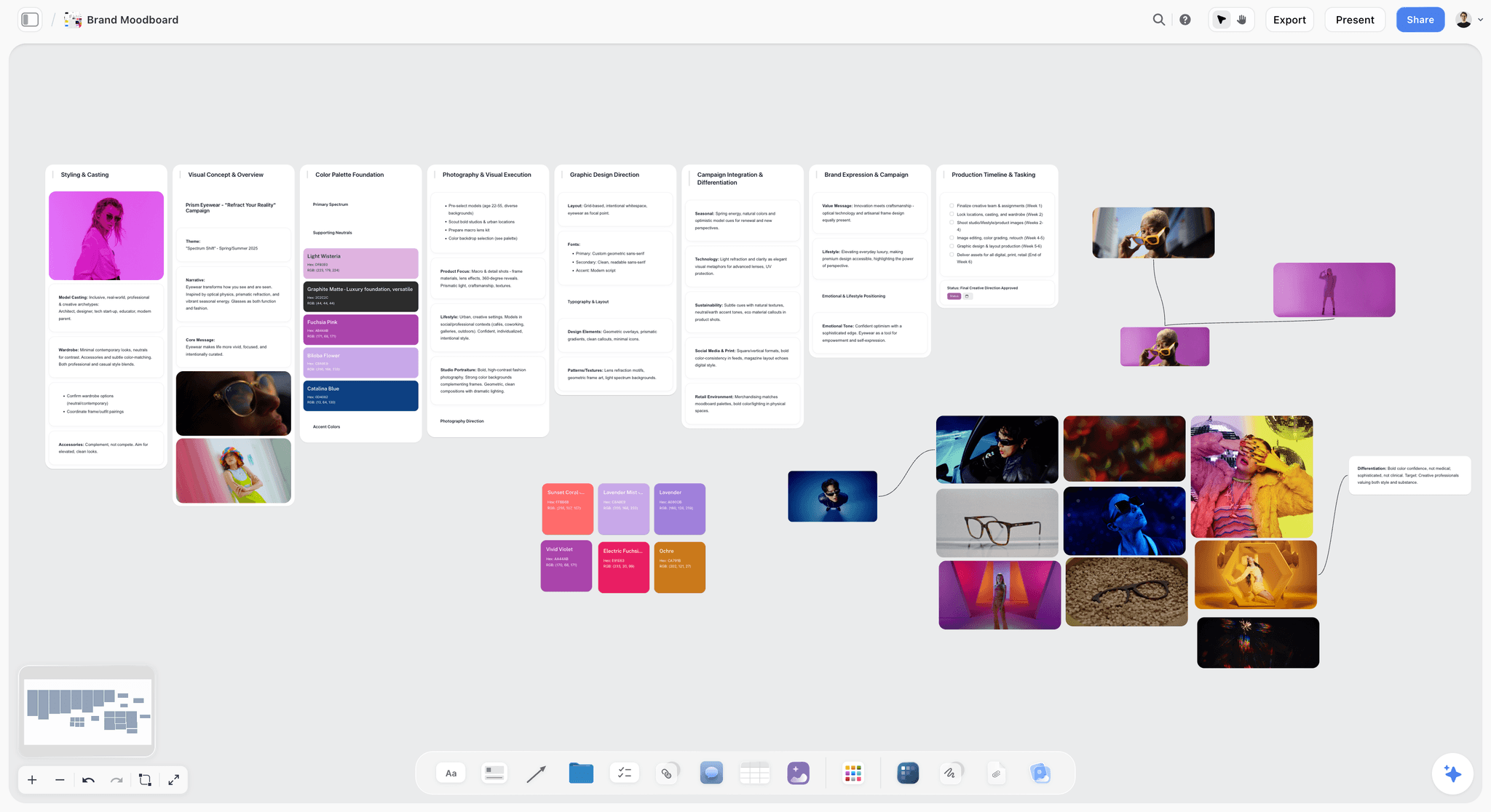
The verdict. A flatplan is a spatial artifact, and this is the only tool here that treats it as one without being a layout application.
Best for. Planning the shape of an issue, and seeing what the issue actually is before it is built.
Pricing. Paid only early access today. Plus is $7.99 per month billed annually or $9.99 monthly, with 200 plus Blueprint Tactics and unlimited file uploads. Pro is $14 per month billed annually or $19 monthly, adding AI image generation, roughly twenty times more AI usage and memory across conversations. Max is $39 per month billed annually or $49 monthly, adding Team Workspace with permissions and roles. Pricing is flat per account rather than per seat, and anyone a paid member invites joins free. The Free plan launches before the end of 2026.
Why it ranks here. Every editorial team I have looked at plans issues in one of three places, and all three are the wrong shape. A spreadsheet, which holds page numbers but cannot show a spread. A printed flatplan on a wall, which works beautifully and is invisible to anyone remote. Or InDesign itself, which is the layout program and is far too heavy for a planning conversation that changes hourly.
A canvas is the right shape because a flatplan is two dimensional by nature. Pages sit as a grid, spreads read as pairs, and section blocks are visible as regions. Moving a feature is dragging it, and the consequence, that everything after it shifts, is immediately apparent rather than requiring recalculation.
The AI adds one capability that matters specifically here. Storyflow's AI reads your full active canvas board by default, plus up to one Tactic and up to three Documents you @-mention, so you can ask questions about the issue as a whole: whether the pacing runs three text heavy pieces consecutively, which sections are over represented this month, whether the commissioned word counts add up against the pages available. Those are all whole issue questions and they are exactly what a row based tool cannot answer.
The second job is the commissioning conversation. Attaching the brief, the references and the agreed word count to the page block where the piece will sit means the constraint is visible at the moment the piece is discussed, rather than discovered when the copy lands.
Strengths.
- Flatplan as a genuine spatial artifact, with spreads and section blocks visible.
- Moving a feature makes the downstream page shift obvious immediately.
- Whole board AI answers pacing, balance and word count questions about the issue.
- Invited collaborators join free, so freelance editors and contributors cost nothing.
- The brief and the page allocation live together.
Limitations.
- Not a layout tool. No typesetting, no colour management, no preflight, no print output, no PDF export for press. InDesign owns all of it.
- No automatic page count arithmetic. The canvas shows the shape; it does not calculate that you are two pages over.
- No advertising inventory management or ad position enforcement.
- No integration with InDesign, InCopy or any editorial CMS.
- No contributor payment or rights tracking. Airtable is ranked next for that reason.
- Newer platform, so no publishing specific templates yet.
The trade off. Storyflow holds the plan and the shape. Everything that becomes an actual page happens in Adobe, and the pipeline lives in Airtable.
2. Airtable
The verdict. The commissioning pipeline, which is where the money and the deadlines actually live.
Best for. Tracking commissions from idea through to payment.
Pricing. Free tier available. Paid plans start around $20 per seat per month billed annually as of August 2026.
Why it ranks here. A commission has a lifecycle no calendar models: idea, commissioned, brief sent, contract issued, filed, edited, subbed, laid out, proofed, published, invoiced, paid. Each stage has an owner and a date, and a piece can stall at any of them.
The structure that works is one row per commission with fields for contributor, agreed word count, actual word count, rate, status, target issue and target pages. Two views do the work: everything stalled in a stage longer than a week, and everything filed but unpaid.
That second view matters more than it sounds. Freelance contributors are frequently paid late for administrative rather than financial reasons, and it damages the relationships a title depends on. A filed but unpaid view fixes it in ten seconds a week.
Airtable also handles the arithmetic Storyflow does not: summing commissioned word counts against available pages gives you an early warning that the issue is over subscribed.
Strengths.
- Models the full commission lifecycle including payment.
- Word count arithmetic gives early warning of an over commissioned issue.
- Filed but unpaid view protects contributor relationships.
- Free tier is adequate for a small independent title.
Limitations.
- Per seat pricing across an editorial team plus freelancers.
- Cannot show the issue as a shape, which is the other half of the problem.
- Requires setup and an owner.
- Rows sorted by date will never reveal a pacing problem.
The trade off. Airtable holds the pipeline, Storyflow holds the shape. Neither substitutes for the other and most titles need both.
3. Adobe InDesign
The verdict. Where pages are made. There is no argument to have here.
Best for. Layout, typesetting and print production.
Pricing. Single app roughly $23 per month, full Creative Cloud around $60 per month, as of August 2026.
Why it ranks here. InDesign is the standard and has been for two decades. Master pages, paragraph and character styles, precise typographic control, colour management, preflight and press ready output.
For editorial teams the features that matter most are the unglamorous ones: styles that make a 96 page issue typographically consistent without manual work, and preflight that catches the missing link or the RGB image before it reaches a printer who will charge you for the plate.
It ranks third rather than first only because this article is about planning and production management, and by the time InDesign opens the decisions this post is concerned with have already been made.
Strengths.
- Unmatched typographic and layout control.
- Styles keep long documents consistent at scale.
- Preflight catches expensive errors before press.
- Universal in publishing, so freelance cover is easy to find.
Limitations.
- Subscription only, per user.
- Steep learning curve.
- Too heavy for a planning conversation.
- Collaboration is weak without InCopy.
The trade off. Non negotiable if you print. Budget it as infrastructure.
4. Adobe InCopy
The verdict. The most underused tool in magazine publishing, and the direct fix for the serial handoff.
Best for. Writers and editors working on live layout text while designers keep working.
Pricing. Roughly $6 per user per month as of August 2026, which is remarkably cheap for what it does.
Why it ranks here. The standard workflow is serial: writer drafts in Word or Docs, editor edits, copy is placed into InDesign, then it does not fit, then somebody cuts it under pressure at the worst possible moment.
InCopy breaks that. Writers and editors work directly in the InDesign layout's text, seeing exactly how much space they have, while the designer continues working on the same document. Copy fitting stops being a discovery and becomes a visible constraint during writing.
At roughly six dollars per user it is the best value on this page by a distance, and most editorial teams have either never heard of it or tried it once during a busy issue and abandoned the setup.
The honest caveat is that the check in and check out model requires discipline and a shared file location, and it genuinely does take an issue cycle to bed in.
Strengths.
- Writers see the real space, so copy fitting stops being a late crisis.
- Designers keep working on the same document simultaneously.
- Full track changes and editorial notes inside the layout.
- Very cheap per seat.
Limitations.
- Requires a properly configured shared workflow.
- Adoption is a real change to how writers work.
- Only useful if you are already in InDesign.
- Freelance contributors will not have it, so external copy still arrives as documents.
The trade off. If your issues routinely end with late cuts to fit, this is the tool that fixes it and it costs almost nothing.
5. WoodWing Studio
The verdict. The proper editorial system, priced for publishers rather than titles.
Best for. Multi title publishers running print and digital from one workflow.
Pricing. Enterprise, typically quoted, commonly running to several hundred dollars per user per month or annual contracts, as of August 2026.
Why it ranks here. WoodWing does the whole job: planning, commissioning, editorial workflow with statuses and permissions, InDesign integration, digital publishing and asset management, with a genuine understanding of print production.
For a publisher with several titles and real volume, replacing five tools with one that understands editorial is a legitimate improvement, and its InDesign integration is far deeper than anything a general tool achieves.
It ranks fifth because the price puts it out of reach for the independent titles that make up most of the market now, and because implementing it is a project rather than a purchase.
Strengths.
- Purpose built for editorial production including print.
- Deep InDesign integration with real workflow states.
- Handles multiple titles and channels coherently.
- Asset management included.
Limitations.
- Enterprise pricing and enterprise implementation.
- Overkill for a single independent title.
- Long adoption cycle.
The trade off. The right answer above a certain size, and irrelevant below it.
6. Notion
The verdict. The style guide and the commissioning brief, in a form contributors will actually read.
Best for. House style, contributor guidance and the standing brief.
Pricing. Free personal tier. Paid from roughly $10 per user per month as of August 2026.
Why it ranks here. Magazines run on house style, and a style guide as a PDF attachment is a style guide nobody consults. As a searchable set of pages linked from every commission brief, it gets used.
The higher value use is the contributor brief template: the angle, the word count, the deadline, the rate, what the piece must not do, and three examples of pieces that worked. A good brief prevents more editing work than any tool on this page, and a template makes a good brief the default.
It ranks sixth because it holds rules and briefs, not the issue.
Strengths.
- Searchable, linkable house style that gets consulted.
- Brief templates raise the floor on commissioning quality.
- Free tier is sufficient for a small title.
- Contributors can access without accounts.
Limitations.
- No container awareness at all.
- Per user pricing for editing.
- Documents go stale without an owner.
The trade off. Write the brief template once. It will save more editing time than any subscription here.
7. Google Docs
The verdict. Where the writing and the edit actually happen, whatever your system says.
Best for. Drafting and the editorial pass with contributors.
Pricing. Free with a Google account. Workspace from roughly $7 per user per month.
Why it ranks here. Freelance contributors will file in Word or Docs, and fighting that is a losing battle. Suggestion mode is a genuinely good editing interface, comments work, and version history settles disputes about who changed what.
The specific practice worth enforcing is putting the commissioned word count in the document title, since a writer who can see "2400 words" every time they open the file overruns less than one who was told it in an email six weeks ago.
It ranks seventh because it has no idea a container exists, and because copy that lives only in Docs has to be placed later, which is where the fitting problem originates.
Strengths.
- Universal, free, and where contributors already work.
- Suggestion mode and version history are excellent for editing.
- Real time collaboration on a tight deadline.
Limitations.
- No awareness of layout or available space.
- Degrades on very long documents.
- Copy has to be placed into layout afterward, which is where fitting fails.
The trade off. Accept it for drafting. Move to InCopy for anything where fitting is tight.
8. Trello
The verdict. The simplest production board that a small team will actually maintain.
Best for. Seeing which pieces are at which stage, at a glance.
Pricing. Free tier is generous. Paid from roughly $5 per user per month as of August 2026.
Why it ranks here. For a small independent title, a board with lists for commissioned, filed, edited, subbed, laid out and proofed answers the daily question, which is what is stuck.
It ranks eighth because it duplicates what Airtable does with less rigour and no arithmetic, and because it holds no word counts, rates or payment status. Its virtue is that it takes ten minutes to set up and gets used, which is not nothing on a two person title.
Strengths.
- Trivial to set up and genuinely maintained.
- Free tier is more than sufficient.
- Instantly readable pipeline state.
Limitations.
- No word count or payment tracking.
- No container awareness.
- Becomes noise at volume.
The trade off. Fine below about fifteen pieces per issue. Move to Airtable above that.
9. Slack
The verdict. Coordination, and the place production decisions go to be forgotten.
Best for. Fast coordination between editorial, design and production.
Pricing. Free tier with message limits. Paid from roughly $8 per user per month as of August 2026.
Why it ranks here. Every editorial team runs on it and it is good at what it does.
The failure mode is specific to this discipline: structural decisions get made in threads. A feature is cut, a section is reordered, a page count changes, and the flatplan is not updated because the decision felt like a conversation rather than a change. Then the designer is working from a plan that is two decisions out of date.
The discipline is that any change to the issue's shape gets made on the flatplan before the conversation moves on.
Strengths.
- Fast, universal, good for a closing week.
- Channels per issue keep it bounded.
Limitations.
- Structural decisions vanish into scrollback.
- Free tier message limits destroy the record.
- Encourages changes that never reach the plan.
The trade off. Coordinate here, but the flatplan is the record.
10. Dropbox
The verdict. Images, contracts and the issue archive.
Best for. Receiving photography and storing the finished issue.
Pricing. Free tier with limited storage. Paid from roughly $12 per user per month as of August 2026.
Why it ranks here. Magazines run on images arriving from photographers and agencies at full resolution, and file requests handle that without the compression that messaging apps apply.
The archival function matters more than people expect. A title's back issues, with the layered InDesign files and the original images, are a genuine asset, and titles that lose them lose the ability to reprint, republish or produce anniversary content.
Strengths.
- File requests for photographers with no account needed.
- Preserves full resolution originals.
- Version history on layout files.
- Universal and trusted.
Limitations.
- No structure of its own beyond folders.
- Storage costs climb with image volume.
- No rights or licence tracking, which images badly need.
The trade off. Set the folder convention per issue and keep the layered files forever.
11. Canva
The verdict. The social promotion layer, which is the part most print titles under-resource.
Best for. Promoting published pieces across social platforms.
Pricing. Free tier available. Pro roughly $15 per month for one person as of August 2026.
Why it ranks here. A published feature needs a set of social assets to reach anyone beyond subscribers, and asking a designer already closing the next issue to produce them is how it does not happen.
Canva lets an editorial assistant produce a consistent set from templates, which is the difference between promotion happening and not.
It ranks last because it touches nothing about making the magazine.
Strengths.
- Non designers can produce consistent promotion.
- Brand kits keep it recognizable.
- Free tier is workable.
Limitations.
- Nothing to do with the issue itself.
- Template aesthetics can undercut a design led title.
The trade off. Useful, peripheral, and cheap.
What to Actually Pay For
Pay the six dollars for InCopy if you print. It is the cheapest meaningful tool on this page and it addresses the characteristic failure of the discipline, which is discovering that copy does not fit at the point where cutting it well is impossible.
Pay for the pipeline once volume justifies it. Airtable above roughly fifteen commissions per issue, Trello below. The trigger is whether you can still hold the state of every piece in your head.
Do not buy an enterprise editorial system for one title. WoodWing and its competitors are excellent and are priced for publishers. A single independent title gets most of the benefit from a canvas, a database and Adobe.
Tools to Avoid for This Job
A content calendar as the issue plan. It answers when and the magazine's problem is how much. A calendar will let you commission 40 pages of content into 32 pages of space without complaint.
A spreadsheet as the flatplan. Page numbers in rows cannot show a spread, cannot show section balance, and cannot show pacing. The information is technically present and practically invisible.
Email as the commissioning record. Word count, rate and deadline agreed in a thread are unrecoverable when a contributor disputes them, and this is the most common source of freelance disputes in publishing.
Placing copy at the last possible moment. The fitting problem is not a fitting problem, it is a scheduling problem, and the fix is placing early and roughly rather than late and precisely.
What No Tool on This List Does
None of them will make a late feature arrive. Contributors miss deadlines and the only real protections are commissioning a spare and building genuine slack into the plan.
None of them will tell you whether the issue is good. Section balance and pacing are visible; whether the lead feature is worth the cover is judgment.
None of them, including Storyflow, will calculate that you are two pages over. The canvas shows the shape and makes the consequence of a change visible, but the arithmetic lives in Airtable or in your head. That is a real gap and this post is not going to pretend otherwise.
The Bottom Line
Magazines have a constraint that content tooling was not built to model, and importing that tooling wholesale is why so many editorial teams have perfect visibility of dates and none of proportion.
Buy InDesign because you have no choice, and spend the extra six dollars on InCopy, which is the cheapest fix for the most characteristic failure in the discipline. Run the commissioning pipeline in Airtable once volume justifies it, because word count arithmetic and a filed but unpaid view are worth more than any workflow feature.
But the artifact that actually governs a magazine is the flatplan, and a flatplan is two dimensional. Holding it somewhere you can drag a feature and immediately see what that does to the next forty pages, and ask whether the issue is well paced, is the narrow ground on which Storyflow ranks first here.
FAQ: Tools for Magazine Editorial Teams
What is the best tool for planning a magazine issue?
For the flatplan itself, a spatial canvas is the right shape, because page order, spreads and section balance are visual properties that rows and dates cannot express, and Storyflow ranks first here for that reason. For the commissioning pipeline, including word counts, rates and payment status, Airtable is stronger. Most titles need both, since the shape of the issue and the state of the pipeline are different questions.
What is a flatplan and why does it matter?
A flatplan is the page by page map of an issue showing what occupies every page, including advertising positions. It matters because a magazine has a fixed container, so the governing question is not when a piece publishes but whether it fits, and the flatplan is the only artifact that answers that. Teams that moved to content calendars during digital transitions frequently lost their sense of proportion along with it.
How is magazine planning different from content calendar planning?
A content calendar assumes an infinite container and a flexible date, so a piece can be any length and slip a week without structural consequence. A magazine has a fixed page count with advertising sold into specific positions, so an overlong feature displaces something else and a pulled feature shifts every page after it. Tools built for the first model will happily let you over commission an issue.
What is InCopy and should we use it?
InCopy lets writers and editors work directly on the text inside an InDesign layout while the designer continues working on the same document, so copy fitting is visible during writing rather than discovered at placement. At roughly six dollars per user it is the cheapest meaningful tool in magazine publishing and one of the least adopted. If your issues routinely end with late cuts to make copy fit, this is the fix.
What is the best free setup for an independent magazine?
Trello's free tier for the production board, Google Docs for drafting and editing, Notion's free tier for house style and briefs, and Dropbox's free tier for images will run a small title at no cost. The unavoidable paid item is InDesign if you print. A canvas for the flatplan is the next most valuable addition, since a spreadsheet cannot show the issue as a shape.
How do you stop features coming in over length?
Make the constraint visible at three points rather than one. Put the commissioned word count in the document title so the writer sees it every time they open the file, state it in the brief alongside what the piece must not do, and place copy into layout early and roughly rather than late and precisely. Overlong copy is almost always a visibility failure rather than a writer failure.
Does Storyflow replace InDesign?
No, and it is not close. Storyflow has no typesetting, no colour management, no preflight and no press ready output, so nothing that reaches a printer can come out of it. It sits before InDesign, holding the flatplan, the commissioning briefs and the shape of the issue while those are still changing hourly, which is a conversation InDesign is far too heavy for.
How should magazines track freelance contributors?
One record per commission with contributor, agreed word count, actual word count, rate, status and payment state, so that a filed but unpaid view can be checked weekly. Late payment to freelancers is usually administrative rather than financial, and it damages the contributor relationships a title depends on. Agreeing rate and word count in a database rather than an email thread also prevents the most common freelance dispute.
Do digital first magazines still need a flatplan?
Yes, in a modified form, because the container did not disappear, it changed units. Instead of page count the scarcity is attention and slot availability: how many long reads your audience will absorb in a month, how many pieces your homepage or newsletter can feature. Teams that dropped the flatplan entirely tend to lose their sense of proportion and publish three heavyweight pieces in a week.
What is the biggest tooling mistake magazine teams make?
Adopting content marketing tooling wholesale, because it was designed for an infinite container and a flexible date. Those tools are genuinely good at scheduling and genuinely incapable of telling you the issue is over subscribed or that three text heavy features run consecutively. The result is a team with excellent visibility into dates and none into shape.
How do you handle a feature being pulled late?
Make the cascade visible immediately, because pulling four pages does not create a gap, it shifts every subsequent page and can break advertising positions sold by position. That is why a spatial flatplan is worth more than a list at exactly this moment: dragging the block shows the consequence, whereas a spreadsheet quietly renumbers and nobody notices the ad next to the wrong content.
Is WoodWing worth it for a small magazine?
No. WoodWing and comparable editorial systems are excellent and are priced and scoped for publishers with multiple titles and an implementation budget. A single independent title gets most of the benefit from a canvas for the flatplan, a database for the pipeline, and Adobe for production, at a small fraction of the cost.
How do you keep house style consistent across freelancers?
Link the style guide from every commissioning brief rather than sending it once at onboarding, since a guide nobody reopens is not doing anything. Keep it short enough to be read, focused on the decisions your subs actually make repeatedly, and include examples rather than rules where possible. Most style inconsistency comes from contributors who never saw the guide rather than from those who disagreed with it.
What is the single change worth making on the next issue?
Build the flatplan somewhere spatial before commissioning rather than after, so that word counts are allocated against real space from the start. Most over commissioning happens because the pieces were agreed as ideas and the pages were counted afterwards.
Table of Contents
- Key Takeaways
- The Flatplan Is the Real Deadline
- At a Glance: The 11 Tools Compared
- How I Ranked These
- Quick Picks by Job Type
- 1. Storyflow
- 2. Airtable
- 3. Adobe InDesign
- 4. Adobe InCopy
- 5. WoodWing Studio
- 6. Notion
- 7. Google Docs
- 8. Trello
- 9. Slack
- 10. Dropbox
- 11. Canva
- What to Actually Pay For
- Tools to Avoid for This Job
- What No Tool on This List Does
- The Bottom Line
- FAQ: Tools for Magazine Editorial Teams
- Related Reading
Templates to check out for this topic


Templates you can use in Storyflow
Every Storyflow board starts from real structure and an AI that reads the whole canvas. Open one of these templates and make it yours.


See Storyflow in Action
A visual AI workspace where every feature lives inside one canvas. No tab-switching, no context lost.
Build your entire board from a single message
Type what you need in the AI chat at the bottom of your canvas. The AI adds cards, headings, and structure directly onto your board.
Use expert frameworks as AI context
Type @ in the AI chat and choose any Tactic. The AI tailors every response to that framework instead of giving generic advice.
Turn your board into a mind map in seconds
Ask the AI to restructure your canvas as a mindmap. It connects your ideas into a visual hierarchy so you can see how everything relates.
Why Storyflow Exists
Storyflow actually began as a personal tool while working on creative and research projects.
We kept running into the same problem: ideas were scattered everywhere: notes, documents, and whiteboards.
Nothing helped us see how everything connected.
So we started building a workspace designed around how ideas actually grow.
→ Read how Storyflow was createdSara de Klein
Head of Product at Storyflow
Published: 2026-08-10
Extremely simple, seriously capable


See how easy it is to get started
Watch a real project come together, from a blank board to a finished plan, clicked through step by step.
Start creating with AI and become more productive
Transform your creative workflow with AI-powered tools. Generate ideas, create content, and boost your productivity in minutes instead of hours.