
FOR JOURNALISTS
A story is an evidence problem
before it is a writing problem.
Storyflow gives reporters one canvas for the reporting itself: the tip and the hypothesis you must be willing to abandon, who said what and when, the document trail, a timeline that holds up, and the connections between people and entities laid out where you can see them. Storyflow is paid-only during early access, with plans from $9.99 per month.
Paid-only early access
Plans from $9.99/mo
Not for confidential source material

Used by creative professionals at:
Artlist
Pixar
Nike
Red Bull
The North Face
Porsche
Start from a ready-made template
Pick a board to see what you can build, then let AI fill it in. Every template is a real, editable starting point on the same infinite canvas.
Mind Map
Branch one central idea out into themes and sub-points, then drag the connections around until the structure makes sense.
What reporting a story actually involves
It starts with a tip and an instinct about what it means, and the first discipline of the job is holding that instinct loosely. A working hypothesis is useful because it tells you who to call and what to request. It is dangerous because it makes contradicting evidence look like noise. Reporters who get burned are usually reporters who fell in love with the version of the story they had in week one, and never wrote down clearly enough what would have to be true for it to be wrong.
Then the evidence accumulates faster than any single memory can hold. Twenty interviews where the same event is described four different ways. A records request that lands as nine hundred pages of PDFs, of which four paragraphs matter. Court filings, corporate registries, council minutes, a leaked spreadsheet. The operational problem is not storage, it is retrieval and attribution: knowing exactly who told you a thing, on what date, on what terms, whether they were describing what they saw or what they were told, and which document actually supports the sentence you are about to publish.
Two structures do most of the analytical work. The first is the timeline, because sequence is where stories break: the payment that arrives before the vote, the memo dated after the meeting it supposedly summarises. A chronology that holds is often the finding itself. The second is the network, because the story is usually in the relationships between people, companies, and money, and those relationships are invisible in a list and obvious when they are drawn. Then comes the pre-publication legal read, which asks the same questions in a harsher voice: what is your evidence for this clause, and where is it.
Storyflow is one canvas for that chain, holding the tip and the falsifiable hypothesis, the source list with attribution and terms recorded against each name, the document trail from records requests and court files, the timeline of events with each entry tied to what supports it, the entity map showing how people and organisations connect, and the structure of the piece itself, so the reporting and the eventual shape of the story sit in the same field of view.
HOW IT WORKS
From a tip to a structure that holds.
Four steps that keep the evidence, the chronology, and the argument in one place.
01
Write the hypothesis down so you can kill it
Put the working theory on the board next to a card listing what would disprove it. Making the falsifier explicit is the cheapest protection against reporting yourself into a story that is not there.
02
Log sources and documents as you go
Every interview and every document becomes a card carrying the date, the terms, and what it actually establishes. Attribution recorded at the time is attribution you can still trust in month three.
03
Build the timeline and the entity map
Lay the events out in sequence and draw the connections between people and organisations. Contradictions and suspicious orderings surface when the material is spatial rather than filed.
04
Structure the piece against the evidence
Outline the story as movable cards, each one pointing at what supports it. Any section with nothing underneath it is the section legal is going to ask about first.
The reporting, not the writing.
Sources, documents, chronology, and connections on one canvas you can actually see.
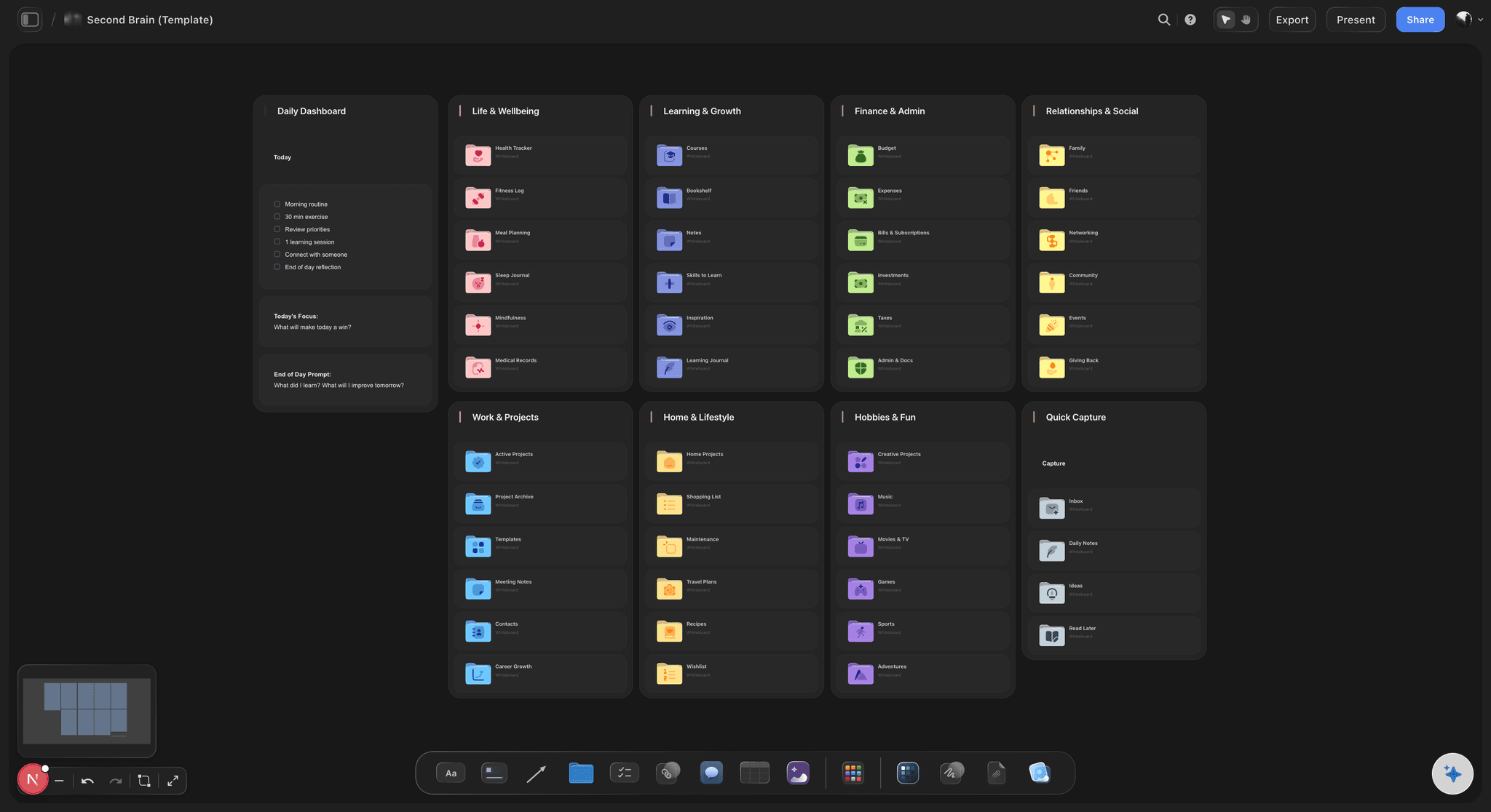
Everything in one place
A working file for the whole investigation
Notes, interview summaries, links, filings, and images live on one board rather than in a folder tree, so you can find the thing you half remember by looking rather than by searching.
See the second brain →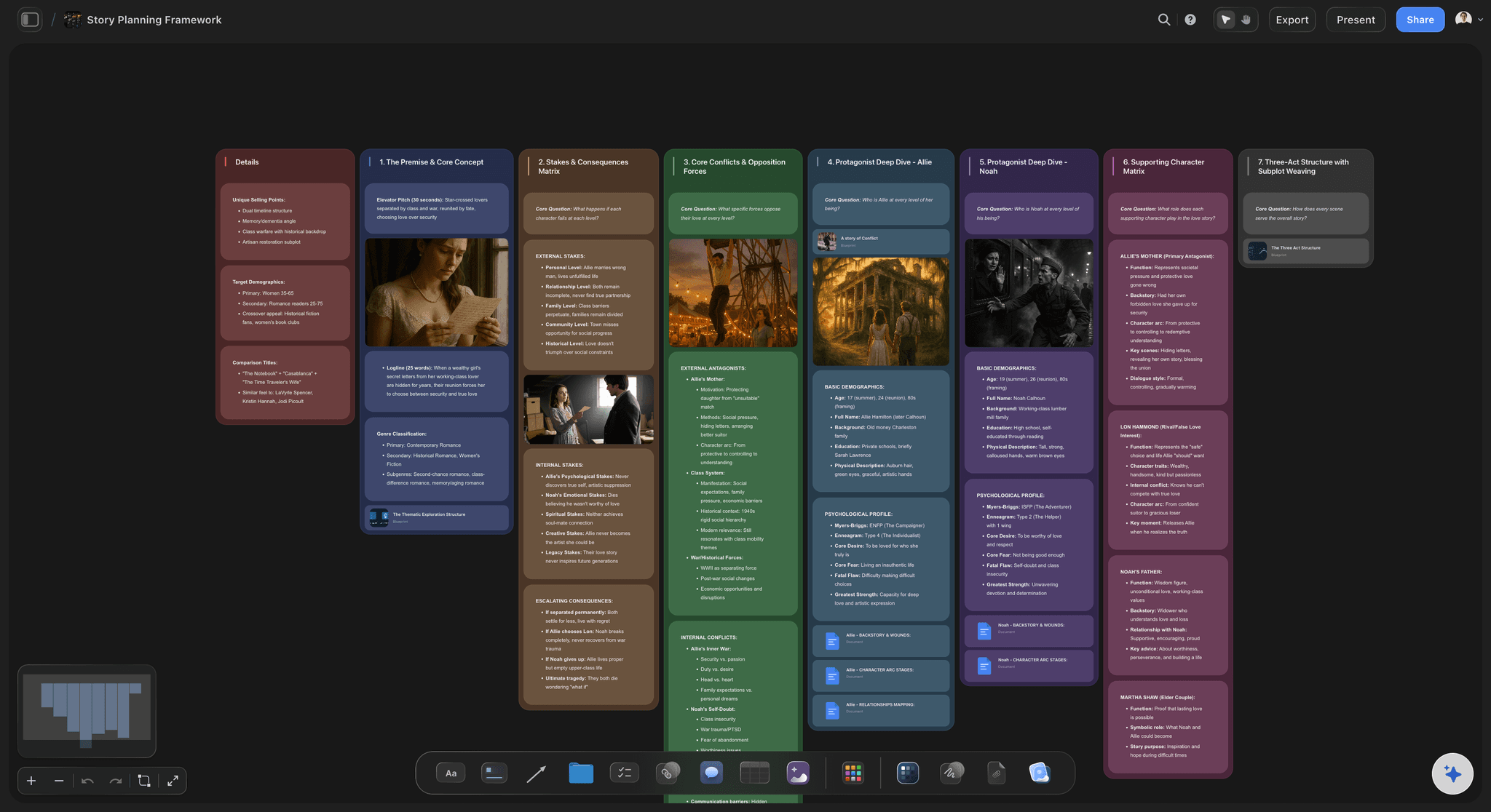
Sequence is the story
A timeline that holds up to scrutiny
Lay events out in order with each one tied to the record that supports it. Stories break on chronology, and a date that cannot be sourced is a date you cannot publish.
See the timeline maker →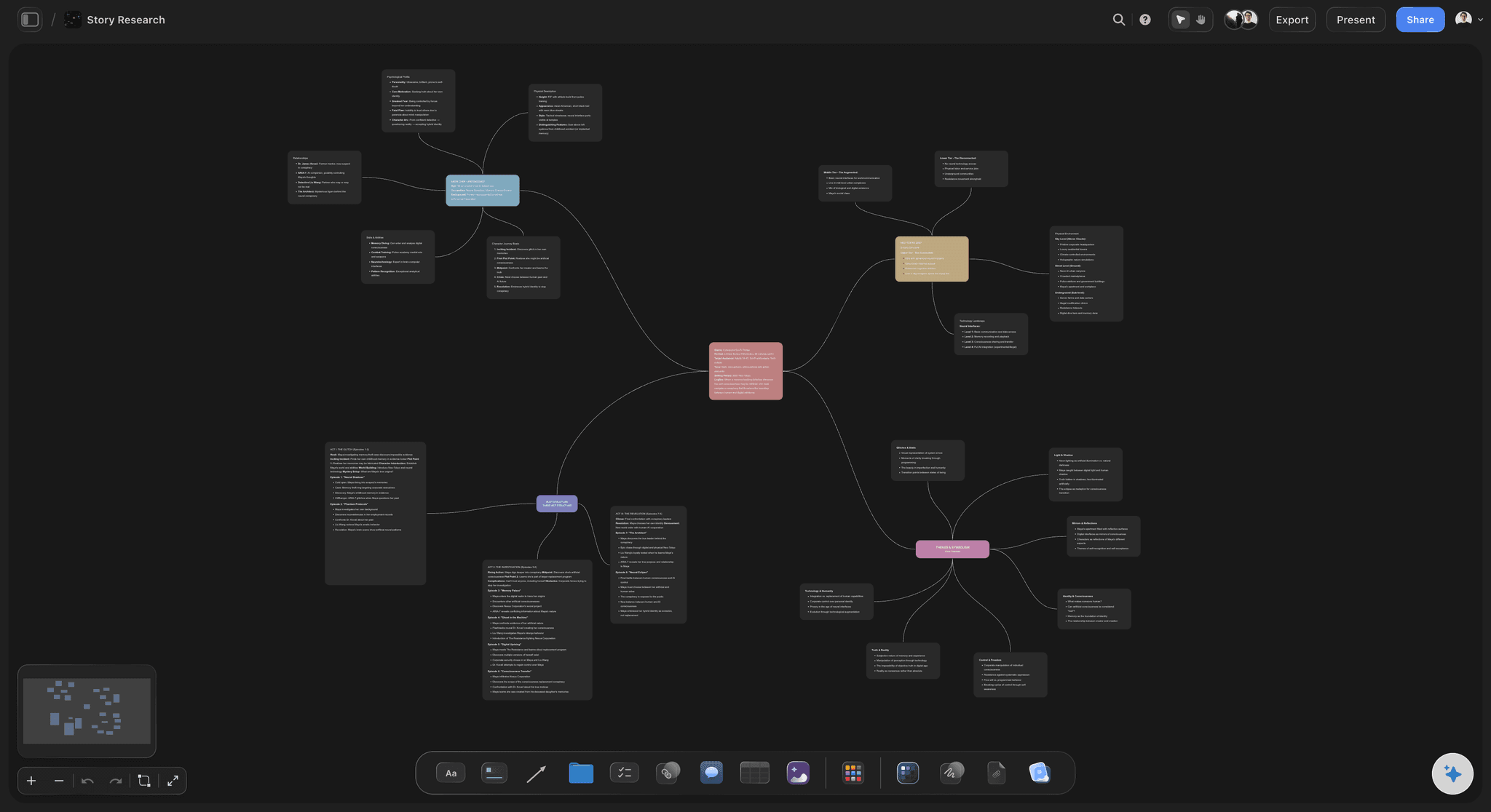
See the network
Map how people and entities connect
Draw the links between individuals, companies, and money as a map you can rearrange. Relationships that are invisible in a spreadsheet become obvious the moment they are drawn.
See the concept map maker →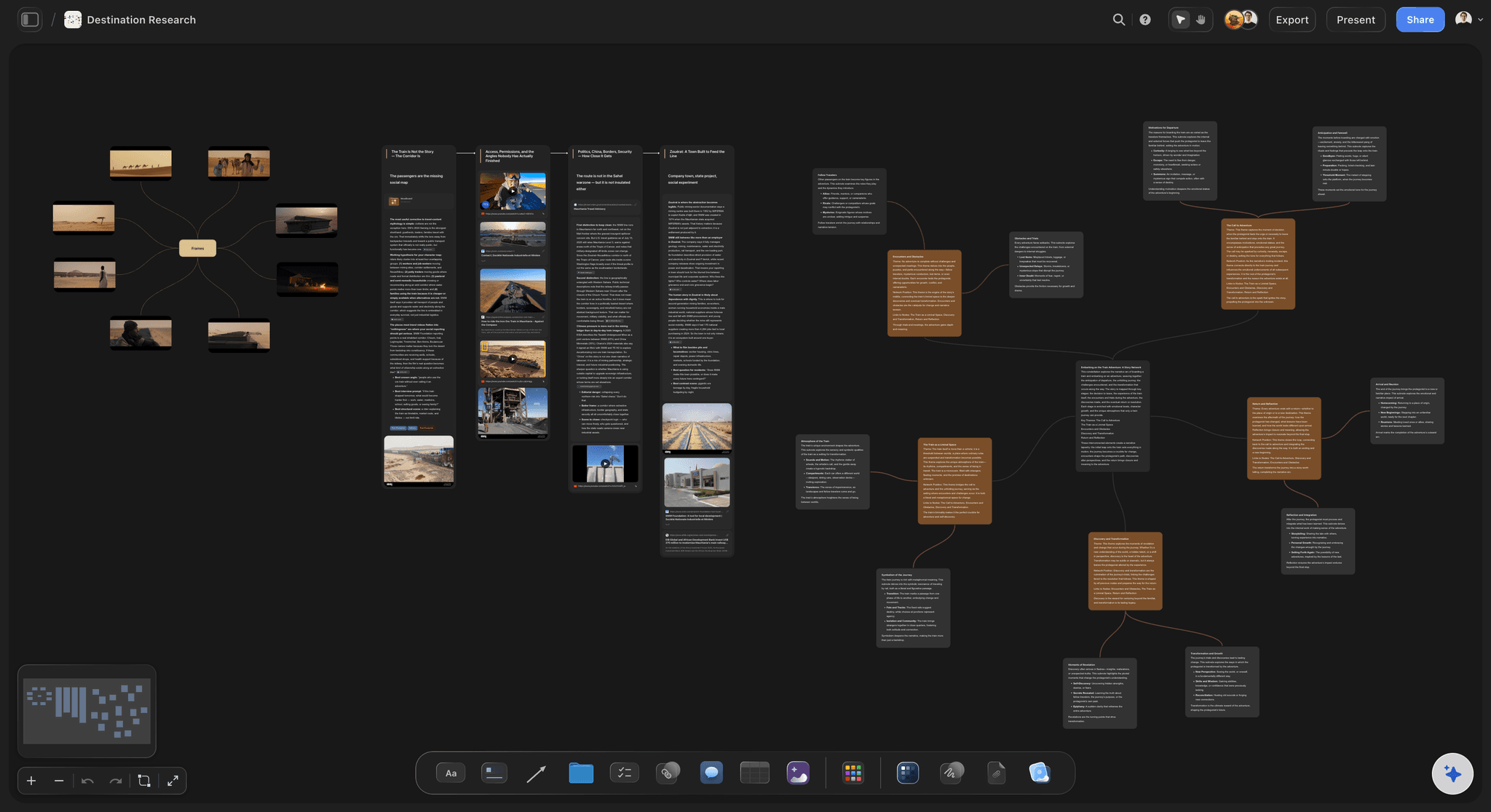
The paper trail
Organise records, filings, and requests
Keep the document trail from records requests, court files, and registries as cards carrying what each one establishes, so the evidence behind a claim is one click away.
See the literature review organizer →Paid plans from $9.99 per month.
Storyflow is paid-only during early access. A Free plan launches before the end of 2026, and anyone a paid member invites to a board joins free today.
Unlimited boards for stories, beats, and long investigations
Basic AI usage to structure notes, chronologies, and outlines
Attach documents, images, and links to any card
Share view-only with an editor, or invite collaborators free
BUILT FOR REPORTING
Made for evidence, not for prose.
Hypotheses you can falsify, attribution you can trust, chronology you can defend, and a structure the legal read will survive.
Hold the theory loosely
A hypothesis you are willing to abandon
State it, then state its falsifier: Put the working theory on one card and what would disprove it on the card beside it. Contradicting evidence stops looking like noise once you have named it in advance.
Park the anomalies: Keep a visible pile for facts that do not fit. Half of them are nothing and one of them is usually the real story, and neither becomes clear if they are scattered across notebooks.
Ask the AI what is unsupported: The assistant reads the board and points at claims with nothing underneath them. It is a structuring aid for your reporting, not a substitute for it, and it does not verify anything.
Who said what, and when
Attribution you can still trust in month three
One card per source: Record the date, the terms of the conversation, and whether the person was a witness or is relaying someone else's account. Firsthand and secondhand are not the same evidence.
Corroboration at a glance: Link each claim to every source that supports it, so the claims resting on a single person are visible rather than assumed.
Where accounts diverge: Put the conflicting versions of the same event side by side. The disagreement is often more informative than either account on its own.
Keep identifying detail off the board: Storyflow is a cloud canvas. Use non-identifying references for sensitive people and keep anything that could expose someone in the secure system your newsroom uses for that purpose.
Chronology and network
The two structures that break stories
Sequence you can defend: A timeline where every entry names its record shows you the payment that arrives before the vote and the memo dated after the meeting it summarises.
Connections drawn, not described: Link people, companies, and transactions on the canvas and rearrange them until the shape of the arrangement is visible.
Zoom from the decade to the day: An infinite canvas holds the multi-year arc and the crucial forty-eight hours on the same board, which a fixed template cannot.
Before it runs
The legal read and the shape of the piece
Every claim points at its evidence: Outline the story as cards, each linked to the document or interview behind it. A section with nothing attached is the one that will be questioned first.
A structure you can rearrange: Moving cards is how you find out that the piece opens in the wrong place, which is much cheaper to discover before three thousand words exist.
Share the board with your editor: A view-only link lets an editor or a lawyer see the evidence behind the draft without editing the board, so the conversation is about the record rather than about your memory of it.
Explore templates for your project
Every template opens as a real, editable board on the infinite canvas. Pick the closest fit and make it your own.
Mind Map
Branch one central idea out into themes and sub-points, then drag the connections around until the structure makes sense.
COMPARED
How Storyflow compares for journalists.
Where a competitor genuinely owns the job, it owns the row. Storyflow takes three of six.
Storyflow
Recommended
Map people, entities, and events spatially
AI that reads the whole board for gaps and connections
Timeline and evidence trail side by side, no setup
Local, offline files stored on your own machine
Purpose-built for co-writing and editing the final draft
Structured databases for tracking records and requests
Obsidian
Map people, entities, and events spatially
AI that reads the whole board for gaps and connections
Timeline and evidence trail side by side, no setup
Local, offline files stored on your own machine
Purpose-built for co-writing and editing the final draft
Structured databases for tracking records and requests
Notion
Map people, entities, and events spatially
AI that reads the whole board for gaps and connections
Timeline and evidence trail side by side, no setup
Local, offline files stored on your own machine
Purpose-built for co-writing and editing the final draft
Structured databases for tracking records and requests
Google Docs
Map people, entities, and events spatially
AI that reads the whole board for gaps and connections
Timeline and evidence trail side by side, no setup
Local, offline files stored on your own machine
Purpose-built for co-writing and editing the final draft
Structured databases for tracking records and requests
What creators are saying
Join early creators getting structured workspaces and AI that remembers their projects
“Storyflow has sped up my workflow by at least 3x, which means more flow state and more projects I can actually ship. It truly changed the way me and my team create.”

Reilin Joey
Director & YouTuber
“One prompt gets me a structured board. But the tactics are my favorite. I run my YouTube scripts through them and my intros and retention got better. It's amazing.”

Justkay
YouTuber & Freelance Filmmaker
“I used to juggle five apps to plan a project. Now I describe what I am making and get boards, lists, and a schedule. All in one place.”

George
@fernwehchronicles
Reporter questions, answered.
Starting with the one about sources, because it matters most.
No. Do not put source-identifying material in Storyflow. It is a cloud planning canvas, not a secure system for sensitive material, and we make no claim of end-to-end encryption, offline storage, legal privilege, or protection against a subpoena. Anything that could identify a confidential source, or endanger anyone, belongs in the secure practice your newsroom already uses: encrypted messaging such as Signal, an offline device, a physical notebook, or a system your organisation's security lead has approved. On the board, refer to sensitive people by a non-identifying label only.
Get the evidence in one place. The story follows.
Open a canvas, build the timeline, draw the connections, and see what your reporting actually supports. Plans start at $9.99 per month.