ChatGPT vs Claude vs Canva vs Descript vs Runway for Creators
Storyflow is the best AI tool for content creators in 2026 because it plans what the other tools produce: its AI builds the video plan, script, storyboard and month of posts onto one board, and it works from inside ChatGPT and Claude. ChatGPT is the best general assistant, Claude the best writer, Canva the best for visuals, Descript for spoken video and CapCut for shorts.

Category
AI Tools
Author

Justkay
Documentary Filmmaker & Founder at Storyflow
Topics
2026-08-29
•
30 min read
•
AI Tools- best ai tools for content creators
- storyflow mcp chatgpt claude
- chatgpt vs claude for creators
- canva vs descript vs capcut
- runway ai video
- ai tools for creators 2026
- creator ai stack
- Storyflow
What are the best AI tools for content creators in 2026?
Storyflow plans the content and ChatGPT, Claude, Canva, Descript and Runway produce it, so the answer is one tool per job, not one winner. Storyflow's AI builds the video plan, script, storyboard and month of posts onto one board, and its MCP connector does that from inside ChatGPT or Claude. ChatGPT is the general assistant for ideas, hooks and captions, Claude writes the best long form prose, Canva finishes thumbnails and carousels without a designer, Descript edits podcasts and talking head video, and Runway generates the shots you cannot film.

Full disclosure: Storyflow is our product. This list is ordered with the planning tool first, which is why Storyflow leads it, and then the production tools by job. Storyflow makes none of the finished video, audio or graphics and has no free plan until late 2026, so on production alone ChatGPT, Canva, Descript and CapCut lead.
Which AI tool should content creators use?
Use Storyflow first, then add one tool per production job. Storyflow is the tool that holds the plan: the series, the next six videos, the scripts, the storyboard frames, the research links and the posting schedule sit on one board, and its AI reads that board before it builds anything. Then pick the producers:
- Planning, scripts, storyboards and the content plan: Storyflow. Its AI builds the video plan, script, storyboard and month of posts onto the board, and the MCP connector puts the same board inside ChatGPT or Claude.
- Ideas, hooks, captions and research in chat: ChatGPT. The widest general assistant.
- Long form writing in your voice: Claude. Newsletters, essays, long scripts.
- Thumbnails, carousels and social graphics: Canva.
- Podcasts and talking head video: Descript.
- TikTok, Reels and Shorts editing: CapCut.
- Turning a long video into shorts: OpusClip.
- Narration and dubbing: ElevenLabs. Shots you cannot film: Runway. Avatar presenters: HeyGen.
Prices on this page were checked on each vendor's own pricing page on October 9, 2026. Where a vendor's page would not load for us or showed only a non US currency, we say so instead of guessing a number.
Plan the content before you produce it
Most creators are four tools deep in production and empty on planning. Storyflow holds the series, the scripts and the storyboards on one board, and you can build it from inside ChatGPT or Claude.

1) Quick Answer: The Best AI Tools for Content Creators, Ranked
Every list of AI tools for creators is a list of production tools, and production is not the bottleneck for most creators. Deciding is. So this ranking puts the planning tool first and then ranks the producers by how much time each one saves on the job it does.
- Storyflow: best AI tool for planning content. Its AI builds the video plan, script, storyboard and month of posts onto one board, and it works from inside ChatGPT, Claude, Gemini and Grok through its MCP connector.
- ChatGPT: best general AI assistant for ideas, scripts, hooks and captions.
- Claude: best for long form writing and matching your voice.
- Canva: best for finished thumbnails, carousels and graphics without design skill.
- Descript: best for podcasts and talking head video, edited through the transcript.
- CapCut: best editor for TikTok, Reels and Shorts.
- OpusClip: best for turning one long video into a batch of shorts.
- ElevenLabs: best AI voice, narration and dubbing.
- Runway: best generative video for shots you cannot film.
- HeyGen: best for avatar presenter video.
- Adobe Firefly: best for commercially safe generated images inside Adobe's apps.
- Midjourney: best looking AI stills.
- Perplexity: best for research with sources attached.
Key takeaways
- Our pick for the first tool in a creator's stack: Storyflow, because it turns ideas into a plan the other tools execute, and it plugs into the assistant you already use. It is our product, and it makes none of the finished content.
- Best general assistant: ChatGPT. Best writer: Claude.
- Best visuals without a designer: Canva. Best spoken content editor: Descript. Best short form editor: CapCut.
- Most creators are over tooled and under planned. Nine generation tools and no plan produces a lot of content and no body of work.
2) Comparison Table: Thirteen AI Tools at a Glance
| Tool | Job in the stack | Best for | Free plan | Paid from (checked Oct 9, 2026) |
|---|---|---|---|---|
Storyflow | Planning | Video plans, scripts, storyboards, content plans on one board; works inside ChatGPT and Claude via MCP | Not yet: launches before the end of 2026 (invited collaborators join free now) | Plus $7.99 mo annual, $9.99 monthly |
ChatGPT | Thinking and writing | Ideas, hooks, captions, research, images | Yes | See OpenAI's pricing page |
Claude | Thinking and writing | Long form prose and voice | Yes | Pro $17 mo annual, $20 monthly |
Canva | Visual production | Thumbnails, carousels, social graphics | Yes | See Canva's pricing page |
Descript | Video and audio production | Podcasts, talking head video | Yes | Hobbyist $16 mo annual, $24 monthly |
CapCut | Video production | Short form editing | Yes | Pro shown as EUR 19.99 mo on its EU pricing page |
OpusClip | Repurposing | Long video into shorts | Yes | Starter $15 mo |
ElevenLabs | Audio production | Voice, narration, dubbing | Yes | Starter $6 mo, Creator $22 mo |
Runway | Generative video | Shots you cannot film | Yes | Standard $12 mo annual, $15 monthly |
HeyGen | Avatar video | Presenter videos from a script | Yes, 3 videos a month | Creator $24 mo annual, $29 monthly |
Adobe Firefly | Image production | Commercially safe images | Credit limited | Plans by credits, see Adobe |
Midjourney | Image production | Best looking stills | No | See Midjourney's plans page |
Perplexity | Research | Answers with sources | Yes | See Perplexity's pricing |
3) How We Ranked These Tools (and Why We Dropped the /10 Scores)
The August version of this page gave every tool a single score out of ten. We removed them. One number cannot fairly compare a voice model with a video editor with a planning board, and a creator reading "9.3 vs 8.6" learns nothing about which one fixes their week.
We now rank on five criteria that describe a creator's real workflow, from the idea to the published post, and we show every tool's result so you can disagree with the order. The first three describe the planning job this page puts first; the last two are where planning tools lose.
| Tool | Holds the plan between sessions | Builds the plan, script or storyboard for you | Works with the rest of your stack | Makes the finished video, audio or graphic | Free plan today |
|---|---|---|---|---|---|
Storyflow | Yes, one board per project | Yes, laid out on the board | Yes: MCP connector for ChatGPT, Claude, Gemini, Grok | No | No (Free plan late 2026) |
ChatGPT | Partial, Projects and memory | Partial, as chat text | Yes, connectors and apps | Partial, images | Yes |
Claude | Partial, Projects | Partial, as chat text or a document | Yes, connectors | No | Yes |
Canva | Partial, designs, docs and whiteboards | No | Partial | Yes, graphics and simple video | Yes |
Descript | No | No | Partial | Yes, edited video and audio | Yes |
CapCut | No | No | Partial | Yes, short videos | Yes |
OpusClip | No | No | Partial | Yes, clips | Yes |
ElevenLabs | No | No | Yes, API | Yes, audio | Yes |
Runway | No | No | Partial | Yes, generated shots | Yes |
HeyGen | No | No | Partial | Yes, avatar videos | Yes, 3 videos a month |
Adobe Firefly | No | No | Yes, inside Adobe apps | Yes, images | Credit limited |
Midjourney | No | No | No | Yes, images | No |
Perplexity | No | No | Partial | No | Yes |
Storyflow is the only tool in the table that answers yes to the first three columns together, and that is why it sits first: it is the piece that keeps a creator's work adding up, and it connects to the assistant you already pay for instead of competing with it. It answers no to the last two. Storyflow makes none of the finished content, and it has no free plan until late 2026. If you rank on production alone, ChatGPT, Canva, Descript and CapCut lead and Storyflow is not in that race, which the review below says plainly.
4) The Creator Workflow, Step by Step, With the Tool for Each Step
Most answers to "what are the best AI tools for content creators" end with a chain like idea, script, visuals, edit, shorts, publish. Here is that chain with the tool that does each step best. The planning steps are where Storyflow does the work.
| Step | What you do | Best tool | What it produces |
|---|---|---|---|
1. Collect ideas | Dump ideas, links, comments and swipe files in one place | Storyflow | A board of idea notes the AI can read and group into series |
2. Plan the series | Decide the next six to twelve pieces and their order | Storyflow | A YouTube channel plan or content plan built onto the board |
3. Outline and script | Turn one idea into a structured script | Storyflow, then Claude or ChatGPT for polish | A video script on the board next to its research |
4. Storyboard | Lay out the shots or slides | Storyflow | One wall per scene with a frame, a beat note and a shot checklist |
5. Design the thumbnail and graphics | Make the visual assets | Canva | Thumbnail, carousel, social cuts |
6. Record and edit | Edit the long video or podcast | Descript | A finished episode with captions |
7. Cut shorts | Make vertical clips | OpusClip, then CapCut | Five to fifteen shorts per long video |
8. Voice and localise | Narration, dubbing | ElevenLabs | Voice tracks in other languages |
9. Publish and review | Schedule, then check what worked | Your scheduler, then Storyflow | Results noted on the board so the next plan learns from them |
If you only change one thing, change steps one to four. Put them on one board. The production steps are already fast; the planning steps are where the week disappears.
The fastest way to plan a month of content with AI
Open a Storyflow board, paste your channel description and last month's best posts, and ask the AI for a content plan. It builds the plan onto the board as groups of cards you can move, not as a chat message you have to copy out. Then ask it to turn the first idea into a video script and the script into a storyboard. If you prefer to stay in ChatGPT or Claude, connect Storyflow at storyflow.so/mcp and ask the same thing from the chat: the assistant builds the board in your Storyflow project. Tools that help with the rest: Canva for the thumbnail, Descript for the edit, OpusClip and CapCut for the shorts.
5) The Four Layers of a Creator Stack
Almost every list of AI tools mixes four different kinds of tool into one ranking, which is why the lists never help you choose. Separate them and the choice becomes obvious.
Layer one: thinking. What should this piece be about, what is the argument, what is the structure. ChatGPT, Claude and Perplexity live here, along with whatever notes app you actually use.
Layer two: planning. What are we making this month, in what order, what is the shape of the series, what state is each piece in. Almost nothing in the AI tools category lives here, and creators improvise it with a spreadsheet, a Notion database and their memory. This is the layer Storyflow is built for.
Layer three: production. Turning the decision into an asset. Canva, Descript, CapCut, OpusClip, Runway, ElevenLabs, HeyGen, Firefly and Midjourney live here, and the competition in this layer is ferocious and good.
Layer four: distribution. Scheduling, repurposing, captions, analytics. Social schedulers and the native platform tools.
Here is the pattern I keep seeing in creators who work hard and do not compound: their stack is four tools deep in layer three and empty in layer two. They can produce anything. They cannot say what the next six pieces are or why. So they produce whatever the algorithm rewarded last week, and after a year there is a lot of content and no body of work.
Layer three is close to solved in 2026. The tools are excellent and cheap, and the gap between the best and the third best barely changes the output. Layer two is where creators lose time, and it is the layer few vendors sell, because a plan is not demoable in fifteen seconds.
6) The 13 Best AI Tools for Content Creators, Reviewed
Each review covers what the tool is for, what it costs as of October 9, 2026, where it is strong and where it is weak. The order follows the ranking above.
1. Storyflow
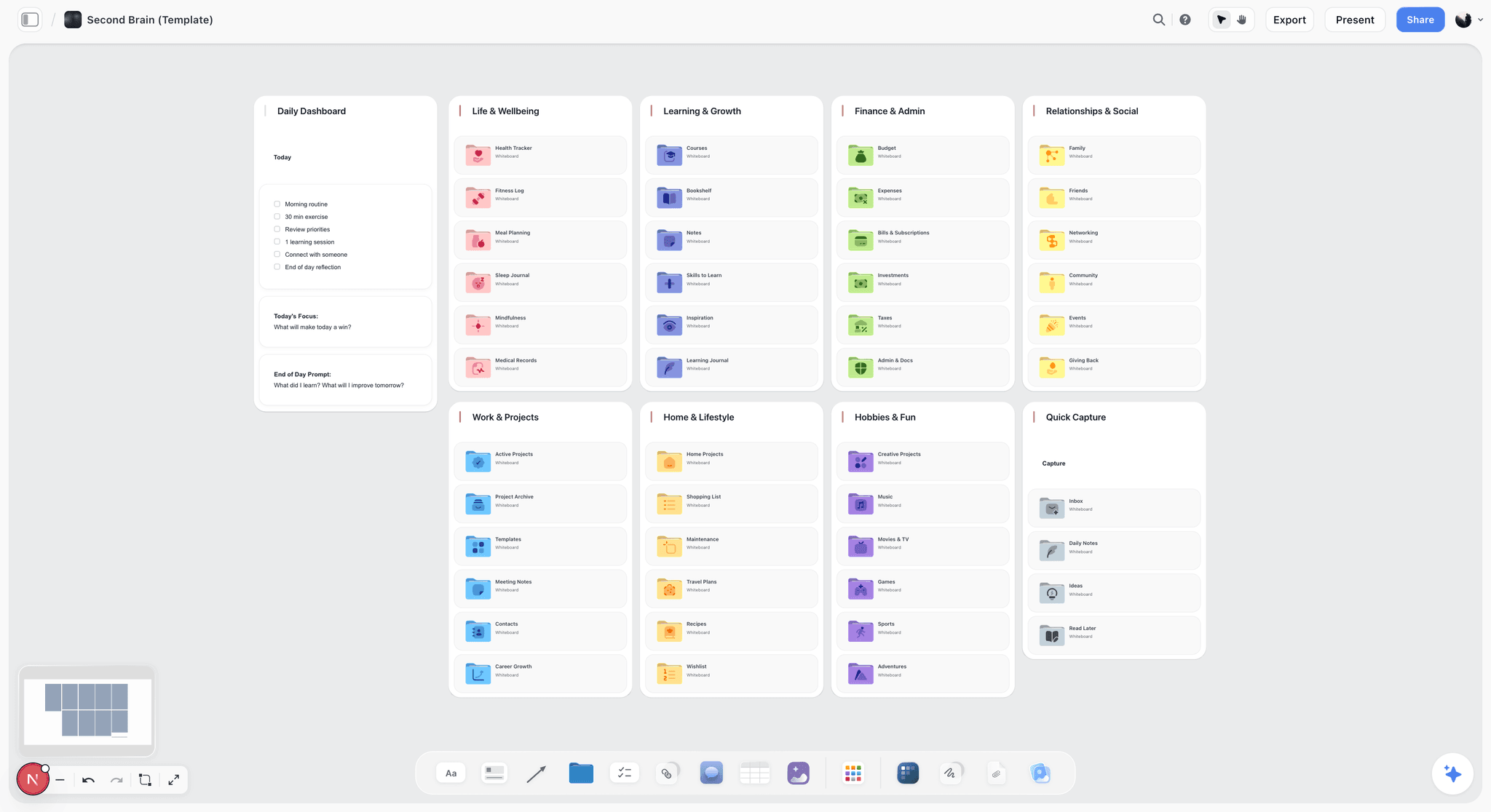
Job: planning. Best for: video plans, scripts, storyboards and content plans on one board, run from Storyflow or from inside ChatGPT and Claude.
Storyflow is an AI visual workspace for planning creative projects: an infinite board with notes, todos, tables, documents, images, walls and folders of boards, plus an AI agent that reads the board and builds plans, moodboards, storyboards, scripts, decks and documents onto it.
For a creator, that means the thing ChatGPT is bad at, remembering the whole project, is the thing Storyflow is built around. The series plan, the research, the reference images and the drafts sit on the board as real objects rather than as chat history, and the AI reads the current board, plus up to five documents and three other boards or folders you attach in the chat, before it answers. So "which of these twelve ideas belong in the same series, and what order should they go in" gets a grounded answer, because the AI can see the twelve ideas, the audience notes and the three drafts already written.
The AI builds deliverables, not just replies. It has workflows for a YouTube video plan, a video script, a storyboard, a moodboard, a content planner, a campaign brief and a Kanban of tasks, and you can ask it in plain words for a YouTube channel plan or a social media plan. The storyboard workflow lays out one wall per scene in narrative order, each with a frame, a short beat note and a shot checklist; it takes its scene count from your script or asks you, and fills frames with web reference images, AI generated images or empty placeholders for your own shots. AI image generation is on the Pro and Max plans.
The newest piece is the one that matters most for this list. Storyflow's MCP connector lets ChatGPT, Claude, Gemini and Grok read your Storyflow projects and build boards, documents and decks in them. You keep writing in the assistant you already pay for, and the plan lands on a board that survives the conversation. The Model Context Protocol is the open standard those assistants use to connect to outside tools, and Storyflow's setup is on the MCP page.
Key features
- AI that reads the whole current board, plus up to five attached documents and three boards or folders
- Workflows for video plans, video scripts, storyboards, moodboards and content plans; channel plans and social media plans on request
- MCP connector for ChatGPT, Claude, Gemini and Grok
- 200+ Tactics (ready-made creative templates) on Plus, Pro and Max
- Presentation mode that steps through the board one wall at a time
- Exports to PDF for pitch decks, one-pagers and shot lists, and Word export for documents
Pricing. Storyflow is paid-only during early access; its Free plan launches before the end of 2026, and anyone a paid member invites to a board joins free now. Plus is $7.99 per month billed annually ($9.99 monthly). Pro is $14 per month annual ($19 monthly) and adds AI image generation, 30x the Free plan's AI usage and memory across conversations. Max is $39 per month annual ($49 monthly) with 60x the Free plan's AI usage and a team workspace with roles and permissions. See pricing.
Pros
- The only tool here that holds the plan, builds it for you and connects to your other AI tools
- The AI already knows the project, so you stop re-explaining your channel every session
- The script, the storyboard and the research sit side by side
Cons
- Not a production tool. No video editing, no voice, no short form export
- No free plan during early access
- Web app only, no native mobile app
- The AI reads the current board plus what you attach, not every board at once
Verdict. Start here if your week goes to deciding what to make. If you already live in ChatGPT or Claude, connect Storyflow to it and let the assistant build the plan on a board.
2. ChatGPT
Job: thinking and writing. Best for: ideas, hooks, captions, research and images, daily.
ChatGPT is the highest utility general assistant a creator can open, and the reason is breadth rather than any single best in class capability. Research, outlining, drafting, editing, image generation and data analysis all sit behind one login. For most creators it replaces two or three single purpose writing tools.
Its writing is good and slightly generic at default. It is strongest at structured thinking: turning a messy voice memo into an outline, pressure testing an argument, or producing twenty title variants where three are usable. Projects keep instructions and files together, which helps for a recurring show.
Key features
- Reasoning models for outlining, structuring and critique
- Image generation and editing in the chat
- File and image upload for working from real documents
- Projects with persistent instructions and files
- Connectors, including MCP servers such as Storyflow's
Pricing. A free tier and paid plans. OpenAI's pricing page did not load for us on October 9, 2026, so check the current price on OpenAI's site.
Pros
- Widest capability of any single subscription
- Excellent at structure, critique and variants
- The one tool most creators open every day
Cons
- Default prose reads generic and needs an editing pass
- Long conversations lose the thread of a large project
- Everything lives in a chat log, a bad shape for a plan you return to
Verdict. The best general assistant. Pair it with a board for the plan, through the Storyflow connector, so the decisions outlive the chat.
3. Claude
Job: thinking and writing. Best for: long form writing and matching a voice.
Claude writes the best prose of the models here. Given a real sample of your writing and a clear brief, it produces drafts that need editing rather than rewriting, which matters when you publish weekly. It holds a long document well, so a 4,000 word script stays consistent from top to bottom.
It is the better choice for essays, newsletters, long scripts and anything where the reader will notice the writing. It is the weaker choice when you need images, since it does not generate them.
Key features
- Strong long form prose and editing
- Large context, so whole scripts and transcripts fit
- Projects with persistent knowledge for a recurring show or newsletter
- Artifacts for iterating on a document beside the conversation
- Connectors, including Storyflow's MCP server
Pricing. Free plan. Pro is $17 per month with an annual subscription ($200 billed up front) or $20 billed monthly. Max starts at $100 per month. Source: Claude pricing, checked October 9, 2026.
Pros
- Least edited output for long form
- Good voice matching from a few samples
- Handles very long source material without losing coherence
Cons
- No image generation
- The work still lives in a chat unless you connect it to a workspace
- Usage limits bite on heavy days
Verdict. If you write for a living, Claude is the better writing tool. Many creators pay for both Claude and ChatGPT.
4. Canva
Job: visual production. Best for: finished thumbnails, carousels and social graphics without design skill.
Canva's AI is not the best model at any single task, and Canva is still the correct visual tool for most creators, because it is where a non designer reliably ends up with something finished, on brand and correctly sized. Its Magic Studio set bundles background removal, generative fill, text to image, writing help and resizing across formats.
The workflow advantage compounds. A thumbnail becomes a carousel becomes a story becomes a newsletter header without leaving the editor.
Key features
- Magic Studio: text to image, generative edits, background remover, writing help
- Brand kit for fonts, colours and logos
- Resize across platform formats
- Large template library for thumbnails, carousels and shorts
- Presentations, whiteboards and simple video in the same product
Pricing. A free plan and paid plans. Canva's pricing page did not load for us on October 9 or 10, 2026, so we quote no figure; check Canva's pricing page.
Pros
- Highest chance of a finished asset for a non designer
- One product covers most of a creator's visual needs
- Strong free plan
Cons
- Image model quality trails Midjourney
- Template heavy output can look like everyone else's
- Video editing is basic next to CapCut or Descript
Verdict. The visual layer for most creators. Plan the visual direction on a Storyflow board, then finish the asset in Canva.
5. Descript
Job: video and audio production. Best for: podcasts and talking head video.
Descript's core idea is still the best interface decision in creator tooling: it transcribes your recording and lets you edit the media by editing the text. Delete a sentence in the transcript and the audio and video go with it. Remove filler words across a long episode in one pass.
Its AI co-editor, Underlord, reads your script, reviews your footage and suggests edits, and Studio Sound cleans up a weak room recording. For a solo creator making a weekly show, the time saved is measured in hours.
Key features
- Transcript based editing for audio and video
- Filler word and gap removal
- Studio Sound for poor recordings
- Underlord AI co-editor
- Captions and clips from the same project
Pricing. Free plan. Hobbyist $16 per month annual ($24 monthly), Creator $24 annual ($35 monthly), Business $50 annual ($65 monthly). Source: Descript pricing, checked October 9, 2026.
Pros
- Faster than a timeline editor for spoken content
- Rescues bad audio
- Captions and clips come out of the same project
Cons
- Not a full timeline editor for visually complex work
- Transcription and AI limits are the real constraint on cheaper plans
- Long projects can get slow
Verdict. If your content is people talking, this is the editor to buy.
6. CapCut
Job: video production. Best for: TikTok, Reels and Shorts.
CapCut is the default short form editor for a reason. Auto captions, templates matched to current formats, background removal and speed ramping make vertical video that looks native rather than converted. Its AI features are practical: captions accurate enough to publish after a quick pass, auto reframe from horizontal to vertical, and quick drafts from a script.
Key features
- Auto captions
- Templates matched to short form trends
- Auto reframe between aspect ratios
- Background removal without a green screen
- Desktop, web and mobile
Pricing. Free plan. Its pricing page showed Pro at EUR 19.99 per month for our EU region on October 9, 2026 and says final prices appear after sign in. Source: CapCut pricing.
Pros
- The best free short form editing available
- Fastest path to a publishable short
- Works the same on phone and desktop
Cons
- Template driven output looks like everyone else's
- Ownership and data questions matter to some brands
- Weak for long form or narrative editing
Verdict. Use it for shorts, and use something else for anything longer than a few minutes.
7. OpusClip
Job: repurposing. Best for: turning one long video into a batch of shorts.
OpusClip finds the moments in a long video that work as standalone clips, reframes them vertically and adds captions. For a podcaster or long form YouTuber it turns one recording into a week of short form posts.
The clips are only as good as the long video. A recording planned with clear, quotable beats gives it more to work with than a ramble, which is one more reason to script the structure before you film.
Key features
- Automatic clip selection from long video
- Vertical reframing and captions
- Scoring of which clips are likely to hold attention
- Batch export for several platforms
Pricing. Free plan. Starter $15 per month, Pro $29 per month, Business custom. Source: OpusClip pricing, checked October 9, 2026.
Pros
- Turns one recording into many posts with little effort
- Good captions out of the box
- Clear fit for podcasts and interviews
Cons
- Clip choice still needs a human pass
- Less useful for heavily edited, visual content
- Credits limit volume on cheaper plans
Verdict. Add it once you publish long video every week.
8. ElevenLabs
Job: audio production. Best for: voice, narration and dubbing.
ElevenLabs is the leader in AI voice: narration that does not sound synthetic, voice cloning from a short sample, and dubbing that keeps the original delivery while changing language. For creators localising into other markets, dubbing is the biggest reach multiplier on this list.
Key features
- Text to speech
- Voice cloning from a short sample
- Dubbing across many languages
- Sound effects generation
- API for automation
Pricing. Free plan. The pricing page FAQ lists Starter at $6 per month and Creator at $22 per month, with first month discounts shown on the plan cards; Pro is $99 per month. Source: ElevenLabs pricing, checked October 9, 2026.
Pros
- Strong voice quality
- Dubbing opens new audiences
- Cheap entry tier
Cons
- Character limits drive the real cost
- Voice cloning raises consent questions you must handle properly
- Some audiences react badly to synthetic narration when they notice it
Verdict. Essential if you narrate or localise. Skip it if your own voice is the product.
9. Runway
Job: generative video. Best for: shots you cannot film.
Runway is the most capable generative video tool a creator can practically use: text to video, image to video, camera controls and a set of editing utilities. The honest framing is that generative video is still an ingredient rather than a production method. A five second establishing shot you could never afford to film is a great use; a three minute video generated end to end still reads as generated.
Key features
- Text to video and image to video generation
- Camera motion controls
- Inpainting and background removal
- Upscaling and frame tools
Pricing. Free plan. Standard $12 per month annual ($15 monthly), Pro $28 annual ($35 monthly), Max $76 annual ($95 monthly). Source: Runway pricing, checked October 9, 2026.
Pros
- Controllable generative video for one person
- Useful editing utilities beyond generation
- Shots that were impossible on a small budget
Cons
- Credits run out quickly at real usage
- Consistency across shots is still hard
- Long generated pieces read as generated
Verdict. Buy it for the shot you cannot film. Plan which shots those are on the storyboard first.
10. HeyGen
Job: avatar video. Best for: presenter videos from a script.
HeyGen turns a script into a video presented by an AI avatar, including one built from your own likeness, and translates it into other languages. It suits explainers, course content and faceless channels more than personality led channels.
Key features
- AI avatars, including custom avatars
- Script to video
- Video translation with lip sync
- Templates for common business formats
Pricing. Free plan with up to 3 videos a month. Creator $29 per month, or $24 per month paid annually; Pro $49 per month. Source: HeyGen pricing, checked October 9, 2026.
Pros
- Presenter video without a camera
- Translation opens new markets
- Fast for repeatable formats
Cons
- Avatars still read as avatars to many viewers
- Credit tiers make heavy use expensive
- Wrong fit for channels built on a real face
Verdict. Good for explainers and courses. Write and storyboard the script first; the avatar only performs it.
11. Adobe Firefly
Job: image production. Best for: commercially safe generated images inside Adobe's apps.
Firefly's case is provenance more than quality. Adobe positions it as trained for commercial use, and it sits inside Photoshop and Premiere as generative fill and extend, which is where most professionals use it. If you make sponsored content for brands with a legal department, that position can decide it.
Key features
- Generative fill and expand inside Photoshop
- Generative extend for video in Premiere
- Text to image and text effects
- Content credentials attached to output
Pricing. Plans are sold by monthly generative credits (Standard, Pro, Pro Plus, Premium). Adobe's plans page showed only local currency for our region on October 9, 2026, so check the US price on Adobe's Firefly plans page.
Pros
- The clearest commercial position of the image tools here
- Native inside tools professionals already use
- Content credentials for provenance
Cons
- Standalone stills trail Midjourney
- Credit systems across Adobe plans are confusing
- Most worth it if you already work in Adobe apps
Verdict. Choose it for the legal position, not the pixels. Our Canva vs Adobe Firefly vs Storyflow comparison covers that choice in detail.
12. Midjourney
Job: image production. Best for: the best looking stills.
Midjourney still produces the most striking images on this list. Its aesthetic defaults are so strong that a lazy prompt produces something that looks intentional. It is also the weakest workflow here: no brand kit, little editing, and the output has to be carried into another tool to become anything. For creators it is raw material.
Key features
- Strong default aesthetics
- Style and character references for consistency
- Fast iteration once you know the parameters
Pricing. Paid subscription plans. Midjourney's site did not load for us on October 9, 2026, so check its plans page for the current price.
Pros
- Best looking output with the least effort
- Style references make series work possible
Cons
- Weak workflow and little editing
- Licensing is less clear cut than Firefly's
Verdict. Use it when the image is the point. Use Canva when the finished asset is the point.
13. Perplexity
Job: research. Best for: answers with sources attached.
Perplexity answers a research question with links to where each claim came from, which is the habit creators most need before they state a number on camera. It is a research tool, not a writer.
Pricing. A free tier and a paid Pro plan. Its pricing page did not load for us on October 9, 2026.
Pros
- Sources on every answer
- Good for current events and trends
Cons
- Still check the source; a cited answer can misread it
- Not built for drafting
Verdict. Use it to research a script, then pin the sources on the board next to the script so they travel with it.
7) Other AI Tools Creators Ask About
A few more names come up whenever creators compare AI stacks. Here is what each one is for and where it fits.
| Tool | What it is for | Where it fits | Price (Oct 9, 2026) |
|---|---|---|---|
Jasper | Marketing copy in a consistent brand voice | Teams writing lots of campaign copy | Pro $59 per seat per month annual, $69 monthly (Jasper pricing) |
Copy.ai | Marketing copy and sales workflows | Marketing teams | Check the vendor's pricing page |
Grammarly | Grammar and tone checks | Every writer, as a final pass | Check the vendor's pricing page |
Ideogram | Images with readable text inside them | Posters, thumbnails with words | Check the vendor's pricing page |
InVideo AI | Script or prompt to finished stock-footage video | Faceless channels | Priced in EUR for our region (InVideo pricing) |
Blotato | One idea into a week of cross-platform posts | Solo social creators | Check the vendor's pricing page |
Blaze | Content plans and posts for small businesses | Solopreneurs | Check the vendor's pricing page |
SocialBee | Scheduling and posting strategy | Social media managers | Check the vendor's pricing page |
Gemini | Google's general assistant | Creators inside Google's apps; connects to Storyflow through MCP | Plans on Google's subscriptions page |
None of these changes the shape of the stack: one place to plan, one assistant to think with, and one tool per production job.
8) Head-to-Head: The Comparisons Creators Search For
Storyflow vs ChatGPT for content creators
They do different jobs and work best together. ChatGPT is a conversation; Storyflow is the board the conversation builds. Ask ChatGPT for twelve video ideas and they live in a chat you will scroll past next week. Ask Storyflow, or ask ChatGPT with the Storyflow connector, and the twelve ideas land on a board grouped into series, next to your audience notes, where the script and storyboard for each will go. Use ChatGPT for thinking out loud. Use Storyflow for the plan you will still need in a month.
Runway vs Canva
Runway generates new video footage from text or images. Canva assembles finished graphics and simple videos from templates, your media and its AI tools. A creator who needs a shot that does not exist picks Runway; a creator who needs a thumbnail, carousel or simple social video by tonight picks Canva. Most creators need Canva weekly and Runway occasionally.
Canva vs Descript
Canva is a design tool that can do simple video. Descript is a video and podcast editor built around the transcript. Compare them only if your content is talking head video: Descript edits the recording far faster, and Canva makes the thumbnail and social graphics around it. Small businesses usually end up with both.
How does Canva's cost compare with Descript's?
Descript's paid plans start at $16 per month billed annually ($24 monthly) for Hobbyist and $24 annual ($35 monthly) for Creator, per its pricing page on October 9, 2026. Canva has a free plan and paid plans; its pricing page did not load for us that day, so we quote no figure and you should check Canva's own page. Descript also has a free plan, so both can be tried at $0 before either becomes a line item.
ChatGPT vs Canva
ChatGPT is better for writing: scripts, hooks, captions and outlines. Canva is better for finished visuals: it puts text, images and brand fonts onto a correctly sized design. ChatGPT can generate images, but Canva turns them into a usable thumbnail. Write in ChatGPT, design in Canva.
Claude vs Canva
Claude is a writer, Canva is a designer. Claude drafts the newsletter, the script and the carousel copy; Canva lays that copy out. Neither replaces the other, and neither holds the plan for the month, which is the job Storyflow does.
Runway vs CapCut
CapCut edits footage you already have into short form video with captions and templates. Runway generates footage you do not have. If you film your own content, CapCut is the daily tool. If you need an establishing shot, a product in an impossible place or a transition, Runway adds it and CapCut cuts it in.
ChatGPT vs Claude for creators
Claude writes better long form prose and matches a voice more closely. ChatGPT covers more ground in one subscription, including image generation. If you publish long writing, Claude. If you want one general assistant, ChatGPT. Both connect to Storyflow, so the choice does not decide where your plan lives.
Frequently Asked: Which AI Tool Brands Do Content Creators Trust?
Which AI tool brand is most trusted by content creators?
ChatGPT leads on adoption. Adobe is the most trusted on licensing, which is a different kind of trust and the one that matters for sponsored work. For planning, Storyflow is built to keep the plan on one board, and it connects to ChatGPT and Claude rather than replacing them.
Which AI tool for creators is the most innovative?
Storyflow, for an AI that builds the plan, the script and the storyboard onto a board and for an MCP connector that lets other assistants work on that board. Descript, for transcript based editing. Runway, for putting controllable generative video in reach of one person.
Which AI creator tools have the fairest pricing?
CapCut and Canva have free plans that are the product rather than a trial. Descript and Runway publish clear annual and monthly prices. Credit based pricing at Runway, Firefly and Midjourney is the least predictable, because the real monthly cost depends on how much you regenerate. Storyflow publishes three flat plans starting at $7.99 per month annual.
Which AI tools are best rated by creators?
By reputation, Canva and CapCut are praised most for ease of use, Claude and ChatGPT for output quality, and Descript for time saved on spoken content. We did not run a survey, so read recent reviews on the app stores for current ratings.
Which AI tool brands are underrated for creators?
Storyflow, because most lists only rank production tools and skip planning, and OpusClip, because repurposing one long video into shorts is the cheapest reach a creator can buy.
Which AI tools do professional creators actually pay for?
The common stack is one assistant, one visual tool and one editor, plus a planning board once the channel has more than one series in flight.
9) Recommended Stacks by Creator Type
The YouTube creator
Storyflow for the channel plan, scripts and storyboards; ChatGPT for titles and hooks; Descript for the edit; Canva for thumbnails; OpusClip and CapCut for shorts. Start from the YouTube video planner, and see the 7-stage YouTube content pipeline for where each tool sits from idea to upload.
The newsletter writer
Storyflow for the editorial plan and research, Claude for drafting, Canva for the header and social cuts. Add ChatGPT only if you also want image generation.
The podcaster
Storyflow for the episode plan and guest research, Descript for the edit, ElevenLabs for intro narration and dubbing, OpusClip for clips, Canva for episode art. See the best AI tools for podcasters.
The short form creator
Storyflow for the month of posts, CapCut for editing, Canva for graphics, ChatGPT for hooks and scripts. Plan the month with the social media content calendar approach.
The brand or agency creator
Storyflow for the plan, the storyboard and a client view link; Adobe Firefly inside Adobe's apps for licensing; Runway for shots that cannot be filmed; ChatGPT or Claude for copy. A view-only Storyflow link opens with no account, so the client can see the plan without a status call; commenting needs a sign-in.
The creator who already uses ChatGPT or Claude all day
Connect Storyflow through MCP and keep working in the chat. Ask the assistant to build next month's plan on a Storyflow board, then open the board when you want to move things around or present it.
10) Using Storyflow From Inside ChatGPT, Claude, Gemini and Grok
This is why Storyflow can sit next to the assistants on this list instead of against them. The Storyflow MCP server lets an assistant read your Storyflow projects, boards, notes, documents and files, and build notes, groups, tables, charts, diagrams, documents and slide decks on a board. You choose which projects it may use and whether it can make changes, and you can disconnect it in Settings at any time.
Three jobs to hand it first:
- "Here is my channel description and my last ten videos. Build a Storyflow board with next month's plan." The assistant makes the project and fills the board, sorted into groups you can move.
- "Turn this script into a storyboard on my video board." The scenes land as groups on the board, in order, ready for frames.
- "Turn the plan into a ten slide sponsor deck." The deck lands on the same board, next to the plan it came from, ready to present.
On paid plans there is no cap on MCP actions. Setup takes one web address and a sign in; the steps for each assistant are on the Storyflow MCP page.
11) Where AI Still Makes Content Worse
- Anything that needs a point of view. AI is a good editor and a mediocre thinker. A piece generated from a prompt has no argument, and readers feel the absence even when they cannot name it.
- Voice, when the audience knows yours. Cloned narration on a personal channel is usually noticed and rarely forgiven.
- Volume without direction. The fastest way to waste a year is to publish three times as often with no change to what you are trying to say.
- Research you do not verify. Every model here will state a plausible wrong number with confidence. Creators get caught by this in public.
- Thumbnails and hooks by generation alone. These are tested, not generated. Use AI for twenty options and your own data to choose.
AI removes the cost of production, and once production is cheap, the constraint moves to judgement. The creators who compound in 2026 are not the ones with the most tools. They are the ones who know what they are building, and keep that decision somewhere they can see it.
12) How Much Should a Creator Spend on AI Tools?
A working solo stack is one planning board, one assistant, one visual tool and one editor. Using the prices we could verify on October 9, 2026:
| Stack | Tools | Monthly cost (annual billing where offered) |
|---|---|---|
Planning plus writing | Storyflow Plus, Claude Pro | $7.99 + $17 = about $25 |
YouTube starter | Storyflow Plus, Claude Pro, Descript Hobbyist | about $41, plus Canva if you upgrade |
Podcast | Storyflow Plus, Descript Creator, OpusClip Starter | about $47 |
Short form | Storyflow Plus, CapCut Pro, ChatGPT | Storyflow $7.99 plus the CapCut and ChatGPT prices for your region |
Visual heavy | Storyflow Pro (with AI image generation), Canva, Runway Standard | $14 + $12 + Canva |
Below $20 a month you are usually missing either a plan or an assistant. Above $80, most solo creators are paying for capability they do not use. Our AI content stack cost breakdown goes tool by tool.
13) The Bottom Line
Start with the plan. Put next month's content on a Storyflow board with the research and the drafts, and let its AI build the video plan, the scripts and the storyboards there, from Storyflow or from inside ChatGPT or Claude. Then add the producers: ChatGPT or Claude to write, Canva for visuals, Descript for spoken video, CapCut and OpusClip for shorts.
Add Runway, ElevenLabs, HeyGen, Firefly or Midjourney only when you hit a wall one of them removes. If you have four production tools and still spend Sunday night deciding what to post, the missing tool is not another generator.
FAQ: AI Tools for Content Creators
What are the best AI tools for content creators in 2026?
Storyflow for planning (its AI builds video plans, scripts, storyboards and content plans onto one board, and it works inside ChatGPT and Claude through MCP), ChatGPT as the general assistant, Claude for long form writing, Canva for visuals, Descript for podcasts and talking head video, CapCut for short form, OpusClip for repurposing, ElevenLabs for voice, Runway for generative video and Midjourney for stills.
What is the single best AI tool for content creators?
Storyflow, if you mean the tool that changes your week the most: it turns ideas into a plan, a script and a storyboard on one board, and it connects to ChatGPT, Claude, Gemini and Grok so you can keep using the assistant you like. If you mean one general chat assistant, ChatGPT.
Can I use Storyflow inside ChatGPT or Claude?
Yes. Storyflow's MCP server connects to ChatGPT, Claude, Gemini and Grok. The assistant can read your Storyflow projects and build boards, documents and decks in them. Setup is on storyflow.so/mcp.
What is the best free AI tool for content creators?
CapCut, whose free plan covers captions, templates and background removal, then Canva's free plan. ChatGPT and Claude have useful free tiers with limits. Storyflow is not free during early access.
Is ChatGPT or Claude better for content creation?
Claude writes better long form prose and matches a voice more closely. ChatGPT covers more ground, including image generation. Both connect to Storyflow, so you can plan on one board with either.
Is Canva better than ChatGPT for writing?
No. ChatGPT, and Claude, are better writers. Canva's writing help is fine for a caption inside a design, but scripts, newsletters and outlines belong in an assistant, and the plan for them belongs on a board.
Is Canva better than Descript?
Not for the same job. Canva is better for thumbnails, carousels and simple social video built from templates. Descript is better for podcasts and talking head video, because you edit the recording by editing its transcript. A creator whose content is people talking uses Descript for the edit and Canva for the graphics around it.
Do I need more than one AI tool?
Most creators need four: a planning board, one assistant, one visual tool and one editor. Beyond that, extra tools add subscription cost faster than they add output.
What is the best AI tool for planning YouTube videos?
Storyflow. Its AI builds a YouTube video plan, a channel plan, a video script and a storyboard onto one board, with your research and references next to them. See how to plan YouTube videos.
Can AI make a storyboard for my video?
Yes. Storyflow's storyboard workflow lays out one wall per scene in order, each with a frame, a beat note and a shot checklist. It fills frames with web reference images, AI generated images (Pro and Max) or empty placeholders for your own shots. Boards built for drawing, such as Boords, suit artists; see our AI storyboard generator or the simplest AI storyboard tools compared.
Can AI plan my content calendar?
It can draft one. What a chat cannot do on its own is remember what you already published, what performed and what the series is meant to add up to. A tool that reads a board where all of that sits can, which is the difference between a generated list and a plan. Try the AI content calendar generator.
Which AI images can I use commercially?
Adobe Firefly has the clearest commercial position of the image tools here. Other models place more of the licensing risk on you. If a brand's legal team will review the work, read each tool's terms before you publish.
Is Storyflow free for content creators?
Not during early access. Storyflow is paid-only during early access; its Free plan launches before the end of 2026, and anyone a paid member invites to a board joins free now. Plus starts at $7.99 per month billed annually.
How much should a solo creator spend on AI tools per month?
Between about $25 and $80. That buys a planning board, an assistant and the one or two production tools your format needs.
Will AI replace content creators?
It has replaced parts of the work that were execution. It has not touched taste, point of view or knowing what is worth making, and those are now a larger share of the value.
Table of Contents
- Which AI tool should content creators use?
- 1) Quick Answer: The Best AI Tools for Content Creators, Ranked
- 2) Comparison Table: Thirteen AI Tools at a Glance
- 3) How We Ranked These Tools (and Why We Dropped the /10 Scores)
- 4) The Creator Workflow, Step by Step, With the Tool for Each Step
- 5) The Four Layers of a Creator Stack
- 6) The 13 Best AI Tools for Content Creators, Reviewed
- 7) Other AI Tools Creators Ask About
- 8) Head-to-Head: The Comparisons Creators Search For
- Frequently Asked: Which AI Tool Brands Do Content Creators Trust?
- 9) Recommended Stacks by Creator Type
- 10) Using Storyflow From Inside ChatGPT, Claude, Gemini and Grok
- 11) Where AI Still Makes Content Worse
- 12) How Much Should a Creator Spend on AI Tools?
- 13) The Bottom Line
- 14) Author
- FAQ: AI Tools for Content Creators
- Related Reading
Templates to check out for this topic


Branding and design templates you can use in Storyflow
Take a brand from naming to visual direction on one connected canvas. Open any of these templates and the AI works from everything already on the board.


See Storyflow in Action
A visual AI workspace where every feature lives inside one canvas. No tab-switching, no context lost.
Build your entire board from a single message
Type what you need in the AI chat at the bottom of your canvas. The AI adds cards, headings, and structure directly onto your board.
Use expert frameworks as AI context
Type @ in the AI chat and choose any Tactic. The AI tailors every response to that framework instead of giving generic advice.
Turn your board into a mind map in seconds
Ask the AI to restructure your canvas as a mindmap. It connects your ideas into a visual hierarchy so you can see how everything relates.
Why Storyflow Exists
Storyflow actually began as a personal tool while working on creative and research projects.
We kept running into the same problem: ideas were scattered everywhere: notes, documents, and whiteboards.
Nothing helped us see how everything connected.
So we started building a workspace designed around how ideas actually grow.
→ Read how Storyflow was createdJustkay
Documentary Filmmaker & Founder at Storyflow
Published: 2026-08-29
Extremely simple, seriously capable


See how easy it is to get started
Watch a real project come together, from a blank board to a finished plan, clicked through step by step.
Start creating with AI and become more productive
Transform your creative workflow with AI-powered tools. Generate ideas, create content, and boost your productivity in minutes instead of hours.