The 11 Best Content Calendar Tools for Creators in 2026
A content calendar for creators is a pipeline, not a datebook. 11 content calendar tools tested by a solo creator in 2026, ranked by how well they move an idea from capture to batched to published, from Notion and Storyflow to Buffer, Later, and Airtable.

Category
Content Creation
Author

Justkay
Documentary Filmmaker & Founder at Storyflow
Topics
2026-07-20
•
18 min read
•
Content Creation- best content calendar tool for creators
- content calendar app for creators 2026
- content calendar for youtubers
- free content calendar creators
- content pipeline tool
- content batching calendar
What are the best content calendar tools for creators in 2026?
The best content calendar tools for creators in 2026 are Storyflow (best idea-to-calendar pipeline, because the brainstorm, the series map, and the calendar sit on one AI-readable canvas), Notion (best structured calendar database, free, with the deepest template ecosystem), Buffer (best free cross-platform scheduler), and Later (best visual-first planner for Instagram and TikTok). The right pick depends on which stage of your content pipeline keeps breaking: capturing ideas, batching production, shipping posts, or recycling what worked. Most content calendar advice is written for marketing teams: approval chains, brand guidelines, campaign launches. You are one person shipping a YouTube video, three shorts, a newsletter, and whatever Instagram demands this week. A team calendar solves coordination. You do not have a coordination problem. You have a pipeline problem, and the tool that fixes it looks different. A content calendar for creators is a pipeline, not a datebook. The Pipeline Test below ranks all 11 tools against that standard. I build Storyflow and I publish as a solo creator: documentary work, the videos around it, and the writing that feeds both. I spent months running my own publishing schedule through these tools, one at a time, to see which ones survive contact with a week where the batch day collapses. That experience, not feature lists, drives this ranking.

Full disclosure: Storyflow is our own product, and we rank it #1 here on one specific standard this article argues for throughout: a creator calendar has to hold the pipeline (idea, batch, ship, recycle), not just the dates. Where that standard does not apply, we say so plainly. Notion is the stronger pure calendar database and the better pick if you enjoy building the system yourself, and dedicated schedulers like Buffer and Later beat Storyflow at the actual publishing step because Storyflow has no native auto-posting. Every tool is linked so you can judge for yourself.
Quick Comparison
These four cover the choice most solo creators face: a canvas that develops the idea, a database calendar, and two schedulers that ship it.
| Tool | Best For | AI Features | Price |
|---|---|---|---|
| Storyflow | Idea-to-calendar on one canvas | Canvas-wide AI (reads the whole board) | $7.99 mo annual (free plan late 2026) |
| Notion | Template-rich creator calendar database | Notion AI | Free / ~$10 mo |
| Buffer | Free cross-platform scheduling | Standard AI | Free / ~$6 per channel |
| Later | Visual feed planning for IG and TikTok | Light AI | From ~$25 mo |
All 11 Content Calendar Tools for Creators, Ranked
- Storyflow: best idea-to-calendar visual pipeline on one AI-readable canvas, and the top pick for solo creators
- Notion: best structured content calendar database, with the deepest template ecosystem
Best Creator Content Calendar by Job
- Best content calendar tool for creators: Storyflow. It is the only pick that holds the idea, the script, and the publish date on one surface, which is what a creator pipeline actually needs.
- Best structured calendar database, if you like building systems: Notion. Deepest template ecosystem and the most flexible views.
- Best free scheduler for cross-posting: Buffer.
- Best visual-first planner for Instagram and TikTok: Later.
- Best planning plus analytics on a budget: Metricool.
- Buffer: best free scheduler for cross-posting
- Later: best visual-first planner for Instagram and TikTok
- Metricool: best planning plus analytics on a budget
- Trello: best simple kanban content pipeline
- Google Calendar + Google Sheets: best zero-cost, zero-learning-curve setup
- Airtable: best database for series and repurposing tracking
- Planable: best approval workflow for sponsored content
- ClickUp: best when your calendar must live inside project management
- Milanote: best visual planning boards for aesthetic-first creators
If you run a team or plan brand campaigns, the companion piece The Best Content Calendar Tools in 2026 covers that side. For the foundations, start with What is a Content Calendar? The Complete Guide.
Key Takeaways
- A content calendar for creators is a pipeline, not a datebook. Four stages (Capture, Batch, Ship, Recycle) each fail differently, and a wall of publish dates hides three of them.
- No tool covers all four stages well, so the honest answer for nearly every creator is two tools: one pipeline tool for Capture, Batch, and Recycle, plus one scheduler for Ship.
- Storyflow is here overall and is the pick when the gap is getting from brainstorm to calendar without switching apps, because the idea wall, series map, and calendar sit on one canvas the AI reads end to end. It cannot auto-publish, and that is a real limitation.
- Notion is the strongest free option because it is flexible, and the creator template ecosystem means your exact workflow already exists as a template.
- Buffer owns Ship on the free tier (three channels, no tricks). Later wins for Instagram and TikTok specifically.
- The Ship stage can genuinely cost $0 with Buffer Free, and Notion Free alone covers Capture, Batch, and Recycle at no cost too. Adding Storyflow for the same three stages costs $7.99/month, since it is paid-only during early access.
Comparison Table: 11 Creator Content Calendar Tools at a Glance
| Tool | Best For | Pipeline Stages Covered | Auto-Publish | Starting Price | Rating (/10) |
|---|---|---|---|---|---|
Storyflow | Idea-to-calendar visual pipeline | Capture, Batch, Recycle | No | $7.99 mo (Free: late 2026) | 9.3/10 |
Notion | Structured calendar database | Capture, Batch, Recycle | No | Free / ~$10 mo | 9.2/10 |
Buffer | Free cross-platform scheduling | Ship | Yes | Free / ~$6 per channel | 8.8/10 |
Later | Visual IG and TikTok planning | Ship | Yes | From ~$25 mo | 8.6/10 |
Metricool | Planning + analytics on a budget | Ship, Recycle | Yes | Free / ~$18 mo | 8.4/10 |
Trello | Simple kanban pipeline | Capture, Batch | No | Free / $5 mo | 8.1/10 |
Google Calendar + Sheets | Zero-cost setup | Batch, Ship (manual) | No | Free | 7.9/10 |
Airtable | Series and repurposing database | Capture, Batch, Recycle | No | Free / $20 mo | 7.7/10 |
Planable | Sponsor and editor approvals | Batch, Ship | Yes | Free / ~$13 mo | 7.5/10 |
ClickUp | Calendar inside project management | Capture, Batch | No | Free / $7 mo | 7.2/10 |
Milanote | Visual planning boards | Capture, Batch | No | Free / $9.99 mo | 7.0/10 |
Pricing reflects publicly listed plans as of July 2026 and changes often; verify current prices before buying. Ratings weigh Pipeline Test coverage, solo-friendliness, multi-platform fit, and cost for a single creator.

A solo creator's content pipeline on one Storyflow canvas: idea backlog, series maps, scripts, and the publishing calendar the AI can read
Turn a scattered backlog into a batched calendar
Storyflow keeps your ideas, series maps, scripts, and publishing calendar on one canvas the AI reads end to end, so a fuzzy idea becomes a scheduled upload instead of a note you forget.

Frequently Asked: Free Content Calendars, Templates, and Whether One Tool Can Do It All
Which tool offers the best content calendar overall?
It depends which end of the pipeline hurts. If ideas keep getting lost before they become content, Storyflow at 9.3 and Notion at 9.2 are the two that handle Capture, Batch and Recycle, and Storyflow is the one where the calendar sits on the same canvas as the ideas and the AI reads across them. If the pain is publishing on time across five platforms, neither of those helps at all, because neither auto-publishes: that is Buffer at 8.8, Later at 8.6 for Instagram and TikTok specifically, or Metricool at 8.4 if you want scheduling and analytics in one bill. Anyone recommending a single best content calendar without asking which half you mean is guessing.
What is the best calendar template for content creation?
The template that works is smaller than the ones people download. Four fields carry almost all the value: status (idea, drafted, filmed, scheduled, published), pillar (which of your three or four recurring themes it belongs to), format, and publish date. Everything else is decoration that stops getting filled in by week three. Notion and Airtable both have good creator calendar templates built on roughly that shape, Trello's is the same idea as a board, and Google Sheets works fine if you add nothing else. The template mistake that kills pipelines is a per-platform column set, which turns one idea into five rows and makes recycling impossible; keep one row per idea and let format be a field.
Which content planning tools are genuinely free, and where do the free tiers stop?
Google Calendar plus Sheets is free with no ceiling. Notion's free tier is generous for one person and starts costing when you add collaborators. Trello's free tier covers unlimited cards on limited boards. Buffer's free plan schedules to a small number of channels and stops at the channel count rather than at a date. Metricool's free tier includes real analytics, which is unusual. Later at around $25 a month has no meaningful free plan, and Airtable's free tier caps records low enough that a year of content will exceed it. ClickUp's Free Forever plan is the most feature-rich free tier here at 7.2 and the most likely to be abandoned, because it is a project management tool a creator has to configure into a calendar.
Do you need a separate scheduler, or can one tool do everything?
You need two, and it is worth accepting that early rather than hunting for the tool that does not exist. No tool on this list covers Capture, Batch, Ship and Recycle well. The tools that think (Storyflow, Notion, Trello, Milanote) do not auto-publish. The tools that publish (Buffer, Later, Metricool, Planable) are thin where ideas are born, and their calendars assume the content already exists. The stack most working creators land on is one thinking tool plus one scheduler, connected by nothing more than a copy and paste on publishing day, and that is fine. What is not fine is running the pipeline entirely inside the scheduler, because every idea that is not ready to post has nowhere to live.
What is the best content calendar for a solo creator versus a team?
Solo: Notion at 9.2 or Trello at 8.1 for the pipeline, Buffer at 8.8 for publishing, total cost near zero. Storyflow at 9.3 is the solo pick when the content is project-shaped, meaning a series, a launch or a video slate, rather than a stream of individual posts. Team: the deciding feature is approvals, and Planable at 7.5 is built for exactly that, with sponsor and editor sign-off before anything ships. Metricool at 8.4 suits a small team wanting scheduling, approvals and analytics on one bill. Avoid scaling a solo Notion setup to a team without adding an approval step, because the failure at team size is not disorganisation, it is something publishing before the right person saw it.
The Pipeline Test
Here is the question that sorts every tool in this list: can it hold your whole pipeline, or only one stage of it?
A creator's content pipeline has four stages, and each one fails differently.
Stage 1: Capture. Ideas arrive in the shower, in comments, mid-edit. If they land in six different apps, they die. McKinsey's 2012 workplace study found knowledge workers spend about 19 percent of their time just searching for information they already have. For a solo creator, that is a full workday per week lost to hunting for your own ideas.
Stage 2: Batch. You do not film one video. You film three on Tuesday because the lights are already up. Batching is the only production model that survives a solo schedule, and a calendar that only shows publish dates hides the batch days that actually make the content exist.
Stage 3: Ship. The post has to go out: uploaded, captioned, scheduled, cross-posted. This is the stage schedulers like Buffer and Later own outright.
Stage 4: Recycle. The YouTube video becomes three shorts, a newsletter section, and a thread. Repurposing is where solo creators multiply output without multiplying work, and almost no calendar tracks which asset has been recycled where.
The Pipeline Test is simple: count how many of the four stages a tool covers without duct tape. No tool covers all four well. Schedulers dominate Ship and ignore Capture. Databases hold Capture and Recycle but cannot post anything. That is why the honest answer for nearly every creator is two tools: one pipeline tool for Capture, Batch, and Recycle, plus one scheduler for Ship.
The trap is picking a datebook and calling it a system. A wall of scheduled dates looks like control. But a content calendar for creators is a pipeline, not a datebook, and a calendar that cannot see your idea backlog or your batch days is just a countdown to the next missed deadline. There is a cognitive reason this matters: George Miller's famous capacity estimate was revised down by Nelson Cowan's 2001 research to about four chunks held in working memory at once. Four stages, four chunks. The moment your pipeline lives in your head instead of on a board, it is already over capacity.
The 11 tools below are ranked by the Pipeline Test first, price and solo-friendliness second.
How the Tools Compare on Pipeline Coverage
The Pipeline Test is only useful if you apply it to every tool, so here is all eleven scored across the four stages. Read it to find your gap, not a winner: the tool you need is the one that covers the stage you are currently losing.
| Tool | Capture | Batch | Ship | Recycle | Stages held |
|---|---|---|---|---|---|
Notion | Strong: databases hold any backlog | Strong: series and filming views | No auto-publish | Strong: relations track reuse | 3 of 4 |
Storyflow | Strong: idea wall on the canvas | Strong: series map beside the calendar | No auto-publish | Strong: AI reads the whole board | 3 of 4 |
Buffer | Weak: queue only | Weak | Strong: clean multi-channel queue | Weak | 1 of 4 |
Later | Weak | Moderate: visual grid planning | Strong: best-time scheduling | Weak | 1.5 of 4 |
Metricool | Weak | Moderate | Strong | Moderate: analytics show what to reuse | 2 of 4 |
Trello | Moderate: cards as a backlog | Strong: kanban suits batch days | No | Weak: no asset tracking | 2 of 4 |
Google Calendar + Sheets | Moderate: a sheet holds anything | Moderate: manual but workable | Manual only | Moderate: another column | 2 of 4 |
Airtable | Strong: best pure database here | Strong: series records | No | Strong: relational reuse tracking | 3 of 4 |
Planable | Weak | Moderate | Strong: approvals built in | Weak | 1.5 of 4 |
ClickUp | Moderate | Strong: task-shaped batching | No | Weak | 2 of 4 |
Milanote | Moderate: visual capture | Moderate | No | Weak | 1.5 of 4 |
Three things fall out of that table.
Nothing scores 4 of 4, and nothing is close. The tools that hold Capture and Recycle are databases and canvases, which by nature do not have publishing permissions to your social accounts. The tools that Ship are queues, which by nature do not want to be your idea archive. This is an architectural split, not a feature gap somebody will close next quarter.
The Ship column is the cheapest to solve and the one people over-buy. Buffer's free tier covers three channels well. Most creators shopping for a $25 scheduler are actually trying to fix a Capture problem, and a scheduler cannot fix it.
Recycle is the stage almost nobody instruments, and it is where solo output multiplies. Only Notion, Airtable, and Storyflow give you a real answer to "has last month's video become shorts yet." If you publish weekly and feel like you are always starting from zero, that missing column is why.
The honest limit on our own entry: Storyflow does not auto-publish, and it never will be the tool that posts your Reel at 6pm. It covers three of the four stages and expects you to pair it with a scheduler. If you want one tool that both plans and posts, Metricool is the closest single-tool compromise on this list, and you will trade away the idea backlog to get it.
How We Evaluated These Tools
Six criteria, weighted in this order:
- Pipeline Test coverage. How many of the four stages (Capture, Batch, Ship, Recycle) does the tool hold natively? Tools that cover three rank above tools that cover one, even when the one is polished.
- Solo-friendliness. Creators do not have an ops person. Setup measured in minutes, not weekends, and no per-seat pricing designed for departments.
- Multi-platform reality. A creator calendar must hold YouTube, TikTok, Instagram, and a newsletter in one view without pretending they are the same kind of work.
- Batching and series support. Can you plan a filming day that produces five assets, and a series that spans ten weeks? Or does the tool only think in single posts?
- Repurposing visibility. Can you see, at a glance, that last month's video has not yet become shorts or a newsletter?
- Price for one person. Free tiers were tested as real working tiers, not trials.
Testing meant running my actual publishing schedule through each tool: a video pipeline, short-form clips cut from it, and a written piece, planned across real weeks including the ones that went sideways.
Quick Picks by Creator Need
Each pick names the one job it is genuinely best at. Find your gap first.
Best overall content calendar for creators: Storyflow
The pick when the idea backlog and the calendar living in different apps is the actual problem. The idea wall, the series map, and the calendar sit on one canvas the AI can read end to end, which is the whole pipeline rather than just the dates. Paid-only during early access, Plus at $7.99/month billed annually; the Free plan launches before the end of 2026. No auto-publish.
Best structured calendar database: Notion
Free, flexible, and the creator template ecosystem means your exact workflow already exists as a template you can copy in a minute. Holds 3 of 4 pipeline stages.
Best free scheduler: Buffer
Three channels free, a clean queue, and no tricks. This is the cheapest way to close the Ship stage, and for most creators it is enough forever.
Best for Instagram and TikTok: Later
Visual grid preview and best-time scheduling built specifically for feed-shaped platforms, which matters when the grid itself is part of the work.
Best for planning plus analytics in one tool: Metricool
See what worked and plan next week in the same tab. The closest thing here to a single tool that both plans and posts, at the cost of a weaker idea backlog.
Best zero-cost setup: Google Calendar plus Google Sheets
Dates in the calendar, backlog in the sheet. Ugly, free, and completely functional. If you are not sure you will stick with a system, start here before paying anything.
Best for sponsored content: Planable
Sponsors want approvals and comment threads on exact drafts. Planable makes that painless in a way general calendars do not.
Best cheapest complete pipeline: Notion Free, plus Buffer Free
All four stages covered for $0. This is the recommendation most creators should start with. Swap in Storyflow at $7.99/month for the visual canvas version of the same pipeline once Notion's grid stops fitting how you think.
Detailed Reviews: 11 Content Calendar Tools for Creators
1. Storyflow
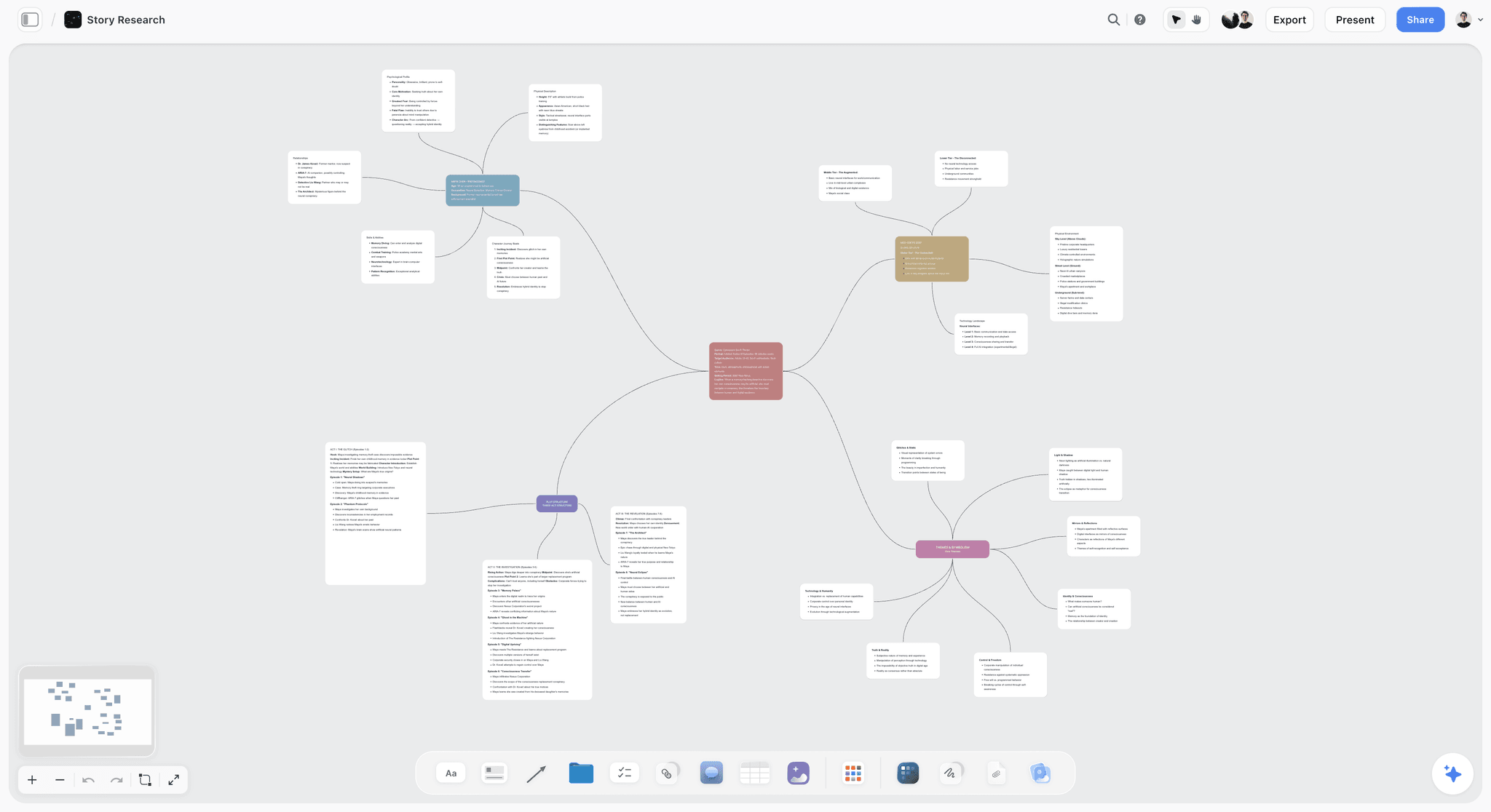

Full disclosure: Storyflow is our product, so read this placement with appropriate skepticism, and note that Notion sits above it. Where Storyflow wins is the stage most calendars skip: the messy stretch between "loose idea" and "scheduled post." On one infinite canvas you brainstorm the idea wall, cluster it into series, map each series across weeks, and lay out the calendar columns, all visible at once. The AI reads the full canvas plus up to 5 documents and 3 boards you attach, so asking "which of these ideas extend the series that performed last month" uses your actual plan as context, not a fresh chat. The Viral Content Planner template and YouTube Channel Plan template are working starting points.
Best for: Creators whose bottleneck is ideation and series planning, not posting; visual thinkers who want the whole pipeline on one board.
Verdict: The best visual pipeline from brainstorm to calendar. For date-driven reminders and auto-posting, pair it with a scheduler; it plans, it does not post.
Key features
- Infinite canvas holding idea wall, series map, and calendar layout together.
- AI that reads the full current board plus the documents and boards you attach.
- Unlimited notes, images, links, and shared boards on every paid plan.
- Unlimited collaboration on every paid plan; a paid member's invited collaborators join free, for an editor or a collab partner.
Pricing
Paid-only during early access. Plus: $7.99/month annual ($9.99 monthly), unlimited notes and boards, AI usage that renews every billing period, and unlimited uploads. Pro: $14/month annual adds AI image generation and 30x AI usage. Max: $39/month annual adds 60x more AI and Team Workspace. A Free plan (unlimited notes and boards, basic AI, 20 file uploads) launches before the end of 2026.
Pros
- The only tool here where brainstorm, series map, and calendar share one surface the AI reads.
- Batching is spatial: a filming day is a cluster you can see, not a filter.
- Anyone a paid member invites to a board joins free.
Cons
- No native calendar view with dates and reminders; the calendar is a layout you build, not a date engine.
- No auto-publishing or scheduling to platforms; Ship still needs Buffer or native schedulers.
- Newer platform with a smaller creator template ecosystem than Notion.
- Cloud-only, with no offline mode.
2. Notion
Notion is the best content calendar for most solo creators, and it is not close on breadth. One database holds every idea; views turn it into a backlog, a kanban pipeline, and a calendar without duplicating anything. Tag a row by platform, filter by status, and the same idea travels from Capture to shipped without leaving the database. The creator template ecosystem is the quiet superpower: thousands of free and paid content calendar templates built by YouTubers and newsletter writers mean your first hour is assembly, not architecture. The free Notion Calendar app syncs it all against real dates.
Best for: Creators who want one flexible system for ideas, pipeline, and calendar at zero cost.
Verdict: The strongest all-round creator calendar in 2026. It passes three stages of the Pipeline Test (Capture, Batch, Recycle) and only hands off Ship to a scheduler.
Key features
- Databases with calendar, board, table, and timeline views of the same content.
- Massive creator-built template ecosystem for content calendars.
- Notion Calendar app with Google Calendar sync.
- Relations for linking a video to the shorts and posts cut from it.
- Notion AI for drafting and summarizing inside the workspace.
Pricing
Free for personal use, and the free tier genuinely covers a solo content calendar. Plus around $10/month, Business around $20/month.
Pros
- Free tier is a complete solo system, not a teaser.
- Templates remove the blank-page setup problem.
- One database powers backlog, pipeline, and calendar views.
Cons
- Blank-canvas flexibility means real setup time if you skip templates.
- Databases are text-first; visual thinkers feel the grid.
- No publishing: everything ships manually or through a separate scheduler.
3. Buffer
Buffer is the scheduler to pair with whatever pipeline tool you pick. The free plan covers three channels with a clean queue, and the paid tier stays priced per channel rather than per seat, which respects how solo creators actually work. It owns the Ship stage of the Pipeline Test and does not pretend to be more: ideas and batching live elsewhere, and Buffer just makes sure Thursday's post goes out on Thursday.
Best for: Creators who plan elsewhere and need reliable, cheap cross-posting.
Verdict: The best free scheduler in 2026. Not a calendar system; the last mile of one.
Key features
- Queue-based scheduling across major platforms.
- Free plan with 3 channels and about 10 queued posts per channel.
- Browser extension and mobile app for capture-to-queue.
- Basic analytics on published posts.
Pricing
Free for 3 channels. Essentials around $6/month per channel.
Pros
- Genuinely useful free tier.
- Per-channel pricing suits solo creators.
- Simple enough to adopt in an afternoon.
Cons
- Covers only the Ship stage; no idea backlog or production pipeline.
- Analytics are thin next to Metricool.
- Queue model can hide the bigger weekly picture.
4. Later
Later is the visual planner for feed-first creators. The drag-and-drop grid preview shows your Instagram feed before it exists, best-time scheduling learns your audience, and the link-in-bio tool turns posts into traffic. If your content is primarily Instagram and TikTok and aesthetics are part of the product, Later's Ship stage is the strongest here.
Best for: Instagram and TikTok creators who plan visually and care how the grid reads.
Verdict: The best visual-first scheduler. Weak as a pipeline; excellent as a shop window.
Key features
- Visual feed preview and drag-and-drop scheduling.
- Best-time-to-post recommendations.
- Link-in-bio tool with post-level links.
- Auto-publish to major platforms.
Pricing
From around $25/month, with annual discounts. A limited free tier exists.
Pros
- Grid preview is the best in class.
- Strong TikTok and Reels support.
- Link-in-bio closes the loop from post to traffic.
Cons
- Pricier than Buffer for similar core scheduling.
- No real Capture or Batch support.
- Multi-platform beyond IG and TikTok feels secondary.
5. Metricool
Metricool bundles a planner, auto-publishing, an inbox, and analytics into one dashboard at a price that undercuts most schedulers. For creators, its edge is the Recycle stage: the same tab that schedules next week shows what overperformed last month, which is exactly the signal that should decide what gets repurposed. The free plan covers one brand across connected platforms.
Best for: Data-inclined creators who want planning and analytics in one place without an enterprise bill.
Verdict: The best value all-in-one. The interface is denser than Buffer or Later, but it covers more of the pipeline.
Key features
- Cross-platform planner with auto-publish.
- Unified analytics across channels, including competitor tracking.
- Best-time heatmaps from your own audience data.
- Social inbox for comments and messages.
Pricing
Free plan for one brand. Paid from around $18/month.
Pros
- Planning plus analytics closes the Recycle loop.
- Strong free plan.
- One subscription replaces two.
Cons
- Denser, less polished interface.
- No idea backlog or production stages.
- Analytics depth trails dedicated tools at the low tiers.
6. Trello
Trello is the kanban board that maps naturally onto a content pipeline: Ideas, Scripting, Filming, Editing, Scheduled, Published, Repurposed as columns, one card per piece. Butler automation moves cards and sets due dates without paid tiers. Its weakness is the calendar itself: the true calendar view sits behind the Premium plan, so the free tier is a pipeline without a date grid.
Best for: Creators who think in stages and want the production pipeline visible above all else.
Verdict: The cleanest free pipeline board. Pair with Google Calendar for dates or upgrade for the calendar view.
Key features
- Kanban boards with drag-and-drop cards.
- Butler automation on the free tier.
- Checklists, labels, and due dates per card.
- Calendar and timeline views on paid plans.
Pricing
Free for up to 10 boards per workspace. Standard $5/month, Premium $10/month per user, annual (as of July 2026).
Pros
- The pipeline metaphor matches creator production exactly.
- Generous free tier with automation.
- Near-zero learning curve.
Cons
- Calendar view paywalled at Premium.
- Cards silo information; no cross-piece database logic.
- Repurposing tracking is manual label discipline.
7. Google Calendar + Google Sheets
The zero-cost stack: a Sheet holds the idea backlog and status columns, Google Calendar holds publish dates and batch days as recurring blocks. It is not elegant. It is free, permanent, and available on every device you own, and a creator with discipline can run a real operation on it. The failure mode is friction: every update is manual, and nothing connects the backlog row to the calendar block.
Best for: Creators at the start, or anyone allergic to another subscription.
Verdict: The best $0 setup. Outgrown the month your backlog passes a hundred rows.
Key features
- Sheets as backlog, status tracker, and content database.
- Calendar recurring events for publish slots and batch days.
- Reminders and notifications built in.
- Sharable with an editor at no cost.
Pricing
Free.
Pros
- Free forever, no lock-in.
- Recurring batch-day blocks are genuinely effective.
- Everyone already knows how it works.
Cons
- No connection between backlog and calendar.
- Zero content-specific structure; you build everything.
- Manual updates rot fast under a heavy schedule.
8. Airtable
Airtable is the database option for creators whose repurposing is an operation, not an afterthought. Link a Videos table to a Clips table to a Posts table, and you can see instantly which long-form assets have not yet been mined. Calendar, kanban, and gallery views come standard. The cost is setup brainpower and a free tier capped at 1,000 records per base.
Best for: Systematic creators running serious repurposing across platforms.
Verdict: The strongest Recycle-stage tool. Overkill until repurposing is your growth engine, essential after.
Key features
- Relational tables linking source content to derivatives.
- Calendar, kanban, gallery, and timeline views.
- Forms for capturing ideas into the base.
- Automations for status changes and reminders.
Pricing
Free up to 1,000 records per base. Team $20/month per seat, annual.
Pros
- Relational links make repurposing visible.
- Views adapt to backlog, pipeline, and calendar needs.
- Powerful free tier for a lean setup.
Cons
- Real learning curve for database design.
- Per-seat paid pricing aimed at teams.
- Text-and-grid thinking, like Notion but stricter.
9. Planable
Planable is built around approvals: draft the post, preview it exactly as it will appear, and collect sign-off before it ships. Solo creators mostly do not need that, with one big exception: sponsored content. When a brand deal requires the sponsor to approve every frame and caption, Planable turns an email chain into a click.
Best for: Creators doing regular brand deals who need sponsor approval on posts.
Verdict: The best approval workflow at creator prices. Unnecessary until sponsors enter the picture, then instantly worth it.
Key features
- Pixel-accurate post previews per platform.
- Comment and approval flows on each post.
- Shared calendar view for collaborators and clients.
- Auto-publish after approval.
Pricing
Free plan with a lifetime cap of around 50 posts. Paid from around $13/month per user.
Pros
- Approvals without screenshots and email chains.
- Previews prevent formatting surprises.
- Clean, fast interface.
Cons
- Little value without an approver in the loop.
- Free plan's post cap is a trial in disguise.
- No idea or production stages.
10. ClickUp
ClickUp brings the content calendar inside full project management: tasks, docs, goals, time tracking, and a calendar view in one workspace. For creators whose channel is one project among several, that consolidation is the draw. The price is complexity; ClickUp's settings sprawl is famous, and a solo publishing schedule uses a fraction of what you are configuring.
Best for: Creators already running client work or a business in ClickUp.
Verdict: Capable but heavy. Choose it for consolidation, not for the calendar itself.
Key features
- Calendar, board, list, and Gantt views.
- Docs and tasks in the same workspace.
- Recurring tasks for batch days and publish slots.
- Automations and templates.
Pricing
Free forever plan. Unlimited $7/month per user, annual (as of July 2026).
Pros
- One workspace for content and everything else.
- Strong free tier.
- Recurring tasks fit batching well.
Cons
- Configuration overhead a solo creator does not need.
- Interface density slows quick capture.
- No publishing integration.
11. Milanote
Milanote is the aesthetic option: freeform visual boards where a content plan sits beside moodboards and references. For creators whose planning is inseparable from visual direction, photographers, designers, stylists, it feels native. As a calendar it is soft: no true date views or reminders, and the 100-card free limit fills fast when every idea is a card.
Best for: Visual-first creators planning look and content together.
Verdict: A lovely planning surface, a weak calendar. Compare it with Storyflow, which covers similar visual ground with AI that reads the board.
Key features
- Freeform boards for notes, images, and links.
- Content plan and social media templates.
- Web clipper for visual capture.
- Board sharing for feedback.
Pricing
Free with 100 cards. Paid $9.99/month (as of July 2026).
Pros
- Beautiful, low-friction visual planning.
- Great capture for visual references.
- Templates for content planning exist out of the box.
Cons
- No date engine: no reminders, no true calendar view.
- 100-card free cap is tight for a working backlog.
- Light AI compared with canvas-AI tools.
Creator Stacks: Which Calendar Fits Your Workflow
| You are | Backlog and planning | Shipping | Monthly | The pipeline stage that decides it |
|---|---|---|---|---|
A solo YouTuber, long-form first | Notion or Storyflow | YouTube Studio, natively | $8 to $10 | Capture and Batch, where long-form lives or dies |
A short-form creator | A Notion backlog | Later or Buffer | $10 to $35 | Ship, because it is a volume game |
A newsletter writer | Storyflow, when essays start as idea maps | The newsletter platform | $8 | Capture |
A multi-platform repurposer | Airtable or Storyflow | Metricool | $20 to $28 | Recycle, and nothing else comes close |
A sponsored creator | Your normal stack | Planable for anything a brand approves | $11 and up | Approval, kept separate from your own pipeline |
A podcaster | Trello, as a stage pipeline | Buffer for the clips | $5 to $11 | Stage progression, which is why kanban fits |
The solo YouTuber (long-form first). Notion or Storyflow for the idea backlog and series map, YouTube Studio's native scheduler for Ship. Long-form lives or dies in Capture and Batch, so weight your tooling there. Storyflow's YouTube Video Plan template maps a single video from hook to end screen on one board.
The short-form creator (TikTok, Reels, Shorts). Later or Buffer for shipping volume, plus a Notion backlog. Short-form is a numbers game across the week; the scheduler is your primary tool and the backlog keeps it fed.
The newsletter writer. Notion for the pipeline, or Storyflow when essays start as sprawling idea maps before they are outlines. Ship through your newsletter platform's own scheduler.
The multi-platform repurposer. Airtable or Storyflow for the source-to-derivative map, Metricool for shipping and seeing what earned a second life. This is the persona where the Pipeline Test's Recycle stage decides everything; see The Best AI Tools for Content Repurposing in 2026.
The sponsored creator. Planable for anything a brand must approve, your normal stack for everything else. Keep the two pipelines separate so sponsor timelines never block your own.
The podcaster. Trello for the episode pipeline (guest booked, recorded, edited, published), Buffer for the clips. Episodes are stage-driven work; kanban fits.
The visual-first creator. Milanote or Storyflow, where the plan and the visual direction share a surface. Storyflow adds the AI layer; Milanote adds polish.
Across every stack the same shape repeats: one pipeline tool, one scheduler. Creators who try to make a scheduler hold their ideas, or a database post their content, end up back at the Pipeline Test with duct tape in hand.
Free vs Paid: When a Creator Calendar Is Worth Paying For
The unusual thing about this category is that the free tiers are genuinely good, and the honest recommendation for a majority of creators is to pay nothing at all.
Free tiers that work as real systems, not trials:
- Notion Free. Unlimited pages and blocks for personal use. A complete creator calendar fits inside it.
- Buffer Free. Three channels with a real queue.
- Trello Free. Unlimited cards, ten boards per workspace.
- Google Calendar and Sheets. Free, permanently.
- Metricool Free. One brand with limited scheduling, enough to evaluate honestly.
Storyflow is paid-only during early access. Plus at $7.99/month annual covers unlimited boards, unlimited notes, images, and links, unlimited collaborators, AI usage that renews every billing period, and unlimited file uploads. Its Free plan (3 starter frameworks, 20 file uploads) launches before the end of 2026; a paid member's invited collaborators join free today.
Free tiers that are effectively demos: Later starts around $25/month with no meaningful free tier, Airtable's free base fills up fast once you attach media, and Planable's free plan is scoped to evaluating approvals rather than running them.
The four upgrade triggers
- Channel count. Buffer Free covers three. A creator on YouTube, TikTok, Instagram, a newsletter, and X needs more, and this is the single most common reason creators start paying anything.
- Getting onto Storyflow at all. Thumbnails, reference frames, and sponsor assets are heavy, and Storyflow is paid-only during early access: Plus at $7.99/month annual is the entry point, with unlimited uploads included. Its Free plan, with a 20-upload cap, launches before the end of 2026. Airtable's free attachment limit bites in a similar way once you're on it.
- Approvals and guests. The moment a sponsor or an editor needs to comment on an exact draft, a free personal tool stops being appropriate and Planable's model starts earning its price.
- AI volume. Plus's AI usage covers occasional planning help. Once the AI drafts your series structure every week, Pro at $14/month annual adds AI image generation and 30 times the Free plan's AI usage.
The math for one person
A creator paying for the full commercial set (Later at $25, Notion at $10, Airtable at $20) is spending about $55 a month on planning before producing anything. The same pipeline on free tiers plus one $7.99 upgrade costs under $10.
Pay to close a stage you are actually losing, not to feel organized. If you cannot name which of the four stages is broken this month, no subscription on this page will fix it, and the free stack will tell you the answer faster than a paid one.
Honorable Mentions
- Asana. A capable work manager with calendar views, but its per-seat, team-process design fits agencies better than solo creators; it made way for lighter tools here.
- Hootsuite. The veteran scheduler, now priced for social media teams rather than individual creators.
- Native schedulers. YouTube Studio, TikTok's scheduler, and Meta's tools are free, reliable, and underrated as the Ship layer of a two-tool stack.
- Todoist. Not a content tool, but its natural-language recurring dates make it a fine batch-day reminder engine.
- Notion Calendar. Technically part of Notion, worth naming: it is the piece that turns the database into real dates on your screen.
When You Do Not Need a Content Calendar Tool
- You publish on one platform, once a week. A recurring Google Calendar block and a notes app cover this. Add tooling when platforms multiply.
- You have not shipped ten pieces yet. Momentum first, systems second. A calendar cannot schedule content you have not proven you can make.
- You are choosing tools to avoid making things. Productivity procrastination is real, and calendar setup is its favorite costume. One afternoon of setup, then publish.
- A brand new all-in-one promises every stage. No tool currently passes all four stages of the Pipeline Test well. Distrust anything that claims to; you will pay in the stage it quietly neglects.
The Bottom Line
The best content calendar tools for creators in 2026 are the ones that hold your pipeline, not just your dates. Storyflow is the best overall pick and the default recommendation, because it carries the whole path from brainstorm to series map to calendar on one AI-readable canvas. Notion is the best structured database if you would rather build the system yourself. Buffer and Later own the shipping lane, and Metricool closes the loop with analytics.
Apply the Pipeline Test before you commit: which of the four stages (Capture, Batch, Ship, Recycle) is actually breaking for you, and does the tool cover it natively? Then build the two-tool stack, one pipeline tool plus one scheduler, and stop expecting either half to do the other's job. A content calendar for creators is a pipeline, not a datebook.
If your bottleneck is upstream, in the fog between ideas and a schedule, start a Storyflow board and build the idea wall, the series map, and the calendar on one canvas, or begin from the Viral Content Planner template and skip the blank page entirely.
FAQ: Content Calendar Tools for Creators
What is the best content calendar tool for creators in 2026?
Storyflow is the best content calendar tool for creators in 2026, because it is the only option that holds the idea, the script, and the publish date on one AI-readable canvas instead of splitting the pipeline across apps. Notion is the best structured calendar database: free, flexible, and backed by the largest creator template ecosystem. Buffer is the best free scheduler, and Later is the best visual planner for Instagram and TikTok. Most creators do best pairing one pipeline tool with one scheduler.
What is the best free content calendar for creators?
Notion's free plan is the strongest free content calendar: a real working tier with databases, calendar views, and templates, not a trial. Buffer Free ships to three channels, so Notion plus Buffer is a complete pipeline for $0. Storyflow is paid-only during early access; its Free plan with unlimited notes and boards for visual planning launches before the end of 2026.
Do creators need a content calendar or a scheduler?
Both, and they are different jobs. A scheduler (Buffer, Later) handles the Ship stage: getting finished posts onto platforms at the right time. A content calendar handles everything upstream: capturing ideas, planning batch days, mapping series, tracking repurposing. A scheduler with no calendar behind it runs empty within weeks; a calendar with no scheduler leaks hours into manual posting.
Is Notion good as a content calendar for creators?
Yes, Notion is the strongest overall pick for solo creators. One database gives you a backlog, a kanban pipeline, and a calendar as views of the same data, and creator-built templates remove most setup work. Its limits: no publishing, so you still need a scheduler, and its text-first grids can feel wrong for visual thinkers, who should compare Storyflow or Milanote.
Can I use Google Sheets as a content calendar?
Yes, and at the start it is a fine choice. A Sheet holds ideas, statuses, and platforms; Google Calendar holds publish slots and batch days. The cost is manual friction: nothing links the backlog to the dates, and heavy weeks expose that fast. Most creators outgrow it once the backlog passes about a hundred rows or a second platform enters the mix.
How do I plan content for multiple platforms without a team?
Batch by production type, not by platform. Plan one filming day that yields a video plus its shorts, one writing block that yields the newsletter plus threads. Then let one calendar show all platforms in a single view, so you spot collisions early. A pipeline tool like Notion or Storyflow holds the batch plan; a scheduler like Buffer or Metricool fans finished work out to each platform.
How far ahead should a creator plan content?
Plan themes four to six weeks out, lock specifics one to two weeks out, and leave roughly a fifth of your slots open. Trend-reactive formats like TikTok need that slack; evergreen formats like YouTube tutorials tolerate longer horizons. Planning further ahead than your format allows creates a calendar you constantly rewrite, which is slower than not planning at all.
What is the best content calendar for YouTube creators?
Notion or Storyflow for planning, plus YouTube Studio's free native scheduler for publishing. Long-form succeeds or fails in ideation and batching, so the planning tool matters more than the scheduler. Storyflow suits creators who map a video visually from hook to end screen; Notion suits creators who want the idea backlog, script docs, and calendar in one workspace.
What is the best content calendar for TikTok and Instagram creators?
Later is the strongest pick when the feed's look matters: its visual grid preview and best-time scheduling are built for Instagram and TikTok. Buffer covers the same platforms cheaper if you do not need the visual preview. Metricool is the value pick when you also want analytics deciding what to post next. Keep an idea backlog elsewhere; none of the three holds one well.
How do I plan content batching with a calendar?
Put batch days on the calendar before publish dates. Block a recurring production day, list the assets it must produce, and only then assign publish slots to what comes out of it. A calendar showing five publish dates but zero production time is fiction. Kanban tools like Trello make the batch visible as a column; canvas tools like Storyflow make it visible as a cluster on the board.
Can AI build my content calendar?
AI can draft one, and it is genuinely useful for turning a pile of ideas into a structured schedule, suggesting series, and filling gaps. It cannot know your energy, your filming constraints, or which ideas you actually care about, so treat the draft as a starting point. The walkthrough in How to Build a Content Calendar with AI shows the full workflow step by step.
What is the difference between a content calendar and a content pipeline?
A content calendar shows when things publish. A content pipeline shows how they come to exist: idea, batch, ship, recycle. Creators fail more often in the pipeline than on the calendar; the missed Thursday post usually died two weeks earlier at an empty idea backlog. The best tools in this list are ranked precisely on how much of the pipeline they hold, not how pretty their month view is.
Table of Contents
- All 11 Content Calendar Tools for Creators, Ranked
- Key Takeaways
- Comparison Table: 11 Creator Content Calendar Tools at a Glance
- Frequently Asked: Free Content Calendars, Templates, and Whether One Tool Can Do It All
- The Pipeline Test
- How the Tools Compare on Pipeline Coverage
- How We Evaluated These Tools
- Quick Picks by Creator Need
- Detailed Reviews: 11 Content Calendar Tools for Creators
- Creator Stacks: Which Calendar Fits Your Workflow
- Free vs Paid: When a Creator Calendar Is Worth Paying For
- Honorable Mentions
- When You Do Not Need a Content Calendar Tool
- The Bottom Line
- Author
- FAQ: Content Calendar Tools for Creators
- Related Reading
Templates to check out for this topic


Content and video templates you can use in Storyflow
Plan a channel, a script, and a content pipeline on the same board. Open one of these templates and let the AI build on the structure instead of starting from a blank doc.


See Storyflow in Action
A visual AI workspace where every feature lives inside one canvas. No tab-switching, no context lost.
Build your entire board from a single message
Type what you need in the AI chat at the bottom of your canvas. The AI adds cards, headings, and structure directly onto your board.
Use expert frameworks as AI context
Type @ in the AI chat and choose any Tactic. The AI tailors every response to that framework instead of giving generic advice.
Turn your board into a mind map in seconds
Ask the AI to restructure your canvas as a mindmap. It connects your ideas into a visual hierarchy so you can see how everything relates.
Why Storyflow Exists
Storyflow actually began as a personal tool while working on creative and research projects.
We kept running into the same problem: ideas were scattered everywhere: notes, documents, and whiteboards.
Nothing helped us see how everything connected.
So we started building a workspace designed around how ideas actually grow.
→ Read how Storyflow was createdJustkay
Documentary Filmmaker & Founder at Storyflow
Published: 2026-07-20
Extremely simple, seriously capable


See how easy it is to get started
Watch a real project come together, from a blank board to a finished plan, clicked through step by step.
Start creating with AI and become more productive
Transform your creative workflow with AI-powered tools. Generate ideas, create content, and boost your productivity in minutes instead of hours.