
Rock-steady plans for every shoot
Decide the sound
while you can still record it.
Work through dialogue, ambience, effects, and score scene by scene, and mark what has to be captured on location before the crew goes home.


Creatives working for these brands already got early access
- Red Bull
- Canon
- Artlist
- Porsche
See how easy it is to get started
Watch a real project come together, from a blank board to a finished plan, clicked through step by step.
Start from a ready-made template
Pick a board to see what you can build, then let AI fill it in. Every template is a real, editable starting point on the same infinite canvas.

Pre-Production
Pull the brief, script, shot list, and moodboard into one pre-production hub so the whole shoot is planned in one place.
What is sound design planning?
Sound design planning is deciding what an audience will hear, scene by scene, and working out which of it has to be captured rather than created. Storyflow is an AI visual workspace that plans your film's sound on one infinite canvas: dialogue, ambience, effects, and score mapped scene by scene, a list of what must be captured on location, and references pinned beside each scene. Sound planning is usually treated as a post-production activity, which is where most of the work happens but not where most of the decisions should be made. By the time you are in the mix, your options are limited to what was recorded, and the single cheapest sound in any project is the one somebody captured while the crew was already standing in the location.
The reason this matters is an asymmetry that is easy to miss. A specific ambience recorded on location takes four minutes and costs nothing. The same ambience sourced from a library afterwards costs money, rarely matches, and often quietly changes the feel of a scene. Room tone is the clearest example: thirty seconds of silence recorded in each location is the most valuable half minute of the entire shoot, and it is forgotten constantly, because nobody planned for it and there is no visible consequence on the day.
Storyflow is an AI-native infinite canvas that suits this because sound planning is a per-scene map with a shopping list falling out of it. Lay the scenes out as cards, work through each of the four layers underneath them, and mark every item as either capture on location, source from a library, create in post, or compose. What comes out is both a creative plan and a location sound checklist, and the second one is what gets handed to the recordist before the shoot rather than after.
Sound divides usefully into four layers, and planning each separately stops the mix becoming an undifferentiated wash. Dialogue is the intelligibility layer and the one everything else has to make room for. Ambience is the sense of place, which is what makes a scene feel like somewhere rather than nowhere, and it is the layer most improved by location capture. Effects covers both hard effects tied to actions on screen and foley, and it is where a scene gets its physical texture. Score is the emotional layer, and the useful discipline is planning where it is absent as deliberately as where it is present, because music that runs continuously stops meaning anything.
Ultra fast from brief to board
From a script to a sound plan and a capture list.
Map the layers per scene, then pull out what must be recorded.
01
Open a canvas
Sign up in seconds. No download. Your infinite planning canvas opens straight in the browser.
02
Lay the scenes out
Describe the project and the AI lays out a card per scene with a structure for the sound layers. Working scene by scene is what keeps the plan concrete.
03
Work through the four layers
For each scene, note the dialogue, the ambience, the effects and foley, and whether score is present or deliberately absent. Reference tracks and clips can sit right on the card.
04
Pull out the capture list
Mark every item as capture, source, create, or compose, then share the capture list with your sound recordist before the shoot so the location material actually gets recorded.
A creative plan and a capture list from the same board.
Four layers per scene, with the location requirements falling out automatically.
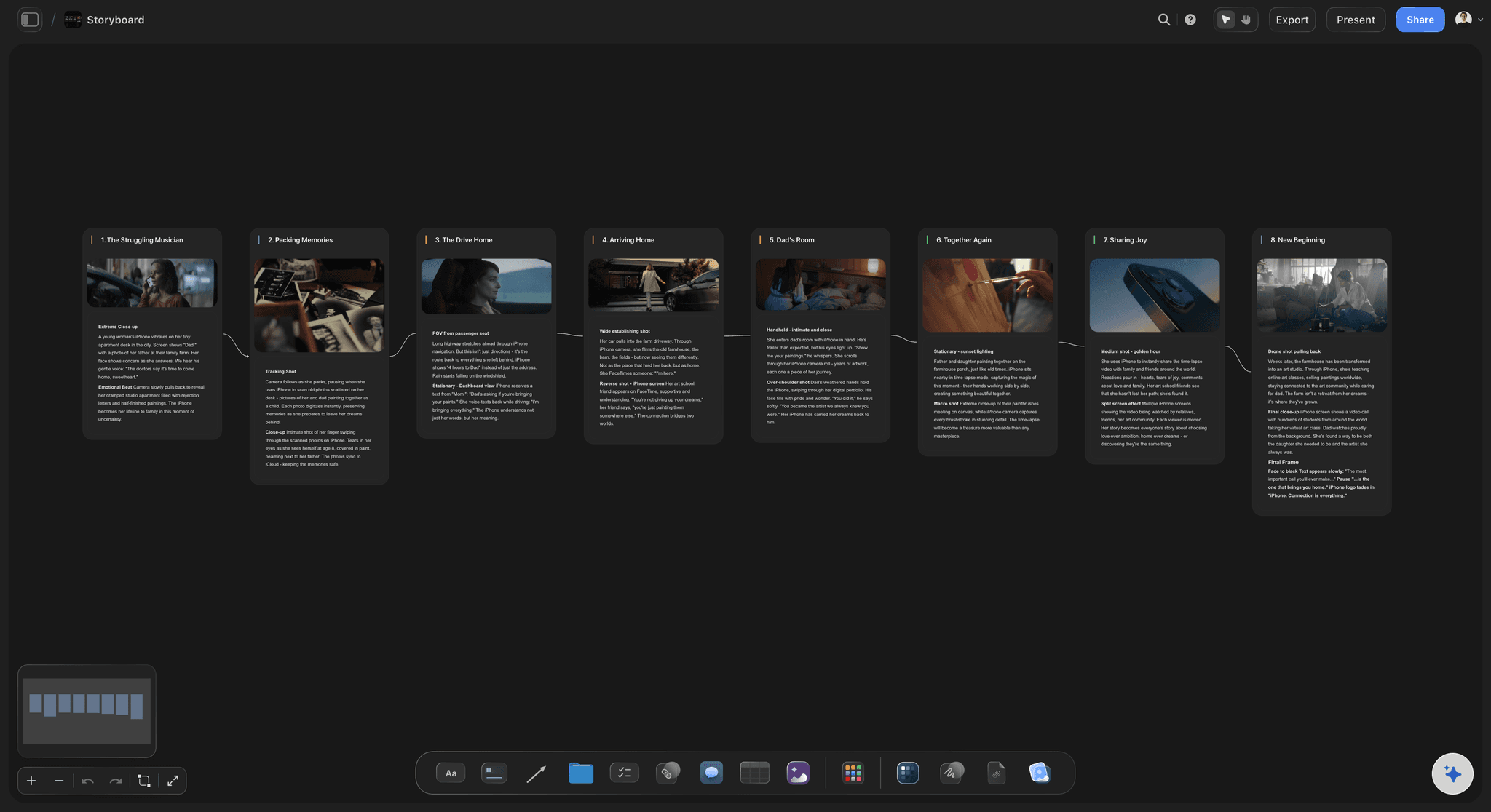
Dialogue, ambience, effects, and score per scene
Plan the layers separately
Treating sound as one undifferentiated thing is how mixes turn into a wash. Planning each layer per scene is what gives a soundtrack shape, especially the decision about where score is absent.
See the film shoot planner →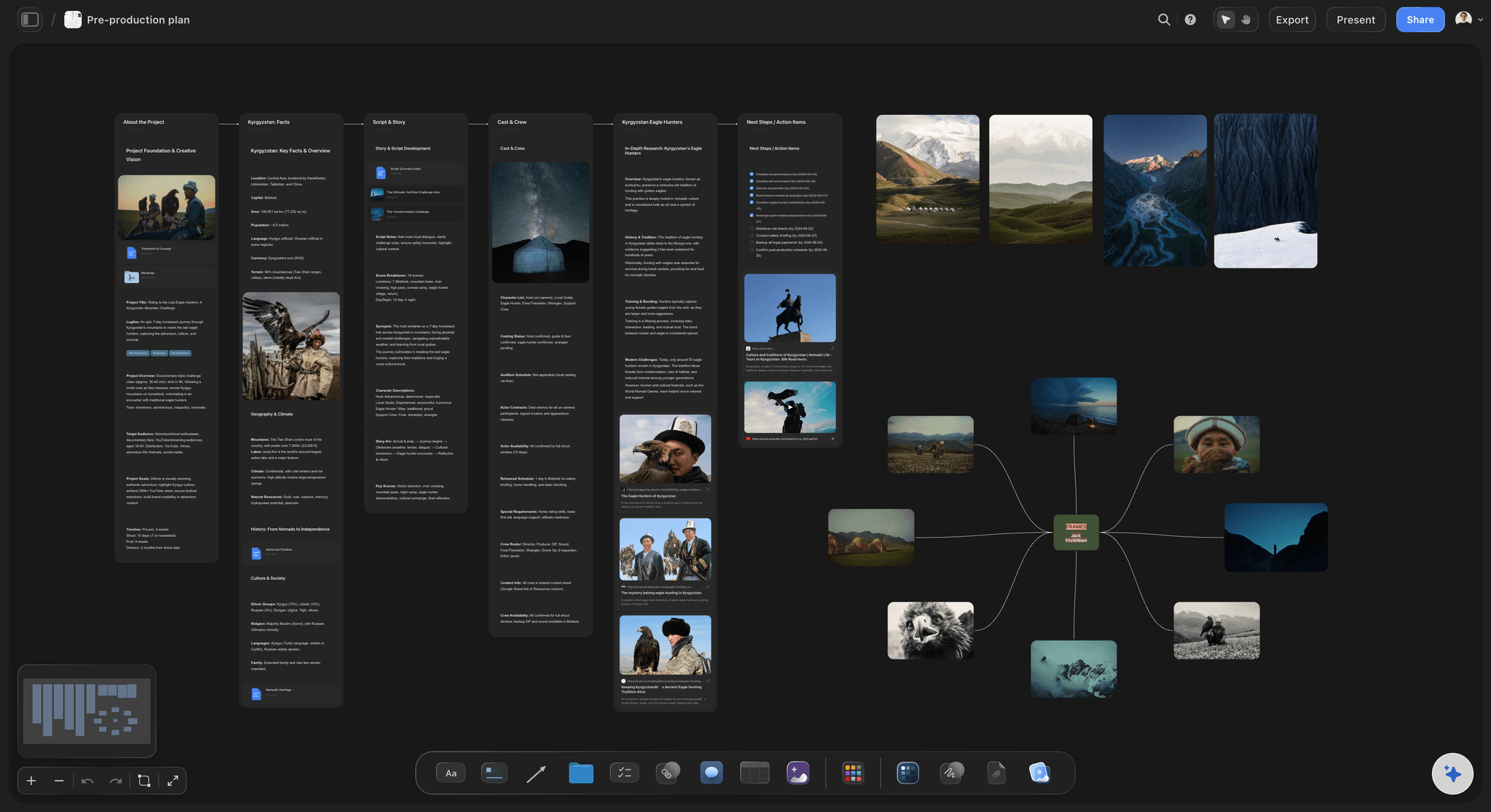
Capture, source, create, or compose on every item
Get the location list out early
Marking what has to be recorded on location turns a creative plan into a checklist the recordist can act on. The ambience captured on the day is free; the same ambience bought later rarely matches.
See the equipment list maker →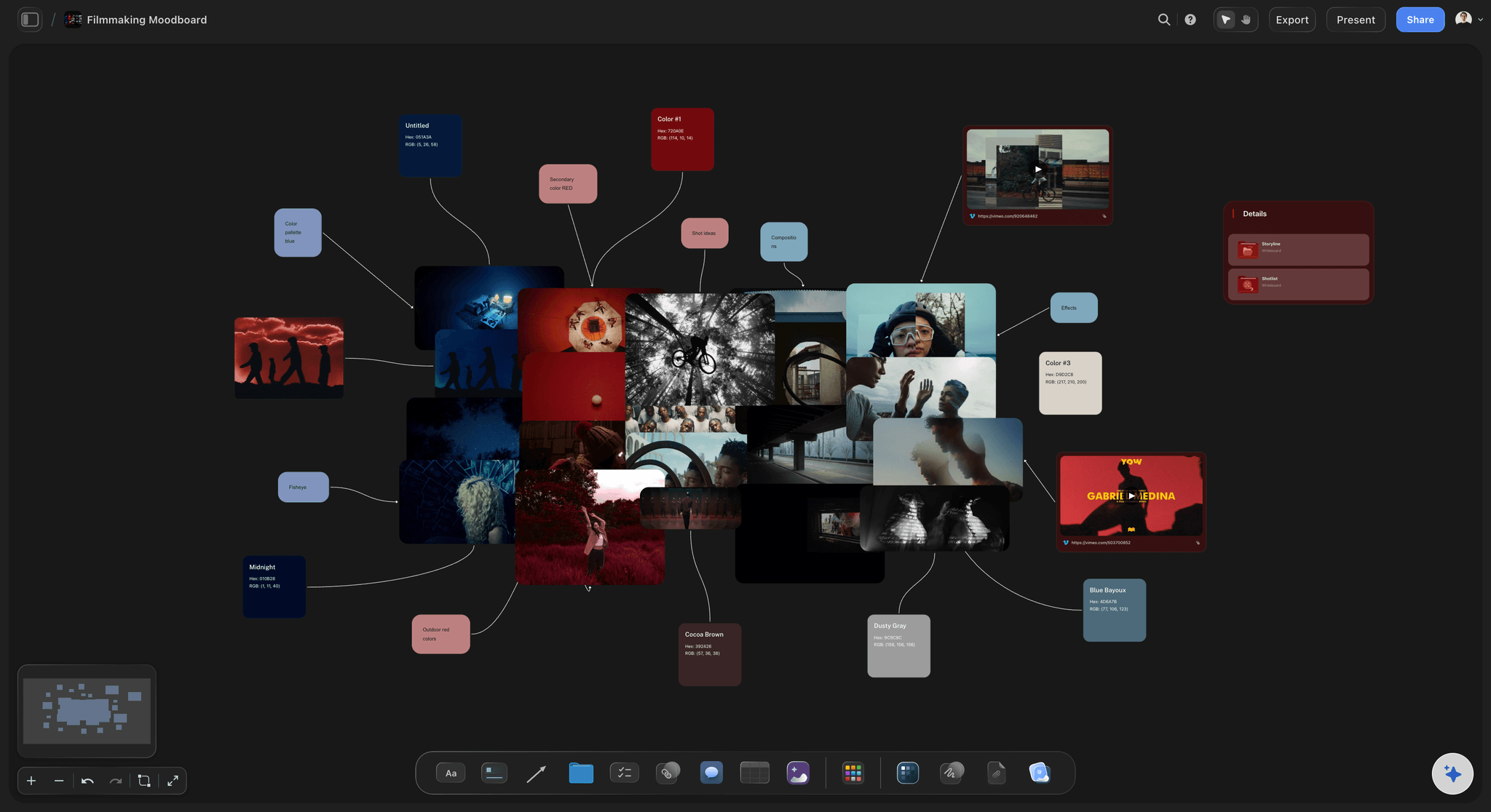
Reference tracks and clips pinned to scenes
Reference the sound, do not describe it
Drop audio references onto the board or grab a clip from a YouTube or Vimeo reference. Describing a texture in words gets you four interpretations; a reference gets you one.
See the film lookbook →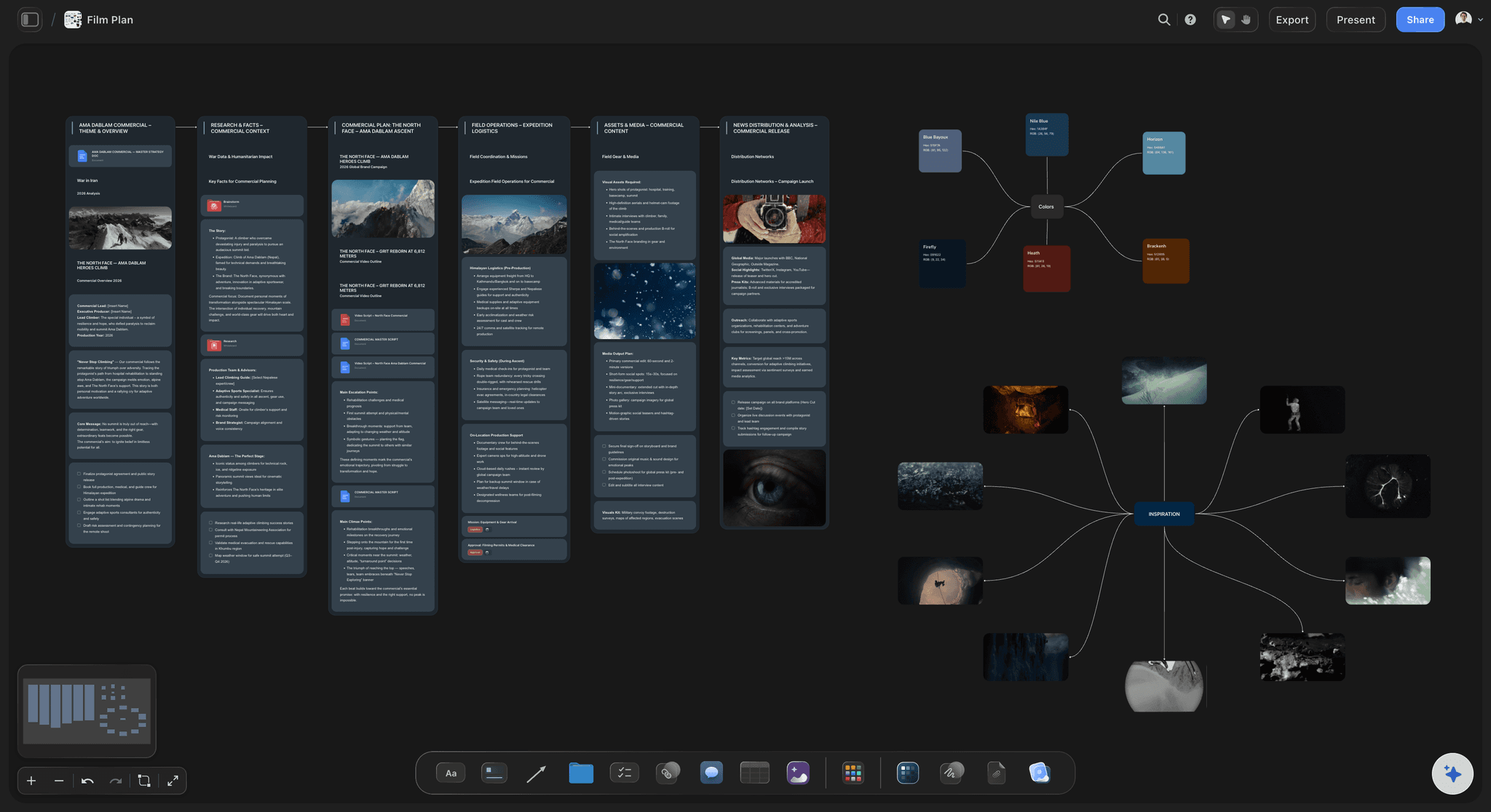
The sound plan beside the schedule and the shot list
Catch the location you only visit once
Keeping the sound plan next to the schedule shows you which locations you will never return to. Those are the ones where the room tone has to be recorded on the day or not at all.
See the shooting schedule →Unlimited boards. No object cap.
Open a canvas, lay the scenes out, and plan the layers. Storyflow is paid-only during early access, with plans from $9.99 a month, and a Free plan launches before the end of 2026.
Unlimited sound plans on an infinite canvas
Basic AI usage to generate boards from prompts
3 starter frameworks built in
Share view-only links with your sound team
Built for people with taste
More than a note that says add sound design.
The cheapest sound in any project is the one recorded while the crew was already there.
Dialogue, ambience, effects, and score
Plan each layer on its own terms
Dialogue sets the constraint: Intelligibility comes first and everything else has to make room for it. Noting where dialogue is difficult, such as an exterior near a road, tells you where you may need to plan for a wild track or a re-record.
Ambience is what makes a place: The layer that most decides whether a scene feels like somewhere. It is also the layer most improved by location capture, since a specific room recorded on the day carries detail no library track will match.
Effects and foley give physical texture: Hard effects tied to actions on screen, plus the foley that makes bodies and objects feel real. Listing them per scene is what turns a vague intention into a session you can actually book.
Score, including where it is absent: Plan the silences as deliberately as the cues. Music that runs continuously stops meaning anything, and the decision to drop score is usually more powerful than the decision to add it.
AI that can see the board you have already built
Structure the plan with AI, hear it yourself
Lay out scenes and layers from a prompt: Describe the project and the AI builds a card per scene with the four layers ready to fill in. It reads the active canvas as context, so it works with the structure already there.
It cannot hear anything: The AI has no access to audio, cannot evaluate a mix, and does not know what your location sounds like. It builds and organises the plan; the listening is entirely yours.
Draft the capture checklist: Once the layers are noted, ask it to pull out everything marked as capture into a location checklist. That extraction is exactly the sort of mechanical task worth handing over.
Audio references, clips, and documents on one canvas
Keep the reference beside the scene
Drop reference audio and clips: Drag audio and video files onto the canvas beside the scene they refer to. A texture is far easier to agree on when everyone has heard the same example.
Grab a reference from video: Pull a clip or frame from a YouTube or Vimeo reference when you want to point at how another film handled a transition or a moment of silence.
Keep licensing notes attached: Write the licence status and source next to any track you are referencing, so a temp track everyone has fallen in love with does not become a problem discovered at the mix.
Share with the recordist, composer, and editor
Get the plan to the people who capture it
View-only links: Send a link and your sound recordist reads the capture list before the shoot rather than being asked for wild tracks as everyone is packing up.
Brief the composer early: A composer who has seen where score is deliberately absent writes differently from one handed a locked cut and a deadline. Invite them onto the board so the conversation happens in prep.
Export for a spotting session: Export as an image or PDF to work from in a spotting session. Storyflow does not edit or mix audio, so the actual work happens in your DAW.
Explore templates for your project
Every template opens as a real, editable board on the infinite canvas. Pick the closest fit and make it your own.
Pre-Production
Pull the brief, script, shot list, and moodboard into one pre-production hub so the whole shoot is planned in one place.
One app instead of five
Storyflow vs your DAW, a spreadsheet, and a script margin.
Every bit of the actual audio work belongs in your DAW. Here is what planning adds.
Storyflow
Recommended
Four sound layers mapped per scene
Capture list pulled out before the shoot
References pinned beside the scene
Edit, mix, and master audio
Timecode-accurate spotting against picture
Sits beside the schedule and shot list
Your DAW
Four sound layers mapped per scene
Capture list pulled out before the shoot
References pinned beside the scene
Edit, mix, and master audio
Timecode-accurate spotting against picture
Sits beside the schedule and shot list
Spreadsheet
Four sound layers mapped per scene
Capture list pulled out before the shoot
References pinned beside the scene
Edit, mix, and master audio
Timecode-accurate spotting against picture
Sits beside the schedule and shot list
Script margin
Four sound layers mapped per scene
Capture list pulled out before the shoot
References pinned beside the scene
Edit, mix, and master audio
Timecode-accurate spotting against picture
Sits beside the schedule and shot list
What creators are saying
Join early creators getting structured workspaces and AI that remembers their projects
“Storyflow has sped up my workflow by at least 3x, which means more flow state and more projects I can actually ship. It truly changed the way me and my team create.”

Reilin Joey
Director & YouTuber
“One prompt gets me a structured board. But the tactics are my favorite. I run my YouTube scripts through them and my intros and retention got better. It's amazing.”

Justkay
YouTuber & Freelance Filmmaker
“I used to juggle five apps to plan a project. Now I describe what I am making and get boards, lists, and a schedule. All in one place.”

George
@fernwehchronicles
Sound design questions, answered.
What to plan before the shoot, what belongs in your DAW, and the half minute everyone forgets.
Work scene by scene through four layers rather than treating sound as one thing. Dialogue comes first because intelligibility constrains everything else, and noting where it will be difficult tells you where to plan a wild track. Ambience is the sense of place and is the layer most improved by recording on location. Effects covers hard effects tied to on-screen actions plus foley, which is what gives a scene physical texture. Score is the emotional layer, and you should plan where it is absent as deliberately as where it is present. Then go back through every item and mark it as capture on location, source from a library, create in post, or compose. That last pass produces a location capture list, which is the part that has to exist before the shoot rather than after it.
Storyflow does this job scene by scene on one board: you map dialogue, ambience, effects, and score for each scene, mark what has to be captured on location, and pull that capture list out before the shoot. References are pinned beside the scene, and the plan sits next to the schedule and shot list. Your DAW still edits, mixes, and masters the audio and does timecode-accurate spotting against picture, which Storyflow does not.
Room tone in every single location, without exception, and it is the thing most often skipped. Thirty seconds of the room with everyone standing still gives your editor something to patch dialogue gaps with, and no library recording of a similar room will match it. Beyond that, record wild tracks of anything specific to the place: the particular door, the specific machine, the traffic outside that window, the crowd in that room. These take a few minutes while the crew is already there and are effectively impossible to recreate afterwards. The rule of thumb is that anything unique to the location should be captured at the location, and anything generic can be sourced later.
Not during early access. Storyflow is paid-only right now, with plans starting at $9.99 a month, and a Free plan launches before the end of 2026. Anyone a paid member invites to a board joins free today, so your recordist and composer can read the plan without paying. If you want a free approach this minute, a document with a heading per scene and the four layers underneath does most of the job, and a capture list on a phone is better than no capture list.
No, and it is not attempting to. Storyflow has no audio editing, no mixing, no timeline, and no timecode-accurate spotting against picture. Everything that involves actually working with sound happens in Pro Tools, Reaper, Audition, Resolve, or whatever DAW you already use. Storyflow is the planning layer that happens before that: deciding what the piece sounds like, marking what has to be recorded on location, and getting that list to the recordist while the shoot is still ahead of you. Boards export as image or PDF only.
Diegetic sound exists in the world of the story, so the characters could hear it: dialogue, footsteps, a radio playing in the room, traffic outside. Non-diegetic sound exists only for the audience, most obviously score and narration. The distinction is worth marking on your plan because the two are sourced completely differently. Diegetic sound often benefits from being captured on location or created to match the space, while non-diegetic material is composed or licensed. It also matters creatively: moving a sound across that boundary, such as a score cue that turns out to be coming from a radio, is one of the more effective tricks available, and it only works if you planned it.
No. The AI cannot hear anything, has no access to audio, and cannot evaluate whether something sounds right. What it can do is structural: lay out a card per scene with the four layers ready to fill in, and extract everything you have marked as capture into a location checklist. That extraction is genuinely useful mechanical work. The listening, the judgment about texture, and the decision about where silence belongs are entirely yours, and this is one of the areas where the limitation is worth stating rather than working around.
Before the shoot, which is earlier than most productions do it. The reason is purely practical: once the crew has left the location, every sound specific to that place becomes either expensive or impossible. A plan made in prep changes what gets recorded, and what gets recorded determines what is possible in the mix. Sound treated as a post-production concern is sound limited to whatever happened to be captured by accident, and that is why so many low-budget films have the same generic library ambience under every interior.
Yes. Drag audio and video files onto the canvas beside the scene they refer to, or grab a clip from a YouTube or Vimeo reference. This matters because describing sound in words is unusually unreliable, and a texture that four people have each imagined differently causes real disagreement at the mix. One caution worth writing on the board itself: note the licence status of any temp track, because a temp everyone has grown attached to is a problem best discovered in prep rather than at the final mix.
Yes, and this is the highest-value share on the board. Send a view-only link and the recordist reads the capture list before the shoot in a browser with no account. The alternative, which is what usually happens, is somebody asking for wild tracks while the truck is being loaded and the light has gone, at which point you get whatever is quick rather than what the film needs. You can also export the list as a PDF for the day.
Yes, and one particular adjacency earns its place. Keeping the sound plan next to the shooting schedule shows you which locations you visit exactly once, and those are precisely the places where room tone and wild tracks have to be recorded on the day or never. It also sits naturally beside the shot list and the equipment list, so the recorder, microphones, and batteries the plan implies end up on the gear list rather than being remembered separately.
Plan the sound while the crew is still standing in the room.
Open a canvas, map the scenes, and pull out the capture list. No download.