
The calmest place to shape your story
Plan the rewrite
before you open chapter one.
Card out the draft you actually wrote, sort the notes into what changes the story and what changes a sentence, and sequence the passes so you never line-edit a chapter you are about to cut.


Creatives working for these brands already got early access
- Red Bull
- Canon
- Artlist
- Porsche
See how easy it is to get started
Watch a real project come together, from a blank board to a finished plan, clicked through step by step.
Start from a ready-made template
Pick a board to see what you can build, then let AI fill it in. Every template is a real, editable starting point on the same infinite canvas.

Story Plan
Outline your plot, characters, and world in one connected view, then expand each thread as the story grows.
What is a manuscript revision plan?
A manuscript revision plan is the decision about what you are changing and in what order, made before you start changing anything. Storyflow is an AI visual workspace that plans your rewrite on one infinite canvas: the draft carded out scene by scene, every note placed against the scene it is about, arc and subplot tracks beside the draft, and the passes in order. Most revisions do not have a plan. The usual approach is to open the draft at page one, work forward, fix whatever is noticeably wrong on each page, and arrive at the end some months later having improved a great many sentences in chapters that still do not work. Revising without a plan is not a discipline problem, it is a sequencing problem.
The sequencing matters because revision passes have a strict dependency order and the expensive direction is obvious once stated. Structural changes invalidate line edits, but line edits never invalidate structure. If you polish chapter nine and then discover chapter nine has to move to act one, be split in half, or disappear, the polishing was wasted, and worse, the effort you sank into it makes you reluctant to cut. Writers routinely keep chapters they know are wrong because those chapters are now beautifully written. Planning the order is how you avoid manufacturing that reluctance.
Storyflow is an AI-native infinite canvas that suits this because the first step of any real revision is seeing the book you actually wrote rather than the one you intended. Card out the existing draft scene by scene on the canvas and the structure becomes visible as a shape. Then bring the notes in, from your own reread, beta readers, or a developmental editor, and place each one against the scene it concerns, so feedback stops being a list of opinions and becomes a map of where the problems cluster.
A revision worth planning goes through four stages. Inventory means carding out what exists, which is unglamorous and is the step that most often changes the writer's mind about what is wrong. Triage means sorting every note into structural, scene-level, or line-level, and separating notes that identify a real problem from notes that propose a solution, because readers are reliable at the former and unreliable at the latter. Sequencing means ordering the passes so structure comes first and prose comes last. And scoping means deciding what you are not fixing in this draft, because a revision that tries to address every note at once tends to stall around chapter four and never reach the end.
Ultra fast from brief to board
From a pile of notes to a revision you can actually finish.
See the draft you wrote, triage the feedback, then decide the order.
01
Open a canvas
Sign up in seconds. No download. Your infinite planning canvas opens straight in the browser.
02
Card out the draft you have
One card per scene, in the order the reader meets them. This is the book you actually wrote, which is regularly not the book you thought you wrote.
03
Triage every note
Place each note against the scene it concerns and label it structural, scene-level, or line-level. Separate notes that identify a problem from notes that propose a solution.
04
Sequence the passes
Order the work so structure comes first and prose last, and write down what you are deliberately not fixing in this draft. Then revise against the plan rather than against the notes.
See the draft, sort the notes, order the work.
The three things that make a revision finite rather than open-ended.
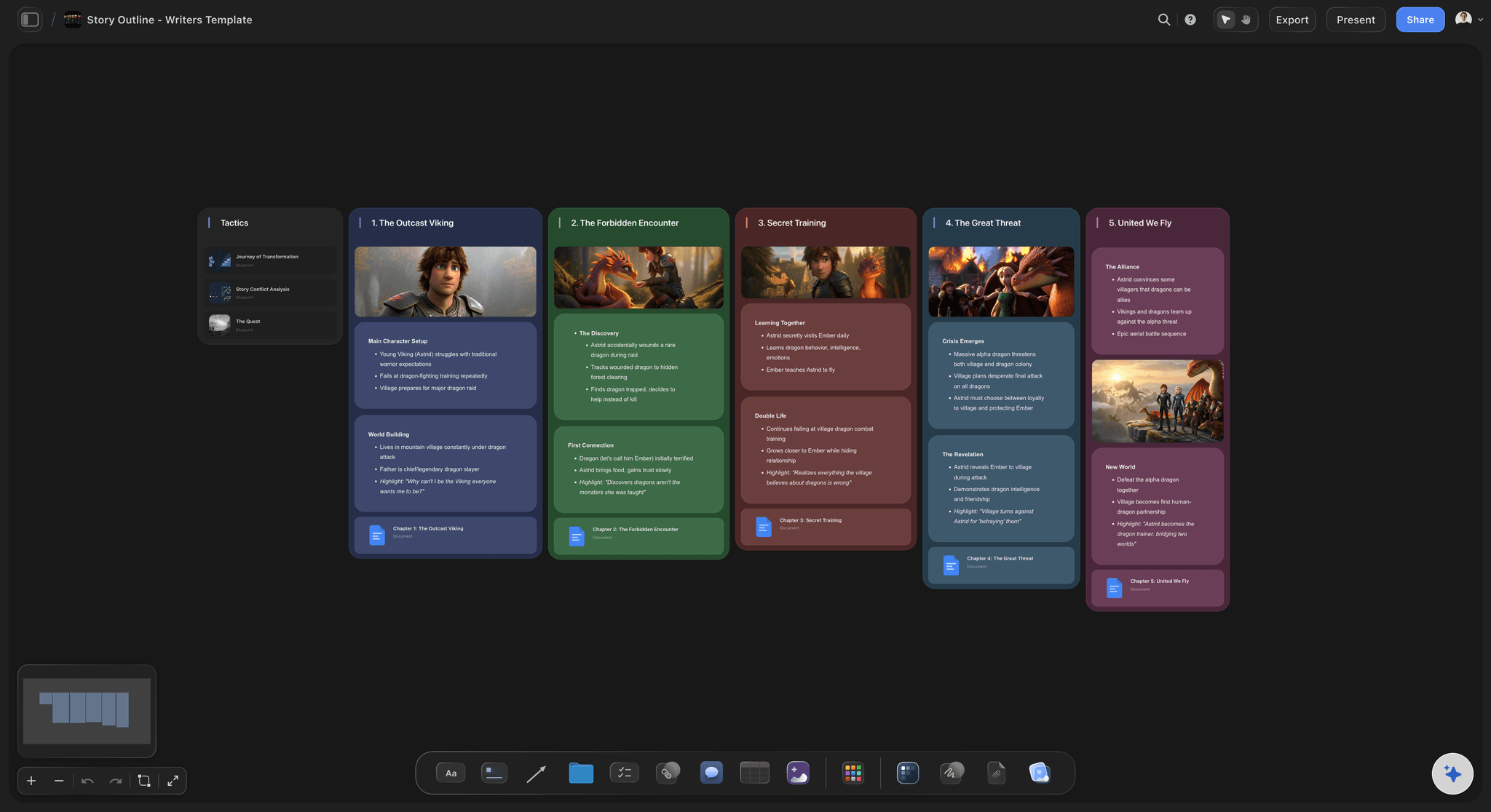
The existing draft carded out scene by scene
Look at the book you actually wrote
Card out what exists rather than what you planned, and the structure appears as a shape. This step alone regularly changes a writer's mind about what the real problem is.
See the scene card organizer →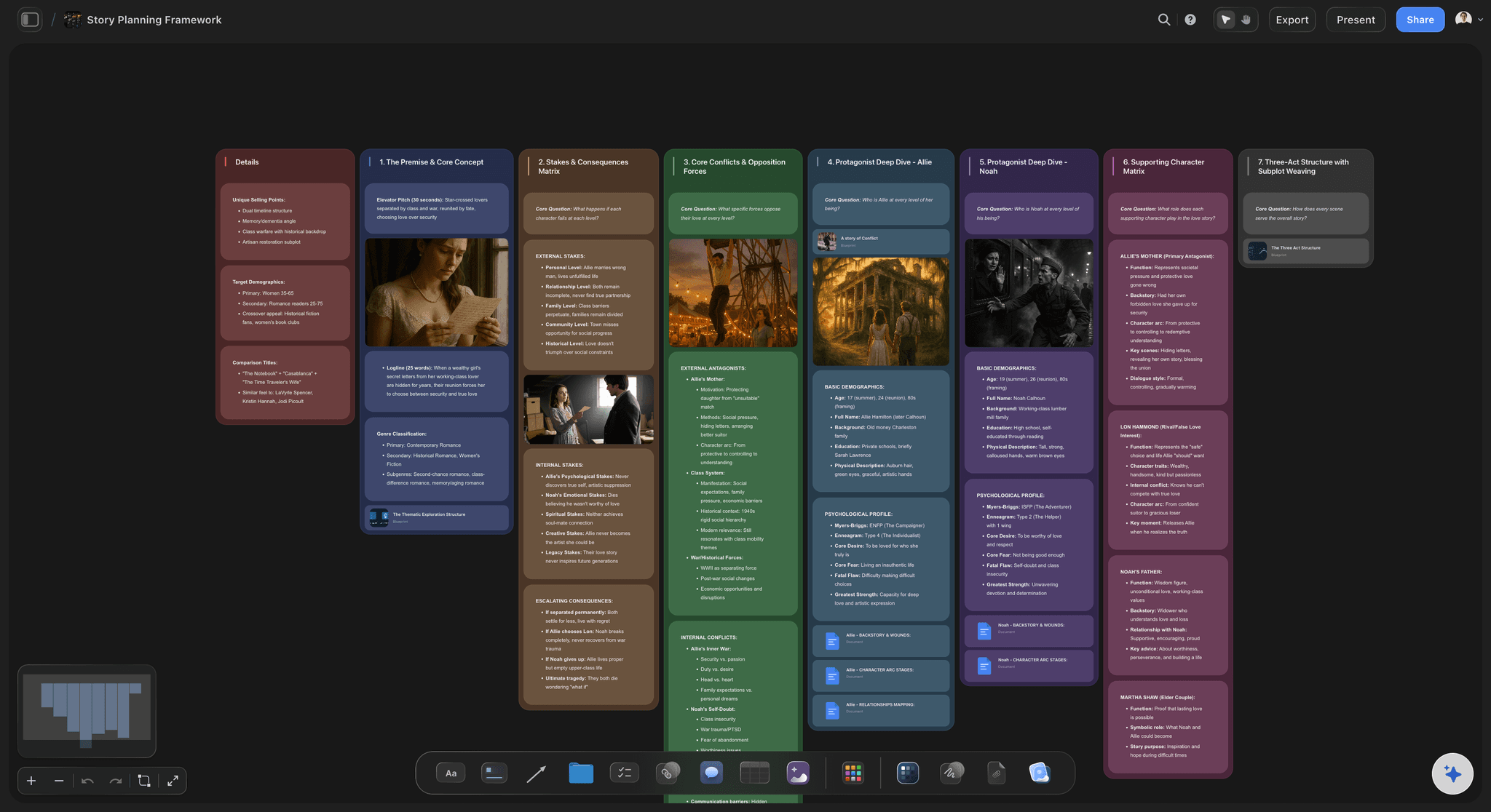
Notes placed against the scenes they concern
Find where the problems cluster
Feedback as a list is a set of opinions. Feedback placed on the structure is a map, and three readers flagging different symptoms in the same chapter is one problem rather than three.
See the writers room tool →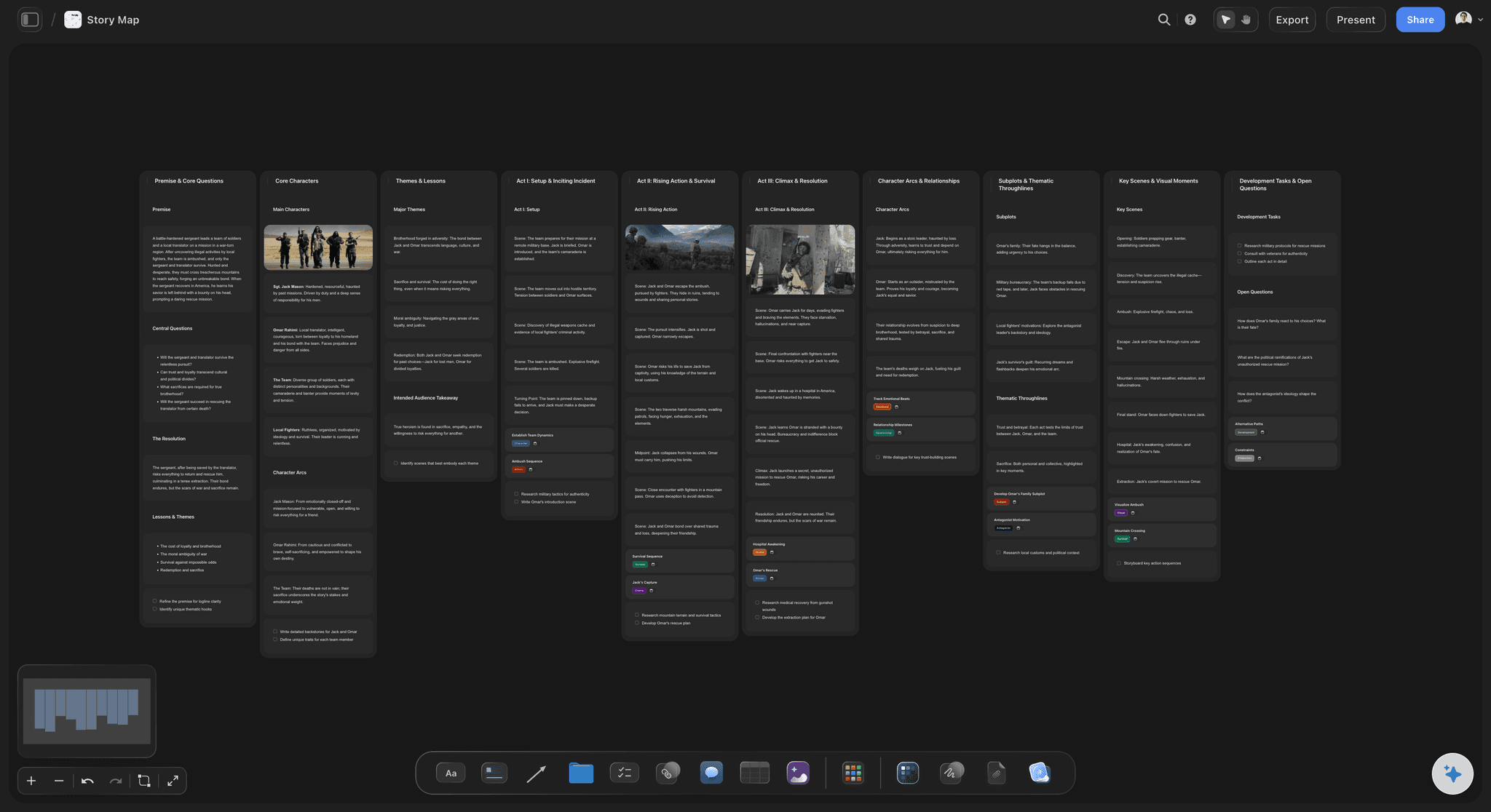
Passes sequenced structural first, prose last
Never polish a chapter you are about to cut
Structural changes invalidate line edits and never the reverse. Sequencing the passes stops you investing in prose that a later decision throws away, and stops that investment making you keep it.
See the chapter outline maker →Arcs and subplots checked against the revision
See what a cut breaks
Cutting a chapter removes whatever else it was carrying. Arc and subplot tracks running under the draft show you what a structural change quietly takes with it.
See the character arc tracker →Unlimited boards. No object cap.
Open a canvas, card out the draft, and start triaging. Storyflow is paid-only during early access, with plans from $9.99 a month, and a Free plan launches before the end of 2026.
Unlimited revision boards on an infinite canvas
Basic AI usage to generate boards from prompts
3 starter frameworks built in
Share view-only links with editors and beta readers
Built for people with taste
More than a document full of comments.
Comments in a manuscript are ordered by page. Revision has to be ordered by dependency.
Inventory, triage, sequence, and scope
Work through the revision in the right order
Inventory what exists: Card out the draft you actually wrote rather than the outline you planned from. This is the least interesting step and the one that most often changes the diagnosis.
Triage by level, and by problem versus solution: Sort notes into structural, scene-level, and line-level, then separate notes identifying a problem from notes proposing a fix. Readers are reliable about where a book loses them and unreliable about why.
Sequence by dependency: Structure first, scene work second, prose last. Any other order means throwing away work, and throwing away work you have already polished is psychologically much harder than cutting a rough chapter.
Scope what you are not fixing: Write down the notes you are deliberately deferring. A revision that tries to address everything at once stalls around chapter four, and an unbounded revision is the main way second drafts never finish.
AI that can see the board you have already built
Structure with AI, judge the book yourself
Lay out the draft structure from a prompt: Describe the manuscript and the AI builds a scene structure to fill in, reading the active canvas as context so it works with the cards you have already placed.
Ask it where notes cluster: Once feedback is on the board, the AI can point out which chapters are attracting the most notes, which is a counting observation rather than a critical one and a fair thing to delegate.
It does not rewrite your book: Storyflow is a planning canvas rather than a prose generator. Deciding which notes are right and what the book should become is the entire job of revising, and handing that over defeats the purpose.
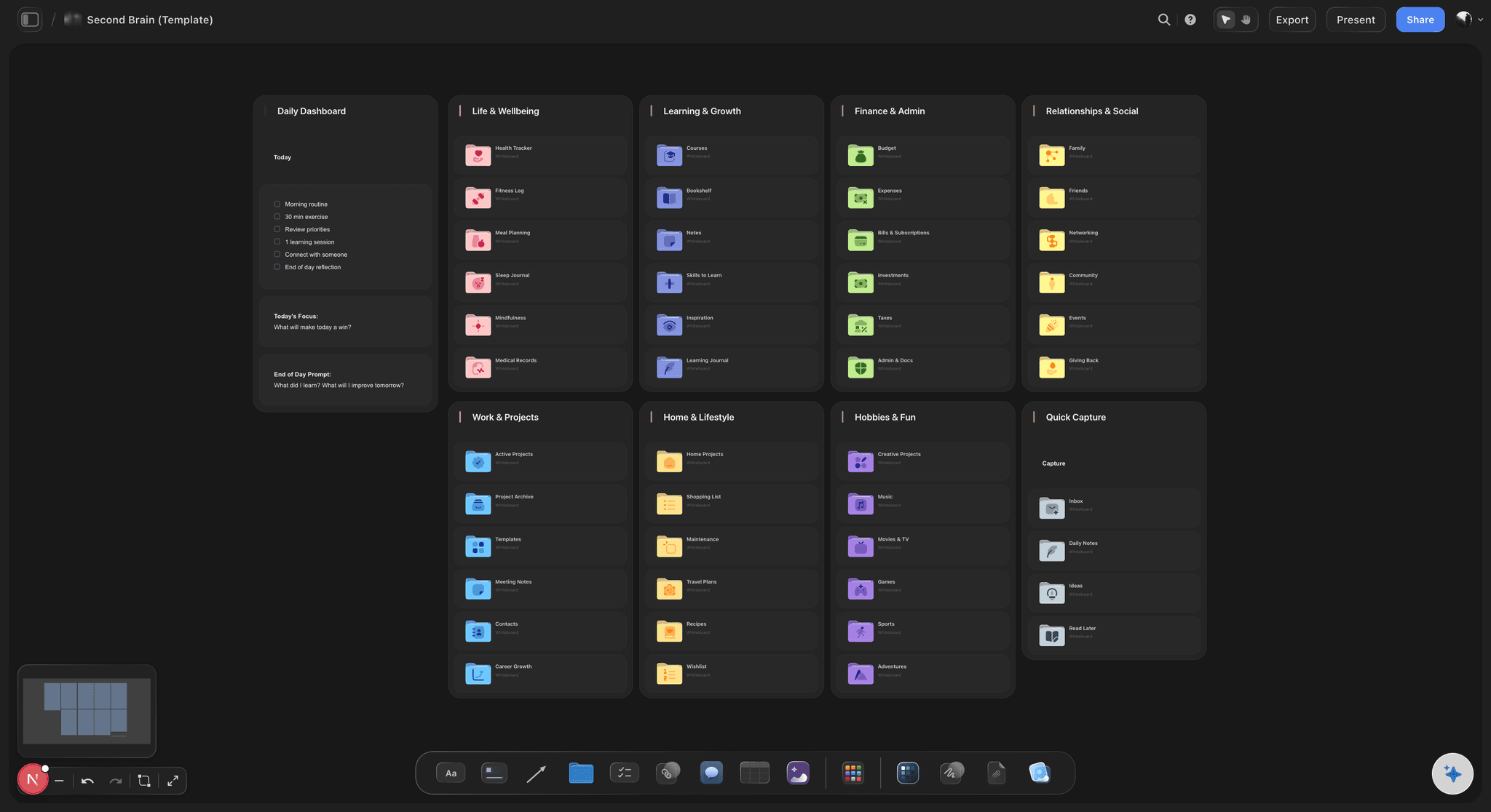
Editorial letters, beta notes, and research on one canvas
Keep every note beside the scene it is about
Drop in the editorial letter: Drag the developmental edit or beta feedback in as a PDF or text and break it into individual notes placed against the scenes they concern, so a long letter becomes actionable.
Compare readers against each other: Where several readers flag different symptoms in the same chapter, that is one structural problem rather than three unrelated complaints, and it is only visible when the notes are spatially arranged.
No object cap: A full novel carded out with hundreds of notes attached stays on one board, which is exactly the scale at which a document becomes unusable.
Share with an editor, agent, or writing group
Agree the plan before doing the work
View-only links: Send a link and your editor or agent sees the revision plan in a browser with no account. Agreeing the plan before the rewrite is far cheaper than discovering a disagreement after it.
Work through it with a partner: Invite a critique partner or co-author onto the board so triage decisions are made together. Live multi-editor presence with cursors is on the Max plan.
Export the plan: Export as an image or PDF to keep beside the manuscript while you work. Storyflow is a planning canvas, so the drafting happens in Scrivener, Word, or Google Docs.
Explore templates for your project
Every template opens as a real, editable board on the infinite canvas. Pick the closest fit and make it your own.
Story Plan
Outline your plot, characters, and world in one connected view, then expand each thread as the story grows.
One app instead of five
Storyflow vs Scrivener, comments in Word, and a spreadsheet.
Your manuscript belongs in a writing app. This is the plan that sits beside it.
Storyflow
Recommended
Whole draft visible as movable cards
Notes placed against the structure
Arc and subplot tracks beside the draft
Write and manage the manuscript itself
Tracked changes and inline comments
Share with no account to view
Scrivener
Whole draft visible as movable cards
Notes placed against the structure
Arc and subplot tracks beside the draft
Write and manage the manuscript itself
Tracked changes and inline comments
Share with no account to view
Comments in Word
Whole draft visible as movable cards
Notes placed against the structure
Arc and subplot tracks beside the draft
Write and manage the manuscript itself
Tracked changes and inline comments
Share with no account to view
Spreadsheet
Whole draft visible as movable cards
Notes placed against the structure
Arc and subplot tracks beside the draft
Write and manage the manuscript itself
Tracked changes and inline comments
Share with no account to view
What creators are saying
Join early creators getting structured workspaces and AI that remembers their projects
“Storyflow has sped up my workflow by at least 3x, which means more flow state and more projects I can actually ship. It truly changed the way me and my team create.”

Reilin Joey
Director & YouTuber
“One prompt gets me a structured board. But the tactics are my favorite. I run my YouTube scripts through them and my intros and retention got better. It's amazing.”

Justkay
YouTuber & Freelance Filmmaker
“I used to juggle five apps to plan a project. Now I describe what I am making and get boards, lists, and a schedule. All in one place.”

George
@fernwehchronicles
Revision questions, answered.
What order to revise in, how to handle beta notes, and where a writing app is better.
Work through four stages in order. Inventory means carding out the draft you actually wrote, scene by scene, which is unglamorous and is the step that most often changes your mind about what is wrong. Triage means placing every note against the scene it concerns and labelling it structural, scene-level, or line-level, while separating notes that identify a problem from notes that propose a solution. Sequencing means ordering the passes so structural work comes first and prose comes last, because structural changes invalidate line edits and never the reverse. Scoping means writing down what you are deliberately not fixing in this draft. Then you revise against the plan rather than against the notes, which is what keeps a second draft finite.
Storyflow is built for planning a rewrite: you card out the draft you actually wrote, place every editorial and beta reader note against the scene it concerns, and sequence the passes so structural work comes before line editing. Arc and subplot tracks sit beside the draft, and you can see what a cut breaks. Scrivener lets you write and manage the manuscript itself, which Storyflow does not.
Structure, then scenes, then prose, with no exceptions worth making. The reason is dependency: if you polish chapter nine and later discover it needs to move, split, or disappear, the polish is wasted. Worse, the effort makes you reluctant to cut it, and writers routinely keep chapters they know are wrong purely because those chapters are now beautifully written. Doing structure first means every sentence you eventually polish is a sentence that survives. It also feels slower and is not, because the alternative involves rewriting the same chapters two or three times.
Not during early access. Storyflow is paid-only right now, with plans starting at $9.99 a month, and a Free plan launches before the end of 2026. Anyone a paid member invites to a board joins free today, so a critique partner or editor can work through the plan with you without paying. If you want a free approach this minute, index cards and a large table do this genuinely well, and the method is what matters rather than the medium.
Separate what readers noticed from what they recommend, and weight the two very differently. Readers are reliable witnesses to their own experience: if someone says they got bored in chapter eleven, they got bored in chapter eleven, and that is data. Readers are much less reliable about causes and fixes, so the suggestion attached to that observation is usually worth less than the observation itself. Contradictions often dissolve once you place notes on the structure, because two readers proposing opposite solutions are frequently reacting to the same underlying problem from different angles. When several readers flag different symptoms in one chapter, treat it as one problem rather than three.
No. Storyflow does not manage a manuscript, has no tracked changes, no inline commenting on prose, and is not built for long-form drafting. There is a built-in document editor that works well for scene-level writing beside the board, but your manuscript should stay in Scrivener, Word, Google Docs, or wherever it already lives. Storyflow holds the plan that sits beside the manuscript: the structure, the triaged notes, and the sequence of passes. Plenty of novelists plan a revision here and execute it in their writing app with the board open as the map.
No, and it is deliberately not built to. Storyflow is a planning canvas rather than a prose generator. The AI can lay out a scene structure from your description, and once your notes are on the board it can point out which chapters are attracting the most feedback, which is a counting observation rather than a critical judgment. Deciding which notes are right, what the book should become, and what to cut is the entire substance of revising, and it is the part that has to stay with the author for the result to be worth reading.
Because the book you wrote and the book you planned are rarely the same, and revision has to address the former. Writers approach a second draft carrying a mental model built from the outline plus the intentions they held while drafting, and that model is systematically wrong in ways that are invisible from inside the manuscript. Carding out what actually exists, scene by scene in reader order, replaces the remembered book with the real one. It is common for this step alone to relocate the problem entirely, revealing that the sagging middle everyone flagged is actually caused by something structural two hundred pages earlier.
Scope it explicitly and write the exclusions down. Unbounded revisions are the main reason second drafts do not finish, because every pass surfaces new problems and there is always another thing that could be better. Decide at the start which notes this draft is addressing and which are deferred, put the deferred ones somewhere visible so they are recorded rather than nagging, and treat the plan as fixed once you begin. Stalling around chapter four is almost always a scoping failure rather than a motivation failure, and the fix is a shorter list rather than more discipline.
Yes, and it is worth doing before you start rewriting. Share a view-only link and your editor or agent sees the plan in a browser with no account, which lets them confirm you have read their notes the way they meant them. Discovering after a three month rewrite that you addressed a different problem from the one your editor identified is an expensive and entirely avoidable outcome. If you want them to contribute directly, invite them onto the board.
Yes, and this is one of the better arguments for planning a revision on a canvas. Run arc and subplot tracks underneath the carded draft, and when you mark a chapter for cutting you can see immediately what else it was carrying: the only scene where a subplot advances, the moment a character's belief breaks, the setup for a payoff four chapters later. Structural cuts almost always remove something load-bearing, and finding out on a board is considerably cheaper than finding out in draft three.
Decide what the rewrite is before you start it.
Open a canvas, card out the draft, and sequence the passes. No download.