
STORYFLOW FOR TRAVEL BLOGGERS
Travel content is a logistics problem
wearing a creative hat.
Storyflow holds the whole job on one canvas: the destination research, the angle nobody has covered yet, the trip plan that has to produce content and not just be a holiday, the shot list you make before you fly, and the three months of posts, videos, and newsletters that come out of two weeks on the road. It books nothing, edits nothing, and publishes nothing. Paid-only during early access, with a free plan launching before the end of 2026.
Plan the trip and the backlog
No booking, no editing, no publishing
Free plan in late 2026

Used by creative professionals at:
Artlist
Pixar
Nike
Red Bull
The North Face
Porsche
Start from a ready-made template
Pick a board to see what you can build, then let AI fill it in. Every template is a real, editable starting point on the same infinite canvas.
YouTube Plan
Plan a video from hook to outline to shot list, with references and thumbnail ideas sitting right beside it.
What does travel blogging actually involve?
Travel blogging is a logistics job that produces creative output, and the creative part is the smaller half. Before anything gets written you have to research a destination properly, find an angle that has not already been published a thousand times, build a trip that produces usable content instead of just being a nice holiday, write a shot list you can actually execute because you cannot fly back for a missing photo, capture on the road with bad wifi and a memory card that fills up on day four, and then survive the backlog when one two week trip turns into three months of posts, videos, and newsletters that all need editing and sequencing. Storyflow is the canvas that holds all of that in one place.
The angle problem is the one nobody warns you about. Forty eight hours in Lisbon has been written a thousand times, and so has the top ten beaches list, the digital nomad guide, and the where to eat roundup. Finding the piece that has not been made means reading what already exists, spotting the gap, and holding a specific idea steady from the research stage all the way to the edit six weeks later. On a canvas you can pin the twelve articles you found, cluster them by what they already cover, and put your angle card in the empty space between them so the gap is literally visible. When you get back and the footage is overwhelming, that card is what stops the piece drifting back into a generic guide.
The trip itself is where the planning either pays off or does not exist. A content trip has a route, a set of locations, a golden hour window for each one, a list of things you have to film, a list of things you have to photograph, and a set of interviews or bookings that only happen once. Put the route on the canvas as a sequence of day clusters, hang the shot list under each location, and note the practical constraints beside them: the museum that bans tripods, the viewpoint that faces east so it only works at sunrise, the ferry that runs twice a day. You are not building a travel itinerary. You are building a production schedule that happens to move through a country.
In practice the job runs through six named stages, and Storyflow is built to hold every one of them on a single canvas: destination research and the angle you are claiming, the trip plan with its route and constraints, the shot list you finalise before you fly, capture and field notes on the road, the edit and sequencing pass where a fortnight of material becomes a running order, and the publishing backlog and calendar where every post, video, newsletter, and sponsor deliverable gets a date.
HOW IT WORKS
From a destination idea to a published backlog in four steps.
Start from a blank canvas or a single prompt. Booking, editing, and publishing stay in the tools that already do them.
01
Open a board for the trip
Start in the browser with a Storyflow account. One board per trip, with room for the research, the plan, and every piece of content that will come out of it later.
02
Research the destination and claim an angle
Pin the articles, guides, and videos that already exist, cluster them by what they cover, and write your angle in the gap between them so the idea is specific before you spend money on flights.
03
Build the route and the shot list
Lay the trip out day by day, hang the must-get shots under each location with their light windows and access constraints, and mark the ones that only happen once.
04
Come home and sequence the backlog
Turn the captured material into a running order of posts, videos, and newsletters, put each one on a date, and share the board view-only with an editor or a brand contact.
The four hardest parts of the job, on one canvas.
Research and angle, the trip plan, the shot list, and the backlog that arrives when you get home.
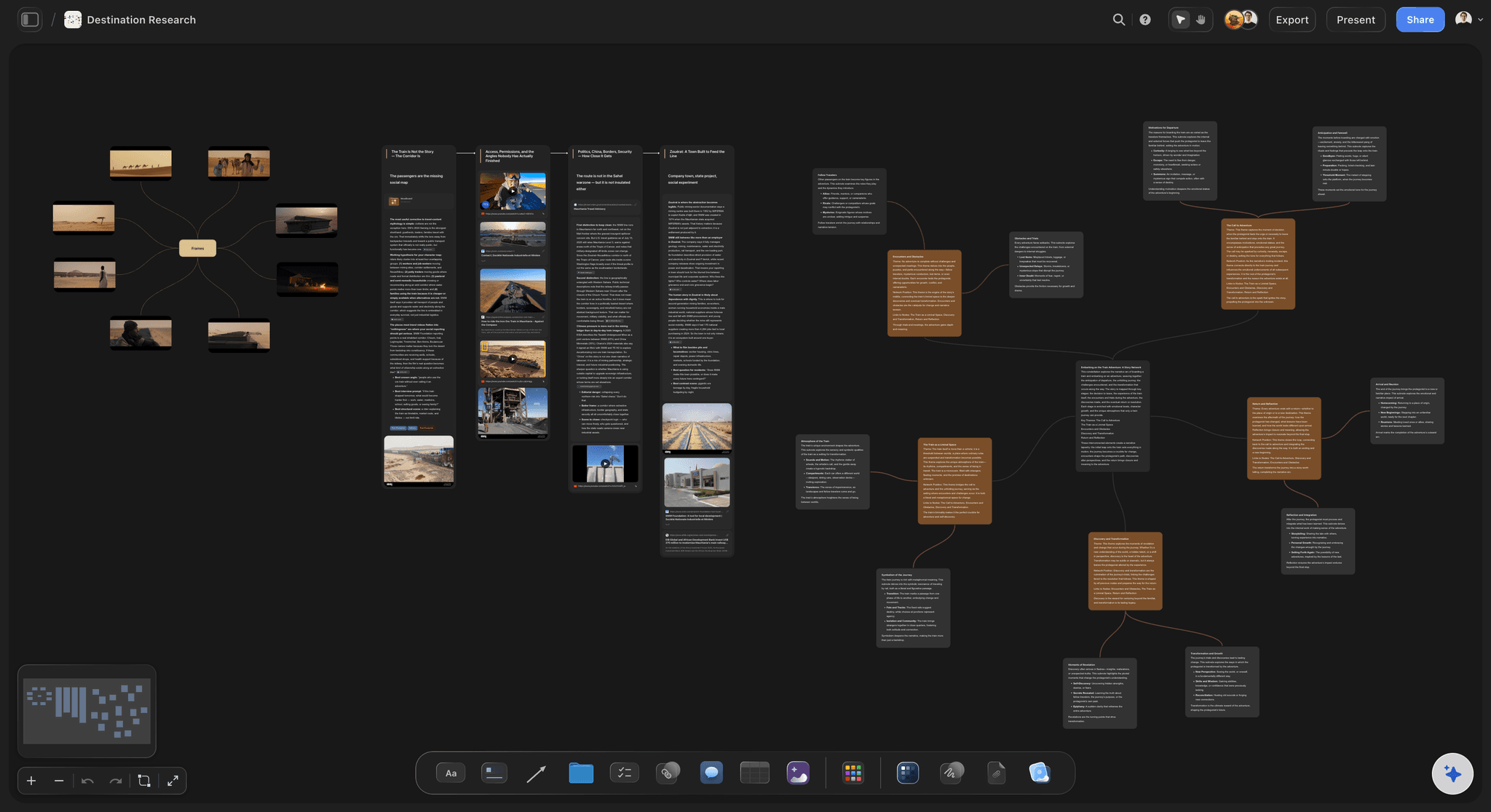
Find the piece nobody has made
Destination research that surfaces the gap
Pin the guides, videos, and posts that already exist for a place, group them by what they actually cover, and put your angle card in the empty space. The research and the idea stay on the same board instead of in a browser with forty tabs.
See the idea generator →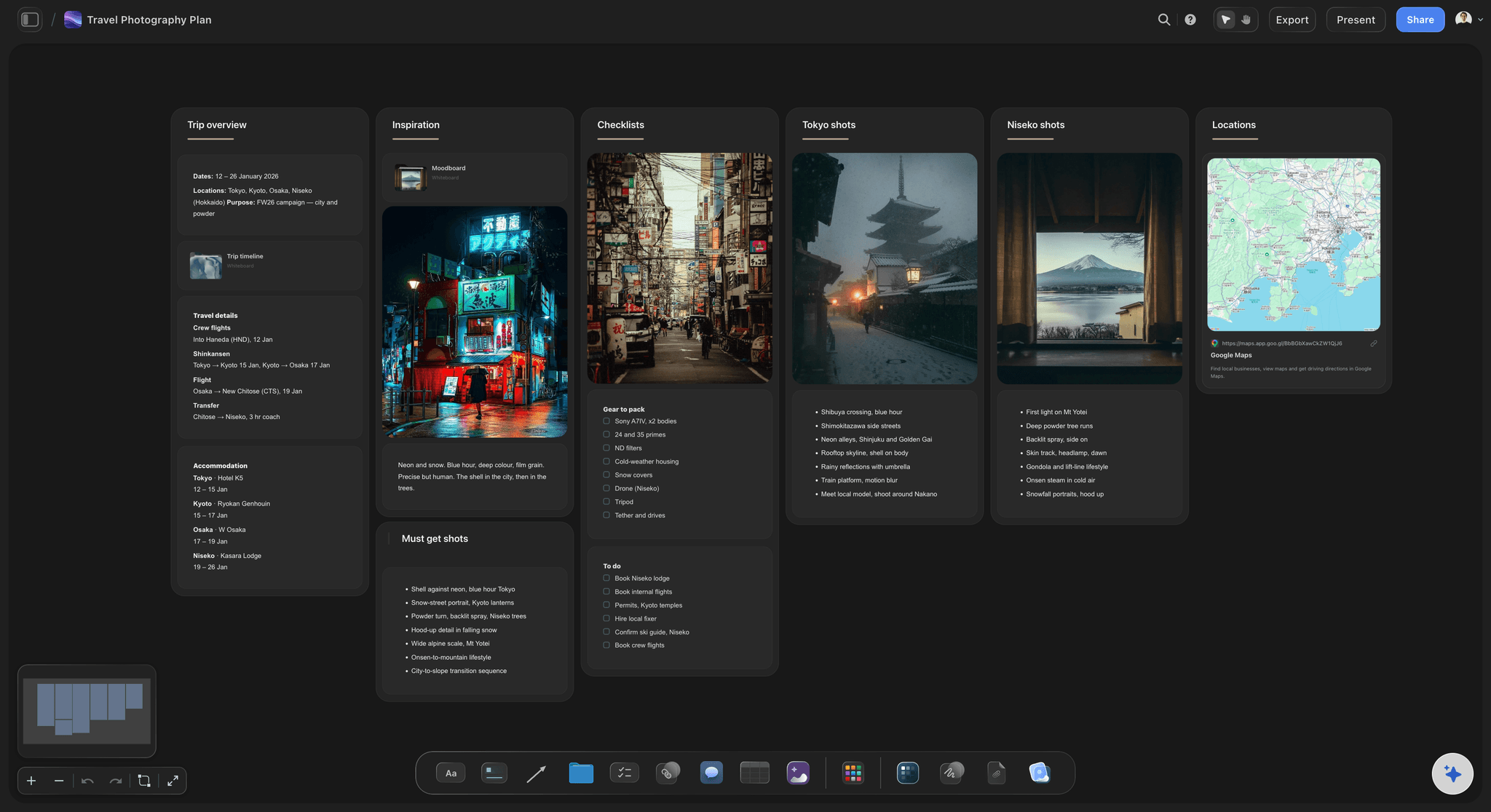
A trip that has to produce content
The route, the locations, and the constraints
Lay the days out in order, hang each location under its day, and note the practical reality beside it: the sunrise-only viewpoint, the tripod ban, the ferry that runs twice. A production schedule that happens to move through a country.
See the content planning tool →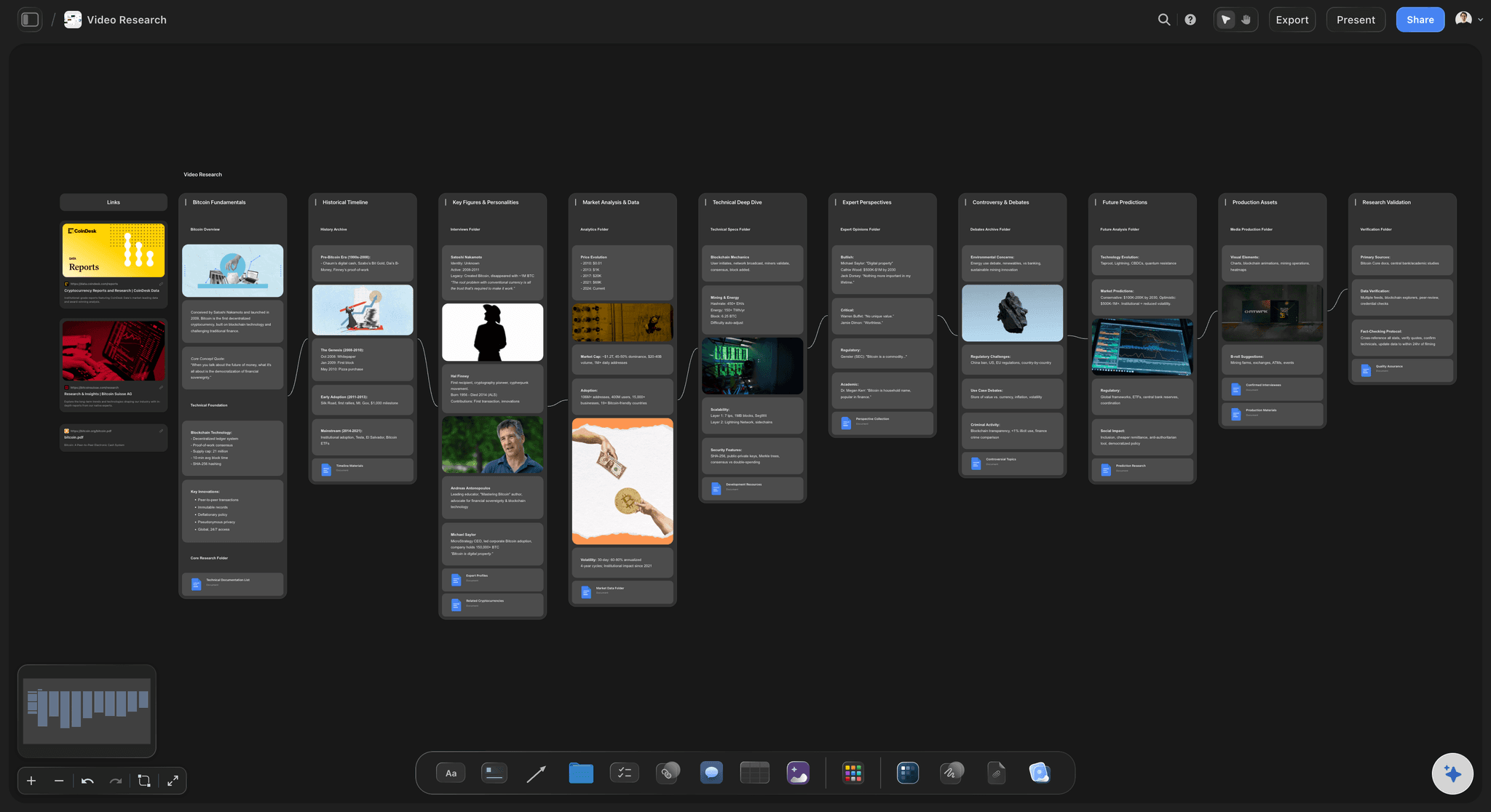
You cannot fly back for it
A shot list you finish before you leave
Write the must-get shots as cards under each location, with reference images beside them so you know what you are trying to match. Tick them off on a phone in the field and the gaps are obvious while you are still in the country.
See photoshoot planning →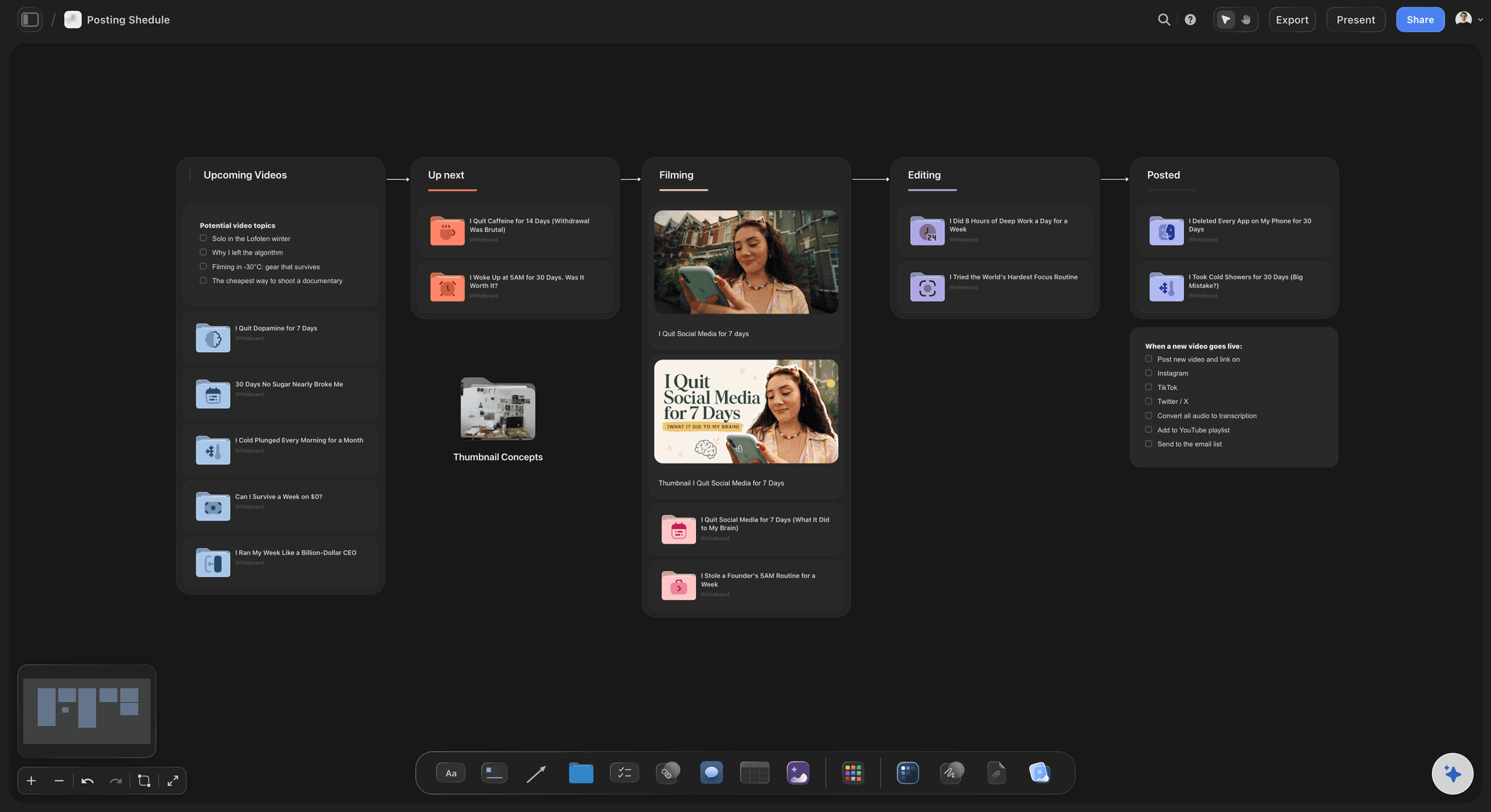
Two weeks in, three months out
The backlog, sequenced and dated
One trip becomes a dozen posts, several videos, a newsletter run, and a month of social. Put every piece on the board, order it so the timely things go first, and give each one a date you can defend to a sponsor.
See the editorial calendar →A free plan is coming. No object cap on paid plans.
Open a board and start with the destination research. Storyflow is paid-only during early access, with a free plan launching before the end of 2026, and every plan has no object cap and no time limit, so a two week trip with four hundred reference images stays on one board.
Unlimited trip, research, shot list, and backlog boards on an infinite canvas
Basic AI usage to draft research boards, angle lists, and shot lists
Attach images, PDFs, video, and links, plus 20 file uploads
Share view-only with an editor or a brand contact, or invite collaborators free
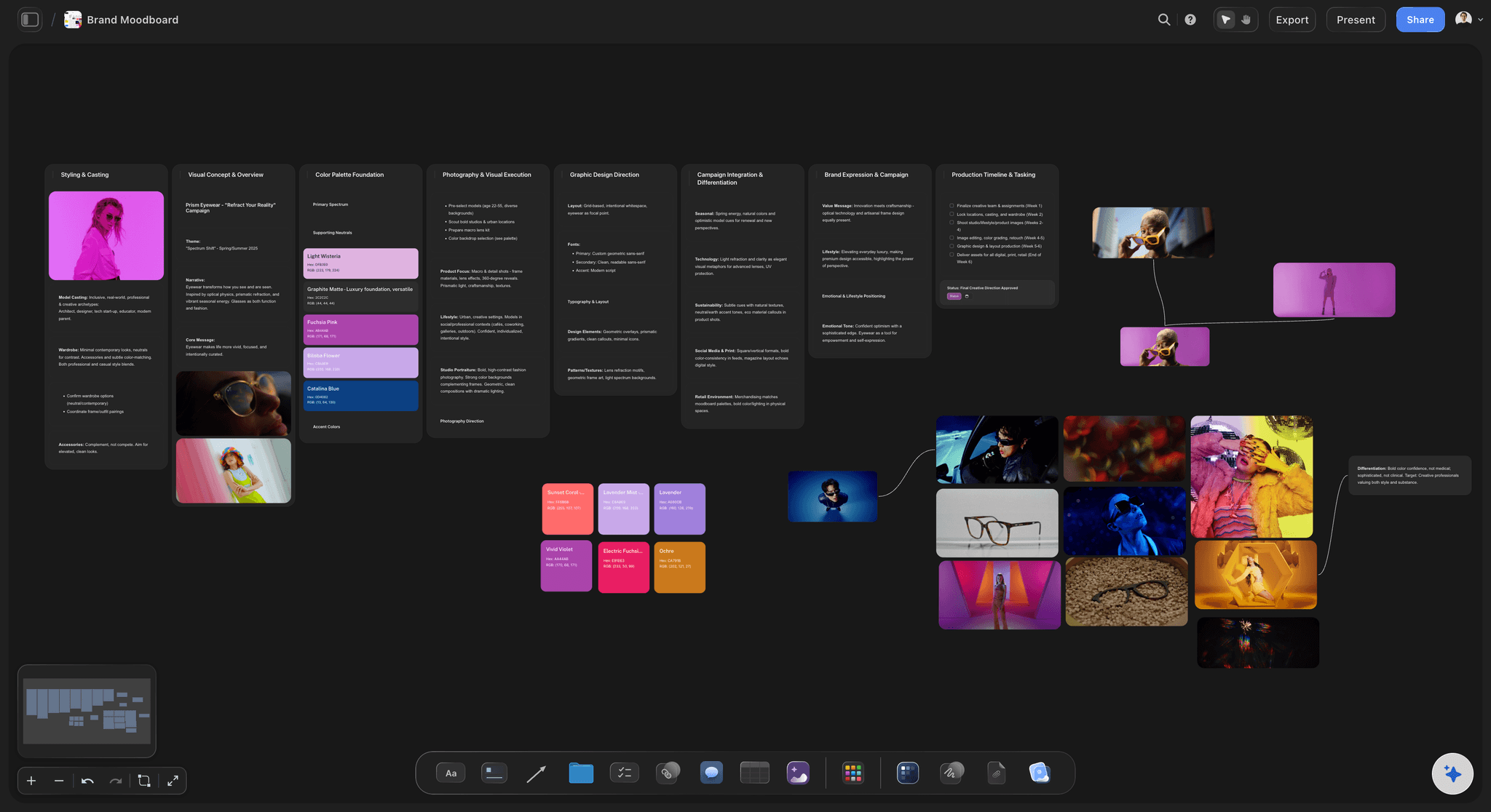
THE WHOLE TRIP, END TO END
Built for the part of travel blogging that happens before and after the trip.
Research the place, claim the angle, plan the route, execute the shot list, and get through the backlog without losing the idea you started with.
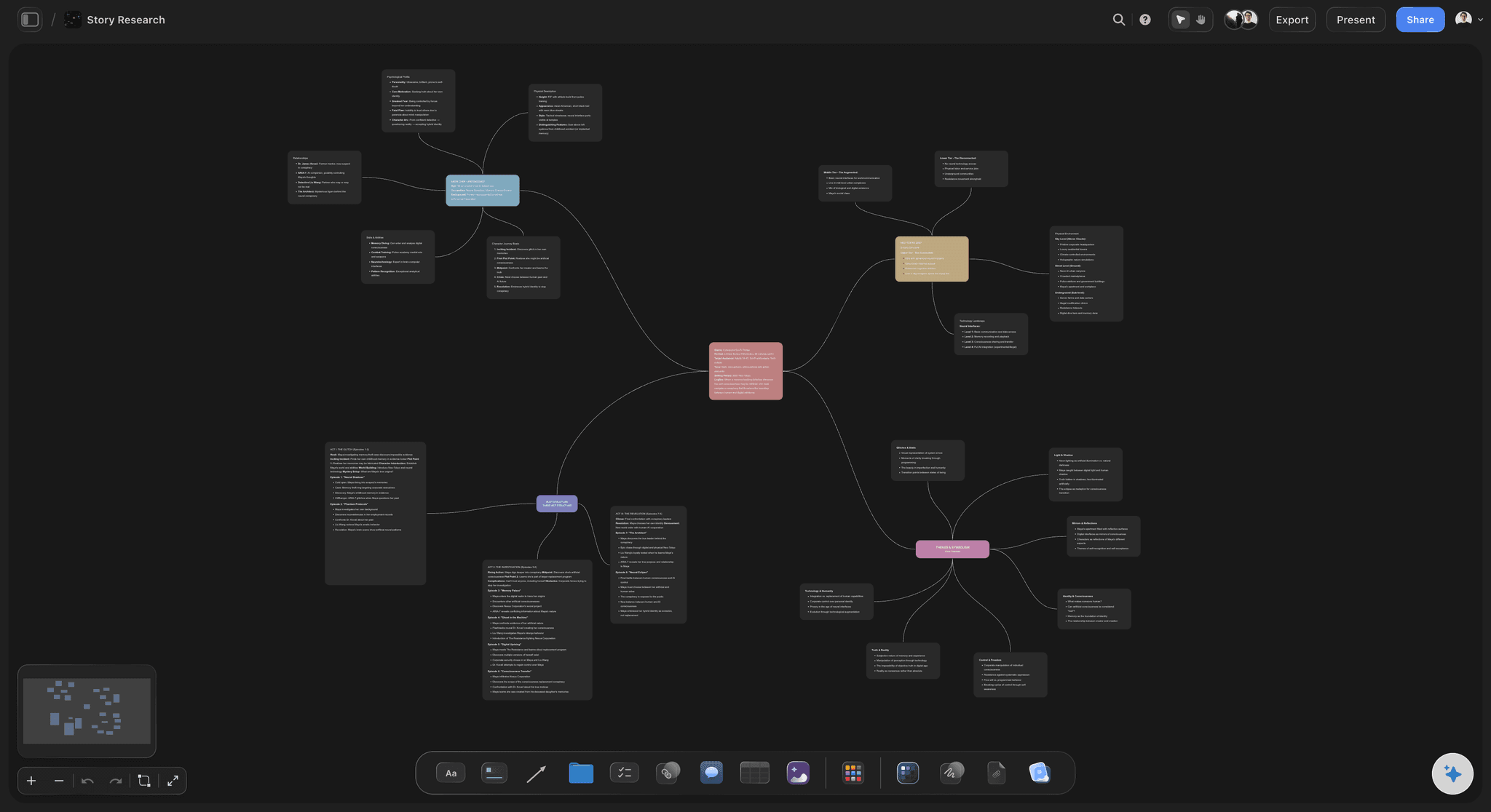
Research and the angle
Prove the idea is new before you book anything
Everything that already exists, in one view: Drop the guides, the ranking posts, and the videos onto the board as cards with their links attached, then cluster them by what they actually cover so the saturated topics are visible as a wall and the gap is visible as a hole.
Write the angle as a card, not a note in your head: Put the specific claim on the canvas next to the evidence that nobody has made it yet. Six weeks later, mid-edit, that card is what stops the piece drifting back into another generic city guide.
Pull frames from destination videos: Grab stills from a YouTube or Vimeo video of a place when you need to see how a location reads on camera, and set the frame beside the shot you are planning to match.
AI drafts the starting research board: Describe the destination and the kind of piece you want, and the AI lays out a starting board of research headings, angle options, and shot categories as real cards you rewrite, reading your existing canvas as context.
The trip plan
A route that produces content, not just a nice holiday
Days as clusters, locations underneath: Lay the trip out as a sequence of day clusters with each location hanging under the day it belongs to, so the sequencing problem of getting from a sunrise viewpoint to an afternoon interview is something you look at rather than something you discover.
Constraints beside the location, not in a separate doc: Note the light window, the access restriction, the tripod ban, the ferry timetable, and the entry fee on the card for the place they affect, because that is the only place you will look for them at six in the morning.
Mark what only happens once: Flag the interview, the festival day, the guided access, and the single sunrise you get at a given spot, so the irreplaceable items are visually separate from the things you can retry tomorrow.
On the road
Capture notes when the wifi is bad and the card is full
Open the board on a phone in the field: It runs in the browser, so you can pull the shot list up on a phone at a viewpoint, tick off what you got, and add the shot you did not plan for while you are still standing there.
Keep field notes with the location: The name of the person you spoke to, the price you paid, the exact turning, the thing that went wrong. Write it on the location card the same day, because none of it survives two weeks and a flight home.
Record what you missed while you can still get it: Mark the shots you did not capture as you go. A gap you spot on day five is a detour. A gap you spot in the edit is a hole in the piece and a flight you are not taking.
The backlog
Two weeks of travel, three months of publishing
Every piece the trip owes you, on one board: List the blog posts, the long video, the shorts, the newsletter issues, and the social sets as cards, then group them by the material they draw on so you can see which ones are already covered and which need a shot you never got.
Sequence for season, not for order of travel: Publishing a ski piece in July helps nobody. Order the backlog against the season each piece sells into, hold the rest, and let the board show you the gaps you will need another trip to fill.
Sponsor deliverables with their real deadlines: A sponsored trip is a contract. Put each deliverable on the board with the date it is due and the format it has to be in, sitting beside the material it will be cut from, so nothing is discovered late.
Share it view-only with a brand or an editor: Send a link and a brand contact or an editor opens the plan in a browser with no account and comments in place, which is a far easier conversation than a status email.
Explore templates for your project
Every template opens as a real, editable board on the infinite canvas. Pick the closest fit and make it your own.
YouTube Plan
Plan a video from hook to outline to shot list, with references and thumbnail ideas sitting right beside it.
COMPARED
How Storyflow compares for travel content planning.
This table is about planning and sequencing travel content. It is not about booking, editing, publishing, or analytics, none of which Storyflow does at all.
Storyflow
Recommended
AI drafts a research and shot-list board from one destination brief
Infinite canvas holding route, shot list, and backlog side by side
Pull reference frames from YouTube and Vimeo destination videos
Works offline on a plane or with no signal
Structured database with filters for affiliate links and deliverables
Free plan available today
Notion
AI drafts a research and shot-list board from one destination brief
Infinite canvas holding route, shot list, and backlog side by side
Pull reference frames from YouTube and Vimeo destination videos
Works offline on a plane or with no signal
Structured database with filters for affiliate links and deliverables
Free plan available today
Trello
AI drafts a research and shot-list board from one destination brief
Infinite canvas holding route, shot list, and backlog side by side
Pull reference frames from YouTube and Vimeo destination videos
Works offline on a plane or with no signal
Structured database with filters for affiliate links and deliverables
Free plan available today
Google Docs
AI drafts a research and shot-list board from one destination brief
Infinite canvas holding route, shot list, and backlog side by side
Pull reference frames from YouTube and Vimeo destination videos
Works offline on a plane or with no signal
Structured database with filters for affiliate links and deliverables
Free plan available today
What creators are saying
Join early creators getting structured workspaces and AI that remembers their projects
“Storyflow has sped up my workflow by at least 3x, which means more flow state and more projects I can actually ship. It truly changed the way me and my team create.”

Reilin Joey
Director & YouTuber
“One prompt gets me a structured board. But the tactics are my favorite. I run my YouTube scripts through them and my intros and retention got better. It's amazing.”

Justkay
YouTuber & Freelance Filmmaker
“I used to juggle five apps to plan a project. Now I describe what I am making and get boards, lists, and a schedule. All in one place.”

George
@fernwehchronicles
Travel blogger questions, answered.
Everything travel creators ask before planning a trip on a canvas.
Work backwards from what you intend to publish. Decide the angle first, then list the pieces the trip has to produce, then work out what each piece needs: which locations, which shots, which interviews, which time of day. Only then build the route, sequencing days so the light windows and the one-off access line up. Put the constraints on each location card, mark the shots that cannot be retried, and finalise the shot list before you fly. The route is the last thing you decide, not the first.
Plan the trip, execute the shot list, and clear the backlog on one canvas.
Keep booking, editing, and publishing where they already are. Plan the work here. Paid-only during early access; free plan launches late 2026.