The 11 Best AI Tools for Travel Bloggers in 2026
Capture happens where publishing is impossible, and publishing happens after the memory has degraded. Eleven tools ranked by what survives that gap.

Category
Content Creation
Author

Sara de Klein
Head of Product at Storyflow
Topics
2026-08-10
•
17 min read
•
Content Creation- best AI tools for travel bloggers
- what are the best AI tools for content creators
- travel blog workflow tools
- offline notes app for travel
- Lightroom AI masking travel photos
- how to write a travel post from old notes
What are the best AI tools for travel bloggers in 2026?
The best AI tools for a travel blogger are the ones that survive the gap between the trip and the post, because that gap is where travel content dies. Storyflow ranks first for the assembly side of that gap, holding a trip's fragments on one canvas an AI can read whole, so the post gets written from material rather than from memory. Obsidian is the honest answer for capture in the field, because it works with no signal and Storyflow does not. Lightroom's AI masking is the single biggest time saver in the whole workflow. ChatGPT is a good drafting partner and a dangerous fact source. This ranking judges all 11 tools on one question: what survives three weeks and a flight home.

Full disclosure: Storyflow is our own product, and we rank it second here rather than first, because Lightroom saves a travel blogger more hours per year than any text tool on this list. Storyflow also has no offline mode, which is a real limitation for this audience specifically, so this post recommends Obsidian for field capture instead. Storyflow does not edit photos, does not publish or schedule, has no affiliate link tracking and no maps or location features. Lightroom, Notion, Airtable and Wanderlog own those. We link to every tool so you can judge the fit.
Quick Comparison
These four cover the two ends of the gap between the trip and the post, plus the largest time cost in the niche: capture, assembly, photo work and drafting.
| Tool | Best For | AI Features | Price |
|---|---|---|---|
| Lightroom | Culling and editing at volume | AI masking and denoise | From ~$12 mo |
| Storyflow | Assembling the post from fragments | Canvas-wide context AI | $7.99 mo annual (free plan late 2026) |
| Obsidian | Offline field capture | Plugin-dependent | Free / sync from ~$4 mo |
| Claude | Drafting from your own notes | Long-context LLM | Free / ~$20 mo |
Key Takeaways
- Travel content has a structural problem no other creator niche has: capture happens where publishing is impossible, and publishing happens after the memory has degraded.
- Three things get lost in that gap: the facts, the feeling and the obligations. Each is lost differently and each needs a different fix.
- Storyflow ranks first for assembly, not for capture. It has no offline mode, so field capture belongs in Obsidian or a notes app that works on a mountain.
- The facts you lose are always the specific ones: the guesthouse name, the price, the bus departure time. Those are the details that make travel writing credible and they are unreconstructable.
- Lightroom's AI masking and denoise save more hours per trip than every text tool on this list combined.
- Never let a general chatbot supply a fact about a place. Hallucinated opening hours and prices are how travel blogs lose the trust that makes them worth reading.
- Brand and tourism board obligations agreed in month one are routinely forgotten by month three, and that failure costs repeat work rather than traffic.
Write the post from material, not memory
A trip leaves you 900 photos, forty voice notes, a page of prices and a contract, all belonging to one story and living in five places. Storyflow puts them on one canvas the AI reads whole. Cloud-only, so capture in the field with something offline first.

The Gap Between the Trip and the Post
Every other creator niche captures and publishes in roughly the same conditions. A YouTuber films in a room with wifi. A newsletter writer types where they read.
Travel content is different in a way that shapes every tool decision. You gather the material in the places least equipped to process it, and you publish it weeks later somewhere with a desk and no memory of what the guesthouse was called.
Three things are lost in that gap.
The facts. The specifics that make travel writing useful rather than decorative: the name of the road, the price of the ticket, which platform the bus leaves from, how long the walk actually took. The facts you lose are always the specific ones, because generalities survive in memory and specifics do not. Three weeks later you can write that the hike was steep and beautiful. You cannot write that it was 6.4 kilometres, took two hours and forty minutes, and cost 40 pesos at the trailhead gate, unless you wrote it down at the gate.
The feeling. Why the place mattered. This degrades faster than most people expect and it is the reason posts written months late read like listicles. The observation you had on the boat is gone by the time you land, and what remains is a summary of the observation, which is not the same thing and is not worth reading.
The obligations. What you agreed to deliver. A tourism board partnership signed in March specifies three Reels, a blog post and two Stories with specific tagging, and by the time you are editing in June the exact deliverables are in an email thread nobody has reopened.
The gap is also where the connectivity constraint bites. Most tools on this list assume a network, and the moments worth capturing frequently do not have one.
The 11 tools below are ranked by what they do about that gap.
At a Glance: The 11 Tools Compared
| Tool | Best for | Gap it closes | Works offline |
|---|---|---|---|
Storyflow | Assembling a trip's fragments into a post | Facts, feeling, obligations | No |
Obsidian | Capturing in the field with no signal | Facts, feeling | Yes |
Lightroom | Culling and editing the photo set | None directly | Partly |
ChatGPT | Drafting, structuring and outlining | None directly | No |
Claude | Long-form drafting and editing in your voice | None directly | No |
Descript | Turning voice notes and clips into text | Feeling | No |
Opus Clip | Vertical clips from trip footage | None directly | No |
Canva | Pinterest pins and social graphics | None directly | No |
Notion | The trip database and the brand deliverables | Obligations | Partly |
Wanderlog | Itinerary planning and logistics | Facts | Yes |
Airtable | Affiliate links and partnership tracking | Obligations | Partly |
How I Ranked These
I make documentaries, which means I gather material in places with no signal and assemble it months later in a room, and I have lost exactly the details this article is about. Over the last two years I have run real trips and real projects through every tool here.
Five criteria, in order.
1. Does it work without a network? The single most underweighted criterion in every travel tool roundup. A capture tool that needs signal is not a capture tool, it is a desk tool.
2. Does it preserve specificity? Can a fragment carry the price, the name and the time, attached to the photo or the moment it belongs to? Generalities survive without help; specifics need a system.
3. Does it help you write from material instead of memory? The difference between a good travel post and a generic one is almost entirely whether the writer had their notes.
4. Does it protect the obligations? Partnership deliverables are the revenue, and forgetting one costs a repeat booking rather than a few clicks.
5. Cost at low and irregular income. Travel blogging income is seasonal and lumpy, and an expensive stack in a quiet quarter is a real problem.
Pricing is as of August 2026 and changes frequently. Verify with each vendor.
Quick Picks by Job Type
- Best for assembling the post: Storyflow. Trip fragments on one canvas the AI reads whole, so you write from material.
- Best field capture: Obsidian. Local, offline, free, and your notes are plain text files you keep forever.
- Best photo workflow: Lightroom. AI masking and denoise are the largest single time saving available.
- Best drafting partner: Claude or ChatGPT. Good at structure, unreliable on facts, and that distinction is the whole rule.
- Best voice notes to text: Descript. The fastest way to preserve the feeling before it degrades.
- Best itinerary logistics: Wanderlog. Offline maps and a real itinerary structure.
- Best partnership tracking: Notion or Airtable. Deliverables with dates and a delivered checkbox.
1. Storyflow
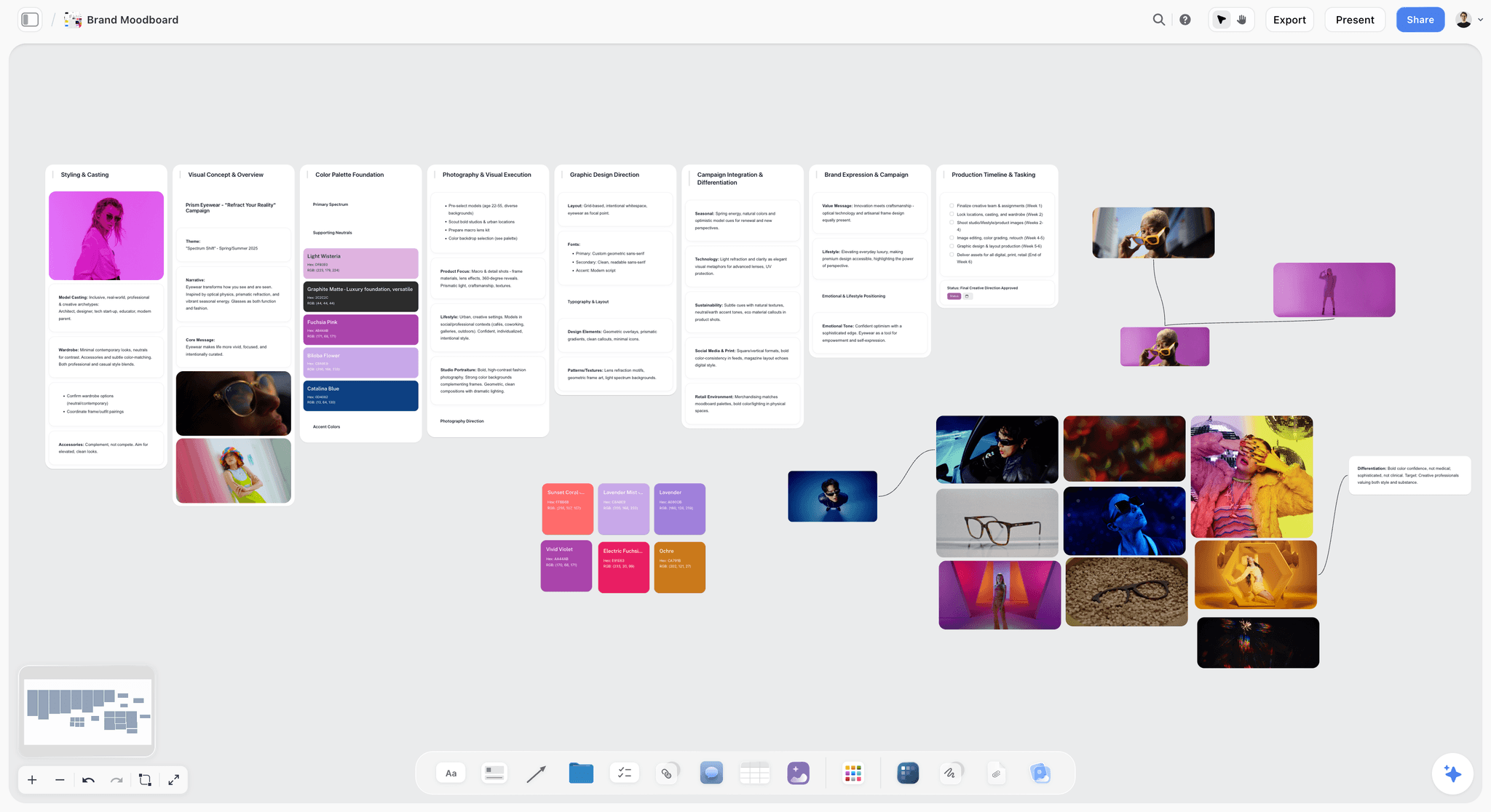
The verdict. The assembly surface. It closes the gap at the desk end, and it does nothing for you on the mountain.
Best for. Turning three weeks of scattered fragments into a post that has specifics in it.
Pricing. Paid only early access today. Plus is $7.99 per month billed annually or $9.99 monthly, with 200 plus Blueprint Tactics and unlimited file uploads. Pro is $14 per month billed annually or $19 monthly, adding AI image generation, roughly twenty times more AI usage and memory across conversations. Max is $39 per month billed annually or $49 monthly, adding Team Workspace with permissions and roles. Pricing is flat per account rather than per seat, and anyone a paid member invites joins free. The Free plan launches before the end of 2026.
Why it ranks here. A trip produces a genuinely awkward pile: 900 photos, forty voice notes, a page of scrawled prices, three saved map pins, a brand contract and a half formed idea about why the place mattered. Those are different media with one thing in common, which is that they belong to the same story and no folder structure expresses that.
A canvas does. One board per trip, arranged by day or by place, with the photos, the transcribed notes, the prices and the obligations sitting where they belong relative to each other.
The AI capability that matters is the scope. Storyflow's AI reads your full active canvas board by default, plus up to one Tactic and up to three Documents you @-mention. On a trip board that means you can ask what you actually recorded about a particular day, or ask it to pull every price you noted into a costs section, and the answer comes from the whole board rather than from the fragment you have selected. Writing the post then becomes editing material rather than straining to remember.
It also holds the obligations next to the content, which is the cheapest fix for the third loss. A deliverables block on the same board as the photos means you see the tagging requirement while you are choosing images, not after posting.
Strengths.
- Mixed media on one surface, arranged spatially by day or place.
- Whole board AI, so the post is written from material rather than memory.
- Obligations sit next to the content they constrain.
- Invited collaborators join free, useful if you travel with a partner or editor.
- Blueprint Tactics give a repeatable structure to recurring trip types.
Limitations.
- No offline mode. This is a real limitation for this audience specifically, and it is why capture belongs in Obsidian. Storyflow is a desk tool for this workflow.
- Not a photo editor, no catalog, no raw processing. Lightroom owns that entirely.
- No publishing or scheduling. It will not post to Instagram or your CMS.
- No affiliate link management or click tracking.
- No maps, no location data, no itinerary features.
- Newer platform, so no travel specific templates.
The trade off. Capture in something offline, assemble here. Anyone telling you one tool covers both ends of this gap has not tried to use a cloud app in a valley.
2. Obsidian
The verdict. The field notebook. Free, offline, and the notes are yours forever.
Best for. Capturing facts and impressions where there is no signal.
Pricing. Free for personal use, including commercial use by individuals as of August 2026. Sync is roughly $4 to $8 per month and is optional.
Why it ranks here. Obsidian stores plain text files locally, which makes it the only serious notes tool on this list that behaves identically with no connection. On a bus with no signal it opens instantly and saves reliably, and that is the entire requirement for field capture.
Its second advantage is durability. A travel blogger's notes are an archive, and in five years you will want the details from a place you are revisiting. Plain Markdown files in a folder will still open. A discontinued travel app's proprietary export will not.
The practical pattern that works: one note per day, timestamped, with prices and names typed as you go, however roughly. Perfectionism here is the enemy; a note reading "guesthouse Casa Amelia, 340/night, ask for room 4, roof" is worth more than three paragraphs written later.
It ranks second only because it is text first, so it does nothing for assembling photos and video into a post.
Strengths.
- Fully offline, fast, and reliable with no connection.
- Free, with no vendor holding your archive.
- Plain text, so notes are readable in a decade.
- Mobile app is genuinely usable one handed.
- Daily notes and templates suit trip capture well.
Limitations.
- Text first, so photos and video are attachments at best.
- No AI capability out of the box without plugins.
- Sync between phone and laptop costs money or requires setup.
- Initial configuration is a real time cost.
The trade off. Set it up before the trip, not during. The point is that it demands nothing of you in the field.
3. Lightroom
The verdict. The largest single time saving in the travel workflow, and it is not close.
Best for. Culling 900 photos to 40 and making them look like yours.
Pricing. Photography plans start around $12 to $15 per month as of August 2026, typically bundled with Photoshop and cloud storage.
Why it ranks here. Photo work is the largest time cost in travel blogging and AI has genuinely transformed it. Select Subject and Select Sky masking turn a two minute manual edit into a three second one, denoise makes high ISO evening shots usable, and Adaptive Presets apply a consistent look across a set without re editing each frame.
Multiply that across a few hundred images per trip and it is several days per year, which no text tool on this list comes close to matching.
The mobile app also enables the underrated move of culling on the plane home, which converts dead time into the least enjoyable part of the job being finished.
Strengths.
- AI masking and denoise are transformative on real volume.
- Consistent looks across a set with adaptive presets.
- Mobile app allows culling in transit.
- Cloud sync between phone and desktop.
Limitations.
- Subscription only, with no perpetual licence.
- Cloud storage limits are reached quickly with raw files.
- Mobile editing drains battery fast, which matters on long travel days.
- Sync requires connectivity, so field work is local until you land.
The trade off. The one subscription in this article that pays for itself in hours rather than in outcomes.
4. ChatGPT
The verdict. A good structural editor and a dangerous fact source, and travel is the niche where that distinction matters most.
Best for. Outlining, restructuring, headlines and getting past a blank page.
Pricing. Free tier available. Plus is roughly $20 per month as of August 2026.
Why it ranks here. For structure it genuinely helps. Paste your rough notes and ask for three possible structures for the piece, and you get a usable starting point in seconds. It is also good at the mechanical work travel bloggers avoid: meta descriptions, Pinterest pin titles, alt text, and turning a post into a newsletter.
The hard rule, and it applies more here than in almost any other niche: never let it supply a fact about a place. Opening hours, prices, bus schedules and whether a permit is required are exactly the things it will invent fluently, and they are exactly what readers rely on. A travel blog that publishes a hallucinated ticket price has damaged the only asset it has.
Used on your own notes, it is a strong tool. Used as a source, it is a liability.
Strengths.
- Fast structural suggestions and outlines.
- Good at repetitive SEO adjacent tasks.
- Free tier is usable for most of this.
- Effective at reworking your own material into other formats.
Limitations.
- Invents specific facts about places with total confidence.
- Default prose style is recognizable and flattens voice.
- Requires connectivity, so it is a desk tool.
- Encourages generic structure if you accept the first suggestion.
The trade off. Feed it your material. Never ask it for facts.
5. Claude
The verdict. The better long form drafting partner, with the same hard rule about facts.
Best for. Longer pieces, editing in your voice, and working with big pastes of notes.
Pricing. Free tier available. Pro is roughly $20 per month as of August 2026.
Why it ranks here. For long form travel writing specifically, Claude handles large context better, which matters when you paste a full day of notes and a transcript and ask it to help shape them. It is also noticeably better at matching a voice when given samples, which is the difference between an editing assistant and a homogenizer.
The most useful prompt pattern for travel writing is not "write a post about Oaxaca". It is pasting your own notes and asking which details are the specific ones worth keeping, since the specificity problem is exactly what makes travel writing good and what writers cut when tired.
It ranks fifth rather than fourth only because ChatGPT's ecosystem and image handling cover more of the peripheral tasks.
Strengths.
- Strong with long pastes of raw notes and transcripts.
- Better voice matching when given samples.
- Good at identifying which details carry weight.
- Usable free tier.
Limitations.
- Same fact invention risk. Do not ask it about a place.
- Requires connectivity.
- Fewer peripheral integrations than ChatGPT.
The trade off. Use it on your material, at length. That is where it is strongest.
6. Descript
The verdict. The fastest way to stop losing the feeling.
Best for. Turning voice notes and video into searchable text.
Pricing. Free tier available. Paid plans start around $19 per user per month as of August 2026.
Why it ranks here. The observation you had on the boat degrades within days. Recording a two minute voice note at the time is the only reliable preservation method, and voice notes then pile up unlistened because scrubbing audio is tedious.
Transcription solves that completely: forty voice notes become forty searchable paragraphs, and the specific phrase you reached for in the moment, which is usually better than anything you will write later at a desk, is recoverable.
Descript also edits video by transcript, so trip footage becomes a YouTube piece without a timeline.
Strengths.
- Voice notes become searchable text, preserving in the moment phrasing.
- Video editing by transcript.
- Good filler word removal and audio cleanup.
- Free tier is enough for voice note volume.
Limitations.
- Cloud based, so processing waits until you have connection.
- Accuracy suffers with wind, traffic and background noise, which is most travel audio.
- Overkill if you never publish video.
The trade off. Record the voice note in the moment. Transcribe it when you land.
7. Opus Clip
The verdict. The clip engine, if video is part of how you grow.
Best for. Turning long trip footage into vertical clips.
Pricing. Free tier with a monthly minute allowance. Paid plans start around $9 to $29 per month as of August 2026.
Why it ranks here. Discovery for travel content is increasingly short vertical video, and the bottleneck is selection rather than editing. Opus Clip scans long footage, proposes candidate moments, reframes to vertical and captions.
For travel specifically its weakness is worth naming: it is tuned to speech, and a great deal of the best travel footage is landscape and ambience with nobody talking. On a talking to camera vlog it works well. On a silent drone sequence it has nothing to detect.
Strengths.
- Automates candidate selection from long footage.
- Auto reframing and captions included.
- Free tier is enough to evaluate.
Limitations.
- Speech oriented, so weak on ambient and landscape footage.
- Virality scores are unreliable.
- Minute allowances disappear quickly with hours of trip footage.
- Uploading raw footage requires real bandwidth.
The trade off. Strong for vlog style content, largely useless for cinematic travel footage.
8. Canva
The verdict. Pinterest is a real traffic source for travel blogs, and this is how you feed it.
Best for. Pins, social graphics and simple video edits.
Pricing. Free tier available. Pro roughly $15 per month for one person as of August 2026.
Why it ranks here. Pinterest remains a genuine and underrated traffic source for travel content, and it rewards volume and consistency. Producing five pin variants per post is a mechanical task that Canva makes fast enough to sustain, and brand kits keep them recognizable.
Magic Studio's background removal and resizing handle the multi format problem, where one image needs to exist at four aspect ratios.
Strengths.
- Fast enough to sustain a Pinterest habit.
- Brand kit keeps output recognizable.
- Bulk resizing across formats.
- Free tier is workable.
Limitations.
- Template aesthetics are widely recognizable.
- Not a real design tool.
- Encourages sameness.
The trade off. Use it for volume, and change the template defaults.
9. Notion
The verdict. The obligations tracker, and the cheapest fix for the third loss.
Best for. Brand deliverables, trip database, and the content pipeline.
Pricing. Free personal tier. Paid from roughly $10 per user per month as of August 2026.
Why it ranks here. Partnership deliverables are the revenue side of travel blogging, and they get forgotten because they are agreed in one month and delivered in another. A database with one row per deliverable, a due date, the tagging requirement and a delivered checkbox is a genuinely sufficient fix and costs nothing.
The trip database is also useful over time, since a blogger revisiting a region wants what they learned last time, and that knowledge is otherwise spread across old posts.
It ranks ninth because offline support is limited and unreliable, and because it does nothing for assembling a post from mixed media.
Strengths.
- Deliverables with dates and checkboxes prevent the expensive failure.
- Trip database compounds over years.
- Free tier is sufficient.
Limitations.
- Offline support is limited and not dependable in the field.
- Poor for mixed media assembly.
- Requires maintenance discipline.
The trade off. Put the contract deliverables in here on the day you sign, not the week you deliver.
10. Wanderlog
The verdict. The logistics layer, and a surprisingly good source of the facts you would otherwise lose.
Best for. Itinerary planning with offline maps.
Pricing. Free tier available. Pro is roughly $50 per year as of August 2026.
Why it ranks here. Wanderlog plans a trip as a real itinerary with places, times, routes and offline maps, which serves the traveller. Its accidental value to a blogger is that the itinerary is a record: it already contains the place names, the order you did things and the routes between them, which is a meaningful share of the facts that go missing.
Offline maps matter for the same reason offline notes do.
It ranks tenth because it is a planning tool with no content capability, and because the record it produces is logistical rather than experiential.
Strengths.
- Genuine offline maps and itinerary access.
- Automatically retains place names and order.
- Reasonable free tier and cheap Pro.
- Collaborative for travelling companions.
Limitations.
- No content or writing capability.
- Itinerary detail is logistical, not experiential.
- Another app to maintain during a trip.
The trade off. Worth it if you plan properly. The retained record is a bonus rather than a reason.
11. Airtable
The verdict. For affiliate links and partnerships once there are enough of them to lose track of.
Best for. Tracking affiliate links, partnership terms and which post carries what.
Pricing. Free tier available. Paid plans start around $20 per seat per month billed annually as of August 2026.
Why it ranks here. A blog with two years of posts has hundreds of affiliate links, some to businesses that have closed and some in programmes that have changed terms. Tracking which link sits in which post, and when it was last checked, turns a slow decay into a maintenance task.
Above roughly five concurrent brand relationships, the deliverables tracking also outgrows Notion's comfort and benefits from linked records between partners, trips and deliverables.
It ranks last because it is a scale tool that most travel bloggers do not yet need, and Notion's free tier covers the same jobs earlier on.
Strengths.
- Linked records between partners, trips and deliverables.
- Filtered views for links needing review.
- Free tier handles a small operation.
Limitations.
- Overhead below a certain scale.
- Per seat pricing.
- No content capability.
The trade off. Adopt it when Notion starts feeling cramped, not before.
What to Actually Pay For
Pay for Lightroom. It is the only subscription here whose return is measured in days of your life per year, and photo work is the largest time cost in the niche.
Do not pay for a notes tool. Obsidian is free, works offline, and is more durable than any paid alternative. The capture end of this workflow costs nothing and it is the end that matters most.
Pay for one AI writing subscription at most. ChatGPT and Claude overlap heavily. Pick whichever handles your notes better and skip the other, since the value is in working on your material rather than in the model.
Tools to Avoid for This Job
Any cloud only tool as your field capture system. The moments worth recording routinely have no signal, and a note you could not save is a note you did not take.
A general chatbot as a source of facts about places. Prices, hours, permits and schedules will be invented plausibly, and publishing them destroys the trust that makes a travel blog worth anything.
Your camera roll as the note system. Photos record what something looked like and nothing about what it cost, what it was called, or why it mattered.
AI generated travel images presented as photography. In a niche whose entire value proposition is that you actually went, this is the one shortcut that cannot be recovered from if noticed.
What No Tool on This List Does
None of them will make you take notes at the trailhead gate. The thirty seconds of typing a price into your phone while standing there is the whole mechanism, and every tool in this article is downstream of it.
None of them will replace going somewhere interesting and paying attention. The tooling closes the gap between the trip and the post; it does not improve the trip.
None of them, including Storyflow, will assemble material you never captured. Whole board AI can pull every price you noted into a costs section. It cannot recover the price you did not write down, and no amount of model capability changes that.
The Bottom Line
Travel content fails in the gap between the trip and the post, and almost all tooling advice ignores that the two ends of that gap have opposite requirements.
At the field end you need something that works with no signal, holds a price and a name, and asks nothing of you. That is Obsidian, and it is free. Buy Lightroom, because photo work is where your hours actually go and AI masking has genuinely changed the arithmetic. Use ChatGPT or Claude on your own notes and never as a source.
At the desk end, the problem is that a trip produces photos, voice notes, prices, map pins and obligations that all belong to one story and live in five places. Holding them on one surface you can question is the narrow ground on which Storyflow ranks first here, and it is explicitly the desk half of the job.
FAQ: AI Tools for Travel Bloggers
What are the best AI tools for travel bloggers?
Lightroom is the highest return tool for most travel bloggers, because AI masking and denoise save days per year on the largest time cost in the niche. For writing, Claude or ChatGPT are good structural partners provided they work on your own notes rather than supplying facts. Storyflow ranks first for assembling a trip's scattered fragments into a post, and Obsidian is the correct field capture tool because it works offline and Storyflow does not.
How do travel bloggers remember details from a trip weeks later?
They write them down at the time, and there is no substitute. The details that vanish are the specific ones, meaning prices, names, times and platform numbers, because generalities survive in memory and specifics do not. The reliable practice is a rough timestamped note per day in an offline tool plus voice notes for impressions, since the phrasing you reach for in the moment is usually better than what you write later.
What is the best free tool for travel bloggers?
Obsidian is free, works offline and is the best field capture tool available. Canva's free tier covers Pinterest pins. ChatGPT and Claude both have usable free tiers for drafting. Wanderlog's free tier handles itinerary planning with offline maps. The only thing genuinely worth paying for early is Lightroom.
Can I use AI to write travel blog posts?
Use it to work on your own material, not to generate content about places. AI is genuinely good at structuring rough notes, suggesting angles and handling meta descriptions and alt text. It invents specific facts about locations with complete confidence, and in travel writing those invented prices and opening hours are the fastest way to lose reader trust permanently.
How do you keep track of brand and tourism board deliverables?
Put the deliverables into a database on the day you sign, with one row per item, the due date and the exact tagging requirement, rather than leaving them in the email thread. The failure mode is not laziness, it is that partnerships are agreed months before delivery and the contract is never reopened. Keeping the deliverables visible next to the content while you edit is what prevents the miss.
What is the best offline app for travel notes?
Obsidian, because it stores plain text files locally, opens instantly with no connection, and your archive stays readable indefinitely. Apple Notes and Google Keep also work offline and are fine for lighter use. The important criterion is that saving never depends on a network, since the moments most worth recording are frequently the ones with no signal.
Does Storyflow work offline?
No, and for this audience that is a genuine limitation worth stating plainly. Storyflow is a cloud tool with no offline mode, so it is the assembly surface you use at a desk rather than the capture tool you use in the field. The workflow that works is capturing in something offline such as Obsidian, then bringing those fragments onto a trip board once you have connection.
How do you edit hundreds of travel photos efficiently?
Cull first and ruthlessly, ideally in transit on a phone, then edit only what survives. Lightroom's AI masking handles subject and sky selections in seconds rather than minutes, denoise rescues high ISO evening shots, and adaptive presets apply a consistent look across a whole set. The order matters, since editing before culling is how a day disappears.
Is Pinterest still worth it for travel blogs?
Yes, and it remains one of the more durable traffic sources for travel content, because it behaves more like a search engine than a social feed and pins keep working long after posting. It rewards volume and consistency, so the practical requirement is a fast way to produce several pin variants per post, which is what makes Canva worth its place here.
How do you write a travel post from three week old notes?
Assemble before you write. Put the notes, the photos, the transcribed voice memos and the prices onto one surface arranged by day or place, and read the material before attempting prose. Most weak travel writing is written from memory with the notes unopened, which is why it contains feelings and no facts, and the fix is a mechanical step rather than a writing technique.
Should travel bloggers use AI generated images?
Not as photography, and not without labelling. The entire value proposition of travel content is that you went and saw it, so presenting generated imagery as a photograph attacks the only thing that distinguishes your post from a summary. Generated imagery is defensible for diagrams, maps and illustrative graphics where nobody would assume a camera was involved.
What is the difference between planning tools and content tools for travel?
Planning tools such as Wanderlog serve the traveller, organizing places, routes and times, and their content value is accidental but real, since the itinerary preserves names and order. Content tools serve the post, and the ones that matter operate at the two ends of the gap: capture in the field and assembly at the desk. The common mistake is expecting a planning tool to double as a content system.
How much should a travel blogger spend on tools monthly?
Around $15 to $35 per month covers a serious setup: Lightroom as the one essential subscription, one AI writing tool, and free tiers for everything else. Income in this niche is seasonal, so favour tools with meaningful free tiers and one time purchases over a stack of subscriptions that keep charging through a quiet quarter.
What is the single change worth making before the next trip?
Set up an offline notes tool before you leave and commit to one timestamped note per day with prices and names in it, however rough. It takes twenty minutes to prepare, costs nothing, and it is the difference between a post with specifics in it and a post that reads like every other post about the same place.
Table of Contents
- Key Takeaways
- The Gap Between the Trip and the Post
- At a Glance: The 11 Tools Compared
- How I Ranked These
- Quick Picks by Job Type
- 1. Storyflow
- 2. Obsidian
- 3. Lightroom
- 4. ChatGPT
- 5. Claude
- 6. Descript
- 7. Opus Clip
- 8. Canva
- 9. Notion
- 10. Wanderlog
- 11. Airtable
- What to Actually Pay For
- Tools to Avoid for This Job
- What No Tool on This List Does
- The Bottom Line
- FAQ: AI Tools for Travel Bloggers
- Related Reading
Templates to check out for this topic


Content and video templates you can use in Storyflow
Plan a channel, a script, and a content pipeline on the same board. Open one of these templates and let the AI build on the structure instead of starting from a blank doc.


See Storyflow in Action
A visual AI workspace where every feature lives inside one canvas. No tab-switching, no context lost.
Build your entire board from a single message
Type what you need in the AI chat at the bottom of your canvas. The AI adds cards, headings, and structure directly onto your board.
Use expert frameworks as AI context
Type @ in the AI chat and choose any Tactic. The AI tailors every response to that framework instead of giving generic advice.
Turn your board into a mind map in seconds
Ask the AI to restructure your canvas as a mindmap. It connects your ideas into a visual hierarchy so you can see how everything relates.
Why Storyflow Exists
Storyflow actually began as a personal tool while working on creative and research projects.
We kept running into the same problem: ideas were scattered everywhere: notes, documents, and whiteboards.
Nothing helped us see how everything connected.
So we started building a workspace designed around how ideas actually grow.
→ Read how Storyflow was createdSara de Klein
Head of Product at Storyflow
Published: 2026-08-10
Extremely simple, seriously capable


See how easy it is to get started
Watch a real project come together, from a blank board to a finished plan, clicked through step by step.
Start creating with AI and become more productive
Transform your creative workflow with AI-powered tools. Generate ideas, create content, and boost your productivity in minutes instead of hours.