
FOR NEWSROOMS
The day is decided in a room
and then breaking news rewrites it.
Storyflow gives a newsroom one visual board for the rhythm of the operation: the conference where the day is set, the diary of what is coming, who and what is assigned to each story, and how a single reporting effort becomes a broadcast piece, a web story, and a vertical clip. Storyflow is paid-only during early access, with plans from $9.99 per month.
Paid-only early access
Plans from $9.99/mo
Not a rundown system

Used by creative professionals at:
Artlist
Pixar
Nike
Red Bull
The North Face
Porsche
Start from a ready-made template
Pick a board to see what you can build, then let AI fill it in. Every template is a real, editable starting point on the same infinite canvas.
Mind Map
Branch one central idea out into themes and sub-points, then drag the connections around until the structure makes sense.
What newsroom planning actually involves
Newsroom planning is triage under a clock: deciding each day which stories are worth covering, what each one is worth in reporter hours and crew time, and what gets dropped when something breaks. Every other part of the job flows from that one decision, and the decision is made again tomorrow with different information. A newsroom is not short of ideas. It is short of people, cameras, edit time, and daylight, and planning is the discipline of matching a finite supply of those things to an unpredictable supply of news.
The day has a shape. A conference in the morning where the desk heads argue for their stories and the output is a plan for the next twelve hours. Behind that sits the diary, the running list of things already known to be happening: a court verdict on Thursday, a budget statement next month, an anniversary that needs a package built weeks ahead. The diary is what lets a newsroom look planned rather than reactive. It is also the first thing sacrificed when a story breaks at eleven in the morning and half the resourcing decided at nine has to be torn up and made again in ten minutes.
Video is where the plan gets expensive. A story becomes a package, and a package is a chain: a reporter and a camera operator in the field, archive that somebody has to find and clear, graphics that a designer needs lead time for, a script that has to be written and approved, and an edit booked into a suite that three other people also want. Each link has an owner and a deadline, and a delay in any of them moves the whole thing. On top of that sits the platform problem. One reporting effort now has to yield a broadcast piece, a web story with its own furniture, a vertical cut for social, and often a newsletter line, which works only when the versions are planned together at the start rather than salvaged separately at the end. Underneath all of it runs the tension the job never resolves, between being first and being right.
Storyflow is one canvas for that rhythm, holding the morning conference and the story list it produces, the forward diary of known events, the assignment grid of reporters and crews against finite kit and hours, the video desk view of each package with its archive, graphics, script, and edit, the cross-platform version plan for broadcast, web, and vertical, and the handover to the next shift, so the whole desk is looking at the same board when the plan changes at eleven.
HOW IT WORKS
From conference to package to platform.
Four steps that keep the day's plan, the resources, and the video chain in one place.
01
Put the diary and the day's list on one board
Known events, running stories, and this morning's ideas sit side by side as cards. Conference becomes a conversation about a visible board rather than a spoken list nobody can recall by lunchtime.
02
Assign people, crews, and kit against the list
Attach a reporter, a camera operator, and an edit slot to each story. When two stories want the same crew, the clash is visible on the canvas instead of being discovered at two in the afternoon.
03
Break each video story into its package
Field shoot, archive, graphics, script, voiceover, and edit become their own cards with owners and deadlines, so the desk can see which link in the chain is late while there is still time to move it.
04
Plan the versions before anyone shoots
Decide up front what the broadcast piece, the web story, and the vertical clip each need from the same reporting trip. Extra shots cost nothing at the location and cannot be invented afterwards.
The newsroom operation, on one canvas.
Diary, assignments, video packages, and platform versions in a layout the whole desk can read at a glance.
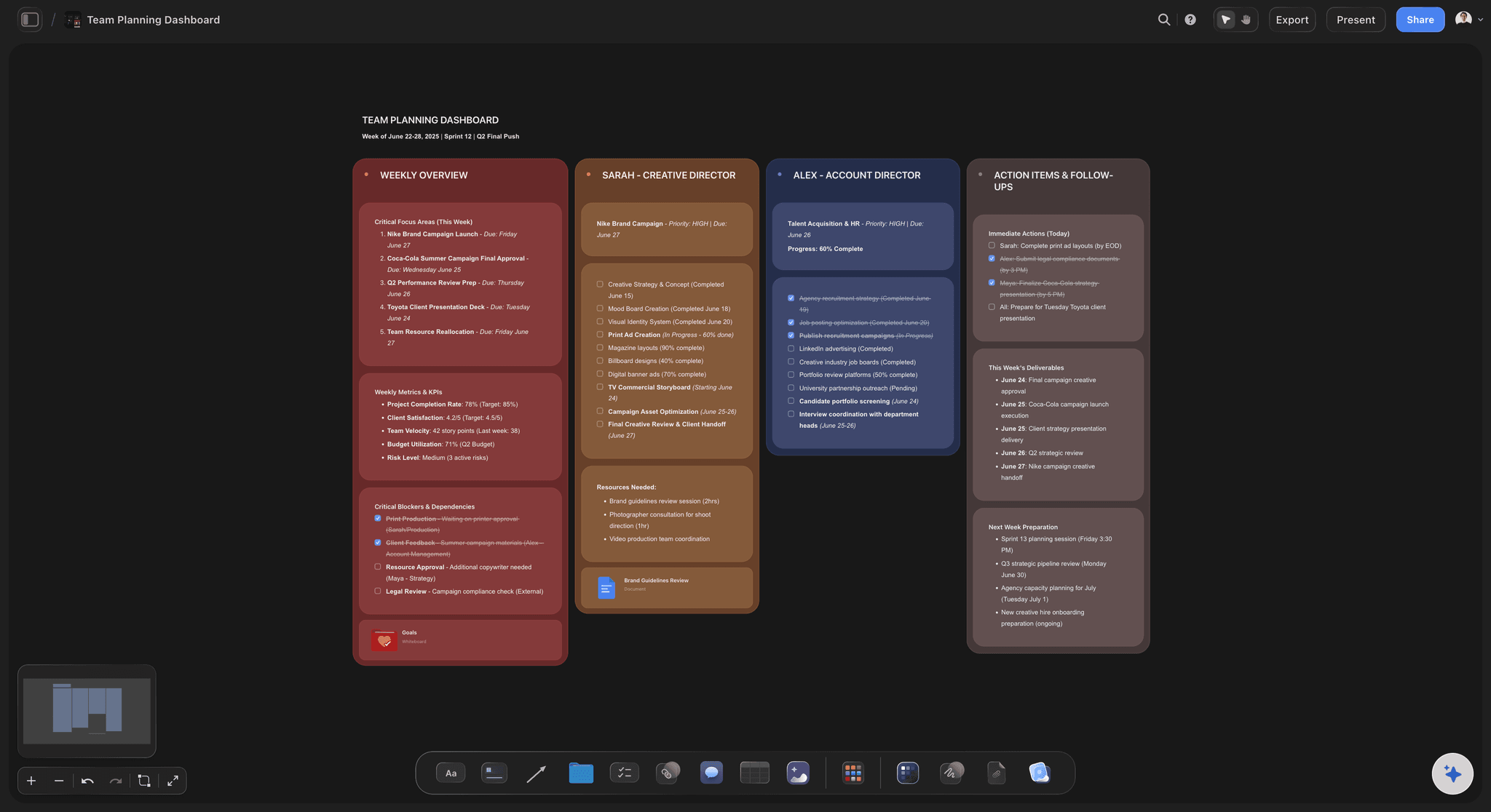
The daily rhythm
A conference board the desk can see
Run the morning meeting against a live board of running stories, diary items, and new ideas, then leave the day's plan on it so nobody is working from a memory of what was said.
See the team planning board →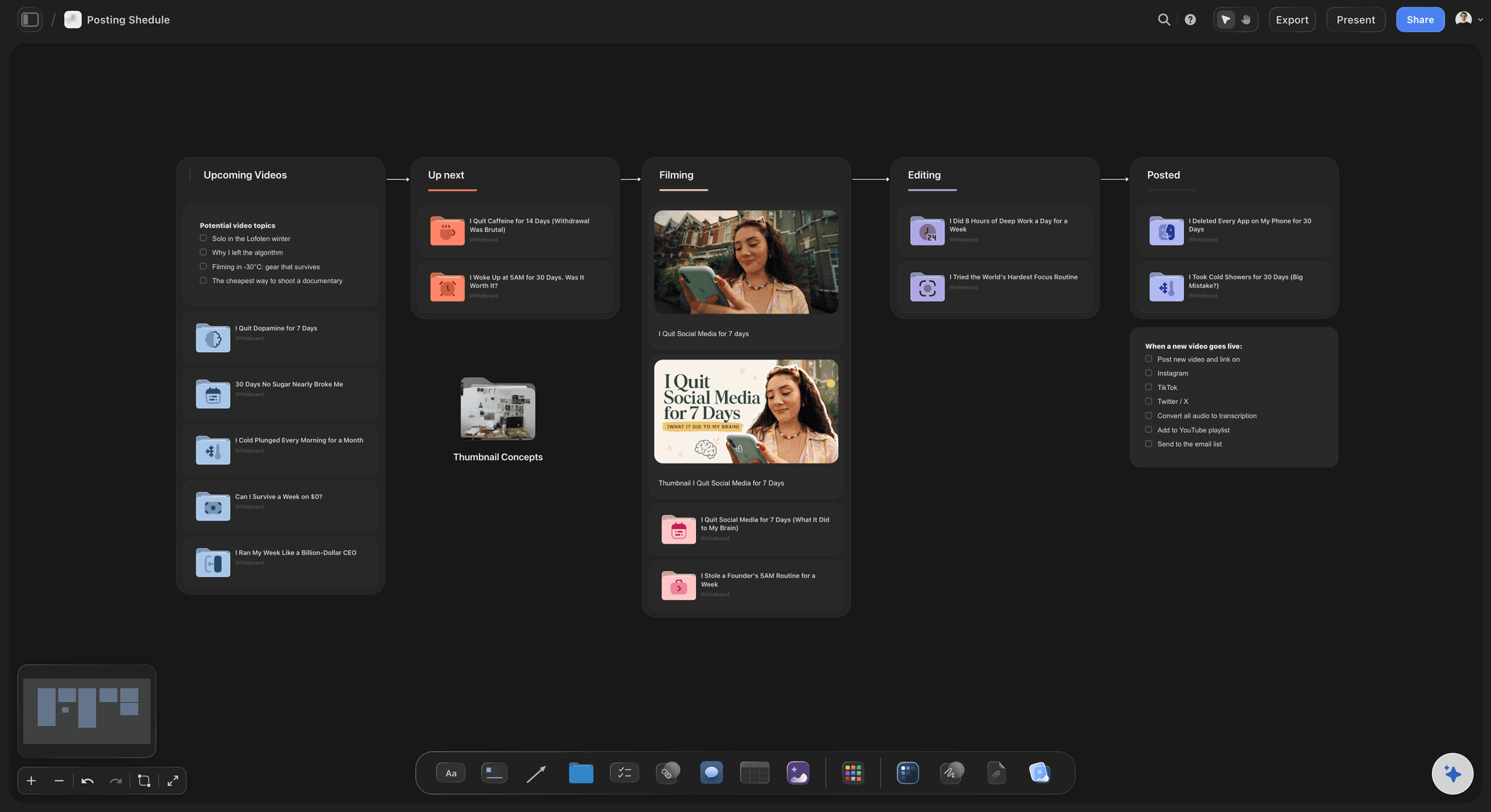
What is coming
A forward diary that survives the day
Keep the known events, verdicts, statements, and anniversaries on a timeline that stretches past this week, so the packages that need lead time actually get it.
See the editorial calendar →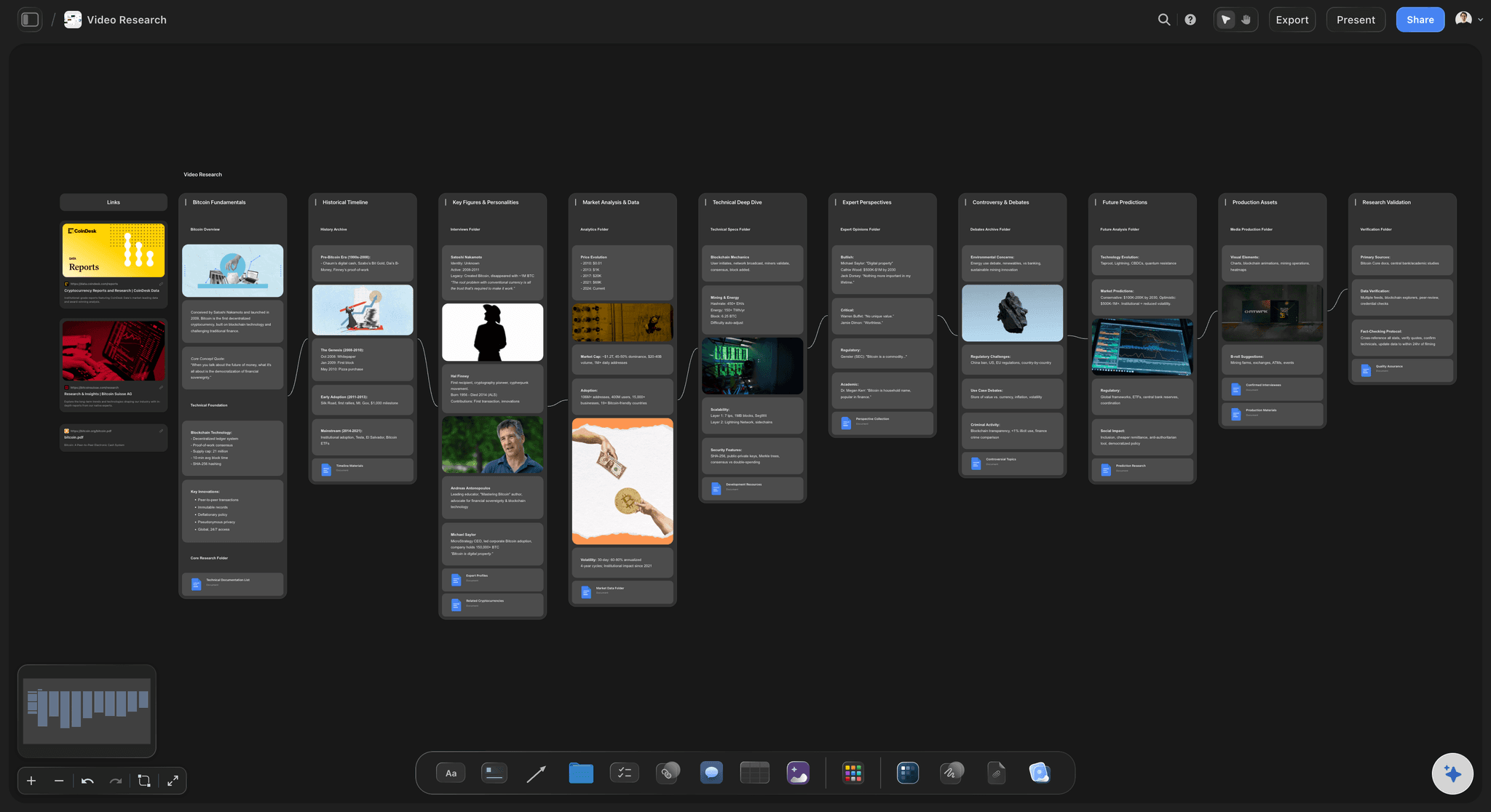
The video desk
Every package broken into its parts
Field shoot, archive, graphics, script, and edit as separate cards with owners and deadlines, so the desk sees the bottleneck in the chain rather than a story that is simply late.
See video production planning →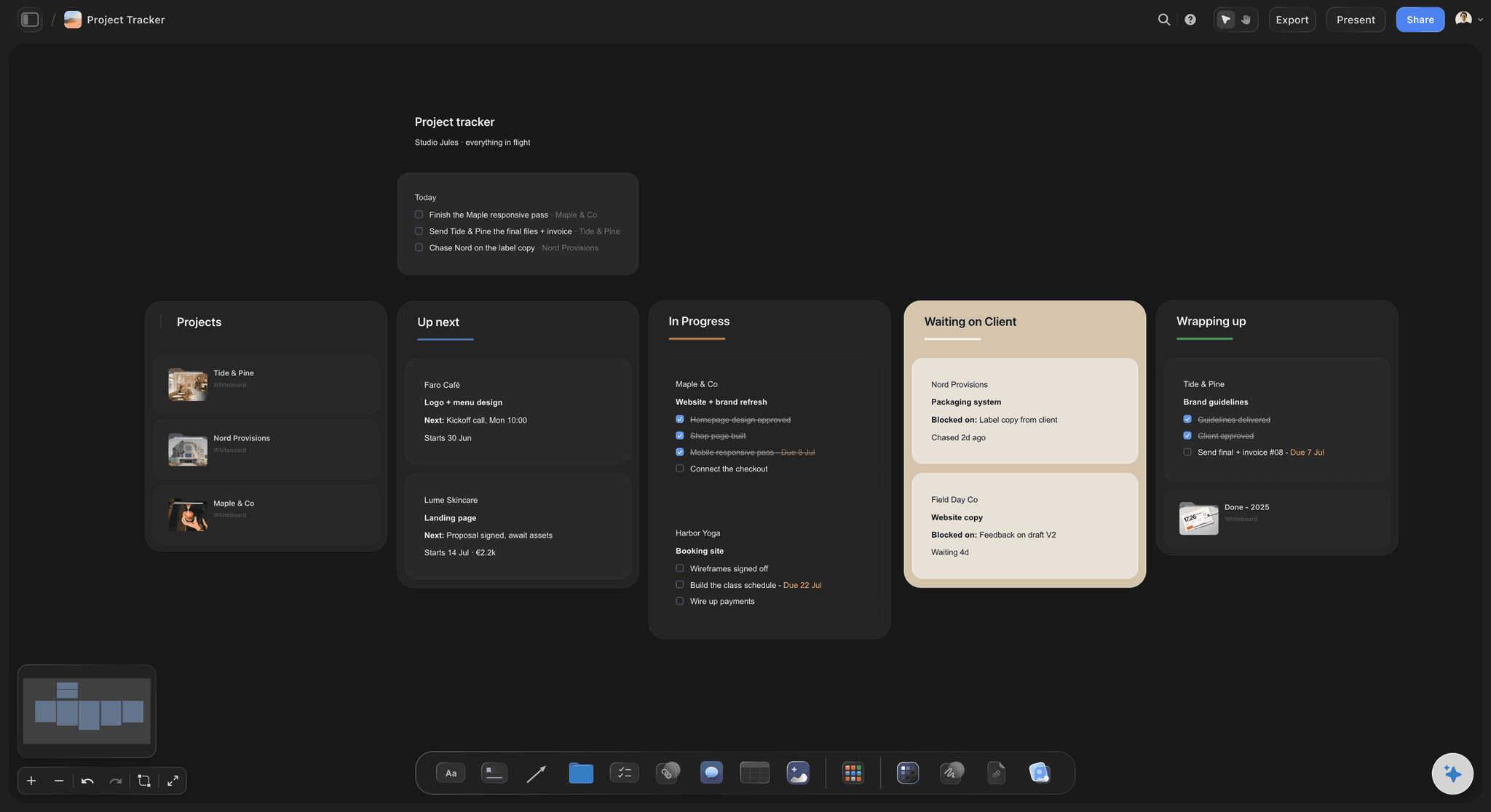
One story, three outputs
Broadcast, web, and vertical from one trip
Plan the versions together on the same board so the reporting effort is shot once and cut three ways, instead of the social team asking for footage that was never captured.
See the content pipeline →Paid plans from $9.99 per month.
Storyflow is paid-only during early access. A Free plan launches before the end of 2026, and anyone a paid member invites to a board joins free today, which is how most desks bring in a freelance contributor.
Unlimited boards for the daily list, the diary, and each big package
Basic AI usage to structure story lists, package plans, and scripts
Attach scripts, stills, links, and reference footage notes to any card
Share view-only with a bureau or a freelancer, or invite collaborators free
BUILT FOR THE DESK
Made for a plan that changes at eleven.
Conference and diary, resourcing under constraint, the video package chain, and one reporting effort across every platform.
Conference and diary
The daily and weekly rhythm in one view
The day's list where everyone can see it: Running stories, diary items, and fresh ideas as cards on one board. Conference produces a visible plan rather than a spoken one, which matters most for whoever was not in the room.
A diary that looks past today: Known events sit on the same canvas weeks out, so the anniversary piece and the court verdict get commissioned early instead of arriving as a scramble.
Replan in front of the desk: When a story breaks, move the cards and the new shape of the day is instantly legible. Nobody has to work out whose shoot was just cancelled by reading a thread.
Hand over cleanly: The board is the state of play for the next shift: what ran, what slipped, what is still open, and what the overnight desk needs to watch.
Finite resources
Assignments you can see clashing
People and kit attached to stories: A reporter, a camera operator, a satellite slot, and an edit booking on the card itself. The question of who is free is answered by looking rather than by asking three people.
Clashes surface early: Two stories claiming the same crew at the same hour is obvious on a spatial board and invisible in a list of tasks, which is where that clash usually hides until it is too late.
Bureaux and freelancers included: Contributors outside the building work from the same board. Anyone a paid member invites joins free, so a stringer or a freelance shooter does not need a licence to take an assignment.
The video desk
A package is a chain, not a task
Archive, graphics, script, edit: Each element is its own card with an owner and a time. The graphics request that needs two days of lead time stops being remembered at the last minute.
Script beside the visuals: Draft the voiceover next to the shots and the sequence it is written over, so the words and the pictures are planned as one thing rather than reconciled in the suite.
See the bottleneck, not just the delay: When a package is late, the board says which link is late. That is the difference between moving one deadline and moving the whole running order.
Reusable shapes for recurring formats: Duplicate the board you use for an explainer or a two-way, so a familiar format starts half planned instead of from an empty page.
One effort, every platform
Broadcast, web, and vertical planned together
Decide the versions before the shoot: Note what the vertical cut needs and what the web piece needs on the same card as the broadcast package. Vertical framing and an extra ten seconds are free in the field and impossible afterwards.
Web furniture is planned, not improvised: Headline options, the still, the pull quote, and the explainer box get their own cards, so the online desk is not rebuilding the story from a transcript at six.
One board, one version of the truth: Broadcast, online, and social read the same plan. Cross-platform coordination fails mostly because three teams hold three slightly different ideas of what is being made.
Explore templates for your project
Every template opens as a real, editable board on the infinite canvas. Pick the closest fit and make it your own.
Mind Map
Branch one central idea out into themes and sub-points, then drag the connections around until the structure makes sense.
COMPARED
How Storyflow compares for newsrooms.
Where a competitor genuinely owns the job, it owns the row. Storyflow takes three of six.
Storyflow
Recommended
Diary, assignments, and video packages on one spatial canvas
AI that reads the board and drafts a package or script outline
Shot and sequence level video planning built in
Structured databases with filtered views for a story tracker
Simple card and column board the whole desk already knows
Facilitated live workshops with voting, timers, and huge template libraries
Notion
Diary, assignments, and video packages on one spatial canvas
AI that reads the board and drafts a package or script outline
Shot and sequence level video planning built in
Structured databases with filtered views for a story tracker
Simple card and column board the whole desk already knows
Facilitated live workshops with voting, timers, and huge template libraries
Trello
Diary, assignments, and video packages on one spatial canvas
AI that reads the board and drafts a package or script outline
Shot and sequence level video planning built in
Structured databases with filtered views for a story tracker
Simple card and column board the whole desk already knows
Facilitated live workshops with voting, timers, and huge template libraries
Miro
Diary, assignments, and video packages on one spatial canvas
AI that reads the board and drafts a package or script outline
Shot and sequence level video planning built in
Structured databases with filtered views for a story tracker
Simple card and column board the whole desk already knows
Facilitated live workshops with voting, timers, and huge template libraries
What creators are saying
Join early creators getting structured workspaces and AI that remembers their projects
“Storyflow has sped up my workflow by at least 3x, which means more flow state and more projects I can actually ship. It truly changed the way me and my team create.”

Reilin Joey
Director & YouTuber
“One prompt gets me a structured board. But the tactics are my favorite. I run my YouTube scripts through them and my intros and retention got better. It's amazing.”

Justkay
YouTuber & Freelance Filmmaker
“I used to juggle five apps to plan a project. Now I describe what I am making and get boards, lists, and a schedule. All in one place.”

George
@fernwehchronicles
Newsroom questions, answered.
Including the ones about your rundown system and your sources.
Most newsrooms plan on two clocks at once. The daily one runs through a morning conference where desk heads argue for stories and the editor resources them, a check in around the middle of the day, and a handover to the next shift. The weekly and monthly one is the diary, a forward list of known events such as verdicts, statements, results, and anniversaries, which is what lets a newsroom commission packages that need lead time. Breaking news then rewrites the daily plan without touching the diary, which is why the two need to sit side by side.
Put the day, the diary, and the packages on one board.
Open a canvas, plan tomorrow's coverage, and see the clashes before they cost you a crew. Plans start at $9.99 per month.