The 11 Best Tools for Newsroom Video Teams in 2026
Every clip carries a status the file does not: rights, verification and consent. Eleven tools ranked by whether they can stop a publish.

Category
Filmmaking Tools
Author

Sara de Klein
Head of Product at Storyflow
Topics
2026-08-10
•
18 min read
•
Filmmaking Tools- best tools for newsroom video teams
- best tool for managing a video project with a team
- footage rights and clearance tracking
- verify user generated video
- InVID WeVerify
- newsroom video workflow
What are the best tools for newsroom video teams in 2026?
Newsroom video has a problem no other video discipline has: every clip carries a status the file itself does not, and publishing a clip whose status you got wrong is not a craft error, it is a legal one. Airtable ranks first here because that status is a database field and nothing else on this list will hold it. Storyflow ranks second, for the running story board where a handoff between shifts does not lose the reasoning. Frame.io owns review, Premiere owns the cut, and InVID owns the verification of anything that arrived from the internet. This ranking judges all 11 tools on one question: can it tell you whether you are allowed to publish this frame.

Full disclosure: Storyflow is our own product and we rank it SECOND here, behind Airtable. The highest risk in newsroom video is publishing material you are not cleared to publish, and preventing that needs enforceable required fields and a blocking view, which a canvas cannot provide. Storyflow has no rights or licence tracking, no verification tooling, no media asset management, no timecode or ingest, and no NRCS integration. It ranks second for the editorial memory that a shift handoff otherwise loses. We link to every tool so you can judge the fit.
Quick Comparison
These four cover the two problems newsroom video actually has: the invisible status on every clip, and the relay across shifts that loses it.
| Tool | Best For | AI Features | Price |
|---|---|---|---|
| Airtable | Clip status and clearance | Standard AI | Free / from ~$20 per seat mo |
| Storyflow | Running story memory across handoffs | Canvas-wide context AI | $7.99 mo annual (free plan late 2026) |
| Frame.io | Review and published-version record | Light AI | Free / from ~$15 mo |
| InVID / WeVerify | Verification of internet-sourced video | Detection tooling | Free |
Key Takeaways
- Every clip in a newsroom carries three invisible statuses: where it came from and on what terms, whether it has been verified, and what the contributor consented to. None of them live in the file.
- A staff shot, an agency licensed clip, a contributor's phone video and a grab from social all look identical in a bin. Publishing the wrong one is a legal exposure, not a mistake of taste.
- Airtable ranks first, above our own product, because rights and verification status is a structured data problem and a canvas cannot enforce a required field.
- Storyflow ranks second for the running story surface, where a shift handoff otherwise loses the reasoning and the promises made to contributors.
- Newsroom video runs a relay across shifts, and the handoff is where status is lost, not the edit.
- InVID and WeVerify are free, built for journalism, and consistently absent from newsroom workflows that badly need them.
- Speed and correctness pull against each other, and the only reliable resolution is making the correctness check fast rather than making it optional.
Do not lose the story at the handoff
The producer picking this up at 6am did not take the call, did not make the promise, and cannot ask. Storyflow holds the claims, the contributor promises and the dropped lines on one canvas the AI reads whole, so the handoff is a question instead of a backlog. Pair it with a rights ledger that can block a publish.

Every Clip Has a Status the File Does Not Carry
A film production knows where its footage came from. It shot it, under contract, with releases signed before anyone rolled.
A newsroom does not have that luxury. On a single story the bin may contain footage shot by staff, a licensed agency clip, a handout from a police force, a video sent in by a member of the public, something pulled from a social platform, and archive from six years ago whose licence terms nobody can locate.
All of it looks identical once it is in the timeline. A 12 second clip is a 12 second clip, and the file carries no memory of how it arrived or what you are permitted to do with it.
Three statuses ride along invisibly.
Provenance and rights. Who owns it, on what terms, for which platforms, for how long. Agency material frequently carries platform restrictions and expiry dates. Social material usually carries no permission at all until somebody asks.
Verification. Whether the thing depicted is what it claims to be, shot where and when it claims. This is now the single largest reputational exposure in the discipline, and it has become harder as generated video has improved.
Consent. What the contributor actually agreed to. Somebody who sent a clip to a reporter on WhatsApp may have agreed to it appearing in one broadcast package and not to it being cut into a vertical and posted forever.
Publishing a clip whose status you got wrong is not a craft error, it is a legal one, and the correction is public.
The second structural problem is the relay. Newsroom video moves across shifts by design: a reporter files, a producer cuts, a different producer publishes, and an overnight desk repurposes it. Every handoff is a chance for status to fall out, because status lives in the head of the person who acquired the footage and they went home.
The 11 tools below are ranked by what they do about those two problems.
At a Glance: The 11 Tools Compared
| Tool | Best for | Problem it addresses | Shape |
|---|---|---|---|
Airtable | Rights, verification and consent as required fields | Status | Relational database |
Storyflow | The running story surface across shift handoffs | Relay | AI canvas |
Frame.io | Review, versions and sign-off before publish | Relay | Review and approval |
Premiere Pro | The cut itself | None directly | Editor |
Trint | Transcription, search and compliant subtitles | Relay | Transcription |
InVID / WeVerify | Verifying material that arrived from the internet | Status | Verification toolkit |
Iconik | Media asset management with searchable metadata | Status | MAM |
Slack | Coordination across desks and shifts | Relay | Messaging |
Notion | Standards, guidance and the story record | Status | Docs |
Dropbox | Ingest from contributors and field staff | None directly | File storage |
Canva | Platform cutdowns and social graphics | None directly | Design |
How I Ranked These
I make documentaries, which shares newsroom video's evidentiary standards without its clock. I have had to establish, months after acquisition, what a piece of footage was cleared for, and failed. Over the last two years I have run real projects through every tool here.
Five criteria, in order.
1. Can it stop a publish? The decisive criterion. A system that records rights but cannot make the status visible at the moment of publishing is documentation, not protection.
2. Does status survive a shift handoff? The person publishing at 11pm did not acquire the footage and cannot ask the person who did.
3. Is the correctness check fast? In a newsroom, any check that costs more than a couple of minutes gets skipped under deadline, and a skipped check is worse than no policy because it creates false confidence.
4. Does it work for someone who is not technical? Reporters filing from the field are not going to learn a MAM.
5. Cost at newsroom scale. Local and independent newsrooms are not buying enterprise tiers, and most video journalism now happens outside large broadcasters.
Pricing is as of August 2026 and changes frequently. Verify with each vendor.
Quick Picks by Job Type
- Best status ledger: Airtable. Rights, verification and consent as required fields with a publish blocking view.
- Best running story surface: Storyflow. Where a handoff does not lose the reasoning or the promises.
- Best review and sign off: Frame.io. Timecoded notes and a version record before anything goes out.
- Best verification: InVID and WeVerify. Free, journalism specific, and underused.
- Best transcription: Trint. Built for newsrooms, with compliant subtitle output.
- Best editor: Premiere Pro. Still the newsroom standard for good reasons.
- Best asset management at scale: Iconik. Once the archive outgrows folders.
1. Airtable
The verdict. The three statuses are structured data, and structured data needs a database with required fields.
Best for. Making rights, verification and consent explicit and unavoidable.
Pricing. Free tier available. Paid plans start around $20 per seat per month billed annually as of August 2026.
Why it ranks here. The core structure is one row per clip, not per story. Fields for source type, meaning staff, agency, handout, contributor or social. Rights status with permitted platforms and an expiry date. Verification status with the method used and who did it. Consent scope, meaning what the contributor agreed to in their words. And the person who acquired it.
Then two views do the real work. "Cleared to publish", filtered to material where rights, verification and consent are all green. And "Blocked", everything else, with the reason visible.
That second view is the mechanism. It converts a judgment call made under deadline by a tired producer into a lookup, and lookups survive shift changes in a way judgment does not.
It ranks first, above our own product, because this is a required field problem. A canvas cannot refuse to let you proceed, and the value here is precisely that something refuses.
Strengths.
- Models the three statuses as enforceable fields rather than notes.
- A cleared to publish view turns a judgment into a lookup.
- Expiry date automations flag agency material before it lapses.
- Mobile access so a field reporter can log a clip's origin at acquisition.
- Free tier is adequate for a small newsroom.
Limitations.
- Per seat pricing across a large newsroom.
- Requires setup and an owner, and it degrades quickly without one.
- Not integrated with the edit, so discipline links them rather than software.
- Useless for the editorial thinking about the story itself.
The trade off. Half a day of setup against the category of error that produces on air corrections and legal letters. On any newsroom handling user generated content this is the highest return item here.
2. Storyflow
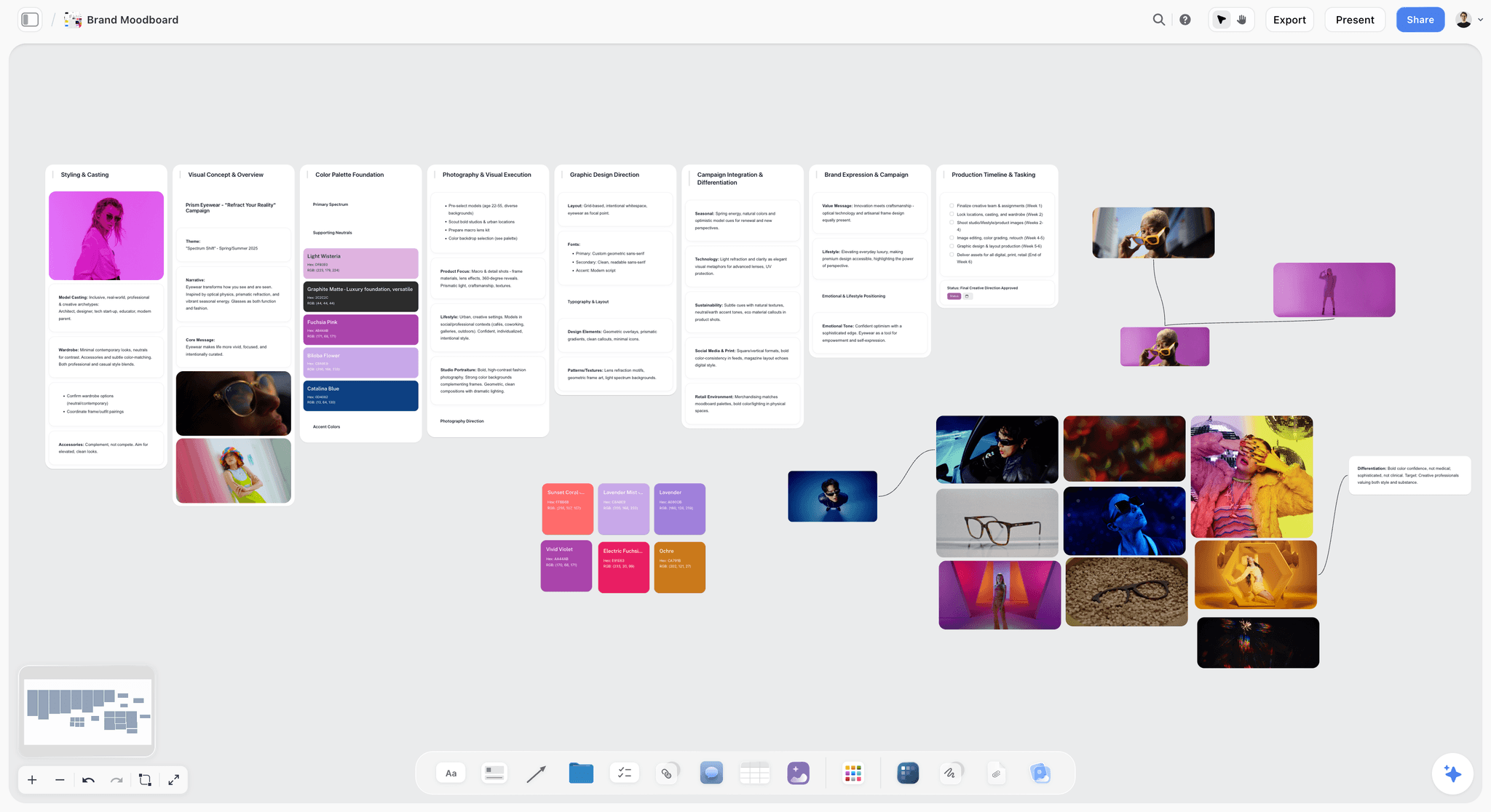
The verdict. The running story surface, where the relay does not drop the reasoning.
Best for. Ongoing and developing stories that pass between shifts and desks.
Pricing. Paid only early access today. Plus is $7.99 per month billed annually or $9.99 monthly, with 200 plus Blueprint Tactics and unlimited file uploads. Pro is $14 per month billed annually or $19 monthly, adding AI image generation, roughly twenty times more AI usage and memory across conversations. Max is $39 per month billed annually or $49 monthly, adding Team Workspace with permissions and roles. Pricing is flat per account rather than per seat, and anyone a paid member invites joins free. The Free plan launches before the end of 2026.
Why it ranks here. Airtable holds what a clip is cleared for. It does not hold why the story is being told this way, what the contributor was promised, which line of enquiry was dropped and for what reason, or which claim is still unconfirmed.
That material is what a handoff loses, and losing it is how a story drifts across shifts until the fourth version quietly contradicts the first.
A running story board holds the timeline of what happened, the claims with their current confidence, the contributors and what each was told, and the lines dropped with dated reasons. Because Storyflow's AI reads your full active canvas board by default, plus up to one Tactic and up to three Documents you @-mention, the producer picking the story up at 6am can ask the board what is still unconfirmed rather than reading four days of Slack.
The contributor promises point deserves emphasis. Somebody who sent footage was told something about how it would be used, usually verbally, usually by a reporter now asleep. Writing that promise on the story board, at the moment it is made, is a thirty second habit that prevents a specific and serious failure.
It ranks second because it cannot enforce anything, and enforcement is what the status problem needs.
Strengths.
- Holds story reasoning, contributor promises and dropped lines across handoffs.
- Whole board AI answers what is still unconfirmed without reading the backlog.
- Spatial timeline suits developing stories better than a document.
- Invited collaborators join free, so freelancers and stringers cost nothing.
- Dropped lines stay visible with dates, preventing re-reporting.
Limitations.
- Cannot enforce a required field or block a publish, which is why Airtable ranks first.
- Not a media asset manager. No proxies, no timecode, no ingest.
- No verification tooling of any kind.
- No rights or licence expiry tracking.
- No integration with Premiere, Frame.io or any NRCS or newsroom system.
- Cloud only, which needs checking against your organization's policy for sensitive material.
The trade off. Storyflow is the editorial memory of a running story. It is not the compliance layer, and a newsroom needs both.
3. Frame.io
The verdict. The sign off record, which is the last chance to catch a status problem.
Best for. Review, versioning and approval before publication.
Pricing. Free tier available. Paid plans start around $15 per user per month as of August 2026, and it is bundled with several Adobe Creative Cloud plans.
Why it ranks here. Timecoded comments are the obvious value: a legal or standards note attached to 00:34 rather than described in an email removes the ambiguity that causes a second pass.
The higher value for newsrooms is the version record. When a piece is republished with a correction, being able to show what version went out when, and who approved it, is what an editor needs during a complaint. Frame.io produces that as a by-product of normal use.
It also gives the standards or legal reviewer a way to view without installing anything, which is what makes the review actually happen at 10pm.
Strengths.
- Timecoded review removes ambiguity in legal and standards notes.
- Version history creates a defensible record of what was published when.
- Browser review requires no software for the approver.
- Frequently already in an existing Adobe plan.
Limitations.
- Storage costs on high bitrate news volume.
- Not a status system. It records approval, not whether approval was warranted.
- Per user pricing outside the Adobe bundle.
The trade off. Check whether your Adobe plan already includes it before buying any review tool.
4. Premiere Pro
The verdict. Still the newsroom standard, and the ecosystem argument is decisive.
Best for. The cut, under deadline, by people who already know it.
Pricing. Single app roughly $23 per month, full Creative Cloud around $60 per month, as of August 2026.
Why it ranks here. Newsroom editing is a speed and reliability discipline more than a creative one, and Premiere's advantages are practical: nearly every video journalist already knows it, it handles mixed formats from phones and professional cameras without transcoding, and Text-Based Editing plus auto captions have genuinely compressed turnaround.
Its speech to text captioning matters more in news than elsewhere because captions are frequently an accessibility obligation rather than an option, and doing them manually under deadline is where they get skipped.
DaVinci Resolve is a credible free alternative and some newsrooms have moved, but the hiring pool and the Frame.io integration keep Premiere the default.
Strengths.
- Universal familiarity, so freelance cover is easy to find.
- Handles mixed source formats without a transcode step.
- Text-Based Editing is genuinely fast for interview led packages.
- Auto captions make an accessibility obligation achievable under deadline.
Limitations.
- Subscription cost across a newsroom.
- Stability under long sessions remains a complaint.
- No awareness of clip status, so the timeline will happily contain material you cannot use.
The trade off. The cut is not where your risk is. Buy it and move your attention upstream.
5. Trint
The verdict. Transcription built for journalism rather than for meetings, and the difference shows.
Best for. Transcribing interviews and making an archive searchable.
Pricing. Plans start around $60 to $80 per user per month, with team tiers, as of August 2026.
Why it ranks here. Trint was built for newsrooms and its distinguishing features reflect that: strong handling of accented and multi speaker audio, a verification workflow where you can jump from any word to the audio at that moment, and export directly to caption formats and editing systems.
The jump to audio capability is the one that matters editorially. Every quote that reaches air should be checked against the recording, and a transcript that makes that a single click makes the check likely rather than aspirational.
Otter and Descript are cheaper and adequate for lower stakes work, and the argument for Trint is specifically the verification workflow and newsroom integrations.
Strengths.
- Built for journalism, with the verification workflow to match.
- Strong on difficult audio and multiple speakers.
- Direct export to caption and editing formats.
- Searchable archive across all transcripts.
Limitations.
- Considerably more expensive than general transcription tools.
- Cloud processing, which needs checking for confidential material.
- Overkill for a small operation where Otter would do.
The trade off. Worth the premium where quote accuracy is a legal exposure. Otherwise Otter is fine.
6. InVID and WeVerify
The verdict. Free, built by and for journalists, and missing from most newsroom workflows that need it.
Best for. Verifying video that arrived from the internet.
Pricing. Free.
Why it ranks here. The verification toolkit does the things a video journalist needs and cannot easily do otherwise: keyframe extraction for reverse image search across several engines, metadata inspection, magnification, and checks against known manipulation patterns.
None of it is exotic and all of it is fast, which is the point, because the reason verification gets skipped is deadline pressure rather than ignorance. A five minute check that can be run inside a browser extension is a check that survives a busy shift.
It ranks sixth only because it addresses one status of three, and because it is a toolkit rather than a system. What it verifies still has to be recorded somewhere, which is Airtable's job.
Strengths.
- Free and purpose built for journalism.
- Fast enough to survive deadline pressure.
- Keyframe reverse search catches recycled footage quickly.
- Browser based, so no installation politics.
Limitations.
- Verifies rather than records, so the result needs logging elsewhere.
- Cannot definitively establish authenticity, only surface contradictions.
- Increasingly strained by high quality generated video.
- Requires the journalist to know what questions to ask.
The trade off. If your newsroom handles user generated content and does not use this, that is the cheapest gap on this page to close.
7. Iconik
The verdict. The asset manager, once the archive is bigger than anyone's memory.
Best for. Searchable media archive with metadata across a whole organization.
Pricing. Typically from roughly $30 per user per month plus storage based charges, as of August 2026.
Why it ranks here. Newsrooms accumulate enormous archives and the value of an archive is entirely in its findability. Iconik indexes media across cloud and on premise storage, adds AI tagging and transcription, and makes footage searchable by content rather than by filename.
For the status problem it helps in one important way: custom metadata fields can carry rights and licence information at the asset level, so the status travels with the media rather than living in a separate list.
It ranks seventh because it is priced and shaped for organizations with a real archive and an engineer to configure it, which excludes most of the newsrooms reading this.
Strengths.
- Genuine searchability across a large archive.
- Custom metadata can carry rights at asset level.
- Connects cloud and on premise storage.
- AI tagging reduces manual cataloguing.
Limitations.
- Expensive, with storage based costs that scale unpredictably.
- Needs configuration and an owner.
- Overkill below a certain archive size.
The trade off. The right answer at scale, and the wrong answer for a five person video desk.
8. Slack
The verdict. Where the newsroom actually coordinates, and where status goes to be lost.
Best for. Fast coordination across desks and shifts.
Pricing. Free tier with message limits. Paid from roughly $8 per user per month as of August 2026.
Why it ranks here. Every newsroom runs on Slack and it is genuinely good at the thing it does, which is getting a question answered in ninety seconds during a breaking story.
It appears here because of a specific harm. Contributor footage arrives in Slack. Permission is discussed in a thread. A reporter writes "he's fine with us using it" and goes off shift. Two days later a producer publishes it on a platform the contributor never contemplated, and the record of what was agreed is in a thread nobody can find.
The discipline is to treat Slack as transport and never as record. Anything about rights, verification or consent gets written into the status system before the conversation moves on.
Strengths.
- Fast, universal, and where the desk already lives.
- Good for breaking coordination.
- Channels per story keep chaos bounded.
Limitations.
- Chronological, so status decisions become unfindable.
- Free tier message limits destroy the record entirely.
- Encourages verbal style agreements with no durable form.
The trade off. Coordinate here. Never let a permission live only here.
9. Notion
The verdict. Standards guidance and the story record, in a form people will actually consult.
Best for. Editorial standards, escalation paths and per story documentation.
Pricing. Free personal tier. Paid from roughly $10 per user per month as of August 2026.
Why it ranks here. Newsrooms have standards guidance and it is usually a PDF nobody has opened. Turning it into a searchable, linkable set of pages, with the escalation path for a rights question stated plainly, makes it consultable at the moment somebody has the question.
The genuinely useful addition is a decisions log per story: what was decided about a contentious clip, by whom, and when. That is the document an editor wants during a complaint, and it takes a minute to write.
Strengths.
- Makes standards guidance consultable rather than archival.
- Decisions log is cheap protection during complaints.
- Everyone can use it without training.
- Free tier is sufficient for a small newsroom.
Limitations.
- Passive. It informs people who look.
- No enforcement.
- Weak search at scale.
The trade off. Write the escalation path down. It is consulted precisely when nobody has time to ask.
10. Dropbox
The verdict. How footage actually arrives, and a place to put a consent question.
Best for. Ingest from contributors, stringers and field staff.
Pricing. Free tier with limited storage. Paid from roughly $12 per user per month as of August 2026.
Why it ranks here. Contributor and stringer footage has to arrive somehow, and file requests are the least friction option that does not compress the video into uselessness the way messaging apps do.
The underused move is putting a short structured form alongside the upload, capturing who shot it, when, where, and what they are consenting to. Capturing consent at the point of upload is far more reliable than reconstructing it later from a WhatsApp thread, and it takes the contributor thirty seconds.
Strengths.
- File requests need no account from the sender.
- Preserves original quality unlike messaging apps.
- Universal and trusted by contributors.
- Version history on delivered files.
Limitations.
- No metadata or status capability of its own.
- Storage costs climb quickly with video.
- Not a review or organization tool.
The trade off. Pair the upload link with a consent question. That pairing is the cheapest protection available.
11. Canva
The verdict. The platform cutdowns, produced fast enough to keep up.
Best for. Social graphics, vertical reformats and lower thirds for non editors.
Pricing. Free tier available. Pro roughly $15 per month for one person, with team pricing above, as of August 2026.
Why it ranks here. A news video now needs to exist as a landscape package, a vertical cut, a square, and a set of stills with text. Doing all of that in Premiere is slow and ties up an editor, and Canva lets a social producer handle it without one.
The caution specific to news is that reformatting is an editorial act. A vertical crop changes what is in frame and can change what a clip appears to show, and that is a standards question rather than a design one.
Strengths.
- Fast multi format output without an editor.
- Brand kits keep output consistent.
- Accessible to non technical social producers.
Limitations.
- Crops and reformats can alter editorial meaning.
- Template aesthetics are recognizable.
- Weak for anything beyond simple treatments.
The trade off. Fine for reformatting, provided somebody with editorial judgment checks the crop.
What to Actually Pay For
Pay for the status ledger. Airtable at $20 per seat is the load bearing subscription here, because it is the only thing on this page that can stop a publish. Everything else improves speed or quality; this one prevents the category of error that produces corrections.
Do not pay for verification. InVID and WeVerify are free and built for exactly this. A newsroom that has never installed them has a gap that costs nothing to close.
Check what your Adobe plan already includes. Many newsrooms pay for Frame.io separately while already having it bundled with Creative Cloud, and captioning capability in Premiere often removes the need for a separate subtitling tool.
Tools to Avoid for This Job
A messaging thread as the consent record. Permission given verbally or in a chat, by a reporter now off shift, is not recoverable when challenged and will not satisfy a legal review.
A shared drive of folders named by story. No status, no expiry, no verification record, and no way to answer whether a specific clip may be published on a specific platform.
Publishing directly from the timeline with no clearance step. The edit has no idea what is in it, and speed pressure means the check happens only if the workflow forces it.
Generic AI summaries of interviews as a source of quotes. Orientation only. Every quote goes back to the audio, which is exactly the workflow Trint is built around.
What No Tool on This List Does
None of them will tell you a video is authentic. Verification tools surface contradictions and reverse search finds prior appearances, but the judgment that a clip shows what it claims remains human, and generated video is making that judgment harder rather than easier.
None of them will resolve the tension between speed and correctness. The only workable approach is making the check fast enough to survive deadline pressure, because a check that costs ten minutes will be skipped on the story where it matters most.
None of them, including Airtable, will record a permission nobody asked for. The system can require a consent field; it cannot know what a contributor was told on the phone. Writing that down at the moment it is said is a thirty second habit and there is no software substitute for it.
The Bottom Line
Newsroom video is a compliance discipline wearing a craft discipline's clothes, and the tooling advice that ignores this is advice about editing.
Build the status ledger in Airtable, with rights, verification and consent as required fields and a cleared to publish view, because that view is the only thing on this page capable of stopping a mistake. Install InVID and WeVerify, which are free. Put a consent question next to your upload link.
But the second failure, the one that produces stories that drift and contributors who feel misled, happens in the relay between shifts, where reasoning and promises live in the head of someone who went home. Holding those on a running story surface the next producer can question is the narrow ground on which Storyflow ranks second here rather than first.
FAQ: Tools for Newsroom Video Teams
What is the best tool for managing a video project with a team in a newsroom?
There is no single tool, because newsroom video has two separate problems. Airtable is the best answer to the status problem, holding rights, verification and consent as required fields with a view that shows what is cleared to publish. Storyflow is the best running story surface, holding the editorial reasoning and contributor promises across shift handoffs. Frame.io handles review and sign off, and Premiere handles the cut.
How do newsrooms track footage rights and clearances?
With one record per clip rather than per story, carrying source type, permitted platforms, any expiry date, verification status and the scope of consent. The critical design detail is that the clearance state must be visible at the moment of publishing rather than filed somewhere, since the person publishing is frequently not the person who acquired the material and cannot ask them.
What is the best free tool for a small newsroom video team?
InVID and WeVerify are free and are the best verification toolkit available, journalism specific and browser based. Airtable's free tier will hold a status ledger for a small operation. DaVinci Resolve's free version is a genuinely capable editor. Frame.io's free tier covers light review. A small newsroom can run a responsible workflow at close to zero software cost.
How do you verify user generated video?
Start with keyframe extraction and reverse image search across several engines, which catches recycled footage from earlier events quickly, then inspect metadata, check the depicted location against maps and imagery, and look for weather and light inconsistencies. InVID and WeVerify package most of this into a browser extension. Record the method and the outcome, because an unrecorded verification does not help the person publishing at 11pm.
Why is Airtable ranked above Storyflow here?
Because the highest risk in newsroom video is publishing material you are not cleared to publish, and preventing that requires enforceable structured fields and a blocking view. A canvas cannot refuse to let you proceed, and refusal is the value. Storyflow ranks second for the editorial memory across handoffs, which is a real problem but not a legal one.
How should contributor consent be captured?
At the point of upload, in writing, in the contributor's own terms, specifying which platforms and what duration. A short structured form alongside the file request takes thirty seconds and is far more reliable than reconstructing a verbal agreement from a messaging thread weeks later. The common failure is a reporter saying a contributor is fine with it, which is neither specific nor durable.
What happens at a shift handoff and how do you protect against it?
Status and reasoning live in the acquiring journalist's head, and at handoff that context leaves the building. Protection is making both externally readable: the clip statuses in a database with clear fields, and the story reasoning, unconfirmed claims and contributor promises on a running story surface the incoming producer can query. The test is whether someone arriving cold can tell what is still unconfirmed without reading days of chat.
Is Premiere Pro still the right editor for news?
For most newsrooms yes, primarily because of the hiring pool and mixed format handling rather than any single feature, and Text-Based Editing plus auto captions have genuinely improved turnaround on interview led packages. DaVinci Resolve is a credible free alternative and some newsrooms have moved successfully. The editor is rarely where newsroom risk sits, so it is not worth agonizing over.
How do you handle archive footage with unclear rights?
Treat unclear as blocked until established, and record the outcome of the investigation so it is not repeated. Most archive rights problems are recurring, meaning the same clip gets queried every few years by different producers, so a database with a resolved rights field turns a repeated investigation into a lookup. Where terms genuinely cannot be located, escalate rather than assume.
Does vertical reformatting raise editorial issues?
Yes, because cropping changes what is in frame and can change what a clip appears to show, particularly by removing context at the edges. It should be treated as an editorial decision reviewed by someone with judgment, not as a production task handed to whoever is free. This is a real and underdiscussed risk as more news video is published vertically.
What is the biggest video risk in a modern newsroom?
Publishing unverified or uncleared material under deadline pressure, and the mechanism is almost always that the check was optional and the shift was busy. Generated video has raised the verification stakes considerably, but the structural failure is unchanged: status that lives in one person's head does not survive the relay.
Do small newsrooms need a media asset manager?
Usually not. A MAM such as Iconik makes sense once the archive is large enough that nobody can remember what is in it and there is someone to configure and maintain it. Below that, a disciplined folder structure with a status database alongside it delivers most of the benefit for a fraction of the cost and complexity.
How is newsroom video different from documentary or commercial video?
Commercial and documentary production controls its own footage, shot under contract with releases obtained in advance, so provenance is settled before the edit. Newsrooms assemble material from many sources under time pressure, most of it not shot by them, with rights and consent that vary per clip and are invisible in the file. That is why newsroom tooling has a compliance layer that other video disciplines do not need.
What is the single change worth making this month?
Install InVID or WeVerify across the desk and add a consent question to your contributor upload link. Both are free, both take under an hour to put in place, and together they close the two cheapest gaps in the workflow.
Table of Contents
- Key Takeaways
- Every Clip Has a Status the File Does Not Carry
- At a Glance: The 11 Tools Compared
- How I Ranked These
- Quick Picks by Job Type
- 1. Airtable
- 2. Storyflow
- 3. Frame.io
- 4. Premiere Pro
- 5. Trint
- 6. InVID and WeVerify
- 7. Iconik
- 8. Slack
- 9. Notion
- 10. Dropbox
- 11. Canva
- What to Actually Pay For
- Tools to Avoid for This Job
- What No Tool on This List Does
- The Bottom Line
- FAQ: Tools for Newsroom Video Teams
- Related Reading
Templates to check out for this topic


Templates you can use in Storyflow
Every Storyflow board starts from real structure and an AI that reads the whole canvas. Open one of these templates and make it yours.


See Storyflow in Action
A visual AI workspace where every feature lives inside one canvas. No tab-switching, no context lost.
Build your entire board from a single message
Type what you need in the AI chat at the bottom of your canvas. The AI adds cards, headings, and structure directly onto your board.
Use expert frameworks as AI context
Type @ in the AI chat and choose any Tactic. The AI tailors every response to that framework instead of giving generic advice.
Turn your board into a mind map in seconds
Ask the AI to restructure your canvas as a mindmap. It connects your ideas into a visual hierarchy so you can see how everything relates.
Why Storyflow Exists
Storyflow actually began as a personal tool while working on creative and research projects.
We kept running into the same problem: ideas were scattered everywhere: notes, documents, and whiteboards.
Nothing helped us see how everything connected.
So we started building a workspace designed around how ideas actually grow.
→ Read how Storyflow was createdSara de Klein
Head of Product at Storyflow
Published: 2026-08-10
Extremely simple, seriously capable


See how easy it is to get started
Watch a real project come together, from a blank board to a finished plan, clicked through step by step.
Start creating with AI and become more productive
Transform your creative workflow with AI-powered tools. Generate ideas, create content, and boost your productivity in minutes instead of hours.