The 11 Best Visual Social Media Planning Tools in 2026
The feeds that look deliberate were planned in a tool where someone could see them before they shipped. 11 visual social media planning tools ranked in 2026 by the Three Sightlines (feed, calendar, campaign), from Later and Storyflow to Planoly, Preview, and Canva.

Category
Social Media
Author

Justkay
Documentary Filmmaker & Founder at Storyflow
Topics
2026-07-20
•
19 min read
•
Social Media- best visual social media planning tools
- visual social media planner 2026
- instagram feed grid planner
- social media content calendar visual
- social media campaign planning canvas
- feed preview tool
What is the best visual tool for planning social media content in 2026?
The best visual social media planning tools in 2026 are Later (best drag-and-drop feed grid preview with publishing built in), Storyflow (best visual canvas for the campaign layer upstream: moodboards, content pillars, and series maps the AI reads), Planoly (best Instagram-first grid planner), and Preview (best free mobile grid preview). The right pick depends on which part of the plan you need to see: the feed itself, the calendar, or the campaign behind both. I have planned content as a documentary filmmaker and as the founder of Storyflow, and the pattern repeats everywhere I look: the feeds that look deliberate were planned in a tool where someone could see them before they shipped. The ugly ones were planned in a spreadsheet. Plan in pixels, not in rows. The Three Sightlines framework below ranks all 11 tools by how much of the plan each one lets you see. ### All 11 Visual Social Media Planning Tools, Ranked 1. Storyflow: best visual campaign canvas upstream of the grid, with AI that reads the whole board 2. Later: best feed grid preview with scheduling and publishing built in 3. Planoly: best Instagram-first grid planner from the original grid-planning company 4. Preview: best free mobile app for grid previews 5. Canva Content Planner: best when the design and the calendar should live in one tool 6. Metricool: best budget all-in-one with a visual calendar and analytics 7. Buffer: best clean scheduling calendar with a basic grid view 8. Milanote: best freeform moodboard for content direction 9. Trello: best visual pipeline for content status 10. Notion: best structured calendar with gallery views 11. Pinterest: best free inspiration layer feeding the plan ### Best Visual Social Media Planning Tool by Job The overall ranking is not the answer to every question. Match the tool to the job you actually have: - Best visual tool for planning social media content: Storyflow. The campaign, the hooks, and the post ideas sit on one AI-readable canvas upstream of the grid, which is where social plans actually fall apart. - Best feed grid preview with scheduling and publishing built in: Later. If the bottleneck is shipping rather than planning, start here. - Best Instagram-first grid planner: Planoly. - Best free mobile grid preview: Preview. - Best when the design and the calendar should live in one tool: Canva Content Planner.

Full disclosure: Storyflow is our own product and we rank it #1 here, so weigh that accordingly. It takes the top slot for the campaign layer upstream of the grid: moodboards, content pillars, and series maps on one canvas the AI reads, which is where a feed's direction is actually decided. Where it genuinely loses, and this matters: Later, Planoly, and Preview all show you the real feed grid and publish for you, and Storyflow does neither, with no grid preview and no auto-posting. If what you need is to see the grid and schedule posts, pick one of those and keep Storyflow upstream of it. Every tool is linked so you can judge for yourself.
Quick Comparison
These four cover the three things you actually need to see: the feed itself, the calendar, and the campaign behind both. Most creators pair the campaign canvas with a feed planner.
| Tool | Best For | AI Features | Price |
|---|---|---|---|
| Later | Feed grid preview plus scheduling | Light AI captions | ~$16.67/mo annual |
| Storyflow | Campaign canvas: moodboards, pillars, series maps | Canvas-wide AI (reads the whole board) | $7.99 mo annual (free plan late 2026) |
| Planoly | Instagram-first grid planning | Light AI | ~$14/mo |
| Preview | Free mobile grid preview | Minimal | Free |

A social campaign planned visually on one Storyflow canvas: moodboard, content pillars, and a series map the AI can read
Plan the campaign before you plan the grid
Storyflow gives the campaign layer a home: moodboards, content pillars, and series maps on one canvas the AI reads, so what reaches your feed planner is already deliberate. Paid-only during early access; the Free plan lands before the end of 2026.

Key Takeaways
- A social plan fails in three different places, and each is a failure to see something in time: the Feed (what the grid will look like), the Calendar (when things ship and what state they are in), and the Campaign (why the content exists at all).
- No tool covers all three sightlines well, so most working setups pair one Feed tool with one Campaign tool. Judging a tool against all three at once is how people end up disappointed by good software.
- Later ranks first because it owns the Feed sightline outright: drag posts around a preview of your real grid, then publish from the same screen.
- Storyflow ranks second and owns the Campaign sightline. It holds the moodboard, the pillars, and the series map on one canvas the AI reads. It has no grid preview and does not publish posts, which rules it out as a single-tool answer.
- The Campaign sightline is the one spreadsheets and schedulers skip entirely, and it is usually the reason a feed looks arbitrary despite a full calendar.
- The cheapest working stack for the grid alone is $0: Preview Free. Adding the campaign canvas costs $7.99/month, since Storyflow is paid-only during early access.
The Three Sightlines: How Visual Planning Actually Works
A social media plan fails in three different places, and each failure is a failure to see something in time.
Sightline 1: the Feed. What your profile looks like when the posts ship. The grid, the color balance, the rhythm of faces and products and text posts. This is the sightline feed preview tools own: drag next week's posts around until the grid reads right, before a single one is live.
Sightline 2: the Calendar. When everything ships and what state it is in. Not just dates in cells, but a view where you can see the gaps, the pileups, and the post that is still a gray placeholder two days before it is due.
Sightline 3: the Campaign. Why the content exists at all. The moodboard that sets the visual direction, the three content pillars everything maps to, the 12-part series drawn as an actual map. This sightline lives upstream of the grid, and it is the one spreadsheets and schedulers skip entirely.
Here is the argument of this whole ranking. You cannot judge a plan you cannot see, and each sightline is a different thing to see. Psychologist Nelson Cowan's widely cited 2001 research put working memory at around four chunks at a time; a month of content is 20 to 30 posts across platforms, which means nobody holds the feed, the calendar, and the campaign in their head at once. The tool has to show you. Plan in pixels, not in rows.
No tool on this list covers all Three Sightlines well. Later and Planoly own the Feed sightline. Storyflow and Milanote own the Campaign sightline. Most working setups pair one of each, which is why the stacks in the persona section below almost always name two tools. The ranking rewards depth on a sightline over shallow coverage of all three.
How the Tools Compare on the Three Sightlines
Since the argument is that each sightline is a different thing to see, here is every tool scored against all three. Find the sightline you are blind on, then read that column.
| Tool | Feed sightline | Calendar sightline | Campaign sightline | Publishes |
|---|---|---|---|---|
Later | Strong: real grid, drag and drop | Strong | Weak | Yes |
Storyflow | None: no grid preview | Moderate: a board, not a timetable | Strong: moodboard, pillars, series map | No |
Planoly | Strong: Instagram-first | Strong | Weak | Yes |
Preview | Strong: unlimited free on mobile | Weak | None | Reminders only |
Canva Content Planner | Moderate: thumbnail calendar | Strong | Moderate: assets, not strategy | Yes |
Metricool | Moderate: basic grid | Strong | Weak | Yes |
Buffer | Weak: basic grid view | Strong: cleanest queue | None | Yes |
Milanote | None | Weak | Strong: visual direction | No |
Trello | None | Moderate: status pipeline | Weak | No |
Notion | None | Strong: structured | Moderate: if you build it | No |
Three patterns matter more than the rankings.
Feed and Campaign are mutually exclusive in practice, and the reason is structural. A grid preview has to be an exact simulation of a fixed 3-column layout, which means the tool must control the geometry. A campaign canvas has to let you put anything anywhere, which means it must not. No tool has solved both because solving one forbids the other, so stop waiting for the product that does.
Almost everything on this list is strong at the Calendar sightline, which is why calendar features are a bad reason to choose between these tools. If a scheduler and a database and a canvas all show you dates competently, the date view is not your differentiator, and picking on it means picking at random.
Blindness on the Campaign sightline is the failure that hides. A missing grid preview is obvious the day you notice your feed looks messy. A missing campaign view shows up as a subtler symptom: a full calendar of posts that do not add up to anything, no answer to why a given post exists, and pillars that were agreed once and then quietly abandoned. A full calendar is not a strategy. It is a schedule for content nobody decided on.
The honest limit on our own entry: Storyflow has no feed grid preview and does not publish, so it can never be your only tool here. If you want one tool that covers the grid and the calendar and posts for you, Later or Planoly is the correct choice and the campaign layer becomes something you keep elsewhere or skip.
How We Evaluated These Tools
Five criteria, weighted in this order:
- Sightline depth. How completely the tool shows you the Feed, the Calendar, or the Campaign, and how honest we can be about which ones it skips.
- Feed fidelity. For grid tools: does the preview look like your actual profile, with real crops, reels tiles, and pinned posts, or an approximation?
- Rearrange speed. Visual planning is iteration. Dragging a post to a new slot should take one second, not a settings menu.
- Plan-to-publish distance. How much friction sits between the approved visual plan and the live post. Publishing built in scores here; so does clean export.
- Price for solo creators and small teams. Most visual planning is done by one person or a team of three. Per-seat pricing that punishes a small team is marked down, and so is a free tier too thin to test the tool honestly.
Evaluation covered a product brand's Instagram grid, a video-first creator calendar, and a three-pillar campaign plan built from moodboard to scheduled queue, checked against each tool's current published feature set and pricing as of July 2026.
Quick Picks by Visual Planning Need
Each pick names the sightline it owns. Pair one Feed tool with one Campaign tool.
Best for the feed grid preview: Later
Drag posts around a preview of your actual Instagram grid, then schedule from the same screen. This is the Feed sightline done properly, and nothing else here beats it.
Best for visual campaign planning: Storyflow
The moodboard, the content pillars, and the series map on one canvas the AI reads end to end. It plans the campaign; it does not post it, and it has no grid preview. Paid-only during early access, Plus at $7.99/month billed annually; the Free plan launches before the end of 2026.
Best free grid preview: Preview
Unlimited grid planning on mobile for $0. If your only problem is that you cannot see the grid before you post, this solves it for nothing.
Best for people who design in Canva anyway: Canva Content Planner
The asset and the calendar slot are the same object, which removes an export step from every single post. Free tier available.
Best budget all-in-one: Metricool
A real free plan, a visual calendar, and analytics in the same tab. The compromise choice when you would rather have one adequate tool than two good ones.
Best for a clean publishing queue: Buffer
The calmest scheduler here, with a genuinely useful free tier across three channels. No campaign layer at all.
Best cheapest working stack: Preview Free plus Storyflow Plus
The grid sightline is covered for $0 with Preview. The campaign sightline costs $7.99/month, since Storyflow is paid-only during early access. This is what most creators should start with before paying for anything else.
The 11 Best Visual Social Media Planning Tools
1. Storyflow
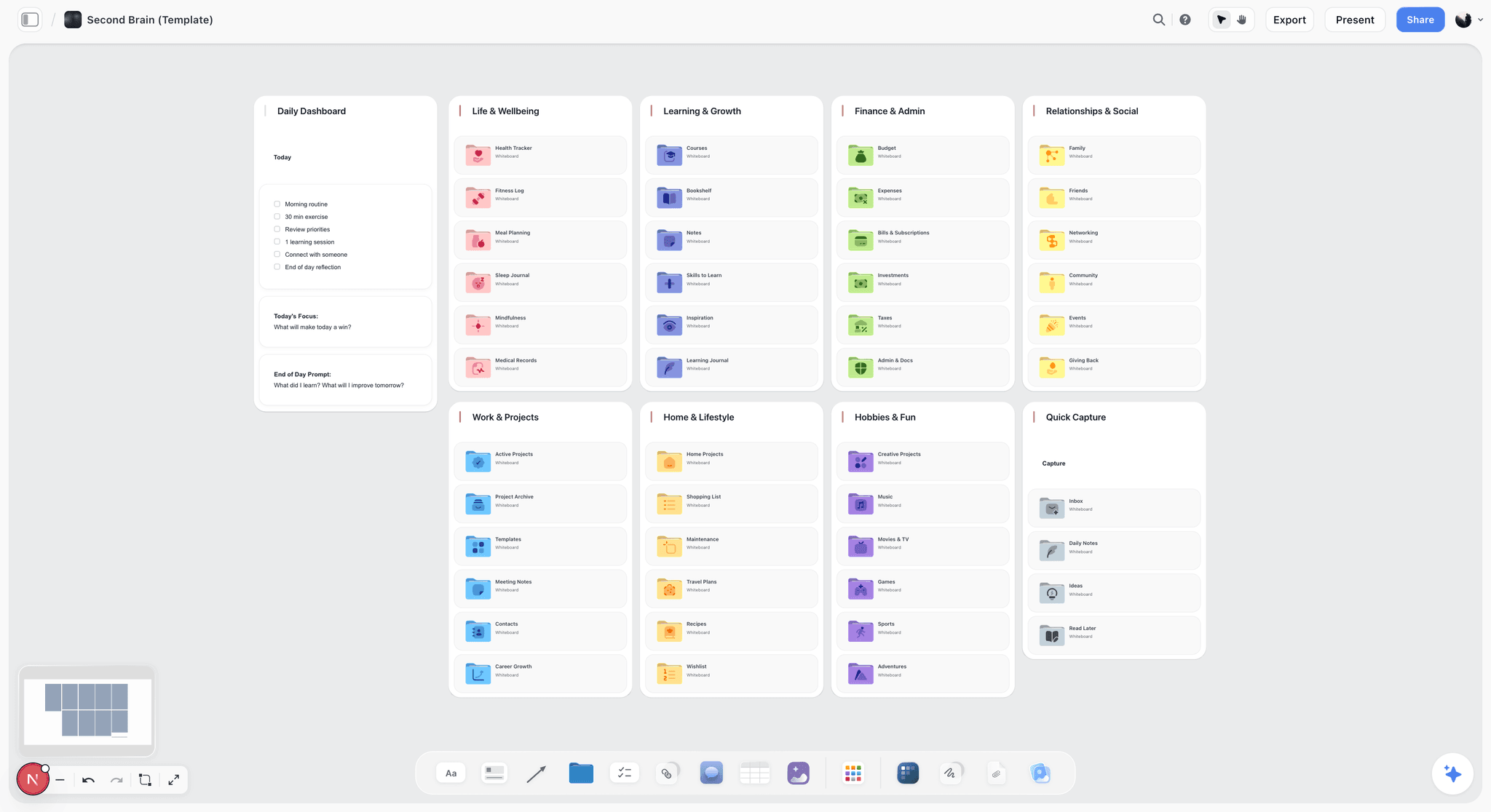
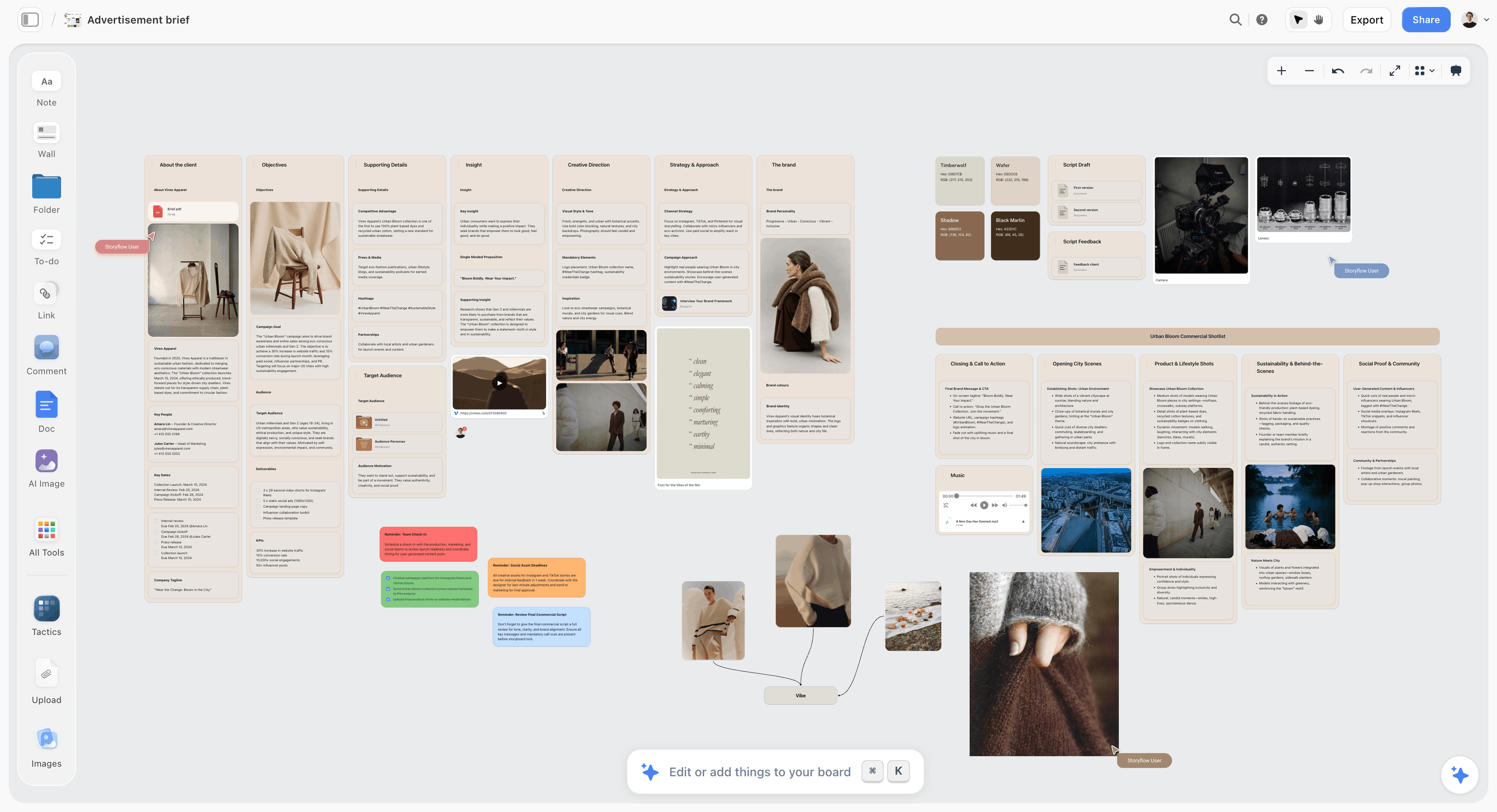
Storyflow covers the sightline the grid planners skip: the Campaign. It is an infinite visual canvas where the moodboard that sets your visual direction, the three content pillars, the 12-part series map, and the month's draft posts sit next to each other as cards you can drag, cluster, and rearrange. The AI reads your full current canvas, plus up to 1 Tactic and 3 Documents you @-mention, so you can ask it to find the gaps in the month, generate ten angles for a launch, or check whether the drafts actually match the pillars, and it answers from everything on the board. The 200+ Story Blueprints on the Plus tier (Hero's Journey, AIDA, Retention Hooks) give a campaign a proven shape instead of a blank canvas.
Full disclosure: Storyflow is our product, so read this placement skeptically. The honest limits: it does not preview your actual Instagram grid, and it does not schedule or publish anything, so you still pair it with Later, Buffer, or Metricool for the Feed sightline and the posting. It is a newer platform with a smaller template ecosystem than Notion. It is cloud-only, with no offline mode. And real-time team collaboration with roles lives on the Max tier. It is not a scheduler. It is the thinking surface a scheduler assumes you already have.
Best for: Creators and small teams who want the campaign, the pillars, and the series visible on one canvas before anything hits a queue.
Verdict: The strongest tool for the Campaign sightline, and the one AI canvas on this list. For the grid itself, Later or Preview beats it, which is exactly why the two pair well.
Pricing
Paid-only during early access. A Free plan (unlimited notes, images, and links, unlimited shared boards, unlimited collaboration, basic AI, 20 file uploads) launches before the end of 2026; a paid member's invited collaborators join free today. Plus: $7.99/month annual ($9.99 monthly) covers unlimited notes, images, links, and boards, unlimited collaboration, basic AI, the 200+ Story Blueprints library, and unlimited file uploads. Pro: $14/month annual adds AI image generation and 20x AI usage. Max: $39/month annual adds 40x more AI and the Team Workspace with roles and permissions. Flat per account, no per-seat pricing.
Pros
- Moodboard, pillars, series map, and drafts on one canvas instead of four apps.
- The AI reads the whole board, so planning questions get answers with full context.
- Unlimited boards, cards, and collaboration on every paid tier; a paid member's invited collaborators join free.
Cons
- No feed grid preview; it plans the campaign, not the profile's final look.
- No scheduling or publishing; you pair it with a scheduler to ship.
- Newer platform with a smaller template ecosystem than Notion, cloud-only, and real-time team roles sit on the Max tier.
2. Later
Later is the tool that made visual social media planning a category, and it still leads the literal job: seeing your feed before your followers do. You drag posts onto a preview of your actual Instagram grid, shuffle them until the grid reads right, then schedule and auto-publish from the same view. The media library keeps every asset visible as thumbnails rather than filenames, and the calendar doubles as a visual proof of the month. For the Feed sightline, nothing on this list is more direct.
The limits sit on the Campaign sightline. Later starts at the point where the content already exists; it has no space for the moodboard, the pillars, or the series map that decide what those posts should be. It is a downstream tool, and an excellent one.
Best for: Creators and brands who live and die by how the Instagram grid looks, and want preview and publishing in one tool.
Verdict: The strongest visual planner for the Feed sightline in 2026. Pair it with an upstream canvas for the campaign layer.
Pricing
No meaningful free plan as of July 2026. Paid plans start around $16.67/month billed annually (around $25 monthly).
Pros
- The drag-and-drop grid preview is the best-executed version of the core visual planning job.
- Scheduling and auto-publishing close the plan-to-publish distance to zero.
- Multi-platform support beyond Instagram: TikTok, Pinterest, LinkedIn, and more.
Cons
- No real free tier anymore, so there is no honest way to run it at $0.
- No campaign or ideation layer; the plan starts after the ideas exist.
- Costs climb quickly with multiple social sets and team seats.
3. Planoly
Planoly built the original Instagram grid planner, and the core loop still holds up: upload, drag onto the grid preview, shuffle until it looks right, schedule. It leans into Instagram and Pinterest more deeply than most rivals, with placeholder posts for planning around content that does not exist yet, and a clean visual calendar behind the grid.
Against Later, the difference is emphasis rather than category: Planoly stays Instagram-first while Later has spread wider across platforms. Like Later, it starts after the ideas exist; the Campaign sightline is not its job.
Best for: Instagram-first creators and brands who want the classic grid-planning workflow from the company that invented it.
Verdict: A top-two pick for the Feed sightline. Choose between Planoly and Later on platform mix and price, not on grid quality.
Pricing
Paid plans start around $14/month as of July 2026, with a limited starter tier.
Pros
- Grid preview and placeholders make next month's feed concrete before it exists.
- Instagram and Pinterest depth, including visual planning for pins.
- Approachable pricing next to bigger suites.
Cons
- Thin outside Instagram and Pinterest if your plan spans TikTok, LinkedIn, and YouTube.
- No ideation or campaign layer upstream of the grid.
- Free option is too limited to run a real account on.
4. Preview
Preview (thepreviewapp.com) does one thing and gives it away: a mobile app where you load your feed, drag upcoming posts into the grid, and see the result, with unlimited posts on the free plan. For a solo creator who plans from a phone, it is the fastest route to the Feed sightline that exists, and the free tier is the most generous in the grid-preview category.
It is a preview tool, not a publisher: posting happens via reminders rather than full auto-publishing, and there is no calendar depth, no team layer, and no campaign layer.
Best for: Solo creators who plan the grid from their phone and want it free.
Verdict: The best free grid preview in 2026. Outgrown once a team or a multi-platform calendar enters the picture.
Pricing
Free with unlimited grid posts. Premium tiers around $7 to $14/month for filters, analytics, and extras.
Pros
- Free, unlimited grid planning with no account cap tricks.
- Mobile-first, matching where most Instagram planning actually happens.
- Instant: load feed, drag, see.
Cons
- Reminder-based posting rather than true auto-publish.
- No real calendar, team, or approval features.
- Instagram-centric; little help for other platforms.
5. Canva Content Planner
Canva's Content Planner attaches a scheduling calendar directly to the design tool, which collapses a step nobody enjoys: exporting finished designs out of one app to upload them into another. You design the post, drop it on the calendar, and publish to the major platforms from the same place. The calendar shows real thumbnails, so the month reads visually rather than as a list of captions.
The gap is the grid: Canva shows a calendar of designs, not a preview of your assembled Instagram profile, so the Feed sightline is only partly covered. And ideation happens elsewhere; Canva starts when you open a template.
Best for: Solo marketers and small brands already designing everything in Canva.
Verdict: The best consolidation play on the list. Two sightlines partially covered in a tool you may already pay for.
Pricing
Content Planner requires Canva Pro, around $15/month as of July 2026. Canva's free tier does not include scheduling.
Pros
- Design and calendar are one object, so nothing is exported or re-uploaded.
- Thumbnail calendar keeps the month visual.
- Publishing built in across major platforms.
Cons
- No true profile grid preview.
- Scheduling features are shallow next to dedicated schedulers.
- No campaign or ideation layer.
6. Metricool
Metricool is the budget all-rounder: a visual planning calendar, a basic Instagram feed preview, auto-publishing across platforms, and analytics that most competitors charge separately for, with a free plan that actually functions. For a solo social media manager holding several accounts together on a small budget, it is the most complete single tool on this list.
The trade is depth for breadth. The feed preview is serviceable rather than best-in-class, and there is no ideation surface. It covers the Calendar sightline well, the Feed sightline adequately, and the Campaign sightline not at all.
Best for: Budget-conscious managers who want calendar, preview, publishing, and analytics in one subscription.
Verdict: The best value-per-dollar on the list. Pick it for coverage, not for the best version of any one sightline.
Pricing
Real free plan for one brand. Paid plans from around $18/month as of July 2026.
Pros
- Calendar, preview, publishing, and analytics in one tool.
- Functional free tier for a single brand.
- Strong multi-platform support including TikTok and YouTube.
Cons
- Feed preview is basic next to Later or Planoly.
- Interface is denser and less polished than the visual-first tools.
- No campaign or ideation layer.
7. Buffer
Buffer is the cleanest scheduling calendar in the category, and its Instagram grid view covers the basic version of the Feed sightline. Its real strength is frictionless queueing: connect channels, drop posts into slots, done, with a free plan that still covers a few channels. As a visual planner specifically, it trails the grid-first tools; the calendar is tidy but text-forward, and the preview is a check rather than a planning surface.
Best for: Anyone who wants dependable scheduling with a light visual check on the grid.
Verdict: A scheduling tool with visual features, not a visual planning tool. Excellent as the publishing half of a stack.
Pricing
Free plan for a small number of channels. Paid from around $6 per channel per month as of July 2026.
Pros
- The lowest-friction scheduler in the category.
- Honest free plan.
- Grid view covers the basic preview need.
Cons
- Visual planning is shallow; the calendar thinks in text first.
- Per-channel pricing stacks up across platforms.
- No campaign layer.
8. Milanote
Milanote is a freeform visual board built for creative direction, and for social planning it owns a specific moment: deciding what the content should look and feel like before any of it exists. Drag in references, screenshots of feeds you admire, color swatches, and notes, and the direction for the quarter becomes a board the whole team can point at. That is the Campaign sightline, handled well.
It stops there by design. No calendar, no grid preview, no publishing, and the 100-card free tier fills fast once reference gathering starts. Where Storyflow puts the moodboard next to the plan and adds AI on top, Milanote keeps the moodboard as its own beautiful artifact.
Best for: Creative direction moodboards that set a feed's visual identity.
Verdict: The best pure moodboard on the list. It informs a plan rather than holding one.
Pricing
Free with 100 cards. Individual around $9.99/month; team plans available.
Pros
- Purpose-built canvas for visual reference and direction.
- Fast web clipper for collecting feed references.
- Clean sharing for client and team sign-off.
Cons
- No calendar, preview, or publishing; direction only.
- 100-card free limit fills quickly.
- No AI reading the board.
9. Trello
Trello shows a sightline no grid planner touches: status. A kanban board with card covers turns the pipeline into a picture, with columns like Idea, Drafting, Design, Approved, and Scheduled, and every card wearing its visual as a cover image. One glance shows what is stuck and what is ready, which is the operational half of the Calendar sightline.
What Trello never shows is the feed. Cards in columns say nothing about how the grid will look or when things actually ship without add-ons, and the calendar view sits behind a paid tier or power-up.
Best for: Teams who need the content pipeline's status visible at a glance.
Verdict: A workflow view, not a feed view. Strong middle layer between a campaign canvas and a scheduler.
Pricing
Free tier covers small boards. Paid from around $5/month per user as of July 2026.
Pros
- Card covers make the pipeline scannable in seconds.
- Free tier is enough for a solo workflow.
- Flexible enough to mirror any team's process.
Cons
- No feed preview or publishing.
- Calendar requires paid tiers or power-ups.
- Per-user pricing on team plans.
10. Notion
Notion holds a content calendar as a database with calendar and gallery views, which gets you structure: statuses, owners, platforms, publish dates, all filterable. The gallery view with image previews is the most visual Notion gets, and for a team already running everything in Notion, keeping the calendar there is a fair call.
But a database renders the plan as records. Rearranging a month means editing date fields, not dragging a grid, and no view approximates what the profile will look like. Notion covers the Calendar sightline with the least visual version of it on this list.
Best for: Teams already living in Notion who want the calendar in the same workspace.
Verdict: The most structured option and the least visual one. Fine as a system of record behind a visual tool.
Pricing
Free for personal use. Plus around $10/month as of July 2026.
Pros
- Statuses, filters, and relations the visual tools lack.
- Calendar and gallery views from one database.
- Integrates with an existing Notion workspace.
Cons
- Structure-first: the plan reads as records, not pixels.
- No feed preview or publishing.
- Slow for fast visual iteration.
11. Pinterest
Pinterest earns the last slot as the layer most visual plans start from, not as a planner. It is the fastest free way to gather the references that become a feed's direction: save examples, build boards per pillar or campaign, and let the recommendation feed surface looks you would not have searched for. That feeds the Campaign sightline.
It is not a planner. It is the inspiration layer that feeds one. No annotation that locks a decision, no calendar, no preview of your own feed, and an algorithmic feed that pulls attention sideways while you work.
Best for: Free visual reference gathering at the very start of a plan.
Verdict: Keep it in the stack as the discovery layer. Move what it finds into a canvas that can hold decisions.
Pricing
Free.
Pros
- Free and frictionless reference discovery.
- The recommendation feed genuinely widens the visual search.
- Boards map loosely onto pillars and campaigns.
Cons
- No planning structure of any kind.
- The feed is a distraction engine.
- Licensing and sourcing of saved images is unclear.
The Right Tool for Your Role
Solo Instagram creator. Preview Free for the grid, Storyflow Plus at $7.99/month for the pillars and series map. A complete two-sightline stack for $7.99/month.
Social media manager at a small brand. Later for grid preview and publishing, Storyflow for the campaign canvas the drafts come from. The classic Feed-plus-Campaign pairing.
Agency content team. Metricool or Later for multi-account publishing, Trello for the status pipeline, and a campaign canvas per client. Approvals need the status view as much as the grid view.
Photographer or visual artist. Later or Planoly, full stop. When the work is the image, the grid preview is the plan, and publishing from the same tool keeps the loop short.
Video-first creator on TikTok and Reels. Storyflow for series mapping and hooks, Buffer or Metricool to schedule. Grid aesthetics matter less when discovery comes from the algorithm, so the Campaign sightline does the heavy lifting.
Founder doing your own marketing. Canva Content Planner if design is the bottleneck; Metricool if budget is. One tool, most of the job, no stack to maintain.
Etsy or e-commerce shop owner. Planoly for the Instagram and Pinterest grid, Pinterest itself as the discovery layer your product content feeds back into.
Free vs Paid: What Visual Planning Costs
This category has unusually honest free tiers, and the paid decision is almost always about publishing volume rather than planning capability.
Free tiers that genuinely work:
- Preview Free. Unlimited grid planning on mobile. Remarkable for $0.
- Buffer Free. Three channels with a real queue.
- Metricool Free. One brand with limited scheduling.
- Canva Free. Design plus a basic content planner.
Storyflow is paid-only during early access. Plus at $7.99/month billed annually covers the campaign canvas: unlimited boards, unlimited notes, images, and links, unlimited collaborators, basic AI usage, the full 200+ Story Blueprints library, and unlimited file uploads. Its Free plan (3 starter blueprints, 20 file uploads) launches before the end of 2026; a paid member's invited collaborators join free today.
Free tiers that are really trials: Later has no meaningful free plan and starts around $16.67/month annual, Planoly's free tier is capped tightly enough to force an upgrade within a month, and Milanote's 100-card cap arrives fast on a visual project.
The upgrade triggers, in the order they arrive
- Channel count and publishing volume. The dominant reason anyone pays here. Buffer Free covers three channels; a brand on five platforms with daily posting needs a paid queue, and this alone justifies most spend in this category.
- Getting onto Storyflow at all. The campaign canvas is paid-only during early access: Plus at $7.99/month billed annually is the entry point, with unlimited uploads and the full 200+ Story Blueprints library included. Its Free plan, with a 20-upload cap, launches before the end of 2026.
- Approvals and clients. The moment a client approves posts before they ship, you need roles rather than shared links. That is the Max tier at $39/month annual.
- Analytics you will actually act on. Metricool and Later both gate the useful reporting. Only pay here if you genuinely change next month's plan based on last month's numbers.
The purchase to think twice about
Paying for a second calendar view is the most common waste in this category. Nearly every tool here shows dates competently, including the free ones, so upgrading from one adequate calendar to a prettier one buys nothing. If your posts ship late, the problem is upstream at the campaign sightline or in production capacity, and a nicer calendar will show you the same missed dates in a better font.
Honorable Mentions
- UNUM. A grid-preview app in the Preview mold with design tools attached; a fair alternative if Preview's interface does not click.
- Plann. Grid planning plus strategy prompts; worth a look for Instagram-first solo creators.
- Vista Social and SocialBee. Capable schedulers with calendar views; they compete with Buffer and Metricool on the publishing layer more than the visual one.
- Figma or FigJam. Design teams sometimes storyboard campaigns here; it works, but nothing about it is social-media-shaped out of the box.
When You Do Not Need a Visual Planner
- You post reactively and rarely. A tool that shows next month's feed has no job if there is no next month's feed. Post from the app and skip the stack.
- Your content is single-platform text. A text-first X or LinkedIn presence gets little from a grid preview; a plain scheduler covers it.
- You already fight tool sprawl. McKinsey's 2012 workplace research found knowledge workers spending around 19 percent of their time just hunting for information; a fourth planning tool nobody opens makes that worse, not better. Two tools with clear jobs beat four with vague ones.
- The plan changes hourly. News-cycle accounts run on judgment and speed; a carefully arranged grid preview is stale by lunch.
The Bottom Line
The best visual social media planning tool in 2026 depends on which sightline you are blind on. If you cannot see the feed, get Later, Planoly, or free Preview and drag the grid until it reads right. If you cannot see the campaign, get Storyflow and put the moodboard, pillars, and series map on one canvas the AI reads. If you cannot see the calendar, Metricool and Buffer cover it cheaply.
The Three Sightlines keep the decision honest: no tool here covers all three well, so the strongest stacks pair one Feed tool with one Campaign tool and let each do its job. What you should not do is go back to planning a visual medium in a spreadsheet. Plan in pixels, not in rows.
If the campaign layer is the sightline you are missing, start a Storyflow board and put the moodboard, the pillars, and the month on one canvas, or see how it fits a social workflow on the Storyflow for social media managers page.
FAQ: Visual Social Media Planning Tools
What is the best visual tool for planning social media content?
Storyflow is the best visual tool for planning social media content above the feed: the campaign moodboard, content pillars, and series map sit on one AI-readable canvas, priced flat per account starting at $7.99/month (paid-only during early access, with a Free plan landing before the end of 2026). Later is the best visual tool for the feed itself: it previews your actual Instagram grid with drag-and-drop rearranging and publishes from the same screen. They cover different sightlines of the same plan, which is why the strongest setups pair a grid tool with a campaign canvas rather than forcing one tool to do both jobs.
What is a visual social media planner?
A visual social media planner is a tool that shows you the plan as images rather than rows: a preview of the feed grid, a calendar of thumbnails, or a canvas of campaign ideas. The point is judgment before publishing. A spreadsheet can hold thirty captions and dates, but it cannot show you that three beige product shots land in a row or that a series has no visual through-line. Seeing the plan is what separates these tools from a list.
Can I preview my Instagram grid before posting?
Yes. Later, Planoly, and Preview all show your existing feed with upcoming posts dropped in, so you can drag them around until the grid reads right. Preview does it free with unlimited posts on mobile; Later and Planoly add scheduling and auto-publishing so the approved arrangement ships without re-uploading. Metricool and Buffer include simpler grid views that work as a final check rather than a planning surface.
What is the best free visual social media planning tool?
Preview, for the grid: unlimited feed preview posts on the free plan, on mobile. Milanote, for the campaign layer: its free tier (100 cards) covers a moodboard and pillar references at $0. Metricool has the best free plan among all-in-one tools. Storyflow's campaign canvas is paid-only during early access, at $7.99/month, with its Free plan landing before the end of 2026. Later no longer offers a meaningful free tier as of July 2026, which matters if $0 is the budget.
Is Later or Planoly better for visual planning?
They are close, and the grid itself will not decide it. Later has spread across more platforms and pairs the preview with a stronger scheduling suite; Planoly stays Instagram-and-Pinterest-first with slightly friendlier pricing. Pick Later if your plan spans TikTok, LinkedIn, and more; pick Planoly if Instagram and Pinterest are the whole game. Neither covers the campaign layer upstream, so both pair well with a canvas tool.
Can Storyflow schedule and publish social media posts?
No. Storyflow plans; it does not post. It is the canvas where the campaign moodboard, content pillars, series maps, and draft posts live, with AI that reads the full current board plus up to 1 Tactic and 3 Documents you @-mention. When the plan is decided, you move the approved posts into Later, Buffer, or Metricool to schedule and publish. That split is deliberate: the thinking layer and the shipping layer are different jobs, and this list ranks tools honestly by which one they do.
What is the difference between visual planning and a content calendar?
A content calendar answers when: dates, slots, statuses. Visual planning answers what it will look like: the grid, the visual rhythm, the campaign's aesthetic coherence. You can run a flawless calendar and still ship an ugly feed, because rows do not show collisions of color and crop. The strongest workflows keep both: a calendar as the system of record and a visual surface where the plan is judged by eye. For the calendar half, see What Is a Content Calendar? The Complete Guide.
Do I need a feed preview tool if I mostly post Reels and TikTok?
Less than an Instagram-grid account does. Vertical video is discovered feed-by-feed through the algorithm, not by profile visits, so grid aesthetics carry less weight. What matters more is the series view: seeing your hooks, formats, and recurring segments as a map so the channel compounds instead of resetting every post. That is Campaign-sightline work, where a canvas like Storyflow or a pipeline like Trello earns its place ahead of a grid tool.
Can I use Canva to plan my social media content?
Partly. Canva's Content Planner (on Canva Pro, around $15/month as of July 2026) puts your designs straight onto a scheduling calendar with thumbnails, which covers design-to-calendar in one tool and removes an export step. What it lacks is a true profile grid preview and any ideation layer, so it plans the month's assets without showing the assembled feed or hosting the campaign thinking. It is strongest as a consolidation play for solo marketers already designing in Canva.
How do brands keep an Instagram feed looking consistent?
They decide the look before the posts exist, then check the grid before anything ships. In practice: a moodboard locks the palette, type, and photography style; content pillars keep subject matter in ratio; templates carry the look into each asset; and a grid preview in Later, Planoly, or Preview catches collisions before publishing. Consistency is not a filter applied at the end. It is a plan made visible early, which is the whole case for planning in pixels, not in rows.
Can AI help with visual social media planning?
Yes, most usefully at the campaign layer. Storyflow's AI reads the whole planning canvas, so it can spot gaps in a month, generate angles that fit an existing pillar structure, and check drafts against the campaign's direction; on Pro tiers it also generates images. Schedulers add AI at the caption level, which helps once the idea exists but decides nothing. Research on AI visibility cuts the same way: a Princeton-led study presented at KDD 2024 found adding citations and quotable structure boosted content visibility in AI answers by up to 40 percent, a reminder that the upstream decisions carry the weight.
Do I need both a planning canvas and a scheduling tool?
If you plan campaigns rather than one-off posts, almost certainly. No tool on this list covers all Three Sightlines well: the grid tools do not hold campaign thinking, and the canvas tools do not publish. The working pattern is one upstream surface (Storyflow, Milanote) where the plan is made and seen, and one downstream tool (Later, Buffer, Metricool) where it ships, with the grid preview living wherever you publish. Two tools with clear jobs beat one tool stretched over three.
Table of Contents
- Comparison Table: Visual Social Media Planning Tools
- Key Takeaways
- The Three Sightlines: How Visual Planning Actually Works
- How the Tools Compare on the Three Sightlines
- How We Evaluated These Tools
- Quick Picks by Visual Planning Need
- The 11 Best Visual Social Media Planning Tools
- The Right Tool for Your Role
- Free vs Paid: What Visual Planning Costs
- Honorable Mentions
- When You Do Not Need a Visual Planner
- The Bottom Line
- Author
- FAQ: Visual Social Media Planning Tools
- Related Reading
Templates to check out for this topic


Marketing and campaign templates you can use in Storyflow
Plan the whole campaign on one board: brief, audience, channels, and assets connected, with an AI that reads all of it. Open a template and start from real structure.


See Storyflow in Action
A visual AI workspace where every feature lives inside one canvas. No tab-switching, no context lost.
Build your entire board from a single message
Type what you need in the AI chat at the bottom of your canvas. The AI adds cards, headings, and structure directly onto your board.
Use expert frameworks as AI context
Type @ in the AI chat and choose any Tactic. The AI tailors every response to that framework instead of giving generic advice.
Turn your board into a mind map in seconds
Ask the AI to restructure your canvas as a mindmap. It connects your ideas into a visual hierarchy so you can see how everything relates.
Why Storyflow Exists
Storyflow actually began as a personal tool while working on creative and research projects.
We kept running into the same problem: ideas were scattered everywhere: notes, documents, and whiteboards.
Nothing helped us see how everything connected.
So we started building a workspace designed around how ideas actually grow.
→ Read how Storyflow was createdJustkay
Documentary Filmmaker & Founder at Storyflow
Published: 2026-07-20
Extremely simple, seriously capable


See how easy it is to get started
Watch a real project come together, from a blank board to a finished plan, clicked through step by step.
Start creating with AI and become more productive
Transform your creative workflow with AI-powered tools. Generate ideas, create content, and boost your productivity in minutes instead of hours.